

Running News Daily
Running News Daily is edited by Bob Anderson and team. Send your news items to bob@mybestruns.com Advertising opportunities available.
Index to Daily Posts · Sign Up For Updates · Run The World Feed
Articles tagged #Onitsuka
Today's Running News
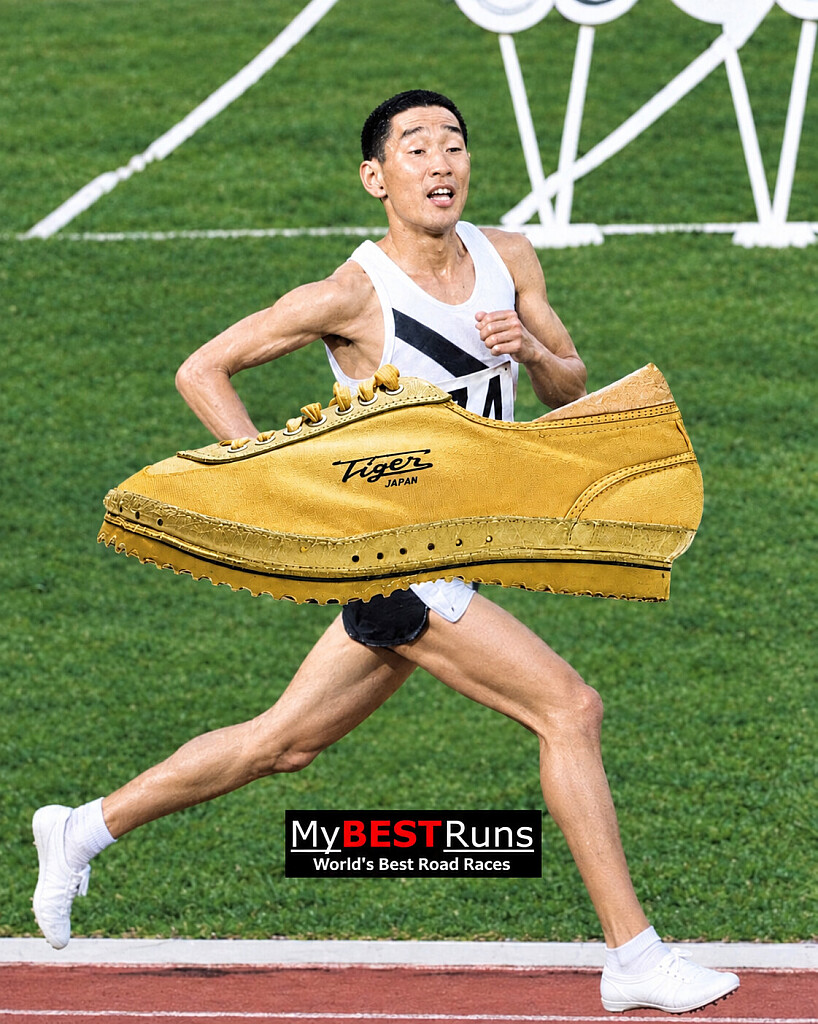


The Magic Of Onitsuka: How A Simple Idea Changed Marathon Shoes Forever
Long before modern running shoes were filled with advanced foams, carbon plates and sophisticated ventilation systems, innovation often began with something much simpler—a close look at the problems faced by athletes.
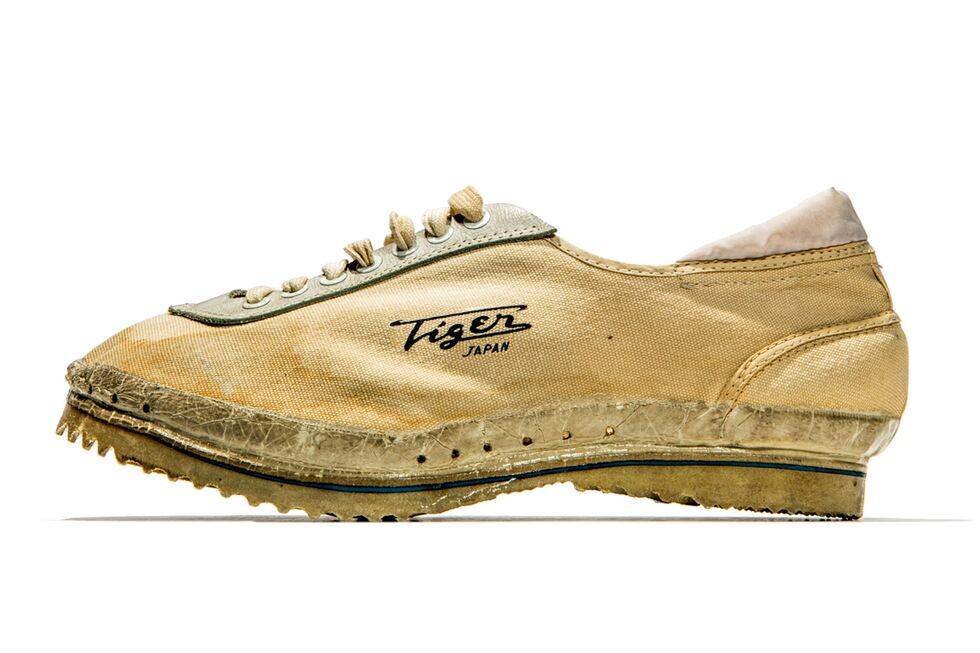
In 1960, Japanese shoemaker Onitsuka noticed a common struggle among long-distance runners: painful blisters caused by heat, moisture and poor ventilation inside the shoe. Instead of accepting the problem as part of distance running, the company began searching for a practical solution.
The answer was remarkably simple yet innovative for its time. Onitsuka developed a ventilation system by incorporating small openings around the toe box, heel and sides of the shoe, allowing air to circulate more freely and helping reduce the build-up of heat and moisture during long races.
The result was the Onitsuka Tiger “Magic Runner,” a shoe that became part of the evolution of Japanese running footwear and reflected the company's growing focus on solving real problems faced by athletes.
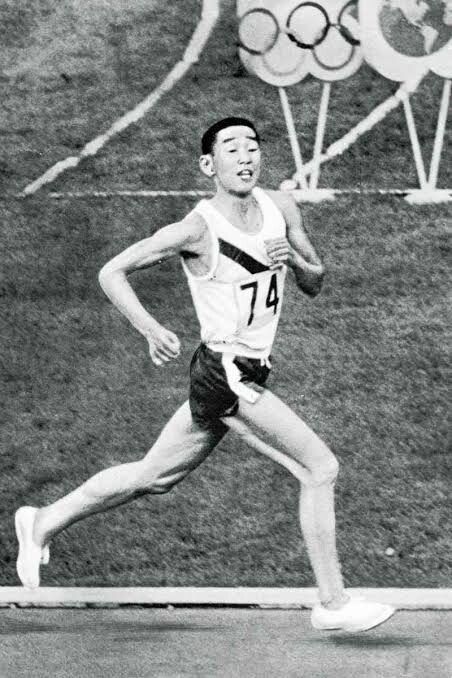
Its reputation received a major boost at the 1968 Mexico City Olympic Games, when Japanese marathoner Kenji Kimihara captured the silver medal in the men's marathon while wearing Onitsuka's Magic Runner shoes.
Kimihara's Olympic performance helped turn the shoe into more than just an interesting piece of footwear technology. It became a symbol of how observation, experimentation and attention to an athlete's needs can produce meaningful innovation.
Today, running shoes have become highly engineered pieces of technology, but the story of the Magic Runner reminds us that innovation does not always begin with complicated machinery. Sometimes, it starts with simply asking one question:
How can we make the runner's journey more comfortable?
That simple question in 1960 helped Onitsuka take another step forward—and decades later, its influence can still be seen in the relentless pursuit of better running shoes.
by Erick Cheruiyot for My Best Runs.
Login to leave a comment
Boston Marathon first Japanese winner has passed away at age 91
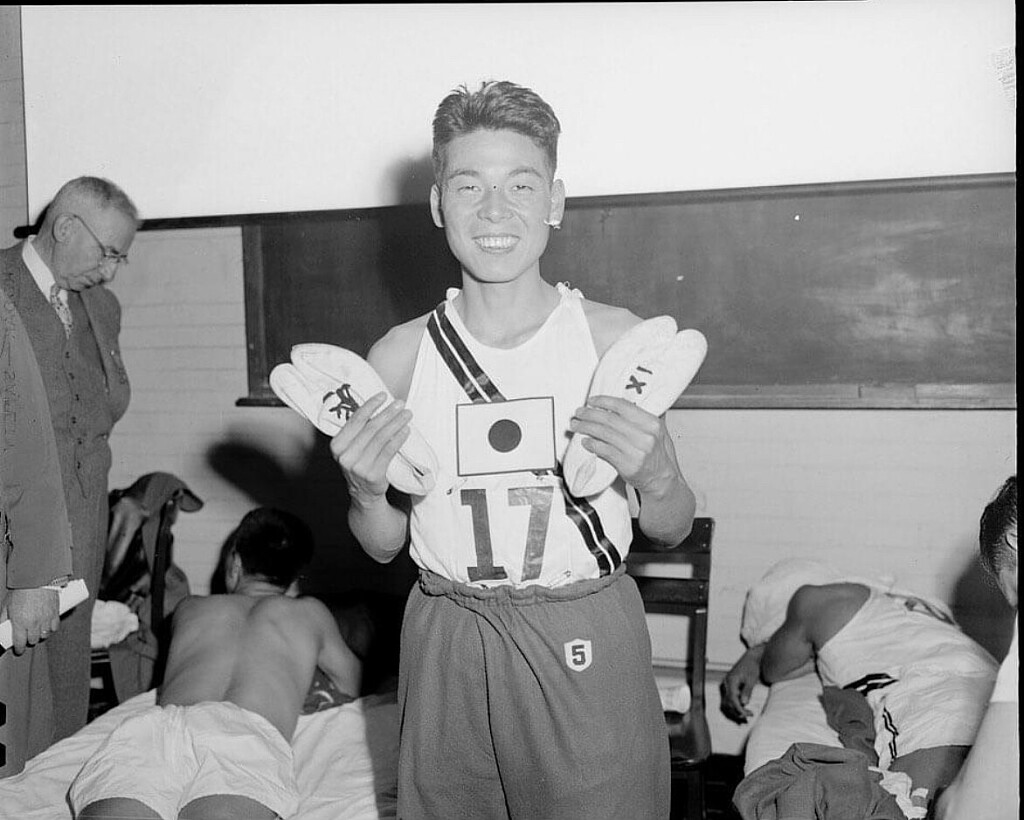
The Boston Athletic Association extends condolences to the many family and friends of Shigeki Tanaka, the 1951 Boston Marathon champion who passed away this week. Tanaka made history by becoming the first Japanese athlete to win the Boston Marathon, sprinting away from the field in his unique split-toed shoes to claim victory in 2:27:45.
At just 19, Tanaka’s win helped inspire future generations of Japanese athletes, and his victory served as a unifying point for America and Japan following World War II. We will always remember Mr. Tanaka.
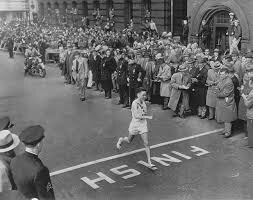
Tanaka was born in 1931.
Tanaka was 13 and living 20 miles from Hiroshima at the time of the 1945 Hiroshima atomic bombing. Following his Boston Marathon victory, he recalled, "We saw a bright light and heard a little noise. But no one thought anything about it at the time... three days later, we heard the terrible news."
He laid the groundwork for his career as a marathon runner by running 20 km from Shōbara to a Saijō municipal stadium as a high school student. He was a first-year student at Nihon University at the time of the Boston Marathon.
Japanese athletes had been barred from the 1948 Summer Olympics in London and from all major international competitions after World War II. The 1951 Boston Marathon was only the second post-World War II athletic competition, after the 1951 Asian Games held a month earlier, to invite Japanese athletes.
Tanaka was one of four Japanese runners invited to compete by Will Cloney of the Boston Athletic Association. The others were Japan's national champion Shunji Koyunagi, Yoshitaka Uchikawa, and Hiromi Haigo.[
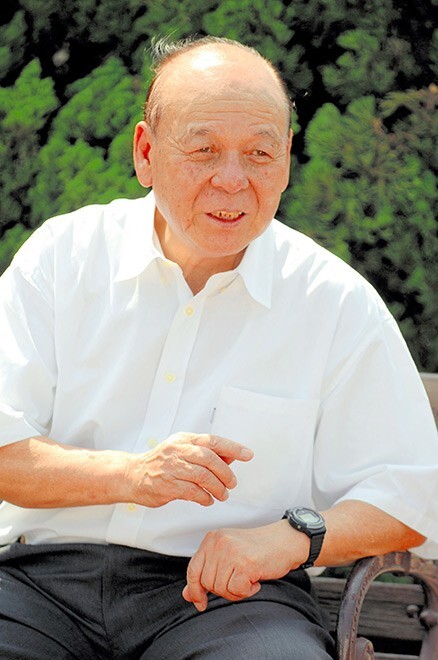
At the time, Tanaka was 20 years old, and weighed 118 pounds. The runners stopped in Hawaii, San Francisco, and New York City en route to Boston. In each stopover they went to a movie theater and people wrapped money in paper and threw it on stage for them. Tanaka later recalled that he "felt pretty strange to receive money like that, like a beggar almost... We brought sugar to bring back to Japan—that's how bad things were."
The four were given a welcoming ceremony arranged by servicemen at the Charlestown Naval Shipyard. Because Tanaka was from Hiroshima, The Boston Globe nicknamed him "atomic boy", which he found "a burden". Tanaka later recalled that people in the United States welcomed them warmly and both Japanese and Americans cheered him during the race.
Tanaka became the Boston Marathon's first Japanese winner. He won the event in 2:27:45, the third fastest time in the event's history to that point.
He took the lead on Heartbreak Hill and led convincingly with four miles to go. Observers expected him to break Suh Yun-bok's 1947 course record, but following his pre-race plans, Tanaka stuck to his own schedule; he did not push himself and finished comfortably. After the race, he stated through an interpreter, "I did not plan a record-breaking race, I ran only to win."
Tanaka won the marathon racing in tabi-inspired split-toe running shoes made by Onitsuka, which he thought would give him better traction.
The three other Japanese runners in the race also did very well: Shunji Koyunagi finished in 5th place, Yoshitaka Uchikawa in 8th place, and Hiromi Haigo in 9th place.
After his running career, Tanaka worked as a salaryman for a Tokyo area department store and served as a director at the Japanese Amateur Athletics Federation until his retirement. Tanaka died on October 4, 2022. He was 91.
Login to leave a comment
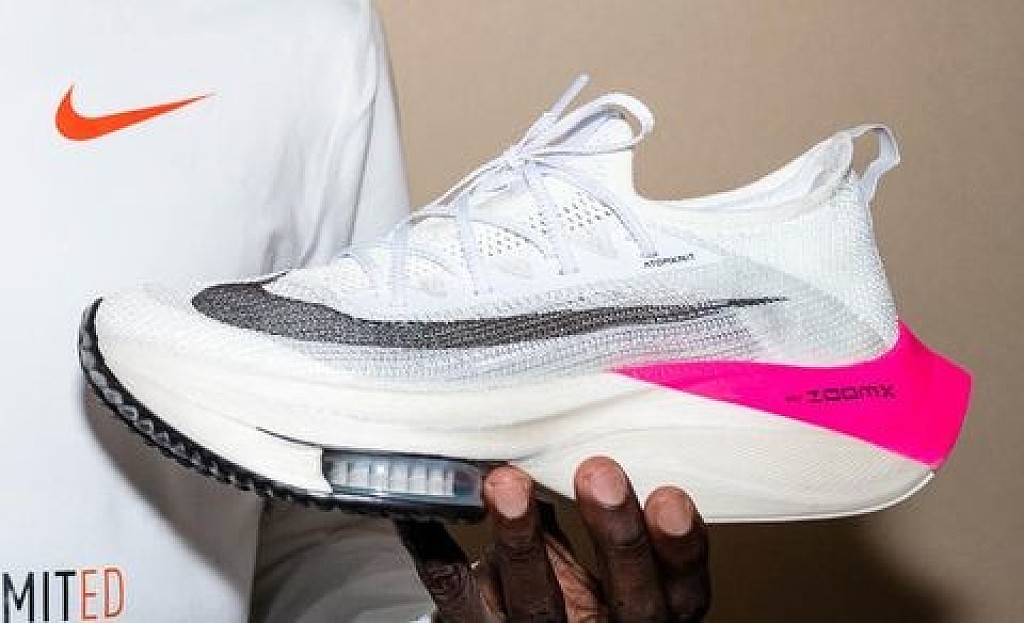
Does the International Association of Athletics Federations need a more stringent rule to define legal running shoes?
It appears that running, the original and most elemental of sports, now faces the same tradition vs. scientific innovation challenge that other sports have encountered. Think: tennis rackets, baseball bats and, perhaps most similar, competition swimwear — those polyurethane-based suits that were banned starting in 2010. The outcome of the current running-shoe debate could affect everything from stock prices of global footwear companies to who wins the Olympic marathon in Japan next summer.
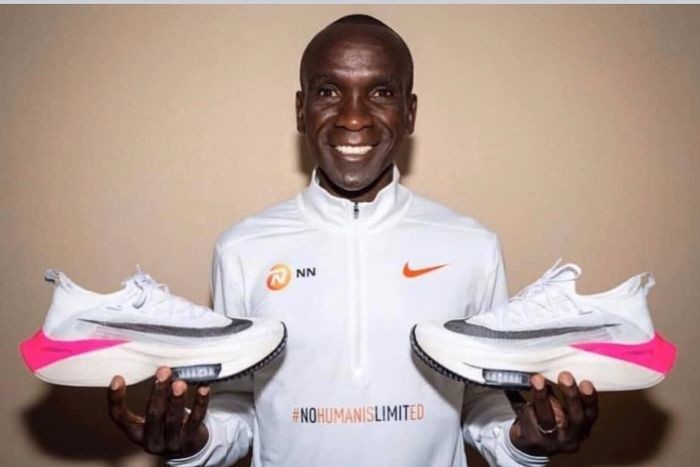
Kipchoge, who became the first person to run the 26.2-mile distance in under two hours, and Kosgei, who set a women’s world record, raced in a revolutionary and bizarrely tall Nike shoe that has taken the marathon world by storm since 2016. In the last 13 months alone, male runners in the Nike shoes have recorded the five fastest marathon times ever. Other running-shoe companies are struggling to catch up, and may face patent hurdles.
The current I.A.A.F. rules state only that shoes may not confer an “unfair advantage” and must be “reasonably available” to all. The rule does not explain how these two values can be measured.
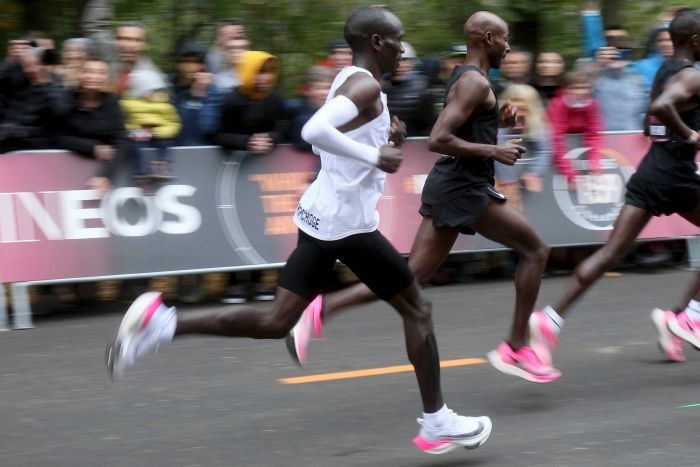
This week, the British Journal of Sports Medicine published a commentary that is likely to guide the debate. In it, Geoffrey Burns, a 2:24 marathoner and University of Michigan doctoral candidate in biomechanics, argued for “a single standard in competition running shoes: regulate the shoe midsole thickness.”
With the right material, a thicker sole produces more spring. Without clear restrictions, it is likely only a matter of time before someone comes up with a way to make a shoe with more powerful springs.
Burns called for an upper limit of 31 millimeters — about 1.2 inches — of midsole. Nike’s current Vaporfly 4% and Vaporfly Next% shoes have a 36-millimeter midsole, or about 1.4 inches. Why 31 millimeters? That’s a fairly common midsole height for previous models.
Until 2016, marathon racing shoes were constructed from thin slabs of rubber. In 1960, an Ethiopian runner named Abebe Bikila even managed to win the Olympic Marathon in his bare feet. Everyone understood that less was more; you ran more efficiently when you carried minimal weight on your feet.
In 1968, when shopping for the shoes that carried me to victory in that year’s Boston Marathon, I had only two criteria. They had to be light and thin, and they had to be cheap. I was still in college. I paid $9.95 for my lucky shoes — a pair of Onitsuka Tiger TG-4 Marathons.
Little changed in the footwear for elite marathoners in the next five decades, until Nike introduced its Vaporfly 4% shoes in 2016. These shoes contained a new midsole foam, Pebax, so lightweight that it is almost like running barefoot. Pebax also delivers 30 percent more energy return than the foams used in most running shoes since the 1970s. This allows Pebax to function almost like leg muscles, but without the fatigue that can debilitate the legs after 20 miles.
The Nike shoes also include a carbon fiber plate in the midsole. This plate might increase energy return, or it might improve foot function during the running stride. Either way, the plate is prominently mentioned in Nike’s patent application.
A 2018 New York Times data analysis based on public race results uploaded to Strava, the athlete-tracking and networking company, found that runners in Vaporflys ran 3 to 4 percent faster than similar runners wearing other shoes.
To be fair, Kipchoge, 34, is an otherworldly talent who has beaten the best in the world in last-generation shoes. There probably isn’t another marathoner who could break two hours in the shoes he wore last weekend.
by Amby Burfoot
Login to leave a comment

INEOS 1:59 Challenge
Mankind have constantly sought to reach new frontiers and to achieve the impossible. From Edmund Hillary reaching the summit of Mount Everest to Roger Bannister’s four-minute mile to Felix Baumgartner jumping from space we have frequently redefined the limits of human achievement and broken new barriers previously seen as simply impossible. After the four-minute mile and the ten second 100m...
more...