

Running News Daily
Running News Daily is edited by Bob Anderson and team. Send your news items to bob@mybestruns.com Advertising opportunities available.
Index to Daily Posts · Sign Up For Updates · Run The World Feed
Articles tagged #Cliff Young
Today's Running News
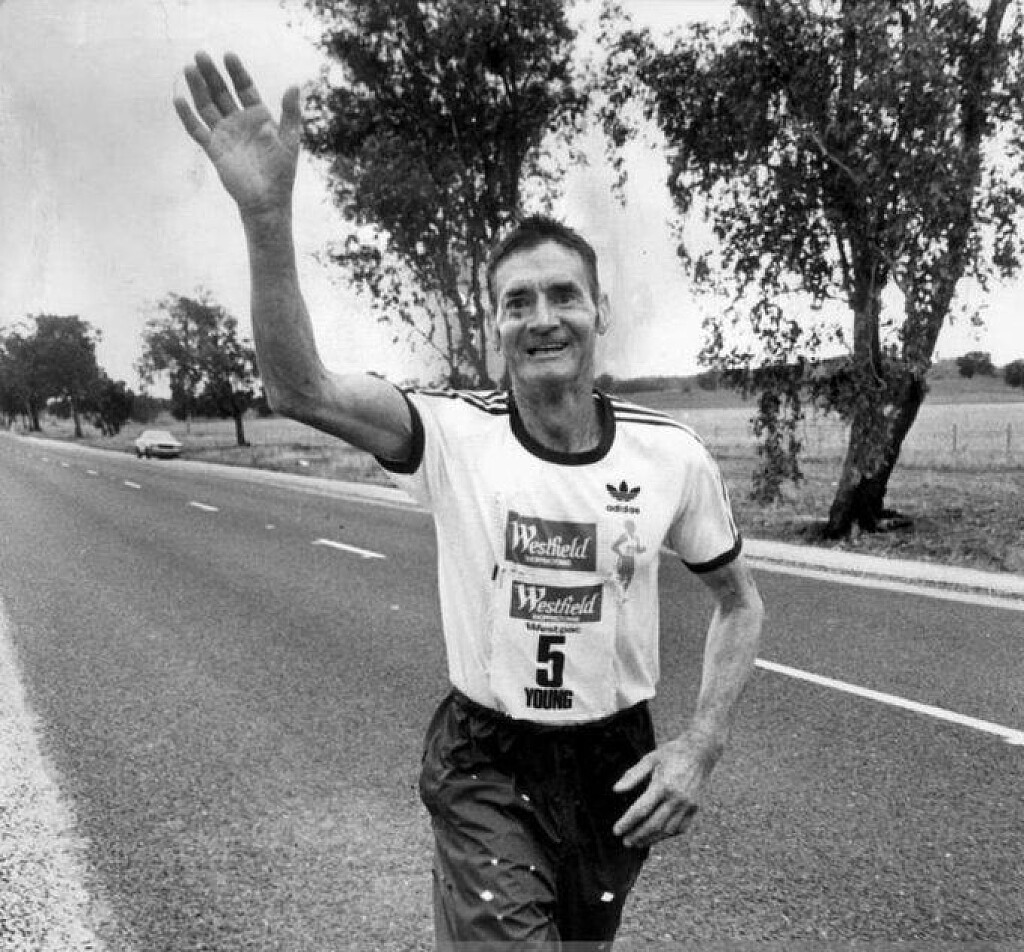


61 Years Old, in Gumboots, and Unstoppable: The Legend of Cliff Young
Sydney, Australia 1983 - When the Sydney–to–Melbourne Ultramarathon assembled its field, Cliff Young looked like a mistake.
Around him stood elite endurance runners—lean, sponsored, wrapped in the best gear money and sports science could provide. Then there was Cliff: a 61-year-old potato farmer from rural Victoria, dressed in overalls, a faded cap on his head, and rubber gumboots on his feet. He looked less like a professional athlete and more like someone who had wandered in from the farm after finishing his chores.
The race itself was unforgiving. Eight hundred and seventy-five kilometers (544 miles) of continuous road running, stretching over five to six days, with little margin for error. Even experienced ultramarathoners considered it one of the toughest endurance events in the world. Many believed it demanded youth, precision training, and carefully managed recovery.
Cliff had none of that.
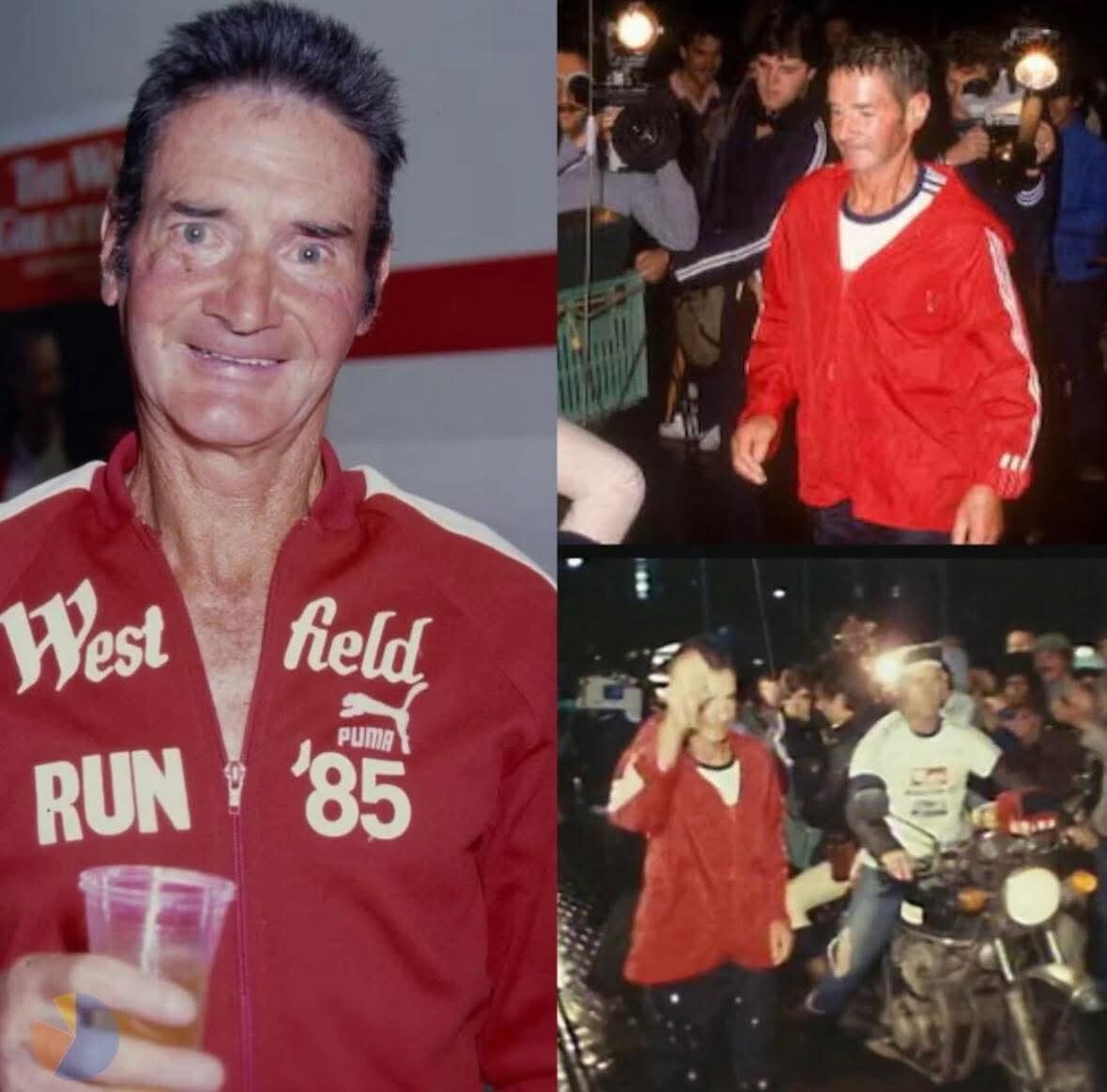
When reporters asked why he thought he could compete, his answer was simple and unpolished. Growing up on a large sheep farm, he explained, meant running for days at a time to round up animals during storms—sometimes without sleep, sometimes without stopping, just moving until the work was finished.
The smiles he received were polite. The skepticism was private but absolute.
Most expected him to drop out early.
At the starting gun, the elite runners surged forward with long, powerful strides, quickly stretching the field. Cliff moved too—but not in the way anyone expected. He shuffled, taking short, economical steps, arms barely swinging, his gumboots slapping softly against the pavement. Within minutes, the professionals disappeared down the road, and Cliff was left behind, alone.
Spectators laughed. Drivers stared. Commentators treated him as a novelty.
Then night came.
As darkness fell, the leading runners followed standard ultramarathon practice. They stopped to rest, sleeping several hours in hotels to recover before continuing. Cliff didn’t stop—not out of bravado, but because no one had told him that sleep was part of the strategy.
On the farm, storms didn’t pause for nightfall. You kept going until the job was done.
So Cliff kept shuffling through the dark.
By morning, something unexpected had happened. Cliff was still moving—steady, unchanged—while others had been resting. Hour by hour, night after night, the pattern repeated. The younger athletes battled fatigue, blisters, and breakdown. Their pace rose and fell. Cliff’s never did.
By the third day, disbelief turned into fascination. Radio stations began tracking his progress. News crews followed the quiet farmer who refused to stop. His awkward shuffle—once laughed at—was proving remarkably efficient, conserving energy and reducing impact over immense distances.
On day four, Cliff Young took the lead.
The moment felt unreal. A 61-year-old farmer with no formal training was dismantling everything people thought they knew about endurance racing. While others slept, he advanced. While others struggled, he remained patient.
By day five, as the course approached Melbourne, crowds lined the roads. They weren’t cheering for a polished champion. They were cheering for persistence itself.
Cliff crossed the finish line first.
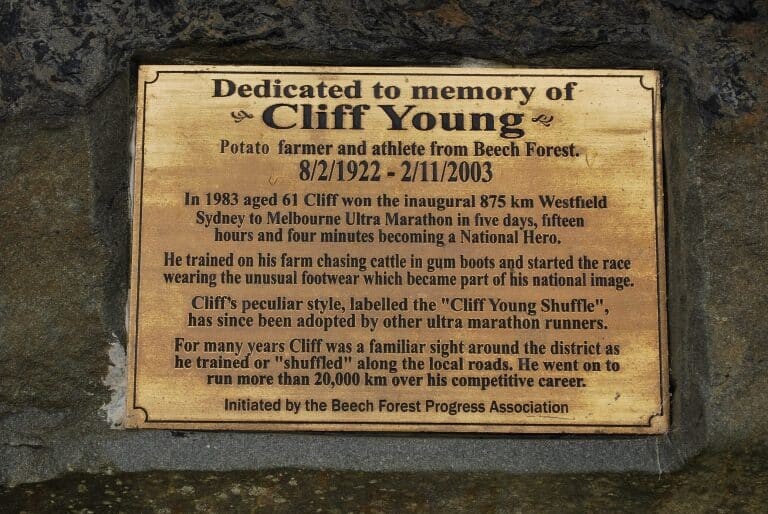
His time—5 days, 15 hours, and 4 minutes—shattered the previous course record by almost two full days. He finished nearly ten hours ahead of the next competitor, an elite athlete half his age.
When officials handed him the $10,000 prize, Cliff was surprised. He hadn’t known there was prize money. He said he had only come to run. Then he gave the entire amount away, sharing it among the runners who finished behind him because, in his view, they had all endured the same suffering.
Cliff Young’s victory changed ultramarathon running forever. His shuffling gait—later known as the “Young Shuffle”—proved to be an efficient endurance technique and is still referenced today. His approach to rest challenged long-held assumptions about human limits.
He continued racing into his seventies, always humble, always smiling, always shuffling.
When Cliff Young passed away in 2003 at the age of 81, Australia mourned not just a champion, but a reminder: that age is not a boundary, that heart matters more than equipment, and that sometimes the people who don’t know the rules are the ones who redefine what’s possible.
Cliff Young didn’t win because he was faster.
He won because he never knew he was supposed to stop.
by Erick Cheruiyot for My Bestruns.
Login to leave a comment
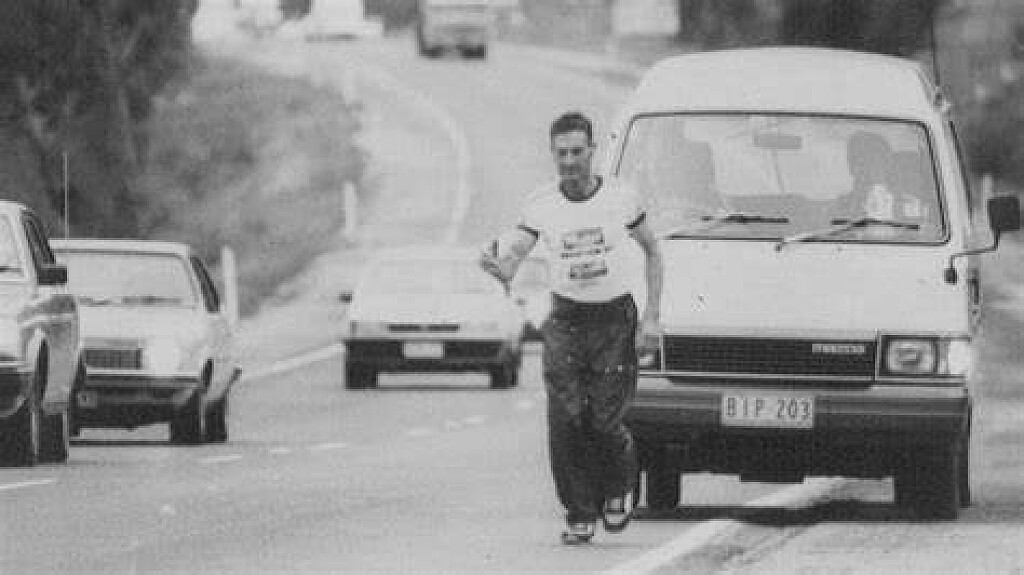
The Legend of Cliff Young: The potato farmer who miraculously won a 544-mile marathon at age 61
At the start of the 1983 Sydney to Melbourne Ultramarathon, Cliff Young quickly fell behind and seemed on track to finish last. But while the others stopped to sleep, Young kept running at his tortoise pace for five days straight — and won.
In 1983, a 61-year-old Australian potato farmer entered the first ultramarathon between Sydney and Melbourne. Few bet on the farmer winning the race.
Not only did Cliff Young have a strange, slow running stride resembling a shuffle, but he’s said to have shown up to the race wearing work boots and overalls. During the event itself, rather than wearing sleek running clothes like the other competitors, Young donned a cotton t-shirt and long trousers, explaining that it was important to reduce his risks of skin cancer.
But Young had a secret weapon.
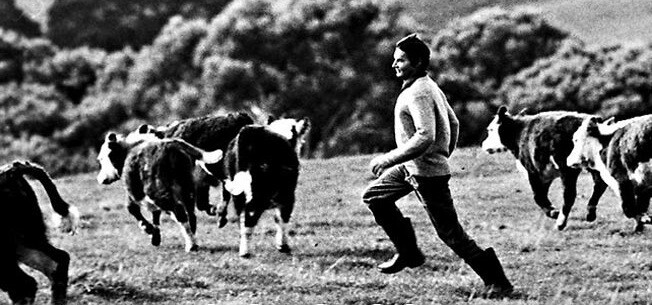
“I grew up on a farm where we couldn’t afford horses or tractors,” Young said in an interview, according to Adventure Journal. “And the whole time I was growing up, whenever the storms would roll in, I’d have to go out and round up the sheep. We had 2,000 sheep on 2,000 acres.”
Rounding up sheep gave Young a taste for long-distance running.
“Sometimes I would have to run those sheep for two or three days. It took a long time, but I’d always catch them. I believe I can run this race.”
In less than six days, Cliff Young ran 544 miles and won the ultramarathon — and broke the previous record by two whole days. His unorthodox style and surprising victory shocked the world. How did a 61-year-old farmer win one of the most challenging races in history?
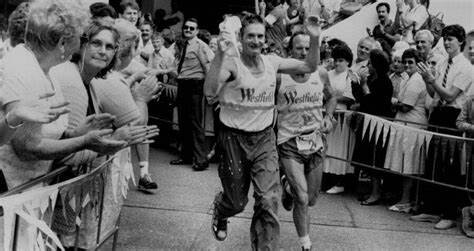
Cliff Young’s Real-Life Tortoise And The Hare Story
From the starting gun, it looked like Cliff Young would be at the back of the pack.
When the ultramarathoners left Sydney, Young quickly fell behind. With his slow signature shuffle, Young could barely match the pace of the other racers. But everything changed the first night of the race.
Although he’d fallen far behind the other runners at the end of the first day, by dawn on the second day Young had a massive lead. The Sydney Morning Herald reports that that was thanks to Young’s trainer, Wally Zeuschner. Known for his tough tactics, Zeuschner reportedly told one athlete that he could take a break when his eyes started bleeding.
In fact, Zeuschner’s eyes helped Cliff Young win the ultramarathon. Young turned in to sleep the first night and Zeuschner set the alarm. But because of his poor eyesight, Young’s trainer set the alarm for 2 a.m., several hours earlier than the planned wakeup call.
When the alarm rang, Young leaped up and began running. It took the groggy racer some time to realize that it was still dark.
Those hours of early morning running put Cliff Young at the head of the pack. And Young turned that accidental advantage into a strategy. Instead of stopping to sleep at night, he kept running.
“I’m just an old tortoise,” Young told reporters during the race, according to The Age. “I have to keep going to stay in front.”
Cliff Young also had an unusual running style. The press dubbed it the “Young-Shuffle,” because Young seemed to shuffle rather than run.
But the shuffle-step gave Young a significant advantage during an ultramarathon. By conserving his energy, Young was able to run longer without rest. His shuffle was also more aerodynamic than other running styles, according to the Sydney Morning Herald.
Not long after the ultramarathon, other runners adopted Young’s signature style. In fact, three subsequent winners of the Sydney to Melbourne ultramarathon took first place using the Young-Shuffle, according to Elite Feet.
Fans and reporters tracked Cliff Young as he inched closer and closer to Melbourne. During days and nights of running, someone asked Young what he planned to do first when he reached the finish line.
“I’m going to the toilet first,” Young declared.
As the days passed, Young remained at the head of the pack. At dawn on the sixth day, Melbourne was in sight. But it would take Young several more hours of running to officially win the race.
When he reached Melbourne, Young barely stopped for the cameras — they had to wait outside while he went to the toilet.
Sharing The Prize Money
In the final leg of the ultramarathon, runner Joe Record thought he might catch Young. As reported by The Age, Record, 41 years old, boasted, “I think I can catch old Cliff. He says he’s a tortoise but I think the old bastard is a hare in disguise.”
But Cliff Young carried the day, reaching Melbourne in the record time of 5 days, 15 hours.
At the end of the race, Cliff Young walked away with $10,000 in prize money. Instead of keeping it for himself, he gave away most of the money to his competitors.
“Joe Record and I had a pact before we ran that if either of us won we would split the prize money between us,” Young told the New Vegetarian and Natural Health magazine in a 1997 interview. “I forgot about Joe and started giving it away left, right and center. I gave $4,000 away to the other runners.”
Luckily, Record didn’t mind when Young handed him $3,000.
Later, when asked about the highlight of the ultramarathon, Young said, “The prize money of ten thousand dollars! Now that’s a helluva lot of potatoes.”
The Legacy Of Cliff Young
When he won the first Sydney to Melbourne ultramarathon, Cliff Young became a hero in Australia. Suddenly, everyone wanted to know about the potato farmer who ran 544 miles.
Reporters pestered Young to learn more about his diet. An avid vegetarian, Young explained how eating grains and fruit powered his runs. “The secret to a long life is preserved pears and jogging,” Young told the Sydney Morning Herald. “It sure beats having a drink in the pub.”
Young also had advice for fellow older runners.
“Get out of your wheelchairs and start doing a few laps, if you can,” he told the New Vegetarian and Natural Health magazine. “If you don’t get any exercise your joints start seizing up like a rusty engine.”
Young never retired from running. He returned to the Sydney to Melbourne ultramarathon the next year, 1984, and came in 7th. In his 70s, Young attempted to run around all of Australia. He only stopped when his support crew member fell ill. In 2003, Cliff Young died at the age of 81.
Cliff Young inspired generations of runners. So did Kathrine Switzer, the first woman to run the Boston Marathon. And don’t forget to check out more uplifting stories from history.
by Genevieve Carlton, Maggie Donahue
Login to leave a comment
