

Running News Daily
Running News Daily is edited by Bob Anderson and team. Send your news items to bob@mybestruns.com Advertising opportunities available.
Index to Daily Posts · Sign Up For Updates · Run The World Feed
Articles tagged #1972 Munich Olympic Games
Today's Running News
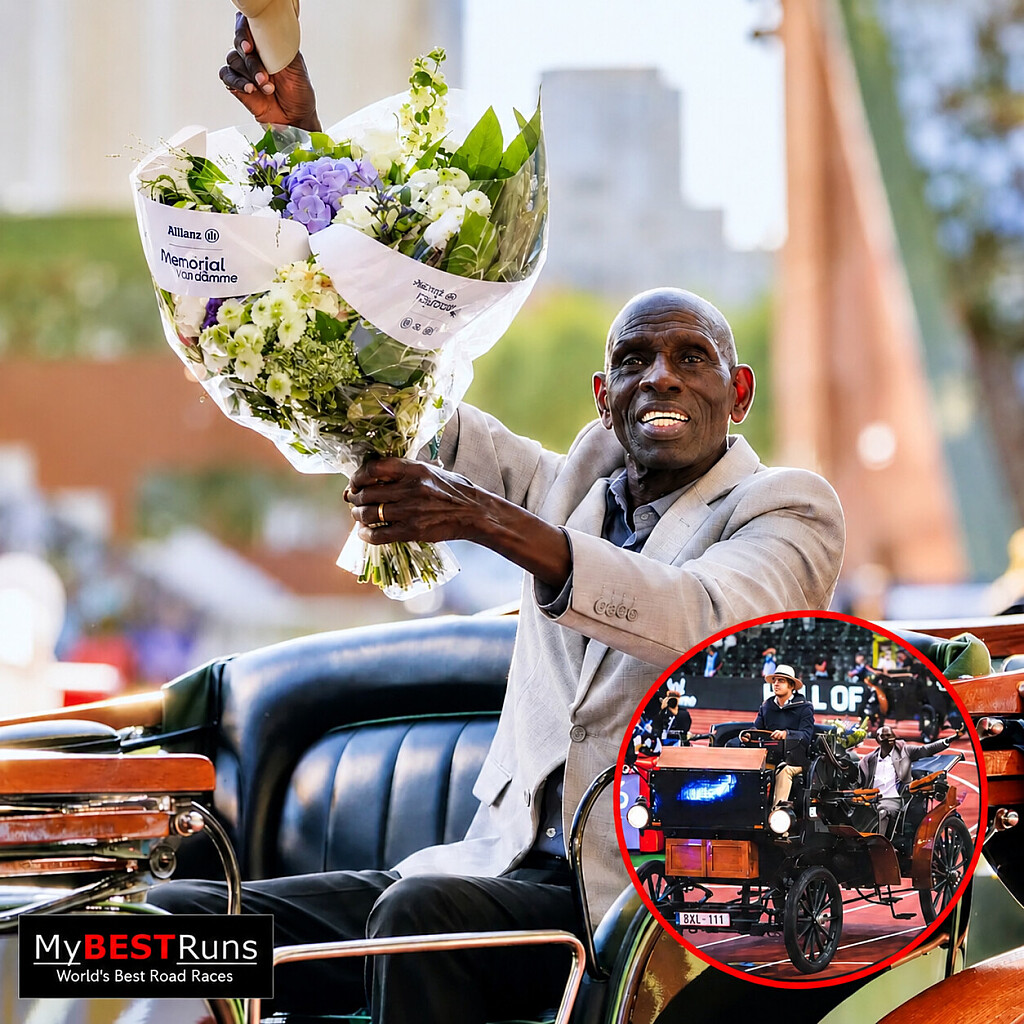


Mike Boit Honoured In Brussels As Kenyan Athletics Pioneer Enters Memorial Van Damme Hall Of Fame
Kenyan athletics legend Professor Mike Boit has received another prestigious recognition, nearly five decades after he etched his name into the history of the Memorial Van Damme in Brussels.
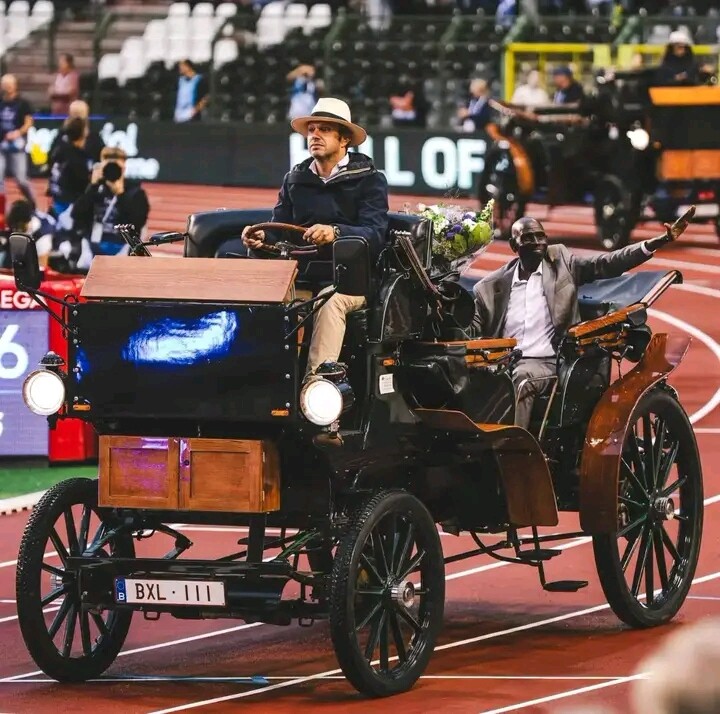
Boit was inducted into the Memorial Van Damme Hall of Fame during the 2026 Diamond League Final in Brussels, joining two global athletics icons, American sprint and long-jump legend Carl Lewis and former high-jump world-record holder Dwight Stones, in the 2026 class of honourees.
The occasion brought Boit back to the scene of one of the defining victories of his illustrious career. In 1977, he won the inaugural Memorial Van Damme 800 metres, becoming part of the meeting's history from its very first edition.
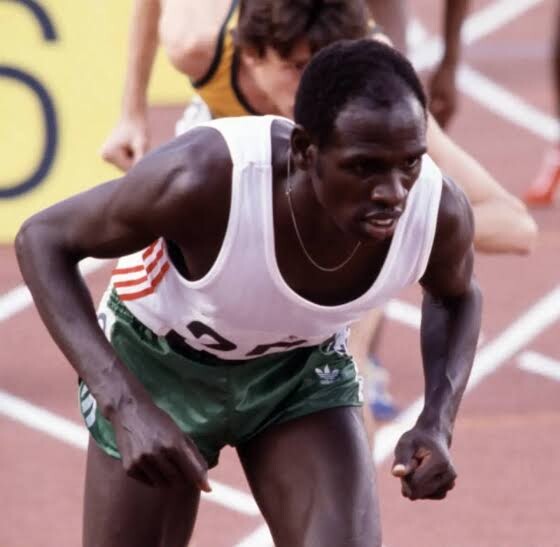
His victory in Brussels was another chapter in a career that had already established him as one of Kenya's pioneering international track stars.
Boit had announced himself on the biggest stage five years earlier at the 1972 Munich Olympic Games, where he won bronze in the 800m. At a time when Kenya was still establishing itself as a major force in international athletics, Boit was among the athletes who helped open the door for the generations that followed.
His influence, however, stretches far beyond his achievements on the track.
After his competitive career, Boit built an impressive academic and professional career in sports science. He earned two master's degrees and a PhD, using his expertise to contribute to the development of sport and the education of future generations of athletes.
That combination of athletic achievement and academic excellence has made him an exceptional figure in Kenyan sport. His journey is one that moves seamlessly from the Olympic podium to the university lecture hall, while his pioneering achievements continue to form part of Kenya's rich athletics heritage.
His induction was marked by a special lap of honour at the King Baudouin Stadium, giving spectators an opportunity to celebrate a man whose name has been intertwined with the history of the prestigious Brussels meeting for almost half a century.
For Boit, the honour represents more than recognition for a single race or medal. It is a celebration of a lifetime of contribution to athletics and sports science, as well as the impact of a pioneer whose achievements helped shape Kenya's growing presence on the international stage.
Nearly 50 years after winning the first Memorial Van Damme 800m, Boit returned to Brussels in a very different role. This time, there was no starting line, no finishing tape and no medal to chase.
Instead, there was a standing ovation and a place among the legends.
From Olympic bronze medallist to pioneering international athlete, from Memorial Van Damme champion to distinguished professor, Mike Boit's remarkable journey continues to inspire.
His name is now permanently associated with the history of one of Europe's most prestigious athletics meetings — a fitting tribute to a Kenyan icon whose influence has extended far beyond the track.
by Erick Cheruiyot for My Best Runs.
Login to leave a comment
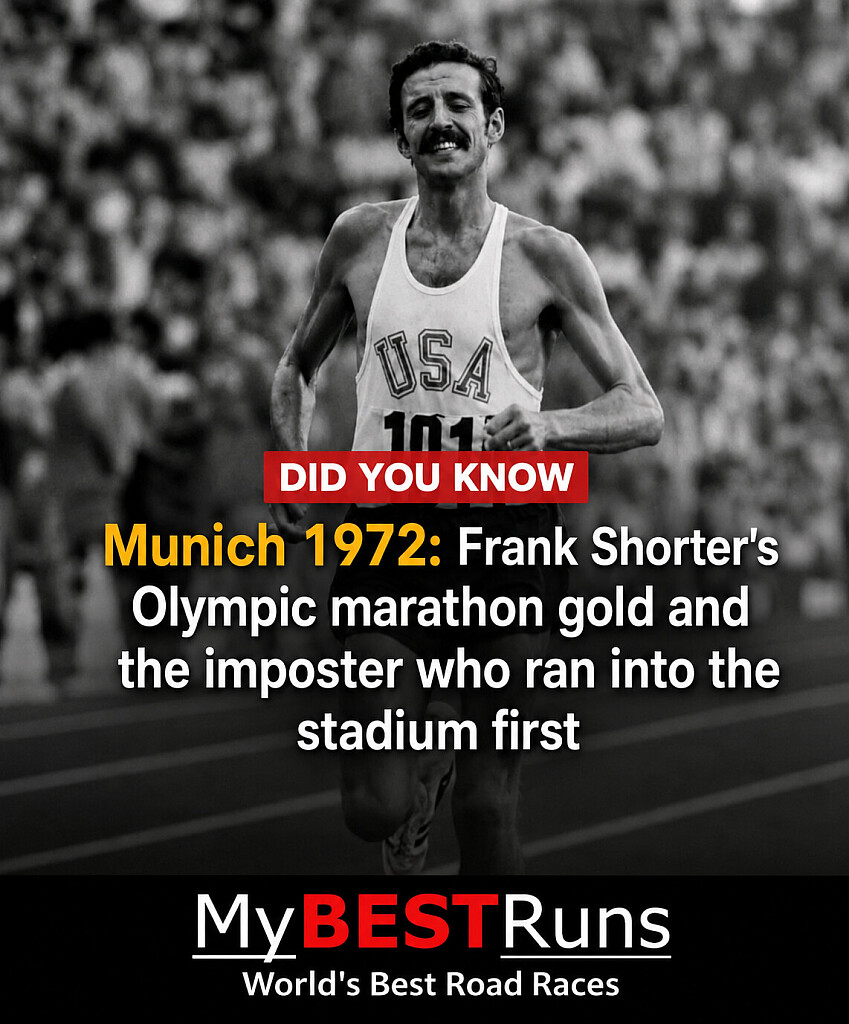
The Olympic Marathon's Most Bizarre Finish: When Frank Shorter's Greatest Triumph Was Almost Stolen
The men's marathon at the 1972 Munich Olympic Games produced one of the most extraordinary and misunderstood moments in Olympic history—a finish so surreal that even the man who won the gold medal was briefly denied the celebration he had earned.
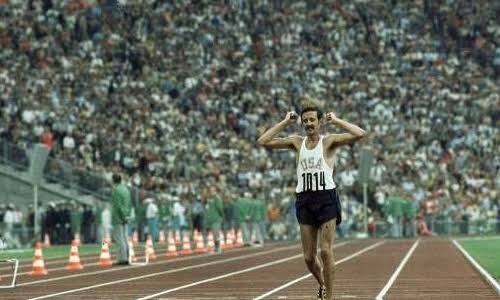
American distance star Frank Shorter had produced a masterclass over the 42.195-kilometre course. Breaking away from the field, he built a commanding lead of more than a minute and, with just one kilometre remaining, victory was all but certain. As he approached the Olympic Stadium, he could already hear the roar of nearly 80,000 spectators awaiting the arrival of the marathon champion.
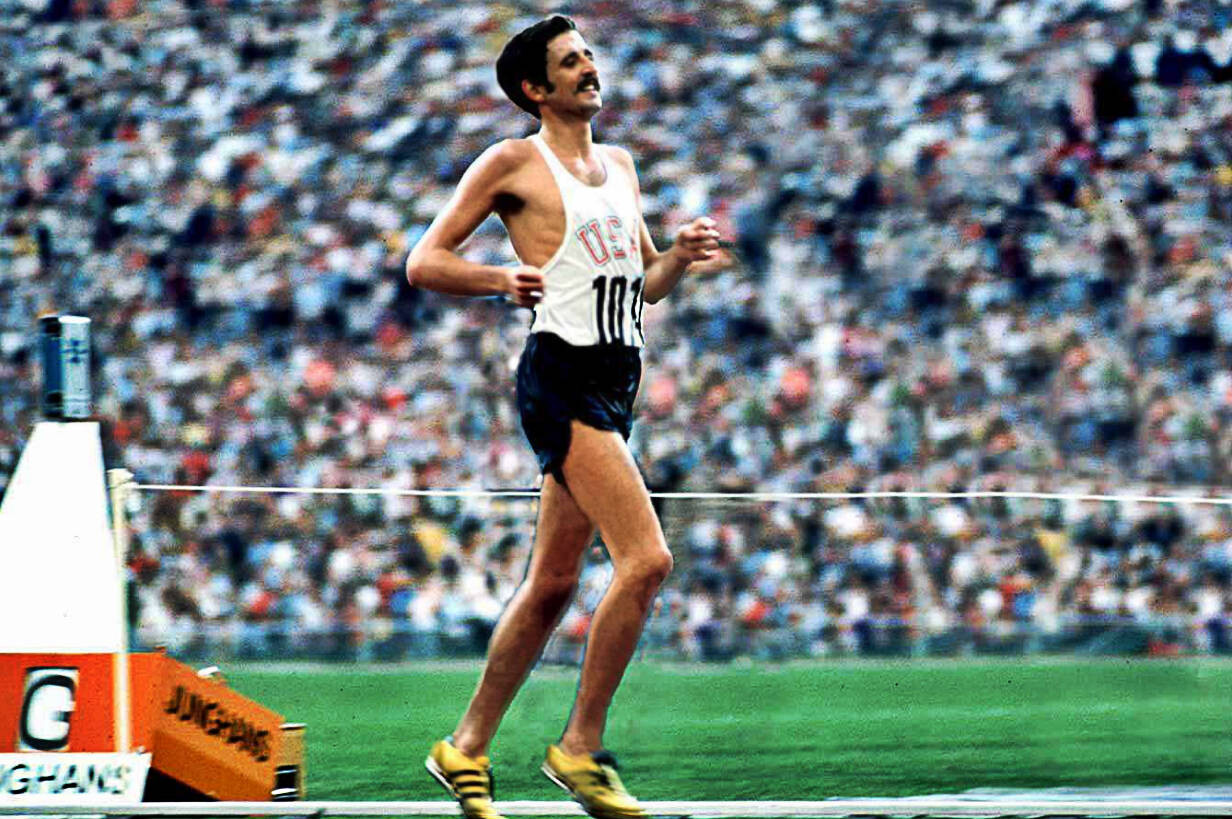
But inside the stadium, something astonishing had already happened.
A young man wearing a grey tracksuit burst onto the marathon course just before the entrance tunnel. His name was Norbert Sudhaus, a West German student with no connection to the race. Blending into the finish route, he sprinted into the stadium ahead of the real leader and completed what appeared to be the final lap of the Olympic marathon.
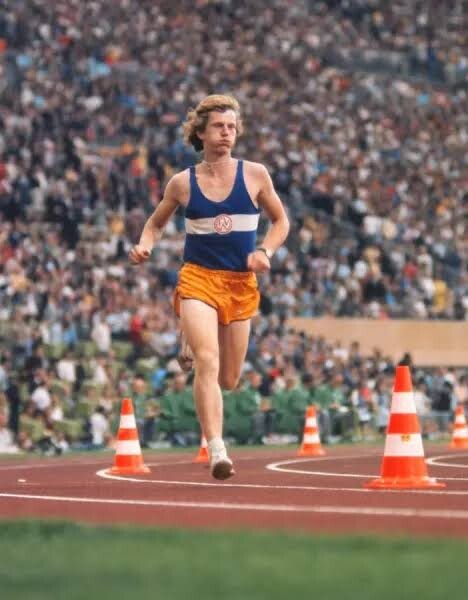
The unsuspecting crowd erupted.
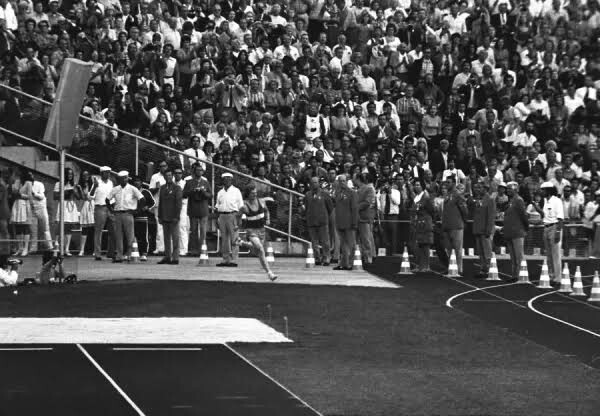
Believing they were witnessing the arrival of the Olympic champion, tens of thousands rose to their feet, cheering wildly as the imposter crossed the track. For several chaotic moments, confusion reigned. Security officials and race organisers eventually realised the deception, removed Sudhaus from the track, and hurried to restore order.
Then, about a minute later, the true champion finally emerged.
Frank Shorter entered the stadium expecting the deafening ovation reserved for an Olympic marathon winner. Instead, he was met by puzzled silence before the spectators slowly realised their mistake and began applauding again. The emotional climax of one of the greatest victories in American distance running had been unintentionally stolen by an unexpected intruder.
Despite the bizarre interruption, nothing could erase what Shorter had accomplished on the roads of Munich.
He crossed the finish line to claim Olympic gold, becoming the first American to win the Olympic marathon since 1908. His triumph inspired millions across the United States, igniting a running boom that transformed the marathon from a niche endurance event into one of the world's most popular races. Countless recreational runners, road races, and marathon events that flourished during the 1970s can trace part of their inspiration back to Shorter's unforgettable victory.
Yet history remembers an extraordinary twist.
One of the greatest marathon performances ever seen concluded not with the uninterrupted roar of a grateful stadium, but with a moment of bewilderment. The final 400 metres of Frank Shorter's Olympic masterpiece were overshadowed by a prank that fooled an entire stadium and created one of the strangest finishes the Olympic Games have ever witnessed.
More than five decades later, the image remains unforgettable—a champion running toward immortality while the loudest applause had already been given to someone who was never part of the race at all.
by Erick Cheruiyot for My Best Runs.
Login to leave a comment
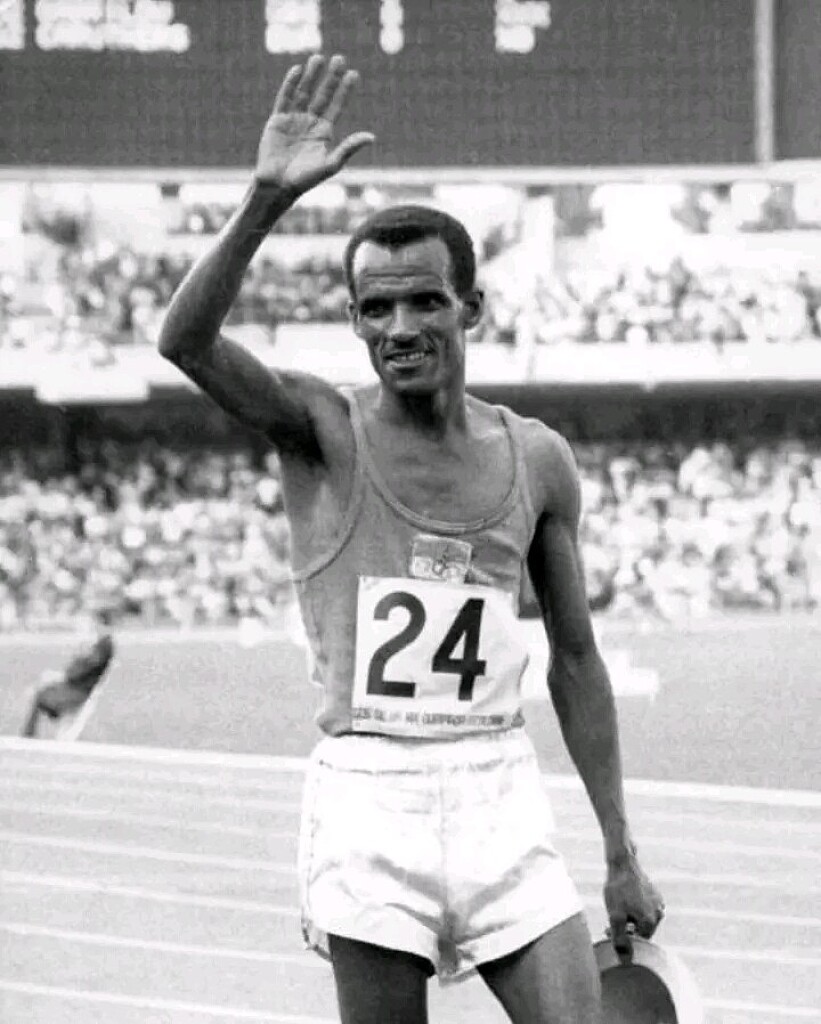
Degaga “Mamo” Wolde: The Marathoner Who Carried Ethiopia to Olympic Immortality
Long before Ethiopian distance running became a global empire, there was a man who first showed the world what the green, yellow, and red could achieve on the biggest stage of all. Degaga “Mamo” Wolde was not just an athlete; he was a pathfinder, a symbol of endurance, and a quiet force who reshaped how the world viewed Ethiopian athletics.
Born on June 12, 1932, Wolde emerged in an era when global recognition for African runners was still rare. His journey was built on patience and range, developing from middle-distance races into the most demanding events on the track and road. That versatility became his trademark. From the 800 meters to the marathon, Wolde demonstrated an uncommon ability to adapt, endure, and excel, steadily sharpening his craft across decades of competition.
The defining chapter of his legacy unfolded at the 1968 Olympic Games in Mexico City. Battling altitude, pressure, and the weight of national expectation, Wolde delivered a performance that would echo through history. He stormed to Olympic gold in the marathon, running with authority and composure to claim one of Ethiopia’s most iconic sporting triumphs. As if that were not enough, he doubled back onto the track to secure a silver medal in the 10,000 meters, underlining his extraordinary endurance and competitive spirit. In a single Olympic Games, Wolde cemented himself among the greatest all-round distance runners the sport has ever seen.
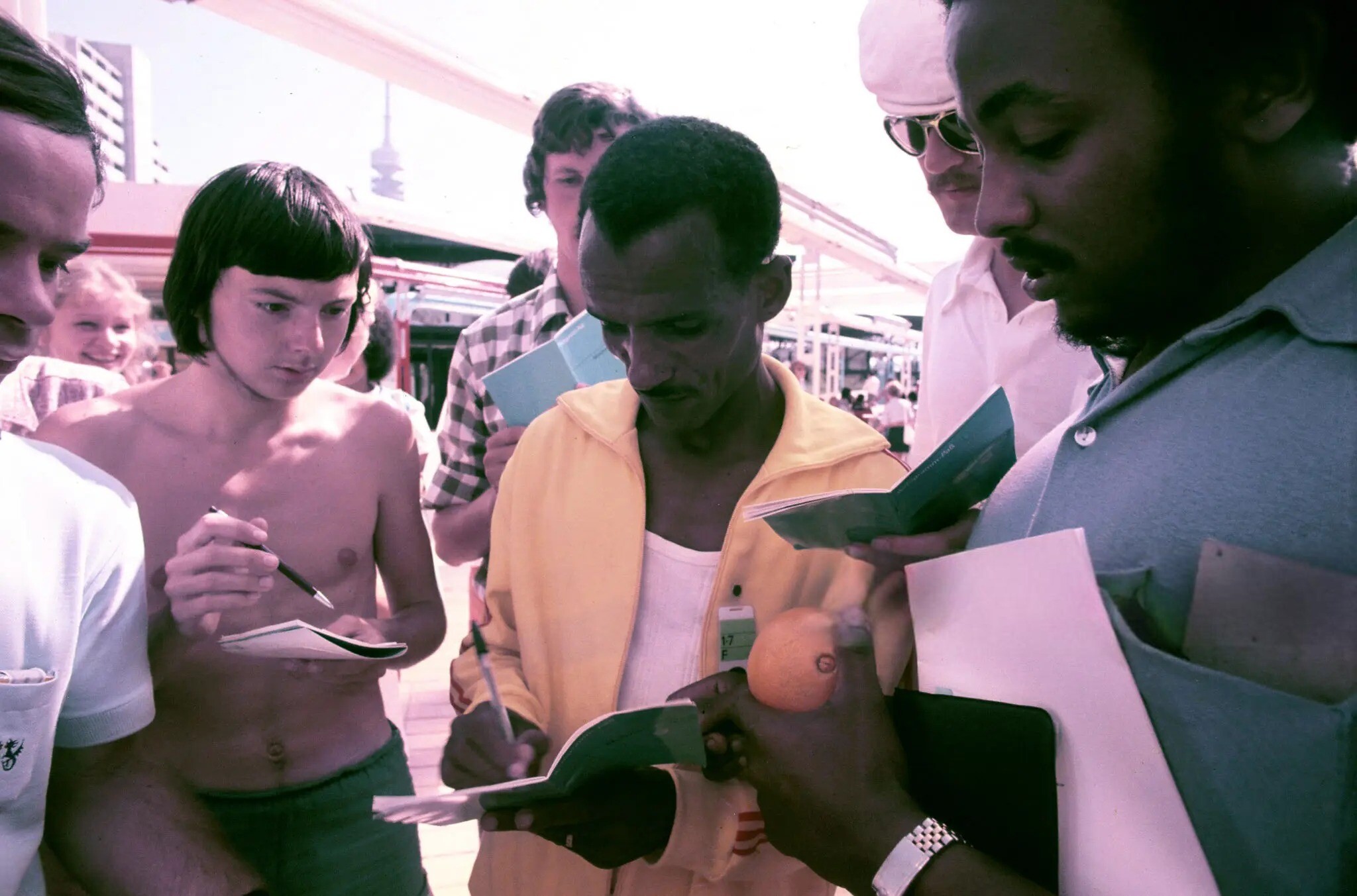
His excellence did not fade with time. Four years later, at the 1972 Munich Olympic Games, Wolde once again stood on the podium, earning a bronze medal in the marathon. It was a powerful statement of longevity, proof that his success was not a moment of brilliance but the result of sustained discipline and resilience. Across his career, his personal bests told the same story—speed over 800 meters, tactical strength in the 1500 and 5000 meters, grit in the 10,000 meters, and supreme stamina over the marathon distance.
Yet Wolde’s impact reaches far beyond medals and times. He laid the foundation for Ethiopia’s distance-running tradition, inspiring generations who would follow his footsteps onto global podiums. Every Ethiopian marathon victory since carries a trace of his pioneering spirit. He showed that athletes from the Horn of Africa could dominate not just one event, but the entire spectrum of endurance racing.
When Degaga “Mamo” Wolde passed away on May 26, 2002, Ethiopia lost a national hero—but his legacy did not leave with him. It lives on in every long stride taken by Ethiopian runners across the world, in every championship won, and in every young athlete who dares to believe that greatness can rise from humble beginnings.
Mamo Wolde did more than win races. He carried a nation’s pride across finish lines, turning belief into history and endurance into legacy.
by Erick Cheruiyot for My Best Runs.
Login to leave a comment
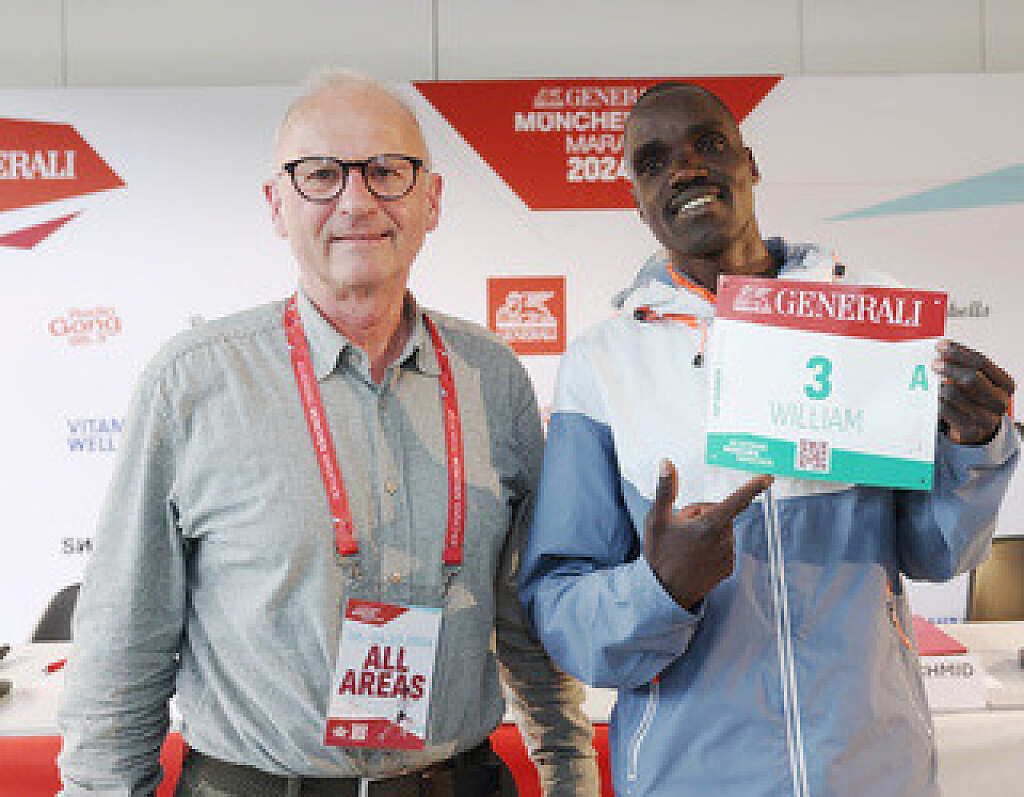
Kenyans target a double hat-trick in Munich
Kenya’s elite runners target a double hat-trick at Sunday’s Generali Munich Marathon: If successful it will be the third time in a row that runners from this country take Germany’s fourth biggest marathon race.
Cosmas Birech and Shamilah Kipsiror are heading the start list with personal bests of 2:08:03 and 2:27:33 respectively.
Organizers registered a record total of over 27,000 entries from 120 countries for the 38th edition of the Generali Munich Marathon, which will start and finish next to the iconic Munich Olympic Stadium. Due to building works in the arena runners can not finish inside on the track this year. While the total figure includes races at shorter distances there will be around 6,200 marathon runners on Sunday.
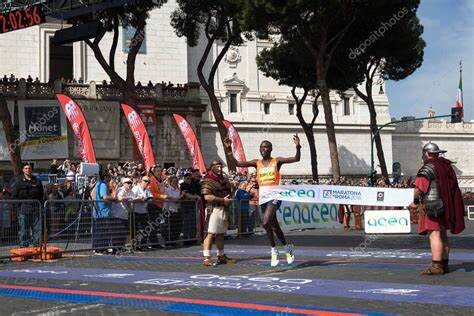
A number of athletes had to cancel their start due to either injuries of visa problems. The latest withdrawal came from Dominic Nyairo of Kenya, who would have been a strong favorite on Sunday. However there is still enough talent left to produce a good race. “It is our aim to achieve winning times of sub 2:09 and sub 2:26,“ said Michael Kraus, the elite field coordinator. The weather might be challenging, but we remain optimistic to see faster winning times than last year.“
Cosmas Birech ran his personal record when he won the Rome Marathon in 2018 with 2:08:03. Rome is not known as a particularly fast course, so Birech hopes to achieve a similar time at the Generali Munich Marathon. Fellow Kenyans William Kibor and Benard Chumba are also among the favorites. Kibor has a PB of 2:08:32 from the Vienna City Marathon back in 2012 and Chumba ran 2:10:33 in Marrakech last year. All three of them are from Kaptagat and train together. “My training went very well and I feel that I am in the same kind of shape as when I ran my personal best. If the weather is good I hope to run between 2:07 and 2:09 on Sunday,“ said William Kibor at Friday’s press conference in Munich.

A marathon debutant could do very well on Sunday: Kenya’s Nehemiah Kipyegon showed very promising form recently. The 26 year-old improved his half marathon PB to 60:34 in Copenhagen last month. In the highly competitive race he finished ninth. Siyum Tola of Ethiopia is another athlete who will run his debut in the Generali Munich Marathon. He has been involved in marathons as a pacemaker and is a training partner of Milkesa Mengesha who won the Berlin Marathon two weeks ago.
In the women’s race Shamilah Kipsiror will be the main favorite. The Kenyan improved to 2:27:33 for fourth place in Rome this spring. Her half marathon PB of 67:53 indicates that there is potentially more to come, especially on a flat course like Munich. A trio of Ethiopians will most likely be her strongest rivals on Sunday. Gelane Senbete has a personal record of 2:29:54 while Gadise Negasa has run 2:30:30. Asmare Assefa could be in for a surprise and a big improvement. So far she has not run faster than 2:33:10 but the Generali Munich Marathon will be her first race outside Africa. Assefa is in the same training group with Tola and Mengesha in Addis Ababa.
“We are thrilled by the record entry which means we have a 20 percent surge compared to last year. We are proud of these figures which show that our event and the course are really popular,“ said Gernot Weigl, who runs the Generali Munich Marathon as Race Director for almost 25 years. Stronger elite fields and international media work have helped bring up the numbers recently.
Although the city of Munich benefits from the growing number of international runners the event attracts, it was Munich’s government that clouded the future of the Generali Munich Marathon. Officers of the city’s district department (Kreisverwaltungsreferat) decided to pass on the right of staging a marathon in the city to a new organizer who has never ever staged a road race. There is talk of a two-lap marathon course and it looks as if the city of Munich gambles with a successful international event that in addition keeps a legacy of the 1972 Munich Olympic Games. “I have never heard of anything like this happening to a major international marathon race,” said Gernot Weigl, who is now legally challenging the decision of the Munich district department.
by AIMS
Login to leave a comment

Generali Munich Marathon
The GENERALI MUNICH MARATHON has held the elite label of the WORLD ATHLETICS since 2020 and the marathon route is officially measured and recognized. The route runs from the Olympic Park and Schwabing to Leopoldstraße with the Siegestor, via Königsplatz and the Pinakotheken to the English Garden. From there past the Chinese Tower and Art Nouveau villas in Bogenhausen, through...
more...