

Running News Daily
Top Ten Stories of the Week
5/18/2019
These are the top ten stories based on views over the last week.
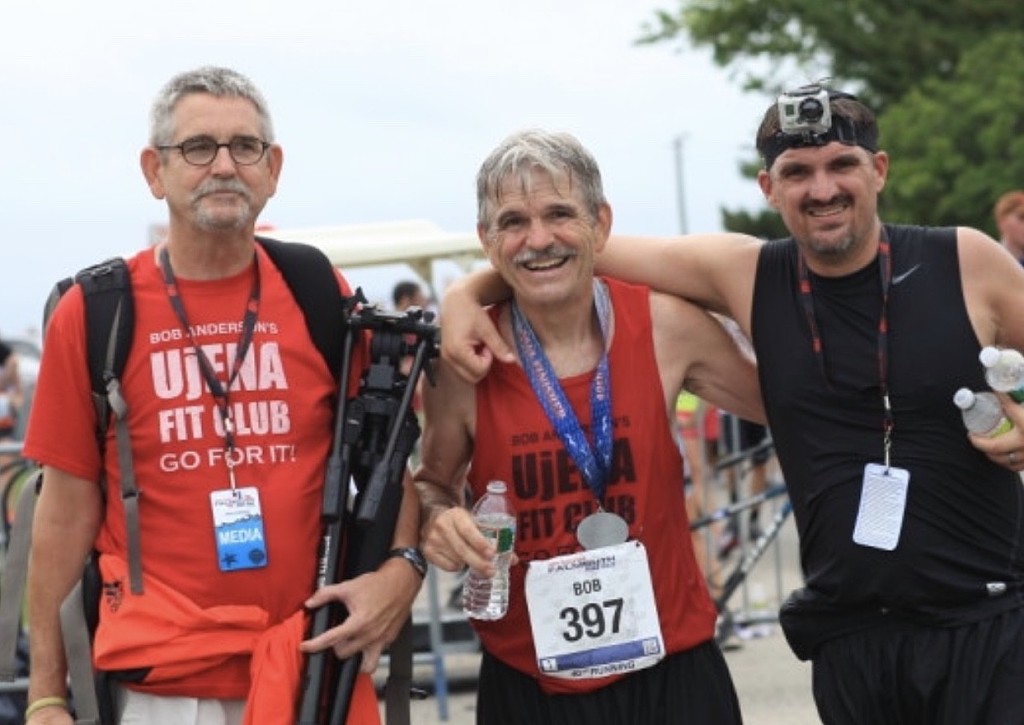


A Long Run the movie tells one man's story, but it's every runner's journey. Bob Anderson's life connects us to many icons...by the end, you're left with a runner's high without the sweat says Dan Brown
Over 100,000 people have already watched A Long Run the movie with good reviews. Now you can watch the full length movie...compliments of MyBestRuns.com with speical arrangments with it's production company Around Town Productions.
Actor Sean Astin who narrated the film wrote, "I loved A Long Run. Thank you so much for letting me be a part of your wonderful journey Bob." Boston Marathon director Dave McGillivray wrote," In watching A Long Run, you readily see the impact and influence Bob has had on our sport over the years. This story is inspiring, motivational, educational and simply makes you want to go out the door and do a run..and a real 'long run' at that."
Joe Henderson writer and former Runner's World editor wrote, "I’ve always known Bob Anderson as a man of Big Ideas, one with a knack for making these dreams come true. He conceived a little magazine called Distance Running News, which grew into the biggest one, Runner’s World.
"He created a book division that published some of the sport’s best-selling titles...This all happened before Bob turned 30, but his idea-generating didn’t stop then. At more than twice that age, he dreamed up Double Racing and then to celebrate his 50th anniversary as a runner, Bob plotted a tough year-long course: 50 races, averaging better than seven minutes per mile overall, concluding the week he would turn 65."
A Long Run tells one man's story, but it's every runner's journey. Bob Anderson's amazing life connects us to icons like Bill Rodgers, Billy Mills and Paula Radcliffe but also to the low-budget thrill of a community 5k. The gorgeous cinematography captures The Avenue of the Giants, the beauty of Central Park in New York City, the San Francisco landscapes, resort cities like Cancun and Cabo, the lush island of Kauai and the vistas of Fort Bragg.
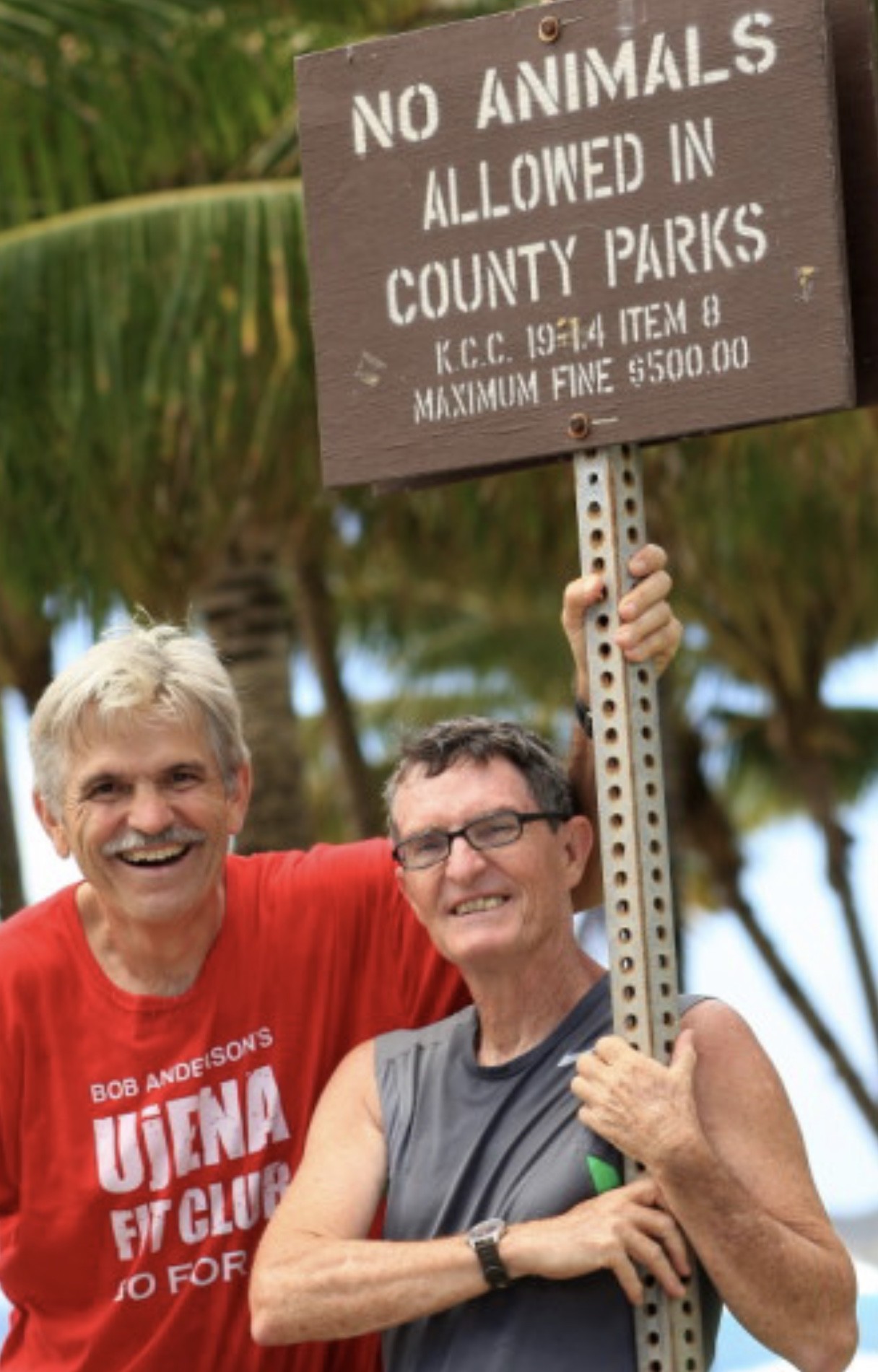
And the smoothly intertwined stories - his 50-race challenge, the magazine, the running boom - are handled with Olympic-caliber pacing. By the end, you're left with a runner's high, without all the sweat.
This is an inspirational life long journey that takes you across the United States, into Mexico and introduces you to some amazing runners.
A Long Run features Bob Anderson who started Runner's World magazine when he was 17 with $100. He grew the magazine to nearly a half million circulation with monthly readership of nearly 2.5 million before selling it to Rodale Press in 1984. How did he do it and why did he sell the magazine he loved?
50 years after he started running, he started his 50 race challenge... one year - 50 races - 350 miles.
His goal - Average under a 7 min/mile average pace at 64-years-old. That's fast for any age!
In the running formula known as age-grading, Anderson’s mile pace is the equivalent of a 30-year-old running an average pace of 5:24 for 50 races covering 350 miles.
“I wanted to do something special, something that would be very positive for running,” Anderson said. “But I also wanted to do something that would not be easy.”
Did he reach his goal? How did he cope with injuries? Weather? Hills? How did he recover each week?
Bob Anderson first run took place Feb. 16, 1962. His first race was May 7 that year, when he covered 600 yards at Broadmoor Junior High in 1 minute, 39 seconds. By 1963 at age 15 he placed first at the Junior Olympics in Missouri clocking 2:08.5 for 880 yards.
By 17, Anderson wanted to tackle a marathon. He wanted to run the Boston Marathon. But neither he nor his high school coach (coach McGuire) knew how to prepare. So Anderson did the 1965 equivalent of a Google search: He sent letters around the country asking for advice.
Coaches and top athletes replied not just with training tips, but also with addresses of other people Anderson should try. Soon he had a network of running experts at his disposal.
Recognizing the value of this collected wisdom, he turned to teammate David Zimmerman while on a bus trip to a cross-country meet for their Shawnee Mission West team. “I’m going to start a magazine,” Anderson declared.
With $100 from baby-sitting and lawn-mowing jobs, the 17-year-old launched Distance Running News. The magazine debuted in January 1966 with a 28-page issue that Anderson collated, stapled and folded himself.
The publication created a stir among a previously unknown army of foot soldiers. Thirsty runners plunked down the $1 subscription price (for two issues) — and often enclosed an additional $5 just to make sure the magazine stayed afloat.
“Until then, I wasn’t even aware that there was a running community,” said SF Bay Area runner Rich Stiller, who had been running with Anderson since the early 1970s. “I always think that Runner’s World was part of the jet-propulsion that really made the running boom take off and made people realize, ‘Oh, gee, I’m not doing this alone.’ ”
The magazine grew so quickly that Anderson dropped out of Kansas State University. He recruited a SF Bay Area writer and runner named Joe Henderson to be his editor, and moved the magazine headquarters to Northern California.
Anderson’s 50-for-50 goal was in jeopardy after he stumbled out of the gate or, more specifically, down a trail in Mountain View.
While on a training run in December, Anderson awoke to find his head streaming with blood and two people standing above him looking alarmed.
“There were no marks at all on my hands, which means I must not have even realized I was going down,” he said.
The fall required over 60 stitches and plastic surgery. But determined not to cancel the first race in his 50-race quest, Anderson limped to the starting line in San Francisco on New Year’s Day with a ruddy forehead and an eggplant of a bruise on his left knee. He finished that first race and then 49 more that year.
When Bob was publishing Runner's World he got so consumed managing a staff of 350 and was not able to train enough to run the Boston Marathon. However he did run ten marathons between 1968 to 1984 but none with enough training. He would not run Boston until 2013 when at age 65 he clocked 3:32:17.
A Long Run the movie covers a lot of ground. The year long event finished over six years ago but the story is fresh and a movie all runners and even non-runners will enjoy. You will want to watch it over and over again.
Some of the runners besides Bob Anderson featured in the film include: Bill Rodgers, Paula Radcliffe, Joe Henderson, George Hirsch, Rich Benyo, Amol Sexena, JoAnn Dahlkoetter, Rich Stiller, Hans Schmid, JT Service, Pina Family, Wall Family, Billy Mills, Gerry Lindgren, Dave Zimmerman, Dean Karnazes, Monica Jo Nicholson, Coach Lloyd McGuire, Katie McGuire, Mary Etta Blanchard, John Young, Roger Wright and more...
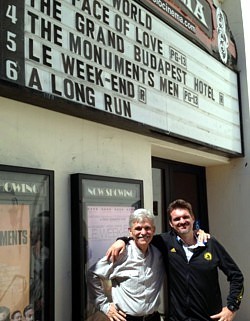
It was produced by Around Town Productions and directed by Michael Anderson (third photo at one of the showings in a theater in Monterey).
To watch the movie click on the link or go to: www.alongrun.com
(05/13/19) Views: 373Dan Brown
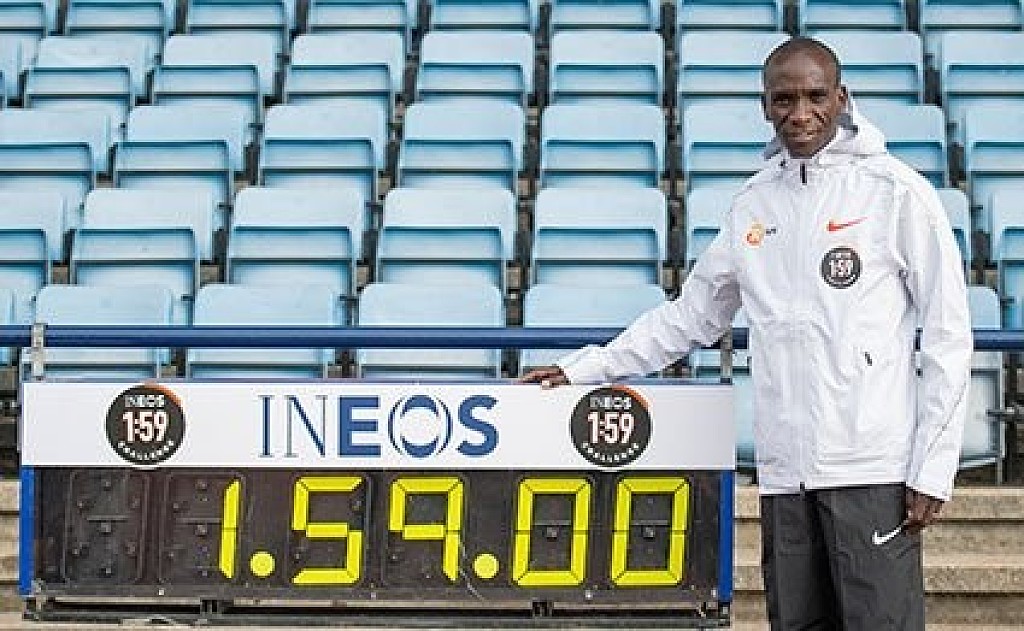
Eliud Kipchoge says his move to make a second attempt at running a marathon under two hours is spurred by the urge to test the human body and not the money involved
On Monday, Kipchoge announced he will be involved in another go at “breaking two” in a specially organised race, probably in London, “between late September and early October.”
In the first attempt of the Nike-engineered “Breaking2” project, Kipchoge, 35, powered by a cocktail of pacemakers on the Monza Formula One racetrack, ran two hour and 25 seconds, falling agonisingly close to breaking the two-hour barrier on May 6, 2017.
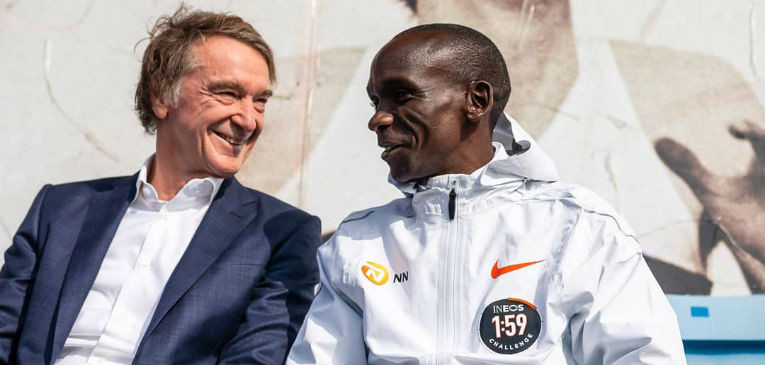
This time around, the race dubbed “INEOS 1:59 Challenge” will be funded by one of the richest men in England, Sir Jim Ratcliffe, the founder of chemical manufacturing company INEOS.
“My team doesn’t put money in front and for sure it’s not about business and money involved.” said Kipchoge, the marathon world record holder, who declined to state how much he will be paid in compensation.
“The sponsor, Sir Jim Ratcliffe, loves sports and wants me to try it again. It is always good to challenge myself and the world. It’s good to make history, it’s good to leave a memorable mark in athletics, “added Kipchoge.
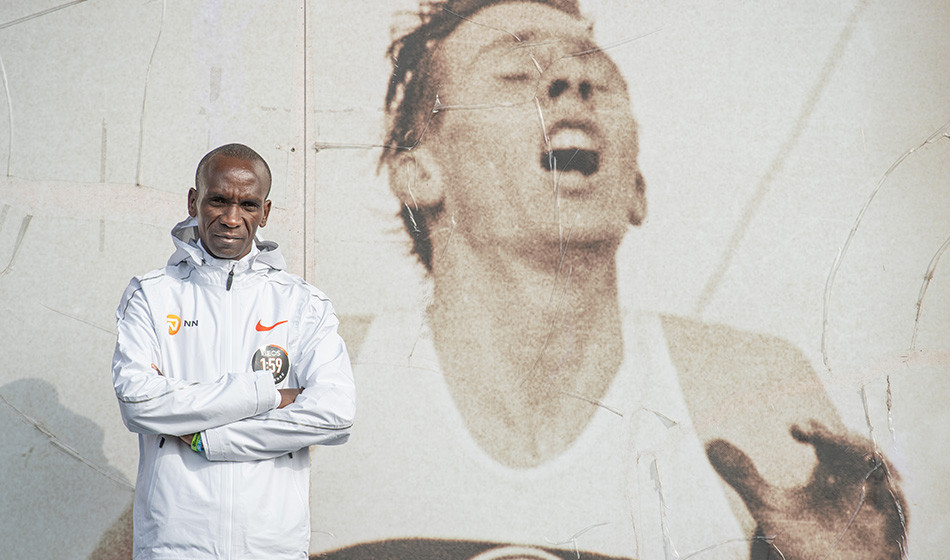
“There is nothing impossible in this world and that is why I want to erase the notion that no human being is limited.”
Kipchoge set a new marathon world record last year in Berlin when he triumphed in two hours, one minute and 39 seconds and would run the second fastest time after his record, when winning this year’s London Marathon in two hours, two minutes and 37 seconds on April 28.
(05/10/19) Views: 125
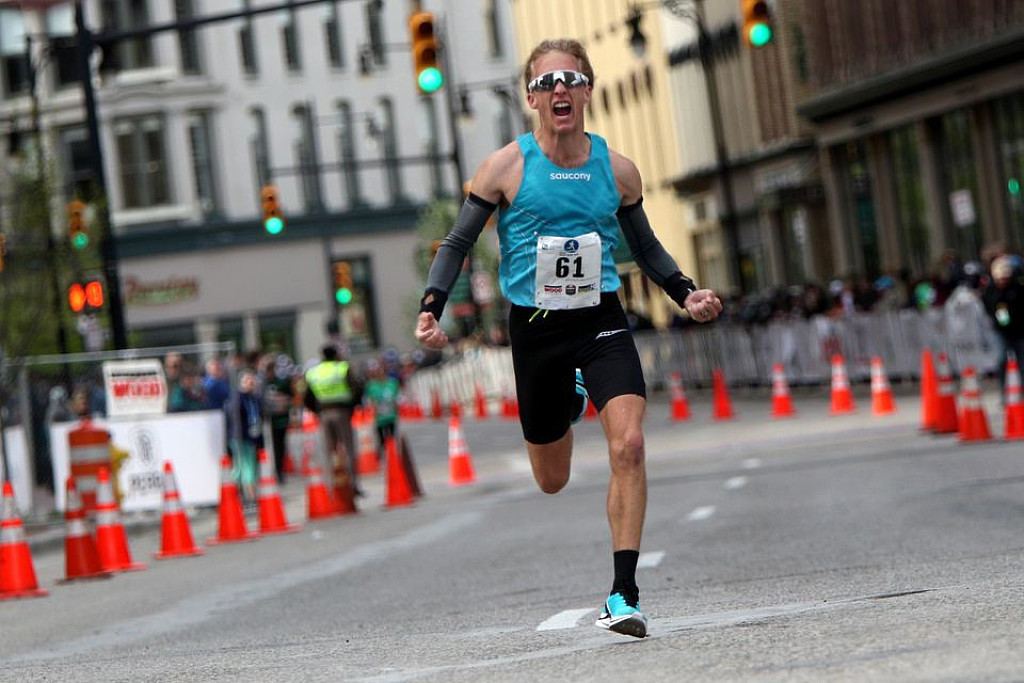
Record setting performances at the 42nd Annual River Bank 25K Run
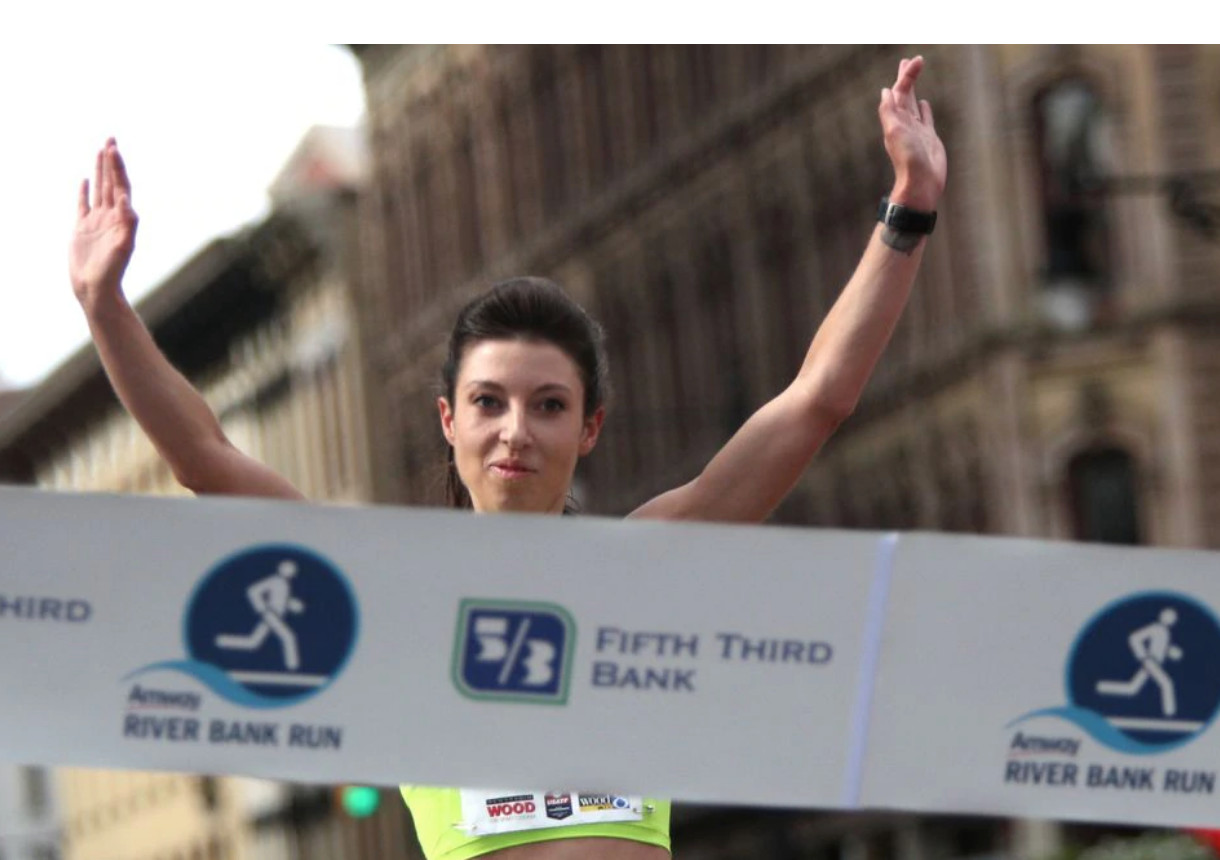
Emma Bates crossed the finish line with a smile and arms outstretched, while Parker Stinson (photo) roared in with tears of joy.
Both had reason to celebrate with record-setting performances Saturday at the Amway River Bank Run 25K in Grand Rapids, Michigan.
Under cool race conditions that began and finished under temperatures in the low to mid 40s and clouds, the two smashed previous records with dominating performances in the 42nd edition of the race.
Bates, runner-up at last year's race, pulled away from Sara Hall and finished in one hour, 23 minutes and 50 seconds to break the 2012 record by 34 seconds, while Stinson, who was third in 2017, finished in 1:13.46 to better a twice-reached mark of 1:14.18 from 2013 and 2014.
Each won $10,000 for first and an additional $5,000 for the record. Bates added another $2,500 for crossing the finish line first in the race-within-a-race against the men.
Stinson was emotional after the race. The 27-year-old from Boulder, Colorado, pulled away from the field within the first four miles, routinely doing 4:40 miles and was never threatened.
"I've run that way so many times and just been mocked and made fun of for running out front and believing in myself," he said. "So today, to break the record and running every single step by myself - I just killed a lot of demons today."
The knock on Stinson has been a tendency to get overly excited and burn too much energy, leaving little for the end.
"Even Mile 12, I came out of those hills running 4:20 pace and I dialed it back a bit," he said. "I told myself, 'Don't make this hard on yourself. You're in a good spot and stay in the zone.'"
Stinson also benefitted from training with Dathan Ritzenhein, a three-time Olympian who lives in Rockford and trains Stinson. Stinson has stayed with the Ritzenhein family the past 10 days.
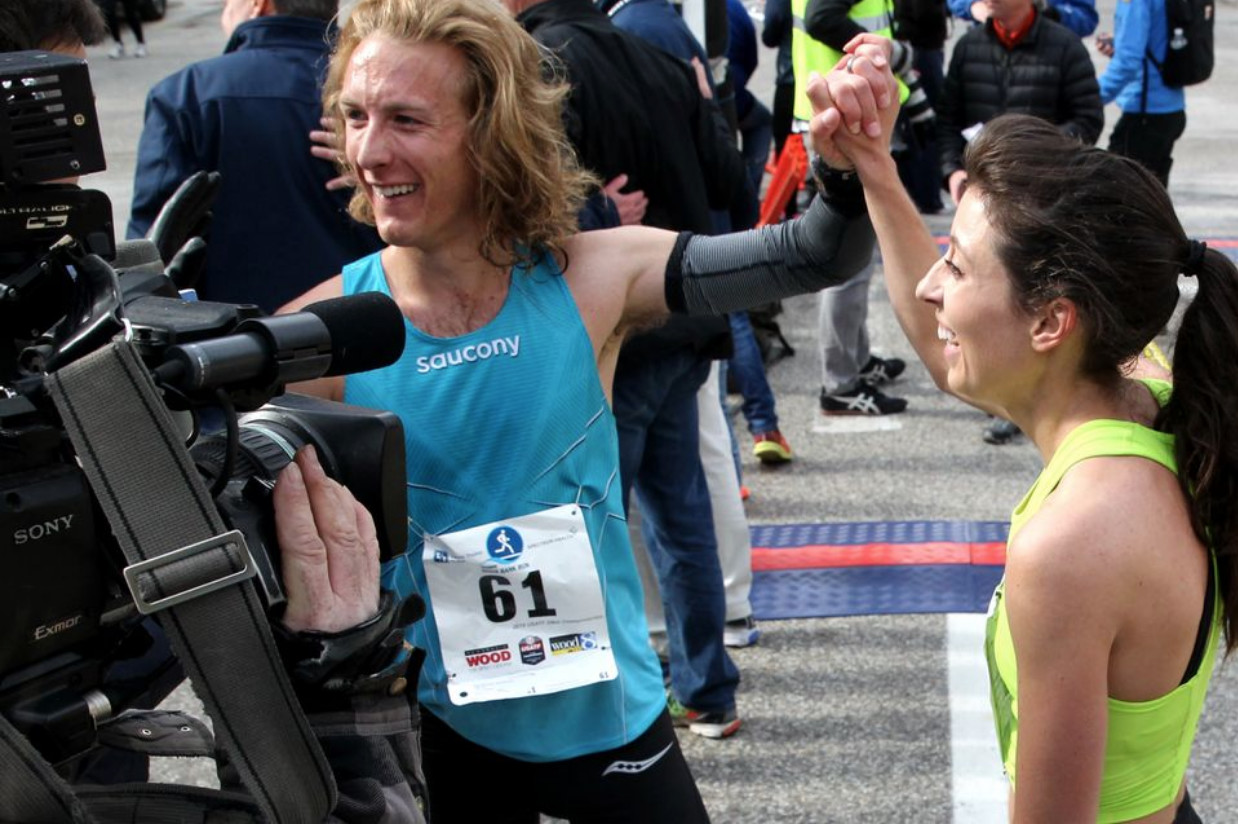
"I guess now I owe him some money for room and board now that I actually have some," Stinson said with a laugh.
For Ritzenhein, his first significant win as a coach was also nerve wrecking as Stinson jumped out fast.
"When he jumped out so fast early he was pushing the extreme of what we said," Ritzenhein said. "He stuck with it and knew where he was (in the field). I was a wreck, but he was great."
Stinson wiped the field. Second place went to Scott Smith in 1:15:05, more than 80 seconds behind, while Kiya Dandena was third (1:15.37).
Meanwhile, on the women's side, Bates was locked in a duel with Hall - just as the two did along with Stephanie Bruce last week at the USATF Half Marathon in Pittsburgh.
While Hall outlasted Bates to finish second a week ago behind Bruce, Bates pulled away this time at about the nine-mile mark to win by 1:42 ahead of Hall.
Molly Bookmyer was third (1:27:26).
(05/12/19) Views: 87
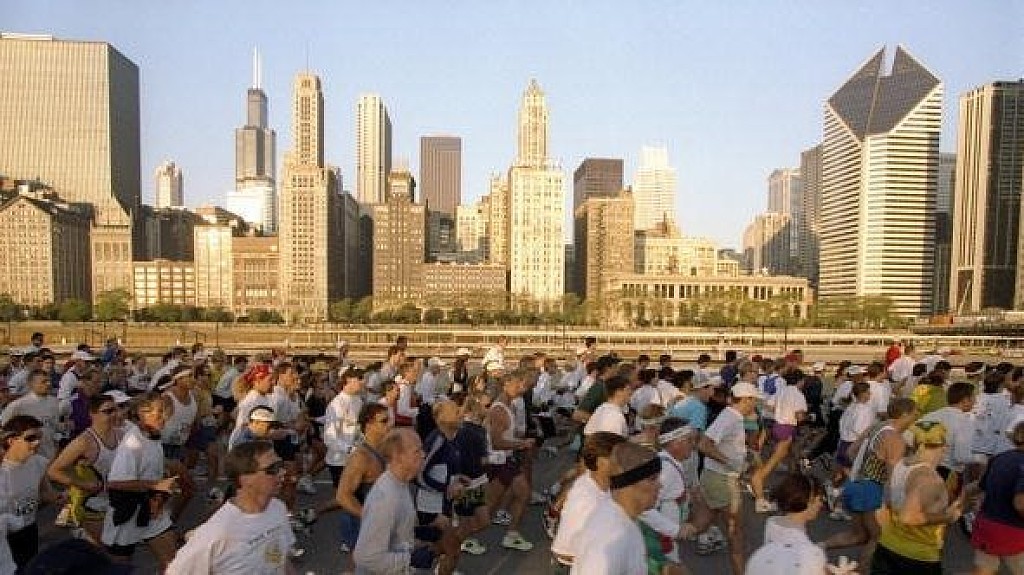
The Bank of America Chicago Marathon today announced that more than 11,000 runners raised an event record $22.7 million through the 2018 Chicago Marathon Charity Program
Since the program was officially established in 2002, more than 128,000 runners have raised over $207 million for local, national and global causes.
“It’s been amazing to see the growth of our Charity Program over the last 17 years,” said Carey Pinkowski, executive race director. “What started as a small idea with 1,600 runners in 2002 has become a pillar of the event.
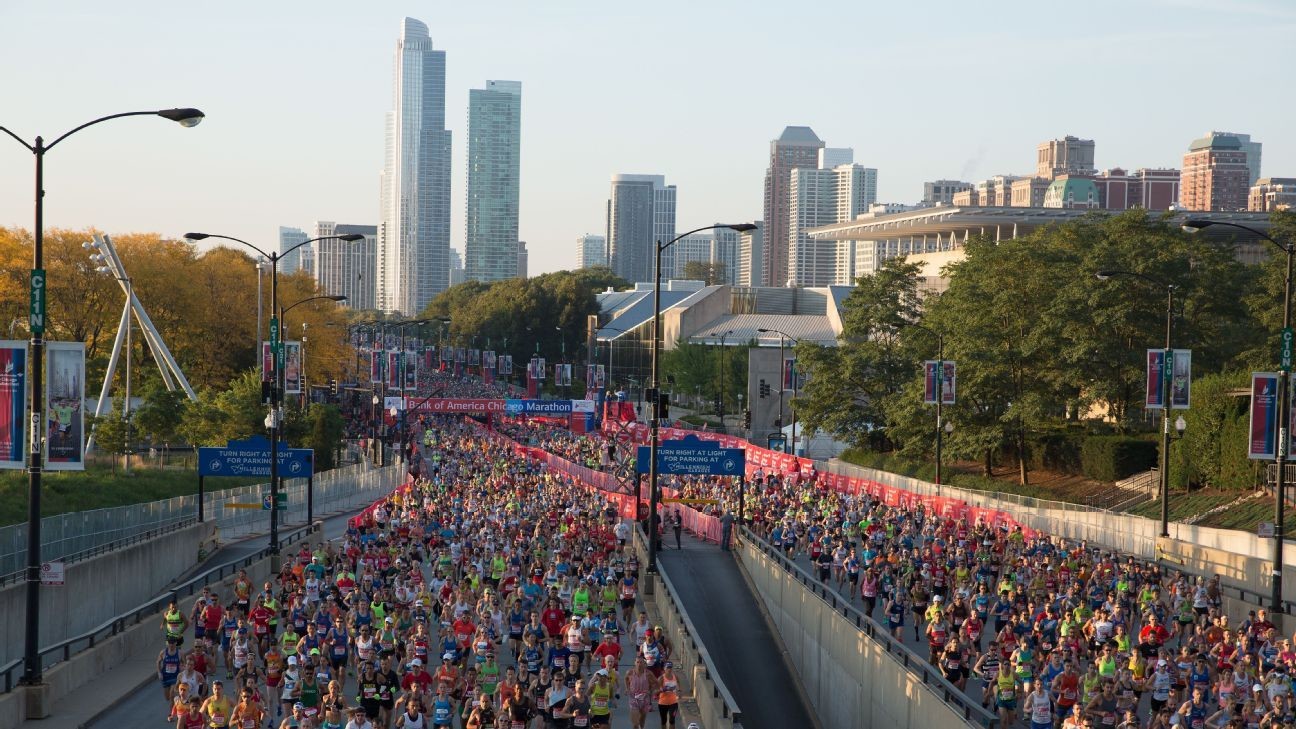
Last year’s record fundraising efforts add to the great legacy of the program, and the impact will continue to grow as we welcome another class of charity runners in 2019."The Charity Program for the 2019 Bank of America Chicago Marathon is underway with 170 charities participating. More than 12,000 runners are expected to raise funds related to 14 different social issues, including education, youth development, health care, and social services.
In a sport that focuses on individual accomplishments, the Charity Program gives runners the opportunity to join a team and make their run more meaningful by running on behalf of a cause. “One of the key reasons for the Bank of America Chicago Marathon’s world-class status is the power and spirit of the dedicated running community and their commitment to making their marathon experience more meaningful by running for the benefit of a charity.”
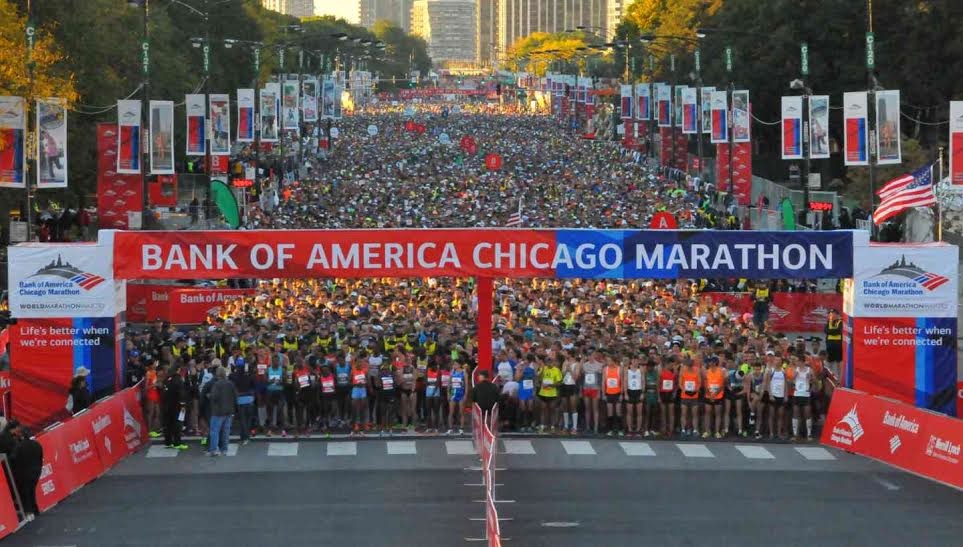
Said Paul Lambert, Chicago market president, Bank of America. “We’re honored to advance the race’s positive community and economic impact to the city and to a variety of charitable causes.”
(05/14/19) Views: 84
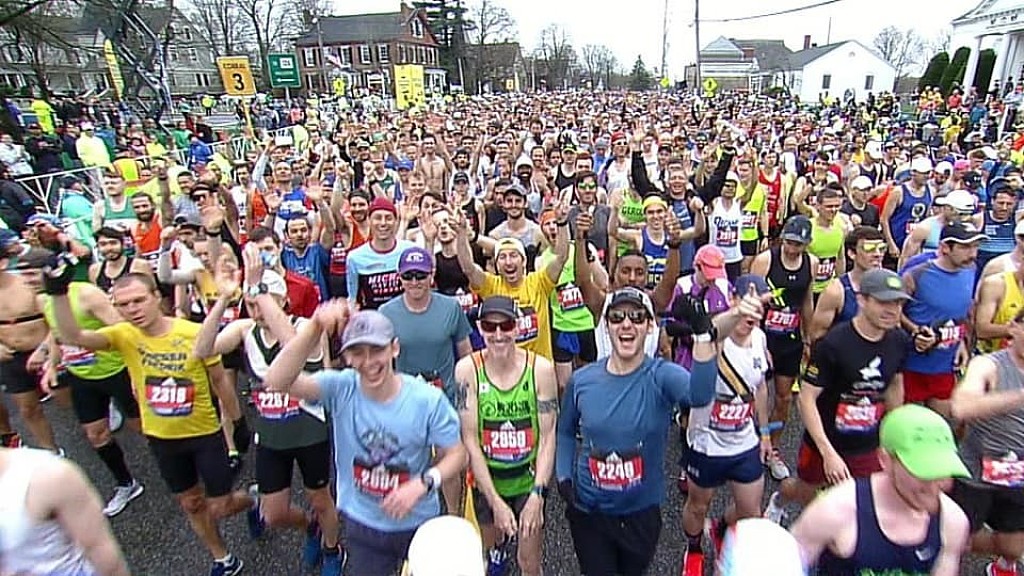
Just how tough is the Boston Marathon? from Marathon Man Gary Allen File 6
Just how tough is the Boston Marathon and how many times are runners told to resist the urge to start too fast....a very common mistake at the Boston Marathon.
OK don’t take my word for it, statistics don’t lie, Dave McGillivray the race director shared the following, “Of the 26,658 finishers, onl 705 ran the 2nd half faster than the first half for a measly 2.64%.”
This of course means 97.36% of the entire field were slowed by the tough terrain of the second 13.1 miles. I personally believe it was less about the Newton hills and more about imprudent pacing.
You see, Boston’s early downhills are almost impossible to resist. Speaking from experience, I have run the Boston Marathon 24 times and I think I might have run negative splits just twice. Yes, I started too fast.

Is this a common phenomenon at the Boston Marathon? Check out these statistics from an experienced marathoner and a good friend Stephen Peckiconis, “it doesn't vary much.” His split stats show just 749 / 2.81% ran negative splits in 2016 and only 812 / 3.07% in 2017.
So if you want to have success at Boston, run conservatively early or you’ll join the vast majority who slow or struggle in the second half every single year.
Marathon Man Gary Allen is a regular writer for My Best Runs
(05/13/19) Views: 67Gary Allen
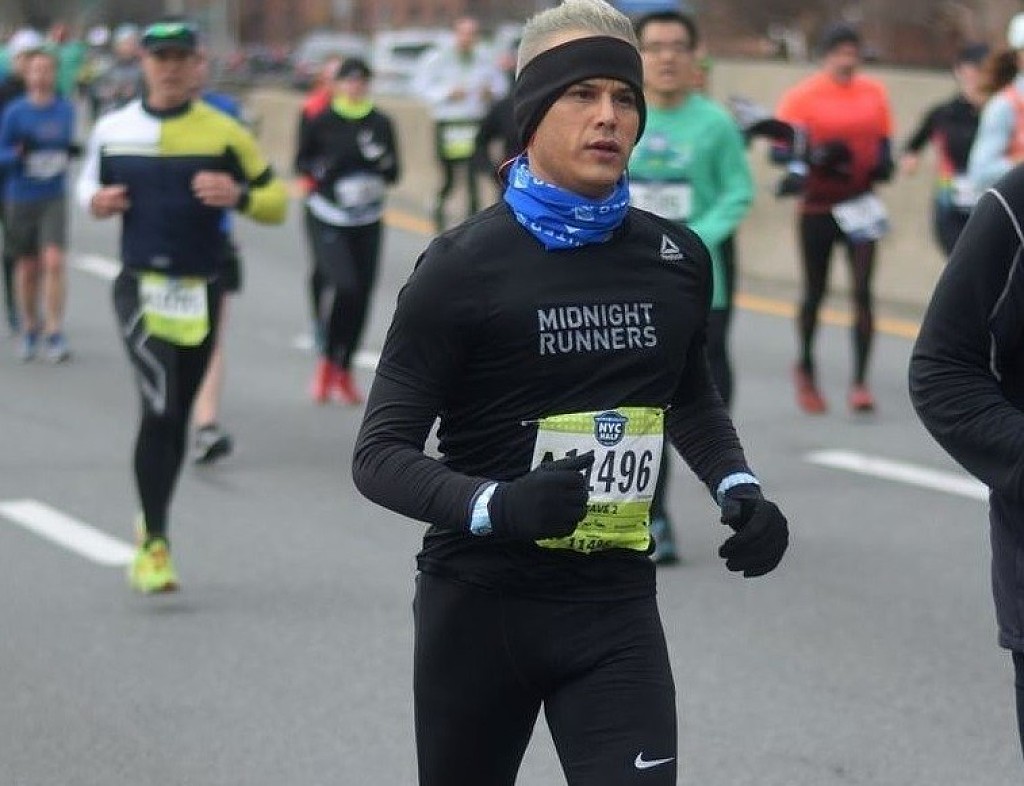
After a breakup, Braulio Vazquez lost 50 Pounds and Got into Marathon Shape and is now set to run the Brooklyn Half Marathon
When Braulio Vazquez moved to New York City three years ago, he knew almost no one. No friends. No acquaintances outside work colleagues. No one except his partner. And his partner was controlling. He would check in with Vazquez and monitor his movements.
As a result, Vazquez stopped going out—he stopped running, cooking, and doing any of his old hobbies. He would eat fast food from Popeyes, go straight home after work, and sit in the dark on his days off.
Vazquez was 200 pounds, trapped, and feeling miserable. Last year, however, Vazquez initiated a change: He sought mental council, dropped over 50 pounds, and got into marathon shape.
The change happened at dinner. It began with a breakup. “As soon as he sat down, I told him I couldn’t do this anymore and that nothing would change my mind,” Vazquez says. His partner had been demeaning, shaming Vazquez for buying running shoes and accusing him of infidelity. But that night, Vazquez ended it, and soon after, he moved in with a friend.
When the friend briefly left town, Vazquez, alone with his thoughts, began to panic. He felt depressed and lonely. He was free of his relationship, but still in an unfamiliar city and without a support group of friends. He started thinking about ways to kill himself. He immediately called the National Suicide Hotline.
Operators followed up with Vazquez every day afterward, checking in on him. His employer then helped him into therapy, one of the scariest moments for Vazquez.
At the same time, he began running. He’d wake up at 5:30am three times a week and run along the Hudson River. In therapy, Vazquez was challenged to consider why he’d left many of these hobbies behind. He was interested in running, but he was only now exercising. He loved to cook, but he always ate out. Vazquez's therapist suggested he surround himself with people who enjoyed doing those same things. One day, while running along the river, Vazquez passed a running group and joined. He fell in love with it.
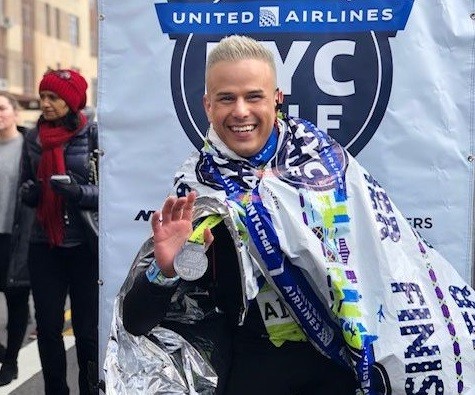
He also fell back in love with cooking, limiting carbs and sweets. He replaced cravings with protein shakes and started cooking more grilled chicken and greens. He also began watching the time of day he was eating. The late, after-work Popeye trips became a thing of the past.
He downloaded apps like Ladder and subscribed to GNC’s Pro Box. He started supplementing his running with 30 minutes of morning gym work in order not to strain his joints. “Waking up every day, seeing people–life just got better,” says Vazquez. He continued therapy. He started going on dates. He got a promotion at work. And the pounds started coming off.
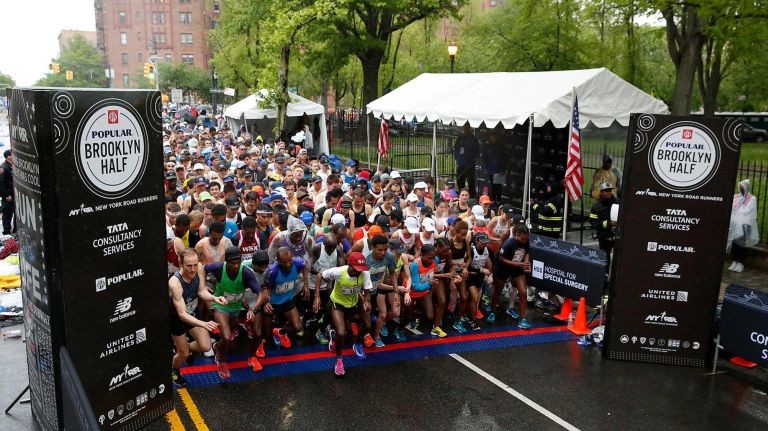
Vazquez is now down 54 pounds and preparing for the Popular Brooklyn Half Marathon, which he'll run next week. Brooklyn was supposed to be his first official race, but Vazquez says others popped up that he couldn’t resist. He’s done three already this year and is signed up for a total of 14.
(05/11/19) Views: 59
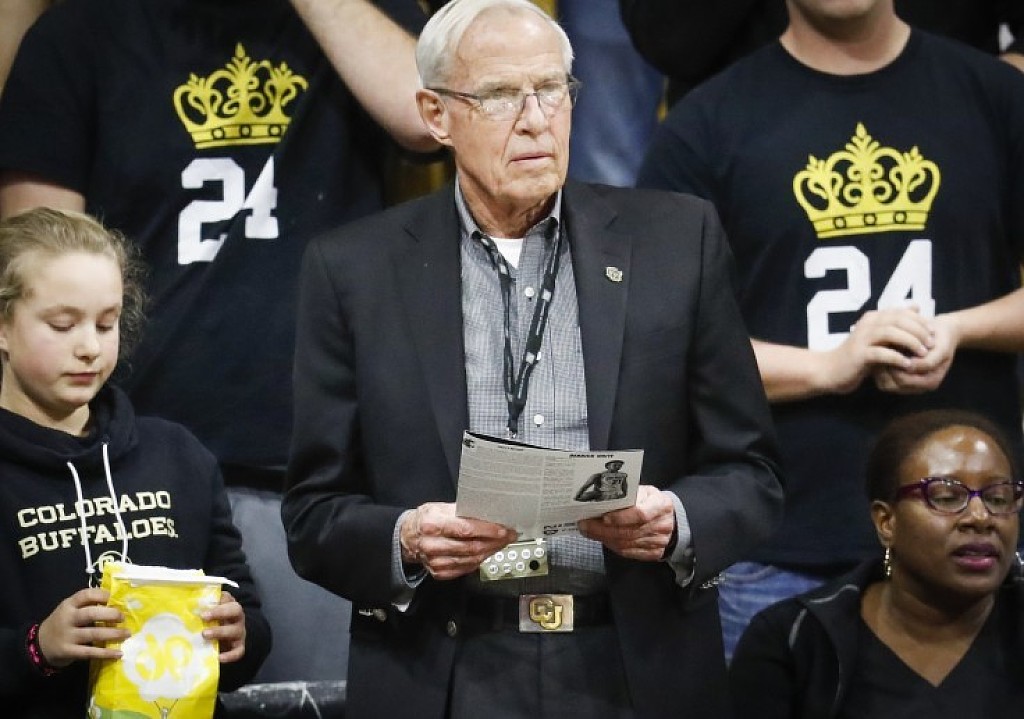
University of Colorado President Bruce D. Benson will be the official starter for the 2019 BolderBOULDER race
Bruce D. Benson and is the longest-serving president in more than half a century.
“We are honored to have one of the University of Colorado’s most accomplished presidents as this year’s official starter,” said BolderBOULDER race director, Cliff Bosley.
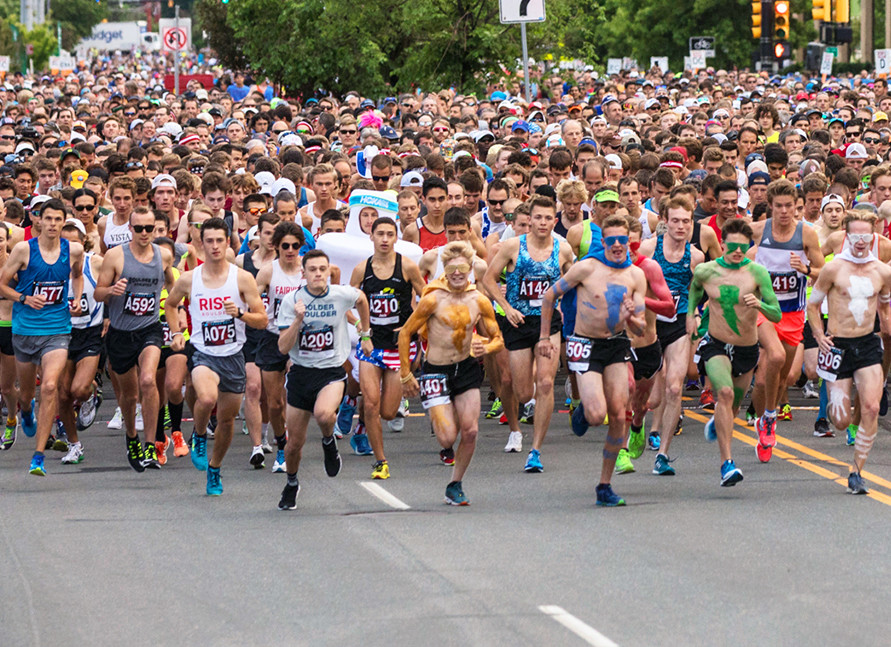
“The race has a rich history with CU and our relationship with Bruce and the university is part of the magic of the BOLDERBoulder.”
In 1981, Arnold Weber, the then-President of the University of Colorado, and Athletic Director Eddie Crowder approached race founder Steve Bosley about moving the BOLDERBoulder finish line to the University of Colorado’s Folsom Field.
Since 1981, more than 1.3 million participants of the race have finished in the stadium, fulfilling Dr. Weber’s vision that the race would provide runners and spectators exposure to CU and showcase the state’s flagship university in a way that otherwise would not be possible.
“Almost 40 years since that first meeting with the University of Colorado, it is our honor to have Bruce Benson the President of the University of Colorado to serve as the official starter,” said race founder Steve Bosley.
“It is appropriate that the race is being started by another President whose charge is to lead this University and this legacy of community, dedication and service to and for the University of Colorado.”
(05/10/19) Views: 44
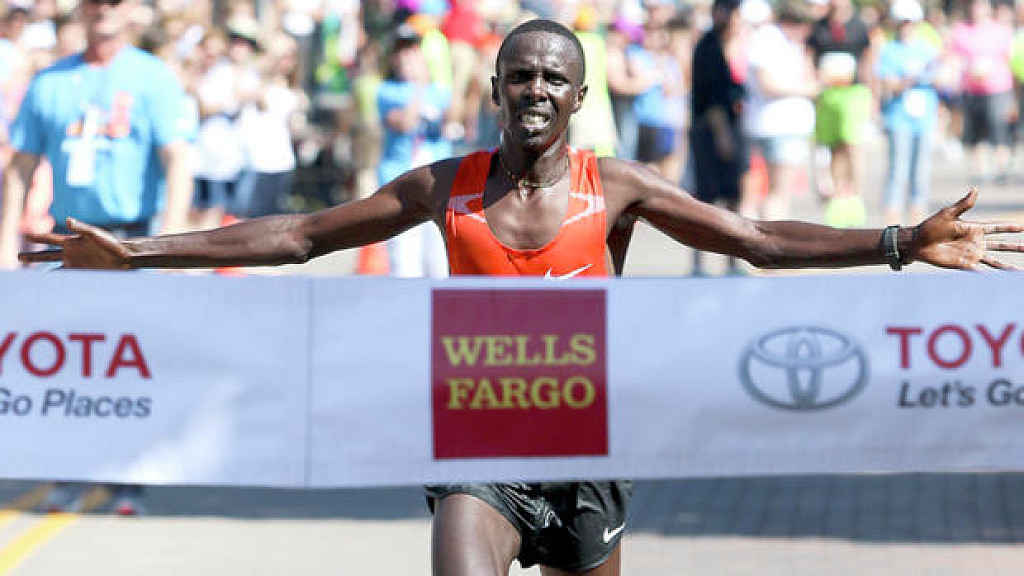
Kenya's Elisha Barno will be going after his fifth win at the Grandma's Marathon June 22
Already the only man to win four consecutive Grandma's Marathons, Kenya's Elisha Barno will strive for No. 5 at the 43rd installment of Minnesota's oldest marathon on June 22.
And he'll bring along his buddy and countryman, Grandma's record-holder Dominic Ondoro. Their New Mexico-based agent, Scott Robinson, confirmed both are planning to race in Duluth. And while that could change, it's an exciting prospect.
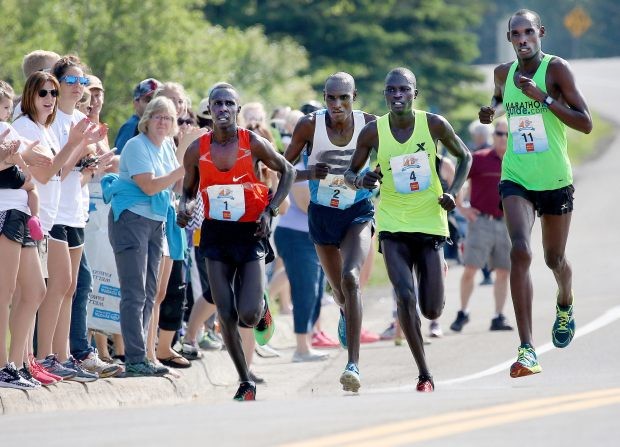
In winning for the fourth straight year last June, Barno produced the third-fastest time in event history — 2 hours, 10 minutes and 6 seconds. Speedy as that was, it's a minute slower than the 2:09:06 Ondoro unleashed in 2014 when he bumped Dick Beardsley from the top spot.
Barno will arrive in the Northland riding a swell of success. Following three straight runner-up finishes (all to Ondoro), he finally broke through, and broke the tape, at the Twin Cities Marathon last October. And on March 24, he won the closest Los Angeles Marathon ever contested, nudging John Korir by seven seconds.
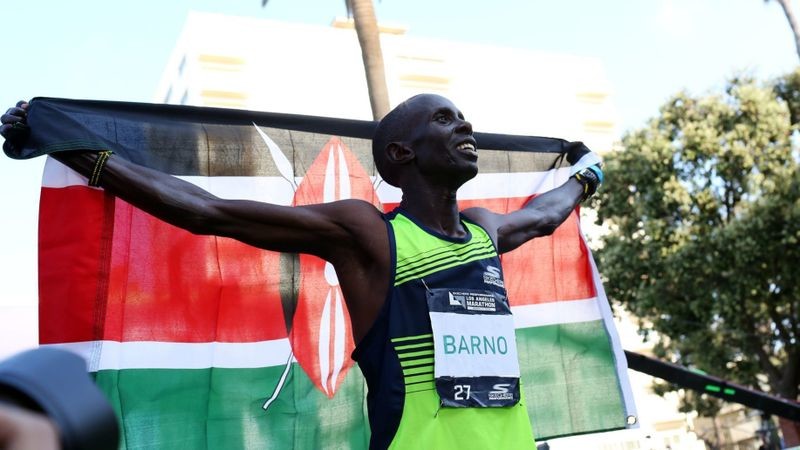
Barno and Ondoro will headline what figures to be a loaded field of elites.
"It's going to be an exciting year," Grandma's executive director Shane Bauer said. "I think we're all looking forward to what's going to happen at the finish line this year."
While the defending champ and fastest finisher return to the men's race, the same won't be true on the women's side. Kellyn Taylor, who blew away the competition at Grandma's in 2018 by coming through in an event-record 2:24:28, won't be back.
(05/10/19) Views: 43
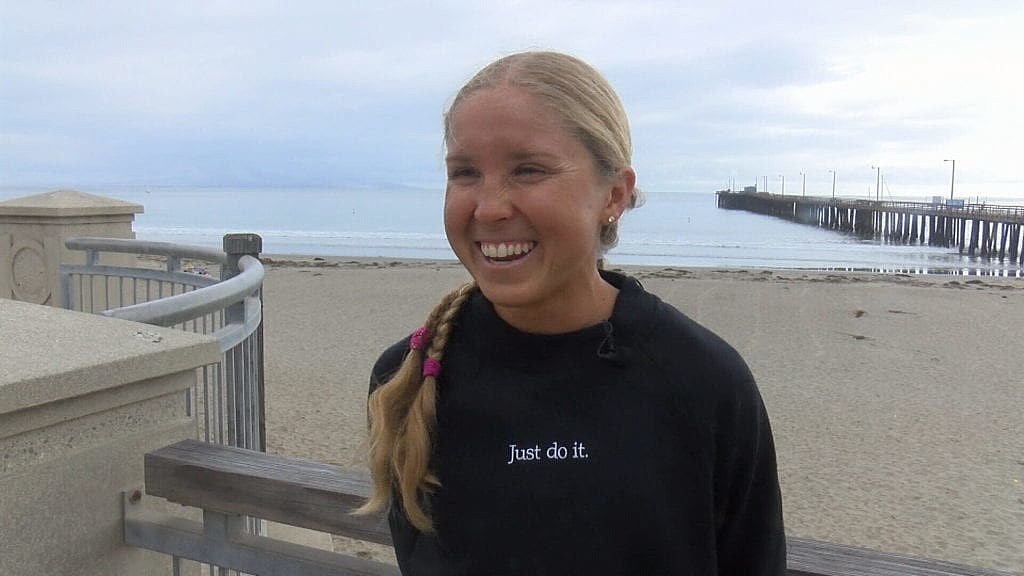
Jordan Hasay will headline the women’s race in the 2019 Bank of America Chicago Marathon
Jordan Hasay has announced that she will target the American women’s marathon record this fall in Chicago.
Rupp’s Nike Oregon Project teammate, Jordan Hasay, offers incredible inspiration when it comes to successful comebacks. After a storybook 2017 season that saw her run the American debut marathon record, 2:23:00, for a third-place finish in Boston and then post the second-fastest time ever run by an American woman in Chicago (2:20:57), she shut down her 2018 season due to two stress fractures in her foot.
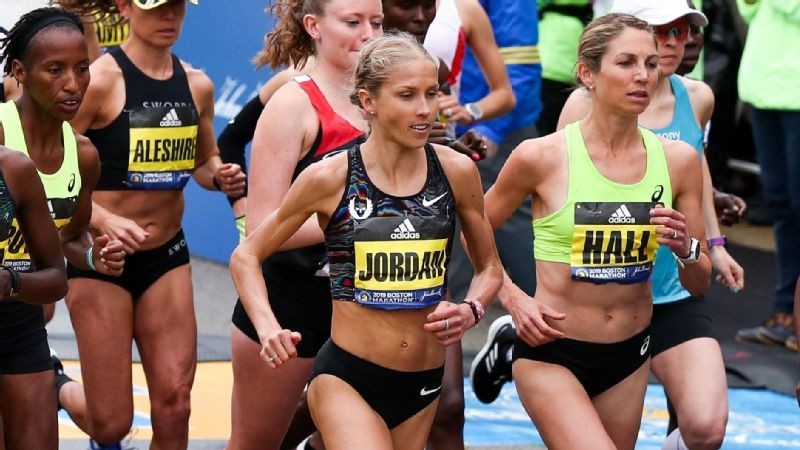
She announced her comeback with confidence this spring in Boston, acquiring another podium finish and posting a swift time, 2:25:20. Hasay hopes to take down Deena Kastor’s long-standing American record of 2:19:36. “I am honored to return to the streets of Chicago,” said Hasay. “I love the fast course and exciting atmosphere, which I believe can lead to an attempt at the American record. I look forward to being at my best again and giving it all I have in October.”
In its 42nd year on Sunday, October 13, the Bank of America Chicago Marathon welcomes thousands of runners from more than 100 countries and all 50 states, including a world-class elite field, top regional and Masters runners, race veterans, debut marathoners and charity runners.

The race’s iconic course takes runners through 29 vibrant neighborhoods on an architectural and cultural tour of Chicago. Annually, an estimated 1.7 million spectators line the streets cheering on more than 40,000 runners from the start line to the final stretch down Columbus Drive.
As a result of the race’s national and international draw, the Chicago Marathon assists in raising millions of dollars for a variety of charitable causes while generating $338 million in annual economic impact to its host city. The 2019 Bank of America Chicago Marathon, a member of the Abbott World Marathon Majors, will start and finish in Grant Park beginning at 7:30 a.m. on Sunday, October 13.
(05/11/19) Views: 40
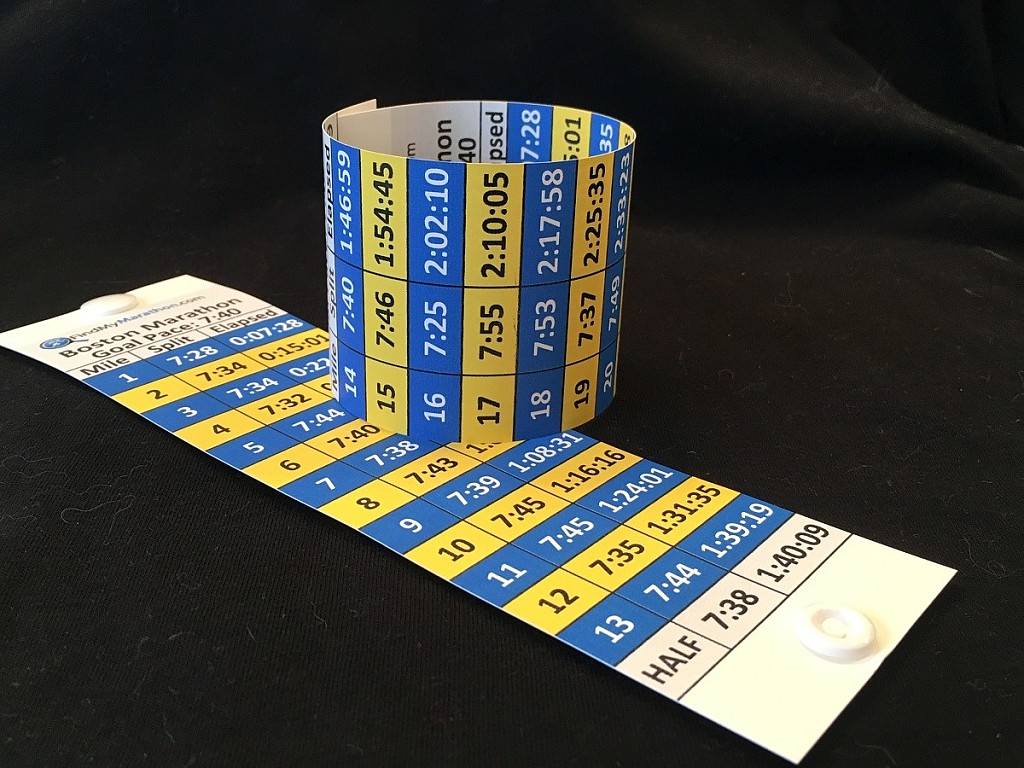
The B.A.A. has announced that registration for the 124th Boston Marathon will open September 9, 2019
The B.A.A. has announced that registration for the 124th Boston Marathon, to be held on Monday, April 20, 2020, will open September 9, 2019. It will follow the same process as in previous years, except that qualifying standards for 2020 have been tightened up by five minutes across all age categories.
Registration is entirely online, at www.baa.org. The B.A.A. follows a process of allowing the fastest qualifiers to register first, with a rolling admission schedule.

How it works:
On Monday, September 9 at 10:00 a.m. ET, eligible runners who have met the qualifying standard for their age and gender by 20 minutes or more may register.
On Wednesday, September 11 at 10:00 a.m. ET, registration will open for those who have met their qualifying standard by 10 minutes or more.
On Friday, September 13 at 10:00 a.m. ET, registration will open for those who have met their qualifying standard by five minutes or more.
Registration will close for week one on Saturday, September 14 at 5:00 p.m. ET.

If space remains after the first week registration will re-open for all qualifiers from Monday, September 16 at 10:00 a.m. ET through Wednesday, September 18 at 5:00 p.m. ET.
As during the first week of registration, the fastest qualifiers by gender and age group will be granted entry as space allows.
If space remains after the first two weeks of registration:
On Monday, September 23 at 10:00 a.m. ET, registration will re-open to anyone who meets the qualifying standards.
Registration will remain open for valid qualifiers on a first-come, first-served basis until the maximum field size is reached, or until Sunday, October 27 at 5:00 p.m. ET (whichever comes first).
The qualifying window for 2020 began on September 15, 2018, and you may run a qualifying race anytime until the race is full or by Sunday, October 27, 2019, whichever comes first.
Qualifying standards for 2020 (all qualifying times are based on chip time):
Age Group Men & Women, 18-34 (3hrs, 3hrs 30min), 35-39 (3hrs 05min, 3hrs 35min), 40-44 (3hrs 10min, 3hrs 40min), 45-49 (3hrs 20min, 3hrs 50min), 50-54 (3hrs 25min, 3hrs 55min), 55-59 (3hrs 35min, 4hrs 05min), 60-64 (3hrs 50min, 4hrs 20min), 65-69 (4hrs 05min, 4hrs 35min), 70-74 (4hrs 20min, 4hrs 50min), 75-79 (4hrs 35min, 5hrs 05min), 80 and over (4hrs 50min, 5hrs 20min).
(05/16/19) Views: 39
