

Running News Daily
Top Ten Stories of the Week
4/11/2026
These are the top ten stories based on views over the last week.
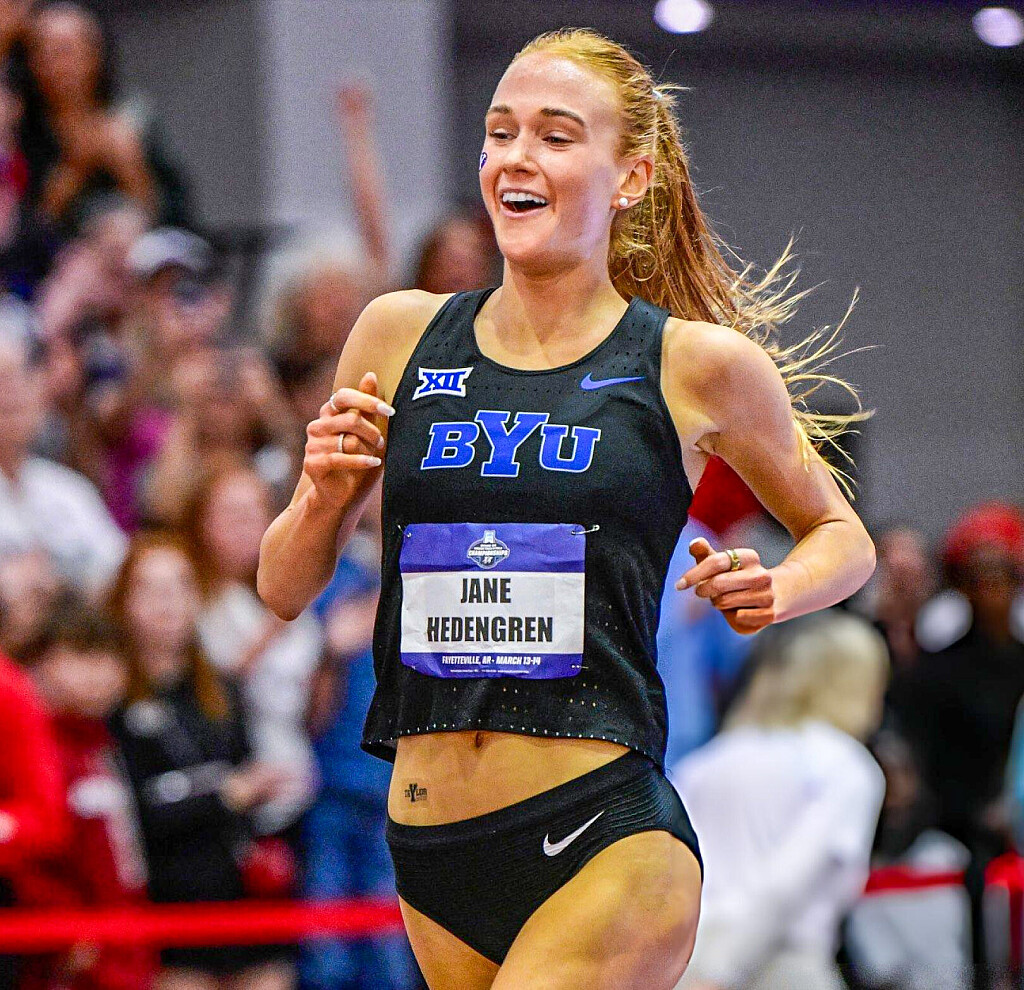


Hendengren Rewrites History: A Stunning NCAA 10,000m Record Falls at Stanford
Under the soft California evening light at the prestigious Stanford Invitational, history was not just witnessed—it was decisively rewritten. Rising distance talent Jane Hedengren delivered a performance of rare authority and composure, storming to a breathtaking NCAA 10,000m record in 30:46.80.
From the opening laps, the race carried an unmistakable sense of purpose. Hedengren ran with poise beyond her years, settling into a rhythm that hinted at something extraordinary. As the laps clicked by, her cadence remained fluid, her stride efficient, and her intent unmistakable. By the time the bell rang, the outcome was no longer in doubt—only the magnitude of history remained to be measured.
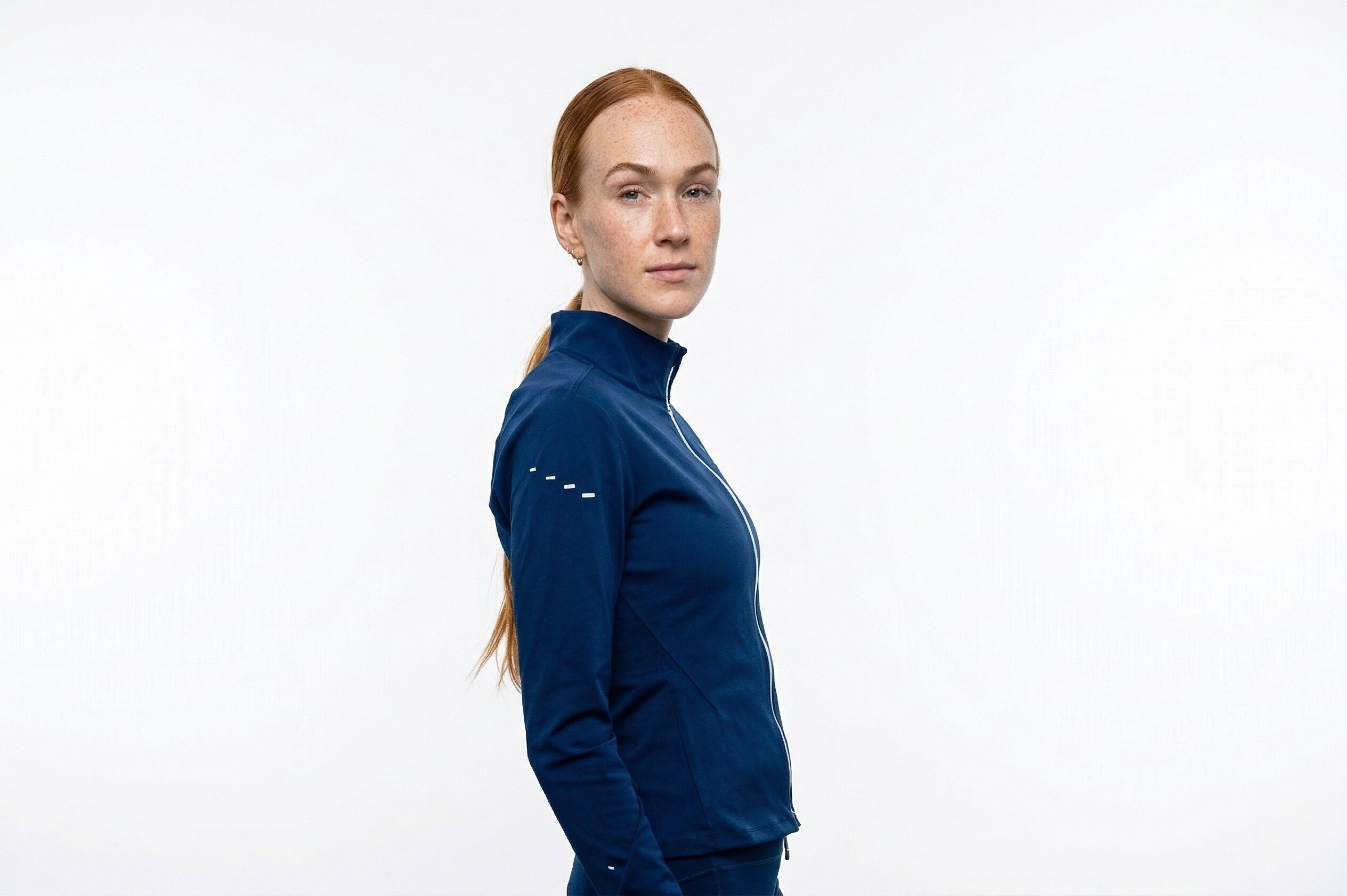
In obliterating the previous collegiate record of 30:50.43 held by Parker Valby, Hedengren did more than shave seconds off the clock—she elevated the standard of women’s collegiate distance running. Her 30:46.80 now stands as a new benchmark, a mark of both precision and endurance forged in a perfectly executed race.
Yet, the night was not hers alone. Pamela Kosgei delivered a remarkable run of her own, finishing second in 30:49.99—a personal best that also dipped under the former NCAA record. In any other race, it would have been the headline performance. Instead, it became part of a deeper narrative: a race that pushed boundaries and redefined expectations.
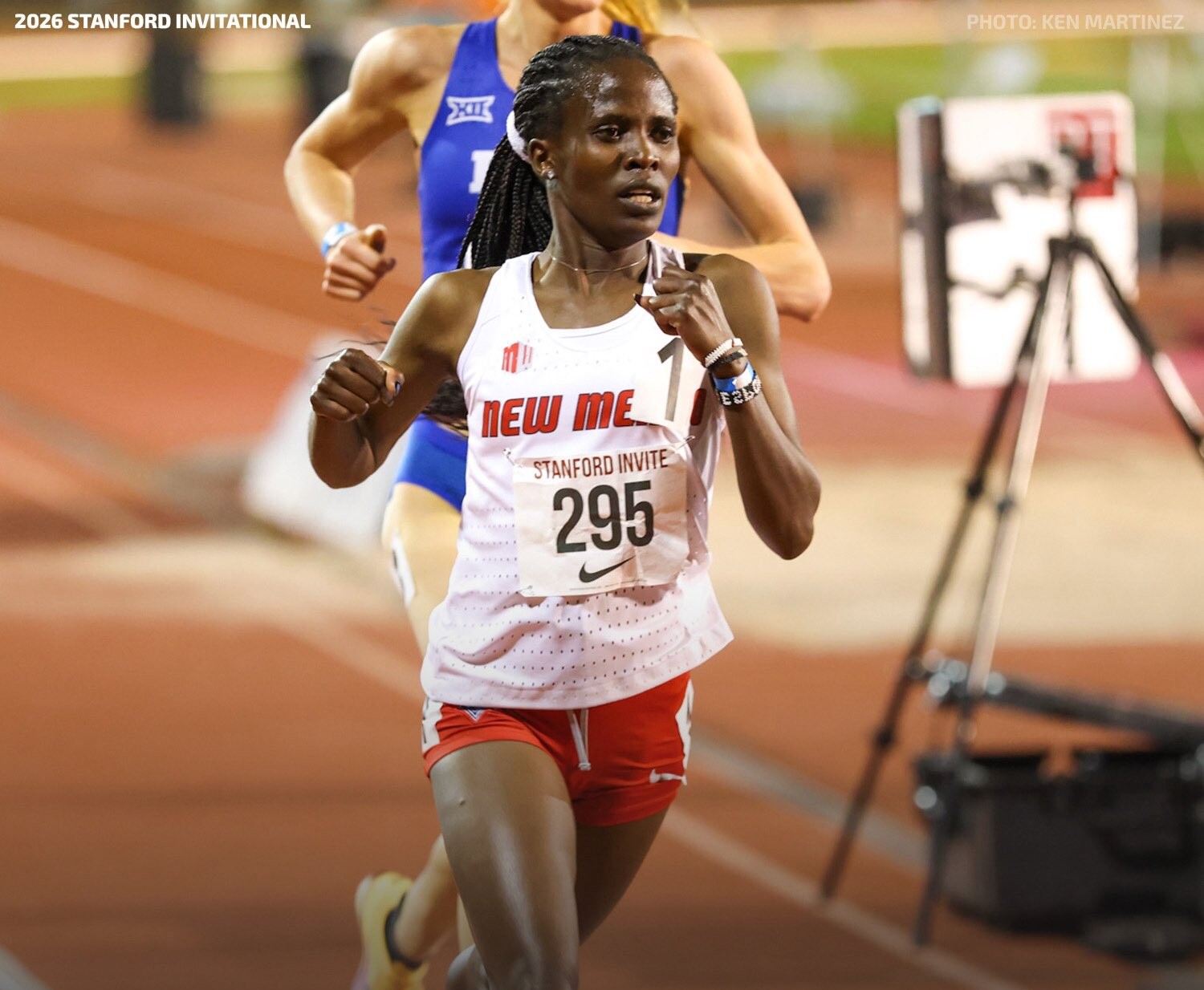
What made this contest truly compelling was not just the times, but the shared excellence. Two athletes, driven by ambition and sharpened by competition, combined to produce one of the finest distance races in collegiate history.
For Hedengren, this moment signals more than a record—it announces her arrival on the global stage. Calm under pressure and devastatingly efficient, she has shown the kind of form that transcends collegiate competition and hints at a much larger future.
As the echoes of Stanford fade, one truth remains clear: this was not merely a race—it was a statement. And with it, Jane Hedengren has etched her name into the sport with authority, redefining what is possible over 10,000 meters.
(04/04/26) Views: 418Erick Cheruiyot for My Best Runs.
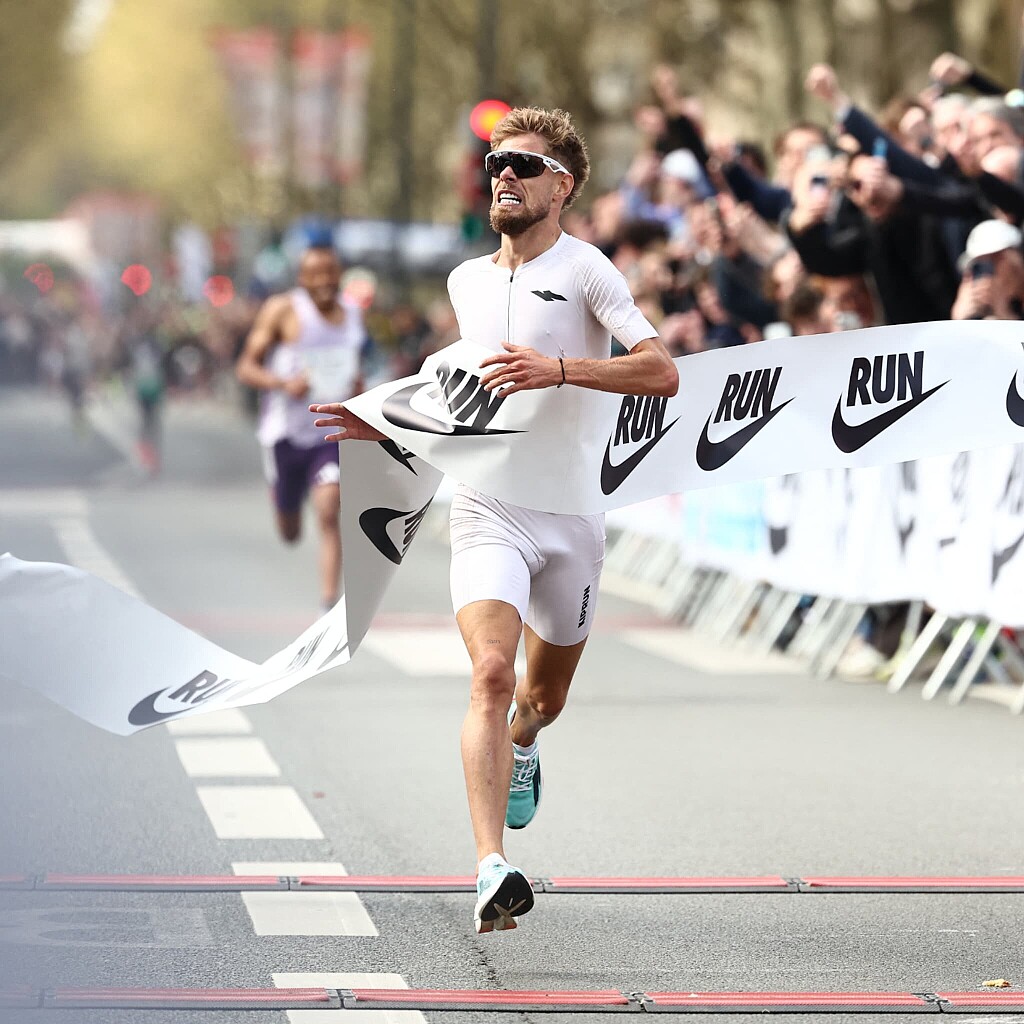
Gressier Storms Lille: 12:51 Masterclass Rewrites European 5km History
In the heart of Lille, under the electric atmosphere of the Urban Trail de Lille, Jimmy Gressier delivered a performance that will echo across European distance running for years to come.
Clocking a sensational 12:51 over 5km on the roads, Gressier didn’t just win—he redefined the standard. His time stands as the fastest ever recorded by a European athlete over the distance, a historic breakthrough built on precision pacing, fearless intent, and relentless speed from start to finish.
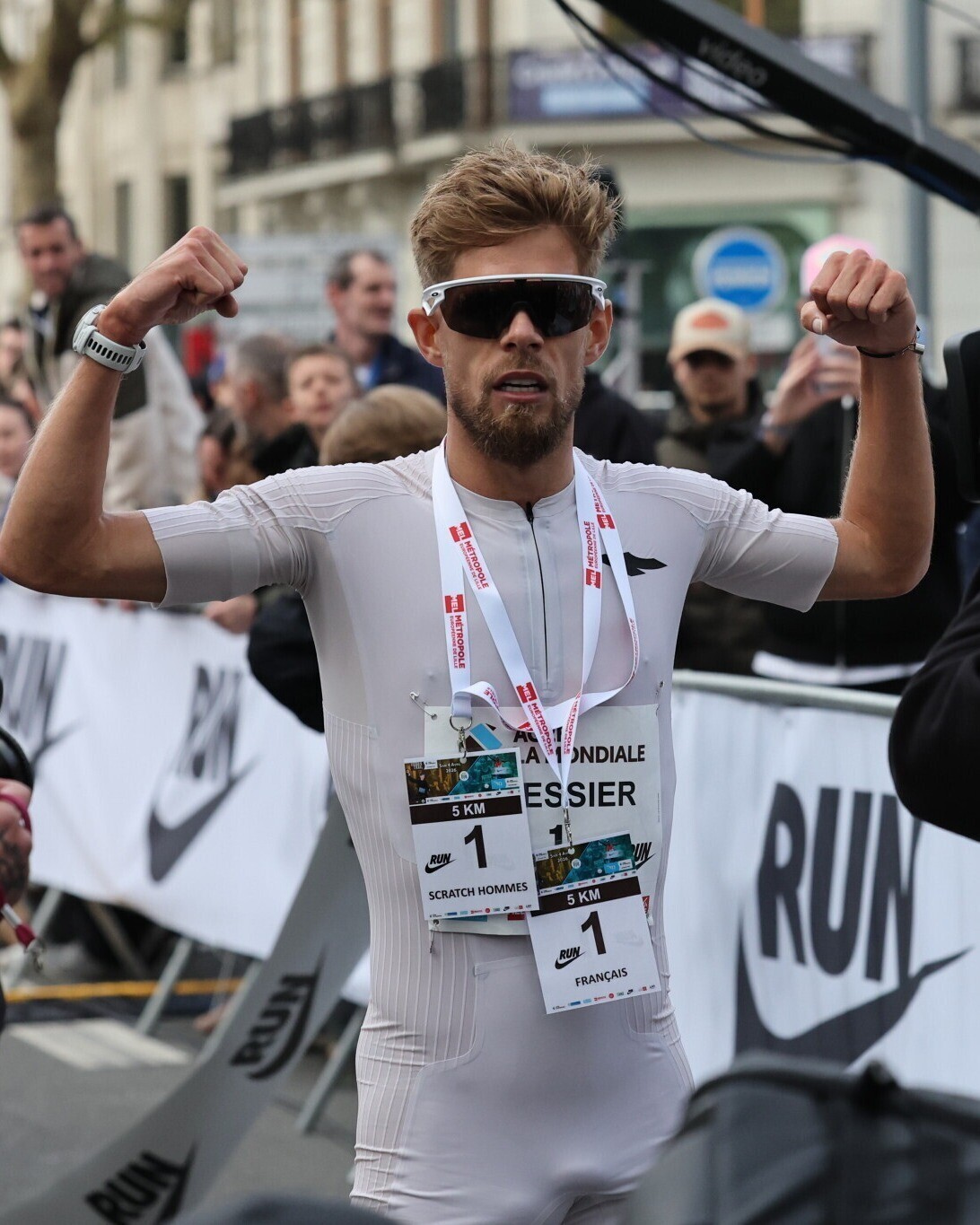
From the gun, the pace was uncompromising. Through the early stages, a tightly packed lead group surged through the streets, with splits indicating something exceptional was unfolding. By midway, the rhythm had already dipped into rare territory, and Gressier positioned himself with confidence among a high-calibre field that refused to yield easily.
But as the race unfolded, class began to tell. Gressier surged with authority in the closing stages, breaking clear to secure victory in emphatic fashion. Behind him, Yihune Addisu finished second in 12:54, while Yann Schrub claimed third in 12:56—further underlining the depth and quality of the race.
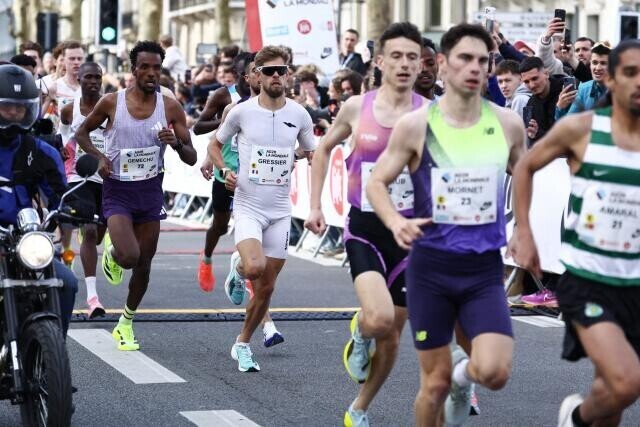
In the end, the clock told a story of both triumph and tantalising near-miss. Just two seconds separated Gressier from the world record of 12:49—a razor-thin margin that only magnifies the magnitude of his run. It was not merely fast; it was world-class in every sense.
What made the performance even more striking was the control with which it was executed. There was no late collapse, no desperation—only sustained brilliance. Gressier ran with clarity, composure, and conviction, looking every bit like an athlete stepping into his prime.
This performance firmly establishes him among the global elite of road running. More than that, it signals a shift—Europe now has a standard-bearer capable of challenging the very limits of speed over 5km.
For Gressier, 12:51 is more than a record. It is a declaration. And if Lille proved anything, it is that the world record is no longer a distant dream, but an imminent target waiting to be claimed.
(04/04/26) Views: 281Erick Cheruiyot for My Best Runs.
Triathlon Queen Turns Road Running Star: Cassandre Beaugrand Breaks French 10K Record in Stunning Fashion
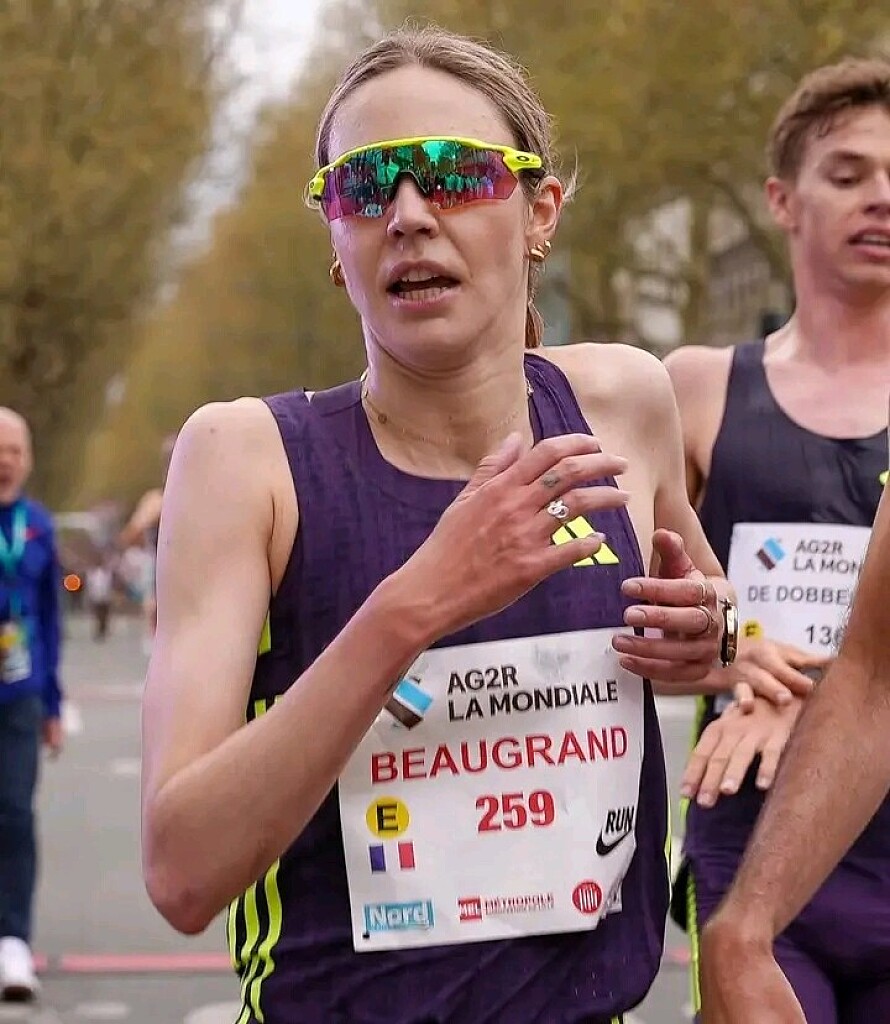
Cassandre Beaugrand delivered a sensational run on the roads of Lille, clocking an impressive 30:52 over 10km. The Olympic triathlon champion showcased her remarkable range and endurance, taking on specialist road runners and producing one of the fastest performances ever by a French woman.
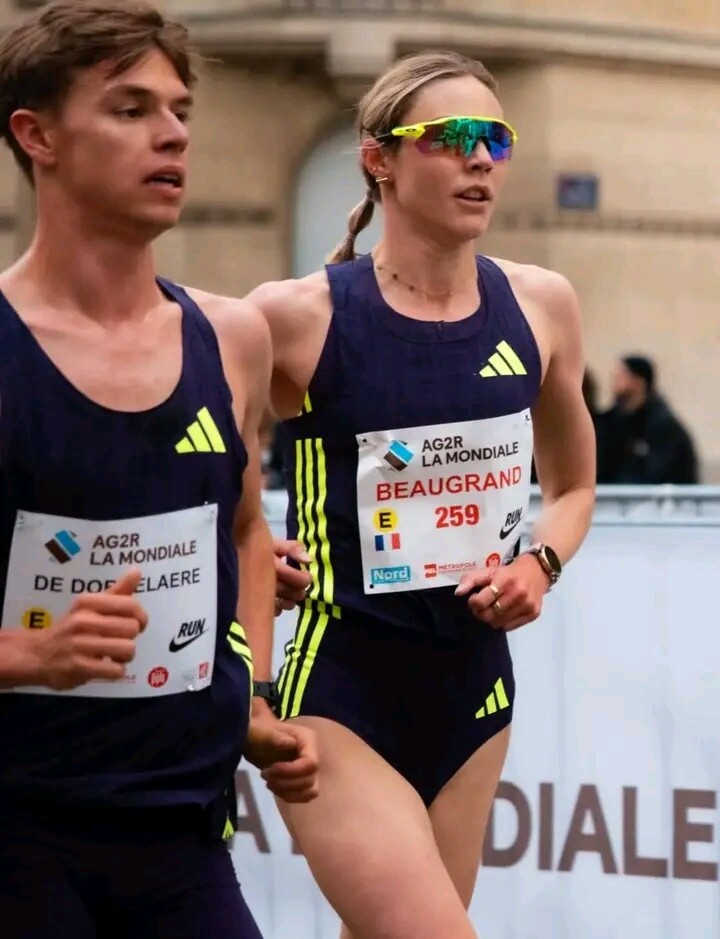
While early reactions have sparked excitement about a potential national record, official ratification is still pending from governing bodies. The current benchmark stands at 31:01, set in 2025, meaning Beaugrand’s run—if confirmed—could mark a historic moment in French distance running.
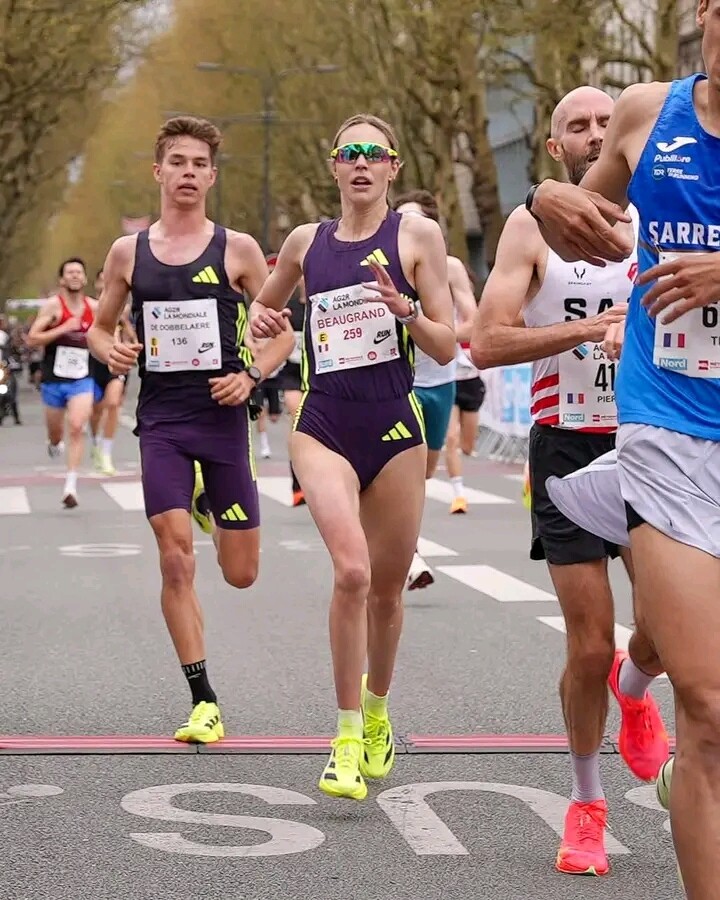
Already a dominant force in triathlon, Beaugrand is now proving she can compete and excel on the roads, adding another dimension to her rapidly growing legacy. Beyond the raw time itself, her performance carries deeper significance within the broader endurance landscape. In an era where specialization often defines success, her ability to produce world-class results outside her primary discipline challenges long-held assumptions and highlights the evolution of modern triathlon training.
On the streets of Lille, Beaugrand glided through the 10-kilometre course with authority and composure, underlining her exceptional endurance and racing instincts. It was not just a fast time—it was a statement performance that ranks among the finest ever produced by a French woman over the distance.
Her performance blurs the traditional boundaries between triathlon and pure athletics. It is rare to see a triathlete dominate standalone running events with such authority, but Beaugrand is redefining what is possible. Her speed, efficiency, and tactical awareness on the road suggest that she could comfortably challenge top-tier distance runners in dedicated competitions.
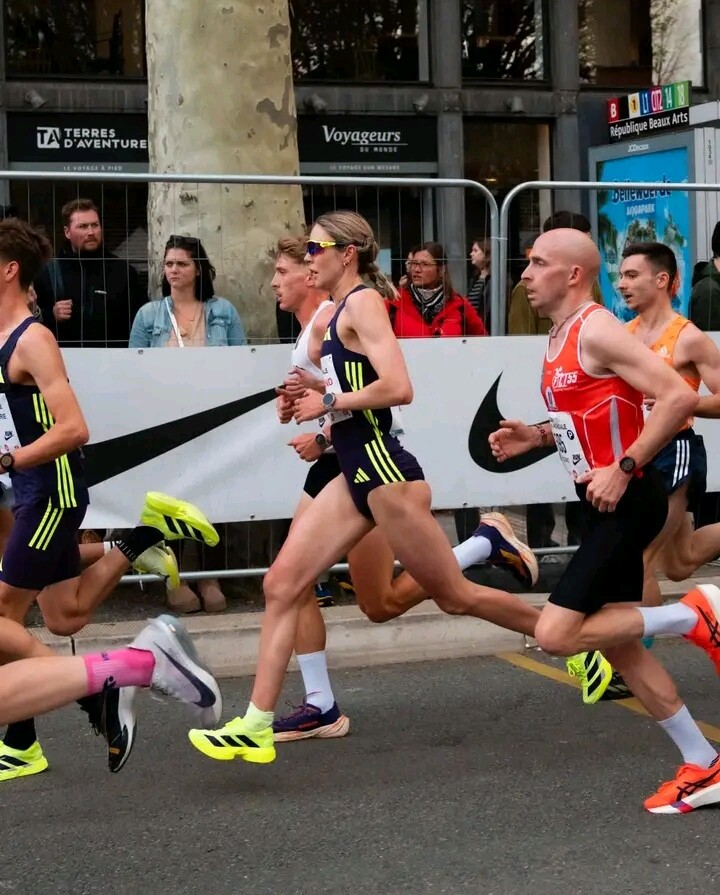
The sentiment echoes the words of Olympic triathlete Leonardo Chacón, who recently emphasized a key principle of elite triathlon: to succeed at the highest level, one must be capable of outperforming the best runners in their own country. Beaugrand embodies this philosophy to perfection. She is not just competing—she is excelling, and in doing so, raising the bar for what defines an Olympic-level triathlete.
As the lines between disciplines continue to fade, Cassandre Beaugrand stands at the forefront of a new era—one where triathletes are no longer seen as specialists of three sports, but as complete endurance athletes capable of excelling anywhere they compete.
(04/04/26) Views: 216Erick Cheruiyot for My Best Runs.
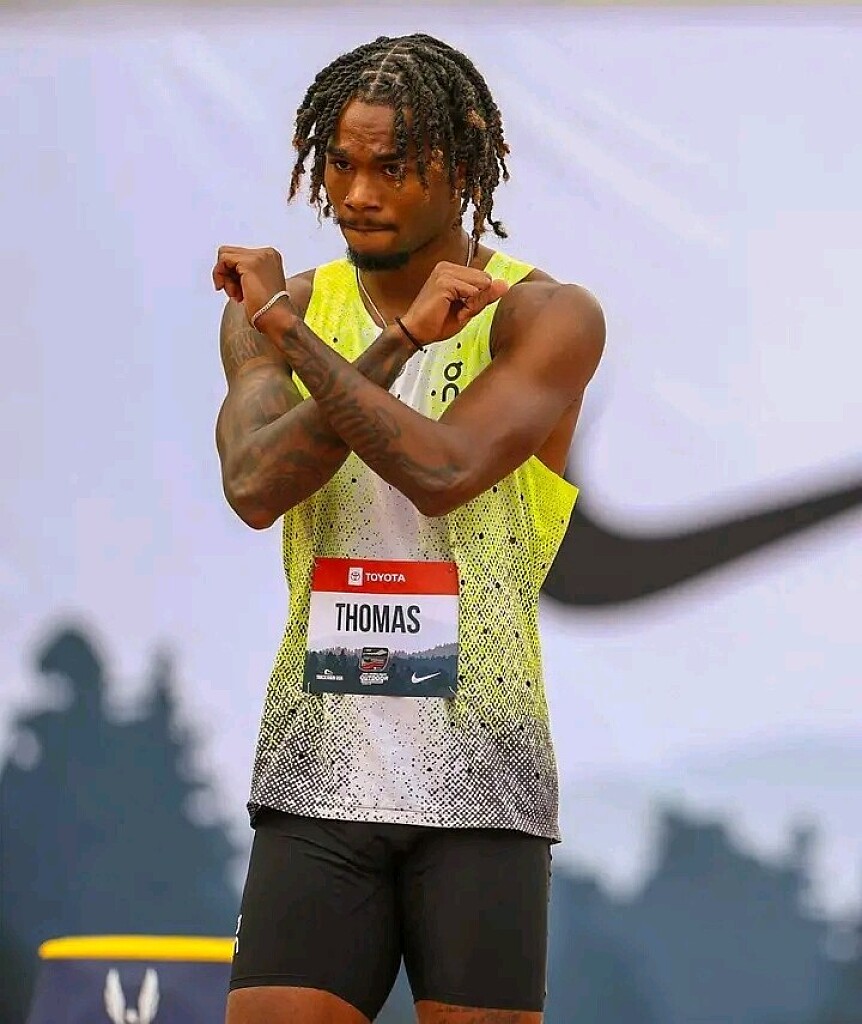
Max Thomas Blazes to 9.90s at Florida Relays to Shake Up 2026 Sprint Rankings
Rising American sprinter Max Thomas delivered a statement performance at the Florida Relays, storming to a sensational 9.90 seconds in the men’s 100m. The blistering run not only secured him a dominant victory but also marked a new personal best, underlining his rapid ascent among the world’s elite sprinters.
Exploding out of the blocks with precision and maintaining flawless top-end speed, Thomas controlled the race from start to finish. His 9.90 effort now propels him to second on the 2026 world toplist, instantly placing him in the global spotlight and signaling his readiness to challenge the very best on the international stage.
Behind him, fellow American Malachi Adams clocked 10.15 seconds in the same section, showing strong form in a highly competitive field. Meanwhile, Christian Miller secured second place overall after winning his section in 10.12 seconds, reinforcing his consistency and competitive edge.
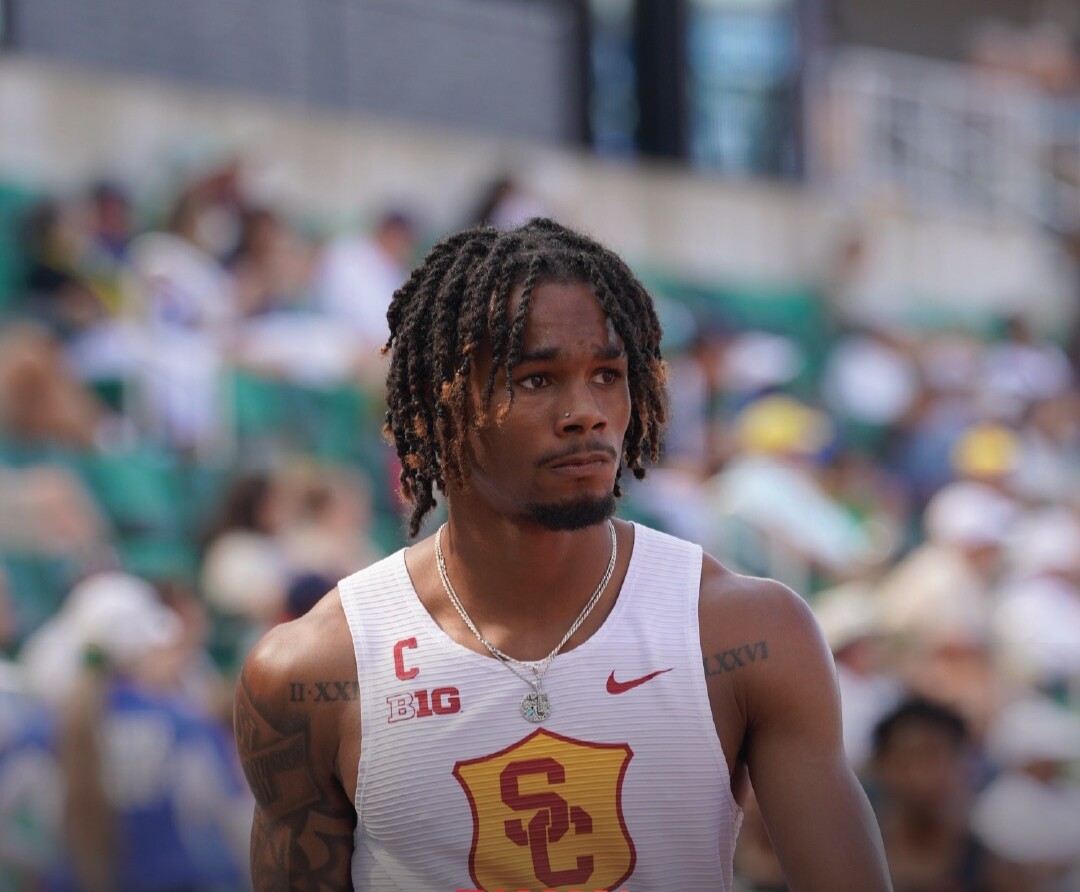
The race unfolded as a showcase of emerging sprint talent, with Thomas’ electrifying performance standing out as the defining moment of the event. As the season gathers momentum, his breakthrough run in Florida sends a clear message: a new force has arrived in men’s sprinting, and the battle for global supremacy in 2026 is only just beginning.
Beyond the headline time, Thomas’ execution reflected a sprinter coming into full maturity. His transition phase was smooth and controlled, allowing him to build momentum efficiently before unleashing a powerful drive through the final meters. Such technical sharpness, combined with raw speed, suggests that his 9.90 may only be the beginning, with even faster performances likely as the season progresses.
With the global sprint scene heating up ahead of major championships, all eyes will now turn to Thomas and his next appearances on the circuit. If this performance is any indication, he is no longer just a promising talent but a genuine contender, capable of challenging established names and reshaping the hierarchy of the men’s 100m.
(04/05/26) Views: 200Erick Cheruiyot for My Best Runs.
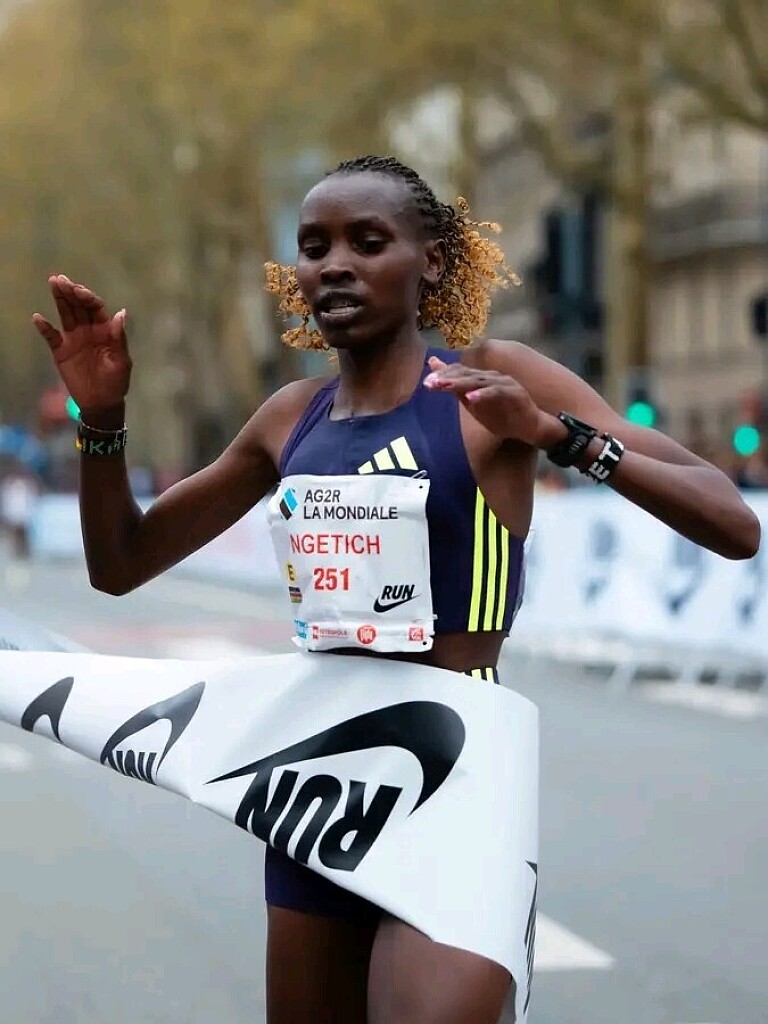
28:58 and Untouchable: Ngetich’s Commanding Run Stuns Lille
Agnes Jebet Ngetich delivered a performance of rare authority and brilliance at the Urban Trail de Lille 10km on 4 April 2026, producing a stunning 28:58 to take victory in emphatic fashion on the streets of Lille.
From the very first strides, Ngetich imposed herself on the race with total conviction. Running with the confidence of an athlete in complete control, she dictated the tempo from start to finish—never once relinquishing her grip on the lead. In a remarkable display of strength and fearlessness, she even held her own alongside sections of the men’s field, underlining both her speed and competitive edge.
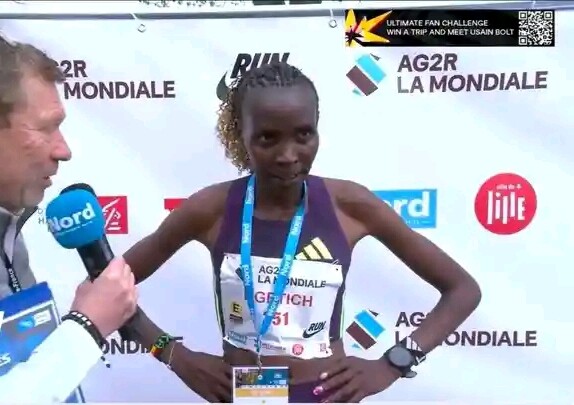
Her finishing time of 28:58 not only secured a dominant victory but also elevated her into the rarefied air of distance running history, standing as the second-fastest performance ever recorded over 10km by her and third fastest time in all time list. It was a run defined by precision, rhythm, and unshakable determination—an exhibition of excellence that places her firmly among the greatest ever to cover the distance.
Behind her, the race for the podium unfolded with intensity. Diriba Chaltu claimed second place in 30:01, delivering a composed and resilient performance to secure her position among the elite. Close behind, Hirut Meshesha completed the podium in 30:05, reinforcing Ethiopia’s enduring strength in women’s distance running with another powerful finish.
Italy’s Nadia Battocletti produced one of the standout moments of the race, finishing fourth in 30:08 while rewriting her nation’s record books. Her run marked a new Italian national record, a landmark achievement that added further prestige to an already high-caliber contest.
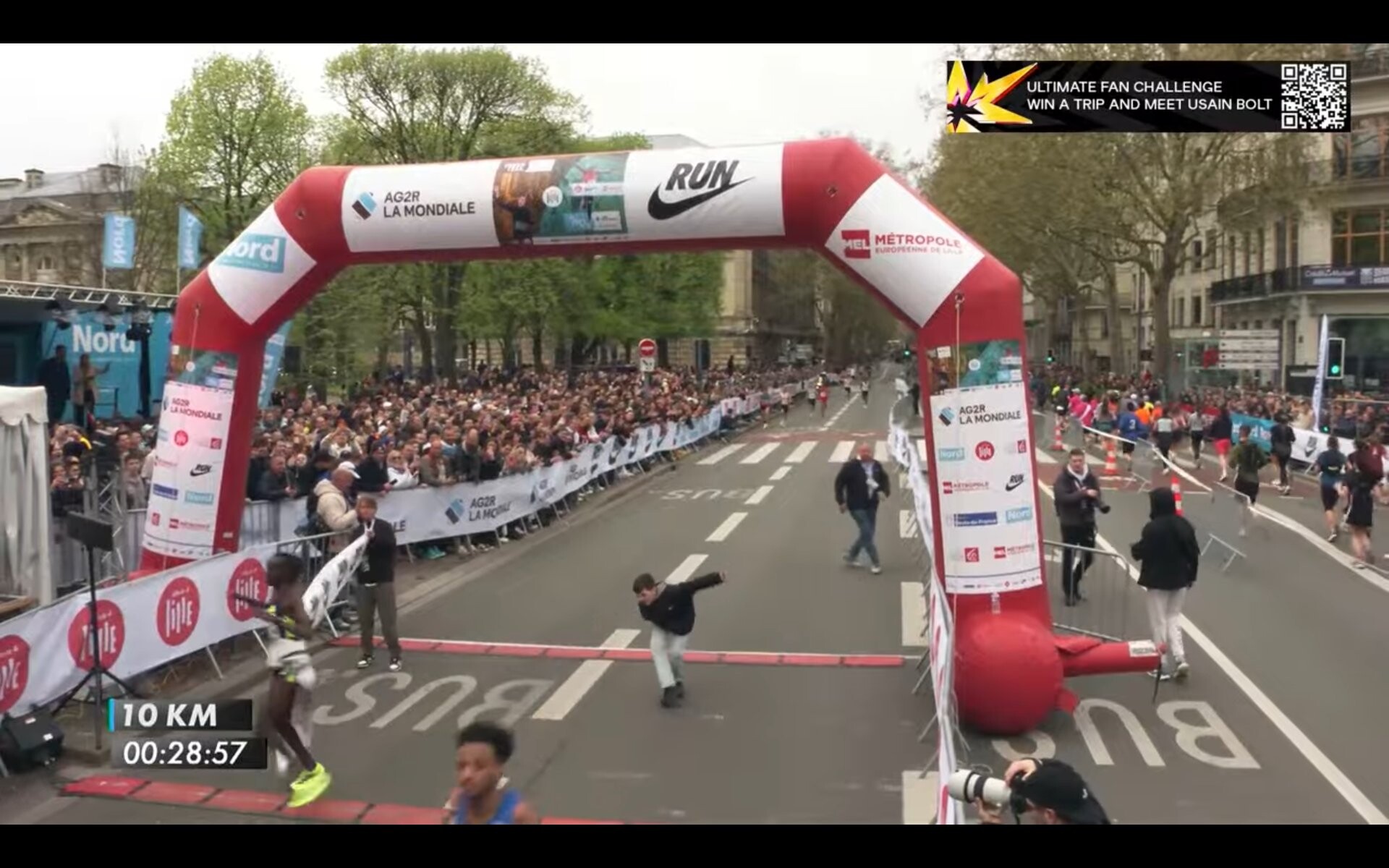
Rounding out the top five was Axumawit Embaye, who crossed the line in 30:21, capping a fiercely competitive field with a strong and determined effort.
In a race defined by elite depth and relentless pace, it was Ngetich who stood above all—delivering not just a victory, but a statement. A performance built on dominance, courage, and world-class execution, her run in Lille will resonate far beyond this single evening, setting the tone for what could be an extraordinary season ahead.
(04/04/26) Views: 194Erick Cheruiyot for My Best Runs.
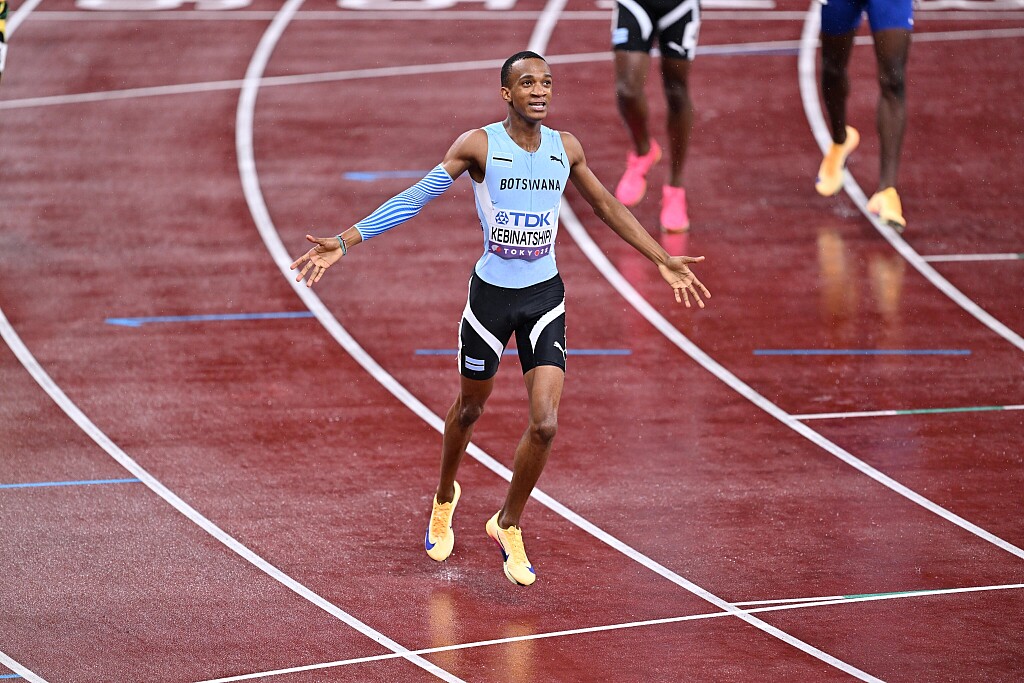
Kebinatshipi Ignites Gaborone with Stunning 9.91s Sprint Breakthrough
In a breathtaking display of raw speed and versatility, Collen Kebinatshipi stunned the athletics world by clocking a remarkable 9.91 seconds in the men’s 100m semifinals at the Botswana Athletics Championships in Gaborone.
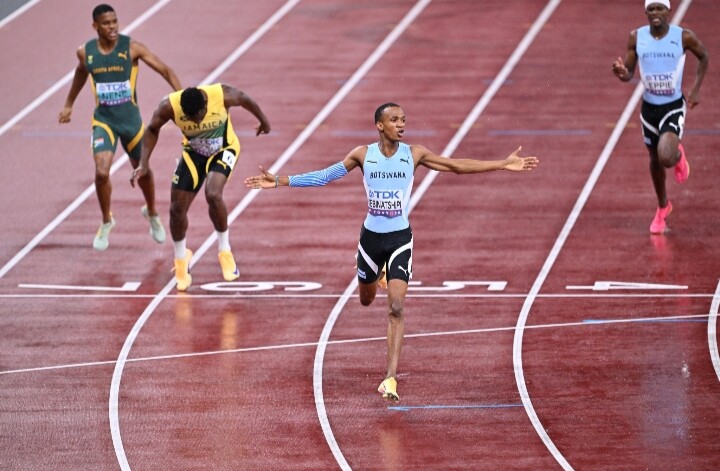
Known globally as a world-class 400m specialist, Kebinatshipi’s explosive run over the shorter distance marked a defining moment in his career. This was not just a fast time—it was a historic breakthrough. With that performance, he became only the second athlete from Botswana to dip under the coveted 10-second barrier, following in the footsteps of sprint sensation Letsile Tebogo.
Even more impressively, Kebinatshipi now stands as the first man in 2026 to break the 10-second mark, setting an early benchmark for the global sprint season. Achieving such a feat in the semifinals only amplified the sense that something extraordinary was unfolding on home soil.
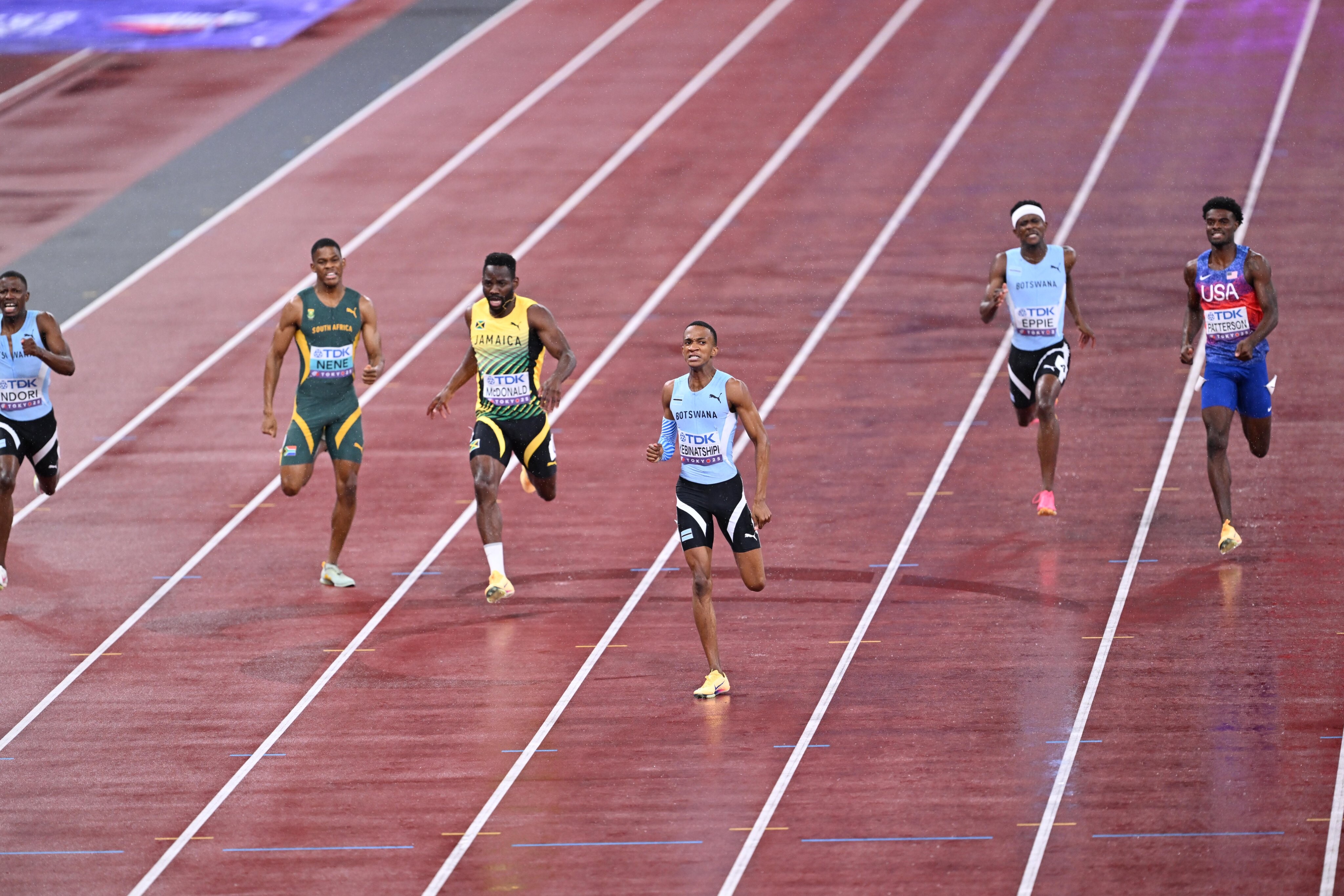
The race itself was a masterclass in controlled aggression. Kebinatshipi combined a composed start with a powerful drive phase before unleashing a devastating top-end speed that separated him from the field. His mechanics were sharp, his rhythm fluid—qualities rarely seen from athletes stepping outside their primary discipline.
This performance does more than rewrite personal bests; it reshapes perceptions. For an athlete already established as a 400m world champion, producing such elite speed over 100m signals a rare blend of endurance and acceleration. It opens the door to new tactical possibilities and raises the question of whether Botswana may soon witness a dual-threat sprint star at the highest level.
Beyond individual achievement, the moment carries national significance. Botswana’s sprinting legacy continues to rise, and Kebinatshipi’s run adds another powerful chapter to that story—one defined by ambition, progression, and global relevance.
As the championships continue, all eyes will remain fixed on Kebinatshipi. But regardless of what follows, his 9.91-second sprint has already secured its place in history—a performance that did not just win a race, but redefined potential.
(04/03/26) Views: 191Erick Cheruiyot for My Best Runs.
Gressier Flies to 12:51 in Lille Just Two Seconds Shy of World Record
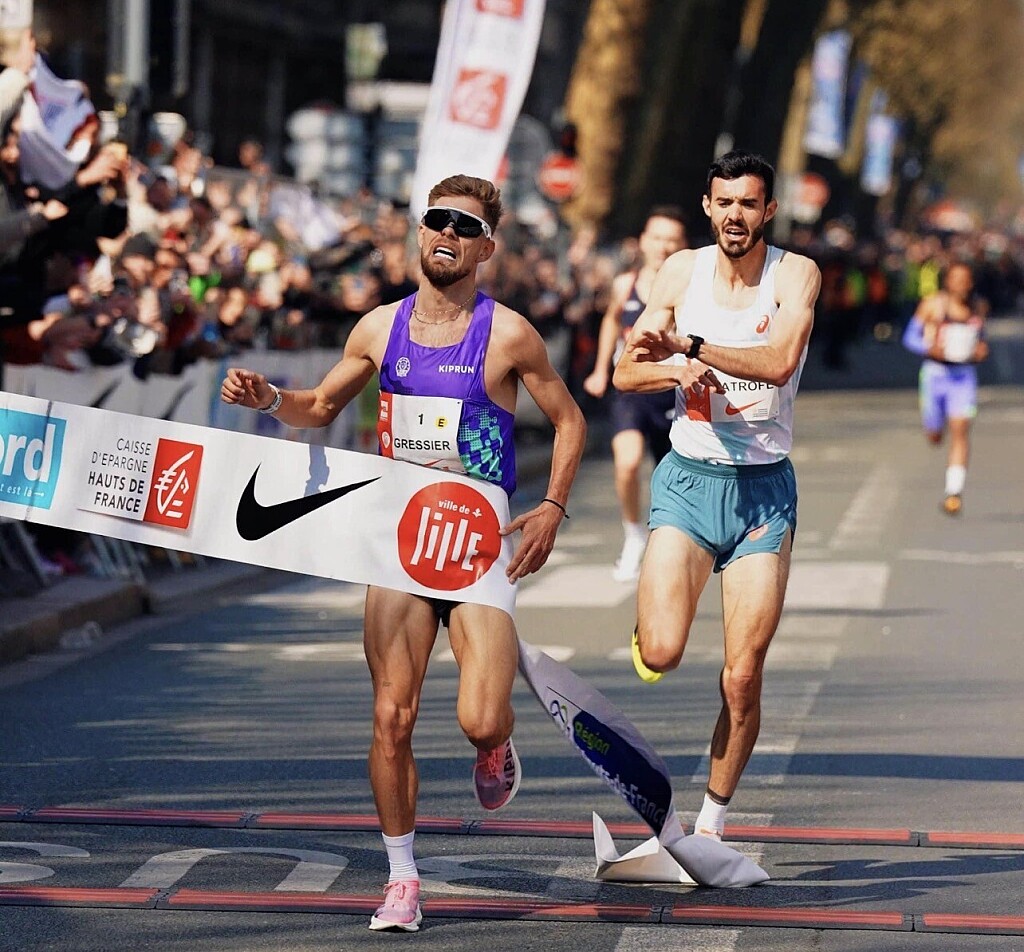
France’s Jimmy Gressier delivered one of the most electrifying road 5K performances in history on Saturday in Lille, stopping the clock at 12:51—just two seconds shy of the world record.
On a fast and aggressive course at the Urban Trail de Lille, Gressier didn’t just win—he elevated European distance running to a new level. His time shattered his own European record of 12:57 set on the same streets a year ago and now places him joint third on the all-time list, behind only Berihu Aregawi (12:49) and Yomif Kejelcha (12:50).
But this was no solo effort.
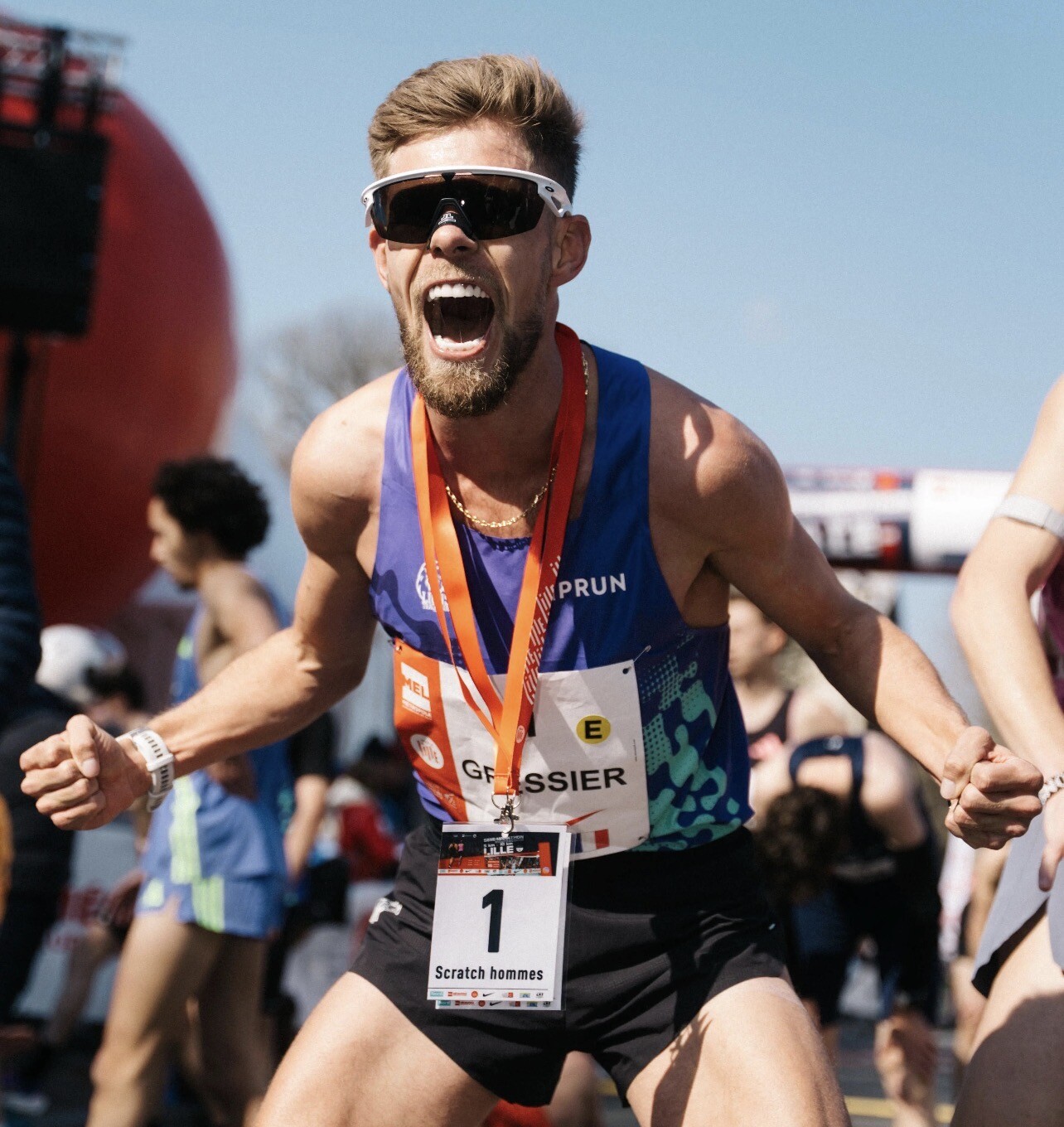
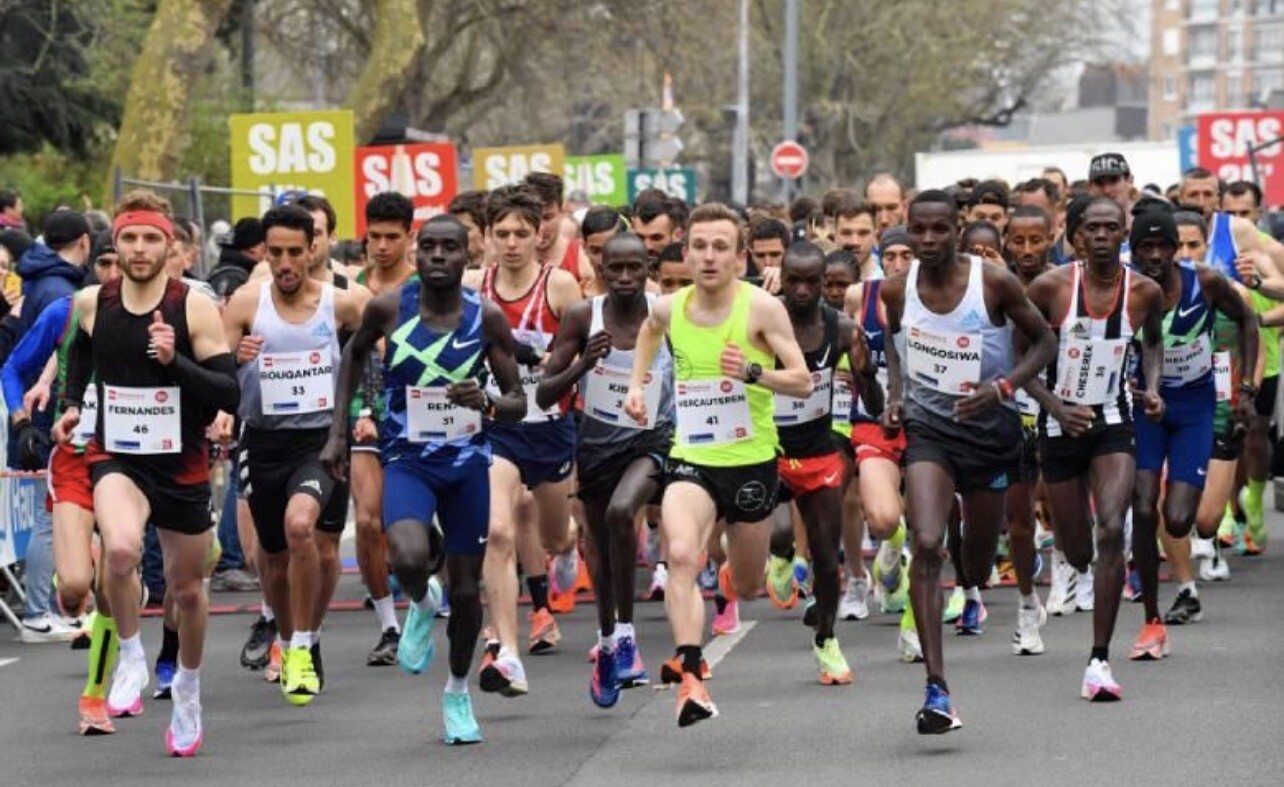
The race unfolded as a four-man battle at blistering pace, with Ethiopia’s Addisu Yihunepushing Gressier all the way to the line. Yihune finished second in 12:54, a performance that also launches him into the all-time top five. Close behind, France’s Yann Schrub clocked 12:56, breaking the previous European record as well and becoming one of the fastest men ever over the distance.
Three men under 13 minutes in one race—on the roads—signals something special.
Gressier’s run was controlled early, aggressive through the middle kilometers, and fearless in the closing stretch. When the pace surged late, he responded with authority, holding off Yihune in a final sprint that had the feel of a championship finish rather than a time trial.
At just 27, Gressier continues to redefine what’s possible for European distance runners. His 12:51 doesn’t just threaten the record books—it puts the world record squarely within reach.
And based on what we saw in Lille, it’s no longer a question of if—but when.
(04/06/26) Views: 189Boris Baron for My Best Runs
Finding My Way Back One Step at a Time
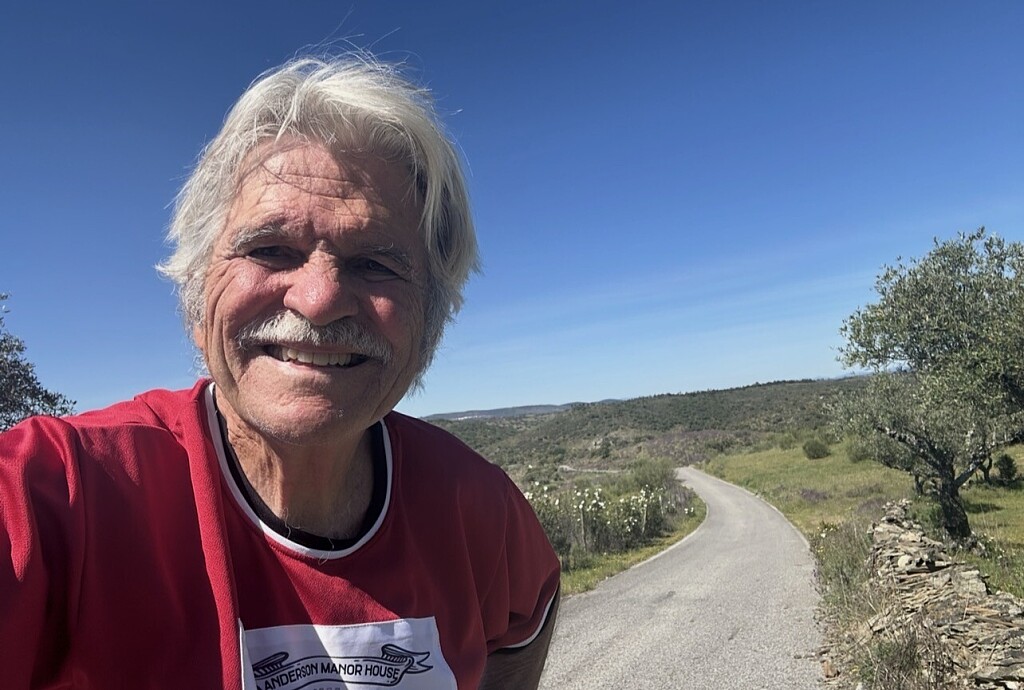
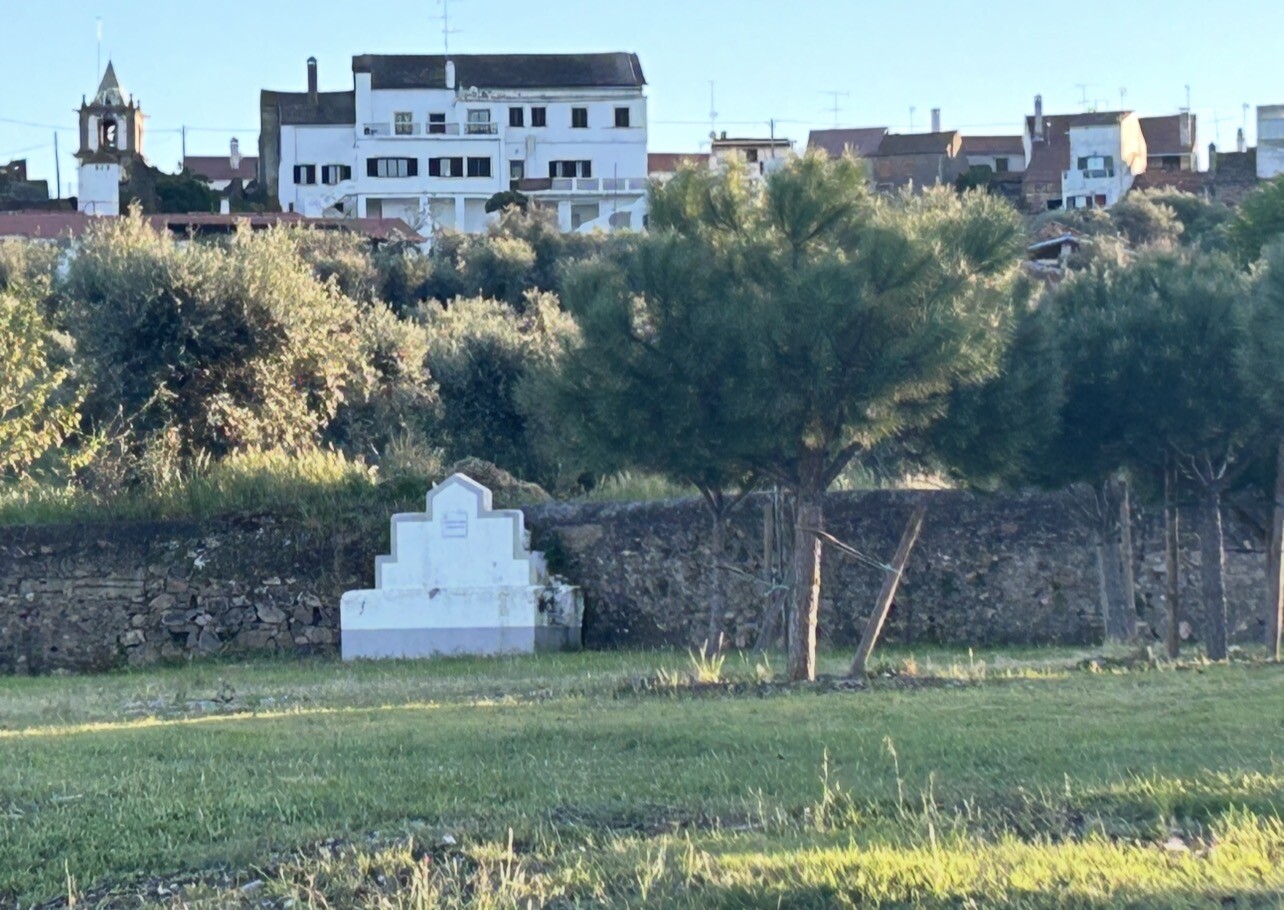
At our Anderson Manor (second photo) in central Portugal, I recently started something I didn’t plan.
I call it the “Four Day Monforte and Beyond Marathon.”
Not a race.
Not a timed effort.
Just a personal journey—one that has come to mean more to me than most runs I’ve done.
The route connects three nearby villages that are part of daily life here:
• Cegonhas — 6.53 miles
• Malpica — 8.12 miles
• Ladoeiro — 7.2 miles
That’s 21.85 miles point to point.
To complete the marathon distance, I will finish on Tuesday with a 4.35-mile loop heading out toward a local cheese farm, turning around after passing hundreds of cactus plants—one of those unexpected sights you only find in this part of Portugal.
Total: 26.2 miles.
But I’m doing it over four days.
Where I Am Now
After two days, I’ve completed 14.65 miles.
Ahead of me:
• Monday — the run to Ladoeiro
• Tuesday — I will be finishing up this special marathon with the final 4.35-mile cactus loop
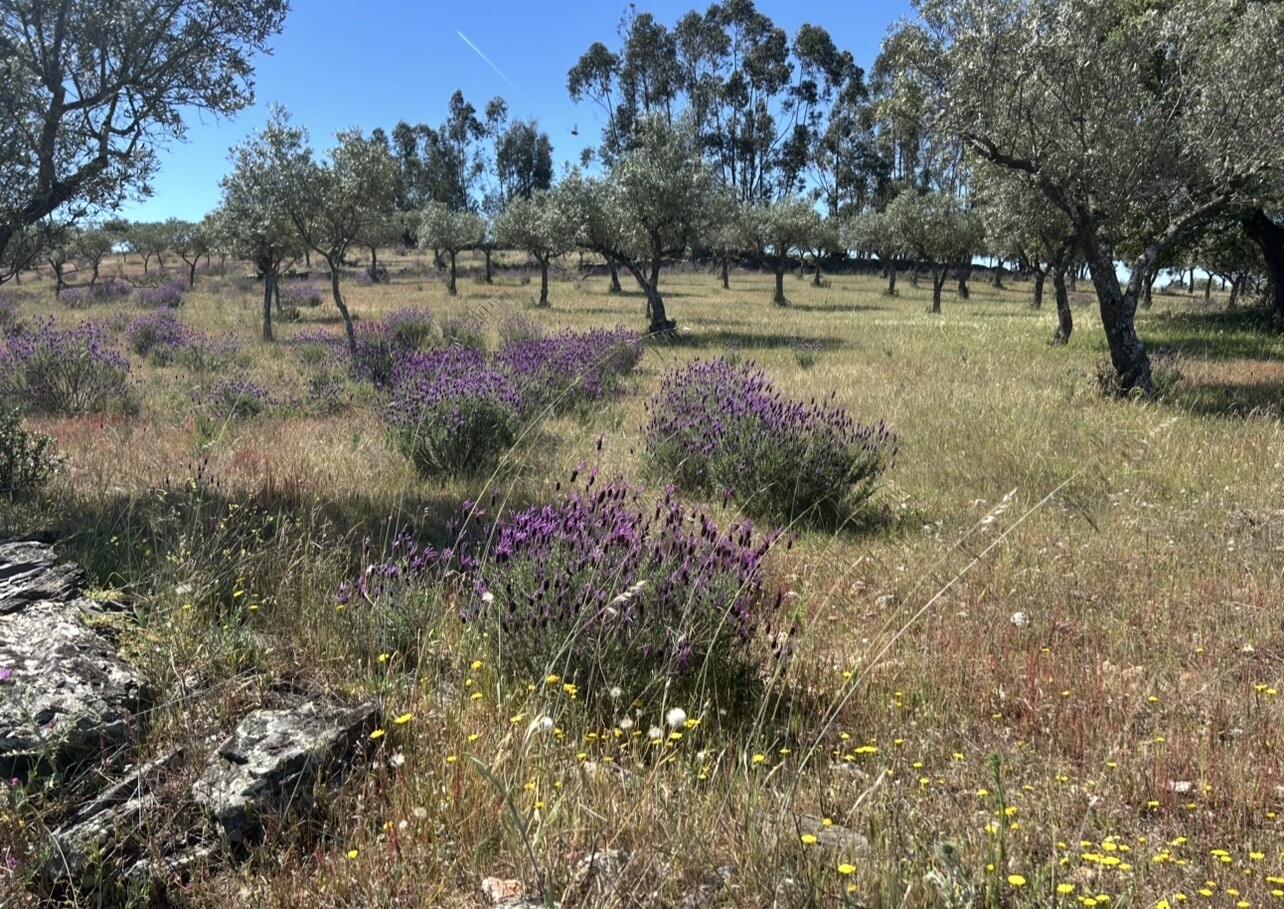
Two days. About 11 miles to go.
My plan on Tuesday is to wear lighter running shoes, just to test the water. I’ve always liked how running feels smoother and more natural in lighter shoes, so this will be another small step forward—listening to what my body tells me.

More Than Just Miles
This run is about something much deeper.
On June 15, 2025, I had a situation with my knee. For at least 30 days, I could hardly walk. Going up and down stairs was difficult. I was mostly limping, and there were times I could barely cover a mile in less than 40 minutes.
But I kept moving.
At my age—or any age—we must keep moving if possible.
Since then, I’ve averaged about 40 miles a week—mostly walking, some running. It’s been steady, but uncertain.
There were moments when I started to think my running days might be over. I started my running journey Feb 16, 1962 and I have never taken this amount of time off ever.
But I didn’t want to believe that.
So I didn’t.
I kept moving. I kept walking. And walking is good—very good. But it’s not running.
Today, during my second leg, I ran 6.8 miles, and just like that, I felt it again—that feeling only running gives you.
I started my running journey Feb 16, 1962 and I have never taken this amount of time off ever. It is good to be back.
A Step at a Time
I’m not rushing this.
It’s one step at a time.
One day at a time.
Even now, I know things can change quickly. But I’m heading in the direction I want to go.
This will be the first time since my knee situation that I’ve covered the marathon distance—even spread out over days.
And I needed this.
The Moments Along the Way
One of the best parts of this journey has nothing to do with the running itself.
It’s been sharing these moments with my wife, Catherine Anderson.
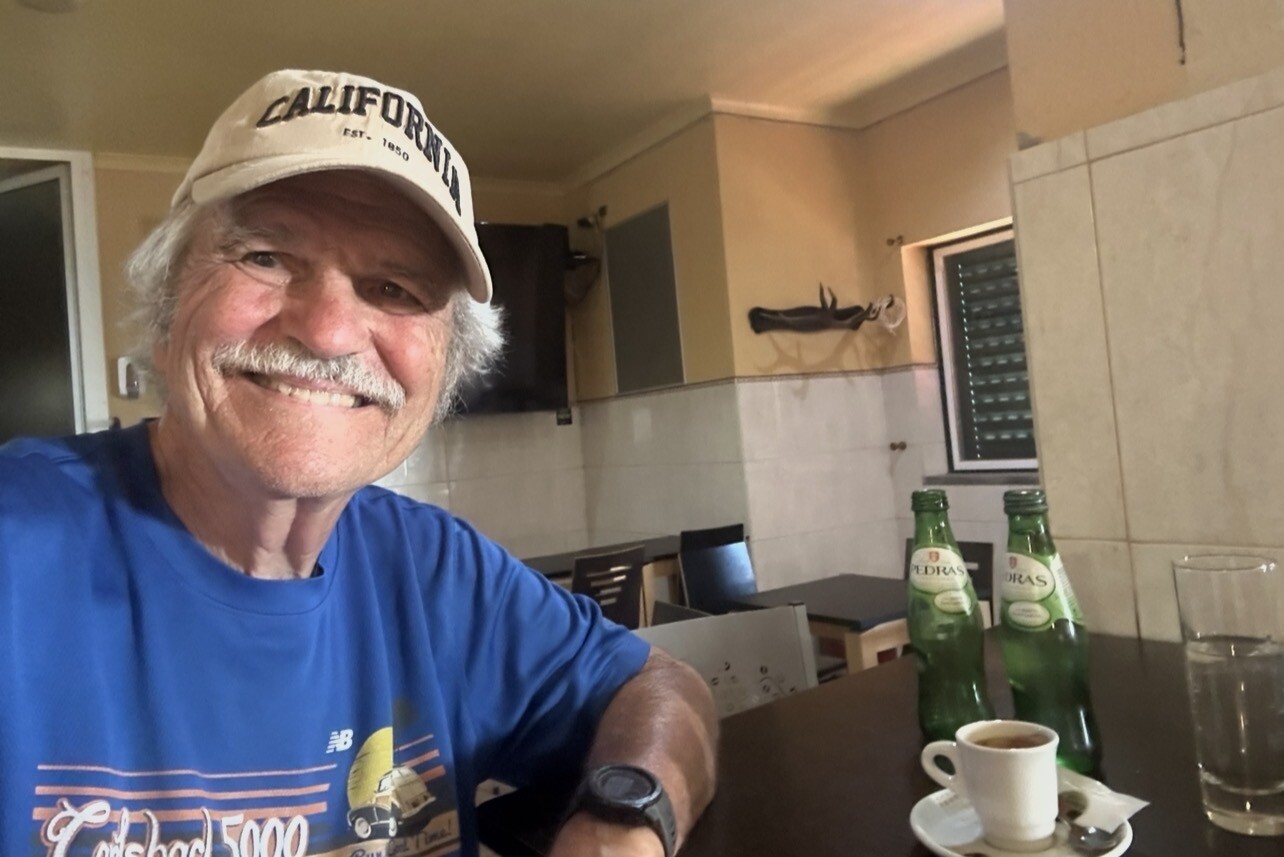
She meets me in these small villages, and we take time to sit down—have a coffee, drink some water, and just enjoy where we are.
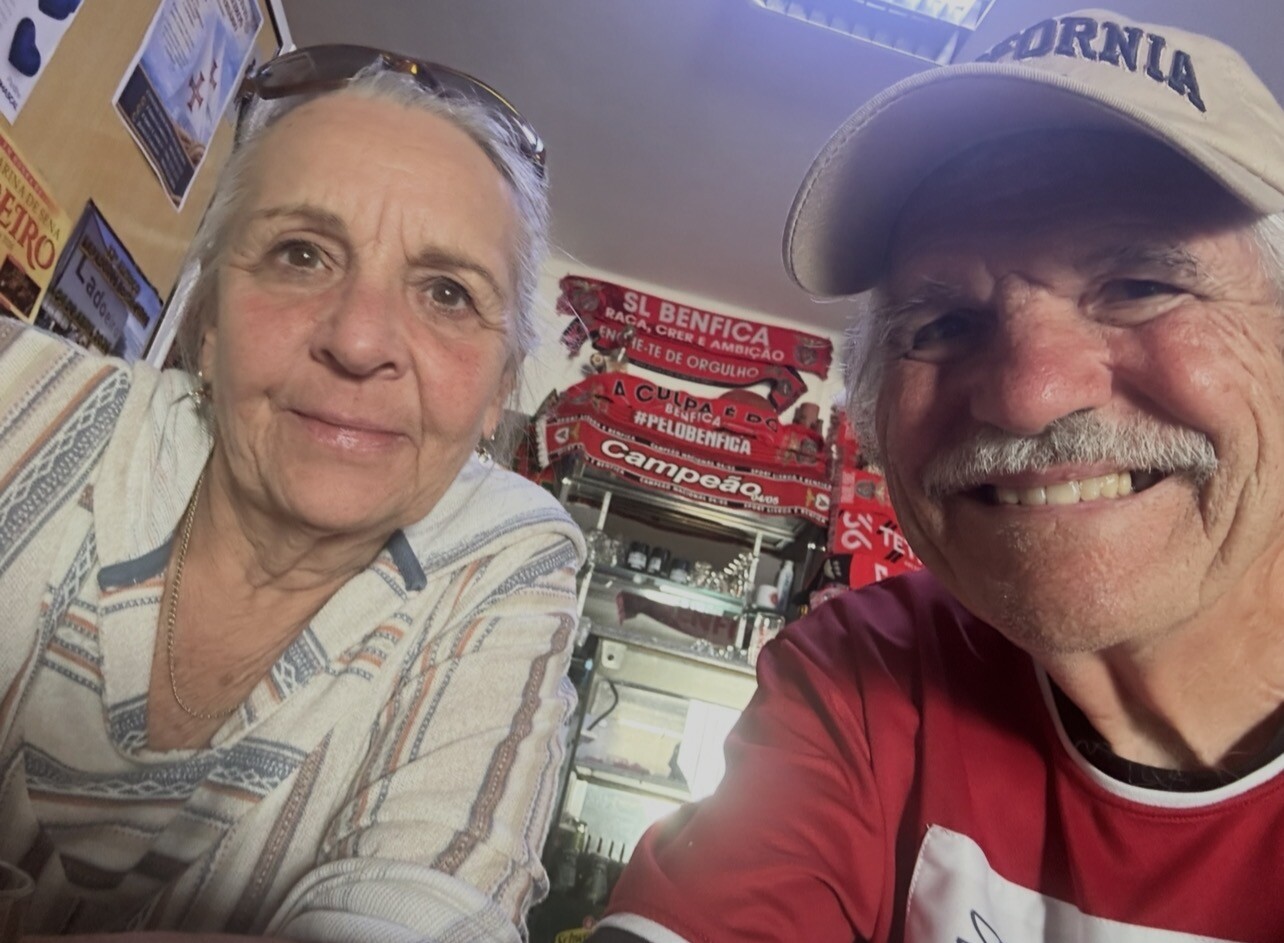
In Cegonhas, they were having a pre-Easter gathering, and we joined them for lunch.
In Malpica, it was simpler—just coffee and sparkling water.
These are the moments that turn this from a run into something I will always remember.
Not a Recommendation—Just My Journey
I’m not recommending this approach.
I didn’t rely on doctors, operations, or medicine. My body has slowly brought me back on its own. It’s been a long journey, and it’s not over.
But I’ve learned something important:
You have to believe in what your body can do.
Redefining the Run
I’ve loved running fast. I still do.
I like running smoother when I’m going faster and wearing lighter shoes.
But right now, at 78 years old, a little out of shape, and about eight pounds heavier than I’d like to be after a long layoff, things are different—and that’s okay.
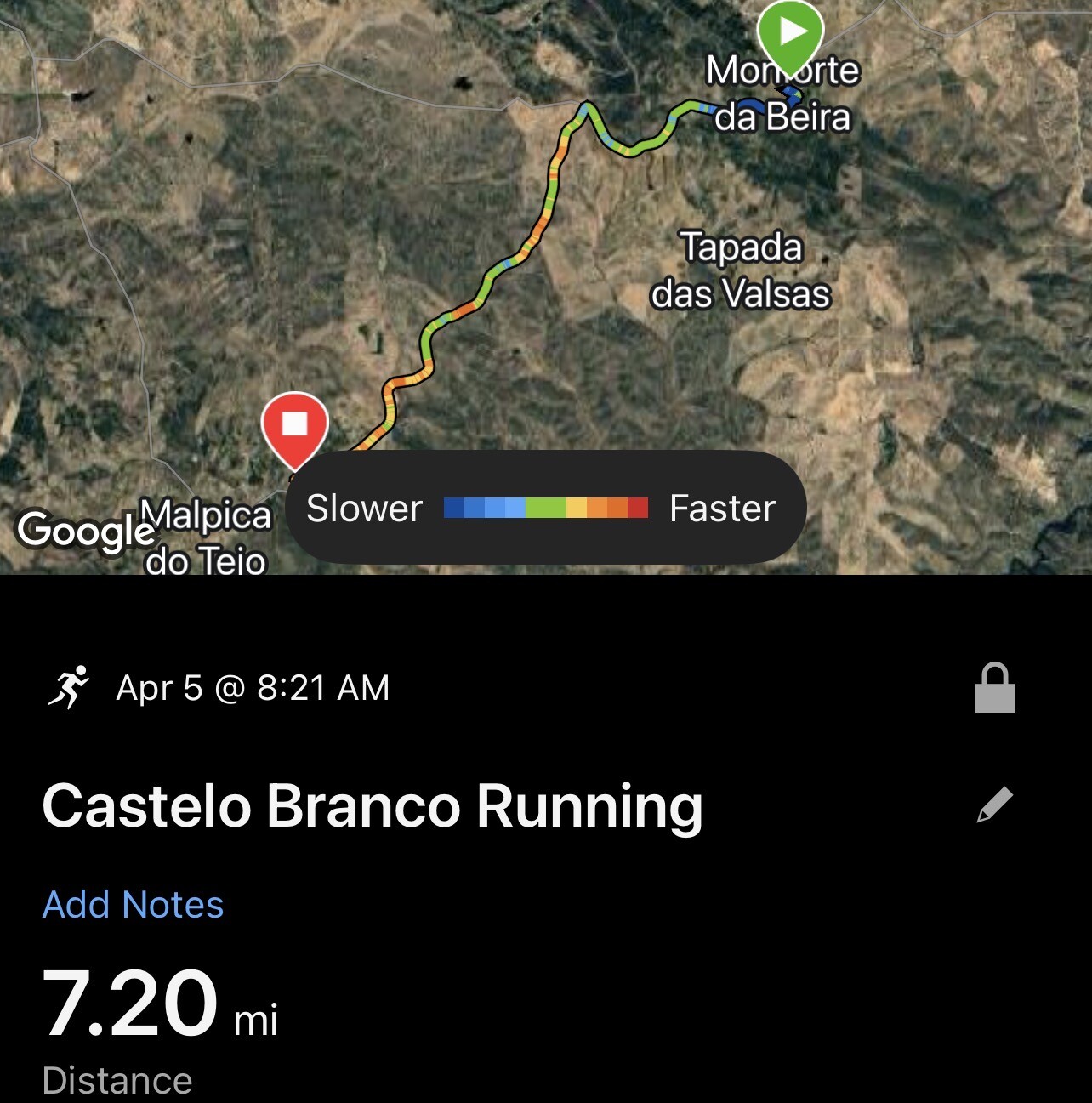
Even running at sub-15-minute pace feels good again.
And I know this is a good start.
In many ways, sub-10-minute miles are actually easier than 15-minute miles—they flow better. But at this stage, any running at any time works for me.
And I will get back in shape.
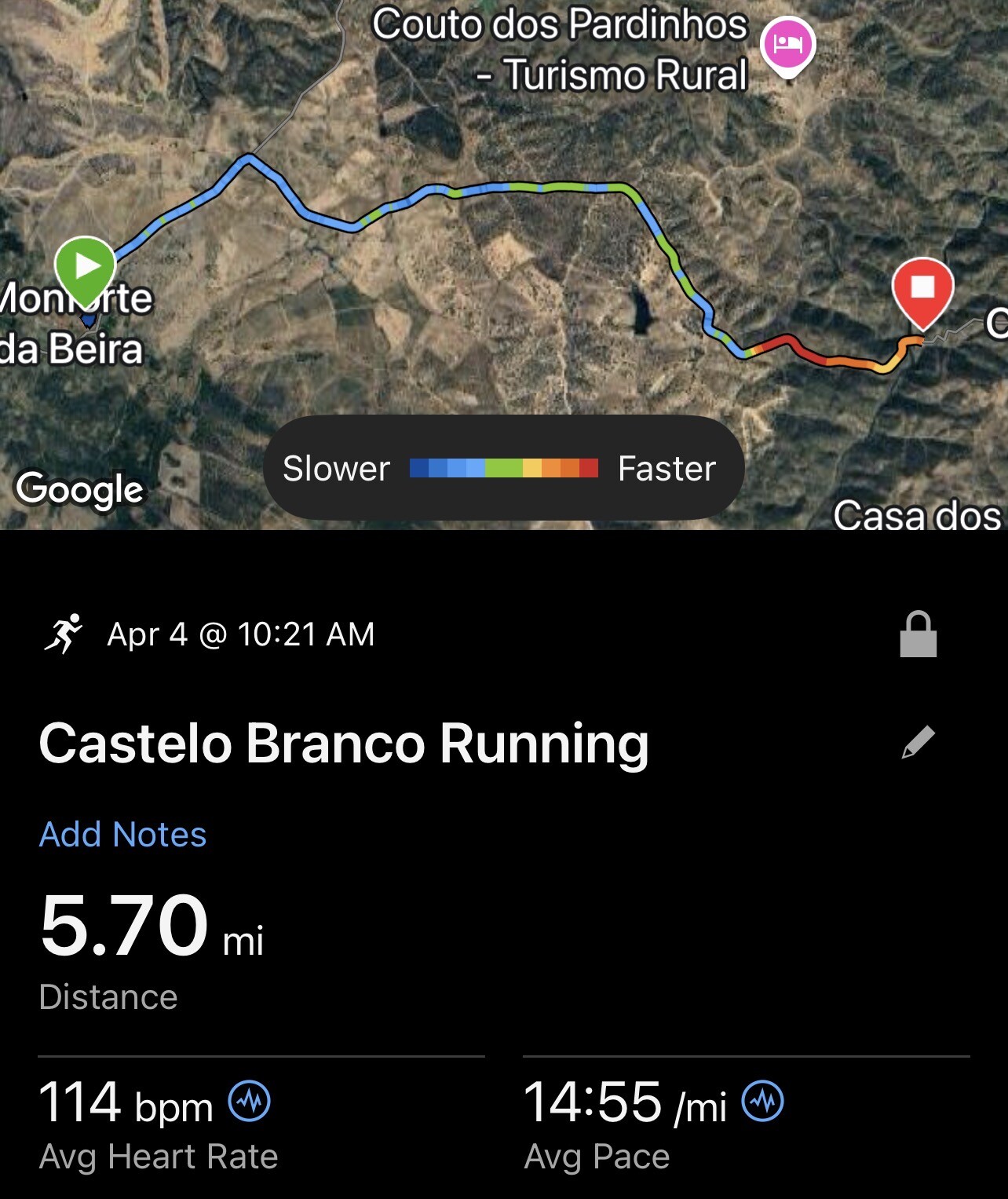
And I will get my weight back down.
Because it’s still running.
And at heart, I am—and always will be—a runner.
Monforte and Beyond
With two days to go, this journey isn’t finished yet.
One more village.
And on Tuesday, I will finish this special marathon with the final miles.
This one isn’t about finishing fast.
It’s about finishing—period.
(04/05/26) Views: 179Bob Anderson founder My Best Runs
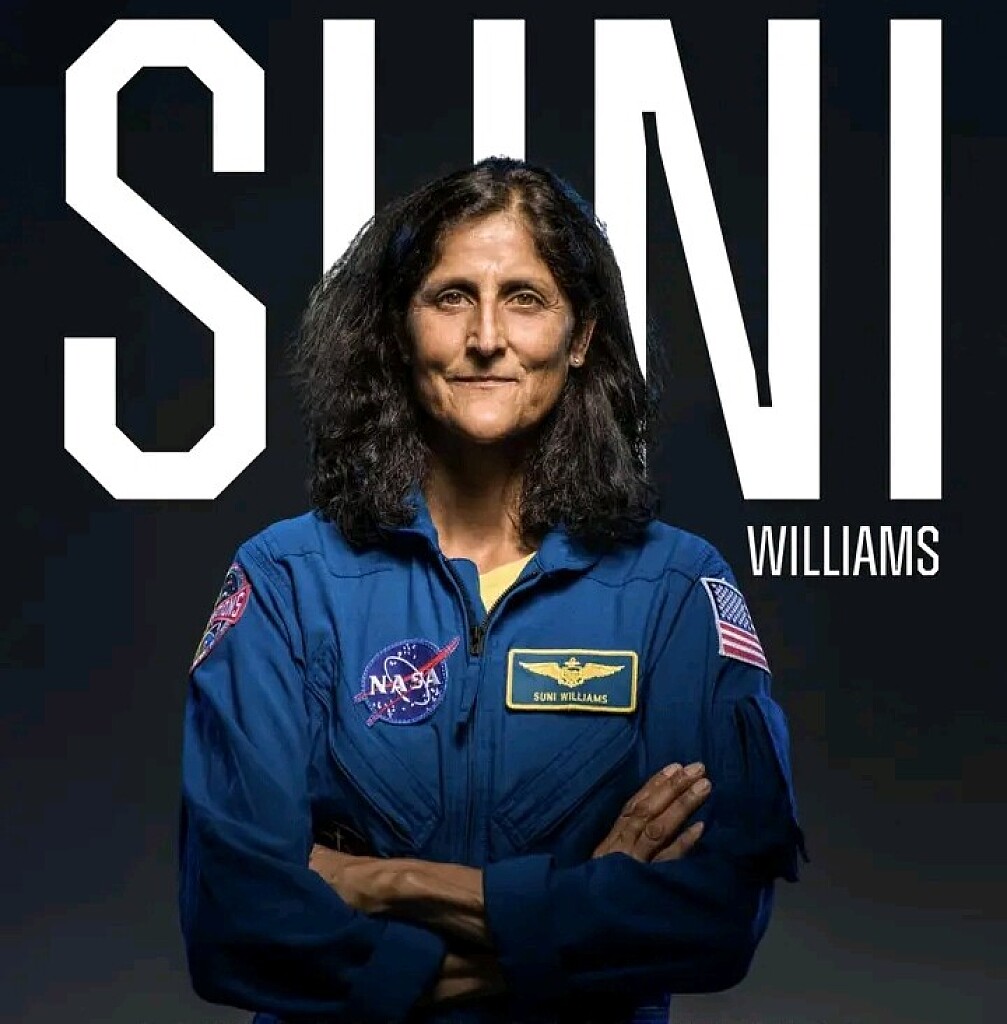
From Orbit to Asphalt: Suni Williams Prepares for a Historic Boston Marathon Return
There are countless remarkable stories woven into the legacy of the Boston Marathon, but none quite like that of Suni Williams—the only person in history to have run the race from space. Now, nearly two decades after that extraordinary feat, she is set to experience the marathon in its purest form—on the ground, surrounded by the roar of the crowd and the rhythm of pounding footsteps through Boston’s streets.
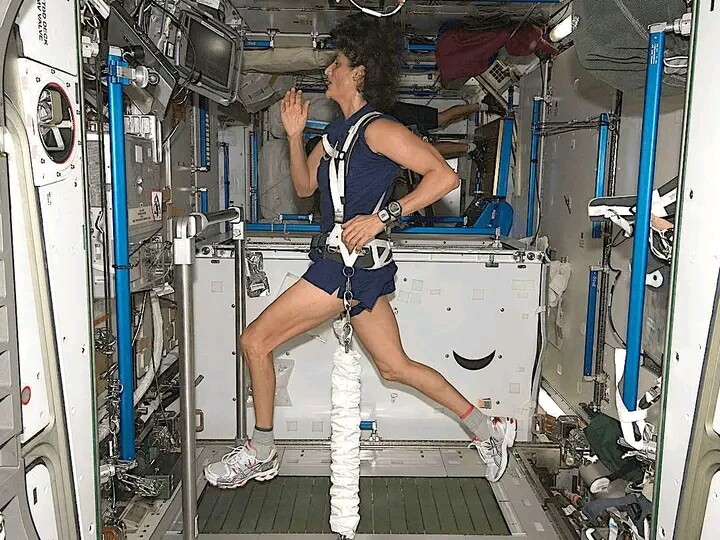
Back in 2007, while orbiting Earth aboard the International Space Station, Williams took on the Boston Marathon in a way no one else ever has. Secured to a treadmill in microgravity, she completed the 26.2-mile distance in 4:23:46, all while traveling at approximately 17,500 miles per hour as the station circled the planet. It was a surreal fusion of endurance and exploration—her race unfolding high above the very course where thousands of runners pushed forward in the traditional way from Hopkinton to Boston.
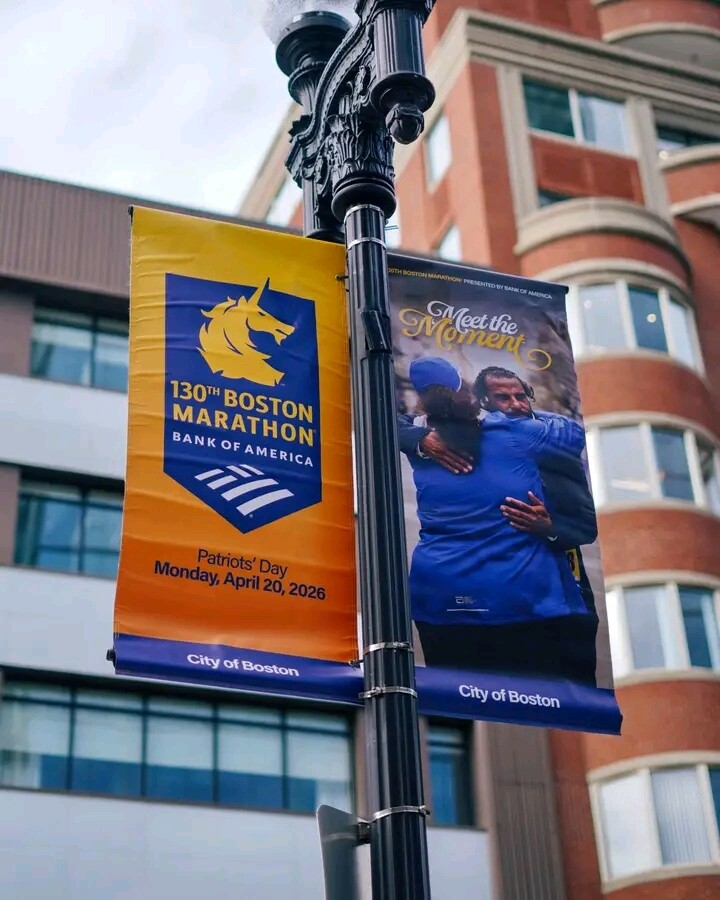
Now, on April 20, Williams will trade the silence of space for the electric atmosphere of race day. For someone who has spent years gazing down at Earth from orbit, this moment represents more than just a marathon—it is a deeply human experience, grounded in connection, community, and the shared pursuit of challenge.
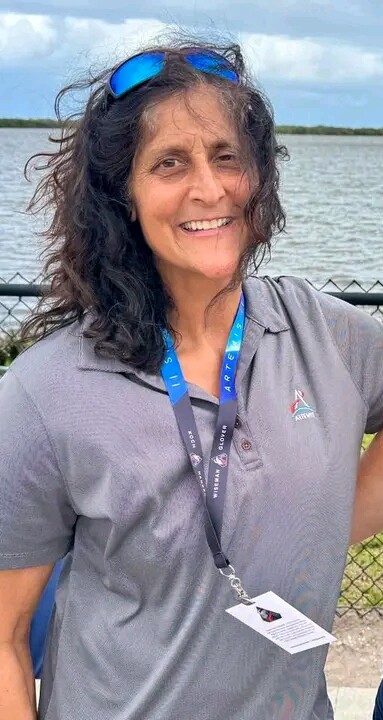
Her journey to this start line carries even greater weight following her retirement from NASA in January 2026, after an extraordinary 27-year career. During her time as an astronaut, she amassed one of the longest cumulative durations in space among NASA personnel and set the benchmark for spacewalking hours by a woman—achievements that underscore her resilience, discipline, and pioneering spirit.
In recognition of those qualities, the Boston Athletic Association has named Williams the recipient of the 2026 Patriots’ Award. The honor celebrates individuals who embody perseverance, service, and curiosity—values that have defined her career both beyond Earth and back on it. For Williams, a native of Needham, Massachusetts, this race is also a homecoming, a return not just to Boston, but to her roots.
As she prepares to toe the line, one intriguing question lingers: does her 2007 orbital run count as a personal best? Technically, the time stands. But this time, the challenge will be different—gravity, terrain, and the raw, unfiltered energy of race day. No harness. No orbit. Just the road ahead.
And perhaps that is what makes this moment so compelling. After conquering the marathon in space, Suni Williams now embraces the simplicity—and the beauty—of running it on Earth.
(04/05/26) Views: 169Erick Cheruiyot for My Best Runs.
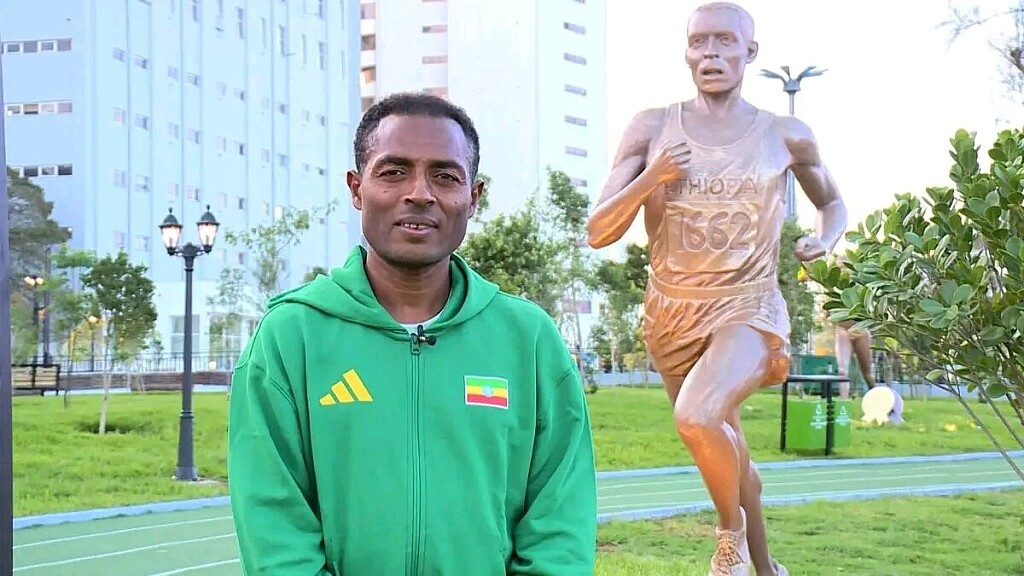
Kenenisa Bekele Leads a Historic Moment as Ethiopia Honors Its Greatest Champions
Ethiopia has once again affirmed its place at the pinnacle of global distance running—not only through performance, but through legacy. In a powerful celebration of national pride and sporting excellence, the country has unveiled a remarkable tribute to its greatest champions, headlined by none other than Kenenisa Bekele. Widely regarded as one of the finest distance runners in history, Bekele has now been immortalized with a statue, cementing his legacy for generations to come.
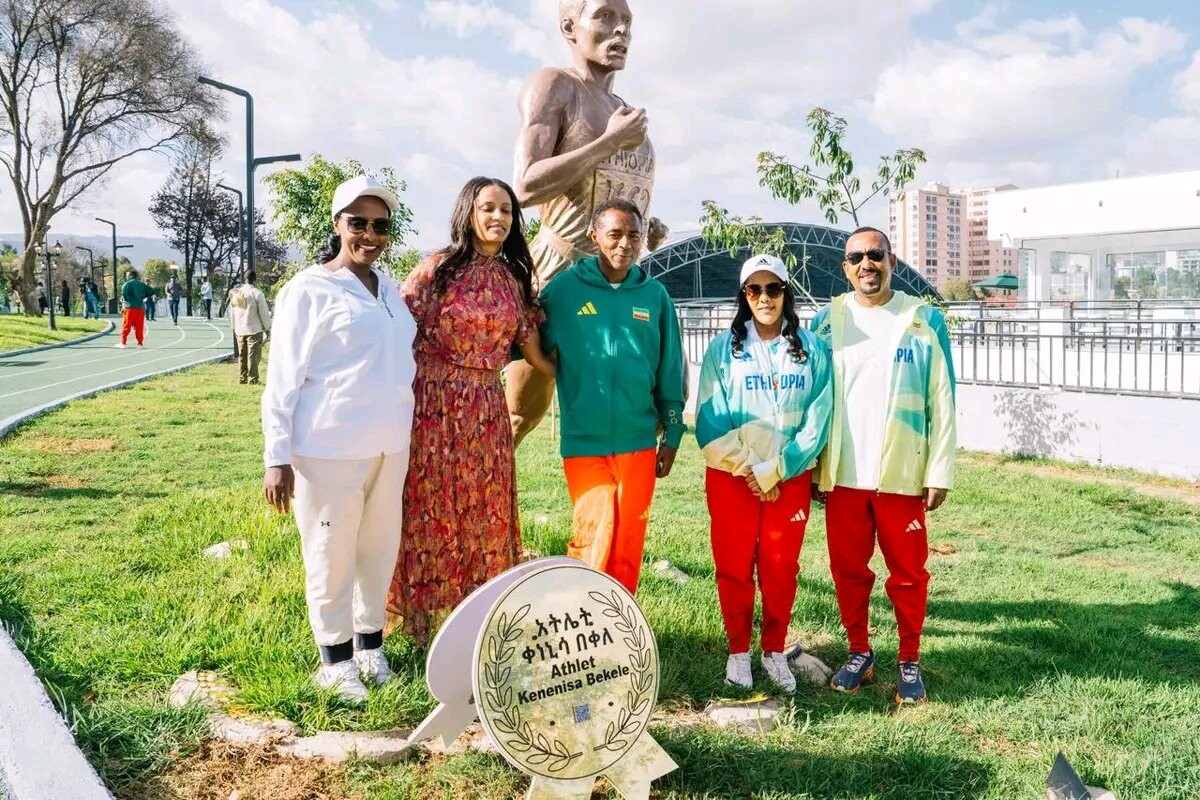
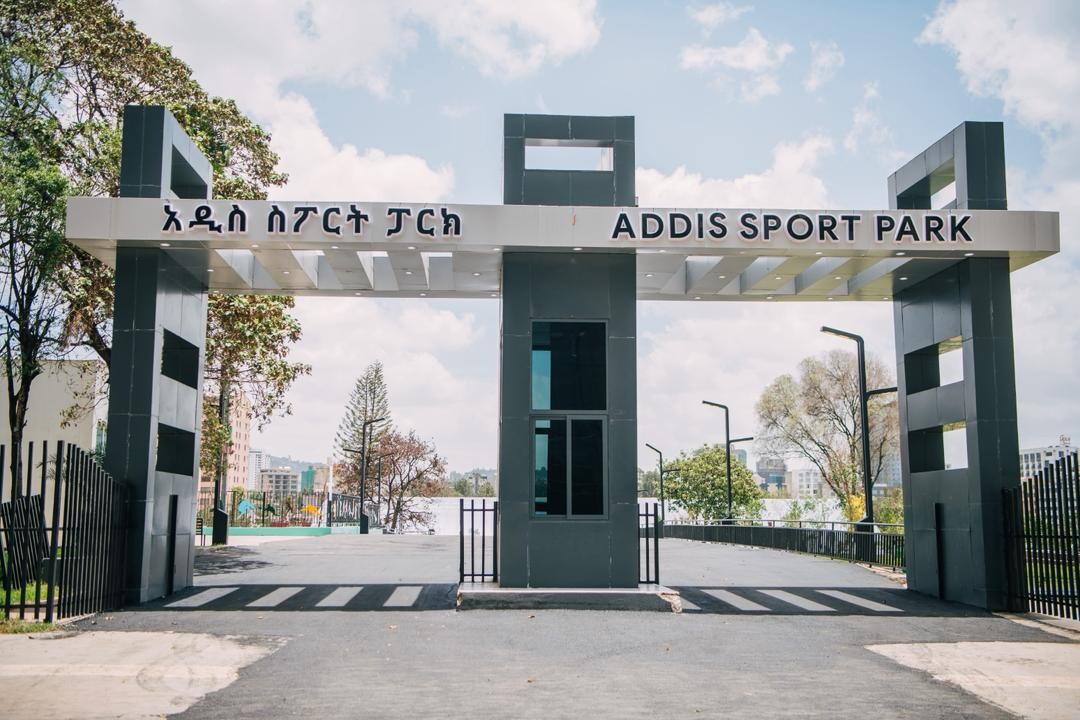
The historic moment took place during the inauguration of the state-of-the-art Addis Sport Park, a world-class multi-sport complex designed to elevate Ethiopian athletics to new heights. Officially opened by Prime Minister Abiy Ahmed, the facility stands as a symbol of ambition and progress. Equipped with an Olympic-standard swimming pool, professional football, basketball, and tennis courts, alongside a modern athletics track, the complex represents a bold investment in the future of sport in Ethiopia.
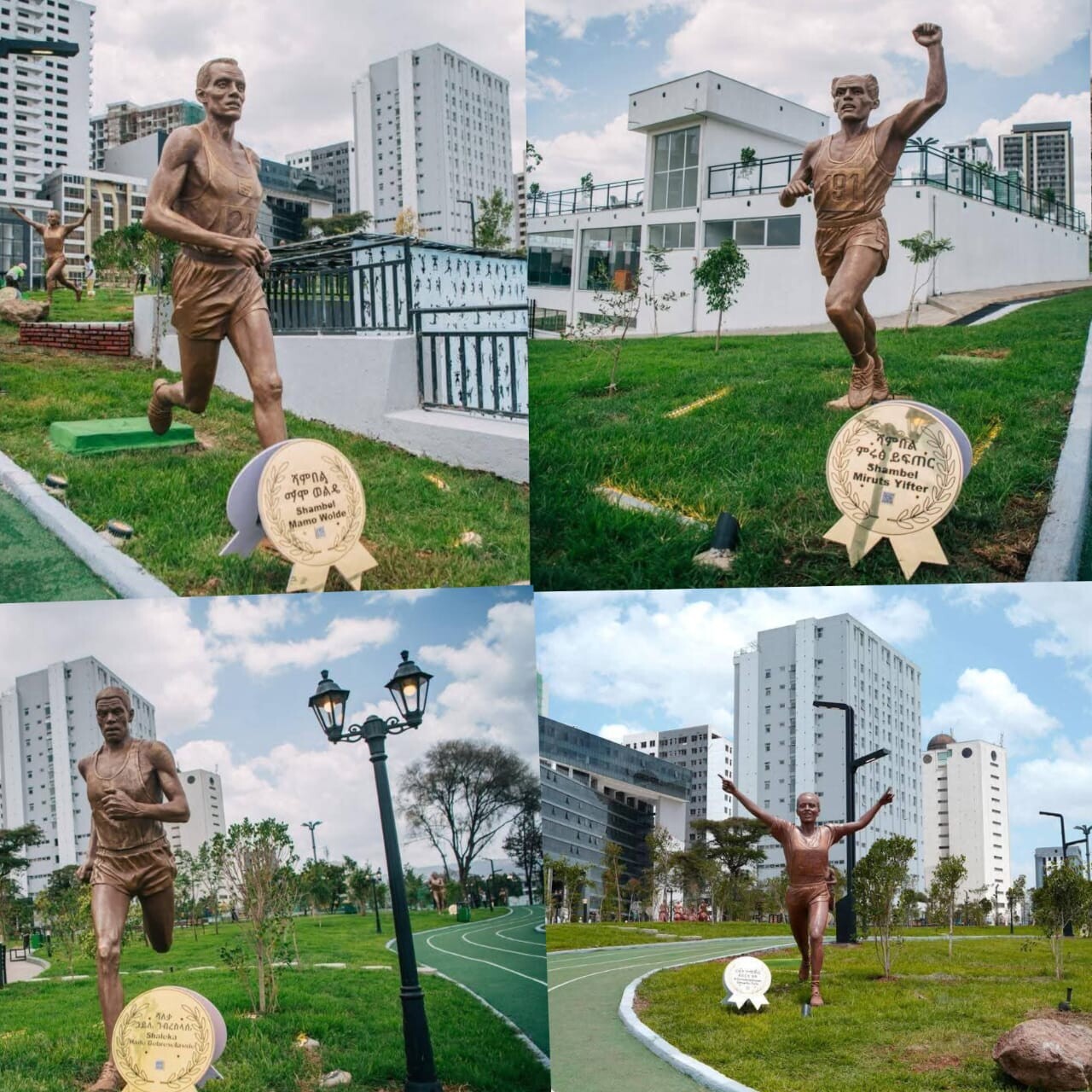
At the heart of the celebration was the unveiling of statues honoring 15 Ethiopian Olympic gold medalists—heroes whose achievements have shaped the nation’s sporting identity. Among them are legendary figures such as Abebe Bikila, whose barefoot victory at the 1960 Rome Olympics remains one of the most iconic moments in Olympic history, and modern champions like Tamirat Tola, who continues to carry Ethiopia’s dominance into the present era.
For Bekele, the recognition carries deep personal meaning. Reflecting on the occasion, he expressed both gratitude and pride at being honored among his peers. He described the Addis Sport Park as the realization of a long-held dream—a facility that will not only nurture elite athletes but also inspire young Ethiopians to pursue greatness. His words underscored a powerful truth: that such recognition goes beyond individual achievement, serving instead as a beacon for future generations.
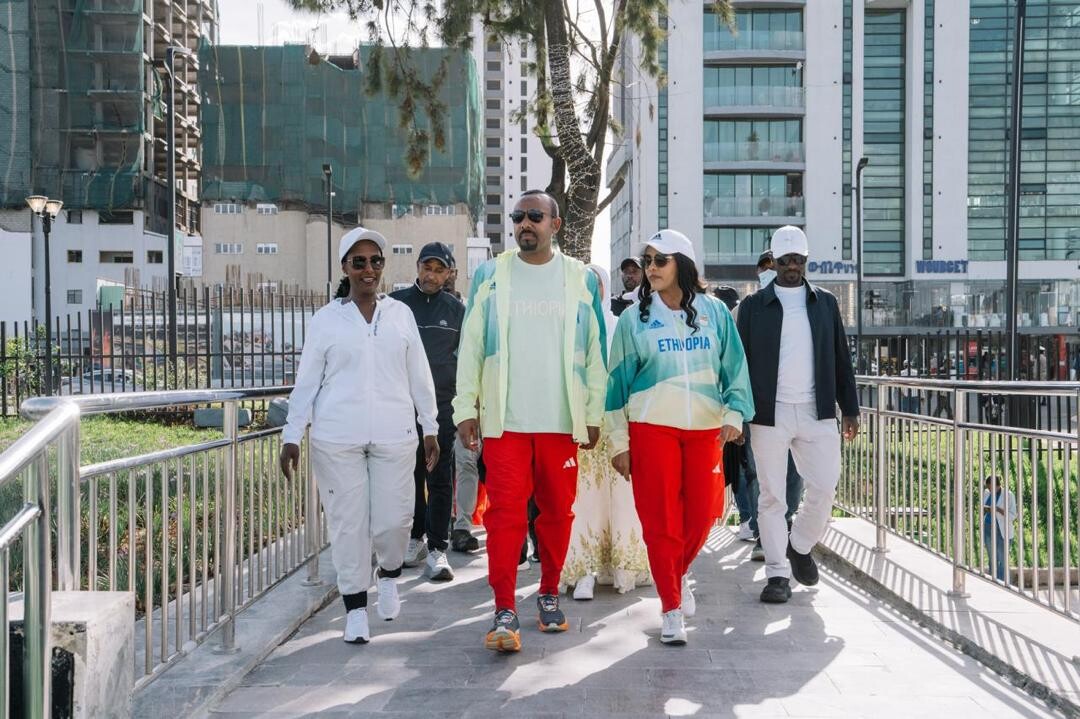
The ceremony also acknowledged the leadership behind this transformative project, including First Lady Zinash Tayachew and Addis Ababa Mayor Adanech Abiebie, whose support for sport continues to shape the country’s athletic landscape.
More than a celebration of past glory, the unveiling of these statues signals a forward-looking vision. Ethiopia is not merely preserving its history—it is actively building the foundation for its next wave of champions. In honoring its legends, the nation is sending a clear message: greatness is not only remembered here, it is continually reborn.
As the statues stand tall in the heart of Addis Ababa, they serve as enduring symbols of resilience, excellence, and national pride—reminding the world that Ethiopia’s legacy in athletics is as timeless as the champions who define it.
(04/06/26) Views: 162Erick Cheruiyot for My Best Runs.
