

Running News Daily
Top Ten Stories of the Week
12/24/2022
These are the top ten stories based on views over the last week.



How Young Is Too Young to Lace Up for a Marathon?
A new paper looks at the available research and makes recommendations.
The world—running and not—had its eyes on the Flying Pig Marathon this past May after a 6-year-old boy completed the race with his family in 8 hours and 35 minutes.
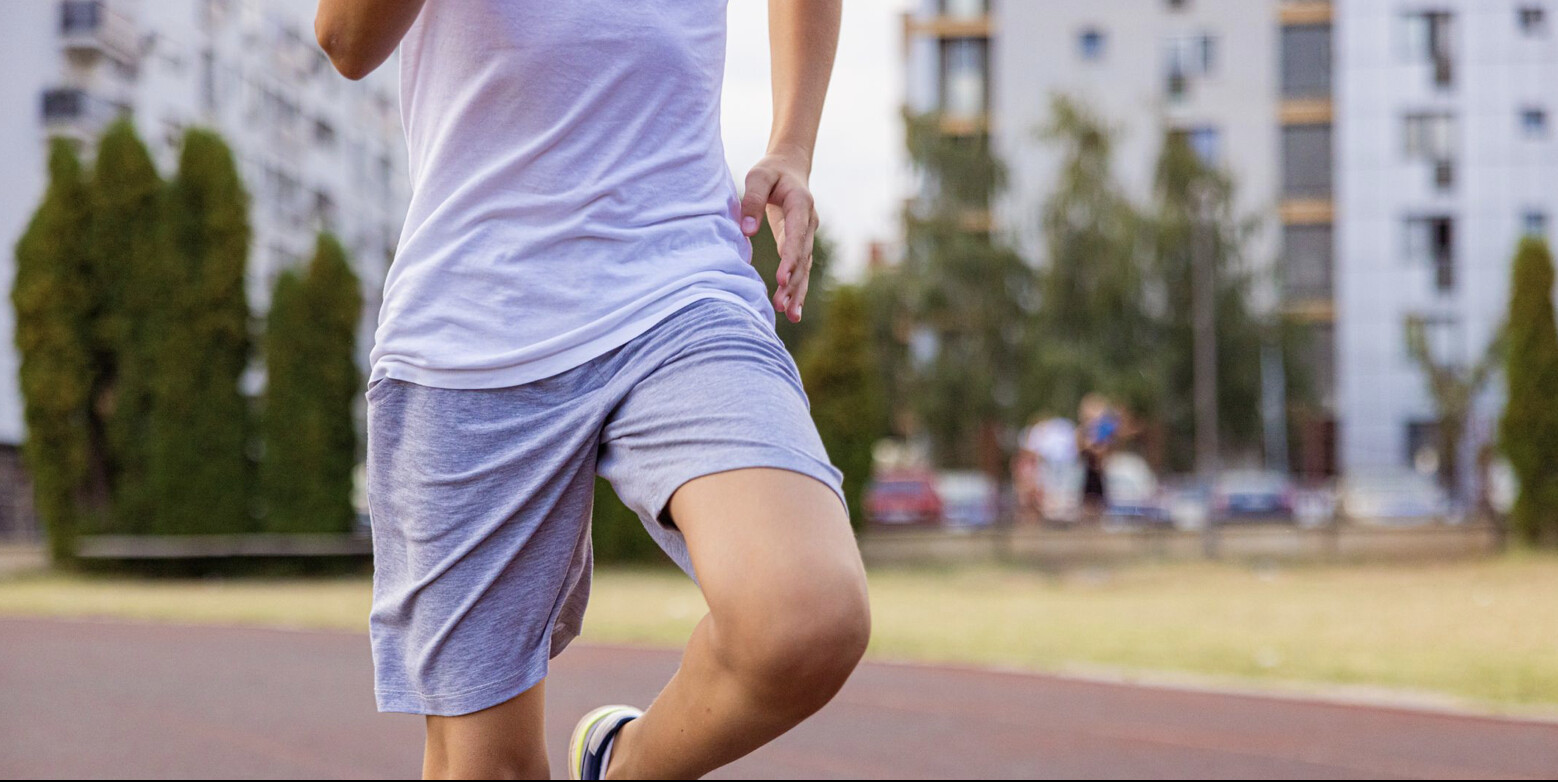
It wasn’t the finish itself that caused an outcry, but a subsequent social media post by the boy’s mother that references his distress during the later miles of the race.
The photo showed the boy holding a box of Pringles potato chips with the caption, “On the marathon course, Rainier knew they usually hand out Pringles around mile 20. He was struggling physically and wanted to take a break and sit every three minutes. After 7 hours, we finally got to mile 20 and only to find an abandoned table and empty boxes. He was crying and we were moving slow so I told him I’d buy him two sleeves if he kept moving. I had to promise him another sleeve to get him in the family pic at the finish line. Today I paid him off.”
Sports medicine experts and pediatricians got wind of the boy’s marathon finish, and its unique circumstances, and published a paper in JAMA Pediatrics in October, titled “Kids on the Run—Is Marathon Running Safe for Children?”
The answer is: We’re not totally sure.
“Youth running is becoming more popular, particularly at longer distances, and the trend is ahead of the research,” says Emily Kraus, M.D., a clinical assistant professor at Stanford University, a sports medicine physician at Stanford Children’s Hospital, and the director of the the Female Athlete Science and Translational Research Program.
Kraus, a runner, was not an author on the JAMA Pediatrics paper but coauthored the 2021 youth running consensus statement published in the British Journal of Sports Medicine.
“We can’t conclude that there’s no risk or minimal risk, or a greater risk [to young children running long distances],” she tells Runner’s World.
The paper looks back at the running boom of the 1970s when several young children completed marathons; children as young as 8 years old covered the distance in 3 hours and 31 seconds. The authors note that although there were no reports of injuries or adverse events, physicians and race directors started to worry about the potential dangers of youth participation. In 1981 the New York City Marathon, then in its 11th year, instituted a minimum age requirement of 16 years old. Other races followed suit.
A 2010 paper published in the Clinical Journal of Sports Medicine looked at data from the Twin Cities Marathon from 1982 to 2007, which included 310 children aged 7 to 17 years old. The researchers found that the risk of a medical incident was about 50 percent lower in children than adults but not statistically significant. In other words: We can’t say for sure if they’re at lower risk for injury or medical problem.
“Some of the early research shows that the overall risk of competing in races is quite minimal or lower when compared to the adult running population,” Kraus says. “But the question becomes is that because the number [of children finishers] is so much smaller?”
Kraus, who treats primarily middle-school age athletes whose growth plates are still open, expresses concerns that we don’t know if marathoning at a young age will affect long-term growth and development.
“Young kids haven’t even started to initiate [certain developmental] milestones,” she says. “Athletes who are younger than 10 or 11 years old are true children. We don’t know enough to give the okay, in my opinion.”
Kraus advises against the repetitiveness of a single activity over time, like running. Instead, she encourages young athletes to try different physical activities that lend themselves to multidirectional movement, like soccer, tennis, and old-fashioned tag.
When asked to give guidance on a distance for young kids, Kraus says anything up to a 10K is “probably okay.” Ideally, she says, we would measure how far a young kid runs on any given day during free play or team sports to help guide that recommendation.
“[For children], free play at that stage of their development is more valuable in developing motor skills, agility, and hand-eye coordination,” she says.
Plus, although research is clear that healthy behaviors developed during youth sports can promote long-term physical activity and reduce the risks of diseases like diabetes, cardiovascular disease, and cancer, “sport specialization during childhood does not provide competitive advantages and is not a requirement for elite status,” the authors wrote in the JAMA Pediatrics paper.
What’s more is that youth marathon or ultramarathon running may not lead to lifelong participation in running events or long-term health benefits. The authors wrote: “Among children who participated in ultramarathons [longer than a marathon], less than 25 percent continued to do so as adults, and less than 10 percent were still running ultramarathons 30 years later.”
Most youth ultrarunners, the researchers wrote, are between 16 and 18 years old, but there are runners younger than 10 years old who have completed an ultra event.
Experts are unsure if this drop off in participation is because of overuse injury and burnout, or changes in interests. The authors go on to say that potential health benefits and risks of youth marathon running have not been compared similarly to shorter distance running or other sports.
But pediatric specialists like Kraus and the authors point out that the bigger question and concern when it comes to youth marathoning, particularly in children under 10 years old, is the intrinsic motivation of a young runner.
“Why is this child racing? Is it because they have a family of runners and they don’t want to feel left out? Is it something they deeply want to do?” Kraus asks, noting that young children likely don’t fully understand what training for and running a marathon really entails.
“If I were working with a 6-year-old, my conversation would be, ‘Do you know what [a marathon] is? Do you know what it feels like to run one mile? Or other shorter distances?’” Kraus says.
She’d then also work with families to understand why they were having a young child participate in such an extreme distance at this particular time, suggesting, instead, to use a marathon as a goal for years down the road.
Based on the available evidence, the authors developed a list of points families should consider before a young child runs a marathon or ultramarathon, in addition to assessing the physical health of the child, including:
Potential risks and benefits, reiterating there is limited available research
Determine the motivation for marathon running, with an emphasis on voluntary participation
Inform children that they have a right to stop at any point and will not be punished or experience negative consequences if they decide to stop
Discuss ways children can communicate their choice to parents and guardians
Monitor physical, psychological, social, and academic well-being, as well as continued commitment to marathon running during training
“For a 6- or 7-year-old who hasn’t fully captured goal-setting and follow-through, a marathon is a different type of challenge that goes beyond what they’re capable of handling,” Kraus says.
(12/17/22) Views: 157Runner’s World

Kilian Jornet Won the Biggest Races and Launched His Own Apparel Brand
Heading into the 2022 ultramarathon season, Spanish runner Kilian Jornet hadn't contested a 100-mile race since 2018, when he dropped out of the Ultra-Trail du Mont Blanc (UTMB) following an allergic reaction from a bee sting. In the ensuing years, Jornet, now 35, had two children with his partner, Swedish ultrarunner Emelie Forsberg, and he launched his own trail-running footwear and apparel brand, NNormal. Fatherhood and entrepreneurship didn't slow him down, however; the running world's greatest of all time began the season with a win at Sweden's 100-mile Tjrnarparen Trail Ultra. He then pulled off an audacious double, winning Colorado's Hardrock 100 as well as the UTMB-and set course records in both events. Outside spoke with Jornet about his remarkable year.
OUTSIDE: You've done several 100-mile races in 2022 after a few years running shorter events. Was that a planned break? KILIAN JORNET: In 2019, I wanted to focus on shorter distances, with the Golden Trail Series and an Everest expedition. In 2020, I wanted to spend time with my family. To try something different, I trained mostly on roads. In 2021, the focus was on a trip to the Himalayas and getting fast in short distances, specifically the vertical kilometer.
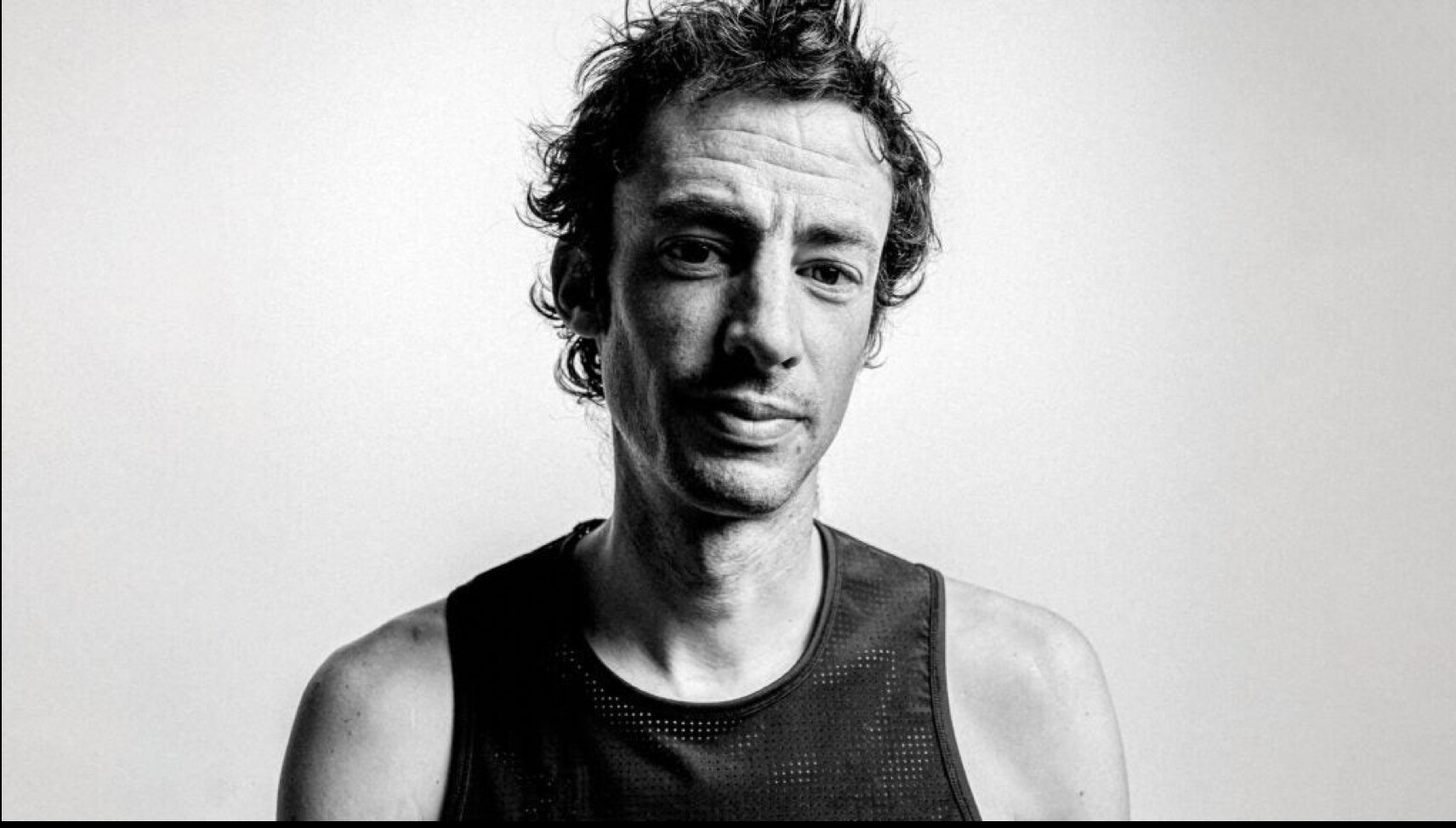
Your long-term partnership with Salomon ended last year. What made you decide it was time to do your own thing? I've always been a geek when it comes to gear. I had the idea of developing something on my own, but it was more a dream than a project. Then last year, through a mutual friend, I met the Fluxa family, who own Camper shoes, and told them that I wanted to do something in the outdoor space. Since the first conversation, we saw that we shared the same values and vision around social and environmental responsibility. From there things went fast. I'm very grateful for all the years at Salomon, and for all their support and what we did together, but it was time to do something different.
How did the idea for NNormal come about? We thought that the best way to implement our ideas-in terms of products, marketing, and corporate responsibility-was to create our own company. The benefit of cofounding a company is that you don't need to answer to shareholders at the end of the year, so you can develop your mission without any pressure. Of course, you want it to be economically sustainable, but you can always put product and company values at the forefront.
With the exploding popularity of ultrarunning, do you believe there will be more professional athletes in the near future? In the past five years, I've seen many more athletes becoming professional-not just to survive, but earning a good salary. More brands are creating teams with great resources. I think that will continue, and I hope it increases equality and diversity in the sport. Many of the big competitions have fewer female participants than male, and many of the sponsorships are from brands in Western countries. In this regard, brands have a big role to play, not only in equal sponsorship opportunities, but also when it comes to marketing and communication.
Many outdoor apparel brands say that protecting the environment is an important part of their company philosophy. How does NNormal plan to tackle that challenge? At NNormal we want to focus on durability. That means making products that perform well for a long time and are easy to repair. They should also have emotional durability, which means that they look good today and in five years. We want to make collections that are timeless and not designed according to seasonal trends. It's important to have great standards when it comes to the environmental footprint of the materials as well as the production process. Most important, we want to base our business model not on overconsumption but on finding different ways to be economically sustainable.
The running-shoe market is notoriously competitive. What makes you optimistic that NNormal can succeed? The first thing is to define success. Is it to sell a lot, or to have a quality product? We have a great team of footwear developers-we have the experience of Camper for shoe development and comfort, and we have a very talented group for performance footwear. For our first shoe, the Kjerag, we wanted to make something that performs well on different terrain and over different distances. I think our approach of durability, comfort, and versatility will appeal to many athletes. But we'll see what our customers think.
(12/18/22) Views: 139Trail Runner Magazine
What’s the one piece of running gear that you never want to part with?
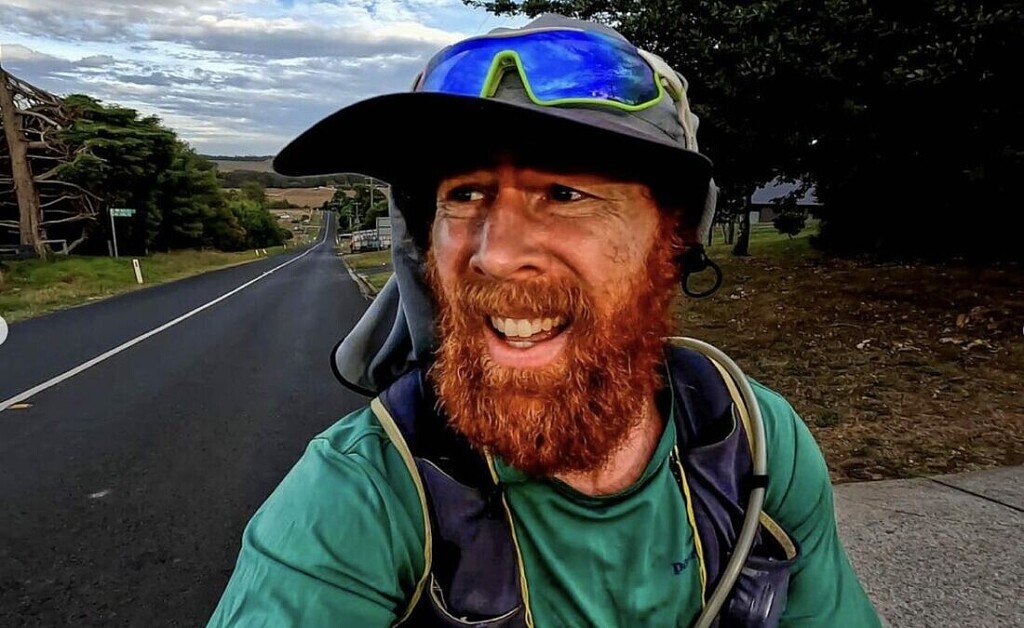
Have you ever had a pair of shoes, special socks or a lucky shirt that you just couldn’t imagine parting with? In this short film, Australian outdoorsman, runner and filmmaker Beau Miles pays tribute to an extraordinary hat.
“My magnificent hat has lost the will to live,” says Miles. “After 15 years of sun and body fluids, with a heavy heart and a head full of memories I take my favorite, thread-bare, stinking, beyond-repair hat for one last run.” In an “ode to his stuff” that will have you laughing and quite possibly shedding a tear (yes, over a hat), Miles’s tribute to his hat is surprisingly powerful.

Miles is known for being a fixer–he doesn’t like to waste anything, and in the first moments of the film you see him stitching up a favourite pair of shoes: “what a therapeutic thing to do before going for a run,” he says. His entire running outfit, he says, is probably on its last legs, but he sets out for a 40-km run anyway, to bid adieu to his hat and honour the adventures he’s been on with it.
While it might sound silly, Miles delivers some insightful reflections, sharing that a good piece of gear allows you to completely forget you’re using it and be immersed in the experience you’re having. If you’ve ever had a piece of running kit that you’ve carted around everywhere, you’ll relate, and if you don’t, you’ll find yourself feeling the need for one.
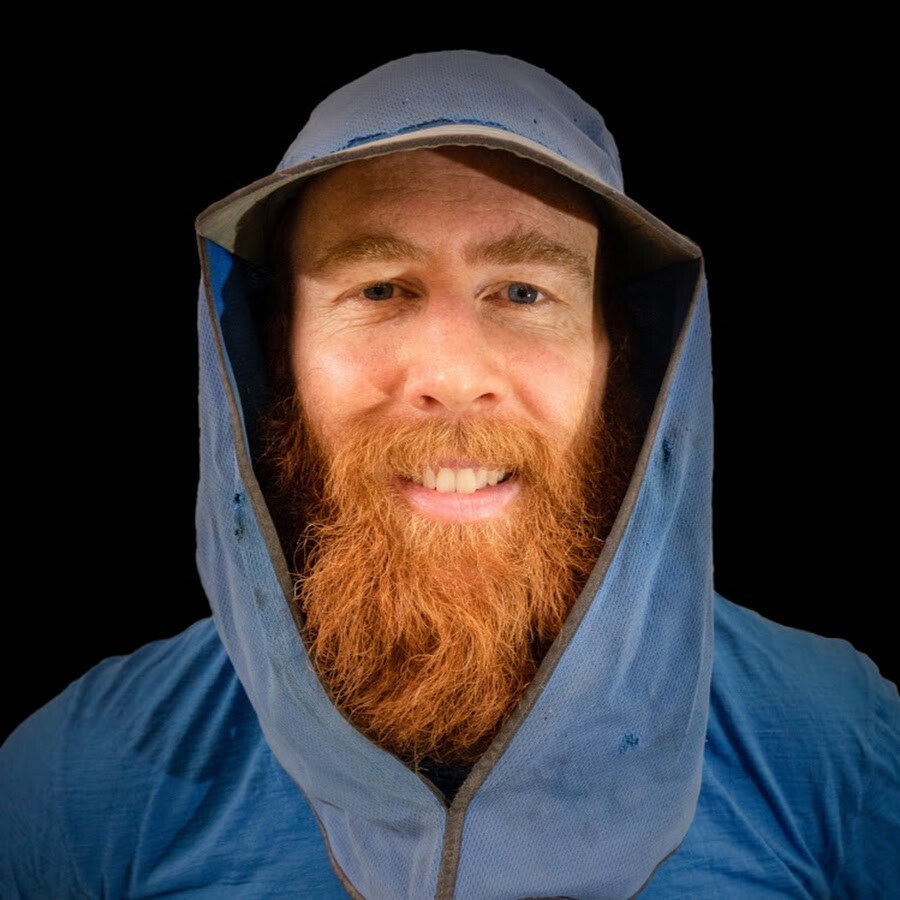
“As I move through life, I’m realizing that what I wear and make and fix until it can no longer be fixed are things worth spending time with,” Miles says. Those beloved running shoes that you simply can’t get rid of and insist on taking out for the occasional nostalgic run? Miles says they’re important, and he does so in a beautiful way.
(12/19/22) Views: 89Keeley Milne
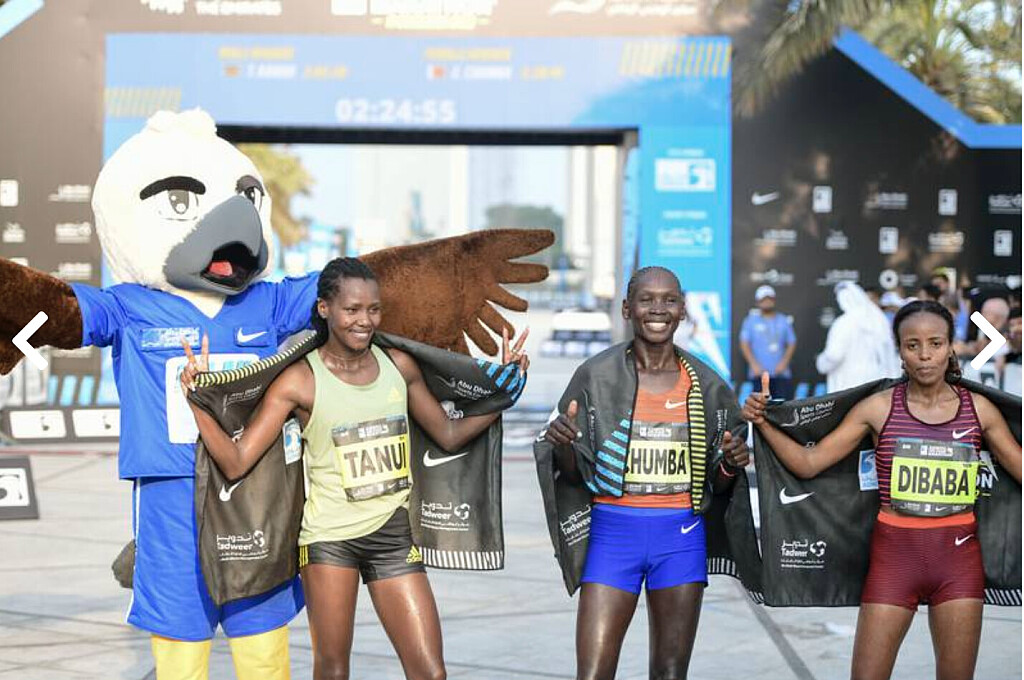
Bahrain's Eunice Chumba wins Adnoc Abu Dhabi Marathon in her fourth attempt, Kenyan Timothy Kiplagat takes the men’s title after starting the race as a pacemaker
Kenyan-born Bahraini athlete Eunice Chumba made her experience count as she won the elite women’s section of the Adnoc Abu Dhabi Marathon on Saturday.
She clocked 2 hour 20 minutes and 41 seconds, just outside her personal best 2:20:02, to clinch the top prize.
Chumba changed gears in the final two kilometres to beat Kenya's Angela Tanui (2:21:14). Mare Dibaba (2:21:25) of Ethiopia was third.
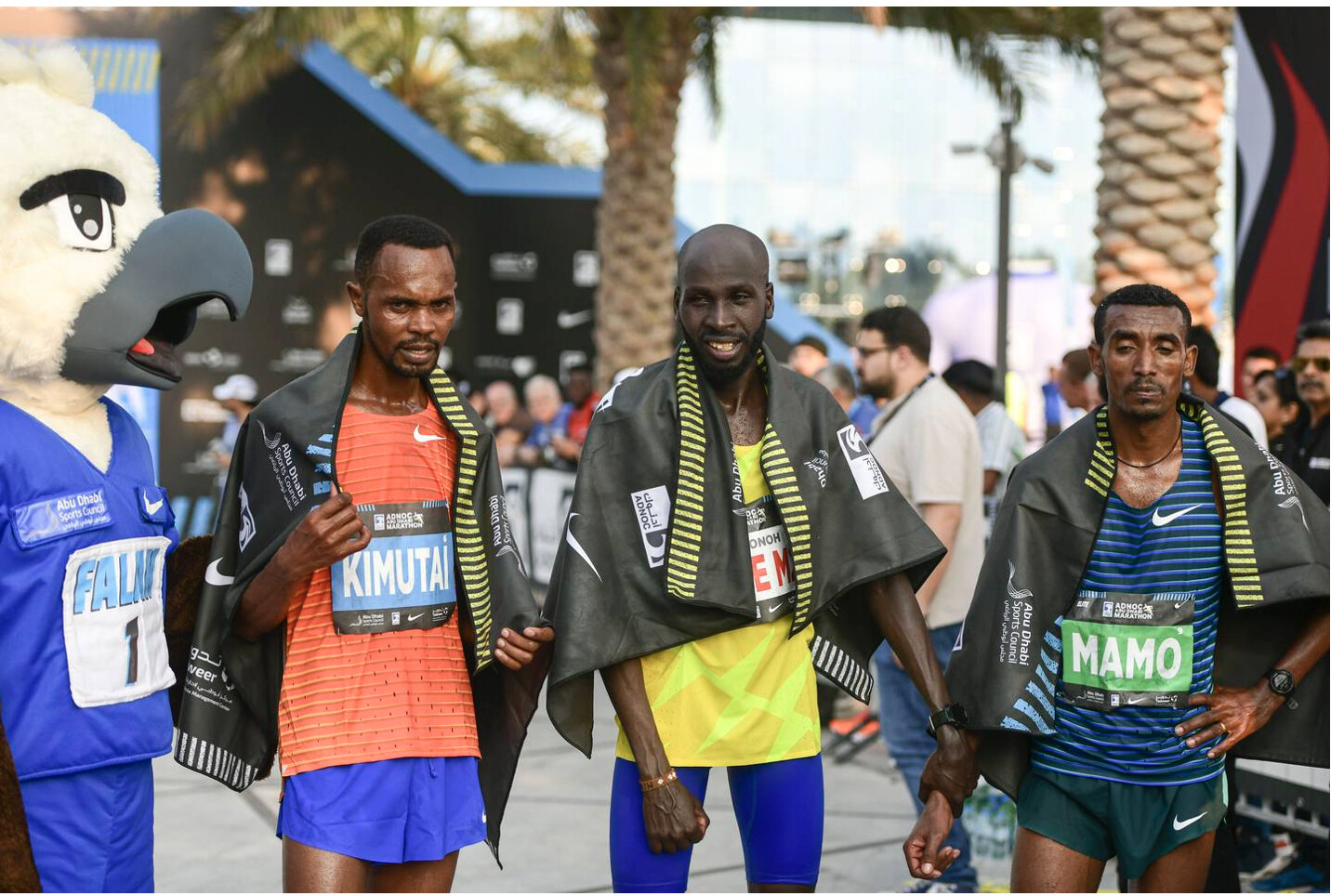
In the men’s race, Kenyan Timothy Kiplagat ran the race of his life after starting as a pacemaker to become the fourth man to win the Adnoc Abu Dhabi Marathon.
Kiplagat crossed the winning line in a personal best 2:05:20, nearly four minutes ahead of compatriot Felix Kimutai and Ethiopian Adeladhew Mamo, who was a further 10 seconds down in third.
Chumba, 29, was runner-up in the inaugural Abu Dhabi Marathon in 2018 and was fourth in 2019. She was runner-up again last year after the 2020 event was cancelled following the Covid-19 outbreak.
It was a festive atmosphere in the UAE capital as the fourth edition of the Abu Dhabi Marathon drew more than 20,000 runners in various categories - elite marathon, marathon relay, 10k run, 5k run, 2.5k 'Fun Run' and wheelchair race.
“I tried to win this race for Bahrain from my first visit to Abu Dhabi and I have finally managed to fulfil that dream in my fourth attempt,” Chumba told The National.“It was a very challenging race with Angela and Mare, who have both run better than my personal best time. We raced together for a long time and it wasn’t until the final five kilometres of the race I felt I could win.
“I tried my best to better my personal best time but just couldn’t do that. Perhaps on another day and another race. Having said that, I’m just delighted to win in Abu Dhabi.”
Chumba won a silver medal for Bahrain in 10,000m at the 2018 Jakarta Asian Games and ran a creditable seventh at the 2020 Tokyo Olympics.
“Yes, 2024 Paris is very much on my radar,” she said of her plans.
“This year was fantastic and it certainly was a nice way to end the year. I’m going to take a small break and be back in training from January, and hopefully return to defend my title in Abu Dhabi.”
Kiplagat, 25, bettered his previous personal best time of 2:07:01, set at the Marathon Eindhovan in October 2021. He arrived in Abu Dhabi on the back of winning the Melbourne Marathon in October.
“I felt so good today, setting the pace and with nobody to challenge towards the finish. This was a great opportunity to win a race,” Kiplagat said.
“It was my first time in Abu Dhabi and what a wonderful day it has been for me. The race route was flat and fast, the weather was pretty ideal. It was one of those days when everything turned out to be beautiful for me.”
The Relay Marathon was won by the Irish pair Michelle Nagle and Niall McCarthy of Slainte Endurance in 2:58.53.
Anouar El Ghouz (29.09) led the first four home for Morocco in the men’s 10km race while Briton Eilish McCologan (31.44) took the women’s race.
Joren Selleslaghs of Belgium took the men’s 5km run while Egyptian Sara Salama won the women’s prize. UAE's Badr Al Hosani bagged the men’s wheelchair title.
(12/17/22) Views: 88
How to quickly react to, and heal from sports injuries
While playing sports, either professionally or just as a hobby, accidents happen suddenly, causing minor or major injuries. While prevention strategies can help you avoid them, an unexpected collision when you make a wrong move can result in serious and painful injuries. Therefore, be ready to react as soon as this happens, and if it’s serious, seek medical assistance immediately. In that way, you protect yourself from the worst outcome, and if you’ve been through this, follow the article for some tips on how to heal from a sports injury.
React Immediately
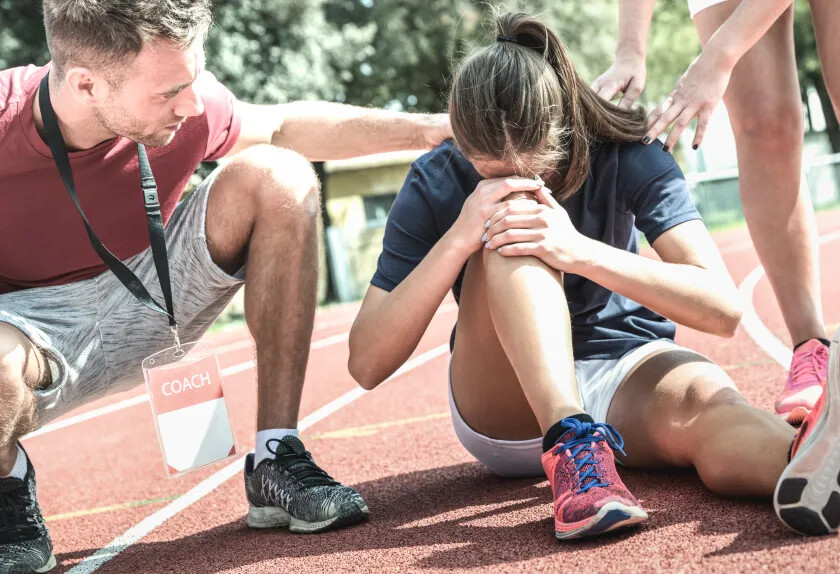
Some sports injuries can’t be treated and healed at home, so you need to react quickly. For instance, it often happens that one sprains or breaks an ankle doing a usual exercise, and it can have certain consequences. For that reason, check out the valuable pieces of advice at Science of Rehab, and let the healthcare professionals help you heal the injury. A sprained or broken ankle can cause you a lot of trouble, especially if it isn’t treated as it should be, so don’t put yourself in danger of having serious consequences. Seek medical treatment, be disciplined, and take care of it in the future.
Make Use of the Rice Method
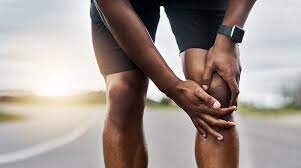
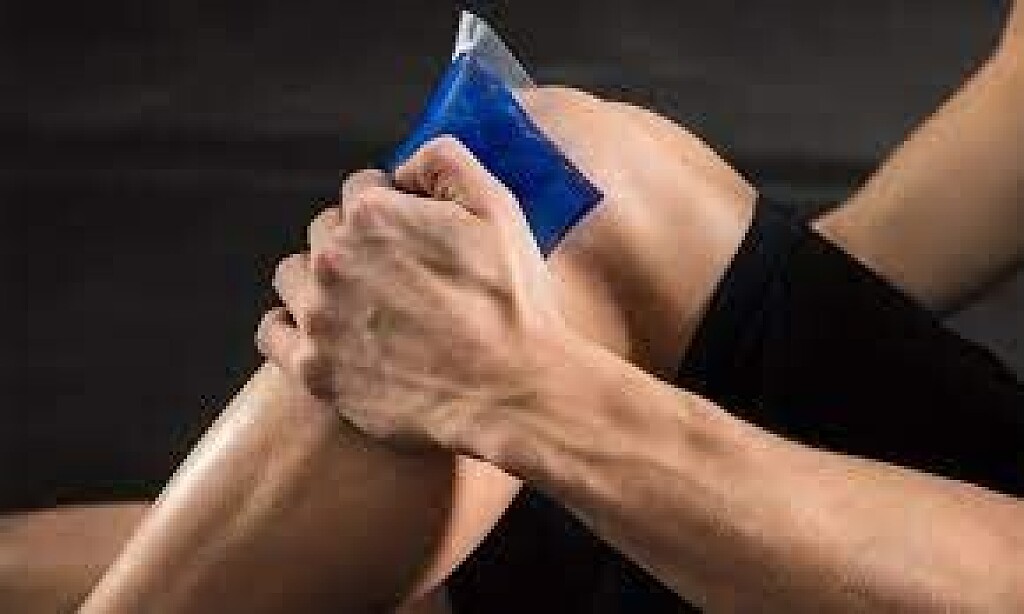
The “rice” abbreviation stands for rest, ice, compression, and elevation, which are major treatments for your tissue injury. The first step after the injury is to stop your activity immediately and rest for the first two days. Resting prevents any further injury, so this step is highly important. Further, apply ice for twenty minutes every three hours during the first days of being injured. The cold will prevent swelling and pain in your injured area. After that, wrap the injured area with an elastic medical bandage, which shouldn’t be too tight as to interrupt blood flow, and at the end, raise the injured body part because it reduces pain, swelling, and throbbing.
Allow the Injured Area to Heal
An injured body part will struggle to heal if you repeatedly use it after an injury. The pain in it is an excellent indicator that you don’t recover properly, so you shouldn’t ignore it. Often, the best possible option is to immobilize the injured body part and rest it completely to allow its complete healing. When you use the injured body part all the time, things might get complicated because an acute injury may become a chronic one, which could be difficult to heal.
Consult a Professional
Minor sports injuries typically heal and improve after two weeks of rest and a break from sport or exercise. A lack of improvement could be a sign you should consult a sports doctor, who’ll help you with clinical examinations and scans that will warn you to focus on a faster recovery with minor complications. Understanding your injury will facilitate your physical and mental recovery significantly. Also, you should consult your doctor about the exercise regime, which will help the healing process and ensure that appropriate milestones are achieved.
Food Can Help You
Just because you’ve injured yourself doesn’t mean you shouldn’t stay fit and healthy. First, if you’ve injured your knee, exercise your upper body with weightlifting. If you’re healing a shoulder injury, do some yoga or exercises for the lower body. Also, take care of the foods and supplements that can help the body heal faster.
Eat protein-rich foods like fish and meat, and eat citrus fruits, which are full of vitamin C that rebuilds tissues and has anti-inflammatory properties. Omega-3 fatty acids are great supplements you can find in chia seeds, salmon, and walnuts. As a result, choose your groceries carefully and avoid gaining too much weight, as this will also slow down your healing process.
Be Patient
This last step is often difficult when recovering from a sports injury, particularly over a longer period of time. Many athletes start their sports activities before they’re really ready, which often leads to re-injury and a much longer recovery period. One of the best ways to recover, among all the other tips, is to practice patience during the recovery and resist the urge to push your body too quickly. If you let your body heal at its own pace, you’ll be rewarded with a complete recovery and a bright future in sports.
In summary, a fast recovery from a sports injury requires discipline, medical expertise, and lots of patience. Seeking guidance from specialists while being responsible and careful not to further complicate the injury can make a significant difference in recovery time. Therefore, try to avoid negative thoughts or wrong tips from people who can’t help you, and your healing process will be easy and complete.
(12/17/22) Views: 81Colorado Runner
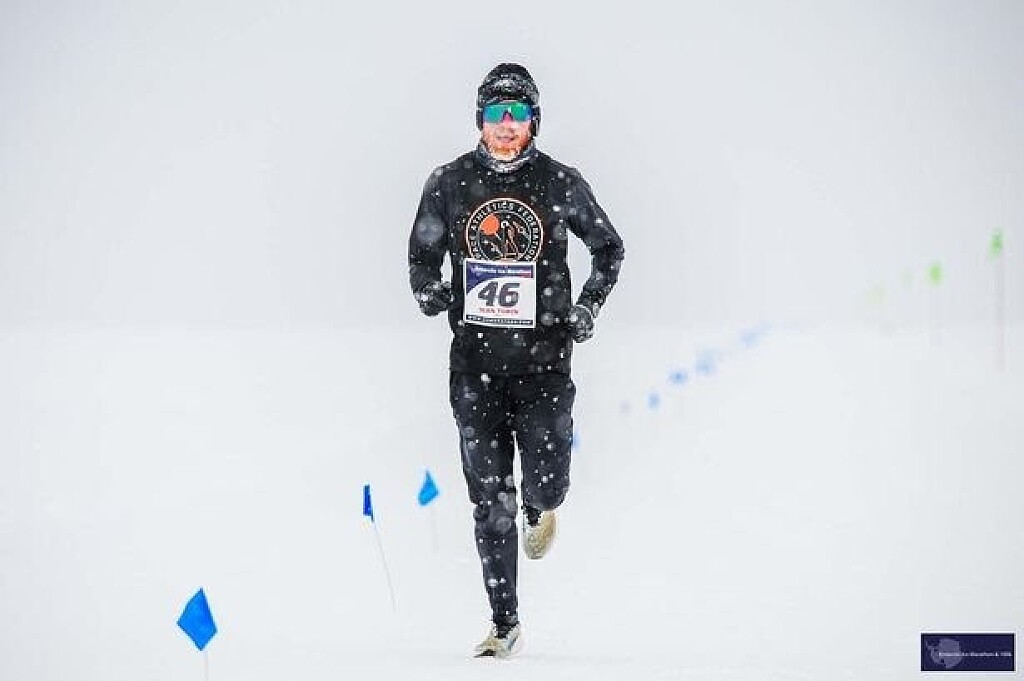
Sean Tobin sets record at Antarctic Ice Marathon
Ireland's Sean Tobin (a 2018 Ole Miss grad) runs a 2:53:33 marathon (6:37/mile pace) over snow in 6-degree temperatures at the Antarctic Ice Marathon. It's the fastest marathon ever run in Antarctica, breaking Mike Wardian's record of 2:54:54.
Tipperary native Seán Tobin has won the Antarctic Ice Marathon and has set a new world record in the process.
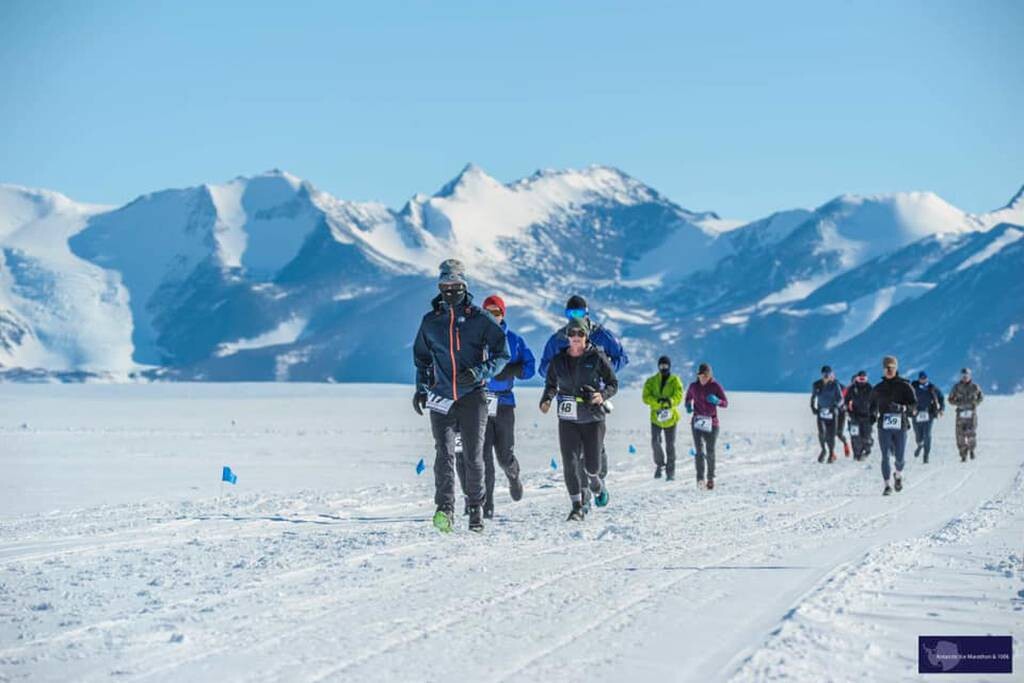
The Irish star finished in a time of 2:53:33 to take home victory in the 17th edition of the event.
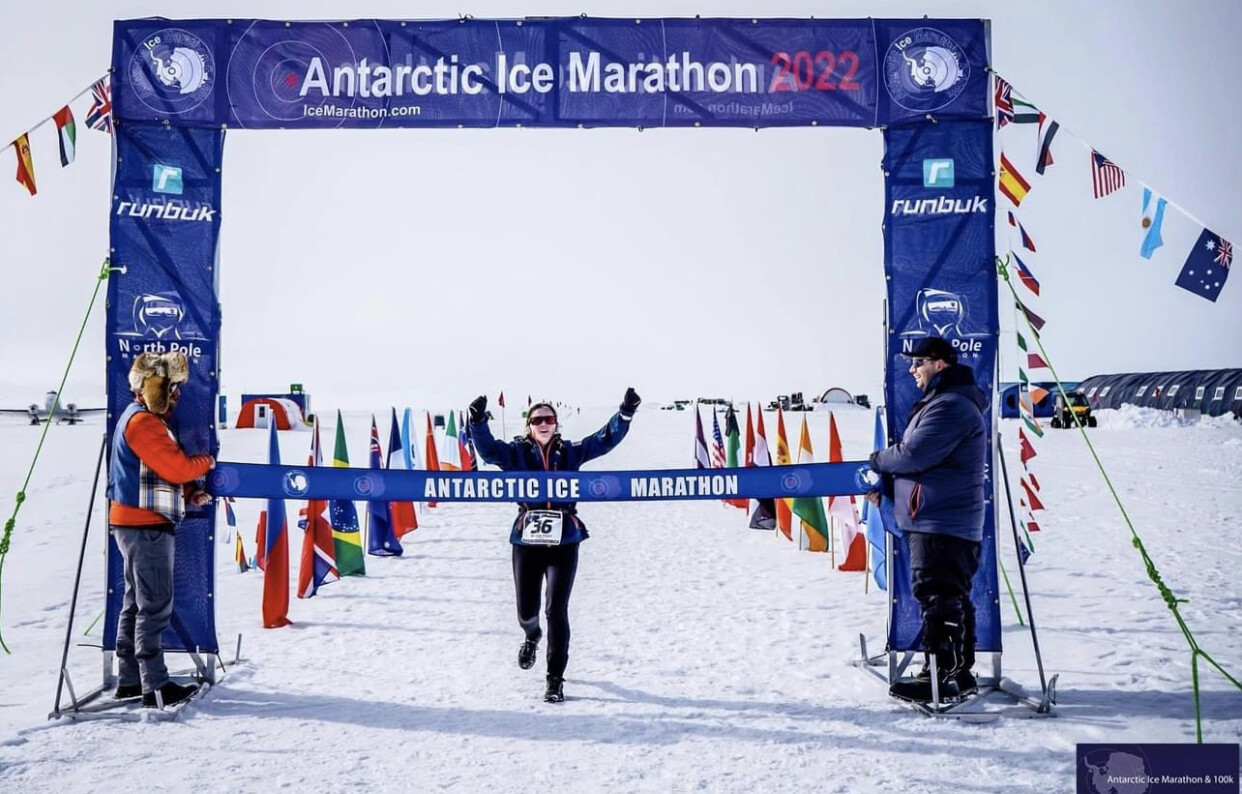
In doing so, Tobin smashed the previous record of 2:54:54 set by USA’s Mike Wardian five years ago during the 2017 World Marathon Challenge.
The 28-year-old, who is known as the Irish hammer, was a track star in his youth and won National titles in 1,500m and 10,000m events. He has also broken the four-minute mile barrier in the past.
It might be cold back home, but it is nothing compared to the -14C conditions Tobin battled through for nearly three hours.
But the Clonmel man kept his cool, handled the pressure and created a little slice of history on the icy continent.
(12/16/22) Views: 78

Here’s how a training log will make you a better runner
Whether you’re a new runner or have many marathons under your belt, tracking your progress in a training log or diary can boost motivation, help you troubleshoot your training, and is fun to look back on as time passes. Here’s the rundown on how and what you should be noting each run.
Running apps like Strava can be a great place to start tracking data, but writing down quick specific notes on each training session in a log is invaluable. You can add notes to a running app you’re already familiar with using, but also consider jotting down notes in a traditional running diary–it can be as cathartic as journalling and will provide you with a tool to reflect on for years to come.
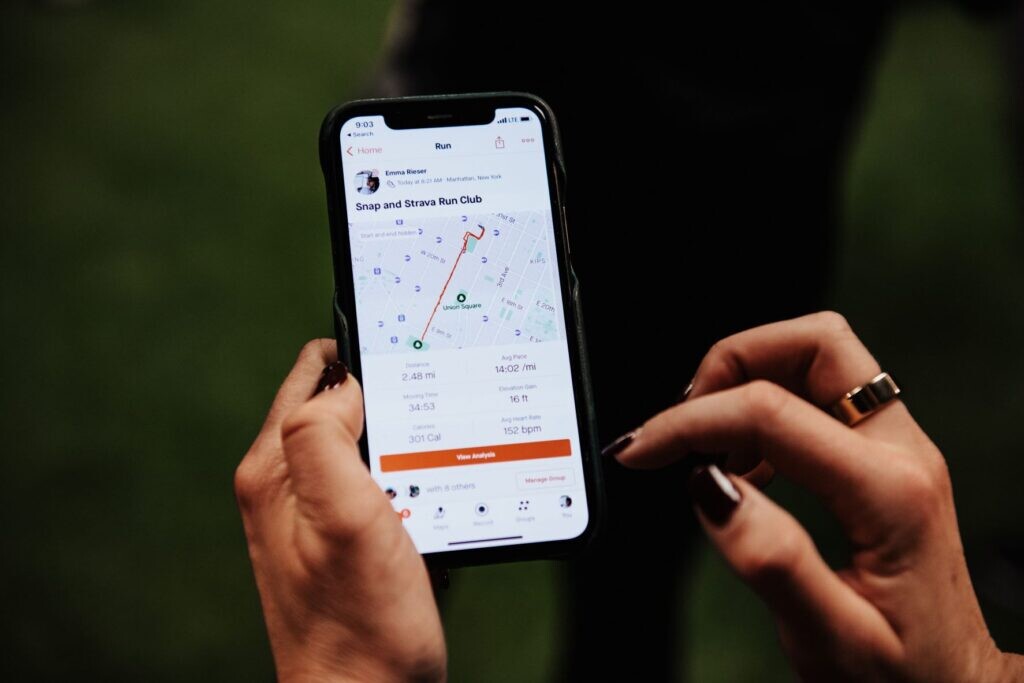
Why you should consider a training diary
Endurance sports coach and author Matt Fitzgerald shared in Podiumrunner that making the effort to log our training “increases our mind-body awareness as well as mental and emotional investment in the sport in ways that may positively affect our performance.” It also has immense pratical value, helping you determine what’s working and what isn’t, and adding an accountability factory to your routine.
Your training diary can be a great confidence booster. “It is a rich record of how much hard work you’ve accomplished and how much progress you’ve made,” Fitzgerald says. “It is the nearest thing you have to proof that you can achieve your goals before you actually achieve them.”
Here’s what you should be logging
Training apps like Strava (or one you may use with your watch) will do some of the hard work for you, noting your data and mileage. Here’s what you should consider adding notes on.
Feelings This doesn’t have to take long or be complicated. Very simple notes about whether you felt fantastic or sluggish can help you figure out what is working and what isn’t in your training (and your life). If you’re under a lot of mental stress, note it: our bodies keep track of stress (mental and physical) rather than mileage, so a high-stress week can correlate to finding your regular workouts more challenging than usual.
Conditions Note what the weather was like and what terrain you were running on can put a training session in perspective when you look back on it–if you were running through deep snow or on a warm day, make sure you note that.
Sleep If you slept terribly the night before a workout, it can be useful to note: sleep impacts training, and a period of poor sleep can be an indicator of other health issues and useful to have recorded.
Niggling aches and pains Keep track of sore spots, even if they seem minor. This can be useful in preventing injuries and can also help you identify what workouts are pushing limits.
If your workout included intervals or varying intensities, you may want to add notes to clarify that–something as simple as “15 min warmup, 3 x 800m” will help jog your memory when you look back at the data.
Training over the long-term can have low points, and your log will be a source of motivation. It’s impossible to be consistently stoked about the daily grind and looking over your log will remind you of how much time you have already put in and how far you have come. “It’s a source of accountability to the standards you have set for yourself as a runner,” says Fitgerald.
(12/19/22) Views: 78Running Magazine
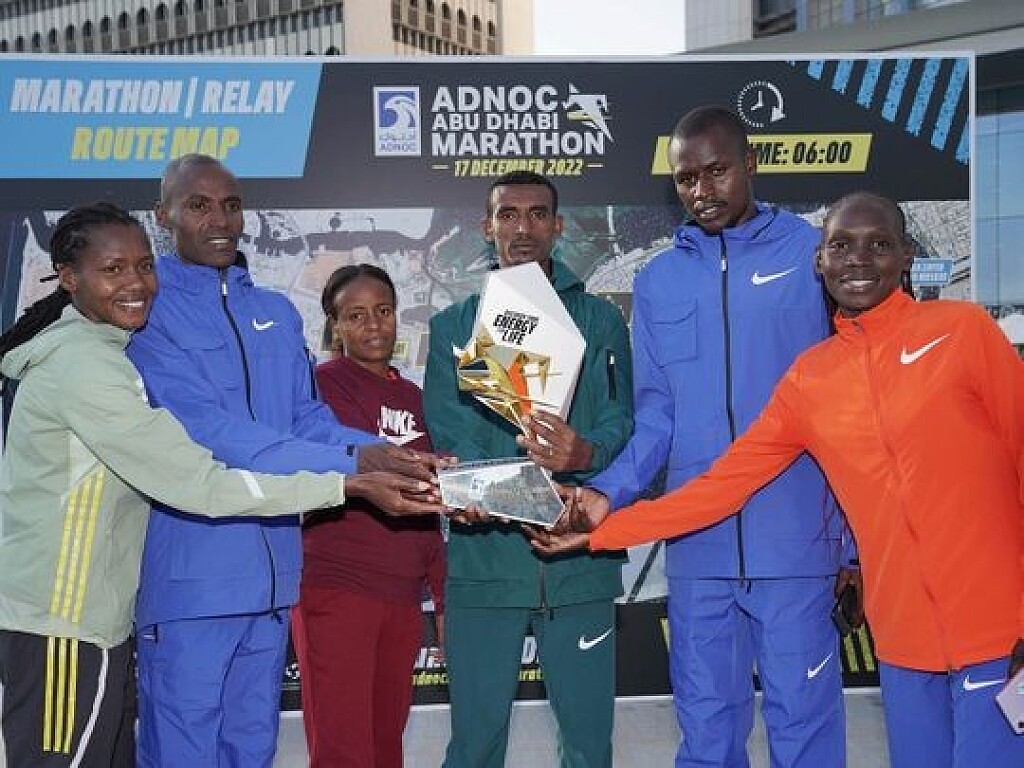
Slew of elite runners added to line-up ahead of Adnoc Abu Dhabi Marathon 2022
Some of the world’s best long-distance athletes will be among a record 20,000 participants when the 2022 ADNOC Abu Dhabi Marathon gets under way on Saturday morning, on a new course that snakes its way through the streets of the UAE capital.
Abu Dhabi Sports Council announced in a press conference at ADNOC Abu Dhabi Marathon — Event Village that Ethiopian Adeladlew Mamo, winner of this year’s Seville Marathon, joins the field alongside Kenyan pair Daniel Kibet, winner of the 2019 Istanbul Marathon, and Dickson Chumba, champion in Tokyo in 2015 and 2018, as well as Chicago in 2015.
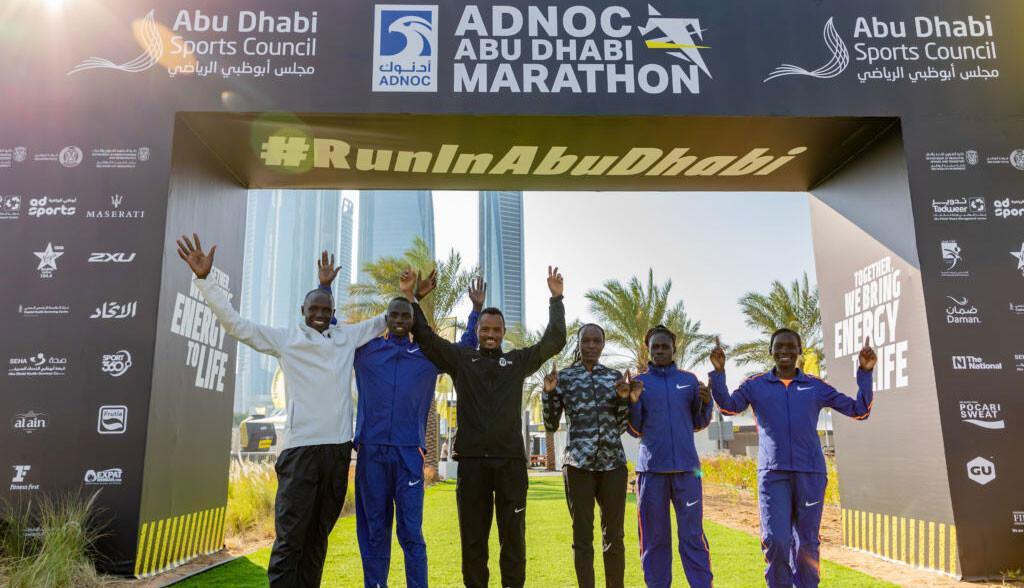
Moreover, Olympian Eunice Chumba has also been added to the elite runners line-up. She will be looking to add the Abu Dhabi title to a collection that includes the 2017 Beirut Marathon. Chumba will face competition from, among others, 2016 Olympic bronze medallist Mare Dibaba of Ethiopia and Kenya’s Angela Tanui, winner of the Amsterdam 2021 Marathon.
Strong position
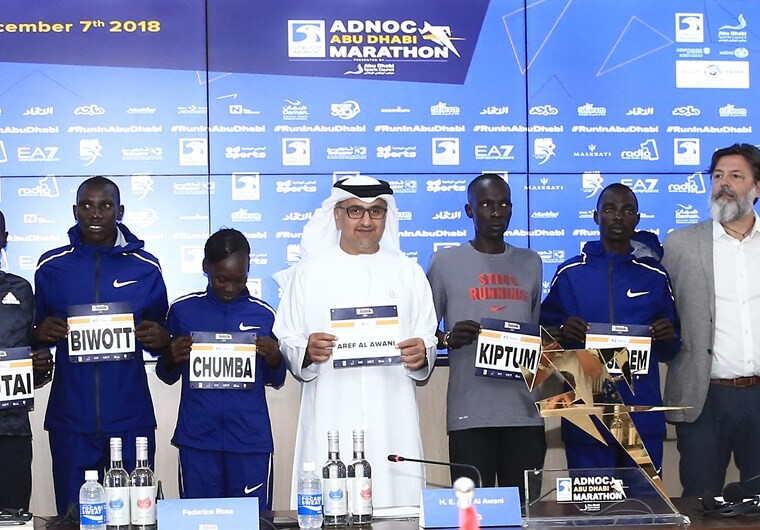
Mohamed Ahmed Al Remeithi, International Events Section Head: “The ADNOC Abu Dhabi Marathon has established itself as a staple sports event on the country’s annual sporting calendar. The fourth edition of the event will see the launch of a new track that passes several of the emirate’s prominent landmarks in Abu Dhabi. The ADNOC Abu Dhabi Marathon has attracted 20,000 registrations this year, indicating its strong position on both a local and international scale and further reinforcing the impact the marathon has on society in the UAE.”
The fourth edition of the ADNOC Abu Dhabi Marathon includes the full 42.2km marathon, and the relay marathon in which two runners each cover 21.1km, in addition to 10km, 5km and 2.5km races under the name “We Run Together” and which are open to all. The marathon starts in front of the ADNOC Headquarters and passes through some of the UAE capital’s most famous landmarks of the UAE capital.
The opening ceremony will see the spellbinding Al Fursan aerobatics team carrying out spectacular aerial shows. The team will fly, tumble and twirl through the air, painting the sky with smoking trails of green, white, black and red above the ADNOC Abu Dhabi Marathon race circuit, offering the spectators yet another treat.
(12/16/22) Views: 76

Three ways to get a grip on winter running
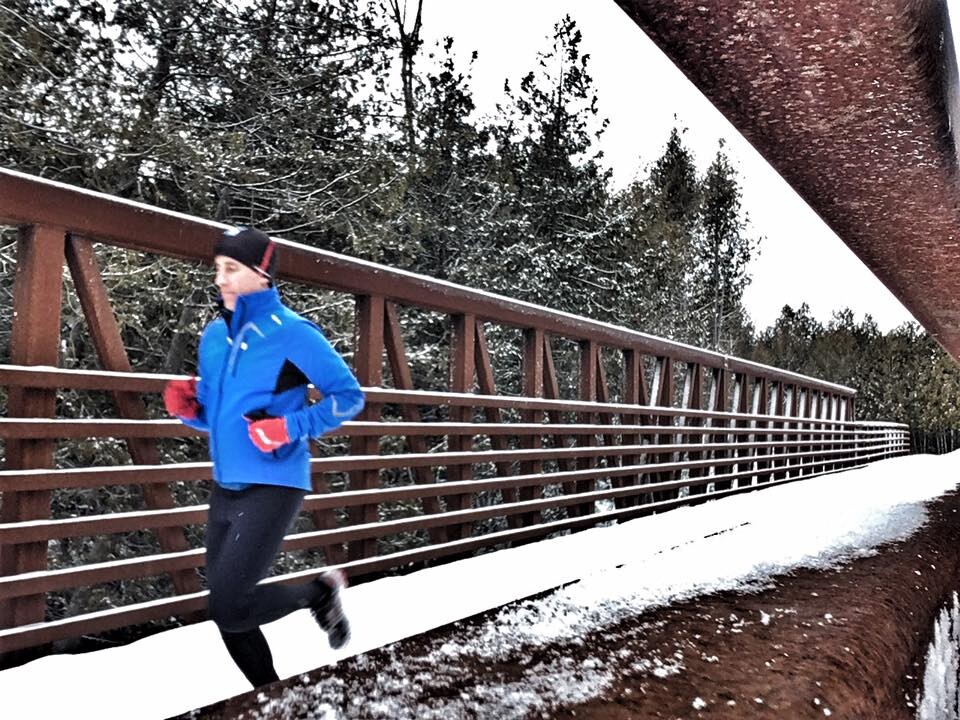
Just because there’s snow on the ground, it doesn’t mean you should take your running goals into hibernation. Winter is a great time to get outside and enjoy the fresh air, and running in the snow can be fun, if you’re prepared. There is more to running in the winter than simply embracing the cold—you’ll need the right gear to ensure your safety.
Follow these three tips to stay safe and comfortable while running in the snow.
Invest in the right gear
Making sure you are prepped with the right equipment before heading outdoors is the best way to guarantee a safe and successful run. Buy shoes with good traction on the outsole with either Gore-Tex or water-resistant materials to keep your feet warm and dry. Some other gear to invest in is thermal or merino-wool moisture-wicking socks, a winter-specific hat, warm gloves that are not too bulky, plus a wind and water-resistant jacket to keep you warm and dry. Just because there’s snow on the ground, it doesn’t mean you should take your running goals into hibernation. Winter is a great time to get outside and enjoy the fresh air, and running in the snow can be fun, if you’re prepared. There is more to running in the winter than simply embracing the cold—you’ll need the right gear to ensure your safety.

Follow these three tips to stay safe and comfortable while running in the snow.
Invest in the right gear
Making sure you are prepped with the right equipment before heading outdoors is the best way to guarantee a safe and successful run. Buy shoes with good traction on the outsole with either Gore-Tex or water-resistant materials to keep your feet warm and dry. Some other gear to invest in is thermal or merino-wool moisture-wicking socks, a winter-specific hat, warm gloves that are not too bulky, plus a wind and water-resistant jacket to keep you warm and dry.
Look for a running jacket that isn’t black, and that has reflective elements, so you can be seen by motorists. If you can’t get your mind off that stylish black jacket, there are plenty of reflective accessories (i.e., lights, vests and reflective bands) you can purchase from your local running store to help make you visible.
Find the safest route
The last thing you want is to risk falling on slippery roads or trails. Avoid roads or paths that have not been cleared of snow and ice, and instead, look for running routes that have been plowed and are well-lit, so drivers and other pedestrians can see you.
If you are on the trails, be cautious of your surroundings and watch for potential hazards, such as branches or other debris that could be hidden beneath the snow.
Take it slow and listen to your body
Even if the snow looks like it’s packed down well, take it slow and be cautious so you can grasp the conditions in the first few kilometres. Start at a slower pace and gradually increase your pace as you become more comfortable with the footing.
One technique runners use for better grip and control in the snow is to shorten their running stride. Using this strategy keeps your centre of gravity low, which can result in having more control on a wet or slippery surface.
If you feel cold, tired, or uncomfortable, don’t hesitate to stop running (but do keep walking, so you don’t get too cold too quickly). Don’t get too caught up in your pace. One slow training run isn’t going to disrupt your training, but pushing your body toward injury will.
(12/17/22) Views: 75Marley Dickinson

Steiner, Prandini and Brown to race Millrose Games 300m
Global medalists Abby Steiner, Jenna Prandini and Brittany Brown are set to clash in the 300m when the 115th Millrose Games, a World Athletics Indoor Tour Gold meeting, takes place in New York on February 11.
Steiner, the NCAA indoor 300m record-holder, had a breakthrough campaign in 2022. The 23-year-old completed her collegiate career at the University of Kentucky with four NCAA titles, setting a US indoor record and outdoor NCAA record in the 200m. She then lowered her PB to win the US 200m title, qualifying for the World Athletics Championships Oregon22, where she finished fifth and also formed part of USA’s victorious 4x100m and 4x400m teams.
“I am beyond excited to be running at this historic meet for the first time in my professional career,” said Steiner. “I’m looking forward to the atmosphere, fans, and great competition that Millrose always provides!”
Steiner ran her NCAA indoor 300m record of 35.80 in December 2021. The US best of 35.71 is held by Quanera Hayes, while the world best of 35.45 was equalled at the Millrose Games in 2018 by Shaunae Miller-Uibo. Both of these marks could come under threat in New York in February.
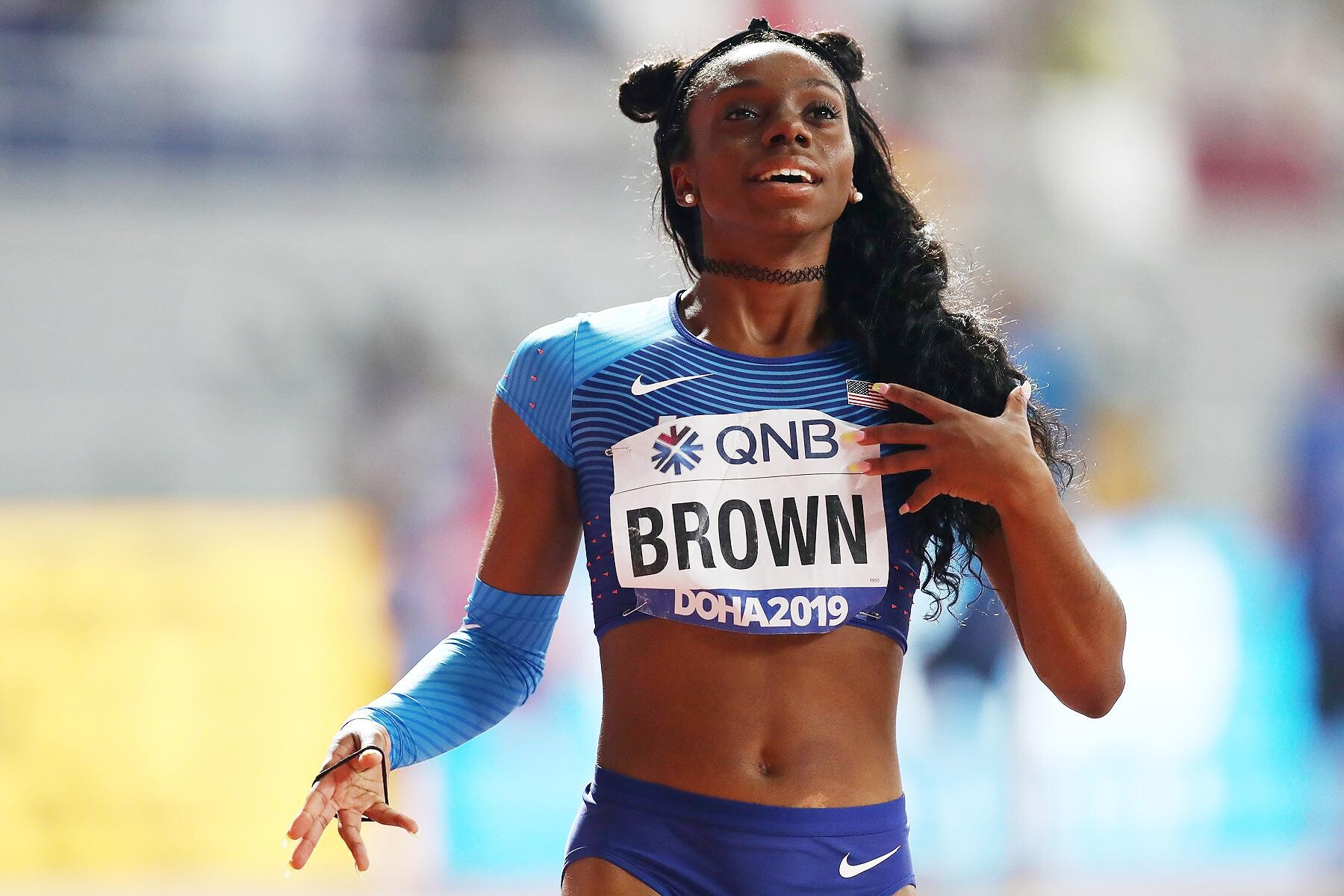
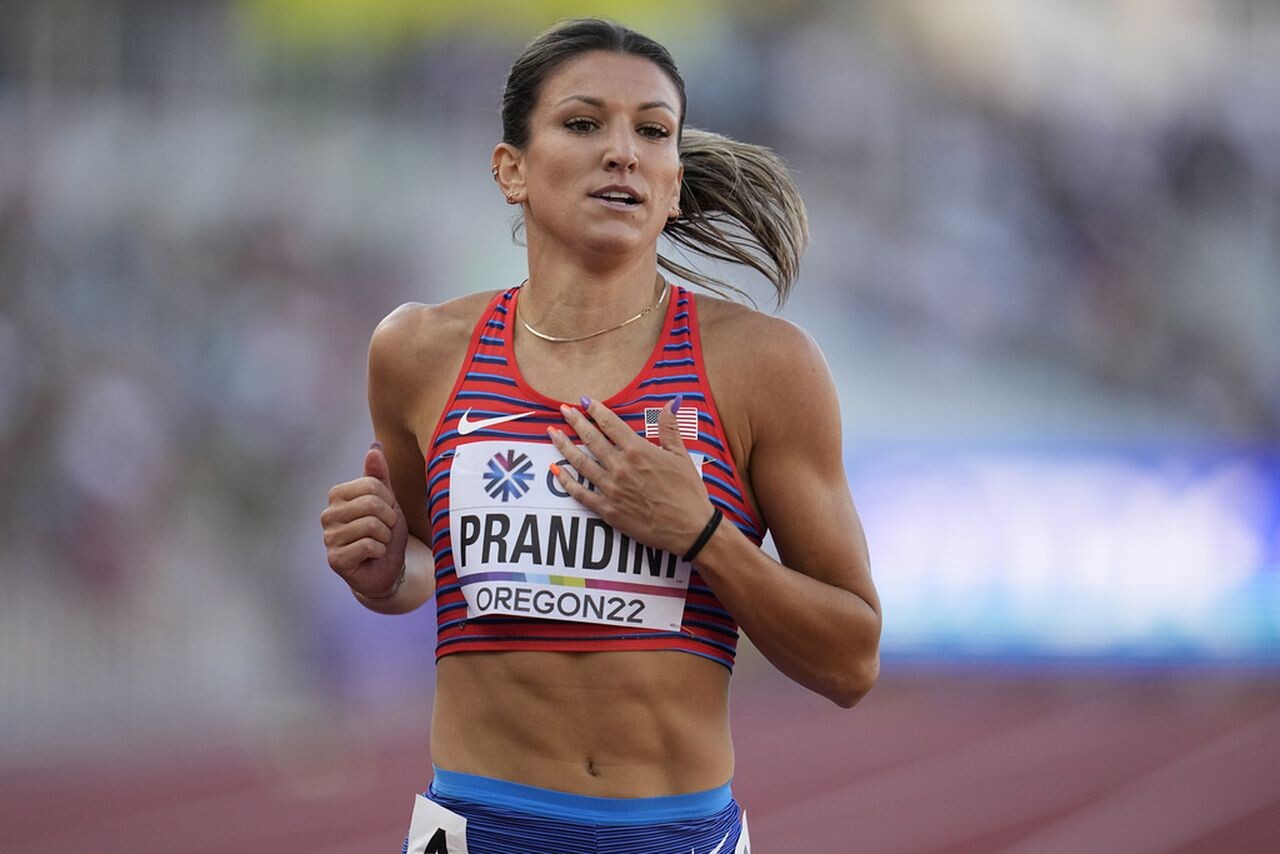
Among those challenging Steiner in this Millrose Games signature event will be her fellow world 4x100m gold medallist Prandini and 2019 world 200m silver medallist Brown.
Prandini is a three-time NCAA gold medallist for the University of Oregon, as well as a two-time US 200m champion. As well as winning world 4x100m gold in Oregon, she also claimed Olympic 4x100m silver in Tokyo.
Brown claimed her world 200m medal in Doha in 2019 and more recently won the 200m title at the NACAC Championships in The Bahamas.
Also in the women’s 300m field at the Millrose Games will be Cynthia Bolingo, Belgium’s 2019 European indoor 400m silver medallist.
These are the latest stars announced for the Millrose Games, joining the showdowns in the pole vault between Katie Nageotte, Sandi Morris, and Katerina Stefanidi, and in the shot put, featuring Ryan Crouser and Joe Kovacs. The men’s 3000m, meanwhile, will star Geordie Beamish, Cooper Teare and Josh Kerr.
(12/17/22) Views: 74World Athletics
