

Running News Daily
Top Ten Stories of the Week
5/21/2022
These are the top ten stories based on views over the last week.



The most essential tips to help you run faster
Do you want to run faster splits, quicker distances, or best your personal record? Well, you’ve come to the right place.
After scouring multiple studies, the latest research, and speaking to a bona fide pro runner, the good news is there are a lot of things you can do as either an amateur, aspiring, or even professional runner to increase your speed. While there’s no replacement for good old fashioned training and a lot of persistence, here are nine smart habits to adopt before, during, and after your runs to improve your results, according to Colin Bennie, one of the professional runners recently signed to the new Reebok Boston Track Club.
DRINK MORE WATER THAN YOU THINK
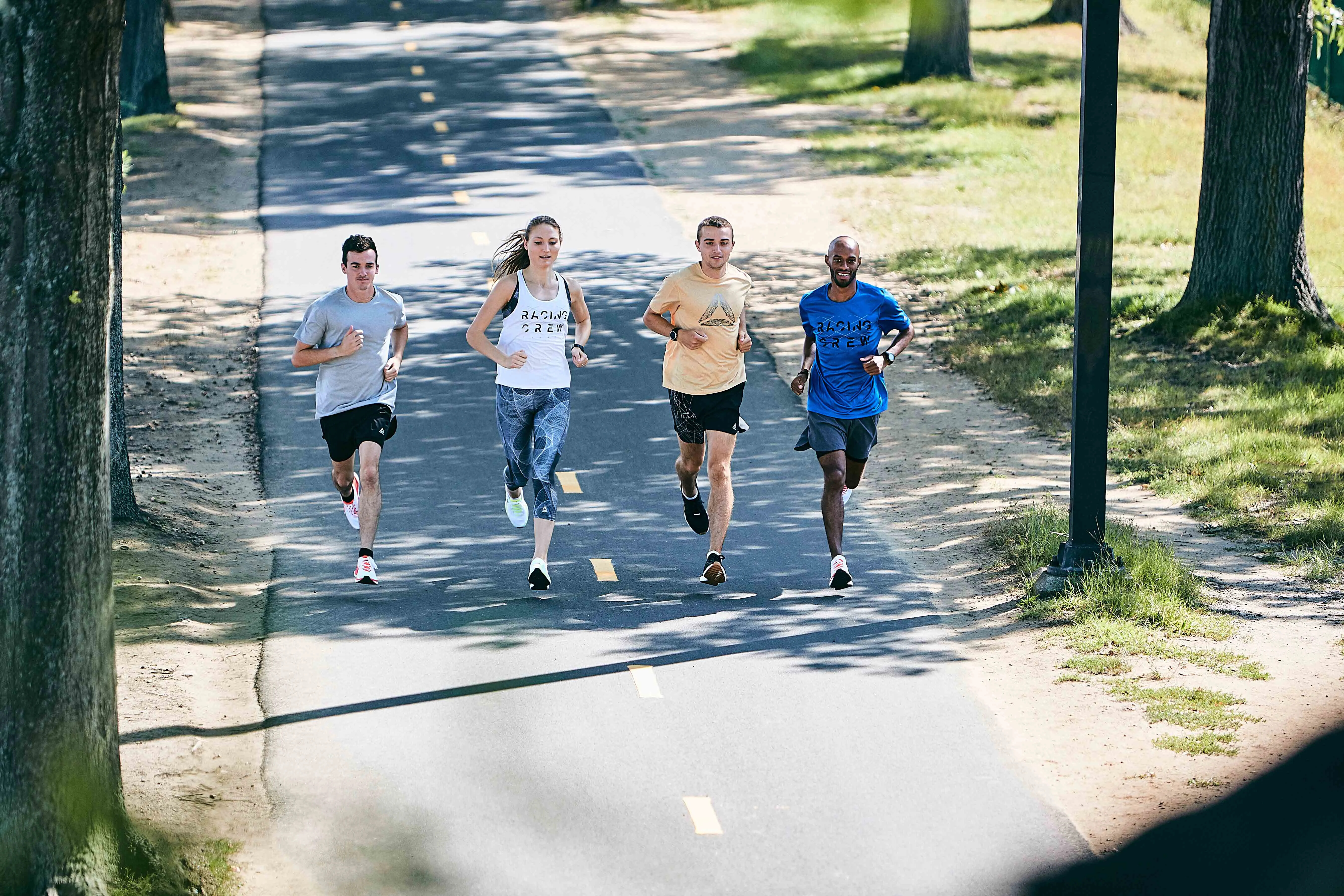
Up to 75% of Americans are dehydrated, reports Medical Daily. While professional athletes never make that mistake, many amateurs do. So drink up to twice as much water before, after, and in between runs. “Before is the most important,” Bennie says. “At least 16 ounces for a 30 minute run.” Hint: Before doesn’t just mean immediately before, start the moment you wake up so you don’t have to make a pit stop mid-run.
ESTABLISH REGULAR GOALS
You can’t improve if you don’t know where you’re going. One of the easiest ways to improve your times is to run with the goal of reducing them, which can only be done by tracking them. But goals should include more than just time. “If you’re struggling with drinking enough water, for example, set goals to help you stay hydrated all day,” Bennie says. Anything can be conquered in small, digestible doses.
GET PROPER FUEL
You want to feel energized and unstoppable when you’re training for speed, and running on an empty or otherwise malnourished stomach is not going to help you do that. So what’s the best thing to eat before running? According to numerous reports, peanut butter on whole wheat toast with sliced banana on top is tough to beat. “It’s my go-to,” Bennie says. “But you should pick nutritious things that work for you if that doesn’t.”
WEAR THE RIGHT SHOES
“Having a shoe that feels right can make you feel ten times faster,” Bennie says. In addition to ensuring that the right shoe stays effective by not running in them past their expiration date, he recommends reading reviews and trying before you buy. As for his favorites, he regularly reaches for the Reebok Floatride Energy for his everyday runs and the Floatride Run Fast Pro on race or big days.
STRENGTH TRAIN (FOR REAL THIS TIME)
If you want to get faster, you have to improve more than just leg muscle and endurance. So mix up your weekly runs with lunges, squats, push-ups, planks, and a weight training regime to improve the fitness of your arms and core as much as you’re already doing for your legs.
TALK WITH A STRIDE COACH
Some runners unintentionally use disproportionate stride lengths (either too long or too short) or have natural gait problems. Since no two runners’ bodies are alike, you’ll only really know what your stride is like after talking with a stride coach or running coach who can offer recommendations. “This can have a big impact on your times,” Bennie says. One of the easiest ways to find a stride coach near you is to join a local running club or meet up, these groups will always be the insiders as to who is the best in your city.
USE POSITIVE PEER-PRESSURE
Humans are amazing at encouraging one another. So help yourself to a fast running partner or even just someone you enjoy running with to improve your speed or power through the days you don’t feel like running. “This is a sneaky but important way to hold yourself accountable while improving your speeds,” Bennie says.
LISTEN TO MOTIVATING MUSIC
Get this: pro runners are not allowed to listen to music while running, because it can have a such a measurable impact on performance. Wouldn’t you want that kind of leg up in your own workout?! Bennie says many of his teammates train to music or listen to it before a big race to get as big of a boost as possible.
REST IN BETWEEN RUNS
Last but not least, a fatigued body is a slow body. “Sometimes you need to take a day off or cut your runs short to give your body ample time to recover,” Bennie says. “Instead of beating yourself up, know that doing so will help you turn in a faster time the next day.” In short, this habit is super essential, he says.
(05/18/22) Views: 621Ville Engberg
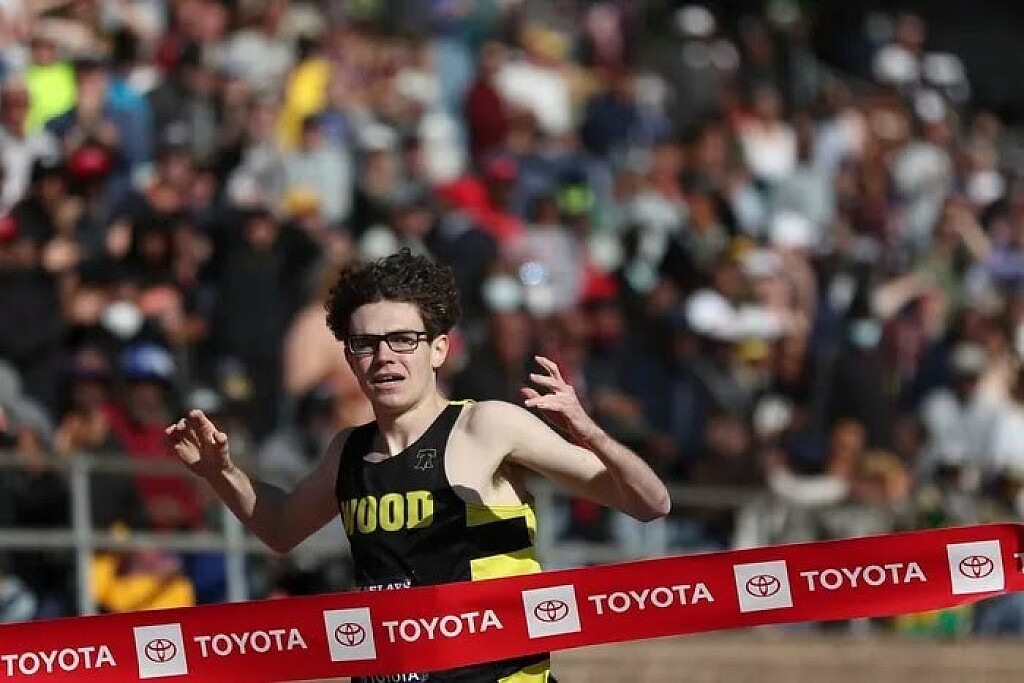
Gary Martin goes 3:57.98 (third fastest high schooler ever behind only Alan Webb and Jim Ryun) to win today's Philadelphia Catholic League Championsips
Another day, another milestone for Gary Martin. And this one was a biggie.
The Archbishop Wood High School senior ran a sub-four minute mile Saturday at the Catholic League championships at Cardinal O'Hara.
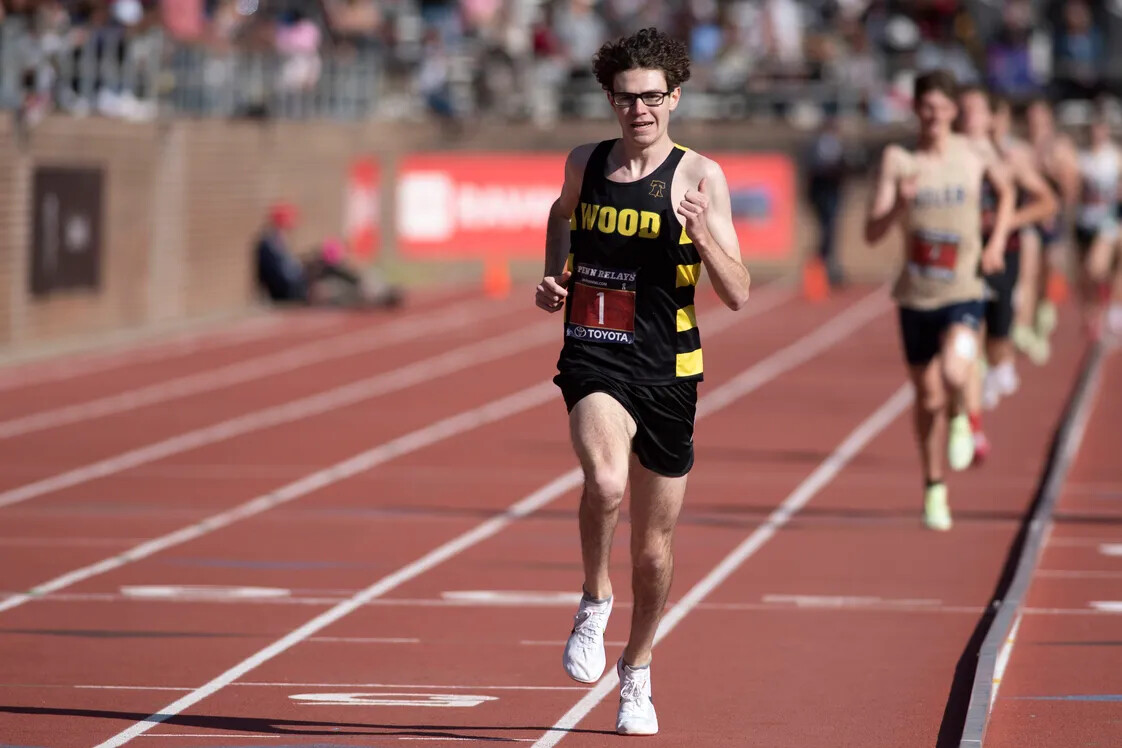
After just missing the milestone at the Penn Relays, he ran Saturday's race at 3:57.98. It was the 20th time a high school runner accomplished the feat, and his time was the sixth fastest ever for a high school student. Overall, he was the 14th runner to break the four-minute mark and it was the fastest time in state history. It was the first in the state to break the 4-minute mark.

Martin has been breaking records all year, beginning in cross country, and continuing during the indoor and outdoor seasons.
Last week Martin broke the state record in the 3,200-meter run, posting a 8:41.57 mark to break Robert DiDonato’s record of 8:44.98 set at this meet last year.
The University of Virginia signee will have more chances to smash records at the state meet.
The Archbishop Wood senior has been on a quest to become the first Pennsylvania high school athlete ever to run a sub-four-minute mile.
Running with a purpose and leading from the start, Martin made history with a sizzling time of 3:57.98.
Martin raised his hands in triumph as he crossed the finish line. His time was the fastest in the county by nearly 10 seconds.
“I’ve had a couple of really good workouts this week and I felt I was in shape to do it,” Martin said. “Looking at the weather, I thought it was going to be a good day and it’s one of my last opportunities to really just run an all-out mile before we get into postseason stuff. I just wanted to go for it, see how I was feeling through two laps. I felt good. I was right on so I kept going.”
Martin found the warm conditions with a light rain to his liking as he took the lead in the first 50 meters and kept his foot on the gas. He ran the first quarter in 59.67 seconds, the second in 58.79, the third in 59.87 and the final in 59.62 to obliterate the meet record of 4:14.08 set by O’Hara’s Steve Hallinan and take his place in history.
“For me, I like to run even splits,” Martin said. “I like to settle into a pace, find a pace I need to run and then hold on throughout, which is what I did today. That’s kind of the goal going in. You just have to stay mentally tough.”
Martin wasn’t done for the day. He also won the 800 in a meet-record time of 1:51.29, to break the mark of 1:52.95 set by O’Hara’s Pat Nash in 2000. And Martin anchored Wood’s 4 x 400-meter relay team to a silver medal by two-tenths of a second to take home the outstanding boys track performer of the meet away.
(05/14/22) Views: 314
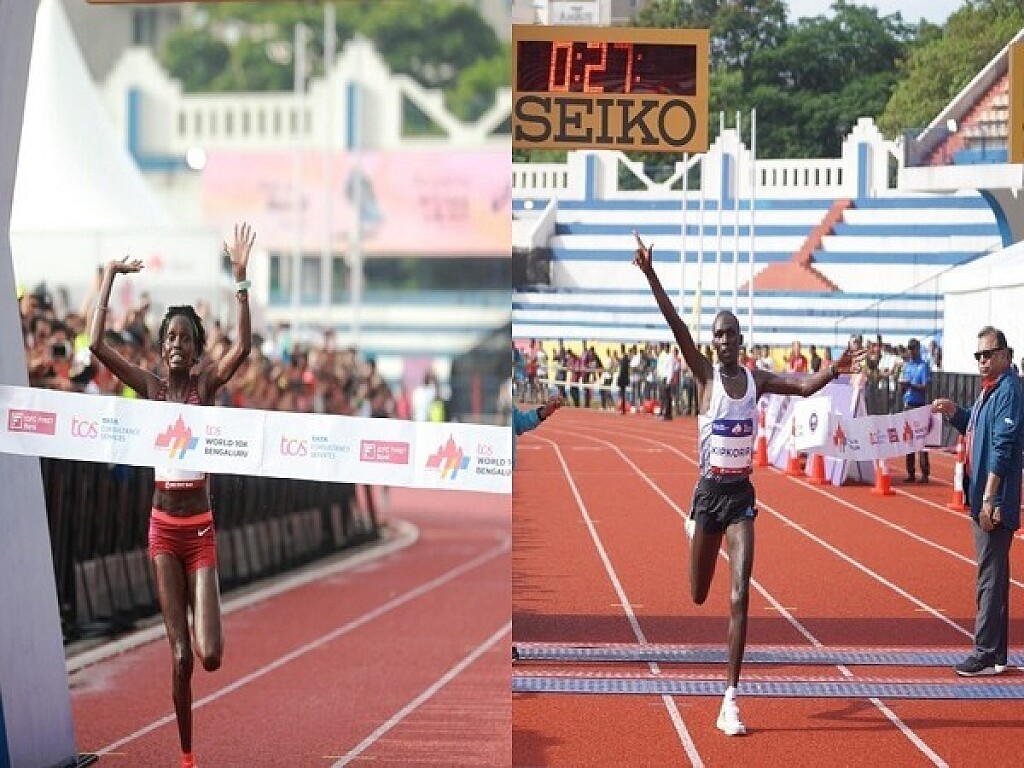
Kenya’s Irene Cheptai and Nicholas Kipkori break course records in Bengaluru
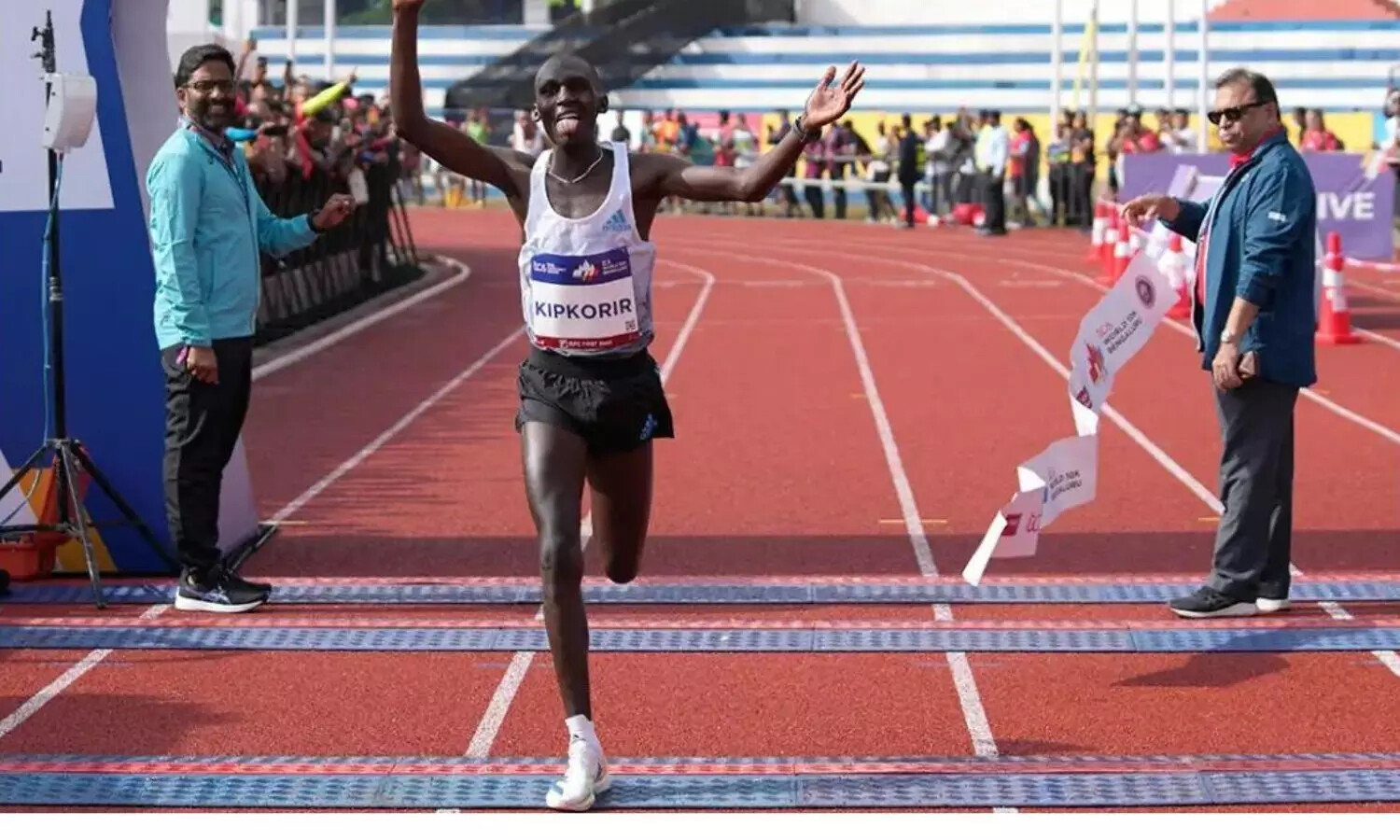
Irene Cheptai and Nicholas Kipkorir Kimeli ran course records of 30:35 and 27:38 respectively at the Tata Consultancy Services (TCS) World 10K Bengaluru 2022 – a World Athletics Elite Label road race – on Sunday (15).
Cheptai took 44 seconds off the women’s course record which had stood to the late Agnes Tirop at 31:19 since 2018.
After a super-fast opening two kilometers of 3:02 and 3:04, a quick time was always likely and the race was soon down to just three women at the front: Cheptai, two-time world 5000m champion Hellen Obiri and fellow Kenyan Joyce Tele.
Tele started to lose contact with her compatriots in the fifth kilometer before Obriri, pushing the pace with Cheptai running in her slipstream, passed the halfway point in 15:15.
Obiri led the race for the next two kilometers, going through 6km in 18:23 and 7km in 21:32, before Cheptai took her turn to push at the front for a kilometer as Obiri briefly went through a bad patch. However, Obiri soon recovered her poise and regained the lead just after embarking on the penultimate kilometer.
The Kenyan pair carried on their enthralling head-to-head battle, but with just 250 meters to go Cheptai darted past Obiri and was never headed before crossing the line in a personal best of 30:35, her first time inside 31 minutes.
Obiri eased off once she knew the race was lost but still came home in an outstanding 30:44, also inside Tirop’s former course record, while Tele was a distant third in 31:47 to complete an all-Kenyan podium.
“When we raced through an inclined patch on the route [just after 7km], I felt like Hellen’s pace reduced, that’s when I tried harder to take lead,” said Cheptai. “But even when I entered the stadium for the final lap, I was fearing Hellen and kept pushing my speed to win.”
The men’s race unfolded in a very different fashion to the women’s. Kipkorir Kimeli, fourth in the Olympic 5000m final last year, took the lead with a kilometer to go and pulled away from Ethiopia’s world U20 10,000m champion Tadese Worku to reduce the men’s course record by six seconds from the previous mark set by his compatriot Geoffrey Kamworor in 2014.
The race started off in an unusual manner with Kenya’s Reynold Kipkorir – who was to eventually finish ninth – out on his own for much of the first 5km, passing the halfway point in 14:00 with the rest of the elite field staying about 70 meters in arrears.
However, shortly after going through 5km, Worku changed gear and started to rapidly tow the leading men back to Kipkorir before going past him just before the 6km point and then increasing the pace further.
Kipkorir Kimeli continued running just behind Worku for the next three kilometers, letting his Ethiopian rival do all the hard work as the pair gradually got back on to course record pace as they also put daylight between themselves and the rest of the men’s field.
Worku still looked fresh as they reached the final kilometer but could not respond when Kipkorir Kimeli took the lead, with the latter almost sprinting like a middle-distance runner over the final 300 meters as the finish line approached in Bengaluru’s Sree Kanteerava Stadium.
Kipkorir Kimeli crossed the line in 27:38 with Worku also inside the old record with 27:43 while the Kenyan pre-race favorite, and former world half marathon record-holder, Kibiwott Kandie made up three places in the final two kilometers and came through for third in 27:57.
By contrast, Ethiopia’s two-time world 5000m champion Muktar Edris was never in contention for the podium and finished back in seventh.
“Honestly, I was not expecting to get the course record,” said Kipkorir Kimeli. “When we reached 5K, we didn’t think we will get the course record, in fact, even when we crossed the 7K-mark, I didn’t think we will make the record. But only when Worku pushed ahead, I picked up pace towards the end.”
(05/16/22) Views: 150World Athletics
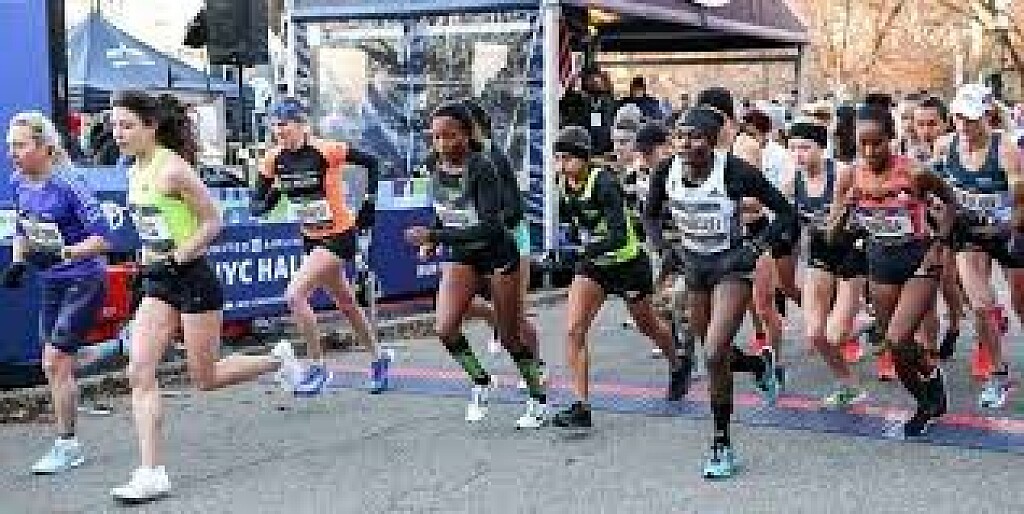
2022 Brooklyn Half Marathon to Return at Full Capacity for 40th Running on Saturday, May 21
More than 22,000 runners expected to race 13.1 miles from Prospect Park to Coney Island.
The RBC Brooklyn Half will return at full capacity for the first time in three years on Saturday, May 21, with more than 22,000 runners expected to race in the event’s 40th running. The race, which was established in 1981, is now one of the country’s premier half marathons with accompanying youth races and a three-day pre-party to celebrate Brooklyn.
“New York Road Runners has such a rich 40-year history in our biggest borough, Brooklyn, and we are excited to be bringing back our premier event in the borough, the RBC Brooklyn Half, for the first time since 2019,” said Ted Metellus, NYRR VP of Events and Race Director. “Since 1981, even before half marathons were popular, the Brooklyn Half has been taking place every year and is now the highlight of NYRR’s year-round presence in Brooklyn, which also includes programs for youth, seniors and the entire community.”
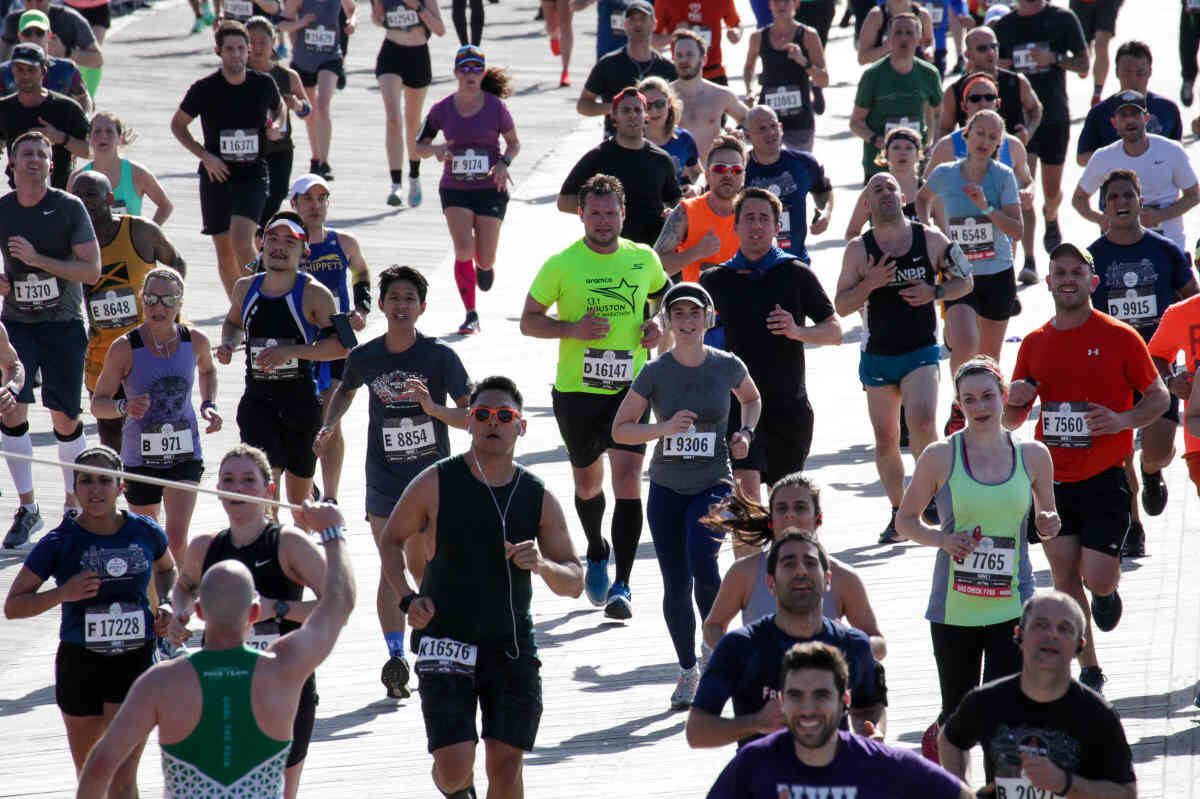
The RBC Brooklyn Half will take runners through the unique and diverse neighborhoods of Brooklyn, beginning at the Brooklyn Museum, passing the scenic Grand Army Plaza, and running through Prospect Park and along Ocean Parkway to the finish line on the famous Coney Island boardwalk.
Below are some highlights and initiatives to look forward to at the 2022 edition of the event:
40th Running: The first Brooklyn Half took place in early spring of 1981 on a course in and around Prospect Park with several hundred finishers. Since then, it has expanded to cover a large portion of Brooklyn and help bring the community together. In 2013, the year after Superstorm Sandy devastated the Brooklyn coastline, the Brooklyn Half helped reinvigorate Coney Island and reminded New Yorkers what makes Coney—and all of Brooklyn—so special. This year will mark the return of the event for the first time since the pandemic began, with Brooklyn Borough President Antonio Reynoso planning to attend.
New Title Sponsor: The Royal Bank of Canada (RBC) will serve as both the exclusive title partner and exclusive financial services and investment banking partner of the event for the first time, activating on race day as well as at the pre-party and post-race festivities. As a purpose-driven global financial institution, RBC, similar to NYRR, is strongly committed to giving back to communities.
Notable Names: This year’s field will include notable names such as TODAY Show’s Al Roker, Good Morning America’s TJ Holmes, TV personality Nev Schulman, and professional athlete Noah Droddy.
Ukrainian Running Club Members: More than 40 members of NYC’s local Ukrainian Running Club will participate, as running has brought the club members closer together as a form of support while the war goes on in Ukraine. The club is captained by Dmytro Molchanov, who moved from Brooklyn to Ukraine seven years ago and will be an NYRR pacer for the 1:20 group.
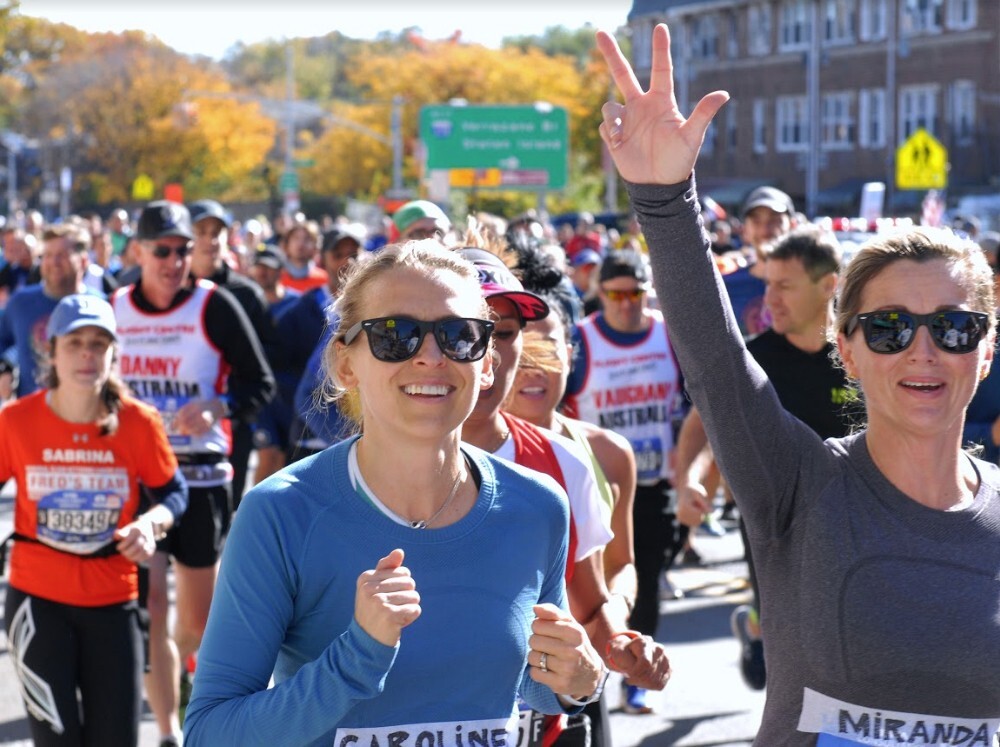
5-Year Anniversary: Prospect Heights residents Krissa Cetner and Alex Salazar, two avid runners, stopped to get married in front of 100 guests at Mile 6 of the 2017 Brooklyn Half and then hopped back on the course to finish the race. Running for NYRR Team for Kids, the couple will return this year to run in honor of their 5-year anniversary and plan to wear the same tuxedo shirt and bridal shirt. Their 3 1/2 year old son, Myles, will be there to cheer them on.
Guinness World Record Attempt: Local elite Marie-Ange Brumelot of Queens Distance Runners and her father will go for the Guinness World Record for the fastest half marathon run by a parent and child. Brumelot represented France at the 2020 World Athletics Half Marathon Championships and is a 1:14 half marathoner.
Brooklyn’s “Marathon Man”: At 70 years old, Brooklyn’s Leroy Cummins is speeding up, not slowing down. As a member of the NYRR Striders fitness program for older adults, he ran his first marathon last fall at the TCS New York City Marathon, finishing second in his age group in a time of 3:35:15, a quick 8:13 mile pace. He then ran the Boston Marathon in April, and now, known as the “Marathon Man” to his East Flatbush neighbors, will look to finish first place in his age group in Brooklyn.
Boardwalk Kids Run: The whole family is invited to join in on race day activities, as kids ages 8-18 will take part in the Boardwalk Kids Run at the RBC Brooklyn Half for free on Coney Island as part of the Rising New York Road Runners youth program.
RBC Brooklyn Half Pre-Party Presented by New Balance: From May 18 to May 20, runners will pick up their bibs, shop for race merchandise, listen to live music, and dine at local food trucks at the RBC Brooklyn Half Pre-Party Presented by New Balance at Pier 2 in Brooklyn Bridge Park.
Virtual RBC Brooklyn Half: Runners who are unable to be in Brooklyn can participate in the race from anywhere in the world at their own convenience between May 14 and May 22.
About New York Road Runners (NYRR)
NYRR’s mission is to help and inspire people through running. Since 1958, New York Road Runners has grown from a local running club to the world’s premier community running organization. NYRR’s commitment to New York City’s five boroughs features races, virtual races, community events, free youth running initiatives and school programs, the NYRR RUNCENTER featuring the New Balance Run Hub, and training resources that provide hundreds of thousands of people each year with the motivation, know-how, and opportunity to Run for Life. NYRR’s premier event is the TCS New York City Marathon. Held annually on the first Sunday in November, the race features a wide population of runners, from the world’s top professional athletes to a vast range of competitive, recreational, and charity runners. To learn more, visit www.nyrr.org.
(05/16/22) Views: 148
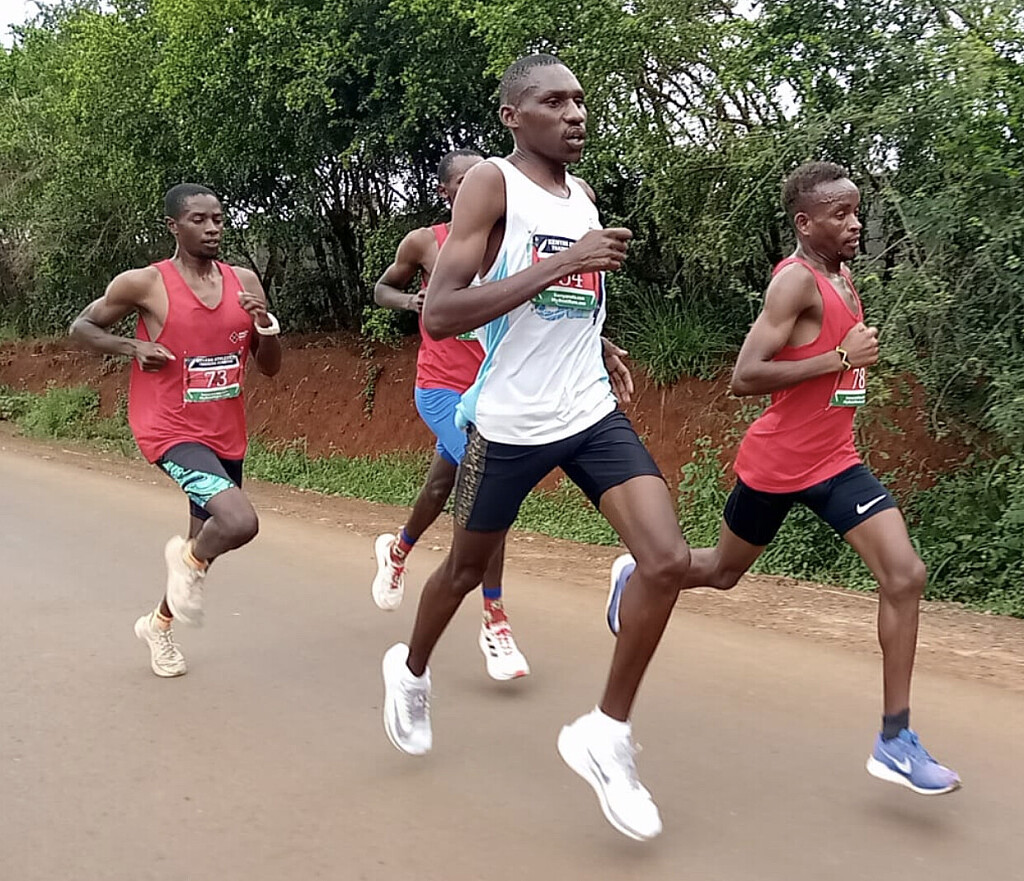
Only five seconds separated the top three at KATA 10K Time Trial
Sibling rivalry and Excitement marked the May Kenyan Athletics Training Academy (KATA) 10k Time Trial with elite athletes fighting hard to keep their positions.
The event, the 9th since the inception of KATA, was a motivating factor for all those who posted their personal records during the trials that took place on Wednesday May 18 in Thika Kenya.
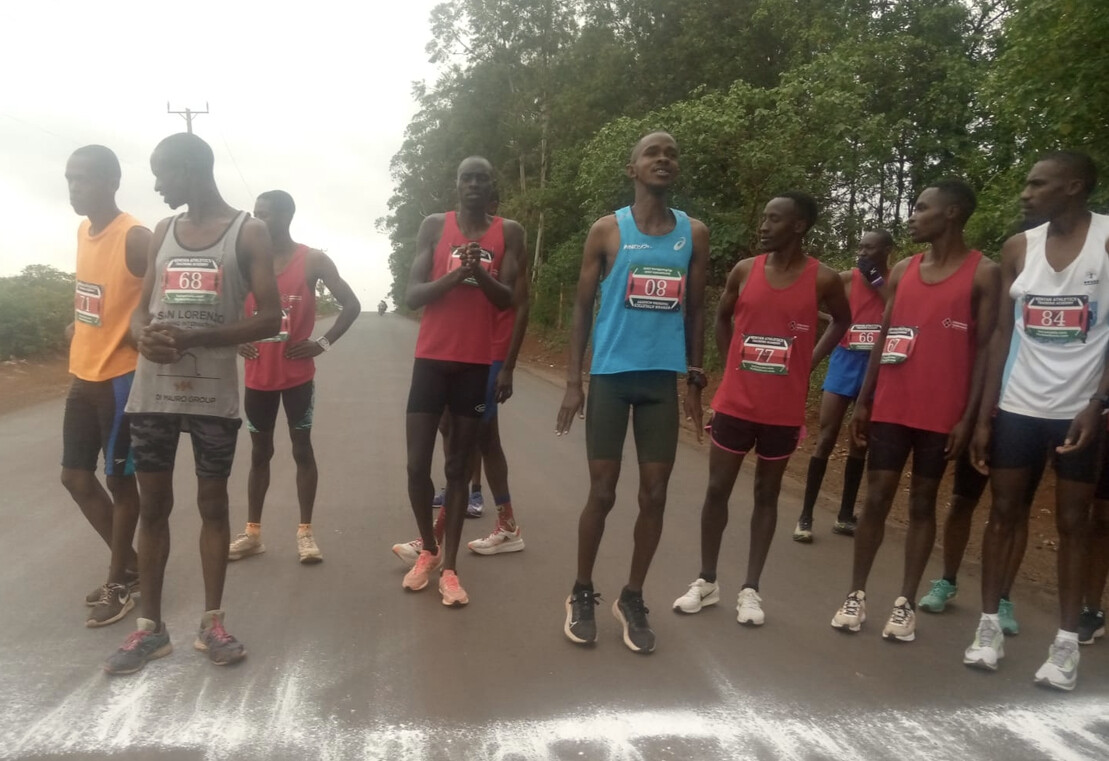
However, Peter Wanyoike and Zakariah Kirika were unstoppable as they fought tooth and nail to keep their top positions three times in a row.
Doing the trial a week after running his local marathon in Kenya, Wanyoike led Kirika to a 1-2 finish with Eston Mugo finishing third after recovery from an Injury.
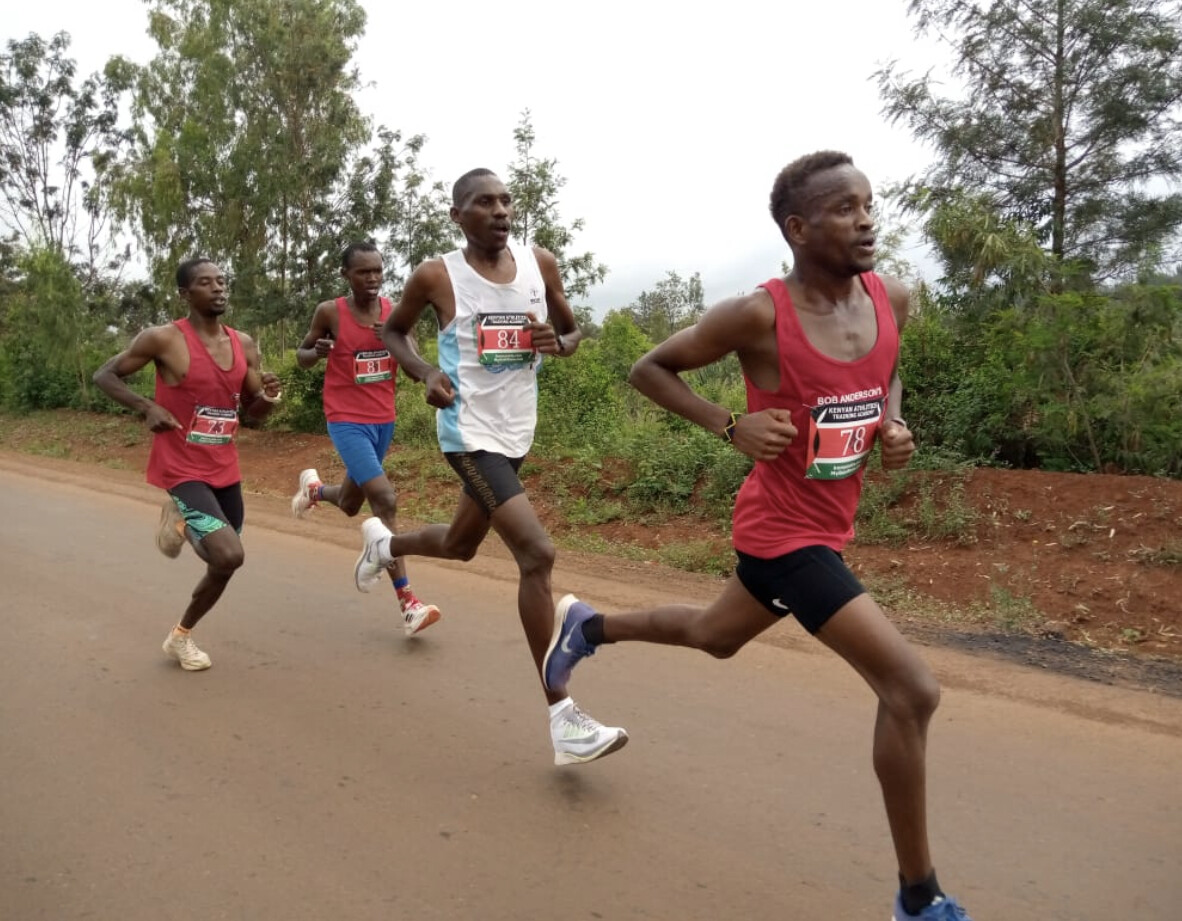
Though the top two could not better their previous times, it was a relief for all the rest after knocking down several minutes and second from their previous times.
Wanyoike, who ran 2:25.04 ten days ago, registered 30:01.3 while his avid rival, who also ran 30:04, maintained 30:02.4 to keep his runners-up position.
Eston Mugo was shade over 30 minutes to click 30:06.3 from his April’s 33:22.1 with the all the rest attaining their Personal Best times during the trial that were held under cloudy weather.
60-year-old Charles Ndirangu clocked a fine 36:13.
The next KATA 10k Time Trial will be held on June 15th with better times being anticipated on the same course. Runners of all abilities are welcome to compete.
Names BIB Age Gender Time April Time
1. Peter Wanyoike 213 26 M 30:01.3 (29:53.7 April time)
2. Zakaria Kirika 237 21 M 30:02.4 (29:54.4)
3. Eston Mugo 224 26 M 30:06.3 (33:22.1)
4. Erick Mutuku 216 20 M 30:14.7 (31:41.3)
5. Raphael Gacheru 233 22 M 31:35.9 (32:28.4)
6. Fredrick Kiprotich 79 23 M 31:41.5 - - --
7. Nicholas Kitundu 80 22 M 32:06.9 ------
8. Boniface Mungai 235 23 M 32:30.5 (33:05.6)
9. Levis Kuria 214 21 M 33:04.5 (33:11.6)
10. Charles Ndirangu 82 60 M 36:13.2 ------
11. Samuel Muiruri 68 27 M 36:55.7 (42:30.8)
12. Peter Mukundi 71 25 M 39:16.5 New
13. Caren Chepkemoi 127 19 M 42:06. (42:30.5)
14. Susan Njeri 76 36 M 45:11.9 (45:30.2)
(05/18/22) Views: 97Coach Joseph Ngure
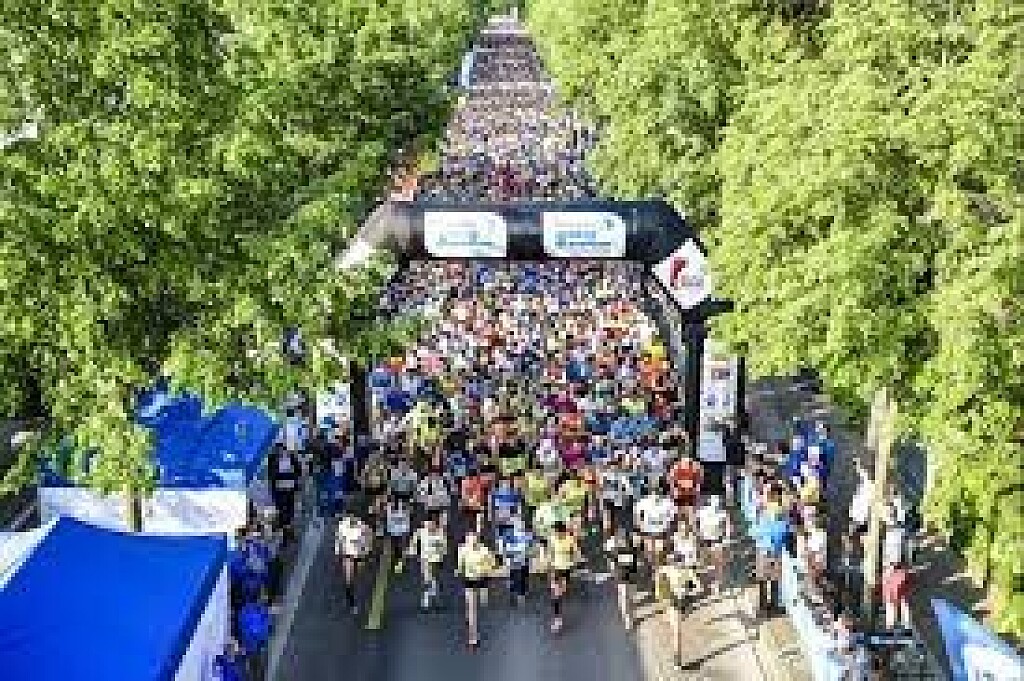
14,000 set for 16th edition of Generali Genève Marathon
After two difficult years with the pandemic, the Generali Genève Marathon in Switzerland is returning to full strength with eight race formats on the event programme and some new features.
Organized by OC Sport, the main marathon event and the half marathon are set for Sunday, May 15, with a number of other events lined up for Saturday, May 14.

This year, financial services firm Generali has become a title partner; and its Swiss foundation, The Human Safety Net Switzerland (THSN), is on board as a charity partner. These two new partnerships will aim to breathe new life into the event, which has returned to its original red colored branding, and features the addition of a new slogan, #RunForRefugees in support of refugees.
The 6km ‘La Genevoise #LikeAGirl by Always’ race, previously intended only for women, has become the ‘5km by Always’, and will now also be open to men. This race is relocated to the lakefront, in front of the jet d’eau, on a fast course conducive to personal bests.
In another evolution, the start in Chêne-Bourg has been slightly moved and will now be just in front of the new Genève train station. This has direct access from many stations to the Lake Geneva area and encourages participants to use public transport.
The organizers will continue to focus on the carbon footprint generated by the event; and a carbon footprint assessment will be carried out. Numerous concrete actions have already been put in place for a number of years, such as the TPG transport ticket offered to each participant, the Geneva water distributed at the refreshment stands without any PET bottles, and the management of waste.
(05/13/22) Views: 92
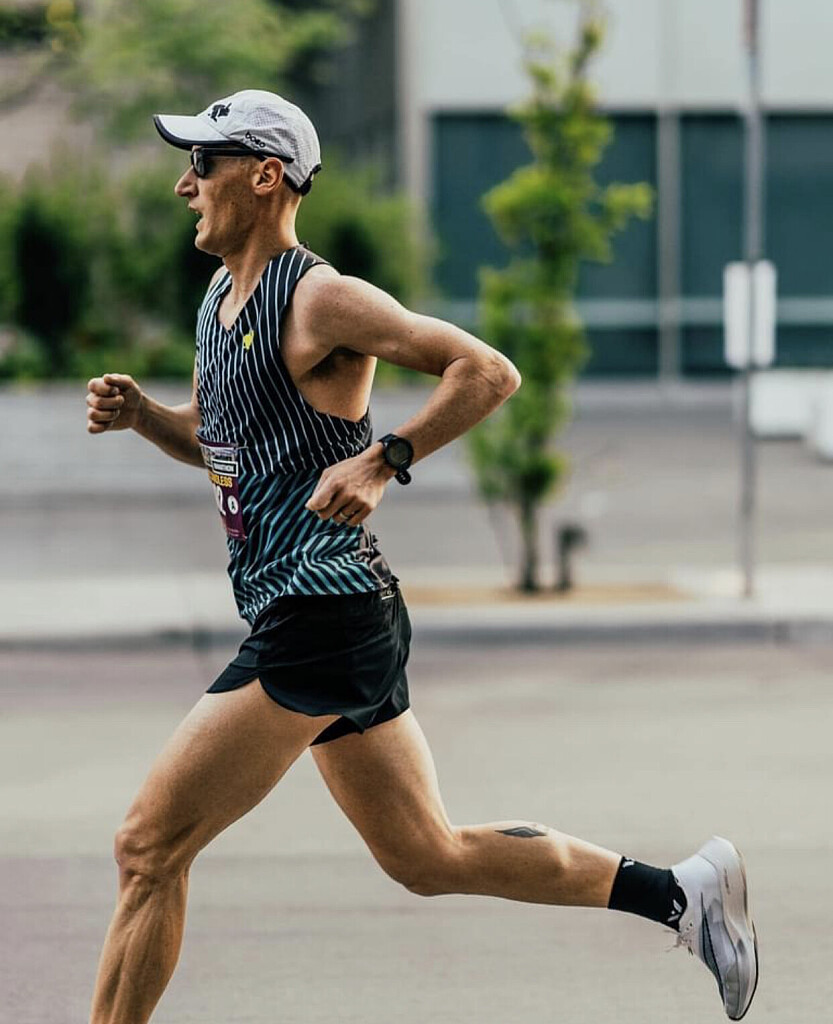
Tyler McCandless blows away the field at the Colfax Denver Marathon today
Runners of all speeds laced up their racing shoes and grabbed their bibs to race in Denver’s 16th annual Colfax Marathon.
Denver’s biggest running event took place on Sunday, May 15, and welcomed more than 30,000 runners to the Mile High City.
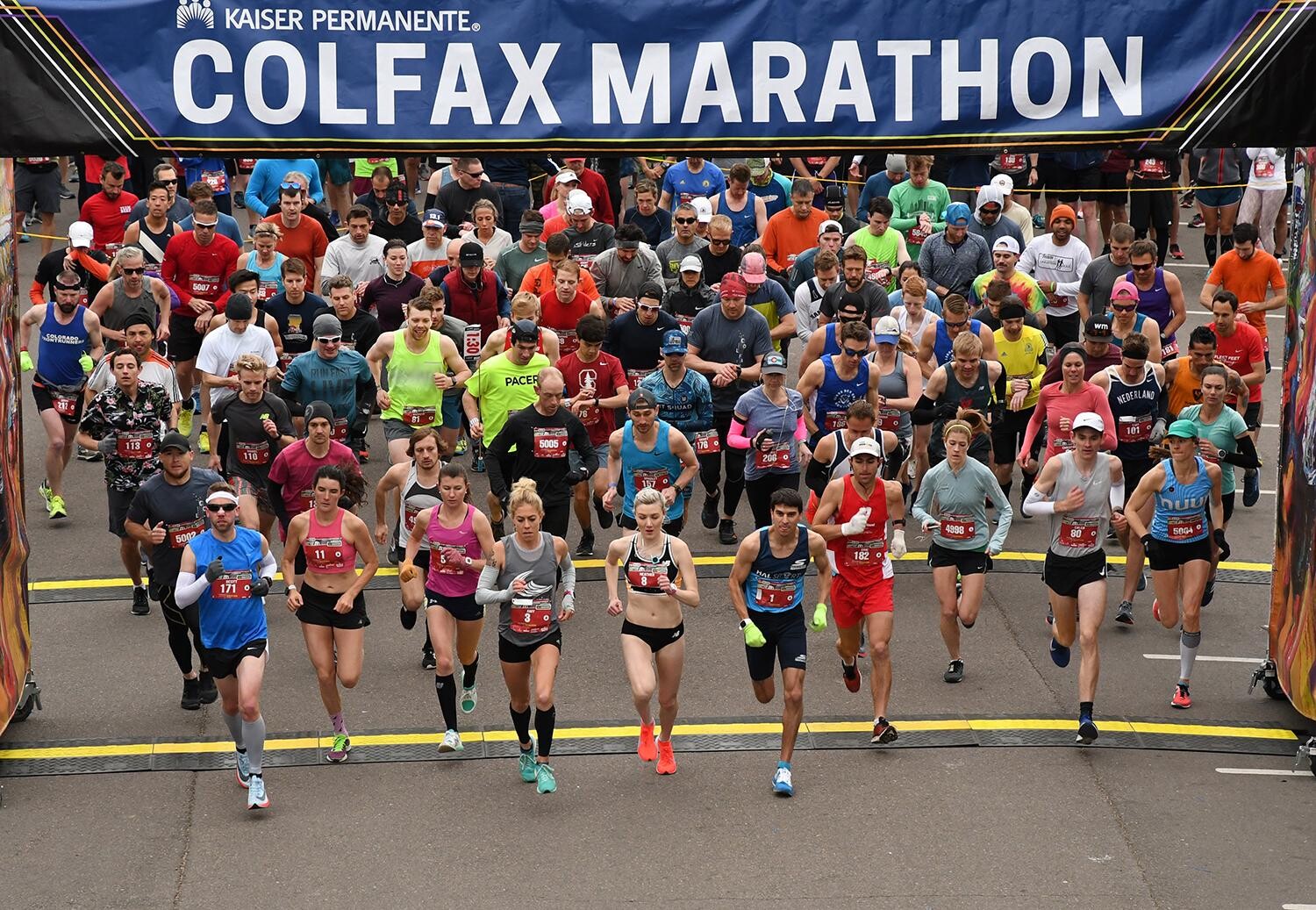
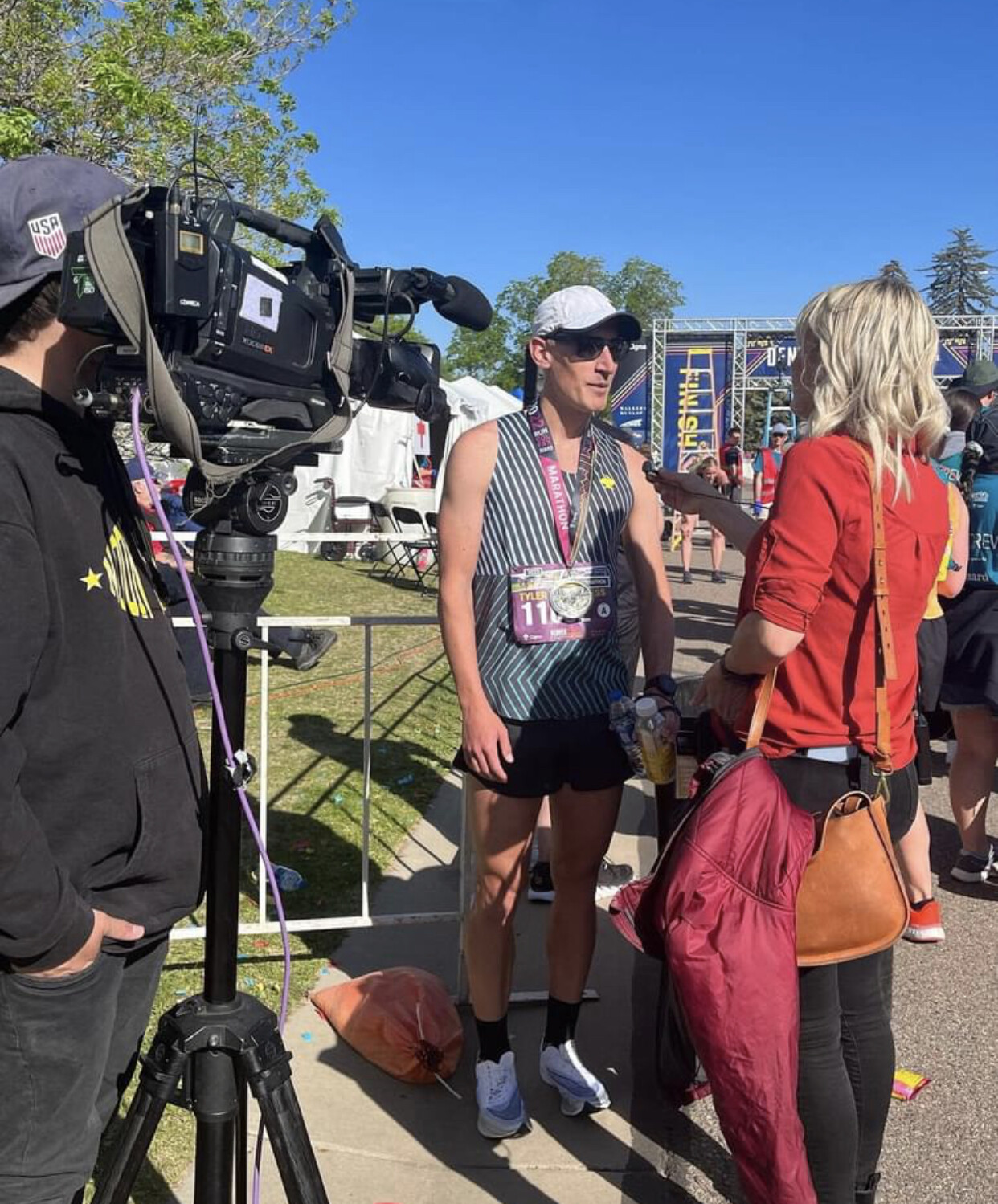
Tyler McCandless posted, "I ran 2:21:07 for a win and new event record Denver's Colfax Marathon! Took almost 3:30 off the previous event record. 9 years since the last time I won a marathon and winning at altitude in Denver was both very hard and extra special! Thanks for all the cheers, kudos and congrats, and thanks #ColfaxMarathon for putting on a world class marathon in Denver!"
Male overall marathon winners:
Tyler McCandless, 35, of Fort Collins finished with a time of 2:21:07
Zebulon Hanley, 30, of Louisville finished with a time of 2:30:40
Anthony Bruns, 42, of Denver finished with a time of 2:32:47
Female overall marathon winners:
Sarah Villasenor, 37, of Denver finished with a time of 3:02:51
Sarah Bay, 43, of Niwot finished with a time of 3:05:17
Janie Nabholz, 22, finished with a time of 3:09:23
(05/15/22) Views: 92

Photos of the best costumes at San Francisco's Bay to Breakers race
San Francisco runs at a different speed than other cities. It also usually runs in costumes.Nearly every year since 1912, the city has celebrated Bay to Breakers, a 12-kilometer run that begins at Howard and Main streets and concludes at Ocean Beach.
But like most San Francisco traditions, there's a whimsical element involved, with the actual run taking a backseat to antics and partying along the route and a fashion show of costumes. Although the race does award some prizes, Bay to Breakers is more about the spirit than the finish times.
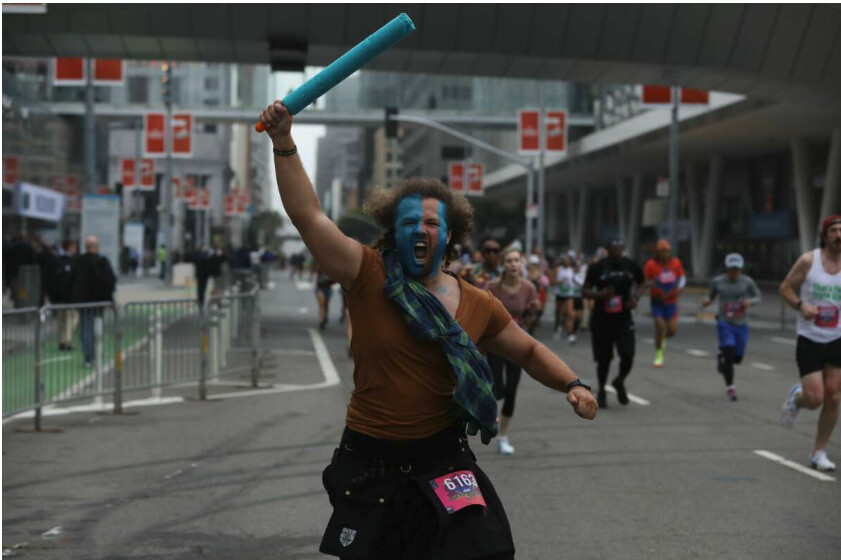
Although seemingly all fun and games, this year's race was mired by a few surprising controversies. The chair of Capstone Event Group, which organizes the race, gave money to divisive political candidates. And initially the organizers refused to give prizes to non-binary racers, a policy which was recanted after widespread blow back.
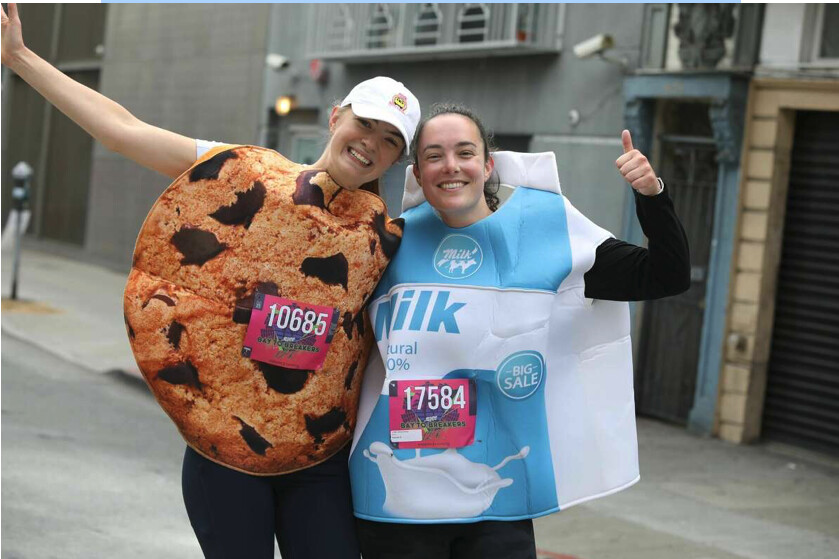
Regardless of those issues, the event was back in full force after a two year absence, with thousands of runners enjoying the cool, foggy weather.
(05/15/22) Views: 90
Try this progression mile workout to improve your 10K
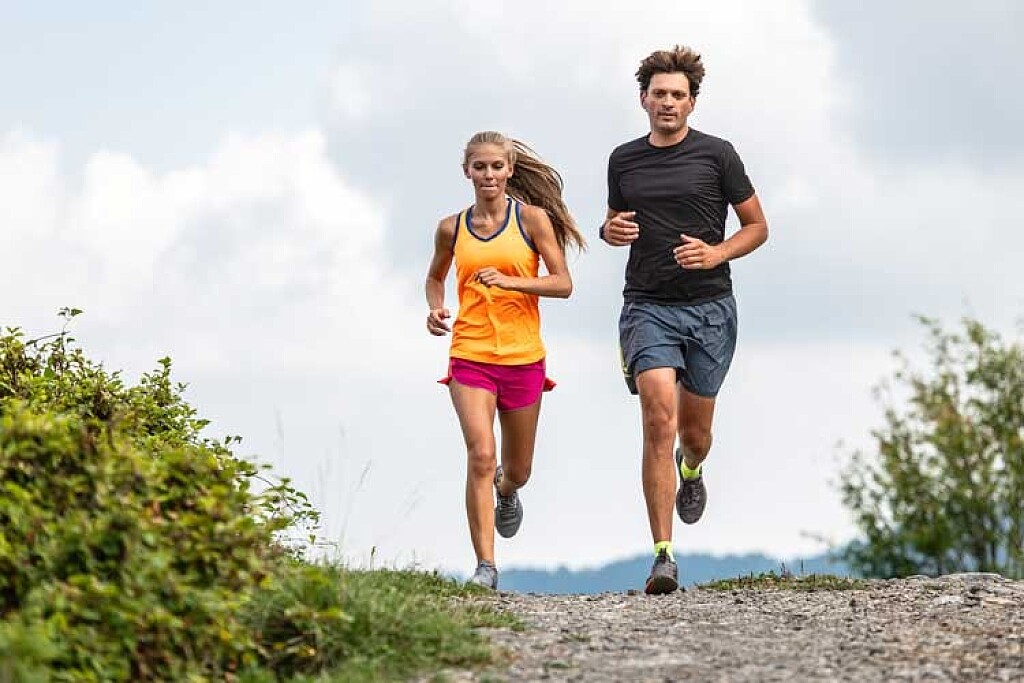
If you have a 10K race on the horizon, it’s important to make sure that your workouts are race-specific. With tons of spring 10K’s happening across the country, we have the perfect 10K specific mile progression workout that will help prepare you to handle the physical demands of kilometres six to 10 in your race.
When training for a 10K, you’ll want to make sure you are covering at least 50 to 70 percent of the race distance in your speed workout. Therefore, one-kilometre and one-mile repeats are essential, as it builds up your endurance to get you more comfortable with your goal pace over the distance.
The workout
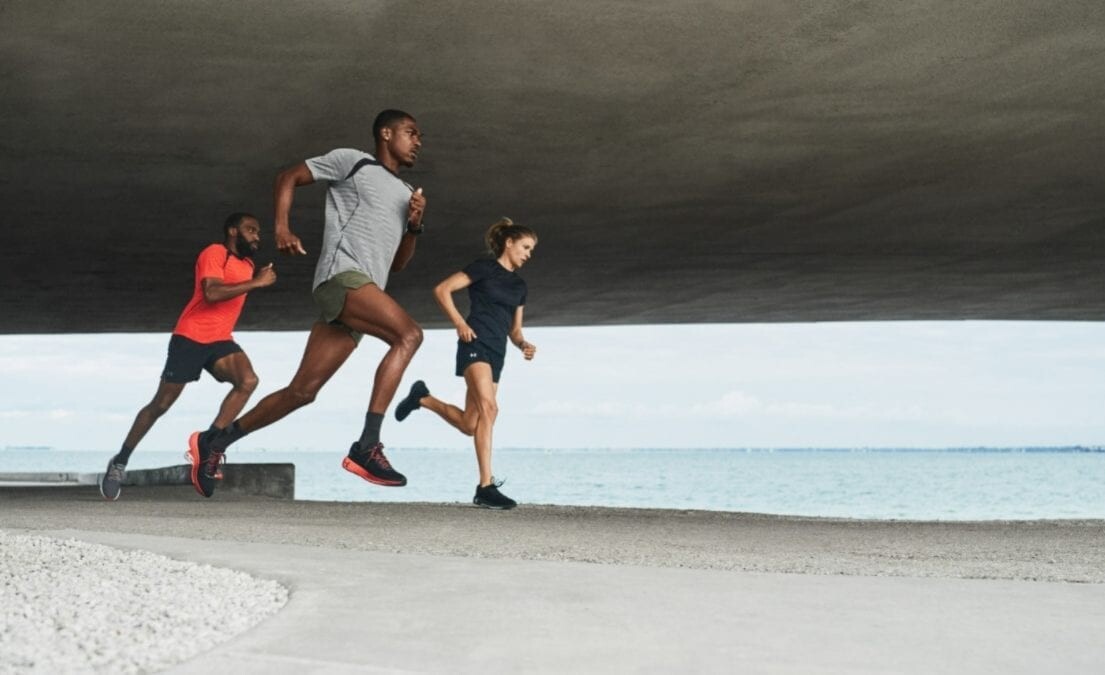
Four to five reps of one mile (1,609m or four laps on a track) progression with two minutes rest between reps
The pace: Since the mile is four laps, divide your mile rep up into four paces. On the first lap, you should aim for 10 seconds per kilometre slower than your goal pace (for example, we will use a goal 10K time of 45:00, 4:30/km), so the first lap should be around 1:52. On the next lap, pick up the pace to five seconds per kilometre faster, hitting the next 400m in 1:50. The third 400m should be done at your goal 10K pace of 4:30/km, which is 1:48 for the lap and the last being five seconds faster (4:25/km) in 1:46.
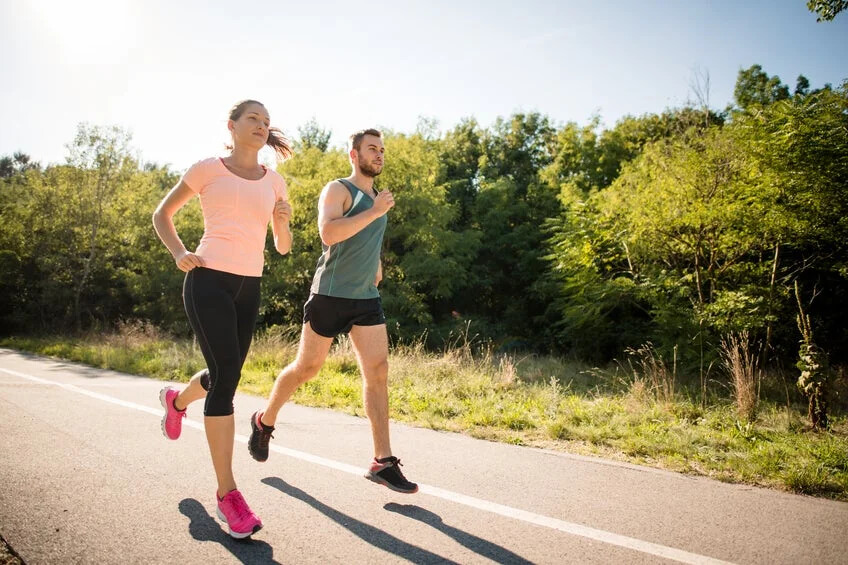
The idea of this workout is to get your body comfortable with faster paces, when it’s experiencing fatigue. If you can hit the paces on all four or five reps, it’ll get you ready to negative split your next 10K.
The two-minute rest in between each rep is a standing or walk rest to help bring your heart rate down before you start up again. Ideally, the paces of this workout will be easier to manage if it’s done on a 200 to 400m track. If the track is under 400m, divide the time per lap by four to determine your pace per 100m. If you do not have access to a track, use a flat 400m, 800m or one-mile loop and set markers along the way.
Control your pace early on and make sure you are hitting the times on the first two reps. If you go out too fast, it’ll ruin the rest of the workout, which isn’t the intention.
(05/16/22) Views: 83Marley Dickinson
Expert tips to prepare for your first 5k
The 5k distance is one of the most popular races in running and it is much-loved among amateur and professional athletes alike.
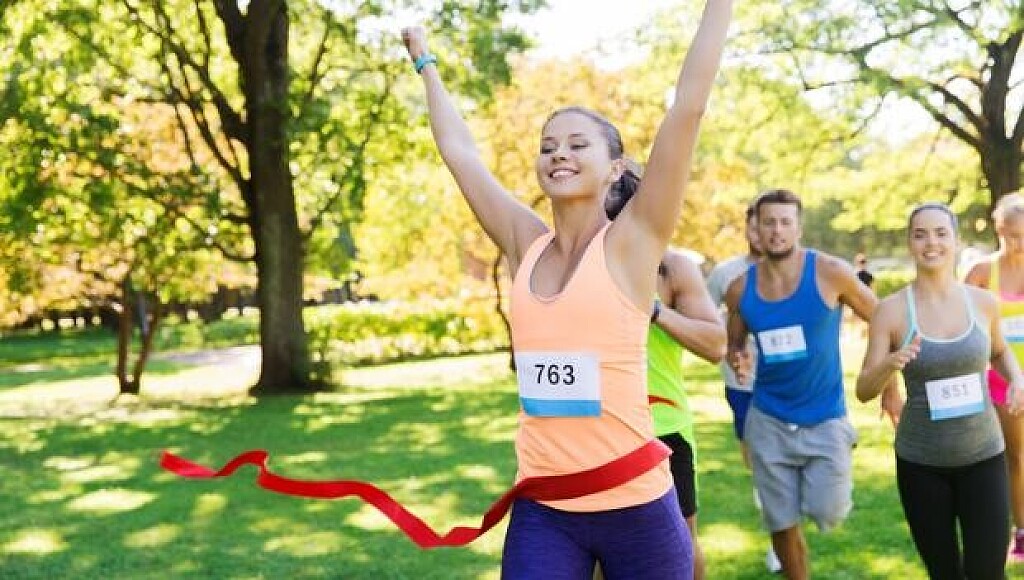
If you’ve never competed in a 5k race before, there are some things to bear in mind that can help you prepare for the big day.
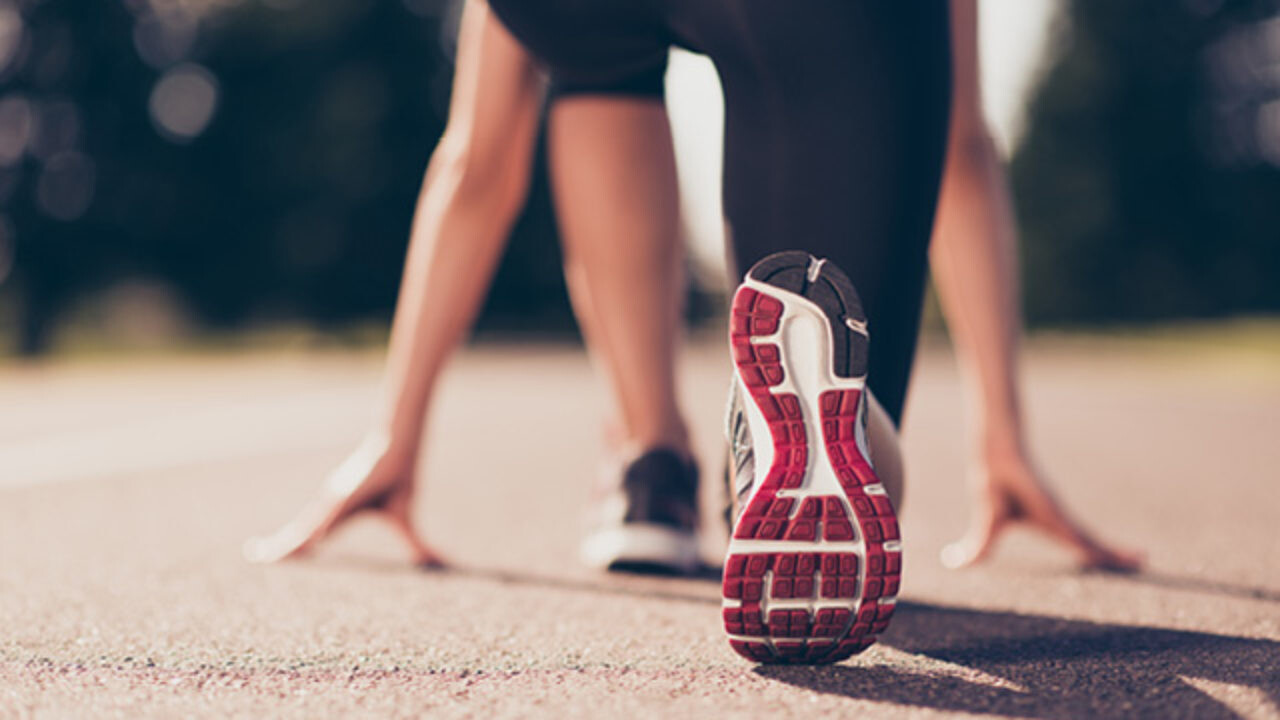
We asked a select group of fitness and running experts for their top tips and advice when it comes to preparing for your first 5k race.
Here is what they said.
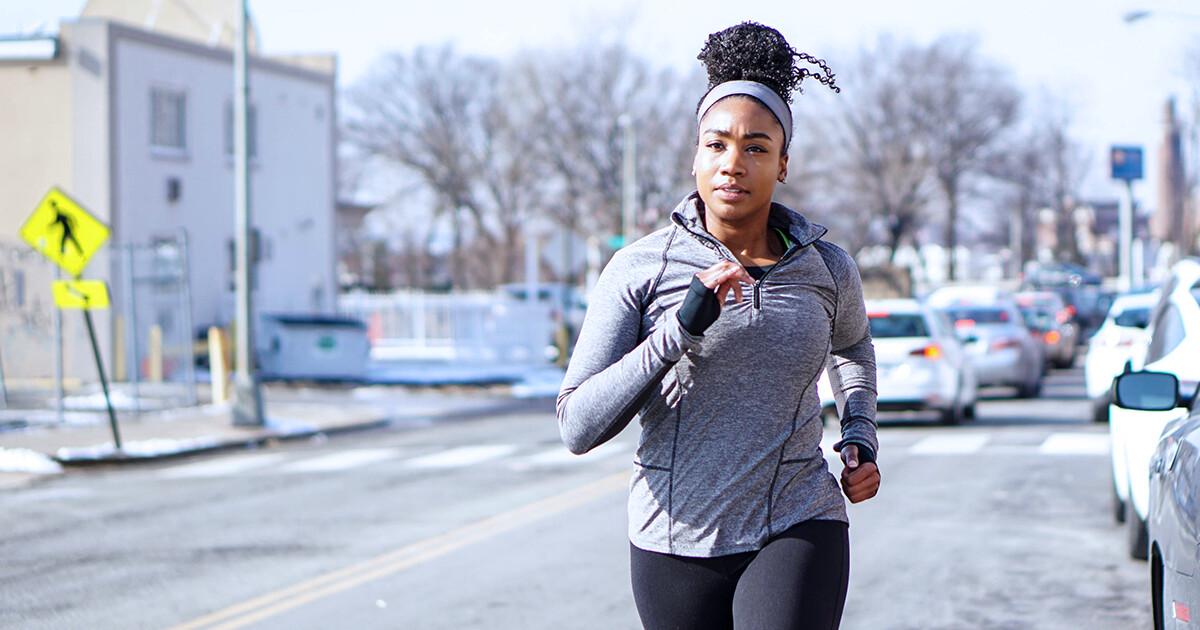
Stick To Your Routine In The Lead-Up To The Race
Peter Keane, Physiotherapist at Physio Motion 3D
In the week leading up to your race, don’t change your routine.
This isn’t the time to be experimenting with new food, shoes, drinks or anything else.
Also, it’s only a 5k! Don’t fall into the trap of thinking you need to load up on carbohydrates, you’re very unlikely to burn off that much fuel.
It’s important to eat well-balanced meals that you’ve been enjoying all along.
On Race Day: Again, don’t make the easy mistake of gulping down lots of water in order to stay hydrated during the race. It’s all about sipping. Sip if it’s hot or your mouth is dry – you’ll often see athletes take a mouthful and then rinse and spit. This is because they’ve stayed hydrated in the days before the race and are ready to go.
In terms of food, make sure you’re not eating anything within two hours of the race. A good pre-race meal that’s loaded with carbs, protein and some fats would be some oatmeal and berries or a bagel with peanut butter.
Begin and take the first kilometer about 10 to 20 per cent slower than you usually would (chances are, this will actually be your normal pace) and this will allow you to finish strong.
Keep your pace slow, steady and even – so you can blast home on that final stretch.
Post-Race: Remember to walk around for at least 10 minutes afterwards. This will your body adequate time to wind down and get your heart rate back to a normal resting state. Do your stretches and refuel.
Give Yourself Enough Time To Prepare For The Race
Amie Dworecki, Running Coach at Running With Life
One thing I would suggest is that people interested in running a 5k give themselves ample time to prepare. This is usually eight to 12 weeks beforehand for someone who has never run before.
The body takes time to adapt, and running is a high-impact sport, so given enough time, the process can go much more smoothly, and with less soreness and reduced chance of injury.
I also suggest that people start out with walking, if they are not regularly doing so. Even five minutes of walking building up a few minutes each time, until they are regularly walking 30+ minutes, three to four times a week.
Then, they can start adding in run intervals. There are many couch to 5k apps and programs available online, with the advantages that they are free and widely available.
However, in many cases it can be a you get what you pay for, and those can be written by anyone, and some have jumps in intensity or frequency that are not appropriate for beginners.
I find it is best to work with a program led by a certified coach if it is available. The advantages are that the program is designed by someone who knows what they are doing, you have someone to ask advice if things are not going well, and you have a group to help support you.
Beginning a running program to the 5k level is as much a mental and lifestyle change, as it is a physical habit. Meeting with a group helps greatly with accountability and that can be key when getting your workouts done. Even an online or virtual group will give this and can be better than trying to go it alone.
I also have 5k training programs on trails. Often the surface of a trail (depending on the area) is much softer than concrete, and for beginners who are not used to the hard pounding on their joints, and/or who may have weight to lose, trails can offer a gentler surface on which to train.
This is also a popular choice for older participants who may not want the jostling of concrete.
If a group is not available, make sure the program is gradual, without sudden sharp increases in running time. And, don’t be afraid to repeat a week if that is what you need to do. This is about reaching the end goal in a way that is successful, versus trying to follow a rigid program that may not be right for the runner.
For an absolute beginner, I have found that starting with run intervals of 30 seconds to one minute is best.
Make sure to include a proper warm-up and cool-down before and after. It doesn’t have to be anything complex. It can be five to 10 minutes of walking with simple stretches that address any areas of personal tightness a person may be experiencing.
I usually suggest running the first race at a manageable pace with the goal being to complete the distance feeling good.
The first race is always a PR (personal record). There will be other races in which speed can be added in as an extra.
Find A Good Place For Your Training And Get The Right Equipment
Ryan Hill, Physical Therapist and Co-founder of The Stride
Running your first 5k is a great goal. It is a race that you can push yourself in, but it’s also a distance for everyone if you put in the effort.
Some of the first things to consider are your goals, how often you can run to train, your fitness level to start, where you plan to train, and if you have the necessary equipment.
When it comes to goals, have one! Maybe the goal is to lose weight, get more fit, or push yourself physically.
Regardless, having the 5k in the calendar gives you a concrete reason to get up and go for that run. It will keep you motivated and engaged in the process.
If your goal is losing weight, then being consistent with running OR walking is the key.
Try to create a habit where it feels like physical activity is a natural part of the day. It can take a few weeks to develop a habit, so having it worked into a 5k training plan is a great way to stay on task.
If your goal is to get more fit or challenge yourself physically, then being prepared to throw in a couple of days of speed work for some variety can be beneficial. Finishing those hard runs can give a great sense of achievement.
Plan to set aside three to four days of jogging per week week and expect to spend thirty minutes to an hour being active on those days.
Typically, we suggest doing your running early in the morning. Morning races are the norm, so it helps to train during the time of day you will perform. The other advantage of starting early is that it gets the work out of the way before all the other life factors arise. It also helps kickstart your metabolism and can help you feel more energized throughout the day.
In terms of fitness level, we recommend that you be able to jog for 10 consecutive minutes before starting a 5k training program.
If you aren’t able to jog for 10 minutes, that’s perfectly fine! Sign up for the race anyways but spend a couple of extra weeks ahead of time doing a jog/walk interval program.
Start with a two-minute jog and three-minute walk x 4. This will be 20 minutes of activity. As it gets easier, increase the amount of time you’re jogging and decrease the time walking.
Finally, have the right equipment. There is no perfect shoe. Your foot is unique to you, so don’t expect the shoe someone else ran in to be what you need.
When you lace up the shoe, you should be able to splay out your toes, and your heel should feel secure in the back of the shoe.
Ideally, the shoe store will allow you to run in the shoe to determine any “hot spots” that you didn’t recognize in the store. While not necessary, having a GPS watch to track your mileage and heart rate can be beneficial.
Finally, reach out to a physical therapist or trainer and get a simple screen performed. They will let you know what muscle groups and motions you should work on to help avoid an injury. One of the best ways to get out of the running is to get hurt on your first race.
(05/14/22) Views: 82The sport Review
