

Running News Daily
Top Ten Stories of the Week
4/9/2022
These are the top ten stories based on views over the last week.



Nell Rojas, Coached By Her Father, Will Return To Boston Marathon After Debuting As Top American Woman In 2021
For Nell and Ric Rojas, the Boston Marathon is a family affair.
In 2020, Nell finished as the top American woman in sixth place. It was just her fourth marathon — and she’s still getting comfortable with that success.
“When you’re going against the best in the world, it’s weird to be like, ‘yeah I can run with them,’ but you have to tell yourself that every morning,” said Nell Rojas.

She made a statement in her Boston Marathon running debut last fall and finished with a personal best of two hours, 27 minutes, and 12 seconds.
“I knew she was going to run well but to be as competitive as she was with the international athletes, I was very impressed. very impressed,” said dad Ric Rojas.

Her success on the roads has created more demands on her time, or as Nell chooses to see it, more opportunities.
“Running used to be all about just working hard and finding my limits. Now, it really is more about involvement and inspiring a little bit more because I am in the position to inspire other strong, female, and Latina athletes,” said Nell.
Growing up, Nell played basketball and soccer; she even tried figure skating. She didn’t get serious about running until college.
“My dad was a coach and a runner growing up so I was always around runners,” said Nell.
Ric set state high school records in New Mexico, was all-Ivy at Harvard, and competed at the highest levels nationally. But he left it to Nell to choose her own path.
“My dad let me make the decisions,” said Nell. “I wasn’t pressured into being a runner. That helped me grow into my love for running and do it my own way.”
And there was no question that her father would be part of that.
“I was never really concerned about coaching her, as her dad. Nell’s very coachable. I think the key thing is with a coach-athlete relationship is the coach has to be firm, on one hand, but the athlete has to be coachable, as well,” said Ric.
“There was one point where we coached a team together, he was my dad and my co-worker and my coach, so there’s a lot of family time. We make it work pretty well,” Nell said.
Ric ran Boston three times. He could barely contain himself when he saw his daughter at the front of the pack last fall.
“Oh my god, my heart went crazy on that. It was so much fun. I can’t tell you,” he said.
The Rojas team was back on the course last month. Nell is feeling good about her second shot at Boston.
“I’m running faster. My workouts are faster. I’m running more mileage. I’ve gotten a little bit more experience. I know what the course is like. There are so many reasons for me to come in this year more confident,” she explained.
“What I’m hoping now is she beats my best time, which was 2:25 so I think she’s got a good shot at it,” said Ric.
The coach is all business, but sometimes the dad just spills over.
“I can’t even say it, I’m so proud of her I can’t stand it. Very proud,” Ric said.
(04/05/22) Views: 128Lisa Hughes
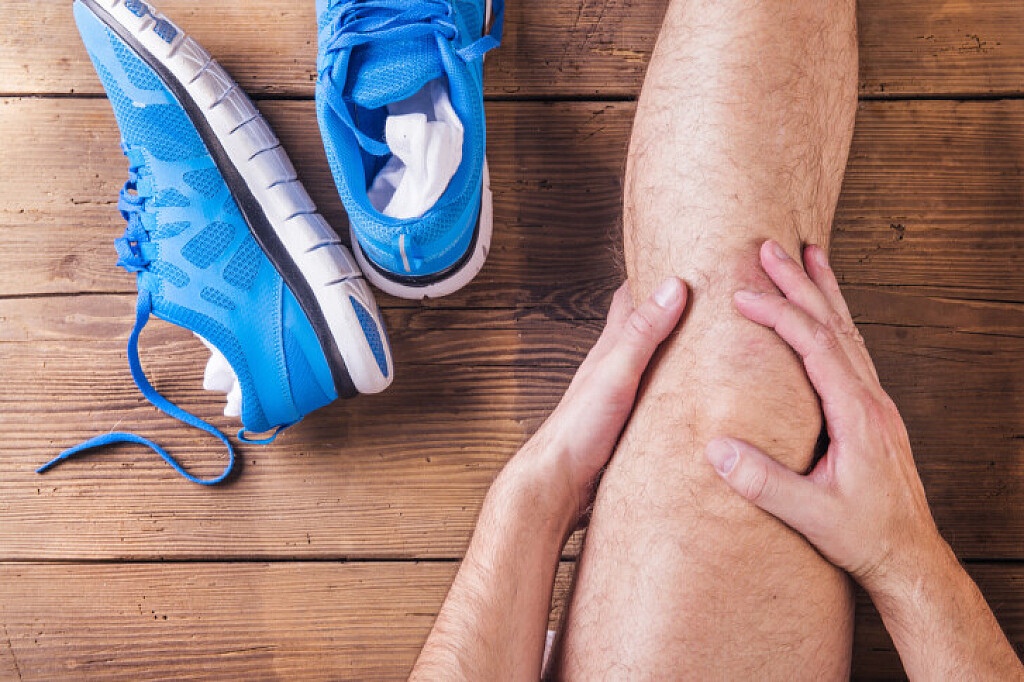
Five tips for surviving an injury, Injuries are as much a mental challenge as a physical one, follow this advice to help you stay sane until you can get back to running
Injuries are a significant emotional and mental challenge. Having to put your training plans aside and miss your goal races, or simply being unable to participate in your favourite activity is a nightmare for many runners. If you’re currently sidelined with an injury, follow this advice to help you handle the emotional side effects of time off until you can get back out on the roads and trails again.
Focus on what you can do
As much as possible, avoid doing any activities that aggravate your injury. This will only slow down the recovery process and delay your return to running. Instead, focus on the activities that you can do, and do them consistently. If you can cycle, get into a cycling routine. If you can swim, consider getting a temporary membership at the local pool. Not only will this give you something to do while you can’t run, but it will build your fitness in different ways, which could actually help you become a better runner once you’re able to return to training.
If you’re not sure which activities will be safe for your injury, talk to a physiotherapist or other sports medicine expert who can help you devise a cross-training plan. As always, listen to your body and if your injured area doesn’t feel good after a certain activity, scratch that one off the list.
Do a variety of activities
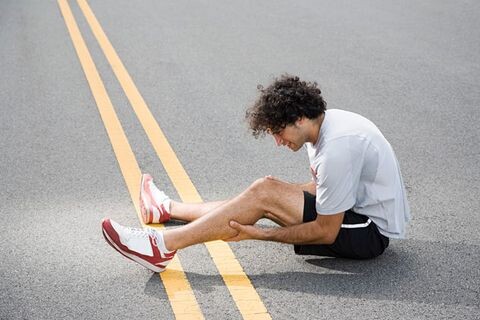
To take the first point a little further, as much as your injury allows, try incorporating a variety of cross-training activities into your weekly schedule to keep your training interesting and fun. Heading to the gym to cycle for an hour every day on the stationary bike can quickly get boring, but cycling one day, using the elliptical the next and hopping on the rowing machine the day after that will keep things fresh and challenge you in different ways.
Make rehab exercises your new obsession
If you’re dealing with an injury, you’ve hopefully already gone to a physiotherapist and been given some exercises to help heal it. Since you’re not spending hours of your week out running, dedicate at least a portion of that time to doing those exercises. Schedule them into your day the same way you would have scheduled a run to ensure you’re doing them consistently, which will speed up the healing process so you can return to running faster.
Find joy in other activities
Running can be a pretty time-consuming hobby, so when you’re injured, use some of the extra time you have on your hands to lean a little more heavily into another hobby that you may have been neglecting. Play an instrument. Make some art. Build something. Garden. Whatever you’re into, an injury provides an opportunity for you to re-engage with some of your non-running hobbies, and to remind you that you’re more than just a runner.
Don’t put too much pressure on yourself
One of the hardest parts about a running injury is that it’s difficult to know when you’ll be able to return to training. Some injuries take a couple of weeks to heal, others can take months. Be patient, and don’t put pressure on yourself to return by a certain date, or to stay as fit as possible while you’re on the sidelines. You will get back to running at some point, and while it may take a bit of time, you will return to the level of fitness you once had. Rushing this process will only cause you to injure yourself all over again.
On a similar note, don’t put too much pressure on yourself when it comes to your cross-training, either. If you can’t force yourself to stay on the stationary bike for an entire hour, try just doing 30 or 45 minutes. Do what you can do to stay active so the transition back to running is easier, but forget about perfection.
(04/06/22) Views: 123Brittany Hambleton
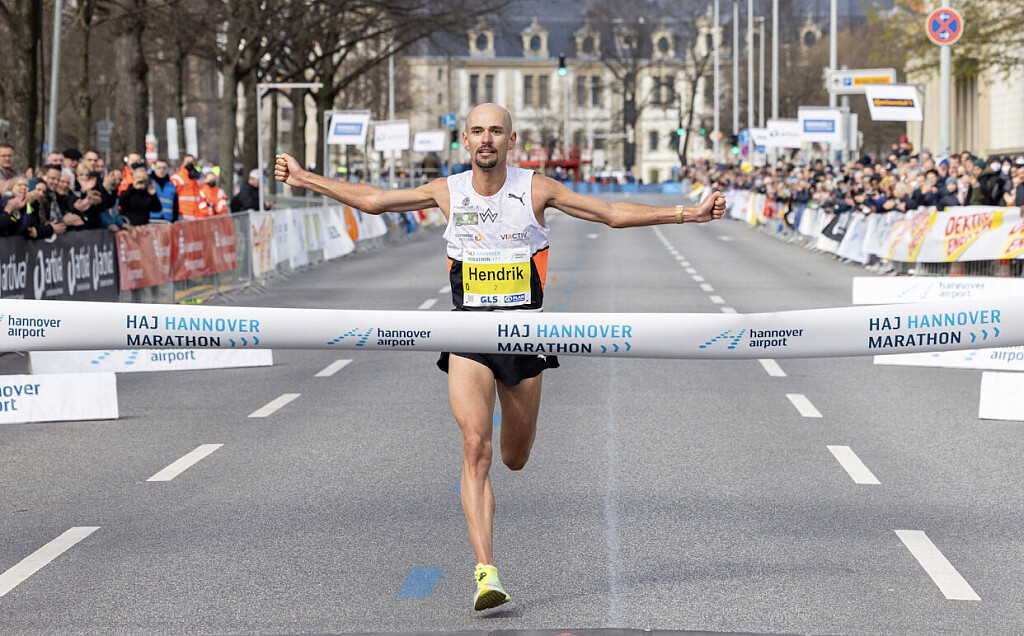
Hendrik Pfeiffer and Domenika Mayer win in Hannover and take German titles
In freezing conditions Germans Hendrik Pfeiffer and Domenika Mayer took the HAJ Hannover Marathon and the national championships which were included in the event.
Hendrik Pfeiffer clocked 2:10:59 and was well ahead of Kenyan debutant Josphat Kiptis who ran 2:13:47. Martin Olesen of Denmark took third in 2:14:35. Despite temperatures around zero Celsius Domenika Mayer ran a surprisingly strong marathon debut with 2:26:50. German pre-race favourite Rabea Schöneborn was second with 2:27:35 while Croatia’s Matea Parlov Kostro took third in 2:28:39. Hendrik Pfeiffer and the top three women all achieved the qualifying standards for the European and the World Championships.
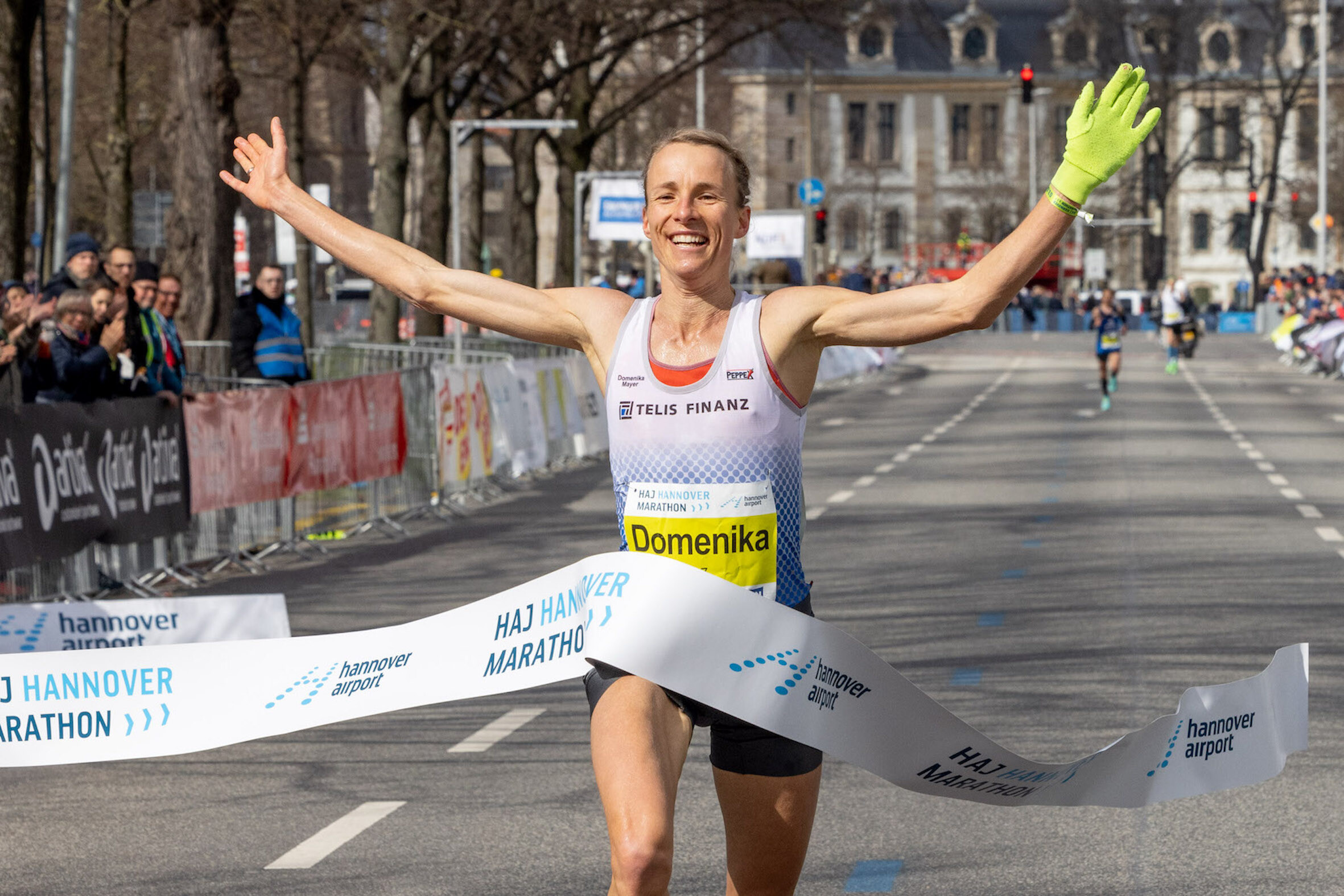
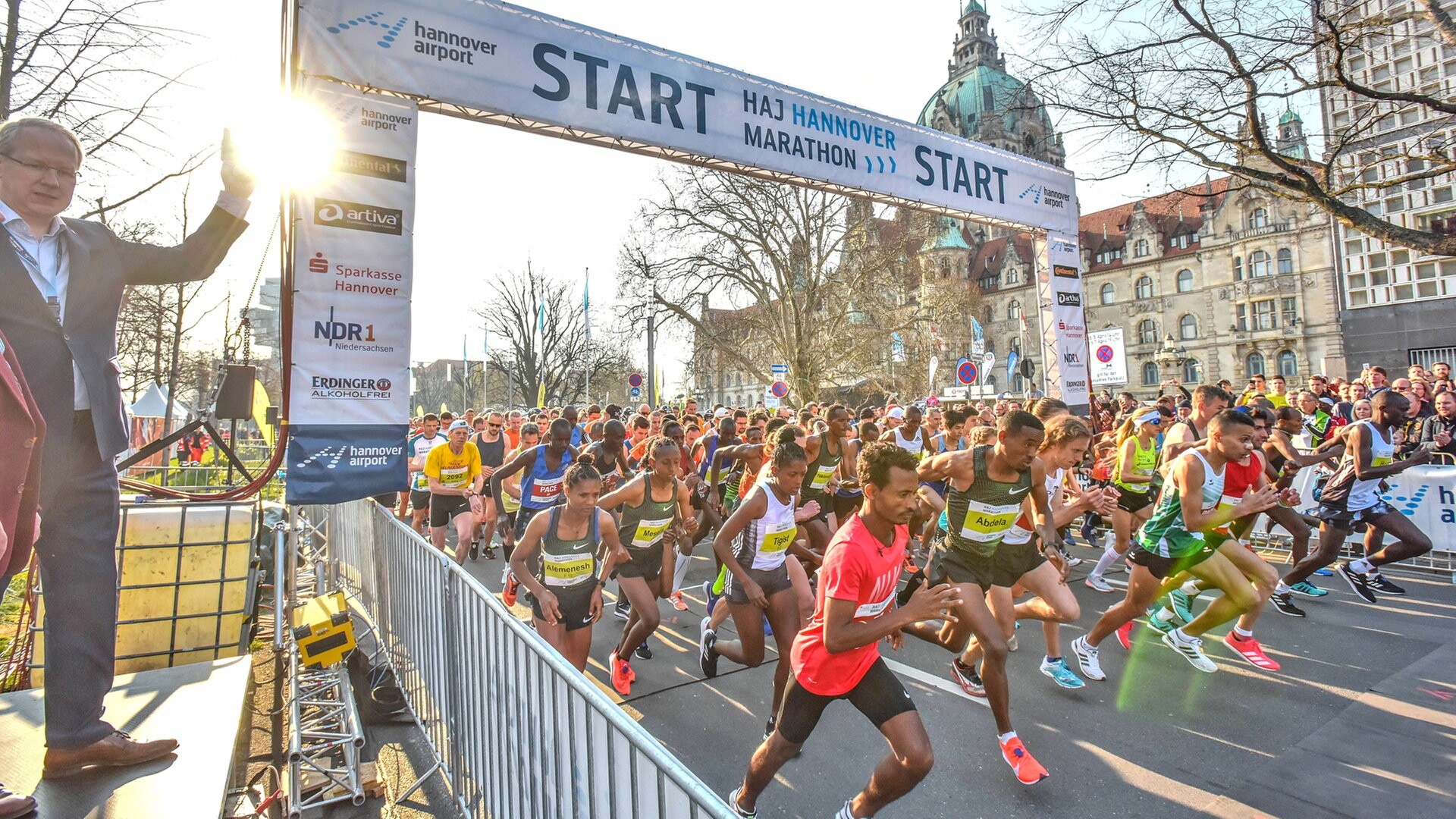
In total 18,098 athletes were registered for the 30th edition of the HAJ Hannover Marathon, which is a World Athletics Label Road Race. 3,527 athletes ran the marathon distance. “We are impressed with the event and obviously we were able to make our participants happy,“ said Race Director Stefanie Eichel. Next year organisers hope to be able to come back with a bigger field and with a much stronger elite race. The 31st edition of the HAJ Hannover Marathon is scheduled for 26th March 2023.
A group of eight runners passed the half way mark in 65:25. That was almost exactly as planned. At around 25k Hendrik Pfeiffer began to take the initiative. He broke away with Kenyans Josphat Kiptis and Wilfred Kiptoo. Until the 30k mark they had support of pacemaker and fellow-Kenyan Kiprotich Kirui. With around 12k to go Hendrik Pfeiffer left behind his rivals and was then all alone at the front, building a huge lead.
“The atmosphere was superb. The spectators helped me getting through the race. It was a bit tough during the final twelve kilometers,“ said Hendrik Pfeiffer, who ran his second fastest marathon in Hannover. The German has a PB of 2:10:18 from 2020. “I have reached all my goals today, which was important for me,“ said Hendrik Pfeiffer, who won the race and his first major German title. Additionally he achieved the qualifying standards for the European and the World Championships.
In the women’s race Domenika Mayer, Rabea Schöneborn and Kenya’s Flomena Ngurais were in the leading group when the half marathon mark was passed in 1:13:36. By 30k pre-race favourite Rabea Schöneborn had lost around 20 seconds and soon after that Flomena Ngurais could not cope with Domenika Mayer’s pace. The Kenyan dropped back to fourth later when Matea Parlov Kostro overtook her around the 40k mark.
"I did not think too much about what could happen. Sometimes in a race it just rolls, sometimes it does not. Today was a good day. I just concentrated on my pacemakers. But the wind was partly disturbing,“ said Domenika Mayer, who is a mother of two. “It was a great debut. Of course I had no clue before what could happen.“ While Domenika Mayer had a promising half marathon PB of 69:52 she had a Corona infection recently. Because of this her triumph was quite a surprise. And she came relatively close to Hannover’s course record: Three years ago Kenya’s Rachel Mutgaa clocked 2:26:15.
Runner-up Rabea Schöneborn ran 2:27:35 which was her second best marathon time. “It was a struggle today and I am happy to have finished,“ she said.
Results, Men:
1. Hendrik Pfeiffer GER 2:10:59
2. Josphat Kiprop Kiptis KEN 2:13:47
3. Martin Olesen DEN 2:14:35
4. Wilfred Kiptoo KEN 2:14:43
5. Frank Schauer GER 2:14:43
6. Erik Hille GER 2:15:04
Women:
1. Domenika Mayer GER 2:26:50
2. Rabea Schöneborn GER 2:27:35
3. Matea Parlov Kostro CRO 2:28:39
4. Flomena Ngurais KEN 2:30:42
5. Runa Skrove Falch NOR 2:33:53
6. Vaida Zusinaite-Nekriosiene LTU 2:36:04
(04/03/22) Views: 108

Get ready for your interval workout by extending your warmup, get your body ready to run hard with this warmup extension workout
Over the past decade, many elite runners have altered their workouts to fit more volume in before doing harder interval training. Many coaches have turned to a longer up-tempo warmup to get a runner’s heart rate up before handling more intensity.
We spoke to Dave Reid, the coach of Canadian 3,000m steeplechaser record holder Matt Hughes and 5,000m Olympian Kate Van Buskirk to get an idea of the benefits of doing a bit of tempo or fartlek (speed-play) training before intervals.
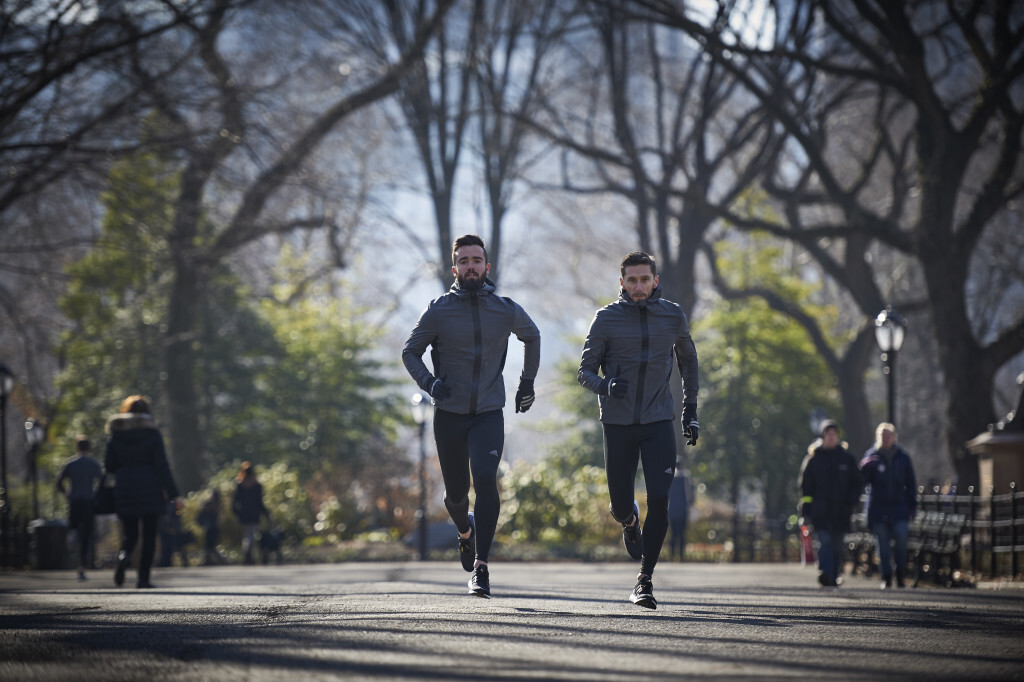
“The idea here is to get more volume and quality out of your run without being mentally drained,” Reid says. “It’s faster than the warmup, but it prepares your body to run at a harder pace later on.”
There are two ways a runner can go about doing this, and it depends on what they are training for. If you are training for a 10K to marathon, try one or two miles at tempo pace before doing your harder intervals. This will add volume to your workout without blowing out the pace in the first couple of reps, and it will let you settle in.

If you are training for 800m to 5K, try doing a short fartlek of 30 seconds on, 45 seconds off, or if you are on a track, 200m at a comfortably fast pace, then jogging the next 200m and repeat four or five times. This will get you ready for the faster intervals that are the meat of the workout.
“When you are training for a goal race, you are always looking for ways to get more quality in,” Reid says.
This workout can be used as an aerobic base-builder in the pre-competition phase, four to eight weeks out from your goal race.
(04/02/22) Views: 94Marley Dickinson

Four steps to nail your first 10K, If you're considering making the jump to the double-digits, follow these guidelines to get you ready to go the distance
The spring racing season is around the corner, and if you conquered your first 5K last fall, you may be thinking of bumping up to the double digits in the coming months. As they say, if you can run 5K, you can run 10, but that doesn’t mean you shouldn’t train for it. Follow these steps over the next several weeks to ensure you’re ready to nail your first 10K.
Step 1: Build Mileage

Jumping from the 5K to the 10K means you will have to run more in your training, but it’s important to increase the amount you’re running slowly and thoughtfully. Suddenly doubling your mileage will likely result in injuries.
The general rule for increasing mileage is no more than 10 per cent per week, so use this as your starting point and adjust from there. For example, if you were previously running 5K, three times per week (15 km total), you should start by adding another 1.5 to two kilometers to your weekly total. Many runners will be able to add more mileage than this, but this is a good place to start, especially if you’re a beginner. We don’t recommend adding more than 5 km to your weekly total right off the top.
As your mileage totals get bigger, you may also want to consider adding another day of running into your schedule. Four to five days per week of training is a good amount for a 10K.
Step 2: add in a long run
When you’re increasing your mileage, you don’t have to spread it evenly across the week. In fact, you shouldn’t. An easy (and effective) way to add volume is by choosing one day of the week to be your long-run day. To use the example from above, you could add one or two kilometers to one of your weekly runs, so two days in the week, you’re running 5K, and one day you’re running six or seven.
The long run is your opportunity every week to prepare yourself to cover the race distance, which is the most important consideration for most runners when tackling their first 10K. Your other two runs are for building fitness, and varying your pace.
Step 3: consider varying your pace
If you’re a beginner runner who’s never done speedwork, now isn’t the time to start doing lung-burning, gut-busting track sessions, but adding a bit of faster running into your program can help build up some strength that will prepare you for the 10K distance.
If you’re building up your mileage for the first time, you should be careful about adding too many other stressors to your body all at once. For this reason, the speedwork you do should focus on short, fast strides that get you moving quickly without causing too much fatigue.
For example, try adding four to six 30-second strides or short hill repeats after one or two of your runs each week. This will introduce some speed to your legs and build up strength without stressing your body out too much as it adapts to your higher weekly mileage totals.
Step 4: give yourself some time
This, perhaps, should really be step one. It’s important to go slowly when you’re increasing your weekly mileage to give your body time to adapt. Ideally, you should build your mileage up steadily for four weeks, then drop your volume down for one week to give your body an opportunity to absorb your training before bumping back up again.
If you’re coming from the 5K distance, the best-case scenario for preparing for a 10K is a 10-week training block. This allows you to build your mileage for four weeks, take a one-week taper, build it again for another 4 weeks, then take another taper week ahead of your goal race.
(04/01/22) Views: 91Brittany Hambleton

Jeptum breaks French all-comers’ record at Paris Marathon
Judith Korir Jeptum produced the first women’s sub-2:20 marathon on French roads when winning at the Schneider Electric Marathon de Paris on Sunday (3). The 27-year-old Kenyan won the World Athletics Elite Label road race in a lifetime best of 2:19:48, while Ethiopia’s Deso Gelmisa took the men’s race in 2:05:07.
Sharon Chelimo and Marion Kibor, who spearheaded the lead group of seven runners, set out at an aggressive pace from the outset in sunny but cold conditions. They covered the first 10km in 32:23, suggesting a finishing time inside 2:17 – well under the course record of 2:20:55 set by Purity Rionoripo in 2017. The rhythm slowly faded over the next kilometres, though, as the pack reached half way in 1:08:31.

Five kilometres later, Keptum moved up a gear and broke up the lead group. By 30km, reached in 1:37:44, she had built a one-minute gap over the rest of the field. Although her pace slowed in the waning stages, she reached the tape in 2:19:48, taking almost three minutes off her PB and more than a minute off the course record.
"The cold weather made the race hard,” said Jeptum, who set a half marathon PB of 1:05:28 earlier this year. “But I tried to do my best and to push hard.”

Fantu Jimma crossed the line 3:04 behind the winner in a PB of 2:22:52 as Besu Sado rounded the podium in 2:23:16.
The men’s contest went down to the wire. 15 runners passed through the 10km checkpoint in 29:45, 15 seconds ahead of a second group of nine runners.
Pacemakers Kirwa Yego and Sila Keptoo set a steady rhythm, followed by France’s Morhad Amdouni, who was targeting the national record of 2:06:36.
Soon after reaching 30km in 1:29:28, Gelmisa and fellow Ethiopian Seifu Tura started to kick on. They opened a 50-metre gap over Amdouni who had separated himself from the rest of the field. Gelmisa and Tura clocked a strong 29:13 between 30-40km on the hilliest section of the race.
Following a fierce sprint, Gelmisa prevailed in 2:05:07, nine seconds faster than the PB he had set in Valencia in December where he had finished runner-up. Tura, winner in Chicago in 2021, finished three seconds in arrears in 2:05:10 as Amdouni rounded the podium in a national record of 2:05:22.
Thousands ran the marathon which takes you through the city of Paris.
(04/03/22) Views: 87

Five ways to stay injury-free this spring
The weather is starting to warm up across the country and more and more runners are lacing up their shoes and heading out for a run. Whether you’re just getting back into it after taking some time off over the winter, or you’re gearing up for the spring racing season, keep these tips in mind to stay healthy all season long.
Increase volume gradually
This is especially true if you’re getting back into running after a layoff. Most experts recommend increasing your weekly mileage by no more than 10 per cent per week, which means if you ran 5K, three times last week for a total of 15K, this week you’ll run no more than 17 km in total. There are some runners who will be able to increase their volume faster than this, but in most cases, you’re better off erring on the side of caution.
Pay attention to running form

If you’re not already doing form drills before your runs to improve your running technique, now is a great time to start. Even better, if you’re able to, go see a physiotherapist or other sports practitioner who specializes in running to get a gate analysis. This way, they’ll be able to see what you’re doing well and what you need to work on, and will give you exercises and drills to specifically target your areas of weakness.
Most runners need at least one rest day per week. Whether you think you need it or not, plan to take a day off from all activities (running, strength training or cross-training) every seven to 10 days to give your body a complete break from high-intensity training. Even just one day off can go a long way in preventing overtraining, burnout and injuries.
Know when to back off

It’s important for runners to be able to distinguish between good pain and bad pain, or harmless discomfort and something more serious. As a general rule, if something starts to bother you and it persists for three days, you should take a day or two off from running, then reevaluate. If something starts to hurt and gets worse as you run, that’s another sign that you need to stop and have it looked at by a professional.
As much as it can be hard to miss a day or two of training, it’s far better to miss a couple of days now, rather than ignore it and end up being sidelined for a few weeks later.
Eat well
And eat enough. Good nutrition is a crucial component of injury prevention, and that means eating plenty of healthy, high-quality foods like whole grains, fruits and veggies, healthy fats and plenty of protein. Your body can’t recover properly from your runs and workouts without adequate calories and nutrients, so do your best to refuel your workouts to avoid injuries.
(04/04/22) Views: 86Brittany Hambleton
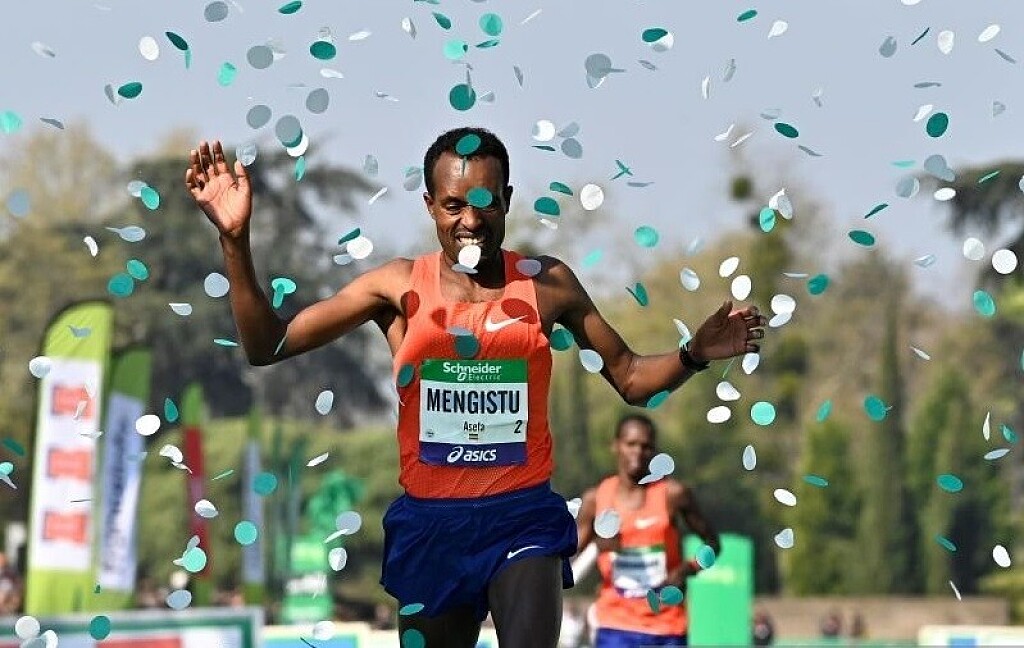
With strong fields, both course records are under threat at the Schneider Electric Marathon de Paris
Six months after its 46th edition, which was rescheduled due to the pandemic, the Paris event returns to its more usual place in the calendar.
The men’s line-up features six men who have already clocked sub-2:05 times, meaning the course record of 2:04:21 set by Elisha Rotich in 2021 could be improved.
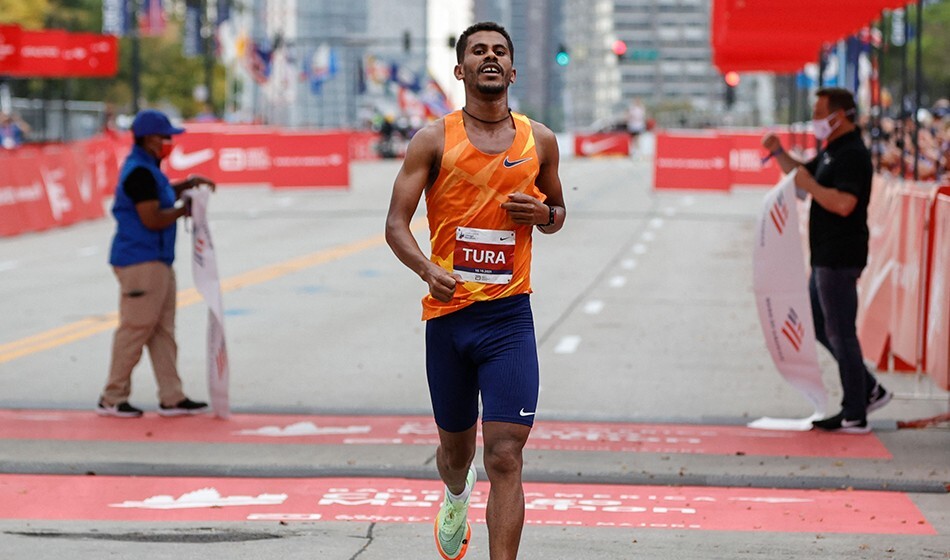
Ethiopia’s Asefa Mengstu is the fastest man in the field courtesy of his 2:04:06 clocked in Dubai three years ago, but his compatriot Seifu Tura would look to be the favorite, having recently shown his good shape. The winner of the 2021 Chicago Marathon ran a half marathon personal best of 58:36 in February.
Tura’s marathon PB of 2:04:29 is 16 seconds faster than Hillary Kipsambu’s. The Kenyan, who turned 37 in February, will also be a serious threat. The Paris streets must be vivid in his memory, as he ran his PB of 2:04:44 last October in the French capital. On that occasion he placed third, finishing nine seconds ahead of Ethiopia’s Abayneh Degu, who set a PB of 2:04:53 that day and will also be in contention on Sunday.
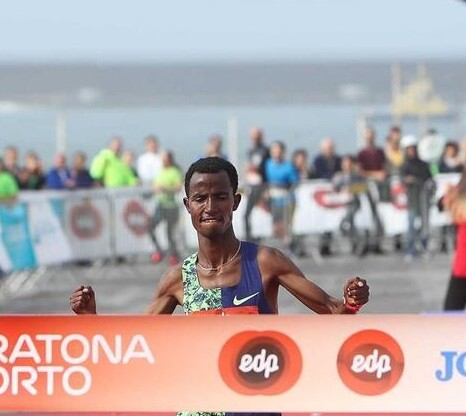
Abayneh Degu and Deso Gelmisa will likely have a say as well. Degu ran 2:04:53 in Paris last year, while Gelmisa has a personal best of exactly the same time, run in Valencia in 2020.
Morhad Amdouni of France, who finished eighth at the 2020 World Athletics Half Marathon Championships, could target the French record of 2:06:36.
Julien Wanders will make his debut over the distance. The Swiss athlete is the European half marathon record-holder with 59:13.
The PB of Namibia’s Helalia Johannes – 2:19:52 set in 2020 – is more than a minute faster than the women’s course record set by Purity Rionoripo in 2017. Kenya’s Judith Jeptum should be the world bronze medallist’s main contender. Jeptum, who is 14 years younger than Johannes, proved her current form by clocking a half marathon PB of 1:05:28 one month ago.
The Kenyan is the third-fastest athlete in the elite women’s field with 2:22:30, 1:27 off Besu Sado’s personal best. The Ethiopian, who clocked that time of 2:21:03 in 2019, will also be looking for a top spot.
Not to be discounted are Ethiopia’s Tigist Abayechew and Beyenu Degefa. Abayechew has run 2:22:45 at her best, while her compatriot finshed third in Valencia in December in 2:23:04.
(04/01/22) Views: 81World Athletics
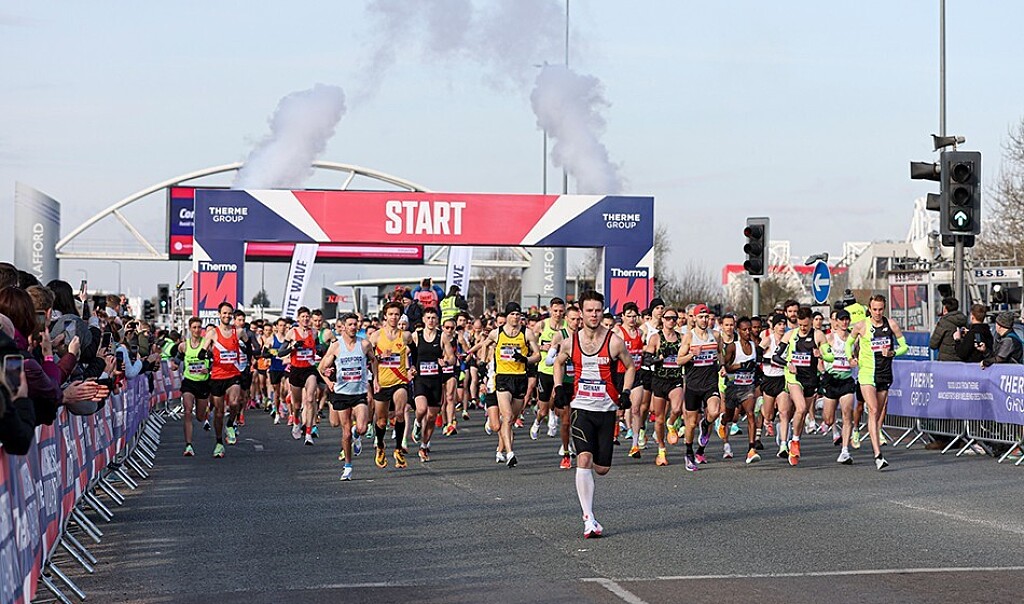
Becky Briggs and Jonny Mellor take Manchester Marathon victories
Becky Briggs enjoyed a huge breakthrough as she took five minutes off her PB with 2:29:04, while Jonny Mellor was close to his lifetime best with a commanding men’s win in 2:10:46 at the Therme Manchester Marathon on Sunday April 3.
In ideal conditions for marathon running, Briggs and Mellor both smashed the England qualifying standard for the Commonwealth Games of 2:14:00 plus the European Championships mark of 2:14:30 on a day of brilliant racing.
A total of 20 Brits broke the 2:20 barrier with Mellor’s training partner Ross Millington clocking 2:11:38 in his debut marathon in second place, as Kevin Seaward of Northern Ireland was third in 2:11:54.
Behind Briggs, Naomi Mitchell was runner-up in a PB of 2:30:54 while Georgina Schwiening was third in 2:31:37 and Sonia Samuels, 42, fourth in 2:32:32.
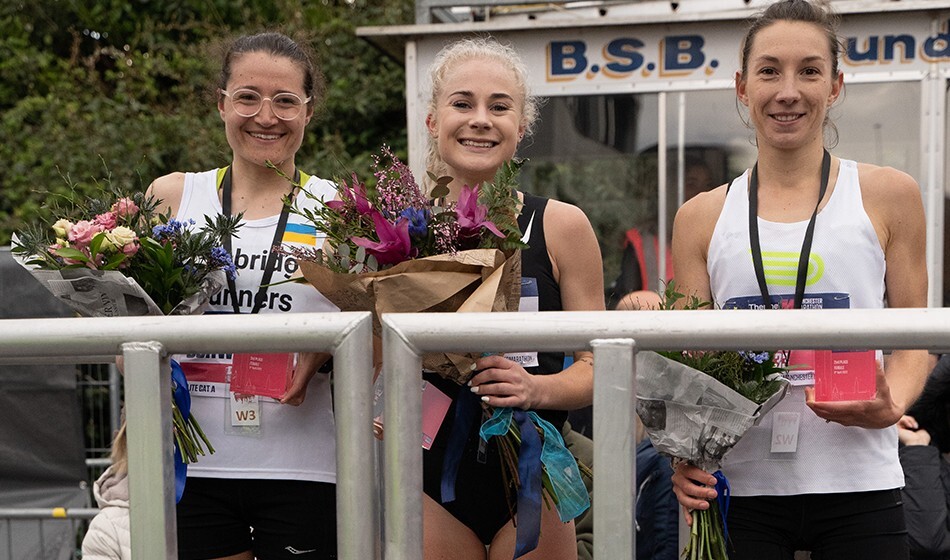
All of them were well inside the 2:34:00 women’s qualifying standard for the Commonwealth Games. Although in addition to places in the England team for Birmingham in July and GB team for Munich in August, the race was also a trial for the GB team for the IAU 50km European Championships in Avila, Spain, in October.
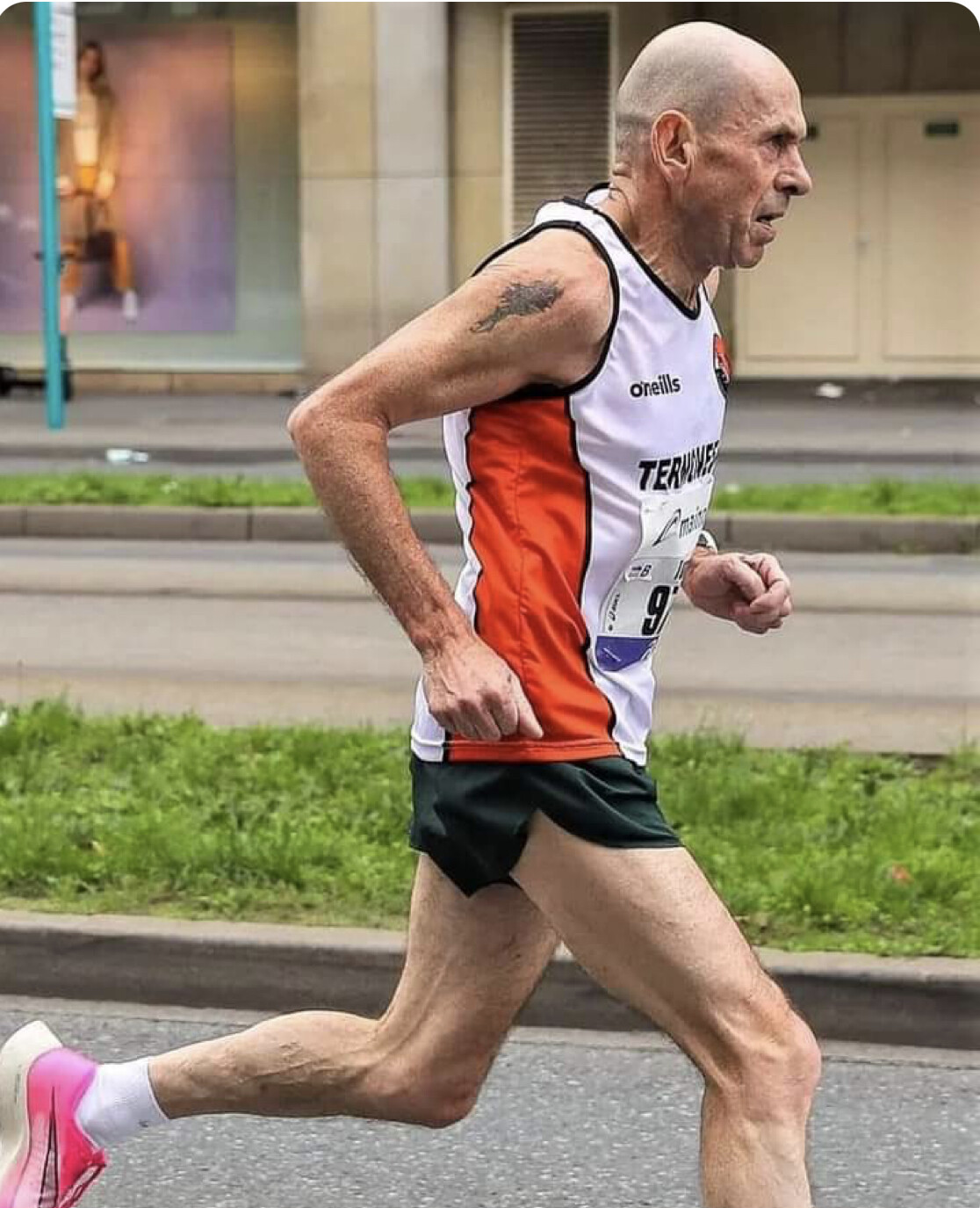
In a race packed with top-class performances, the super-vet Tommy Hughes (second photo) clocked a phenomenal 2:30:05 aged 62, although it is not quite as quick as his M60 record of 2:30:02 set two years ago.
Defending champion Matt Crehan enjoyed an early lead in the race but he was caught before halfway – which the leaders reached in 66:05 – and Mellor, who had been helped by pacemakers such as Ben Connor, Omar Ahmed and Charlie Hulson, made a strong move just after 20 miles to break away from his rivals.
Mellor and Millington are both members of Team New Balance Manchester and are coached by Steve Vernon. Millington ran for Britain over 10,000m at the Rio Olympics but Mellor has endured bad luck with major championships qualification, being overlooked by England in the run-up to the 2018 Commonwealth Games and then being forced to miss last year’s Olympic marathon trial due to a freak leg injury caused, he thinks, by compression socks during his sleep.
Briggs only turned 22 last month but looks ideally suited to the marathon. Just three years ago she was the third British athlete in the under-20 race at the World Cross Country Championships in Aarhus but ran 2:38:58 on her marathon debut in the Olympic trial last year and then 2:34:34 in London last October.
Here she went through halfway in 74:16, then overhauled long-time leader Mitchell with about 10km to go and finished strongly to smash the 2:30 barrier and to go No.20 on the UK all-time rankings.
Tom Craggs, England Athletics road running manager, added: “We are delighted to see such tight competition today, with the athletes pushing themselves to place within the top three in order to join Team England this year for the Commonwealth Games 2022.
“This year is an incredibly exciting year for home nations athletes with three major championships taking place, and we were delighted to have worked with the team at Therme Manchester Marathon to support athletes to have the best possible experience at the England Commonwealth Games and British Athletics European Championship trials.”
With a rich history dating back to 1908, the Therme Manchester Marathon is increasingly popular due to its fast, flat course, welcoming Mancunian atmosphere – and Sunday saw 24,000 runners taking part.
Next year’s event is on April 16, 2023.
(04/04/22) Views: 81Athletics Weekly

He did it again, Canio Polosa sets 90+ Canadian 10K record
The 93-year old man who broke the 90-plus 5K age group record last fall added another Canadian masters record to his arsenal last weekend at the Springbank Sprint 10K in London, Ont. Canio Polosa hoped to finish the 10K race in an hour and 20 minutes but found he was faster, finishing the 10K in a new record time of 1:14:04.
According to Canadian Masters records, Polosa set the new standard for Canadian men 90+ on a certified course. His time of 1:14:04 was just over two minutes shy of Spain’s Julian Bernal Medina’s 90+ world record of 1:11:54, set at the age of 90.
After the race, Polosa mentioned to local CBC reporter Rebecca Zandbergen that he’d been training all winter for this race with a new coach, Sherry Watts. “It’s not often that you see three Canadian records in one race,” Watts says. En route to his 10K time, Polosa also broke the men’s 90+ 8K and five-mile records by 15 minutes, taking both from the great Maurice Tarrant.
Polosa began running during his retirement, at age 60. “For eight years or so, I ran 10K’s, then I became interested in longer distances,” says Polosa. When he moved to London, he joined the London Pacers Running Club, which inspired him to run three marathons during the ’90s. Now at 93, Polosa continues to run and sets Canadian records in every race he enters.
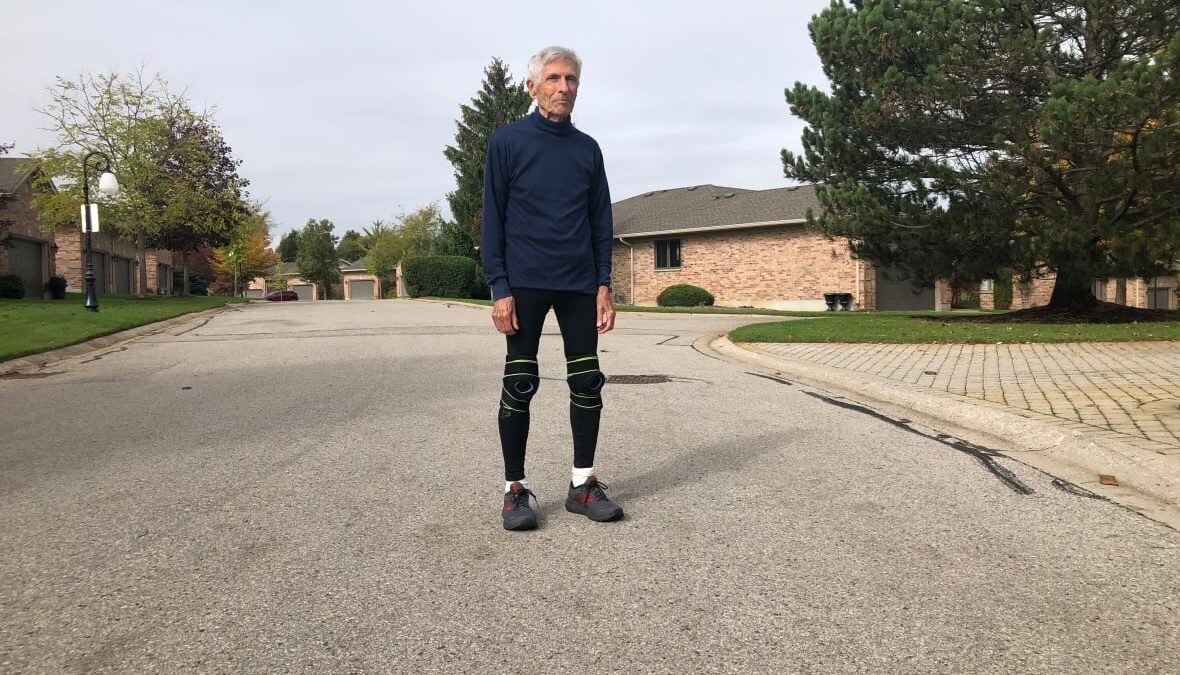
He is considering running a longer race next time. “I’m happy to be alive,” he said to Zandbergen.
(04/05/22) Views: 81
Marley Dickinson
