

Running News Daily
Top Ten Stories of the Week
4/2/2022
These are the top ten stories based on views over the last week.


Tips for Running Your First Marathon
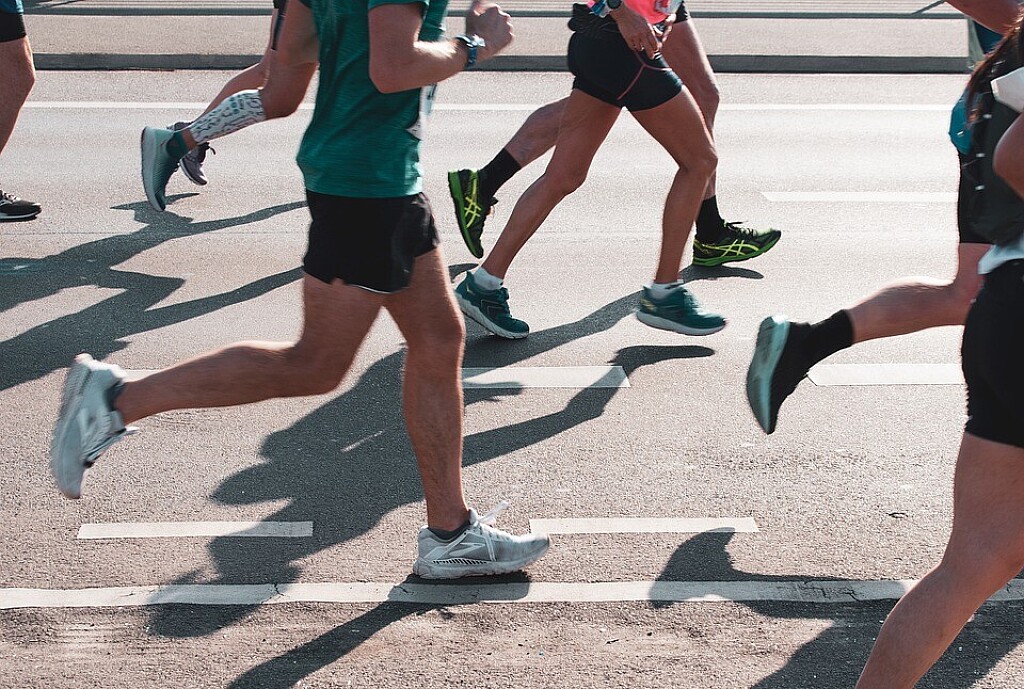
Marathons are incredibly challenging, especially to those who haven’t been in the fitness industry for long. While marathons are generally safe, there are people who have died in these events. This should already be enough cause to take marathons seriously, and to prepare for them properly.
The Notorious 1904 Olympic Marathon
There are plenty of things that can go wrong during a marathon, and no other marathon has had such a bad course as the Olympic Marathon in 1904. This particular marathon was held in St. Louis, United States on August 30, 1904. Three people almost died while running the 24.85 mile race.
One runner was nearly chased down by wild dogs, while another had been given rat poison (strychnine) and brandy to complete the marathon, after which he had lost eight pounds and could barely walk. The third runner was found unconscious by the side of the road with severe internal injuries that could have killed him had he been found an hour later.
The roads weren’t closed, which meant that runners had to dodge busy streets and all of the dangers that came with them. What’s arguably worse is the fact that the winner of the marathon finished the race by riding a car and then running to the finish line. He would later admit to the act, for which he was disqualified for.
The event was deemed the worst olympic marathon in history. It was even almost enough to cause the Olympic board to completely remove marathons from its list of sporting events. While modern marathons are far less dangerous that the 1904 marathon, this shouldn’t be a reason to be complacent. Running a marathon is a serious undertaking, which is why it’s important to know how to prepare for a race.
Wear the Right Clothing
Make sure that your clothing is appropriate for the weather conditions that you’re going to be facing. Cotton should generally be avoided because it’s going to absorb your sweat, which will weigh you down. Performance clothing are made of moisture-wicking material that helps keep runners dry. If you’re running on a hot course, opt for breathable fabrics. If you’re running in cold weather, stick to heat-retaining fabrics. Don’t forget to prioritize comfort as well.
Choosing Your Running Shoes
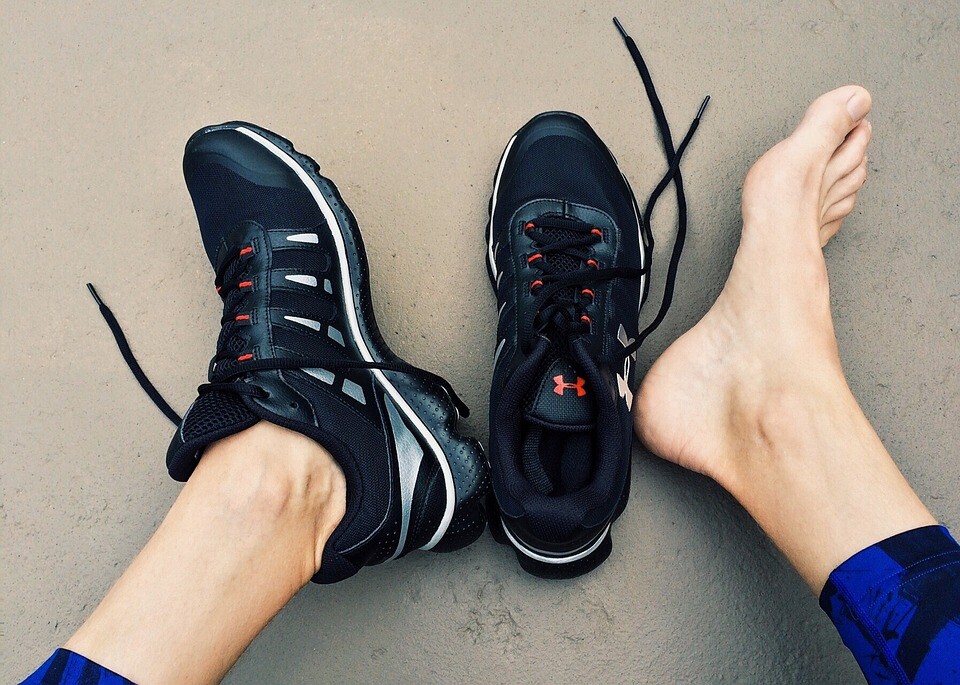
It’s important to know the terrain that you’re going to run on before buying your running shoes. Some shoes are tailored for road running, which maximize the bounce from your heel strikes, while other shoes are better suited for trail runs, which come with more durable outsoles that are designed to cushion your feet against rocks and other sharp objects.
It’s also important to train with the shoes you intend to race with. This gives your feet the time to adjust to the fit of the shoes. Changing shoes on race day can yield disastrous results, as they may turn out to be uncomfortable and unusable.
Come Up With a Nutrition Plan
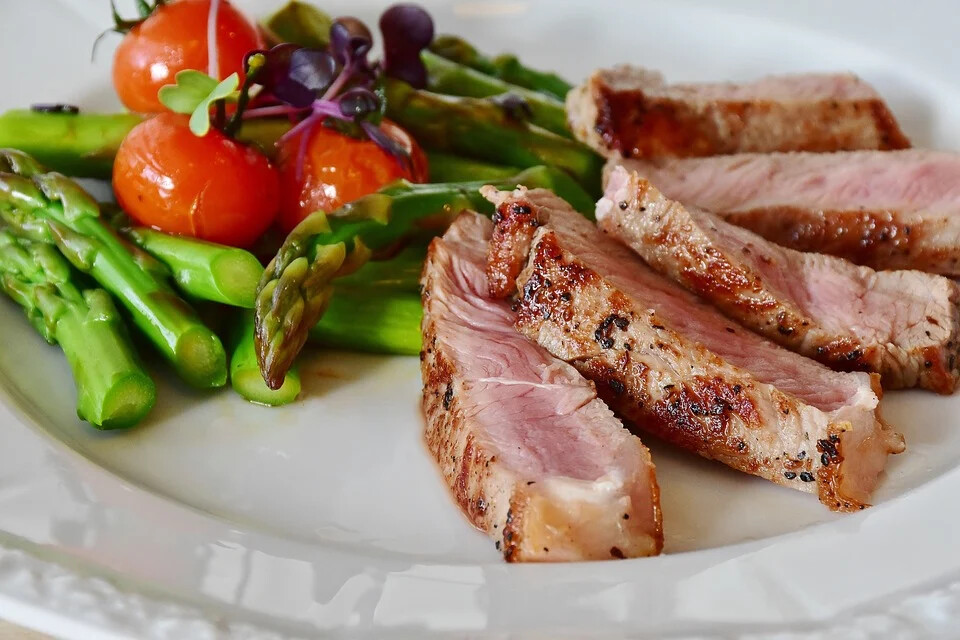
A nutrition plan is what’s going to keep you fueled during training and after your marathon. For similar reasons, it’s important to avoid eating any new food on race day as you aren’t sure how your body is going to react to the food. Everything you plan to eat during race day needs to be tested during the days leading up to your race. This will help keep you from requiring unscheduled bathroom breaks, which will significantly hurt your target time.
Learn to Identify Good and Bad Pain
While pain is a natural byproduct of any rigorous physical activity, there are some types of pain that could represent a much more serious problem in the body. All types of pain are indicative of damage in the body. However, some pain should be treated as an emergency.
Dull pain that occurs a few hours after a training session can be attributed to delayed onset muscle soreness (DOMS). This is harmless and is a natural part of strengthening your body.
However, if the pain you feel is sharp and immediate, you need to stop everything you’re doing and to have your affected muscle checked by a doctor because sharp and immediate pain will almost always be indicative of an injury. Ignoring this type of pain can cause further damage to your body, which can further complicate the injury and may even cause irreparable damage.
On the other hand, there are pains that every marathon runner must endure. This pain can be mitigated through disciplined training where the body builds tolerance to the pain it experiences.
Plan for Post-Marathon Recovery
Pain occurring before, during, and after a marathon is normal, but it’s also important to help alleviate soreness and fatigue. The goal here is to recover from the marathon so that you’re able to return to your original functions. Changing into warm clothes first thing after a marathon will help keep you from getting sick.
It’s also important to restore your lost fluids. Generally, you’re going to need about 500ml per hour after your race. Stretching and rolling out your muscles will help relieve muscle soreness and will facilitate blood flow, which is essential to allow the body to distribute much-needed nutrients to your muscles.
Finally, it’s important to increase your food intake to aid in rebuilding your muscles. This will not only help you prepare for your next training session. It will also help support the strengthening of your body as your muscles become denser and stronger as they are rebuilt repeatedly with fresh muscle fibers. On average, you burn about 2,600 calories over 26.2 miles. This is also one reason why running is an effective exercise to help you burn fat. The farther the distance, the higher the burn rate. Use this information to determine how much more food you need to eat.
Running a marathon is never easy. Due preparations must be made not only so you can finish your race, but also so you can avoid unnecessary injuries.
(03/28/22) Views: 194
How to Qualify for the Boston Marathon
So you want to qualify for the Boston Marathon? You’re not alone. As an age-group or recreational runner, it’s one of the noblest (and most common) goals to set your sights on.
The history and prestige of the Boston Marathon are unparalleled in the world of running, which is why getting the opportunity to run the famed 26.2-mile route from the start in Hopkinton to the finish line on Boylston Street in downtown Boston is a top-shelf bucket list goal for many runners.
And rightly so. With the challenge it requires to qualify, the experience of running Boston is all that and more.
6 Tips on Qualifying for Boston
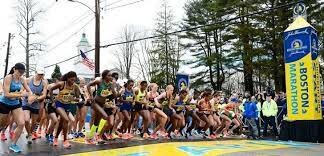
For most age-group runners, qualifying for Boston isn’t a simple task. Every athlete’s journey to trying to earn a Boston-qualifying time (BQ) is unique, and your approach needs to be specifically catered to who you are as a runner. And, like with all things running, there are no shortcuts for earning a BQ—but there are some key points to consider on your quest.
1. State Your Intention.
If you’re truly interested in qualifying for Boston, it’s a good idea to make it one of your primary goals (both in running and in life) so you can focus as much energy as possible toward it and take a smart and healthy approach to achieving it. That doesn’t mean you have to post it on Instagram, but it’s something you should share with your significant other, family members, and running buddies to generate long-term excitement and support as well as keeping you accountable on your journey.
Every age group has a different qualifying time that needs to be attained in a two-year window prior to registration opening in the fall prior to the next race the following April. For women, the age groups and times are:
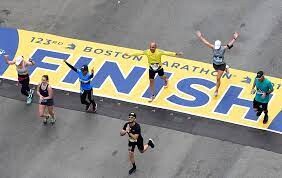
18–34: 3:30.00 (3 hours, 30 minutes, and zero seconds)
35–39: 3:35.00
40–44: 3:40.00
45–49: 3:50.00
50–54: 3:55.00
55–59: 4:05.00
60–64: 4:20.00
65–69: 4:35.00
70–74: 4:50.00
75–79: 5:05.00
80 and over: 5:20.00
Men
18-34: 3 hrs 00 min 00 sec
35-39: 3 hrs 5 min 00 sec
40-44: 3 hrs 10 min 00 sec
45-49: 3 hrs 20 min 00 sec
50-54: 3 hrs 25 min 00 sec
55-59: 3 hrs 35 min 00 sec
60-64: 3 hrs 50 min 00 sec
65-69: 4 hrs 5 min 00 sec
70-74: 4 hrs 20 min 00 sec
75-79: 4 hrs 35 min 00 sec
80 & over: 4 hrs 50 min 00 sec
There’s also the added complication that just hitting the time doesn’t guarantee entry to the race. Runners typically need to also meet faster cut-off times if registration exceeds the race capacity (see tip #6).
“It’s a great goal and a very relevant goal for a lot of a marathoners,” says New York City–based running coach Elizabeth Corkum. “When it’s your first Boston, it’s a big deal and definitely something you should be excited about.”
2. Set a Realistic Goal
For many runners, it takes a full year or two—or maybe even five or more—to develop the aerobic strength and overall fitness to be in position to reach the qualifying time in your age group.
The first step: Understand that the path to running fast enough to earn a BQ standard isn’t a quick process of instant gratification.
“A lot of runners will come to me and say I want to qualify for Boston this year because a lot of runners are always eager to do it now, but the reality is that it might take a few years,” says Chicago-area coach Jenny Spangler, who won the 1996 U.S. Olympic Trials Marathon. “It’s a great goal for many people, but it’s a commitment and you have to be realistic about where you are and where you need to get. For some runners, it will take a while. Sometimes I’ll have runners aim for running a fast half marathon first and then next year start to focus on a fast marathon.”
If you’re serious about qualifying for Boston, it’s best to connect with a coach or local training group that has a history of helping runners achieve a BQ. You’ll want to find a coach who will take into consideration both your history as a runner and as an athlete as well as your current fitness level, previous races, monthly mileage volume, injury history, and, perhaps most important, your ability to commit to a complicated training program amid your work-life balance.
“You don’t like to discourage anyone, but a Boston qualifying time is hard,” Spangler says. “So for people who can’t commit the time for training or maybe just don’t enjoy running or don’t want to put in the mileage, it might not be possible. It’s a commitment and it’s just not for everybody.”
3. Pick a Qualifying Race
One of the keys to qualifying for Boston is running a fast, USATF-certified course with a high probability of running your goal time. Typically, the races with the most qualifiers are the New York City Marathon and the Chicago Marathon, and, of course, Boston itself, but that’s largely based on the volume of runners in those races. However, those marathons can be hard to get into, so unless you already secured an entry, you should plan on another race with a high propensity of Boston-qualifying times.
One of the best options is the California International Marathon (CIM), where 25 to 35 percent of the field typically earns a BQ. The only challenge about qualifying at CIM is that it’s held the first Sunday in December, so you’ll have to wait and enter for the next Boston Marathon 16 months later.
Another great option among mid-sized races is the mid-June Grandma’s Marathon in Duluth, Minnesota, which typically has both a large number of qualifiers and a relatively high percentage of BQers. In 2019, 1,108 of its finishers (18.2 percent) earned BQ qualifiers. From 2010-2021, an average of 15.8 percent of Grandma’s finishers earned BQ times.
“Usually when people come to me, they already know which race they want to run,” says Nell Rojas, a Boulder, Colorado–based professional runner for Adidas who also coaches age-group runners. “But if not, I usually recommend California International Marathon or Grandma’s Marathon, which are fast marathons that are easy to get into with a lot of people that will be running their same speed. And that’s key because that means there will be people to run with at the pace you want to run the whole way.”
Since 2017, some of most prevalent qualifying races have been “last chance” races designed to get runners qualified right before the opening of Boston registration in mid-September. The Last Chance BQ.2 race in Grand Rapids, Michigan, has had an average of about 60 percent BQ’ers every year since 2015, while its sister event, Last Chance BQ.2 race in Geneva, Illinois, has typically had at least 50 percent of its field qualify. But both of those races are small, usually 350 runners, and registration fills up fast every spring. (The Geneva race added a spring race in 2018 and it has also typically had a 50 percent qualifying rate.)
Other small, early September races with high BQ percentages include the Erie Marathon at Presque Isle (Erie, Pennsylvania), Via Marathon (Allentown, Pennsylvania), and Tunnel Light Marathon (North Bend, Washington). A few key marathons with downhill profiles and high qualifying percentages are the St. George Marathon (St. George, Utah), Revel Big Bear Marathon (Big Bear, California), and Mountains 2 Beach Marathon (Ojai, California). Cities with mid-sized marathons that are known to have good courses for qualifying: Philadelphia; Indianapolis; Houston; Eugene, Oregon; and Santa Rosa, California.
4. Get Some Super Shoes
If you’re interested in maximizing your race-day performance, then you should consider investing in a pair of shoes enhanced with carbon-fiber plates. Yes, they’re expensive, ranging in price from $180 to $275, but the technology works—and can give you 3 to 6 percent advantage over shoes with typical foam midsoles. Nike, Adidas, Skechers, ASICS, On Brooks, HOKA, New Balance, and Saucony all make super shoes, and some of their models are among the best. But each fits and feels slightly different, so visit a local running store, if possible, and try on several pairs before buying.
“Super shoes definitely allow you to run faster,” says ASICS-sponsored pro Emma Bates, who was second at the 2021 Chicago Marathon in 2:24:20 wearing a pair of ASICS Metaspeed Sky. “I love them because they’re so comfortable, but the biggest thing is that I feel that I can recover so much quicker after a workout or a race. After Chicago, I felt like I could do a workout the next weekend. That’s insane. I love the shoes and would never imagine running in anything else ever again.”
5. Train Methodically and Consistently
Going through significant training adaptations is a key part of the process for most runners, especially if they’re new to the sport or don’t have a lot of experience with the various types of workouts in most marathon build-ups. Progress occurs based on how well you handle training volume, how much you recover, and how much time and focus you put toward non-running elements like strength work, nutrition, and rest.
“All of those things factor into how you’re going to direct someone to get to that goal, and it’s different for everyone, for sure,” Corkum says. “Some people have all the time in the world to train and that’s fantastic because we can probably stress their bodies a little bit more with training, knowing that they can rebound. But someone who is only able to sleep four hours a night and has a newborn at home, they already have that additional stress so they have to be careful about adding training stimulus so they don’t get injured or burn out.”
Most coaches recommend going through a 16-week training plan to build up to a marathon, though it could be shorter if you’re already pretty fit or longer if you need more time to get used to the rigors of high-mileage running. A good plan will include periodized segments that include two to three weeks of gradual building of aerobic fitness followed by a slightly relaxed week to allow for recovery and the training adaptations to take place.
Depending on your background and fitness, you’re likely going to be running between 50 and 80 miles per week during the peak weeks of your training plan, Rojas says. While pro runners run between 100 and 120 miles per week, she warns that excessive running volume for age-group runners can lead to fatigue, burnout, and injuries.
A training plan should include a once-a-week long run, one or two faster workouts like a tempo run or an interval session, and several recovery runs. As the training plan progresses, there will be a greater emphasis on up-tempo workouts and your long runs will approach 18 to 22 miles and start getting faster.
But even if you’re following a plan that’s the same or very similar to your running partner’s, your quest to reach a Boston qualifying time will be an individual one.
“Runners come from all different levels of fitness,” Rojas says. “It all depends on what a runner can handle, what their strengths are, what their weaknesses are.”
Spangler says most age-group runners who come to her for help in achieving a Boston qualifier typically need more mileage than intensity in their training, but sometimes it’s both. In addition to ramping up mileage gradually, she’ll sprinkle in spicier workouts like fartlek intervals or hill repeat sessions—as much as she thinks an athlete can handle.
She’ll also prescribe periodic longer tempo runs of 8 to 10 miles at marathon race pace and often have them race a half marathon midway through their training program as a way to gauge a runner’s fitness and boost confidence.
“You can just kind of see how they’re starting to handle workload hitting the paces of the workouts they’re doing and feeling good doing it,” Spangler says. “That’s when you start to get a sense that they’re going to be ready, and that’s when I start getting confident they’re ready to handle the marathon at that pace.”
6. Don’t Get Discouraged
Even if you’re well trained and in the best shape of your life, you need everything to go right on a race day to run your best. Achieving a Boston Marathon–qualifying time can take several years and, if you miss it once or twice, it can start to feel like a never-ending process. Unfortunately, even when you achieve the time, you still might not be able to run the race. Because of field size limitations and increased interest, runners usually need to also meet faster cut-off times than the time listed in tip #1 to get in.
While every runner who applied for the 2022 race was granted entry—likely because of a downturn in interest because of the still-lingering COVID-19 pandemic—in the previous 10 years runners needed to be 1 minute, 2 seconds to 7 minutes, 47 seconds faster than their qualifying time to get in. Depending on the year and the volume of qualified runners, that’s meant that the BAA has had to reject between 1,947 and 9,215 qualified runners.
“It’s such a tough thing and to recreational runners, I think it’s a bit jarring because they’re not used to that,” Corkum says. “One of the beautiful things about Boston is that it’s one of those few marathons where you can’t just send in your credit card number and know that you have it on your calendar. You have to earn it. But the other side of that is the emotional investment and highs and lows that you’re accepting along with it.”
Developing an indefatigable sense of optimism and a love for running will be helpful in your quest to qualify for the Boston Marathon and eventually running it. There will be plenty of hiccups along the way (missed workouts, injuries, life events) so it’s best to make it part of the fabric of your life and not merely a box to check off, Corkum says.
“Running is a patient person’s sport and I think that’s why you really have to love it,” Corkum says. “I think some people might not necessarily love running but they love the idea of achieving ‘that thing,’ and you have to realize there are so many hours and steps that go into making it a lifelong thing, and for a lot of us it becomes that.”
(03/30/22) Views: 176Brian Metzler
Ukraine war refugee wins Jerusalem marathon
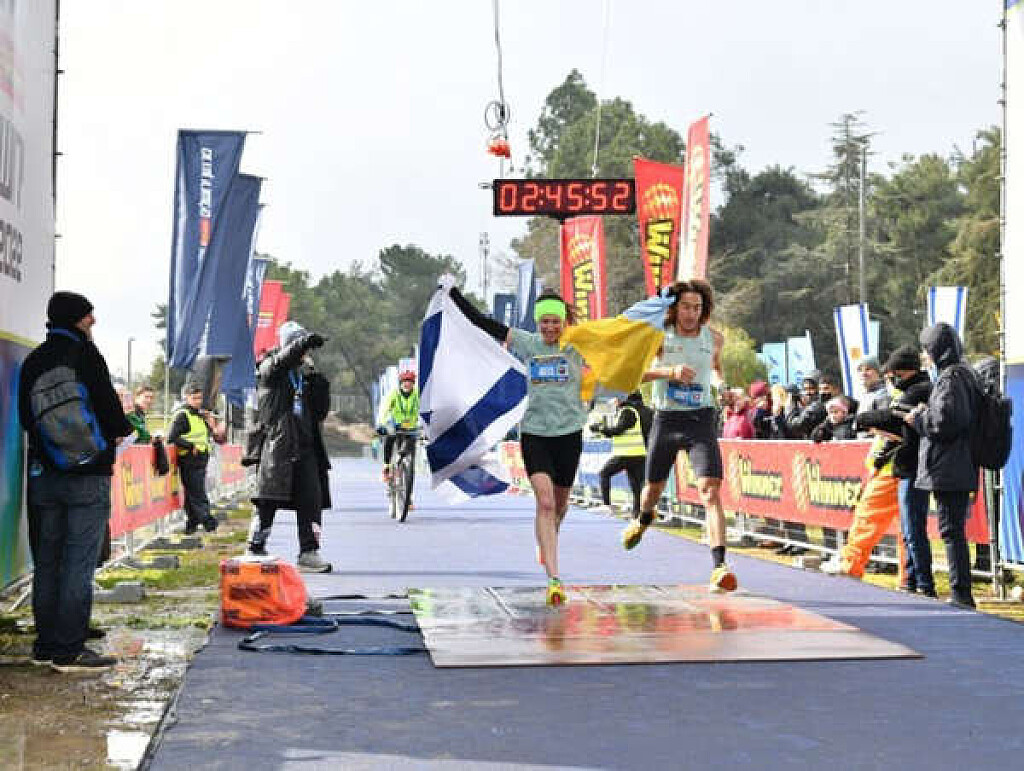
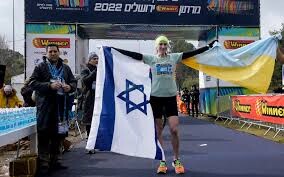
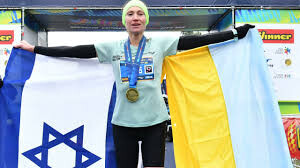
Ukrainian athlete Valentyna Veretska, who fled Russia's invasion of her country and took refuge in Israel, on Friday won the Jerusalem marathon, race organisers said.Veretska claimed the women's title with a time of 2hr 45min 54sec, before celebrating by draping the Ukrainian and Israeli flags over her shoulders.
The 31-year-old was one of around 40 Ukrainians who took part in the race in Jerusalem's Old City, braving unseasonably cold and wet weather.It was her second win since October when she came first in the Tirana, Albania, marathon.
Veretska fled Russia's invasion of Ukraine with her daughter, crossing into neighbouring Poland before travelling to Israel.Her husband, however, stayed in their homeland where he is serving in the army, the organisers said.Israeli Sports and Culture Minister Chili Tropper on Thursday said the Jewish state would welcome 100 Ukrainian athletes fleeing the conflict.
Since Russia invaded Ukraine on February 24, more than 16,800 Ukrainians have arrived in Israel, according to the interior ministry.More than one million of Israel's 9.4 million residents have roots in the former Soviet Union.Israel has provided humanitarian support to Ukraine but has so far rebuffed Kyiv's requests for military assistance.
It has also refrained from joining Western sanctions against Russia, with which it maintains strong ties including security cooperation.In an address to Israeli lawmakers on Sunday, Ukrainian President Volodymyr Zelensky appealed to the Jewish state to abandon its neutrality and "make its choice".Zelensky, who is Jewish, compared Russia's war on Ukraine to the Holocaust.
Positive self-talk: does it really work?, The science behind positive self-talk is mixed, but many runners swear by it to get them to the finish line
The mental side of running takes just as much time to master as the physical side, and for most of us, it’s a continuous work in progress. Many runners like to use positive self-talk to get them through rough patches or to help them deal with pre-race nerves, but does this psychological strategy actually work? The research is mixed, but many runners will still argue yes.
Positive self-talk: mixed reviews
A 2013 study in the journal Medicine and Science in Sports and Exercise found that recreational athletes who took part in a positive self-talk program improved their time-to-exhaustion test results by 114 seconds, while those who didn’t participate in the program actually got worse.
Of course, this suggests that positive self-talk is a highly effective psychological tool, but since this study, many have pointed out its flaws. Time-to-exhaustion tests are much different than time trials, for example, which could skew the results.
Another 2018 study published in the journal The Sport Psychologist performed a similar test, this time with ultramarathoners completing a 60-mile race. In this case, the researchers found no significant difference between the two groups. So does positive self-talk actually work?
The power of your mind
The actual science of positive self-talk might be undecided, but many runners swear by it. There are so many factors that affect an athlete’s performance, making it nearly impossible to isolate how positive self-talk affects the outcome of a time trial or race. No amount of positive self-talk, for example, is going to prevent you from hitting the wall during a marathon if you’ve made fuelling errors during the race.
That doesn’t mean that you shouldn’t use positive self-talk during runs, workouts and races. In fact, using it during training may help you enjoy your training more. It may also help motivate you to get out the door when you don’t feel like it, or to do that last interval when you’re getting tired near the end of a workout, and the cumulative effect of pushing yourself over time likely will improve your performance on race day.
How to use positive self-talk
It can be challenging to silence the negative voices in your head when you’re struggling through a challenging run, so it’s important that you prepare for it before you even start. Just like you set intentions for your workout (today I’m doing intervals to work on my speed, or today’s long run is to improve my endurance for my goal race), you should plan to think positively before you start your run.
What do you want to tell yourself during your run? What are you going to do when negative thoughts creep in? Consider creating a mantra that you can use when the going gets tough, or coming up with some words of affirmation to bolster you when you feel like giving up.
These words and phrases don’t have to be long or complicated, as long as they work for you. Check out our advice for how to make a running mantra for inspiration, and start using positive self-talk to improve your runs and workouts, or at least, make them more bearable.
(03/28/22) Views: 115Running Magazine
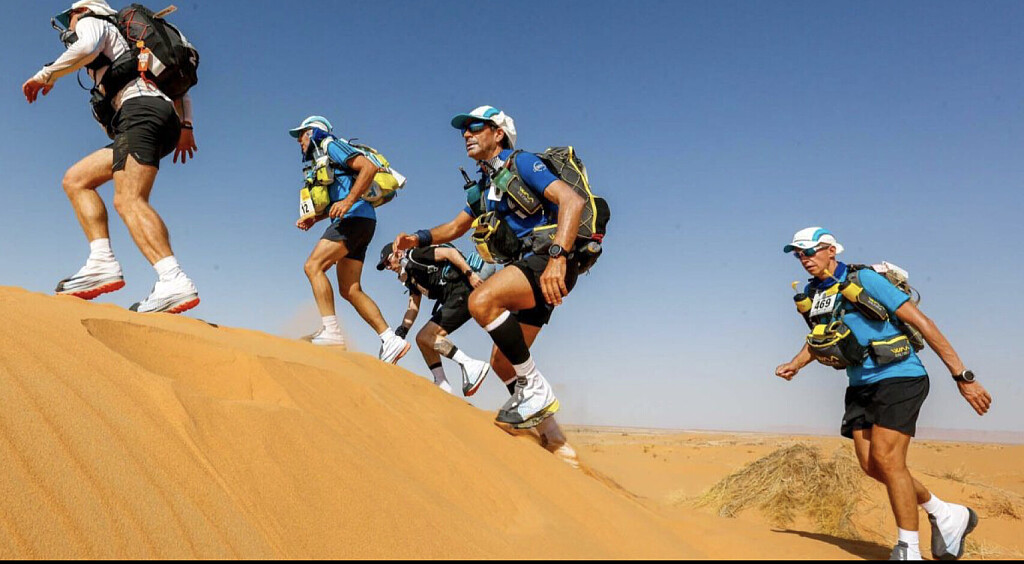
Running 250 km through the desert: it’s time for the Marathon des Sables
It all started in 1984 when Patrick Bauer (who was 28 at the time) took on a completely self-sufficient 12-day journey across the Sahara Desert, covering 350 km on foot. Two years later the first Marathon des Sables (MDS) was born, with 23 “pioneers” taking on a similar challenge.
Since then, Bauer’s event (he remains the race director) has continued to grow, with a record 1,300 competitors taking part in the 30th-anniversary race in 2015.This year’s race, the 36th edition, will feature 1,100 competitors from 50 countries who will, like the 25,000 athletes who have participated in the event since 1986, take on the 250 km course carrying their food and equipment. Each day race organizers provide the athletes with water and put up a tent for them to sleep under – otherwise they are on their own.
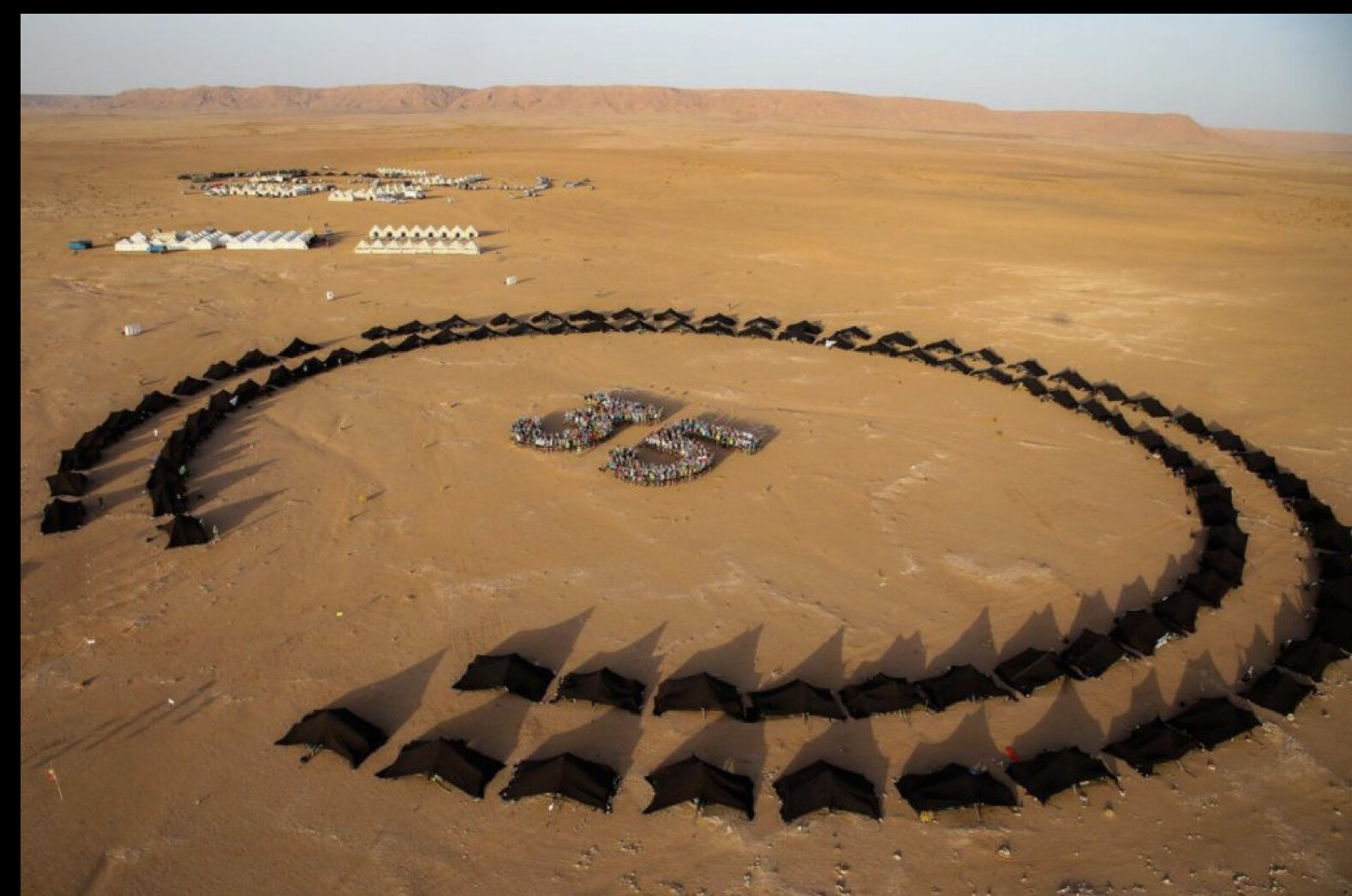
There are five stages in the race, along with a “solidarity” or charity stage that does not count for the overall ranking of the race. The stages range from 30 to 90 km. The athletes don’t know the official course until the day before the race when it is officially announced, but they are guaranteed (according to the event media guide):flat terrain, often hard and stony and suitable for “real runners” as opposed to “trail runners”
sand (sometimes hard or crusted, but most often soft) that they will have to master (for example by opting for shaded areas so they sink less because when the sun heats the sand, it becomes softer)
small, normal and giant sand dunes that will make all competitors draw on their reserves

ascents and descents, not very long but often steep, sometimes sandy, sometimes stony
technical sections over rocky escarpments and along crests (the authentic “trail running moments” of the MDS)
gorges that will provide a beneficial and life-saving shade, when competitors pass through them, and dried wadis (supposedly dried river beds… but some years, a trickle of water is flowing!) where competitors can find some vegetation. The daily temperatures are typically in the 30s, but can rise to as much as 45 degrees Celsius.
At night the temperature can drop to 5 C or less. Athletes must carry a week’s worth of food, a sleeping bag, a compass, knife, lighter, whistle, headlamp, venom extractor, signalling mirror and sunscreen. They are also provided with a GPS beacon so organizers can keep track of the athletes at all times. The race takes place in the middle of the desert so that it can be held in total isolation and guarantees that athletes cannot receive any assistance.COVID-19 and the MDS
Last year’s 35th edition took place last fall after being postponed three times. It was a tough year for the event, with an athlete suffering a cardiac arrest during the first stage, then a gastrointestinal bug ripping through the field, leading almost 50 per cent of the participants to pull out, far higher than the normal 5 to 10 per cent attrition rate the event typically sees.
2022 Coverage
Triathlon Magazine Canada editor Kevin Mackinnon will be on hand to cover this year’s race, one of the 65 accredited journalists covering this year’s MDS. He’ll be providing updates and photo galleries through the first few days of racing in Morocco. There will be 15 Canadians competing at the 2022 MDS. Stay tuned for more from Morocco in the coming days.
(03/26/22) Views: 108Running Magazine
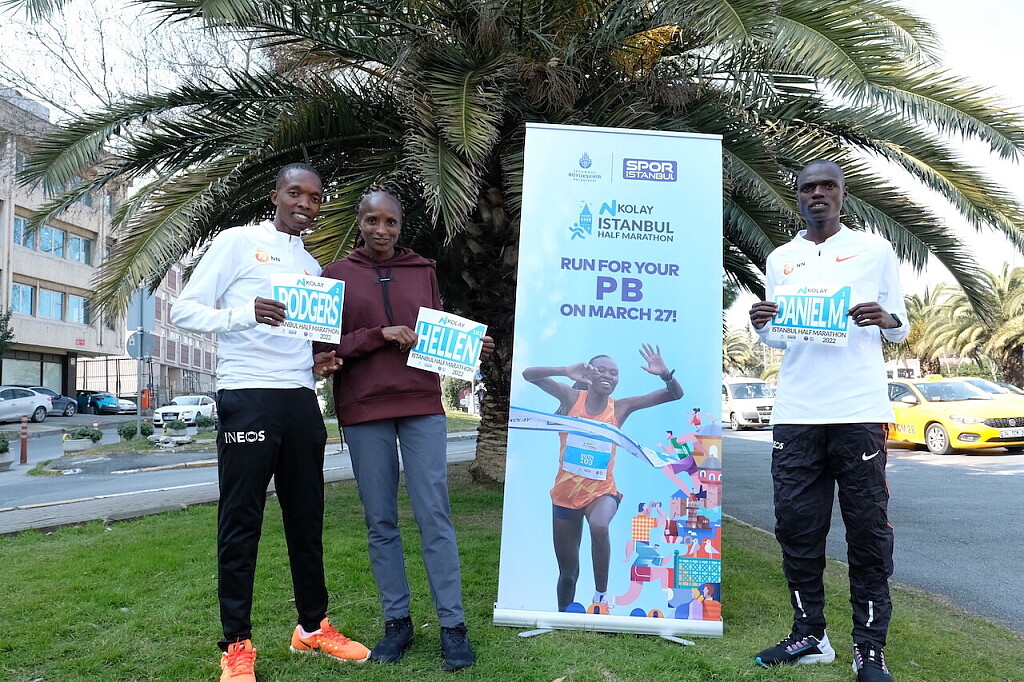
Hellen Obiri goes for another PB and possibly the Istanbul course record
Hellen Obiri is back in Istanbul where strong elite fields were assembled for the N Kolay Istanbul Half Marathon on Sunday.
Both course records could be threatened at the Bosporus. Six women are on the start list with personal bests of sub 67:00 and Kenya’s reigning World Cross Country Champion and 5,000 m World Champion is the fastest of them: Hellen Obiri has improved to 64:22 earlier this year.
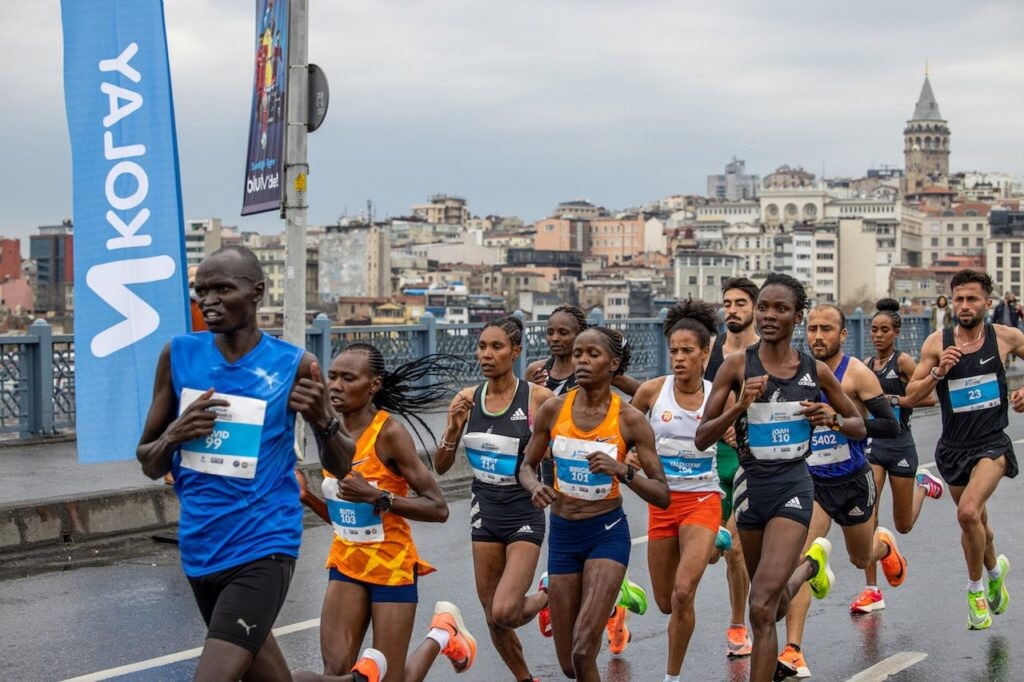
Fellow-Kenyans Daniel Mateiko and Rodgers Kwemoi head the men’s start list with personal bests of 58:26 and 58:30 respectively. The N Kolay Istanbul Half Marathon produced a world record a year ago when Kenya’s Ruth Chepngetich won the race in 64:02.
A year ago the N Kolay Istanbul Half Marathon was one of very few international races that went ahead during the pandemic. 4,000 runners participated under strict hygiene regulations. Now the organizers of the N Kolay Istanbul Half Marathon are proud to announce that the race bounced back: Including races at shorter distances a record number of over 10,000 runners were registered for the 17th edition. Around 8,000 of them will run the half marathon.Turkey’s biggest spring road race is a World Athletics Elite Label Road Race.
“We have worked for a long time to improve our 16 year-old course and to make it one of the most historic and enjoyable courses in the world, as well as one of the fastest. We succeeded in developing the N Kolay Istanbul Half Marathon further and even had a world record here a year ago,“ said Renay Onur, the Race Director of the event which is staged by Spor Istanbul.
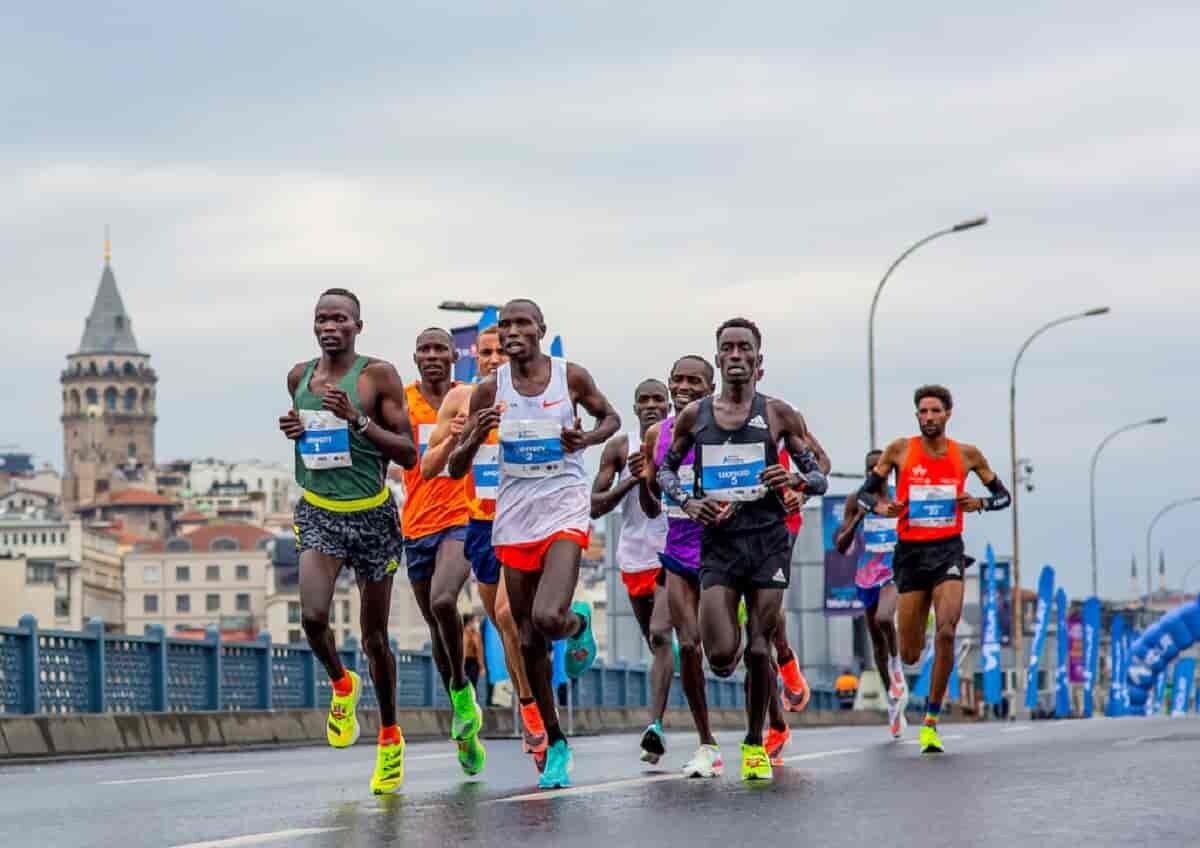
With regard to Sunday’s race he said: “Our elite field is of high quality. With two men having recently achieved sub-59 times, we have a chance that our course record will fall. On the women’s side, I am happy that Hellen Obiri is back. I believe she can go even faster since weather conditions seem to be fine on Sunday. We invite all sport lovers to enjoy this race.“
Hellen Obiri is ready for another very fast race. "If weather conditions and pacemaking are good then I will try to break my personal best. Whenever I come to such a race it is my goal to run well and improve my time,“ said the 32 year-old who improved to 64:22 when she was second in the Ras Al Khaimah half marathon in the United Arab Emirates in February. Since then she has been training in the Ngong hills near Nairobi.
“I am in much better form now than I was before Ras Al Khaimah,“ said Hellen Obiri. Asked about the course record, which is also the Kenyan record, she answered: “The course record will be a tough challenge. But we have a very strong field, so we will definitely give it a try.“
Hellen Obiri will indeed face very strong competition in Istanbul. Fellow-Kenyan Vicoty Chepngeno has an outstanding half marathon record. She ran 14 half marathons since 2018 and won eleven of them.
The 28 year-old is undefeated in her past six races at the distance and improved to a world-class time of 65:03 when she took the Houston half marathon in January.
Ethiopian trio Tsehay Gemechu (PB: 65:08), Nigsti Haftu (66:17), Bekelech Gudeta (66:54) and Turkey’s multiple European long distance champion Yasemin Can (66:20) are the other women who have already run below 67:00. Tsehay Gemechu has a very strong half marathon record as well.
She has won four of her five races and is the reigning champion of the Copenhagen half marathon where she clocked her PB last year.
In the men’s race there will be an attack on the course record, which was established last year by Kenya’s Kibiwott Kandie with 59:35.
“We will both be going for the course record and a personal best,“ said Daniel Mateiko and Rodgers Kwemoi, who are training partners and belong to the group of Eliud Kipchoge based at Kaptagat. Mateiko improved by almost a full minute to 58:26 when he was third in Valencia in 2021 while Kwemoi was runner-up in Ras Al Khaimah in February with a strong PB of 58:30.
“I am now in better form than I was in Ras Al Khaimah,“ said Rodgers Kwemoi.
Two other runners in the field have already broken the one hour barrier: Kenyans Josphat Tanui and Edmond Kipngetich have personal bests of 59:22 and 59:41 respectively.
Elite runners with personal bests
Men
Daniel Mateiko KEN 58:26
Rodgers Kwemoi KEN 58:30
Josphat Tanui KEN 59:22
Edmond Kipngetich KEN 59:41
Hillary Kipchumba KEN 60:01
Vestus Chemjor KEN 60:47
Moses Too KEN 60:56
Philimon Kiptoo KEN 61:47
Daniel Kiprotich KEN 62:09
Gerald Vincent KEN 62:27
Ramazan Özdemir TUR 63:10
Women
Hellen Obiri KEN 64:22
Vicoty Chepngeno KEN 65:03
Tsehay Gemechu ETH 65:08
Nigsti Haftu ETH 66:17
Yasemin Can TUR 66:20
Bekelech Gudeta ETH 66:54
Pauline Esikon KEN 67:15
Stella Rutto ROU 67:45
Ayinadis Teshome ETH 68:18
Daisy Kimeli KEN 68:34
Medhin Gebreslassie ETH 68:38
Ludwina Chepngetich KEN 70:34
Moira Stewartova CZE 71:08
Fatma Karasu TUR 71:30
Kristina Hendel CRO 71:34
(03/25/22) Views: 104
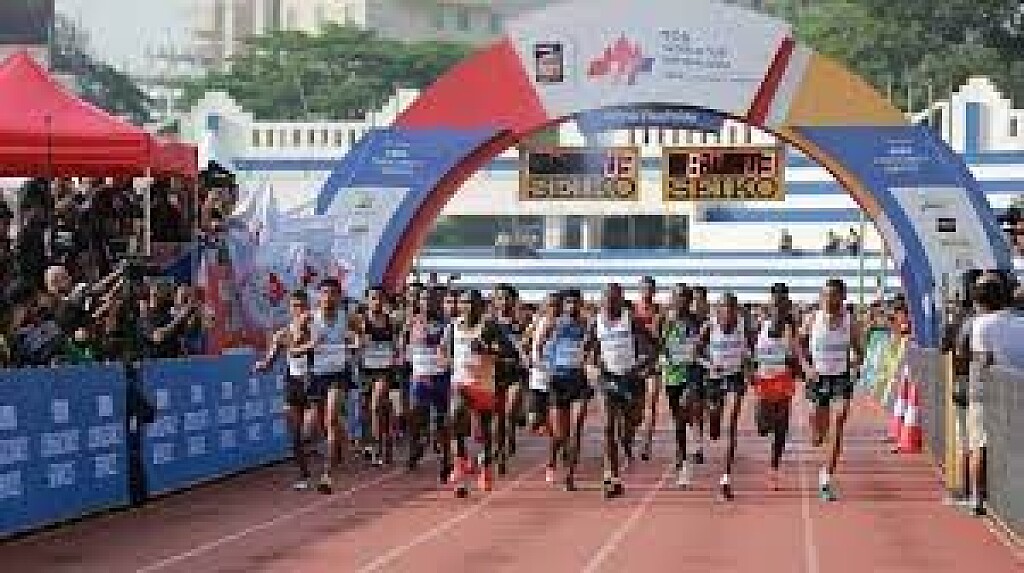
2022 World 10K Bengaluru to be held on May 15
The World Athletics elite label road race event hasn’t been held since 2019 due to COVID-related restrictions.
The World 10K Bengaluru 2022 will be held on May 15, the organizers of the event announced on Thursday.
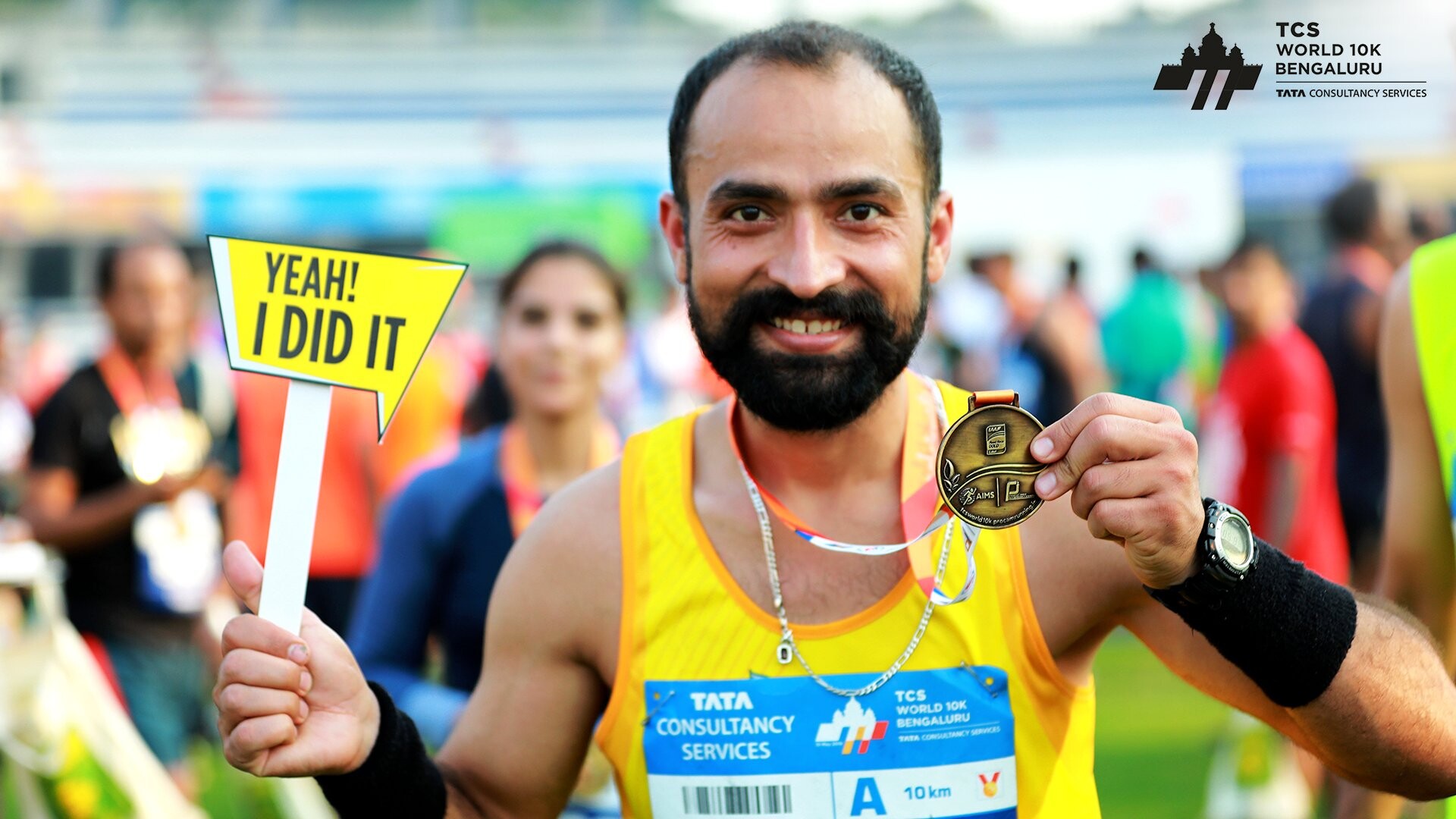
A World Athletics elite label road race event, the World 10K Bengaluru 2022 will be returning after a three-year hiatus and is slated to be held in full capacity. The run was postponed multiple times in the last two years due to COVID-19.
The event will be conducted in two formats: on-ground and a virtual app-based run.
The four on-ground events will be flagged off at the iconic Sree Kanteerava Stadium in Bengaluru.
While the open 10K category will have some of the world’s elite athletes, Majja Run (5km), Senior Citizen Run (4.2km) and Champions with Disability (4.2km) will see the participation of amateur runners from across the country.
The virtual app-based run, meanwhile, will be held via the specialized event app for two race categories – Open 10K and 5K. Registrations for the World 10K Bengaluru 2022 begin on March 25 and close on May 11.
The last edition, which was held in 2019, saw Agnes Tirop of Kenya become the first women’s athlete to defend her title at World 10K Bengaluru. Ethiopia’s Andamlak Belihu took his first win in the men’s race.
Among the Indian elites, Asian championships bronze medalist Parul Chaudhary topped the women’s race.
Lakshmanan Govindan won the men’s Indian elite run ahead of Olympian Avinash Sable.
(03/25/22) Views: 87Ali Asgar Nalwala
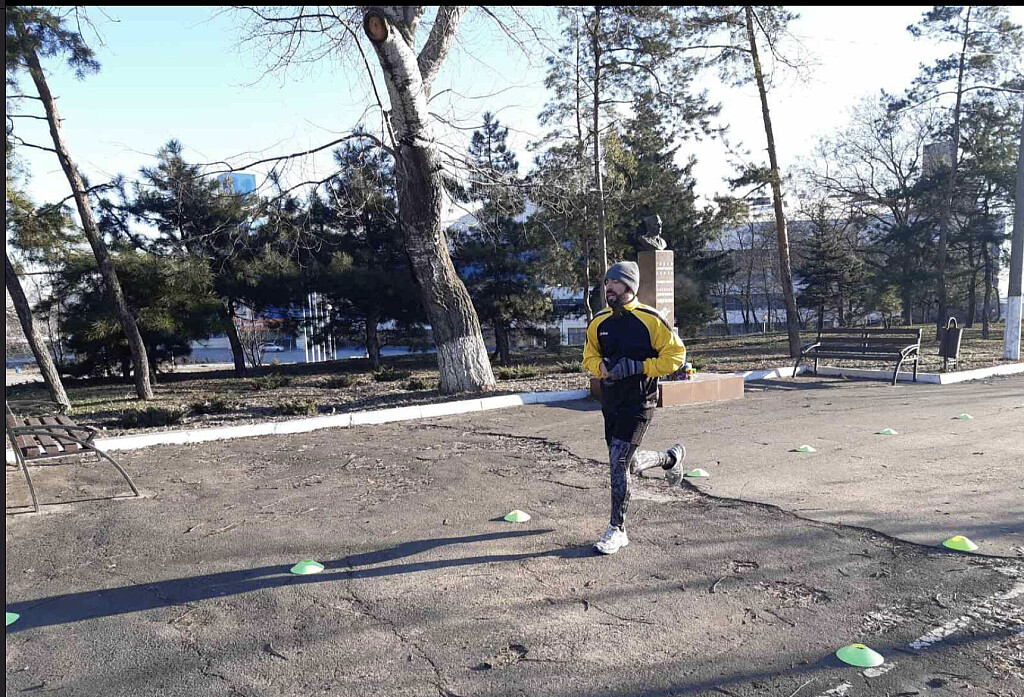
Running for security: the diary of a Ukrainian runner
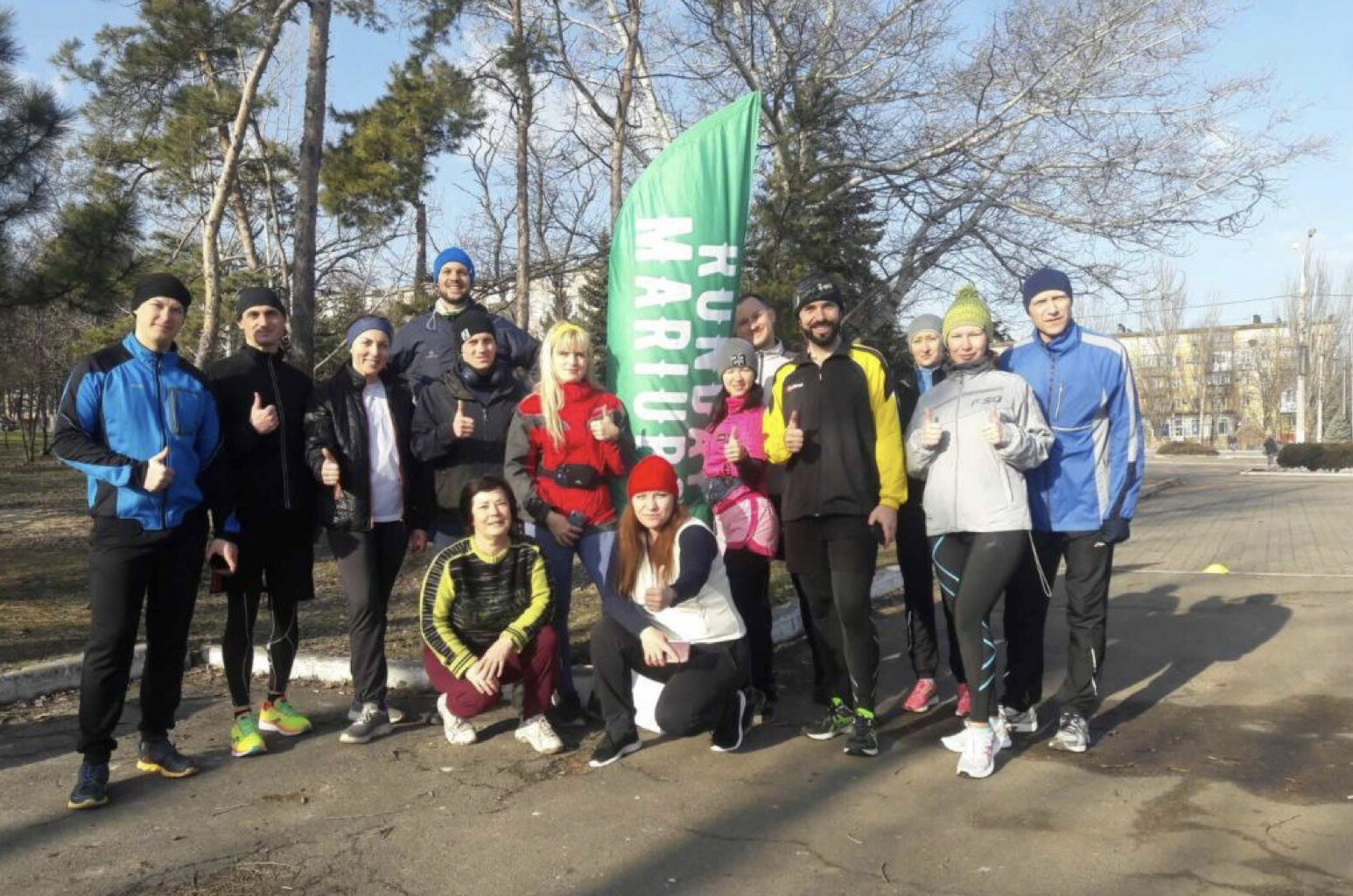
Two months ago, Ruslan Paul was a significant figure in the Mariupol, Ukraine, running community–hosting free weekly timed 5K runs called ‘runday’ at Mariupol’s Prymorskyi Seaside Park.
In every run club photo Paul shared on his Strava page, his smile lit up the camera. One often forgets how quickly your life can change in the span of a few days, but for Paul, he was living in reality.
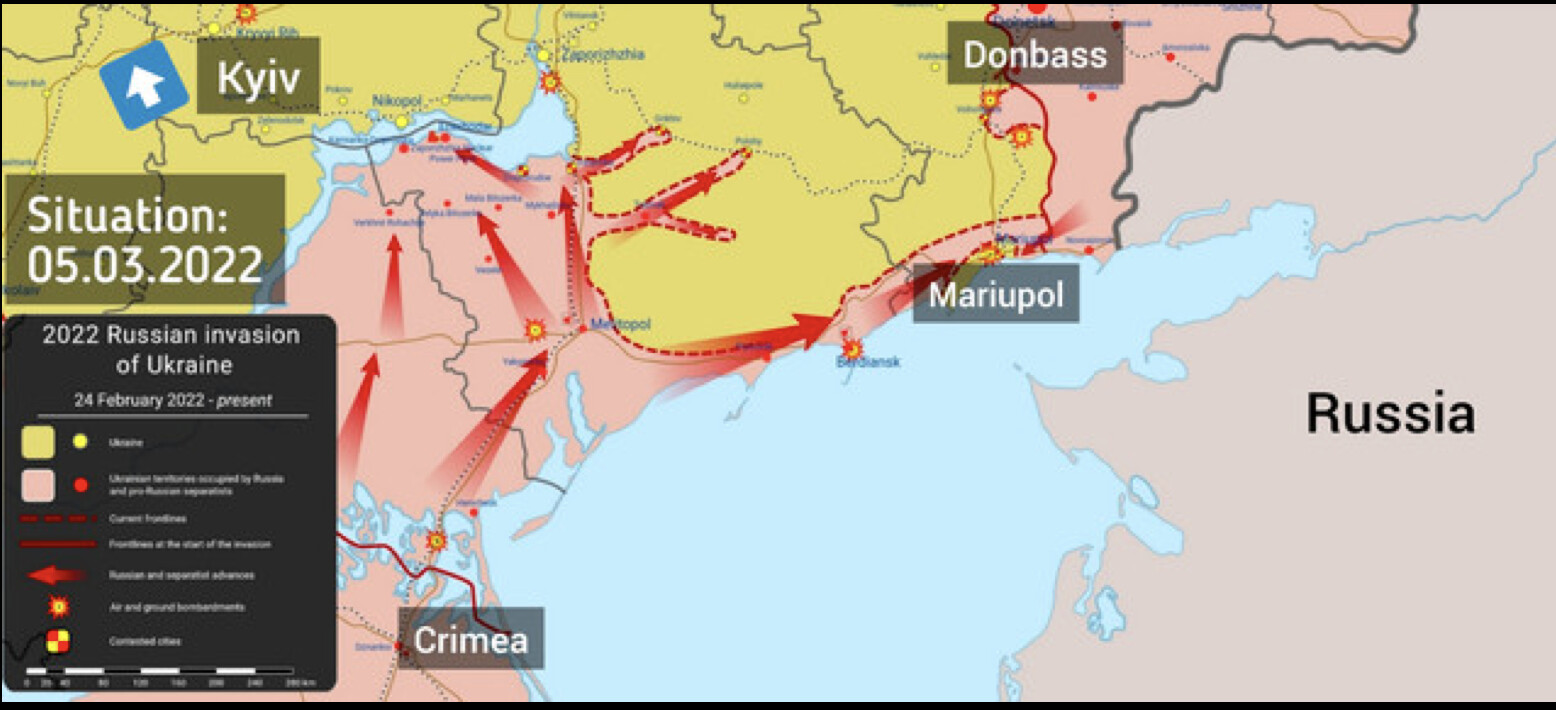
On Feb. 24, 2022, Russia launched a large-scale invasion of Ukraine on its eastern border. Mariupol is located 60 kilometres from the Russian border and is a three-hour drive from the Russian city of Rostov-on-don.
Mariupol was home to 400,000 people before the war broke out on Feb. 24, and now, up to 90 per cent of the city has either been destroyed or damaged.
According to his Strava, Paul went for his last run in Mariupol on Feb. 26. “There are such beautiful places in this city, one of which you involuntarily appeal to the creator of this world for the peace and protection of Ukraine,” he wrote.
On his activity, he posted a picture of himself next to a cross looking out on the Sea of Azov, which separates Ukraine and Russia.
“We don’t have a city anymore,” Paul expressed. “They have destroyed everything.”
A week after the invasion, Paul and his family fled for western Ukraine. A man, and his family, who were born and raised in Mariupol, now watch in fear as the city crumbles from bombing by Russian forces.
Instead of using Strava to post his running activities, Paul began using it as a tool to keep his followers updated on his well-being, replying to comments and sharing his whereabouts.
“We are safe but hungry, homeless and unemployed,” Paul wrote. He and his family are constantly on the run in western Ukraine, trying to find a home to ensure each other’s safety.
Despite the despair, Paul continues to update his friends from around Ukraine on his Facebook and Strava page about his safety and his life on the run. “We’re alive and well, that’s the most important thing,” Paul writes.
(03/26/22) Views: 87Running Magazine
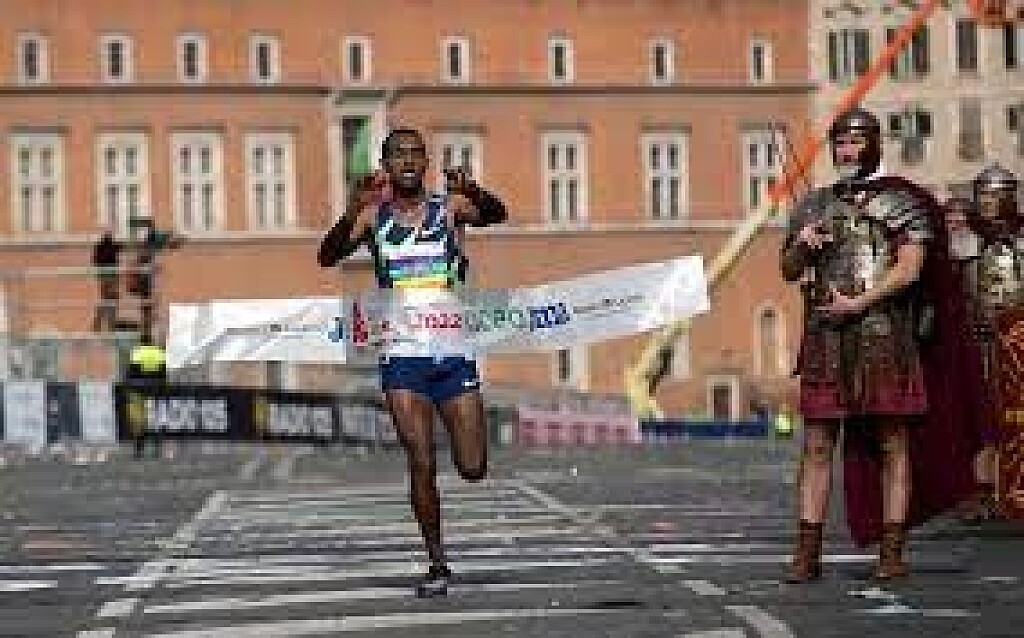
Ethiopians Fikre Bekele and Adugna Dalasa made a big win in the 2022 Rome marathon on Sunday
The eternal Italian city of Rome hosted over 11 thousand runners, including 5 thousand foreign runners from 102 countries for the 27th International Rome Marathon on Sunday, March 27, 2022.
Ethiopian runners Bekele Fikre Tefera and Dalasa Sechale Adugna won the 27th International Rome Marathon, an annual run at the Italian capital Rome.
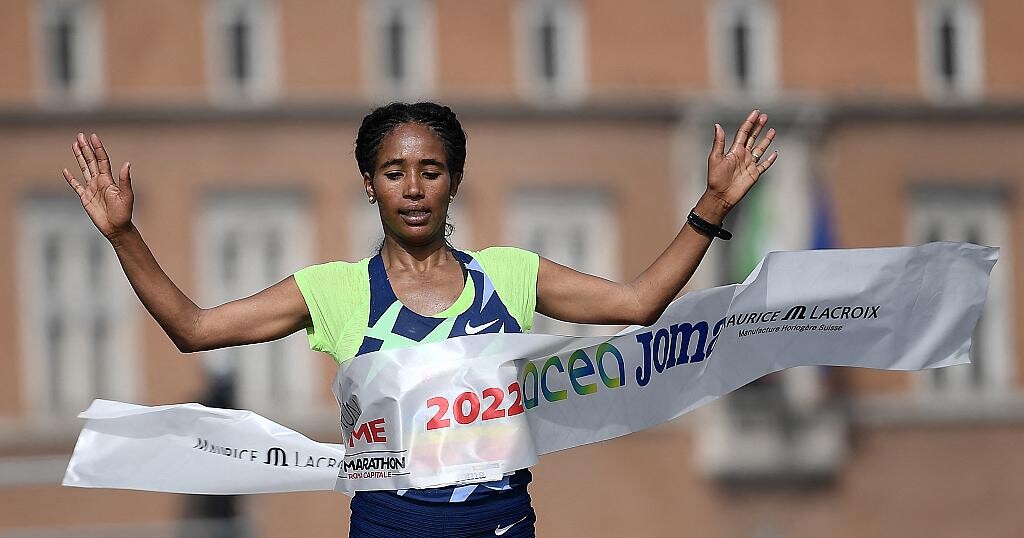
An Italian media reported that athlete Tefera broke the record of the Marathon with 2 hours 6 minutes and 48 seconds.
The record belonged to the Kenyan athlete Benjamin Kiptoo Kolum with 2 hours 7 minutes and 18 seconds in 2009.
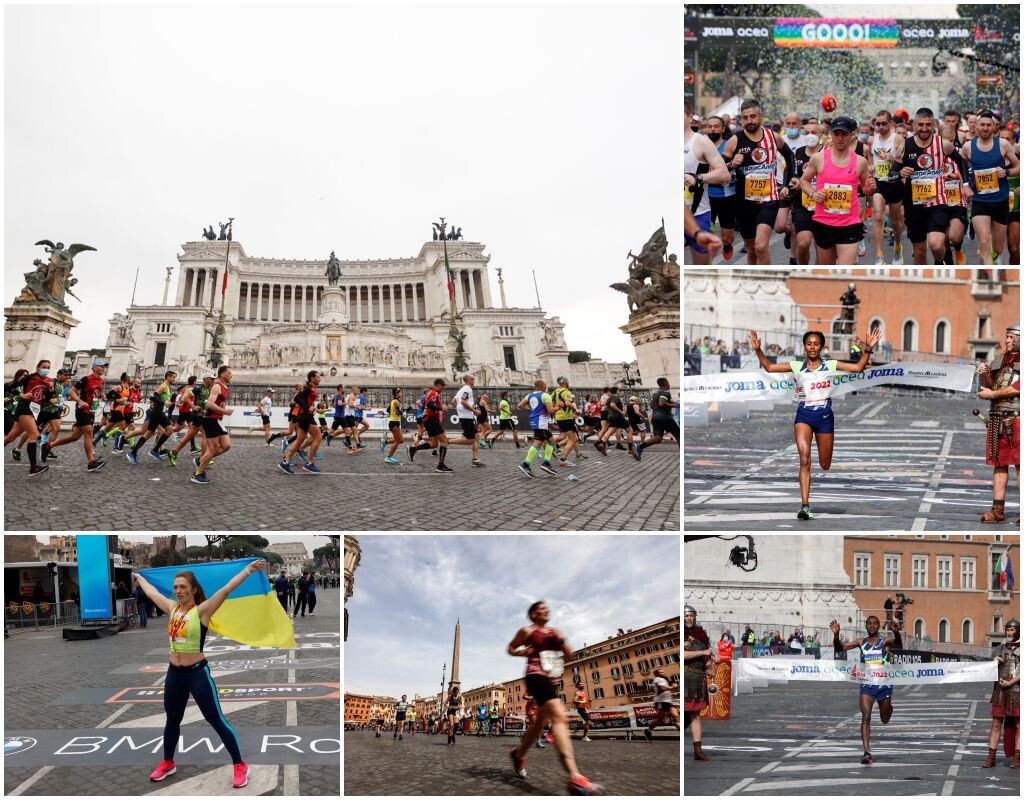
Foreign runners, as well as locals, joined the Acea Run Rome the Marathon, the Charity Relay Acea Run4 Rome and the popular Fun Race. The latter returns on site for the first time in the post-pandemic era, but runners took part in virtual mode from all over Italy. The race started from Fori Imperiali at 8.30. Runners run around Rome for 42 km alongside the Tiber, source of life and symbol of this edition, which is featured on the medal and on the official t-shirt.
There were 2417 women entered in the marathon, more than 22% of all participants.
Although the pandemic is not over yet and there are still many restrictions to travel, 5 thousand foreign runners from 102 countries representing all continents took part in the Acea Run Rome Marathon.
Italy was the most represented country with 5827 participants, followed by France (909 runners), the United Kingdom (693) and Spain (455). The United States was ranked just behind and is first among non-European countries with 330 participants. 49 Ukrainian runners registered. Only a few of them were able to be at the start line.
(03/28/22) Views: 75Özgür Töre
Rock N Roll DC Recap
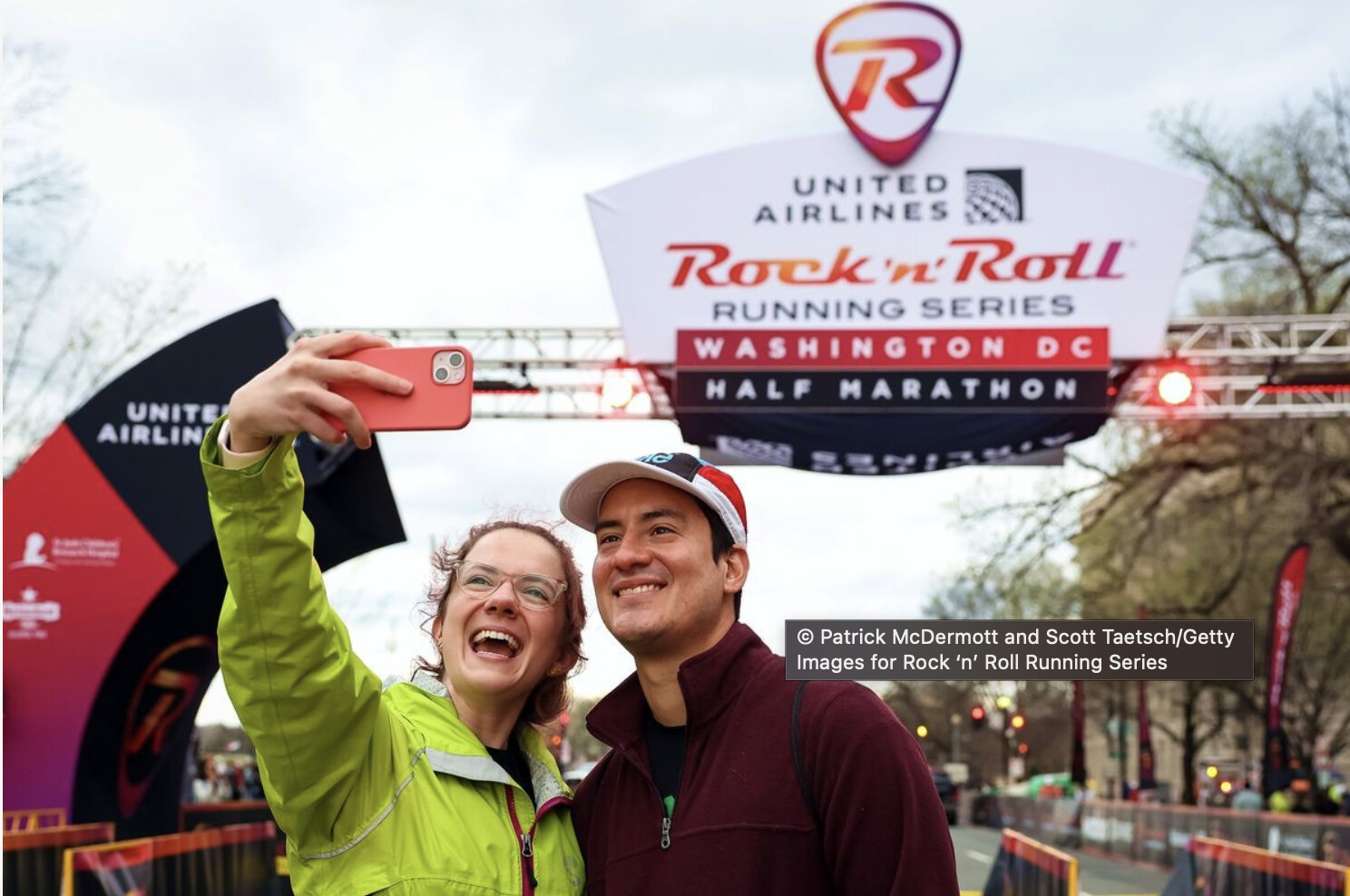
More than 12,000 registered participants took to the streets of the Nation’s Capital on Saturday celebrating the 10th running of the United Airlines Rock ‘n’ Roll Running Series Washington D.C.
The musically-themed event provided runners and walkers alike with an unforgettable running tour of the District showcasing some of its most iconic scenery, including the National Mall, the White House, the Capitol Building, the Lincoln Memorial, and much more before passing down an electric finish at RFK Stadium all during peak cherry blossom season.
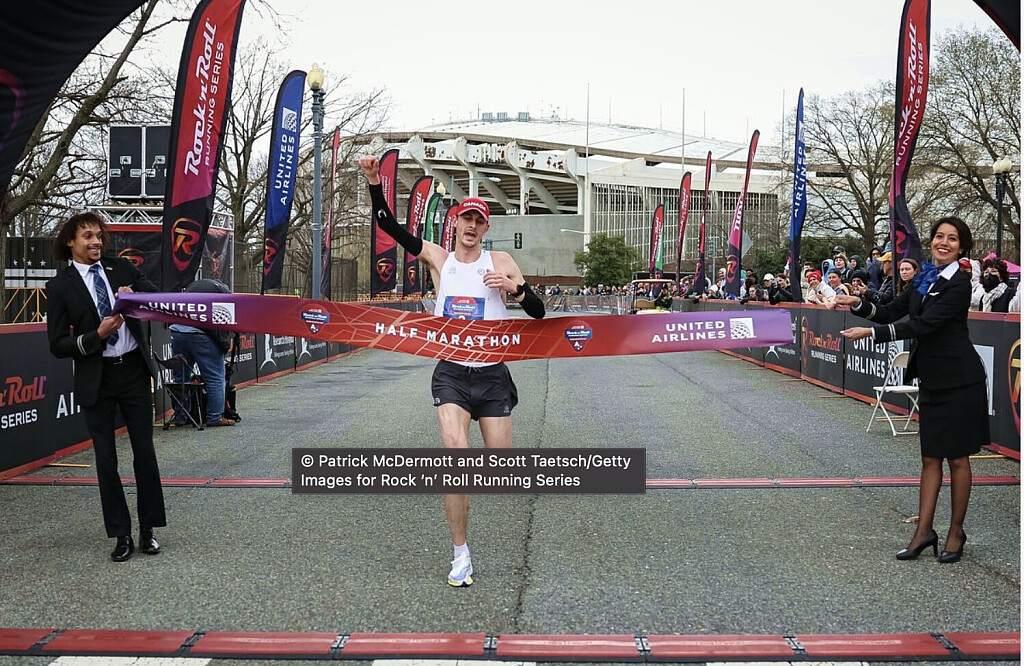
The second event in the Rock ‘n’ Roll Elite™ half marathon series took part at Rock ‘n’ Roll Washington, D.C., it was Justin Kent (Burnaby, British Columbia, Canada) and Hirut Guangul (New York, N.Y.) claiming victories.
The winners
The Rock ‘n’ Roll Elite half marathon series offered a shared $10,000 elite prize purse and Elite Beat Rankings (EBR) points to the top three male and female finishers including in his second straight victory, Justin Kent of Burnaby, British Columbia, Canada took top honors in the men’s race, earning 50 EBR points with a finishing time of 1:03:56 and cementing his #1 ranking, with 100 total points in the new series. Collecting 44 EBR points was Benjamin Preisner of Vancouver, British Columbia, Canada with a finishing time of 1:05:01, and John Borjesson of Boulder, Colo. followed in third place finishing at 1:05:49 and scoring 39 points. Hirut Guangul of New York, N.Y. took the top spot in the women’s race earning 50 points with a finishing time of 1:14:01. Emiline Delanis of Cary, N.C. followed Guangul in second for the women’s division with a finishing time of 1:14:24, earning 44 points, while Jane Bareikis of Crestwood, Ill. rounded out the podium with a time of 1:14:31, earning 39 points. The new Rock ‘n’ Roll Elite half marathon competition offers world-class runners the opportunity to showcase their talents in eight cities in North America, culminating with a grand finale at the 2023 edition of Rock ‘n’ Roll Running Series Las Vegas.
Several local bands, including Enviro Drum, Ocho de Bastos, Prettier in Person, BATALIA, and School of Rock performed live on band stages along the route interspersed with crowd support. The party wasn’t only on the course – runners were treated to the sounds of local favorite White Ford Bronco whose lead singer, Gretchen Gustafson ran the half marathon just before taking the stage at the Finish Line Festival at the Armory Mall just outside RFK Stadium.
(03/27/22) Views: 71
