

Running News Daily
Top Ten Stories of the Week
8/28/2021
These are the top ten stories based on views over the last week.
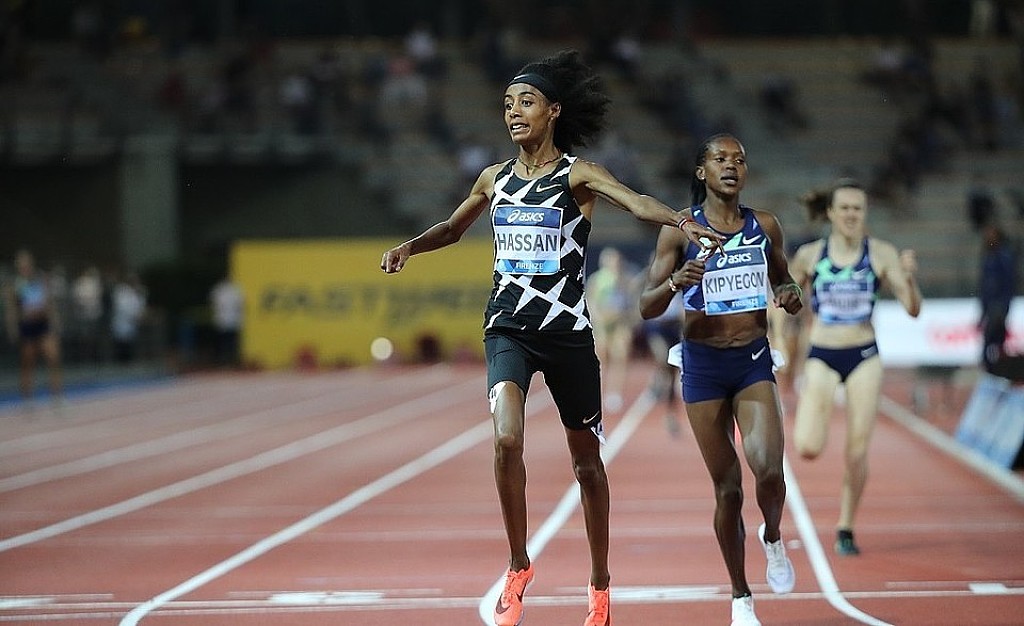


No world record but Sifan Hassan claims a clear win in Eugene
A willing but weary Sifan Hassan fell short of the women’s world 5000m record she was targeting at Hayward Field in Eugene, Oregon, on Friday (20) as she finished well clear of a stellar field in 14:27.89.
On the traditional Distance Night preface to the Prefontaine Classic that now forms the Wanda Diamond League meeting, the 28-year-old Dutch runner was clearly tired after an epic season, having won the Olympic 5000m and 10,000m titles in Tokyo earlier this month and added a 1500m bronze.
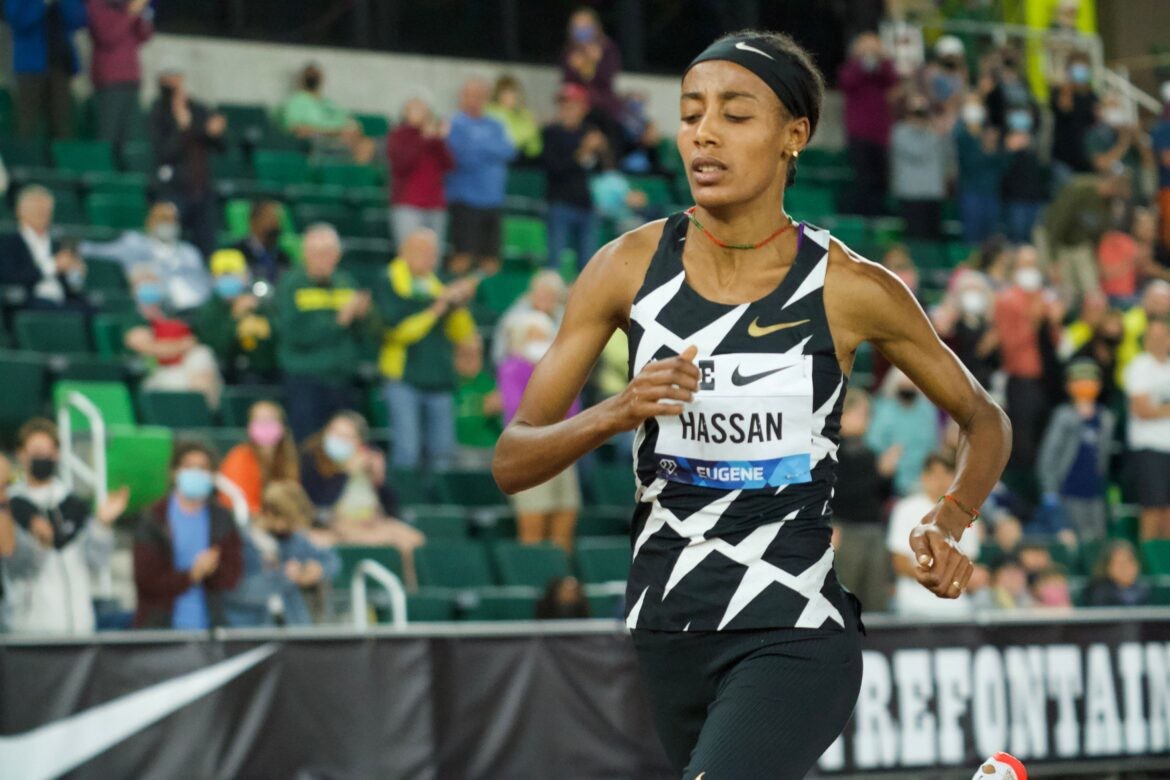
She had announced her intention of eclipsing the mark of 14:06.62 set by her Ethiopian rival Letesenbet Gidey in Valencia last year, but eventually finished outside her own European record of 14:22.12 set in London two years ago.
Had Hassan’s ambitions come to pass in a recently rebuilt stadium that had the welcome atmosphere of a live home crowd it would have been another blow to her rival Gidey, who in June this year ran 29:01.03 at Hengelo to better the world 10,000m record of 29:06.82 Hassan had set on the same track just two days earlier.
Hassan’s response in Tokyo was impressive as she beat the Ethiopian to the Olympic 10,000m title with an unanswerable sprint around the final bend.
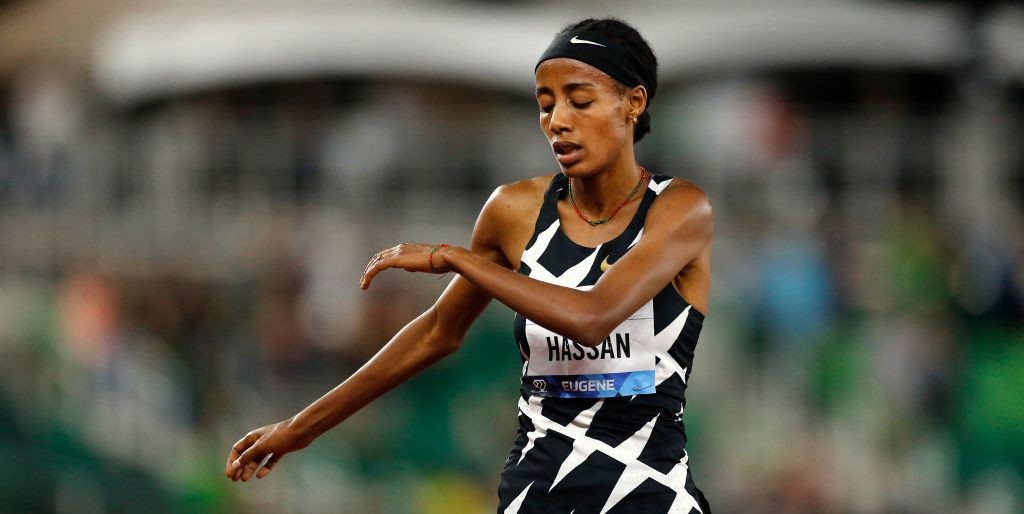
But depriving her rival of one of her world records proved an aspiration too far on this occasion for a woman who already held world marks in the 5km road event, mile and one-hour race.
Within the first 1500m the race had become a time trial as Hassan was the only athlete left tracking the two pacemakers who were keeping pace with the blue guide lights on the infield.
By five minutes in there was only one runner ahead of her. And by the halfway point she was running alone with only the green lights of the world record pace for company.
At the 3000m mark, however, she was slipping behind that snake of flashing green, although she kept working.
With less than a mile to go, the snake was gliding ever further away from her, despite the efforts of the spectators sprinkled throughout the stands of an arena that will host the postponed World Athletics Championships next year.
A lap in 70.1 was followed by 71.83 and with three laps remaining she could see her latest ambition moving away from her, although she had already moved well clear of a stellar field at the end of a long and exhausting season.
As the bell rang it was clear how hard the Dutch athlete was having to work, and she grimaced as she set off for one final lap.
Hassan was followed home by two Ethiopian runners, as Senbere Teferi clocked 14:42.25 and Fantu Worku finished in 14:42.85.
The next four runners clocked personal bests as Kenya’s Loice Chemnung finished in 14:43.65, home runners Alicia Monson and Abbey Cooper recorded 14:48.49 and 14:52.37 respectively and Kenya’s Sheila Chelangat was seventh in 14:52.66.
Gidey had finished second in the previous event, the women’s two miles, clocking 9:06.74 behind Burundi’s Rio 2016 silver medallist Francine Niyonsaba, who finished in a meeting record and 2021 fastest time of 9:06.74.
Kenya’s double world champion Hellen Obiri was third in 9:14.55, ahead of Germany’s Konstanze Klosterhalfen in 9:18.16.
(08/21/21) Views: 166World Athletics
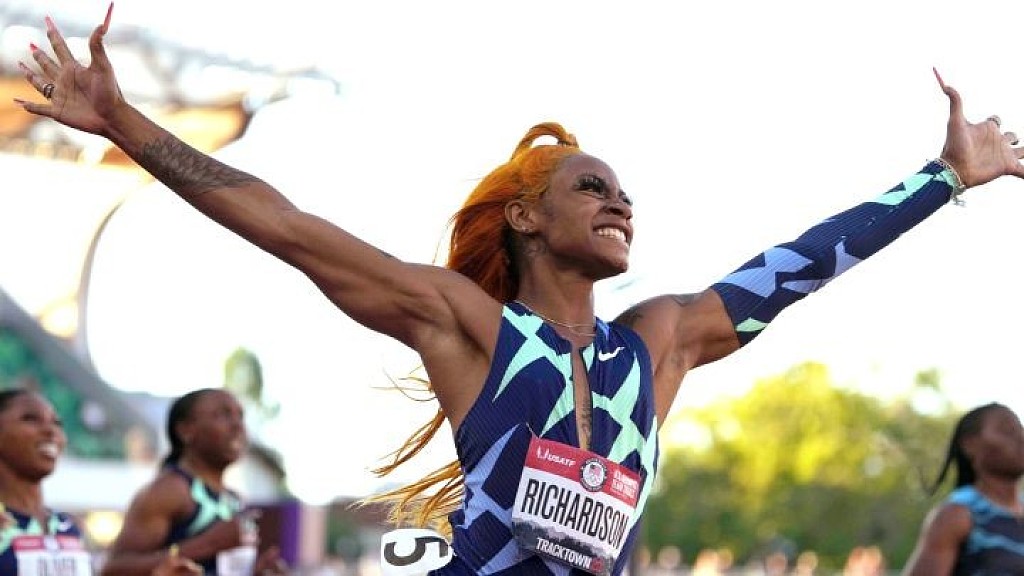
Sha'Carri Richardson to make track return at Prefontaine Classic
Sha'Carri Richardson will make her return to competitive athletics action on Saturday (August 21) at the Prefontaine Classic Diamond League meeting in Eugene, Oregon, USA.
The American is back after serving a one-month suspension handed to her when she tested positive for a cannabinoid at the U.S. Olympic Trials in June, where she had originally won the women's 100m race.
Her return will pit the world's third-fastest woman this year against the three Olympic medalists from Tokyo – Elaine Thompson-Herah, Shelly-Ann Fraser-Pryce, and Shericka Jackson, all from Jamaica.
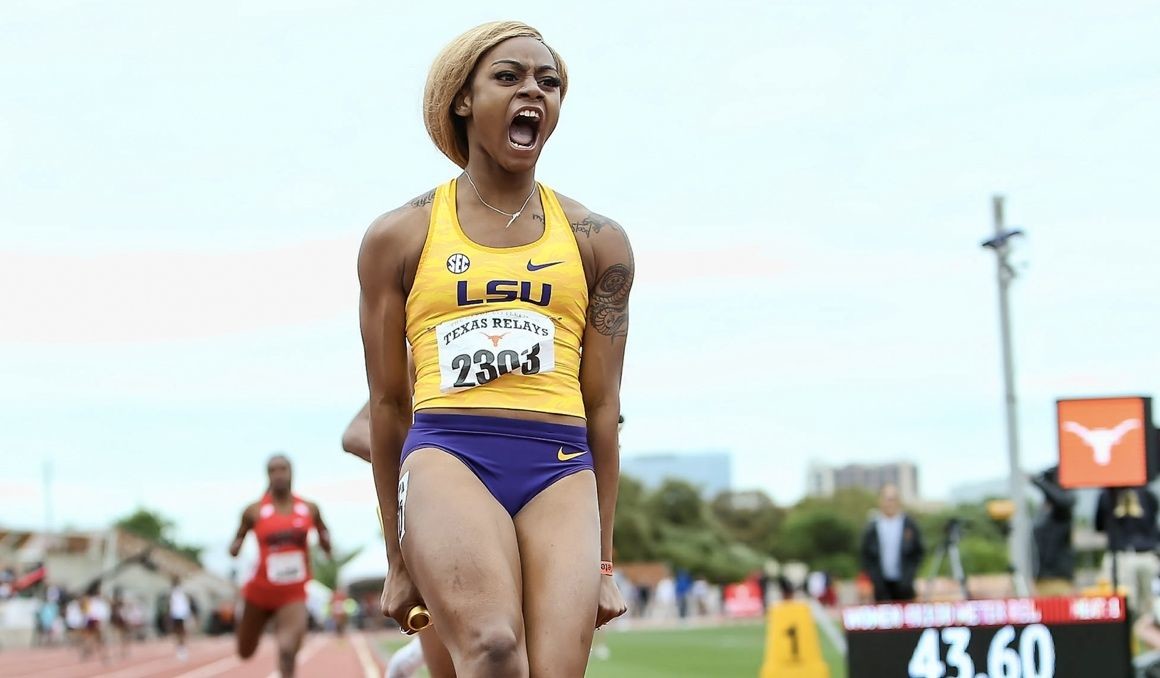
On July 1, the United States Anti-Doping Agency (USADA) announced that Richardson had accepted being suspended for "for an anti-doping rule violation for testing positive for a substance of abuse", having previously received a provisional ban on 28 June.
While competing at the Trials, Richardson provided a sample on 19 June that returned a positive test for a chemical found in marijuana, THC.
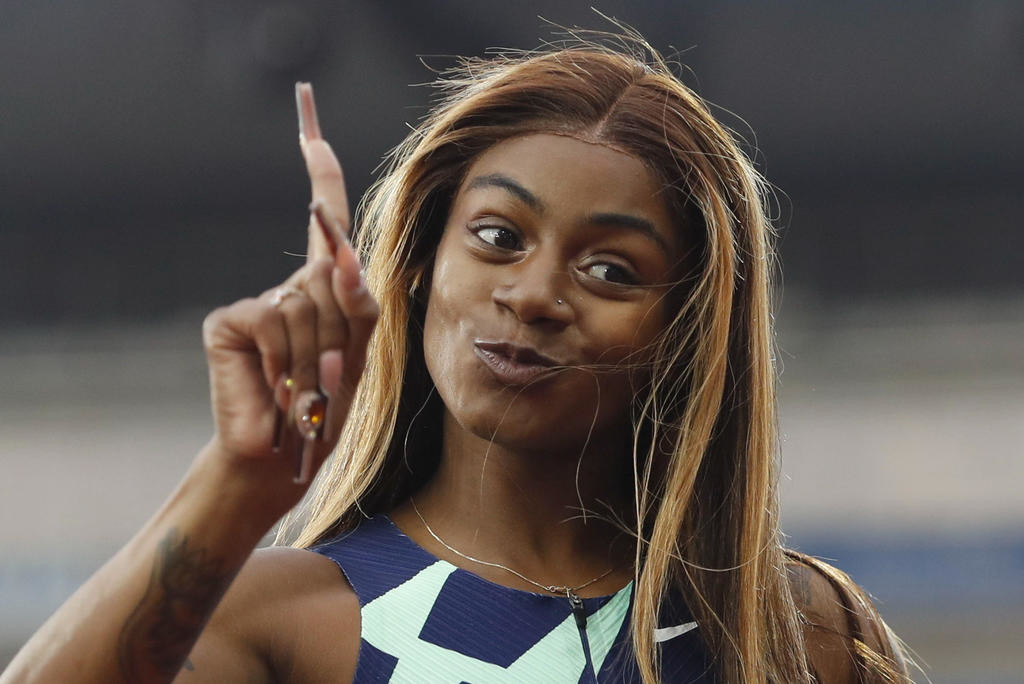
THC is a banned substance in-competition, although it is not prohibited out of competition, under World Anti-Doping Agency (WADA) rules which classify it as a substance of abuse.
Although Richardson consumed the drug out of competition, she returned an in-competition positive and was therefore sanctioned under USADA's own regulations, which state: "If an athlete tests positive for a substance of abuse during an in-competition test, but the athlete can establish that they used the substance out-of-competition and that their use of the substance was unrelated to sport performance, then the athlete’s period of ineligibility will be reduced to three months with no need to further analyse the degree of fault."
USADA added in handing out a one-month suspension: "Richardson’s period of ineligibility was reduced to one month because her use of cannabis occurred out of competition and was unrelated to sport performance, and because she successfully completed a counselling program regarding her use of cannabis."
The sanction meant her qualifying results at the trials were expunged.
Her suspension ended before the start of the athletics program at Tokyo 2020, but as USA Track & Field (USATF) selects its Olympic team based solely on results at Trials, Richardson was not considered for selection in either the 100m or 4x100m relay.
In Eugene, which was also the site of the U.S. Trials where Richardson had run 10.86 in the final, she and the three Tokyo 2020 medallists headline a world-class field in the women's 100m.
That start-list includes Tokyo relay silver medallists Teahna Daniels and Javianne Oliver of the USA and two other 100m finalists Switzerland's Mujinga Kambundji (6th) and Marie-Josée Ta Lou (4th) of Côte d'Ivoire. Briana Williams, the fourth member of the Jamaican 4x100m gold-winning relay team, completes the lineup.
Richardson ran a 10.72 at the Miramar Invitational in Florida in April, a time that made the 21-year-old the sixth-fastest woman ever over 100m and, at the time the world leader in 2021.
Since then this year, only two other women have gone faster – Richardson is surpassed by Fraser-Pryce (10.63 in June) and Thompson-Herah's Olympic record 10.61.
The clash between the young American talent and the Olympic medallists is tantalising after they were unable to race each other in Tokyo.
Indeed, the five fastest women this year will all be competing in the race – Jackson and Ta Lou are fourth and fifth respectively.
Richardson's last international 100m race was at a rainy Gateshead Diamond League in England in May, when she finished second in 11.44 seconds into a very strong headwind (-3.1 m/s). Earlier that month, the Texan sprinter also overcame a headwind to clock a rapid 10.77 (-1.2 m/s) at the USATF Golden Games.
The American is also down to race the women's 200m against the likes of Kambundji, Ta Lou, Olympic bronze medallist Gabrielle Thomas, relay silver medallist Jenna Prandini, world champion Dina Asher-Smith, and American track legend Allyson Felix.
(08/20/21) Views: 133
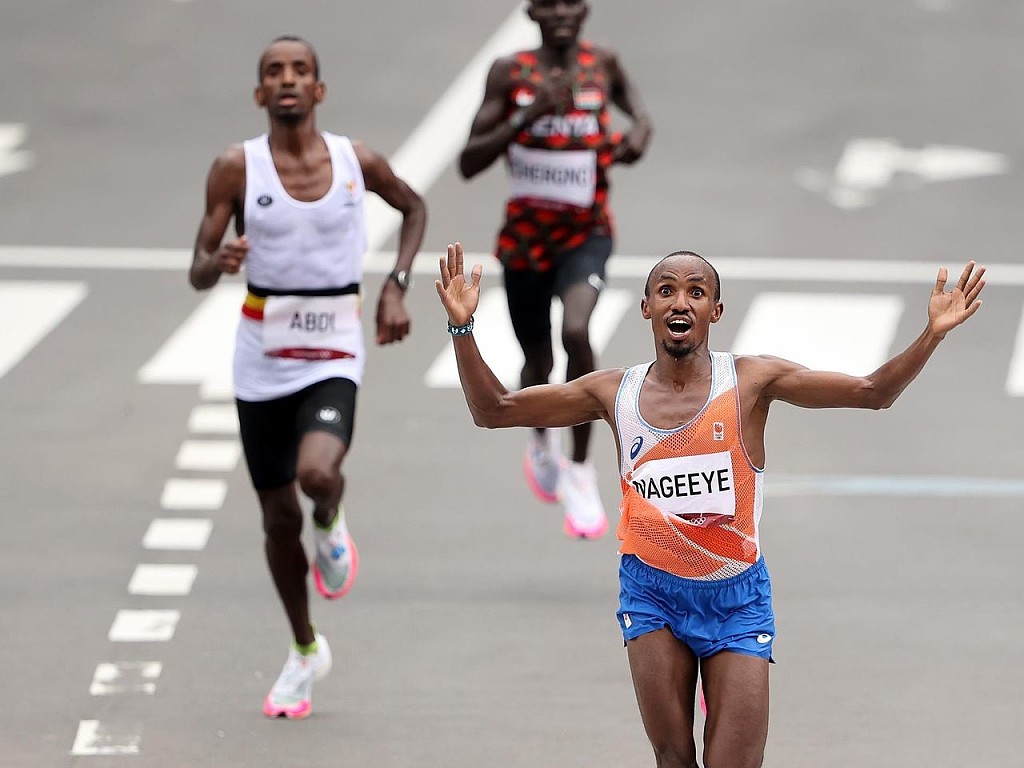
Olympic medalist Abdi Nageeye, Kibiwott Kandie and Kenenisa Bekele to clash in New York
World half marathon record holder, Kenya’s Kibiwott Kandie is due for his maiden marathon at the New York City marathon on November 7 this year.
Kandie, the 2020 World Half Marathon Championships silver medalist, faces baptism by fire when he takes on Tokyo Olympic marathon silver medallist, Abdi Nageeye from the Netherlands, and two-time Berlin Marathon champion, Ethiopia’s Kenenisa Bekele.
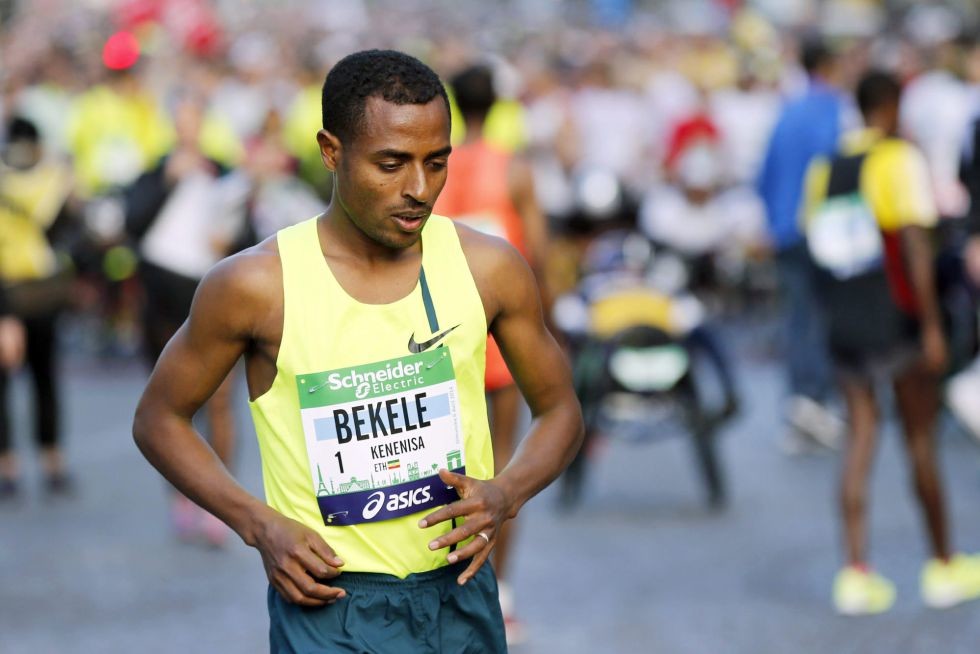
Kandie, who missed the Kenyan Olympic trials in 10,000m owing to an injury, holds the world half marathon record of 57:32 from 2020 Valencia.
Bekele has the fastest time in the star-studded field, having won the 2019 Berlin Marathon in 2:01:41, missing Eliud Kipchoge’s world record by two seconds.
Nageeye won the silver medal at the Olympic marathon in Sapporo this year, crossing the line in 2:09:58 behind Kipchoge.
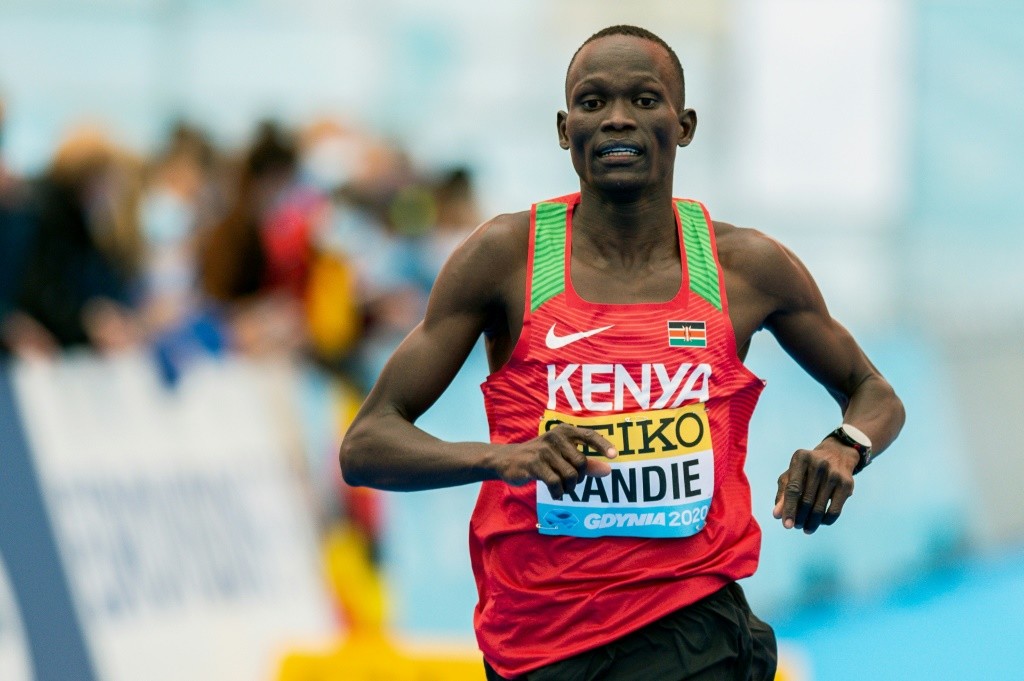
The Somali-born Dutch runner was 11th at the Rio 2016 Olympic marathon and has finished in the top 10 at the Boston Marathon twice.
“For me, winning the silver medal in the Olympic Games was not a surprise,” Nageeye said. “There were many good athletes in the race, but I knew my preparation had been good. I was ready for the conditions, and most importantly I believed in myself.”
Nageeye said he will take that same focus into his preparations for New York, and that his belief and confidence in his abilities is even higher than it was at the Tokyo Olympics.
“There is nothing I want more than to bring a New York City victory back home along with my Olympic medal,” said Nageeye in a statement released by the race organizers on Thursday.
Bekele, a four-time Olympic medalist and 16-time world champion, will make his debut in the men’s open division.
“I am proud of the many accomplishments in my career, but I have never had the opportunity to compete in the New York City Marathon,” Bekele said. “I am excited that 2021 will be the year for me to make my attempt in New York.”
Leading the American men will be Rio 2016 Olympian Jared Ward, who has finished as the top American in the last two New York City Marathons.
Great Britain’s Callum Hawkins will also make his New York City Marathon debut.
Hawkins is a two-time Olympian who finished fourth at both the 2019 and 2017 World Championships in the marathon.
The 2019 New York City Marathon second and third-place finishers, Kenya’s Albert Korir and Ethiopia’s Girma Bekele Gebre will return in an attempt to repeat their podium performances, in addition to 2016 race winner Ghirmay Ghebreslassie of Eritrea.
(08/20/21) Views: 130Ayumba Ayodi
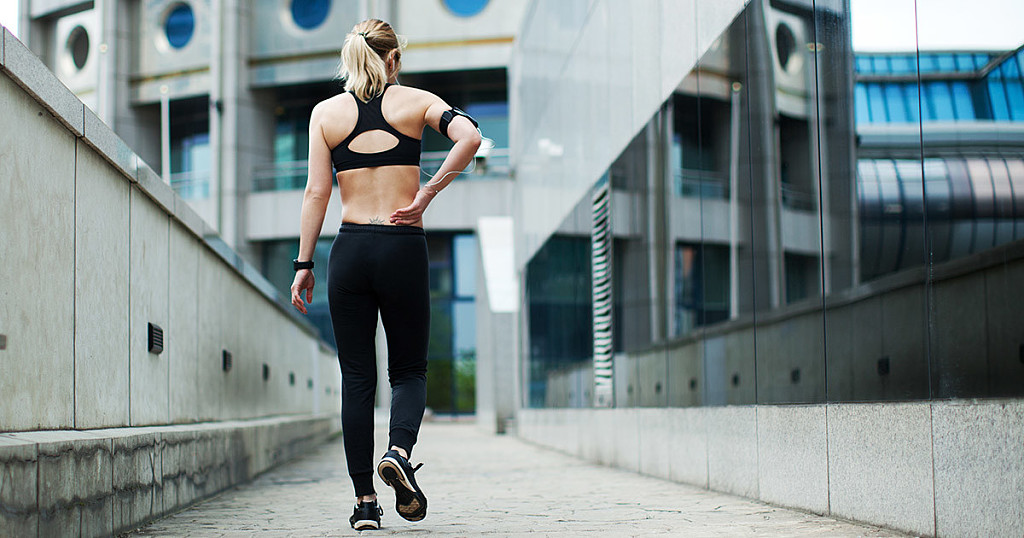
Lower Back Pain, Why It Happens To Runners And How To Get Rid Of
When you go out for a long hard run, you expect to have tired legs, burning lungs, and general fatigue; what you don’t often expect to have is back pain. But surprisingly enough, back pain amongst runners is a very common thing, particularly in less experienced runners, or those with improper running technique or weak back muscles (which is most of us!). And if you’ve ever experienced back pain after (or even during) a run, you know just how annoying and painful it can be.
WHY DO WE GET BACK PAIN WHILE RUNNING, ANYWAY?
If you think about it, your back has an enormous role to play when it comes to running. When you run, you have to hold your body vertical — sometimes for a very long time — and your back has to work with the rest of your body to keep you moving and upright.
When it comes to your lower back, it’s all about core strength, and the coordination of your legs. When you run, your core muscles have to work hard to support your spine and lower back, while your core, hips, glutes, and hamstrings have to join forces to keep you stable. When one muscle or a group of muscles becomes fatigued, your lower back has to work harder to keep you upright and on your feet, which can cause pain, or worst case scenario — injury.
And if you’re experiencing more pain in your upper back instead of your lower back, it’s often as a result of your head position. Yep, you heard right. A lot of upper back pain is a result of having your head leading your body — jutting out in front of your body — causing unnecessary tension and stress on the upper back. Another likely culprit of upper back pain is your arms. If you’re holding your arms up too tight or maybe even too high, or tensing your shoulders up towards your ears (which is common when the body is fatigued), it can cause strain on your upper back.
WHAT CAN YOU DO TO PREVENT BACK PAIN WHILE RUNNING?
To prevent back pain while running, the best thing you can do is to work on strength and flexibility. You need a strong core to support your spinal muscles, and strong, flexible legs (glutes, hips, quads, and hamstrings) to hold the body upright and stable while you run.
This is why cross-training — incorporating strengthening movements into your running routine — is so important! If you want to run for a long time, you have to protect your body by strengthening the muscles that keep your body moving and upright — it’s as simple as that.
WHAT KINDS OF EXERCISES CAN YOU DO TO PREVENT BACK PAIN?
Thankfully, there are ways to lessen the stress on your back and make running a little more comfortable — well, unless you ask your legs, of course.
If you’re looking to prevent back pain while running, try the following 3 strengthening exercises:
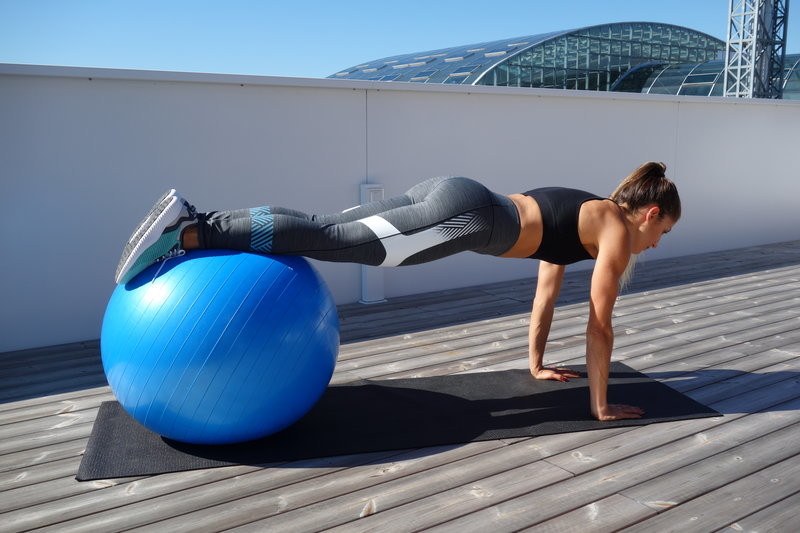
1. BALL PIKES.- One of my favorite core strengthening exercises is ball pikes — this exercise not only challenges your core and back but also helps to increase hip mobility and flexibility. To begin, rest your shins on top of an exercise ball and place your hands on the floor, slightly more than shoulder width apart, with your arms straight. Roll the ball in towards your chest, while lifting your hips as high as you can, without bending your knees, and then pause at the top and roll it back slowly. Do as many as you can, between 10-20, for 3 rounds.
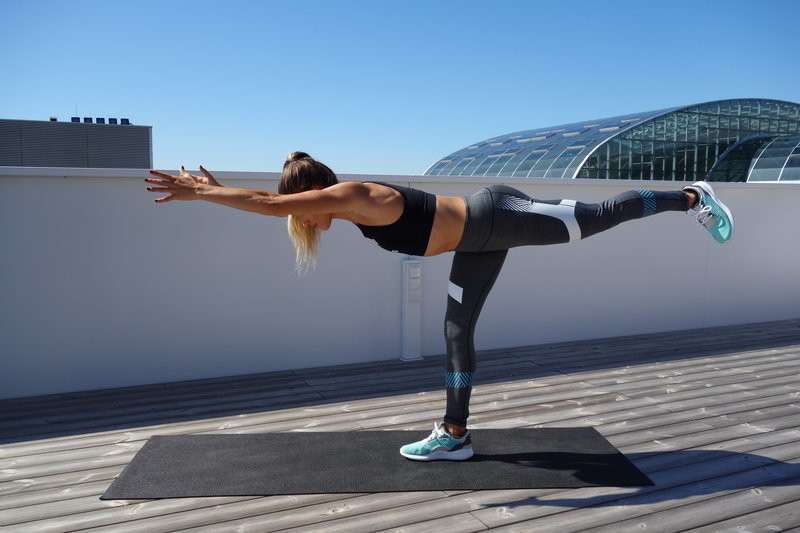
2. WARRIOR THREE HAMSTRING EXTENSIONS WITH LEG LIFTS.- In my opinion, if you wanted to do one move for the rest of your life that would help strengthen your glutes and hamstrings, improve hip flexibility, strengthen your core, and also help to improve your balance and stability, this is the move you should be doing. To begin, stand with feet about hips width apart. Bring one knee in towards your chest, and if possible, extend the leg out in front of you. Reach your arms up overhead, palms facing inward (you can hold onto a medicine ball for a more advanced movement). Pause. Then begin to move the leg behind you, bending forward from the hips until your body forms a “T” shape. Repeat on one side 10 times and then switch legs. Try to do this for 3 rounds.
3. BICYCLE CRUNCHES.- Having a strong core and flexible hips are both essential when it comes to running without back pain, which is why I love bicycle crunches. They work to strengthen your core while also challenging your hip flexibility and mobility. To begin, lie on your back with your shins parallel to the ceiling. Begin to draw one leg out in front of you, and touch the opposite elbow to the opposite knee. And then switch, pausing each time with elbow to knee and heel hovering off of the ground. Do 20 bicycle crunches (10 each side) for 3 rounds.
Running is a high-impact activity and can cause repetitive stress on the body, especially the lower back. Cross-training with these 3 moves combined with stretching the calves, hamstrings, and back body is a sure way to prevent back pain before it starts.
(08/24/21) Views: 91Adidas Runtastic Team
48th Edition of Credit Union Cherry Blossom Ten Mile Run to Feature Strong Men’s and Women’s Fields
It has been a long time coming — too long — and America’s finest distance runners are eager to toe the starting line at the 2021 Credit Union Cherry Blossom Ten Mile (CUCB), to be held in our Nation’s Capital on Sunday, September 12. With $26,000 in U.S. championship prize money on offer as well as a $10,000 bonus for an American Record (the bonus will be split if both the male and female break the American records), road racing fans can look forward to hotly contested races among both the men and women.
“It has been nearly two years since the last time the U.S. Ten Mile Championships for men and women were held,” said event director Phil Stewart. “I know a host of talented Americans are eager to take an important middle-distance test as most of them prepare for fall marathons, of which there are plenty, with all six World Marathon Majors events taking place over a six-week period between September 26 and November 7.”
This will be the third time one or more of the USATF 10 Mile Championships have been hosted by CUCB alongside the traditional international competition: the women’s championships were part of the 2013 Credit Union Cherry Blossom Ten Mile, with Janet Bawcom winning the title in 53:28 while placing fourth overall. A year later in 2014, race organizers hosted both the men’s and women’s championships. Christo Landry (46:41) was the first American to cross the finish line—in sixth place overall—while Bawcom repeated as the U.S. women’s champion by placing second overall in 52:12. Both of Bawcom’s times established American records at the time.
Keira D’Amato broke Bawcom’s American Record last fall at the Up Dawg Ten Mile, running 51:23 in a small invitational race organized by the Cherry Blossom Race Committee specifically for her to chase Bawcom’s record. D’Amato’s effort was recently verified as a women’s only World Record by the Association of Road Racing Statisticians as well. (ARRS is the only organization keeping world records at the 10-mile distance.)
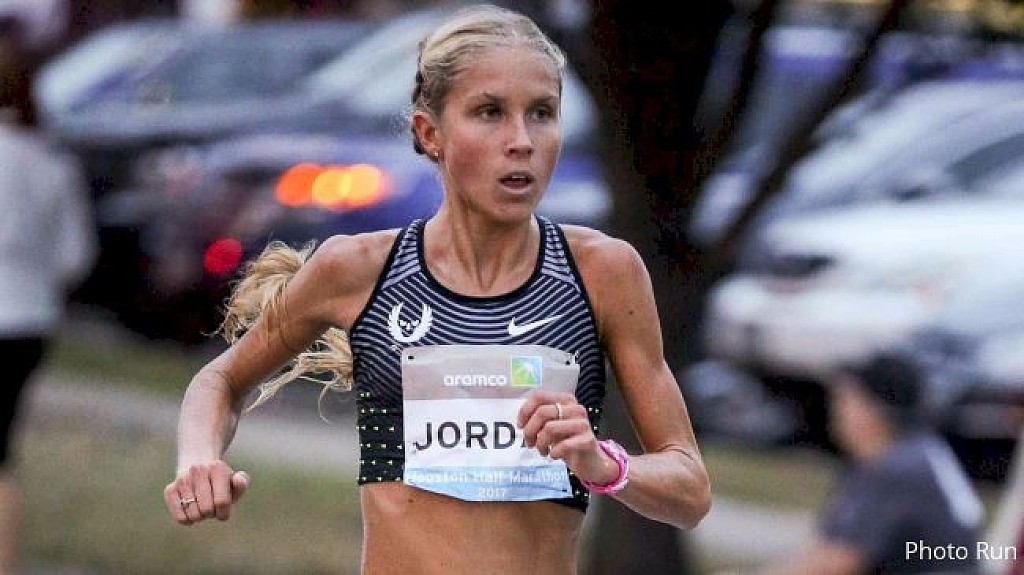
D’Amato will be joined on the starting line by two American women who have broken 53 minutes for 10 miles: Jordan Hasay (52:49) and Emma Bates (52:51). Three other Americans have run 54:00 or faster: Natosha Rogers (53:45), Diane Nukuri (53:56), and Annie Frisbie (54:00).
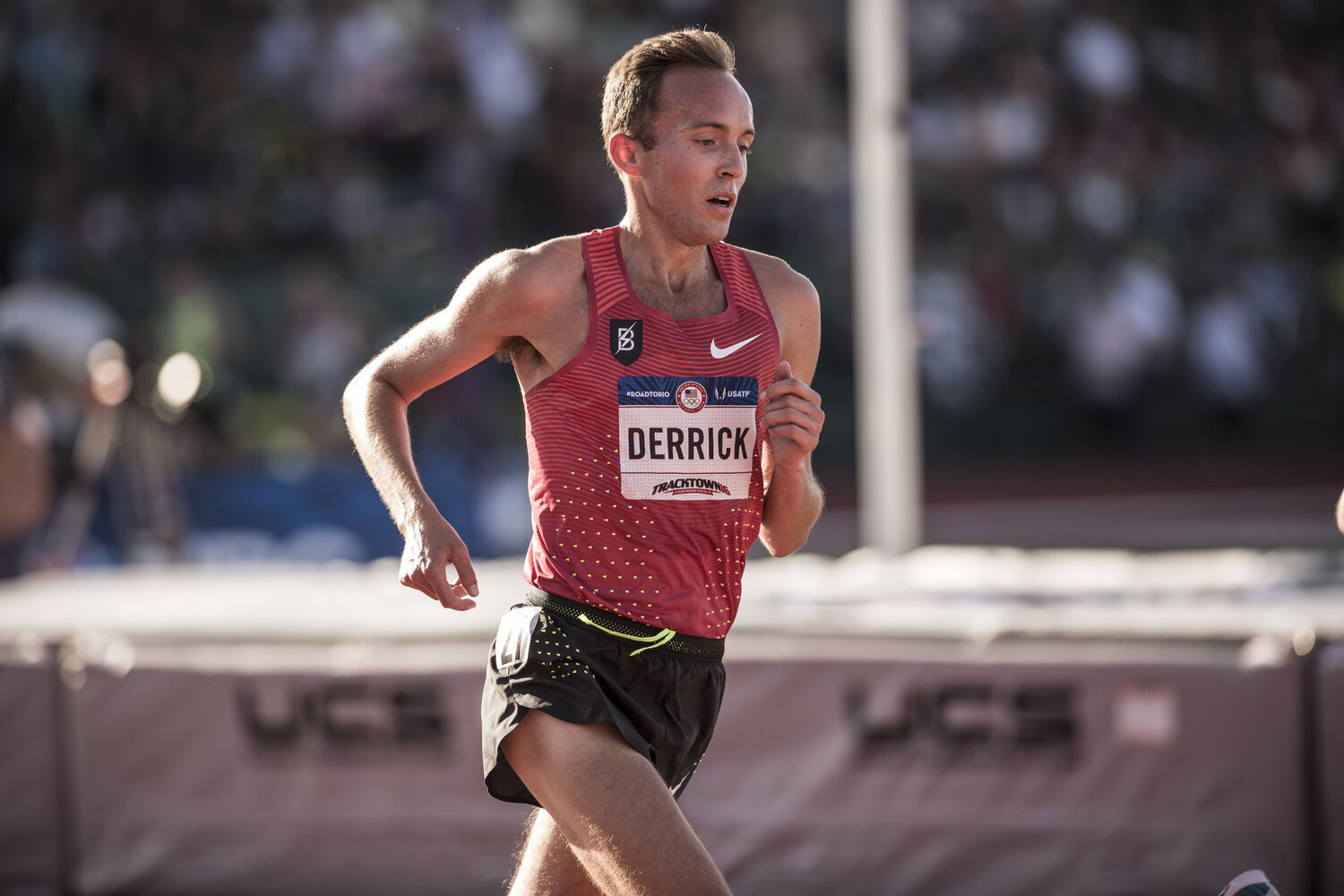
On the men’s side, Futsum Zienasellassie will be defending the USATF 10 Mile Championship he won in Minneapolis in 2019 (the last time American runners competed for this title, thanks to Covid-19). His winning time of 46:55 is one of four sub-47:00 marks among the American men entered in the race. Chris Derrick boasts the fastest personal best (46:53), which he ran at CUCB in 2018 when he was top American and fifth overall. Abbabiya Simbassa ran 46:57 to place second behind Zienasellassie in Minneapolis in 2019, and Kiya Dandena ran 46:58 in 2017 at CUCB. The current pending men’s American record is 45:54 set by Galen Rupp last fall. Rupp’s time bettered Greg Meyer’s time of 46:13 from the 1983 Cherry Blossom Ten Mile.
Here’s a complete listing of elite American athletes who have confirmed their entry into the 2021 Credit Union Cherry Blossom Ten Mile, with personal bests noted in parentheses:
Women:
Keira D’Amato (51:23)
Jordan Hasay (52:49)
Emma Bates (52:51)
Natosha Rogers (53:45)
Diane Nukuri (53:56)
Annie Frisbie (54:00)
Bria Wetsch (54:14)
Susanna Sullivan (54:22)
Bethany Sachtleben (54:42)
Grayson Murphy (54:51)
Carrie Verdon (56:57)
Danielle Shanahan (31:22.9 10K)
Amy Davis (32:13 10K)
Abbie McNulty (33:07 10K)
Stephanie Bruce (1:09:55 half marathon)
Nell Rojas (1:10:45 half marathon)
Men:
Chris Derrick (46:53)
Futsum Zienasellassie (46:55)
Abbabiya Simbassa (46:57)
Kiya Dandena (46:58)
Augustus Maiyo (47:05)
Elkanah Kibet (47:15)
Girma Mecheso (47:22)
Noah Droddy (47:28)
Louis Serafini. (47:35)
Emmanuel Bor (47:39)
Reed Fischer (47:50)
Shadrack Biwott (47:53)
John Raneri (47:53)
Tyler McAndless (47:56)
Dhruvil. Patel (48:37)
Frank Lara (48:37)
Joel Reichow (48:41)
Alex Monroe (48:57)
Willie Milam (49:10)
Robert Brandt (27:39.2 10K)
Brendan Gregg (44:25 15K)
Reid Buchanan (44:40 15K)
Emmanuel Roudolff (1:04:08 half marathon).
(08/20/21) Views: 90Running USA

5 Things To Know About This Year's Leadville 100 Run
After being canceled in 2020 for the first time in its 39-year history, the Leadville Trail 100, a,.k.a., "The Race Across the Sky," returns Aug. 21-22 with the same rugged, mountainous spirit it has had since inception.
An eager field of 687 runners will toe the starting line in Leadville, Colorado, trying to survive the high-altitude, out-and-back course over 12,532-foot Hope Pass and back. There are a few minor changes this year - most notably the pre-race athlete meeting and the post-race awards ceremony will be held outside on the Lake County High School football field and no pacers or crew will be permitted at the 50-mile turnaround point at Winfield - but otherwise this fabled race born out of the hardrock miner vibe of the resilient 1880s mining town remains the same as it ever was.
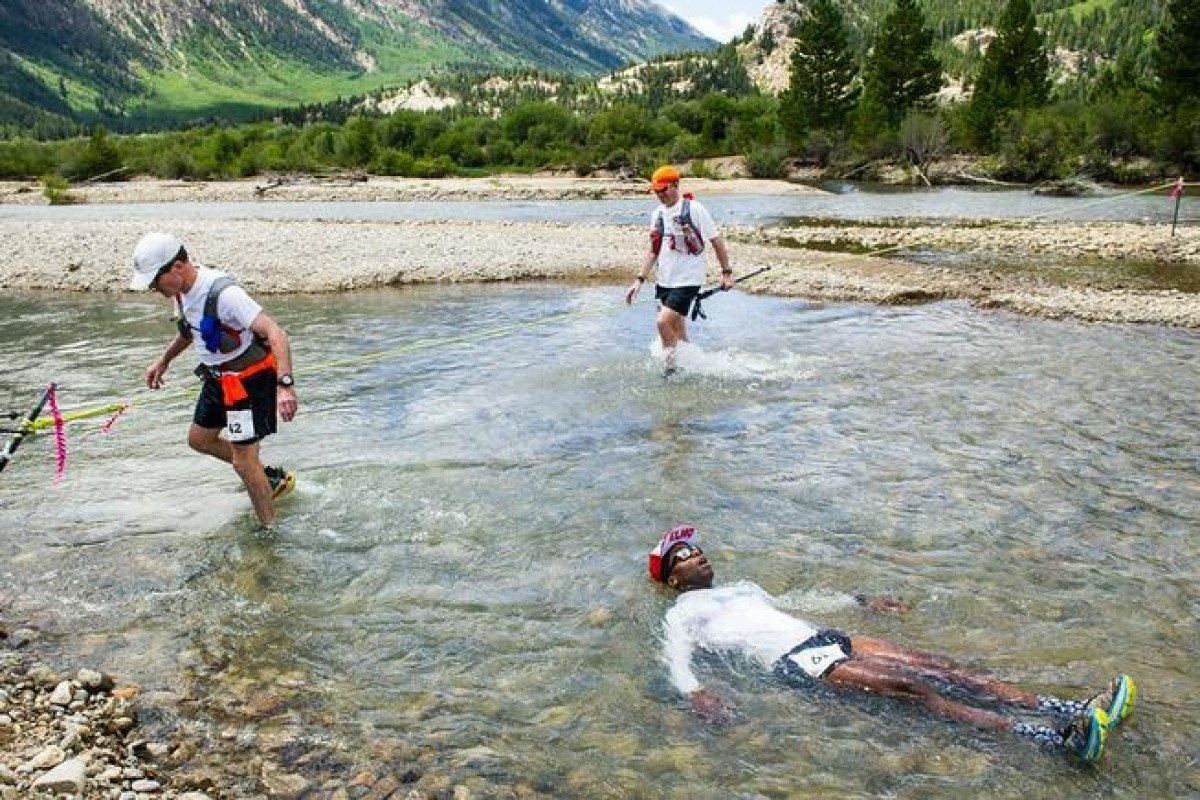
"It's Leadville, so it's all about getting to Winfield in good shape and then it's all about guts and strength and toughness on the way back," says Don Reichelt, one of the top contenders in the men's race this year. "If you've blown your quads coming down the back side of Hope Pass and then have to deal with the mental aspect knowing you have to go back up and over it, it can be a make-or-break moment of the race. It will be fun to see how it all plays out."
Here are a few things you should know about this year's Leadville 100.
The Course

First things first, the race is officially 99 miles in length with 15,734 miles in elevation gain. The out-and-back course starts and finishes at an elevation of 10,160 feet in Leadville, dips down to a low point of 9,219 feet near Turquoise Lake and tops out at 12,532 feet on Hope Pass at the 45- and 55-mile points. It's a unique course with two rugged climbs in each direction (Hope Pass and Sugarloaf Mountain/Powerline) and a lot of flat, fast entirely runnable sections on dirt roads and paved roads, as well as epic singletrack sections on the Colorado Trail. The men's course record of 15:42:59 was set by Pikes Peak Marathon legend Matt Carpenter in 2005, while the women's course record of 18:06:24 dates back to Ann Trason's astonishing 1994 effort.
Women's Race Contenders
Among the top women in this year's race is North Carolina's Ashley Arnold, 34, who was the women's champion in 2013 and third-place finisher in 2010. Although she has raced sparingly since 2019, she's been staying in Leadville and Buena Vista for a few weeks and training on the course and should be a contender based on her experience and track record. Although she won three 50K races in 2019-2020, her strong third-place effort at the Power of Four 50K in Aspen on July 31 is a good testament of her fitness.
Vermont's Aliza Lapierre is coming off a fourth-place effort at the Catamount 50K (4:59:19) in June and a win at the Infinitus 88K race in May (9:33:16) in her home state, as well as a victory at April's Ultra Race of Champions 100K (10:18:57) in Virginia. Leadville local Annie Hughes, 23, has only been trail running since 2019, but she's won a 50-miler each of the past three years (Jemez Mountain, Indian Creek, Collegiate Peaks) and has a third (Bryce Canyon, 2020) and a first (Mace's Hideout) in her two 100-milers. She also has a few high-mountain FKTs to her credit, including her 61-hour, 19-minute effort on the 167-mile Collegiate Loop in 2020.
There are several other top women from Colorado, starting with Maddie Hart, 24, of Boulder, who won the 2019 Tahoe Rim Trail 100-miler, and Kim Dobson, 37, of Eagle, a six-time Pikes Peak Ascent winner who has won all three of the 50K/50-mile races she has entered since 2018, including the Crown King Scramble 50K (4:31:44) in Phoenix in March.
Blake Wageman, 36, who has raced consistently at 50K and 50-mile race for the past several years (including a runner-up showing at the Silver Rush 50 on July 10 in Leadville); Carrie Stafford, who was fourth in the Leadville 100 in 2019; Becky Kirschermann, 48, a three-time top-five finisher at the Run Rabbit Run 100; Tara Richardson, 30, who is making her debut at 100 miles after running strong at Aspen's Power of Four 50K race in late July; and Becky Lynn, 28, who has been a strong runner at 50K and 50 miles.
On August 20 at 1 p.m. MT, Trail Sister's founder Gina Lucrezi will be emceeing a "Ladies of Leadville" roundtable discussion at the race expo with a diverse group of seven of this year's Leadville 100 participants - Arnold, Dobson, Lapierre, Grace Sims, Kate Tsai, Jolene Sandoval and Sawna Guadarrama. The goal of the event, which will be broadcast via Instagram Live, is to provide insight and inspiration from their unique perspectives and various backgrounds, to celebrate and empower women trail runners of all abilities and to promote diversity within the sport and longer ultra-distance races.
Men's Race Contenders
Among the favorites in the men's race is Ian Sharman, 40, of Bend, Oregon, who is a four-time Leadville winner (2013, 2016, 2017), and the fastest finisher of the Grand Slam of Ultraunning (69:49:38 combined time for finishing Leadville, Wasatch, Western States and Vermont 100-milers in 2013). Sharman, who placed second in the McDonald Forest 50K on May 8 in Corvallis, Oregon, has numerous ultrarunning wins and podium finishes under his belt and a 16:22 personal best on the Leadville course.
Another top contender is Tyler Andrews, even though he hasn't raced this year and doesn't have a lot of ultra-distance race experience. However, the 31-year-old runner from Massachusetts has set some pretty serious FKTs on high-altitude trails in Chile, Ecuador and Peru as part of a journey he dubbed the Los 10 FKT Project. He's also a two-time U.S. Olympic Trials Marathon qualifier who owns a 2:15:52 personal best for 26.2 miles on the roads.
Colorado's Don Reichelt, 35 brings a lot of very good ultrarunning race experience with him, especially from the past couple of years. Most notable are a third-place finish at the Badwater 135 in 2018, a win at the Lean Horse 100-miler in South Dakota in 2019 and a blazing 13:16 third-place effort at the Tunnel Hill 100-miler in Illinois last November. Reichelt has continued to improve into his mid-30s and lives in Fairplay, Colorado, and regular trains in the mountains around Leadville.
Cody Reed, 30, of Mammoth Lakes, California, has said on Instagram he'll be gunning for the win in a course-record time. This is the third year in a row Reed has been registered for the Leadville 100 but he got hurt in 2019 and the race was canceled last year. After recovering from a knee injury in 2019, he went on to win the Ultra Trail Cape Town 100K in South Africa. He has a lot of good to very good results since 2016 and certainly should be a runner to watch. He tuned up for the race by winning the six-day TransRockies Run.
Although he has vowed to run more conservatively than in his previous five starts, Anton Krupicka is not only a Leadville 100 legend but also an icon in the sport of ultrarunning. The two-time Leadville winner (2006, 2007) was trail runner's first social media star, and, although he admits he doesn't love the gratuitous attention he can attract, he's still a legit athlete and should be among the top five in the men's race based on his stout summer of training on his feet and on his bike.
Other runners to watch include David Kilgore, 29, New York City, a former University of Colorado runner and 2:27 marathoner who won the 340-mile The Speed Project multi-day race from Los Angeles to Las Vegas in May; Hannes Gehring, 34, of Denver, who set the Never Summer 100K course record (11:47:06) and placed sixth at the Run Rabbit Run 100-miler in 2019; Jackson Cole, 25, of Alamosa, Colorado, who has run several fast 50K races but hasn't raced anything longer than 38 miles; and Adrian Macdonald, 32, from Fort Collins, Colorado, who won the Antelope Island 50-miler in Utah this spring.
Leadman/Leadwoman runners and savvy veteran racers
There are 67 athletes remaining in the Leadman/Leadwoman challenge (of the original 109 starters back in June), but each one has to complete the Leadville 100 under 30 hours to become an official finisher. The Leadman/Leadwoman competitors have already completed at least four of the five Leadville Race Series events: the Leadville Trail Marathon, Silver Rush 50 Silver Rush run and/or mountain bike (competitors can chose one or both events), Leadville Trail 100 Mountain Bike Race and the Leadville 10K. Rodrigo Jimenez is currently in 8th in the standing and will start in dead last on Saturday, competing in the Back of the Pack challenge to raise money for the Leadville Trail 100 Legacy Foundation.
There are four runners over the age of 70 entered in the Leadville 100: Gordon Hardman, 70, Chuck Cofer, 70, and Marlin Weekley, 70, and Marge Hickman 71. Hardman has been running ultras since the late 1980s, has three previous Leadville finishes to his credit (1989, 1998, 2010) and is one of only 23 runners two have completed the Grand Slam of Ultrarunning twice (1989, 1998). Weekley has apparently only been running ultras in his 60s, but has more than two dozen race finishes over the past seven years. Cofer has 12 previous Leadville 100 finishes dating back to 1996, but is back for the first time since 2015. Hickman, a longtime Leadville resident, is one of the most accomplished women runners in the race's history. She's a 15-time Leadville 100 finisher who won the women's race in 1985 (26:57:50) and finished as the runner-up four times (1984, 1986, 1991, 1995). She also wrote an authoritative book on about the race.
Robbie Belanger's Endurance Feats
Robbie Belanger is a plant-based endurance athlete known for running across the U.S. in 75 days in 2019 and setting a world record for the Central Park Loop Challenge (16 laps, just under 100 miles) during the park's official opening hours. Most recently, he created a new challenge for himself focused on exploring Colorado and his affinity for the Leadville Race Series. In 2019 he moved to Denver and did the Silver Rush 50. In light of COVID, he started thinking about what he could do locally, within Colorado, so came up with the Colorado Crush Challenge, using the Leadville Race Series as a framework for his larger effort. His challenge started with the Leadville Marathon on June 19, followed by running the Colorado Trail in 11 days, and then completing the the Silver Rush 50 on July 10. Between Silver Rush and the Leadville 100 run, he reached the summit of all 58 of the Colorado 14ers, completing that epic feat on August 16 when he reached the peak of Missouri Mountain. That's 58 peaks in 38 days with nearly 300,000 feet of vertical gain.
(08/21/21) Views: 85Trail Runner Magazine
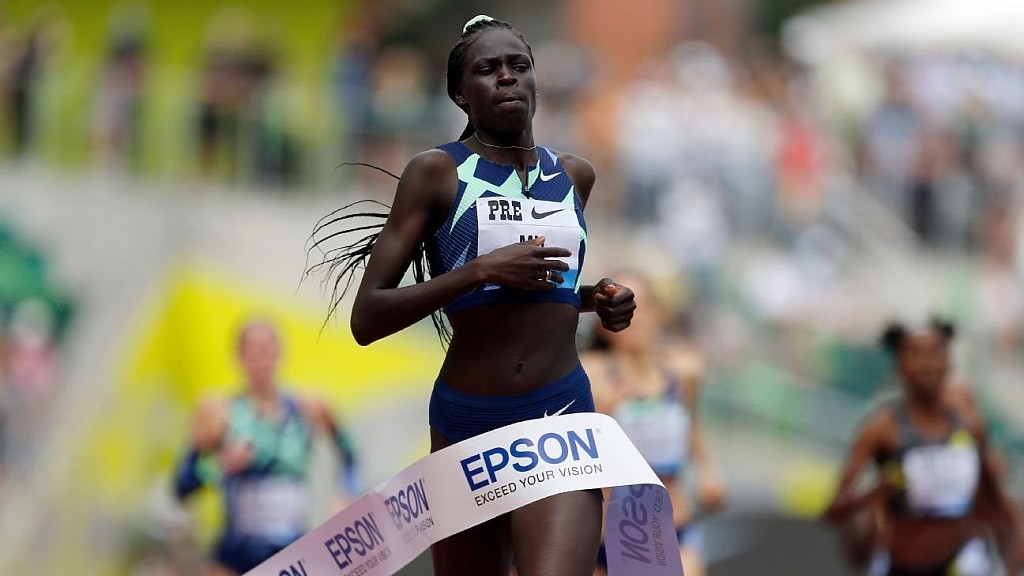
Athing Mu runs American record at Prefontaine Classic
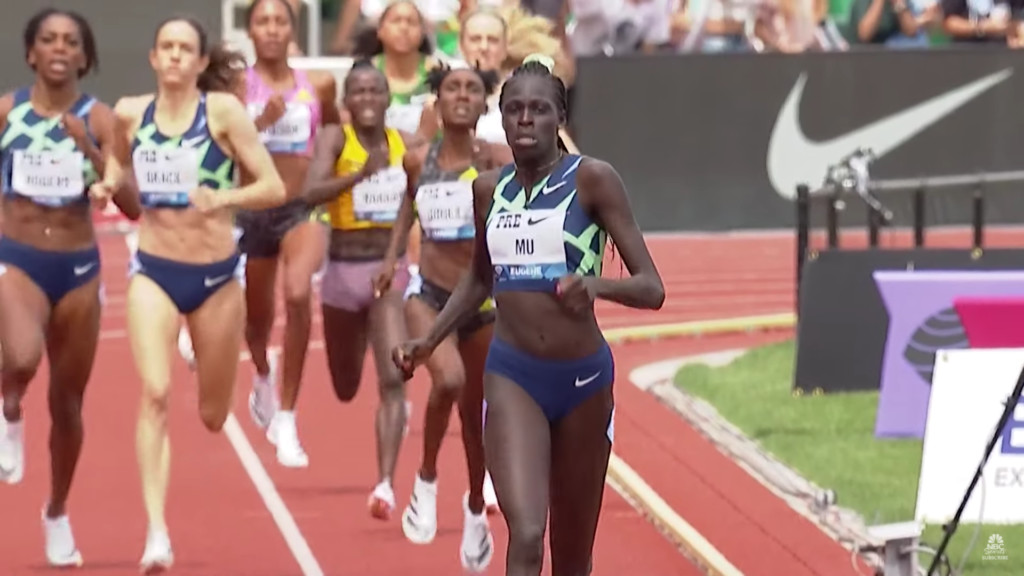
Less than a month after winning the 800m Olympic gold in Tokyo, Athing Mu bettered her American record over the two-lap race at the Prefontaine Classic on Saturday afternoon, stopping the clock at 1:55.04.
The 19-year old improved her previous American record by .17 seconds and set a meet record. Mu has won seven straight races since turning professional on June 19.
“I knew this was probably going to be a little tougher coming off the Olympic games and running a personal best there,” Mu said post-race. “I was not concerned about the time, I just wanted to run with whoever is there and to be competitive.”
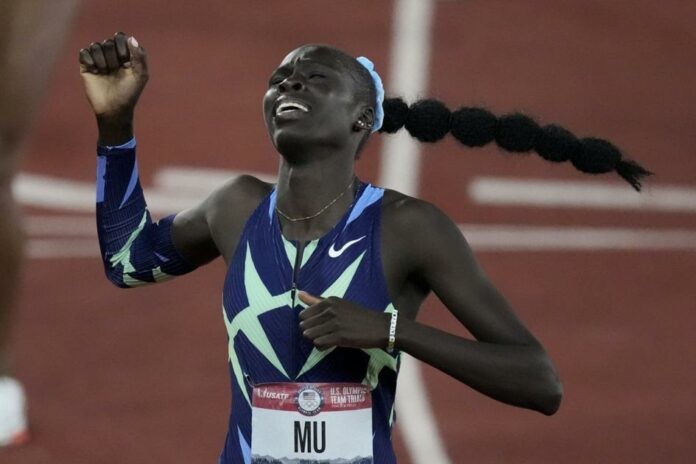
Mu led from start to finish, covering the first lap in 54.60. She beat the field by 2.5 seconds as her fellow American Kate Grace finished second in 1:57.60 and Jamaican Natoya Goule was third in a time of 1:57.71.
Mu was not the only American who dazzled on the track. Noah Lyles, who fell short with a bronze medal finish in the men’s 200m in Tokyo, ran a world-leading 19.52 Saturday.
Lyles had this to say on Twitter after the race:
Lyles’s brother, Josephus Lyles had a personal best performance of 20.03 seconds and finished third in the race, behind Kenny Bednarek (19.80) and above Canada’s Aaron Brown, who finished fourth in 20.12.
Canadian Jerome Blake made his Pre Classic debut, clocking a personal best time of 20.20 over the half-lap race and finishing sixth.
(08/22/21) Views: 84Marley Dickinson
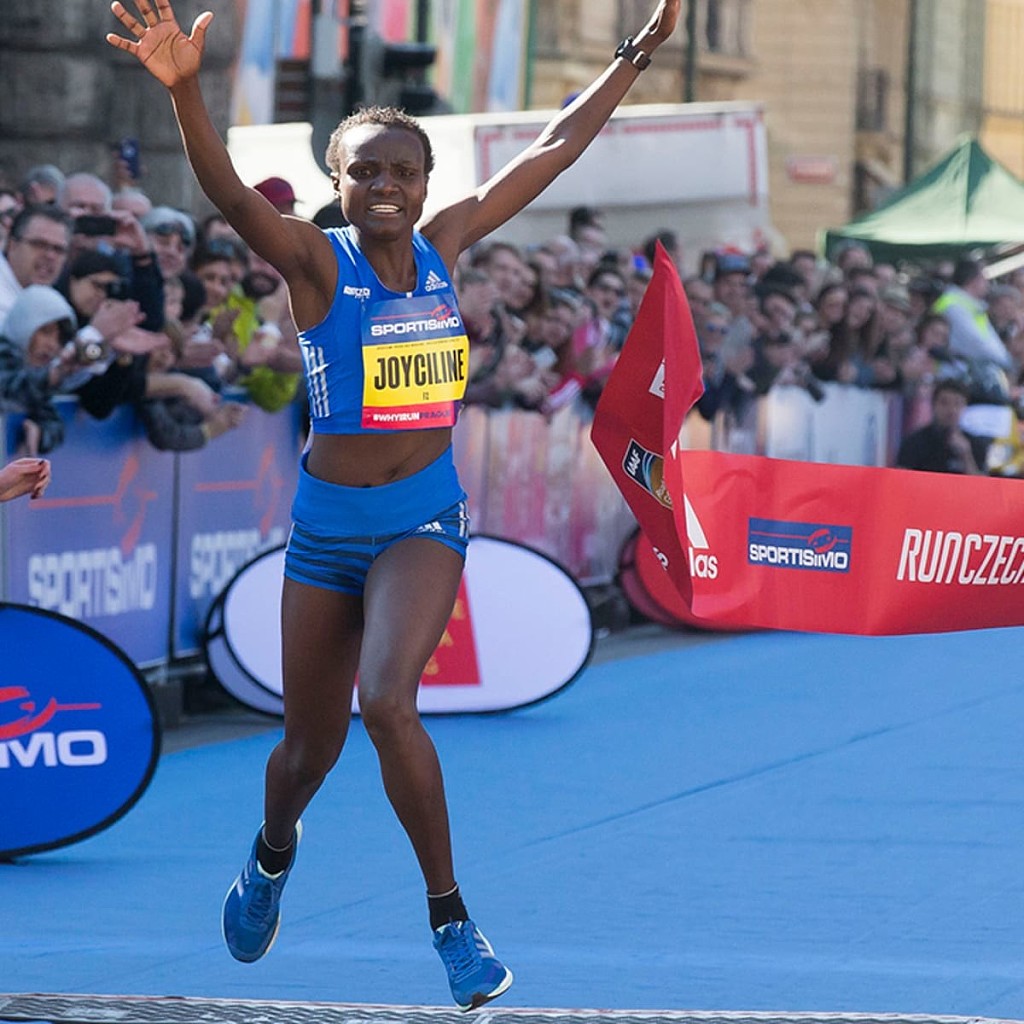
Kenyans Felix Kipkoech (58:57) And Joyciline Jepkosgei (65:16) Win Generali Berlin Half-Marathon
Joyciline Jepkosgei took the GENERALI BERLIN HALF MARATHON with a spectacular course record of 65:16. The 27 year-old Kenyan smashed the mark of Dutch double Olympic Champion Sifan Hassan, who had won the race with 65:45 in 2019. Second-placed Kenyan Nancy Meto was just five seconds behind, improving her PB by more than three minutes. With 65:21 she was also inside the former course record. Valary Aiyabei completed the Kenyan podium with 67:32 for third place.
Kenya’s Felix Kipkoech clocked a world leading time of 58:57. The 23 year-old improved his own world lead by 38 seconds. Fellow Kenyans Josphat Tanui and Philemon Kiplimo followed in second and third with 59:40 and 59:54 respectively.
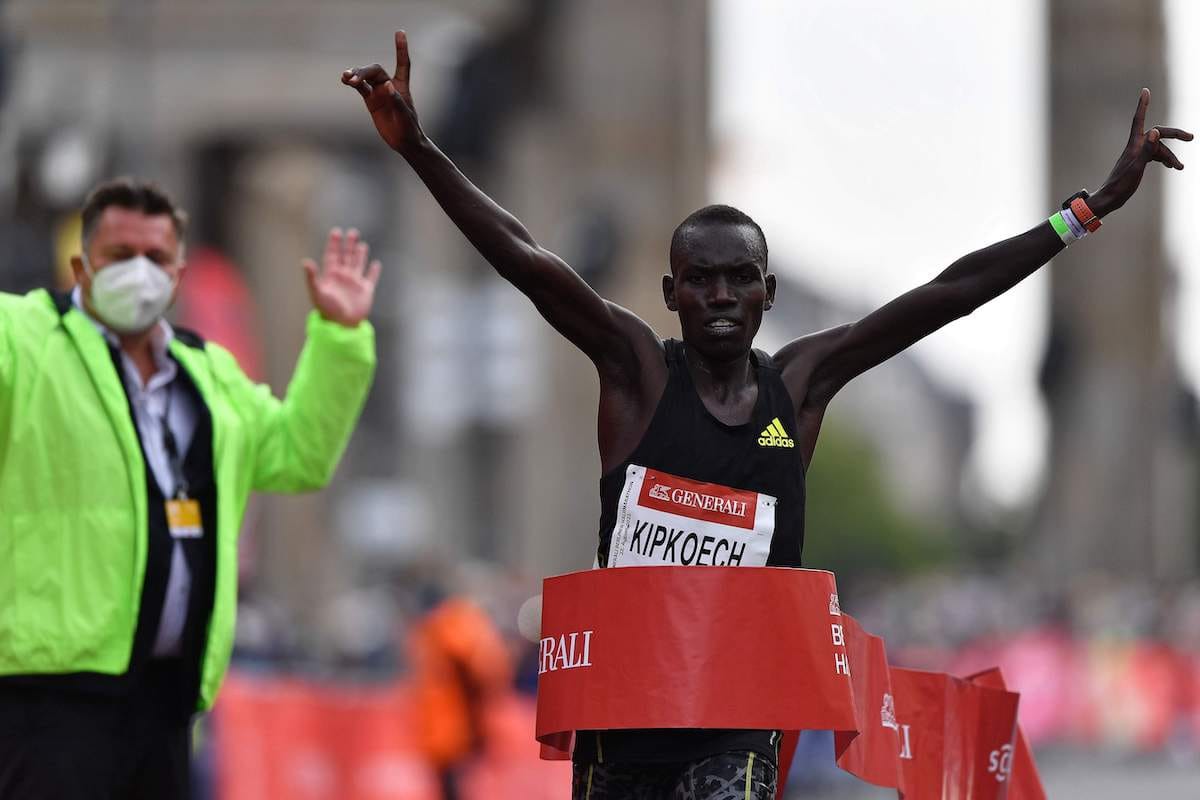
A total of 15,096 Starters from 130 countries had entered the 40th edition of the GENERALI BERLIN HALF MARATHON. 14,508 of them were runners, 572 Skaters, 14 Handbikers and 2 wheelchair athletes.
(08/22/21) Views: 70
Noah Lyles Redeems Himself at Prefontaine Classic With Record Run
The Tokyo Olympics were not very kind to American Track athletes as many of the favorites failed to win gold in events they dominated earlier in the year. One of them was Noah Lyles, who fell short in the men’s 200m race and won bronze rather than the gold that he aimed for.
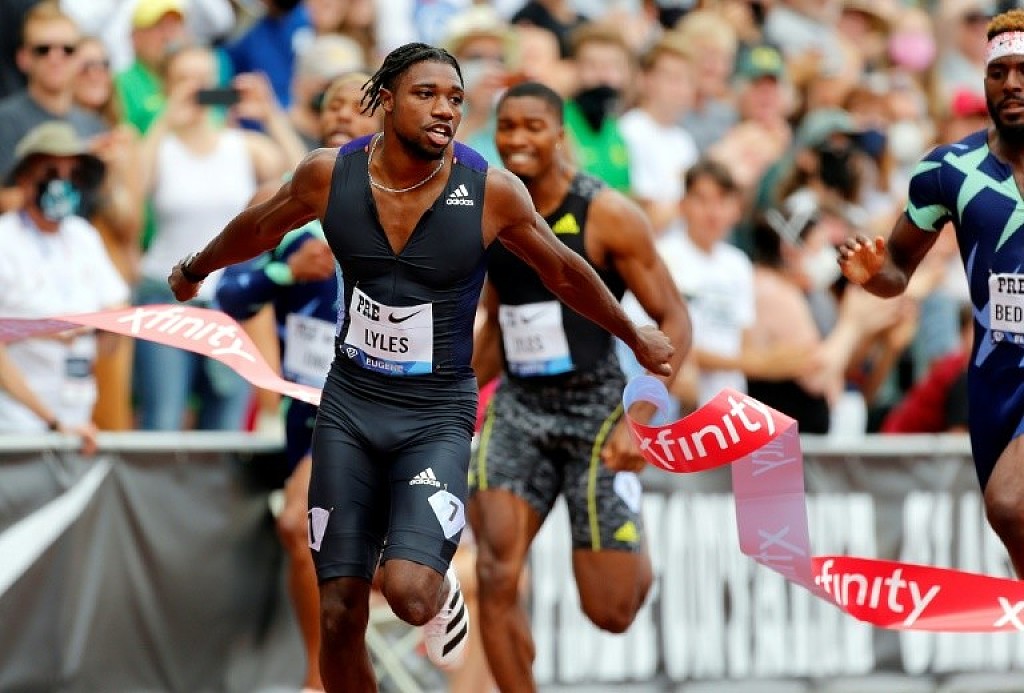
If minor setbacks, major comebacks was ever a reality, it could be applied in his case. At the Nike Prefontaine Classic 2021, Lyles stormed to win the 200m sprint at a blistering timing of 19.52 seconds, the fastest time this year in the event across all competitions!
The Olympic bronze medalist stormed to the finish line to defeat fellow American Kenny Bednarek, who outpaced him in Tokyo for silver. Noah Lyles also competed on the same track as his brother Josephus, who has been making quite a name for himself lately.
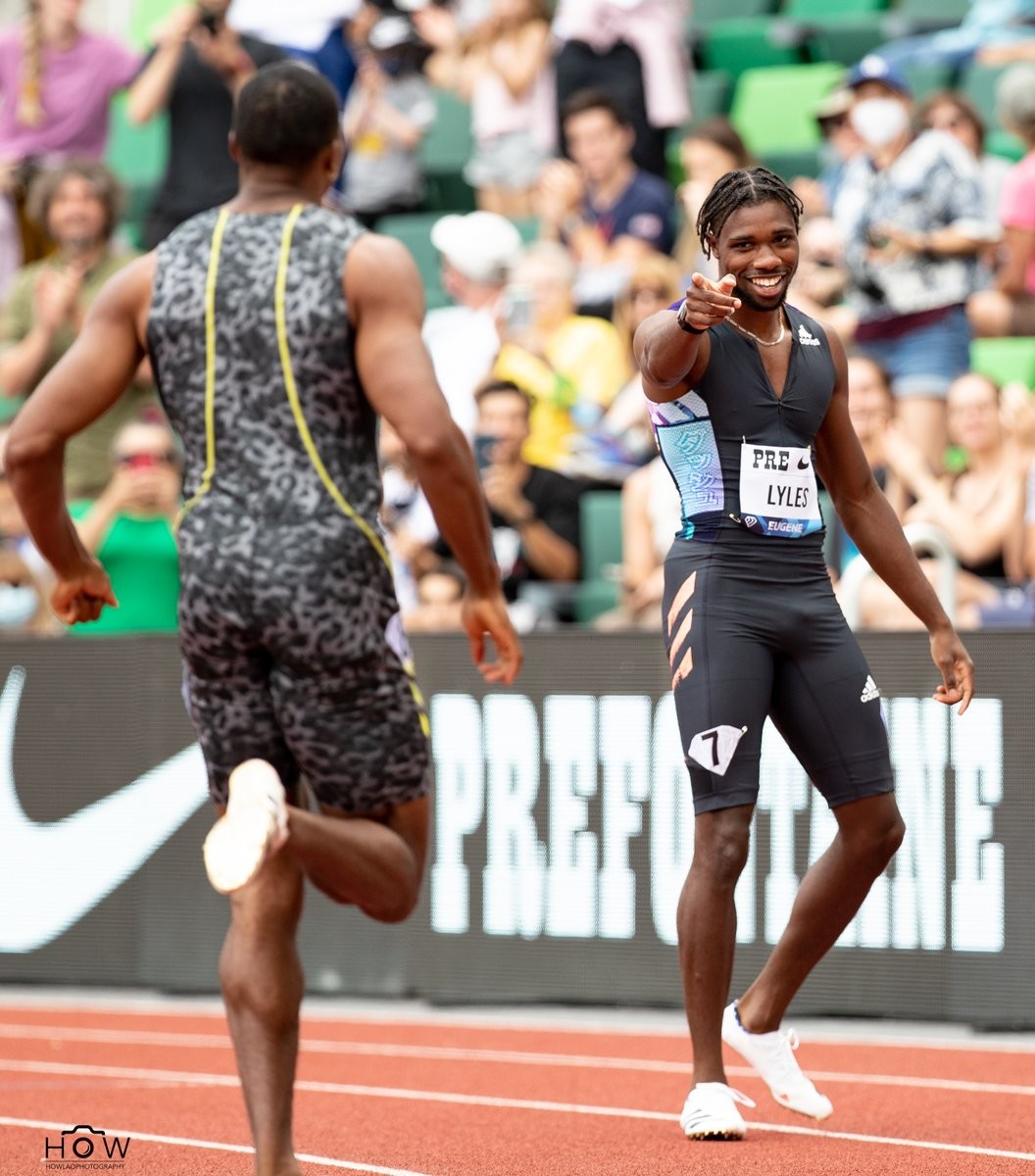
Josephus finished third in the race, behind Bednarek and above Canada’s Aaron Brown with a timing of 20.03 seconds. Lyles and Bednarek lived up to expectations and cracked the 10-second mark but the former stole to show with his comeback run.
Noah Lyles silenced the criticism after Tokyo
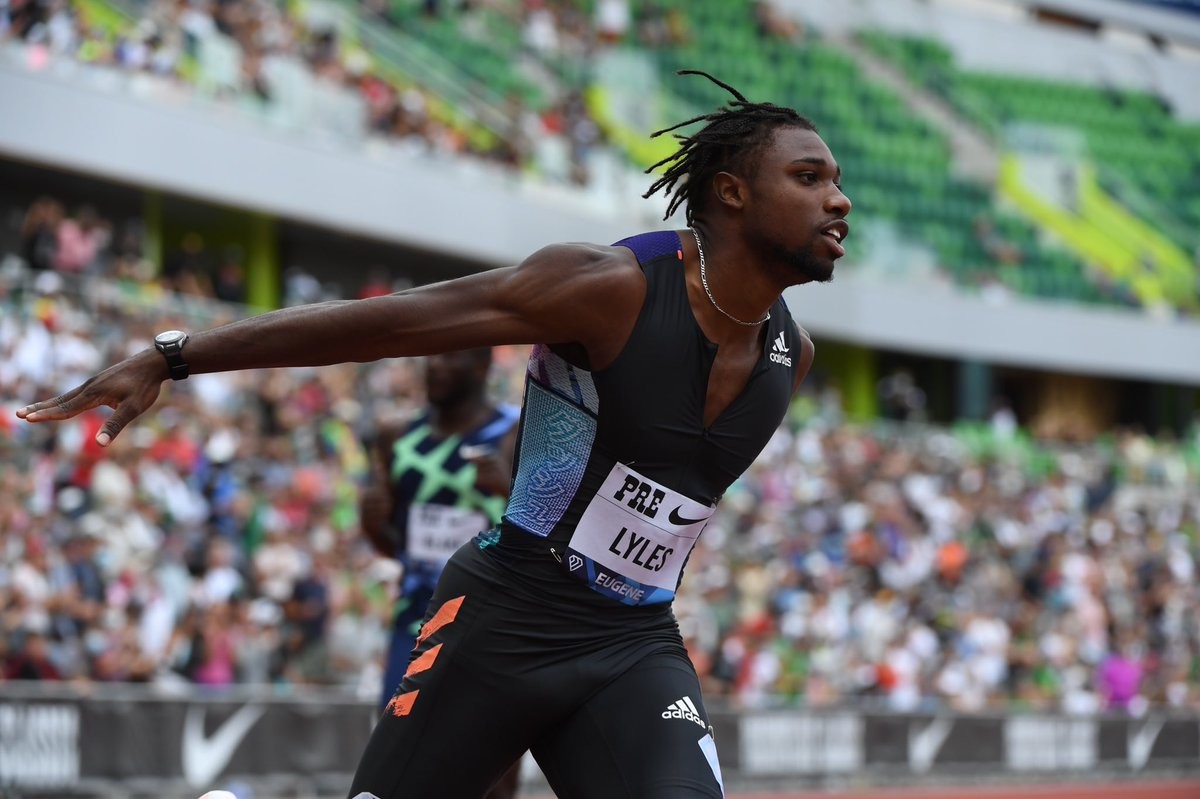
The track star managed to run 19.74 seconds in the 200m at the Olympics, while Bednarek ran 19.68. Andre De Grasse of Canada ran a national record of 19.62 seconds to win gold. However, he did not participate in the 200m event at the Pre-Classic, winning gold in the 100m race instead.
An interesting participant in the 200 race was Rai Benjamin. The 400m hurdles star decided to drop the hurdles and the 400m to try his hand in the 200m race. He put on an impressive show to finish at 20.16 seconds and at fifth place.
Prior to the event, 110m hurdles specialist Grant Holloway tweeted his belief that Rai Benjamin would run 19.85 seconds and win the 200m race. However, he was forced to take his words back as Noah Lyles dominated the race.
Learning from his mistakes in Tokyo, the 200m star is back and surely already has his sights set on Paris. Although it will be three long years to get there, he aims at gold and nothing short of it.
(08/23/21) Views: 64Luke Dias
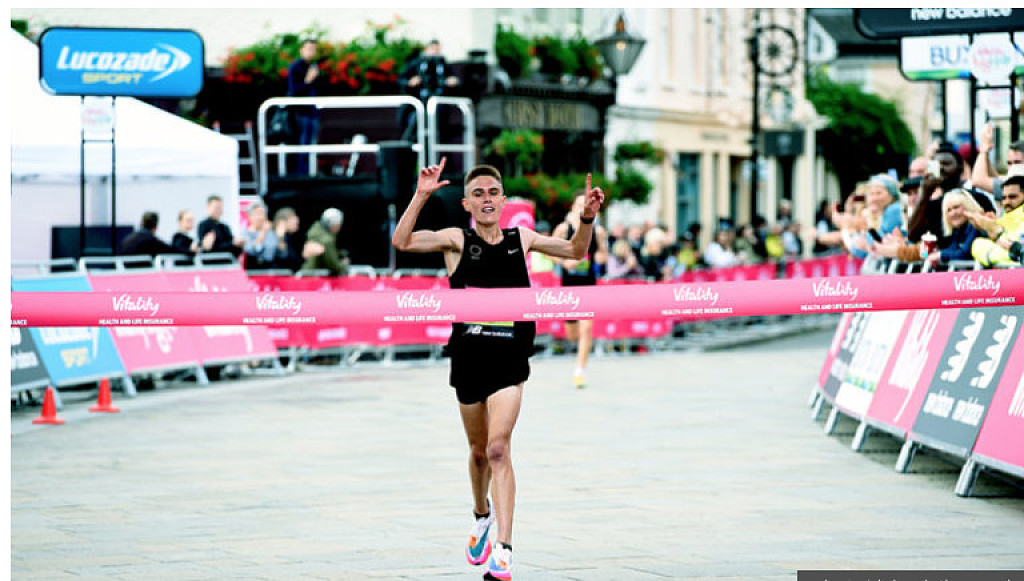
Charlie Purdue and Jake Smith enjoy Big Half victories
Around 12,000 runners took part in 13.1-mile event in London on Sunday
Charlotte Purdue and Jake Smith put in solid performances on the roads of London as they struck victory in the Vitality Big Half on Sunday (Aug 22).
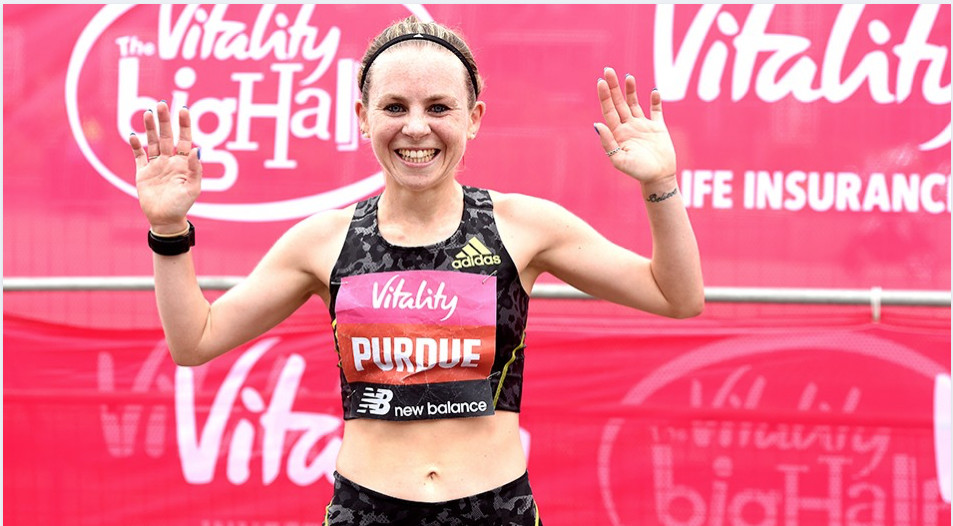
In her third win in the women’s race, Purdue improved her own course record to 69:51, which bodes well for her chances at the Virgin Money London Marathon on October 3.
In the men’s race, Smith clocked 62:06 to beat Jack Rowe by five seconds and the Cardiff runner will hope to go quicker still when he lines up in the Great North Run on September 12.
Around 12,000 runners set off in various waves as part of the return of mass participation running following the pandemic. In the race to finish first woman home, Purdue ran with Samantha Harrison in the early stages before pulling away in the second half of the race. Harrison held on for second in 70:40 as Natasha Cockram was third in 72:46.
Next came Hannah Irwin in 73:24 followed by Naomi Mitchell in 74:24 and Verity Ockenden in 74:35.
“It’s good to be back running with a crowd,” said Purdue, who was racing for the first time since February 2020 due to injury. “I was happy with the time. I was more bothered about ‘racing’ it than the clock, though. I’ve been training really hard for London Marathon so wasn’t sure how tired I’d be, although I felt okay.”
On her build-up to the London Marathon, she said: “My main aim is not to get injured and to keep training consistent and get to the start line healthy.”
Smith was part of a group with Rowe, Mo Aadan and Phil Sesemann mid-way through his race but he broke away at around nine miles and held his advantage over the chasing Rowe despite multiple nervous glances over his shoulder in the latter stages.
Smith ran 62:06 with Rowe clocking 62:11, Aadan 62:28 and Sesemann 62:47.
In fifth Andrew Heyes ran 63:10, followed by Matt Clowes in 63:40, Jamie Crowe in 64:19, Ollie Lockley in 64:26, Doug Musson in 64:36, Calum Johnson 64:38, Jonny Mellor 64:44 and Josh Griffiths 65:11.
“I came into this race as the fastest and had the pressure to deliver so to come away with the win is amazing,” he said. “It’s the first race I’ve done when they bring you forward on the start line (to introduce you to the crowd). After that I just put my head down and tried to race it.
“My aim was to throw in surges throughout and then go hard with about 5km to go. I ran a negative split as well which I’m really happy about.”
Sam Kolek won the men’s wheelchair race in 50:37 as Nikki Emerson won the women’s wheelchair category in 67:38 after Shelly Woods punctured.
(08/22/21) Views: 59
