

Running News Daily
Top Ten Stories of the Week
5/15/2021
These are the top ten stories based on views over the last week.
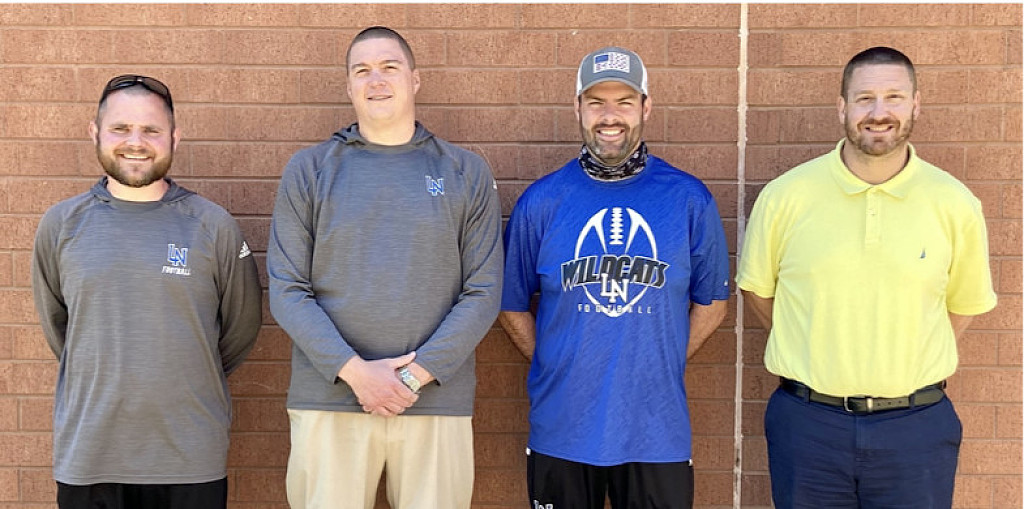


Meet the Thick Boys Running Club—These Runners Have Lost a Combined 350 Pounds and Counting
Four football coaches in North Carolina started running together last summer, and they have inspired people all over the state.
A group of four Lake Norman High School football coaches in Mooresville, North Carolina, have collectively lost over 350 pounds through running since July 2020.
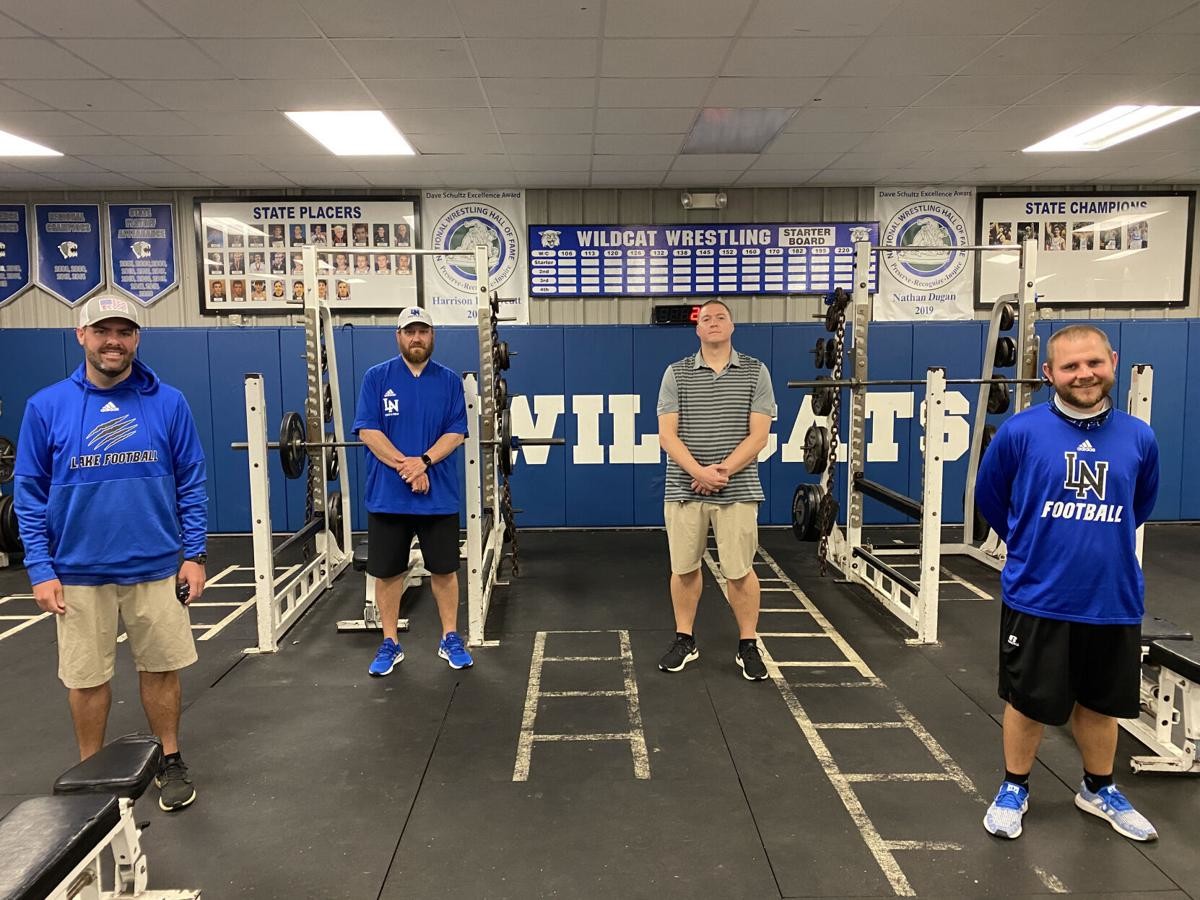
And together, they call themselves the Thick Boys Running Club.
The four coaches are all former college football players who struggled with weight after their playing days were over; they said they had wanted to lose weight for years. When the pandemic hit and their coaching and teaching went virtual, they found themselves with some extra time.
→ Want to read about more inspirational running stories? Join us at Runner’s World+ ✨
Jay Keener, 40, the school’s athletic director and football coach, was the first to make a move.
“I always justified my weight [thinking that] 300 pounds isn’t bad, and then 310. And then, I was afraid to weigh myself,” Keener told Runner’s World. “When I saw 345, I realized it’s not going to get an easier to get the weight off later, so I better do something.”
Keener started on the track by running to the straights and walking the curves. A week later, he recruited offensive coordinator Sean Fitzgerald—who weighed 284 pounds, his highest ever—to join him.

By early August, head coach Jonathon Oliphant (278 pounds) and defensive coordinator David Johnson (365 pounds) joined Keener and Fitzgerald in running daily laps around the track. As the four runners progressed, they started doing stadium stairs, and ran 5Ks and 10Ks. Rarely did any of them run without a partner.
“There’s literally 300 feet between the school and the field house, and I would be out of breath,” Johnson told Runner’s World. “That’s how out of shape I was. Being 365 pounds was tough for me. Having these guys helping and encouraging me, it gave me the direction I needed, and it helped having that support system over the past eight months.”
The four coaches wrote their weights on a whiteboard in the field house by the stadium, and they weighed in every Friday starting on August 24. Instead of competing against one another to see who could individually lose the most weight, they decided to work together and collectively reach milestones. They celebrated every time they hit a combined 50 pounds lost.
“Myself and coach Oliphant had been involved in weight-loss competitions before against people, and we wanted to do something different,” Fitzgerald told Runner’s World. “Everyone wanted to pull their own weight. It was much more fun and we never had to go at it alone.”
The first to hit the century mark was Johnson, who has lost nearly 120 pounds. Chasing him for second place is Keener who has lost over 80 pounds to get below 200 followed by Oliphant who has lost just under 80 pounds, and Fitzgerald who has lost over 70 pounds.

With kids back to the classroom and at practice, the coaches are doing more runs before and after school. And all four have noticed some stares this spring.
“It’s definitely a combo of the weight loss and wearing a mask, but it’s been difficult for people to make me out. They wonder who the new teacher is,” Johnson told Runner’s World. “People keep coming up and saying how proud they are of us and are inspired. People are telling us that they saw me out there, and now they’re running and trying to lose weight. That’s the best part to me. It’s an influence you had that you didn’t know you had.”
Additionally, their athletes are taking particular notice.
“The kids have really gotten behind us with their comments and curiosity, asking how far we ran today and how much we lost that week,” Oliphant told Runner‘s World. “They get excited about it, which has helped us keep going. It’s a lifestyle we’re proud to share with them and one we hope they take with them in their lives.”
The four runners said they have received letters of support from people in the community, and notes from coaches around the state. And their families have been supportive, and appreciated the healthier lifestyle at home, especially the recipes shared between the runners.
“My mom came and ate lunch with us a while back and she made the comment that we sounded like a bunch of housewives sharing recipes,” Fitzgerald said.
The Thick Boys Running Club plans to grow their group in the future. They hosted the inaugural Thick Boys Running Club 5K in September and pulled in more than $2,400 for local charities. They hope to host another run in 2021.
“I’ve dealt with weight issues my whole life,” Oliphant said. “Now, I got a handwritten letter from a guy from a couple counties north saying how we motivate him, and he’s 40-something years old. I relate to that and it’s been so positive to see others inspired by seeing stories like their own so they know it can be done. Being able to be that positive for someone, it’s a blessing.”
(05/10/21) Views: 84Runner's World

The International Olympic Committee and Pfizer to donate vaccines to Olympic athletes
Earlier this year, the International Olympic Committee (IOC) and Olympic officials in China announced their agreement to buy and distribute Chinese vaccines to athletes ahead of the Tokyo Games and the 2022 Beijing Winter Olympics. This week, vaccine developers Pfizer and BioNTech have announced they will be donating doses to athletes and officials preparing for the Games to add an extra layer of safety to what many are calling a potential “super spreader event.”
This new deal with Pfizer will give the IOC greater worldwide coverage to have athletes vaccinated, since many countries have not yet authorized the Chinese vaccines for use. Doses will start being delivered this month in hopes that there will be enough time for athletes and officials to receive two doses before arriving in Tokyo. Vaccination will not be mandatory for anyone attending the Games, but IOC president Thomas Bach is encouraging all delegations to take part in the rollout.
“We are inviting the athletes and participating delegations of the upcoming Olympic and Paralympic Games to lead by example and accept the vaccine where and when possible,” he said in a statement.

Canadian Olympic Committee (COC) CEO David Shoemaker has also voiced his approval of the decision, saying that this will provide an “important layer of protection for Canadian athletes in the lead up to and during the Games.” The Canadian Olympic team and its constituents are expected to make up approximately 1,100 people.
“The Olympic Games hold special meaning for the millions of Canadians who will be inspired by the resilience and determination of Canadian athletes this summer in Tokyo. As most provinces begin vaccination of the general population, this announcement will help more Canadians receive vaccinations quicker,” Shoemaker said.
Until now, the COC had maintained that Canadian athletes would not be jumping the queue in Canada’s vaccination rollout, but according to The Guardian, the IOC has made it clear that vaccines going to athletes and staff would not be taken from existing programs, but would “be in addition to existing quotas and planned deliveries around the world.”

With the vaccine rollout in Canada beginning to pick up steam, many Canadian athletes are already receiving their first doses without the Pfizer donation. In fact, the COC’s chief medical officer, Dr. Mike Wilkinson, has already told the Canadian Press he expects the entire team to have received at least their first dose before Tokyo.
Many people around the world have criticized the decision, arguing that vaccine donations should be sent to places like India, where COVID-19 infections have risen dramatically, but others have said that vaccinating athletes will prevent them from bringing the virus home to their communities.
“Anybody who says they should donate them to India or teachers, I get it, I would not argue with that. I understand, it’s very personal,” said Athletics Canada’s CEO David Bedford. “But I also believe that these athletes and the support staff are protected. And fortunately, the good news is that Pfizer and BioNTech have said this isn’t coming out of any allocations to countries.”
As the Games get closer, there is still a lot of opposition from the Japanese public, many of whom wish to have them cancelled. As of now, however, it seems that the Olympics will be going ahead, and having as many athletes as possible vaccinated may be the best way to ensure they can happen safely.
(05/07/21) Views: 72Brittany Hambleton
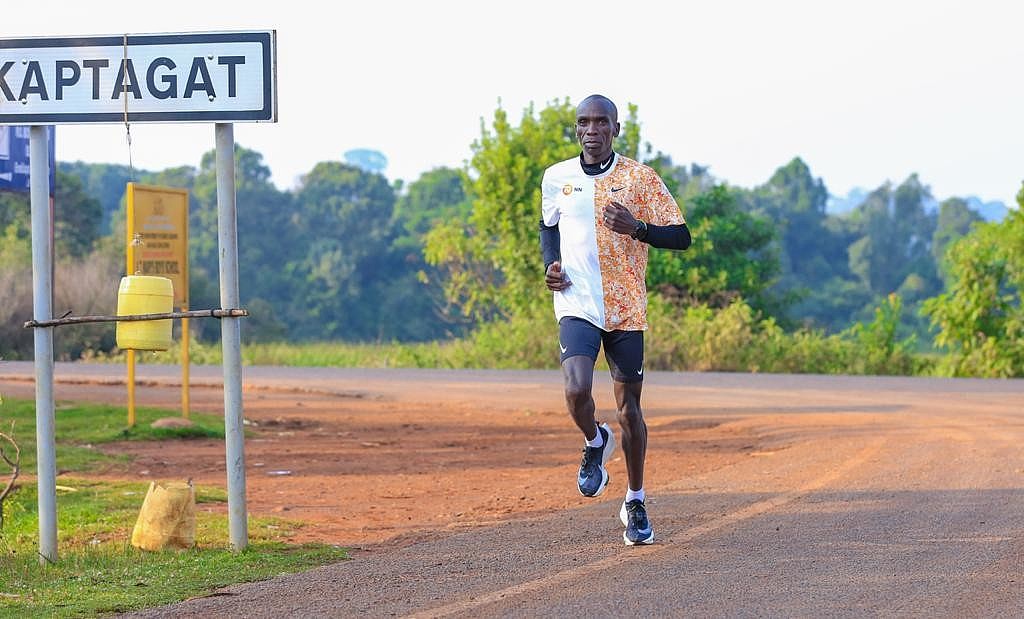
Eliud Kipchoge and Sara Hall, among runners chosen for Sports Illustrated’s Fittest 50 honors
Sports Illustrated has released its Fittest 50 list, and as usual, multiple runners were included. The Fittest 50 is SI‘s attempt to list the fittest men and women in the world, looking at athletes from any and all sports. This year, nine runners were selected, with six of the 25 women and three of the 25 men coming from the track, trails or road. Here’s a breakdown of where each individual placed and why the SI panel (which included Dr. Michael Joyner of the Mayo Clinic) chose them.
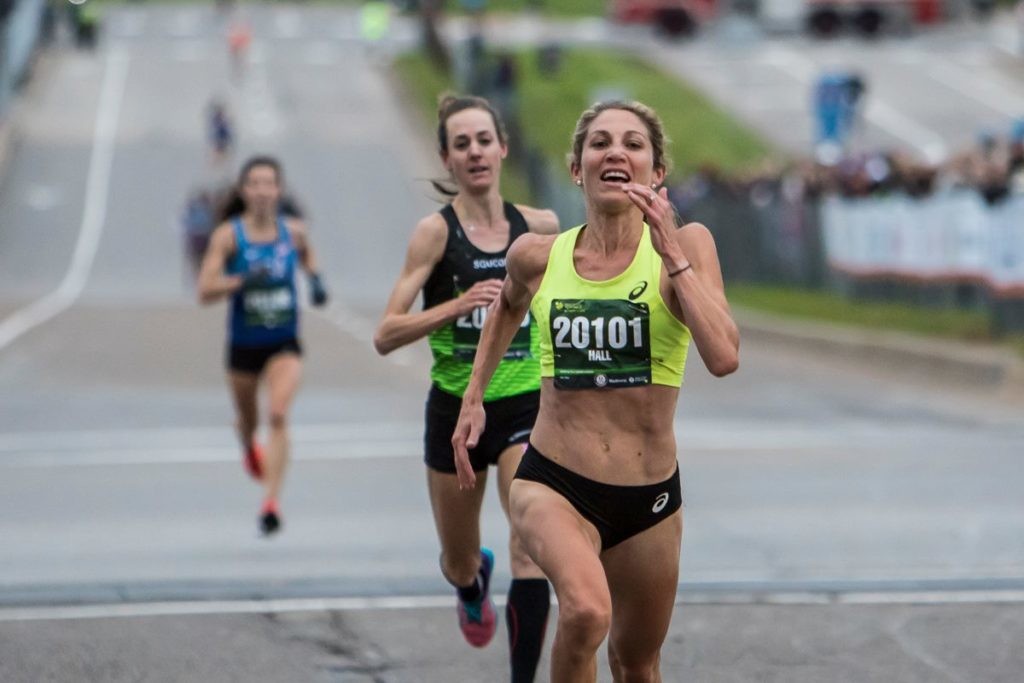
Running was the sport with the most women included in the top 25, and the six athletes chosen was double the three chosen from MMA, which was the sport with the next-most number of selections. American marathoner Sara Hall is #24, and with her performances in the past year, it comes as no surprise to see her on this list. The SI team notes how Hall overcame the disappointment of missing out on the Tokyo Olympics and ended up running two huge marathon PBs, first at the London Marathon (where she finished in second in 2:22:01) and then with her win at The Marathon Project, where her 2:20:32 finish was the second-fastest marathon in U.S. history.
Up next is Dalilah Muhammad at #16. SI refers to Muhammad as the “queen of the 400-meter hurdles,” a title she has owned since her gold medal in the event at the 2016 Olympics. Since then, she has broken the world record on multiple occasions (her current record stands at 52.16 seconds, a time that won her the gold medal at the 2019 world championships), and she is now a heavy favorite to win gold in Tokyo this summer.
American ultrarunner Courtney Dauwalter comes in at #14, and her remarkable result from Big’s Backyard Ultra in 2020 is listed as a big reason for that. Dauwalter won the American title at the event, running 455K. Just ahead of Dauwalter at #13 is American track and field star Tianna Bartoletta. Bartoletta is truly a track and field standout, as she has won Olympic and world medals in both sprints and jumps. In London in 2012, she won Olympic gold as part of the U.S. women’s 4 x 100m relay team. She and the squad defended that title in Rio four years later, and she added an individual gold medal in the long jump.
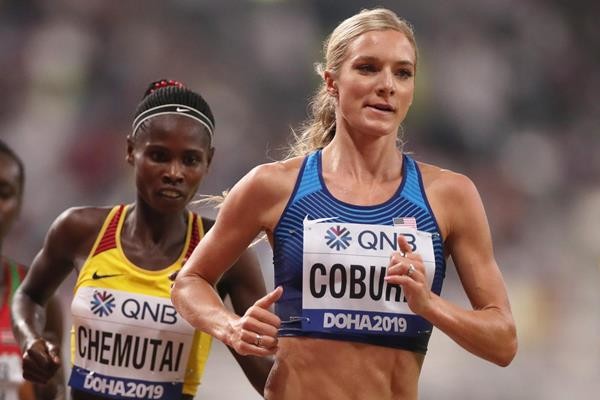
Emma Coburn is #10 on the list, coming in ahead of tennis star Serena Williams.
Unlike on the women’s list, running didn’t win for the most men selected in the top 25 (American football had four athletes and basketball had three), but three athletes still made the elite list. American ultrarunning sensation Jim Walmsley was included at #24, and he is extremely deserving of this honor. Firstly, as noted in the SI piece, he competed at the U.S. Olympic Marathon Trials in 2020, going out of his comfort zone and running 42.2K instead of his preferred ultra distances of 100K or 100 miles. He finished in 2:15:05, earning him 22nd place in his debut marathon. He then kicked off 2021 with an amazing 100K run in Arizona, where he finished in 6:09:26, breaking the American record and finishing just 12 seconds off the world best.
Next up is Eliud Kipchoge at #20. While Kipchoge had the worst marathon of his career at the London Marathon in October 2020, there’s no denying that he’s still one of the best road runners in the world. He’s the world record holder in the marathon and he is the only human to run under two hours in the event, making him a favorite to win gold in Tokyo this summer.
Finally, breaking into the top 10 is Noah Lyles at #9. Lyles is the reigning 200m world champion, and he owns a PB of 19.50 in the event. He’s a heavy favourite to take gold in Tokyo, and he might even compete in the 100m. Add all this together and he’s a clear choice for SI‘s Fittest 50 list.
(05/10/21) Views: 67Ben Snider-McGrath
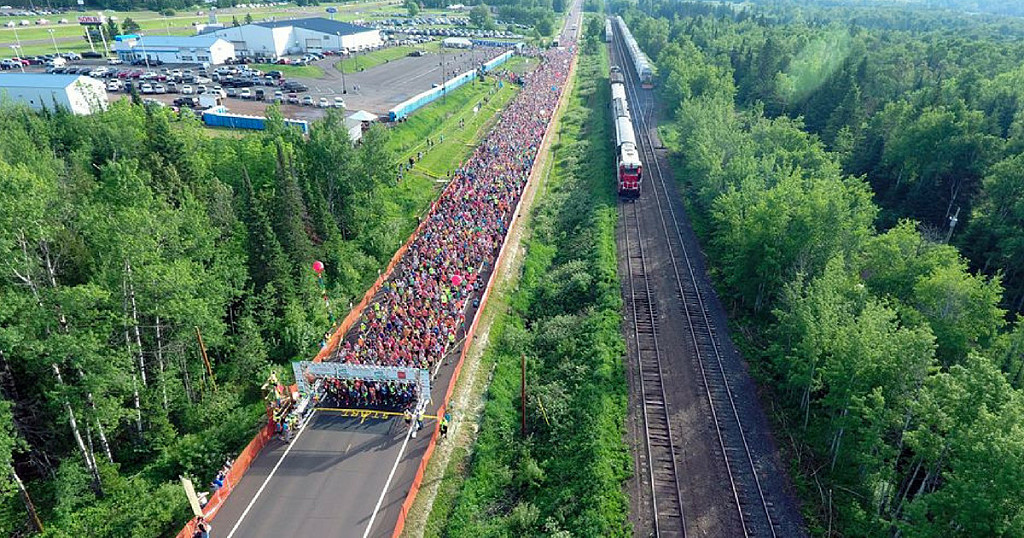
2021 Grandma's Marathon receives green light for 45th annual marathon plus half marathon and 5K, races will be held as scheduled
The 45th annual Grandma’s Marathon weekend has received the green light for June, which comes as Minnesota Gov. Tim Walz announced Thursday a loosening of the state’s public health guidelines.
“This is a great day not just for Grandma’s Marathon but for our community as well,” Executive Director Shane Bauer said. “So many people had a hand in making this event a reality this year, and to be here today with the final approval is a testament to the effort everyone’s put in. Our staff can’t thank our state and local partners enough for their tireless work, and we look forward to once again welcoming our participants to the unofficial kickoff to summer in Duluth.”
Grandma’s Marathon and the Garry Bjorklund Half Marathon are scheduled for Saturday, June 19, with the William A. Irvin 5K being run the night before.
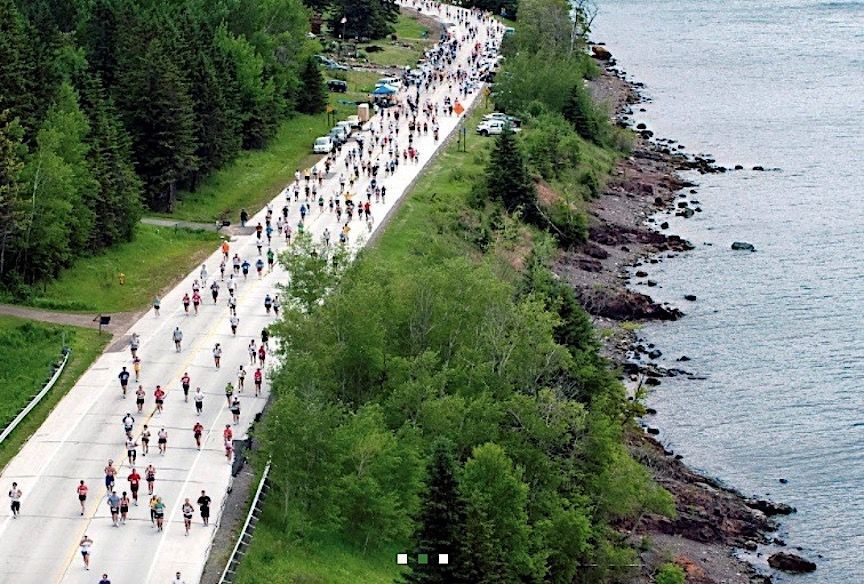
“I am so excited to welcome Grandma’s Marathon back to the streets of Duluth,” Duluth Mayor Emily Larson added. “Last year many of us participated in Grandma’s virtual races — I loved the flexibility Grandma’s awarded us as runners, but it’s just not the same as the Canal Park finish. It’s truly one of my favorite days in the year. We are thrilled to welcome runners back to Duluth and participate in a safe and well-planned event.”
While the updated state guidelines provide a clear path forward for the 2021 Grandma’s Marathon, organizers say more specific updates as to how they will change the current race weekend plan will be announced in the coming days.
(05/07/21) Views: 56News Tribune
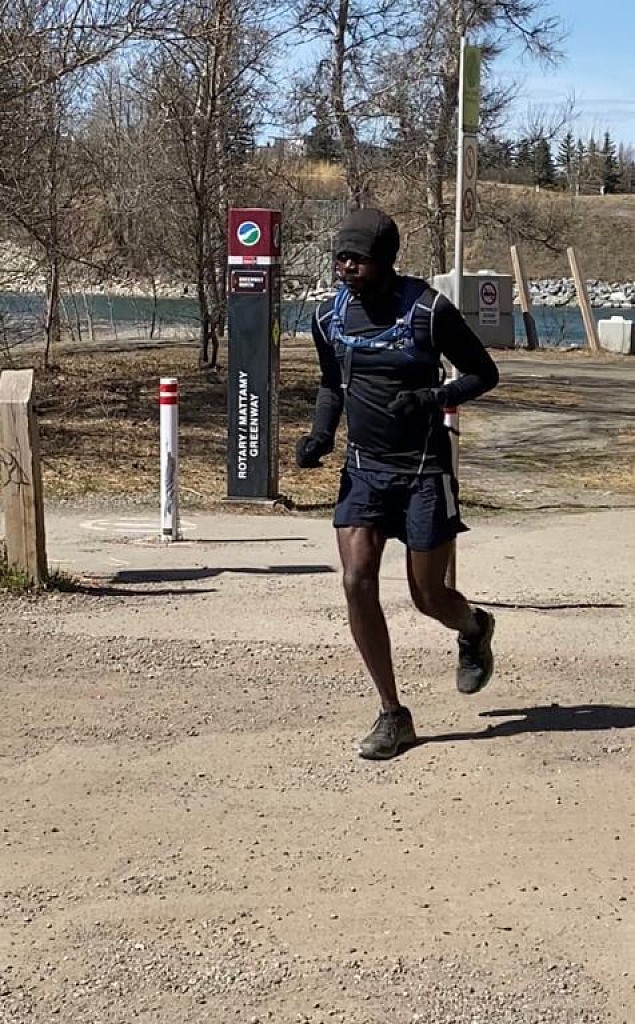
Canadian ultrarunner Varden Morris wins Great Virtual Race Across Tennessee
The Great Virtual Race Across Tennessee has only been running for 10 days, but it already has its first finisher. Calgary’s Varden Morris completed the roughly 1,000K race in just over a week, averaging an impressive 103K per day since the event kicked off on May 1. Matt Shepard of Valleyview, Alta., is currently in second place, with just over 800K complete.
The GVRAT
Laz Lake created the GVRAT in 2020 at around the same time many races started going virtual. Lake, who is best known as the race director of the Barkley Marathons, wasn’t going to organize a quick virtual 5K or 10K, though, and he decided to take runners across his home state in a 1,000K ultramarathon. This year, just like in 2020, the race started on May 1, and participants have until August 31 to complete the route. They upload their runs or walks to the event website, which tracks every runner’s progress and lists the leaderboard.
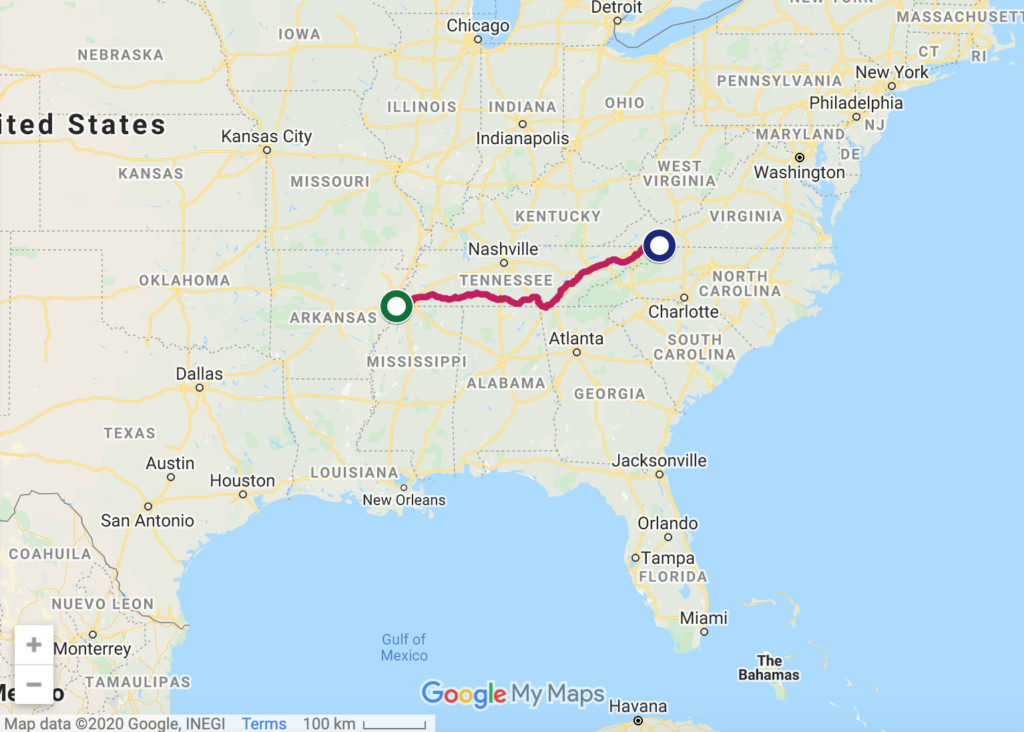
This year, around 5,000 people have signed up, although registration is still open for anyone interested in jumping into the ultra challenge. For people who think 1,000K is a bit too short, there’s an out-and-back race option, which tops out at a bit above 2,000K.
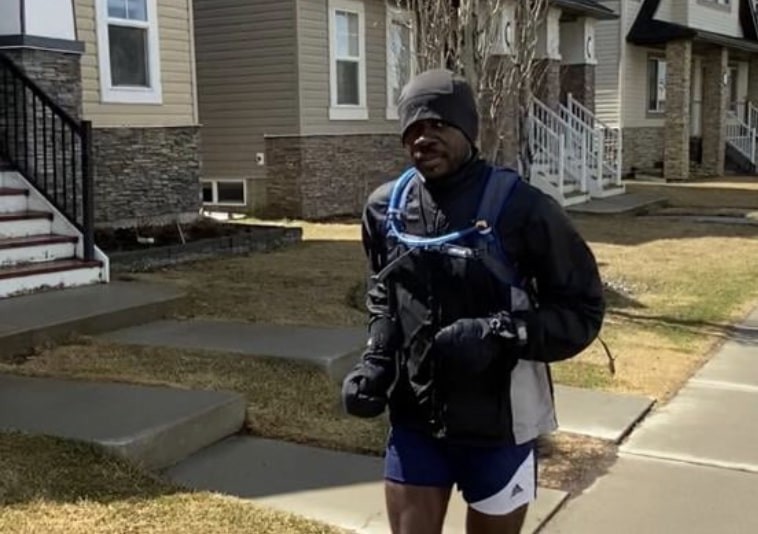
Morris’s win
Morris was relentless in his 10 days of racing, and he went for multiple runs each day to rocket himself up the leaderboard and toward the win. He kicked the challenge off on May 1 with a 112K day, followed by a 119K total on Day 2. From there, he continued his attack, distancing himself from the rest of the field every day. Throughout his 10 days of running, Morris ran under 100K only twice.
As he wrote on the GVRAT Facebook page, the race was 70 per cent mental for him and 30 per cent physical. “It has been a very humbling experience for me from day #1 through day #10,” Morris wrote. “Every single run came with its own set of challenges that resulted in me questioning God if this is possible and if I will be able to complete it.” He said his wife and daughter played big roles in his win, helping him throughout the race by preparing meals for him and showing him moral support.
The race is now on for second place, although Shepard appears to have a pretty good hold on it with his 800K total. In third is another Canadian, Crissy Parsons, who leads the women’s field with about 650K run. Like the gap between Parsons and Shepard, the distance from Parsons to the fourth-place runner is quite far, and as long as she holds steady in the coming days, she will likely finish third and complete a Canadian sweep of the podium.
(05/12/21) Views: 53Ben Snider-McGrath
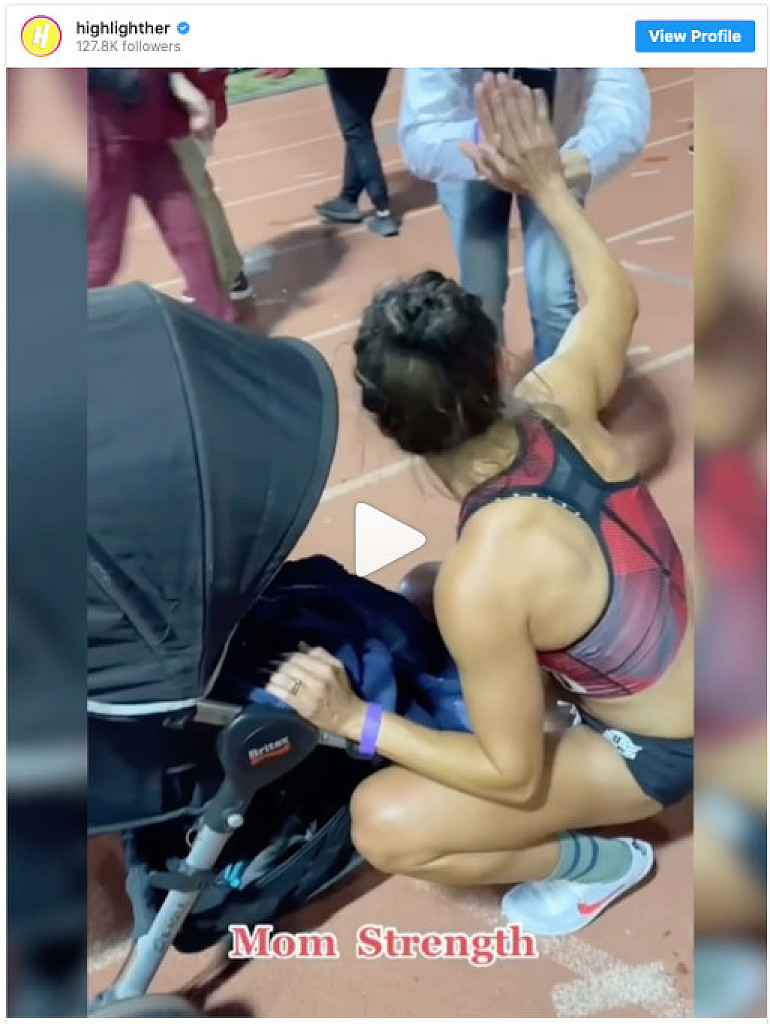
New mom runs 15:45 5K, 4:42 mile just months after birth of first child
In October 2020, a woman named Makenna Myler ran a 5:25 mile while nine months pregnant. Just a couple of weeks later, she gave birth to a baby girl, and now, only six months after her daughter was born, Myler is back, not just racing, but winning. Her return to the track after her pregnancy came in mid-April, when she won a 5,000m in California in a huge personal best of 15:45.48, and she followed that up a week later with another win and a mile PB of 4:42.40.
Myler first blew up on Tik Tok, where her husband posted a video of her one-mile time trial at nine months pregnant. A 5:25 mile is a fast time for most people in general, but to run that quickly with a full-grown baby in your belly (Myler’s due date was just days after her time trial) is extraordinary. After a few months of recovery, she is back to incredible form, and she’s running faster than she ever has before.

Myler, who ran at BYU and now lives and trains in California, had pre-pregnancy PBs of 4:43.31 for the mile and 16:10.33 in the 5,000m. These are both great times, but she has bettered both since having her baby, Kenny Lou. Her 15:45.48 PB in the 5K is a whopping 25-second PB, and it gives her the 38th-fastest time at the distance among American women in 2021. (Only five Canadian women have run faster over 5,000m so far this year.) In the mile, Myler’s one-second PB gave her a top finish at a meet at her alma mater of BYU, and it is the sixth-best time run by an American woman so far this year.
Myler credits being a mom with her success, as she has learned some valuable lessons in the months since her daughter was born. “Having a baby less than six months ago has pushed me to ask for help so I can reach goals and show my little girl that I will never stop becoming, I will never stop trying in one way or another,” she wrote on Instagram. “I will keep surrounding myself with those greater than me and I will always come off better for it. I’m not the first and I won’t be the last mama to keep at it.”
(05/09/21) Views: 49Running Magazine
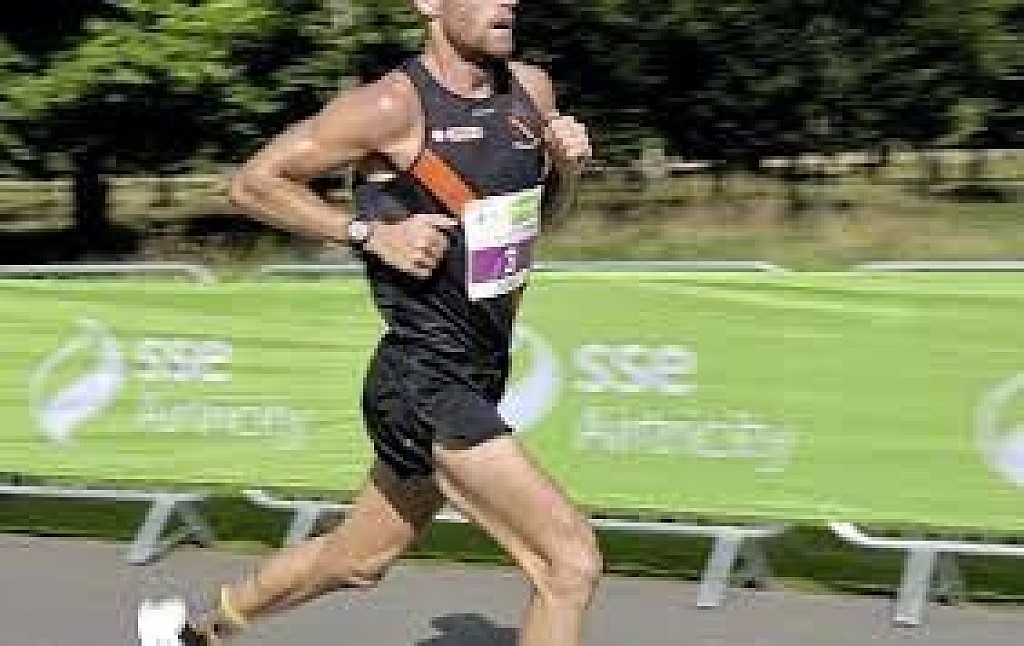
After waking up in a pile of vomit right before XMAS, Irish 2:09 marathoner Stephen Scullion hasn't drank alcohol since
‘I didn’t even stay home for Christmas because I pretty much didn’t trust myself to stay and not drink again’
Olympics-bound Scullion opens up on ‘wise’ decision to bin booze as he continues pursuit of happiness
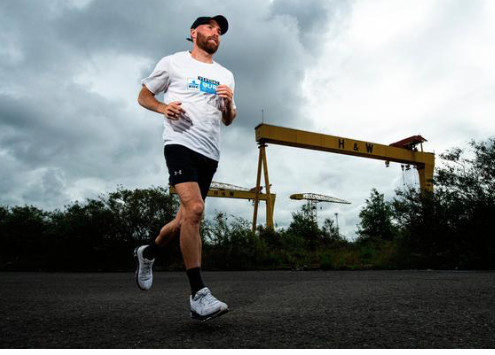
Stephen Scullion woke up in a pile of his own sick a few days before Christmas.
The Tokyo-bound marathoner was back home on holiday in Belfast.
“I had drunk way too heavily and had thrown up on the bed.
“I ended up booking a flight back to England the next day. So, I didn’t even stay home for Christmas because I pretty much didn’t trust myself to stay and not drink again.”
Scullion hasn’t touched alcohol since. His decision to quit was also influenced by a tweet posted by recent Oscar-winning Welsh actor Anthony Hopkins. “With gratitude, I celebrate 45 years of sobriety,” wrote Hopkins on December 29.
“I know how much it (alcohol) messes with my psychology, and I know it doesn’t help my running. I’m always running away from situations that probably I could end up being in where I would drink too much, go over the top.
“I tried to think of one time in my life where alcohol has actually done something good for my life, and I couldn’t think of one thing. I think I used to not drink because of running.
“Whereas this time, before Christmas, I made the decision I was going to do this for me. I do all this work to try (and) improve my mental health, try to be happy, and then to go ruin it, just by being greedy with alcohol. I just decided I don’t want to do this anymore.”
“Honestly, it’s not like I had a drink problem. The problem was I’m greedy. It’s not like I’m borderline alcoholic or anything like this.”
It was what happened after he drank that was the issue.
“I could drink and drink and drink and everyone thought I’m fine and in a great mood. And then my body decides I can’t process all this alcohol, because I normally live up a mountain like a saint.
“And here you are hammering 10 pints or 12 pints and shots, and yeah, then my body just rejects it, and I’d be incredibly low.”
Occasionally there were days when he couldn’t get out of bed because his “body was so broken from boozing”.
“It has just been a wise decision on my part. But I miss going and having a pint with my dad. I miss things like this because they are safe, and they are good.
“But the way I see it if I can’t handle it all then it is not worth it. I don’t want to go for a pint with my dad five times and think, ‘Oh, I’ve changed, oh, I’m better now, oh, I’m not greedy anymore’ because I know it will always be there.”
Scullion, who ran a career-best marathon time of 2:09.49 when finishing 11th in last October’s elite London, did seek professional help last year to cope with mental health issues.
“In September (2020) I reached out to the Sports Institute in Northern Ireland and said I wasn’t doing well. I was doing brilliant at running, that’s the easy part for me.
“I said I needed some help and they set me up with a sports psychiatrist in London. I spoke to the sports psychiatrist for three months and I started anti-depression medication after the London Marathon.
“If you take a hay fever tablet and run off into a field where there’s grass, you’re still probably going to have hay fever, and an anti-depressant medication tablet cannot fix everything. But I had to fix a lot of things in my life that gave me a chance to be happier. Sport is really tough and there’s a lot of pressure and you can put pressure on yourself, get a bit obsessed. I tweeted not long ago: ‘Do you exist, or do you live?’
“Part of being a really good professional is there are periods of time where you have to probably just exist. That means getting up early, doing your training, sleeping, resting, focusing on all the little details, because other people will do that.
“Other people are willing to go to places where they are probably not mentally stable or happy.
“If you want to be competitive, your life might not always be in balance. But in order for me to protect the longevity of Stephen Scullion and so that Stephen Scullion’s career flourishes in three or four or five years’ time, when I can be the best possible athlete I can be, I need to move away from that existence every now and again and live.”
For Scullion, ‘living’ is going to visit his parents’ allotment in Belfast where they raise chickens and grow potatoes and onions.
“That, to me, is living,” he says.
Running-wise, Scullion is performing better since undergoing surgery to correct a breathing issue which was diagnosed as asthma 15 years ago.
A London-based specialist, Dr James Hull, suggested he had a condition called exercise-induced larynx obstructions (EILO).
“The condition means your vocal cords are working against you almost, as you breathe, closing your airways and creating the wheezing effect. Asthma is supposedly wheezing on the exhale, whereas I wheeze on the inhale.”
The surgery in London was a success. So much so that in terms of his running he feels he has been set free.
Now his focus is on the Olympic marathon in Sapporo on August 8.
(05/08/21) Views: 48
Athlete refugees now eyeing Tokyo berths, after a year of pandemic setbacks and challenges
The postponed Tokyo 2020 Olympic Games looked one step closer to reality in recent days with the staging of the athletics test events, the half marathon in Sapporo on Wednesday (5) and the Ready Steady Tokyo Athletics Meeting at the Olympic Stadium on Sunday (9). Athletes from around the world were tuning in to catch a glimpse of the courses, the facilities and the track they're hoping to compete on when the Games kick off in July, including two clusters of the Athlete Refugee Team from their bases in Tel Aviv and Ngong, Kenya.
One of them was Tachlowini Gabriyesos, a distance runner who trains with the Alley Runners club in Tel Aviv who achieved a major milestone at the Hahula Galilee Marathon on 14 March. Contesting the distance for just the second time, the 23-year-old Eritrean native clocked 2:10:55 to become the first refugee athlete to better an Olympic qualifying standard for the Tokyo Olympic Games.
"This (past) year was different because of the pandemic, but most of my training was as planned," said Gabriyesos, who has steadily moved up in distance over the past two seasons. He competed in the 5000m for the Athlete Refugee Team at the 2019 World Championships in Doha but in 2020 found a better fit with longer distances.
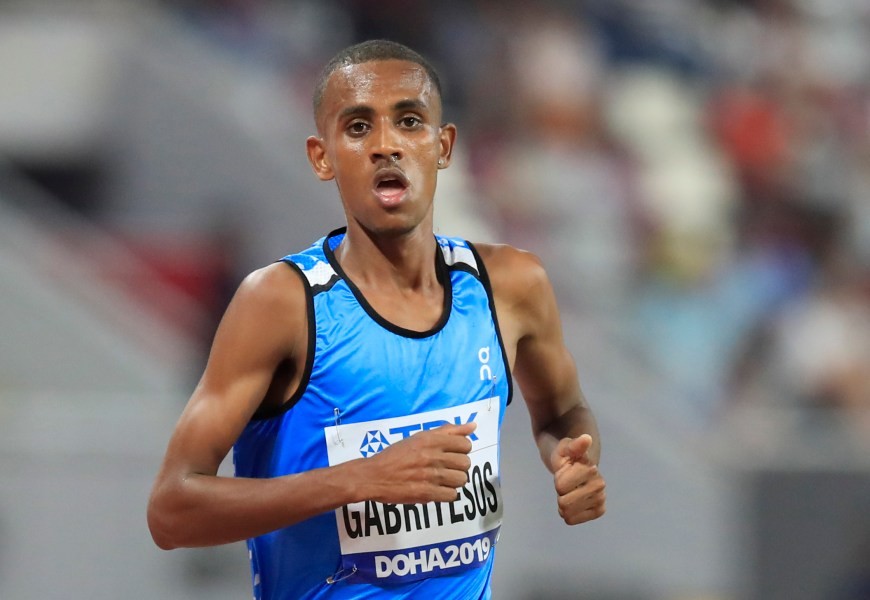
He was slated to compete at the World Athletics Half Marathon Championships in Gdynia, Poland, last October, but was unable to obtain a visa. So instead, two months later he improved his half marathon lifetime best to 1:02:21 in the prelude to his marathon breakthrough.
"I think I'm in better shape than I was last year, but physically and mentally it was hard to train with the pandemic restrictions."
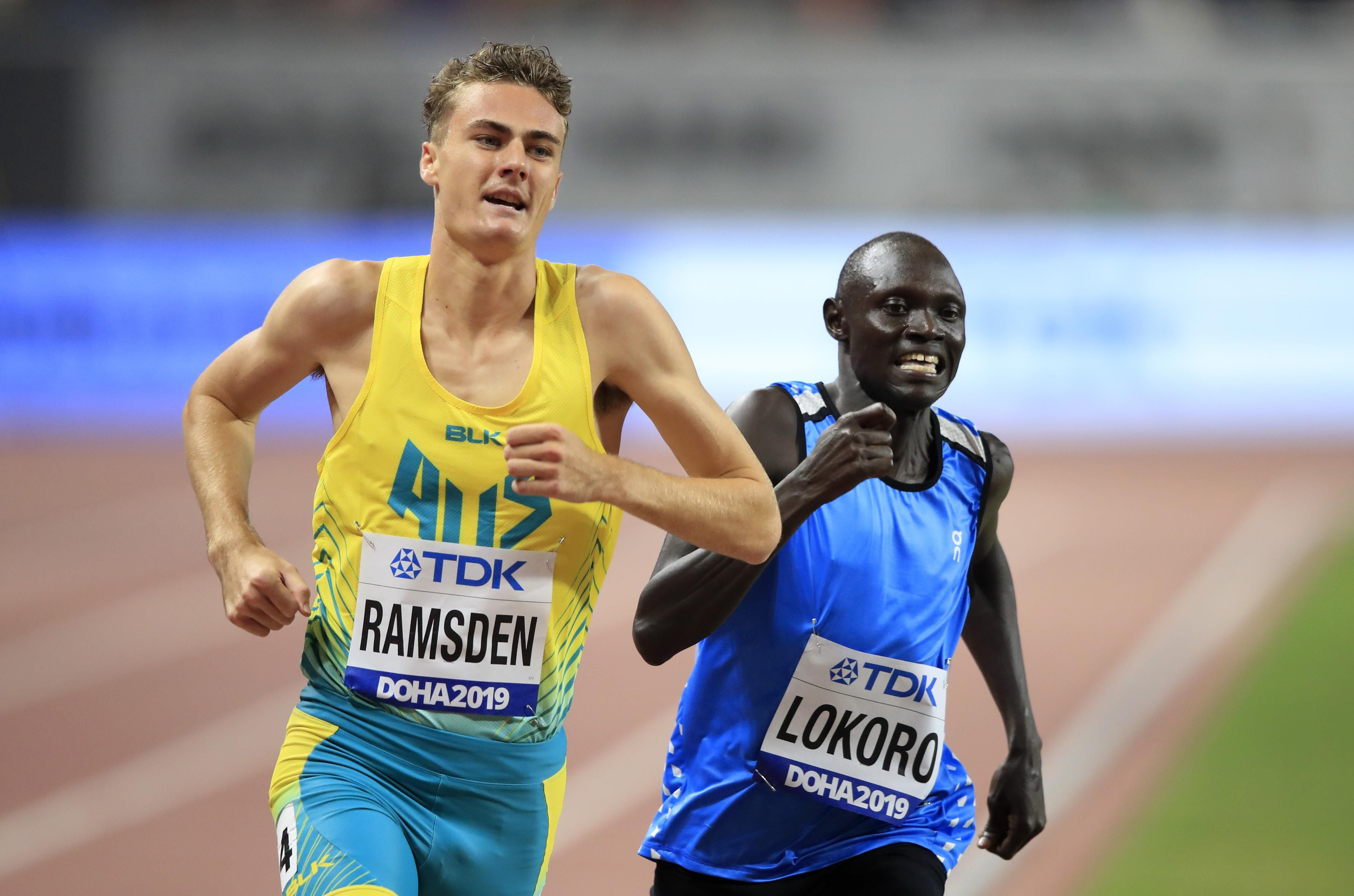
Focusing on Tokyo has helped.
"The Olympics is my dream as a professional athlete and it would be a great honour to be part of the Refugee Olympic Team," he said. "I want to show others that everything is possible and they shouldn't give up."
Lokoro targeting second Olympic appearance
The International Olympic Committee will announce the composition of its second Refugee Olympic Team (this year competing as EOR, its French acronym) in early June. While the selection process is complex, quality of performance will play a key role. Paulo Amotun Lokoro, a refugee from South Sudan and a member of the inaugural team in Rio, is hoping to make the cut again.
But unlike Gabriyesos, who has largely managed to navigate the pandemic restrictions over the past year, Lokoro, who is based at the Tegla Loroupe Peace Foundation training camp in Ngong, wasn't as fortunate. The camp was forced to close during the first lockdown in Kenya in April of last year, forcing Lokoro to return to the Kakuma Refugee Camp where, training-wise, he found himself alone. He returned to Ngong in December and resumed training only to be forced into another lockdown situation in the beginning of March.
"It has been frustrating, we haven't had enough time to train," Lokoro said. "And during this lockdown the government has discouraged us from training in public and as a team, so we were training individually."
Lokoro finished 11th in his 1500m heat in Rio, clocking 4:03.96. He's improved steadily since, currently boasting a 3:44.10 lifetime best set in 2019. He also competed in Doha, but, suffering with a hamstring injury, didn't advance from the heats.
"In 2019 I was well prepared," he said. "My shape is different now, but we still hope to catch up before Tokyo."
World Athletics provides ongoing support
Since the IOC put the refugee athletes on the international stage in Rio five years ago, World Athletics has entered an Athlete Refugee Team (ART) in almost every major championship: the 2017 and 2019 World Athletics Championships, the 2018 World Cross Country Championships, the 2017 and 2019 World Athletics Relays and the 2020 World Athletics Half Marathon Championships. The African and European area federations have opened entry to refugee athletes based on their continents. Those competitive opportunities, coupled with generous scholarships from the IOC and ongoing training and logistical support from World Athletics, has made a difference.
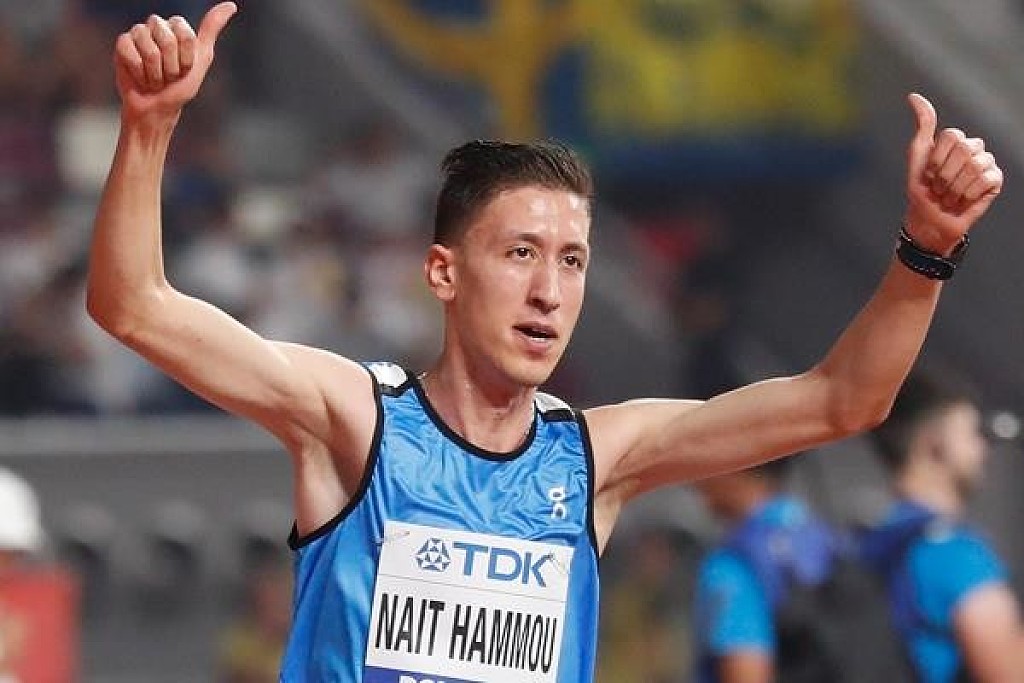
Otmane Nait Hammou, a refugee from Morocco who is based in Sweden, made his Athlete Refugee Team debut at the 2018 World Cross Country Championships, competed in the steeplechase in Doha and more recently at the World Half Marathon Championships in Gdynia where he finished 67th, clocking 1:03:28 in his competitive debut over the distance and beating some of the world’s finest half-marathoners in the process. He's hoping for a spot on the steeplechase start line in Tokyo.
"World Athletics' support to compete at three World Championships did play a big role to keep me feeling hungry and motivated," he said. "With the solidarity support from the International Olympic Committee and my sponsors ON Running and Maurten and my French club ES Sartrouville, it has really made a difference.
"Honestly, it was really hard to keep motivated without having short term goals (during the pandemic), but you can't give up when it comes to the Olympic Games."
"We have been facing a lot of challenges, but at least we have been able to train individually," said Rose Nathike Lokonyen, a refugee from South Sudan who was the team's flag-bearer in Rio.
Before the pandemic hit, 5000m hopeful Ukuk Utho'o Bul said: "We were all training well, it was an Olympic year and we were preparing well. But when the pandemic came the camp closed so we all had to go back to where we came from. When we are training as a team there is a motivation. You always move forward, you motivate yourself. Then I was in a different place. I was alone and training alone. But we are trying our best."
In Lisbon, Dorian Keletela, a refugee from Congo, is aiming to be the first sprinter selected for the Refugee Olympic Team. Keletela, who competed in the 60m at the European Indoor Championships in March, has a 10.46 career best from 2020. He's hoping to compete at the European U23 Championships later this summer as well.
(05/10/21) Views: 48World Athletics
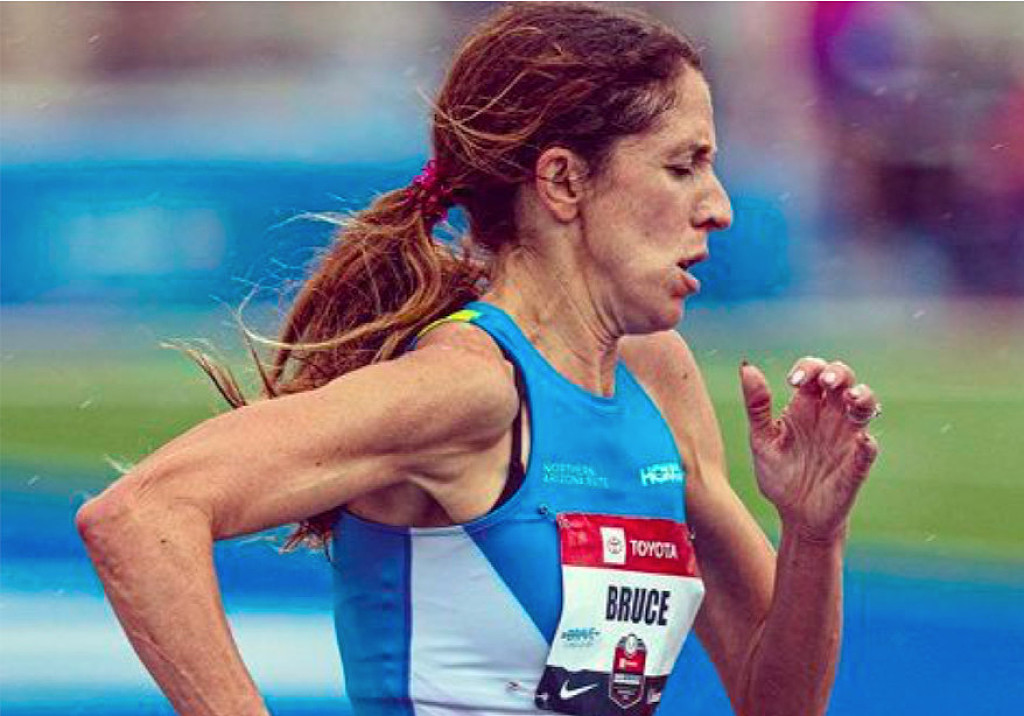
Lauren Fleshman and Stephanie Bruce sell Picky Bars for $12 million
Picky Bars was founded in Bend, Oregon in 2011, and Laird Superfood began just down the road in Sisters, Ore. in 2015. The company was started by pro-big wave surfer Laird Hamilton, former pro-volleyball player Gabby Reece, and entrepreneur Paul Hodge. According to the announcement on Picky Bar’s website, Laird Superfood has a mission to “provide great-tasting, high-quality, plant-based products that are healthy, convenient, affordable and available to all.” Thomas said in a statement that the company is “beyond stoked” to be partnering with Laird, adding that they expect this acquisition to accelerate the company’s growth, expand their distribution, enhance their product development and create more jobs in their local community.
“Overall, coming together with LSF will increase the positive impact we can have on our communities and the world at large,” said Thomas. “We feel incredibly lucky to have found such an amazing fit for our team and brand.”

In an interview with Forbes, Hodge, the current CEO of Laird Superfood, said they believe Picky Bars produces the best, whole food bars in the world, and that the acquisition will round out their product lineup. It will also allow Picky Bars to expand their own distribution, getting the product into more stores across the U.S.
“Together, we can get nutritionally balanced options more geographically available, whether it’s experiencing a Laird product for the first time in a Picky Club box or tasting your first Ah, Fudge Nuts! Picky bar from a retailer distributing Laird products,” said Bruce.
For now, Fleshman, Thomas and Bruce will continue to lead the Picky Bars brand underneath the Laird umbrella. According to Forbes, the U.S. nutrition bar market is worth $10 billion, and the sports nutrition sector overall is expected to reach $33.03 billion in sales by 2028.
(05/08/21) Views: 46Running Magazine
COVID-19 restrictions for Tokyo Olympics shouldn't apply to female athletes' infants, toddlers
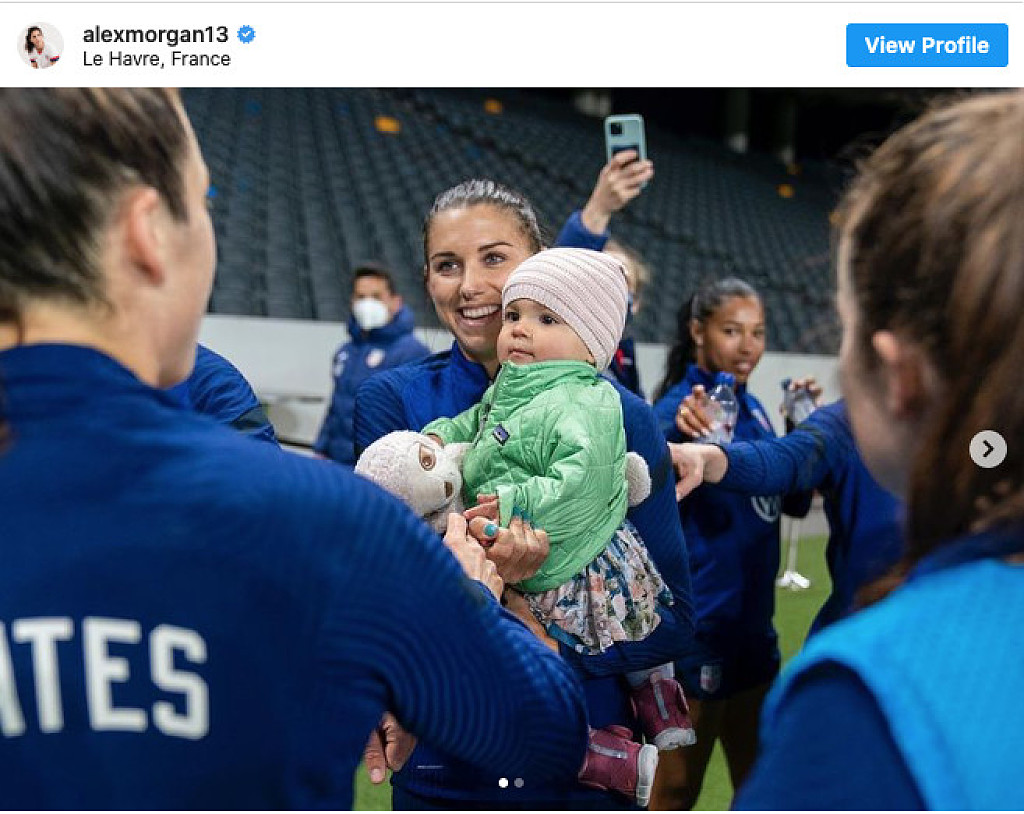
A few days shy of her first birthday, Alex Morgan’s daughter Charlie is already more well-traveled than most adults.
There were the two-plus months in England, when Morgan was playing for Tottenham. The week in the Netherlands, followed by a few days in France, for U.S. women’s matches. There’s likely to be another trip in June for pre-Olympic warm-up games.
“It’s important to allow mothers that option, to have their kids with them while they compete. I’ve been lucky to be able to do that with every single camp and matches with Charlie,” Morgan said last month. “It’s incredibly important to feel supported as a mom. I hope I continue to feel that way leading into the Olympics and in the Olympics.”
But COVID-19 restrictions for the Tokyo Games could force Morgan and a small number of other athletes who are mothers of small children to choose between their dreams of competing at the Olympics and their families.
At previous Olympics, children of competing athletes would come to the Games like any other family member. Visas, if necessary, would be arranged, and they would travel with their other parent, another family member or caregiver. The family would either stay together outside the Olympic village, or moms would arrange to see their children between training and competitions.
That won’t be possible this summer. Japan is desperately trying to keep the Olympics and Paralympics from turning into a superspreader event, and the International Olympic Committee and Tokyo organizers have already said foreign fans won’t be allowed at the Games.
Japan also currently bars entry to residents of 152 countries “unless special exceptional circumstances are found,” meaning someone from the United States – and pretty much every other country sending athletes to the Games – can’t simply get on a plane and go to Tokyo.
But if allowing female athletes to bring their infants and toddlers to the Tokyo Games doesn’t qualify as a “special exceptional circumstance,” I don’t know what would.
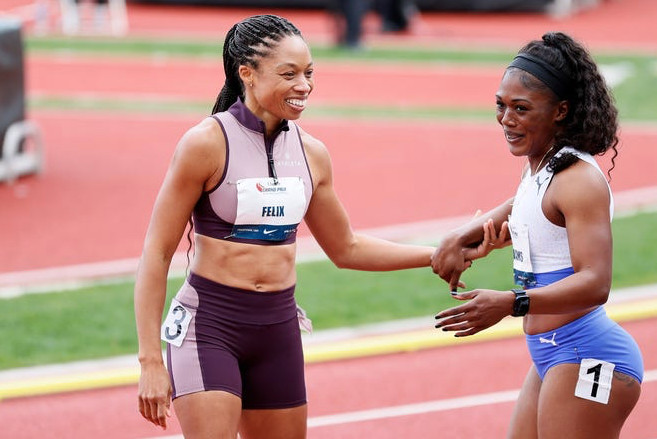
“I would be most sensitive to moms that are breast-feeding, new moms, moms with very small babies,” sprinter Allyson Felix, whose daughter Camryn turned 2 in November, said last month. “I know how crucial that is. I know for me, when I competed when Cammy was under a year old, you need to be near your child. That needs to be taken into consideration for those mothers.”
Tokyo organizers did not respond to questions about whether female athletes will be allowed to bring their young children. IOC spokesman Christian Klaue said women athletes who want to bring their children to Tokyo will be dealt with on a case-by-case basis, without pr
Of course it will be crushing for partners, parents and siblings to miss what is, for many athletes, a once-in-a-lifetime event, and if any family members are allowed, no doubt everyone will be clamoring to go. But prohibiting babies and toddlers from accompanying their mothers to the Games is not remotely the same, and the IOC and Tokyo organizers need to acknowledge that.
This isn’t a matter of, “Oh, I want to have a selfie with my baby at the finish line.” For female athletes with an infant or a toddler, not having them in Tokyo can have a direct impact on their child-rearing decisions.
And their children’s health.
Breastfeeding benefits a child’s physical and cognitive development, and the World Health Organization – which the IOC relies on for medical advice – recommends children be breastfed “up to 2 years and beyond.” Research also indicates that mothers who have been vaccinated are passing COVID antibodies to their babies through breast milk, but that immunity only lasts so long as the child is nursing.
It’s possible athletes who are nursing and want to continue to do so could pump at the Games. But depending on the age of the child, that could require several hours each day.
“I am still nursing Zoe and cannot imagine her not being with me,” marathoner Aliphine Tuliamuk, whose daughter was born in January, told USA TODAY Sports in a statement. “There are many more challenges than usual at this Olympic Games, but I do hope that the needs of mothers, families and children are given full consideration and support."
Everyone is sympathetic to the challenges of holding an Olympics during a pandemic, as well as the concerns of the Japanese people. But allowing women athletes to bring their infants and toddlers to Tokyo, along with a caregiver, would not add a significant number of people.
The United States typically has the largest team at the Olympics, 500-plus for a Summer Games, and this affects only a handful of its athletes. So at most we’re talking, what, a few dozen additional people?
It’s not a large number, but the impact is.
The IOC has made a big show in recent years of elevating women and promoting gender equity, and will proudly tout its statistics on female representation at the Games and in its leadership roles. In March, Tamayo Marukawa, Japan’s minister in charge of the Tokyo Games, said in a statement that the “active participation of women will lead to the creation of a prosperous, vibrant and sustainable society and the realization of a society in which everyone can live comfortably.”
By telling female athletes to leave their young children behind, however, the IOC and Tokyo organizers show how empty those words are. You cannot claim to value and respect women if you are not supporting and empowering them to make choices that are in the best interest of their families.
(05/09/21) Views: 46USA Today
