

Running News Daily
Top Ten Stories of the Week
9/19/2020
These are the top ten stories based on views over the last week.
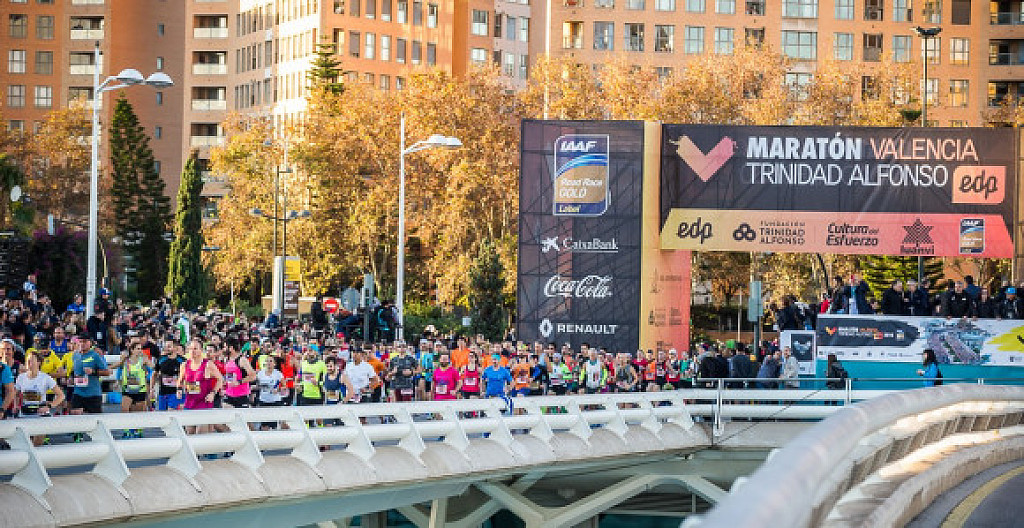


Valencia Marathon has announced that it will hold a top-level elite-only event on December 6, 2020
Within a week of cancelling the Valencia Marathon Trinidad Alfonso EDP has announced that it will hold a top-level elite-only event on December 6, 2020.
The event will be held together with a separate half marathon race also only for elite runners. It is expected that both races will include elite athletes who will approach the world records for both distances.
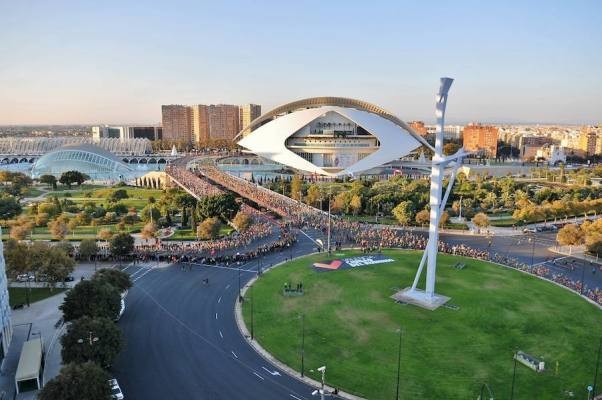
This elite edition will be possible thanks to the financial support of businessman Juan Roig through the Trinidad Alfonso Foundation, over which he presides. The Foundation is driving this top-level double event within the #EActíVateSport strategy that it launched to promote the reactivation of sporting events in Valencia.

This elite edition will be held for about 250 professional runners who will be attempting to qualify for the Tokyo Olympics in the summer of 2021. This year, due to the COVID-19 crisis, only the London Marathon, which celebrates its 40th anniversary in 2020 like the Valencia Marathon, will also offer top-level international competition at the Marathon distance. Participants in the MyBest42 elite programme will be in the hunt of the Olympic qualification as well as another 50 athletes looking for their best in the Half Marathon.
The two races will not be held concurrently. The organization plans to create a health zone around the event and will take exceptional safety measures to minimize any health risk. The races will be held on a reduced circuit coordinated with local authorities, to reduce the impact on the city.
(09/11/20) Views: 160
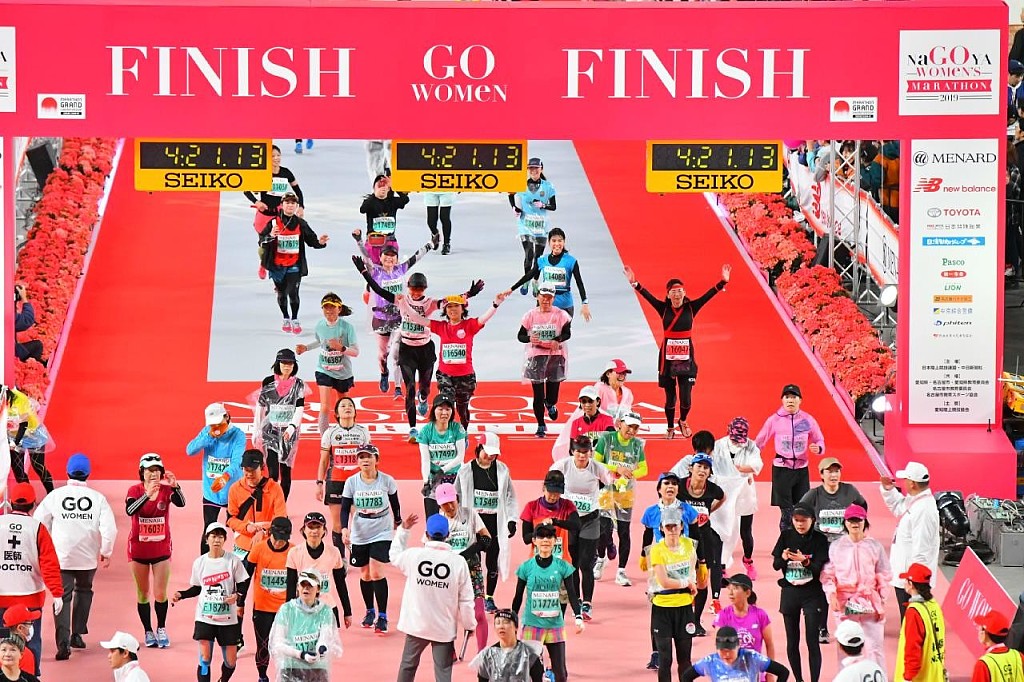
World's Largest Women Marathon, will go ahead with entires limited to residents of Japan
Following the Fukuoka International Marathon's announcement last week that it would limit this year's race to those able to enter Japan under the government's coronavirus immigration policies effective Sept. 14, the Nagoya Women's Marathon, the world's largest women-only marathon, announced on Sept. 14 that it plans to go ahead with its tenth anniversary race on Mar. 14 next year but will limit entries to residents of Japan.In its last full edition in 2019 Nagoya had 20,717 finishers, all women, with another 9,626 men and women in its accompanying half marathon and 4,565 in its quarter marathon.
On the leading edge of the coronavirus crisis this year it canceled all but its elite women's marathon, where Mao Ichiyama (Wacoal) ran 2:20:29 for the win, a new national record for an all-women race.In 2021 the field will be limited to 11,000 plus elite division and invited athletes. A wheelchair race is also planned, and the half marathon is also scheduled to take place with a field of 9,000. Only the quarter marathon has been cut.
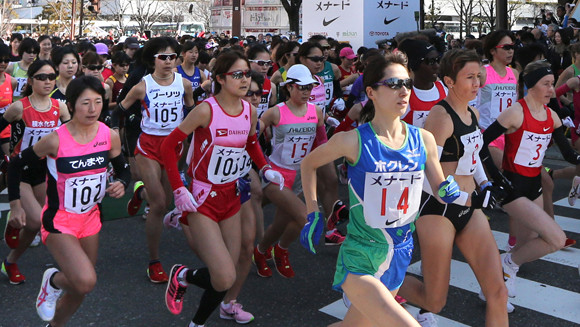
Both the marathon and half marathon are planned to have wave starts to reduce runner density. Further details are still to be released in English, but more information can be found here in Japanese on the marathon, half marathon and wheelchair race.

Brett Larner
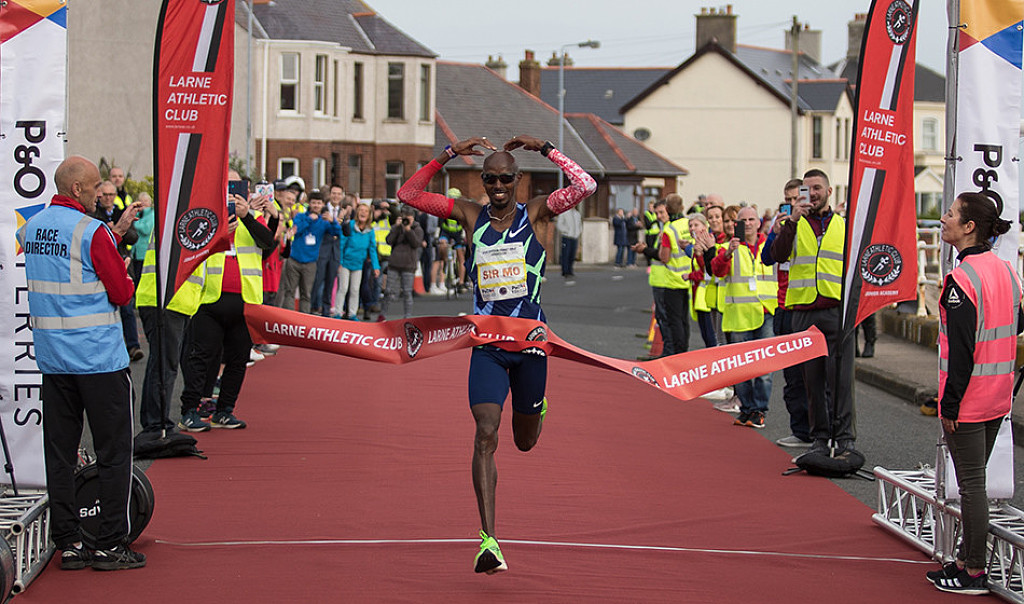
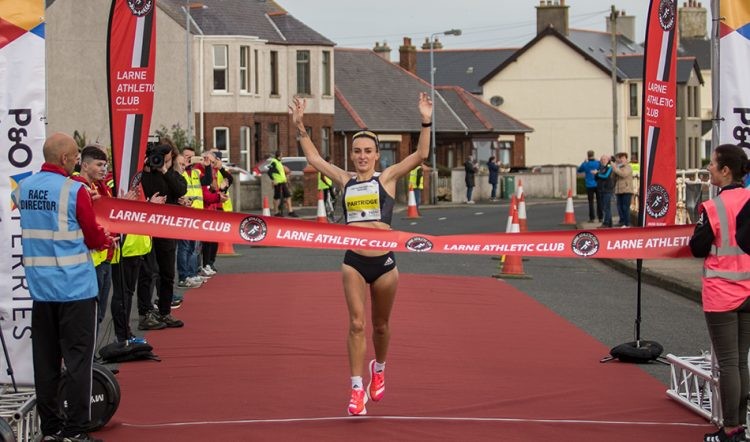
Mo Farah and Lily Partridge were the winners at Antrim Coast Half Marathon
Mo Farah takes first as Marc Scott, Ben Connor, Stephen Scullion and M60 Tommy Hughes impress, while Lily Partridge enjoys women’s win
Mo Farah was first across the line in the Antrim Coast Half Marathon on Saturday (Sept 12) in 60:31 but the most eye-catching performances came from those following in his slipstream.
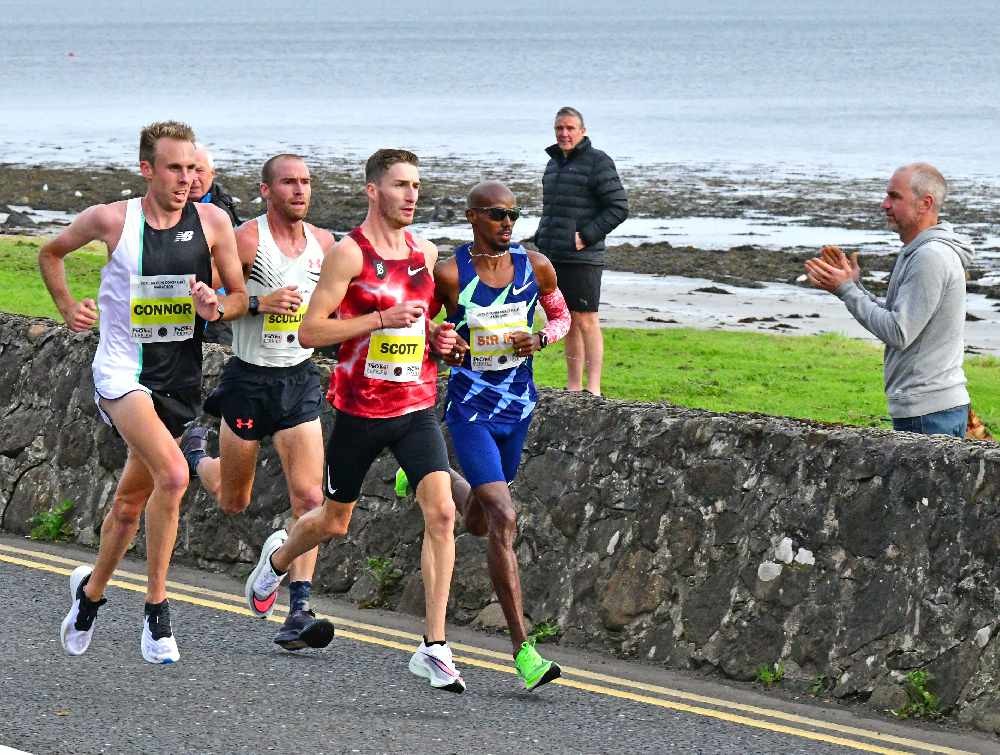
Runner-up Marc Scott was close behind with 60:43 on his debut at the distance to go No.3 on the UK all-time rankings. In third, London Marathon-bound Ben Connor took 16 seconds off his PB with 60:59 to go equal fourth with Steve Jones in fourth on the UK all-time lists.
Stephen Scullion, in fourth, smashed the Northern Ireland record by a big margin with 61:12. Like Connor, the Belfast man is set to run the London Marathon on October 4 too as the popular local athlete took more than two minutes off his best.
Lily Partridge, another London Marathon-bound Olympic hope, impressed as well as she broke away from Sam Harrison to win the women’s race in a Northern Ireland all-comers’ record of 71:36 – around a minute outside her PB but 23 seconds ahead of Harrison (71:58) as Clara Evans was third 72:21 and Becky Briggs, in fourth, ran a UK under-20 record of 72:54.
Perhaps most impressive of all, though, was masters sensation Tommy Hughes, who broke Martin Rees’ world half-marathon record for an M60 with 71:09 (even quicker than the 71:26 originally publicised shortly after he finished).
An Olympian in the marathon back in 1992, the Irish runner Hughes has been on a record-breaking spree recently and continued his great form here.
Ordinarily Farah and others might have been racing in the 40th Great North Run this weekend but with the event cancelled due to coronavirus he came to Northern Ireland instead to run in an event organised by his old friend and fellow athlete from his student days, James McIlroy.
McIlroy put together a fine domestic field for the event and Farah certainly did not have it all his own way as he only broke away from the in-form Scott in the final mile.
Scott has broken the UK 5km road record this summer and took the British 5000m title last week. He was leading in the closing stages but had no answer to Farah’s breakaway surge in the final mile.
A lead quartet of Farah, Scott, Connor and Scullion broke away early and ran together for much of the distance. Behind, Kevin Seaward was fifth in 63:09 followed by Josh Griffiths (63:12), Tom Evans (63:19), Adam Craig (63:28) and Adam Hickey (64:37).
There had been talk of Farah potentially attacking his UK record of 59:32 from Lisbon in 2015 but during media interviews on Friday he said winning the race was the main goal and he did not want to underestimate his rivals and treat it as a time trial.
Runners in this elite-only event, which was sponsored by P&O Ferries, enjoyed decent weather on a picturesque course that proved a great advertisement for athletics in Northern Ireland. The only frustration for fans was the poor quality of the live stream, which made following the race difficult after organisers had, ironically, encouraged spectators to stay at home instead of supporting from the side of the road.
(09/12/20) Views: 136Jason Henderson
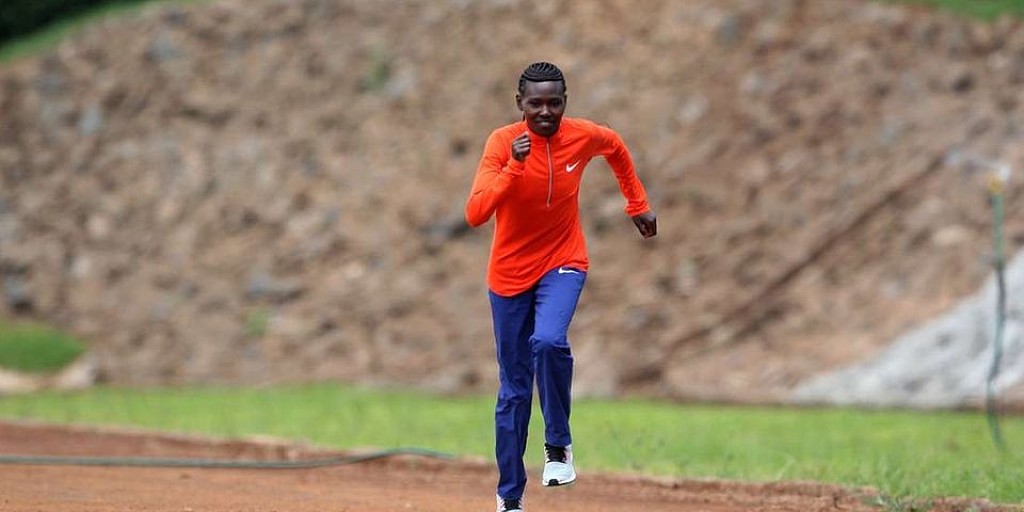
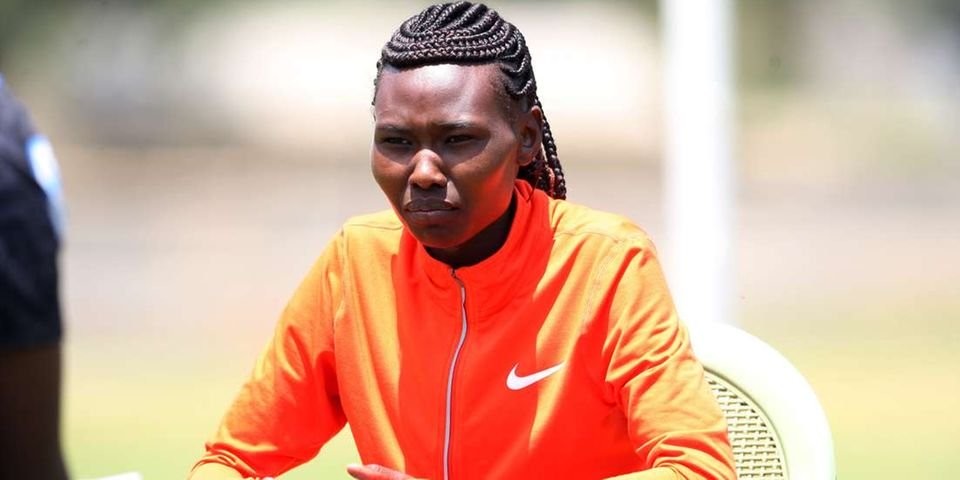
Kenyan Ruth Chepng'etich, is the world champ that trains without coach
Ruth Chepng’etich kept postponing the interview but it was quite understandable considering the Covid-19 contagion in the country.
There have been no sporting activities in the country since March this year after the government instituted measures to curb the spread of the novel coronavirus following the first case in the country.
By Saturday, Kenya had reported 35,969 cases with 22,771 recoveries and 619 deaths from the disease.
We checked into Vapor ground, Ngong, Kajiado County, where she had directed us and found her warming down after her morning workout in readiness for the delayed London Marathon due on October 4.
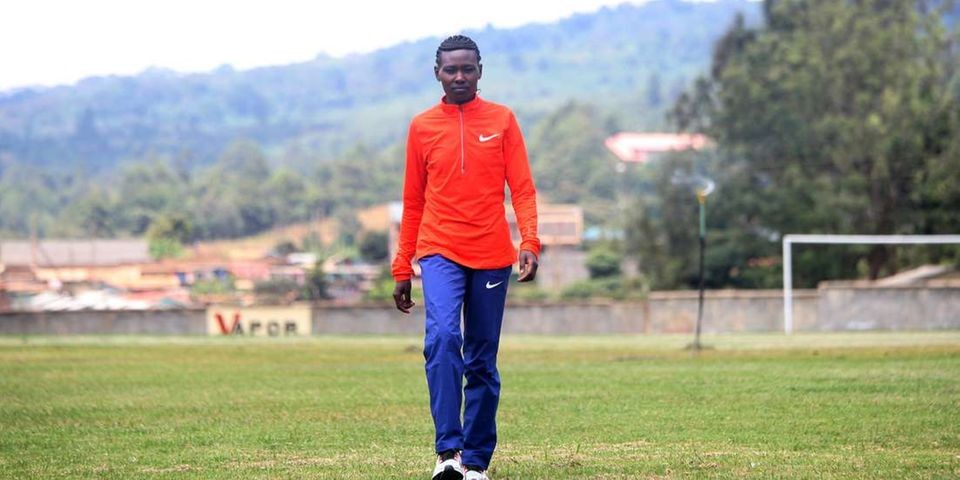
The diminutive athlete was alone.
On a normal day, Vapor ground could be teeming with elite and the not so serious athletes going through their paces.
Though well-kept, the place looked like a ghost arena...thanks to Covid-19 restrictions on social gatherings and social distancing.
Only a handful of athletes were working out separately at the venue but observing strict Covid-19 guidelines.
Well, many top athletes whether in athletics or other sporting disciplines can barely perform without the input of a coach.
They will go to greater lengths to hire or take along their coaches to major championships so that they reap the benefits of the “second eyes” to the maximum.
Majority of professional athletes have made it big after aping or getting inspired either by family members or friends, who were great sportsmen or women in a particular event.
However, there are always unique cases where some sportsmen and women are self-made right. Some have gone on to perform well at the highest level without a coach.
Chepng’etich is one of them.
The only time she had a coach, briefly, was when she was still in Kericho before shifting her base to Ngong in Kajiado County in 2015, a move that would toss her into a roller coaster of athletics achievements.
She has never thought about engaging a coach since setting foot in Ngong, an area that has produced some of Kenya’s top athletes like World 5,000m champion Hellen Obiri.
It would sound strange but self-coaching and group training are what have unleashed the best in the 26-year-old Chepng’etich and the best is yet to come through.
Within four years of moving to Ngong, she already has a world title and is ranked the fourth fastest women in marathon history, an accomplishment most female athletes can just but dream about.
(09/14/20) Views: 78Ayumba Ayodi
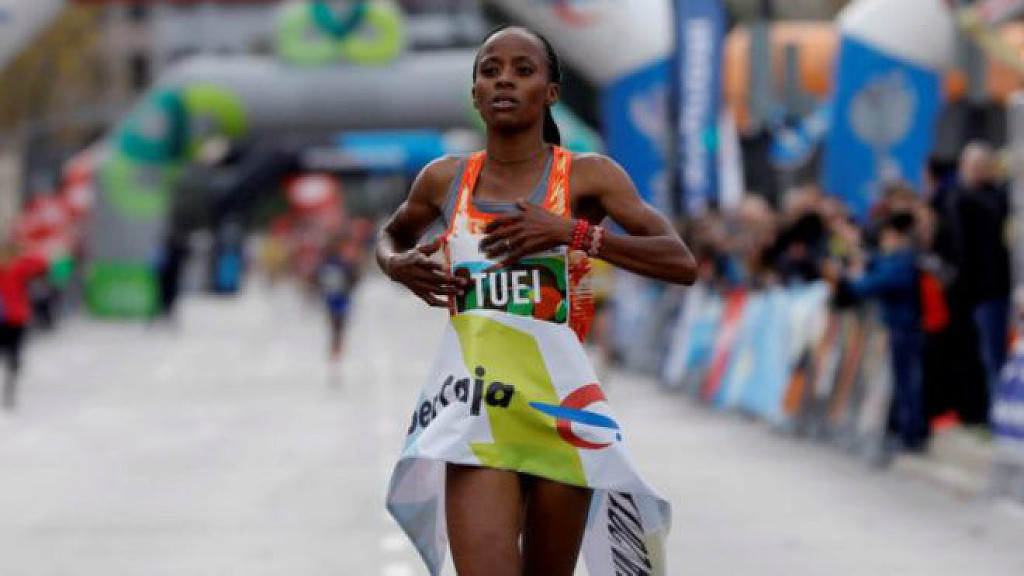
Why young Kenyan Sandra Chebet cannot wait for London Marathon?
It’s baffling that, at just 22 years of age, Sandrafelis Chebet has fallen in love with road running.
Ideally, one would expect her to gain some track experience from the middle distance to the 10,000 meters before hitting the asphalt.
The dearth of Kenyan talent in the 5,000 and 10,000 meters, with just Hellen Obiri to bank on, means Kenyan coaches needed to have enticed the likes of Chebet to work on the track, hoping to stop the potentially dangerous streak by Dutchwoman Sifan Hassan that could threaten Kenya’s gold medal hopes at the Tokyo Olympics next year.
Nonetheless, the 2015 World Under-18 Championships silver medalist in the 2,000 meters steeplechase hopes that her enlisting to pace the women’s lead group at next month’s London Marathon will motivate her to bigger things.
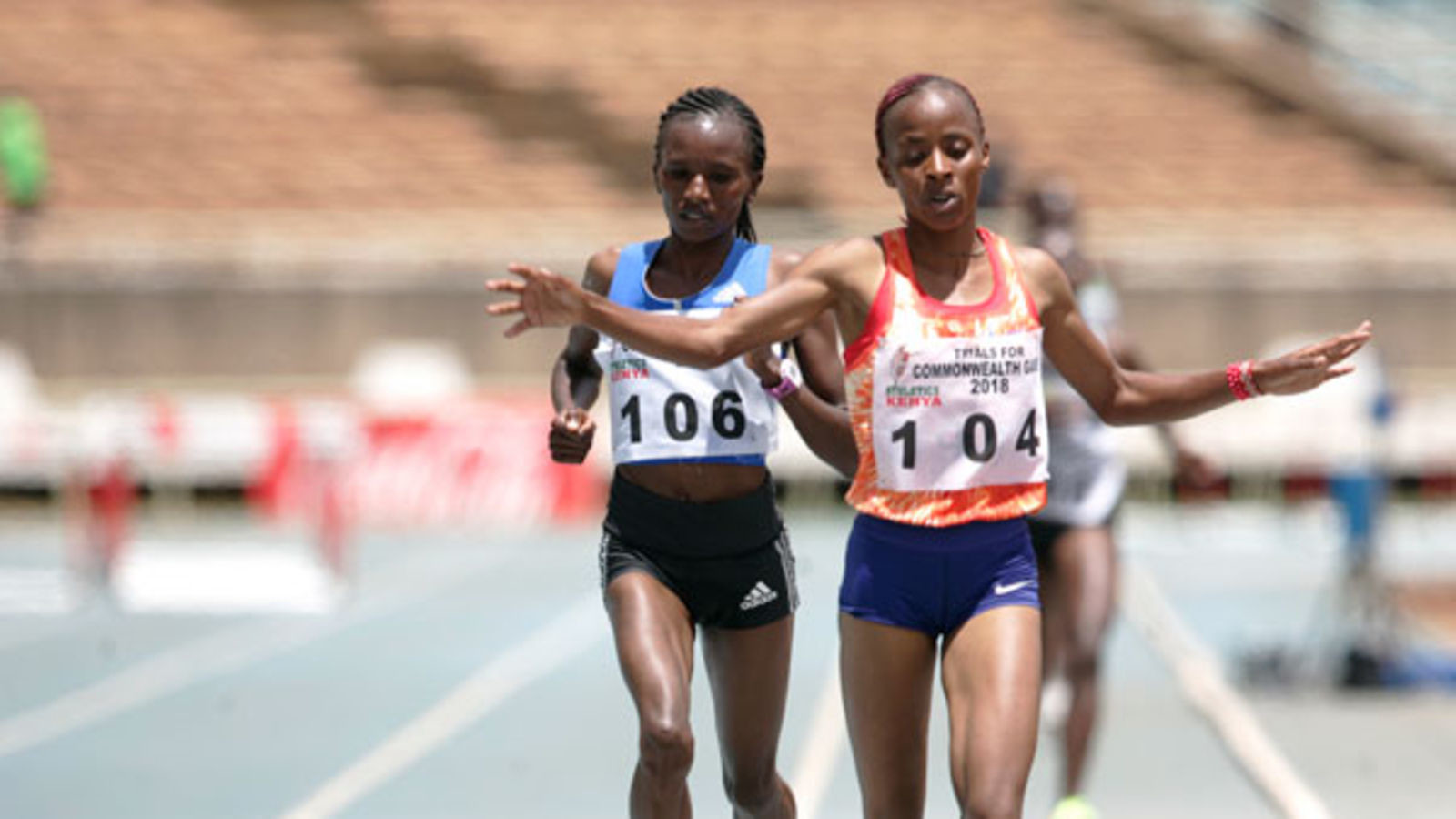
Chebet has been tasked with pacing for the lead group of women in London who include world record holder and defending champion Brigid Kosgei, world champion Ruth Chepng’etich, 2018 champion Vivian Cheruiyot, Frankfurt Marathon champion Valary Aiyabei and debutant Edith Chelimo.
Nation Sport caught up with Chebet at Lemotit Athletics Camp in Londiani, Kericho County, where she said her featuring in a major marathon will help improve her performance.
“I’m lucky to have been selected as one of the ‘rabbits’ who will be pacing for the lead group in London,” she said.
“It’s a tough task, but I will do my best to make sure I deliver good results,” said Chebet who is under the Italy-based Rosa Associati management, the same stable as Kosgei and Chepng’etich.
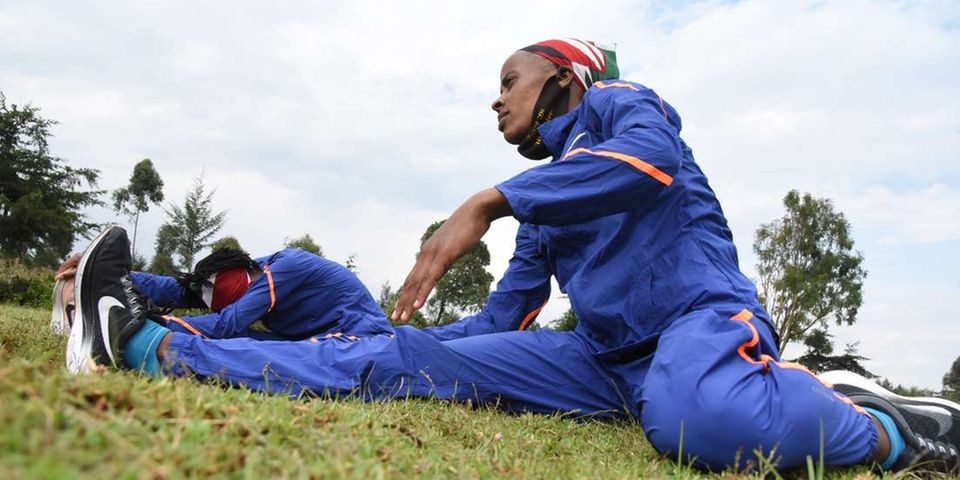
Chebet admitted that when the coronavirus struck, everything came to a standstill and with the closure of training camps, she decided to continue her training following the guidelines from the ministry of health of social distancing.
“It was tough training in a group of three or less but I’m happy because I was not discouraged knowing that the virus will be contained and competitions will resume.
“I went on with my training and with the big assignment ahead, I will do what I can to deliver,” she said.
She praised her training partner Beatrice Chebet, who is also the World Cross Country Championships’ junior title holder, for her assistance in speed work session.
“Beatrice has been of great help to me because she has good techniques in finishing which is good for an athlete, and I have been always ready to listen from her,” added Chebet who has a half marathon personal best time of 68:14.
Still only 22, Chebet looks forward to graduating to the full marathon in future and believes that pacing the best athletes in the world in London gives her the much needed drive.
She looks at it as a learning experience.
“I have participated in various half marathon races and by next year, I will be shifting to the full marathon where I want to register my name as one of the best in the distance, but I have to start slowly before becoming a world beater,” she added.
She said her mentors are Kosgei and Cheruiyot who make her work hard as she seeks to venture into marathon races and build up from there.
With silver medals at the World Under-18 Championships (steeplechase, Cali, Colombia), Africa Under-20 Championships (5,000m, 3,000m, Tlemcen, Algeria) and a 3,000m bronze at the Africa Under-20 Championships (3,000m, Addis Ababa), Chebet hopes to graduate to become the golden girl of distance running.
(09/17/20) Views: 67Bernard Rotich
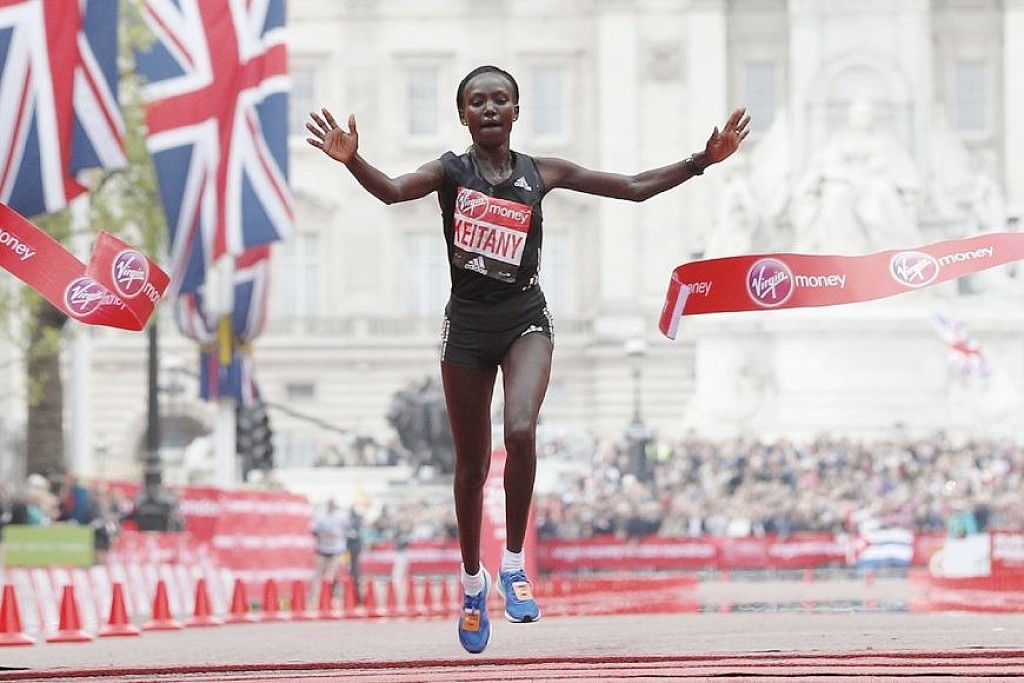
Three-time London Marathon champion Mary Keitany Predicts Winner of the London Marathon
Three-time London Marathon champion Mary Keitany won't be at the starting line when this year's race blasts off near The Mall on October 4.
One of Kenya's greatest women marathon runners ever won't be in the elite-only field tackling the 19.6 laps of the 2.12-kilometre loop course crafted in a "biosecure bubble" orchestrated by the coronavirus pandemic.
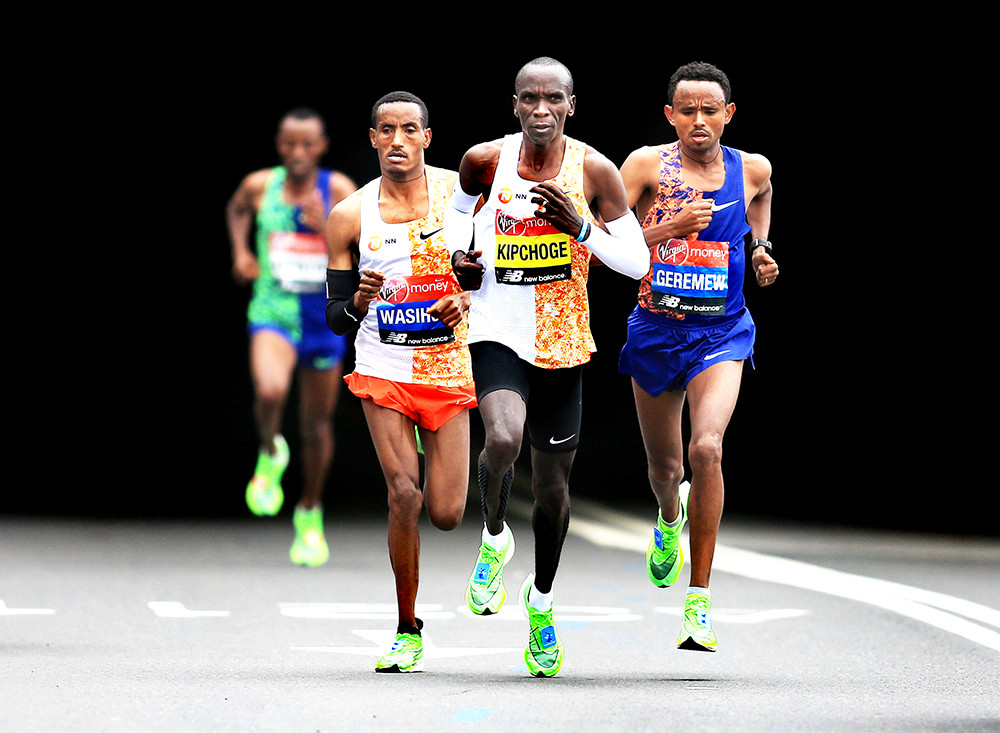
As the athletes power down Horse Guards Road onto Birdcage Walk, Spur Road past the iconic Buckingham Palace and back to The Mall, Keitany won't be in the mix.
And she will be missed in the final, extra 1,345 metres to the finish line...
"Many are wondering why I'm not in the line-up this year, but I had been invited for the Boston Marathon race which I later cancelled due to an injury.
"The race has been postponed to next year and I have enough time to prepare because this will be my debut in the race," she told Nation Sport.
"One has to prepare well and you can't predict a race up to the last few kilometres because anything can happen with your body."
"A good example is the Boston and Chicago marathon where we saw athletes competing in a group up to the last 50 metres when Lawrence Cherono won both races in a sprint finish," she explained.
"When I broke the (women's only) world record in 2017, we just started the race in a high pace with my pacemaker, and by the time the other athletes reacted, I was very far and that's how I won the race.
"Even elite athletes have pressure during training and before the race starts, but for me that disappears when the race starts and I have to get focused to the finish line."
"Many athletes will hang on until the 35km mark where they will start dropping," she added.
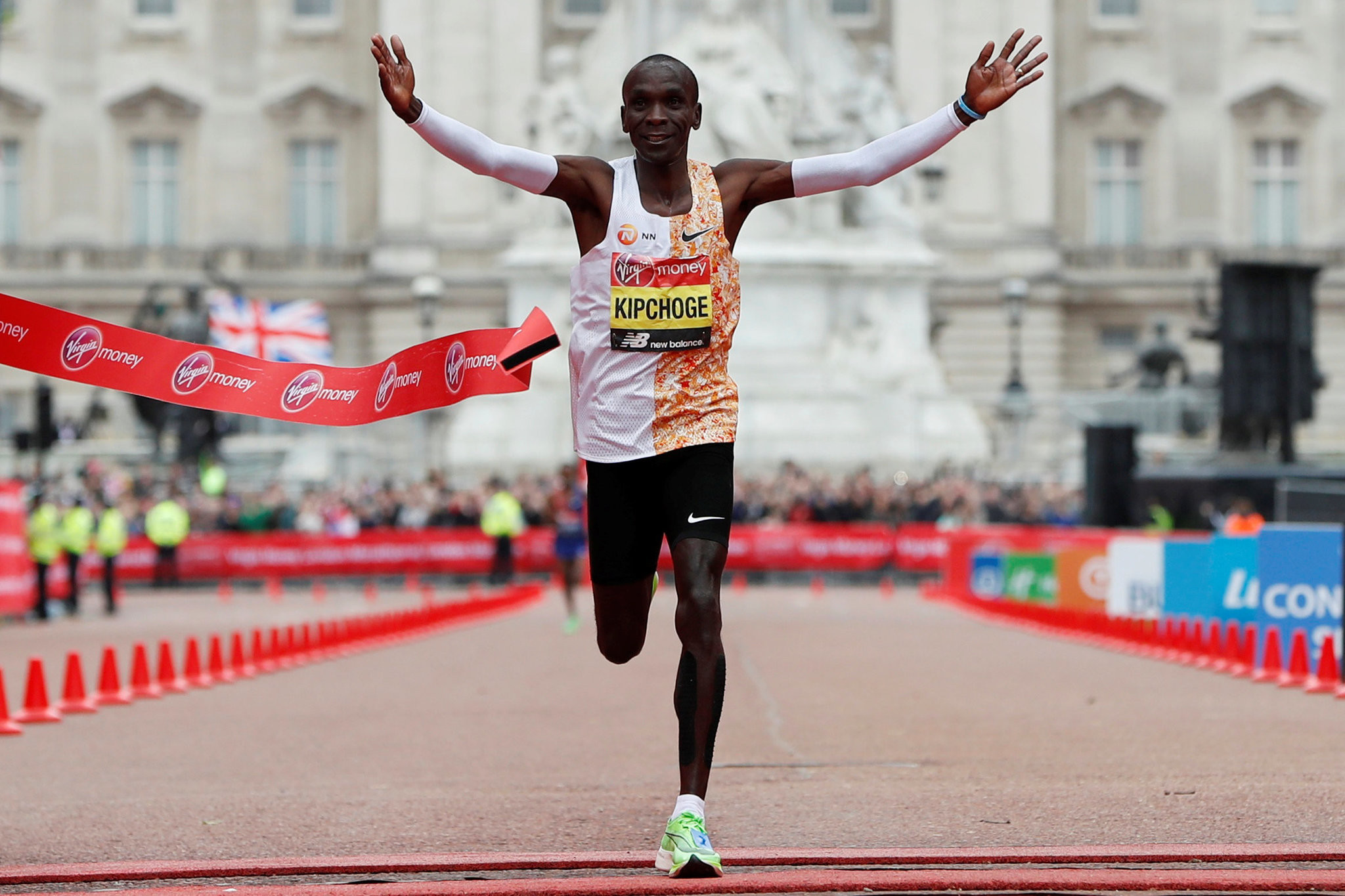
Her prediction for the men's race on October 4 is that Eliud Kipchoge will carry the day, but that it will be a tight race.
(09/11/20) Views: 63
Bernard Rotich
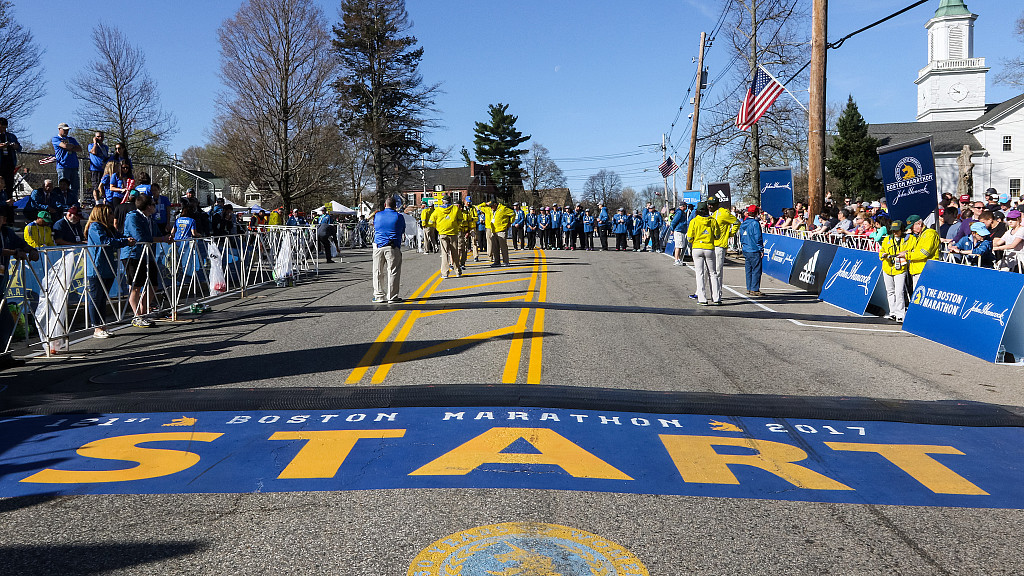
Runners, Spectators Making Most of Virtual Boston Marathon
Organizers were forced to turn this year’s event into a safer, virtual alternative due to COVID-19
Spectators won’t see the millions of people they’re used to seeing in the Boston Marathon this year.

Some things, however, haven’t changed.
"It’s not a marathon without a cowbell," said Joe LeBlanc of the Run Club of Malden, as he rang his cowbells from the sidelines.
Something else that hasn’t changed are the supporters on the marathon route, cheering the runners on. Leo and Deborah Buckley cheered their daughter, Ashley, from the sidelines on Commonwealth Avenue in Newton Saturday morning.
Still, running a marathon during the coronavirus pandemic has been less than ideal.
"She was a little bit nervous at first but she was determined to do it anyway," Debroah Buckley said of her daughter.
Organizers were forced to turn this year’s event into a safer, virtual alternative due to COVID-19. It’s being run from Sept. 7-14 and includes a week of online events.
Despite the changes, running 26.2 miles is no less challenging. Supporters say that’s why it’s so important to be encouraged, whether you make it to the 20-mile marker or to the finish line.
Dan Fitzgerald of the Heartbreak Hill Running Company cheered on their 1,000 or so members along the marathon route in his 1989 Volkswagen vanagon.
"It’s not just the expectation that there are hundreds of thousands of fans," Fitzgerald said. "It’s more surprise and delight at the fact that people are out here and still care."
That encouragement can be pretty sweet when you need to recharge, which is why LeBlanc and Vinny Oliver -- also of the run club of Malden -- showed up to the marathon route in Newton with candy and water to support the runners.
"Being here to support them is just amazing so it’s a really great day to run," Oliver said.
(09/13/20) Views: 59
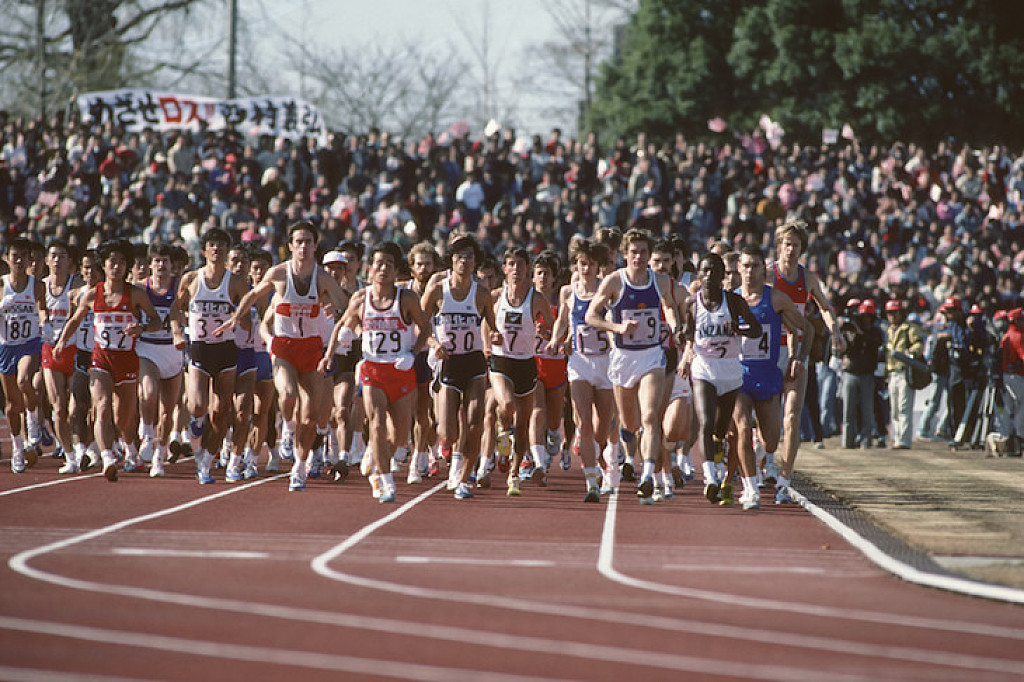
2020 Fukuoka Marathon will go ahead, but with limited field size
On Sept. 12 the Fukuoka International Marathon announced that this year's race will go ahead as scheduled on Dec. 6. Usually a two-tier elite/sub-elite men's race with a field of around 400, this year's race will be cut back dramatically.
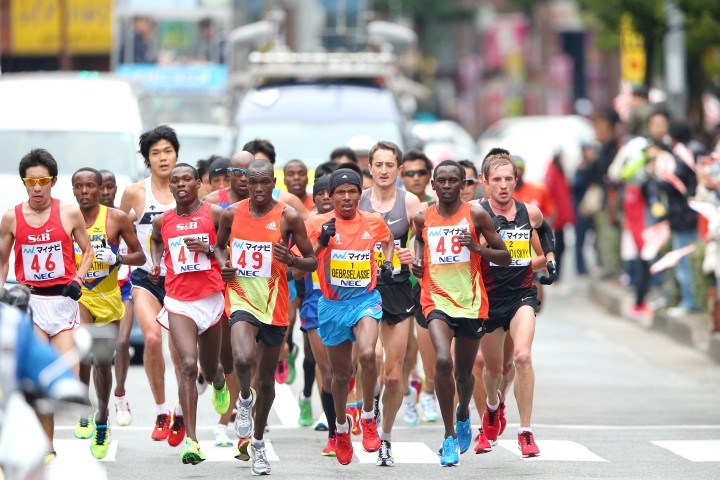
Along with an elite invited field of probably 10 men, the field this year will be limited to the 80 fastest applicants with marathon qualifying marks under 2:25:00 and the 10 fastest with half marathon bests under 1:04:00.
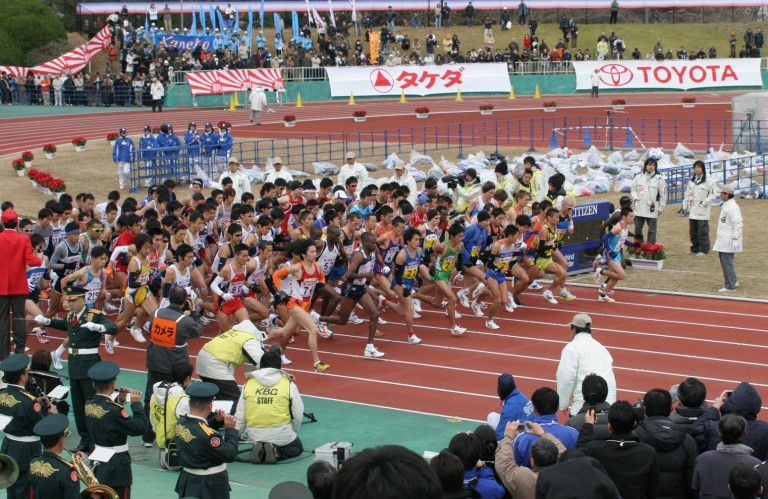
This eliminates the B-group start in Ohori Park, with the entire field starting on the track at Heiwadai Field.Most notably for the event's "international" self-designation, applications will be "limited to runners who are able to enter and stay in Japan as of September 14 (Mon.), the day on which applications open."
That pretty well eliminates anyone who is not a Japanese citizen or already a resident, even in the event of liberalization of Japan's restrictive anti-COVID immigration policies between now and race day.
How that's going to apply to the invited athlete field remains to be seen, but Fukuoka is definitely capable of putting together a field that meets World Athletics gold label requirements using only Japanese and Japan-based African athletes.
(09/12/20) Views: 58Brett Larner
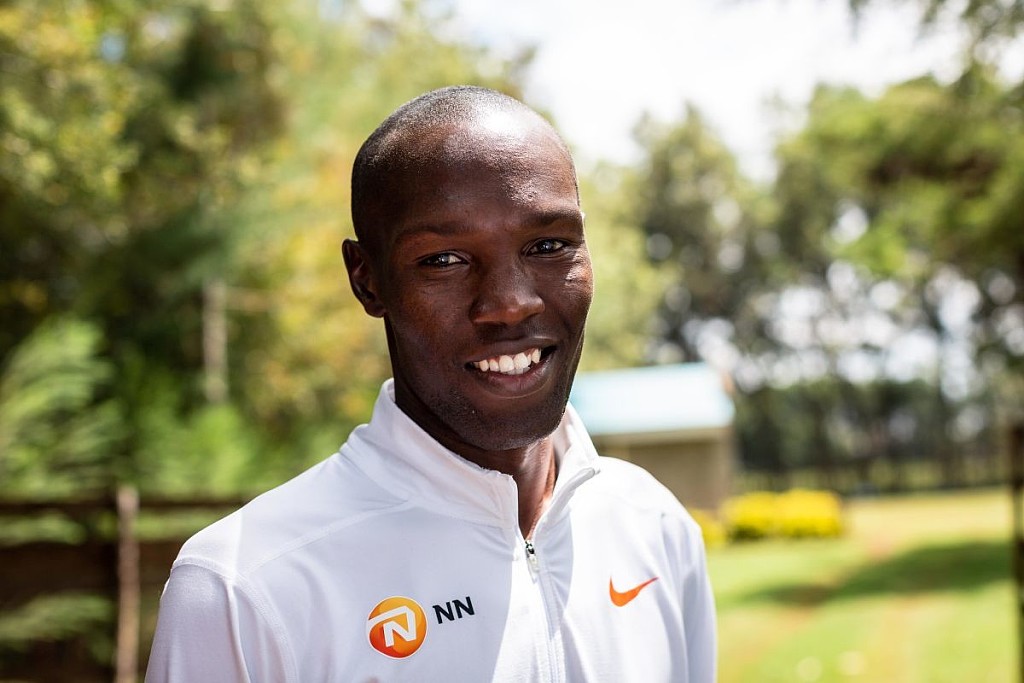
Victor Chumo will be the lead pacesetter at the London Marathon
Pacesetters are the unsung heroes in athletics.
Theses are the men and women who set up the main contenders in a race for first finishes and records, besides the titles.
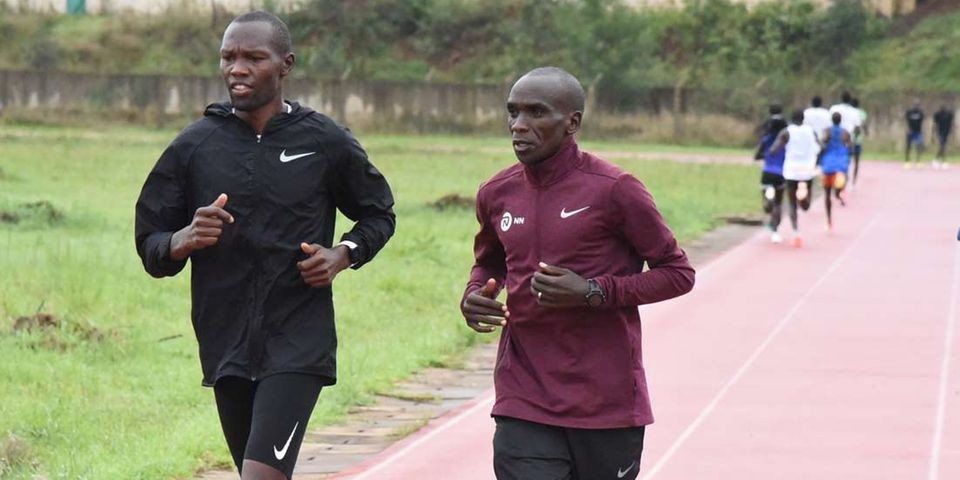
Marathon races, run over two hours require meticulous planning, disciplined pacing and tactical awareness.
Enter pacesetters, who, as the name suggest, are used to pace the contenders through the required time lines on the way to a world record, meet record, course record attempt, as the case may be.

The dynamics at the London Marathon that will be held on October 4 will be no different.
The race has attracted easily two of the fastest marathon runners in the history of athletics, Kenya’s Eliud Kipchoge, and Ethiopia’s Kenenisa Bekele.
Kipchoge needs no introduction. He is the world record holder, reigning Olympic champion and reigning London Marathon champion.
Bekele is the reigning Berlin Marathon champion, his winning time of 2 hours 01 minutes 41 seconds last year just two seconds shy of Kipchoge’s world record of 2:01:39.
Of course Kipchoge has run faster, 1:59:40- during the Ineos 1:59 Challenge in Vienna, Austria last October.
Victor Chumo was one of the runners who paced Kipchoge to that historic feat. Chumo is indeed a high profile pacemaker.
Nation Sport caught up with Chumo, who is one of the pacesetters tasked with leading the athletes in the London Marathon next month through their splits in the 42 kilometres race with a fast finish the clear objective.
The other Kenyan pacesetters for the London race are Noah Kipkemboi, Eric Kiptanui, Alfred Barkach and Shadrack Kimining.
Kaptagat-based Chumo also paced Kipchoge in his earlier failed mission to run a sub two hours marathon in Monza, Italy in 2017.
“I’m privileged that I have been selected to pace for some of the best athletes in the world. It is a hard task given that the athletes will always depend on the pacemakers during the race but I’m ready for the task because it’s not my first time to help top athletes run fast times,” said Chumo.
In fact, pacing Eliud Kipchoge in his first attempt to break the 2-hour marathon barrier in a project dubbed “Breaking2”, and sponsored by Nike, was Chumo’s first major assignment as a rabbit.
He trained hard for the assignment and was as disappointed as Kipchoge when the mission failed.
Kipchoge missed the magical barrier by only 25 seconds, after running 2:00:25.
Chumo joined Global Sports Communication stable in May 2019 and here again he was chosen among 41 pacesetters in the Ineos 1:59 Challenge that saw Kipchoge become the first and only man to run a marathon in under two hours.
“Pacing Eliud in the Ineos 1:59 Challenge was one of my best experience in my athletics career and I will remember that day for the rest of my life, he says."
(09/15/20) Views: 58Bernard Rotich

Grandma's Marathon adds a female runner to logo
Grandma’s Marathon is adding a female runner to its logo, a move race organizers say is “long overdue.”
“We thought with the 45th anniversary coming up it would be a great time to make that update,” said Shane Bauer, executive director of Grandma’s Marathon. “It’s been talked about for years.”
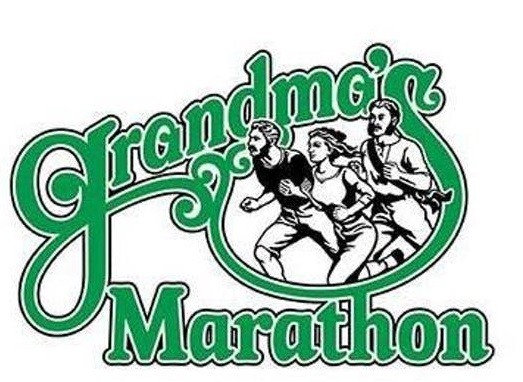
The logo was adapted from founding sponsor Grandma’s Saloon and Grill and features black-and-white drawings of three runners in a loop. The middle runner was replaced with a woman.
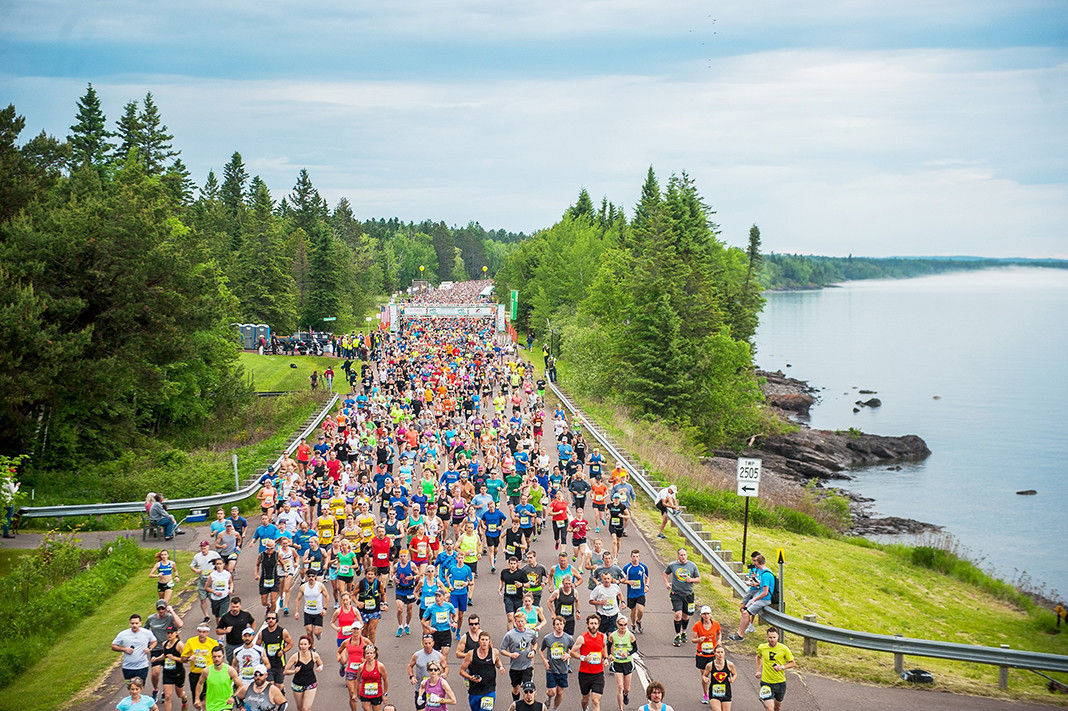
An increasing number of women have run Grandma’s nearly every year since it began in 1977, and a majority of half-marathon runners have been women since that event began in 1991.
“Thinking about Kathrine Switzer pushing her way into the Boston Marathon, that wasn’t so long ago,” Bauer said about the first woman to run that race in 1967.
“There has been quite the flip.”
Duluth native and Olympic long-distance runner Kara Goucher said she’s “proud” that organizers updated the branding.
“I think we women want representation and I think to have it in the logo is a really big deal,” said Goucher, who lives in Boulder, Colo., but was visiting Duluth this week.
“Those are small steps that make a huge difference for their audience.”
Goucher is an advocate for getting more women and girls into running. After handing out water at Grandma’s Marathon and “loving the race” as a spectator while growing up, the 42-year-old said it was important to “see what was possible.”
“I think it’s one of the great sports where there is equal representation — you’re never going to see that in football or basketball or soccer,” she said. “It’s one of the places where we have equal access most of the time.”
Bauer said that women have also played an important role in the Grandma’s Marathon organization, making up a majority of the paid staff.
“If you look at our history, women have really run the show,” he said. The logo change was prompted by Grandma’s Gazette, the official race publication from Grandma’s Restaurant, which added a woman to its line-art logo in 2019, Bauer said.
Next year’s marathon will be run at half capacity — 4,000 each for the full marathon and the half and 1,500 for the 5K. Race weekend typically draws 18,000 runners and is a major boost for Duluth’s tourism economy.
The race runs along the North Shore between Two Harbors and Canal Park in Duluth and is a Boston qualifier.
Bauer said “we’re choosing to be optimistic” about running the race in person next year, but the pandemic may have other plans.
The 2020 race scheduled for June 22 was canceled at the end of March, marking the first cancellation since the marathon began.
The 45th-annual Grandma’s Marathon and Garry Bjorklund Half Marathon are scheduled for June 19.
(09/13/20) Views: 53Brooks Johnson
