

Running News Daily
Top Ten Stories of the Week
6/13/2020
These are the top ten stories based on views over the last week.



After cancelling the South African ultra, Comrades Marathon virtual event signups surpass 13,000 runners
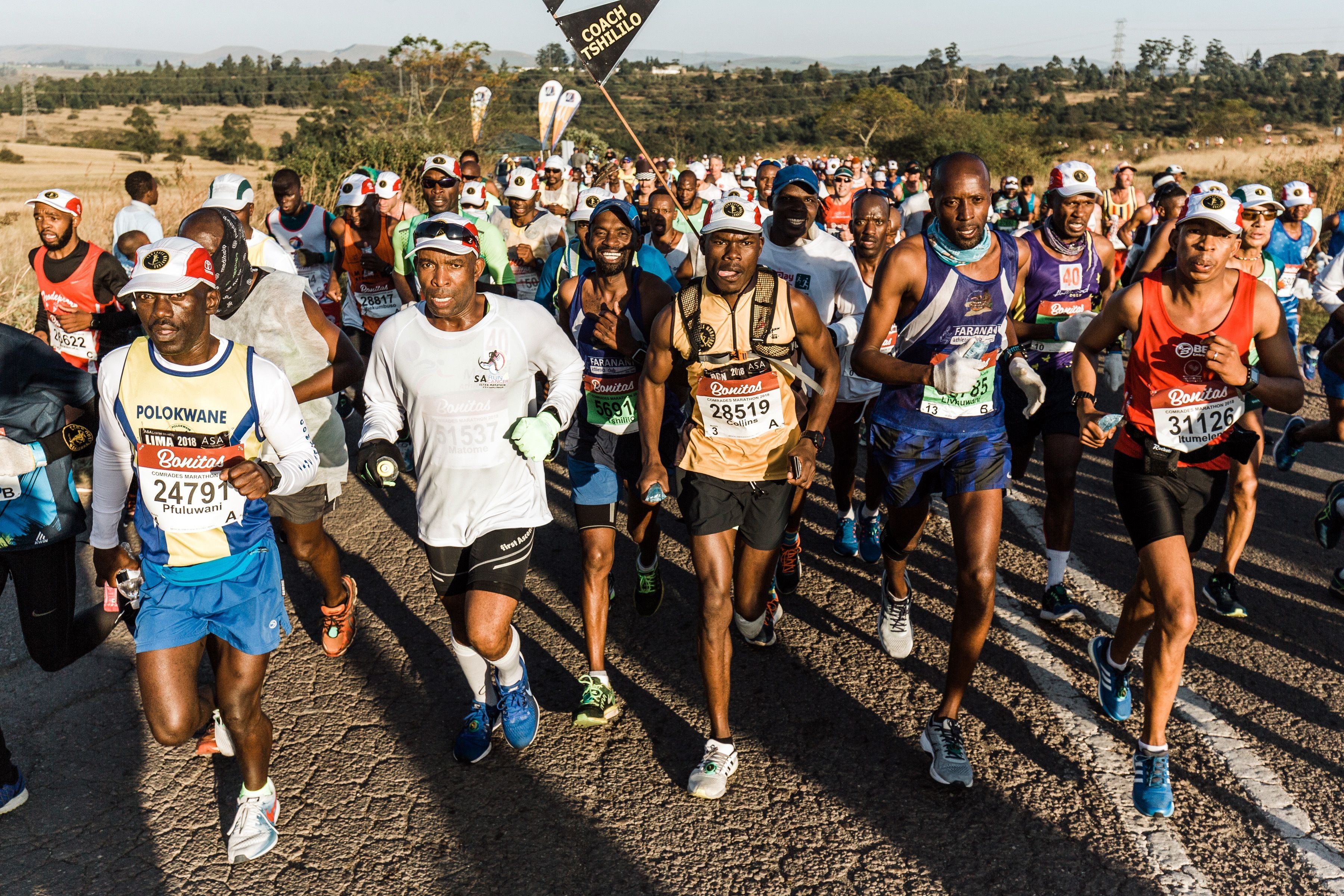
One of the world’s most famous and coveted ultramarathons, the Comrades Marathon in South Africa, was cancelled due to COVID-19 in May. The race was set for June 14, and although no one will be physically running the course between the South African cities of Pietermaritzburg and Durban on that day, organizers have scheduled a virtual event called Race the Comrades Legends for the same date.
The event is open to anyone worldwide, and with just over a week to go before race day, over 13,000 people have registered to run.

In a normal year, the Comrades Marathon is 87K or 90K (the course changes directions each year, hence the two distances). Runners looking to participate in the virtual event will have the option to complete a 90K run in classic Comrades style, but there are also 5K, 10K, 21K and 45K options for anyone who isn’t looking to tackle an ultramarathon.
The event is free to anyone who was already registered for the 2020 Comrades Marathon, and it’s just $25 for everyone else. In addition to the race fee, runners have the option of donating to six local South African charities.
All participants will have to record their runs and upload them to the Comrades site, where results will be compiled and ranked. Runners can upload their runs using whatever tracking apps or GPS programs they prefer.
After all the results are in, runners will be able to see where they sit among the rest of the participants, and according to the virtual race press release, they will also be able to see how they rank against Comrades Marathon legends from past events.
All finishers will receive a virtual medal and finishing certificate immediately after completing their race, and in the weeks after the event, they will receive a physical medal as well.
(06/05/20) Views: 759Ben Snider-McGrath

In Conversation with Sir Mo Farah
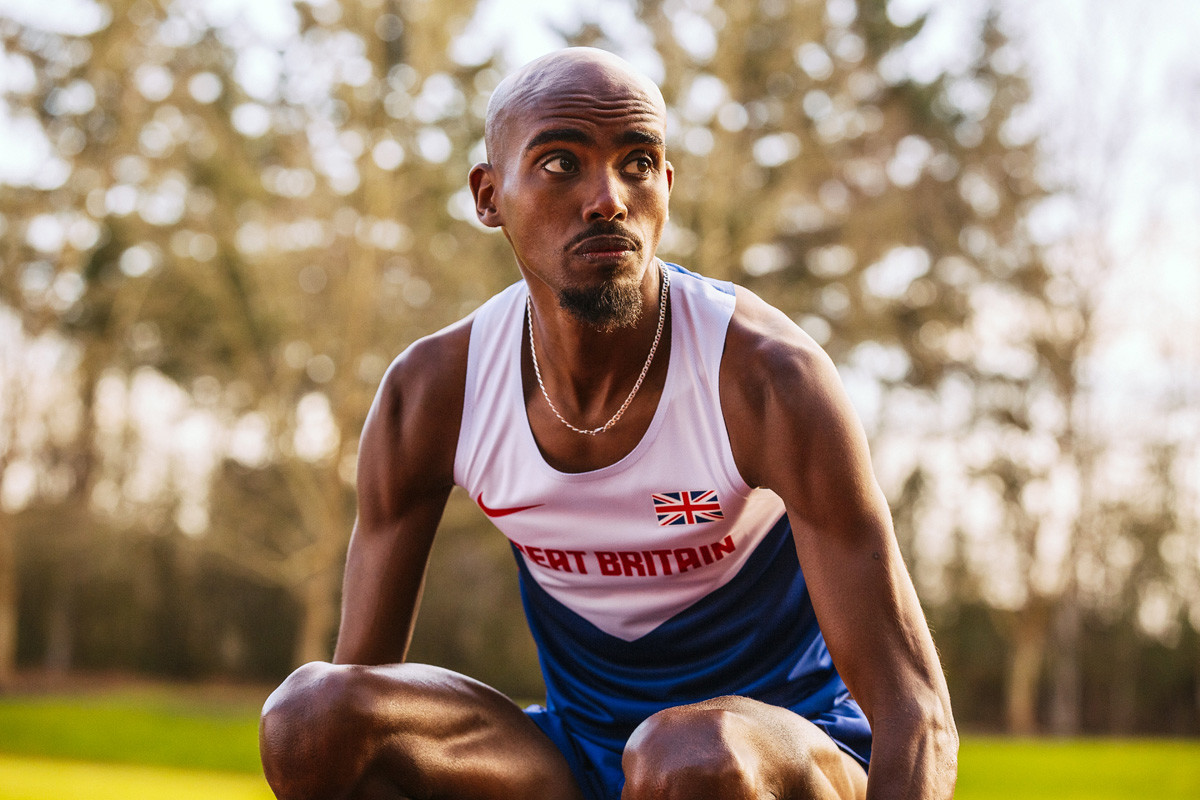
It’s not easy to cover hundreds of miles when you’re stuck inside. With global sporting events cancelled or postponed for the foreseeable future and many types of training prohibited or significantly altered, international athletics and, by extension, international athletes have been hit hard by the lockdown. Sir Mo Farah has, however, managed to take it in his stride.
Farah, winner of four Olympic Gold Medals and a plethora of other titles, is the most successful British track athlete in modern Olympic Games history. He has competed and won at every distance from 5000 metres to marathon and had announced a return to the track for Tokyo 2020 last November to try and retain his 1st place position for the third time in a row.
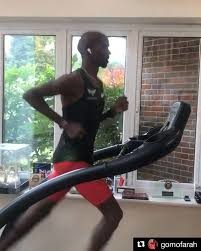
An Achilles injury may have slowed him down, but Farah was making good progress towards that goal before the coronavirus shut down races across the planet.
“At the time, in March, I was in a training camp in Ethiopia,” Mo smiles, “I pulled out of the London Big Half early on because of an Achilles problem, but once that settled down and got better I did four weeks of training.” However, as the pandemic became more prevalent this training regime was cut short. “It was just kicking off, I had to change my flight to come back home and make sure that when lockdown happened I was with my family, so that’s what I did. Since then it’s been nothing.”
Farah is committed to his family, constantly referencing them as we discuss staying motivated amidst so much confusion. They occasionally appear in the background of our Zoom call, having clearly inherited some extremely speedy genes. They also feature prominently in Sir Mo’s YouTube channel, which boasts an impressive 139,000 subscribers. The content of the videos has shifted recently, with more family challenges and less training videos.
That’s not to say, however, that his training has dropped off.
“I normally do between 100-150 miles a week and a lot of the time I’m in the gym three times a week” smiles Mo as he describes his average training regime, “most of my running’s been on the treadmill, I’ve even done hill sessions on the treadmill.”
He rattles off this regime as if it were easy, maintaining a positive tone as he describes the most gruelling elements of his training. If there is one word to describe Sir Mo, it has to be motivated. He seems to have sprinted through circumstances that have robbed many of us of all our motivation. The secret, he says, is setting your eyes on the finish line.
“You always have to have a goal and have ambition and look beyond this. I’m one of the lucky people in the way that I still have a treadmill here, I have a bit more space than everyone else. You always have to try to think positive and that’s what I try to do with my kids. We try not to go into too much detail and always be negative so, in a way, it’s like, ‘let’s go and have a laugh, kids! What can we do?’ Go in the pool, go in the garden, go and do challenges. Just keep your mind active.”
He tries to get the kids to run at least a mile every day if they aren’t out on their bikes, making sure that there is always something to focus on to get through the day.
Keeping your mind active is one thing, but looking beyond the pandemic is quite another. Social distancing will likely last for months, leaving athletes whose training depends on upcoming events in a difficult position. I put this to Farah, asking if he has any specific event in mind with regard to his training.
“My aim has always been the Tokyo Olympics,” he replies, “that’s what really drives me to stay on my feet, stay motivated, stay hungry. That’s what my goal is, ultimately.”
Although his goal has stayed concrete, the circumstances will have changed drastically by the time his shoes touch the track.
The travel industry is set for massive losses, and recent developments in the UK’s quarantine plans mean that going abroad won’t be an option for the foreseeable future. This is an issue for athletes who rely on travel for everything from altitude training to World Championships.
“It’s definitely going to have a knock-on effect, no matter what,” says Mo. “I’m trying to stay positive.”
Another huge problem for organisers is that it is extremely difficult to have socially-distant spectators in stadiums. Korean football has got past this by staging games with no crowds at all, or even filling the seats with poorly-chosen humanoid dolls.
An eerie silence has replaced the cheering and chanting in these stadiums, which poses a problem for athletes who thrive off the crowd’s energy. “There’s no question about. The crowd is everything. It drives you, it puts you on your toes, it puts you on edge. Without the crowd, I think it’s going to be totally different.” The roaring crowd hich has accompanied all of Sir Mo’s signature sprint finishes will probably be absent the next time he runs. It’s a bitter pill to swallow, but Farah manages to keep sight of what is most important.
“Without the crowd it’s going to be boring but, at the same time, it’s what we need to do to make it as safe as possible.” Speaking as “a massive Arsenal fan”, it’s clear that even if he agrees that having football without spectators is odd, “If it means we can have football back and this is how it’s got to be for a little while then we just have to stick at it because it’s the safety of the players. But as an Arsenal fan, I’m thinking ‘man, I don’t like the look of that!’ Imagine seeing the whole stadium empty…”
These concerns are still firmly in the future, for now it’s a question of adapting his training in the present. His commitment to the treadmill means that he can still cover the distance, but training has lost a key social element.
"It can be lonely at times. It depends who you have and how much you enjoy it. Whatever you put into it is what you get out of it, whereas in football if you can have a bad day but there are ten more players who can help you recover.” Reliance on a team dynamic is something that Sir Mo doesn’t have to worry about as much as team players. “I think it will have a really big effect,” he notes, acknowledging that each player training as an individual could cause serious issues when football starts back up.
Hammering out 10-mile sets in isolation is no mean feat, but Farah says that Team GB has “handled it in a positive way by trying to put athletes first.”
The period of uncertainty leading up to the Olympics’ postponement was a particular cause for anxiety, but “once that settled down we got the comfort of thinking ‘I have a date’… The goal is to always have something to aim for. That’s what you thrive off, and that’s what gives you that boost, that energy and motivation.” Recovering from his aforementioned Achilles injury, Farah had set his sights on the Olympics knowing that he faced an uphill battle. The weeks leading up to the announcement that the Olympics would be held in 2021 were particularly stressful because, as other races in the UK were called off, Farah had no way of testing himself.
“If I hadn’t run other competitions it would have been crazy to run in the Olympics,” says Mo, emphasising that he’s glad that the focus has been on the safety of athletes first and foremost.
Even if their safety is put first, the consequences of the lockdown on mental health still weigh on athletes. “To be honest at this point they haven’t spoken that much about mental health,” Mo states, “They had a target, their target’s been cancelled. I’ve been there and done it so many years that I can overcome that but for some younger athletes I think they will have that in their minds. It’s important to support them in general, not even just in sports.” I suggest that public figures like Sir Mo have an important role to play in keeping up morale across the country, to which he beams:
“I think that’s always the key for me. As a general thing, I love to be able to help others. A five-minute phone call is just five minutes for me, but that could make that kid’s day. When I was younger I loved football and if one of the Arsenal players said ‘hi’ to me that would have made my day. We used to collect stickers, I remember that we used to get excited about stickers, so imagine one of the players in real life saying ‘hi’ or saying something to you.”
Farah’s reach has been massively increased by social media. He uses Twitter, Instagram and YouTube to engage with viewers and fans, retweeting letters from children and entertaining on Instagram live streams. He has also participated in the 5K challenge which, in classic Mo style, he did as part of a 10-mile training session from home. Asked his time, he replies “oh, was it 18 or 19 minutes?”
He smiles the most when he talks about how much he enjoys helping others out in a time of crisis and is in the middle of telling me how much easier it is to stay connected by social media when our call cuts out. “It’s an easy way to stay connected…” are the last words I catch.
We manage to reconnect, and the focus shifts beyond running. It’s hard to face the distant future when the next few months hold so much uncertainty, but Farah’s plan seems clear. “When I finish running completely, I’d love to be able to give back to the younger kids and get involved more with coaching. I’ve actually just got my coach’s license so I’m actually qualified, which is a good thing to have. Particularly young kids in Britain, there are a lot of kids with potential who are good enough, but it’s always hard to make that transition from juniors to seniors. For me I just see myself as a coach. I’m also not bad with kids, having four kids myself.”
Sir Mo retains a lightness throughout the interview that makes it hard not to smile along with him. He’s also positive about the future of running as a leisure activity in Britain, saying: “back in the day we saw running as something that you had to do in PE, or as a warm-up. Most people, if you tell them ‘you must do this’, they’re most likely not going to do it. Running’s a great way of getting everything out. It clears your mind and you’re in a different zone.” Farah is very clearly still going for gold. We haven’t seen the last of the ‘Mobot’ yet, but until then he has to bear with lockdown and continue to train. With questions about the feasibility of the 2021 Olympics continuing and lockdowns relaxing across the world, it is extremely difficult to stay motivated. Sir Mo is an example of the positive, goal-oriented attitude we need to make it to the finish line. “We’re all human at the end of the day,” he remarks as the interview ends, “we just have to try to be positive in every way that we can.”
(06/07/20) Views: 456

Sara Hall broke the women’s treadmill world record on Saturday in the Chaski Challenge
American Sara Hall broke the women’s treadmill world record on Saturday, running a 1:09:03 in a virtual event called the Chaski Challenge. This event was organized by the Chaski Endurance Collective, an online coaching company, and it saw three men and three women break records ranging from half-marathons up to 100K runs on the treadmill.
Many treadmill world records have been broken in 2020, from 50K and 100-mile runs all the way up to a 30-day effort, and on the weekend, eight more records fell thanks to Hall and five other elite runners.
Both the men’s and women’s half-marathon treadmill records were broken on Saturday. On the men’s side, John Raneri (who has a half-marathon PB of 1:01:51) ran a 1:03:08, beating the previous record by 29 seconds. Going into Saturday, the women’s half-marathon record was 1:20:43, but it was beaten twice, first by Renee Metivier and then by Hall.
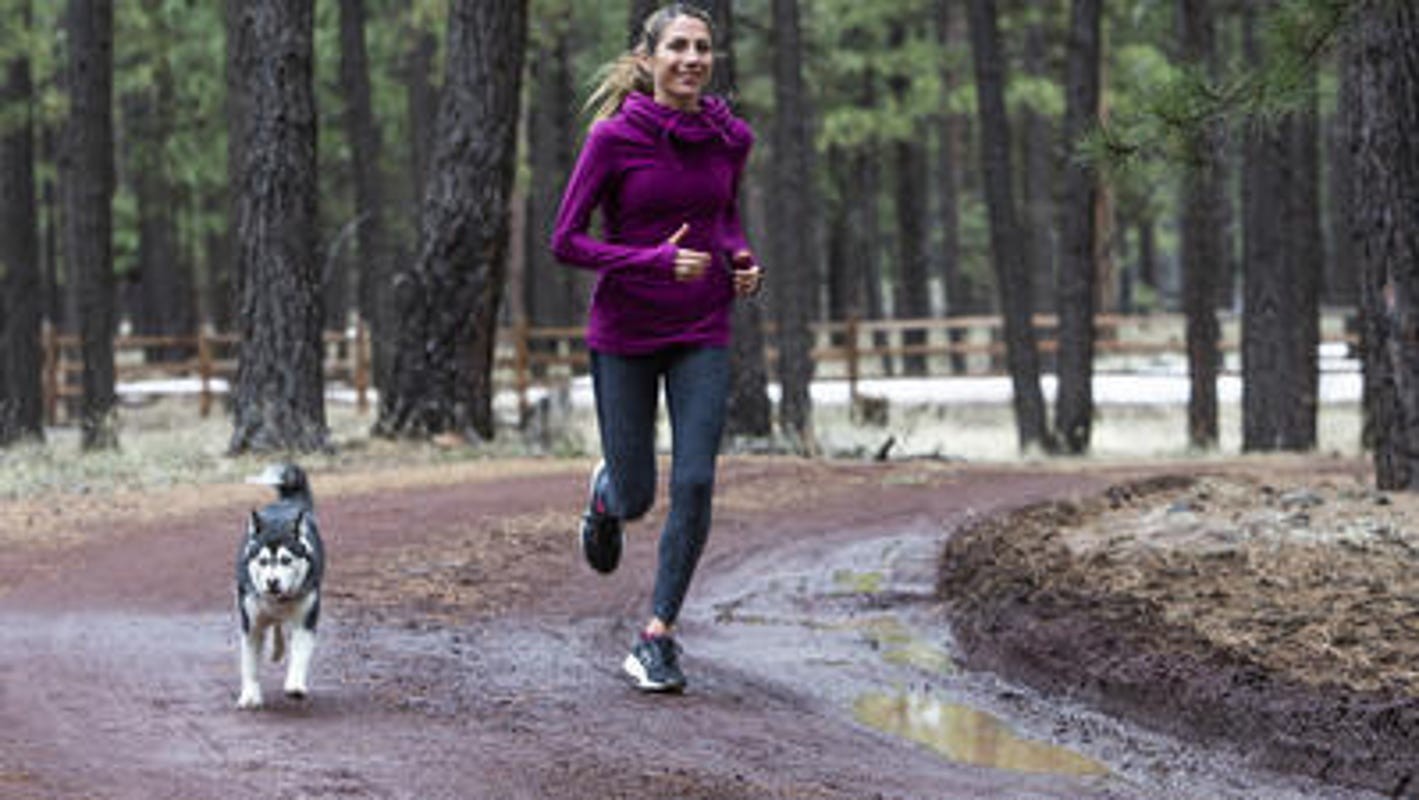
Metivier posted a 1:19:29 en route to her 50K record, and just two hours later, Hall—a former Pan Am Games gold medallist who has a 1:08:58 half-marathon PB to her name—bettered the mark once again, finishing 21.1K in 1:09:03.
The marathon and 50K records were lowered for both the men and women on Saturday as well. Metivier set both records for the women, adding to the half-marathon record she’d set earlier in the run. She ran a 2:41:11 marathon to beat the 2:42:07 record, and 8K later, she set the 50K record in a time of 3:11:38, smashing the previous best of 3:51:25.

For the men, Tyler Andrews broke the marathon record of 2:20:45, passing through 42.2K in 2:17:56.
He continued on for another 25 minutes to finish the 50K in 2:42:51. Going into Saturday, Andrews was also the owner of the men’s treadmill half-marathon record, which he set in 2015. This is the fourth time in 2020 that the men’s 50K record has been lowered, with the previous best coming back in April when Swiss orienteering champion Matthias Kyburz ran a 2:56:35.
Mario Mendoza was the first man to break the 50K treadmill record in 2020, which he ran back in January, but on Saturday, he wasn’t looking to reclaim that title. Instead, he doubled up and ran the 100K, running a world’s best time of 6:39:25.
The final record of the day came from Regina Lopez in the women’s 50-miler (80K). Lopez crossed the virtual finish line in 8:41:37, ending the night on a high for the Chaski Challenge, which saw eight records fall in total.
(06/08/20) Views: 157Ben Snider-McGrath
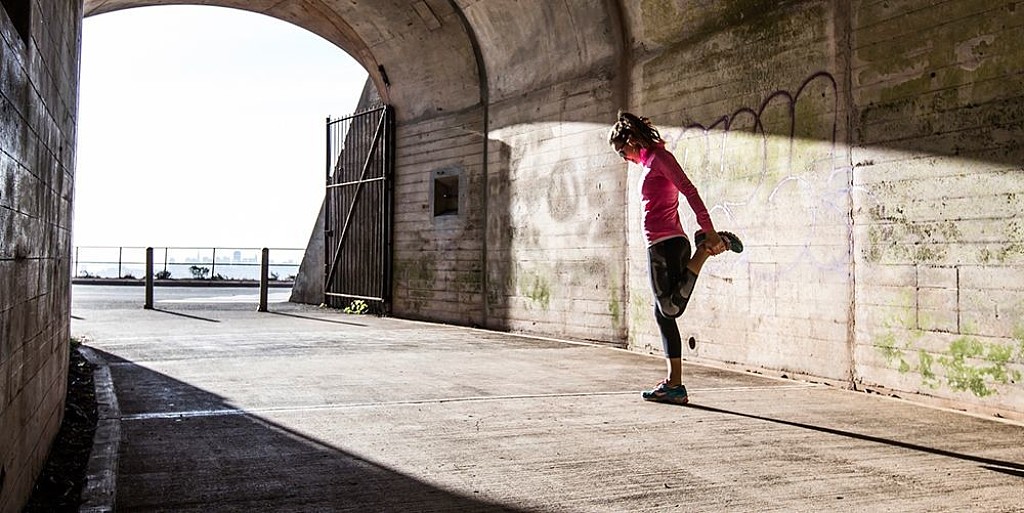
When it comes to running, experts suggest avoiding static stretching
Stretching was once the cure-all for running injuries. Practitioners would ask injured runners if they were stretching enough, and if the answer was no they would offer more stretches. However, research is now suggesting that certain kinds of stretching aren’t great for runners, and may even be harmful for those who are prone to injury.
According to a literature review of several studies, there’s actually a correlation between lower levels of flexibility and better running economy, which refers to the amount of energy expended to maintain a particular speed. A study on untrained runners found that participants with the lowest flexibility happened to have the most naturally economic running styles. Researchers believe that this was a result of low range of motion, leading to better stabilization when the foot hits the ground. Basically, excessive range of motion means more energy is needed to stabilize muscles, and having a lower range of motion reduces that use of energy.
Carla Robbins is the owner of Vital Strength and Physiology in Calgary, Alta. She says she almost never prescribes static stretching to her clients – she’s all about strength work. “If stretching is something you do frequently, it’s technically possible to get more length in the muscle, but I don’t personally recommend it. I feel like there are other things that can check that box, for example, dynamic stretching or strength training. Strength training results in strength (and length), while also preventing injury.”
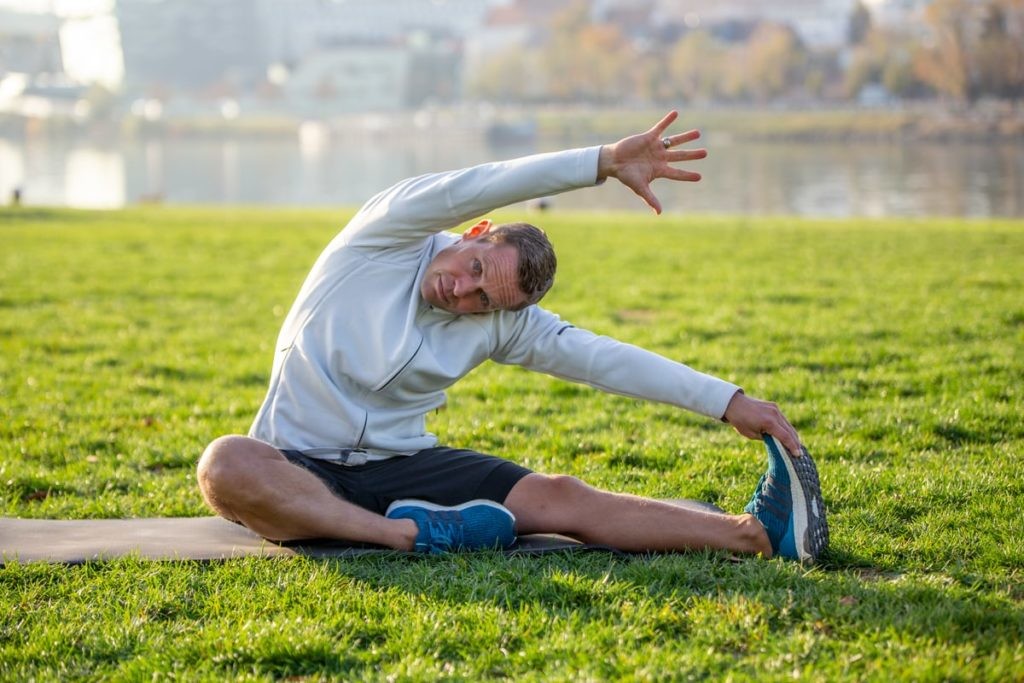
When to stretch.- If static stretching (holding one position) isn’t recommended for runners, then what should they be doing to warm up? Robbins says ideally runners will integrate dynamic stretching (not holding the stretch, but moving with control in and out of the end ranges of the stretch) into their pre-run routine. A dynamic warmup will increase body temperature, which activates enzymes that are beneficial to running.
When not Stretching.- Robbins says static stretching should be avoided by runners who are trying to prevent (or rehabilitate) an injury. “There isn’t enough evidence to support that stretching prevents injury,” she explains. “Some stiffness is required in the ligaments and muscles to run. For example, if you’re a hyper-mobile person with relaxed ligaments, you might be more prone to injury as your joints are more likely to move with loading. Lack of stiffness isn’t necessarily beneficial.”

Robbins also reminds runners never to stretch through pain. “Listen to your body, it’ll tell you if you’re doing something wrong.”
When runners cramp up, many feel the need to “stretch it out,” but the research is divided on the topic. Muscle cramps can be caused by many factors including dehydration, fatigue and vitamin or mineral deficiencies. Leg cramps can also be a side effect of some prescription medications.
However, the reason for cramping and its exact cure eludes us. Several studies suggest that stretching out a cramp won’t hurt you, but it won’t necessarily help, either. If cramping is an issue for you, Hyland’s Leg Cramp Tablets, an official sponsor of the Boston Marathon, are one way to feel confident on the start line. Hyland’s Leg Cramps Tablets are taken without water, the quick dissolving tablets melt instantly in your mouth for fast-acting natural relief of leg, calf and foot cramps with no known side effects.
When strength training, runners should pay special attention to their quads and hamstrings, along with ankle and hip mobility. These are the areas where the most-common running injuries tend to happen.
(06/05/20) Views: 97Madeleine Kelly

400m world champion, Salwa Eid Naser of Bahrain was given a provisional suspension for whereabouts failure
The 2019 400m world champion, Salwa Eid Naser of Bahrain, has been given a provisional suspension from the Athletics Integrity Unit for a whereabouts failure.
The third-fastest 400m runner of all time became the first Asian woman to win the world championships in her event last fall.

According to World Athletics anti-doping rules, three missed tests or filing failures within a 12-month period constitute a whereabouts violation. Out-of-competition testing (test that don’t take place at a race) work on a “three strikes” model – a third missed test in a 12-month period is treated like a positive test, and a competition ban of two years is standard.

Last year, American sprinter Christian Coleman missed three out-of-competition drug tests in 12 months, which meant he was facing a two-year ban.
After several weeks of investigation and the discovery of a legal loophole, the U.S. Anti-Doping Agency dropped its case against Coleman, who was then allowed to compete at the world championships.
(06/05/20) Views: 74Madeleine Kelly

Eliud Kipchoge said that he was incredibly happy to see the world running as one at the Run as One virtual team marathon
Imagine running on the same team as Olympic icons Eliud Kipchoge, Kenenisa Bekele, Geoffrey Kamworor...
Well that's exactly what happened this weekend as normal people across the world ran with Olympic champions in the 'Run as One' worldwide virtual relay marathon.
Teams of four completed a marathon by running 10.5k each, and just by entering you were in with a chance to run alongside some of the biggest names in sport.
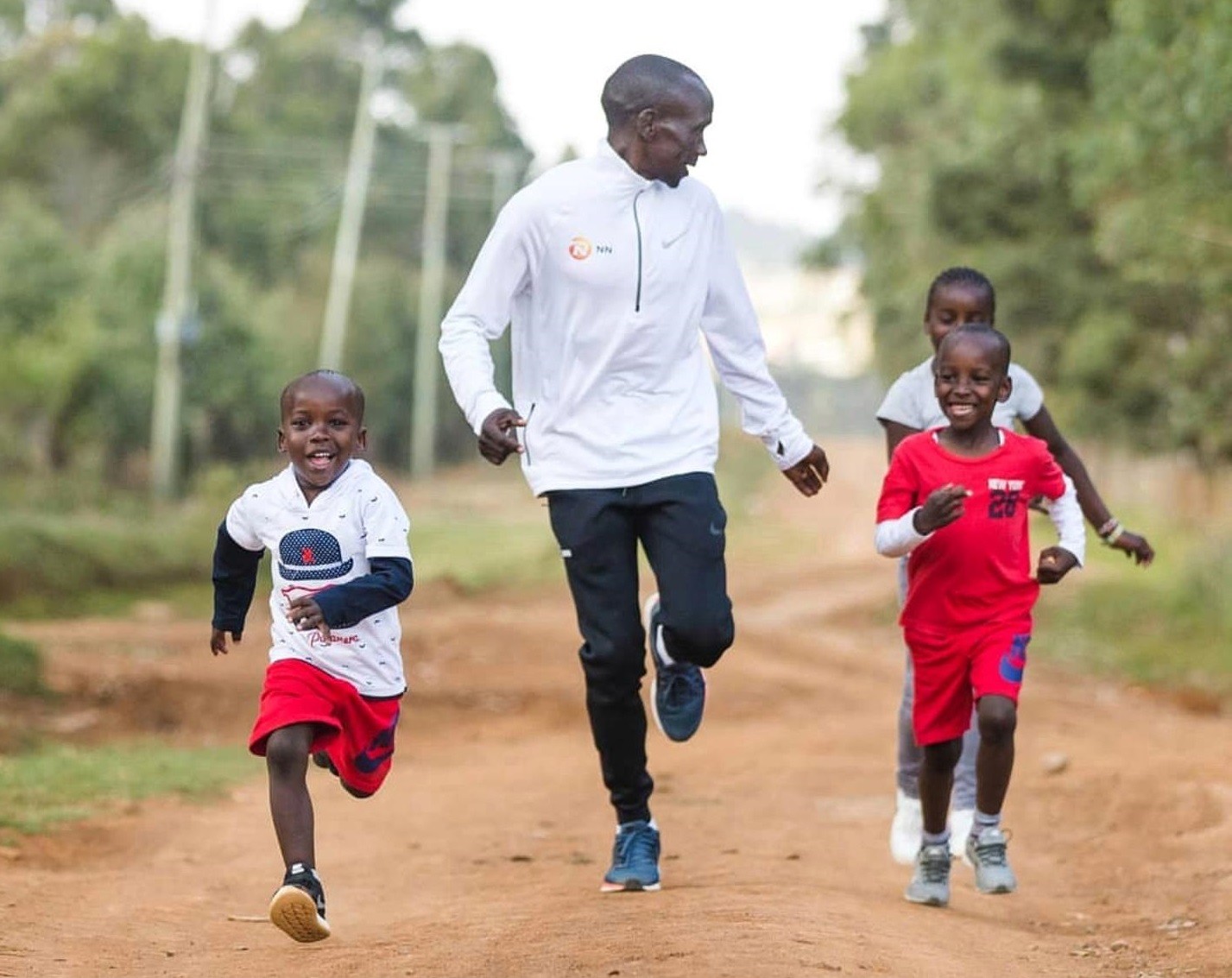
But it wasn't just running superstars who stepped up, Tottenham Hotspur football club, Olympic triathlon gold medallist from Germany Jan Frodeno and Spanish sky runner/ultramarathon/daredevil Kilian Jornet also got involved.
The event was organised by NN Running Team, an international team of elite long-distance runners managed by a company in the Netherlands.
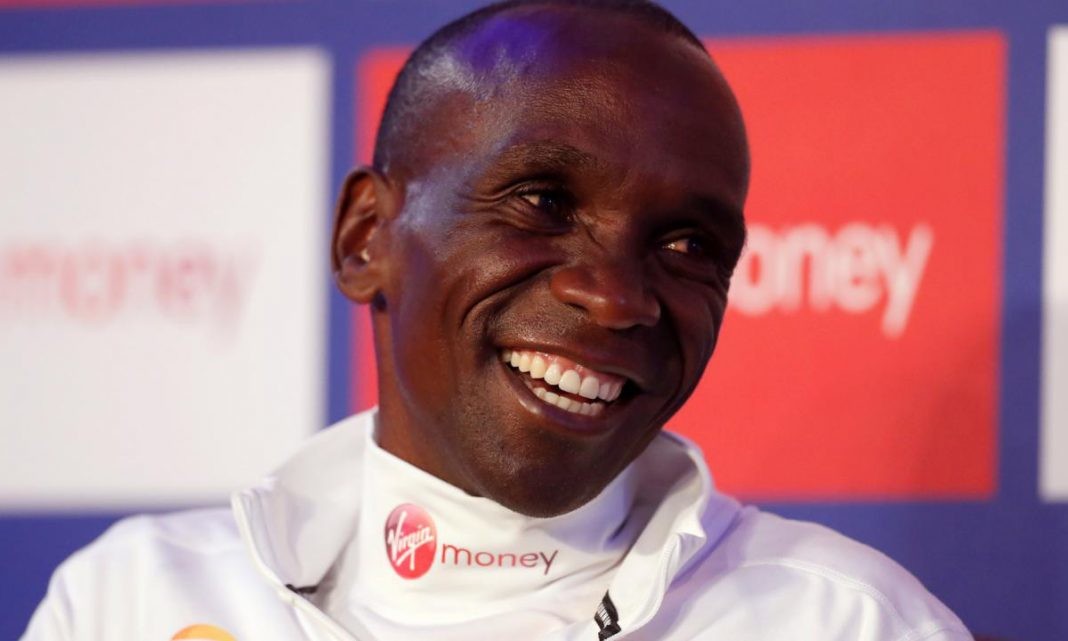
Kipchoge, whose historic sub-two hour run in Vienna last October broke new ground, teamed up with amateur runners from Brazil.
The Kenyan ran 10.5k in 31:28 seconds, not the fastest time on the leaderboard, but this event was about much more than running fastest or coming first.
"It makes me incredibly happy to see the world running as one this weekend," said Kipchoge the day before his run.
"Today I ran for my Brazilian team," he posted on Instagram after his 10.5km run, "but together we have all run as one. Runners from all over the world have joined us and showed how ours is a running world."
"Good luck everybody who is taking part today," said Kipchoge as he signed off on Sunday with many more runners still to come.
Another world-record holder and three-time Olympic champion Kenenisa Bekele ran with Joris, Stephen, Andy and Tharkun from the Netherlands.
The Ethiopian ran his 10.5km in 32:57 on his own track that he built in Sululta, 25 minutes outside the Ethiopian capital Addis Ababa.
The 5000m and 10,000m World record-holder built a six-lane all-weather track which is home to many athletes training and dreaming of Olympic glory.
They call it Bekele's ‘field of dreams’.
"It was a great pleasure to run my 10.5k as part of the MA RA TH ON challenge on my own track in Sululta," he posted.
It was hardly any surprise that half-marathon world record holder Geoffrey Kamworor put in the fastest time, going 10.6 km in 30:08s.
This time Eliud Kipchoge wasn't there to greet him at the finish line like he did at the 2019 New York marathon, but Kamworor was pleased with the run.
The Kenyan ran with a team from the USA.
Kilian Jornet does many things - like ultramarathons and literally running up and down mountains.
He is said to hold the fastest known time for the ascent and descent of Mount Everest for example.
For most of us, running 10.5km is a struggle, but when Jornet's Strava App told him that he had only run 10.49km making his entry invalid, he said ok:
I'll start again.
"It’s been actually pretty fun this MA RA TH ON!" Jornet posted, despite having to do it twice.
"Today I did my relay to join my teammates @davidnilssons@mustafamohamed79 and @fra_puppinho to finish this challenge among more than 100.000 runners worldwide. Thanks guys!"
(06/08/20) Views: 73Ken Browne

Tokyo Olympics must be held in 2021 or not at all
High-ranking Olympic official Pierre-Olivier Beckers on Saturday made plain that the delayed Tokyo Olympics "will be held in 2021 or not at all".
The Belgian was reiterating the stance put forward by Japan and International Olympic Committee chief Thomas Bach that next year was the last chance to hold the Games postponed due to the coronavirus pandemic.
"Today everyone is sure that they will start on July 23, 2021," he told Belgian newspaper L'Avenir.
"We are convinced that the Games will take place in 2021 or they won't take place.
"It's unthinkable to keep such a project on the go for any longer considering the enormous costs and all the thousands of people involved."

Beckers suggested it was "essential" that the traditional sporting calendar emerges from its Covid-19 lockdown before allowing major sporting events like the Olympics to be staged.
"All the sporting federations have to adapt to the Games' postponement.
"We can't envisage a similar upheaval a second time," stressed the president of Belgium's Olympic Committee.
According to Beckers a final decision on Tokyo "will be taken in the spring if questions (over the global health crisis) persist."
He said he was optimistic over the staging of the Games, rejecting any notion that it would be held behind closed doors.
In March, Tokyo 2020 was postponed one year over the coronavirus, which has killed hundreds of thousands around the world and halted international sport and travel.
Beckers heads the IOC's coordinating commission for the 2024 Games and he said he wanted Paris "to be different" to past editions.
"We want to stage Games that are economically responsible, inclusive, sustainable and useful for society.
"The IOC's desire is that the Games adapt to the needs of cities, countries, and vice versa. Paris will be the first edition that will fully fit into this vision."
"We must fight against gigantism," he continued.
"In Paris, we will return to a budget lower than that of previous editions: 3.8 billion euros for operations and around three billion for all infrastructure."
(06/06/20) Views: 58

The 2020 Rock 'n' Roll Las Vegas Marathon has been postponed due to the pandemic
The 2020 Rock 'n' Roll Las Vegas Marathon has been postponed, organizers announced Thursday.

"To best meet the needs of our participants, the Las Vegas community and local authorities, the 2020 Rock 'n' Roll Las Vegas Marathon & 1/2 Marathon cannot take place as originally scheduled for November 14-15, 2020," organizers said in a post on social media.

Officials said they are "working diligently with our various host city partners and stakeholders on all potential options."
Rock 'n' Roll Marathon said that all further event updates will be communicated as soon as possible.
(06/05/20) Views: 57

I was overcome with sadness - Kenyan Kipchoge said after the London Marathon postponement
Kenyan Eliud Kipchoge took two weeks to get over the news of the London Marathon postponement, it was revealed on Wednesday.
The race was scheduled for April, with Kipchoge the defending champion, before it was postponed and rescheduled for October due to the novel coronavirus pandemic.
“It was painful for me when London was postponed,” Kipchoge told Runner’s World.
“I was at peak fitness before that race. I took two weeks to be sad, and then I went back to training. This is life.”
Kipchoge set the men’s marathon record of 2:01:39 at the Berlin Marathon in 2018, and in October last year became the first man to break two-hours for the 42.2km distance in an unofficial challenge run in Vienna.
Known as the Ineos159 Challenge, Kipchoge with a series of different pacemakers clocked 1:59:40 to become the first person to break two hours for the marathon distance.
This weekend, Kipchoge will be taking part in a virtual 42km relay event called “M A R A T H O N”.
Ethiopia’s Kenenisa Bekele, Uganda’s Joshua Cheptegei and Kenyan Geoffrey Kamworor will also be participating.
That high-powered quartet will take part in a the team event on Saturday and Sunday which invites runners from around the world to join teams of four to complete a full marathon together, alone.
(06/06/20) Views: 57

Swissalpine Marathon will go ahead despite coronavirus pandemic
Organizers of the Swissalpine Marathon Davos have confirmed that the race will go ahead on 25–26 July as originally scheduled – but with some restrictive precautions put in place because of the covid-19 virus.
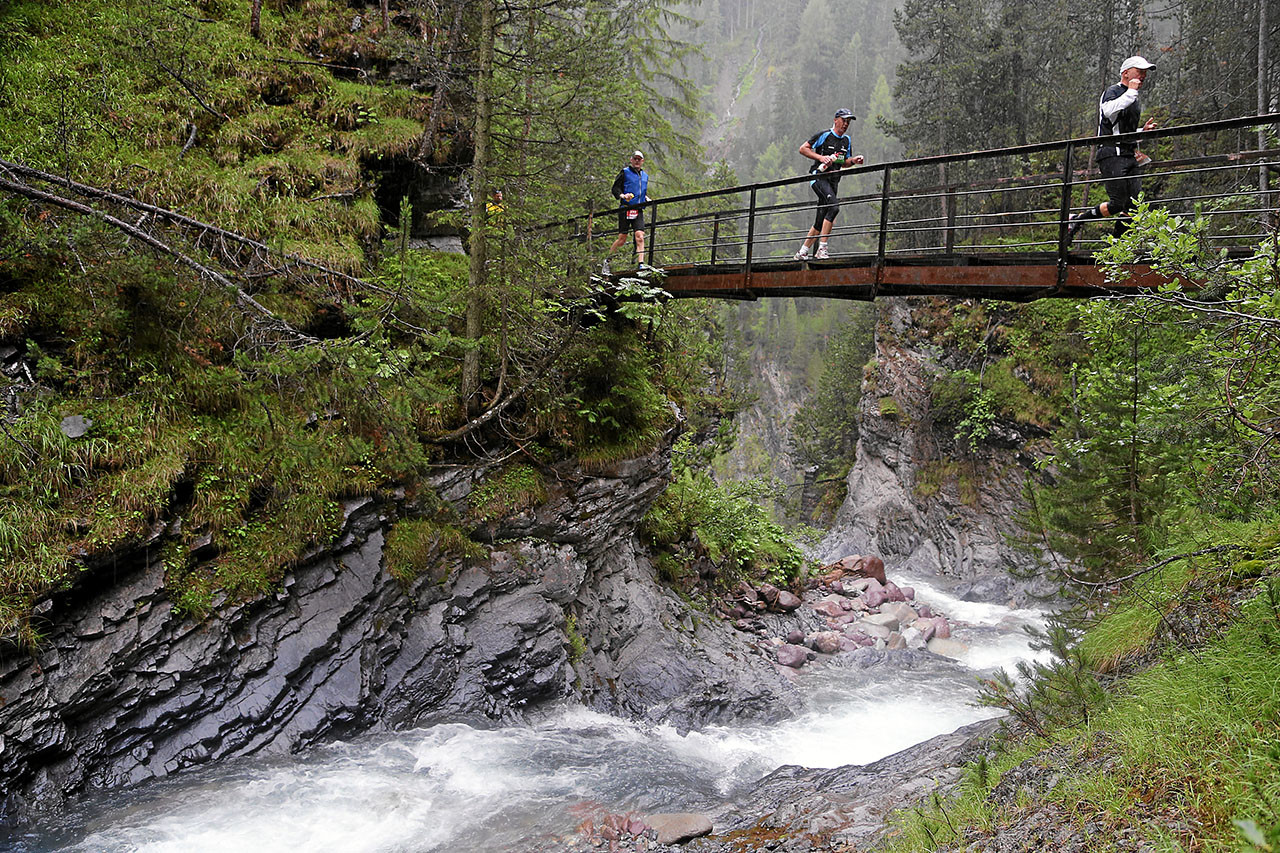
The 68km race will be run on 25 July and the 43km race on 26 July. There will be no 20km race that traditionally forms part of the programme.

To comply with the hygiene and distance rules in place the runners will be started on a staggered basis.
Other races with individual starts at intervals of ten or fifteen seconds are planned both in Switzerland and in Germany.
(06/08/20) Views: 56
