

Running News Daily
Top Ten Stories of the Week
5/2/2020
These are the top ten stories based on views over the last week.



Kenyan Margaret Chelimo says that 2020 Tokyo Olympics was her big target this season
Restriction introduced by the government to fight the spread of Covid-19 such as social distancing and banning of social gatherings has forced several athletes to take a much closer interest in their side activities.
One such athlete is world 5,000m silver medalist Margaret Chelimo. Now getting used to training individually she has found herself with more me-time at her farm in Kapng’etich in Nandi County and spends it farming.
She said that after her morning run, she goes to her farm where she has planted maize, beans, sugar cane and other crops.
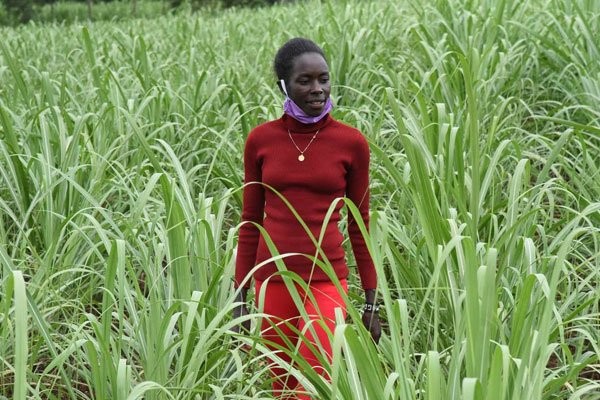
When Nation Sport visited her on Sunday she was busy on her sugarcane plantation. This planting season she dedicated two acres of land to the sugar producing cash crop, a new venture for her she duly informed.
She is among many other farmers in the region who are now abandoning the traditional maize farming which they feel doesn’t bring any value to them due to poor market prices.
“I have decided to venture into sugar cane farming because I have been planting maize for a long time and I’m not getting any profits,” said Chelimo.
Of course the farming activity comes after her individual run to keep her body in shape for the season, when it will resume. Remember athletics is her main bread and butter business at this stage in her life.
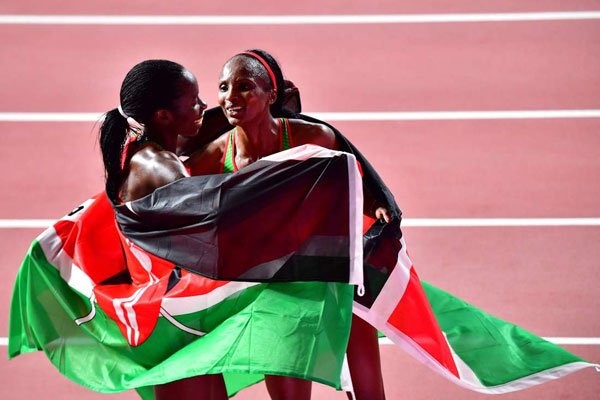
Chelimo bagged silver in last year’s Doha World Athletics Championships women’s 5,000m after clocking 14:27.49 behind race winner, compatriot Hellen Obiri who timed 14:26.72.
In 2018, she won silver for Kenya in the Gold Coast Commonwealth Games 5,000m, finishing second to Obiri after crossing the line in 15:15.28. Chelimo started the season explosively, winning the BOclassic Silvesterlauf 5,000m race in 15:30.
In January, Chelimo stunned World Cross Country champion Obiri to win the Cross Internacional de Italica in Seville, Spain after cutting the tape in 28:37 ahead of compatriot Beatrice Chebet (28:49).
High in confidence she was all primed to run in the Doha Diamond League series 3,000m race on April 17 before the athletics calendar was suspended following the outbreak of coronavirus.
The 2020 Tokyo Olympics was her big target this season before the Games were pushed to next year.
(04/27/20) Views: 384Bernard Rotich

The 2020 sports season is lost to many sportsmen, but Eliud Kipchoge hopes to return stronger in 2021 and win a back-to-back Olympic title
In 2016, Kipchoge reclaimed Kenya's gold in the marathon, which was first won by the late Samuel Wanjiru at the magnificent Bird's Nest stadium in the 2008 Beijing Olympics but was lost at the 2012 London Games to Stephen Kiprotich of Uganda.
Now the 35-year-old is dreaming of adding another feather to his illustrious cap by having a great addition to his impressive distance running record to win the second gold on the Olympic marathon.
"If all goes well next year 2021, I will defend my title in the marathon in a competitive field and probably post a good time. It will add more to my running career," Kipchoge told the Olympic Channel.
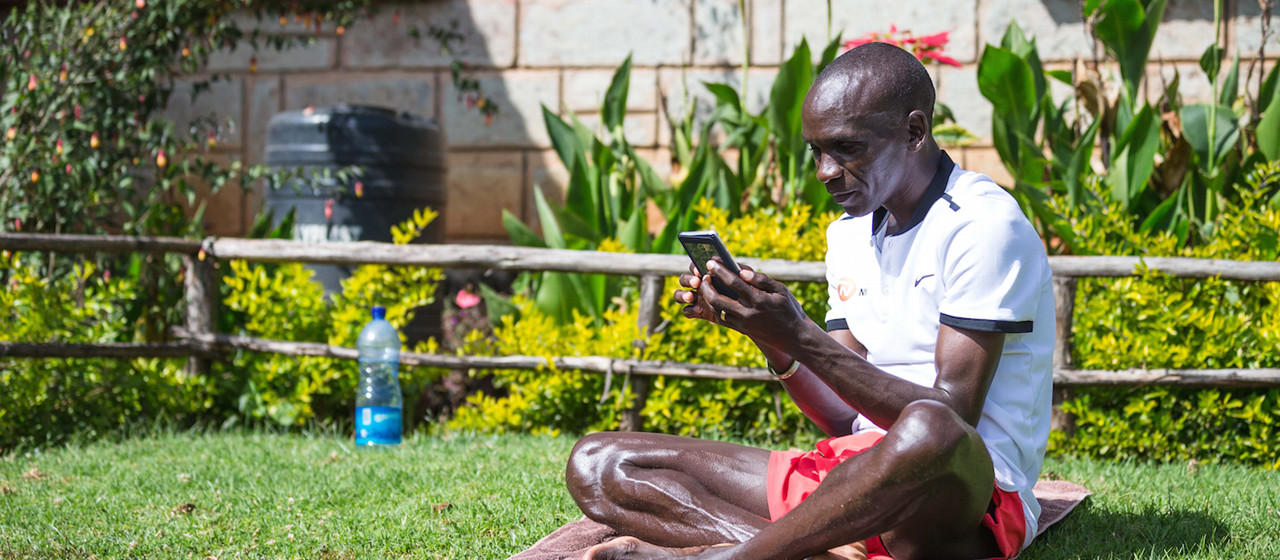
Over a decade ago, Kipchoge felt like he had the inspiration and energy to finally get crowned the Olympic champion in Beijing.
He was making his second appearance at the Games having clinched bronze at the Athens Games in 2004. But he had to wait another eight years to win the Olympic title."I was really in shape in Beijing.
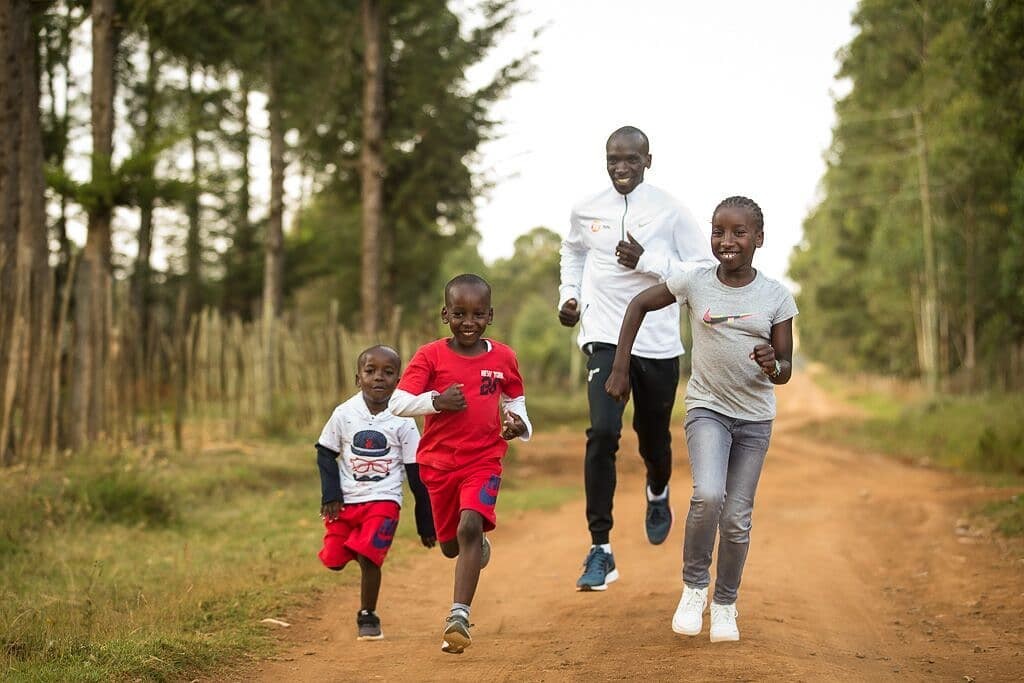
Even with two laps to go my mind was telling me, 'You will be Olympic Champion this year'. But I had no more fuel and Kenenisa Bekele won the race," he said.
Now the two men, despite missing out to meet at the London marathon on Sunday, are set to clash at the Tokyo Games in 2021. It will be their fifth meeting over the marathon distance. Kipchoge has won all four previous shows.
"It's true, Bekele beat me several times on the track. But I have won all the races in the marathon," said Kipchoge.
Kipchoge became only the second Kenyan after Wanjiru to win an Olympic marathon.
(04/27/20) Views: 333

A retired teacher living with cancer has inspired his daughter to run a virtual fundraising event for the charity helping him through his illness
Lizzie Shankland-Fee said the courage of her dad, former Huntington School deputy head Gordon Fee, was driving her on to organise a social-distancing marathon with a group of friends.
Gordon, 80, was a gymnast who marked his 60th birthday by turning six back-flips. He still boasted a six-pack when he turned 75. But after running the 2018 York 10K Gordon felt breathless and tests showed he had the lung cancer mesothelioma.
He underwent surgery, chemotherapy and other gruelling treatments, and was not expected to live beyond a year, but Gordon, his wife Linda and their family are continuing to take each day as it comes, supported by York Against Cancer.
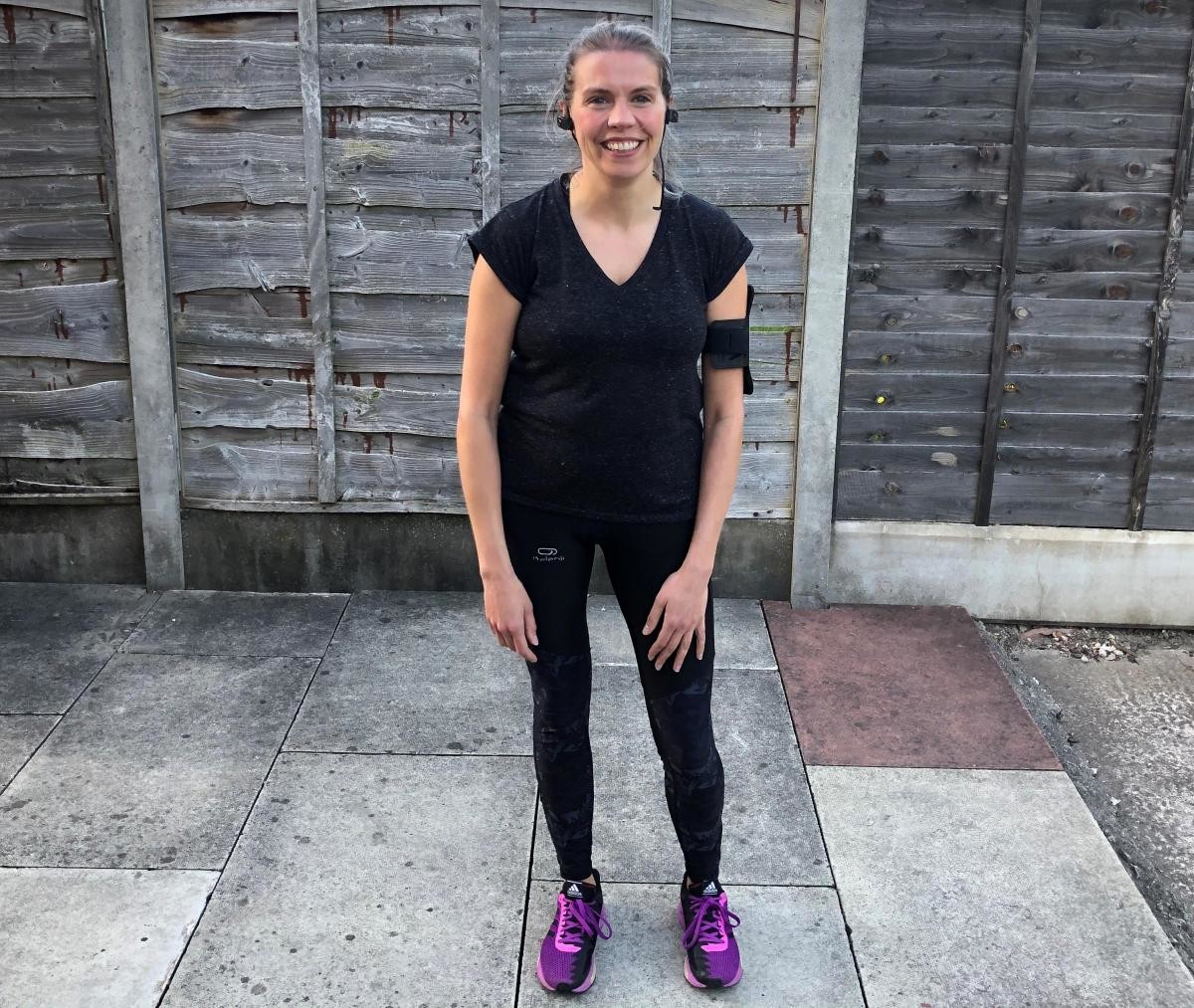
The charity gave them a free short break at its Whitby apartment and Gordon has also taken part in its free exercise sessions. “The holiday was magical,” said Lizzie, 40.
“The apartment is a magnificent penthouse and the views of the beach are phenomenal. “Some days Dad struggled but he could watch us taking the kids down to the beach. When he was well we carried him down there and he had the most amazing day, just watching us burying the kids in the sand! It was perfect. We now live for the rainbow days and memories we can make together.”
But Lizzie, a teacher who lives in Manchester, has not been able to see Gordon and his wife Linda since coronavirus struck. They are self-isolating at home in York.
Lizzie has set up a JustGiving page, where wellwishers can sponsor her and leave messages of support.
She says her dad was very touched when she told him what she was doing. “People have left such lovely messages and for him to be able to read them is really sweet.”
(04/27/20) Views: 267Haydn Lewis

The 2020 Boston Marathon was postponed but some experts are saying maybe it should be canceled altogether until the fall of 2021
The 2020 Boston Marathon was postponed due to the coronavirus. Could it be canceled altogether?
Marty Walsh is "hopeful" the race will happen in September. Some experts aren't sure it should.
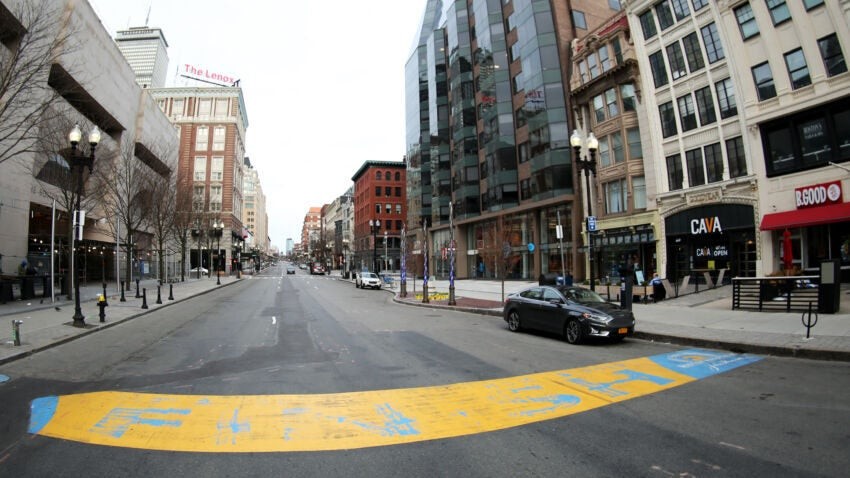
For the first time since the 19th century, April will pass in Boston without a Boston Marathon.
Rather than cheering crowds, the course was overcome by eery silence this Patriots’ Day, after the 124th edition of the race was postponed until Sept. 14 due to the coronavirus outbreak.
Boston Mayor Marty Walsh has said he hopes runners and fans will still embrace the “once-in-a-lifetime” late-summer race. But as a clearer picture begins to emerge of the steps needed to effectively beat back the virus, it’s increasingly unclear whether the 2020 marathon can — or should — happen at all.
“I do not think such a race will be wise in September,” said Glen Weyl, a co-author of a report released this week by Harvard’s Safra Center for Ethics on the steps needed to combat the pandemic in order to safely return to normalcy.
The Safra Center report and others, released by both right-leaning and left-leaning groups, broadly recommend a similar path forward: While certain nonessential businesses may be allowed to reopen in phases as COVID-19 testing and tracing is ramped up, bans against mass public gatherings — like concerts and sporting events — should remain in place until mass immunity or a vaccine is developed, which is expected to take at least another year.
Given its usual pool of 30,000 runners and hundreds of thousands of spectators along the 26.2-mile course, it’s hard to foresee the Boston Marathon going forward in any recognizable way in September, according to Weyl.
“Anything even close to the current format could not work,” he told Boston.com.
Walsh is aware of the bleak projection; in a recent CNN interview, he acknowledged the possibility that concerts and sporting events may not be able to resume in Boston until 2021.
And during a press conference Wednesday, he noted the recent cancellation of the Berlin Marathon — a 60,000-person race scheduled two weeks later than the Boston Marathon and in a country with more widespread testing — after city officials extended a ban on all events of more than 5,000 people through Oct. 24.
“To be honest, we haven’t had those conversations yet,” the mayor said during a press conference Wednesday, when asked about the chances that the Boston Marathon would happen as planned in September.
“I am hopeful that we will be able to have the marathon, because certainly it felt on Monday there was a void in the city of Boston,” he added. “But we will have more conversations and discussions.”
The Boston Athletic Association, which organizes the annual race, says it will follow the guidance of city and state officials on matters of public health and safety, particularly when it comes to the coronavirus pandemic.
“We will remain flexible to address and explore all factors with public officials as we plan for the race,” the BAA told Boston.com in a statement. “Our priority remains the health and well-being of members of our community.”
The marathon has never been canceled in its history. Only in 1918, due to World War I, was the annual Patriots’ Day race changed to a military relay race. In the midst of the coronavirus pandemic, the usually 38,000-runner Tokyo Marathon last month narrowed down its field to 200 elite runners and advised spectators against gathering along the route.
Walsh, however, has dismissed the notion of stripping the Boston Marathon of its defining characteristics.
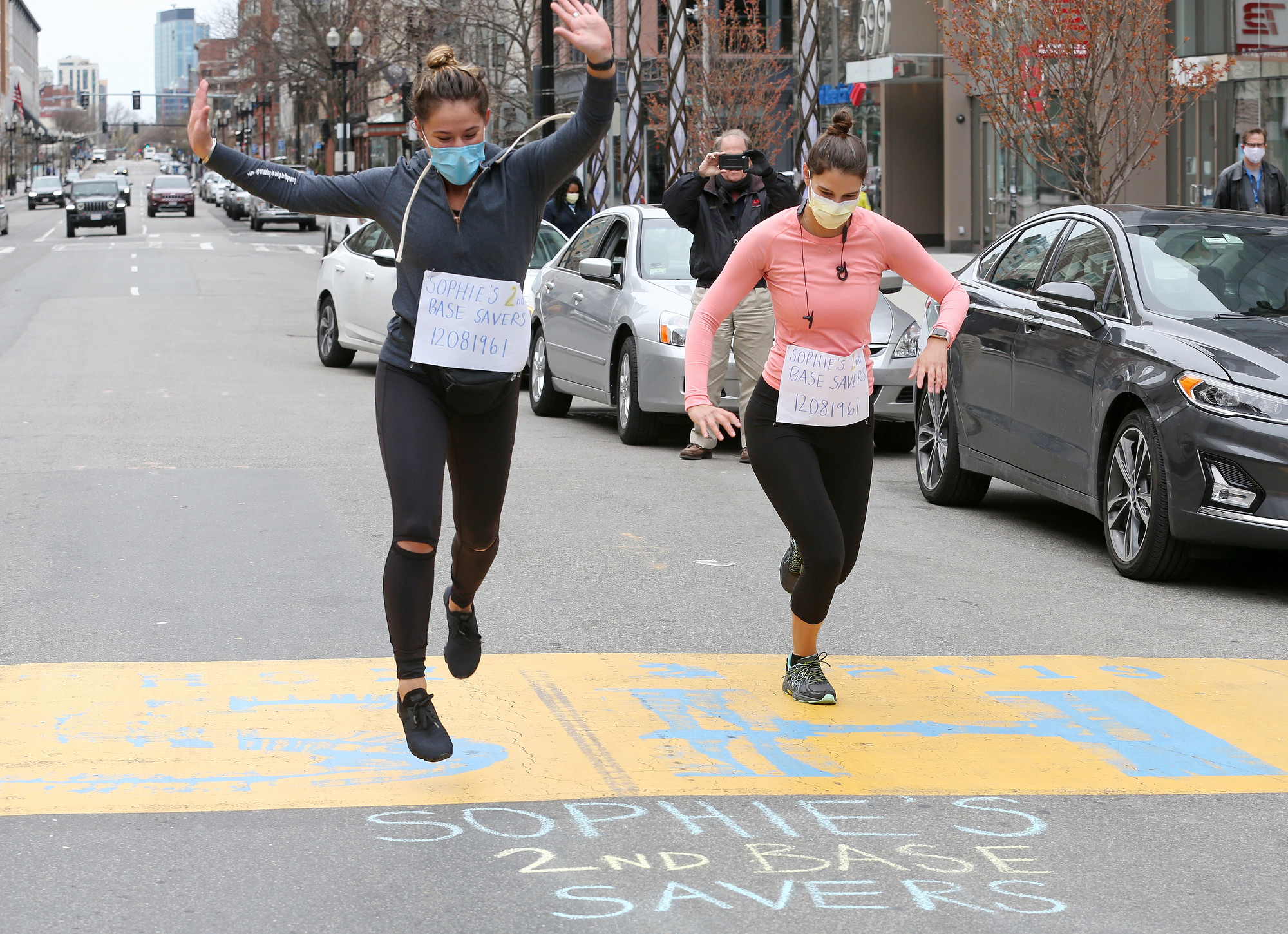
“That’s not the Boston Marathon,” he said last month, when asked about restricting the race to elite runners. “We’re an inclusive marathon. The Boston Marathon is for everyone.”
While the Berlin race will not take place in September “as planned,” the Boston Marathon isn’t the only major event still slated for this year.
Major marathons in London and Madrid, originally scheduled in April, have also been postponed until the fall. And the New York City Marathon is still officially planned to go forward on Nov. 1.
Experts say certain social distancing measures could be incrementally repealed this summer in the so-called second phase of the coronavirus response. However, they agree that bans on large gatherings will be the last to be lifted.
Scott Gottlieb, the former Food and Drug Association commissioner under President Donald Trump, wrote in a recent report that while “the majority of schools, universities, and businesses” could reopen during the second phase, “social gatherings should continue to be limited to fewer than 50 people wherever possible,” until a vaccine has been approved.
The liberal-leaning Center for American Progress made a similar recommendation.
“Gatherings of more than 50 people must continue to be banned,” the think tank wrote in a report earlier this month. “Once herd immunity has been achieved through mass vaccination, all remaining restrictions can be lifted.”
Given the timeline for developing a treatment for the disease, epidemiologists at Harvard’s Chan School of Public Health estimated in a report last week that the bans on large gatherings may not be “fully relaxed by early- to mid-2021,” with intermittent social distancing possibly needed until 2022.
“It depends on the data and information we have available to us and where we are with the coronavirus, what cases are still active, how much testing do we have, how many people are immune to the virus,” Walsh told CNN last week.
There are also some concerns about a second wave of coronavirus hitting in the fall in conjunction with flu season when the weather gets colder.
In a recent New York Times interview, bioethicist Zeke Emmanuel ridiculed the notion that the largest gatherings — specifically conferences, concerts, and sporting events — could be put off until later in the year.
“When people say they’re going to reschedule this conference or graduation event for October 2020, I have no idea how they think that’s a plausible possibility,” Emmanuel said. “I think those things will be the last to return. Realistically we’re talking fall 2021 at the earliest.”
(04/25/20) Views: 158Nik DeCosta-Klipa (Boston.com)

The race director of London Marathon admits that the event may include only elite runners
The race director of the London Marathon has refused to rule out staging the event as an elite-only race in the autumn if social distancing rules make it impossible to run as normal.
Hugh Brasher told the Guardian that while organisers still hoped to hold the event with 45,000 mass participants on 4 October, they were now scenario-planning around 10 other options because of the global pandemic.
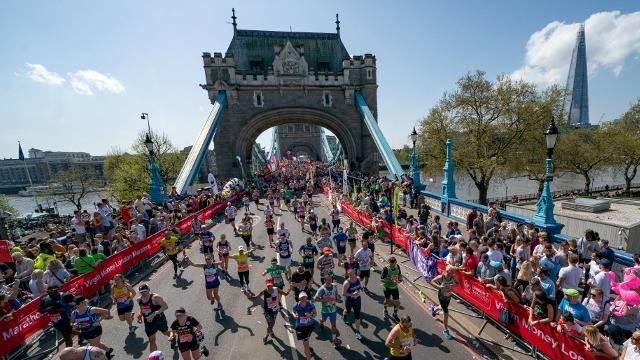
“The flame is still burning,” said Brasher. “And is there hope? Absolutely. But you have to do what’s right for society. You usually have 750,000 people out in central London watching 45,000 runners. Then there’s the medics, the 6,000 volunteers and the transport system. There’s masses to take into account when making any decision.”
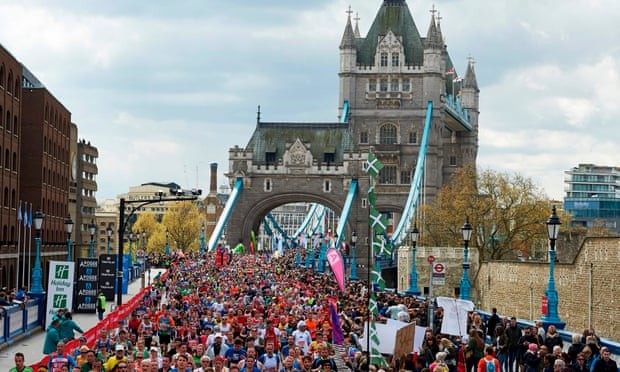
When asked directly whether the London Marathon – which was due to take place this Sunday before being pushed back – might have to be only for elite athletes if social restrictions had not eased completely, Brasher replied: “Honestly, I don’t know. But in today’s society, you can never say never. We are trying to stay really agile and to keep scenario planning. And at the moment, I don’t want to discount anything until it becomes really impossible.”
Last month’s Tokyo marathon was staged as an elite-only race, with the field reduced to just 300 runners and the streets largely deserted. Most major spring marathons subsequently decided to postpone their races to the autumn – but those events also look in doubt with no vaccine in sight and, ominously, the Berlin marathon has already cancelled its race in September.
“Our decision will be made by the back end of August at the latest,” explained Brasher. “It will be based on the government guidelines, and what we and society think is right and what feels right.”
Brasher would not confirm whether Eliud Kipchoge and Kenenisa Bekele, who were due to meet on Sunday in a clash for the ages, had signed up for October’s revised race. However he told the Guardian: “We always want to get the most competitive race. This was going to be the 40th London marathon, and its greatest race. It was going to be spectacular. But we want to make October 4 spectacular too. So that’s what our focus is.”
Last year the London Marathon raised £66.4m for charities, again making it the biggest single-day fundraising event in Britain. And while Sunday’s race will not take place, organisers are still hoping that thousands of people will spend the day raising and donating money for charities as part of a nationwide 2.6 Challenge – in which people tackle something related to the numbers two and six.
More than £1.5m has already been raised for the campaign, and Brasher said he hoped it would prove a lifeline for many charities which usually rely heavily on the race to fund their work.
“The London Marathon is normally about so many scripts and so many stories,” said Brasher. “It’s the greatest athletes in the world with the everyday athlete – who are doing this incredible challenge with the gods of the sport such as Kipchoge, Bekele and Brigid Kosgei, on the same day, on the same course, with the same crowd. In fact, the everyday person gets more people watching them. That’s the incredible thing. And, of course, they are raising so much money for charity too.”
(04/24/20) Views: 91
Sean Ingle

Keizo Yamada a former Boston marathon champion dies at 92
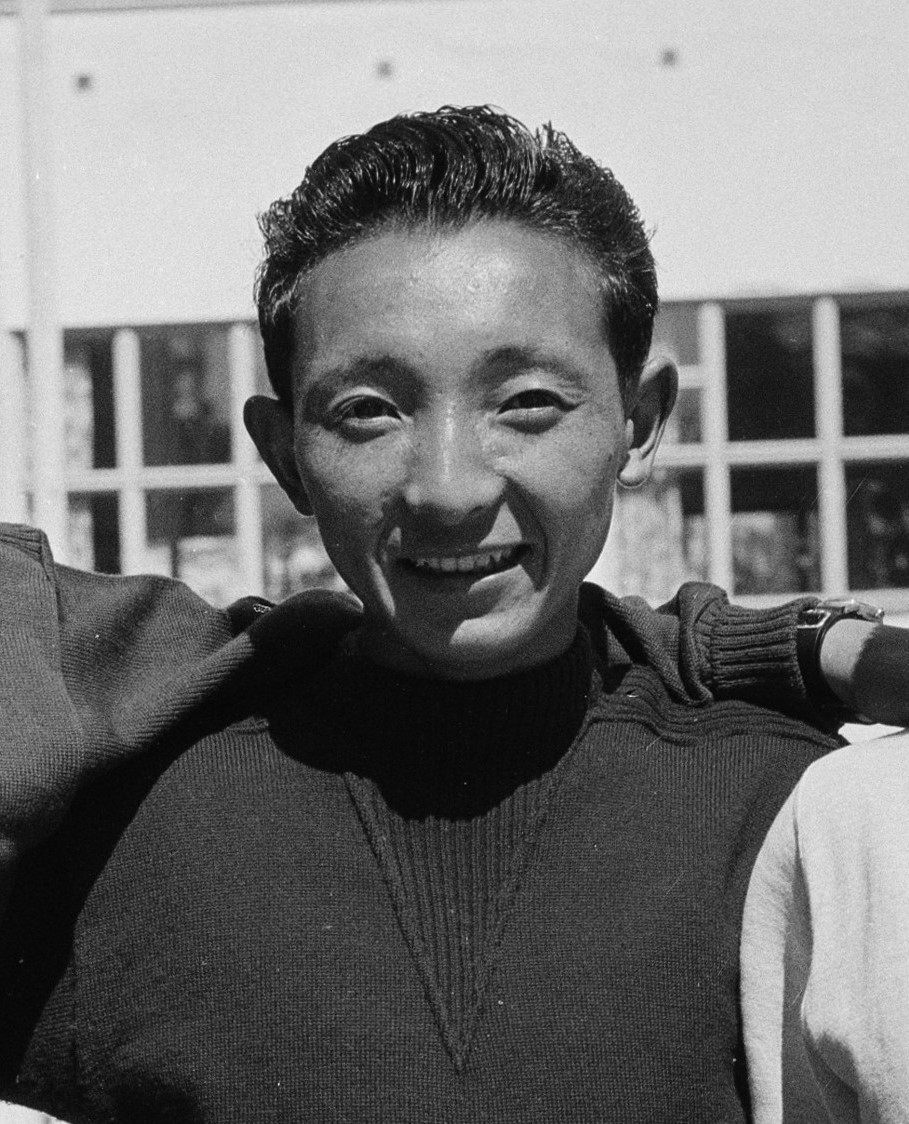
Keizo Yamada, who won the 1953 Boston Marathon and last ran the race in 2009, died of natural causes on April 2, his wife said Thursday. He was 92.
Yamada, who was born in Akita Prefecture in 1927, spent the war years as a youth in Manchuria and after being repatriated competed for Japan in its first postwar Olympics, the 1952 Helsinki Games.
His finishing time of 2 hours, 18 minutes and 51 seconds in Boston was considered the world's fastest marathon at the time until it was found the course failed to meet the standard distance. His triumph was the subject of the Japanese movie "Shinzo Yaburi no Oka" ("Heartbreak Hill").
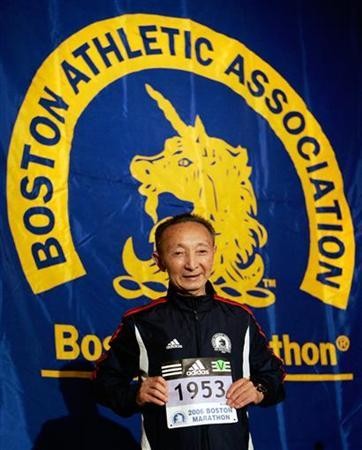
"His victory during the recovery period after the war energized the Japanese people," two-time Boston Marathon champion Toshihiko Seko said in a statement. "It's an honor to have won the same race as Mr. Yamada."
After retiring from competition, Yamada continued running marathons and took part in the Boston Marathon, running in 15 straight until his final one in 2009. That year, Yamada, who ran roughly 340 full marathons in his career, announced he would run no more.
Yuki Kawauchi, who won in Boston in 2018, also paid tribute to Yamada.
"He was a giant among Japanese legends. Despite being an elite runner, he devoted his life to promoting the marathon," Kawauchi said.
The 33-year-old Kawauchi, who has competed in more than 100 full marathons, did so for most of his career while serving as a civil servant in Saitama Prefecture, earning him the nickname "citizen runner."
"Mr. Yamada initiated the citizens' marathon boom with his activities throughout the nation," Kawauchi said. "One of my targets is to run in 340 marathons by my 50th birthday."
(04/24/20) Views: 64

People are still running in Central Park but the thought of it now makes me nervous
(Editor’s note: I asked my friend Larry Allen to give me his overview of the situation back east due to COVID-19. Larry is a lifetime runner and is a cancer survivor. Him and his wife live in New York City and has a weekend house in Connecticut.)
“Hi Bob, Sorry to be so slow to respond. We are in Connecticut at our weekend place. We were without internet for 10 days, our cell service is nil and our phone only functions with working internet. It was a real catch22 to find a way to get a service appointment, certainly because we were untethered digitally but more so because the ISP was overwhelmed and.short staffed. We finally got through on Twitter and now with a new router & modem I think we’re back in the modern world, to the extent we can bear to be.
"My oncologist and my internist essentially booted me out of the city in early March due to my still compromised immune system. I was due to have a CT scan and some other post-chemo exams a month ago, just to be certain all was still ok and that I had no reoccurrence of the cancer. Unfortunately the Doctors won’t let me near a hospital, they explained that the risk to go without followup exams for the near term was less than the risk of showing up at the hospital and possibly being infected with my immune system as it is.
"We are safe here for now. Concerned about the food supply and basic services but there’s not much more to be done than hunkering down and hoping that the trends begin to turn.
"I’ve been able to continue running six days, 25-35 miles a week. I try to go to the rail trail near our home which is usually my peaceful place. The odd hybrid bureaucratic nature of the shared federal/state/local responsibility for the trail has spared it from being closed as is the case for all other state and local parks with less complicated governance. The bad news is this: there are huge numbers of people suffering from “cabin fever” in lovely spring weather after a long winter and too few places for people to get out for some exercise. Naturally the rail trail has gotten too crowded for safety so other than going at dawn or dusk or during a rainstorm it’s not really an option. I guess it’s somewhat of a blessing that there are far fewer cars on the road so hitting the pavement is less treacherous than it might be. One has to assuming e the air quality is better too.
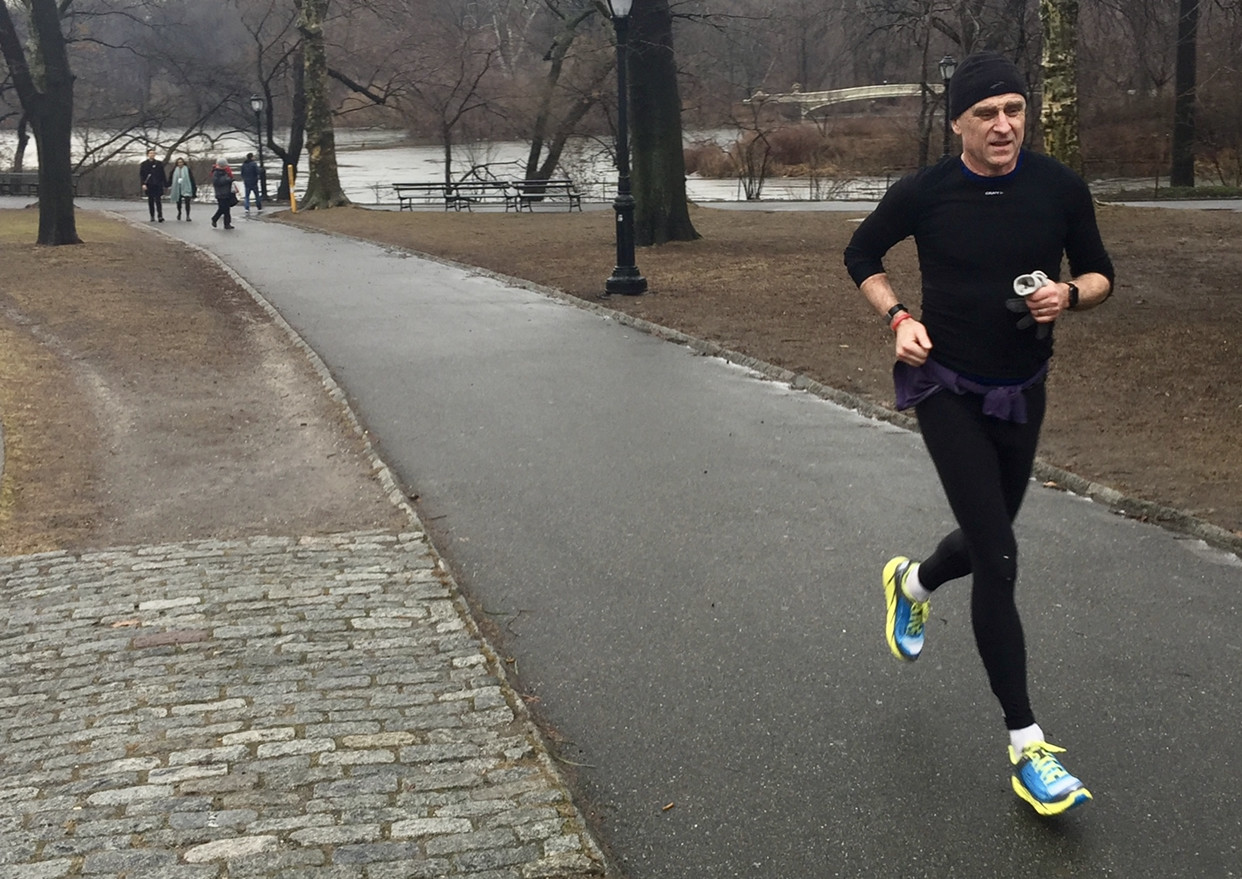
"As you know we live very close to Central Park and it is one of my favorite places to run. I really enjoyed running with you there last year.
"People are still running in Central Park. I don’t know how but the very thought of it makes me very nervous now."
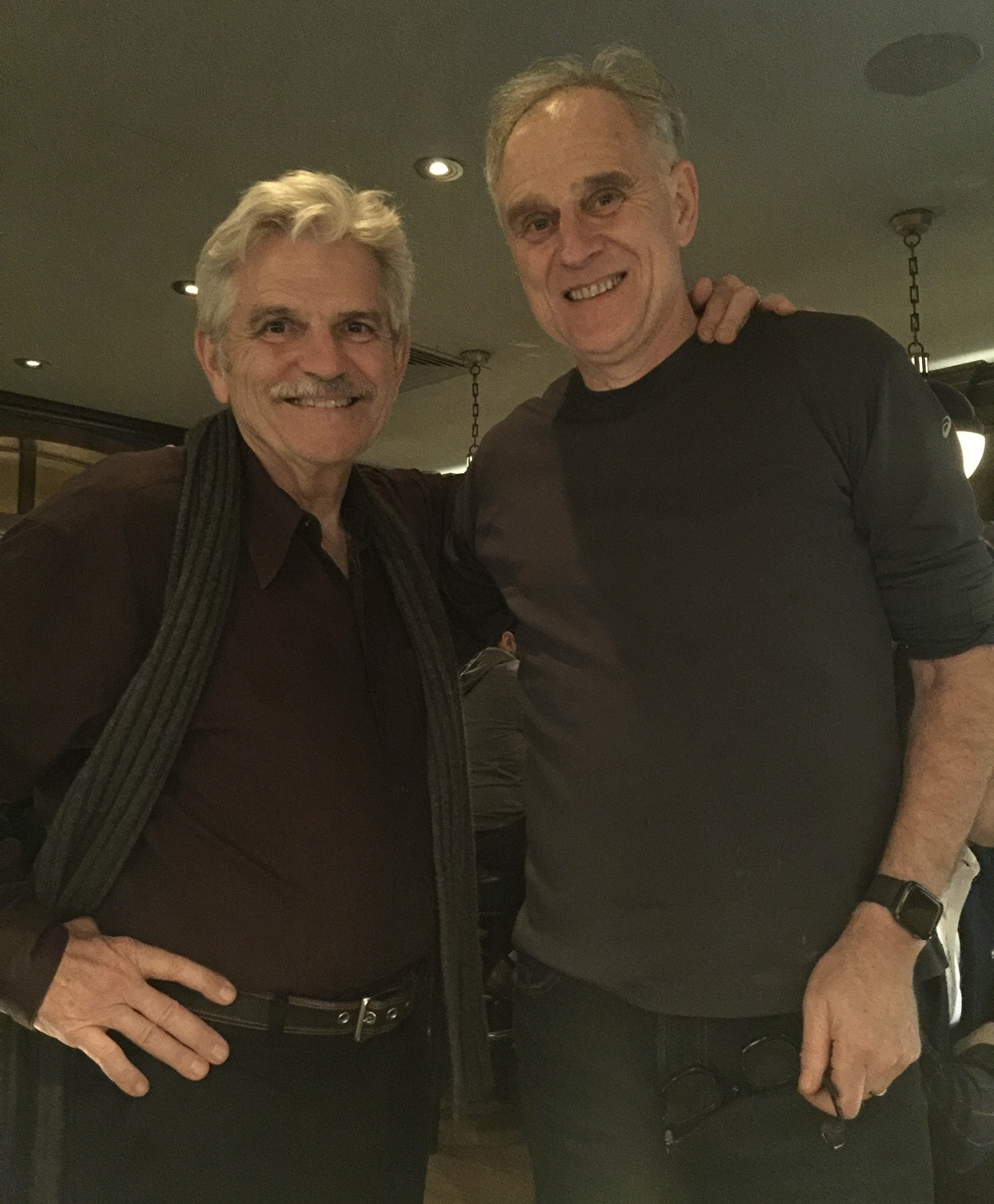
(Photos: me a couple of weeks back, enjoying a run with Bob in the park last Feb 2019 and Bob and I at a Speak Easy the night before. Bob's wife Catherine took the shot. When life was normal.)
(04/26/20) Views: 64Larry Allen

More about the 2020 Berlin Marathon Cancelation
The decision was made after the Germany government banned group gatherings of more than 5,000 people until after October 24.
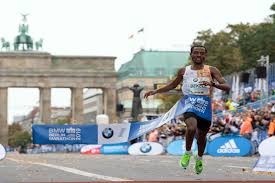
On April 21, the Berlin Marathon announced that the race will not happen as planned on September 27, due to coronavirus restrictions on group sizes in Berlin.
The announcement did not mention whether the race is canceled outright or will be postponed for a later date.
As the COVID-19 pandemic continues to impact a huge number of lives across the globe, large races set for the fall have begun to seem less and less likely to happen. And on April 21, the unfortunate news came: the Berlin Marathon, scheduled for September 27, has been canceled due to coronavirus restrictions.
According to an announcement on the race’s event page, the marathon can’t be run as scheduled because of an ordinance set in place by the German government prohibiting all events with more than 5,000 people from now until October 24.
The announcement did not mention whether the race is canceled outright or will be postponed for a later date. It also didn’t mention whether or not registered runners will be able to receive a refund for their race bib or roll over their registration to 2021.
The announcement did not mention whether the race is canceled outright or will be postponed for a later date. It also didn’t mention whether or not registered runners will be able to receive a refund for their race bib or roll over their registration to 2021.
“We will now deal with the consequences, coordinate the further steps, and inform you as soon as we can. Let us remain strong together,” said the Berlin Marathon event team in an Instagram post.
Eliminating the Berlin Marathon from the fall race schedule is especially sad news for the running community, as the fast course has hosted spectacular performances over the years, including Eliud Kipchoge’s current marathon world record of 2:01:39.
The cancellation also puts into question the likelihood of whether the other World Major Marathons—Boston, London, Chicago, and New York City—will happen as planned later this year.
The Chicago Marathon, still scheduled to run on October 11, recently announced a cancellation option for runners registered for the 2020 race. Meanwhile, Boston and London—which were originally planned for this month but postponed until September 14 and October 4, respectively—as well as New York City, scheduled for November 1, have not yet made announcements about coronavirus-related schedule changes.
(04/25/20) Views: 63

The 2020 San Francisco Marathon has been postponed from July 26 and moved to November 15
We have all been watching as the COVID-19 global pandemic continues to evolve and affect every aspect of our lives right now. In order to prevent the spread of the illness and to not overwhelm the healthcare system around the world, governments have taken a wide array of measures including limiting large scale events.
The City and County of San Francisco has led the charge and helped flatten the curve, yet there is still more to be done and the health and safety of our participants, staff and volunteers is always our first priority. Following further discussions with the City and County of San Francisco, we have made the decision to reschedule the San Francisco Marathon to November 15, 2020. We are grateful for the support of the City and County for their flexibility and assistance in selecting this new date to ensure our runners can still enjoy this iconic City event. We are working to implement new race day safety measures that we will share over the coming months.
(04/27/20) Views: 55

I was suppose to be running the Big Sur Marathon today
Today was the day I was supposed to run the Big Sur International Marathon. With all major races cancelled or postponed due to the Covid-19 pandemic I am reading about all my fellow runners moving forward with their own virtual races. I did about 10 miles this weekend, but got too bored on my treadmill to go a full marathon. Looking forward to when we can race for real again.
(04/26/20) Views: 50Winton Jew
