

Running News Daily
Top Ten Stories of the Week
4/18/2020
These are the top ten stories based on views over the last week.
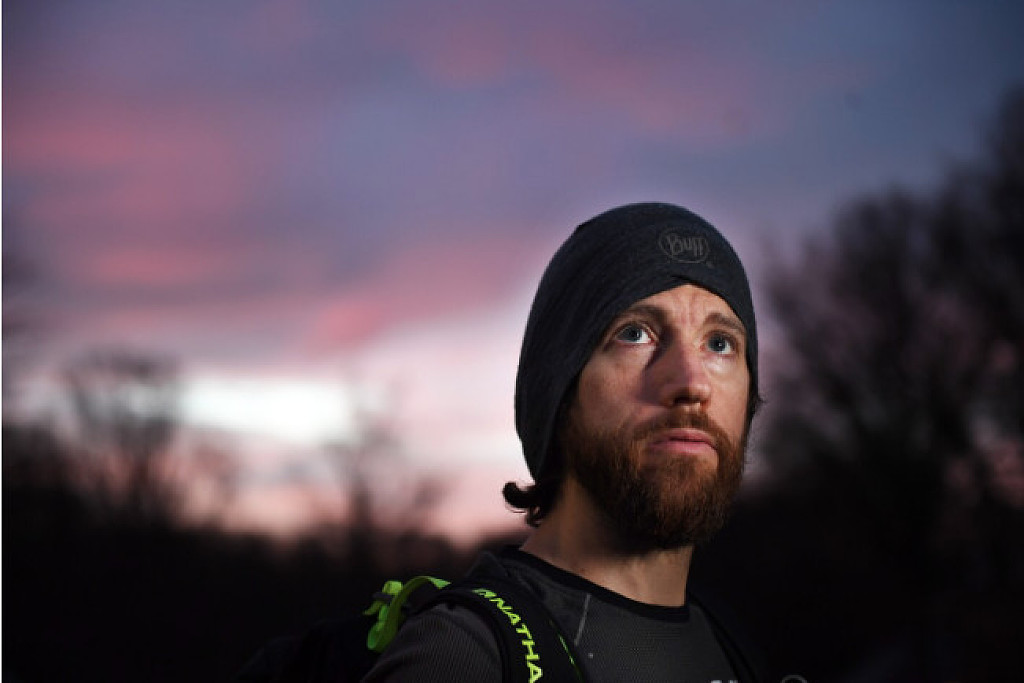


Michael Wardian set out for a virtual ultra marathon. He kept running for 2½ days.
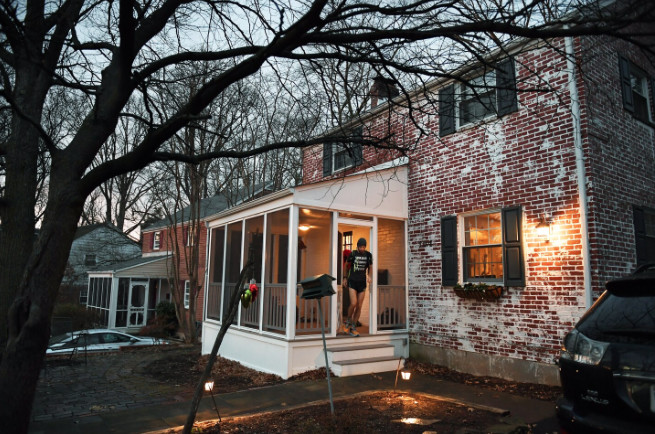
n the early days of the second full month of the global novel coronavirus pandemic that has all but paralyzed the sports world, Michael Wardian went out for a run around the block. He woke up early Saturday morning, laced up his shoes and stepped outside to run around his Northern Virginia neighborhood.
He circled the block and then did it again. And then again and again. Wardian ended up running for more than 2½ days, skipping sleep and piling up miles. When he finally unlaced his shoes late Monday night, he’d run 262½ miles in all, winning a long-distance event called the Quarantine Backyard Ultra, a virtual race inspired by the social distancing recommendations that make a standard road race impossible in the midst of a pandemic.
The unique event was intended to fill a void for distance runners who saw their race calendars wiped clean by the spread of the coronavirus. It brought together more than 2,000 runners from nearly 60 countries and turned into a captivating affair with a drama-filled, controversial finish.
“We do not know when this situation is going to end, and this is a fun way to bring a whole bunch of people together to be able to test their fitness, join a community, and do something together when many people cannot leave their homes,” a Calgary-based distance-running outfit called Personal Peak wrote in a March post announcing the race.
The rules were simple enough. The runners had to honor social distancing recommendations and either compete on a treadmill or in some sequestered environment. Some, such as Wardian, circled their neighborhood, while others circled their backyard. One entrant did laps around his living room in Dubai, and another ran circles in a Canadian coffee shop that had been closed because of the virus.
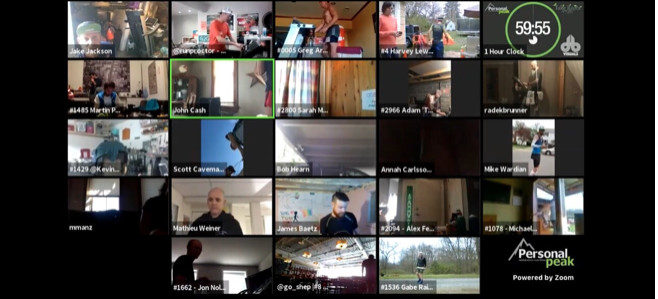
Runners were connected via Zoom and required to run 4.167 miles each hour. After hitting their hourly mark, the runners flashed their watch to the camera and then waited for the next lap to begin at the top of the hour.
For each 4.167-mile lap in the race, Wardian made 10 loops around the block in his Arlington neighborhood. That means that once the race began Saturday morning, he passed the same neighbors, same trees, same parked cars — same everything — more than 620 times.
The race began with more than 2,400 entrants, but they slowly dropped, and Monday was mostly a duel between Wardian and a runner halfway around the world named Radek Brunner, who was pounding out miles on a treadmill in the Czech Republic. Wardian officially won shortly before midnight Monday after more than 62½ hours of running when Brunner was disqualified because of a technicality.
Brunner failed to start running his 63rd lap precisely at the top of the hour, apparently because of some technical difficulty or confusion, and organizers reluctantly said they had no choice but to disqualify him for a rules violation.
In winning the event, Wardian ran the equivalent of 10 marathons in a little more than 2½ days. That’s a bit farther than running straight from Washington to Pittsburgh. Perhaps equally impressive: A sleep-deprived Wardian consistently turned in sub-10-minute miles, but his fastest lap was his final one, when he averaged 7:23 over the event’s final four miles.
Wardian, who turns 46 on Sunday, is well-known on the ultra circuit, his running exploits growing longer each year. He has raced against horses, run around the Capital Beltway, completed marathons on seven continents (twice) and competed in the U.S. Olympic marathon trials and most every other premier distance event. Until this virtual competition, though, he had never run so many hours and so many miles consecutively, he said.
To prepare, Wardian ran a full marathon in his neighborhood the week before, knowing he would be in for a grueling turn in the virtual race. After the first hours of the event ticked by Saturday, the field whittled down quickly. Treadmills broke, hamstrings tweaked, work and real life beckoned, quick power naps turned into full-bore slumber. But mostly the miles and hours just became too much.
By Sunday evening, after 36 hours and 150 miles, the field was down to 14. By that point, Wardian was running in the dark, and his kids were nearing bedtime. Overnight, the runners kept dropping, and at one point, Wardian thought he would be joining them. Around 3 a.m., he briefly stopped running and walked over to his wife, Jennifer.
“I was crumbling in the middle of the night,” he later explained. “She asked if I was all right. I said, ‘No, I just don’t want to be doing this anymore.’ She said that’s not a good enough excuse.”
So he kept going, finding a second wind. He would usually finish his 4.167-mile lap in 40 or so minutes, which gave him a bit of time to catch his breath before lining up again at the top of the hour. This was the reflective period when others typically bowed out.
After 42 hours and 175 miles, Matt Shepard, who had been circling the Tall Timber coffee shop in Canada, Matthieu Weiner of Pennsylvania and Scott Martin from Oregon all dropped. Then Greg Armstrong in Tennessee an hour later. And then, after 46 hours of running, the last female runner, Anna Carlsson, who had been trekking through the outdoors near the northern tip of Sweden, had to stop. She had been running on a frozen lake that had been plowed for the occasion but had to drop when a snowstorm approached.
Finally, as the race hit the 48-hour mark Monday morning, just Wardian and Brunner were left. Both knew it wasn’t the speed or mile-pace that counted. It was a race of attrition, and the last man standing would be the sole winner. Brunner sneaked quick naps at the bottom of each hour, but Wardian hadn’t slept since Friday night.
“Sleep, what? None,” Wardian said at one point. “This is my money race. I don’t need to sleep.”
Because we live in virtual times, the entire event was streamed online, first on YouTube and later on Facebook, and thousands tuned in to watch the runners in Zoom’s now-familiar checkerboard format. The audience was able to engage and ask questions of the runners as they rested between laps.
“Let’s keep doing this!” Wardian said into the camera after he was 216 miles into the race.
And so they kept running into a third day and night. Even with 250 miles behind them — around 9 p.m. Monday — both were turning in a relatively fast pace, and Wardian had his sights set on what organizers say is the virtual backyard ultra record: 69 laps.
But then a whistle sounded for lap No. 63. Wardian took off running in the dark, but more than 4,000 miles away, Brunner stood still on his treadmill, seemingly unaware the lap had started. The online audience watched as Brunner fielded a phone call from race organizers, visibly in disbelief that after 62 hours of running, he was disqualified over what seemed like a minor infraction.
Wardian finished his lap and was slightly confused, too — and also disappointed the race was over and he couldn’t add another record to his lengthy race résumé.
(04/12/20) Views: 168
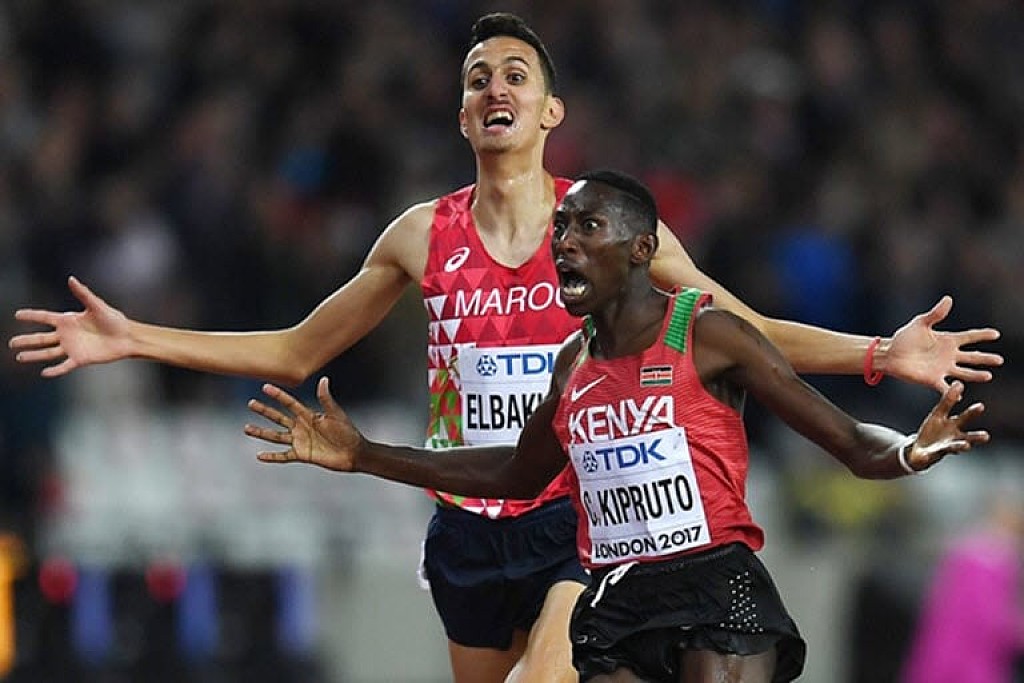
Kenyan steeplechase star was aiming for another global gold and a world record in 2020, but coronavirus outbreak has forced him to go back to the drawing board
Conseslus Kipruto knows what it takes to become an Olympic and world champion: talent, hard work, a never-say-die attitude. This, after all, is the man who won the Diamond League final two years ago wearing just one shoe.
But now the 25-year-old Kenyan will have to find another quality: patience. The postponement of Tokyo 2020 means Kipruto will have to wait another year to defend his Olympic title.
“It’s very disappointing, but we understand what’s going on in the world because of this coronavirus,” he tells me from his home in Eldoret. “The way I’ve trained, the aim was to defend my title in Tokyo, but the IOC made the right decision, in my opinion.”
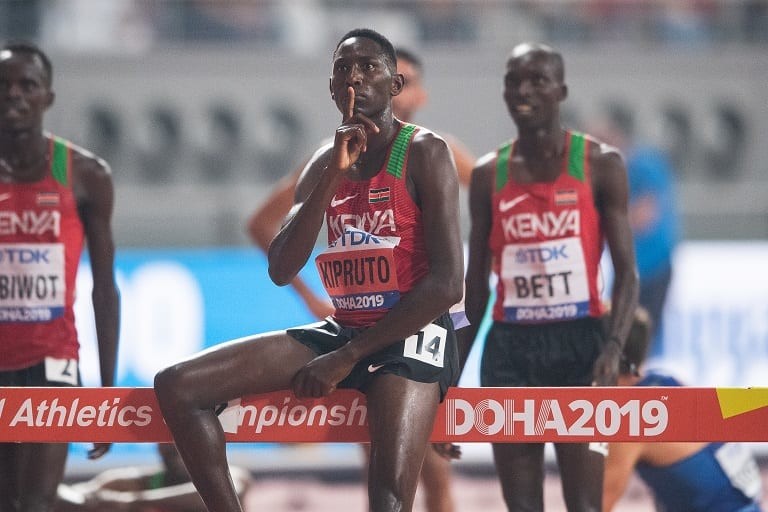
Kipruto has won four major 3000m steeplechase titles in the last four years. The first came at the Rio Olympics in 2016, followed by his maiden world title in London in 2017 and then gold at the Commonwealth Games the following year. Last year, he missed several months of vital training with an ankle injury. But he built a pool in his back garden, regained his fitness through aqua-jogging and went on to retain his world title in Doha by the thickness of his vest. It was an extraordinary story.
And he had been taking that impressive form into his preparations for Tokyo.
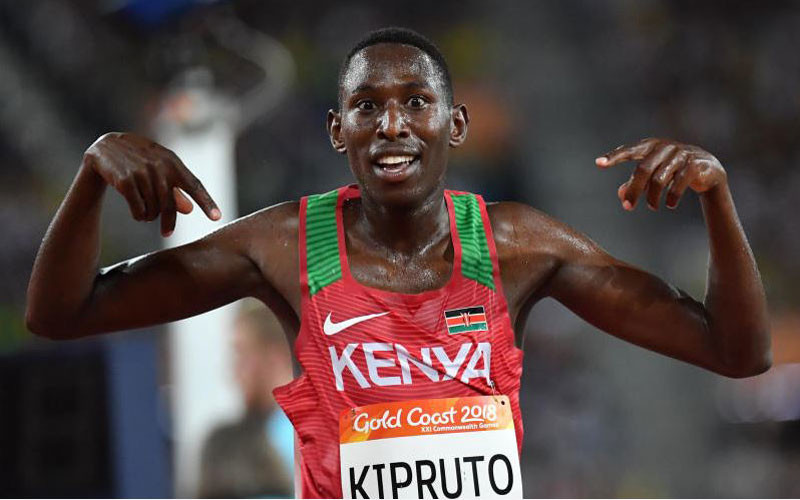
“My preparation was going very well,” he says. “We were pushing hard and actually I was on course to defend my title in Tokyo and was hoping to run a world record or close to a world record, so you can see why I am disappointed.”
Like thousands of athletes all over the world, Kipruto finds himself in fabulous shape but with no competitive racing on the horizon. There’s no guarantee that he’ll be in the same condition in 12 months’ time and the knock-on postponement of the World Championships in Eugene to 2022 means his next two years will have to be recalibrated.
“It’s really frustrating because I don’t know about next year,” he says. “My plans and my prayers were to have the Olympics this year and in 2021 to defend my title at the World Championships and then in 2022 to go to the Commonwealth Games (in Birmingham). Now I don’t know and I’ll have to go back to the drawing board.”
(04/14/20) Views: 167Chris Dennis

The date for this year’s Big Sur Marathon has been confirmed after being postponed due to COVID-19
A month after it was postponed because of the coronavirus, organizers of the Big Sur International Marathon announced Monday the 35th edition will be part of a revamped version of an area traditional running weekend in November.
The marathon, originally scheduled April 26 but postponed because of coronavirus concerns, will be held Sunday, Nov. 15 from Big Sur to Carmel. The Monterey Bay Half Marathon, originally scheduled Nov. 15 on its traditional course in Monterey and Pacific Grove, has been moved to Saturday, Nov. 14.
“We don’t really have any goals as far as participation,” said Race Director Doug Thurston. “We hope as many of the April 2020 entrants will come back on Nov. 15.
“We will be prepared for them. But I think just having an event this year with all of the craziness in the world, I think that will be considered a win.”
In addition to the marathon and half-marathon changes, marathon organizers said other distance races originally planned for April 26 have also been switched to Monterey Bay Half Marathon weekend. All April race distances, except the 5K and 3K, will be held Sunday, Nov. 15 in their original locations on Highway 1.
Registrants who entered the April 5K will automatically be registered for a new 5K to be integrated within the Half Marathon on Nov. 14. The By-the-Bay 3K will not be held this year.
“First, we want to thank you for your patience and support over these past few weeks as our board, staff, and volunteers worked to navigate this new reality,” said event management via its website announcement.
While other Peninsula events postponed or canceled events this year, Big Sur organizers were hopeful of maintaining original dates. A decision was made in mid-March to postpone.
To reschedule, organizers worked with businesses throughout the Monterey Peninsula to determine if, for example, the Monterey Conference Conference and host hotels, would be able to participate.
(04/13/20) Views: 158
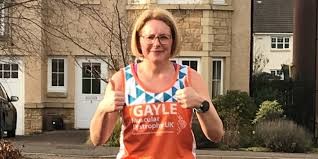
Gayle Hoy is a mother of three and she ran a marathon she had been training for on her driveway
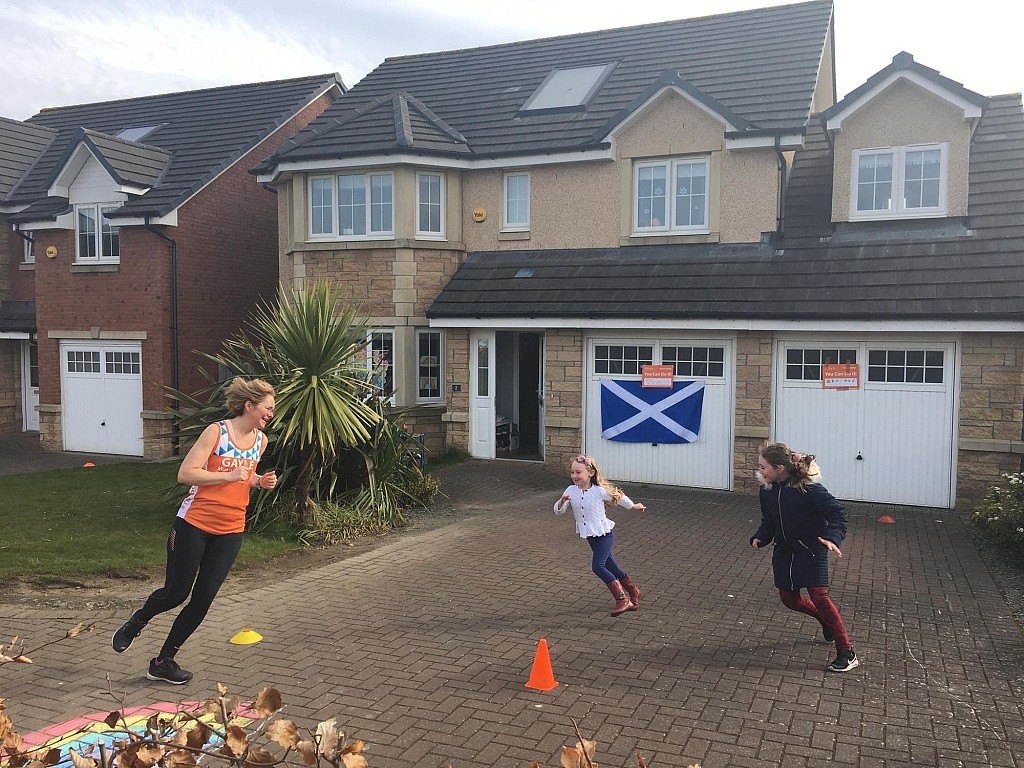
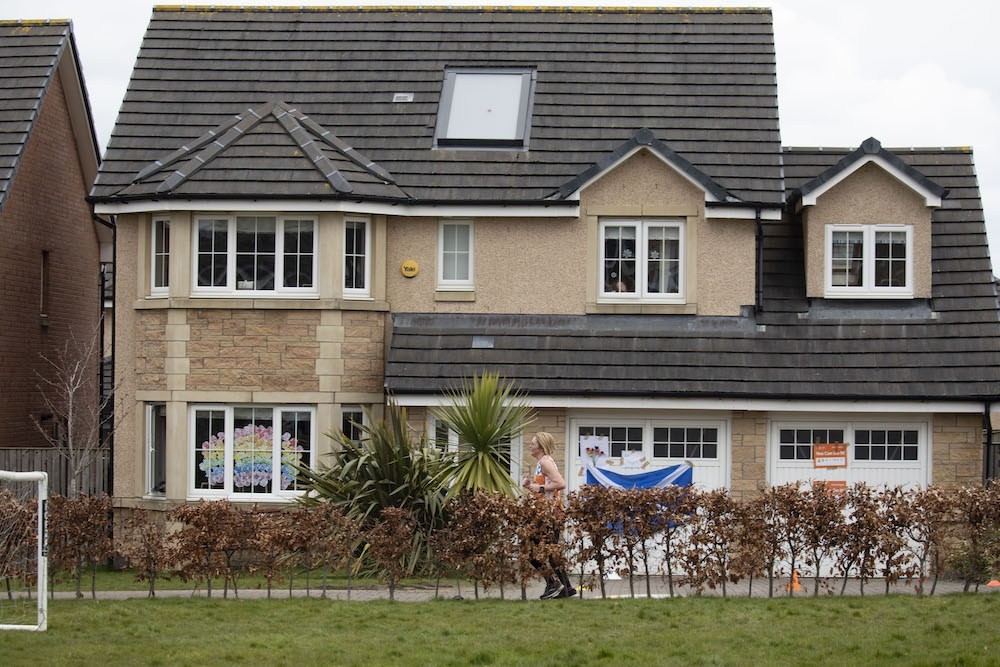
Mother of three Gayle Hoy was determined to run the marathon she had been training for despite the lockdown - so she completed a 26.2 mile course by runing round the driveway of her Kirkliston home - 655 times.
And in the process she raised around £2,000 for Muscular Dystrophy UK, a charity she has supported since a friend’s seven-year-old son was diagnosed with the condition a few years ago.
Gayle, 43, took up running shortly before her 40th birthday and has completed several previous marathons.
She was due to run the Manchester marathon last Sunday as part of a special challenge she set herself to run three marathons in seven weeks.
“I started training back in October. By the time coronavirus got quite serious over here, I knew in my head all these races were going to be cancelled and I thought I have done all this training - and by that point I’d already raised about £4,000 through a bake-off coffee morning and a raffle and things - so I could just run these locally.”
First she thought she could find a 26.2 mile route in the area near Kirkliston, but as the Stay at Home advice kicked in she decided it would have to be closer to home.
“I was thinking I could run in my driveway and my garden, so I tried it one Sunday afternoon. I ran a 5k between the garden and the driveway and every time I went into the garden the kids were firing their nerf guns at me and there were far too many trip hazards and there was the whirligig and the kids’ playhouse, so I thought no, this is far too dangerous. I decided I’d have to stick to the drive.”
The rest of the family all played their part.
Son Finlay, 12, was race director, plotting the route and measuring out the distance. Elder daughter Lara, nine, worked out the best camera angles for filming the effort on Facebook Live. Younger daughter Emilia, five, chalked rainbows on the drive and made posters.
And husband Euan had to count the laps.
“It was a great day and there was a real community buzz,” said Gayle. “People who were out for their daily exercise walked past and said ‘well done, keep going. My neighbors had made banners and were hanging out the windows cheering me on.
“I really enjoyed it - I was struggling towards the end and kept saying to my husband ‘How many laps to go?’ and he said ‘Just keep running’.”
She completed it in 6 hours 44 minutes - the slowest race she has ever run.
(04/10/20) Views: 112Ian Swanson
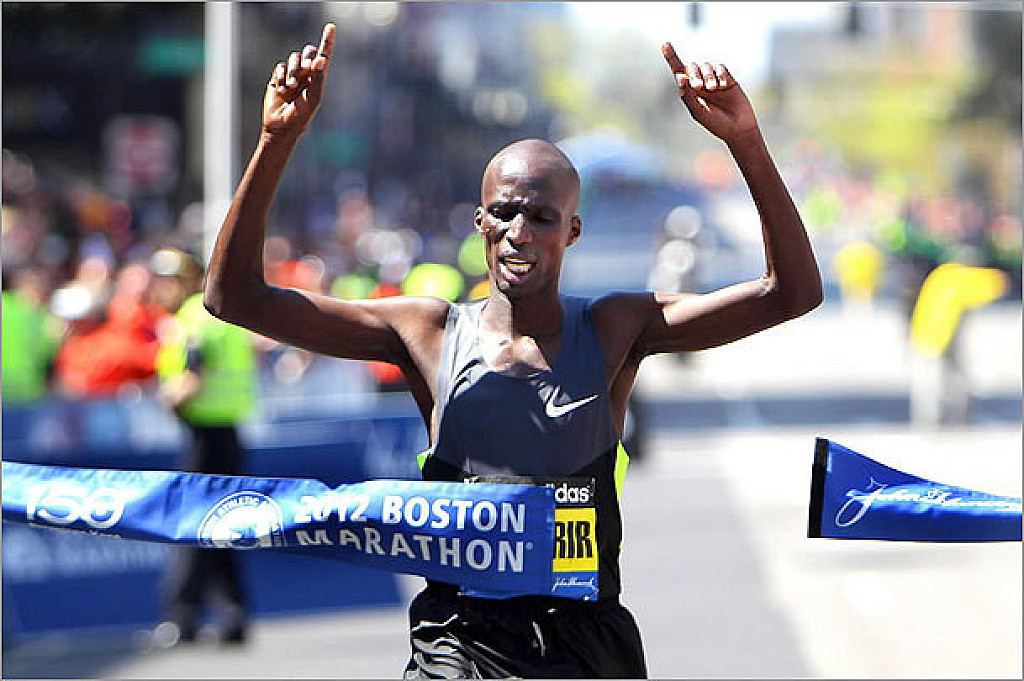
Kenyan Wesley Korir set to bounce back from injury, eyes Boston Marathon
Former Boston Marathon champion said he has been battling with the injury.
Former Cherangany legislator Wesley Korir is hoping to return to Boston Marathon in September after a one-year injury lay off.
Speaking in Eldoret, the former Boston Marathon champion said he has been battling with the injury, which he picked during the 2019 Boston Marathon, for the past one year. Boston Marathon was switched from April 20 to September 14 following the outbreak of the coronavirus around the globe.
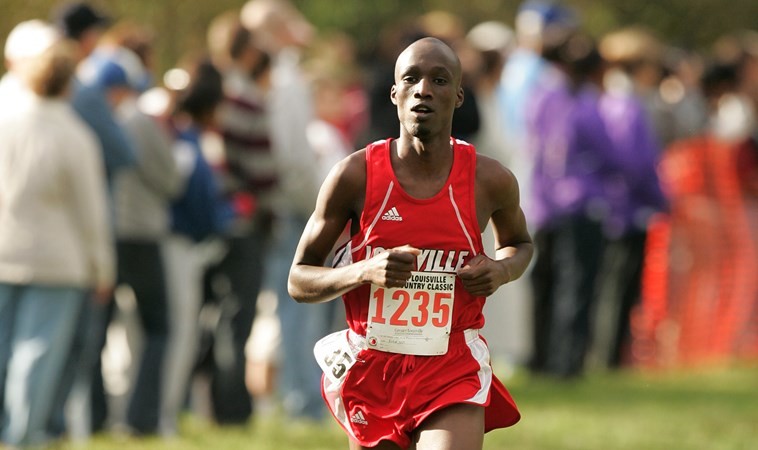
“My target is to run in Boston this year after the postponement of the event from April to September due to coronavirus. I am optimistic that my injury would have completed healed by then,” said the 2012 Boston Marathon champion.
Korir, who has been championing for athletes rights, said Boston and Chicago have been part and parcel of his marathon career having made his debut in 2008. “Boston and Chicago have been my best courses and returning to Boston this year will be great,” he said.
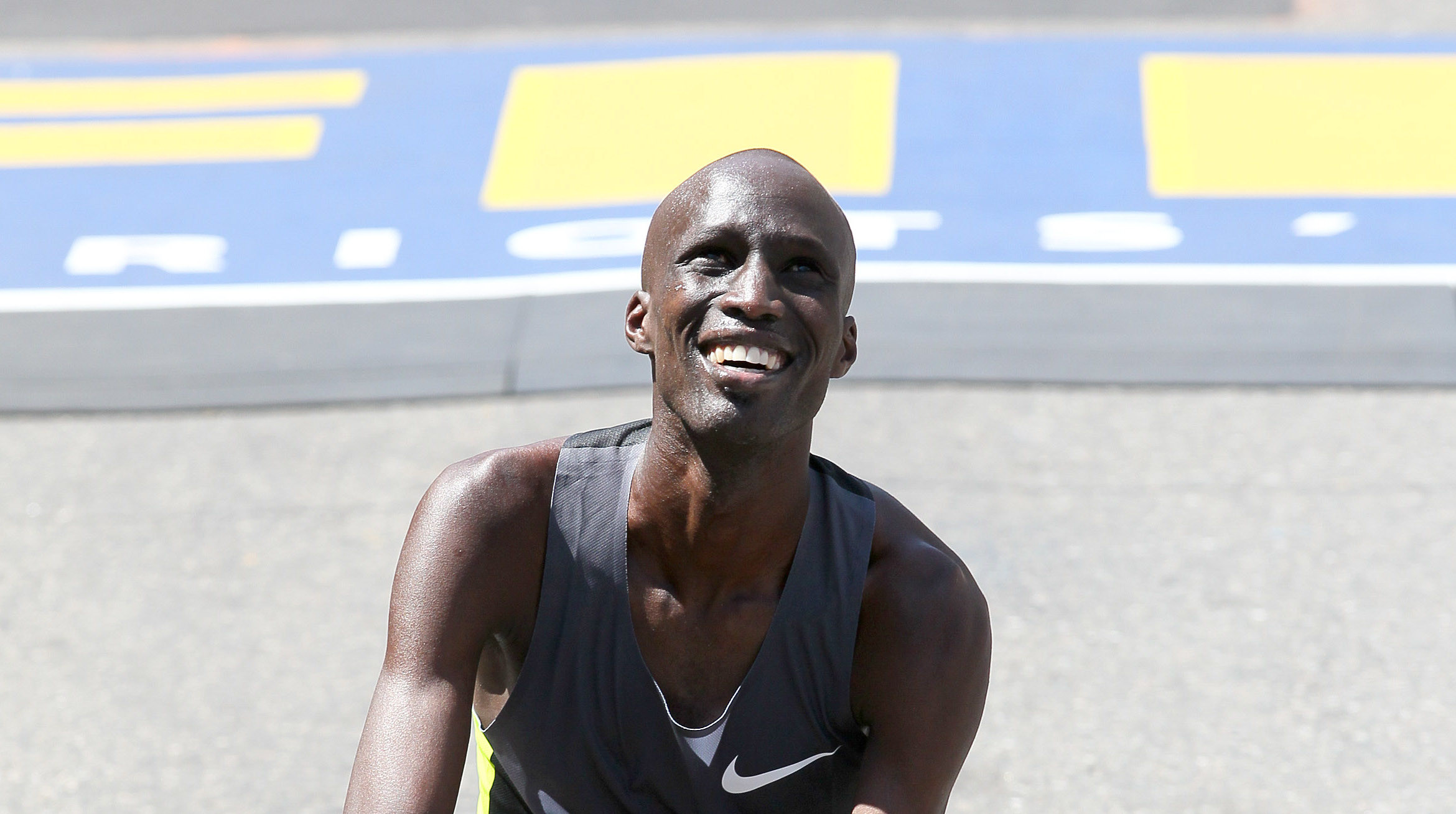
The two-time Los Angeles marathon winner, said the postponement of the Boston Marathon was a blessing in disguise for him as he will be ready. The 38-year-old runner said his target is to reclaim his position in Boston—a city he has spent much of his time as a youth and an athlete.
Korir featured in Chicago in 2008, 2009, 2010, 2011 and 2012 but his luck came in 2011 when he finished second in 2:06.15.
He made his Boston marathon debut with a win in 2012 in 2:12.40 but failed to defend his title the following two years, finishing fifth in 2013 and 2014. He was fourth in 2016 and sunk deep in 2017 to place 15th. He won the Los Angeles Marathon in 2009 and 2011 in 2:08.24 and 2:09.19.
(04/13/20) Views: 82Emmanuel Sabuni
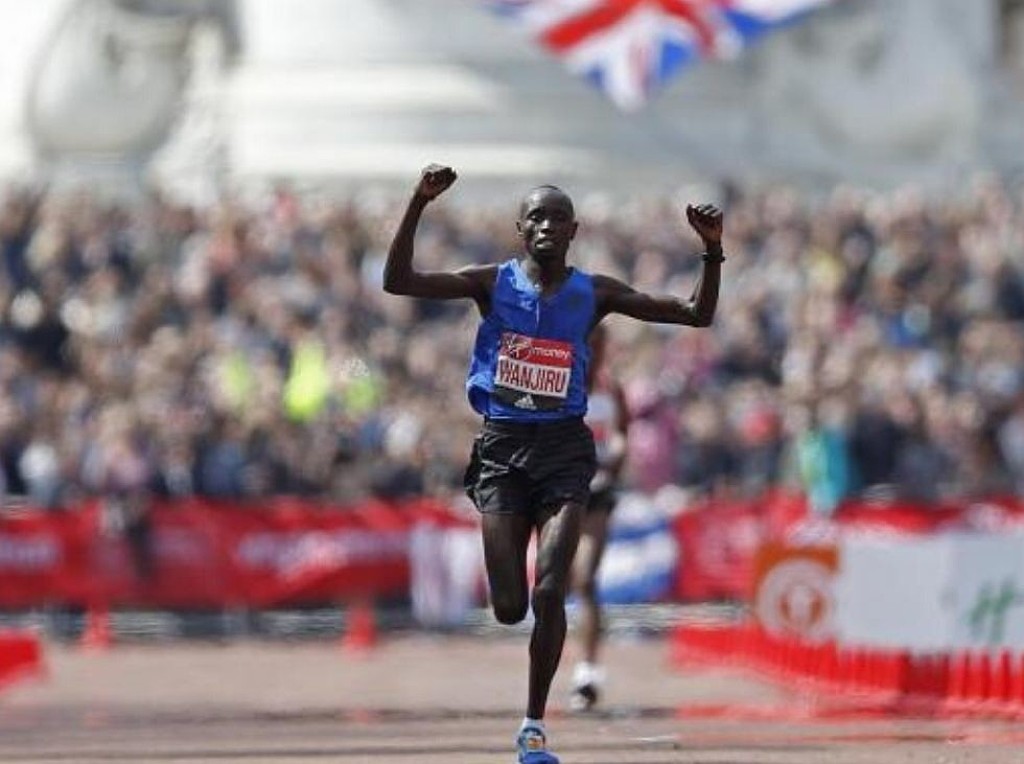
Kenyan Daniel Wanjiru suspended for doping violation
Kenyan runner Daniel Kinyua Wanjiru, a former winner of the London Marathon, has been suspended due to irregularities in his biological passport, the Athletics Integrity Unit (AIU) said on Tuesday.
The 27-year-old won the prestigious London race in 2017 and was fifth in the 2018 New York Marathon.
"The AIU has provisionally suspended marathon specialist Daniel Kinyua Wanjiru of Kenya with immediate effect for an Athlete Biological Passport violation under the @worldathletics anti-doping rules," the AIU said on Twitter.
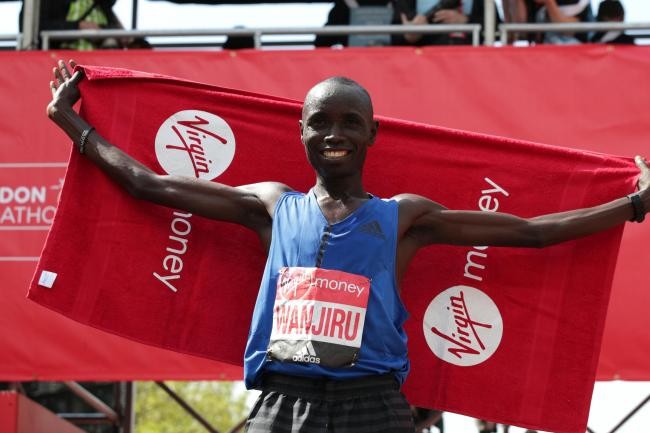
He was suspended for "use of a prohibited substance/method".
With the charge having been issued, Wanjiru will now wait for his case to be heard.
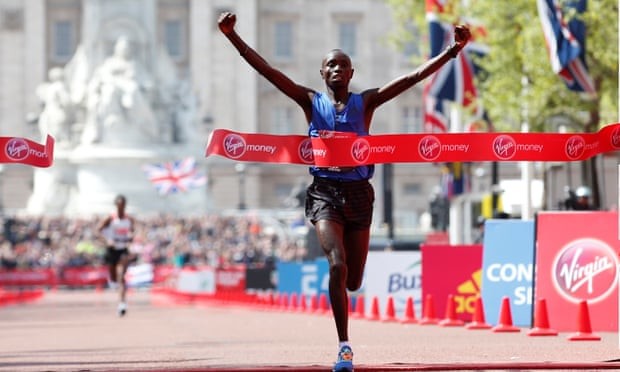
The 27-year-old, who beat Ethiopia’s Kenenisa Bekele to the 2017 London Marathon title, has a marathon PB of 2:05:21, set when winning the Amsterdam Marathon in 2016.
In a statement released by his management company Volare Sports, Wanjiru protested his innocence, adding that he has “never used doping”.
Wanjiru is also quoted as saying: “This statement comes from the heart. I am clean in the sports I do. The ABP (athlete biological passport) finding is confusing and frustrating me. Specialists have informed me about how this can happen and I have come to realise there can be hundreds of reasons found why HB is fluctuating.
“I feel I am already seen as a sinner of doping, but I am not. I am innocent.
“It’s very painful what’s happening to me now. I’ve always believed that those athletes who are suspended because of a doping violation, were indeed guilty of what they did. But I’ve realised that being charged of guilt is just easy and now proving being unguilty is hard.
“I stand for clean sports. My results of the past came through hard work only. I have never used doping. We are currently investigating the case. Knowing I have never used anything, I have faith everything will be all right.”
(04/15/20) Views: 73

The International Olympic Committee will face several hundred million dollars of added costs because of the postponement of the Tokyo Games
President of the International Olympic Comittee, Thomas Bach spoke in an interview with German newspaper Die Welt on Sunday.
Estimates in Japan put the overall cost of the postponement at $2 billion-$6 billion. Except for the IOC portion, all added costs will be borne by the Japanese side according to an agreement signed in 2013 when Tokyo was awarded the Olympics.
Bach said it was “impossible to say for now” the extent of the added costs for the IOC caused by the coronavirus pandemic.
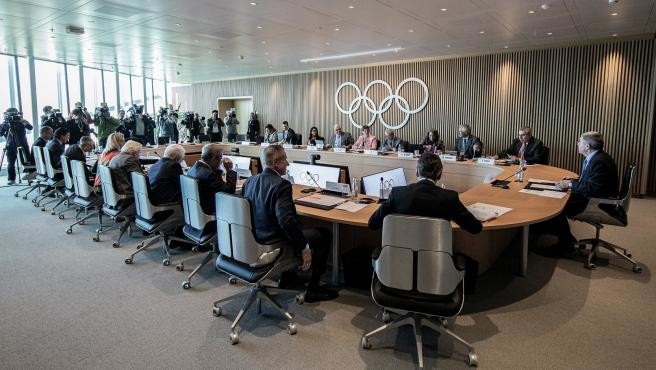
“We agreed with the prime minister that Japan will continue to cover the costs it would have done under the terms of the existing agreement for 2020, and the IOC will continue to be responsible for its share of the costs,” Bach said. “For us, the IOC, it is already clear that we shall be faced with several hundred million dollars of additional costs.”
Before the postponement, Japanese organizers put the official cost of the games at $12.6 billion. However, a government audit report in 2019 said the costs were at least twice that. All but $5.6 billion of it is in taxpayer money.

Tokyo said the 2020 Games would cost about $7.3 billion when it won the bid seven years ago.
On Friday, the CEO of the Tokyo organizing committee said the pandemic left some doubts about the games going ahead next year.
“I don’t think anyone would be able to say if it is going to be possible to get it under control by next July or not,” Toshiro Muto said, speaking through an interpreter. “We certainly are not in a position to give you a clear answer.”
Bach was asked about the possibility of another postponement. He did not answer directly, but said later in the interview that Japanese organizers and Prime Minister Shinzo Abe “made it very clear to me that Japan could not manage a postponement beyond next summer at the latest.”
Bach was also asked if the pandemic provided an opportunity for some athletes to violate the doping rules with no threat of testing. Bach countered that the delay could allow new testing methods to be developed. He also said tests made before the Olympics would be saved for 10 years for retesting.
(04/16/20) Views: 63Stephen wade
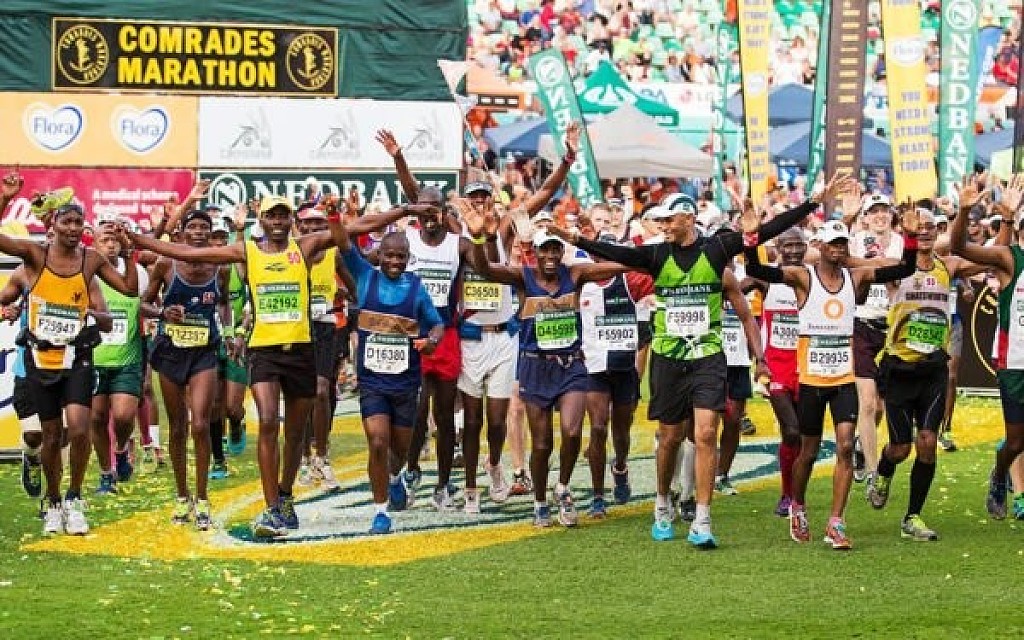
With South Africa entering its last week of official lockdown, Comrades Marathon unlikely to take place on June 14
With South Africa entering its last week of official lockdown, the 2020 Comrades Marathon Association has admitted that the iconic race is ‘unlikely to go ahead’ on 14 June. But organisers have not yet officially communicated their decision on the race’s future due to the Covid-19 pandemic.
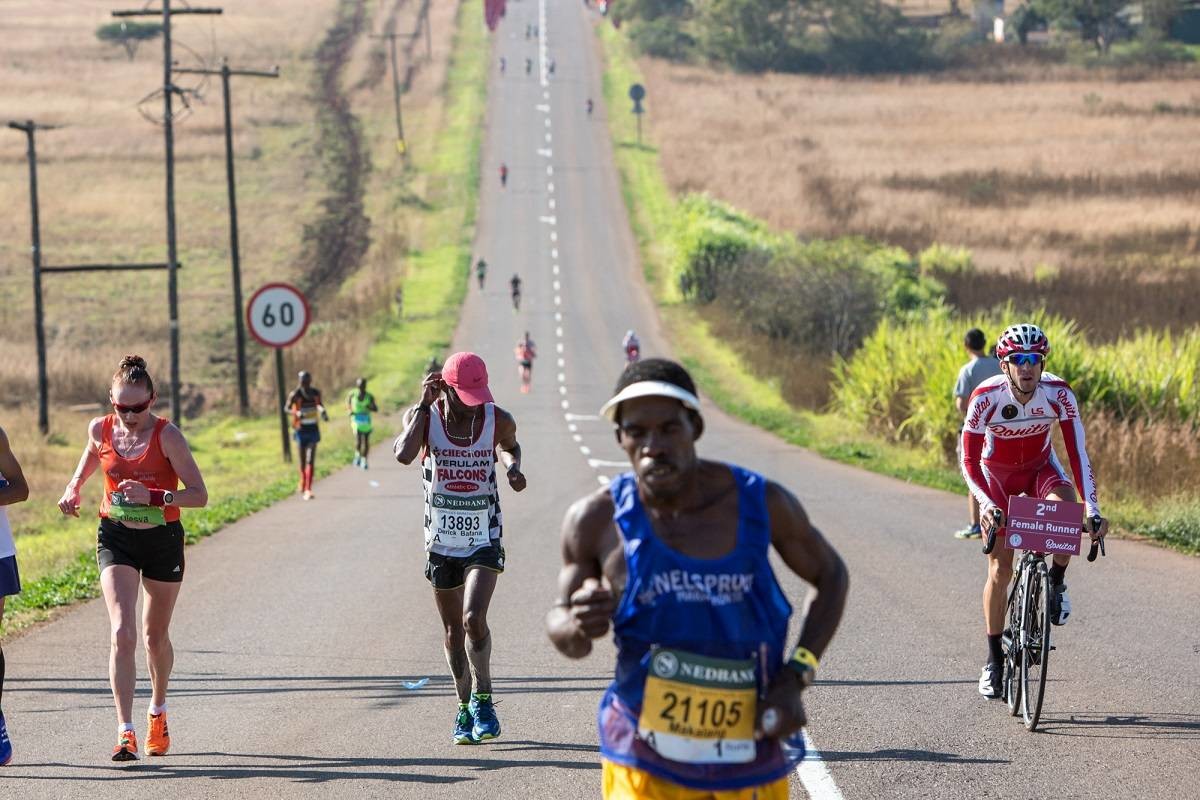
It takes an extraordinary amount of resilience to run the Comrades Marathon, the 90km race between Durban and Pietermaritzburg. It takes an equal amount of motivation and organisation to host the race, with thousands of moving parts all needing to come together on one day to make the experience for the approximately 27,500 runners a bucket list dream-come-true.
Of course, it also takes money and support to make it happen, which means sponsors, and broadcast rights. A cancelled marathon would result in a massive loss of revenue, which is why it is no surprise that the race has yet to be called off, or postponed because of Covid-19.
The Comrades Marathon Association (CMA) appears to be taking every available minute to make a call. It is almost certainly a vain undertaking because the Covid-19 virus is going nowhere quickly – all the data leads to that conclusion.
Despite the national lockdown that started on 27 March 2020, the CMA maintained its position that the race was still scheduled for 14 June 2020 even though participants would not easily be able to continue training under the strict State of National Disaster conditions. CMA quickly changed that stance after a backlash on social media.
“We are living through unprecedented, unpredictable and unimaginably challenging times,” CMA chairperson Cheryl Winn wrote to participants recently.
“On behalf of the Comrades Marathon Association, I thank you for your patience and apologise for the extent to which uncertainty as to the status of the 2020 Comrades Marathon may have added to your burden of anxiety, over matters far graver than any road race, over the past month. A reminder that we have promised to put an end to the uncertainty by 17 April.
“Considering the ramifications of the 21-day national lockdown, and as Covid-19 numbers in South Africa and around the world continue to escalate, it is becoming increasingly unlikely that the 2020 Comrades Marathon will be staged on 14 June.
“CMA’s main considerations at this stage are to encourage runners to abide by and respect all aspects and directives of Government in relation to the National Lockdown, in particular to stay at home and do not run outside of one’s own property, as well as regard for the eventual safety, welfare and potential un-preparedness of runners after having experienced a three-week interruption in training, during the critical build-up to such a gruelling endurance race.
“With regard to possible postponement, which would require Athletics South Africa (ASA) sanction, the CMA Board is of the view that the race cannot be staged later than 4 October 2020 owing to climatic conditions. Failing which the 2020 Comrades Marathon will have to be cancelled for the first and only time since World War 2 in the 99 year history of the race.
We trust that runners will appreciate that within an extremely congested athletics calendar that is largely constructed around the Comrades Marathon, it is no easy task to identify an alternative date.
(04/11/20) Views: 61Craig Ray
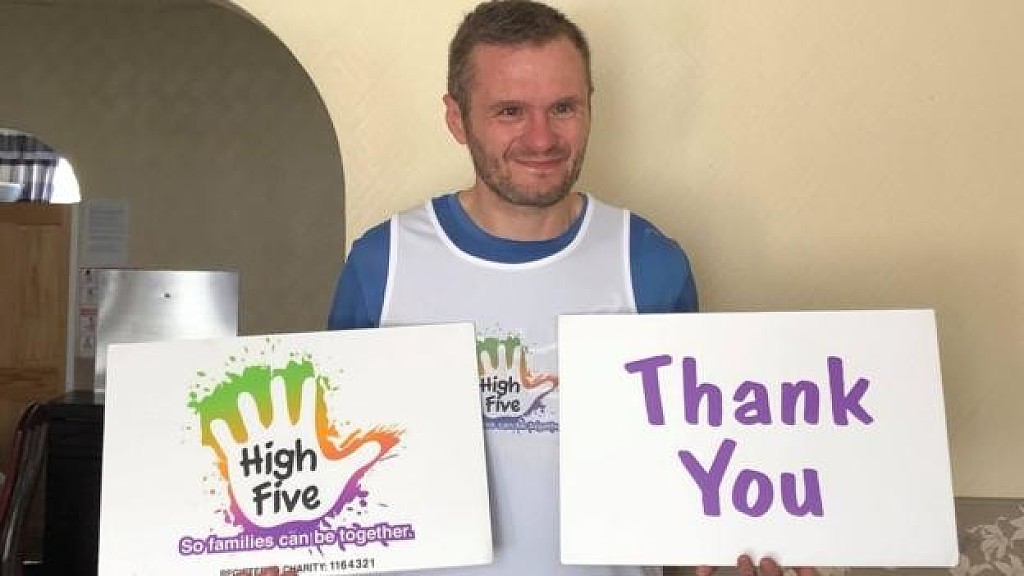
Paul Holliday runs marathon in living room for charity
As coronavirus lockdown restrictions continue to be enforced, Bolton Wanderers' head of marketing and communications - and keen runner - Paul Holliday had to think on his feet after his plan to raise money for charity by running a series of marathons had to be abandoned.
His solution? Running a full 26-mile marathon in his own living room.
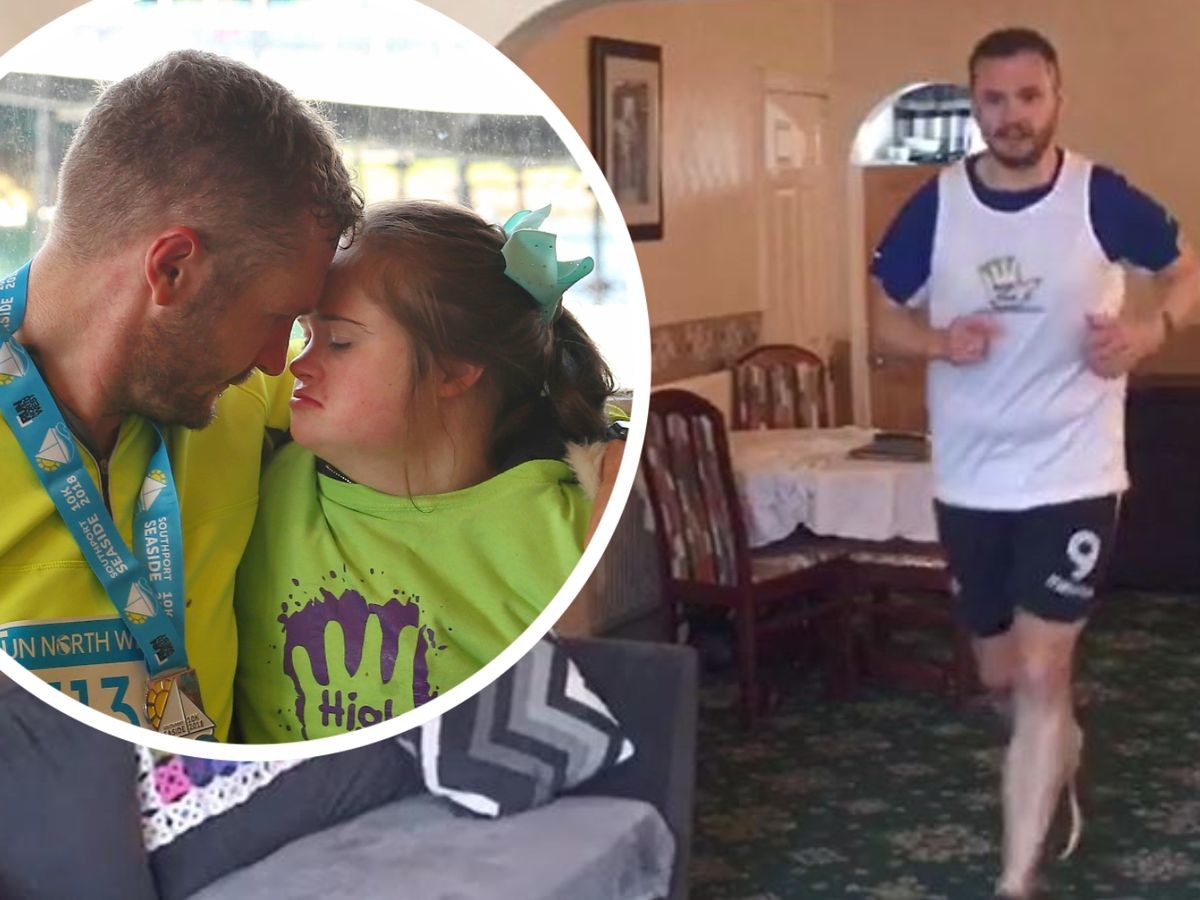
Holliday, who has been furloughed during the crisis, streamed his efforts on social media on Wednesday as he ran 4,500 laps of his front room.
"I must confess that after the first couple of laps, the size of the task in front of me made me feel a bit daunted," he admitted to BBC Sport.
"But once I got into my groove I had no further doubts or issues.

"I had done a trial mile in my living room just over a week ago to see what it would be like and I felt dizzy after that.
"But I prepared well over the past couple of days by eating and hydrating well so I knew I'd have the energy to get this done."
Holliday, whose daughter Isabella has Down's Syndrome and ADHD, had planned to run three marathons this year in order to raise money for High Five, a Lancashire-based charity his wife and a friend set up to support the families of children with disabilities.
When the pandemic led to his outdoor runs being cancelled, however, Holliday pressed on with his aim to continue fundraising and streamed his indoor marathon to thousands via his Twitter account.
So far, he has raised over £2,000 - double his original target.
"I've been overwhelmed by the support of everyone; family, friends, colleagues and especially people who I've never met," he said.
"To be so generous during these uncertain times shows how kind-hearted people can be and I'm truly grateful."
Having finished in a time of four hours 38 minutes, how was he physically and what was the state of the living room?
"The carpet, quite miraculously, is unscathed. There aren't any signs of wear and tear but we've been wanting to replace it for years. I plan to do a couple more indoor marathons before the outdoor marathons resume so we will wait until after I've done them," he said.
(04/10/20) Views: 60Jay Freeman

American sprinter and long jumper, Jarrion Lawson cleared his name
Lawson, the only man besides Jesse Owens to win the 100 meters, 200 meters, and long jump at the same NCAA championships and the long jump silver medalist at the 2017 World Championships, took a drug test in June 2018 that revealed an Adverse Analytical Finding. That mere fact was essentially a death sentence. The test had been ordered by the Athletics Integrity Unit, World Athletics’ anti-doping arm. Since the AIU’s establishment in April 2017, it had prosecuted over 100 cases of Adverse Analytical Findings. Every single one of them resulted in a sanction.
So it came as no surprise when Lawson’s appeal of the resulting four-year suspension was rejected by an AIU Disciplinary Tribunal in May 2019.
Lawson told the AIU he had ingested the prohibited substance — epitrenbolone, a metabolite of the banned anabolic steroid trenbolone — unknowingly, the result of consuming contaminated beef. Yet that explanation was not enough; for the AIU to overturn the decision, Lawson had to prove “with actual evidence” the “specific source of the allegedly contaminated meat and demonstrate the likelihood that said meat was contaminated.” Despite his best efforts, Lawson could not do that.

Undeterred, Lawson, 25, appealed the AIU’s decision to the Court of Arbitration for Sport, which heard his case in New York on November 21. The CAS appeal was a Hail Mary; the CAS panel that heard Lawson’s case admitted when it reached its decision in March.
“In ‘extremely rare’ cases, an athlete might be able to demonstrate a lack of intent even where he/she cannot establish the origin of the prohibited substance,” the CAS decision read, later noting an athlete such as Lawson would have to pass through the “narrowest of corridors” to prove his innocence without establishing the specific source of the prohibited substance.

“Common sense must count strongly,” the CAS decision read, “against it being a mere coincidence that he tested positive, for such a tiny amount of a dangerous and illegal prohibited substance as to be undetectable in his hair, and for no rational benefit, so soon after having eaten beef from hormone-treated cattle.”
Lawson was relieved to have the case settled in his favor. He doesn’t blame the restaurant for the contaminated beef — “we don’t know what’s going on in the meat industry” — and isn’t dwelling on missed earnings or competition opportunities.
“Anything that I may have missed out on, I think I will get everything that’s supposed to come my way,” Lawson says.
But Lawson isn’t completely ready to move on. The costs he was forced to pay — tens of thousands in legal fees, a hit to his reputation, and a year and a half of his prime — were severe; the next athlete in his situation might not be willing (or able) to pay them. He believes there are major flaws in the doping control process that need to be remedied
(04/10/20) Views: 54Jonathan Gault
