

Running News Daily
Running News Daily is edited by Bob Anderson and team. Send your news items to bob@mybestruns.com Advertising opportunities available.
Index to Daily Posts · Sign Up For Updates · Run The World Feed
Search Results for Ultra
Today's Running News
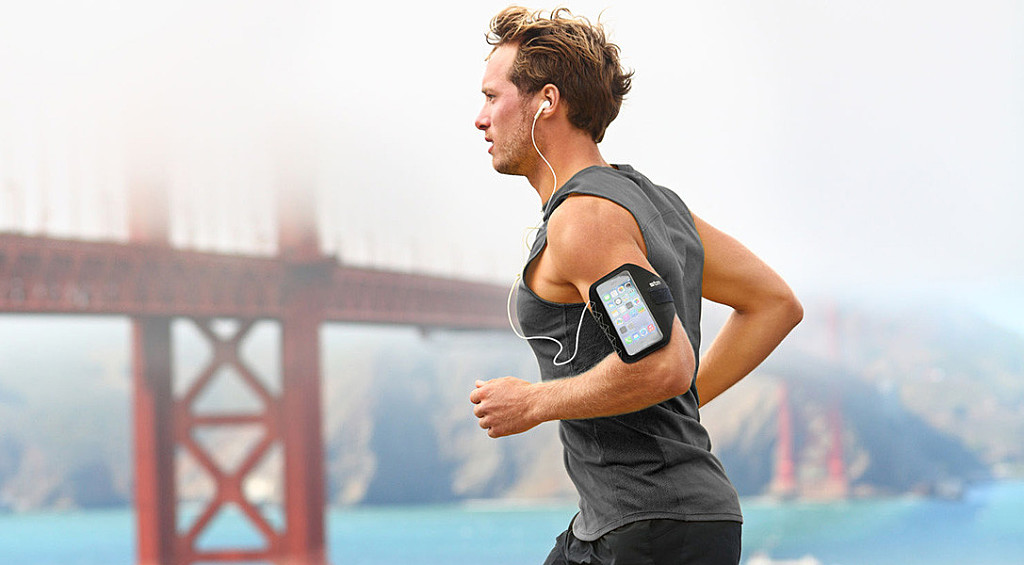


Five things to consider when shopping for new running gear
It’s the question every runner asks, but what is the best solution for ensuring a great run every time? Here are five things to consider when shopping for new running gear.
Storage
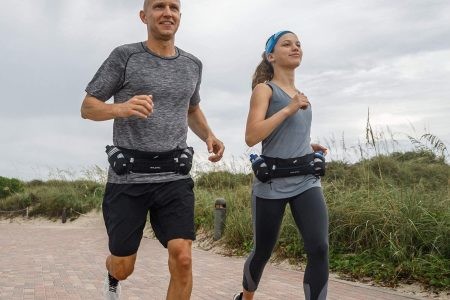
Running armbands are often the least expensive option, whilst offering a practical solution for running with your phone, armbands can’t offer much more than phone and key storage. Running belts often allow runners to carry slightly more – perhaps gels, keys and your phone – but running with even these few essentials around your waist can affect your technique.
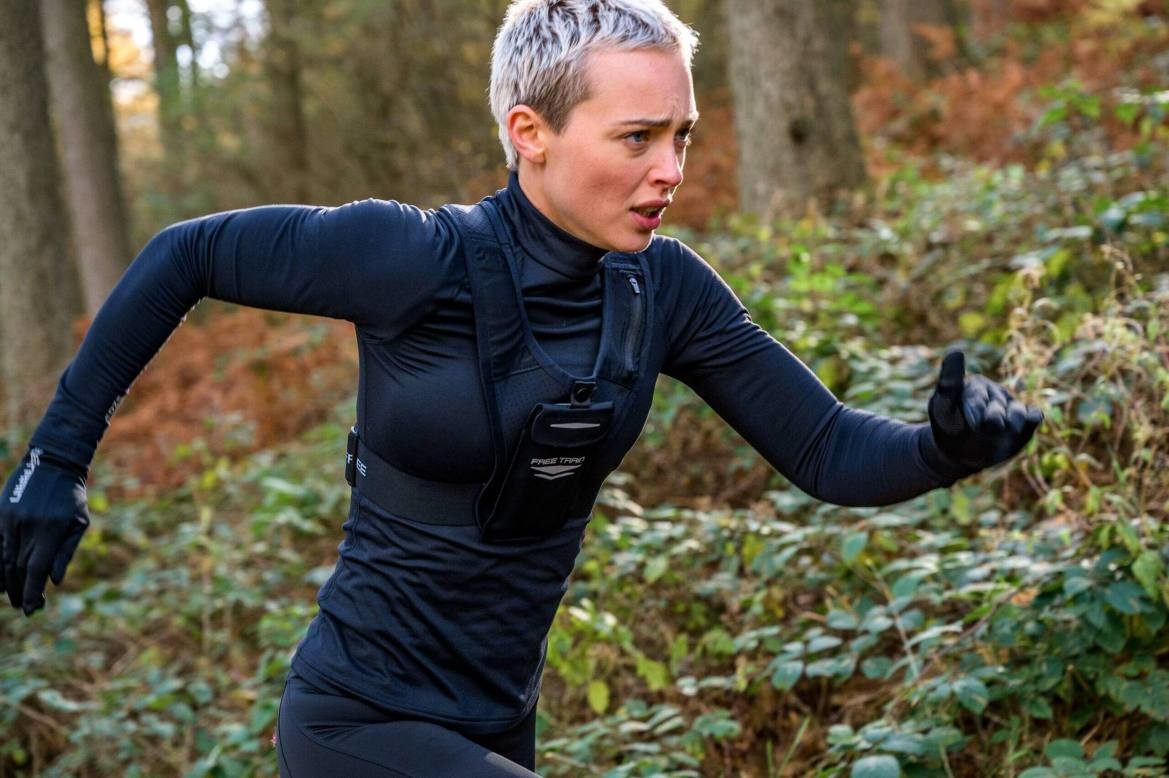
Running Vests not only allow you to bring your essentials on your run but won’t affect how you move – providing your vest is a good fit to your body. The V1 and VR vests from Freetrain are equipped with a clever little divider inside the phone pouch where you can store cards & cash. The vests also have a Velcro pocket on the right-hand side for keys and a larger zip pocket on the left for things like energy gels, bars, or even an inhaler.
Weight Distribution
Despite their functionality and lower cost, arm bands and waist belts don’t offer even weight distribution. Running with your phone on one arm or holding items around your waist can change your posture and gait and this uneven distribution of weight is proven to lead to injuries.
Running vests allow the wearer to move freely, distributing the weight of their phone and essentials across the body to avoid injury. Freetrain vest pockets are positioned to ensure comfort and technique aren’t compromised whilst you’re in the zone.
Easy Access
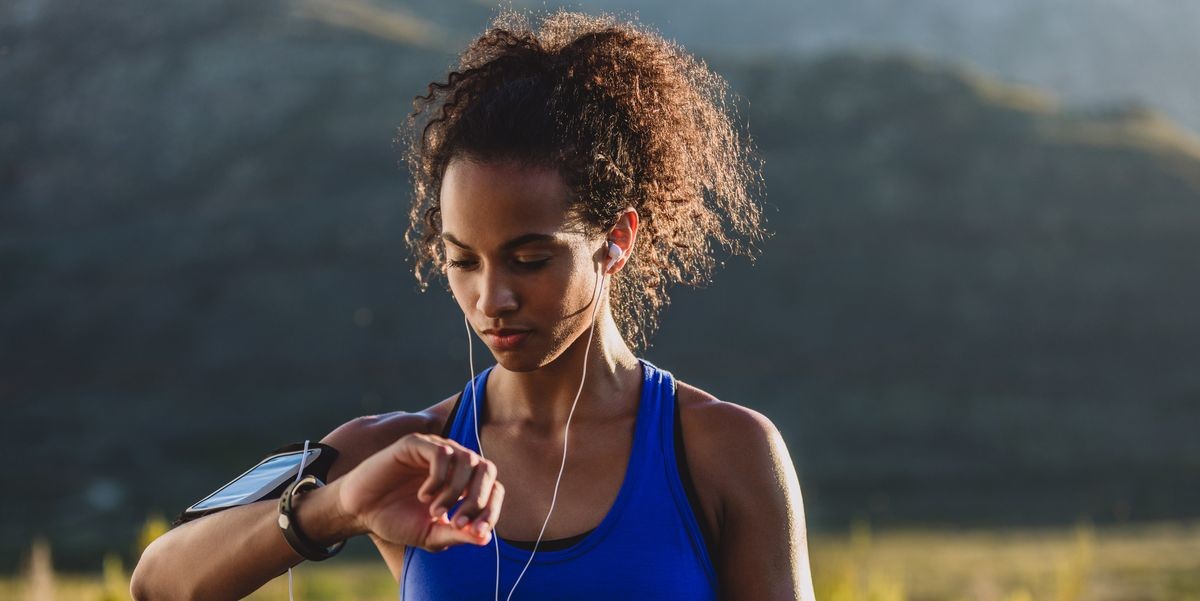
Most belts don’t offer visibility or access whilst moving. Arm bands provide basic visibility and access via clear plastic screen protectors, although it can be difficult to check stats or change a song mid-run due to their position on the body.
Freetrain vests are uniquely designed to allow you to check and use your phone on the go. Unlike any other model on the market, the vests feature a centrally located phone pouch which is designed to give seamless access to change song, check maps or even answer calls & eliminate bouncing.
Higher visibility
Whilst some armbands and running belts feature a reflective strip or material, due to their smaller size and location on the body, this can easily be missed by fast-moving traffic. The benefit of reflective running vests is that they offer visibility on a larger surface area – making you more visible on darker runs.
The Freetrain V1 and VR vests both feature reflective print on the front back and sides. The VR vest offers enhanced visibility as it’s from ultra-reflective material that lights up the dark.
Anti-Slip
Armbands and waist belts are often criticized for slipping or riding up during runs. This can hinder performance and make for an uncomfortable run. Running vests fit over the body and are secure – with no need to fix position during a run.
Freetrain vests are designed with lightweight materials that won’t weigh you down. The adjustable waistband allows you to find the perfect fit and the front phone pocket won’t budge, even during the most intensive workout.
The newest innovation in running wear has the answer- the Freetrain V1 and VR running vests are designed to allow you to move freely whilst carrying your phone and essentials. The vests’ balanced weight distribution won’t hinder progress or alter technique and the easy access flip-down phone holder lets you change songs, check progress or respond to messages and calls whilst you’re moving.
(04/23/2021) ⚡AMPby Colorado Runner

How Running Can Boost Your Immune System
Running has some amazing benefits in terms of resistance to infection. People who run, or exercise aerobically, at a moderate level experience fewer days of sickness from the common cold and other upper respiratory tract infections (URTI). What’s more, less competitive runners following lower-key exercise regimens have enhanced immune reactions to infection.
Many studies indicate that exercising at a medium intensity level reduces our risk of infection over the long term. How does this happen?
– Light or moderate running boosts our body’s natural immune system by circulating protective cells through the body faster, to attack and eliminate bacteria, viruses and fungi.
– Another theory holds that the increase in body temperature when we run may inhibit the growth of bacteria, thus reducing its foothold in the body.
– Some exercise scientists believe that regular running helps rid the lungs of airborne bacteria and viruses that cause URTI, while others say exercise causes the loss of carcinogens through increased sweat and urine loss.
– Active people also experience lower rates of colon cancer and breast cancer. Researchers think moderate exercise boosts the body’s immune system, attacking malignancies that have viral origin.
Don’t overdo it
Overtraining can suppress normal immune function, so it’s important to get the right balance of frequency, intensity and duration of running or general fitness workouts. Overtrained runners at all levels have been shown to experience impaired immune systems, to the extent that they suffer from a higher number of upper respiratory tract infections (URTI) than untrained people.
URTI is also elevated following competitive endurance races such as marathons. And it appears that the longer the endurance event, the harder the athlete’s immune system is hit. According to research, there’s an “open window” of altered immunity, lasting from three to 72 hours after you run hard and for longer than 90 minutes. In this time, infectious microbes, viruses and bacteria may overcome your body’s natural defences, depending on your natural state of immunity at the time.
Tips for a strong immune system:
– Use carbohydrate drinks before, during and after running events or during very heavy exercise sessions. The recommended dosage is 30 to 60 grams of carbohydrate during exercise. This will lower the impact of the stress hormones on your immune system.
– Eat a well-balanced diet to keep vitamin and mineral levels in the body at optimal levels. Important vitamins and minerals that have the greatest impact on immune function are: vitamins A, E, B6, B12, folate, essential fatty acids, the amino acids glutamine, arginine, and L-carnitine. No research has conclusively shown that ingesting these in supplement form reduces URTI, but taking them in safe amounts will not do any harm, either.
– Avoid large crowds of people for 1-2 weeks after you finish a marathon or ultramarathon. You’re more susceptible to URTI during this time.
– Wash your hands with warm soapy water and minimize hand-to-eye and hand-to-nose contact, especially during cold and flu season.
– Do not exercise in a group setting if you have URTI, to avoid spreading it to others.
– Get adequate sleep on a regular schedule. Sleep disruption has been linked to lowered immunity.
– Keep your life stressors to a minimum, as high stress levels have been linked to URTI.
(04/22/2021) ⚡AMPby Canadian Running
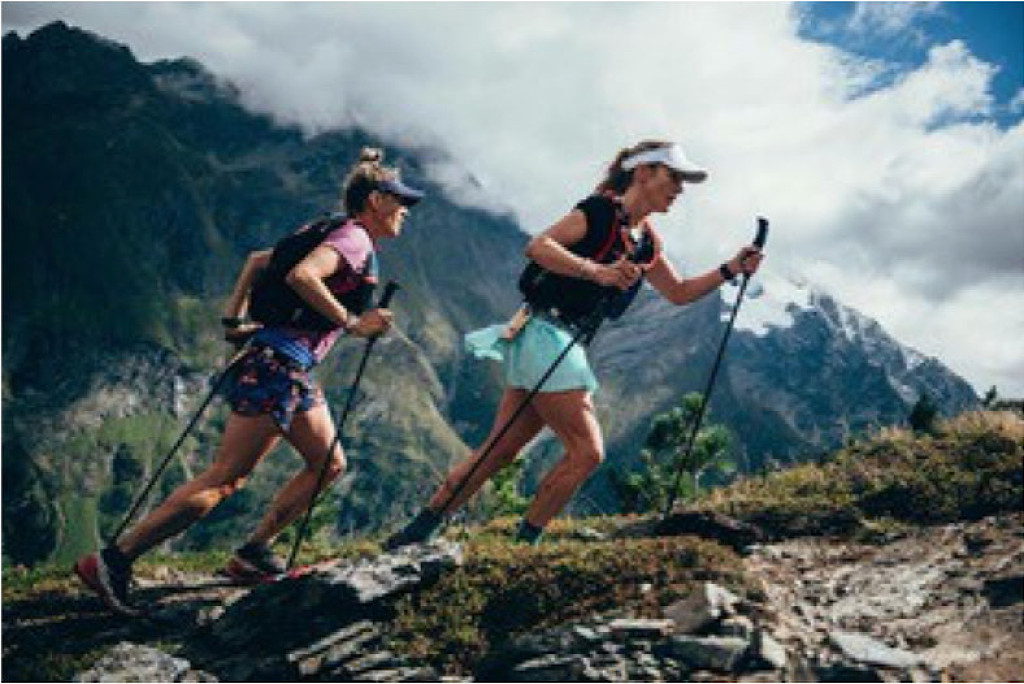
How elephants changed one ultrarunner’s life
Rene Unser’s first race was a five-day stage race in Thailand in 2005. By the second day, she was already exhausted and had begun to think that this style of racing was not for her. Her husband encouraged her to continue, and on Stage 3, they had an incredible run-in with a couple of elephants while out on the course. She realized in that moment that had she given up the day before, she never would have had her “elephant moment,” and that memory continues to serve as a reminder that suffering is temporary, but giving up lasts forever.
Fast-forward to 2012, when Unser was on Stage 6 of the Transalpine Run in Italy. She “woke up at 4 a.m. with knees that felt like they had been hit with a baseball bat and were the size of softballs.” Thinking she wouldn’t be able to start the stage, she went down to breakfast in her guesthouse in her pyjamas. It took a five-minute pep talk from her husband Trent to convince her “to get my butt upstairs and at least start the stage. He reminded me of my ‘elephant moment’ and I promptly went back up to my room and frantically started counting gels, filling my hydration bladder.”
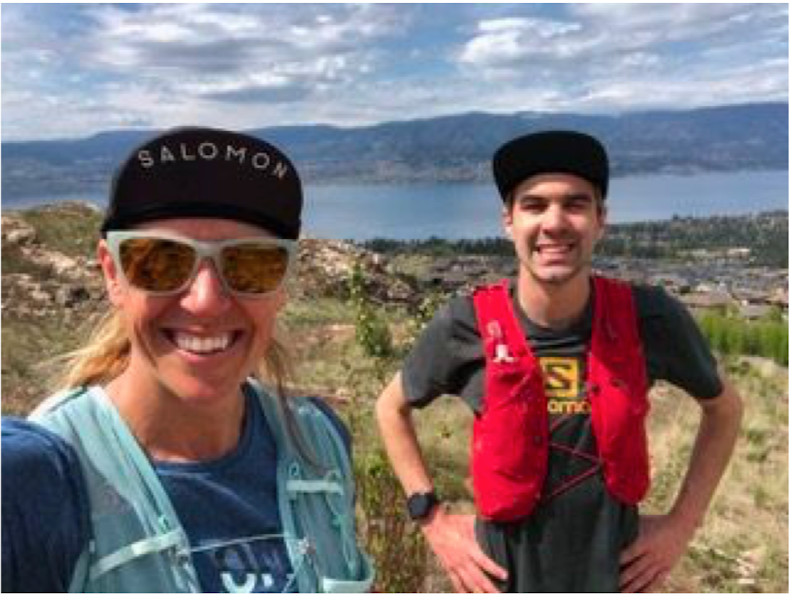
After a frenzied drive to the start line, a forgotten bib mishap and subsequent late start, the Kelowna, B.C., native was out on the course, knees wrapped in about 18 layers of KT Tape and 10 minutes behind the rest of the runners. Sweeps had already started clearing the course, so locals had to point her in the right direction. Despite the rough start, Unser managed to work her way up through the runners, passing the third-place female team (it was both a team and solo event) with only 5K left to go.
Unser is an athlete with a lot of drive and passion, but her athletic career started much the same as anyone else’s — she was an active kid who played lots of sports during her school years, and while she showed some talent in running, she preferred to remain a generalist rather than focus on one sport. She didn’t start to run more regularly until her mid-20s, and her first trail run was in 2003 when she went on her first date with the man who would later become her husband. She was immediately hooked, and with her job as a fitness instructor at the time, she wanted to figure out how to get others into trail running.
Since then, Unser has turned her passion into a career. In 2003, she got her coaching certification and 10 years later founded P.A.C.E., a coaching business that offers trail running clinics and running camps and organizes a trail running series. Since 2011, Unser has competed in the Transalpine race eight times, and in 2020 she raced to a second-place finish in the master’s women’s category. In her most recent race, the Scorched Sole Ultra in B.C., she placed third overall.
Between her race directing, community work and coaching, Unser caught the attention of Salomon and Hammer Nutrition, and both companies now sponsor her and provide her with different opportunities, such as being the media liaison for the Transalpine race. With so much going on, she has less time to enter races herself, and she now limits herself to just a couple of more challenging stage races per year.
When asked about how she’s dealt with the challenges of COVID-19, she points to her company name, which stands for “positive attitude changes everything.”
“It’s cheesy, but I believe in it,” Unser says. “COVID created an opportunity for me to be there for my community in a new way. I wasn’t sure what would happen for my race series, camps or clinic format, but my community continued to stand behind me. I am so grateful, and I learned more about myself and the kind of coach I wanted to be.”
Unser has become a pillar in her local trail-running community, has inspired and encouraged countless others to get out and enjoy the trails, and has enjoyed a long and successful trail-running career herself — all because she met a few elephants on a trail in Thailand.
(04/19/2021) ⚡AMP
by Running Magazine
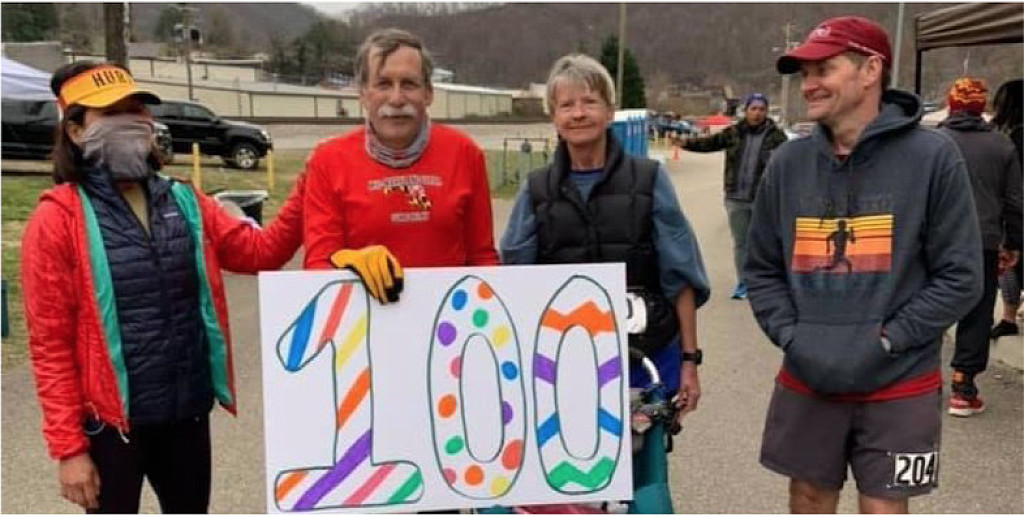
At 70, Tom Green Hits Fifth Decade of Life Completing a 100 Miler
As Tom Green, 70, crossed the Conquer the Wall Endurance Challenge finish line on March 12 in Williamson, West Virginia, he reached a rare milestone in ultrarunning that only a few people have: completing a 100 miler in a fifth decade of life.
This adds to Green’s storied career in ultrarunning that includes being the first person to run the Grand Slam of Ultrarunning (Old Dominion 100, Western States, Leadville, and Wasatch Front 100) in 1986 and being dubbed the “grandfather of ultrarunning.” Since then, he’s been to the top of the sport, and as he got older, faded to the back of the pack where he finds people are having the same, if not more, fun.
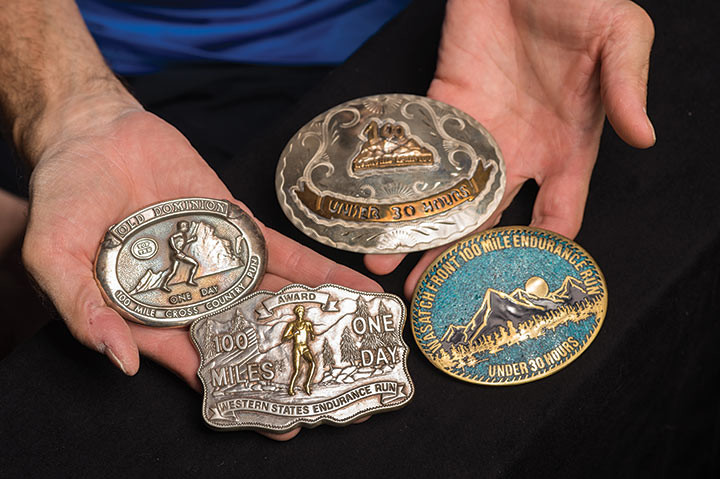
“One thing that hasn’t changed my whole running life is the fact that I can still do the best I can do,” Green told Runner’s World. “I’ve evolved. When I first did 100s, I did it more for competition against other runners. Now, as I’ve gotten older, it’s usually just me competing against my own limitations.”
Even with his evolution, Green has embraced the various reasons to keep going.
“I’ve noticed many runners, particularly the good runners when they are no longer able to compete at a competitive level, they just stop running,” Green told Runner’s World. “For me, I’ve always had different reasons to keep running and be part of this camaraderie, and that’s what keeps me going.”
→ Sign up for RW+ All Access for the latest running news, health tips, and gear reviews! ðŸƒâ™€ï¸ðŸƒâ™‚ï¸
It’s hard to bet against Green completing an ultra, but this latest milestone was almost taken away from him in April 2015.
While trimming a tree at his home in Maryland, a branch swung down and struck Green in the head, fracturing multiple parts of his skill and causing a stroke among other injuries. As a result, the part of his brain that controls his balance was no longer functional.
It took six weeks before he could take 10 unaided steps. It took many more months with a walker to recover, but his balance never returned. Green had the strength in his legs, but balance was the only thing keeping him from doing the one thing he wanted to do: finish one more 100 miler.
“Since the accident, have lost so much as a result of the brain injury and stroke, the one thing I wanted to try to hang onto was running,” Green said. “It just feels so good to be able to get out and do these runs with friends as opposed to sitting on the couch.”
To do this, Green had to find something to keep his balance for him while running so he wouldn’t be swerving. Surprisingly, a jogging stroller was the answer.
It took an adjustment period, but once he found his groove, Green was ready. He lined up for his first 100 since the accident in September 2017 (the Yeti 100)—one with a flat surface for his stroller.
Green thought that would be it for him, hanging up his buckle-chasing days and doing shorter ultras and races. Then a friend mentioned if he ran a 100 miler after turning 70, he’d have run a 100 in a fifth decade of his life.
“It got me motivated,” Green said.
He was planning to visit a friend on March 12 in West Virginia near the Conquer the Wall race. That friend convinced Green to sign up three weeks before. When race day came, Green was running with his stroller going after the milestone.
With 47 hours to complete the run, Green wasn’t terribly worried. These days, his brain doesn’t do well without rest after about 12 hours. With breaks and some walking, Green was able to hit the 100-mile mark around 45 hours.
“For me, it’s not so much the story of making five decades but being fortunate enough to come back after the accident to finish a 100 at all,” he said. “That’s what I feel the best about. The rest is just gravy.”
Green isn’t sure how much longer he can go, but he plans to run as long as he can. He’s signed up for the Pine Creek Challenge in Wellsboro, Pennsylvania, and the Yeti 100 in Abingdon, Virginia. Both are in September, and he’s after a lofty goal.
“My goal this fall is to try to run a get into the top 60 or 70 for the fastest times by a U.S. runner over the age of 70,” Green said. “I don’t know how many more all-night pushes I can do in order to go under 30 hours like I want to to reach this goal, but I think I’ve got one more left in me. But i’ll keep doing these runs as long as I can finish, I’ll continue to do them.”
(04/18/2021) ⚡AMPby Runner’s World
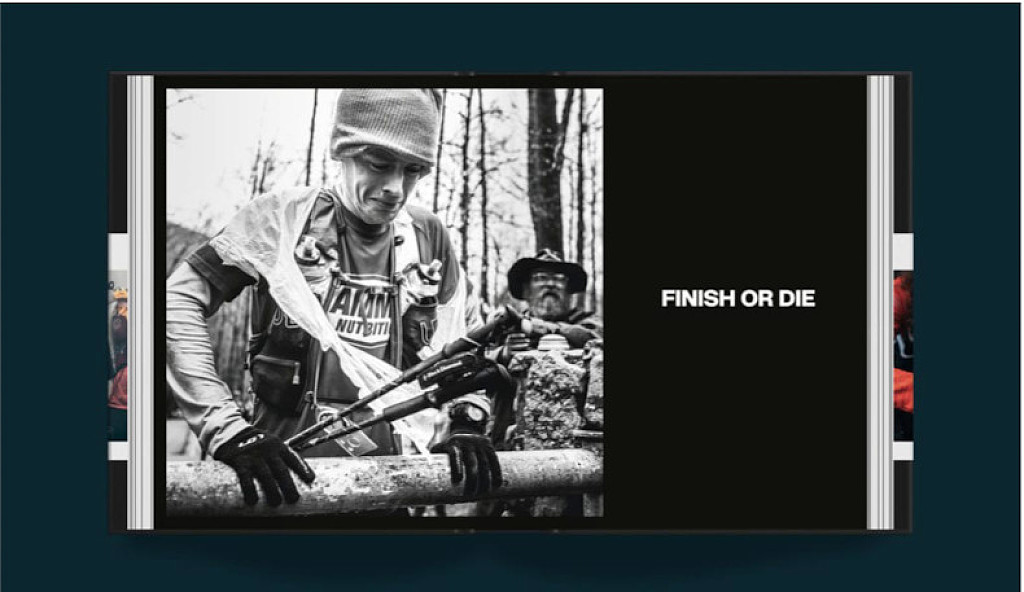
Barkley Marathons book documents race’s 15 finishers
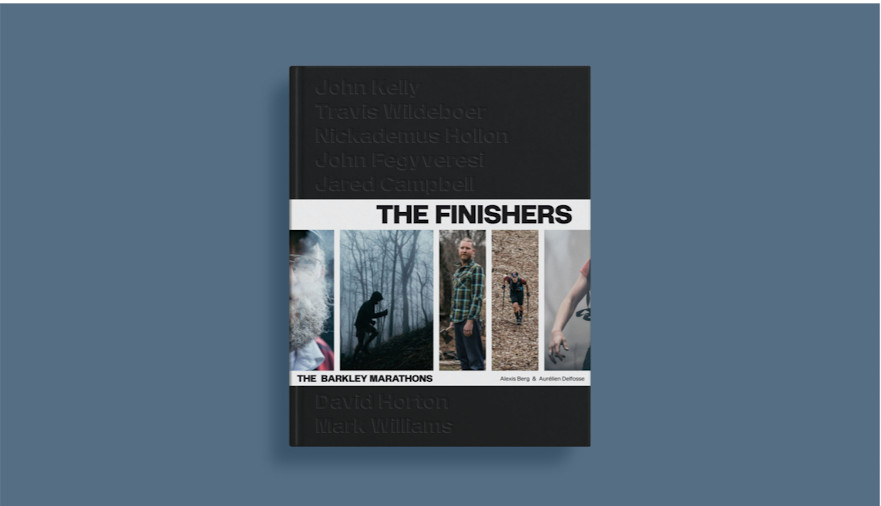
If you follow trail running or ultrarunning, odds are you know about the Barkley Marathons. You might not know much about the race, but you’ll at least know it’s incredibly difficult. So difficult, in fact, that only 15 runners have ever completed the roughly 100-mile run through Tennessee’s Frozen Head State Park in its 35-year history. A new book titled The Finishers has been published in French (with an English edition on its way), which tells the stories of those 15 Barkley Marathons finishers, as well as the tale of the event itself, through photography and runners’ stories from one of the world’s toughest races.
The race
Laz Lake is well known in the world of ultrarunning. He has created several races, all of which are long, gruelling affairs, but his most famous event is the Barkley. The first running of the event was in 1986, and it didn’t see a finisher until nine years later, when Mark Williams completed the full route in 1995.
Since then, 14 more runners have joined Williams on the short list of finishers, and a couple of men have recorded multiple finishes (Brett Maune finished in 2011 and 2012 and Jared Campbell finished in 2012, 2014 and 2016). The most recent finish belongs to John Kelly, who was the only person to complete the race in 2017. (Gary Robbins of Chilliwack, B.C., has raced the Barkley three times, and came close to finishing in 2017.)
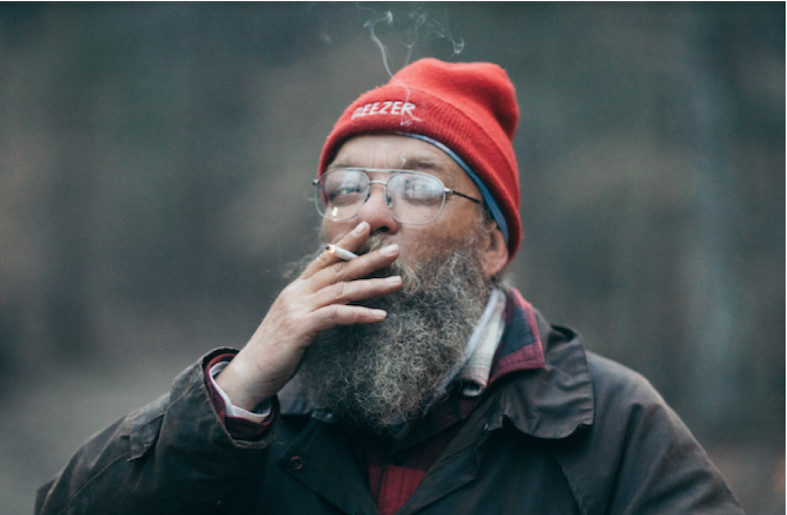
Around 40 runners get to race the Barkley Marathons every year, and the run through the woods and mountains of Tennessee starts when Lake lights a cigarette – one hour after the conch blows. Participants (and that’s what most will be — participants, not finishers) have 60 hours to navigate the five-loop course, which is not marked, and GPS devices are not allowed. In addition to running and navigating, runners must find books hidden around the course, tearing out the page corresponding to their bib number (which is different for each loop) – turning the ultramarathon into a brutal scavenger hunt.
If a runner can find each of the books (the number varies from year to year) and make it through all five laps, they will have covered about 100 miles and climbed around twice the height of Mount Everest in 60 hours or less. Finishing the first three loops in under 40 hours counts as a “Fun Run,” and is required to be allowed to attempt a fourth loop.
The Finishers
French photographer Alexis Berg and friend Aurélien Delfosse (a writer for the French sports newspaper L’Équipe) teamed up to put together The Finishers. As Berg says, he “had the crazy idea to make a very long trip through the U.S.,” and after pitching it to Delfosse, they set off on their journey, travelling around the country to talk to the 15 Barkley Marathons finishers.
Some of these athletes were easy enough to find and interview, while others had never spoken to the media, despite their monumental accomplishments in Frozen Head State Park. “If this book has any lasting meaning, it is in the depiction of these shadowy figures, seemingly ordinary yet extraordinary,” Berg says. “Each meeting at their home was, for Aurélien and me, a moment of grace, heart and intelligence. We will remember these moments all our lives.”
Berg and Delfosse endeavoured to share these meetings with the world through photography and text, and The Finishers is their final product. The book even includes a preface from Lake himself. Berg notes that this is far more than “just a sports book,” though, as it looks at the Barkley as a whole, from its inaugural running to its most recent, and uses the race to “explore our bodies, minds and the real or invented barriers that every day we decide to push back.”
The Finishers is available to purchase in French, and the English version is set to be released in March 2022 (although it can be pre-ordered now, and orders will be shipped by the end of 2021).
To learn more about The Finishers, click here, and to keep up to date on the 2021 edition of the Barkley Marathons (which we have reason to believe may be starting very soon), be sure to check in on the Canadian Running website and social channels.
(04/18/2021) ⚡AMPby Running Magazine
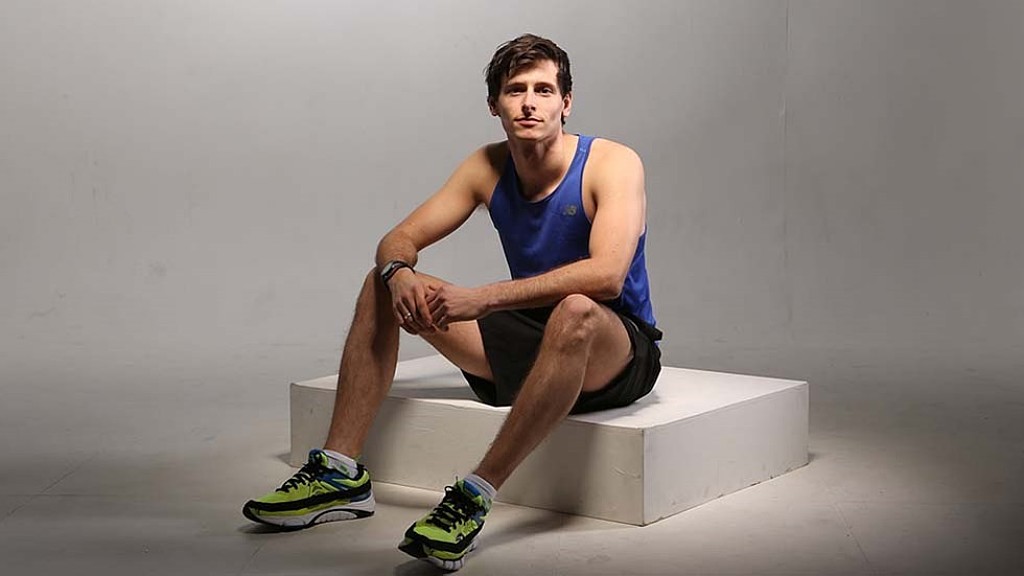
Endurance athlete from Bristol is hoping to run 200 marathons in 100 days
In 2019, Nick Butter became the first person to complete a marathon in every country of the world.
The gruelling challenge took him from North Korea to El Salvador, across war zones and freezing temperatures. At one point he was bitten by a dog and mugged.
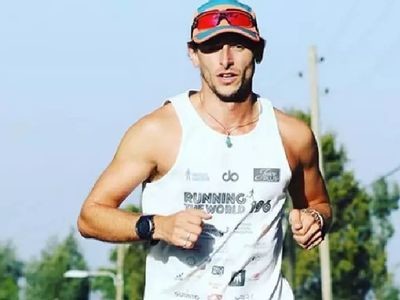
Nick's latest feat is unlikely to take him to such extremes, as he'll be running along the coast of Britain - but he will be attempting to complete two marathons a day.
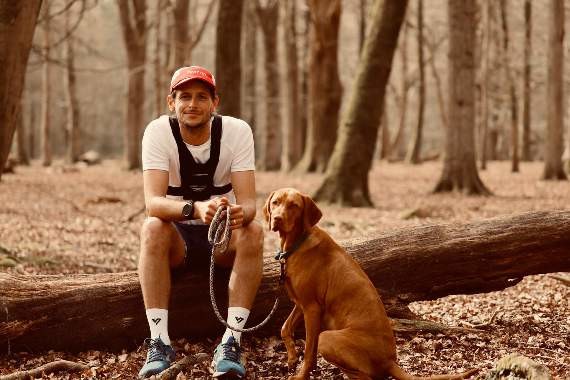
Starting at the Eden Project on Saturday April 17, Nick will run for 14 hours each day to cover 52.4 miles (a double marathon), every day for 100 days.
He will run 5,240 miles in total, ending up where he began at the Eden Arena on Monday July 26.
I honestly don't know if I can do it but we're going to give it a go. He says.
Nick will be supported by a team of five people across three camper vans.
The first will hold his support team, keeping him safe and fed, the second will be his media crew and the third will be his home on the road. It will be driven by Nick's girlfriend Nikki and their dog Poppy will also join them.
When Nick ran across the world, he did it in aid of Prostate Cancer UK after a fellow ultra runner, Kevin Webber, was diagnosed with the disease.
He has so far raised more than £140,000.
For his 2021 challenge, he has set up The 196 Foundation. Its title comes from the 196 countries across the world and reflects all the needs across the planet.
Each year it will support one cause, voted on by the foundation's donors. It could be anything from buying a wheelchair for a family to building a school.
The 30-year-old hopes to be joined by other runners along the route. "We'd love to have some company and people to come and keep me company for the 100 days," Nick said.
"When I'm running for 11 hours a day, getting through 9,000 calories, I need all the help I can get".
(04/16/2021) ⚡AMP
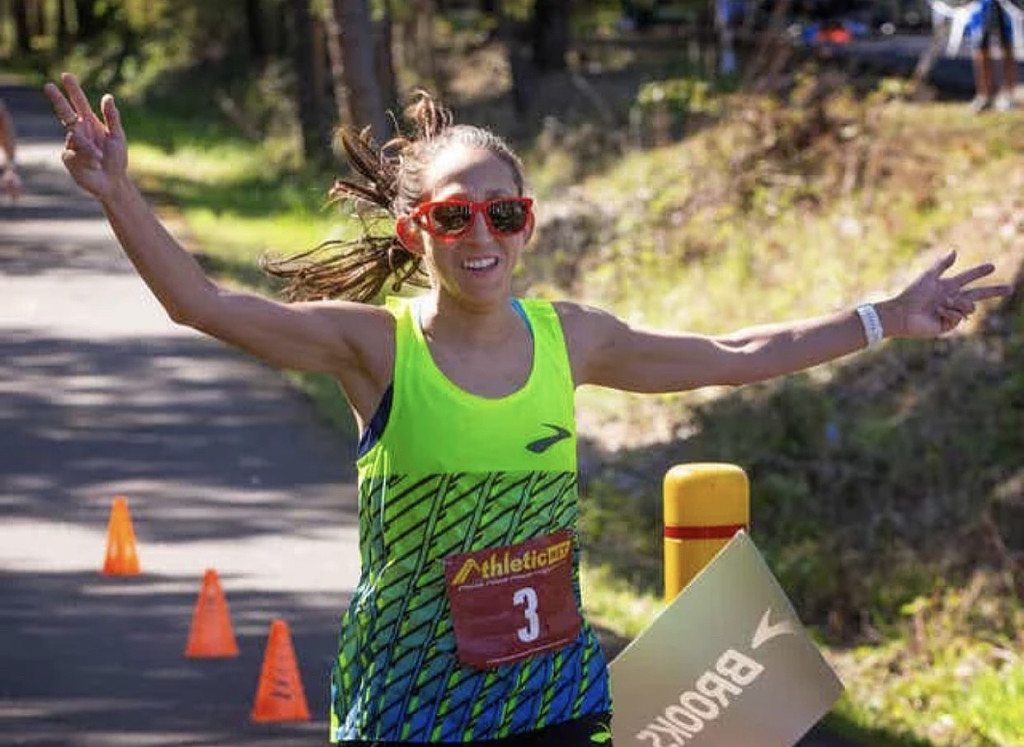
Des Linden smashes the world record for 50k in her first ultra marathon
Des Linden’s elite marathon career has included two Olympic Games and a Boston Marathon win.
Tuesday morning, running on the Row River Road bike path along the northern bank of Dorena Lake near Cottage Grove, Oregon Linden became a world record holder.
In her first ultramarathon attempt, the 37-year-old from Michigan ran the 50K course in 2 hours, 59 minutes, 54 seconds to shatter the previous women’s record of 3:07:20 held by Great Britain’s Aly Dixon since Sept. 1, 2019.
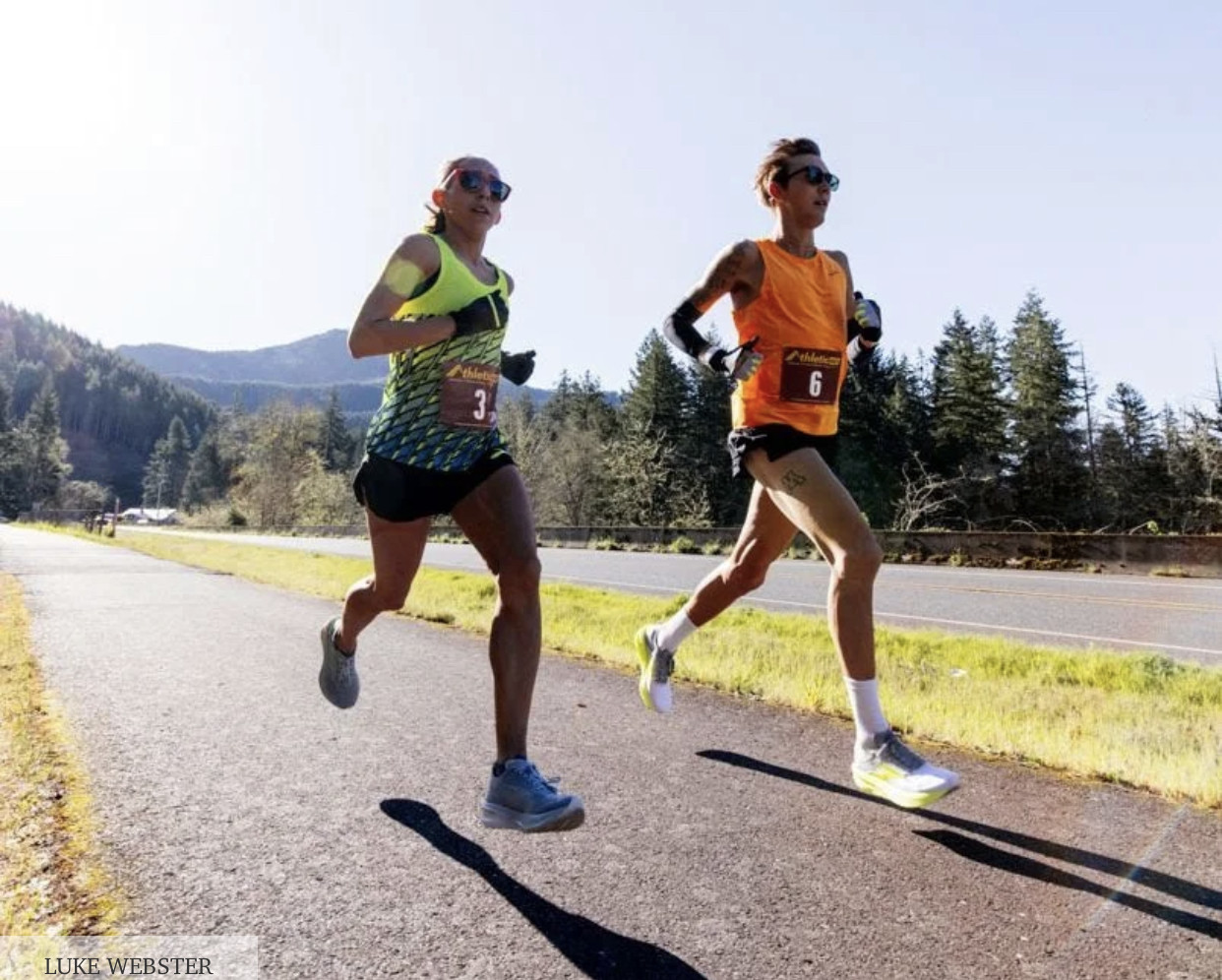
“I thought it would take a disaster for it to not happen, but you get to the marathon distance and disasters are pretty common,” Linden said. “Then you extend that and you just don’t know. As confident as I was, it’s unknown territory. I was trying to respect it as much as possible.”
Linden averaged 5:47 per mile. She hit the 26.2-mile marathon mark in 2:31:13 and powered through the final five miles with the help of American men’s marathoner Charlie Lawrence, who paced Linden through the entire 50K.
“We held it together, but it got hard the last five but I knew we had that time locked away,” said Linden, who couldn’t see the clock at the finish line. “But I knew. We were crunching the numbers out there. I’m like ‘I gotta break 3 (hours) or else I’m going to have to do this again, like soon.’”
Linden said she’d been planning for this race for a couple of years and felt like the time was right to give it shot.
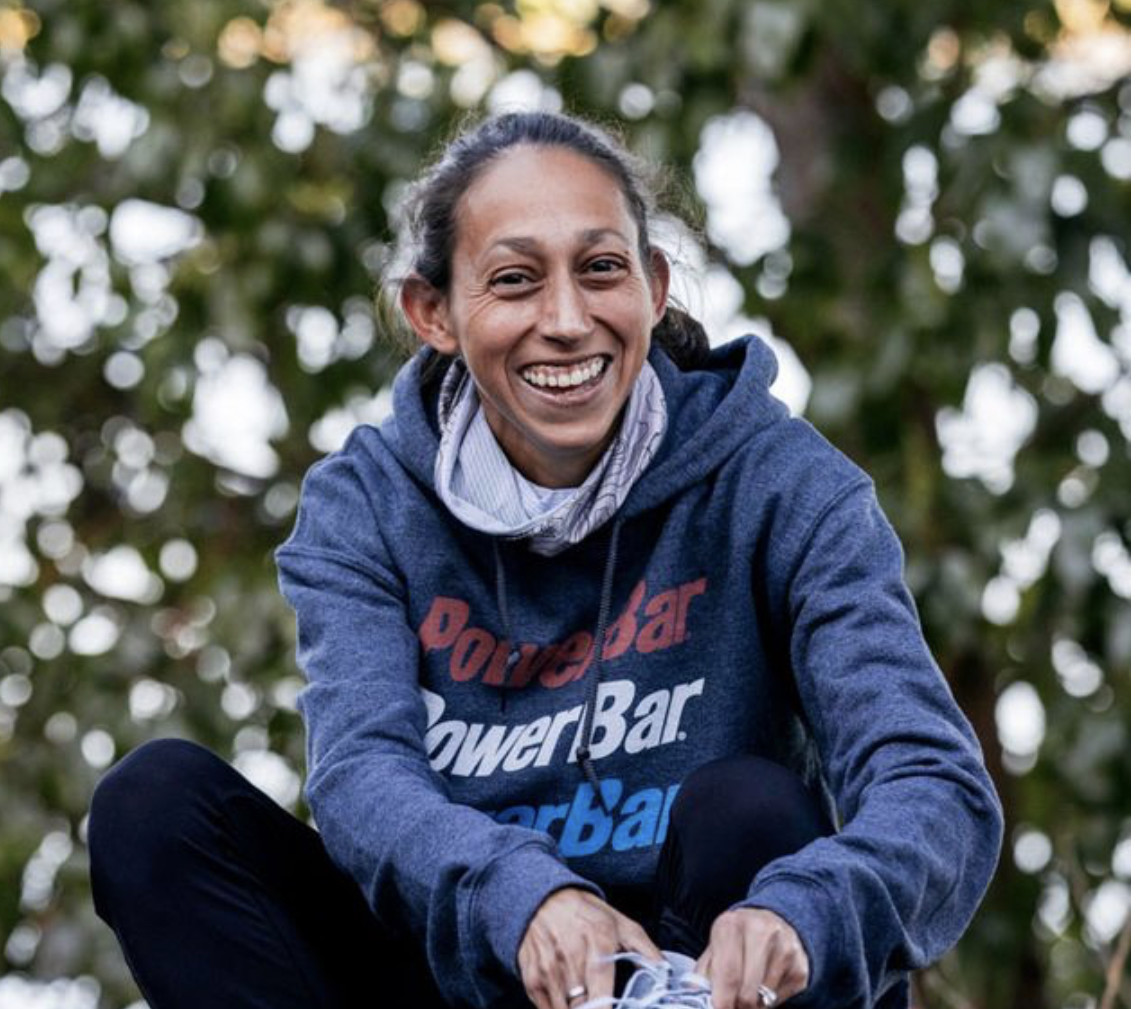
“The spring is totally free,” Linden said. “Without the major marathons it was like, let’s figure it out. And I think a small operation is a little bit better for trying to test the waters anyways, and with COVID, that’s how it has to be. We just tried to quietly do something and see how I liked the distance and how I measure up and if it’s something I want to pursue moving forward.”
The Row River Road course has been the site of several under-the-radar races the past year, including attempts by former Oregon stars Galen Rupp and Jordan Hasay to break U.S. half-marathon records. Neither were able to do what Linden did Tuesday.
“This is definitely one of the highlights of my running career thus far,” Lawrence said. “Being able to help a friend and probably my biggest mentor in the sport achieve a goal of hers and get a world record, is awesome.”
Linden finished seventh at the 2016 Summer Games in Rio de Janeiro and two years later won the Boston Marathon.
She finished fourth at the U.S. Olympic Marathon Trials in Atlanta in early 2020 before the pandemic shut everything down. She remains the alternate for the Tokyo Olympics this summer behind the three American qualifiers — Aliphine Tuliamuk, Molly Seidel and Eugene’s Sally Kipyego.
(04/13/2021) ⚡AMPby Chris Hansen
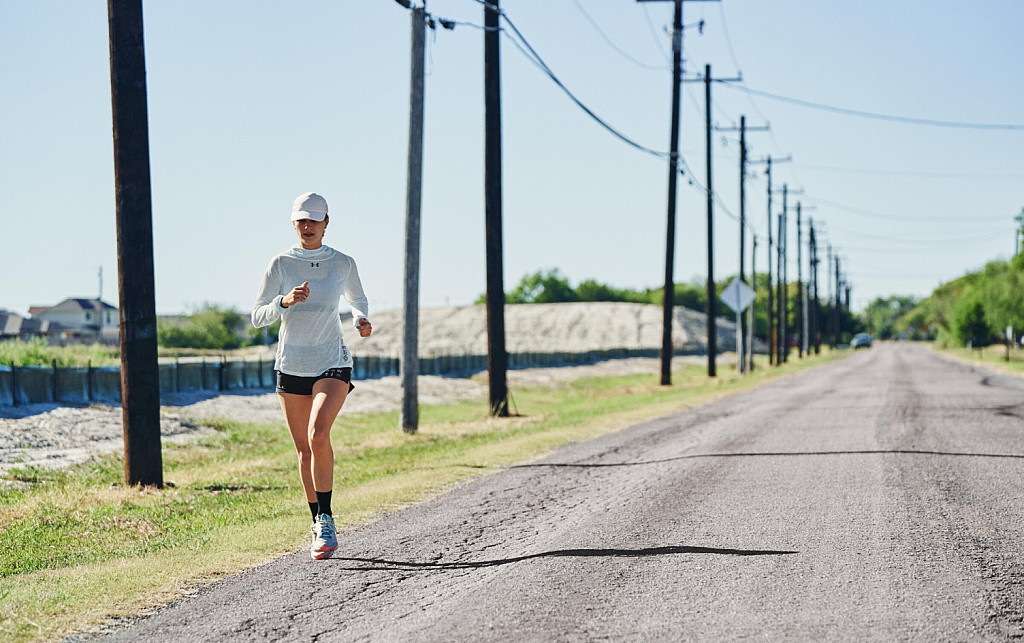
How to run efficiently on concrete, sand, dirt or trail
Running on pavement, cement, sand, dirt or trail have their unique challenges. It’s not simply about which running surface is better or more optimal since that answer is: “it depends” or “none of them is best.” In fact, your best bet is likely to mix up your running surfaces to change your loading and balance the way that you run.
“The human body adapts incredibly well to its situation,” says Jeff Knight, senior manager of digital product science for connected fitness at Under Armour and former running coach. “Basically, researchers have found that runners adjust to run with a softer stride over the firmer surface and a harder stride over the softer surface.”
When you switch things up, there are certain ways to optimize your running. Here’s what you need to know about different running surfaces and how to train on them for the best possible performance:
Concrete and cement are the hardest materials you’ll likely run on. If you observe most serious runners, you’ll notice they often eschew the sidewalk in favor of the shoulder of the road for this reason. On the flip side, sidewalks are going to be safer than running in the street when it comes to traffic. Some sidewalks have a dirt or grass medians you can take advantage of to give your feet a break.
This is also where finding a good road running sneaker comes into play. “A standard road shoe. The cushioning of a neutral running shoe options helps dampen the impact of each stride.
Ranked slightly softer than concrete sidewalks, running in the streets or on asphalt paths is better than trying to stay on sidewalks when it comes to running efficiently. As Knight points out, humans are amazingly adaptable, so if you live in a concrete jungle, don’t stress: You’ve likely developed a stride that takes hard surfaces into account. But when you can, hop onto the grass and run the side of a field or a trail: Research shows running in grass reduces the stress on your body compared to running on a more rigid surface.
Gravel trails and roads are firm and are good for running since they’re slightly softer than asphalt without much difference in the actual surface, unlike a dirt trail in the woods. But the loose layer of dust and gravel on top ultimately slows you down. “In Austin, Texas, we have a popular running trail in the middle of town that surrounds Ladybird Lake. That trail is made of crushed up bits of granite,” Knight says. “When I was coaching, we added 5–10 seconds per mile if we did a tempo run on that trail!”
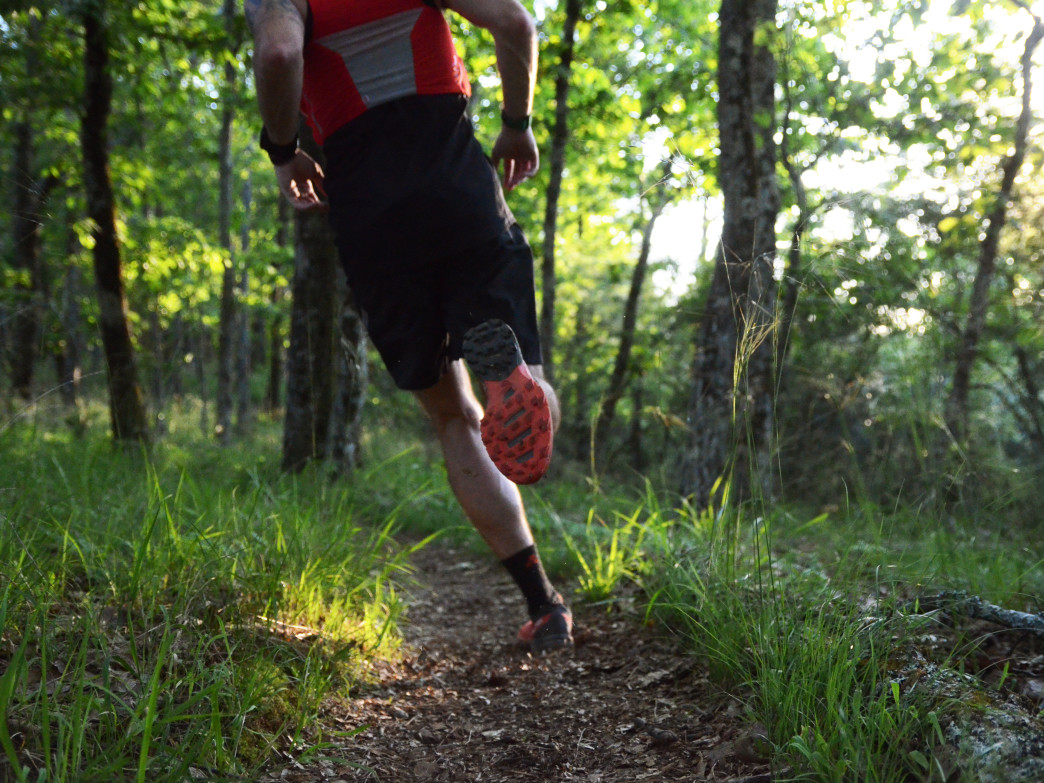
So, while gravel may be optimal for long endurance runs compared to pounding the pavement for hours, don’t expect a PR. Similarly, rail-trails are the best for your joints thanks to their cushiness and lack of any technical navigation. Rail trails also tend to be flat and straight, with relatively few obstacles. Their surfaces are akin to those of gravel roads, but the flatness makes them more beginner-friendly, while gravel roads can easily get ultra-hilly.
Here, we’re talking about technical trails, not dirt roads. Trails are softer in general, but present runners with more ankle-biting obstacles, and because of this, your stability may suffer. On technical trails, Knight recommends swapping to a more trail-friendly shoe. “Usually, trail shoes offer a bit more stability and traction,” he explains. “If I catch a root or rock wrong, I am less likely to slide off that root and turn my ankle. To summarize, lots of roots the size of baseball bats or rocks the size of baseballs means switch shoes.” He notes that if you’re looking for speed on the trails, a dedicated trail shoe helps with that as well. “That extra bit of traction and stability may keep you safe when you start getting sloppy,” he adds. “No one is as sure-footed at the end of a hard trail session as they are at the beginning!”
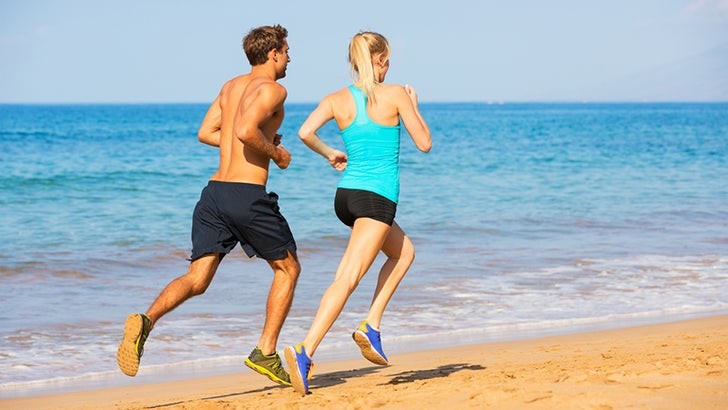
Soft sand is by far the most challenging surface to run on, and it will fight you every step of the way. If you’re a beach runner, stick to the hard pack sand by the water’s edge and wear your trail shoes for more stability. You can head into the soft sand as an interval, since it will immediately make maintaining your pace much more challenging as an almost full-body workout.
But if you have a tendency toward rolled ankles, skip running on soft sand altogether: It might be nicer on your joints from a softness perspective, but the lack of stability makes it potentially dangerous. Surprisingly, one study showed that compared to running on a sandy soft surface, running on asphalt actually decreased the risk of tendinopathy in runners.
(04/12/2021) ⚡AMPby Molly Hurford
Over Half Of Ultrarunners Get Nauseous During Races; Here's Why
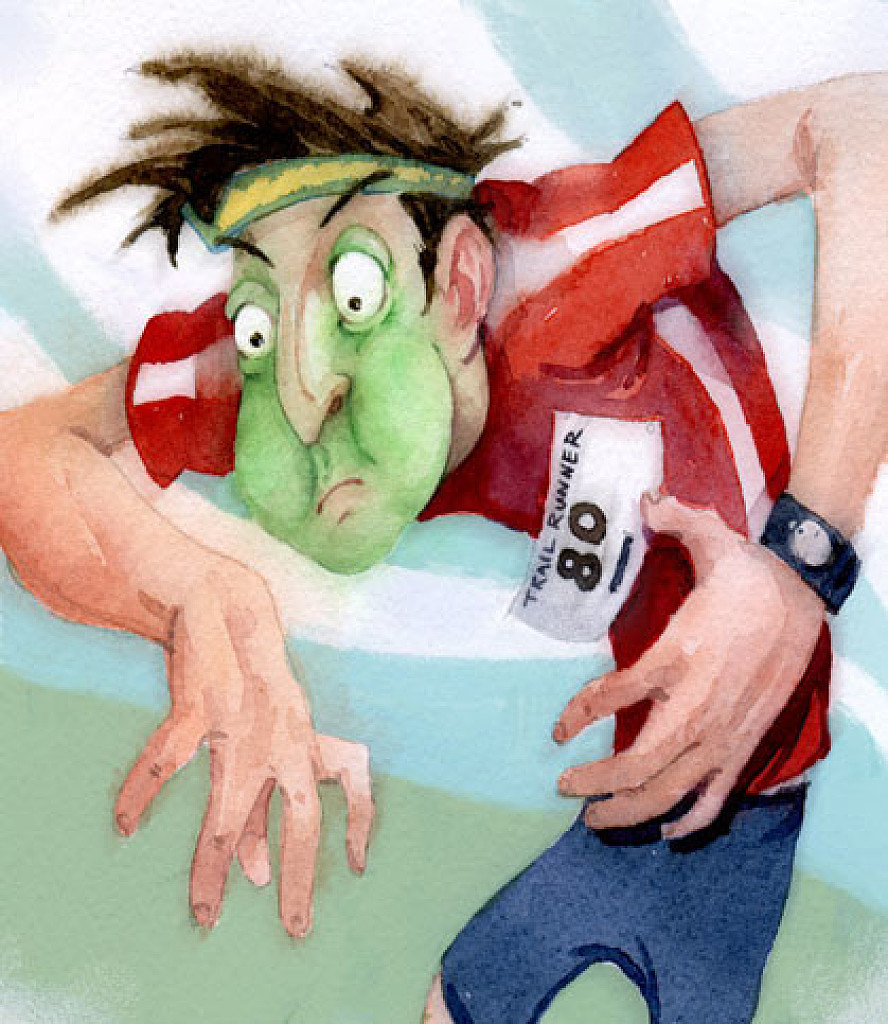
The list of issues and injuries that an ultrarunner can face while racing is lengthy. Blisters, chafing, cramps, muscle strains, knee pain, heat illnesses, and altitude sickness are just a handful of the possibilities. Perhaps none of these potential problems, however, are as prevalent and impactful during ultramarathons as nausea and vomiting. Indeed, practically every ultrarunner has their own tale of yakking on the side of a trail or into an aid station trashcan. For some, it's an unlucky one-off event, but for others, recurrent nausea consistently mars their ability to perform up to their expectations.
The reason so many ultrarunners get stricken with nausea is undoubtedly multi-faceted, and to be honest, there is not a cut-and-dry singular explanation. Still, we do have some clues as to why the prevalence of nausea and vomiting is up to 2-3 times more common in these races than much shorter distances. Let's take a look at what the research says about the possible culprits as well as some of the strategies you can try to deal with this troublesome symptom.
Just How Common Is Nausea?
Beyond the anecdotes, what exactly do we know about the prevalence of nausea in ultrarunners? Before we get to some data on that question, it's important to recognize that surveys used to gather this information quantify nausea differently. In addition, the occurrence of nausea is likely to vary with temperature and humidity, elevation, and the length of a race. As such, it's a bit foolhardy to throw out a single estimate of nausea and think that it applies to every ultrarunning scenario.
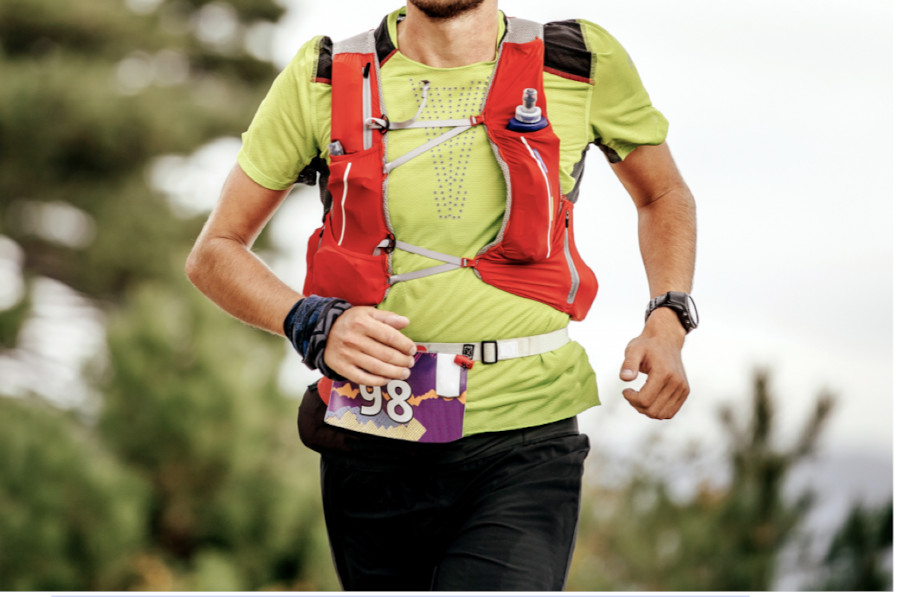
Caveats aside, some of the relevant data tells us that nausea incidence clearly increases with race duration. Dr. Martin Hoffman, professor emeritus in the Department of Physical Medicine and Rehabilitation at the University of California, Davis, has overseen several studies on this topic, and in some cases, up to 6 out of 10 runners experience nausea during an ultramarathon. To give you some perspective, consider that around 10% of regular marathoners typically suffer from nausea.
Now, some of these cases of nausea are quite mild or transient, meaning they won't hurt performance much. Still, up to half of cases can be severe enough to impact ultrarunning performance. In fact, one of Hoffman's investigations found that nausea or vomiting was the leading reason for racers to drop out of the Western States 100-mile Endurance Run. During a regular 26.2-mile marathon, a runner suffering from nausea near the end of the race is likely to grit their teeth and finish. In contrast, the thought of having to suffer for another 20, 30, or 50-plus miles while feeling queasy is, very understandably, too much for some ultrarunners to cope with.
Multiple Causes
The puzzle of why nausea is so common during ultrarunning is difficult to solve, in large part because there are multiple physiological changes occurring simultaneously over the course of an ultrarace. It's also incredibly tough to match the demands of an ultrarace in a laboratory, so mechanistic studies looking at the origins of nausea during super-prolonged exercise are few and far between.
Even with the scientific uncertainty, we do have some decent guesses as to what's provoking the urge to spew in so many ultrarunners. During prolonged exercise, you secrete hormones like adrenaline and glucagon into your blood that allow your body to liberate fat stores, make glucose, and maintain your blood sugar levels. Arginine vasopressin, a fluid-conserving hormone, is also released so that you can reduce urine production. Blood levels of endotoxins (sort of invader molecules that seep through your gut's walls) and inflammatory molecules can also surge. And finally, you've got muscle breakdown products, like urea and creatine kinase, spilling into your bloodstream. All these substances can stimulate what's called the chemoreceptor trigger zone in your brainstem, which communicates with another brain region called the vomiting center.
Long story short, you've got a cocktail of substances circulating in your bloodstream that act as a potent trigger for nausea. The concentrations of all these substances tend to increase over time during prolonged exercise, which may help to explain why nausea becomes much more common in the latter half of ultraraces.
A Nervous Gut
The release of stress hormones like adrenaline can also occur even before you take your first official stride during an ultra. Throughout the history of sport, many athletes have been plagued by precompetition anxiety severe enough to induce vomiting. Bill Russell, perhaps the best center of all-time in the sport of basketball, reportedly vomited before many of his big games. There's also a moment in the Steve Prefontaine biopic Without Limits that perfectly captures what prerace nerves can do to even the most elite athletes. In the scene, Prefontaine is seen puking under the grandstands before his race against other running greats like Frank Shorter and Gerry Lindgren, even as the crowd chants his name.
These anecdotal accounts are also beginning to be backed by research. Just this year, two of my colleagues and I published an investigation that found anxiety to be associated with the occurrence of nausea in endurance race competitors. The study, published in the European Journal of Sport Science, had 186 endurance-trained individuals document their life stress and anxiety as well as the gut symptoms they experienced during one of their recent races. A subset of the subjects also reported how anxious they felt on race morning. Ultimately, racers who reported higher levels of general anxiety had over three times the odds of experiencing significant levels of nausea during competition. Further, those who reported lots of anxiety on race morning had over five times the odds of experiencing substantial in-race nausea.
These are correlations, so it's hard to definitively prove that these athletes' nausea issues were completely due to anxiety. That said, other lines of evidence support the idea that this relationship is at least partially cause and effect. Plus, most of us have had our own out-of-sport run-ins with gut distress stemming from worries and anxieties, whether they be from a first date, a medical procedure, or an interview.
Sweltering Heat and Altitude
Environmental conditions also play a major role in development of nausea during ultras. Some of the most prominent ultramarathons in the world (e.g., Western States Endurance Run, Badwater Ultramarathon, Marathon des Sables) are held in sweltry conditions. When researchers ask runners to exercise in the heat, the incidence of nausea can quadruple in comparison to exercise carried out at the same intensity in more mild conditions.
Besides the heat, another environmental factor that many ultrarunners deal with is altitude. Nausea is a well-known symptom of acute mountain sickness, with written accounts going back at least several hundred years. Add exercise to the mix, and you can start to understand why nausea is a big issue for competitors at races like the Hardrock 100 and the Khardung La Challenge, which has the highest elevation of any ultrarace in the world.
Fueling: A Delicate Balance
One other notable contributing factor to nausea is in-race fueling. The nutritional demands of ultrarunners can far outpace those of other athletes competing at shorter distances. For those ultrarunners who are looking to push the boundaries of what their bodies can do, they might end up consuming carbohydrate at rates of 60-90 grams per hour. That's roughly equivalent to 3-4 sport gels per hour! Even lesser amounts of carbohydrate (30-60 grams per hour), though, can pose a significant challenge to the gut's capacity to digest and absorb fueling.
In short, fueling during an ultramarathon often takes place on a knife's edge. Too little can lead to a bonk and even nausea if your blood sugar gets too low, while too much foodstuff can also provoke the gut and induce queasiness. With that in mind, it's critical that ultrarunners practice their fueling strategies multiple times throughout the weeks leading up to a race. Ideally, at least some of these gut-training sessions would be done at a pace similar to race-pace and in similar environmental conditions that an athlete expects to compete in.
Strategies to Quell or Avoid Nausea
Given all this information, you might be wondering how to best avoid the nauseous fate of so many ultrarunners. First, you should accept the fact that there is likely no ironclad way to completely eliminate the risk of nausea during an ultra. There are just too many potential causes. That being said, you do have the power to minimize your risk of being stricken with severe nausea. And for some athletes, it will be important to take a multi-pronged approach as opposed to relying on a single strategy. Below are my top five tips for reducing the odds of tossing your cookies during your next ultra.
Acclimate to the heat and altitude if your race is held under those conditions. Likewise, employ cooling strategies (e.g., drinking cool beverages, putting some ice in your cap or shirt, dousing yourself with cool/cold water, etc.) throughout a race that's held in sweltering conditions.
If you suffer from prerace nerves, try techniques like slow deep breathing or mindfulness. Better yet, consult with a sports psychologist.
Avoid both overhydrating as well as underhydrating. During a single-stage ultramarathon, some amount of weight loss is normal (due to the loss of energy stores), so you shouldn't be drinking so much that you weigh the same or more after a race as before the race. On the other hand, large body mass losses (e.g., >5%) may be a sign that you're underhydrating.
Train your gut! If you plan to push the boundaries of food and fluid intake during the race, of course it makes sense that you should practice your nutrition plan during some of your longer training runs. Much like other organs in your body, the gut is adaptable.
Try ginger. I'm generally not a purveyor of supplements, but if the above mentioned strategies don't do the trick for you, there is at least one nutritional product that has shown some anti-nausea properties in settings outside of exercise: ginger. To be specific, these anti-queasiness effects have been most often studied in nausea occurring during pregnancy, motion sickness, and chemotherapy. No supplement is without risk, and many products sold in the U.S. are of questionable quality, so anyone looking to use ginger supplements-or any other supplement for that matter-should do their research and consult with their healthcare provider as well.
(04/11/2021) ⚡AMPby Trail Runner Magazine
Season 1, Episode 2 of 'Run Around the World': A Docuseries About Chasing the Gnarliest Adventures
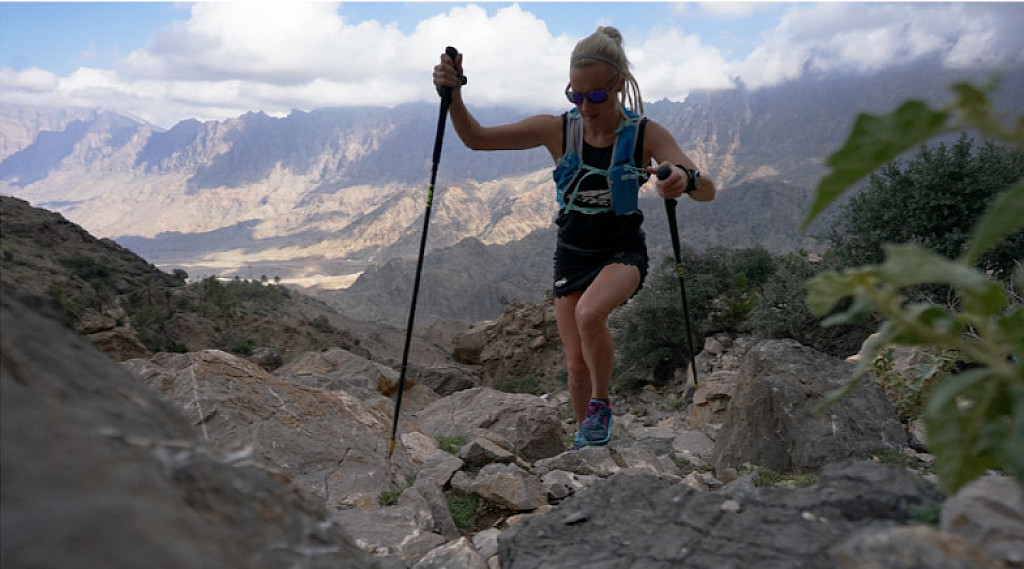
Mountain athlete Jason Schlarb and ultrarunner Meredith Edwards travel to Yunnan, China, with an ambitious plan to run a 55K trail race and establish the Fastest Known Time on 17,703-foot Haba “Snow” Mountain.
A dramatic ultramarathon racing culture is only rivaled by life on the frontier, where the pair experience a few nights on a rural farm before ascending a Himalayan-scale peak. Adventure runs high and success is elusive to the end.
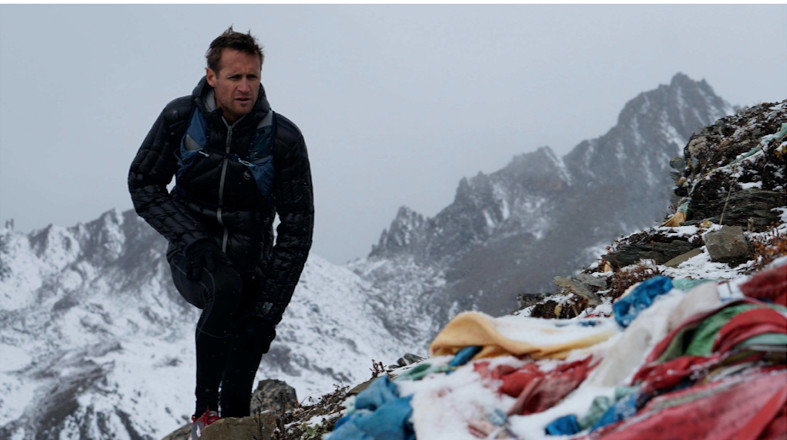
Global travel may have slowed down this year, but running certainly did not—especially for the crew of Run Around the World. Crossing Switzerland on foot, running through the arts district of Mexico City, and overcoming the hurdles of a global pandemic made 2020 a year of growth.
Join the team—including world-renowned ultrarunners Jason Schlarb, Meredith Edwards, Ian Morgan, Diego Pazos, and Knox Robinson—for reflections on the benefits running brought to 2020.
(04/11/2021) ⚡AMP
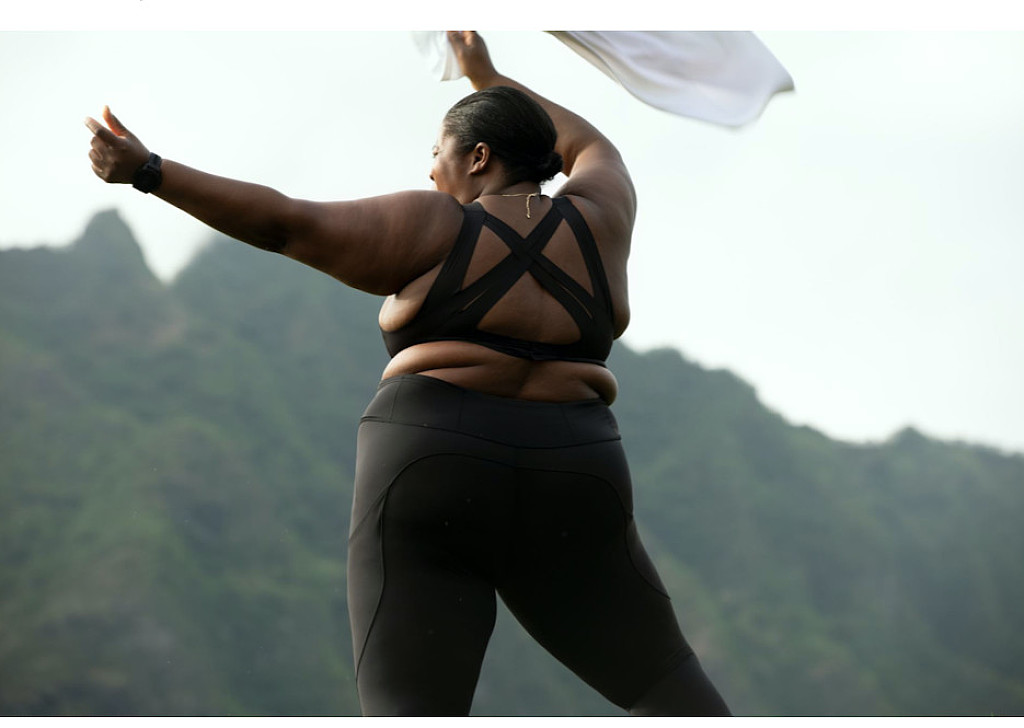
Lululemon's new campaign star has a body-inclusive message: 'Running is for everyone who has a body and wants to run'
Lululemon's newest ambassador and campaign star is going to great lengths to make running more accessible and body-inclusive.
The athletic apparel brand has tapped ultramarathoner, author, speaker and former Fat Girl Running blogger Mirna Valerio to front its new global "Feel Closer to Your Run" campaign and offer better representation of runners whose body types are typically overlooked within the fitness space. The Vermont-based Valerio tells Yahoo Life that she hopes to inspire and empower both people who have felt excluded by activities like running, and the brands that have the power to provide better quality gear for bigger bodies.
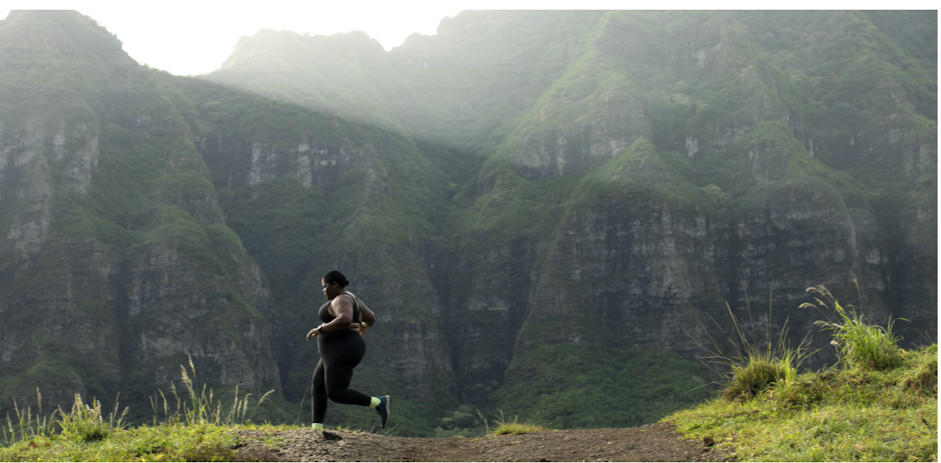
"Make no mistake: All kinds of people in all sorts of bodies want to be able to engage in movement that is meaningful to them, and they need apparel that fits, is functional and well-made," Valerio says. "There was this prevailing idea that plus-size folks didn’t do or want to do things like running, cycling, swimming, etc. But guess what? We’ve always done those things and have had to contend with ill-fitting apparel — because we’ve been forgotten and ignored — poorly constructed clothing that is not fit for any athletic activity, or if they do fit, pieces in limited colors and styles.
"When people see a person like me in a magazine or in a company’s marketing and advertising media [while] running or hiking or riding a bike, it’s easier for them to envision themselves doing the same thing," she adds. "It signals to them that they belong in that space too. And hopefully, it gives them a little push to perhaps try something they’ve always been curious about but could never really see themselves doing."
It was a health scare that gave Valerio herself that "little push" more than a decade ago. Though she's been a runner and athlete since high school, she fell into a three-year slump as she juggled the demands of grad school, a teaching career and family life.
"I wasn’t sleeping or taking care of myself, and it was a health scare connected to all of these things that prompted me to start running again," she says. "I’m never looking back!"
Assuming things are "rolling nicely" and she's injury-free, she runs about four or five times a week, leaving time for recovery days. When she's training for a race or marathon, she'll typically clock 30 to 45 miles a week — and sometimes 50 if her coach calls for it. Her next big challenge is the Trans Rockies 6-Day Stage Race in August.
"It’s six days of running the Colorado Rockies for about 120 miles, with 20,000 feet of vertical gain," she says. "It’s one of my favorite events ever, and I’ve managed to finish only once, so I’m going to go for it again this year."
And then there's the challenge of her new role in supporting Lululemon's diversity and inclusion efforts, and continuing to speak out about being active as a larger woman. Valerio is confident that the images of her hitting the trail in the campaign will serve as an inspiration, and invitation.
"You absolutely belong and are entitled to the fitness space," she says. "Running is for everyone who has a body and wants to run. Guess what? We all have bodies, so that means… "
(04/11/2021) ⚡AMP
The art and allure of 24-hour track racing
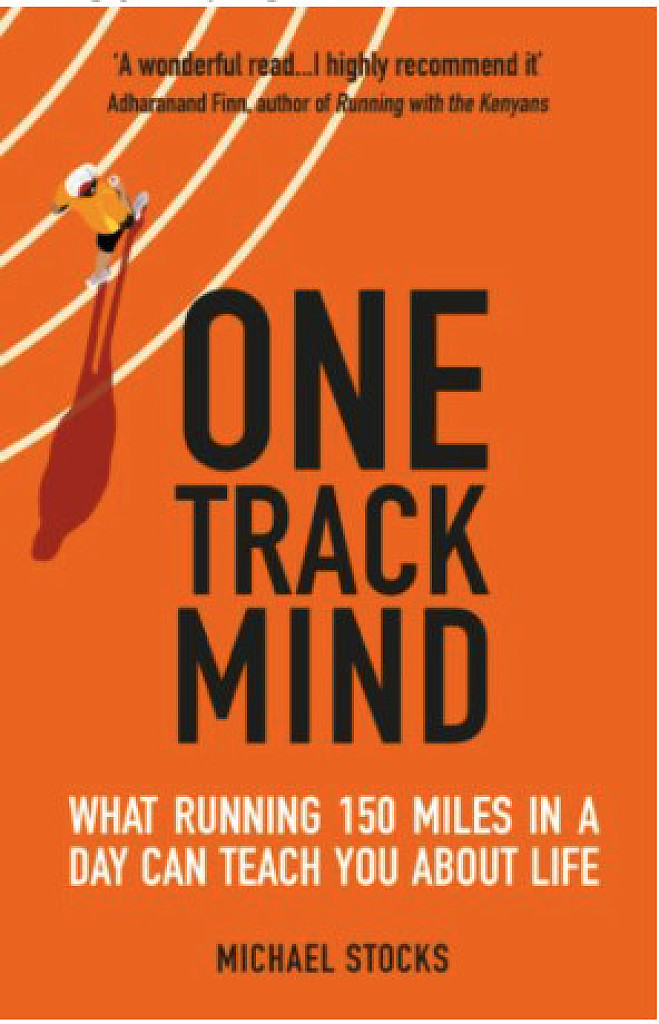
Author Michael Stocks gives his perspective on what it’s like to tackle the challenge of running for an entire day PLUS win a copy of his new book One-track Mind
Most us have experienced the feeling of standing on the start line of a track race, consumed by the mixture of tension, trepidation and anticipation of what lies ahead.
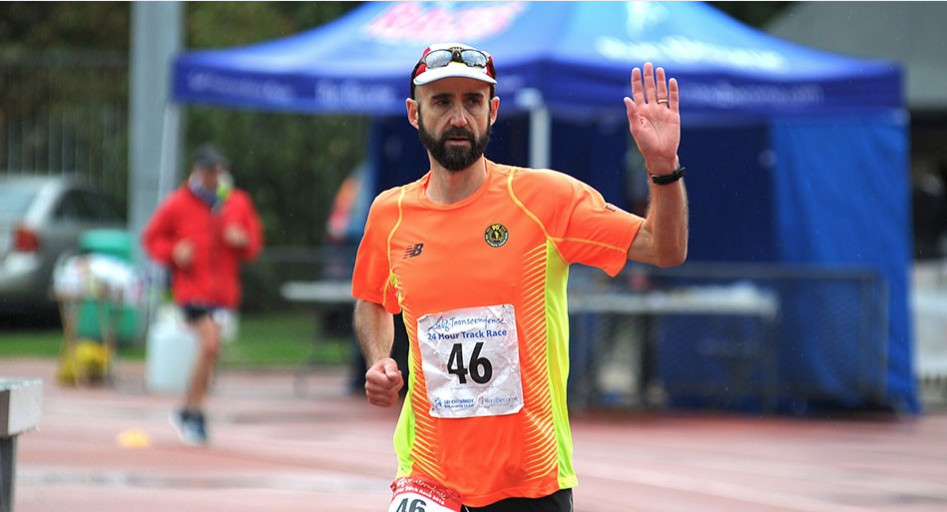
Not so many of us, however, will have stood on that start line knowing that the finish line is a full 24 hours away. Michael Stocks is one of those people and his new book One-track Mind: What Running 150 Miles in a Day Can Teach You About Life is a beautifully written account of everything involved in a challenge which test the limits of physical and mental endurance.
The race about which he writes is the 2018 edition of Self Transendence 24 hour, which takes place annually on the track in Tooting Bec, South London.
Rather than it being a case first past the post, when the hooter sounds after 24 hours victory goes to the person who has covered the greatest distance.
A place on the Great Britain team for the 24 hour World Championships was part of the incentive and Stocks manages to take the reader on just about every step of the incredible journey which unfolded along that 400m lap.
He will be back in action later this month at the Centurion Track 100 race in Ashford, with designs on breaking the V50 100-mile world record of 13:27:27 which is currently held by Russian Oleg Kharitonov.
So what is it that draws him to this particular strand of endurance running?
“In a way it suits my character and plays to one of my strengths which is that when I’m running I don’t really mind where I am – the act of running is the thing, if it’s a race,” says the man who has competed for both Great Britain and England.
“I do love going to beautiful places and running – and then I’m aware of my surroundings – but if I’m racing then really I don’t much mind where I am because it’s about the race and the running and the movements.
“I can honestly say that the fact that I was in the same place, running around and around wasn’t a big thing for me, though I did prepare mentally for that, which I think is really important.”
Stocks admits to being daunted ahead of the race getting underway but, as many long distance runners will attest, breaking the task at hand down into manageable chunks is as important as it is mentally helpful. 24-hour track racing is no different.
“I broke it down into half hours,” he says. “We know we need to drink every half hour, to eat every half hour and that really was my horizon. I just tried to stay in it and not think longer than half an hour.
“But then you’ve also got the change in direction every four hours, which was really important. I was also ticking off every 10k early on, so you kind of find those little goalposts, or goals and then I think the key when you when you get to them is not to think ‘okay I’ve done one hour but I’ve got 23 to go’ but rather to think ‘I’ve got one hour’ and to put that hour behind you.
“I almost had the sense of physically picking something up and placing it behind me and going ‘wow that’s great, I’ve collected that hour’.
“Yes it was daunting, but I really worked hard on staying in the present and thinking about what I’d done rather than about what was to come. It wasn’t successful all the time but on the start line I was confident that I had prepared well enough to get through it.”
One key challenge to overcome during a 24-hour race is, of course, running through the night. Stocks had never done it before and the experience was one of the most memorable and enduring points of the event.
“When I got through the night and the light came I suddenly realised how special the night had been,” he says. “I was really struggling a lot for a lot of it, and obviously you are late in the race, but there was this complete quiet and a sense of nothing outside. It creates this very unusual environment.
“I went through some of my worst stages and bad patches in the night but when I got to the end of those I remembered how the light looked brighter on the track because there was a wet sheen and you’ve got these massive spotlights, but you’ve got hardly anyone on the track because half of the runners had left by then.
“It was an almost surreal environment and I wanted to cling on to part of that quiet because it was such an unusual and special experience and I also had never run through the night.
“It would have been special in the mountains, too, but there was something about the track and the colours and the sense of quiet that just made it quite, quite special.”
Another special aspect of ultra marathon running, Stocks insists, is the community which surrounds it. From the athletes, to the support crews who literally keep their runners fed, watered and clothed, to the race organisers, the nature of the events create a unique sense of camaraderie.
“One of the things I really wanted to get across in the book is this excellent sense of community,” says the London Heathside runner. “When I left that track and the race it was almost heart wrenching because I felt there was such a sense of presence and positivity and community around the track.
“Everything from the organisers and the whole ethos of their races to the other crews who were supporting all the runners, not just their own runner.
“Paul [Maskell], who I was racing for the victory, we were just increasingly helping each other and encouraging each other and it’s really, really incredible.
“I think it’s probably the adversity that keeps you humble. There are just so many amazing people doing the sport.”
(04/10/2021) ⚡AMPby Athletics Weekly
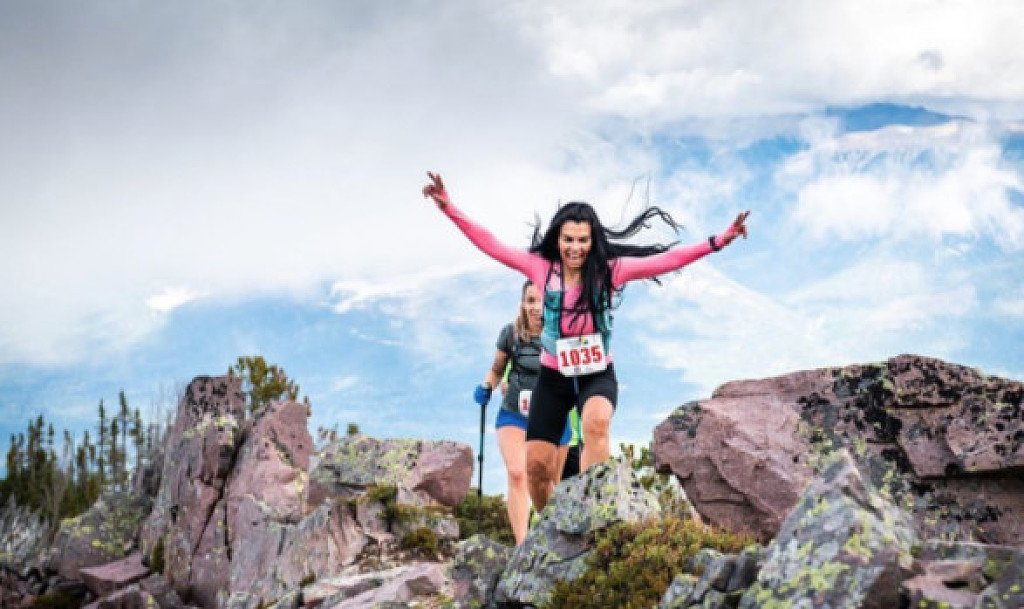
8 reasons to give ultrarunning a try
Ultramarathons are pretty daunting, but you should run one anyway
This might be a tough sell, but you should run an ultramarathon. We know that the idea of running 50K, 100K or even more might not sound like something you want to do, but that could just be because you haven’t trained properly for it. After all, when you first started running, 5Ks, 10Ks and regular marathons probably sounded daunting, but you trained well and got through them. Not convinced? Here are a few more reasons to at least consider testing the waters of ultramarathons at some point in your running career.
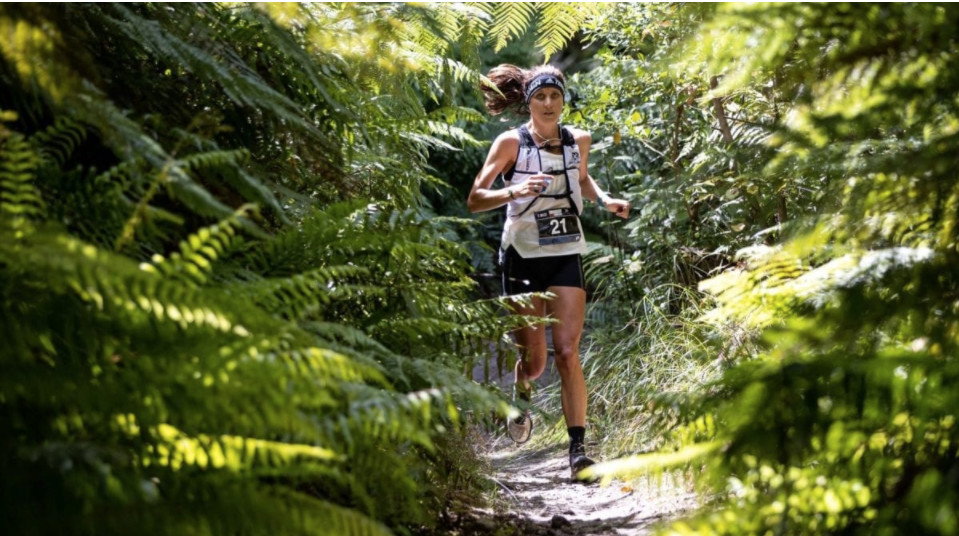
Bragging rights
We don’t recommend doing anything simply for the attention it may bring you, but there’s no denying that ultrarunning will impress people. Most non-runners will be impressed if you tell them that you’ve run a marathon before, so you’ll blow their minds when you say you ran an ultra. A lot of people don’t even know what an ultramarathon is, and when you tell them how far you ran, they’ll think you’re amazing.
Mental challenges
Any long-distance race requires mental toughness, but the farther you go, the more you need it. Venturing past 42.2K will take you from a mostly physical endeavour to a mostly mental one, and that’s when you’ll learn more about yourself. Plus, you’ll become stronger mentally thanks to ultras, and you can apply that mental toughness to every other type of race you enter in the future, which will only help you on the course.
You could become obsessed with it
Some people might view this as a reason not to take up ultrarunning, but we think it’s definitely a reason to do it. As unattractive as running 100 miles might seem right now, after your first 50K, you shouldn’t be surprised when you feel the need to enter another ultra-distance race. Even if you tell yourself something like “Never again” during the race, we’re willing to bet that you’ll be asking “When can I do that again?” after you reach the finish line
More racing opportunities
If you add ultra distances to your list of options when picking your race schedule, you’ll only be increasing the number of racing opportunities in your life. Can’t find a marathon to race on a certain weekend this summer? If you’re open to running farther than 42K, you have more of a chance to fill that slot with an ultramarathon.
The community
Everyone who has done an ultra mentions the community and how great it is. The running community in general is awesome, but as you get into more and more specific groups within the sport, that we’re-all-in-this-together kind of feeling only intensifies. Also, since an ultra is such a huge undertaking, bonding with your fellow athletes is even easier than usual, because you’re all in for the same long and arduous experience.
It’s not over until it’s over
If you’re an athlete who races to win, then an ultramarathon is a great place for you, because no gap is insurmountable. You could be an hour behind the race leader, but in a run that lasts dozens of hours or even multiple days, that’s nothing, and it’s 100 per cent possible to chase them down and take the win. In a marathon, on the other hand, even just a 10-minute gap can be impossible to overcome.
It’s not permanent
Just like any kind of race, if you enter an ultra and don’t like it, you can leave that part of your life behind and never try it again.
It could be your forte
Working off that fact, there’s also the chance that you’ll fall in love with ultrarunning and actually be quite good at it. If you don’t try, you’ll never know. If you do try and you don’t like it, you can forget about it, but if you love it, then it can become your new go-to type of racing.
(04/04/2021) ⚡AMPby Running Magazine
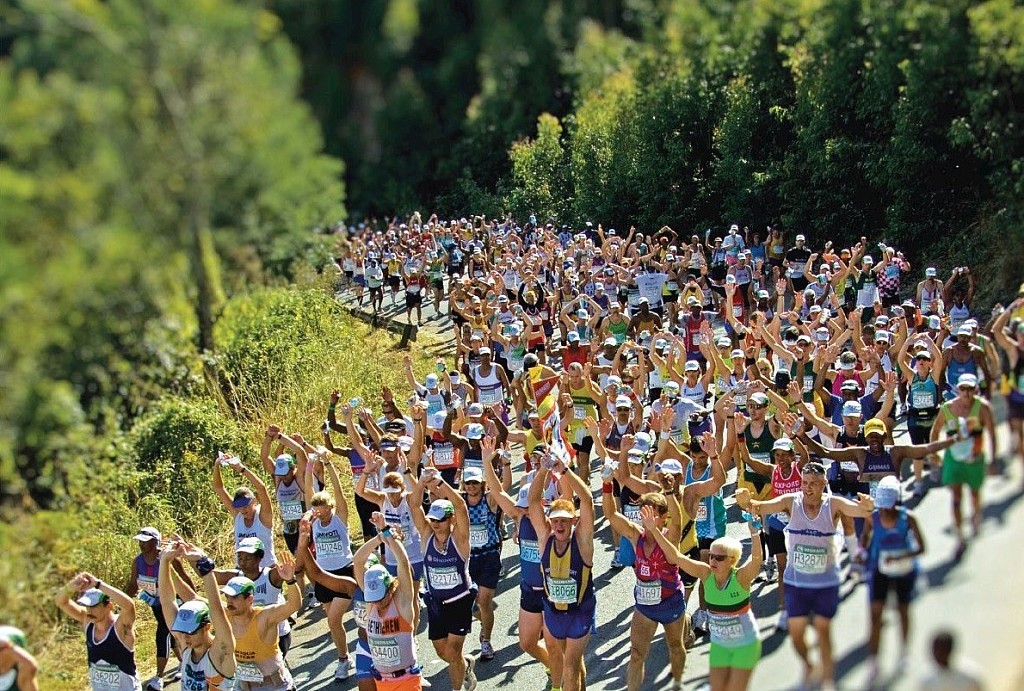
Entries for Comrades Marathon virtual race open
The world’s greatest ultramarathon is all set to stage the world’s greatest virtual event with runners from around the globe invited to participate on Sunday, 14 June 2020 with FREE entry to all South African runners who entered the 2020 Comrades Marathon.
The Comrades Marathon Association (CMA) last month launched its one and only officially sanctioned virtual race, ‘Race the Comrades Legends’ which promises to be The Ultimate Virtual Race.
GET A REAL MEDAL:
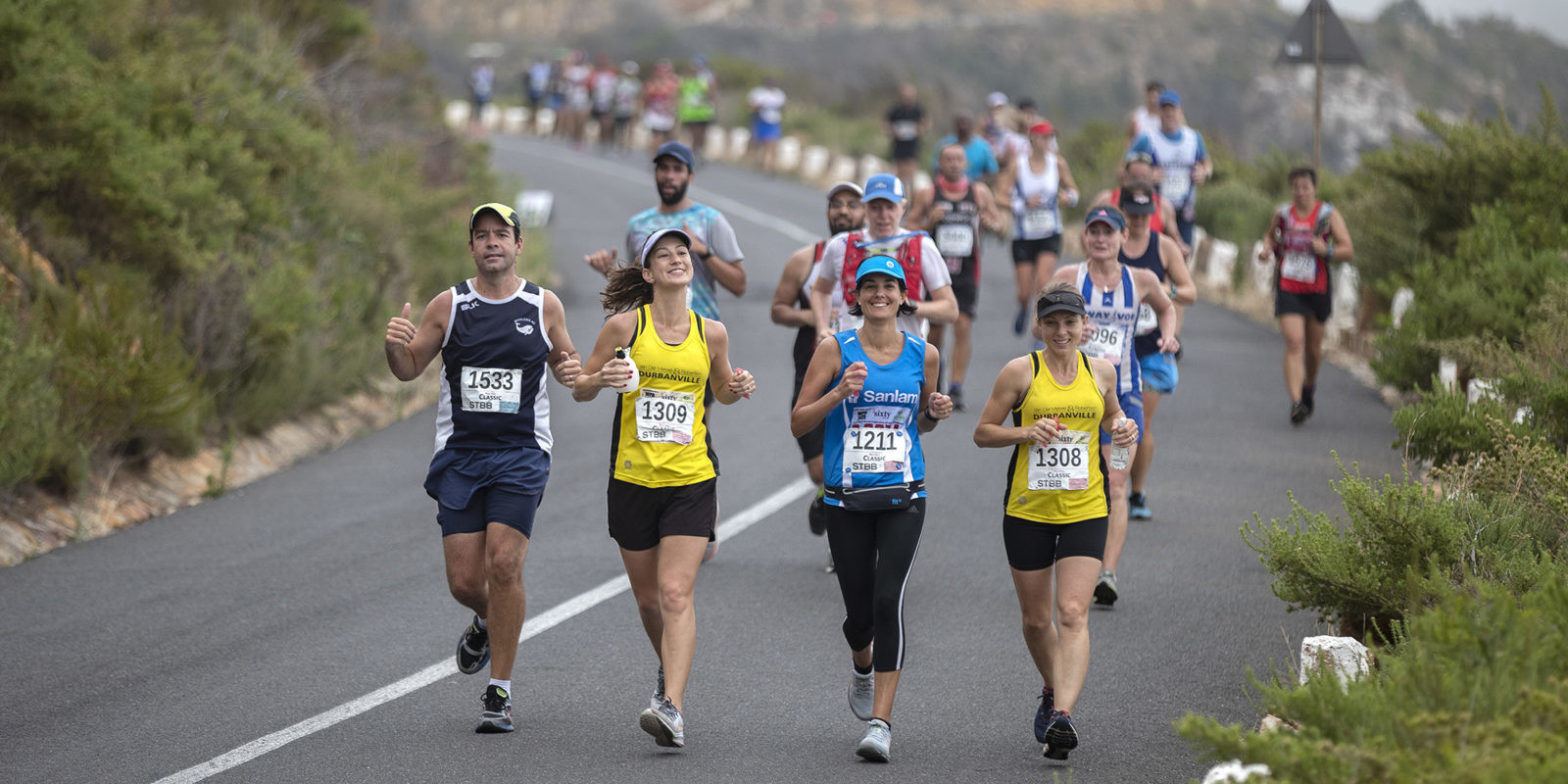
Participants who sign up for and complete the ‘Race The Comrades Legends’ are guaranteed a real finishers medal, together with the bragging rights of having completed the very first virtual event hosted by the CMA.
YOU ARE NOT ALONE:
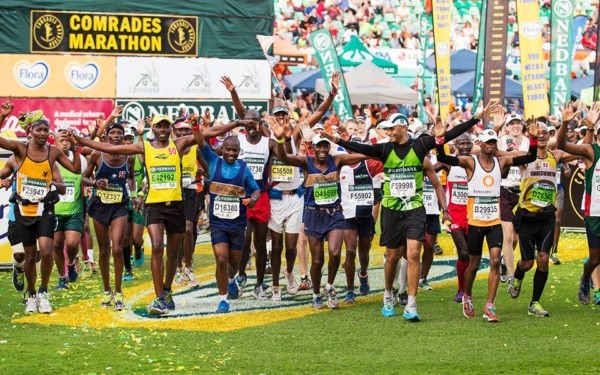
It may seem new age to traditional Comrades Marathon runners but ‘Race the Comrades Legends’ is a great option for runners who for months have done training runs in isolation and no longer feel part of a close-knit running community. The ‘Race the Comrades Legends’ will provide a platform to engage with other runners throughout South Africa and the rest of the world as well as opportunity for family members to participate in the action, all with the reassurance of safety and convenience, while here in South Africa doing so within the constraints of the government’s National Lockdown regulations.
RACE AGAINST THE LEGENDS:
The CMA’s ‘Race The Comrades Legends’ is a running concept based on the stories of the greatest Comrades Legends in history. The official Comrades Marathon website will include an online functionality where runners can virtually compete, run with and compare with each other and the likes of Bruce Fordyce, Frith van der Merwe, Samuel Tshabalala and many others; where each participant creates their own personal story and on completion is able to earn a real medal.
CHOOSE YOUR DISTANCE - 5, 10, 21, 45 OR 90KM:
By creating an international virtual event with great public focus, based on a series of distances that various running legends have defined in their time, from the 5km to the marathon as well as the usual Comrades Marathon ultra, the CMA has effectively created a virtual mass-participation event for everyone to be a part of.
All that runners need to do is go to the Comrades website; register for ‘Race The Comrades Legends’; select their distance of 5km, 10km, 21km, 45km or 90km.
ENTER ONLINE:
The cost is R150 for South African runners and $25 for foreign athletes.
(03/26/2021) ⚡AMP

Comrades Marathon
Arguably the greatest ultra marathon in the world where athletes come from all over the world to combine muscle and mental strength to conquer the approx 90kilometers between the cities of Pietermaritzburg and Durban, the event owes its beginnings to the vision of one man, World War I veteran Vic Clapham. A soldier, a dreamer, who had campaigned in East...
more...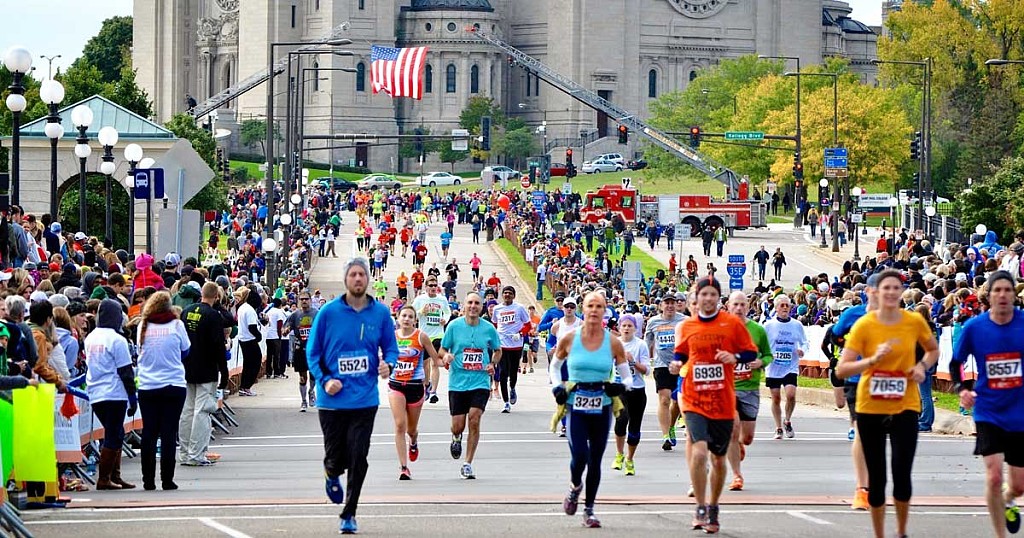
Covid-Safe Medtronic Twin Cities Marathon Planned for October 3
The 2021 Medtronic Twin Cities Marathon is scheduled to take place as a reduced-size, COVID-safe event on Sunday, October 3, race organizer Twin Cities In Motion announced. The race, which was cancelled last year due to the pandemic, will limit marathon participation to 4000 runners, and COVID-safety measures will be in place throughout the event.
Registration for the 2021 marathon and other Medtronic Twin Cities Marathon Weekend events will open on Thursday, April 8. The marathon race runs from downtown Minneapolis to the State Capitol grounds in St. Paul.
“We’re optimistic about our ability to host an in-person event this fall,” Twin Cities In Motion Executive Director Virginia Brophy Achman said. “Our team has consulted medical and crowd science experts and worked closely with relevant public agencies to get to this point. That work will continue until race day as we properly calibrate the event to this fall’s public health situation.”
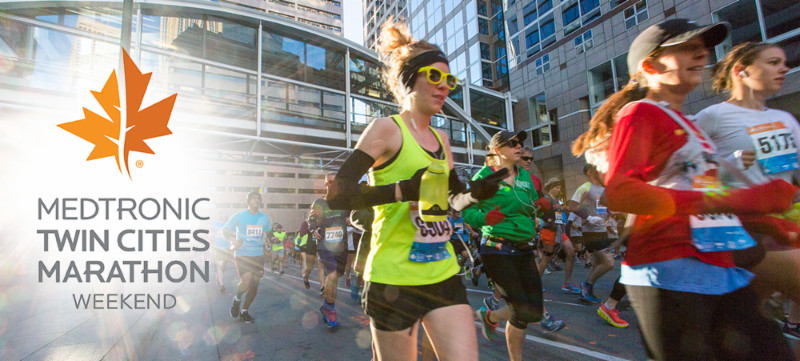
Participants can expect to see changes in the event from previous editions. While plans will be modified to match conditions later in the year, Twin Cities In Motion is telling participants to expect:
• Reduced field sizes in all marathon weekend races
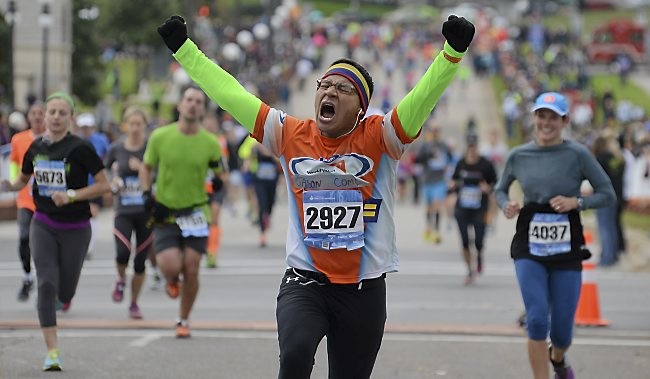
• Mask-wearing requirements except while racing
• Social distancing requirements across the event weekend
• Spectating discouraged and spectator access limited in certain areas
• Reduced touchpoints when possible
“While there will be noticeable differences from pre-COVID days,” Brophy Achman said, “we plan to do all we can to maintain the spirit and energy of the event despite the constraints. The power of the event lies in the thousands of personal achievements that culminate at our finish line, and we’re excited to return those moments to our participants’ lives after all they’ve endured.”
The return of the event to streets of Minneapolis and St. Paul will also reestablish an important fundraising platform for dozens of local nonprofits who use the marathon to raise money and awareness of their organizations. Runners raised more than $1 million at the last in-person edition of the race in 2019.
“The TCM team is pleased to be preparing for an in-person race, because it’s the work we love to do,” Twin Cities In Motion President Dean Orton said.
“But we know the event is an important annual event in our community and we’re excited to be bringing back all the meaningful elements marathon weekend offers – from youth fitness to volunteer opportunities, from economic impact to the unique fundraising platform we offer.”
Registration for the marathon will be conducted online through the Twin Cities In Motion website, tcmevents.org, beginning at 10:00 a.m. CDT on April 8. Registration will also open for the following Medtronic Twin Cities Marathon Weekend events:
• Medtronic TC Family Events
• TC 5K, presented by Fredrikson & Byron P. A.
• TC 10K
Those events take place at the State Capitol grounds on Saturday, October 2. Registration will also open for the TC Loony and TC Ultra Loony Challenges – where runners participate in the TC 5K and TC 10K prior to running either the 10 mile or marathon the following day. The registration drawing for the Medtronic TC 10 Mile held on October 3 will be open in mid-summer.
More than 25,000 runners participated in the 2019 Medtronic Twin Cities Marathon Weekend, including more than 7,000 marathoners and more than 13,000 10 milers.
(03/24/2021) ⚡AMP

Medtronic TC 10 Mile
Twin Cities In Motion originated in a grassroots effort to bring the energy and positivity of a community-wide running event to Minneapolis and St. Paul. From the first strides of the inaugural Twin Cities Marathon in 1982 through a rich history that saw the addition of events and programming to serve the community, TCM has inspired and empowered the Twin...
more...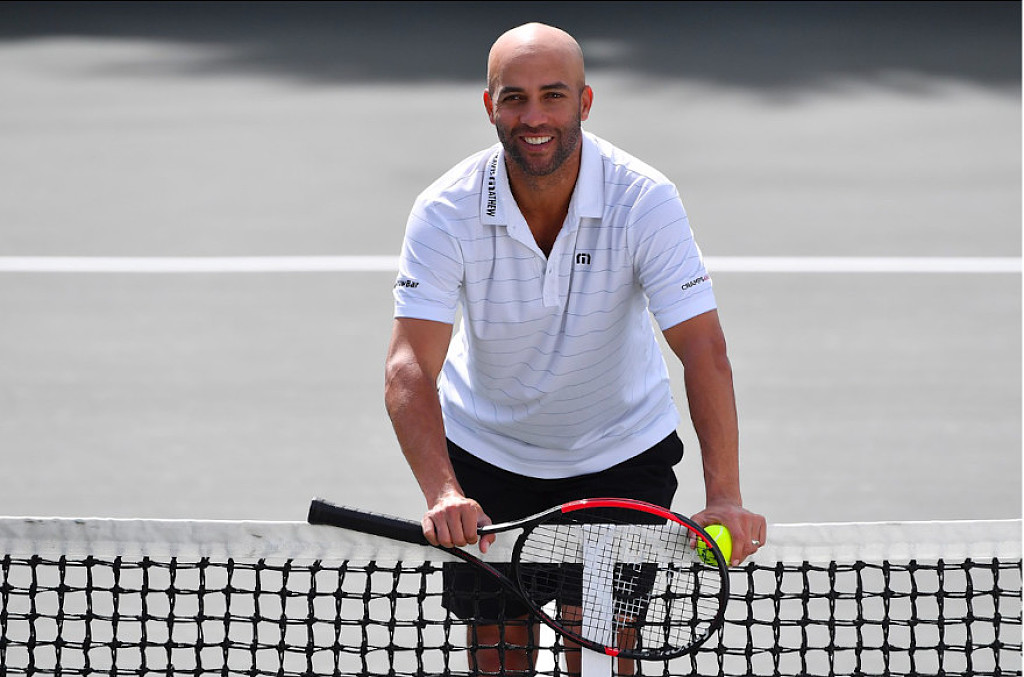
Former top tennis pro runs David Goggins's 4 x 4 x 48 ultra challenge
James Blake, an American retired professional tennis player who climbed as high as fourth in the world rankings in his career, recently completed ultrarunner David Goggins‘s 4 x 4 x 48 Challenge. Blake has been running for a few years, and since retiring from professional tennis, he has competed in a few races. The 4 x 4 x 48 was unlike any running event the former tennis pro had ever attempted before, though, and he was understandably exhausted after the two-day challenge.
4 x 4 x 48
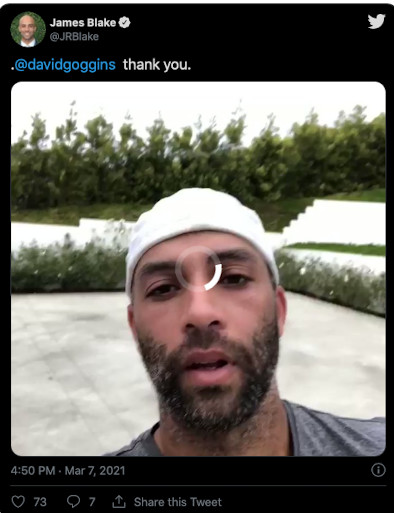
The 4 x 4 x 48 Challenge is simple to explain, but far from easy to complete. Participants run four miles (6.4K) every four hours for 48 hours. This works out to 48 miles (77K) and a lot of short naps (or very little sleep at all) in two days. Goggins has turned this into an official event, and the 2021 edition ran from March 5 to 7.
“Goggins, thank you. I just finished my 4 x 4 x 48,” Blake said in a video he posted to Twitter. “Thank you for coming up with this challenge and putting me to the test. I dug deep plenty in my career to win tennis matches, but nothing like this.”
Blake said he had “no real rest, no real sleep” over the course of the 48-hour event. He added that he questioned himself during each of the 12 four-mile legs, but he pushed through those tough moments and and eventually made it to the finish two days after he started.
Not a new runner
While this was Blake’s first time running the 4 x 4 x 48 Challenge, it wasn’t his first time completing a running event of any kind. After retiring from tennis in 2013, he got into running, and in 2015, he ran the New York City Marathon. He crossed the finish line in 3:51:19.
In 2020, Blake ran 21.1K in the virtual NYC Marathon as part of a relay with running legend Meb Keflezighi. The pair of former professional athletes teamed up to raise funds for a couple of charities. Blake ran to support his own charity, the James Blake Foundation, which raises money for cancer research, while Keflezighi ran for the NYRR Team for Kids.
(03/20/2021) ⚡AMPby Running Magazine
UTMB Is Back!
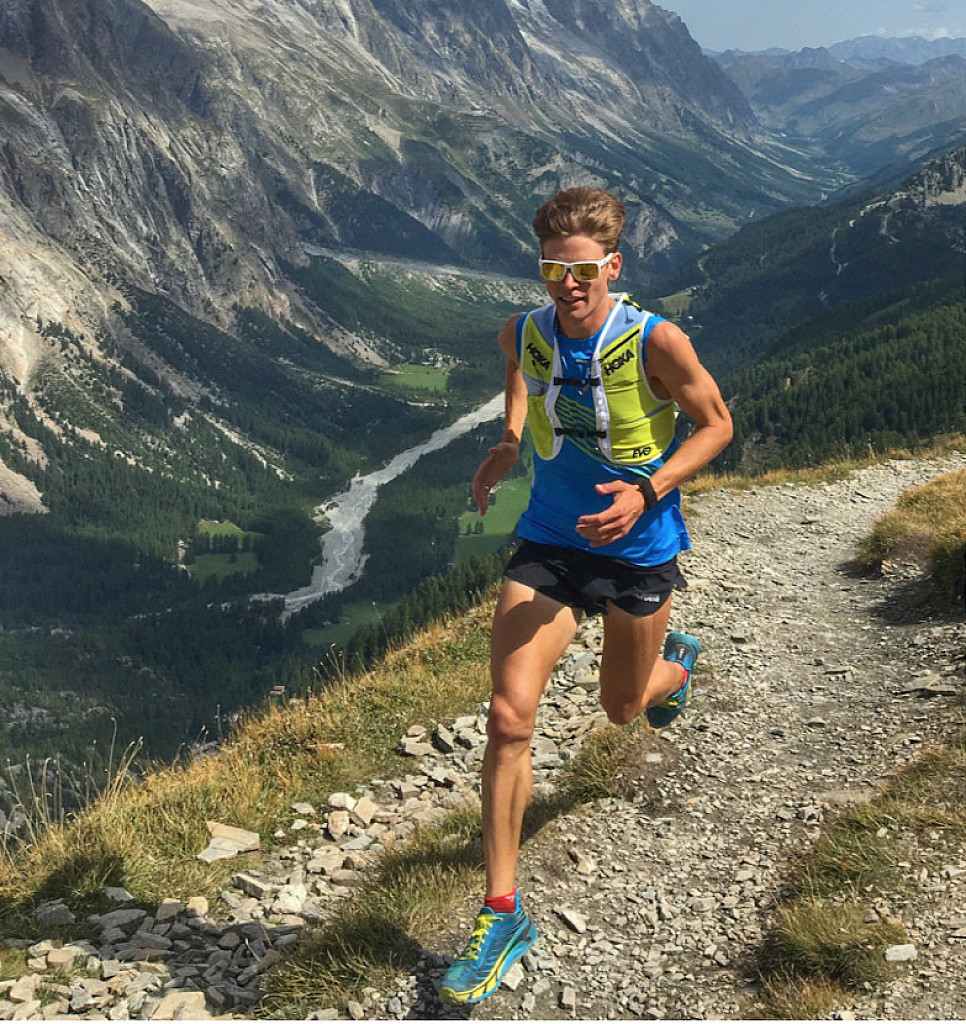
The world's most important trail race is driving forward-pandemic or not-and despite a tough year across the board, it seems to only be gaining steam.
While many races struggle to fill their 2021 entry slots, that was not a problem for UTMB, Chamonix, France's Ultra-Trail du Mont-Blanc-now six races from 40 to 300 kilometers, all of which take place during the final week of August in the legendary mountain town at the base of Mont Blanc. Despite a year off due to the global pandemic, interest in the race series remains very strong.
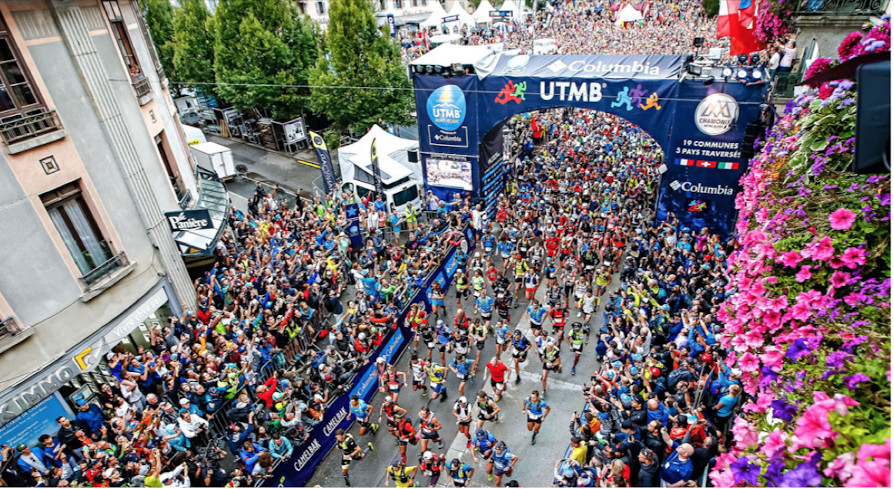
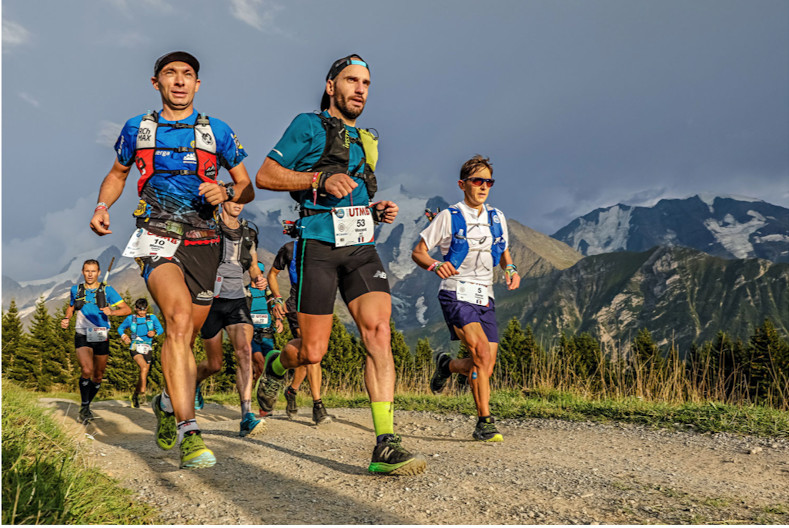
For the 16th time in a row, the UTMB races have sold out, with 10,000 runners slated across all the races. With the pandemic continuing to complicate international travel, the event's mix of nationalities has shifted, with more participants from within Europe and fewer from China and Japan. Despite the long-haul travel involved, U.S. interest in UTMB continues to grow, up slightly to 338 participants.
The UTMB organization is contemplating a number of changes this year, including a streamlined bib pickup system and wave starts with a few hundred runners in each block. Runners will have to wash their hands on their way into aid stations, with social distancing and masks being de rigeur. Shared food bins will be a thing of the past, and it's possible runner assistance areas may be altered or eliminated.
Despite the global uncertainty, 2021's marquee race around 15,774-foot high Mont Blanc looks to be among the most competitive trail races ever, on a par with 2017, which some observers have considered the most stacked trail race in the history of the sport. That year, France's Francois D'Haene edged out Catalonia's Kilian Jornet by 15 minutes, and Spain's Nria Picas won in a down-to-the-wire race, edging out Switzerland's Andrea Huser by under three minutes.
How did such a strong field coalesce? "It was really just organic. We didn't do anything specific to make it happen," says UTMB's Press Officer, Hugo Joyeux. One example is a post by three-time UTMB winner D'Haene, who asked on Instagram, "Who's coming back to take part in the party? I'll be there!" D'Haene went on to tag his top challengers, gently teasing them into showing up at the starting line next to the Mayor's office in the old part of Chamonix this August 27th. Most are in, with Jornet notably absent as he continues to reduce his trail-racing schedule to focus on mountaineering objectives.
The USA's top runners didn't need a social media ribbing from D'Haene to add the race to their calendars. Starting for the women will be Courtney Dauwalter, aiming for a second consecutive UTMB win, along with Katie Schide, Kaytlyn Gerbin, Brittany Peterson and Stephanie Howe. Schide, second in the CCC race in 2018, and 6th in the UTMB in 2019, currently lives in the south of France, in the maritime Alps region, and is easily the most experienced European racer among the U.S. women's elite entrants.
"UTMB reliably draws the most competitive field of the year," says Schide. With top runners coming out of an usual pandemic year-plus, Schide is eager to go head-to-head. "Time trials and personal challenges are fun, but racing is where I'm really able to find the absolute limits."
The U.S. men's delegation is equally competitive-with a dose of angst added, too. In 18 years, no American male has ever won UTMB. It's long since started to be a topic of discussion. Flagstaff, Arizona's Jim Walmsley has started UTMB twice, finishing fifth in 2017 and dropping out in 2019, while Tim Tollefson, from Mammoth Lakes, California, has had four starts, with two third-place finishes. In 2018, he took a serious fall, fileting a quadricep-yet he still managed to run another 90 kilometers before having to drop. The wound ended up requiring eight stitches. The following year, he showed up at the starting line feeling ill, and eventually dropped.
About 2021, Tollefson says, "It's going to be another barn burner," revealing that comparisons with others toeing the start line has been something with which he has struggled over the years. "Contrary to what most may believe, anxiety over who is or isn't in a field has tormented me historically," he explains. "Insecurities over training, fraudulent thoughts of belonging, self punishment and disrupted sleep were commonplace."
For Tollefson, that mix of emotions has added up to sleepless nights and high levels of stress. This past year, counseling has offered him a better perspective. In addition to the usual training, he's working on "becoming mindful in life and believing that the quest to become the best version of myself-which is not dependent on the love, acceptance or applause of anyone else-is the ultramarathon worth mastering."
"I left the Chamonix valley in 2018 full of anger, guilt and shame. What brewed over the next 12 months was a toxic cocktail of unchecked emotions and coping strategies," says Tollefson. "No matter how much I lied to myself and others, I simply did not want to be there."
How will he feel, arriving in Chamonix valley this August? "For the first time in years, the thought of being back in the valley, truly present, is beginning to excite me."
The restart of UTMB this summer is welcome news to this Alps tourist hub, which historically welcomes close to 100,000 guests for the race series at the close of each August. When last August's races were cancelled, the organization refunded 55 percent of the entrance fees for the 10,000 registered runners. The split created grumblings on social-media platforms. Meanwhile, the staff of 30, which includes UTMB's international races, suffered its own share of disruptions. They began working from home starting with the first French lockdown on March 17th, and didn't return to the office until this past December. They now operate with 50 percent of the staff in the office-masks required.
(03/14/2021) ⚡AMPby Trail Runner Magazine
Des Linden will be looking to break the 50K world record next month
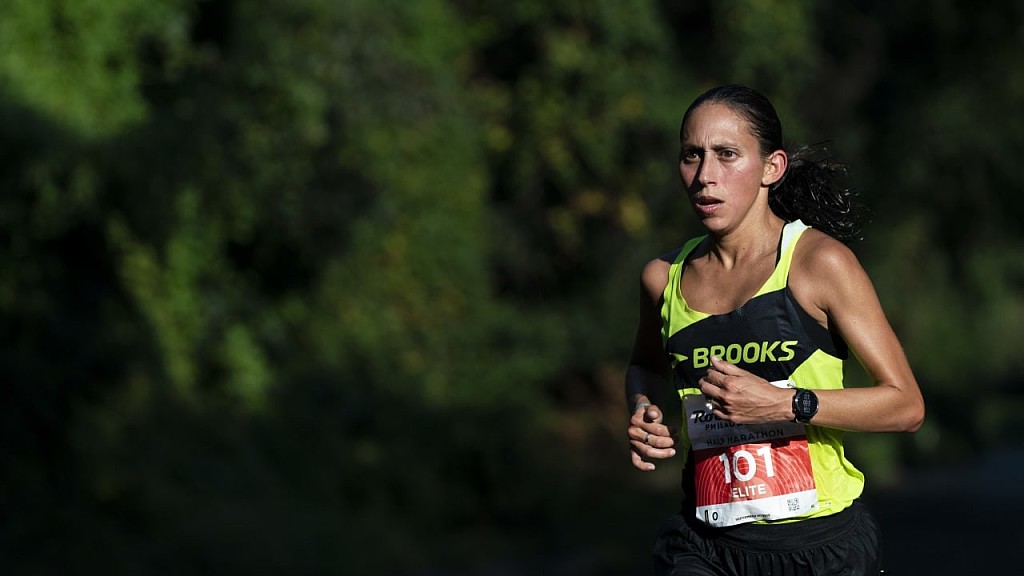
Boston Marathon champ Des Linden is officially entering the world of ultramarathoning, as she has announced that she will attempt to break the 50K world record next month.
In mid-April at an undisclosed location (details are intentionally vague because of pandemic concerns), she will take a crack at U.K. runner Aly Dixon‘s record of 3:07:20, which she set in 2019.
In October, Linden invited runners to participate in a challenge she called Run Destober, in which each day, participants ran the number of kilometers (or miles) that corresponded to the date. For example, on October 1 participants ran one kilometer, and on October 31 they ran 31. In total, the challenge worked out to be either 496K or 496 miles.
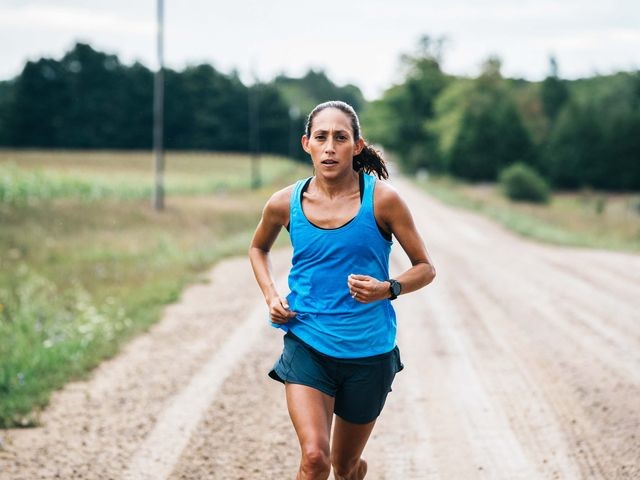
While this was a great way to engage the running community, it was also an effective way for Linden to slowly ramp up her weekly mileage and see how her body responded to the increased volume.
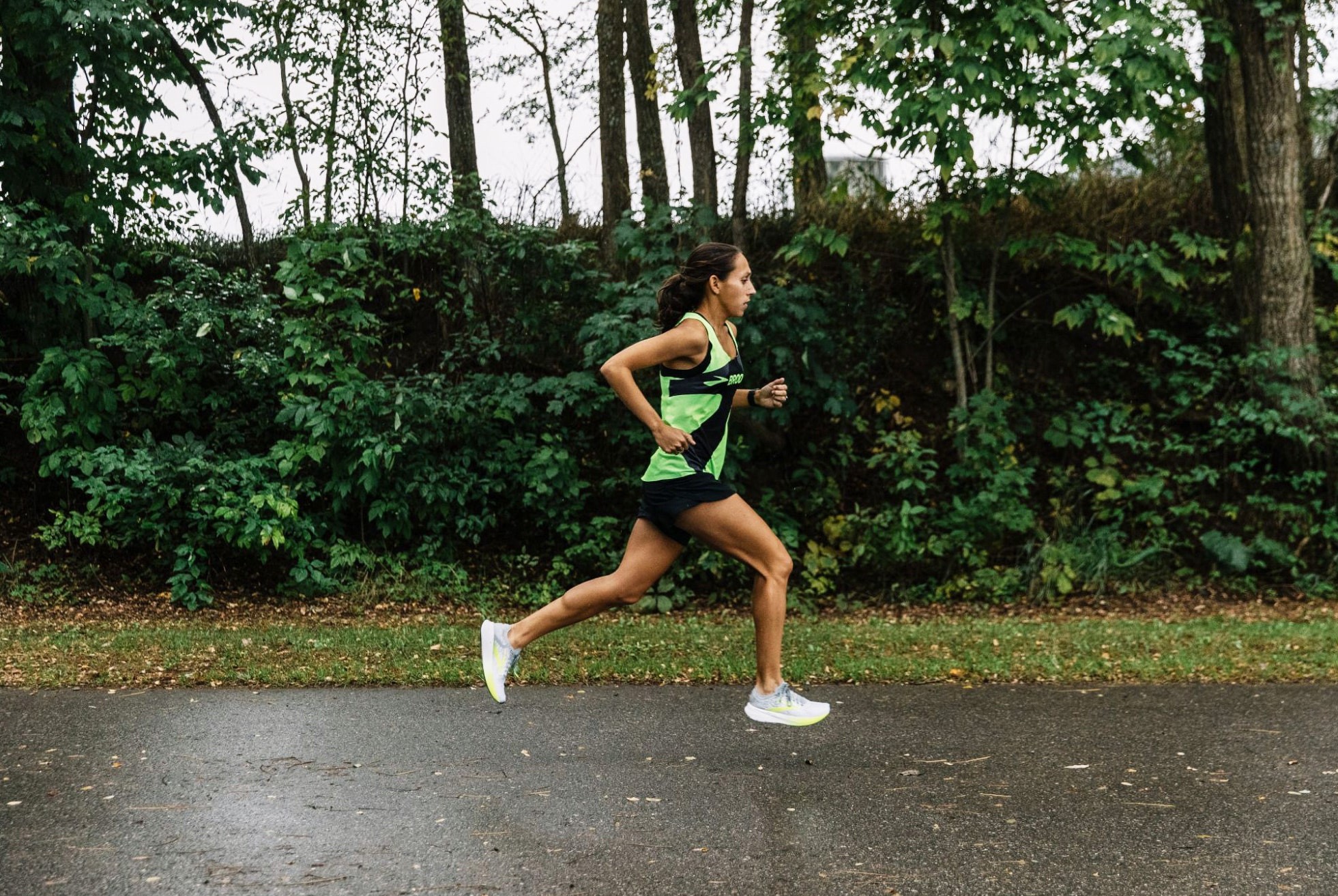
Back in August, Linden also expressed interest in ultramarathoning when she said in an interview that the Comrades Marathon and UTMB were on her bucket list. It is unclear whether this run will take place on the road or the trails, but either way, her result next month will be a good indicator of how she’ll fare when she finally decides to tackle the trails.
The headphone company Jaybird is supporting Linden during her record-breaking attempt, and the official announcement was made on their Instagram page on Tuesday. In order to beat Dixon’s time, Linden will need to maintain a pace of 3:44 per kilometer.
Given that she ran approximately 3:22 per kilometer for her marathon personal best of 2:22:38, this pace doesn’t seem unattainable, but of course, in a 50K race, it’s hard to say what could happen in the last 8K. We will be waiting for her result in April, and if she accomplishes her goal we expect to see Linden attempt more ultras in the future.
(03/10/2021) ⚡AMPby Brittany Hambleton
Pam Reed Becomes the 17th Person to Finish 100 100-Mile Races. And She Has Some Advice for You
The ultrarunning legend shares wisdom gleaned from nearly three decades of running 100-milers.
Ultrarunning legend Pam Reed just celebrated her 60th birthday as part of one of the most exclusive clubs in running: the group of runners who have finished 100 official races of at least 100 miles.
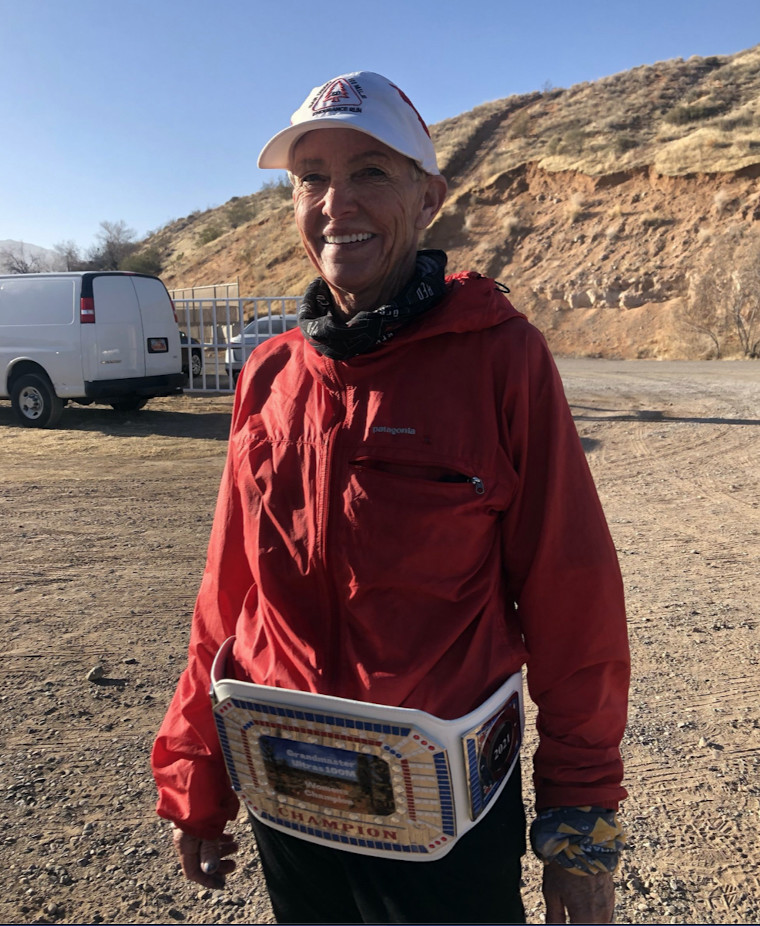
According to ultrarunning historian Davy Crockett, Reed is the 17th person in recorded history to have completed 100 100-milers in their lifetime (it was recently discovered that Frederick Davis III also reached this mark in December 2019, making him the 18th member of this group). Reed achieved the impressive mark at the Grandmaster Ultras in Littlefield, Arizona, on February 6, where she finished the 100-miler in 25:02:54—first woman, and third overall.
To clarify, this honor is the completion of 100 official races that were at least 100 miles. This means that even if Reed completed 491 miles at an event, like she did at the 2009 Self-Transcendence Six-Day Race, she was only credited with a single 100-miler. Though you may think Reed wishes that the extra mileage had added up to reaching her title sooner, she wouldn’t trade away any parts of her storied career.
Reed has run ultras, ranging from 50K to multi-day races, for three decades. Among her many accolades, she was the first woman to outright win the Badwater 135—a feat she achieved in 2002 and repeated in 2003.
In 2019, Crockett mentioned to Reed that she was at 89 total 100-mile finishes. That surprised her, because she assumed she had already hit that mark.
“In my mind, the way I counted, I thought I had done it,” Reed told Runner’s World. “But I counted 220 miles that I ran at a 48-hour race as two [100-milers] or my six-day race as four. But they didn’t count, and when I found out I was 11 away from something only a handful of people had done before, I decided to go for it.”
So Reed set the goal of reaching the 100 mark before her 60th birthday in February 2021, and decided to do 10 100-milers in 2020. In addition to a handful of 50Ks, a 60K, a 100K, and a half Ironman, this was going to be her biggest year ever. Previously, the most she had done five or six in a year, with other distances sprinkled in as well.
As you can imagine, Reed’s year was turned upside-down as the pandemic wiped away many of the races she wanted to do. Having to adapt, she signed up for virtual races, running courses she and her friends mapped out near in Jackson, Wyoming, where she’s based. She ran from her home to the Grand Tetons for races like Hardrock Hundred and Wasatch 100. She also did 100-mile races, such as Bryce Canyon Ultras and the Javelina Jundred, in-person when she could.
“I don’t really plan that much,” Reed said. “I’m not a great planner. It just kind of happens, and if a race happens, I go for it. I made courses if I had to, calling my friend who made a five-loop course climbing up a mountain five times. I don’t want to do this five times. I can be a whiner, but I did it and 100-milers are hard no matter what way you do them.”
For her century race, she planned to do Arrowhead 135, a challenging winter race in northern Minnesota in February. However, that was canceled because of the pandemic, so she opted for the Grandmasters Ultra for her 100 crown.
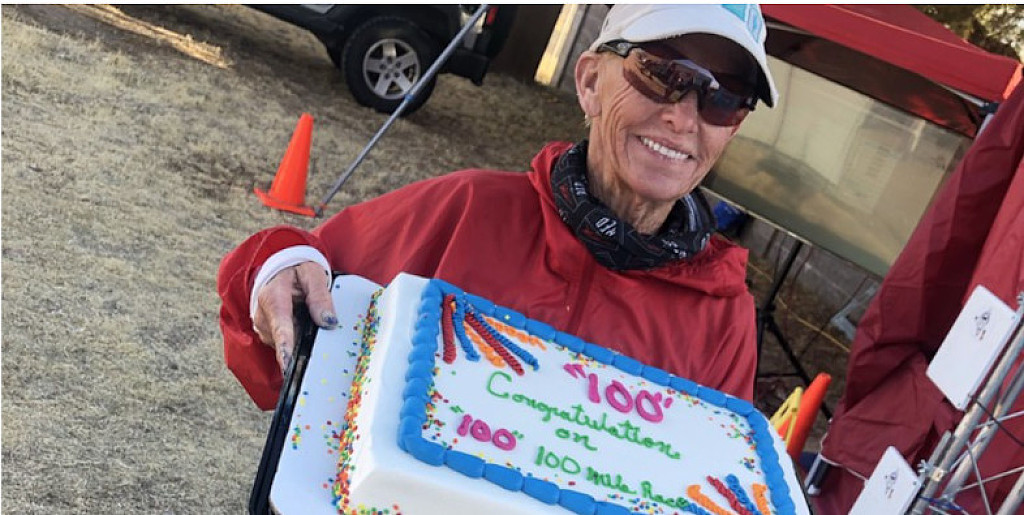
And Reed had a chance to win the race—she was leading after 39 miles, but a few runners took a wrong turn on a 5.5-mile loop, and the course was adjusted after Reed had already completed the section. She was passed and took third overall, but that didn’t spoil her big day. When she came across the line, she received not only her belt buckle, but also a plaque and a cake commemorating her 100th 100-miler.
“I’m so blessed to have the body that can keep doing this,” Reed said. “It’s cool that only so many people have ever done this. I’m really proud of it. My goal in life is to be able to run until I die and I am 100-percent serious when I say that. I just want to live my life to the absolute fullest, and, in my opinion, that is being able to run, skate ski, swim, bike, and get outside as long as I can.”
As the 60-year-old looks back on fondly on her race resume and the different challenges that each race presented, we also asked her what wisdom she might have for budding or experienced ultrarunners who dream of reaching the heights that Reed has in her career.
Here is what she had to say.
Energy powers her: I’m Finnish, a quarter Swedish, and a quarter Norwegian—I think there’s something to that. I know a lot of Finnish people, and they are hardcore. Living in Jackson, I’m surrounded by hardcore people. I just have a lot of energy, so I always want to be doing things. That really helps me do what I do.
Do a lot of modalities: I do a lot of hot yoga, often twice a day. I do acupuncture, I get massages regularly, and when things are hurting, I work on them immediately. I used to be a gymnast, and I could put my chest on the floor between my legs. Now, I don’t need to do that. I adjust my yoga to fit what I want to do as a runner. I’m intuitive about what I do and do not do.
Don’t wear so many clothes: I can’t tell you how many times I start with more clothes than I needed. I’ve learned from winter races that you can’t sweat or you’ll get colder, and I needed to find a happy place. Turns out in the summer, that’s a cotton shirt, arm sleeves, and men’s nylon socks.
Learn to fuel properly: I learned that I’m best running with Tailwind, nut butter, and Justin’s Almond Butter. I use GU gels when I race Ironmans, but I usually can’t get those down in a 100-miler. Except for one time at Leadville, I started throwing up eight hours into the race, and I didn’t stop until I took a GU with about 13 miles to go.
Listen to your body above anything else: Okay, don’t necessarily try this at home, but I don’t always listen to what experts tell me. I listen to my body. That’s not to say I ignore experts. But it’s also okay, in my opinion, to investigate. You should do that. Everyone is different, and you have to figure out what works for you. Don’t hurt yourself, but try things like massages or hyperbaric chambers. Do your research first, of course.
Fail and learn: Failing is learning. No one race is the same and not all races will be perfect. We all have to learn again and again.
(03/06/2021) ⚡AMPby Runner’s World

The Six-Mile Central Park Loop Has Been Renamed After Running Pioneer Ted Corbitt
“The Father of Long-Distance Running” receives a much-deserved honor.
Central Park has long played a significant role in New York City’s running culture. Runners who visit the city carve out time for a few miles in the famous park. Those who call New York City home circle the loops during long runs. It is home to the New York City Marathon finish line.

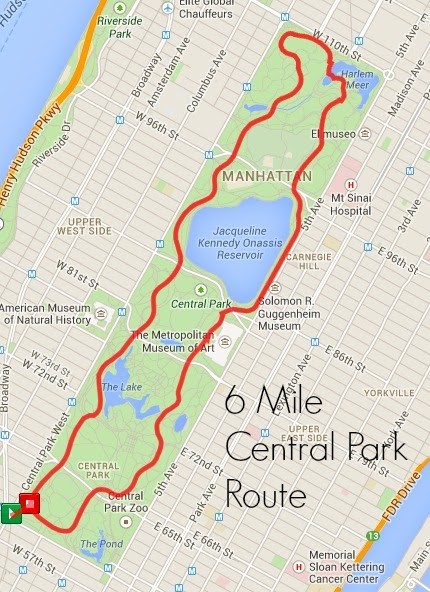
And now, the most famous running loop within the 51-blocks long park is named after running pioneer and Olympian Ted Corbitt.
The six-mile route—now called the “Ted Corbitt Loop—will feature six landmark street signs commemorating Corbitt along the path, and will have a NYC Parks-branded sign at the base of Harlem Hill at 110th St. and Adam Clayton Powell Boulevard in Harlem.
“As an avid runner, I am incredibly proud to commemorate the contributions of a man that inspired me and countless others to push through boundaries and live more abundantly,” NYC Parks Commissioner Mitchell Silver said in a statement. “It is an honor to celebrate Black History Month this year by shining light on Ted Corbitt’s influence and advocacy for underrepresented groups in running and beyond. May his legacy and pioneering spirit live on to inspire the next generation of runners to strive for greatness, progress, and peace.”
The move comes as NYC Parks continues to work toward ending systemic racism and providing a better representation of all races. Part of that is honoring Corbitt, a true pioneer of the sport who earned the title, “the father of long-distance running.”
In a 50-year running career, Corbitt ran 199 marathons and ultramarathons. He was the first Black American to represent the U.S. in the Olympic marathon in 1952, and he wore the No. 1 bib in the first-ever NYC Marathon in 1970. He was the founding president of NYRR and was an inaugural inductee into the National Distance Running Hall of Fame. These are still only some of his accomplishments.
His legacy is one that should be heralded in the Mount Rushmore of running. His name on the famous Central Park loop is a start.
“My father and other men and women volunteers worked tireless hours to help invent the modern day sport of long distance running,” Corbitt’s son Gary Corbitt said in a statement. “Many of the innovations in the sport were started in New York during the 1960s and early 1970s. This naming tribute celebrates all these pioneers.”
(02/28/2021) ⚡AMPby Runner’s World
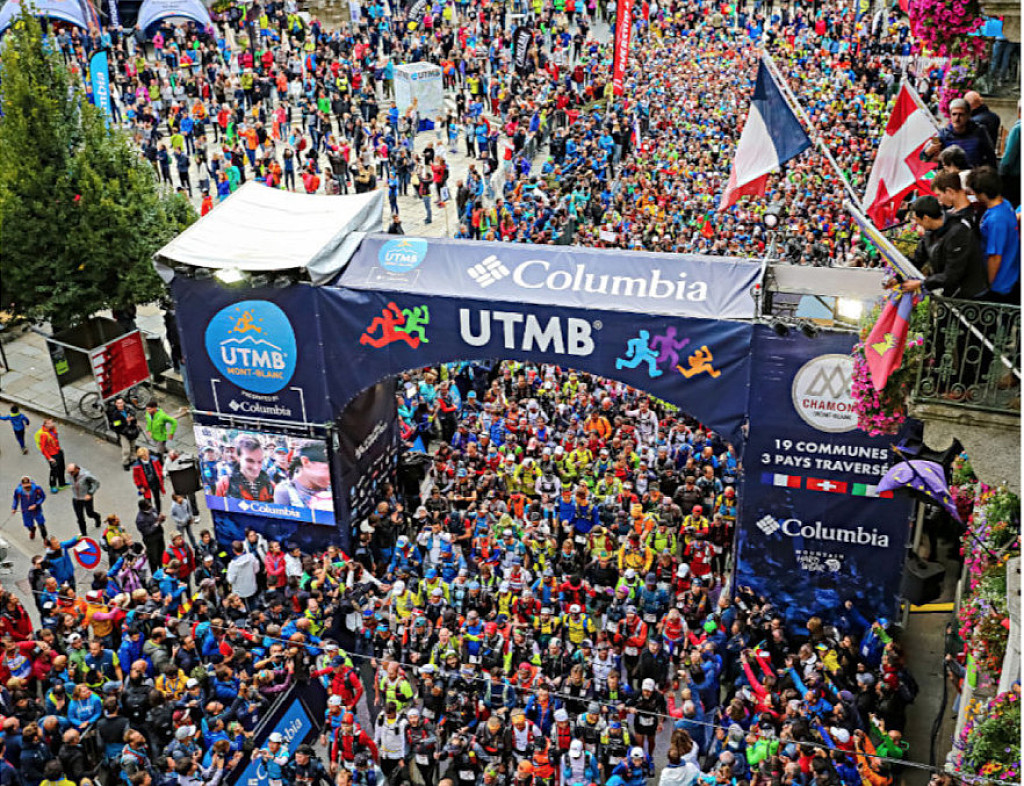
UTMB announces stacked fields for 2021 races
The 2021 edition of the Ultra-Trail du Mont-Blanc (UTMB) is still months away, but the fields for the August race are officially set. After UTMB organizers cancelled their event in 2020 due to COVID-19, any race would have been exciting to watch this year, but fans will be treated to a pair of stacked lineups in the men’s and women’s fields. With six former UTMB champions and many other world-class runners set to race in Chamonix, France, later this year, the storied 170K ultramarathon looks like it will be can’t-miss action.
The women’s race
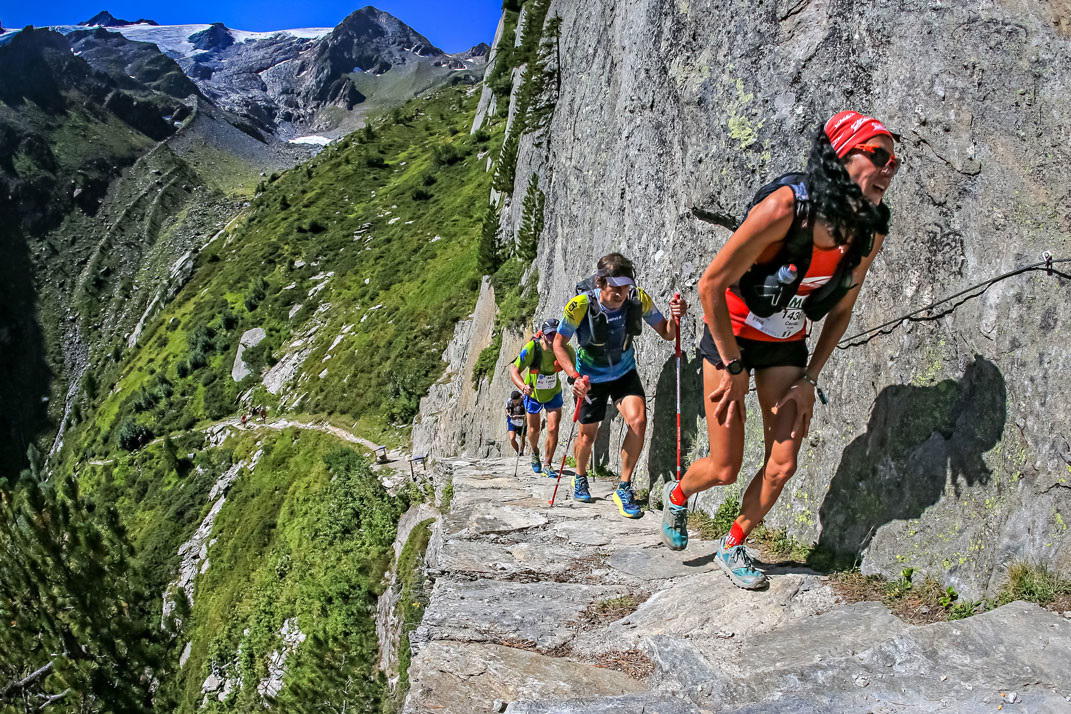
Former UTMB champs Courtney Dauwalter of the U.S. and Francesca Canepa of Italy headline the women’s race. Dauwalter is the reigning UTMB champion after her win in 2019, which was her first time running the race. She is widely recognized as one of the best ultrarunners on the planet, and she will be extremely tough to beat in Chamonix.
RELATED: UTMB adds to international race lineup with Thailand ultramarathon
Canepa won the women’s UTMB crown in 2018, and she also placed second in 2012. Other former top UTMB finishers on the start list for 2021 include Japan’s Kaori Niwa (fourth in 2017 and the winner of the 2019 Oman by UTMB 170K ultramarathon), Uxue Fraile Azpeitia of Spain (three-time UTMB podium finisher) and Beth Pascall of the U.K. (fourth- and fifth-place finishes in 2018 and 2019).
Multiple world record holder Camille Herron is also set to race in Chamonix. She has won ultramarathons around the world, including the Comrades Marathon in South Africa in 2017 and the Tarawera 100-miler in New Zealand in 2019, and she certainly has what it takes to win or place high in the overall UTMB standings.
Ailsa Macdonald is the lone Canadian in the elite UTMB women’s field. With big results like her wins at the Golden Ultra in B.C. in 2018 and the Tarawera 100 in 2020, Macdonald is another podium threat. She also has experience in Chamonix, having placed sixth in the UTMB’s CCC 101K ultra in 2019.
The men’s race
On the men’s side, there are four former UTMB winners: Pau Capell of Spain (winner in 2019) and French athletes François D’Haene (won in 2012, 2014 and 2017), Ludovic Pommeret (won in 2016) and Xavier Thévenard (won in 2013, 2015 and 2018). The past eight UTMB crowns belong to these four men, and they’re all capable of extending that streak to nine straight this year.
Jim Walmsley and Tim Tollefson are the top two American hopes on the men’s side. Tollefson made the UTMB podium in 2016 and 2017 with a pair of third-place finishes, while Walmsley has only raced in Chamonix once, running to fifth place. As Walmsley showed recently in a 100K world record attempt (he ran 6:09:26, missing the record by 12 seconds), he is in incredible shape this year, and while August is still months away, he has to be considered a favourite.
Also on the start list is the U.K.’s Damian Hall, who finished in fifth at the 2018 edition of UTMB. Hall is coming off a fantastic year of running that featured several prominent FKTs, and although he hasn’t raced in a while, he shouldn’t be counted out come August.
Finally, Canada will be represented by Mathieu Blanchard. Born in France, Blanchard now lives and trains in Montreal. He has raced in Chamonix before, running to a 13th-place finish in 2018, and in 2020 he ran onto the podium at the 102K Tarawera Ultra race.
UTMB is set to run from August 23 to 29, 2021.
(02/27/2021) ⚡AMPby Running Magazine
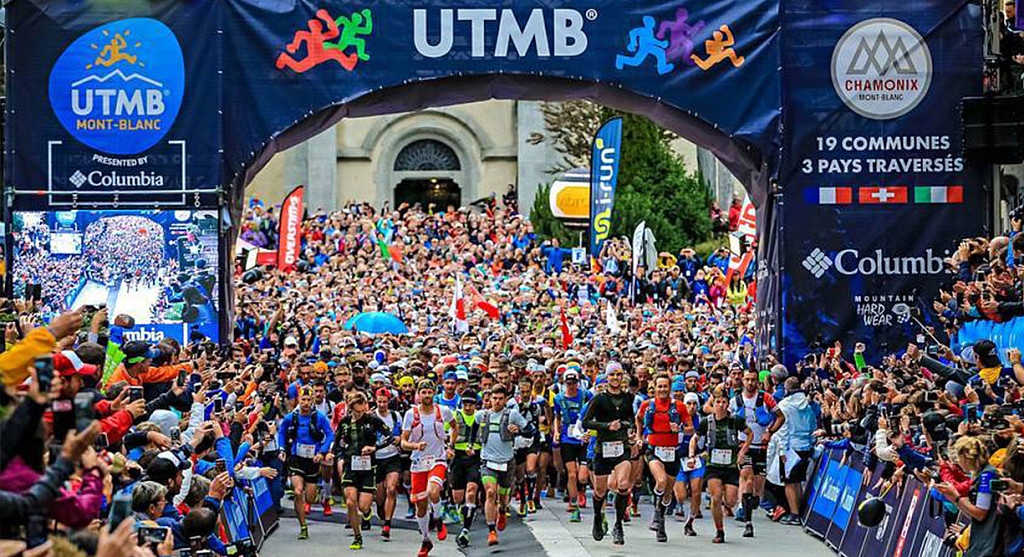
Six former UTMB champs are on the start lists for the famed ultramarathon's comeback in August
The 2021 edition of the Ultra-Trail du Mont-Blanc (UTMB) is still months away, but the fields for the August race are officially set. After UTMB organizers cancelled their event in 2020 due to COVID-19, any race would have been exciting to watch this year, but fans will be treated to a pair of stacked lineups in the men’s and women’s fields.
With six former UTMB champions and many other world-class runners set to race in Chamonix, France, later this year, the storied 170K ultramarathon looks like it will be can’t-miss action.
The women´s race
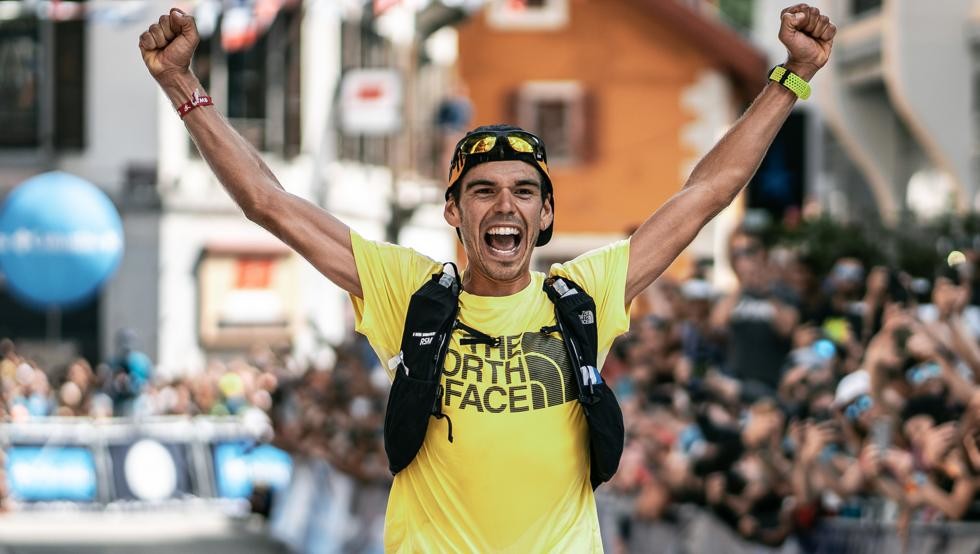
Former UTMB champs Courtney Dauwalter of the U.S. and Francesca Canepa of Italy headline the women’s race. Dauwalter is the reigning UTMB champion after her win in 2019, which was her first time running the race. She is widely recognized as one of the best ultrarunners on the planet, and she will be extremely tough to beat in Chamonix.
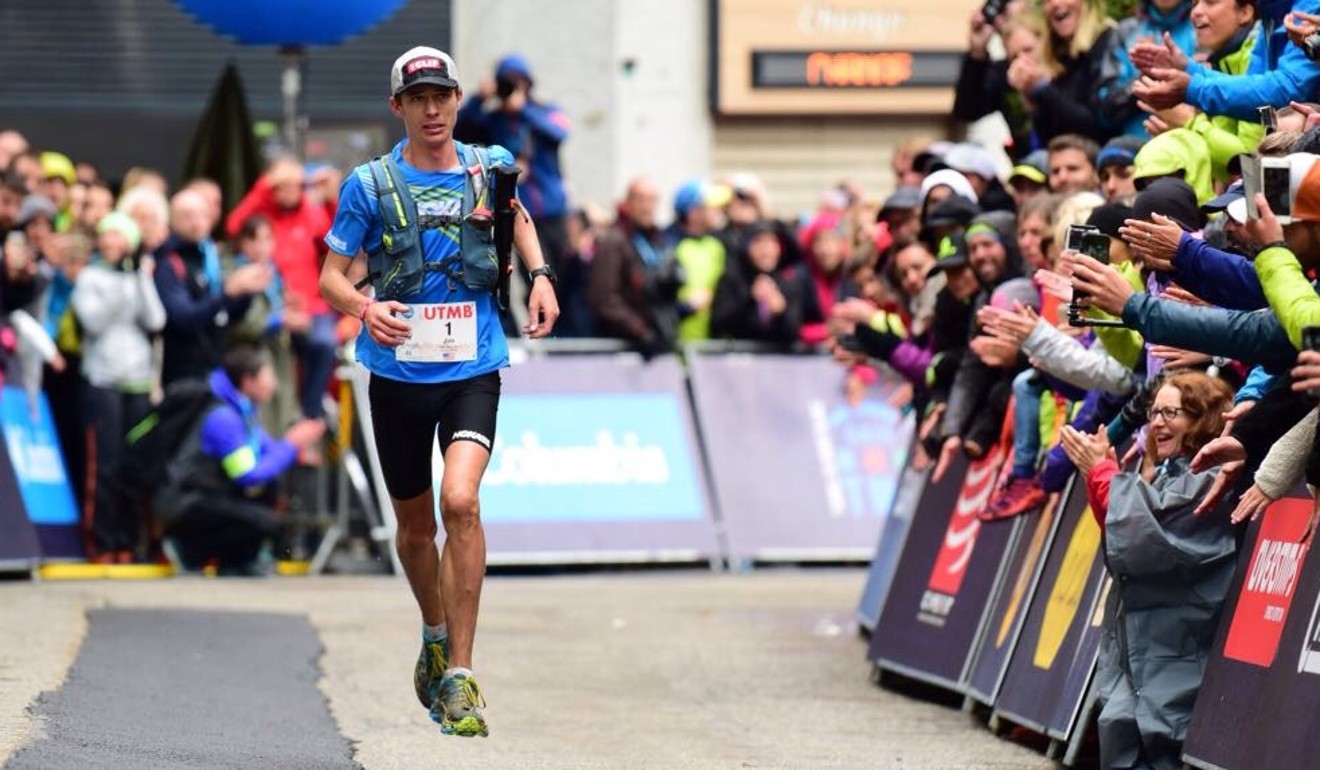
Canepa won the women’s UTMB crown in 2018, and she also placed second in 2012. Other former top UTMB finishers on the start list for 2021 include Japan’s Kaori Niwa (fourth in 2017 and the winner of the 2019 Oman by UTMB 170K ultramarathon), Uxue Fraile Azpeitia of Spain (three-time UTMB podium finisher) and Beth Pascall of the U.K. (fourth- and fifth-place finishes in 2018 and 2019).
Multiple world record holder Camille Herron is also set to race in Chamonix. She has won ultramarathons around the world, including the Comrades Marathon in South Africa in 2017 and the Tarawera 100-miler in New Zealand in 2019, and she certainly has what it takes to win or place high in the overall UTMB standings.
Alisa McDonald
Is the lone Canadian in the elite Camille Herron is also set to race in Chamonix. She has won ultramarathons around the world, including the Comrades Marathon in South Africa in 2017 and the Tarawera 100-miler in New Zealand in 2019, and she certainly has what it takes to win or place high in the overall UTMB standings.
The men’s race
On the men’s side, there are four former UTMB winners: Pau Capell of Spain (winner in 2019) and French athletes François D’Haene (won in 2012, 2014 and 2017), Ludovic Pommeret (won in 2016) and Xavier Thévenard (won in 2013, 2015 and 2018). The past eight UTMB crowns belong to these four men, and they’re all capable of extending that streak to nine straight this year.
Jim Walmsley and Tim Tollefson are the top two American hopes on the men’s side. Tollefson made the UTMB podium in 2016 and 2017 with a pair of third-place finishes, while Walmsley has only raced in Chamonix once, running to fifth place.
As Walmsley showed recently in a 100K world record attempt (he ran 6:09:26, missing the record by 12 seconds), he is in incredible shape this year, and while August is still months away, he has to be considered a favorite.
Also on the start list is the U.K.’s Damian Hall, who finished in fifth at the 2018 edition of UTMB. Hall is coming off a fantastic year of running that featured several prominent FKTs, and although he hasn’t raced in a while, he shouldn’t be counted out come August.
Finally, Canada will be represented by Mathieu Blanchard. Born in France, Blanchard now lives and trains in Montreal. He has raced in Chamonix before, running to a 13th-place finish in 2018, and in 2020 he ran onto the podium at the 102K Tarawera Ultra race.
(02/24/2021) ⚡AMPby Ben Snider-McGrath

North Face Ultra Trail du Tour du Mont-Blanc
Mountain race, with numerous passages in high altitude (>2500m), in difficult weather conditions (night, wind, cold, rain or snow), that needs a very good training, adapted equipment and a real capacity of personal autonomy. It is 6:00pm and we are more or less 2300 people sharing the same dream carefully prepared over many months. Despite the incredible difficulty, we feel...
more...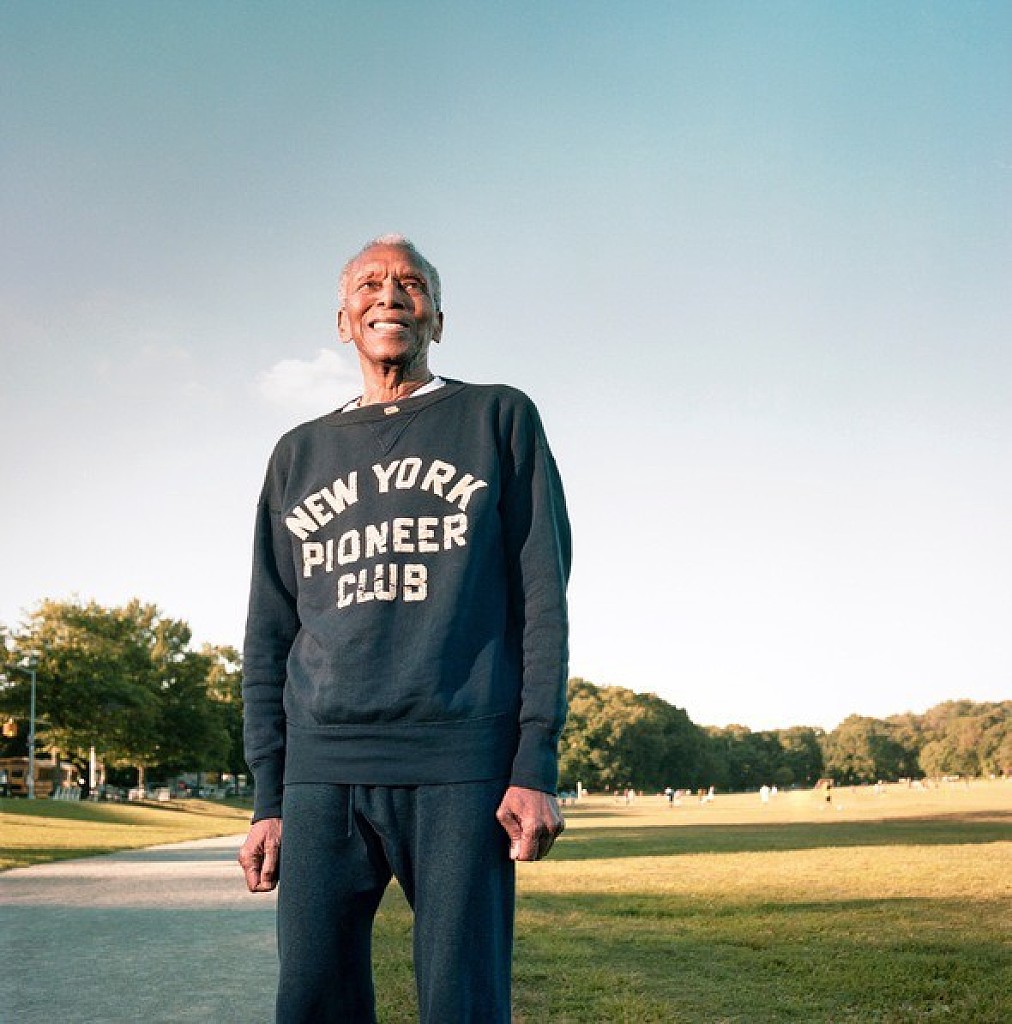
The history of black running in America
Ted Corbitt laid the basis for measurement of road running courses in the USA and was the founding president of NYRR (New York Road Runners. He was black; and many assume he was the first black American endurance runner of historic importance.
Corbitt (1919–2007) was a formidable figure in long-distance running, but he was far from the first – or the only – notable African American long-distance runner. The history of black running in America dates back to at least the 1870s and is both rich and profound.
Gary Corbitt, Ted’s son, has spent years researching and writing about black American running and bringing many untold stories to life. He founded the Ted Corbitt Archive to preserve and highlight some of the amazing and almost forgotten stories of black American runners, coaches, clubs, teams, events, supporters and leaders.
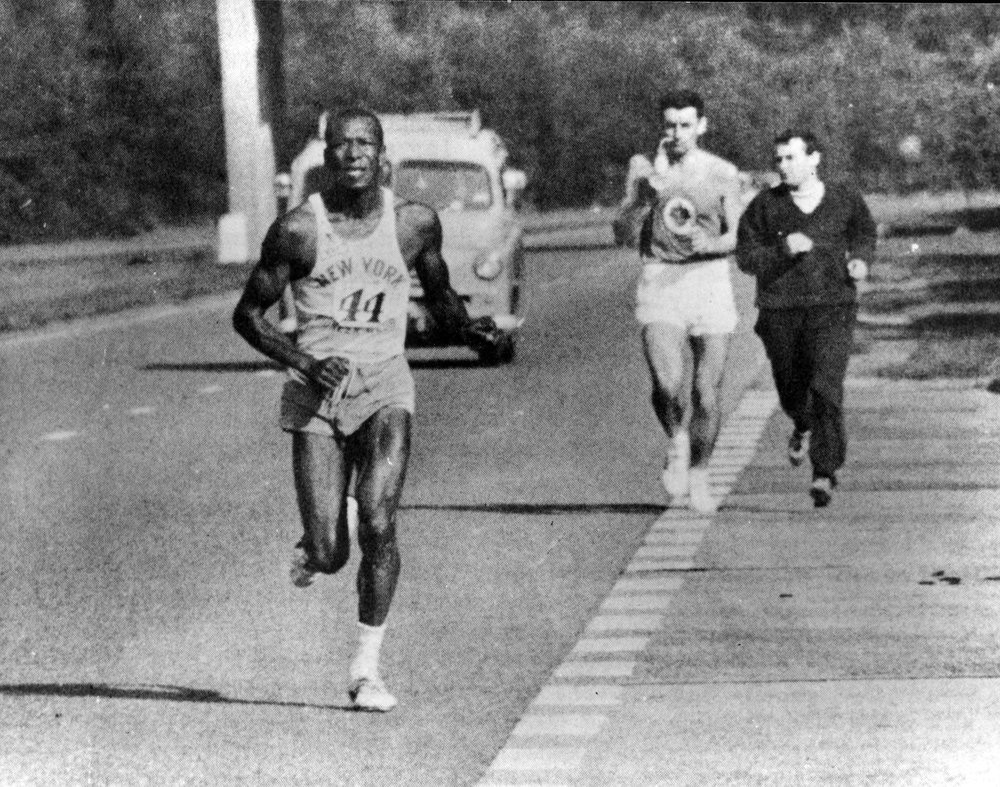
“My dad always told me he wasn’t alone – that there were other great black American long-distance runners,” says Gary. “I didn’t know how rich the story was until I started looking into it myself.”
Using books, articles, and a huge amount of primary documents, Gary created a “Black Running History 100 years (1880–1979)” timeline that spanned 100 years (1880–1979). “The work is not finished yet,” he says. “I have probably captured 75 percent of what is known from this 100-year period.”
He was inspired by a story his father told him about a letter he received from a young black runner. “The runner wrote that he wished he had known about my dad when he was in school and the coaches steered him away from long-distance running and into sprints,” said Gary. “If he’d had a black long-distance runner like my father as a role model, things might have turned out differently. I want today’s young black runners to know that they are part of a rich history and that they have many role models.”
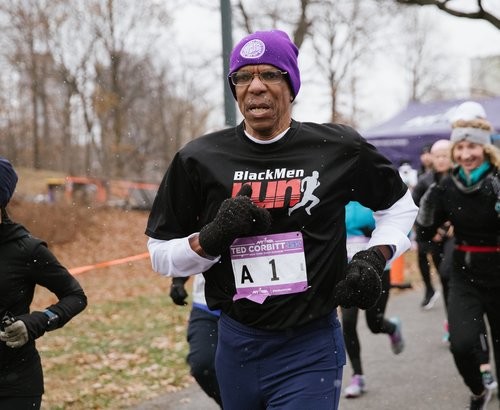
Here are just a few of the highlights from the Chronicle. See tedcorbitt.com for more.
Frank Hart and the marchers (pedestrian) movement
In the late 1870s the most popular sport in the United States – and a few other countries – was pedestrianism: multi-day running and walking competitions over hundreds of miles, often on covered lanes in front of large crowds. Participants came from all walks of life and one of the most successful was a young black runner named Frank Hart (above, left). Born Fred Hichborn in Haiti in 1858 he moved to Boston as a teenager, worked as a grocer, and started running long distance runs to make extra money. He changed his name when he became a professional “walker” (pedestrian).
Hart won the prestigious O’Leary Belt Six Days at Madison Square Garden in 1880 completing an astonishing 565 miles – a world record. The runner-up, William Pegram, was also black. Hart’s success earned him fame and fortune; his image was featured on trading cards (the forerunner of baseball cards) nationwide, and he likely made over USD 100,000 in his lifetime thanks to the legal gambling that was at the heart of the sport and even allowed participants to wager on themselves.
Unfortunately Hart also endured racism, including heckling and physical harassment from viewers and snubs and slurs from his rivals. In the late 1880s baseball – with its rigid racial segregation policy – ousted walking in popularity. As an excellent all-round athlete, Hart joined a “Negro League Team” for a few years.
The spirit of the march (pedestrian) era inspired Ted Corbitt, who ran (and won) many ultra runs, completing 68.9 miles in 24 hours at the age of 82. “My father talked about running 600 miles in six days and walking 100 miles in 24 hours,” said Gary. “These were milestones from the marchers’ days, the meaning of which I only fully understood much later, after his death.”
Early NYC running clubs and marathon runners
Several black running clubs in NYC in the early 1900s, including the Salem Crescent Athletic Club, St. Christopher’s Club of NY, and the Smart Set Athletic Club of Brooklyn, showcased the talents of a generation of black runners at sprint to marathon distances.
In 1919, Aaron Morris of the St. Christopher Athletic Club finished sixth in the Boston Marathon in 2:37:13, making him the first known African American to run the race. At the 1920 Boston Marathon, Morris’ teammate Cliff Mitchell finished eighth in 2:41:43. Mitchell finished 13th in Boston in 1921, and another St. Christopher runner, John Goff, finished ninth that year in 2:37:35.
The New York Pioneer Club, which was founded in Harlem in 1936 by trainer Joe Yancey and two other black men, campaigned to give everyone interested and qualified regardless of race a chance. “It was an integrated running team that preceded the integration of professional sport,” says Gary Corbitt. Ted Corbitt joined the Pioneer Club in 1947 and in 1958 he and other members formed the core of the New York Road Runners.
Marilyn Bevans
Opportunities for female long-distance runners were few before the early 1970s. NYRR always allowed women as members and in its events, but the Boston Marathon excluded women until 1972, the same year that a women’s 1500m (less than a mile) run was added to the Olympic programme.
In the 1970s Marilyn Bevans of Baltimore emerged as the first competitive modern black American marathon runner. She was the first black American to win a marathon – the Washington Birthday Marathon in Maryland in 1975. She finished fourth in the 1975 Boston Marathon with a time of 2:55:52, making her the first black American to win a marathon run in under three hours. She completed a total of 13 marathons under three hours. Bevans later became a coach and is now in her 70s.
(02/24/2021) ⚡AMPby Gordon Bakoulis
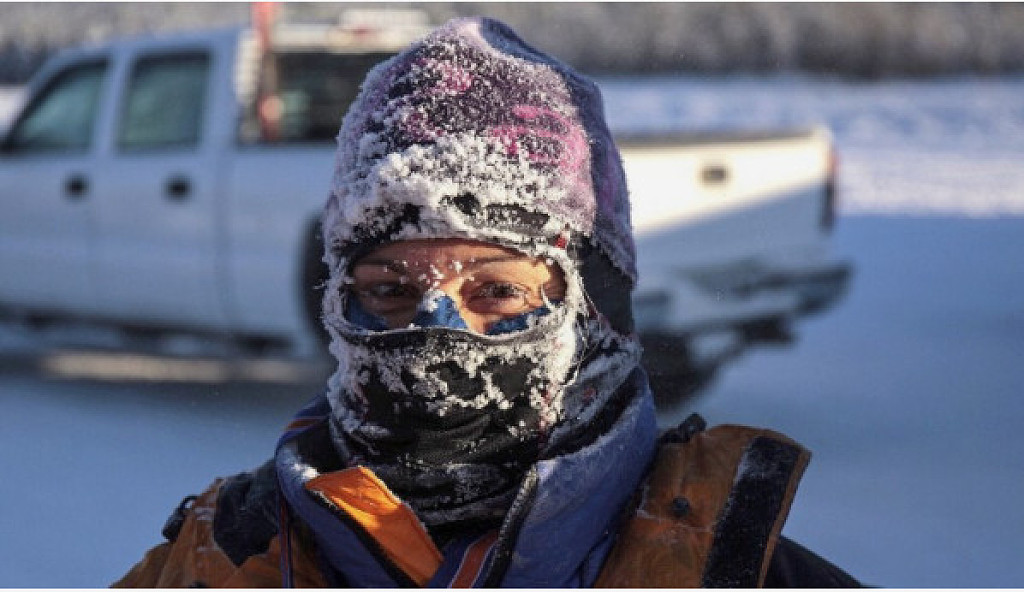
The Cold, Hard Reality of Racing the Yukon Arctic Ultra
Temperatures were brutally low at this year’s running of the 300-mile competition, and one frostbitten competitor may lose his hands and feet. Is this just the price of playing a risky game, or does something need to change?
Roberto Zanda left the Carmacks checkpoint of the Montane Yukon Arctic Ultra just before noon on February 6. He was at least 150 miles into the 300-mile race—he’d already been slogging down a dogsled trail through the Yukon backcountry for more than five full days. Temperatures had plunged below minus 40 Fahrenheit on the first night out of Whitehorse, the small Yukon city where the race began; along the race course, temperatures consistently ranged from the minus 20s to the minus 40s.
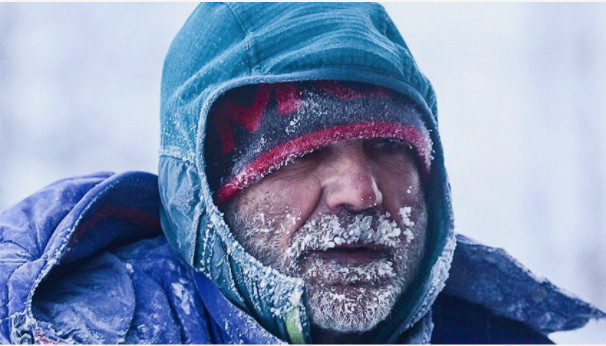
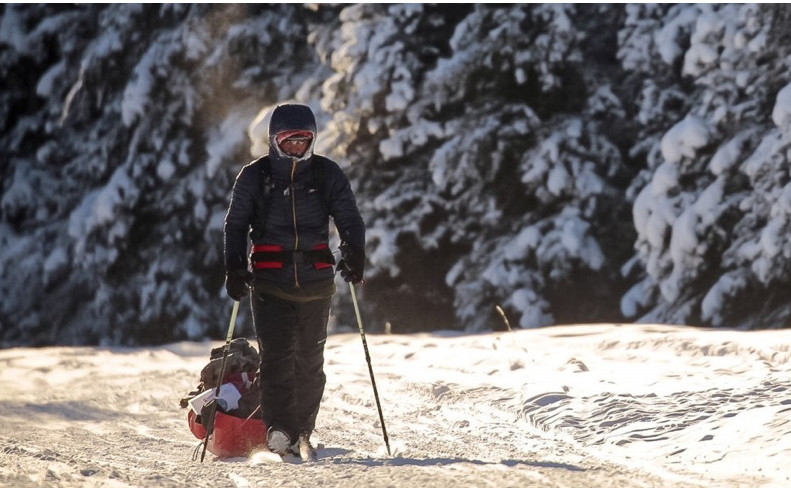
In short, conditions were brutal. Of the eight racers who’d begun the 100-mile version of the variable-length event, just four had finished. Of the 21 who’d started the 300-miler, only the 60-year-old Zanda and two others remained. Most of the rest had scratched with frostbite or hypothermia.
When Zanda left the checkpoint, hosted in a village rec center, a race medic wrote on the event’s Facebook page that the racer had paused only for “a short rest and a big meal. He was looking very strong.”
Just over 24 hours later, Zanda was in a helicopter, being rushed to Whitehorse General Hospital with hypothermia and catastrophic frostbite, lucky to be alive. He now faces the likely amputation of both hands and both feet. What went wrong?
This was the 15th running of the Yukon Arctic Ultra, an annual race in which competitors choose their distance—marathon, 100 miles, 300 miles, or, every second year, 430 miles—and their mode of transportation: a fat bike, cross-country skis, or their own booted feet. Race organizer Robert Pollhammer, 44, who runs an online gear store in his native Germany, started the event in 2003 after being involved with Iditasport, a similar event on the Alaskan side of the border.
The Yukon race takes place on part of a trail built each year by the Canadian Rangers for the Yukon Quest, a 1,000-mile dogsled race, and it’s as much a feat of logistics as it is an athletic contest. It’s continuous, not a stage race; competitors are self-sufficient, carrying all their camping and survival gear, spare layers, food, and water in sleds they pull behind them. Temperatures are cold enough to kill, and it’s dark for roughly 14 hours every day. Nonetheless, eager ultra racers travel from around the world for the event, paying anywhere from $750 to $1,750 USD to enter (depending on when they register and the distance they’re attempting), plus the cost of flights, hotel, and gear. The total can easily add up to $5,000 or more.
The entrants tend to be experienced ultra and adventure racers; many athletes have already completed events like the Gobi March or the Marathon des Sables. Most competitors come from Europe, although this year’s race also saw entrants from South Africa and Hong Kong. The race organization offers a survival course a few days beforehand—a crash education in moisture management, layering, and cold-weather injuries. Generally speaking, the racers are accomplished athletes, but they may not have extensive experience with severe cold. The challenge lies in keeping themselves safe while moving through the Yukon’s remote, frigid backcountry.
The race is billed as “the world’s coldest and toughest ultra,” and there have been plenty of serious injuries before: flesh blackened by frostbite, frozen skin peeling off racers’ faces like wax, and bits of fingers and toes lost to amputation. But what happened to Zanda is by far the worst medical outcome yet, and it has shocked former racers, event organizers, and fans. It has also led to discussions and debates, often heated, about where a race organization’s responsibilities end and a racer’s personal assumption of risk begins.
As Zanda moved out of Carmacks, his Spot tracker showed him clipping along steadily at around three miles per hour. Between 3 p.m. and 9 p.m., his beacon’s transmissions became more erratic—but that’s fairly normal in the Yukon, where satellite signals can be weak or inconsistent. Between 9 and 10 p.m., the problem cleared up and the Spot began sending signals every few minutes.
The last blip came in at 10:08 p.m., at route mile 189.7, and then the device went into sleep mode. After a strong ten-hour, 25-mile push from Carmacks, Zanda appeared to have stopped to camp for the night.
In the morning, as the sun rose, his tracker still hadn’t moved. The race crew wasn’t concerned yet—Zanda had taken a 12-hour rest once before during the race, as had some other athletes. At 9:32 a.m., Pollhammer posted on Facebook that two volunteer trail guides were headed out to check on him. “His Spot has not been sending for a long time now. Once we have news I will let you all know.”
The trail guides are the race’s safety net, patrolling hundreds of miles by snowmobile to check on the athletes and, when necessary, evacuate them from the course. They motored down the trail toward Zanda’s Spot location, but when they got there, in late morning, they found only the racer’s harness and sled, loaded with a tent and sleeping bag, a stove and fuel, and—crucially—the Spot device. Zanda was gone.
They called back to Pollhammer, who contacted the Royal Canadian Mounted Police, and then they began searching the area, looking for some sign of where the racer might have left the packed trail and wandered into the forest. The Mounties were about to launch a search of their own when the call came in: Zanda had been found. A helicopter was dispatched and landed near him. The trail guides, advised by the incoming medical team, did what they could to care for Zanda while they waited. As Pollhammer put it in an email to me: “No time was lost.”
A few days later, Zanda spoke to a Canadian television reporter from his hospital room in Whitehorse. He wore a pale-green gown, and his hands were heavily bandaged, nearly up to his elbows. His feet and shins were the same. He said he’d left his sled behind to go look for help because his feet were freezing up. He and his family members have also told race organizers that Zanda had lost the trail and went in search of the next marker, leaving the sled behind while he scouted.
Hypothermia must have already had Zanda in its grip by then, muddying his mind and compromising his decisions. His sled was his lifeline, containing everything he needed to stay alive and the only tool he had to call for help. He wandered through the cold and dark all night while the sled sat on the trail, sending out a reassuring beacon to the world that all was well.
I competed in this year’s Yukon Arctic Ultra—my first attempt—and I didn’t last long. Twenty-two hours in, suffering from frostbite on three fingertips, I scratched from the event, one of four 100-mile racers who decided to quit.
I never met Zanda, though for all I know we could have been standing side-by-side at the start line. On the afternoon of day one, he left the first checkpoint 19 minutes ahead of me. That night, I passed by as he bivied on the side of the trail. A couple hours later, I put up my own tent, crawled inside, and was trying to change into dry clothes with my hands briefly exposed. That was long enough for frostbite to set in.
Early the next morning, Zanda and two other racers passed my tent. I heard them go by but didn’t call out. I was waiting until daylight to push the help button on my Spot. I’ve thought about those encounters a lot since I learned about what happened to Zanda. It’s impossible not to hear his story and ask: Could that have been me?
Easily. I knew when I signed up for the race that amputations, or even death, were among the potential consequences. At such low temperatures, exhausting yourself to the degree required to complete an ultramarathon is a good way to erase whatever thin margin of safety you’ve managed to create. But while some of my friends had concerns, I wasn’t really worried. That disconnect is what allows many of us to put ourselves in these situations.
Zanda wasn’t the only person hospitalized. Nick Griffiths, another 300-mile racer, scratched on day two. The frostbite on his left foot had become severe by the time he was whisked from the trail to a remote checkpoint for eventual evacuation to Whitehorse. Griffiths spent five days in the hospital, and he will eventually lose his big toe and two others next to it. (To preserve as much healthy tissue as possible, doctors will allow the toes to “self-amputate,” meaning that the dead tissue will simply fall off.) Losing the big toe, in particular, could have a serious impact on Griffiths’ future ability to walk, hike, and run.
“I’m hoping I’ll be all right,” he told me from his home in England, where he’s been reading up on athletes who’ve lost toes. “I’m not expecting to be able to go and do ultras or things like that, but there’s other challenges. It’s not ideal, but there’s no point jumping up and down about it. It’s done.”
I’m not sure I could muster the same acceptance if I were in Griffiths’ position, let alone Zanda’s. Understandably, the Italian racer’s friends and family are extremely upset. In the days after his rescue, the race’s Facebook page filled up with furious comments from people demanding to know how this could have happened, why Zanda wasn’t checked on sooner, why the race hadn’t been canceled entirely when the weather refused to relent. Zanda’s wife, Giovanna, wrote, in Italian, “It’s been too many hours before you decided to verify what happened. He didn’t die by miracle.” His brother, Paolo, posted, “Why they promise you safety when they do not care about you?” To which Pollhammer replied, “Nobody promises safety.”
That much is certain. The waiver I signed when I filed my registration paperwork last summer listed the risks I was assuming as including but not limited to “dehydration, hypothermia, frostbite, collision with pedestrians, vehicles, and other racers and fixed or moving objects, sliding down hills, overturning of ice-rocks, falling through thin ice, avalanche, dangers arising from other surface hazards, equipment failure, inadequate safety equipment, weather conditions, animals, the possibility of serious physical and/or mental trauma and injury, including death.”
Still, even as we sign our lives away, participating in an organized race may provide us with an illusion of safety in a way that an independent backcountry trek might not. If so, I suppose it becomes our job to tear down that illusion and make clear-eyed choices about the risks. That’s easier said than done, of course.
Throughout the aftermath of this year’s race, Pollhammer has remained calm as he answered his critics, walking the fine line of showing empathy for Zanda and his family while making it clear that he believes the error was the racer’s. Initially he seemed shaken, unsure about running the event again next year, but he has since announced the 2019 dates. I asked Pollhammer if, with the benefit of hindsight, he would do anything differently. He said that the rules and safety procedures evolve almost every year, and next year will likely be no different. But there are limits to what he can do, no matter how much he tweaks his protocols
“We can increase the list of mandatory gear, make people carry a sat phone, warn athletes even more so than we do now,” Pollhammer said. “We can do many things. However, we won’t be able to make sure people don’t get hypothermic and start making mistakes when they are out there. It they don’t act, or if they act too late, it will always mean trouble. I wish I could take that away from them, but it is impossible.”
Or as Nick Griffiths put it, “I can’t blame anybody for it—it was my own fault.”
As for Zanda, he told the CBC that he’ll be back out racing again—on prosthetics, if need be.
(02/21/2021) ⚡AMP

Yukon Artic ultra 300 miler
The Yukon Arctic Ultra is the world's coldest and toughest ultra! Quite simply the world's coldest and toughest ultra. 430 miles of snow, ice, temperatures as low as -40°C and relentless wilderness, the YUA is an incredible undertaking. The Montane® Yukon Arctic Ultra (MYAU) follows the Yukon Quest trail, the trail of the world's toughest Sled Dog Race. Where dog...
more...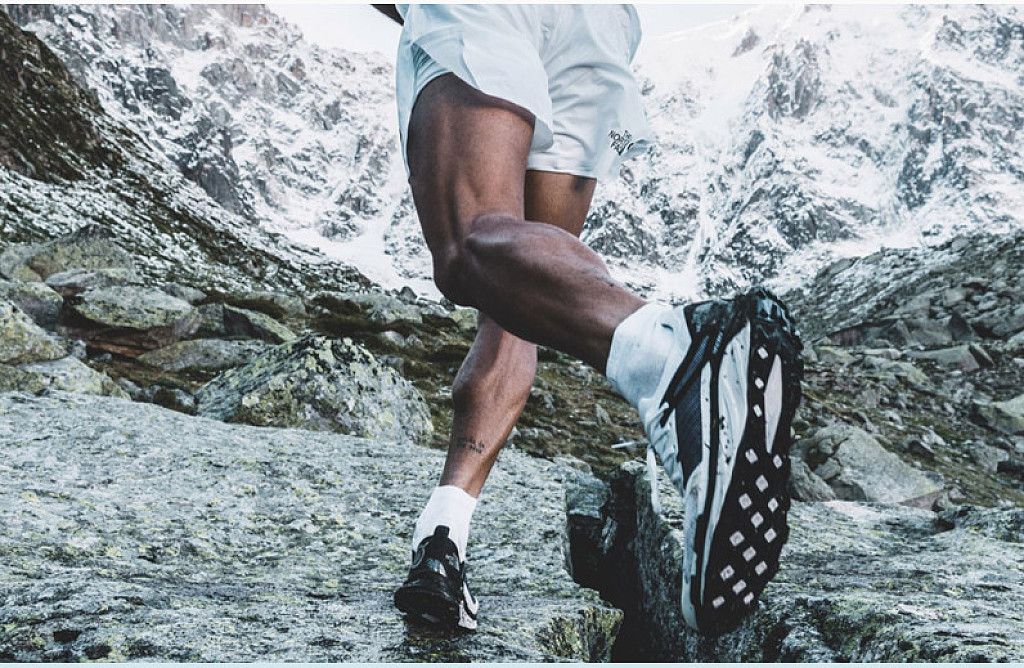
The North Face Just Dropped the First Carbon-Plated Trail Running Shoe
Controversial speed is coming to a mountain near you
I’ve tested out carbon-plated shoes from a variety of running brands over the last 12 months. A movement that began with Nike’s NEXT% line — which propelled Kenyan legend Eliud Kipchoge to a mind-boggling sub-two hour marathon back in late 2019 — has now firmly taken over the sport.
For the skeptics out there, these shoes are legit. There’s a reason the success of Nike’s shoe led to allegations of “gear doping,” new rules from the World Athletics body, and a call to arms for competitors like Adidas, ASICS and Saucony. The shoes generally combine tall, lightweight foam (which running journalist Amby Burfoot once compared to having extra leg muscles), with a carbon insert, meant to facilitate maximum energy retention — to “propel you froward” as the brand copywriters like to say.
After all that initial noise, they’re not only here to stay; they’re poised to take over other sub-sections of the sport. Yesterday, The North Face dropped a first look at its VECTIV series, the world of trail running’s first official carbon-plated running shoes.
I have zero complaints about my carbon-plated shoes. (Lately, I’ve been running in the Nike ZoomX Vaporfly NEXT%s and the Saucony Endorphin Pros.) In a year without races, they’ve helped me to log some benchmark times I’m proud of. That said, those shoes are noticeably reliant on dry, clean surfaces. They like asphalt, they prefer track. Whenever either is slick from rain or snow, or — god forbid — roots or leaves get involved, they have a ton of trouble gripping the ground.
The North Face, a brand as synonymous with all-elements gear as any on the planet, has designed a carbon-plated shoe that can actually handle unforgiving trails. Most running brands have their athletes come in and test out prototypes on a treadmill; TNF trail runners logged up to 600 miles in a single pair, and much of them on punishing terrain. One runner ran 93 miles around Mt. Rainier in them this past summer.
The premier release in TNF’s line, the FLIGHT VECTIV, aims for stability and strength, like any other reliable trail running shoe. It has a high-grip outsole, while its mesh fibers are literally reinforced with Kevlar. But it’s built for speed. The shoes contain a 3D plate directly underneath the foot, alongside a rocker midsole. Ultrarunner Pau Capell described the shoes as a “downhill weapon.” Trail runners often have to slow down due to practical concerns, not for lack of spirit. These shoes are designed to let them fly.
And, crucially, to avoid injury while doing so. The maximalist foam included in carbon-plated shoes blunts the impact of runners logging so many miles. Ultrarunners are on another level entirely; they’re incessantly susceptible to stress fractures, plantar fasciitis, sprained ankles, cramps, and broken toes. But the VECTIV line — which also includes the INFINITE and the ENDURIS, two shoes less concerned with speed — promises 10% less “impact shock.” It could bring more newcomers to the sport, and keep around those who already love it.
(02/20/2021) ⚡AMP
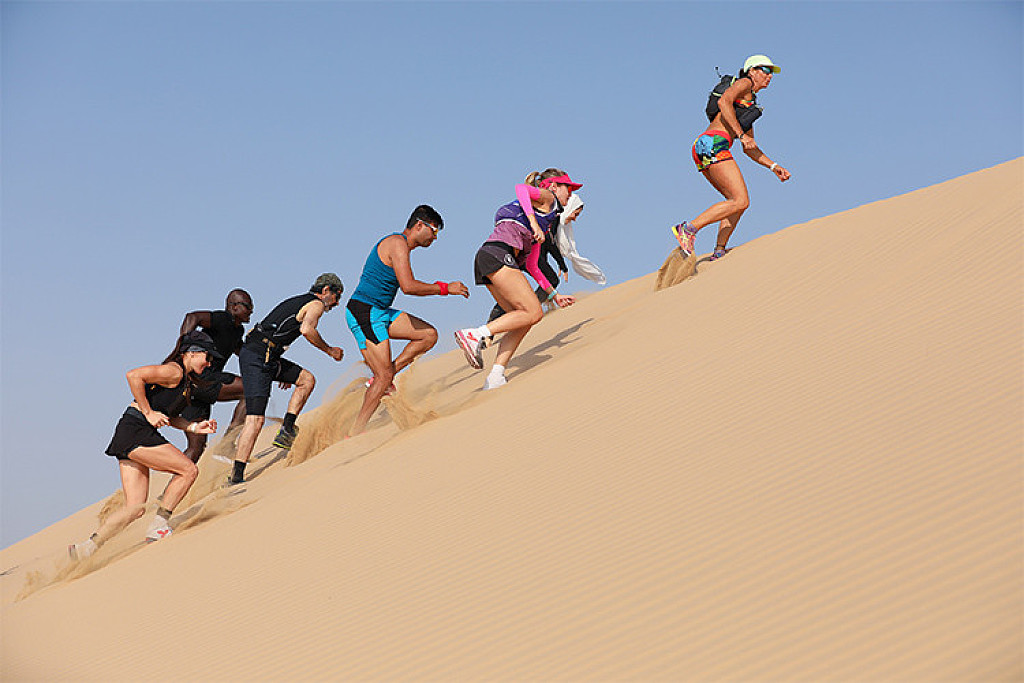
Organizers promise an unforgettable experience for Al Marmoom Ultramarathon
Preparations for next month’s 50KM Al Marmoom Ultramarathon have picked up pace and organisers have promised a safe and unforgettable race that will test the participants’ endurance and resolve.
Organized under the umbrella of Dubai Sports Council, in association with Dubai Municipality and FittGROUP, the 50km Al Marmoom Ultramarathon will take place on Friday, March 5 in Al Marmoom Desert Conservation Reserve.The event will also offer two shorter races of 10km and 5km, and all three races will take runners into the desert, across some fascinating landscape.
All participants will receive finisher medals and the top three rankings in each category, male and female, will be awarded trophies.
Registration for the event is still open through the official website, https://www.ultramarathon.ae, or Hopasports (https://www.hopasports.com/en/event/al-marmoom-ultramarathon-50km-10km-5km), and race organisers have organised a series of practice sessions, or ‘build up’ runs, for registered participants in Al Marmoom Desert Conservation Reserve every Friday, until Feb.26.
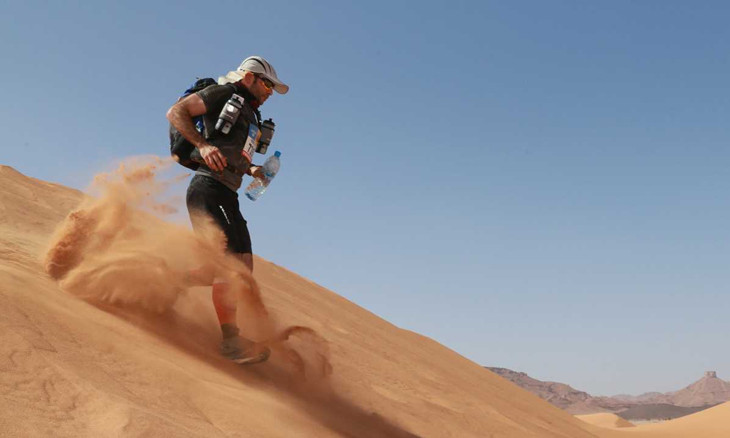
Speaking about the race, Danil Bornventure, Race Director of FittGROUP, said: “The 50km Al Marmoom Ultramarathon will be a challenging race, that will test participants’ endurance, both mental and physical stamina, as well as strength and courage.
“Following the popular success of Al Marmoom Dune Run, we are offering the shorter distances of 10km and 5km to encourage the many runners who wish to experience the challenge of a desert race.This event brings together the growing running community, both elite and recreational runners.“It is being organised after unprecedented demand from runners who are looking for challenging competitions at all levels.”
Speaking about the health and safety measures in place, Bornventure added: “The health and safety of participants, organizers and crew is our highest priority. In response to the COVID-19 pandemic, we will follow all the guidelines and protocols of the relevant authorities and ensure that every precautionary measure is implemented and adhered to.
“We will act vigilantly to safeguard the wellbeing of everyone involved.”Al Marmoom Desert Conservation Reserve is the largest project of its kind in the world, spread acros more than 40 hectares of pristine shrub land that is home to 204 species of native birds, 158 species of migratory birds and many other endangered species, as well as Arabian Oryx, Arabian gazelles, sand Gazelles, foxes, and wild cats.
With natives of more than 200 countries calling Dubai their home, Dubai Sports Council has also been regularly launching new initiatives and adding new events to its calendar for the benefit of every member of Dubai’s diverse community.Through such events, the Council also seeks to provide members of the community an opportunity to compete in unique events like Al Marmoom Ultramarathon in a fun-filled environment, and also encourage them to embrace a physically active lifestyle.
(02/17/2021) ⚡AMP

Al Marmoom Ultra Marathon
Launched under the initiative of UAE Vice President and Prime Minister and Ruler of DubaiHis Highness Sheikh Mohammed bin Rashid Al Maktoum, Al Marmoom Desert Conservation Reserve will host the world's longest desert ultra-run Meraas Al Marmoom Ultramarathon. Meraas Al Marmoom Ultramarathon is a 300km, 100km and 50km race across desert terrain and will be held 9th to 11th December...
more...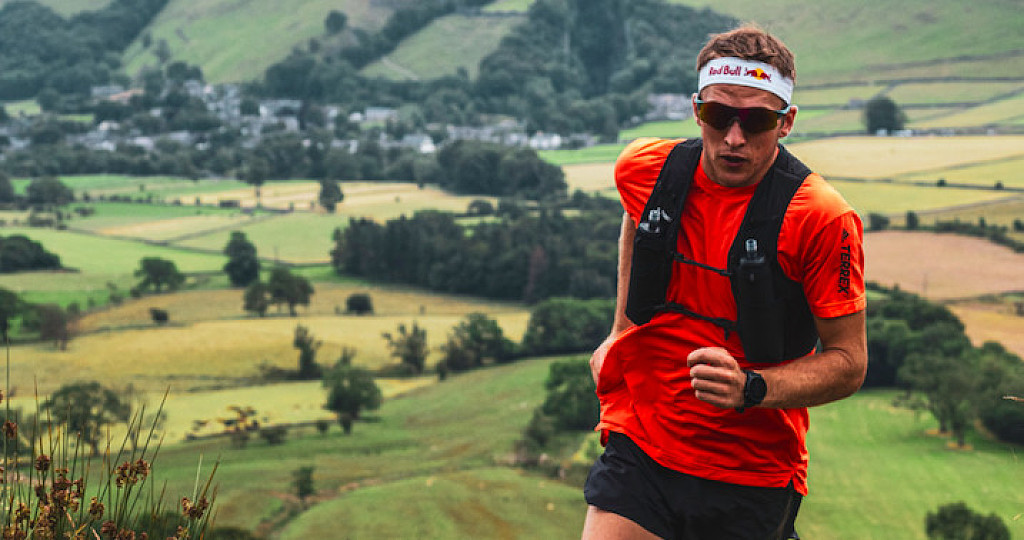
Ultrarunner Tom Evans prepares for his biggest race at Olympic marathon trials
Like many, ultrarunner Tom Evans has struggled with the lack of races in lockdown. The former army captain burst onto the ultrarunning scene in 2017, coming third in the six-day Marathon des Sables, and last year he set a new record in the Tarawera 102km Ultra Marathon, in New Zealand. But he has had to adapt to circumstances and is now setting his sights on the marathon in the rescheduled Tokyo Olympics.
We talked to the 29-year-old about swapping the trails for the pavements, his mental strength, the Olympic marathon trials and his role as a Garmin ambassador.
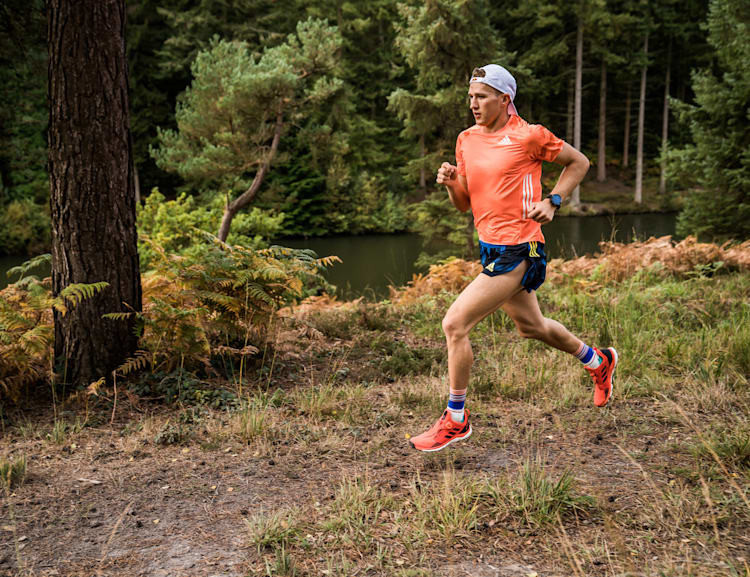
You’ve set your sights on the Tokyo Games. How did this happen?
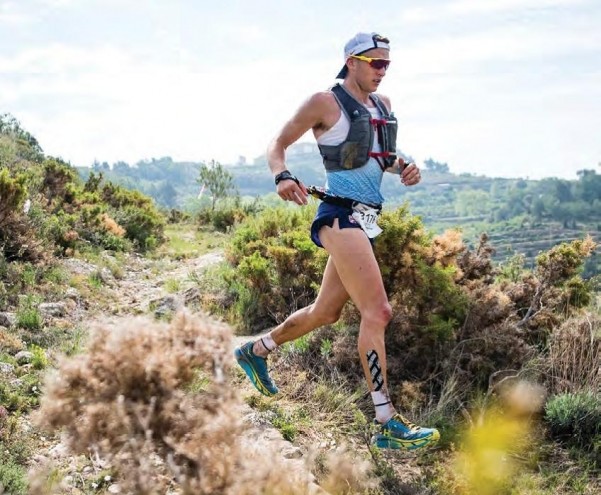
‘At the beginning of the pandemic, Tokyo was not on my list whatsoever – I very much planned on staying on the trails and running long rather than running fast. I guess what the pandemic has taught me is that I like structure and I’m a very goal-orientated athlete and person. I have to have goals, whether it’s “Today I’m going to list 10 things on eBay” or something bigger; I have to set goals and achieve those goals. It’s the same with my running, with there being so little opportunity to race, I thought I need something to set my sights on and if something is going to happen, it’s going to be the Olympics.
‘[With the lockdown restrictions] we couldn’t drive to run or go on training camps, which is how I would normally do my trail running and my ultrarunning. It’s all been very much running from the door, so I’ve been running a lot more on the road, which has led to running a bit quicker and that’s opened my eyes to what I could run at the marathon trials at the end of next month.’ [The event will take place on a looped course in Kew Gardens, London, on Friday, March 26.]
How do you feel about the trials?
‘I’m really excited – for me, it’s really unknown. I think I’ll be able to take a lot of lessons I’ve learnt from ultrarunning into the race and I’m really looking forward to the challenge. It’s been great fun training for it and to now get the opportunity to push myself to the limits and see what I’m capable of.’
‘You know that during a marathon you’re going to hurt and you know that when it starts to hurt, the training that you have done before is what’s setting you up to keep doing it. I go into a race saying, “I know this is going to hurt” and when it starts hurting I think, “Bring it on; I’ve done the training, I trust myself and I knew this was going to happen and now it’s happening, it’s no surprise.”’
(02/16/2021) ⚡AMPby Jane McGuire

Tokyo 2020 Olympic Games
Fifty-six years after having organized the Olympic Games, the Japanese capital will be hosting a Summer edition for the second time, originally scheduled from July 24 to August 9, 2020, the games were postponed due to coronavirus outbreak, the postponed Tokyo Olympics will be held from July 23 to August 8 in 2021, according to the International Olympic Committee decision. ...
more...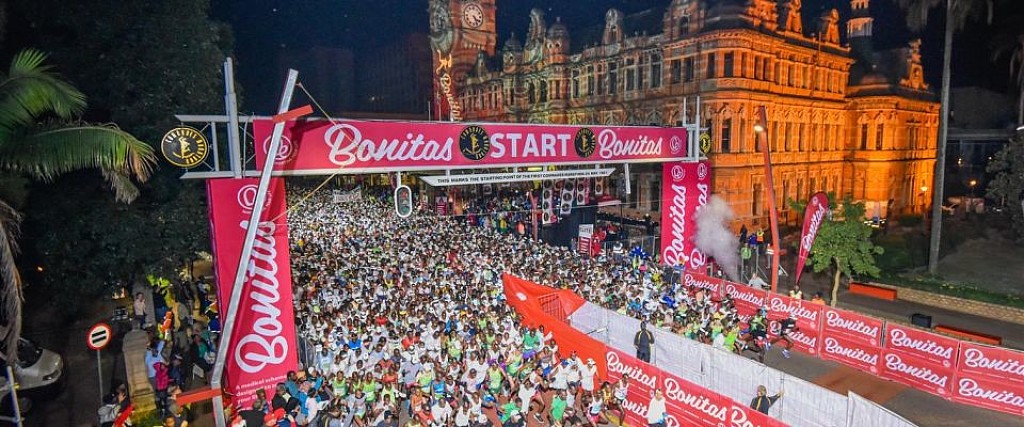
Comrades Marathon denies financial problem speculations
Comrades Marathon Association (CMA) Tried to distance itself from inaccurate media speculation that 100-year-old road vehicles are in a dangerous financial position.
This comes after this week’s announcement that the 2021 race was canceled due to the coronavirus, as it was in 2020.
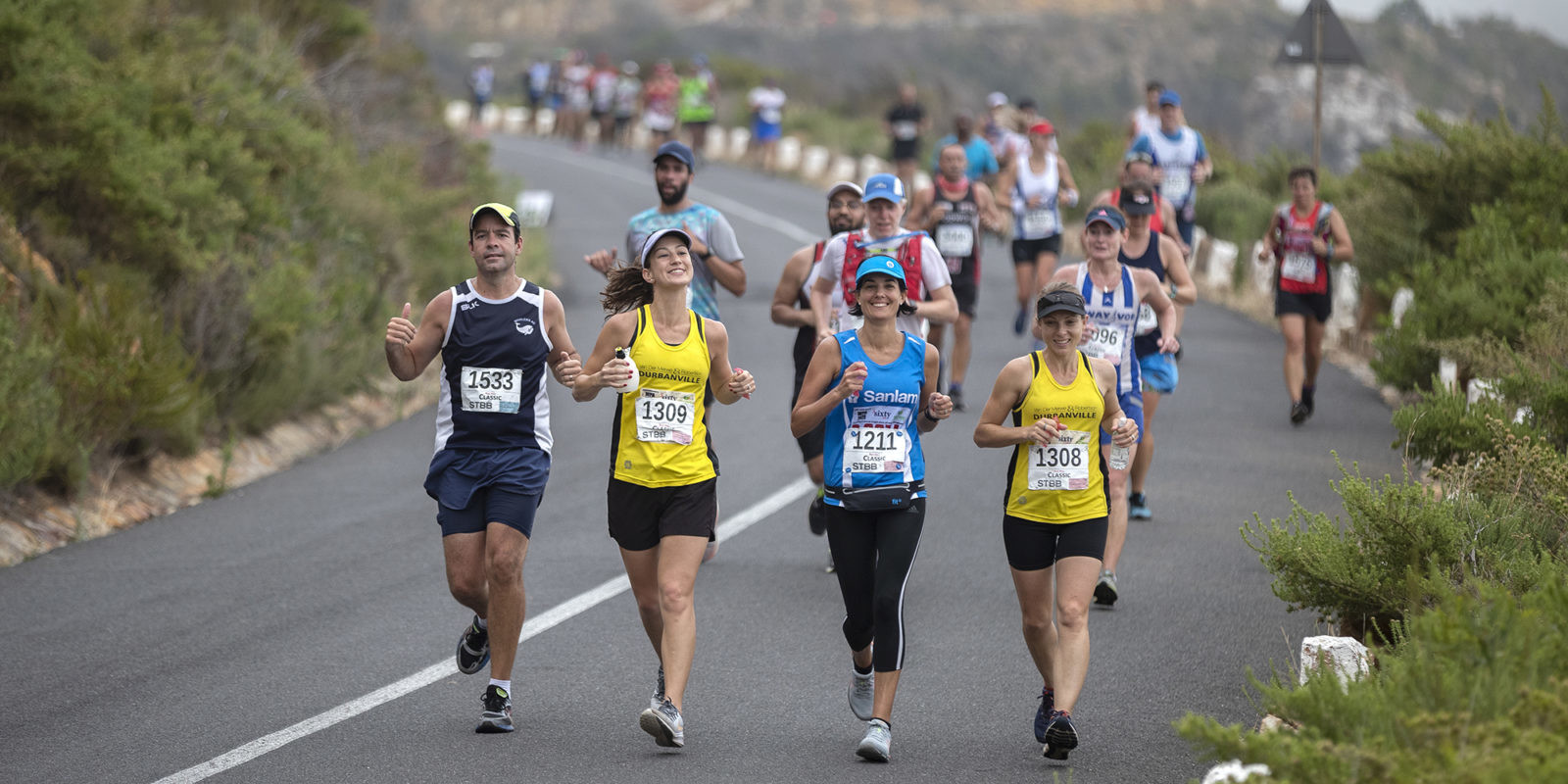
“We want to correct recent media reports claiming that the Comrade Marathon Association is facing financial difficulties and the future of the race is at stake,” Cheryl Win said in a statement on Friday.
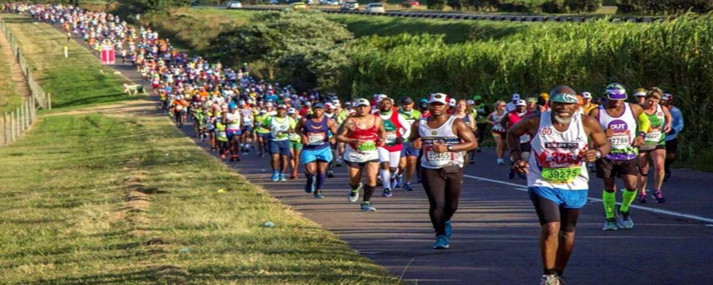
“On the contrary, despite the cancellation of the second consecutive edition of the Comrade Marathon due to Covid-19 and the resulting blockade and consequent restrictions on mass participation sporting events, it is actually in a healthy financial position. ..
“Last year, we hosted our first highly successful virtual comrade marathon event and planned another event on June 13th, and we’ve accumulated 28 million rants over the last two decades to sustain our future. We are in a privileged position to have more than a reserve fund for our world-famous event.
“In fact, the CMA is currently in a very healthy financial position, thanks to the careful financial management of the current board and the foresight of the previous administration to secure funding in anticipation of a future’rainy day’. It is in.
“The oldest, largest and most famous ultramarathon in the world, and one of South Africa’s most important sports treasures, is facing a tight financial future or is on the verge of closing. I want to stop speculation.
“The mention of potential staff reductions is premature and unfounded. To staff who have provided viable suggestions to survive the storm and continue to serve the organization diligently in the current harsh climate. Thank you.
“The CMA Board’s top priority is to protect the health, safety and well-being of runners, staff, volunteers, sponsors, stakeholders and South Africans, while its top priority is to be a symbolic state agency. Maintaining a volunteer marathon and is economically important for stakeholder sports in Kwazul Natal and South Africa for the next 100 years.
“What CMA is doing effectively and responsibly is to string the purse in case the next comrade marathon can be held safely, in line with the green light from the state and national athletics federations. Protecting all possible resources. With government regulations. “
(02/13/2021) ⚡AMPby Richard Damato
Comrades Marathon
Arguably the greatest ultra marathon in the world where athletes come from all over the world to combine muscle and mental strength to conquer the approx 90kilometers between the cities of Pietermaritzburg and Durban, the event owes its beginnings to the vision of one man, World War I veteran Vic Clapham. A soldier, a dreamer, who had campaigned in East...
more...
German Ultrarunner Florian Neuschwander Breaks the 100K Treadmill World Record
He ran a 6:13 pace for six and a half hours on a treadmill!
German ultrarunner Florian Neuschwander has proven once again that he is a master of the treadmill, capturing the 100K treadmill world record on January 30.
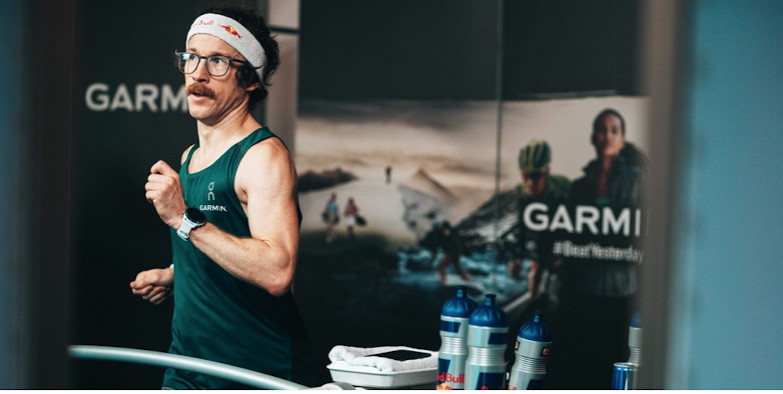
The 39-year-old completed the distance in 6:26:08—an average of 6:13 per mile!—beating the previous record by six minutes.
Neuschwander, 39, is no stranger to treadmill records. He captured the 50K treadmill world record in March 2020, running 2:57:25. But that mark was bested a few more times before the end of the year by runners like Matthias Kyburz and Tyler Andrews.
In October, Neuschwander considered again going after the 50K record—Andrews’s 2:42:51—but instead, he thought he might be more successful going after the 100K record of 6:39:25, set by Mexican-American runner Mario Mendoza in June 2020.
“I planned this run because where I live, we have good snow and it’s icy, and I don’t like to run every day in the cold temperatures or slip,” Neuschwander told Runner’s World. “I always train on the treadmill in the winter and we decided to do it with about 10 to 12 weeks to prepare.”
Neuschwander kept his mileage relatively low for training, logging between 60 to 80 miles a week. He supplemented that with Zwift cycling and backcountry skiing. His biggest runs came on long treadmill efforts: two marathons, four 50Ks, and two 60Ks. The run that gave him the most confidence for his record attempt was a 50K test run he did, which he finished six minutes faster than his world record time.
With the help of one of his sponsors, Garmin, and treadmill company, H/P/Cosmos, Neuschwander set up in a small gym near his home in Germany. With plenty of fresh air flowing in and three screens in front of him to look at for entertainment and motivation, Neuschwander put some Squirrel Nut Butter on his feet to prevent blisters, donned his On Cloudflow shoes, and started up his treadmill and Zwift for the six-plus hours of running ahead. 

“The first half was flying by. It was really fast,” he said. “On the screens, I had comments, texts, and videos that helped me a lot from people who were watching the live stream. That helped me get through to the 60K, which I knew should be easy because I had done it before. After that, it was uncharted territory.”
Neuschwander’s treadmill speed was around 15.6 km/hr throughout the entire run, but his toughest stretch between came between 75 and 85K, when he got some cramps in his quads and he dropped his speed down to 15.1 km/hr (9.38 mph), his slowest of the day. He continued to take his Maurten mixed drink every hour for fuel, supplemented by water, which helped the cramps subside.
For the final 10K, Neuschwander added two Red Bulls mixed with water to his routine and cranked up the speed to 17 km/hr (10.5 mph). This turned out to be too fast after six hours of running, but that didn’t stop him from trying to go faster.
“I went again to 15.5, and then I’d move it up and down, up and down, up and down because I wanted to go faster faster faster,” he said. “But at the same time, I was afraid I’d cramp so I slowed down again. But that last 10K was 36:05, which meant I speeded up after six hours of running.”
Neuschwander got the record comfortably, finish six minutes ahead of the previous record with a time of 6:26:08. That’s an average of 6:13 per mile. The new record-holder admitted that he was worried he would have wobbly legs or that he’d fall down when he got off, but he didn’t experience that.
“For me, treadmill running isn’t really hard,” he said. “The main thing is to have fresh air. This is hard, but if you have a lot of fresh air, your heart rate goes down. In the gym, we had a big door open and it was nearly like outdoor running but in one place.”
With most things still shut down, celebrations were limited after his record run. Neuschwander said he celebrated with his wife and kid and he ate two big pizzas and had two beers.
With his race schedule uncertain at the moment because of the pandemic, Neuschwander plans to continue training for the 100K German Championships in the fall. There or in time, he hopes to capture the German 100K record—6:24:29. After seeing Jim Walmsley miss the 100K record by 11 seconds on January 23, he said his goal that he’d be happy with is a sub 6:20.
(02/07/2021) ⚡AMPby Runner’s World
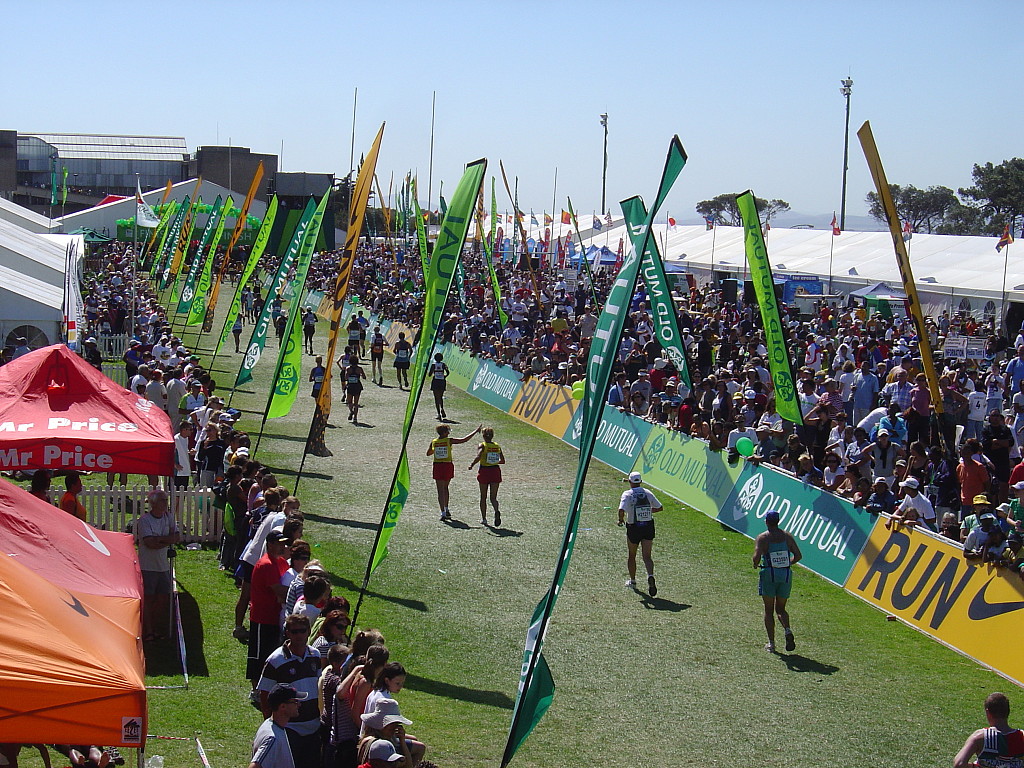
Two Oceans Marathon Cancelled Due To COVID-19
Cape Town’s premier running event, the Two Oceans Marathon scheduled for Easter Saturday, April 3, has been cancelled because of the COVID-19 pandemic. The 56 km race is the second largest ultramarathon in South Africa and has been held since 1970. According to a media release by the race organizers, “the current pandemic climate, [and] the health risks around hosting the… mass participation event are far too significant for the event to proceed safely.”
“It is never pleasant when an event like this is disrupted and which in turn affects the fixture calendar and the many athletes who are already planning for that day,” said Jakes Jacobs, President of Western Province Athletics (the provincial authority for the event). “However, it is even more painful to us when an event of this magnitude is forced to be cancelled. Unfortunately, the pandemic knows no bounds and… no one knows when it will be put under control or even be eliminated, if at all. We have consulted with Athletics South Africa regarding the race. Western Province Athletics and the organizers eventually took this final decision after taking into consideration the many factors in the management of the event and the current behavior of the virus.”
The organizers said while they did consider a postponement of the event to a later date, they are “planning alternative events and programmes… within the prevailing regulations”. These will be announced soon.
Cape Town’s premier running event, the Two Oceans Marathon scheduled for Easter Saturday, April 3, has been cancelled because of the COVID-19 pandemic. The 56 km race is the second largest ultramarathon in South Africa and has been held since 1970. According to a media release by the race organizers, “the current pandemic climate, [and] the health risks around hosting the… mass participation event are far too significant for the event to proceed safely.”
“It is never pleasant when an event like this is disrupted and which in turn affects the fixture calendar and the many athletes who are already planning for that day,” said Jakes Jacobs, President of Western Province Athletics (the provincial authority for the event). “However, it is even more painful to us when an event of this magnitude is forced to be cancelled. Unfortunately, the pandemic knows no bounds and… no one knows when it will be put under control or even be eliminated, if at all. We have consulted with Athletics South Africa regarding the race. Western Province Athletics and the organizers eventually took this final decision after taking into consideration the many factors in the management of the event and the current behavior of the virus.”
The organizers said while they did consider a postponement of the event to a later date, they are “planning alternative events and programmes… within the prevailing regulations”. These will be announced soon.
The Two Oceans was also cancelled in 2020, when it would have been the 51st running of the ultramarathon (and the 23rd of the accompanying half-marathon). When it was last held in 2019, the winners were Bongmusa Mthembu and Gerda Steyn (her second consecutive victory). The race had 12,026 finishers; the combined total of 26,509 finishers in the ultra and half-marathon easily makes it the biggest running event in South Africa.
Almost simultaneously with this news, Athletics South Africa announced that track and field events can resume this weekend after several months of no activity. It is expected that the country’s COVID-19 lockdown level will be lowered by the government before or on February 15, which would increase the limit on the number of people allowed at public gatherings such as track and field meetings and road races.
(02/07/2021) ⚡AMPby Let’s Run
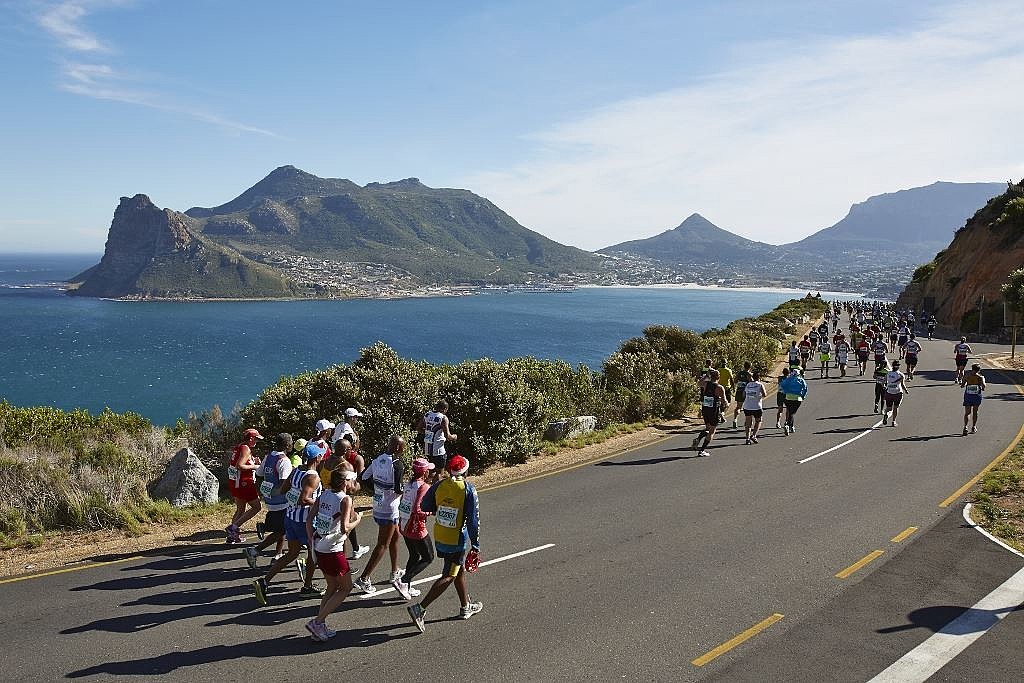
2021 Two Oceans Marathon has been cancelled due to the pandemic
Cape Town’s premier running event, the Two Oceans Marathon scheduled for Easter Saturday, April 3, has been cancelled because of the COVID-19 pandemic.
The 56 km race is the second largest ultramarathon in South Africa and has been held since 1970. According to a media release by the race organizers, “the current pandemic climate, [and] the health risks around hosting the… mass participation event are far too significant for the event to proceed safely.”
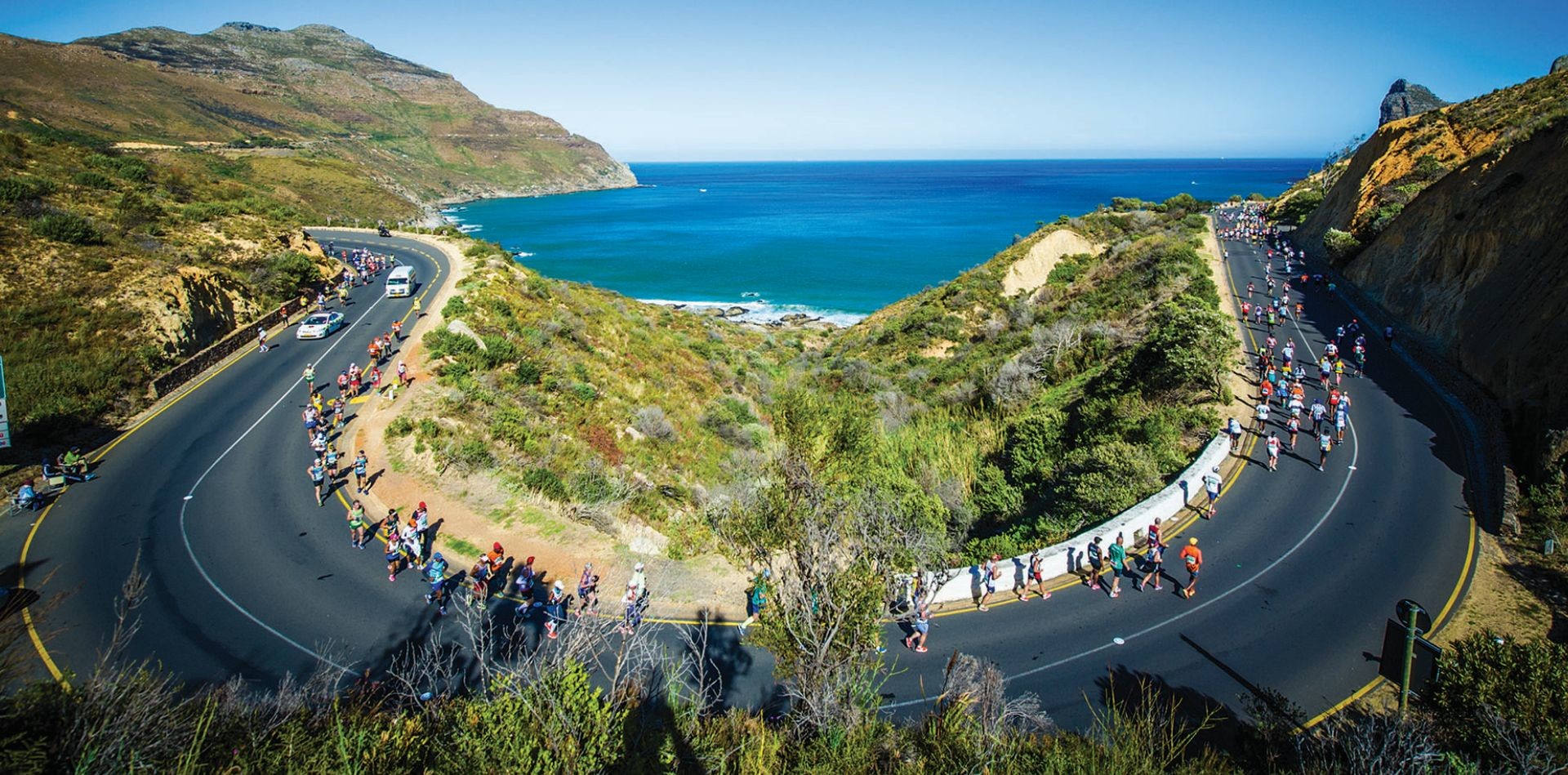
“It is never pleasant when an event like this is disrupted and which in turn affects the fixture calendar and the many athletes who are already planning for that day,” said Jakes Jacobs, President of Western Province Athletics (the provincial authority for the event). “However, it is even more painful to us when an event of this magnitude is forced to be cancelled. Unfortunately, the pandemic knows no bounds and… no one knows when it will be put under control or even be eliminated, if at all.
We have consulted with Athletics South Africa regarding the race. Western Province Athletics and the organizers eventually took this final decision after taking into consideration the many factors in the management of the event and the current behavior of the virus.”
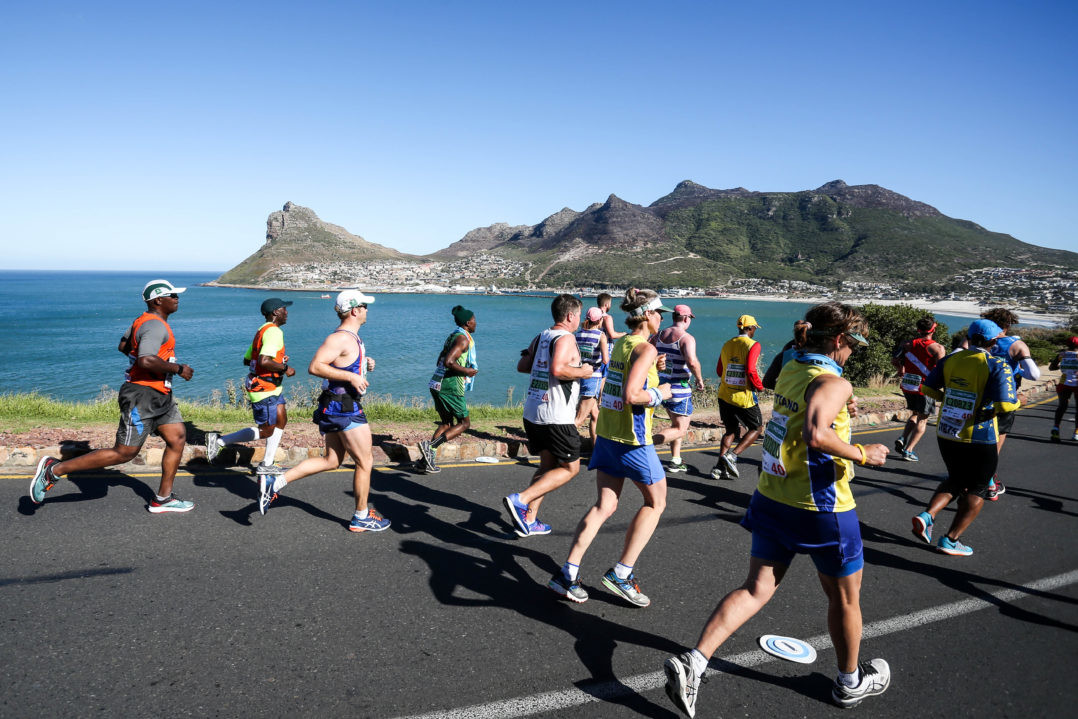
The organizers said while they did consider a postponement of the event to a later date, they are “planning alternative events and programmes… within the prevailing regulations”. These will be announced soon.
The Two Oceans was also cancelled in 2020, when it would have been the 51st running of the ultramarathon (and the 23rd of the accompanying half-marathon). When it was last held in 2019, the winners were Bongmusa Mthembu and Gerda Steyn (her second consecutive victory). The race had 12,026 finishers; the combined total of 26,509 finishers in the ultra and half-marathon easily makes it the biggest running event in South Africa.
Almost simultaneously with this news, Athletics South Africa announced that track and field events can resume this weekend after several months of no activity. It is expected that the country’s COVID-19 lockdown level will be lowered by the government before or on February 15, which would increase the limit on the number of people allowed at public gatherings such as track and field meetings and road races.
(02/06/2021) ⚡AMPby Riël Hauman
Two Oceans Marathon
Cape Town’s most prestigious race, the 56km Old Mutual Two Oceans Ultra Marathon, takes athletes on a spectacular course around the Cape Peninsula. It is often voted the most breathtaking course in the world. The event is run under the auspices of the IAAF, Athletics South Africa (ASA) and Western Province Athletics (WPA). ...
more...
Why Runners Should Treat Winter as a Training Tool
In the winter of 1939, when the military posted Swedish miler Gundar Hagg to the far north of that nordic country, he devised a unique training program of running on trails through knee- or hip-deep snow. Most days he would do 2500 meters in snow for strength, followed by 2500 meters on a cleared road for turn-over. But during those times when he couldn't find cleared roads-sometimes for weeks-he'd run up to the full 5K in snow. The next summer he set huge PRs, coming within one second of the mile world record.
Hagg continued his routine in subsequent winters, devising a hilly 5K loop in a different locale that trudged through snowy forest for 3000 meters then ended with a 2000 meter stretch of road where he could run at full speed. He kept improving, and the summer of 1942 he set 10 world records between 1500m and 5,000m.
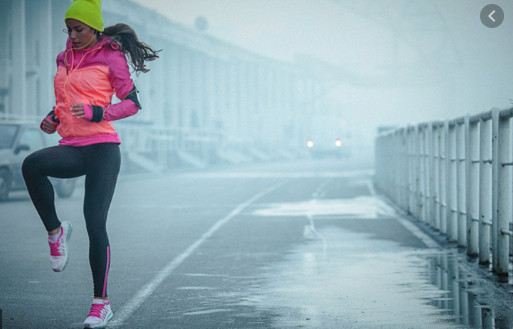
While Hagg's routine was created out of necessity, he obviously valued the snowy training. When he moved to a city with a milder climate, he wrote in a training journal, "It will be harder running than any previous year. Probably there won't be much snow." And every winter he scheduled trips north to train on the familiar, tough, snowy trails.
Hagg isn't the only runner who has found winter training valuable. Roger Robinson, who raced internationally for England and New Zealand in the 1960s before setting masters road records in the '80s, recalls his training for the deep-winter English cross country championships of the 1950's and 60s. "We ran, often at race pace, over snow, mud, puddles, deep leaves, ploughed fields, scratchy stubble, stumpy grass, sticky clay, sheep-poo, whatever, uphill and down," Robinson says. "And thus, without going near a gym or a machine, we developed strength, spring, flexibility, and stride versatility that also paid off later on the road or track; I made one of my biggest track breakthroughs after a winter spent running long intervals on a terrain of steep hills and soft shifting sand."
Robinson, now 80, with two artificial knees, still runs in the cold and slop. "Running is still in great part about feeling the surfaces and shape of the earth under my feet," he says.
Hagg and Robinson are of a different generation than those of us with web-connected treadmills that can let us run any course on earth from the comfort of our basement, but they're on to something we might still benefit from: Winter can be an effective training tool. Here are five reasons you'll want to bundle up and head out regardless of the conditions, indeed, why you can delight when it is particularly nasty out.
1) Winter Running Makes You Strong
As Hagg demonstrated and Robinson points out, winter conditions work muscles and tendons you'd never recruit on the smooth, dry path. A deep-winter run often ends up being as diverse as a set of form and flexibility drills: high knees, bounds, skips, side-lunges, one-leg balancing
Bill Aris, coach of the perennially-successful Fayetteville-Manlius high school programs, believes that tough winter conditions are ideal for off-season training that has the goal of building aerobic and muscular strength. He sends the kids out every day during the upstate New York winter, and says they come back, "sweating, exhausted and smiling, feeling like they have completely worked every system in their bodies."
2) Winter Running Makes You Tough
No matter how much you know it is good for you and that you'll be glad when you're done, it takes gumption to bundle up, get out the door and face the wintry blast day after day. But besides getting physically stronger, you're also building mental steel. When you've battled snow and slop, darkness and biting winds all winter, the challenges of distance, hills and speed will seem tame come spring.
"If you have trained in deep snow, or battled up a slippery hill into freezing sleet, or lifted your feet out of sticky clay for an hour, the race can hold no fear," Robinson says. "If you do real winter training, Boston in April can throw nothing at you that you have not prepared for."
3) Winter Running Improves Your Stride
Running on the same smooth, flat ground every day can lead to running ruts. Our neuromuscular patterns become calcified and the same muscles get used repeatedly. This makes running feel easier, but it also predisposes us to injury and prevents us from improving our stride as we get fitter or improve our strength and mobility. Introducing a variety of surfaces and uncertain footplants shakes up our stride, recruits different muscles in different movement patterns, and makes our stride more effective and robust as new patterns are discovered.
You can create this stride shake-up by hitting a technical trail. But as Megan Roche, physician, ultrarunning champion, clinical researcher at Stanford and Strava running coach, points out, "A lot of runners don't have access to trails. Many runners are running on flat ground, roads-having snow and ice is actually helpful, makes it like a trail."
In addition to creating variety, slippery winter conditions also encourage elements of an efficient, low-impact stride. "One thing running on snow or ice reinforces is a high turn over rate and a bit more mindfulness of where your feet are hitting the ground," Roche says. "And those two things combine to a reduced injury risk." After a winter of taking quicker, more balanced strides, those patterns will persist, and you'll be a smoother, more durable runner when you start speeding up and going longer on clearer roads.
"Exercising in general, particularly during periods of higher cold or flu season has a protective effect in terms of the immune system," says Roche. You get this benefit by getting your heart rate up and getting moving even indoors, but Roche says, "Getting outside is generally preferable-fresh air has its own positive effect."
Cathy Fieseler, ultrarunner and sports physician on the board of directors of the International Institute of Race Medicine (IIRM), says there's not much scientific literature to prove it, but agrees that in her experience getting outside has health benefits. "In cold weather the furnace heat in the house dries up your throat and thickens the mucous in the sinuses," Fieseler says. "The cold air clears this out; it really clears your head."
Fieseler warns, however, that cold can trigger bronchospasms in those with asthma, and Roche suggests that when it gets really cold you wear a balaclava or scarf over your mouth to hold some heat in and keep your lungs warmer. "Anything below zero, you need to be dressed really well and mindful of your lungs, making sure that you're not exposing your lungs to too cold for too long," Roche says.
For all its training and health benefits, the thing that will most likely get most of us out the door on white and windy days is that it makes us feel great. "A number of runners that I coach and that I see in clinics suffer from feeling more depressed or a little bit lower in winter," says Roche. "Running is a great way to combat that. There's something really freeing about getting out doors, feeling the fresh air and having that outdoor stress release."
Research shows that getting outside is qualitatively different than exercising indoors. A 2011 systematic review of related studies concluded, "Compared with exercising indoors, exercising in natural environments was associated with greater feelings of revitalization and positive engagement, decreases in tension, confusion, anger, and depression, and increased energy." They also found that "participants reported greater enjoyment and satisfaction with outdoor activity and declared a greater intent to repeat the activity at a later date."
That "intent to repeat" is important. Running becomes easier and more enjoyable, the more you do it. "Consist running is really the most fun running," Roche says. "It takes 4 weeks of consistency to really feel good. Your body just locks into it."
Most people associate consistency with discipline, and setting goals and being accountable is an effective way to build a consistent habit. Strava data shows that people who set goals are much more consistent and persistent in their activities throughout the year. The desire to achieve a goal can help overcome that moment of inertia when we're weighing current comfort with potential enjoyment.
But the best way to create long-term consistency is learning to love the run itself. Runners who make it a regular part of their life talk little about discipline and more about how much they appreciate the chance to escape and to experience the world on their run each day-even, perhaps especially, on the blustery, cold, sloppy ones.
"I want to get out into whatever the weather is, the environment is. I want the experience," Robinson says. "Yes, in winter it's nice to stay warm inside; except when you go outside once a day to run, in whatever weather and on whatever footing nature provides. That's called living. It's also good for your later races."
(02/06/2021) ⚡AMPby Trail Runner Magazine
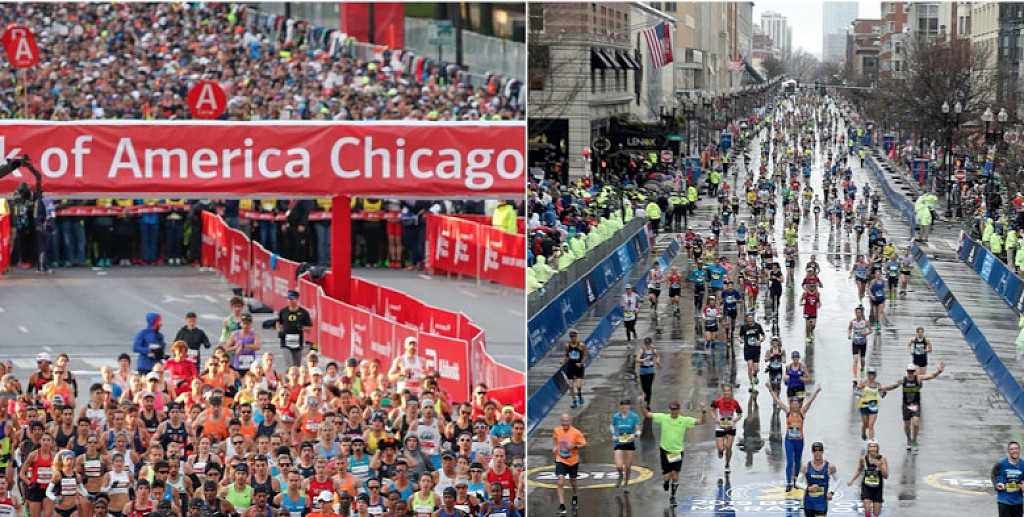
Thinking About the Boston-Chicago Double? Before You Commit, Here Are a Few Things to Consider
The rare chance to run two major marathons on back-to-back days is tempting...
The 2021 World Marathon Majors schedule isn’t set in stone, but if all goes to the current plan, it is going to look vastly different this fall.

With the announcement that the Boston Marathon will take place on October 11, the six World Marathon Majors will be run within a six-week period between September 26 and November 7. And, don’t forget about the Olympic Marathons, which will take place on August 7 (women’s) and August 8 (men’s).
Berlin Marathon: September 26
London Marathon: October 3
Chicago Marathon: October 10
Boston Marathon: October 11
Tokyo Marathon: October 17
New York City Marathon: November 7
Yes, you’re seeing that correctly—Chicago and Boston are scheduled to be on back-to-back days.
This isn’t the first time we’ve seen back-to-back marathon majors like this. The London Marathon and Boston Marathon have been a day apart 11 times in the history of the races, since both events happen in April. The most recent occurrence of this was in 2011.
While we may see watered-down elite fields at these races as a result of this packed schedule, an intriguing challenge has also emerged: a marathon major double with Chicago and Boston.
In additional to a physical challenge, the logistics of running races in different parts of the country on consecutive days is complex—but it’s not unheard of. We see this in the World Marathon Challenge, where runners like Becca Pizzi run seven marathons in seven days on seven continents. Michael Ortiz, a New York City-based runner, ran back-to-back 100-milers on his quest to complete 100 100-milers in 100 weeks, which he finished in October 2020.
The master of consecutive races is Michael Wardian. He did 10 marathons in 10 days, and he’s even doubled up marathons on the same day when, in 2013, he won the Rock ’n’ Roll San Antonio Marathon in the morning and then took 10th at the Rock ’n’ Roll Las Vegas Marathon that night.
If your interest is piqued by this challenge, here’s a few things you need to consider, with some tips from the master himself.
You need to get entry into each marathon
For starters, the races are tough enough to get into, with Chicago’s drawing and guaranteed-entry systems, and Boston’s qualifying times.
If by chance you do get into both, you’re shelling out $180 for Boston and $205 for Chicago, and that’s if you’re from the U.S. If you’re an international runner, the race entry fee is more like $240 and $230, respectively.
You need to pick up both race bibs
An often-overlooked facet of race weekend is bib pickup. Typically these large marathons don’t have race-day bib pick-up, which poses a problem if you’re running another marathon the day before the race.
Some races, like Boston, are usually pretty good about letting someone else pick up your bib for you, if you follow their requirements. Wardian recommends recruiting a team to help you out with this.
Here’s a possible scenario for the Chicago-Boston weekend:
Fly to Boston on Friday to get that bib
Fly to Chicago on Saturday to pick up that bib
Run the Chicago Marathon on Sunday, then later in the day fly to Boston
Run the Boston Marathon on Monday
But that extra flight and overnight stay in Boston is big cost just to pick up a bib. And speaking of costs...
The cost of traveling from the Midwest to New England on race weekend will be high
Assuming someone can pick up your bib for you in Boston, you’ll need, at minimum, a flight from your hometown to Chicago, a flight from Chicago to Boston, then a flight from Boston back to your hometown. If your hometown is either Chicago or Boston, then lucky you! You can eliminate one of those flights.
Flights are cheap right now because of the pandemic, but they could go up soon if COVID-19 cases start to decline, with the vaccine. In the third quarter of 2019, the average cost of a flight originating at Chicago’s O’Hare airport was $333.50, and the average cost of a flight originating at Boston’s Logan airport was $329.45, according to the Bureau of Transportation Statistics. (However we recently spotted some late-afternoon, one-way flights from O’Hare to Logan for less than $200 on Google Flights!) Based on that information, your flights could run you close to $1,000.
Keep in mind, because you have a limited window for the time of departure for your flight from Chicago and Boston, the best option time-wise might not be the cheapest option available. Remember, your whole morning and early afternoon are likely spent running and getting to the airport. Also you won’t want to arrive too late in Boston, since you have an early wakeup to get out to Hopkinton.
Let’s say you take an Uber to the airport for each flight, and with expected surge costs, that could cost you $50 per Uber ride. Add in two nights of hotel stays, which will likely surge as well because of the big crowds in town. A quick scan of TripAdvisor shows that both Chicago hotel rooms and Boston hotel rooms the night before the respective marathons are running upward of $400.
And this doesn’t even including food! Which means you’re easily looking at $2,500 spent on the weekend—and I think that’s generous estimate.
Consider the training and between-race recovery
If you’re still not deterred by those unique logistics and costs posed by the possibility of a Chicago-Boston double—or even doing all six marathons in six weeks—Wardian has some tips for you. (And no, Wardian has not committed to doing the six-in-six, but he said it piqued his interest.)
Train for this race weekend like you would for an ultra.
Get your body used to running back-to-back hard efforts by doing back-to-back long runs. This way, you’ll be used to feeling heavier legs on day two much earlier than when you’re fresh.
Pack light when traveling.
You can check a bag, but like any race, bring your shoes, apparel, and fuel for the race in your carry-on. I put my gels in a Ziploc bag when going through security, and I don’t usually have a problem. Speaking of gels, you’ll need gels or chews for two races. Don’t forget that.
Eat soon and often.
When you finish the first race, get your drop bag, change into some warm clothes, and start getting calories in. I focus on drinking coconut water and having a smoothie. On the plane, bring your own water bottle and food, so you don’t have to rely on the flight attendants. These collapsible water bottles are great for traveling.
Recovery is key, especially on the airplane.
I wear my CompresSport compression gear during my first race. After that, I try to get my feet elevated for a bit. On the plane, I try to book an aisle or window seat so I can stretch my legs a bit. I also bring a lacrosse ball and use it to roll out muscles when I’m sitting. Also, get up and walk around every 45 minutes during the flight—you likely will have to, with how much water you’ll be drinking. Highly recommend the aisle seat.
(01/31/2021) ⚡AMPby Runner’s World
Billy Yang’s Latest Film Takes Us Through the Amazing Career of Zach Miller
We caught up with the popular trail-running filmmaker to learn all about his latest project.
Zach Miller has been a household name in trail and ultrarunning since his out-of-nowhere victory at the 2013 JFK 50 Miler. Since then, the 34-year-old has raced and won some of the biggest races on the ultra calendar.
Billy Yang: I started off a fan like everyone else. He’s an unassuming guy, as his friends from Colorado Springs, Colorado, say in the film. I was totally guilty of that. When I first met him, here’s this guy that shocked the ultrarunning community out of nowhere. There were a lot of oddballs at that point in time, but Rob Krar was crushing the competition and dominating the scene. I figured that I’d see what this guy was about.
I was doing a film at Lake Sonoma 50 miler in 2014, which ended up gaining a lot of traction. I followed four runners and this guy Zach Miller kind of spoils my film by winning the whole thing. Over that weekend, we hung out and got dinner with the Nike team. He really was this aw shucks, blue-collar guy who has this flip phone. So I wanted to know, who is this guy?
What did you discover?
Yang: Well, he’s clearly a rabbit—a pacesetter in a race. In that JFK race, everyone thought he’d go 30 or 40 miles with Rob and drop back. But Rob’s wheels came off, and he ended up winning and later signing with the Nike Trail Running team. Fast forward to 2017, here is this guy who has this Steve Prefontaine-esque mindset of racing as hard as you can and giving his best. He even has the mustache.
So, I wanted to tell a three-dimensional story around him with a focus on UTMB as his white whale.
The UTMB crown has alluded every male American that has toed the line in Chamonix, France. It seems like one of the last, to use a climbing analogy, first ascents in running. Zach has been to UTMB three times, once with you there. Were you hoping or waiting to see if Zach could get it?
Yang: I’d be wrong to say the story wasn’t centered around this big, awesome white whale that is UTMB. When I zoom out, I do think that the end we have is kind of perfect. The way the outcome is so imperfect. The finish isn’t a given. For two years, we racked this story. I don’t tell the story about the 2019 race when he dropped out. What we see is his racing style and the only thing that’s a given is how hard you decide to push. That was kind of the spirit of the film.
Miller is now the subject of filmmaker and trail runner Billy Yang’s latest film, Zach. Yang spent years following Miller and capturing every detail of his life for this project that is now available on YouTube.
We caught up with Yang to hear more about what went into the making of his latest project and what he learned from spending so much time with Miller.
This interview has been edited for clarity.
You mention the climbing analogy. My inspiration was actually a film called Free Solo. You can take as many stabs at it and the things you want to do is right in front of you. For Alex Honnold, that was El Capitan. He kept coming back. For Zach, that’s UTMB. Sometimes, it’s just challenging and that mark of a good story is learning how to pivot and complete the story without that Disney outcome.
I finally decided after years of working on this that we needed to wrap this up. We can’t keep chasing this victory that I saw in my head.
Zach is a well-known runner. What do you hope viewers see that they may not have before about him?
Yang: In a way, I’m hoping to introduce him to a new crowd. Zach is a runner, he what makes Zach who is is way more. He grew up in Kenya, and is parents were missionaries. Faith plays a big role in his life. Mentorship and giving back is so important to him. The mindset of ‘do the best you can’ shows in all aspects of his life and at the center of that, I wanted Zach to be a model for people. He’s probably not genetically built like Kilian Jornet or Jim Walmsley or Eliud Kipchoge. But what you see is all the hard work, the miles, and the little things he puts in. He’s so easy to root for.
At the end, we don’t totally see it, but you slightly detail where Zach is at after foot surgery. What’s he up to now?
Yang: He’s not running at the moment. He’s working on building out a short bus that’s turning into a home on wheels. He plans to travel the world in it. That’s the epilogue.
Do you think we see an American man winning UTMB in the coming years?
Yang: I think between Zach, Tim and Jim, and maybe some others no currently at the forefront, someone will do it. Zach said it’s a puzzle you have to put together and for whatever reason, that hasn’t been put together yet. I think it will happen in the next five years and I would bet money it will be one of those three.
(01/30/2021) ⚡AMPby Runner’s World

Trail running along the Great Wall of China
Swiss photographer Martin Bissig had the opportunity to shoot the Columbia SANFO Ultra 168 trail challenge, on the site of the Beijing 2022 Winter Olympics
In the middle of a roundabout was a gigantic sign reading “Beijing 2022.” From the back seat of the car I was in, I saw “Beijing 2022” everywhere as we approached the Chinese city of Chongli: on flags, on banners lining the streets, on huge billboards plastered onto the facades of buildings. Even though we’d driven for more than three hours and China’s capital was well behind us, it still felt as though we were in a suburb of the metropolis of 22 million people. If I’d driven for three hours starting from my homeland of Switzerland, I’d have reached either Italy, France, Germany or Austria.
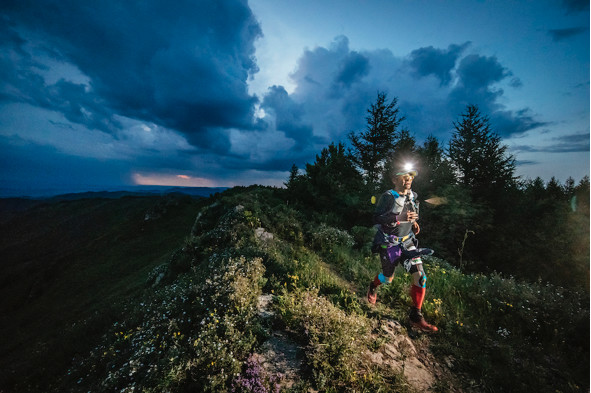
If it hadn’t been for the five-ringed Olympic symbol under the letters, I wouldn’t have had the slightest idea of what was going on in 2022 in Beijing. Thanks to my Swiss preconceived notions — due in no small part to my frequent trips to the Middle Kingdom, as China traditionally refers to itself — China had not figured strongly in my mind as a location for winter sports. Or for trail running. That’s why I was even more thrilled when I received a request to photograph the 2019 Columbia SANFO Ultra 168 trail challenge.
More than 4,000 athletes had registered. The first round of runners, which totalled just under 600, had to conquer 168K with a total elevation gain of 8,000m. The remaining participants were signed up for the 130K, 100K, 70K, 50K and 30K loops, or the 10K “Joy Run.” The races were spread out over the three race days, and they all went through varied terrain, through ancient villages, along ski lift lines, over mountain ridges and even along (or on) the Great Wall of China.
Out of the planned city and into the wild
With the future Olympic Athletes’ Village up and ready to go and a number of hotels, everything in Chongli appeared to be running on schedule for the 2022 Games. An expansive and green mountainous landscape graces the city outskirts. Swaths of ski runs cut through the densely forested mountains, which are dotted with wind turbines. The landscape looks more like something I’m used to seeing in Europe.
On an e-bike provided by race organizers, I accompanied the first group of racers to the hilly backcountry. A few hours later, it started to rain. The mood was amazing, the participants were still fired up and they all gave me a friendly wave. Of course, the biggest part of the race still lay ahead. In no way did they resemble the exhausted and dazed-looking runners I would be seeing three days later.
Race Day 2: so that’s the Great Wall of China?
Well before sunrise, my guide, Patrick, and I prepared to ride our bikes up to the Thaiwoo Ski Resort’s mountain station.
The first runners of the pack had already made it past the mountain station in the dark and were more than halfway to the finish line. At this point, the athletes for all the different races had come together and were running the same stretch.
Once we’d reached the top, we carried our bikes over a huge pile of rocks. “You just climbed over the Great Wall of China,” Patrick called out. I remember thinking that I’d imagined this wall to be somewhat different. I launched my drone, at which point I was able to see the actual scope of the “rock pile.” What had looked like a four-metre-wide pile of rocks from close up displayed its true dimensions when seen from above. The Wall was easily recognizable as such and extended for kilometres along the mountain range.
A refreshment stop had been set up at the ski resort’s mountain station. Some of the athletes used the restaurant as a place to sleep after having run through the night. Others fortified themselves with some noodle soup. The glowing faces from the day before were already showing signs of the overnight exertion. We rode our bikes down the single tracks and reached a traditional village. The route went right through the farm village, and I snapped a few great shots of the inhabitants, their houses and their surroundings.
I returned to the last stretch I’d covered the day before. Gone were the friendly waves and happy, smiling faces filled with anticipation. Those who were on Day 3 and still had to conquer the last 10K of the race, after having run through two nights, were focused only on finishing. The champions had long since reached the finish line, but the stragglers were still struggling through their final kilometres. This was where the real drama was taking place — within sight of the finish line, not at the head of the race. Looking weakened and dazed, they dragged their tired bodies into the meal tent. Some of them practically fell asleep while eating. Swollen, cracked feet were tended to, a last snack or cigarette was consumed and off they headed toward the finish.
(01/30/2021) ⚡AMPby Running Magazine
Why And How To Run Strides To Improve Speed On The Trails
If you look at hundreds of elite athlete training logs, short, fast "strides" will be a close-to-universal element. There is variance in timing of strides, distribution throughout the year, speed and duration, but you'll rarely see an athlete exploring the top of their performance potential without them.
That's weird, right? How can running quickly for 30 seconds or less have much relevance for events from 30 minutes to 30 hours? The answer likely lies in how adaptation happens in the interaction between cells and systems of our muscles and bones and capillaries, applied via biomechanics and the nervous system.
A flow chart that diagrams adaptation would have thousands of arrows, and even then would be simplifying complex processes that often cannot be measured directly. In other words, adaptation is a lot like the lottery for entry into the Hardrock 100. For endurance runners thinking about their own training in an applied, practical sense, I like to break it down to four component parts that work in tandem: the aerobic system, the musculoskeletal system, the biomechanical system and the neuromuscular system.
Systems Overview
The aerobic system powers working muscles via the heart, lungs, and circulatory elements like capillaries. The musculoskeletal system absorbs and transmits power during activity. The biomechanical system describes the efficiency of that power absorption and transmission via movement patterns. And the neuromuscular system is how the brain and nervous system put it all together. Each of those elements has countless component parts, and each feeds back on one another over time.
The problem is that it's tempting to prioritize the aerobic system and musculoskeletal system above all else, using total effort or stress as a proxy for the value of training. That model views runners as "lungs with legs," and it risks missing some of the complex feedback cycles that fall between a breath of oxygen-rich air and running speed on a road or trail.
While there is no 100-percent proven reason that strides work, their importance is likely related to the complex interplay of those elements that go into long-term adaptation. Aerobically, short strides could improve cardiac output, but that benefit is likely minimal. Musculoskeletally, they stress output-per-stride, requiring muscles to maximize efficient power output. There are even theories that strides could positively alter protein expression in slow-twitch muscle fibers, and that underscores the idea that all of these adaptation processes likely have immensely complex explanations. Biomechanically and neuromuscularly, the mix of higher cadence, lower ground contact time, and maximized power could help optimize form and power transfer, along with complex pathways involved in how the brain makes it all possible. If I say "complex" one more time, I complete my punch card that entitles me to a free six-inch sub.
Feeding back development of max sustainable output via strides and similar efforts into normal sub-max training consisting of easy efforts and workouts can raise the ceiling on both. And that's how an athlete can have long-term breakthroughs to previously unthinkable levels.
To simplify it a bunch, an athlete usually will be within a certain percentage range of their short stride speed in longer events. That range is variable and based on a number of individual-specific factors (i.e. muscle fiber distribution, sex, athletic background) and my co-coach/wife Megan and I went into more details in our book and podcast. But the big takeaway is this: maximum sustainable output (sometimes called "speed endurance," though that term means many different things depending on where you look) is often loosely connected to sub-max sustainable output (velocity or power at lactate threshold or harder and aerobic threshold or easier).
Feeding back development of max sustainable output via strides and similar efforts into normal sub-max training consisting of easy efforts and workouts can raise the ceiling on both. And that's how an athlete can have long-term breakthroughs to previously unthinkable levels.
Applied Studies
Many studies support the empirical framework seen in elite-athlete training. A 2018 study in Physiology Reports had 20 trained athletes do 10 sessions of 5 to 10 x 30 seconds fast in a 40-day training cycle where total training volume was reduced by 36 percent. After the intervention, 10K performance improved by 3.2 percent. Perhaps most interestingly, VO2 max didn't change at all (and it actually had a non-significant decrease). Instead, the athletes improved by two percent in their velocity at VO2 max.
In other words, their aerobic systems had not improved, they were just going faster with the oxygen they had. The progress was based in some combination of their musculoskeletal, biomechanical and neuromuscular systems. If you want to get to know me better, I enjoy long walks on the beach and that Physiology Reports study.
A 2017 study in the Journal of Strength and Conditioning Research similarly took 16 trained trail runners and had them complete two weeks of 4 to 7 x 30 seconds hard with 4 minutes of recovery 3 times per week. They improved in their 3K time trial times by about 6 percent, with similar physiological underpinnings. Physiology Reports, baby, I promise you're the only journal for me. I just like the Journal of Strength and Conditioning Research's photo composition on Instagram. It's purely artistic respect!
Running economy improvements seen with the introduction of faster strides would apply to the remainder of training-more sustainable speed in workouts and likely more efficient easy running too.
Do the initial adaptation processes eventually level off or even decrease? That's tough to measure (for more, see this 2017 study in the Journal of Applied Physiology and this 2017 study in the Scandanavian Journal of Medicine & Science in Sports), but I doubt it. Running economy improvements seen with the introduction of faster strides would apply to the remainder of training-more sustainable speed in workouts and likely more efficient easy running too. Add well-rounded training on top of the speed development (plus periodization of different stimuli), and there should be positive feedback cycles that improve the aerobic system.
Training Systems
From the 1950s on, strides have played an important role in training approaches. Starting in the 1950s, Coach Mihaly Igloi had a system predicated on stride-like intervals (see this wonderful article from Coach Steve Magness). In the 1960s and 1970s, Arthur Lydiard pioneered modern training approaches with strides and hills building off base periods. And now, coaches from Renato Canova to Jack Daniels include short, fast bouts of running in various ways. In trail and ultra running, strides have been key component parts of the training of athletes like Clare Gallagher, Hayden Hawks, Jason Schlarb, Katie Asmuth and many others.
All of that was a glorified preamble for the big questions of the day: how do you actually do strides, and how do they fit into a well-rounded training plan? Now, we are venturing into an area where there is even more debate, so I will summarize what Megan and I recommend, but find what works for you.
How To Run Strides
For athletes we coach, strides are 15- to 30-second accelerations to the fastest pace they can go without straining or sprinting, usually with 1 to 2 minutes easy running recovery between. Our usual guideline is to do 4 to 8 of them, with 4 being the sweet spot balancing stimulus and stress. They can be on roads or non-technical trails, flat ground or slight ups and downs.
It's key to avoid full, arms-pumping sprinting due to the risk of injuries and reinforcing biomechanical patterns that are not conducive to long-distance running. The cap at 30 seconds is to prevent too much stress, which could undermine the aerobic system (see this article on base training for more). We like athletes to apply four cues:
Ease into the effort, with the first 5 seconds gradually building pace, emphasizing longer strides before rapid turnover;
Run tall through the hips, with a slight forward lean;
Use long-distance form, with normal arm carriage and a relaxed upper body;
Instead of increasing cadence as high as you can go, emphasize knee drive and output-per-stride at a smooth effort.
Put it all together, and it usually equates to between the speed an athlete could race 800 meters to a mile (for beginner to intermediate athletes) or a mile to 3K or even 5K (for intermediate to very advanced athletes). More slow-twitch athletes can usually go toward the faster end, and faster twitch athletes should stay on the slower end. If you do them on non-technical trails, the paces will be slower, and that's OK too.
When To Run Strides
Now, it's important to consider how flat strides fit in with hill strides. Hill strides primarily emphasize the musculoskeletal system, since the uphill grade usually involves lower cadence and increased power-per-stride. Meanwhile, flat strides emphasize the neuromuscular and biomechanical systems, with higher cadence and more strain on form. A strong cyclist who doesn't run could probably do a good hill stride due to their power, but would likely suffer on a flat stride due to their lack of neuromuscular and biomechanical adaptations.
Hill strides primarily emphasize the musculoskeletal system, since the uphill grade usually involves lower cadence and increased power-per-stride. Meanwhile, flat strides emphasize the neuromuscular and biomechanical systems, with higher cadence and more strain on form.
After a base period of easy running, we like athletes to start with hill strides, improving raw musculoskeletal output first with lower overall risk. If athletes are over 50, prone to injuries, or find themselves going too fast on flat strides, they may never do flat strides at all.
Other athletes usually progress into flat strides after they are fully adapted to the hill stride stimulus. The choice of flats or hills will alternate depending on goals (more hills for ultramarathoners, more flats for road racers) and genetic predispositions (more hills for faster-twitch athletes, more flats for slower-twitch athletes).
Rest between strides starts as near-complete recovery (1-2 minutes), so that fatigue does not impact form or output significantly. Later, the rest may shorten to as little as 30 seconds to get an enhanced aerobic stimulus, particularly closer to races or for faster-twitch athletes.
Most of our athletes do strides one to three times per week. You can generally add them during any easy run, with the caveat that there could be some aerobic drawbacks to doing too many strides too often. Before workouts, they make a great neuromuscular primer. After harder efforts, they can serve as a combo workout stimulus.
A typical weekly breakdown for an intermediate/advanced athlete in the middle of a training cycle may look like this:
Monday: Rest Day
Tuesday: 8-10 miles easy with 5 x 20 seconds fast/1 min easy flat strides
Wednesday: 3 miles easy, workout (like 6-8 x 3 minutes at 10k effort with 2 minutes easy recovery), 4 x 20-30 second hill strides, 3 miles easy
Thursday: 8-10 miles easy
Friday: 4-6 mile easy or x-train
Saturday: 14 miles easy/moderate (20 minutes moderately hard around 1-hour effort)
Sunday: 10 miles easy with 4 x 20-30 seconds fast/2 min easy flat strides
Before you get overwhelmed, let's end the article with a step back to the first principles of strides. The basic idea is that going faster than you'll ever race (but not as fast as you absolutely can) will make you faster overall at all effort levels. That improved running economy is balanced against injury risk and a slight chance of aerobic regression if done too intensely or at the exclusion of other types of training. Start with hill strides, and only do flat strides if you feel confident in your health and discipline to avoid all-out sprinting. You can add them to almost any run, but don't add them to every run.
And most importantly, don't stress about the exact details. Just make sure that you remember one thing: you are an ATHLETE. And exploring your unlimited athletic potential may be a bit more fast (and fun) with strides.
(01/24/2021) ⚡AMPby Trail Runner Magazine

Jim Walmsley Shatters the 100K American Record, But Misses the World Record by 11 Seconds
The king of Western States came so close at the Project Carbon X 2 race.
After more than six hours of running, Jim Walmsley crossed the finish line 11 seconds short of his ultimate goal—the world record in the 100K.
At the Hoka Project Carbon X 2 100K race on January 23, held in Chandler, Arizona, Walmsley ran 6:09:25, shattering the American record of 6:27:44, set by Max King in 2014. But the world record (6:09:14, set by Nao Kazami in 2018) continues to elude him.
“Definitely feels like one of the more special runs I’ve had,” Walmsley said, in his post-race interview. “Really felt like I got everything out of myself today, dug real deep, and fought all the way to the line. I don’t feel like I gave up, but it was tough to see the seconds tick by. It’s a little bittersweet, but definitely awarded with an American record today, and those don’t come very often. I don’t get to do things like this in my home state very often, so it’s extremely positive. A 45-minute PR. It was a pretty amazing day.”
Nineteen men and women were chasing national and world records in the 100K distance in Saturday’s race. Walsmley was the men’s favorite to set both the world record and the American record, while Camille Herron was favored for the women. Herron was forced to drop out of the women’s race with a hip injury.
Walmsley started the race in a pack with five other runners, running conservatively to keep his legs fresh. But the other four runners faded behind him, leaving Walmsley to chase the record alone. His pacing picked up over the final 30K, as he raced the clock with everything he had.
Around the 3:30 mark in the race, Walmsley clipped his left shoulder on a course sign, and he was visibly bleeding for the next two and a half hours. At water stops, he’d fuel and treat his wound as best he could while keeping his stride.
The race came down to the final 10K, as Walmsley needed to run 37:58 or faster over the final miles. Those watching the race on the live stream could see the fatigue and pain set in over that final stretch. He let out a loud “C’mon, Jim” scream with a little more than 5K to go, fighting the clock with everything he had.
As he entered the drag strip to the finish, he had just over a minute to cover the final hundreds of meters. He got on his toes, repeatedly checked his watch, and ran as hard as he could to beat the clock that was now in his sights. Ultimately, he watched the clock tick past 6:09:14, finishing 11 seconds later.
“We’ll have to try it again,” Walmsley said in his post-race interview. “We’re in the right ballpark and on the right track and we have a shoe to compete with this and we’re knocking on the door. I don’t think I’m done with the 100K. Fortunately, unfortunately, there’s likely another one down the road.”
The remainder of Walmsley’s year is uncertain, because of the pandemic. He told Runner’s World before the race that he’s looking at first are the Comrades Marathon and the Ultra-Trail du Mont-Blanc. In the near future, he’s hoping to do the Black Canyon 100K three weeks from this weekend on February 13.
The Flagstaff, Arizona, native wasn’t the only runner with a notable day out on the course. Rajpaul Pannu took second in the men’s 100K in his first-ever attempt at the distance. Pannu is a math teacher in addition to being a pro runner who finished 63rd at the Olympic Marathon Trials in February 2020.
In the women’s race, the United Kingdom’s Carla Molinaro and the United States’s Camille Herron led for the first half of the race before France’s Audrey Tanguy slowly made her way past both runners early in the second half of the race. After that, Herron was forced to drop out after six of nine laps due to a hip injury.
Tanguy, the reigning and two-time champion of the Ultra-Trail Sur les Traces des Ducs de Savoie (TDS), captured the lead and ran away with the race for the win in 7:40:35, unofficially.
American Nicole Monette did move close to Tanguy late in the race and took second, finishing less than three minutes behind the winner.
(01/24/2021) ⚡AMP
by Runner’s World

Jim Walmsley, Hayden Hawks Going for 100-km World Record at Project Carbon X 2 in Arizona
A group of top ultra runners will gather in Chandler, Ariz., with hopes of breaking the World Athletics records for 100 kilometers on the road. The event, called Project Carbon X 2 and staged by Hoka One One for the benefit of their athletes, will start and finish at the Wild Horse Pass Motor Sports Park and will use some of the same roads as The Marathon Project which was held with great success last month.
“I’m incredibly excited,” said Hoke One One president Wendy Yang on a video conference today with reporters. “Also feel super fortunate that the team was able to bring this event together.”
The pandemic has meant dramatically fewer competitive opportunities for road running athletes, especially ultra runners who specialize in distances longer than the standard marathon distance of 42.195 km, or 26.2 miles. However, since most ultra runners train alone or in very small groups, the pandemic has given them a chance to put in long blocks of uninterrupted, COVID-safe training and improve their strength and fitness. Tomorrow’s race will offer them a chance to show off their work.
We wanted to give our athletes the chance to compete,” Yang continued. “We felt like our athletes really needed this chance.”
The top targets for tomorrow’s race are the ratified World Athletics 100-K records of 6:33:11 for women, set by Japan’s Tomoe Abe in 2000, and 6:09:14 for men, set by Japan’s Nao Kazami in 2018. Both records were set at the same event, the Lake Saroma 100-K in Hokkaido, Japan. The women’s record works out to a pace of 3:56 per kilometer, which means running two 2:46 marathons back-to-back plus another 15.6 kilometers at the same pace. The men’s record pace of 3:42 per kilometer translates to running back-to-back 2:36 marathons plus the extra distance.
“You never know what can happen in an ultramarathon,” said Hayden Hawks one of the top contenders in the men’s division. Hawks smashed the course record at the venerable JFK 50 Mile (80.5 km) in Maryland last November, clocking 5:18:40. His pace at that event, which included rugged trails and some steep climbs and descents, worked out to 3:58 per kilometer. He said he’s been practicing on flat, loop courses to simulate the conditions in Arizona, and that with his strength and mental toughness he has a chance at the record.
“My greatest strength is probably just my stubbornness,” Hawks said. He added: “I feel like I have this mental strength to push through a lot of pain.”
Hawks’s main rival tomorrow will be ultra star Jim Walmsley, the man whose record he broke at the JFK race. Walmsley is best known as a trail runner, and is the course record holder for the impossibly difficult Western States 100-Miler in Auburn, Calif., where he ran 14:09:28 in 2019 (he also won in 2018). Walmsley already holds the world best for 50 miles on the road of 4:50:08. Using the popular Riegel Formula, that’s equivalent to 6:05:51 for 100-K, comfortably under the 100-K world record by more than three minutes.
Note: Walmsley was on the LetsRun.com Track Talk Podcast this week where he talked about his 100-k world record attempt, his big plans for 2021 and his cancelled 2020. Highlights here.
“I’m really looking forward to improving on my past performances in the 100-K,” Walmsley said today, admitting that he hasn’t yet perfected his approach to that distance yet. He continued: “I think I’m bringing a more mature approach of being more patient.”
If they don’t eclipse the world record, both men could surpass Max King’s USA record of 6:27:44 set in 2014.
On the women’s side, Camille Herron is the top entrant, and she rated her fitness at “80 to 85 percent.” Like Hawks, the holder of the world best for 24 hours on both the road and the track recently won the JFK 50-Miler. She played down the possibility of getting the world record, but said she was in about the same shape as when she won the famed Comrades Marathon in South Africa in 2017 over a distance of 86.73 kilometers. She allowed that a personal best (sub-7:08:35) was possible, despite only doing a six-week build-up.
“I’m definitely confident in my fitness,” said Herron who recently switched sponsors from Nike to Hoka One One and who will be doing her first race in Hoka shoes. She added: “I’m getting fitter every week. I have a pretty good idea of what I’m capable of.”
Also competing in the women’s division is Irish Olympic marathoner Caitriona Jennings, 40, who will be making her 100-K debut. Jennings will be taking a cautious approach to the race because she is 12 weeks pregnant. She said that there will be plenty of ice and fluids available on the course so that she can keep her core temperature in check.
“It wasn’t a decision I took lightly,” she said emphasizing that she had consulted with her doctor before agreeing to compete. She added: “I think (the water and ice on the course) will help with hydration and keep my temperature down.”
The athletes will start and finish on the race track, and will run about nine laps of an 11-kilometer circuit (Walmsley estimated that each full lap would take him about 41 minutes). The course was measured by two World Athletics “A” measurers, Joe Galope and Jay Wright (an “A” measurer must be used in order for a course to be eligible for a World Athletics record). The event will have in-competition drug testing done by the USA Anti-Doping Agency, also a requirement for setting a world record.
All of the competitors will be wearing the new Hoka One One Carbon X 2 shoe. Colin Ingram, Hoka’s director of product, called the new shoe “one of our sharpest tools in the box.” He explained that the shoe had been improved over its predecessor by incorporating “swallow tail construction” to improve deceleration on the foot strike, and lowering the carbon plate to get it closer to the ground.
“It allows for a more natural gait,” Ingram said.
While Hoka One One has not disclosed the cost of the event, it is significant, especially making it as safe as possible from the coronavirus. Mike McManus, Hoka’s director of global marketing, said that every athlete had at least three antigen PCR tests in the last week, and that masks and social distancing were required at all times except when the athletes are on the course. An industry insider contacted by Race Results Weekly estimated the cost of COVID mitigation for the event was around $60,000.
“It’s been a huge challenge for us to make this event happen in a very safe way,” McManus said.
The race will be streamed live and free at hokaoneone.com beginning at 9:00 a.m. Eastern Standard Time.
(01/23/2021) ⚡AMPby Let’s Run

Process Goals Are The Keys To Performance
5 DAYS - 3 COUNTRIES - 590 MILES - 113 PEAKS - OVER 100,000 FT ELEVATION After completing the Barkley Marathons, legendary ultra-runner John Kelly asked himself 'What do I do now?' Join John on a discovery of what he can achieve as he enters his 'Goldilocks Zone' with his self-devised Grand Round challenge
Those are process goals. Given that many, including elite athletes, are not clear as to what they are, here are definitions of three kinds of goals:
Process goals are weekly tasks like those above to focus on as you strive for performance or outcome goals. Process goals are under your control.
Performance goals, by contrast, are performance standards that are independent of others. Performance goals might be to run the 400 meters in under 58 seconds or a 10K in under 40 minutes.
Outcome goals are competitive goals that involve competition with others and are not under our control. Winning a gold medal or wanting to finish in the top ten of an age division are examples.
Process goals are essential for performance. In the 1960s industrial psychologists Drs. Edwin Locke and Gary Latham found that setting process goals increases motivation and enhances productivity by 11% to 25%. Their studies included 40,000 employees in industry. Goal setting encouraged them to be resilient-to persist through obstacles-and also to develop strategies to achieve goals.
Research on excellence in the 1990s by Dr. K. Anders Ericsson shows that deliberate practice, a kind of process goal, is critical to world-class performance. Deliberate practice is practice done repeatedly, focused on weaknesses as well as strengths, performed with feedback from a coach, and then tweaked. At times deliberate practice is not fun. It's work. It's been found to be key to high performance in fields as diverse as music, chess, and athletics.
Writing and Sharing
Still more research on process goals shows that we should take them seriously if we're intent on training for an important event. My doctoral research in the late 1990s on over 100 national- and world-class masters runners found that 94% of them wrote down their process goals. Ninety percent of them had a coach who provided feedback.
More recent goal-setting research published by Dr. Gail Matthews from Dominican University found that the combination of writing down goals, writing action commitments for them, sharing commitments with a friend and sending weekly progress to a friend predicts goal achievement much more than just saying goals out loud and not including specific follow-up plans.
Dr. Matthews divided her subjects (people who were setting all kinds of goals, including finishing projects and starting new routines) into five groups. The groups were assigned five different levels of commitment. As an example, the least committed group was asked just to think (not write) about their goals. The most committed group was asked to write down goals, write action commitments for each one, share the written goals and action commitments with a friend, and send weekly progress to a friend. Of the original 267 participants, 149 completed the study.
At the end of the study, only 43% of the least committed group achieved their goals as compared with 76% of the most committed group. Sending weekly progress reports to a friend mattered. In addition, those who sent weekly reports were 12% more likely to achieve their goals than those who just wrote down their goals and action commitments.
Picking Positive Peers
Other research suggests that process goals are easier to achieve if you live with others who have habits which you admire. UCLA neuroscientist Dr. Marco Iacoboni, author of Mirroring People: The Science of How We Connect to Others, has done extensive research on mirror neurons, brain cells in the premotor cortex and inferior parietal cortex.
Mirror neurons, said Dr. Iacoboni (Scientific American, July 1, 2008), "are the only brain cells we know of that seem specialized to code the actions of other people and also our own actions. They are obviously essential brain cells for social interactions When I see you smiling, my mirror neurons for smiling fire up, too, initiating a cascade of neural activity that evokes the feeling we typically associate with a smile."
So if your process goals include strength training a few times a week, you're more likely to achieve them if you are around others who also strength train a few times a week. Those mirror neurons are watching all kinds of behaviors around you. Are you aware of others' habits and if so, do you spend time with those whose habits you emulate?
What steps might you take if you're not lasered in on process goals?
Ideally set process goals with a coach over a short time period. My practice focuses on successive six-week goals for weekly review and tweaking. (A 2007 study by psychologist Richard Wiseman showed that 88% of people who make New Year's resolutions fail. The reason? No structure. No follow-up.)
And if you don't want a coach, find a similarly committed friend. It's more important that your friend is committed to a process than that the friend is an athlete. An artist, executive, chef anyone can be a powerful goal setting partner. (If only pets could talk.)
(01/17/2021) ⚡AMPby Trail Runner Magazine
We studied mental toughness in ultra-marathon runners. Mind over matter is real — but won’t take you all the way
For most people, running a marathon sounds like a lot of work — and they probably wouldn’t even consider completing more than one within 24 hours.
The will to go the extra mile is what lies at the very heart of ultra-endurance events (and that’s exactly why they’re called “ultra”).
These events are for athletes who go beyond the typical marathon distance of about 42km, or engage in physical exertion for more than six hours. They’re generally performed via biking, swimming or running, but can also be held in activities such as kayaking.
Our new research published in the journal PLOS One looks at the role of “mental toughness” in the performance of ultra-endurance runners. Our findings suggest mind over matter is a real phenomenon — but can only get you so far.
The nitty-gritty of ultra-endurance events
On-foot ultra-marathons are notoriously challenging, with distances starting around 56km and going upwards of 150km. They’re often held in remote mountainous settings and almost always involve unpredictable course conditions and massive shifts in altitude.
Unsurprisingly, research on ultra-marathon runners has found this unique population experiences a range of difficult circumstances during these events.
The most common physical reasons for withdrawal include nausea, vomiting, blisters and/or muscle pain. Alongside extreme physical pain and discomfort, it’s also common to experience intense fatigue, unpleasant emotions and negative thoughts.
Is it really mind over matter?
“Mental toughness” is usually associated with the ability to either remain consistent in the face of challenges, or to quickly recover from setbacks and adversity.
We wanted to investigate what motivates ultra-endurance athletes to keep going despite obvious physical and mental challenges. To do this, we focused on a group of 56 ultra-marathon runners who competed in the Hawaiian Ultra Running Trail 100, or HURT100.
This 160.1km endurance run is a difficult five-lap course in the mountains above the city of Honolulu, Hawaii. The track has little clear running space and runners spend most of the course navigating through tree roots and crossing streams. Topping it off is about 7,500m of cumulative elevation gain and loss over the course.
The elite athletes in our study completed two questionnaires, from which we found mental toughness didn’t seem to predict performance within the group.
Thus, we conclude there may be a “threshold” level of mental toughness one must overcome to even be able to prepare for, and compete in, such an event. But beyond this, other psychological, physical and logistical factors appear to have a greater impact on performance.
We also compared our group of ultra-marathon runners to athletes in other sports including hockey, tennis, professional football, high performance male athletics and mixed martial arts. We discovered the runners had significantly higher levels of mental toughness.
In terms of which specific characteristics led to greater mental toughness, such as confidence, commitment, personal responsibility or control over one’s thoughts — “self-efficacy” scored high.
This refers to an athlete’s belief in their ability to execute a task. For example, whether they believed they could complete the HURT100 distance within the 36-hour cut off time.
Traversing the human mind
Our research has practical implications for athletes, whether they want to increase their own mental toughness, or know what it takes to run in an ultra-marathon event.
Having advanced knowledge of the mechanisms underpinning mental toughness (such as self-efficacy) could also help sport psychologists and coaches create more effective and targeted training programs.
That said, our findings do open doors to more questions. What other factors could predict performance in ultra-marathon runners? How wide is the range of characteristics that can be linked to mental toughness? And can these be learned by anyone?
Some may argue people are just born with greater levels of mental toughness and it’s in their genes. Others claim this can be developed over time as a result of individual experiences. It seems the age-old nature versus nurture debate persists.
(01/17/2021) ⚡AMPby The Conversation
108K California FKT falls three times in 11 days to ring in 2021
Trail runners have had a busy couple of weeks near Malibu, Calif., on the Backbone Trail. The women’s fastest known time (FKT) for the route, which runs through several state parks west of Los Angeles and north of Malibu, has been lowered three times since December 30 (along with several FKTs on the men’s side since the start of December). Celia Stockwell started the streak of records, closing out 2020 in style by running the 108K route in 13 hours, 28 minutes. Just two days later on New Years Day, Shelby Farrell rang in 2021 in the same (although slightly faster) fashion as Stockwell, setting the FKT at 13 hours, 25 minutes. Finally, a week into the new year, Brianna Sacks set the current route record, running 12 hours, 56 minutes to close out a wild and impressive 11 days of running.
A three-woman chase
The main excitement on the Backbone Trail in the past couple of weeks is thanks to the three women chasing the supported FKT for the route. (A supported run means they had a crew with them to help out with anything they might have needed.) On her Strava file for the FKT, Stockwell, who hails from Colorado, wrote that the 108K trek was the farthest she has ever run. Despite this fact, she performed exceptionally, shaving 16 minutes off the previous FKT from 2017. Stockwell, who was crewed by her mom and husband, didn’t get to enjoy the record for long, though, as just a couple of days later, Farrell beat her time by three minutes.
In her post-run report, Farrell — who lives in Redondo Beach, Calif., not far from the trailhead — said she and her pacer got lost early on in the run, and she estimates that cost her about 20 minutes. In the final stages of the run, she had her husband by her side to pace her. “I hung on with all my might. I opened up my stride, engaged my core … I knew I was within range of calling this course record mine.” She eventually made it to the finish, crossing the line with only a few minutes to spare.
Finally, it was Sacks’s turn to run the Backbone Trail. As she noted in her own post-run report, her January 9 run was her second FKT attempt on the route in 10 days. This time around, she made it through, smashing Stockwell’s and Farrell’s times by half an hour. Sacks lives in Los Angeles, and she wrote that she grew up running on the Backbone Trail. In fact, it was the site of her first ultramarathon. “Backbone is a beautiful beast,” she wrote. “It’s the best kind of ‘hurts so good.'”
Other Backbone FKTs
While Sacks, Farrell and Stockwell provided the main source of entertainment on the Backbone Trail over past few weeks, several other athletes have also recently tackled the route. A woman named Mac McIntosh set the women’s self-supported FKT on December 19, running the route in 15 hours, 45 minutes. Dima Sokolovskyy ran the men’s self-supported FKT on New Year’s Eve with a time of 14 hours, 26 minutes, and earlier in December, Avery Collins ran the men’s supported record in 10 hours, 19 minutes to smash the previous FKT by close to an hour.
(01/16/2021) ⚡AMPby Running Magazine
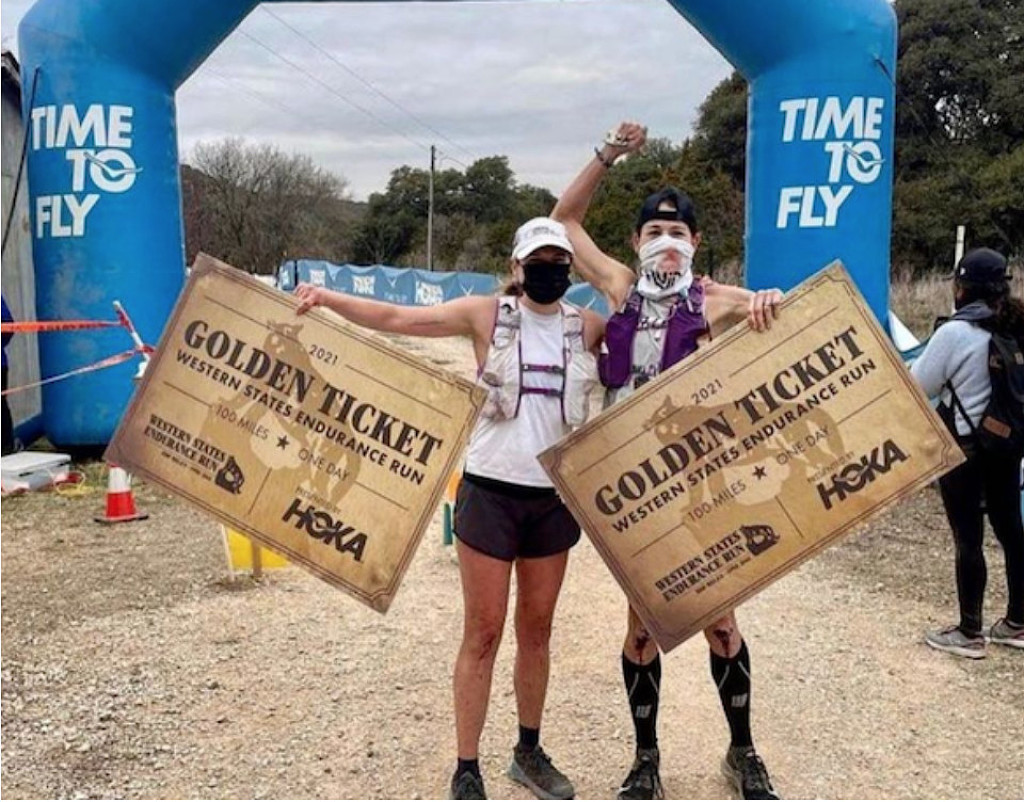
Ultrarunner falls and breaks nose, carries on to win Bandera 100K
American ultrarunner Katie Asmuth had a race to remember at the Hoka One One Bandera 100K in Texas on Saturday. She won the race, which is noteworthy enough, but she did so after falling and breaking her nose about two thirds of the way through the run. Instead of calling it quits and dropping out of the race, she shared a laugh with everyone around her, stuffed a tampon up her nose to slow the bleeding and carried on to run the final 35K or so. She crossed the line in 9:25:00, taking the win by more than 10 minutes over second place. In the men’s race, Texas runner Ryan Miller ran to the win in 8:10:08 in the first ultramarathon of his career.
Taking a tumble
“Wasn’t the most glamorous or graceful of races, but we got it done,” Asmuth wrote on Instagram after the race. Luckily for her, ultrarunners are rewarded for their grit rather than grace, which is why she came away with the win. As she noted in another Instagram post, the Bandera course is “super rocky and technical in parts,” which led to her unfortunate (but, as she said, memorable) trip and tumble, which occurred at an aid station around 64K into the race.
“From cheers and cowbells to… silence,” Asmuth wrote. “And blood dripping from my face and knees. A volunteer saved my race [with] a tampon that I stuck up my nose for the next 20 miles.” She said she took the event motto of “No whiners, wimps or wusses” to heart as she trucked through the final chunk of the race toward the win.
The race was a huge success for Asmuth, but she almost didn’t go. She signed up for the run in June, but she wasn’t sure she would be able to run due to the consistently high COVID-19 numbers in California (where she lives) and across the U.S. Asmuth works as a nurse practitioner, and as she explained in her Instagram post, she told herself she would only go to the race if she got both doses of the COVID-19 vaccine in time. “And miraculously, it happened,” she wrote
With her top result, Asmuth won a Golden Ticket to the 2021 Western States 100, which is set to take place in June. “The adventure is just beginning,” she wrote. “Now the real work begins.”
An exciting debut
A seasoned road runner (he has a marathon PB of 2:14:27 and qualified for the previous two U.S. Olympic Marathon Trials), Miller only started trail running in 2020, but he seems to have quite the knack for it. In November, he raced the USATF Trail Marathon Championships, finishing in eighth place
The Bandera was his debut ultra, and despite being about two and a half times farther than he had ever raced before, he crushed it to take the overall win and book his spot at the Western States 100 beside Asmuth. “Was today a dream?” Miller wrote on Instagram after the race. “Everything came together today in the most beautiful way I could have imagined.”
(01/16/2021) ⚡AMPby Running Magazine
Just One Step: a dive into why we run
Find out why humans run in this new award-winning documentary
For runners who hate the cold, ice and snow, it’s treadmill season, and when you spend hours upon hours running on the spot, you need to find a distraction. While we can’t help keep you entertained for every run, we do have you covered for about an hour and a half, thanks to the award-winning documentary Just One Step. This film, which features big-name ultrarunners like Anna Frost and Karl Meltzer, looks to answer the question of why humans run, diving into possible explanations in science, psychology and spirituality.
Just One Step is available now on Amazon, iTunes and Google Play, and it’s a great option to keep your mind occupied during your next long run on the treadmill.
“They are everywhere,” the film’s narrator says. “It doesn’t matter where you look.” He’s talking about runners, and it’s true — we are everywhere. No matter what town, city or country you visit, you’ll see people out for runs. But the film wants to know why. “What exactly are we as a species doing out there on the treadmill, track and trail,” the narrator continues. “Why do we do it?”
As the documentary notes, there is not one uniform answer to this question, and after exploring the world of running, it becomes clear that everyone has different reasons for entering the sport and different motivations to stick with it. For many people, though, they have been hooked on running ever since they started.
“It’s an absolute addiction,” says Frost. This can lead us to push past our limits, which viewers will see in the film, turning this leisurely and healthy activity into something dangerous. “For all the benefits we reap, there are consequences as well,” says Just One Step director Benjamin Keller. “It’s this intense, crazy system we’ve developed around running.”
We’ll never truly find the answer to why humans run. But it’s a fun question to consider, and one that can keep your mind busy next time you hop on the treadmill. To stream Just One Step, head to Amazon, iTunes or Google Play.
(01/09/2021) ⚡AMPby Running Magazine
In Enemy Territory, Bills Fan Runs Marathon Around Monday Night Football Game
In a Josh Allen jersey, he ran 26.2 miles and saw the quarterback come out of the tunnel along the way.
The Bills Mafia is no stranger to sacrifice and tailgating greatness. The passionate fanbase of the Buffalo Bills football team turns out every home game in often near- or below-freezing temperatures while performing WWE-style slams and finishers through tables like a sacrificial offering to the football gods—or to quarterback Josh Allen.
So it’s no surprise that Bills fans are ecstatic about clinching their first AFC East title since 1995 and making the playoffs for the second time this century.
Colin Dee was one of these lifelong fans. His fandom stretched from his days growing up in Rochester, New York, and stayed with him even after he left in third grade to move to North Carolina.
Now, Dee resides in the Foxborough, Massachusetts, which is home to the rival New England Patriots. Once the Bills had the playoffs and the division in the bag, he and his fellow fans celebrated virtually, leading to Dee’s friend throwing him a dare.
“In mid-April when the schedule came out, we didn’t think COVID would last to December, so we planned to go to the Monday Night game,” Dee told Runner’s World. “We gotta go, but when we realized we couldn’t, they told me I had to do something. Originally it was just a run. Then it was a 5K. In the end, I was dared to do a marathon.”
Dee wasn’t a stranger to the distance. He had completed five marathons, inspired by his lifelong running dad. It was that family tradition that was passed down instead of his dad’s New York Giants fandom that Dee’s grandfather, a Bills fan, on his mom’s side was adamantly against.
Dee’s true Bills Mafia passion amped up in college. While moving in freshman year at the University of Dayton, Dee discovered a friend who moved away in the second grade to Chicago—also a Bills fan—lived next door.
The two reconnected and even splurged on season tickets their sophomore year and made the roughly six-hour drive for home games in the fall. They’ve been season-ticket holders ever since. Plus, they even converted Dee’s dad to be a Bills fan.
“My dad got me into running, and I got him into the Bills,” Dee said. “My dad has done a couple ultras and was trying to do a 100 miler. Here I am doing a marathon outside a stadium. People think I’m a nut.”
It was also Dee’s childhood friend who dared him to do the marathon. While Dee was determined to do it, as the week went on, he realized he could also do the run and try to raise money for charity.
Thinking about which to pick, Dee turned to inspiration from Bills quarterback Josh Allen. Bills Mafia has gotten behind their leader since Allen’s grandmother died earlier in the season and fans followed by donating over $1 million to Oishei Children's Hospital.
Dee hoped people would donate at least 17 cents per mile—an homage to Allen’s number—or a nominal $4.45 for the entire run.
“There’s people going through a lot worse things right now in the world, and if we can do something like this for a kid or a family going through cancer, you gotta do it,” Dee said. “If it coincides with things like the Bills and the work they’re doing with Josh Allen, even better.”
A little over a week later, Dee kept his word and lined up, untrained, around 4:30 p.m. on December 28 in his Josh Allen jersey for a marathon run through the empty parking lots and uncrowded sidewalks around Gillette Stadium. The start time was before the game because Dee had to beat the Massachusetts COVID curfew of 10 p.m. ET.
Dee had a route around the facility mapped out, but on the first lap, he had to get creative because he accidentally ended up in a restricted area and was chased out by security. That lap ended up being the longest at 2.2 miles. After that, he settled into a 1.3 out and back that ran by an opening that looked onto the field.
“People think I’m some drunk guy running around,” Dee thought out loud as he ran.
While his family crewed him, he charged through the first miles at an pace as fans of both teams who happened to be in the area (very few because of COVID) cheered and jeered at the person running around the stadium in a jersey.
He’d hear people screaming, “Josh Allen,” all night for his jersey. However, around mile 6 when he heard that, it wasn’t directed at him. In fact, as he ran by the opening to the field, Josh Allen was actually running through the tunnel to the field to warm up.
After that, Dee kept up his pace as he saw the fireworks mark the start of Monday Night Football and listened to the game from the outside.
The marathon would take him 5:08:44, but he did it and was able to recover with some food, his family, and the second half of the game.
Not only that, he’s also ended up raising more than $3,200 for Oishei Children's Hospital.
“This didn’t start as anything more than a dare made over a couple of beers,” Dee said. “Then I thought we need this to go back to Buffalo. I don’t want to give this to Boston. With all the good that has come from Oishei and the Bills connection, he knew we had to do it. I’m so happy with what we’ve done so far.”
To make the night even sweeter, the Bills ran away with a 38-9 victory on the road.
(01/09/2021) ⚡AMPby Runner’s World

The Postponed Khmer Empire Marathon slated for August
The postponed Khmer Empire Marathon will be held in Siem Reap province this coming August.
The 2020 edition of the race was supposed to be staged five months ago. But due to the COVID-19 pandemic, its organisers decided to move the event to a later date.
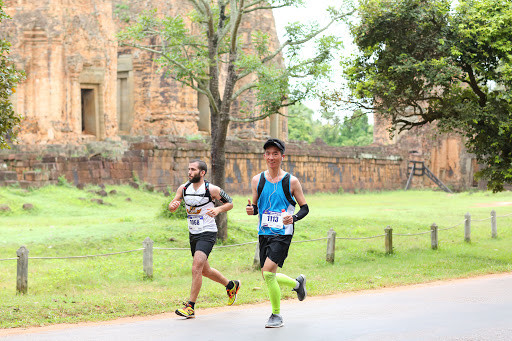
The Khmer Empire Marathon was among the many running events that were affected by the pandemic. The others include Angkor Wat International Half Marathon, Koh Dach Race and Cambodia Elephant Trail.
National Olympic Committee of Cambodia (NOCC) Secretary-General Vath Chamroeun announced early this week the cancellation of Angkor Ultra Trail 2021.
Chamroeun cited the COVID-19 situation as main reason for the cancellation. Cambodia has recorded 381 COVID-19 cases with no fatalities so far. The event, which is among the most popular international adventure races here, was supposed to be held in Siem Reap province this month.
The Khmer Empire Marathon will now be held on August 8, according to World Marathons.
The news comes after the Cambodian government lifted its latest sports ban. The ban was imposed in early December after Cambodia experienced its first COVID-19 community outbreak.
The Khmer Empire Marathon will be among the several major races that will be held this year. These include Angkor Wat International Half Marathon, which is tentatively scheduled for January 24, and the 2nd Women’s Run 10k on March 8.
(01/05/2021) ⚡AMPby Jose Rodriguez T. Senase

Khmer Empire Marathon
The Khmer Empire Full & Half Marathon, organized by Cambodia Event Organizer, is the second edition of this recent event located in Siem Reap in north-western Cambodia. Distances of 3 Km, 10.5 Km, 21.1 Km and the full marathon distance of 42.195 Km are available. Khmer Empire Full and Half Marathon is held at one of the most famous heritages...
more...
73-year-old Kmoin Wahlang is one of India’s oldest woman marathon runner
A mother of 12, a grandmother to almost 30 kids, Kmoin Wahlang is one of India’s oldest woman marathon runner.
Hailing from the north-eastern state of Meghalaya, Wahlang grabbed the eye-balls of sports fans and fitness enthusiasts when she made her presence felt during the Tata Mumbai Marathon in January 2019.
While many of us continue to blatantly state our age as an excuse when we fail to execute any strenuous physical activity, Wahlang successfully finished a marathon run at the age of 71 years!
She completed the 42.195km run with a timing of 4 hours 33 minutes and 55 seconds. If the age and the timings didn’t impress you, then note that Wahlang finished the marathon at 89th position out of total 520 women runners during that edition of the Tata Mumbai Marathon.
Though she can only converse in her mother tongue, Wahlang didn’t show any discomfort while running the Mumbai Marathon which incidentally was her first marathon outside the city of Shillong. Instead, she showcased extraordinary consistency during the entire course of the race and rarely dropped below the speed of 9km per hour.
Surprisingly, Wahlang’s running career can be traced back to almost two decades. The now 73 year old faced severe stomach issues after the birth of her twelfth child way back in 2001. She started walking extensively to counter this health issue and slowly this walking made way for running.
Wahlang was first discovered by a non-profit organisation called RUN Meghalaya and has since been participating in various marathons in her home state. She had even completed the 45km run in the Mawkyrwat Ultra Marathon before coming down to Mumbai for the Tata Marathon.
(01/04/2021) ⚡AMPby Abhijit Nair
New 30 for 30 Film Reveals Truths About the Tarahumara
If you're new to running and have been inundated with information about new, fancy shoes with thick, bouncy soles, it will come as somewhat of a surprise that just 11 years ago, many American runners were part of a minimalist running movement, spurred by the book Born to Run. Back then, it was all the rage to wear as little on our feet as possible.
The book by Christopher McDougall was about the Tarahumara people living in Mexico's Copper Canyon, who run hundreds of miles at a time, either barefoot or wearing sandals with old, recycled tires serving as tread. They rarely get injured and they can run forever, or so it seems. The premise of the book was that their durability was due to the biomechanics they honed by not wearing running shoes. And as the book gained in popularity, the industry pounced on the opportunity to sell something new.
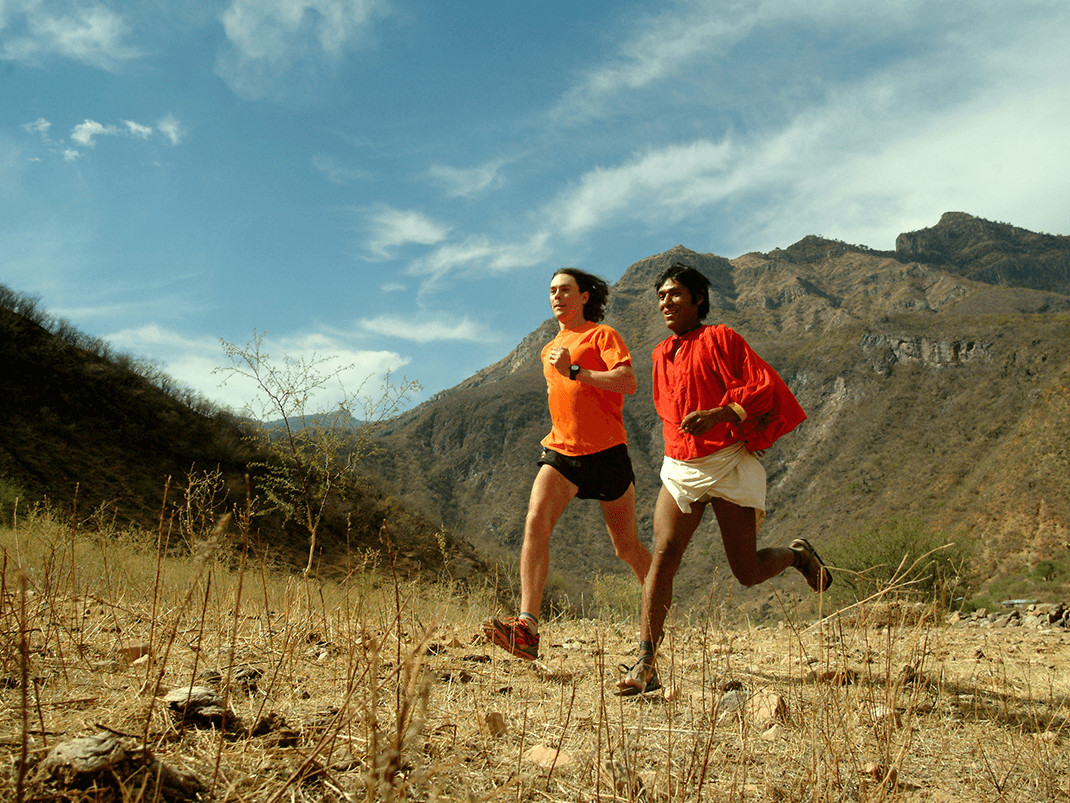
But during a pivotal moment in a new ESPN 30 for 30 documentary, The Infinite Race, which debuts at 8 p.m. Eastern on Tuesday, December 15, Silvino Cubesare, a Tarahumara ultrarunner and farmer, watches footage of McDougall running barefoot in Central Park. Cubesare shakes his head and says, "I don't know what they are thinking. Why do they want to run barefoot? I think they are crazy."
If runners can afford shoes, why wouldn't they use them?
The Infinite Race seeks to expose another side of the story, beginning with the fact that the Tarahumara name came from the Conquistadors. The Indigenous people call themselves the Raramuri. The audience is introduced to Irma Chavez, a Raramuri activist who adds context to the reasons why running is part of their culture-a tradition that, unsurprisingly, does not stem from lack of running shoes or organized ultramarathons like the local Ultra Maraton Caballo Blanco (more on that later), but is in fact rooted in survival and spirituality.
In the documentary, Chavez explains the "races" that the Raramuri historically participate in. The men run rarajipari, kicking a ball and chasing it together over long distances. The women pass a hoop with sticks that they carry on the run; this version is called ariweta. What the minimalist running shoe craze mostly missed in 2009 was that the Tarahumara were also running from organized crime groups that were taking over land to plant marijuana and poppy. The Raramuri people have been recruited by cartels to run the drugs across the U.S. border.
"Many families were forced out of their communities because of violence," Chavez says. "Unfortunately, you have to run away before they kill you."
The film intertwines the story behind the Ultra Maraton Caballo Blanco, a local race that was founded in 2003 by American ultrarunner Micah True, who played a central role in the Born to Run book, too. His intention was to help the Tarahumara people preserve their running heritage while also aiding a region experiencing hunger and a lack of clear water. True, who died of a heart attack in 2012, gave away cash prizes as well as corn, and the race started attracting more Americans to the area. But in 2015, gang violence threatened the safety of the event, and the American organizers called off the official race just hours before it was set to begin.
The local runners, however, raced anyway-they needed the corn vouchers to feed their families. The film covers how the events of that year unfolded from the perspective of Cecilia Villalobo, who was the director of tourism in Urique (where the race is held) at that time, and from the viewpoint of Josue Stephens, the former U.S. race director. Unsurprisingly, they viewed the circumstances-and the way they were handled-differently.
"The Infinite Race is about how outsiders, many well-intentioned, impact a community in unexpected ways," says Bernardo Ruiz, who directed the documentary. "It is also about the starkly different ways people can view events based on the economic, political, and cultural realities they inhabit."
The Infinite Race is an important story, especially for those who bought into the Born to Run frenzy and added the Caballo Blanco race to their bucket lists. It's through the voice of Chavez that we see why running has always been so critical to the Indigenous people there-a critical perspective for runners in understanding the impact they can have on the communities and cultures where they race and the narratives they choose to hear about them.
"What interests me is that space where white American athletes and Raramuri athletes negotiate power," Ruiz says. "And I am most interested in the perspective of people like Irma Chavez, who views an ultramarathon like a short spring, when you consider the long arc of history."
(01/02/2021) ⚡AMPby Trail Runner Magazine

For runners, 2020 was a year of noes, no races, no group runs, that is the reason why runners are looking forward to 2021
For runners, 2020 was a year of noes. No races, no group runs and, at least for a while, no (or very little) fun.
We eventually figured out how to have fun while keeping safe, which is one of the reasons next year looks like it has the potential to be better than 2020. Although the pandemic won’t magically end when we ring in the new year, the are several reasons runners should look forward to 2021, which could be a year of yeses.
Back to races:
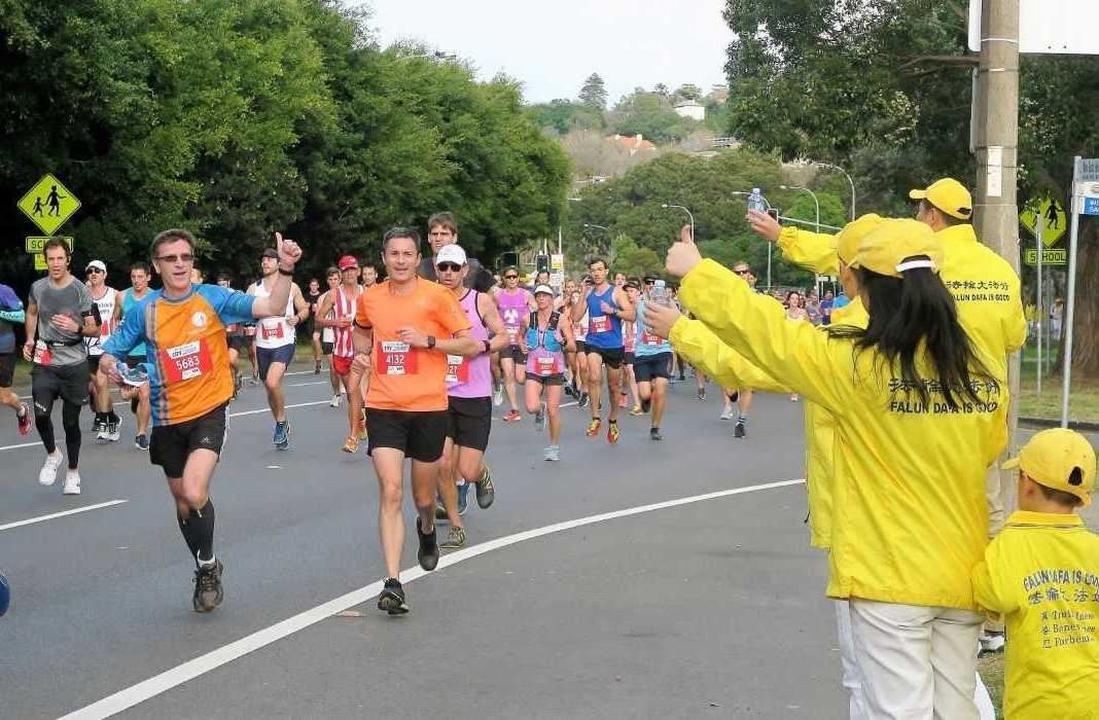
It doesn’t look like mass participation races with thousands and thousands of runners will make a comeback in 2021, but that doesn’t mean smaller events won’t be held. As the pandemic wore on throughout the year, race organizers and event teams came up with plans for COVID-friendly runs. These organizing teams have worked closely with local and provincial health officials to create safe race formats, and that planning won’t stop throughout the winter.
Come spring, there could be a good number of race opportunities for runners across Canada, and while you shouldn’t expect to run alongside 10,000 of your closest running buddies, you might get the chance to run in a real race in 2021, which is definitely a reason to get excited.
The fall marathon schedule:
With the postponements of the Tokyo, Boston and London marathons, all six World Marathon Majors (WMMs) are set to be run in the fall of 2021. The mass participation events at these races might not be able to go ahead as planned, but after the success of the London Marathon’s elite-only event this year, there’s a good chance that the other five WMMs will follow suit and host elite fields next year.
This packed fall schedule will make for an exciting few weeks of races for running fans to watch, which will be a welcome change following 2020, a year in which we only saw a few elite marathons.
One of the biggest dissapointments for athletes in 2020 was the cancellation of the Tokyo Olympics. As we learned this year, nothing can be considered a sure thing in the age of COVID-19.
But International Olympic Committee officials have expressed their confidence that the Games will go ahead next summer. At the moment, the Games appear to be a go, and that is a big reason to look forward to 2021.
When COVID-19 first hit, we were thrown into the world of no races with pretty much no warning. Now, after months of living through a pandemic, we know how to keep ourselves busy when we can’t race. We’re confident that race organizers will be able to get their events up and ready to go with proper COVID-19 guidelines in place next year, but now we’ve all gotten creative and figured out how to come up with different running challenges. Whether you’re into time trials, ultra challenges or any other kind of personal competition, you’re set for an entertaining 2021.
Virtual challenges and events:
This is the same deal as the last reason to look forward to 2021. When the pandemic first started, race organizing teams were caught off-guard and left without many options for their events. Many races transitioned to virtual formats, but some cancelled everything for 2020. In addition to planning COVID-friendly in-person races for next year, a lot of these organizing teams have virtual events and challenges ready for 2021, which means we’ll all have so many options to keep ourselves busy, no matter how the global health situation looks.
(12/28/2020) ⚡AMPby Ben Snider-McGrath
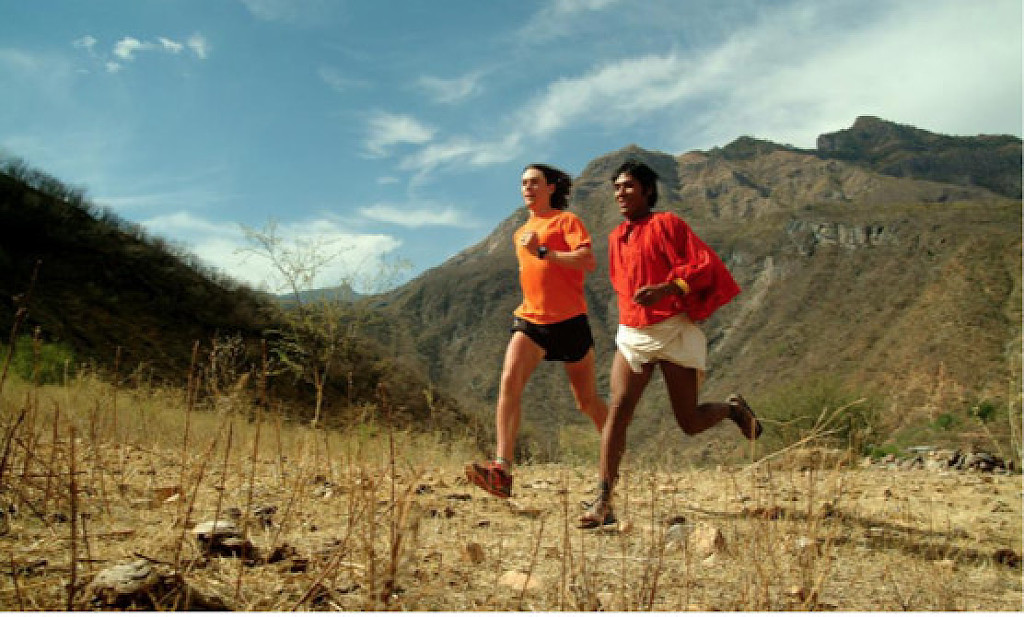
What happened when the Tarahumaras' love of ultrarunning went global?
The book Born to Run brought attention to an indigenous Mexican’s people feats of long-distance running. A new documentary looks at what happened next
Next up in ESPN’s venerable 30 for 30 series is The Infinite Race, a documentary on a sports topic that hardly checks the biggest 30 for 30 box, in that the film does not involve a famous star athlete, sport or event. In fact, The Infinite Race kicks off with a simple story about an indigenous people’s joy of long-distance running.
The documentary explores what happens to these people, the Tarahumara, who live deep in the mountains of Chihuahua, Mexico, when their love of running, or even their calling to run, spills out to the rest of the world because of a popular book about running and an American known as Caballo Blanco, or the White Horse.
“It’s a story about resilience, survival and continuance,” Bernardo Ruiz, the veteran Mexican and American film-maker who directed The Infinite Race, tells the Guardian.
That the 50-mile Ultra Maratón Caballo Blanco, which The Infinite Race revolves around, will be held again next March in the rugged terrain of Chihuahua’s Copper Canyon is a testament to the event’s durability. Running won out, as it has for generations among the Tarahumara, but only after the event survived a culture clash that involved a lot of dollars and pesos, good and bad.
Although he directed an award-winning 2008 documentary about baseball star Roberto Clemente and says he always wanted to make a film about running, Ruiz deals with tougher subjects, like the US-Mexico drug war in his 2016 documentary Kingdom of Shadows.
He says of The Infinite Race: “I liked how it was a compelling, beautiful film about running, but it also talked about social issues.”
The film, which debuts on 15 December, starts a little slowly, but those who stick with it will find out much about an indigenous people’s rich past – and a future lighted by hope.
The Tarahumara, or the Rarámuri, have run vast distances for years, often wearing sandals that have tire treads as soles. They say running is in their blood: isolation and geography helped them build endurance to hunt prey. They became famous after they were featured in Born to Run, a 2009 bestseller by Christopher McDougall.
The central figure of Born to Run was American ultramarathon runner Micah True, also known as Caballo Blanco, who organized a race in 2003 that would eventually become the Ultra Maratón Caballo Blanco. True hoped the race would help the Tarahumara preserve their running heritage and, more significantly, their culture, which had been battered by hunger, a lack of drinking water, a shortage of housing and global heating.
True, who had wintered in the area for 10 years, offered prizes of cash and corn, a commodity: “I don’t want to see people kill themselves for corn,” he said in the documentary. He opened the event to ultramarathoners, and it became popular among Americans, who were looking for a new challenge and a new culture to explore.
True died in 2012 at the age of 58 of a heart attack while running, but the event named after him continued to grow. A shorter kids’ run for “Caballitos” was offered, with bags of school supplies given to participants. The event had become commercialized, even with its own line of merchandise, but the whole region benefited from Caballo Blanco’s idea.
But the region’s seclusion had also become attractive to criminal gangs, who took over farms to grow marijuana and poppy plants to smuggle into the United States, whose border is only about 550 miles to the north. People needed work, and the drug trade provided opportunities, with even distance runners hauling drugs. Gangs proliferated. So did violence.
“Many families were forced out of their communities because of the violence,” Irma Chávez, an activist, explains in the film. “Unfortunately, you have to run away before they kill you.”
The 2015 Ultra Maratón Caballo Blanco was supposed to be the biggest yet, but gangs all but took over the town, clouding the event with the real threat of violence. The Americans who helped organize the race, believing participants could be in danger, decided almost at the last minute to call off the official race. No vouchers for corn would be issued to participants.
“They kind of intruded with a heavy hand into a runner’s paradise,” Ruiz says of the gangs.
He says, “It’s been my view that the race organizers were stuck in kind of an impossible situation.”
And that might have been the end of the event. But a group of Tarahumara assembled on what was supposed to be the morning of the race – and ran the course anyway, without incident. The marathon was officially back in 2017. Miguel Lara Viniegras won the 2020 race, which attracted 220 runners last March, in six hours 43 minutes.
As an ultrarunner and photographer Luis Escobar says in the film, “People are looking for something big, outside of their office, outside of their home. It is a big struggle, it’s hard physically and mentally – and there’s nothing like doing it. When you complete it, you know that you can do anything.”
Ruiz, who says he spent most of his career examining the love-hate relationship between the United States and Mexico, had a compelling challenge: telling a story that was not that well-known and based in a place that was very difficult to get to from the outside world. “You’d have to kind of be an ultrarunner or a sports geek to care about it,” he says.
Perhaps the film won’t draw as big an audience as other ESPN documentaries because it does not include an American sports celebrity like OJ Simpson or Michael Jordan. But the 30 for 30 project, now more than a decade old, has become much deeper, delivering quality projects that are way more than mere sports movies. This is one.
As Ruiz says, 30 for 30 “is a franchise that is really film-maker-driven.”
(12/27/2020) ⚡AMP
Boxing legend Jeffrey LeMair is now running ultra marathons
The steady beat of a footstep, after footstep. It’s a calming and comfortable sound to Jeffrey LeMair.He runs for fun. Jeffrey has more than 30 marathons under his belt, including the Boston Marathon.
“When I’m having a bad day, some people go out and say ahh I resolve all my problems by running, it’s not that easy, but what happens is you get so relaxed that you’re in a non-emotional state to be able to deal with your issues,” said LeMair.
And for Jeffrey, a regular 26 mile marathon isn’t enough. He now runs Ultra Marathons of 50 to a hundred miles.
“It’s more of an adventure for me, so I want to extend the adventure, I also want the peace and fulfillment,” said LeMair.
During his 66 years, Jeffrey has run into his share of obstacles. The biggest came in the most unlikely place. The White House. You see Jeffrey wasn’t always a runner. Pound for pound Jeffrey LeMair is probably the best boxer to come out of the state of South Dakota.
Jeffrey won amateur championships, traveled the world and met stars. His brother Greg was his trainer and coach.
“Everybody that knows Jeffrey knows he was a pretty good boxer, but I don’t think people fully understand how good he was, said his brother Greg LeMair.
With Greg in his corner, Jeffrey fought, virtually to a draw, three boxers who went on to become world champions. One of them was Sugar Ray Leonard, who Jeffrey fought in Denver.
“It was a really really beautiful boxing match, really close but in the third round, Jeffrey decked Sugar Ray Leonard, the first time and one of the few times Sugar Ray Leonard was ever off his feet,” said Greg LeMair.
Leonard went on to become an Olympic gold medalist in 1976. At the next Olympics, it was to be Jeffrey’s turn. And that’s how he ended up at the White House on March 21st, 1980. On that rainy day, LeMair, and other top athletes in their sports were called to a meeting with President Jimmy Carter. One of LeMair’s fellow boxers spoke up but the president had made up his mind.
“He said young man, we’re not going, and that was it,” said LeMair.
Boxing will always be a part of his life, the muscles may be a little stiffer, the movement a fraction slower, but you still would not want to be on the receiving end of one of these punches. At times in his life, Jeffrey has been a contender, a challenger and in the eyes of those who know him best, a champion
“As good a fighter as good a boxer as Jeffrey was, he’s as good a human being,” said Greg LeMair.
In more than 200 fights Jeffrey says he was never knocked out and he credits his brother Greg for much of his success. Lemair, who turns 67 in February is preparing for another 100 mile race in 2021.
By the way, his grandkids call him “Grandpa Boom Boom.”
(12/24/2020) ⚡AMPby Tom Hanson
