

Running News Daily
Running News Daily is edited by Bob Anderson and team. Send your news items to bob@mybestruns.com Advertising opportunities available.
Index to Daily Posts · Sign Up For Updates · Run The World Feed
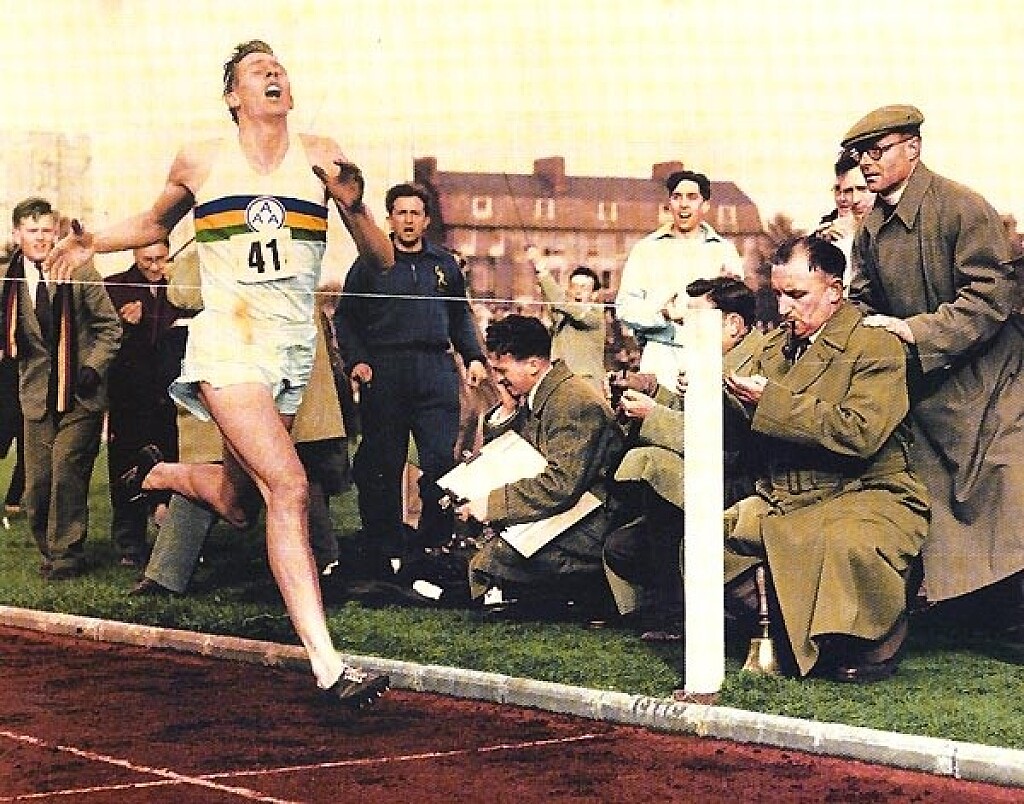


Breaking the Barrier: 72 Years Since the Mile Changed Forever

Seventy-two years ago, on a modest track in Oxford, the limits of human endurance were rewritten in a matter of seconds that would echo through sporting history. On May 6, 1954, Roger Bannister achieved what many had long believed impossible—running a mile in under four minutes.
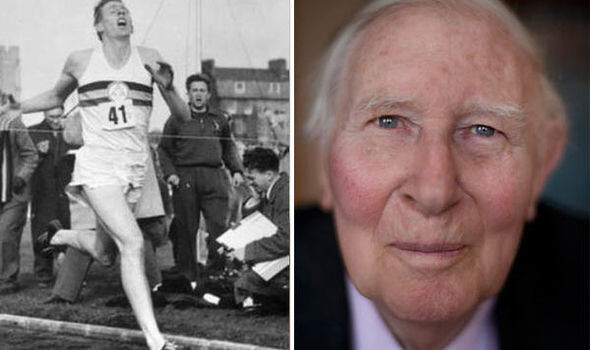
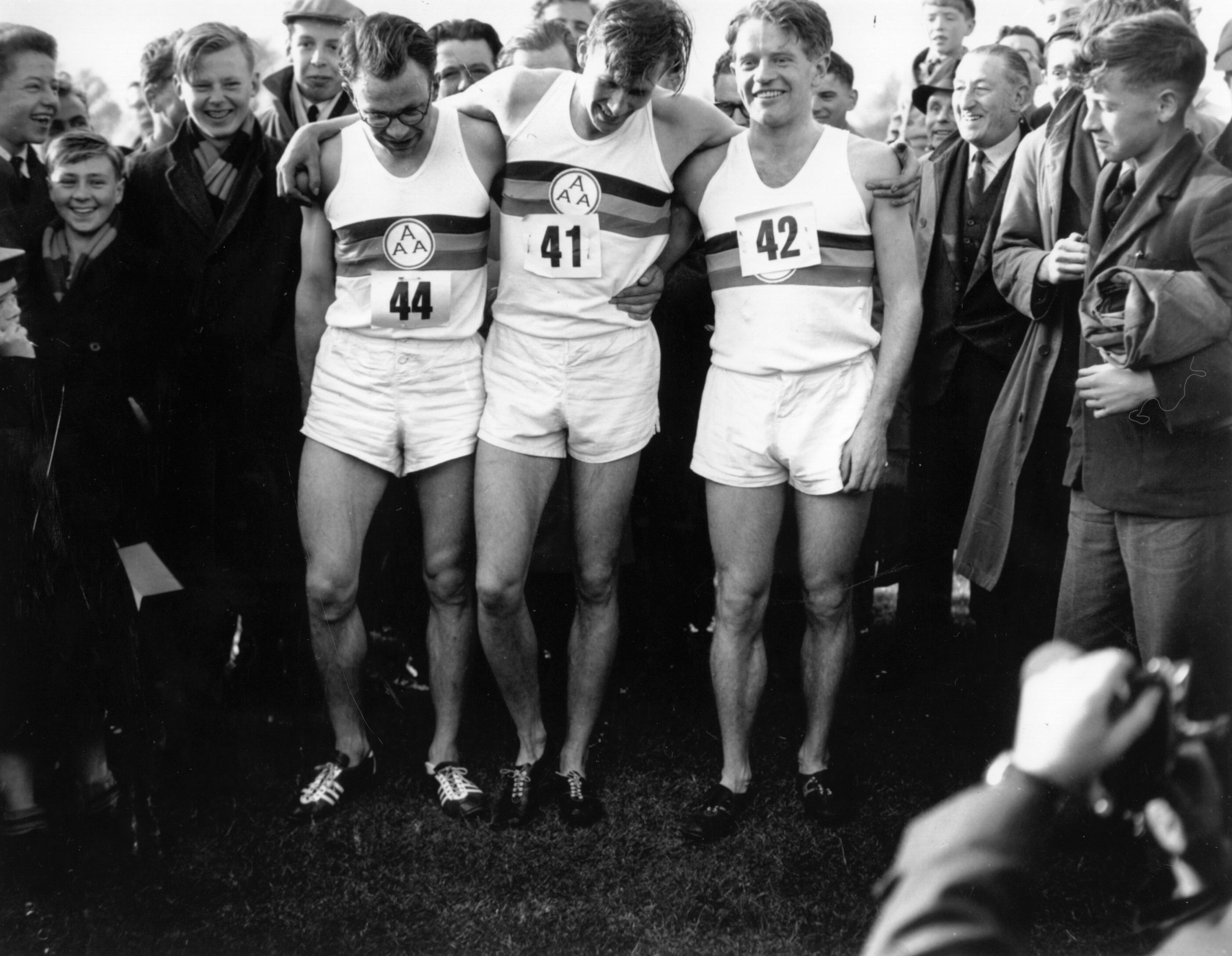
Clocking 3:59.4 at Iffley Road Track, Bannister did more than break a record; he shattered a psychological barrier that had stood like a wall in the minds of athletes and experts alike. The performance was not a solitary feat of brilliance, but a perfectly orchestrated effort. With the steady guidance of pacemakers Chris Brasher and Chris Chataway, Bannister was carried through the early laps at a relentless yet controlled tempo before unleashing his defining kick.
What makes the feat even more compelling is the understated nature of the preparation behind it. In an era long before the science-heavy training systems of today, Bannister followed a remarkably measured approach. During the winter phase of his periodisation, he averaged fewer than 30 miles per week—modest by modern elite standards—and deliberately reduced that load to roughly 15 miles per week as he transitioned into the competition phase of his macro-cycle. It was a philosophy rooted not in volume, but in precision and quality.
His sessions reflected that same clarity of purpose. Among his preferred workouts was a demanding set of three repetitions over a mile and a half, each run at a controlled rhythm comparable to a 14:30 5km pace. It was training designed to sharpen both endurance and efficiency—an early glimpse into principles that would later define modern middle-distance preparation.
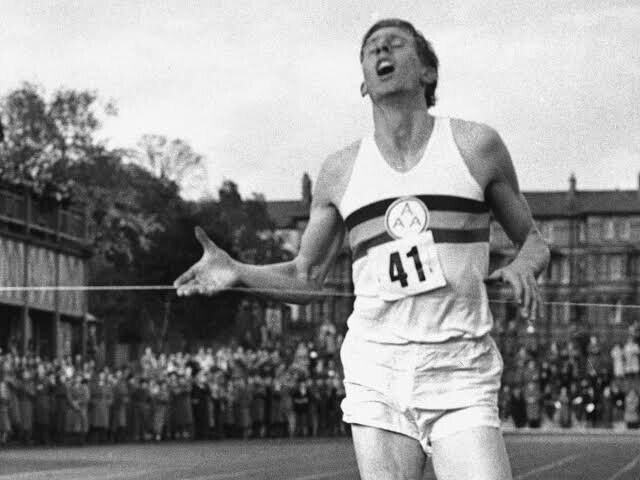
On race day, that discipline translated into exact execution. The pacing plan was meticulous: the halfway point was to be reached in 1:58, a target faithfully delivered before Chris Chataway assumed control of the tempo. By the three-quarter mile, the clock read 3:01, leaving Bannister perfectly poised on the edge of history. What followed was not just a final lap, but a defining surge into immortality.
In the decades since that historic afternoon, the mile has continued to evolve, each generation pushing the boundaries a little further. The world record has been rewritten 18 times, each mark a testament to the relentless pursuit of excellence. Today, the standard is held by Hicham El Guerrouj, whose astonishing 3:43.13 remains a benchmark of sustained speed and precision.
Yet, even as times have grown faster, Bannister’s achievement retains a unique place in athletics lore. It was not merely about speed—it was about courage, innovation, and the refusal to accept perceived limits. His run endures as a reminder that the greatest breakthroughs often begin in the mind before they are realized on the track.
Seventy-two years on, the sub-four-minute mile is no longer a rarity among elite runners, but the moment it was first conquered remains timeless—a defining stride in the story of human potential.
by Erick Cheruiyot for My Best Runs.
Login to leave a comment
Latest Running News

Jennifer MacDonell Runs 3:23:59 At 70 To Set Pending World Marathon Record In Toronto
At 70 years old, Canadian distance runner Jennifer MacDonell is challenging conventional expectations of ageing after producing a remarkable marathon performance that could rewrite the record books in masters athletics.
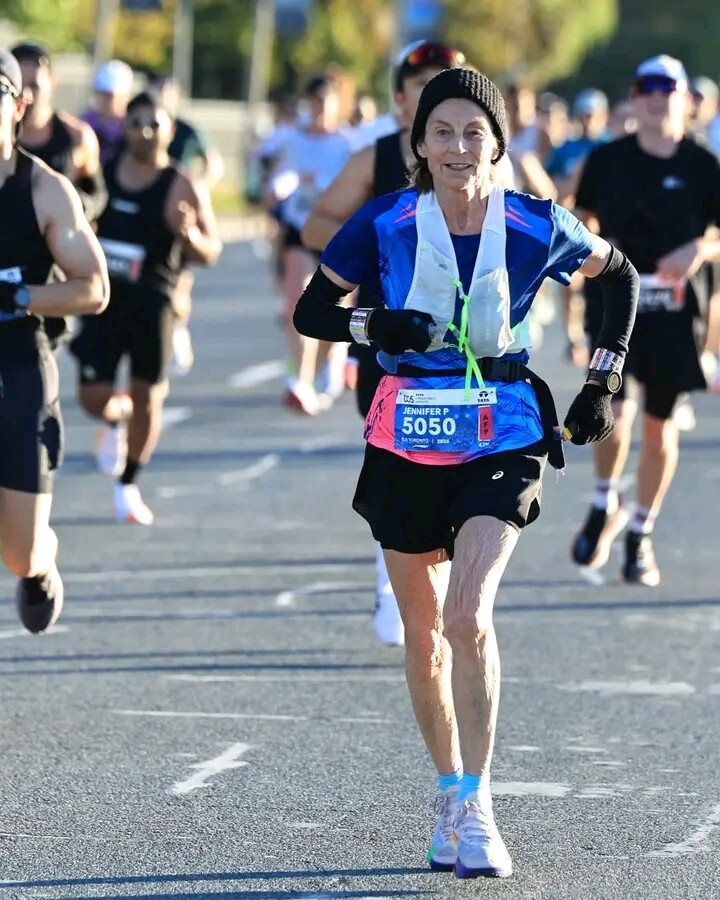
MacDonell, who hails from Ottawa, Canada, clocked an outstanding 3:23:59 at the TCS Toronto Waterfront Marathon, setting a pending world record in the women's 70–74 age category. Her performance eclipsed the previous mark of 3:27:00, set by France's Laurence Dupont Alnet in 2024, by more than three minutes.
Her extraordinary achievement stands as a powerful testament to the rewards of disciplined training, intelligent race preparation and a determination to continue competing at the highest possible level, regardless of age.
Completing the 42.195-kilometre distance in 3:23:59 required MacDonell to maintain an average pace of approximately 4:50 per kilometre, or 7:47 per mile, throughout the race. It was a phenomenal display of endurance from an athlete who continues to demonstrate that age alone does not define the boundaries of athletic performance.
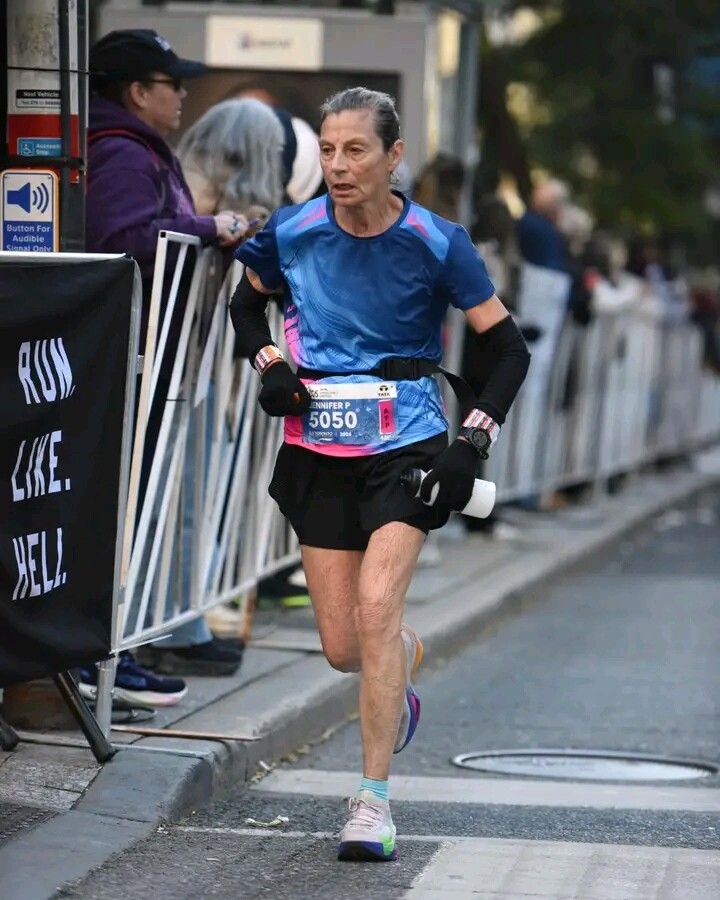
However, her marathon breakthrough was only the highlight of an extraordinary period of racing.
Just nine days before her performance in Toronto, MacDonell travelled to Montreal, where she set a Canadian age-group mile record with a time of 6:51. The following morning, she returned to the track and roads to record another national age-group mark, clocking 21:40 over 5km.
Producing two Canadian records on consecutive days before delivering a potentially world-record marathon performance little more than a week later highlights the remarkable consistency and preparation behind her achievements.
According to reports by Canadian Running Magazine, MacDonell devoted an entire year to studying the Toronto marathon course, carefully analysing its hills, anticipating potential headwinds and tailoring her training to meet the demands of race day.
That preparation proved crucial as she navigated the challenging course in pursuit of her ambitious goal. Even when a calf cramp emerged during the final two kilometres, threatening to disrupt her rhythm, she continued towards the finish line and completed one of the most impressive performances of her running career.
MacDonell's achievement also offers a compelling reminder of the importance of masters athletics, a competitive arena in which experienced runners continue to challenge records and redefine what is possible later in life.
While marathon running demands tremendous physical endurance at every age, maintaining the ability to compete at such a high level at 70 requires years of commitment, careful preparation and an enduring passion for the sport.
Her approach was driven by a fundamental question: how fast can the human body go?
In Toronto, MacDonell delivered an extraordinary answer, demonstrating that the pursuit of excellence does not have to end when an athlete reaches a milestone birthday.
Although her 3:23:59 performance remains subject to official ratification as a world record, the time has already established an impressive benchmark for women competing in the 70–74 age category.
For runners around the world, her story is about much more than a time on the clock. It is about setting ambitious goals, embracing the discipline required to achieve them and refusing to let age alone dictate the limits of one's ambitions.
At 70, Jennifer MacDonell is still chasing faster times, breaking records and inspiring others through her performances. Her remarkable run in Toronto sends a powerful message to the running community: the finish line of one achievement can always become the starting point for another.
by Erick Cheruiyot for My Best Runs.
Login to leave a comment

TCS Toronto Waterfront Marathon
The Scotiabank Toronto Waterfront Marathon, Half-Marathon & 5k Run / Walk is organized by Canada Running Series Inc., organizers of the Canada Running Series, "A selection of Canada's best runs!" Canada Running Series annually organizes eight events in Montreal, Toronto and Vancouver that vary in distance from the 5k to the marathon. The Scotiabank Toronto Waterfront Marathon and Half-Marathon are...
more...
Femke Bol Returns To Training After Bold 800m Switch As Dutch Star Targets A Bigger 2027 Season
Dutch athletics superstar Femke Bol is back on the track and preparing for the 2027 season after a remarkable year that saw her explore a new challenge on the track while celebrating a major milestone in her personal life.
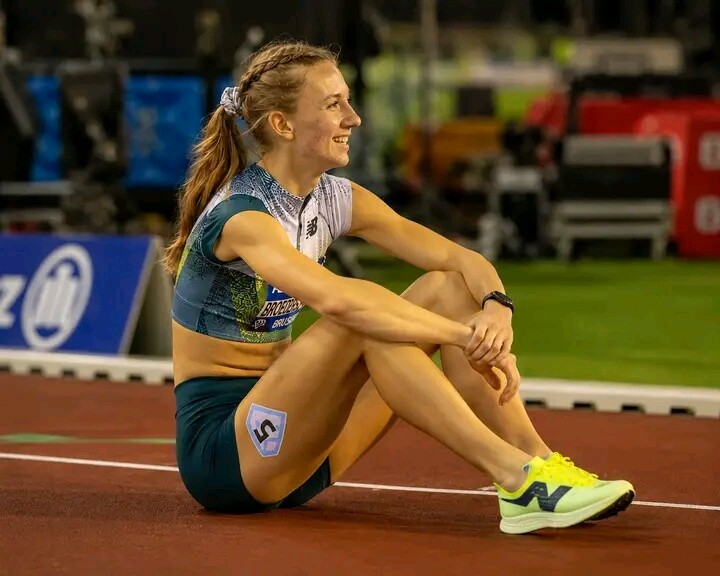
The 26-year-old, who established herself as one of the world's leading 400m hurdlers, made headlines in 2026 with an ambitious transition to the women's 800m. The move opened an exciting new chapter in her career, testing her speed, endurance and tactical abilities over the longer distance.
Bol quickly demonstrated that she could compete at an impressive level in her new event, setting a Dutch national record of 1:54.71 at the Zurich Diamond League. She also clocked 1:55.41 in Lausanne and secured victory in the 800m at the FBK Games in Hengelo, delivering performances that strengthened expectations surrounding her future in the discipline.
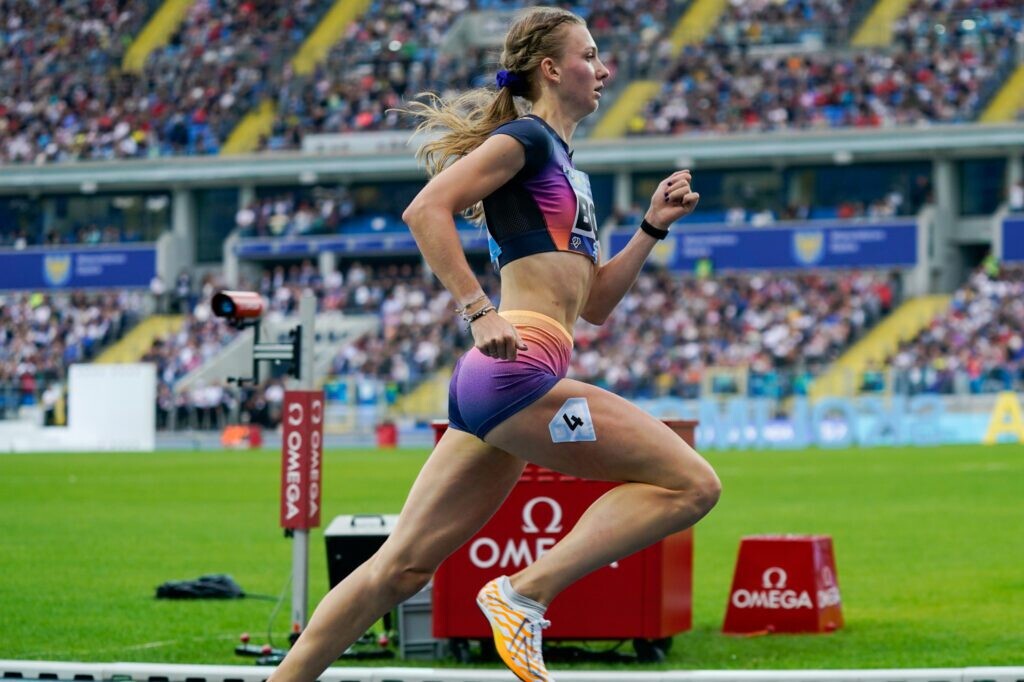
Her decision to move away from the 400m hurdles represented a significant change for an athlete who had dominated the event for several seasons. Renowned for her exceptional speed, powerful finishing ability and consistency on the international stage, Bol now faces the challenge of translating those qualities into success over two laps.
Beyond athletics, 2026 also brought a special moment in her personal life as Bol married Belgian pole vaulter Ben Broeders, marking another important milestone away from competition.
With the new season approaching, the Dutch star has returned to training, beginning the process of building her fitness and preparing for the demands of another year at the highest level. Her immediate focus will be on developing further in the 800m and determining how far she can push her performance in an event traditionally dominated by specialist middle-distance runners.
Bol's transition has already generated considerable interest, and her national record suggests that she has the potential to become an increasingly formidable competitor over the distance. However, establishing herself among the world's leading 800m runners will require continued development, consistency and the ability to deliver against an increasingly competitive international field.
As preparations for 2027 gather momentum, attention will turn to how much further she can progress after her promising first season over two laps.
Can Femke Bol transform her successful transition into a serious challenge for global honours in the women's 800m in 2027? The Dutch star's next chapter promises to be one of the most intriguing storylines in international athletics.
by Erick Cheruiyot for My Best Runs.
Login to leave a comment
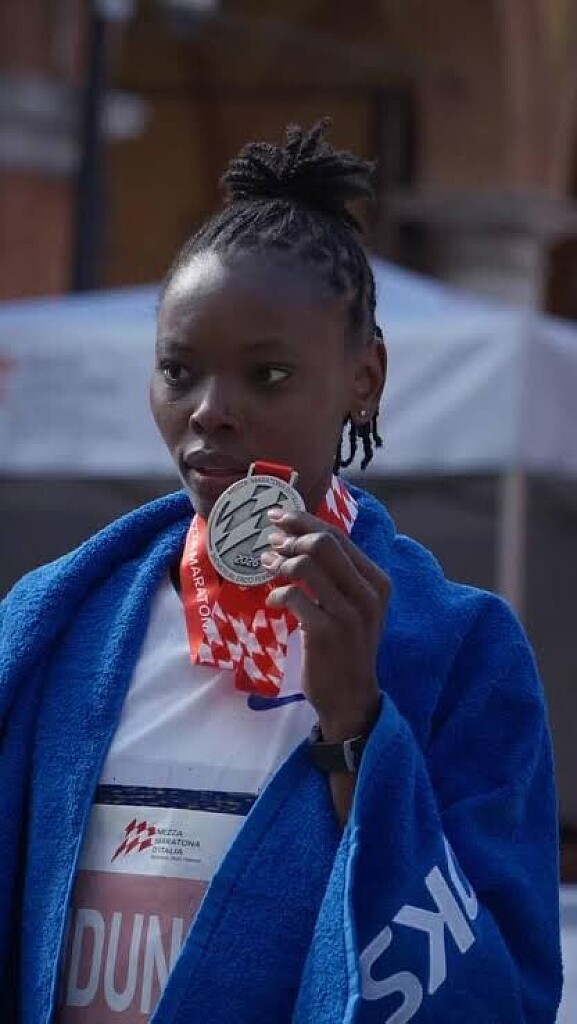
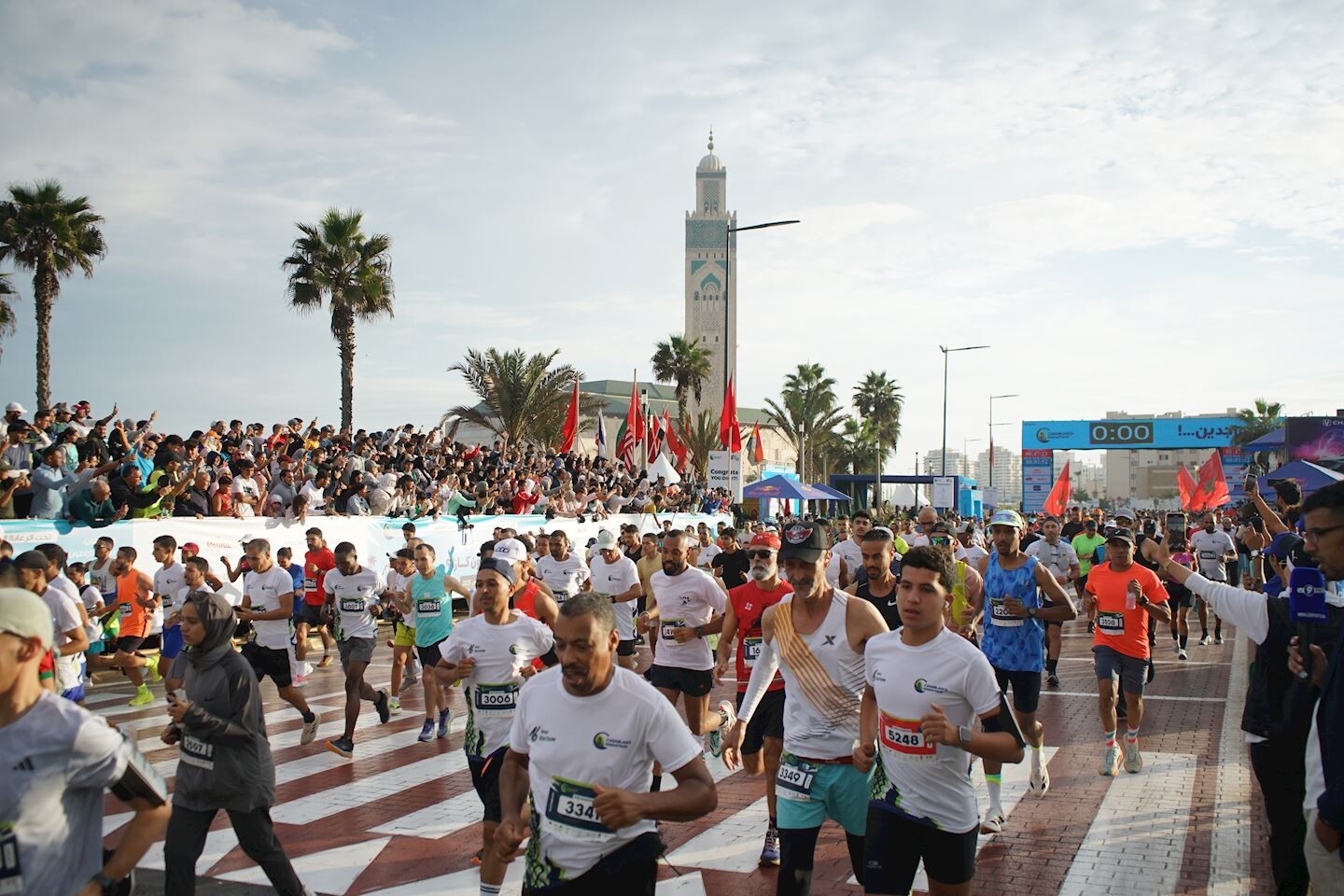
Casablanca Half Marathon 2026: Regina Wambui Ndungu Leads Kenyan Charge Against Morocco’s Best
The women’s elite race at the 2026 Casablanca Half Marathon promises an exciting battle for supremacy on Sunday, October 25, as Kenya’s Regina Wambui Ndungu leads a competitive international field featuring Uganda’s Rispa Cherop and Morocco’s homegrown stars.
With a personal best of 1:07:10, Ndungu arrives as the fastest athlete listed in the women’s elite field, making her a leading contender for victory. However, the Kenyan will face a determined challenge from athletes eager to seize the spotlight on Moroccan soil, setting the stage for an intriguing contest over 21.0975 kilometres.
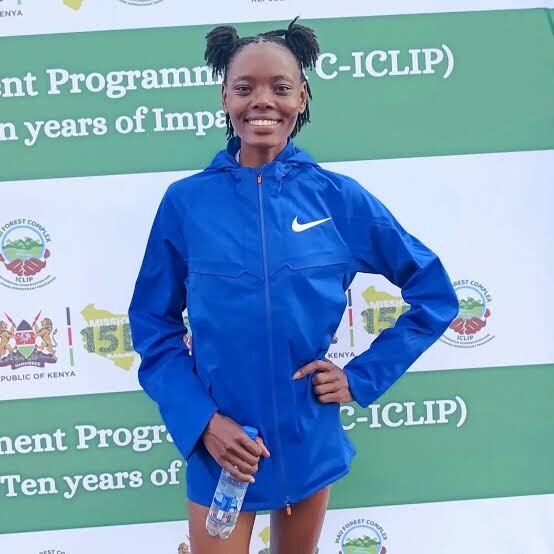
Ndungu’s credentials place her firmly among the favourites, but translating that status into victory will require a composed and tactically intelligent performance. The outcome could depend on how the leading contenders manage the pace, respond to changes in the race, and position themselves for the decisive kilometres.
Morocco’s Rahma Tahiri is expected to be among the principal challengers. With a personal best of 1:08:34, she possesses the speed to compete for the title and will have the added motivation of racing in front of the home crowd. A victory on familiar roads would be a significant achievement, and Tahiri will be eager to make the most of the opportunity.
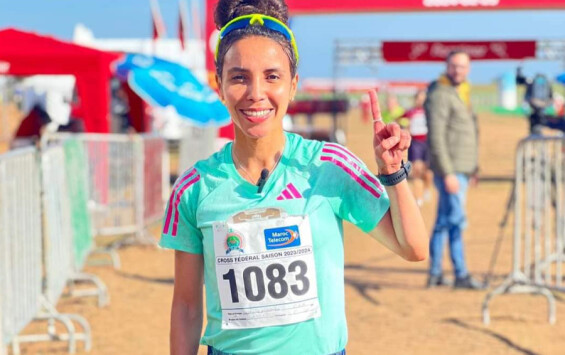
Uganda’s Rispa Cherop also enters the contest with a strong performance record. Her personal best of 1:08:53 places her among the leading contenders, within striking distance of Tahiri and close enough to Ndungu to make the contest unpredictable. If she can remain in contact with the front-runners through the early stages, Cherop could emerge as a serious threat in the closing kilometres.
Beyond the leading trio, the field features several Moroccan athletes seeking to challenge the established favourites. Meryeme Azrour, with a personal best of 1:09:46, and Kaoutar Farkoussi, who has run 1:09:58, are both capable of adding depth to the contest. Fatima Aafir, listed at 1:10:54, will also be among the athletes looking to produce a competitive performance.
Other names on the entry list include Soukaina Elhaji (1:12:49), Hanane El Bajjaoui (1:14:13), Rababe Arafi (1:14:20), Jamila Ayachi (1:15:12), Liz Romo (1:14:59), Sakina El Adel (1:16:51) and Fatima Zahra Erregui (1:17:44).
With several athletes boasting personal bests below 1:10, the leading group could produce an aggressive race from the outset. However, the fastest personal best does not guarantee victory, and the ability to execute the right strategy on race day will ultimately determine who comes out on top.
The Casablanca Half Marathon will provide an important opportunity for the elite women to test themselves against international opposition while showcasing the depth of distance-running talent from Morocco and beyond.
For Ndungu, the objective will be to convert her position as the fastest entrant into a winning performance. For Tahiri, the challenge is to turn home advantage into a memorable triumph. Cherop, meanwhile, will be looking to upset the leading contenders and take the title back to Uganda.
With Kenyan ambition, Ugandan determination and Moroccan home-crowd support converging on the same course, the women’s elite contest promises to be one of the key attractions of the 2026 Casablanca Half Marathon.
by Erick Cheruiyot for My Best Runs.
Login to leave a comment

Casablanca Half Marathon
A real sporting festival placed under the theme "The Casablanca half-marathon: Two races for the pleasure of the people of Casablanca: 21km97m, 10km", which will bring together a large audience of spectators all along the course and personalities, professionals but also technical assistance from several Olympic and world champions....
more...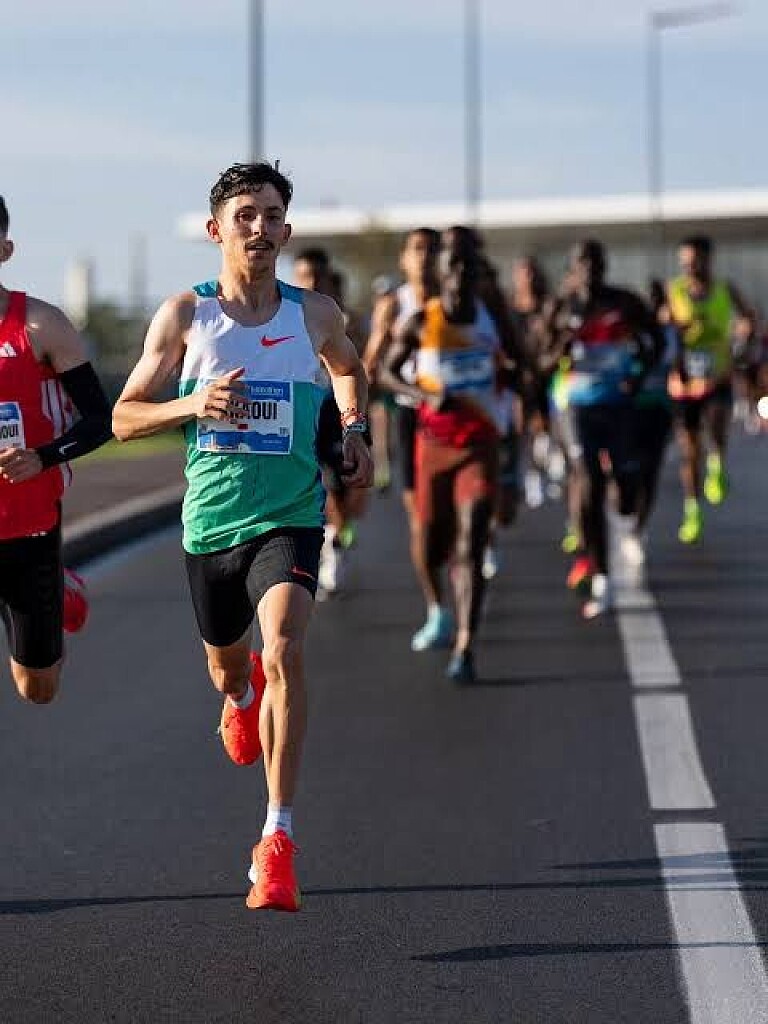
Casablanca Half Marathon 2026: Mustapha Akkaoui Leads The Home Charge As Kenyan Duo Threatens Moroccan Glory
The 2026 Casablanca Half Marathon is set to deliver an exciting contest on Sunday, October 25, with Morocco's leading distance runners preparing to defend home honours against a competitive international field featuring some of East Africa's finest athletes.
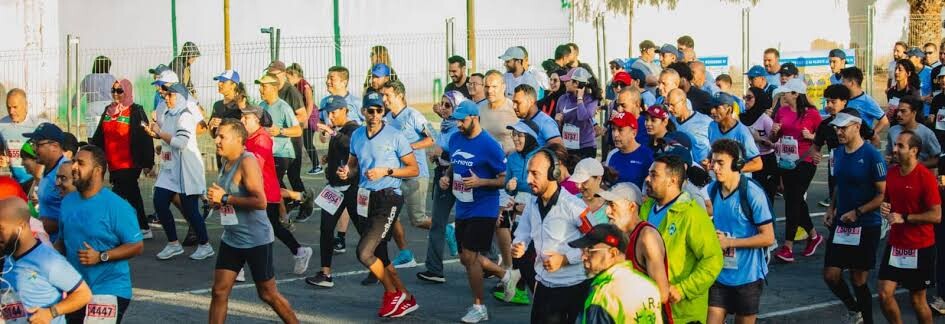
Moroccan standout Mustapha Akkaoui headlines the men's elite start list with an impressive personal best of 1:00:38, making him the fastest athlete entered on paper. With the support of the home crowd behind him, Akkaoui will be aiming to turn his credentials into a memorable performance on Moroccan soil.
However, the Moroccan favourite faces a serious challenge from Kenya, with Shadrack Korir Kipyegon and Joshua Munyoto Kithuku leading the international threat. Korir Kipyegon enters with a personal best of 1:01:19, while Kithuku has clocked 1:01:24. Both athletes possess the credentials to challenge for the podium and will be determined to disrupt Akkaoui's ambitions.
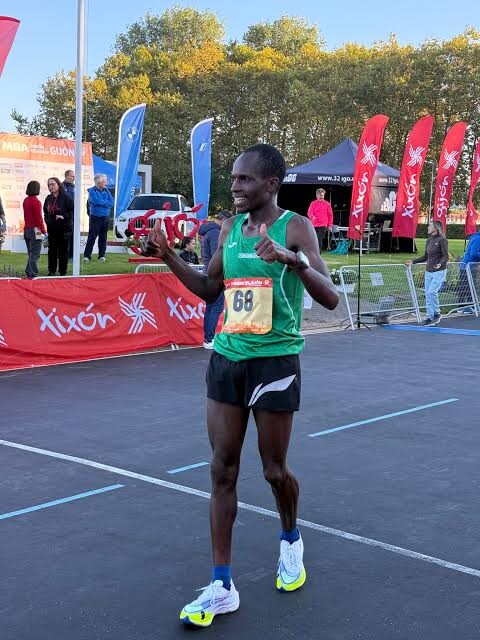
Uganda's Martin Kiprotich also adds considerable strength to the contest. With a personal best of 1:01:30, Kiprotich is another serious contender capable of making his presence felt in a race expected to feature an intense battle among the leading athletes.
The opening four names on the start list are separated by just 52 seconds in their respective personal bests, underlining the potential for a competitive race if the leading runners find favourable conditions and maintain a demanding pace. Although Akkaoui holds the fastest time, his advantage on paper offers no guarantee of victory against opponents eager to challenge the Moroccan favourite.
Beyond the leading international contenders, the men's field features a strong contingent of Moroccan athletes, including Allami Yassine, Fathi Abdenasir, El Hassouni Ahmed, Bybat Mohammed, Mounir Elouali and Ait Taghzant Mohammed. Their presence gives the host nation considerable depth and could produce an intriguing battle for the leading positions behind the principal contenders.
Ethiopia's Taha Adem Gudeto, listed with a personal best of 1:02:52, provides another international dimension to the race. Meanwhile, a host of Moroccan runners with personal bests ranging from the low 1:02s to the 1:04s will be looking to deliver strong performances and improve their standing against a competitive field.
With Akkaoui leading the entries, Kenya bringing two formidable challengers and Uganda represented by Kiprotich, the men's contest promises an engaging clash of national ambitions. The key question is whether the Moroccan favourite can capitalise on home advantage or whether the East African challenge will produce a different winner.
Men's Elite Start List — Leading Athletes
1. Mustapha Akkaoui (Morocco) — 1:00:38
2. Shadrack Korir Kipyegon (Kenya) — 1:01:19
3. Joshua Munyoto Kithuku (Kenya) — 1:01:24
4. Martin Kiprotich (Uganda) — 1:01:30
5. Allami Yassine (Morocco) — 1:01:30
6. Fathi Abdenasir (Morocco) — 1:01:32
7. El Hassouni Ahmed (Morocco) — 1:01:43
8. Bybat Mohammed (Morocco) — 1:01:47
9. Mounir Elouali (Morocco) — 1:02:08
10. Ait Taghzant Mohammed (Morocco) — 1:02:13
As race day approaches, attention will centre on whether Akkaoui can deliver a winning performance in front of his home supporters or whether Kenya's and Uganda's challenge will prove decisive. With several athletes possessing personal bests close to the leading mark, Casablanca is preparing for a compelling half-marathon showdown.
by Erick Cheruiyot for My Best Runs.
Login to leave a comment
Casablanca Half Marathon
A real sporting festival placed under the theme "The Casablanca half-marathon: Two races for the pleasure of the people of Casablanca: 21km97m, 10km", which will bring together a large audience of spectators all along the course and personalities, professionals but also technical assistance from several Olympic and world champions....
more...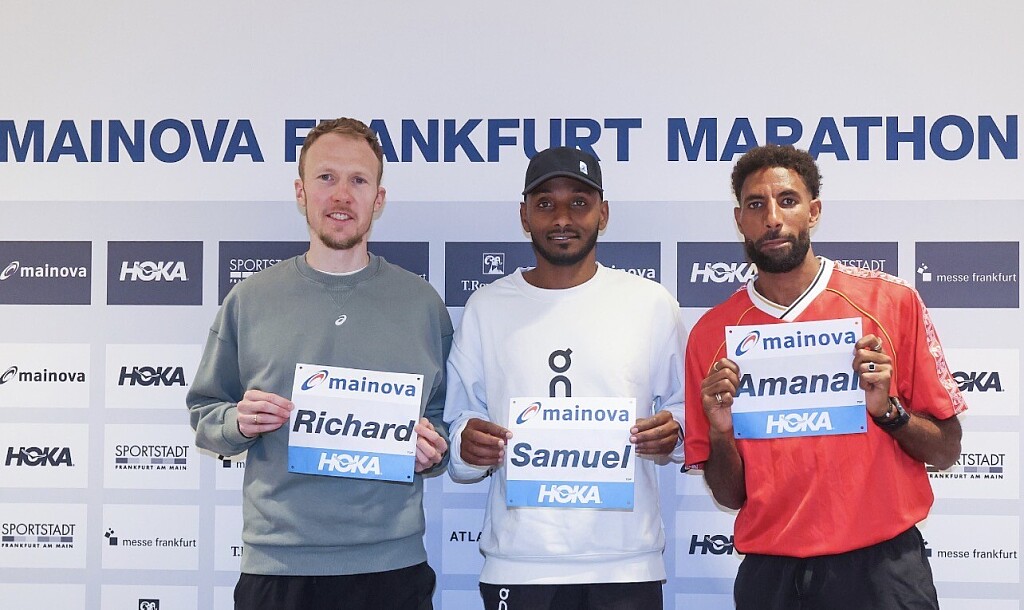
Records in Sight as Frankfurt Assembles Its Fastest Men’s Field
Petros leads Germany’s top marathoners, Zeineba Yimer targets the women’s course record, and Kenya’s Mark Kiptoo chases an age-group milestone at Sunday’s Mainova Frankfurt Marathon.
The Mainova Frankfurt Marathon could deliver a series of record performances on Sunday, October 25—if the weather cooperates.
The 43rd edition brings together the fastest men’s field in the event’s history, with German and European records potentially within reach. Both course records—2:03:42 for men and 2:17:25 for women—could come under pressure, while a promising German debut and an M50 world-best attempt add further interest.
Conditions will play a decisive role. Rain, cold and strong winds could derail ambitious pacing plans. If the weather settles, Frankfurt’s flat course could provide the setting for an exceptional day.
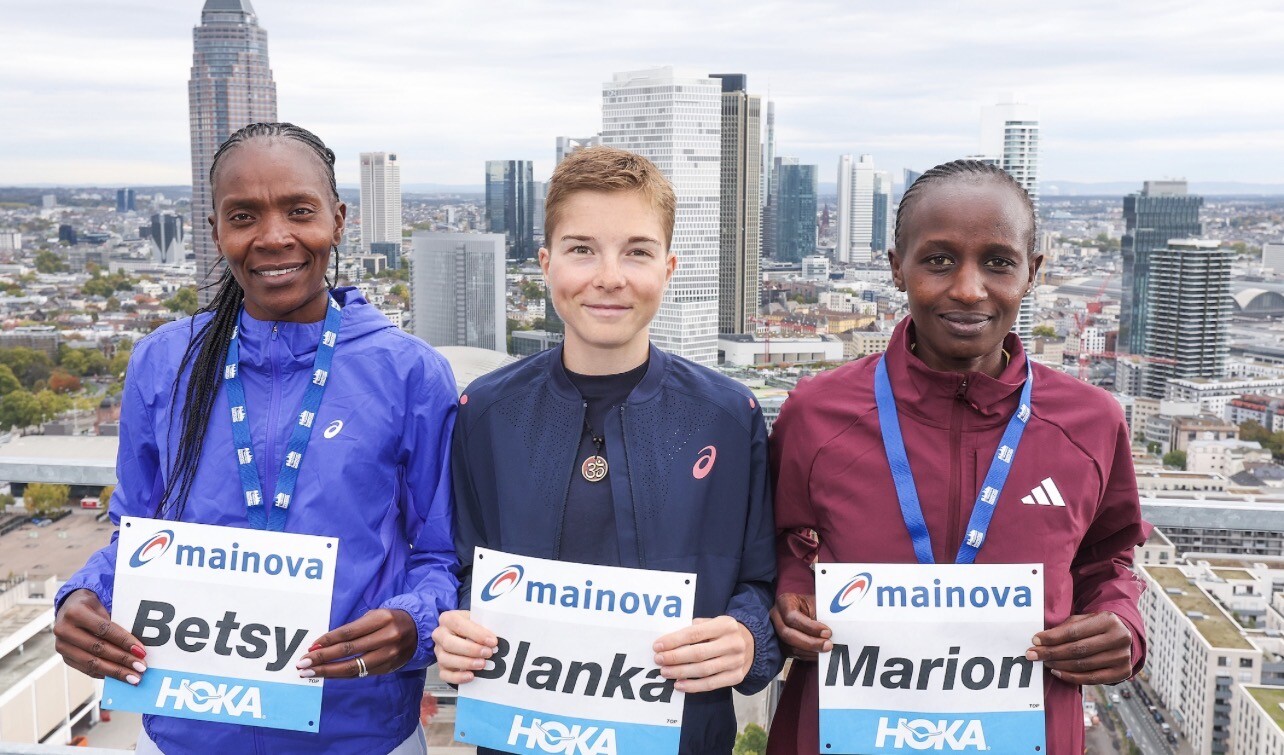
Organizers have reported a record 19,720 entries from 128 nations. The occasion also marks the final race for Jo Schindler as race director.
“We are absolutely delighted with this record number of entries. Over the past 25 years, we have taken the Mainova Frankfurt Marathon to a whole new level in every aspect,” Schindler said.
Germany’s Best Take Center Stage
Leading the men’s field is Amanal Petros, the German record-holder at 2:04:03, who won the European marathon title in Birmingham in August. He arrives with ambitions that could extend beyond his own national mark to the European record of 2:03:36.
“My training in Kenya went very well. If the weather is on my side, it could happen,” Petros said. “I have been dreaming of breaking the European record for several years now.”
A European record would also take him under Wilson Kipsang’s Frankfurt course record of 2:03:42, set in 2011.
Petros will face a strong domestic challenge from Samuel Fitwi, whose 2:04:45 runner-up finish in Hamburg in April is the fastest German performance this year.
“If the weather is good, the German record is within reach on the flat course in Frankfurt. I am well prepared and definitely want to beat my personal best,” Fitwi said.
Richard Ringer, the 2022 European marathon champion, completes the leading German trio. His record-eligible personal best is 2:05:46, although he ran 2:04:47 at Boston this spring on its non-record-eligible course.
Ringer plans a more measured approach after overcoming a muscle problem following the European Championships.
“I do not expect to be running right at the front on Sunday and will probably go with a second group,” he said.
Biwott Returns With Winning Ambition
The German contenders will have plenty of international competition.
Ethiopia’s Andualem Belay brings a personal best of 2:04:44, while Kenya’s Benard Biwottreturns to the scene of his breakthrough. Biwott won his marathon debut in Frankfurt in 2024 in 2:05:54, then improved to 2:05:25 while winning the 2025 Paris Marathon.
“My aim is to win on Sunday. I think I can achieve a time of around 2:04:00,” Biwott said.
Another Kenyan, Mark Kiptoo, could deliver one of the day’s most compelling performances. Now 50, the 2014 Frankfurt champion is targeting the M50 world best of 2:19:29, set by South Africa’s Titus Mamabolo in Durban in 1991.
Kiptoo has already made masters history in Frankfurt, running 2:07:50 here in 2018.
Yimer Targets the Women’s Course Record
Ethiopia’s Zeineba Yimer leads the women’s field with a personal best of 2:18:47, set while finishing third in Barcelona this spring
The 28-year-old is seeking a turnaround after stomach problems forced her out of the Berlin Marathon four weeks ago. Her ambitions include challenging the Frankfurt course record of 2:17:25, set by Hawi Feysa in 2024.
“Now I want to make the most of the flat course in Frankfurt and set a personal best. I have also got my sights set on the course record and want to break that mark as well,” Yimer said.
American Betsy Saina, who has run 2:19:17, returns from a maternity break and is targeting a halfway split of 70:00.
Kenya’s Marion Kibor, who improved to 2:21:12 in Hamburg this spring, also hopes to break 2:20. Ethiopia’s Meskerem Assefa, the 2018 Frankfurt champion, returns with the 2:20:36 personal best she set during that victory.
Dörfel Runs on Instinct in Marathon Debut
Germany’s Blanka Dörfel adds an intriguing debut to the women’s race.
The 24-year-old ran a half-marathon personal best of 68:08 in Mainz this spring and intends to trust her feel for the pace as she moves up to the marathon.
“I will be running without a watch and will trust my instincts,” Dörfel said.
Her half-marathon performance suggests the potential for a strong debut. The German women’s debut benchmark is 2:23:57, set by Melat Kejeta in Berlin in 2019.
Elite Runners with Personal Bests
MEN
Amanal Petros GER 2:04:03
Andualem Belay ETH 2:04:44
Samuel Fitwi GER 2:04:45
Richard Ringer GER 2:04:47
Benard Biwott KEN 2:05:25
Haimro Alame ISR 2:06:04
Antenayehu Dagnachew ETH 2:06:55
Jiregna Geleta ETH 2:06:57
Derara Hurisa ETH 2:08:09
Jirata Dinki ETH 2:08:18
Abe Gashahun ETH 2:08:35
Lemawork Ketema AUT 2:10:44
WOMEN
Zeineba Yimer ETH 2:18:47
Betsy Saina USA 2:19:17
Meskerem Assefa ETH 2:20:36
Siranesh Yirga ETH 2:21:08
Marion Kibor KEN 2:21:12
Janet Ruguru KEN 2:23:00
Mehret Gemeda ETH 2:23:29
Milicent Jelimo KEN 2:24:19
Obse Abdeta ETH 2:27:14
Martina Strähl SUI 2:28:07
Selam Fente ETH 2:28:22
Aselef Amare ETH 2:28:47
Blanka Dörfel GER Debut
by Race News Service
Login to leave a comment

Mainova Frankfurt Marathon
Frankfurt is an unexpectedly traditional and charming city, with half-timbered buildings huddled in its quaint medieval Altstadt (old city), cosy apple wine taverns serving hearty regional food, village-like neighbourhoods filled with outdoor cafes, boutiques and street art, and beautiful parks, gardens and riverside paths. The city's cache of museums is second in Germany only to Berlin’s, and its nightlife...
more...