

Running News Daily
Running News Daily is edited by Bob Anderson and team. Send your news items to bob@mybestruns.com Advertising opportunities available.
Index to Daily Posts · Sign Up For Updates · Run The World Feed


Beyond the Two-Hour Dream: Where Athletics’ Next Great Barriers Truly Lie
For generations, athletics has been defined not just by victories, but by the breaking of barriers that once seemed beyond human reach. From Roger Bannister redefining the limits of the mile to Eliud Kipchoge pushing the marathon into uncharted territory, the sport has thrived on moments where disbelief gives way to possibility.
Now that the elusive sub-two-hour marathon has been conquered—albeit under controlled conditions—the question naturally arises: what “impossible” feats remain?
On the men’s side, the landscape feels markedly different. The mythical thresholds that once captured the public imagination have largely been crossed. What remains are performances of extraordinary refinement rather than revolution. A 10,000 metres run under 26 minutes, a 5,000 metres dipping to 12:30, or an 800 metres brushing against the 1:40 barrier—these are astonishing achievements by any standard. Yet they lack the simple, almost poetic clarity of a round-number milestone. They are understood best by insiders, appreciated deeply by purists, but perhaps less capable of gripping the wider world in the same way.
Take the legacy of David Rudisha, whose 1:40.91 in the 800 metres already borders on perfection. To go significantly beyond it would be monumental, but not necessarily transformative in the public imagination. It is progress, not paradigm shift.
The narrative shifts, however, when attention turns to the women’s side—where the sport’s next defining frontiers may well emerge.
Foremost among them is the tantalising prospect of a sub-four-minute mile. At present, it exists firmly in the realm of speculation, yet history cautions against dismissing such ambitions. Before Bannister, the four-minute mile was widely considered unattainable. Today, with athletes like Faith Kipyegon consistently redefining excellence in the 1500 metres and mile, the once-unthinkable begins to inch toward plausibility. Even a performance approaching 4:02 would shift the psychological landscape, transforming fantasy into a credible pursuit.
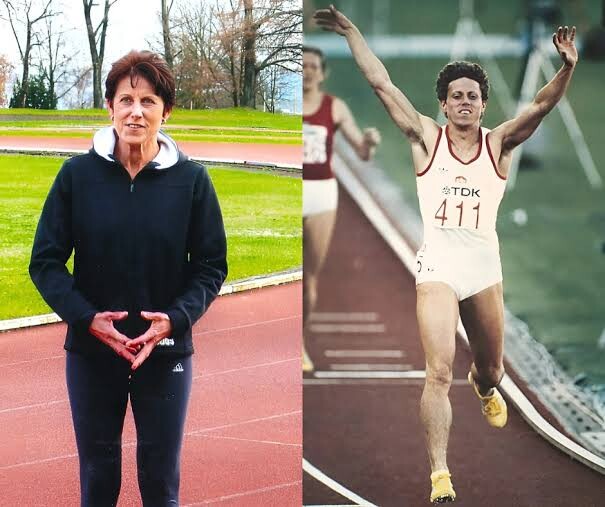
Then there is perhaps the most enigmatic mark in all of athletics: the women’s 800 metres world record. Set at 1:53.28 by Jarmila Kratochvílová in 1983, it stands as a relic of another era—unyielding, controversial, and seemingly immune to progress. While other events have evolved, this record has resisted even the closest of challenges. In fact, approaching within a second of it has become a rarity, elevating even a 1:54 performance into the realm of the extraordinary.
This enduring anomaly creates a paradox: in an age of rapid advancement, the women’s 800 metres has become one of the sport’s last true “barriers”—not defined by a round number, but by the sheer improbability of surpassing a time frozen in history.
Taken together, these realities suggest that athletics may be entering a new phase. The era of clean, universally understood milestones may be giving way to a subtler narrative—one where greatness is measured not only by breaking symbolic thresholds, but by pushing the limits of human performance in increasingly nuanced ways.
And yet, if history has taught us anything, it is that today’s impossibility often becomes tomorrow’s inevitability.
Perhaps the next moment that stops the world will not come from the familiar battlegrounds of men’s distance running, but from the evolving, unpredictable theatre of women’s middle-distance events. Somewhere between ambition and audacity, the next great barrier is waiting—not just to be broken, but to redefine what we believe the human body can achieve.
by Erick Cheruiyot for My Best Runs.
Login to leave a comment
