

Running News Daily
Running News Daily is edited by Bob Anderson and team. Send your news items to bob@mybestruns.com Advertising opportunities available.
Index to Daily Posts · Sign Up For Updates · Run The World Feed
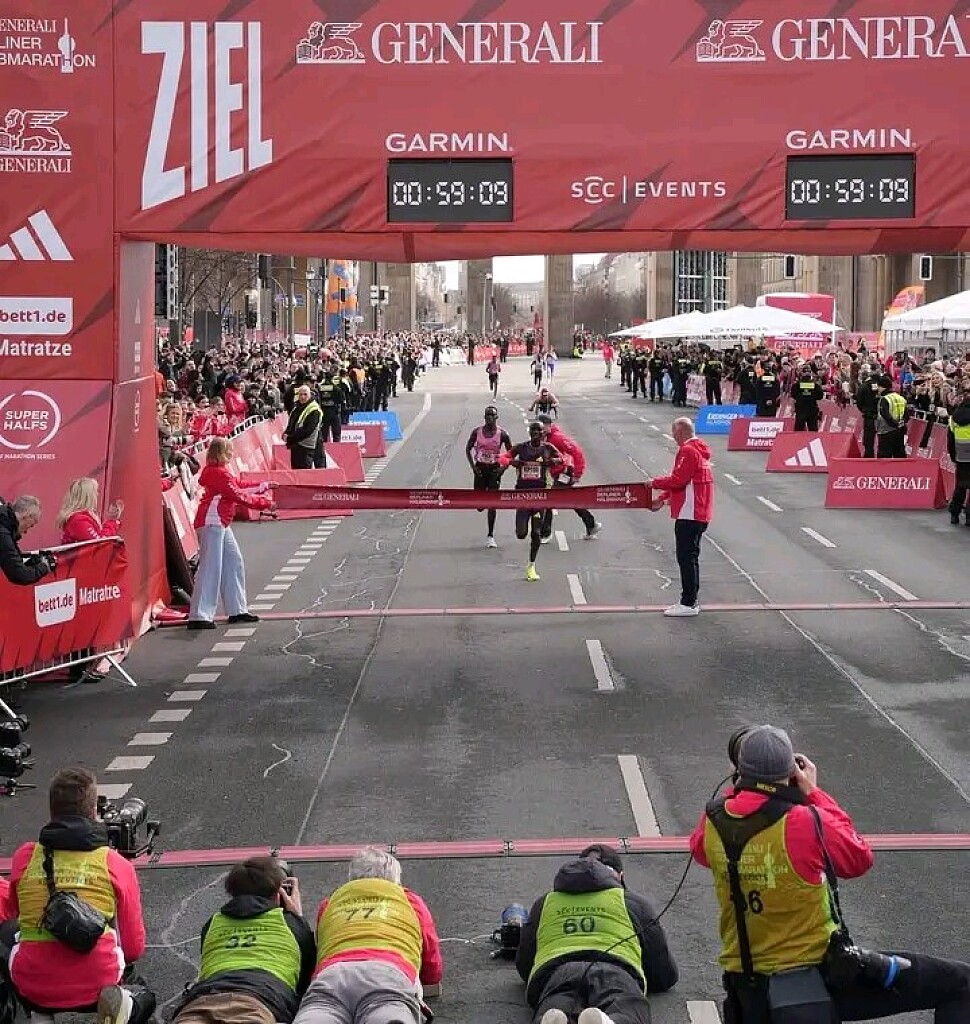


When the Pacemaker Becomes the Story: Blurring the Line Between Duty and Glory in Berlin
The 2026 Generali Berlin Half Marathon delivered its usual spectacle of speed, precision, and world-class endurance—but amid the surging pack and the clock-chasing elites, it was an unexpected narrative that captured the imagination of fans and insiders alike. Not the winner’s triumph alone, but the presence of a pacemaker who refused to fade quietly into the background.
Kenya’s Dennis Kipkemoi arrived in Berlin with a clearly defined assignment: set the tempo, guide the field through the early and middle stages, and then step aside once his role had been fulfilled. It is a task often executed with clinical discipline, invisible yet essential to fast times and record-breaking performances. But on this occasion, Kipkemoi did more than just set the pace—he endured.
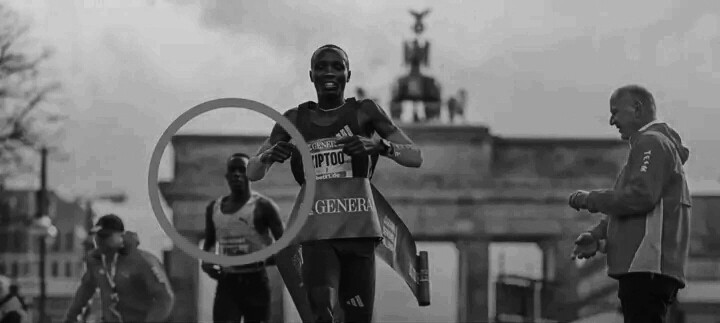
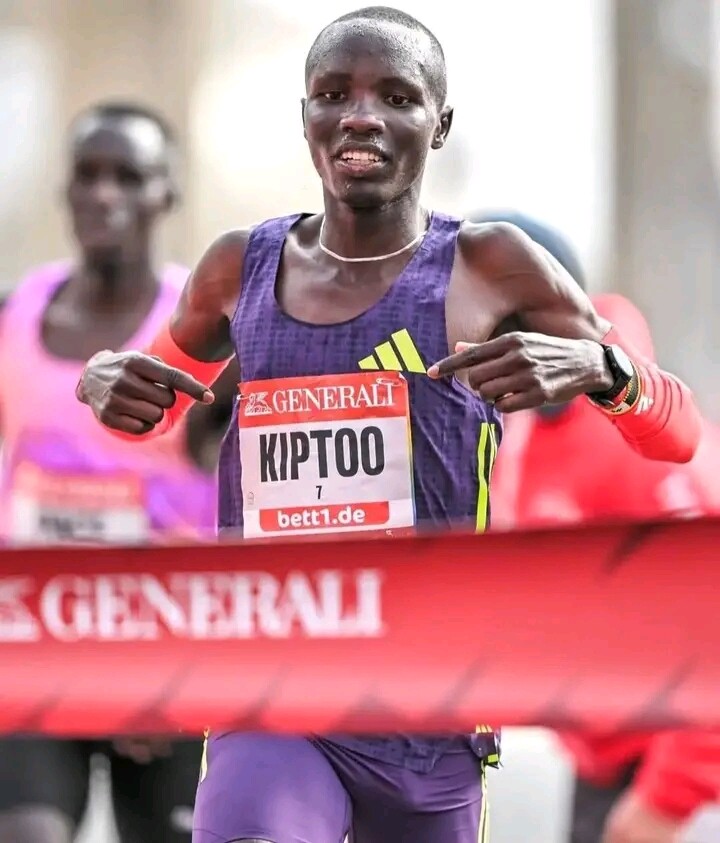
Stride for stride, kilometre after kilometre, he remained locked in with the leading group, matching the rhythm and intensity of the race as it unfolded. As the finish line approached, what was meant to be a supporting role had evolved into something far more compelling. Kipkemoi crossed the line alongside the eventual winner, Andrea Kiptoo, both men clocking 59:11 in a moment that blurred the boundaries between orchestrator and competitor.
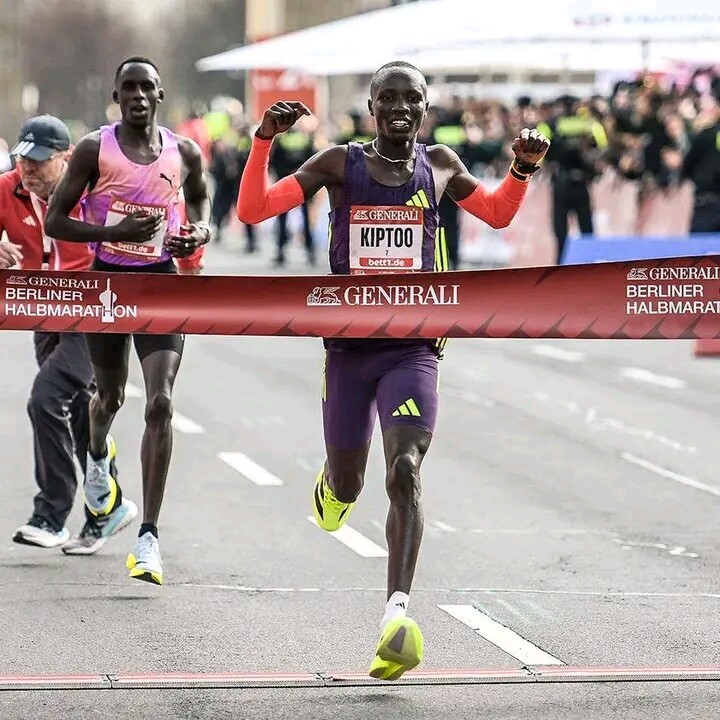
Yet, in a subtle but telling gesture, Kipkemoi reportedly eased off in the final metres—an unspoken acknowledgment of his designated role. It was not a collapse, nor a tactical defeat, but rather a decision rooted in the unwritten code of pacing. Even in strength, he chose restraint.
This rare scenario reignites a long-standing debate within distance running. When a pacemaker finds himself not only capable but competitive, should he be permitted to race? Or does the integrity of the role demand strict adherence, regardless of how the body feels on the day?
Pacemakers are, after all, elite athletes in their own right. Many possess the fitness and tactical awareness to contend at the highest level. History has shown us glimpses of this crossover—moments when the line between helper and contender dissolves under the pressure of performance. But such instances raise important questions about fairness, race dynamics, and the spirit of competition.
Allowing pacemakers to transition into full competitors could fundamentally alter race strategies. Teams might deploy them not just as tempo-setters, but as concealed contenders—an evolution that could complicate the purity of head-to-head racing. On the other hand, denying a capable athlete the opportunity to compete, especially when they have earned their place through sheer strength, feels equally contentious.
What made Kipkemoi’s performance in Berlin so compelling was not just his physical execution, but the discipline behind it. He ran with remarkable fluency, his stride relaxed, his form efficient—a display suggesting that, under different circumstances, he might well have dipped under the elusive 58-minute barrier.
In the end, his run was both a contribution and a statement. It reminded us that pacemakers are not merely facilitators of greatness—they are, in many cases, greatness in waiting.
So where do we draw the line?
Are pacemakers simply part of the race’s architecture, tasked with shaping outcomes from the shadows? Or are they athletes entitled to seize the moment when opportunity presents itself?
Berlin did not give us a definitive answer. Instead, it offered something far more valuable—a moment of reflection, and a reminder that in distance running, even the roles we think we understand can evolve in the most unexpected ways.
by Erick Cheruiyot for My Best Runs.
Login to leave a comment

Berlin Half Marathon
The story of the Berlin Half Marathon reflects a major part of the history of the German capital. It all began during cold war times and continued during reunification. The events leading up to today's event could really only have happened in this city. Its predecessors came from East- and West Berlin. On 29th November 1981 the Lichtenberg Marathon was...
more...