

Running News Daily
Running News Daily is edited by Bob Anderson and team. Send your news items to bob@mybestruns.com Advertising opportunities available.
Index to Daily Posts · Sign Up For Updates · Run The World Feed



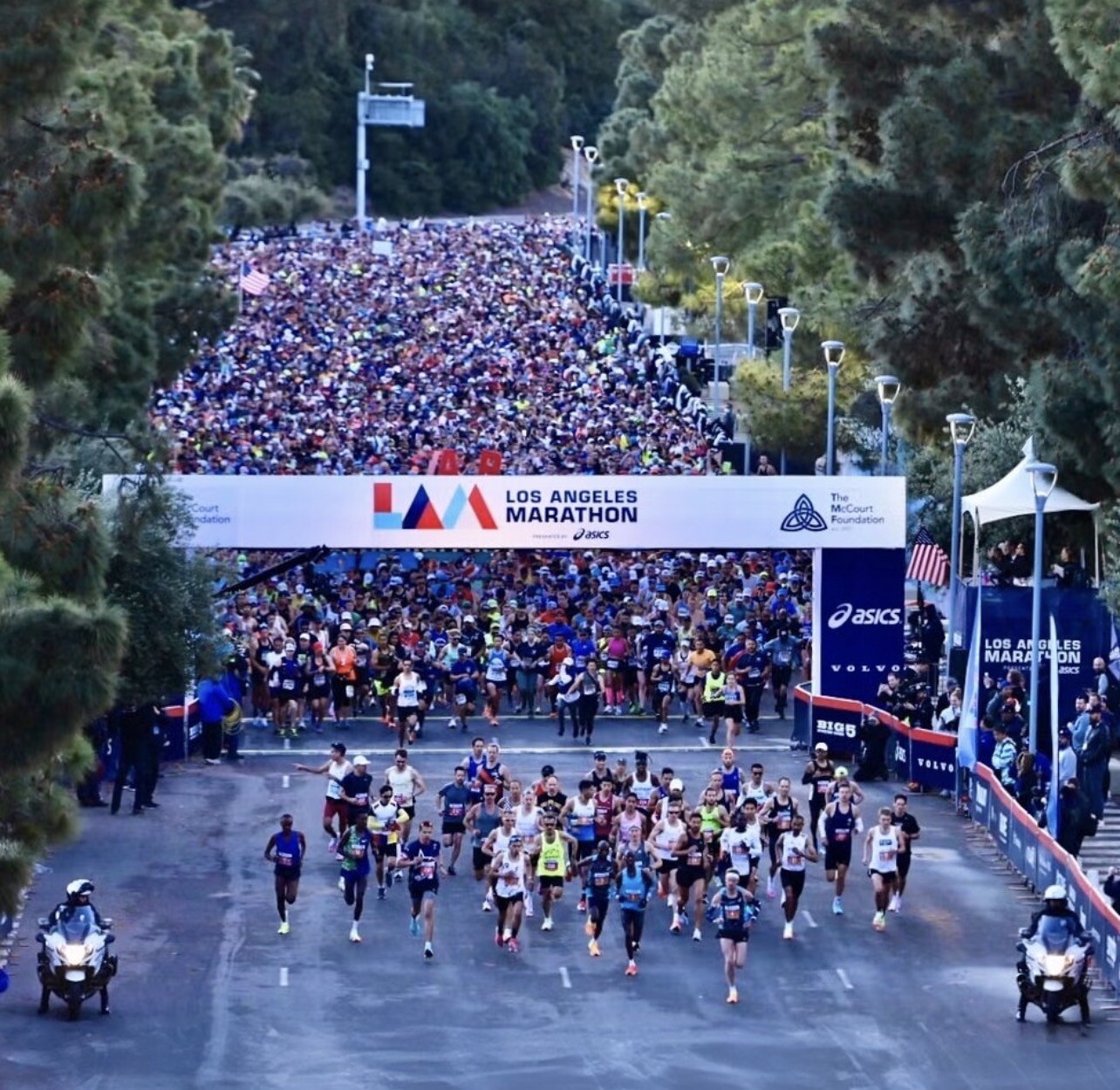
Los Angeles Marathon Sparks Debate With 18-Mile “Finish” Option
The Los Angeles Marathon, scheduled for Sunday, March 8, 2025, has created a wave of discussion in the running world after announcing that runners will be allowed to receive a finisher medal even if they stop at mile 18 rather than completing the full 26.2-mile distance.
Race organizers introduced the option because temperatures are expected to climb into the 80s during the race. The alternate finish point at mile 18 is intended as a safety measure for runners who feel the heat becoming too difficult or dangerous
Under the policy, runners who stop there will be directed to a designated finish area where they will receive hydration, medical attention if needed, and a medal.

The decision has quickly become controversial.
For many runners, the marathon is not just another distance—it is one of the sport’s most respected challenges. The standard 26.2 miles has defined the event for more than a century.
And as many experienced runners like to say, “the marathon really begins at mile 20.”
That final 10K is where fatigue sets in, where pace judgment matters most, and where runners discover what they truly prepared for. It’s the stretch that separates simply running from racing the marathon distance.
Stopping at mile 18 means avoiding the part of the race where the real test begins.
Supporters of the decision argue that safety should always come first. Running long distances in hot weather significantly increases the risks of dehydration, heat exhaustion, and heat stroke. Offering an early exit point may encourage runners to make smarter decisions when conditions become difficult.
Critics, however, believe the solution should be different—earlier start times, additional cooling stations, or even canceling the race if conditions become truly dangerous.
But awarding a marathon finisher medal for completing only 18 miles is something many runners say crosses an important line.
A marathon medal has always represented finishing 26.2 miles, not 18.
Weather has challenged marathons many times throughout history. Runners have battled rain, wind, snow, and heat. Yet the meaning of the finish line has always remained the same.
Whether runners choose to stop early or continue to the traditional finish in Los Angeles, the discussion now reaches beyond this single race.
It raises a bigger question for the sport itself:
If you don’t run 26.2 miles, can it really be called a marathon finish?
by Bob Anderson for My Best Runs
Login to leave a comment

Los Angeles Marathon
The LA Marathon is an annual running event held each spring in Los Angeles, Calif. The 26.219 mile (42.195 km) footrace, inspired by the success of the 1984 Summer Olympic Games, has been contested every year since 1986. While there are no qualifying standards to participate in the Skechers Performnce LA Marathon, runners wishing to receive an official time must...
more...