

Running News Daily
Top Ten Stories of the Week
12/27/2025
These are the top ten stories based on views over the last week.
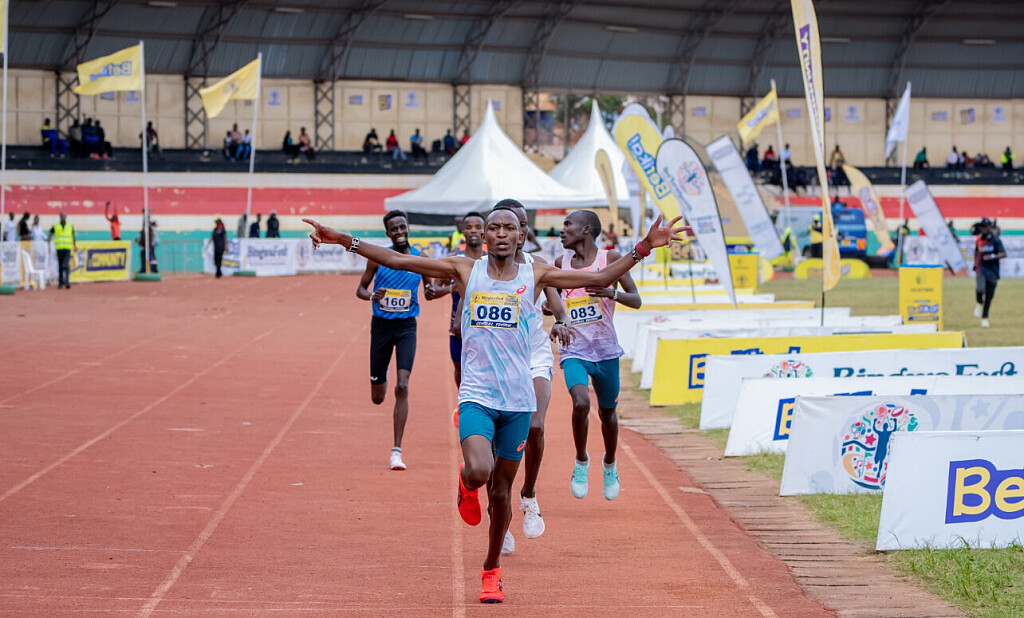


Two Weeks, Two Terrains: Kipkoech Masters Cross Country and Bingwafest Track
Barely days after asserting his authority on the rugged highland trails of Chepsaita in Turbo, 20-year-old Mathew Kipkoech arrived at Kinoru Stadium in Meru with momentum firmly on his side and clarity in his purpose. Chepsaita, deep in Kenya’s Rift Valley, is a high-altitude proving ground where thin air, rolling terrain, and unforgiving dirt paths reward strength and resilience. There, Kipkoech powered to victory at the Great Chepsaita Cross Country Run 10km in 31:49, a World Athletics Gold Label race that underscored the quality of competition he overcame.
On Saturday at the Bingwafest 2025 Central Edition, he translated that cross-country form into a composed and intelligent victory in the men’s 10,000m, confirming his ability to dominate across terrains.
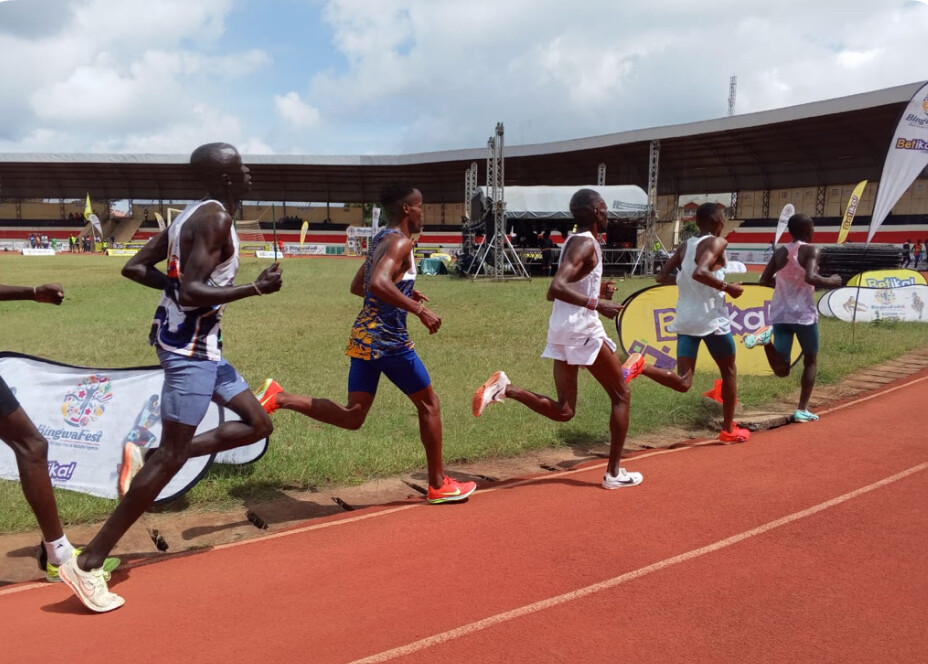
Powered by Betika, Bingwafest again showed its growing importance as a competitive platform for Kenyan athletics, bringing together established performers and emerging talent in a disciplined, high-quality racing environment.
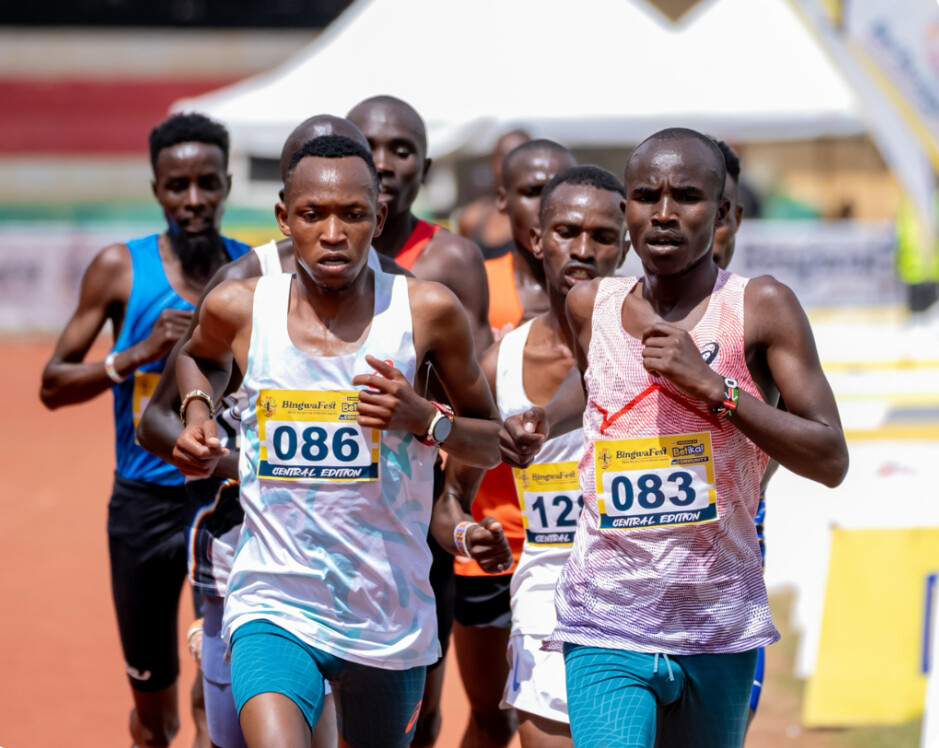
Forged at Altitude, Focused on the Track
Before the gun fired at Kinoru Stadium, the tension was unmistakable. A deep, evenly matched field crowded the start line, spikes aligned, bodies angled forward in quiet concentration. Kipkoech stood among them calm and deliberate. While Chepsaita had tested his endurance over uneven ground, the track demanded patience and precision.
When the race began, he resisted the urge to dictate early, settling smoothly into the lead group as the pace found a controlled rhythm.
A Tactical Test of Patience
From the opening laps, it was clear this would be a race of restraint rather than bravado. The tempo remained competitive but measured, forming a compact lead pack that refused to break. Kipkoech stayed ever-present and unhurried, tracked closely by Justus Lelinton, Amos Langat, Rasini Lemeteri, and Victor Kimosop.
Through halfway, the leaders were separated by seconds rather than meters, with splits hovering in the low 2:50 range. The race had evolved into a tactical contest—a chess match run at speed.
Control Without Drama
What set Kipkoech apart was not flamboyance, but authority. As fatigue crept in, he subtly tightened the pace—no sudden surge, just a steady escalation. Lelinton stayed attached, while Langat and Lemeteri began to feel the strain.
Behind them, Julius Kipkwam and Benson Mashon fought to maintain contact as the quality of the field ensured every position had to be earned.
The Decisive Finish
When the bell rang, the outcome finally revealed itself. Kipkoech applied one final, sustained increase in pressure. Lelinton fought bravely but could not respond. Down the home straight, Kipkoech ran tall and composed, crossing the line in 28:44.22.
Lelinton followed in 28:44.73, with Langat third in 28:45.24. Lemeteri (28:45.85), Kimosop (28:46.56), and Kipkwam (28:47.07) completed a tightly packed top six—an emphatic illustration of the race’s depth.
“You Must Think on the Track”
“It was not an easy race, especially coming so soon after Chepsaita,” Kipkoech said afterward. “The field was very strong, so I had to use tactics and stay patient.”
He emphasized the contrast between disciplines. “At Chepsaita, you rely on strength because the terrain is tough. On the track, you must think. You cannot rush—you wait for the right moment.”
Built for the Global Stage
That composure has been shaped beyond Kenya’s domestic circuit. In January 2023, Kipkoech ran a personal best 13:18 at the Valencia 10km. Later that year, he competed at the Valencia Half Marathon, where four athletes dipped under 58 minutes, led by former world record-holder Kibiwott Kandie. Those experiences sharpened his pace judgment—qualities clearly evident in Meru.
This was Kipkoech’s first appearance at Bingwafest, and it delivered more than a win—it set a benchmark. Enjoying a season free from injury, he now looks ahead with confidence, with interval training anchoring his preparation.
Managed under ASICs alongside women’s standout Lucy Chemnung, Kipkoech’s performance highlighted the strength of structured athlete development on display at Kinoru Stadium.
From the high-altitude trails of Chepsaita to the precision lanes of Meru, Mathew Kipkoech did not simply win.
He controlled the race—and reaffirmed his readiness for the global stage.
(12/23/25) Views: 249Robert Kibet for My Best Runs

Mailu and Omare Win Bangsaen21 Half Marathon in Thailand
The coastline of Bangsaen, Thailand, provided a fitting stage for season-ending statements as the Bangsaen21 Half Marathon unfolded in the cool pre-dawn hours. On a course that rewards discipline as much as speed, Kenya’s Samwel Nyamai Mailu and Dolphine Nyaboke Omare delivered controlled, authoritative victories—closing their 2025 campaigns with confidence and setting a clear tone for the road season ahead.
From the opening kilometres, the race signaled its intent. The pace was honest but restrained, shaped by exposed coastal stretches and rising humidity along the Gulf of Thailand. Rather than early fireworks, both elite fields settled into rhythm, waiting for the moment when patience would turn into purpose.
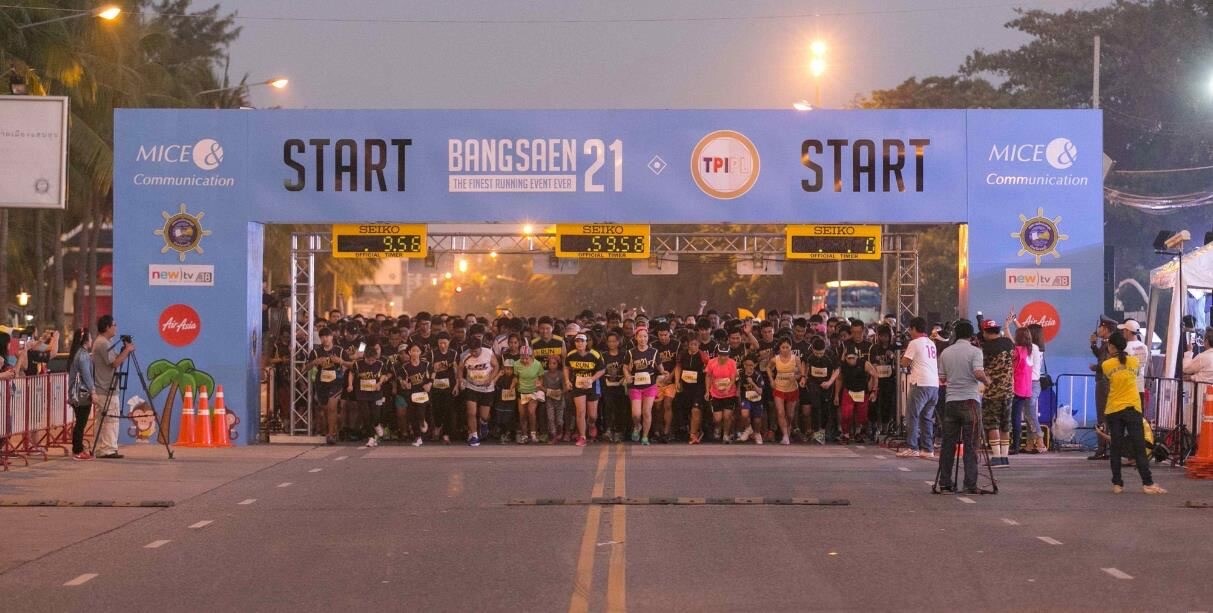
Mailu Times It Perfectly
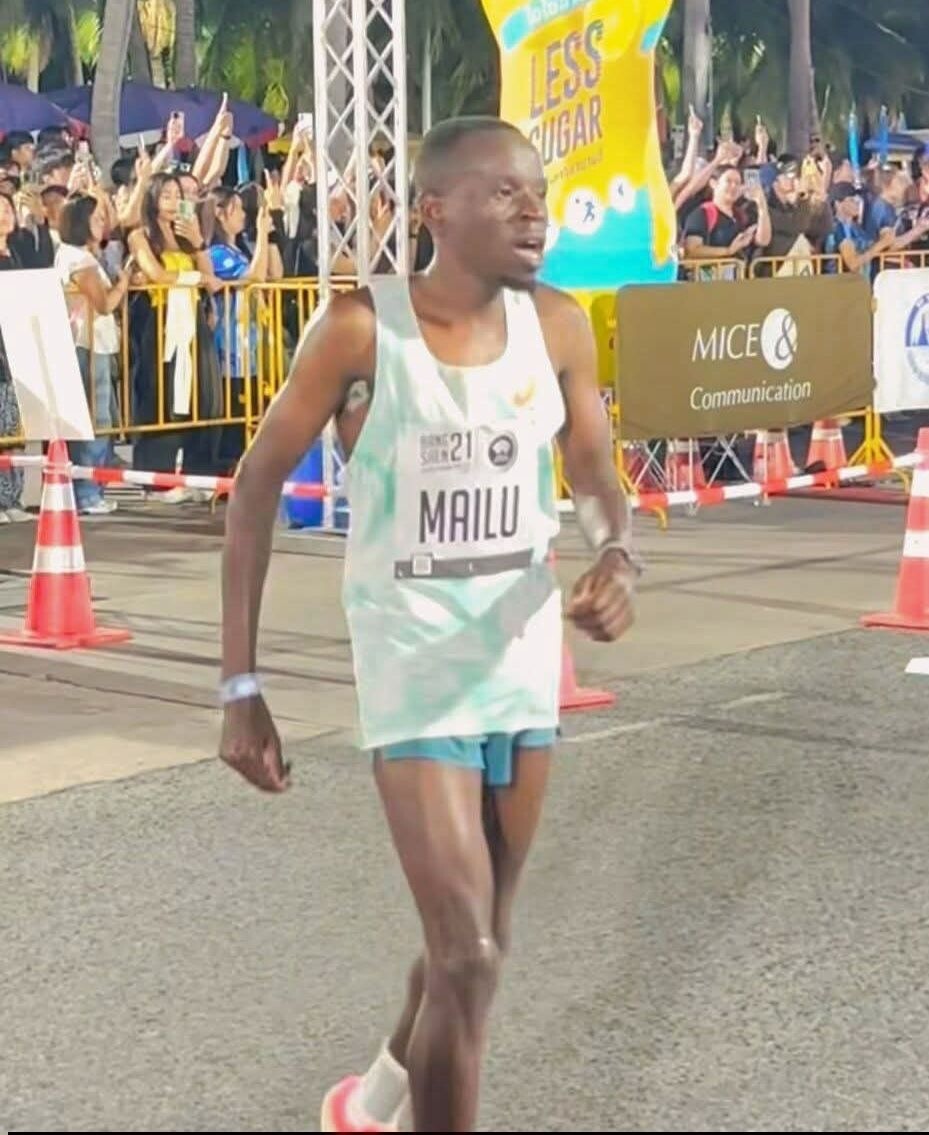
In the men’s race, a compact lead pack flowed smoothly through the early stages, with Kenyan and Ethiopian runners sharing the workload. Mailu ran economically and composed—never forcing the pace, never drifting from contention.
As the field passed halfway, the tempo tightened. Between 15 and 18 kilometres, Mailu applied sustained pressure, lifting the pace without a sharp surge. The move was subtle but decisive. Ethiopia’s Teresa Nyakola and Regasa Seyoum Beharu responded gamely, but the Kenyan’s rhythm proved relentless. By the closing kilometres, the gap had opened, and Mailu crossed the line in 1:02:59, a victory built on control and timing.
“This race was important for me to close the year well,” Mailu said. “I ran with patience and trusted my training. Now I’ll return to training and start preparing for next year’s road races.”
Nyakola secured second in 1:03:22, with Seyoum third in 1:03:36, completing a podium defined by tactical intelligence rather than early aggression.
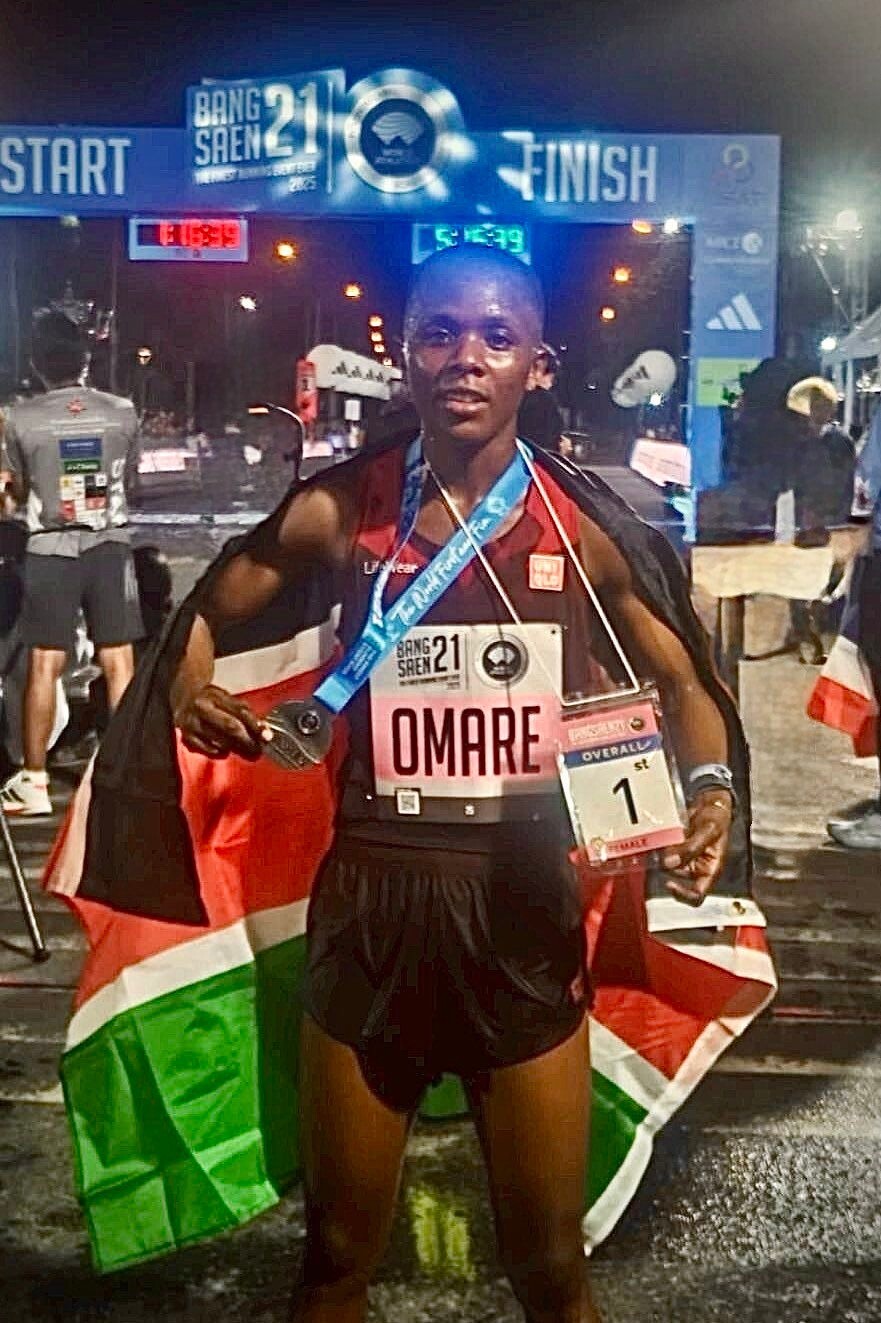
Omare’s Authority in the Women’s Race
If the men’s contest was about timing, the women’s race was about command.
From the outset, Omare took responsibility at the front, dictating a steady, uncompromising tempo. Ethiopia’s Beriha Gebreslasie and Mehret Gemeda stayed close, forming a compact trio through the middle stages as the course flattened along the coast.
The separation came quietly. Between 12 and 16 kilometres, Omare increased the pace gradually, stretching the elastic until it finally snapped. Without drama, she edged clear, maintaining form and cadence as the humidity deepened. Omare crossed the line in 1:10:14—a performance marked by calm authority and fatigue resistance.
“I’m happy to finish the year with a win,” Omare said. “This race gives me confidence. I’ll focus on next year’s road season, building step by step for the big races ahead.”
Gebreslasie finished second in 1:11:12, while Gemeda claimed third in 1:12:30, both producing resilient runs that kept the contest honest deep into the second half.
Discipline Rewarded on the Coast
Bangsaen21 once again proved to be a race that rewards restraint. The flat profile invites ambition, but the conditions punish excess. Those who conserved early and committed late emerged strongest.
For Mailu and Omare, the victories were about more than the clock—closing a demanding year with clarity, validating months of preparation, and turning the page with purpose. As the sun rose over the Gulf of Thailand and applause filled the finish area, the message was clear: the champions leave Bangsaen with momentum, eyes already fixed on 2026 and the global road calendar ahead.
Bangsaen21 2025 Results
Men
Samwel Nyamai Mailu (KEN) — 1:02:59
Teresa Nyakola (ETH) — 1:03:22
Regasa Seyoum Beharu (ETH) — 1:03:36
Gelana Teshome (ETH) — 1:04:20
Eyob Faniel (ITA) — 1:05:54
Abdi Kebede (ETH) — 1:05:55
Nattawut Innum (THA) — 1:10:10
Arthit Soda (THA) — 1:10:50
Pongsakorn Suksawat (THA) — 1:11:32
Women
Dolphine Nyaboke Omare (KEN) — 1:10:14
Beriha Gebreslasie (ETH) — 1:11:12
Mehret Gemeda (ETH) — 1:12:30
Lelise Bekele (ETH) — 1:13:49
Kalkidan Debeb (ETH) — 1:17:59
Pareeya Sonsem (THA) — 1:22:05
Ornanong Wongsorn (THA) — 1:22:14
Linda Chantachit (THA) — 1:24:13
Kawinthida Thadased (THA) — 1:25:35
Thanaporn Phatthanothai (THA) — 1:25:37
(12/22/25) Views: 180Robert Kibet for My Best Runs
Ethiopian, Kenyan and Chinese Stars Shine at the Guangzhou International Marathon
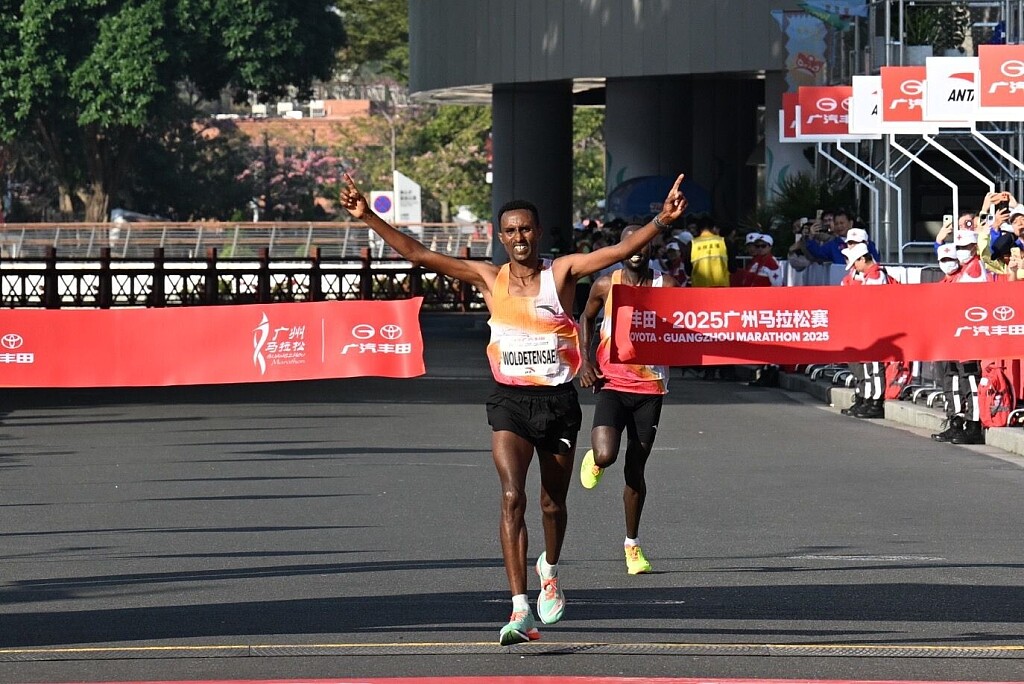
Held in Guangzhou, the 2025 Guangzhou International Marathon brought 26,000 runners to the streets of southern China on December 21, unfolding beneath a crisp Lingnan sunrise at Tianhe Sports Center. From elites hunting fast times to first-timers savoring the spectacle, the day delivered standout performances and a citywide celebration of running.
The race followed the classic “One River, Two Banks” course—an urban showcase linking riverside boulevards, gleaming skyscrapers and historic districts, with signature crossings such as Liede Bridge and Haixinsha Island Park before the final run-in.

Men: A Two-Second Duel
Ethiopia’s Afewerk Mesfin Woldetensae controlled the men’s race with poise, timing his effort perfectly through the middle stages and holding firm to the line for victory in 2:12:23. Kenya’s Felix Kirwa pressed relentlessly and finished just two seconds back in 2:12:25, a thrilling margin that kept spectators on edge to the finish.
The loudest cheers came for China’s Zhaxi Ciren, who surged to third overall in 2:14:06 to claim top domestic honors—an important podium for home athletes on one of the country’s biggest road-racing stages.
Chinese runners showed impressive depth throughout the top eight. Yang Chunlong clocked 2:17:57, Solang Cairen followed in 2:18:34, while Zhou Youfa (2:20:15) and Deng Guomin (2:20:22) rounded out strong performances that underscored a rising competitive standard.
Women: Record-Setting Authority
The women’s race belonged to Kenya’s Joyce Chepkemoi Tele, who produced a commanding, front-to-back run to win in 2:22:40 and break the course record. Her effort combined bold early pacing with measured control and sustained strength to the tape.
Ethiopia completed the podium sweep as Betelihem Afenigus Yemer (2:27:52) and Chaltu Chimdesa Kumsa (2:31:37) followed, highlighting the nation’s depth and tactical sharpness on fast, city courses.
Chinese women also had reason to celebrate. Ding Changqin led the domestic contingent with a fine 2:35:40 for fifth overall. She was followed by Tang Xiaofang (2:40:26), Song Jinting (2:41:41) and Li Yingcui (2:45:36), all finishing inside the top eight.
A Festival on the Run
Beyond the front of the race, Guangzhou embraced marathon day. Creative costumes—from Cantonese opera tributes to animated mascots—dotted the route, while spectators packed bridges, plazas and riverside promenades, turning the course into a moving festival.
Organizers matched the energy with careful planning. Cooling mist stations, clearly marked aid points and visible safety crews helped ensure the 42.195-kilometer journey was both competitive and runner-friendly.
By day’s end, the 2025 Guangzhou International Marathon had crowned champions, rewritten records and delivered personal victories for thousands. For elites, the results will resonate into the season ahead; for the wider field, it was a day of breakthroughs and shared joy—running through one of China’s most vibrant cities.
Top Results — 2025 Guangzhou Marathon
Men
1. Afewerk Mesfin Woldetensae (ETH) — 2:12:23
2. Felix Kirwa (KEN) — 2:12:25
3. Zhaxi Ciren (CHN) — 2:14:06
4. Yang Chunlong (CHN) — 2:17:57
5. Solang Cairen (CHN) — 2:18:34
6. Zhou Youfa (CHN) — 2:20:15
7. Deng Guomin (CHN) — 2:20:22
Women
1. Joyce Chepkemoi Tele (KEN) — 2:22:40
2. Betelihem Afenigus Yemer (ETH) — 2:27:52
3. Chaltu Chimdesa Kumsa (ETH) — 2:31:37
4. Pending official release
5. Ding Changqin (CHN) — 2:35:40
6. Tang Xiaofang (CHN) — 2:40:26
7. Song Jinting (CHN) — 2:41:41
8. Li Yingcui (CHN) — 2:45:36
(12/22/25) Views: 175Robert Kibet for My Best Runs
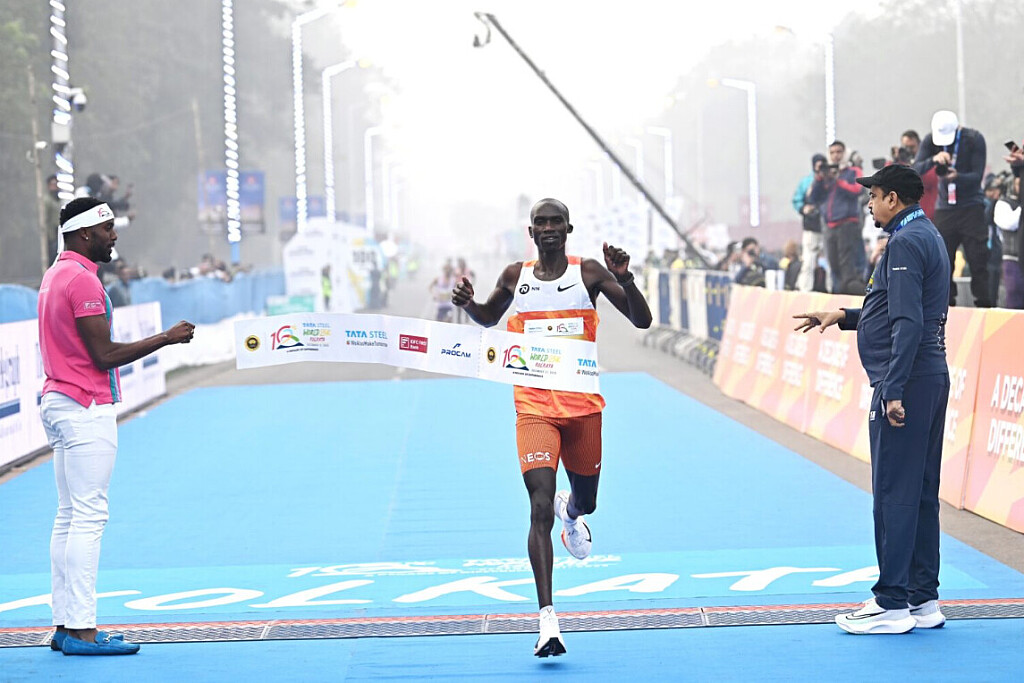
Joshua Cheptegei and Degitu Azimeraw Win Kolkata 25K
The 10th edition of the Tata Steel World 25K delivered a compelling blend of experience and debut brilliance on Sunday (Dec 21) morning in Kolkata, India. Ethiopia’s Degitu Azimeraw claimed a comeback victory in the women’s race, while Olympic and world champion Joshua Cheptegeiproduced a measured, authoritative win in his first-ever 25K appearance.
Azimeraw Returns to the Top
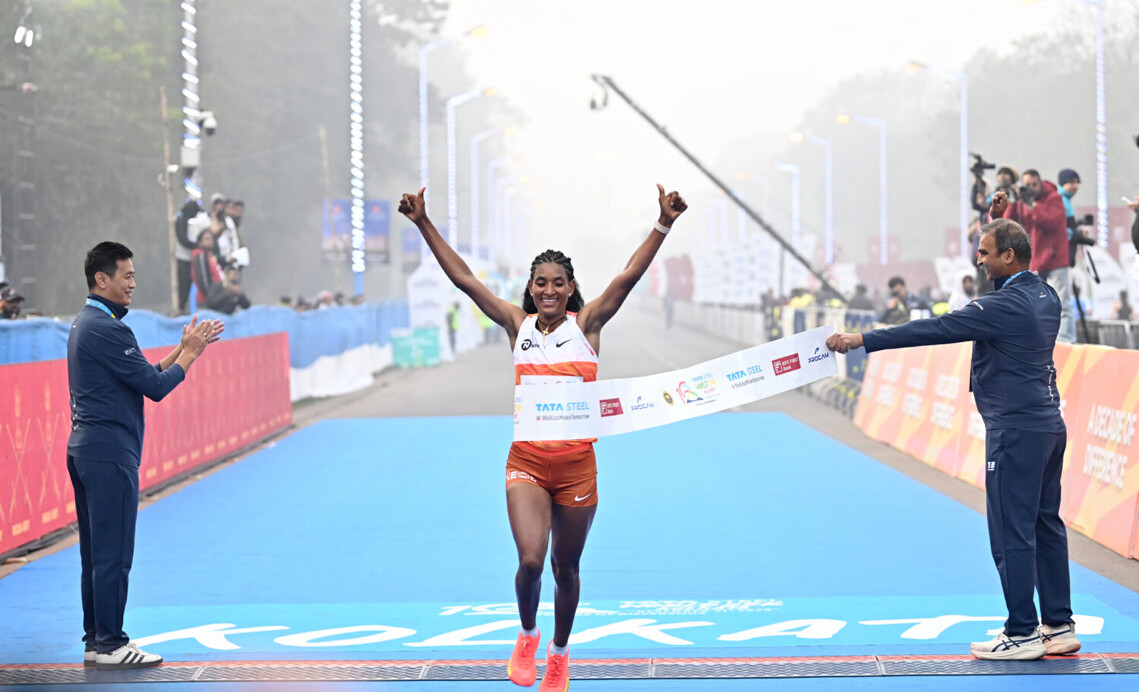
Run under cool conditions, the women’s race opened with a tightly packed Ethiopian quartet through the opening 5 km. Sutume Asefa Kebede—winner of this year’s Tokyo Marathon and a two-time defending champion in Kolkata—was the most decorated name in the group, joined by Azimeraw and Meselech Alemayehu.
Azimeraw, who won in Kolkata in 2017 and finished fourth the following year, stayed patient through the early stages. Alemayehu briefly edged ahead around 15 km, but Azimeraw responded decisively soon after, lifting the pace and asserting control.
She crossed the line in 1:19:36, securing her second Kolkata title eight years after her first. Kebede rallied late but had to settle for second in 1:20:28, with Alemayehu third in 1:20:48.
“It wasn’t the plan before for me,” Azimeraw said afterward. “My legs were a little stiff early, so I focused on staying strong. After 10 km, they felt better, and I kept building my race and speed. I’m very happy with this win.”
Cheptegei Delivers on 25K Debut
The men’s race unfolded as a tactical contest, led for much of the distance by Lesotho’s Tebello Ramakongoana. Tanzania’s Alphonce Simbu and Cheptegei shadowed closely as the leaders passed 20 km in 57:34 and the half-marathon mark in 60:49.
Cheptegei made his move soon after, breaking clear with a controlled surge that gradually opened daylight. Despite a determined late chase from Simbu, the Ugandan star held firm to win in 1:11:49, his first victory at the distance. Simbu followed in 1:11:56, with Ramakongoana third in 1:11:59.
“Winning mattered more than the record for me,” Cheptegei said. “Coming back to Kolkata and winning here is special. This victory gives me confidence and positivity as I prepare for my next marathon.”
Neither winner managed to break the world best or course record, narrowly missing out on the event’s top performance bonuses.
Indian Runners Rewrite the Record Books
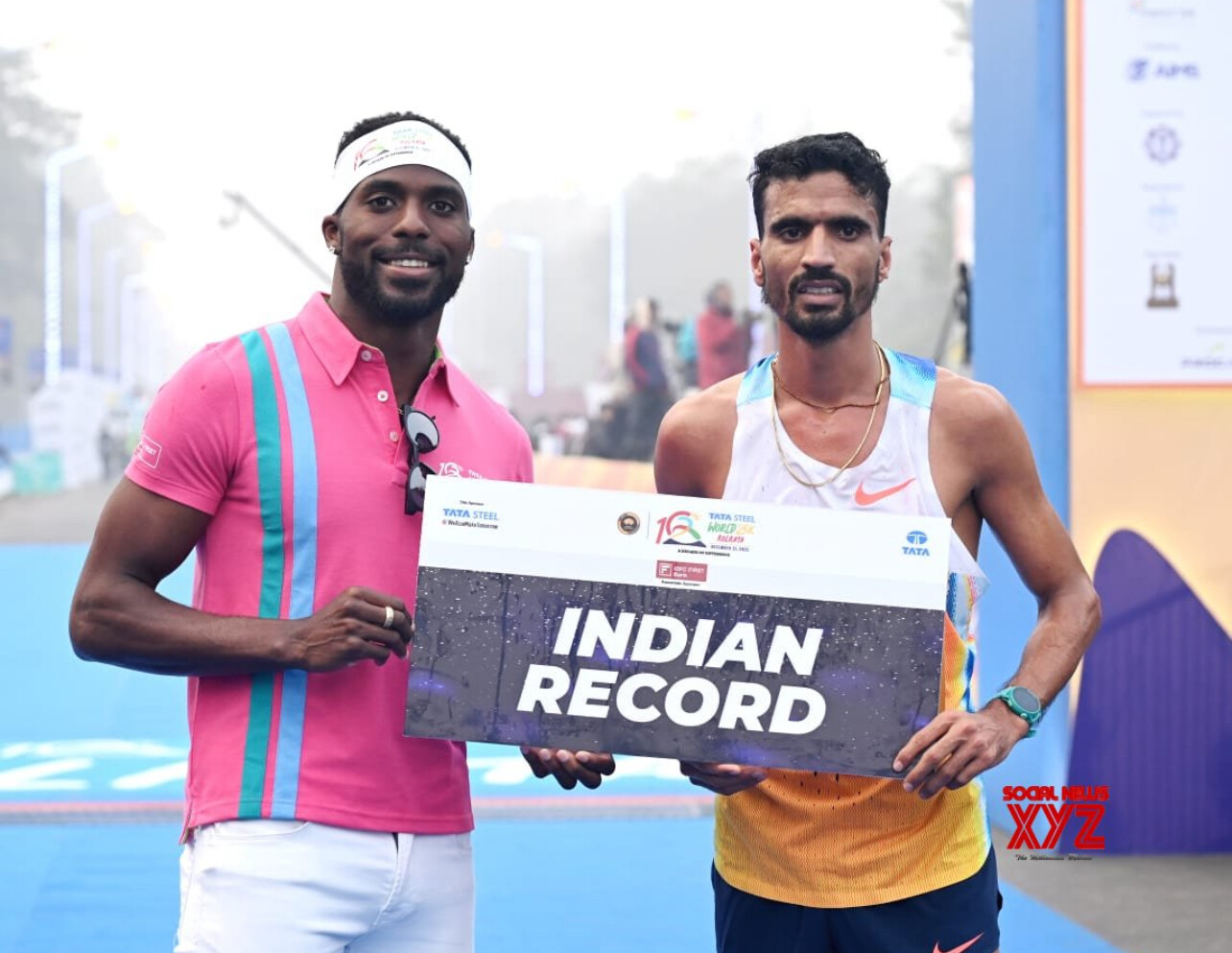
India’s elite races provided some of the day’s most striking storylines. Gulveer Singh delivered a statement run, finishing sixth overall in 1:12:06 and slicing more than two minutes off his own Indian best of 1:14:10 set in 2024. His aggressive yet controlled effort left the rest of the domestic field trailing by significant margins.
“Records come from consistency,” Gulveer said. “With strong support, dedicated coaches, and relentless training, the goal is to be better than yesterday. India is rising, step by step.”
In the women’s Indian elite race, Seema matched that authority. The Asian cross-country champion stopped the clock at 1:26:04, breaking the long-standing Indian course record of 1:26:53 set in 2017. She dominated from early on, steadily increasing her lead before cruising home with energy to spare.
“The course is more challenging now, but I came here with the mindset of winning,” Seema said. “Discipline and sacrifice are everything. My next goal is qualifying for the Asian and Commonwealth Games.”
A Decade of World-Class Racing
As the Tata Steel World 25K celebrated its 10th edition, Sunday’s results reinforced its status as one of Asia’s premier road races—where Olympic champions, seasoned marathoners and rising national talents meet on equal footing. For Azimeraw and Cheptegei, Kolkata offered confidence and momentum; for India’s best, it marked another step forward on the global stage.
Overall International Men
1. Joshua Cheptegei (UGA) — 1:11:49
2. Alphonce Felix Simbu (TAN) — 1:11:56
3. Tebello Ramakongoana (LES) — 1:11:59
4. Collins Kipkorir (KEN) — 1:12:02
5. Gulveer Singh (IND) — 1:12:06
6. Fikadu Liche (ETH) — 1:12:09
7. Wisley Yego (KEN) — 1:12:12
8. Haymanot Alew (ETH) — 1:14:35
9. Niguse Abera (ETH) — 1:14:38
10. Harmanjot Singh (IND) — 1:15:11
Overall International Women
1. Degitu Azimeraw (ETH) — 1:19:36
2. Sutume Asefa Kebede (ETH) — 1:20:28
3. Meselech Alemayehu (ETH) — 1:20:48
4. Kuftu Tahir (ETH) — 1:23:32
5. Demilew Zemenaw (ETH) — 1:23:34
6. Netsanet Tafere (ETH) — 1:23:56
7. Rediet Daniel (ETH) — 1:24:18
8. Aberash Minsewo (ETH) — 1:24:48
9. Ergat Heshe (ETH) — 1:24:59
10. Seema (IND) — 1:26:04
(12/22/25) Views: 155Christopher Kelsall
On the Road to Osaka, Barcelona, and Boston, Chemnung Doubles Up at Bingwafest in Meru
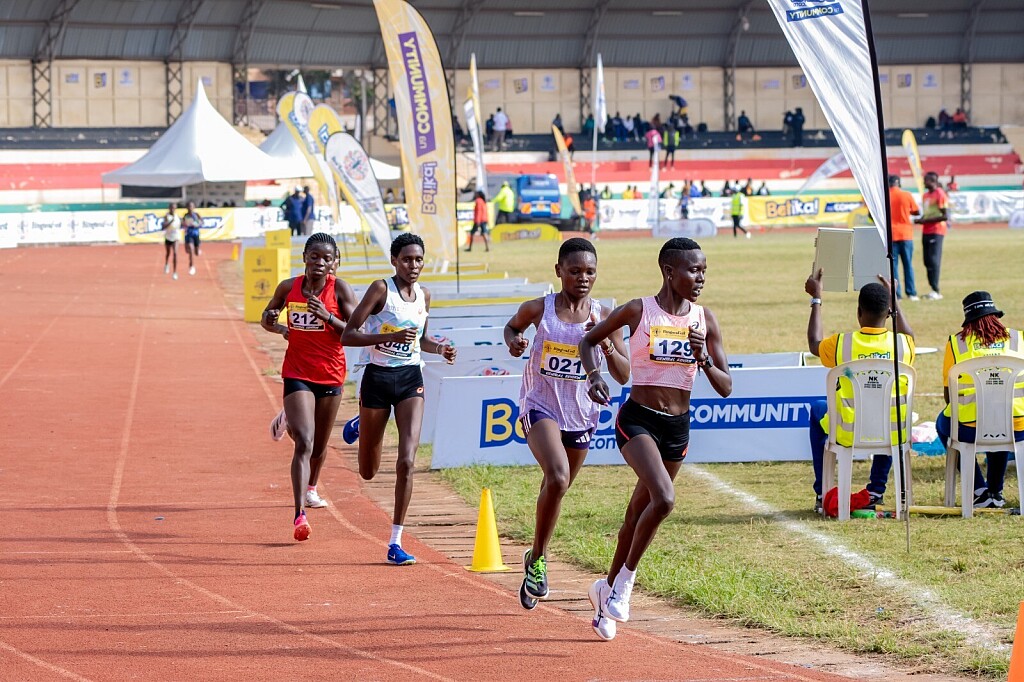
With her eyes fixed on pacing duties at the Osaka Women’s Marathon, racing the Barcelona Marathon, and building toward the Boston Marathon, Kenya’s Loice Chemnung turned Bingwafest 2025’s Central Edition into a statement performance—completing a commanding women’s 10,000m–5,000m double Dec 20 at Kinoru Stadium In Maru, Kenya.
Barely hours apart, Chemnung treated the track not as a destination but as a finely tuned instrument—honing speed and strength for the roads ahead. The West Pokot-born runner swept both distance titles, reinforcing a season that has reshaped her career trajectory and announced her as a serious marathon contender.
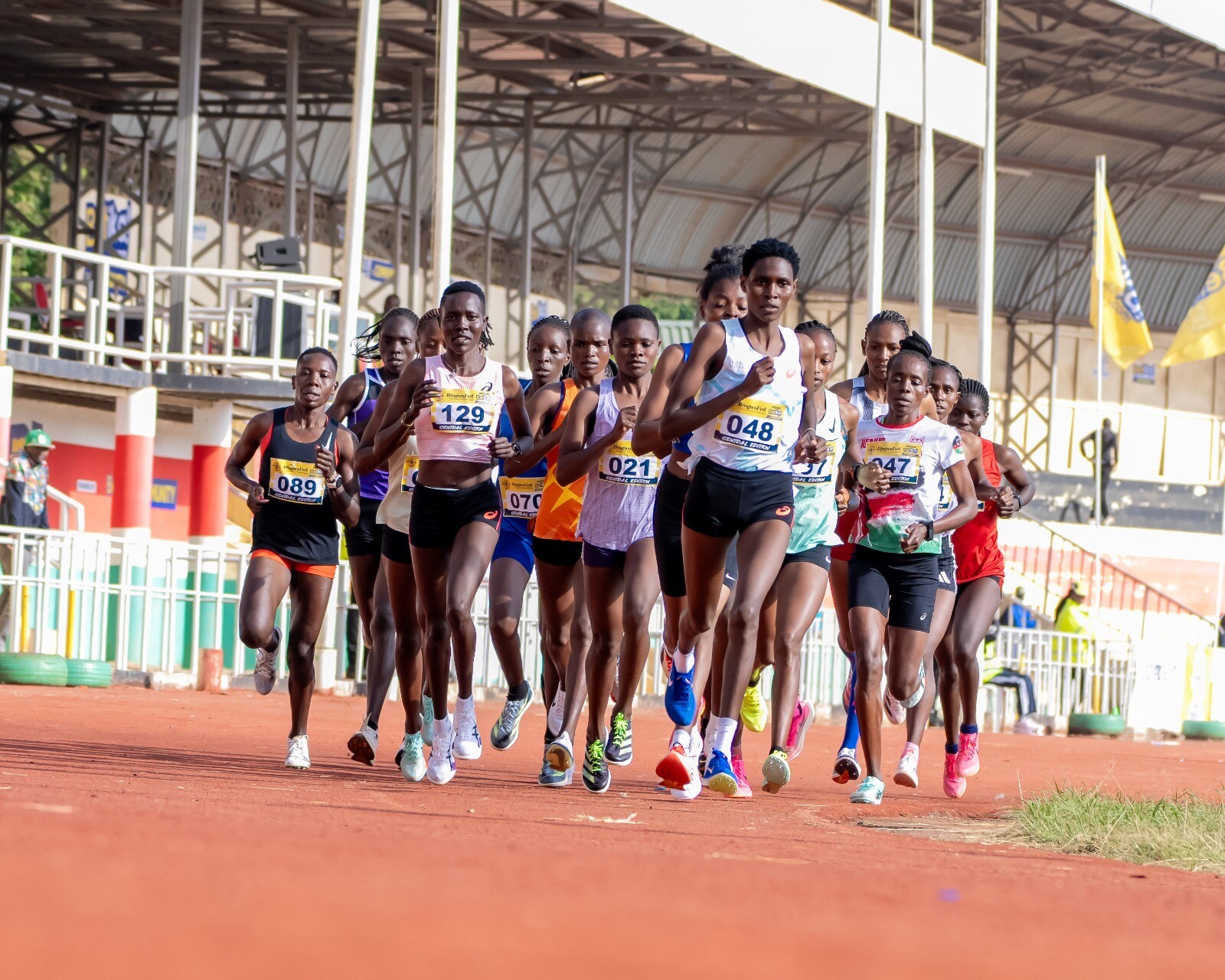
10,000m: Control, Pressure, and a Decisive Move
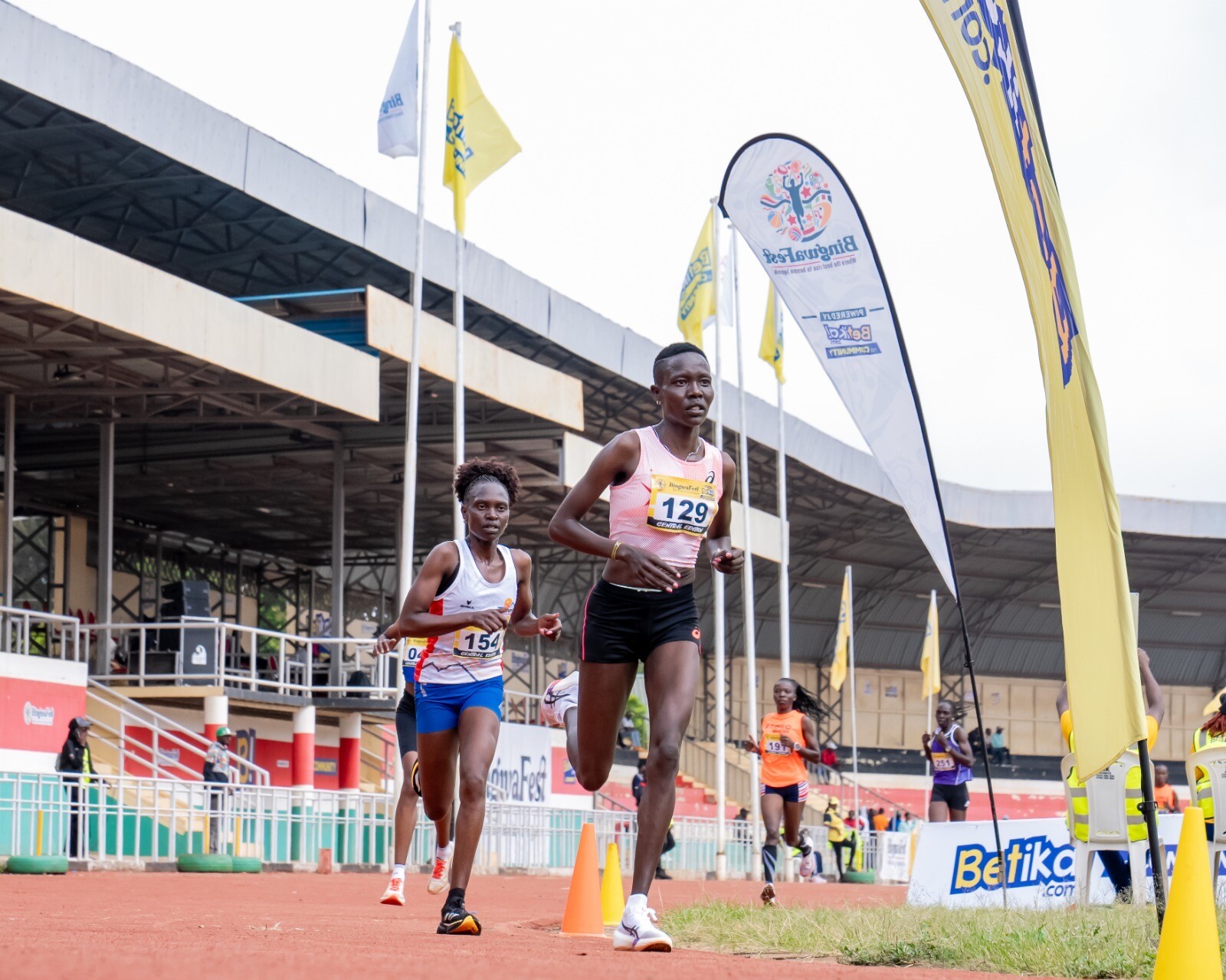
The women’s 10,000m opened the meeting with a tactical, high-quality contest. Chemnung asserted early control but faced sustained pressure from Maryam Lufti Njoki (formerly Christine Njoki). The pair exchanged the lead through the opening and middle stages, steadily stretching the field as the tempo rose.
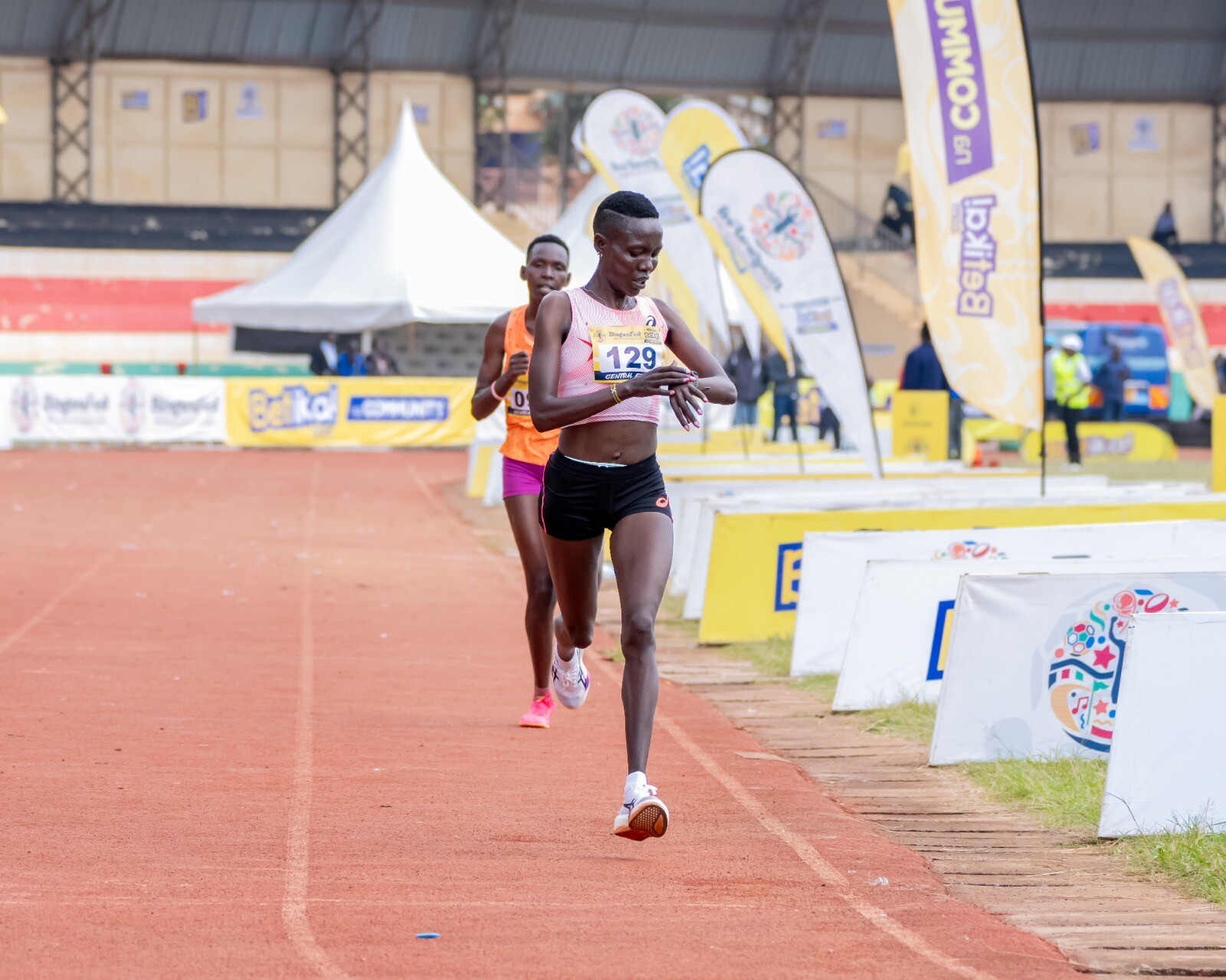
With just under three kilometres remaining, Chemnung injected a measured, relentless surge that finally broke Njoki’s resistance. She powered home unchallenged in 32:07.7, with Njoki second in 32:56.9 and Cintia Chepngeno third in 33:01.1.
Depth followed the medals. Deborah Chemutai placed fourth (33:05.1), ahead of Esther Chemtai Kipkech (33:24.3) and Jackline Rotich (34:12.9), underscoring the opener’s competitive density.
5,000m: The Encore
Hours later, Chemnung returned for the 5,000m—and the script repeated. Calm and economical, she waited before asserting herself late to claim victory again, completing a rare double at the meet. Njoki finished second once more, confirming her range, while Chepngeno secured another third—two podiums in a single day.
The double was deliberate. Bingwafest was built into Chemnung’s training, not circled for trophies.
“I had planned to run only the 10,000m, but my coach encouraged me to also try the 5,000m,” she said. “I used these races as tempo and speed training.”
After visa delays forced her to miss a planned race in Thailand, Chemnung chose to stay sharp at home.
“I chose Bingwafest as part of my speed workouts,” she explained. “Seeing my coach running around the track and pushing me to the limits really helped.”
From Track Authority to Road Ambition
That pragmatic approach mirrors a season defined by a successful transition to the roads. In October, Chemnung debuted at the Chicago Marathon—a World Athletics Platinum Label race—finishing an impressive fourth in 2:18:24, immediately elevating her profile.
Her endurance credentials are clear: a 30:44.86 track PB for 10,000m (May 2024) and a 29:57 road 10km best—numbers that explain both her closing authority at Kinoru and her confidence stepping up to the marathon.
Looking ahead, the roadmap is set: pace Osaka in January 2026, race Barcelona in February, then focus fully on Boston.
“Next season, I may not focus much on track races because my main focus will be on the marathon,” she said. “I thank God because since 2024, I feel I have been running my best.”
Roots and Motivation
Chemnung hails from Ortum village in West Pokot—the third-born in a family of nine raised by farming parents. The only runner in her family, she shares origins with Doris Lemngole, the 2025 Bowerman Award winner and University of Alabama standout. Two elite runners from the same village have become a powerful source of motivation.
“I come from West Pokot, and I am proud of Tecla Lorupe and running for a cause—to help others in my community,” Chemnung said. “Seeing what Doris has achieved also inspires me.”
At Kinoru Stadium, that inspiration translated into action: two races, two wins, and a clear message. The track is now a means, not the destination. As Chemnung sets her sights on Osaka, Barcelona, and Boston, her Bingwafest double serves as a timely reminder—Kenya’s next marathon force is sharpening her edge, one lap at a time.
Bingwafest 2025 – Women’s Results
10,000m Final
1. Lucy (Loice) Chemnung – 32:07.7
2. Maryam Lufti Njoki – 32:56.9
3. Cintia Chepngeno – 33:01.1
4. Deborah Chemutai – 33:05.1
5. Esther Chemtai Kipkech – 33:24.3
6. Jackline Rotich – 34:12.9
7. Veronica Wakuraya – 34:14.8
8. Miriam Jelagat Tamu – 34:28.1
9. Jacinta Kamau – 34:28.7
10. Melan Chepleting Misikhu – 34:29.4
5,000m Final
1. Loice Chemnung (129) – 15:22.42
2. Miriam Lutfi (021) – 15:32.73
3. Cynthia Chepngeno (144) – 15:45.34
4. Nancy Cherop (032) – 15:50.75
5. Deborah Chemutai (048) – 15:55.76
6. Esther Chemutai (212) – 16:01.87
7. Fancy Cherop (032*) – 16:05.78
8. Jackline Rotich (296) – 16:20.59
(12/20/25) Views: 123Robert Kibet for My Best Runs
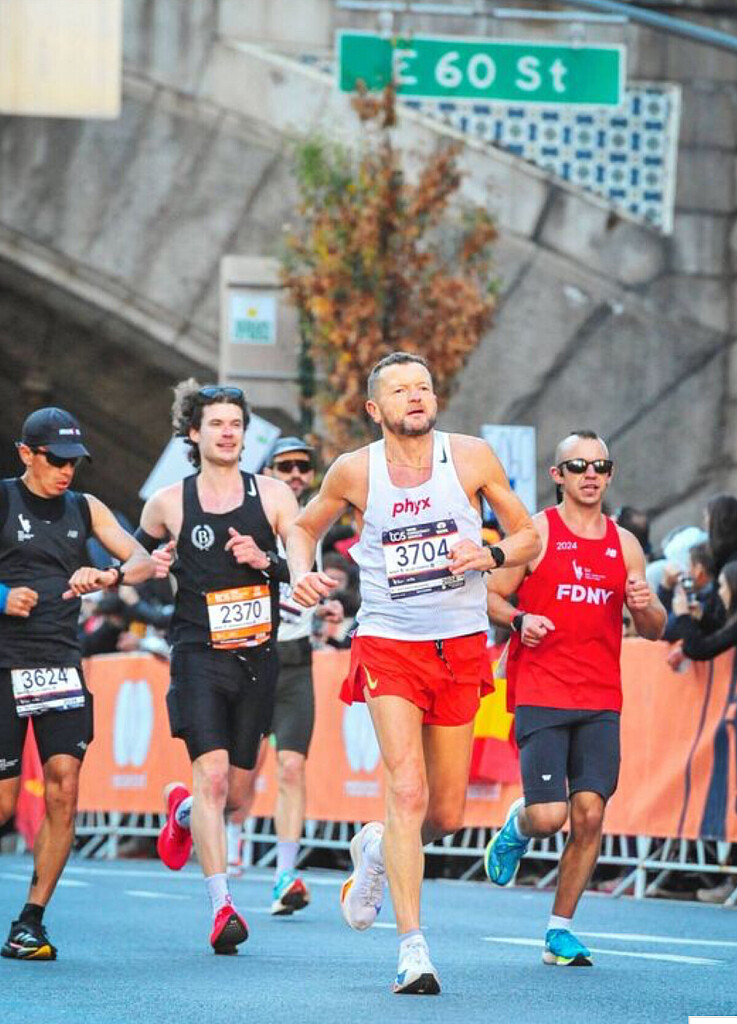
Cork’s Liam Cotter Still Chasing the Marathon Dream
There is a particular kind of obsession required to keep returning to the marathon—not simply to finish, but to keep chasing it year after year, long after most runners have stepped away.
For Liam Cotter, a native of Cork, Ireland, it all began almost by accident.
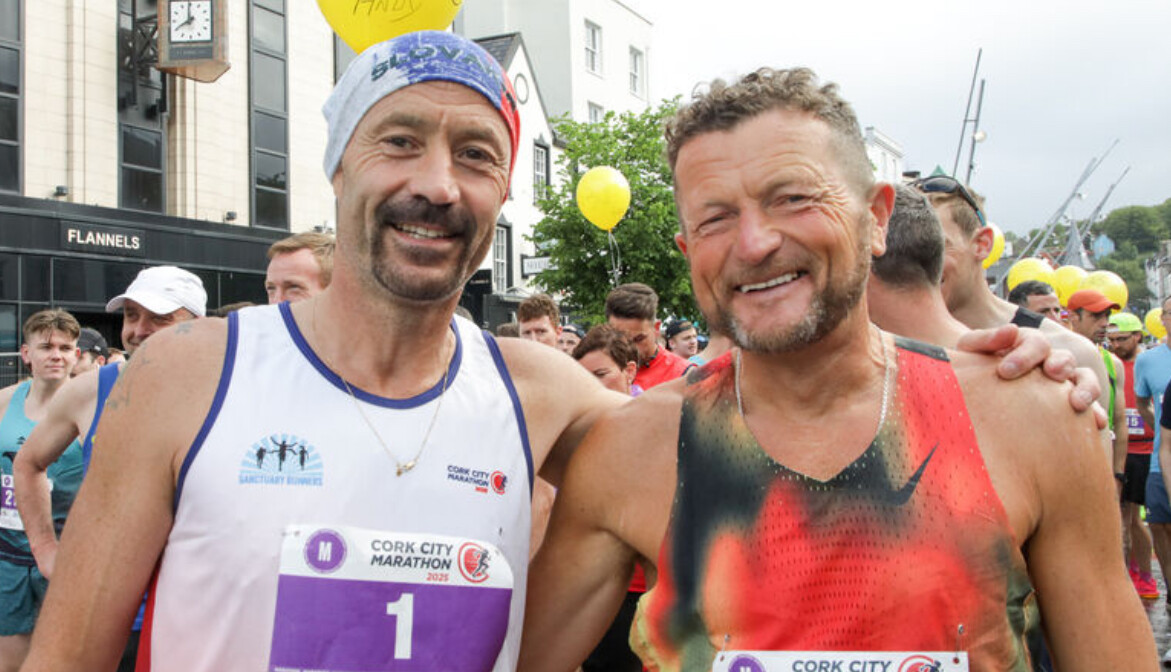
In 2007, Cork’s marathon made its long-awaited return. Cotter was driving through the city with his wife on the way to West Cork when traffic forced them to stop. As runners streamed past, something clicked.
“I remember it vividly,” Cotter says. “I said to myself, I’ll be here next year.”
He was—and with no real strategy. His approach to that first marathon was refreshingly honest: run as far as possible, as fast as possible, for as long as possible. The result was a 3:08 debut.
“I obviously hit the wall,” he laughs. “But it took off from there.”
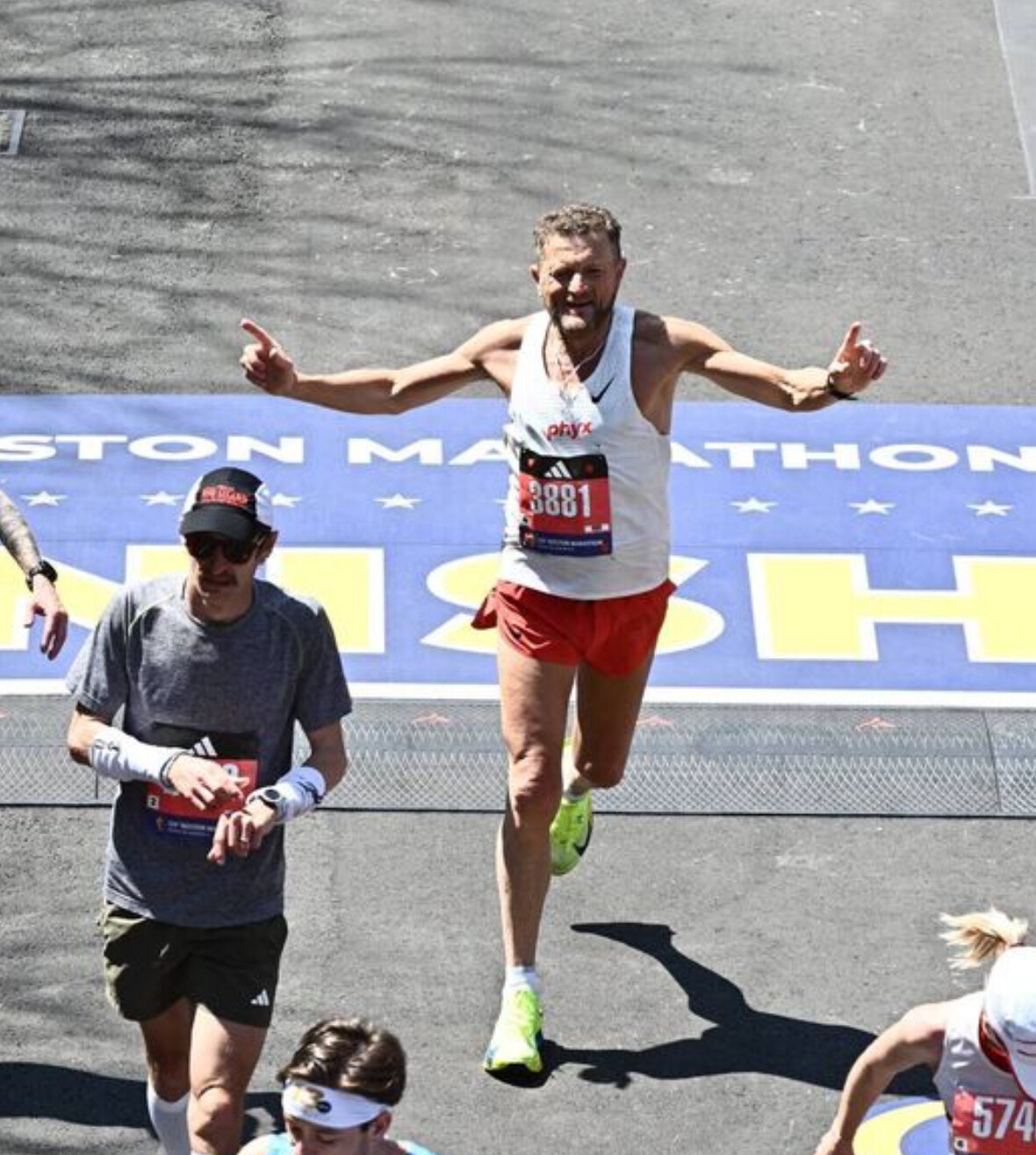
A year later, the Cork runner lined up at the Dublin Marathon and broke three hours for the first time. Since then, the numbers have quietly mounted: 31 sub-three-hour marathons, including seven under 2:50. Now in his 60s, training under Gary O’Hanlon and John Dillon and racing for St Finbarr’s AC, Cotter continues to produce sub-three performances with striking consistency.
The marathon soon carried him far beyond Ireland. Cotter has completed all six World Marathon Majors—New York, Chicago, Boston, Berlin, London, and Tokyo—three times each.
“My first international marathon was New York,” he says. “To this day, I still think it’s the holy grail. If someone wanted to do just one marathon in their life, I’d say New York.”
That first New York experience in 2010 left a lasting impression.
“The buildup to a foreign marathon, the crowds, the energy—it’s life-changing. Running through the streets of New York gives you a buzz like nothing else.”
Running under 2:50 there only deepened the attraction. And remarkably, Cotter is getting faster as the years go by.
“Since COVID, I hadn’t run a sub-2:50. I had plenty of sub-2:55s and thought maybe those days were over,” he says. “But in 2025 I’ve already run two sub-2:50 marathons. What makes it even more exciting is that I’m over 60 and now getting on the podium at world marathons.”
His recent results underline that point. Cotter ran 2:49 at Valencia, finishing third in his age category, then followed it with another third-place category finish at Berlin, one of the most competitive stages in the sport.
That has sharpened his focus.
“My goal now is to finish on the podium in all six World Marathon Majors,” he says. “I’ve completed them all three times already. This fourth time, I want a top-three finish in each. One is done—five to go.”
With 39 marathons already behind him and no shortage of ambition remaining, Cork’s Liam Cotter shows no sign of slowing. For some runners, the marathon is a phase. For others, it becomes a lifelong pursuit—one that grows more compelling with every finish line crossed.
(12/20/25) Views: 122Boris Baron
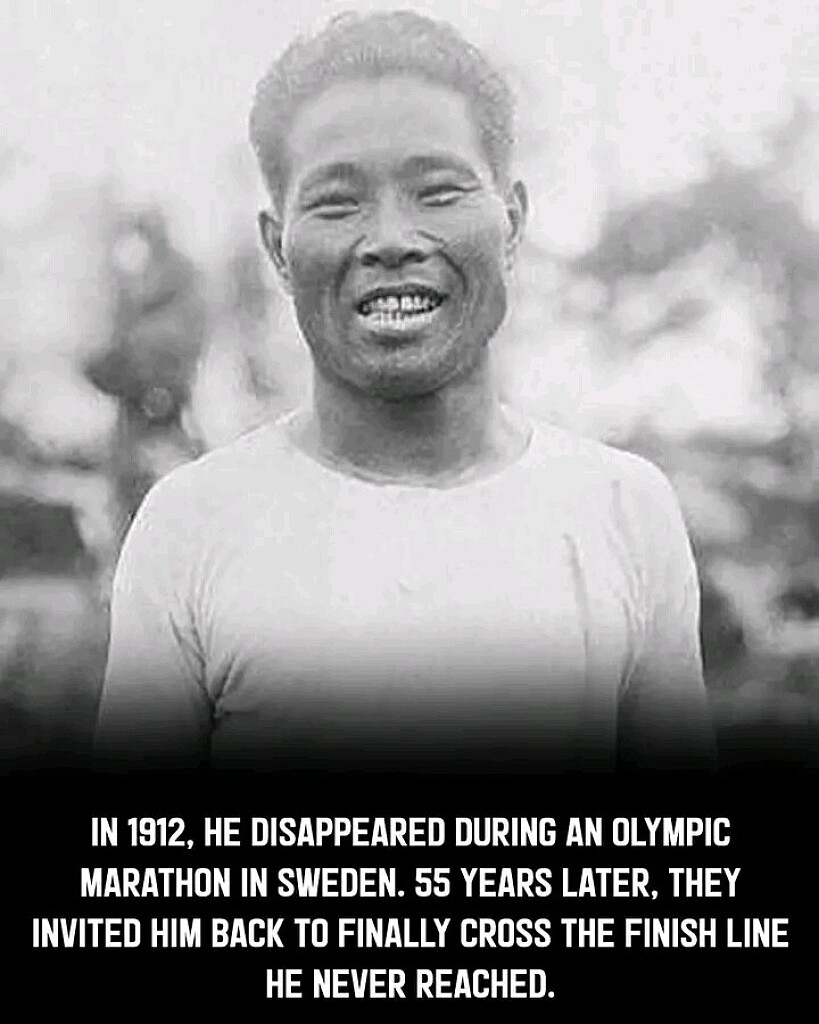
The Runner Who Vanished in 1912 and Returned in 1967
On July 14, 1912, Shizo Kanakuri stood on the start line of the Olympic marathon in Stockholm, carrying more than just race-day nerves. At 20 years old, he was representing Japan for the first time in Olympic history, introducing his country to the global stage of athletics.
Kanakuri wasn’t there simply to participate. He was one of the world’s best distance runners, having recently set a world record for 40 kilometers in 2:32:45. Expectations were high.
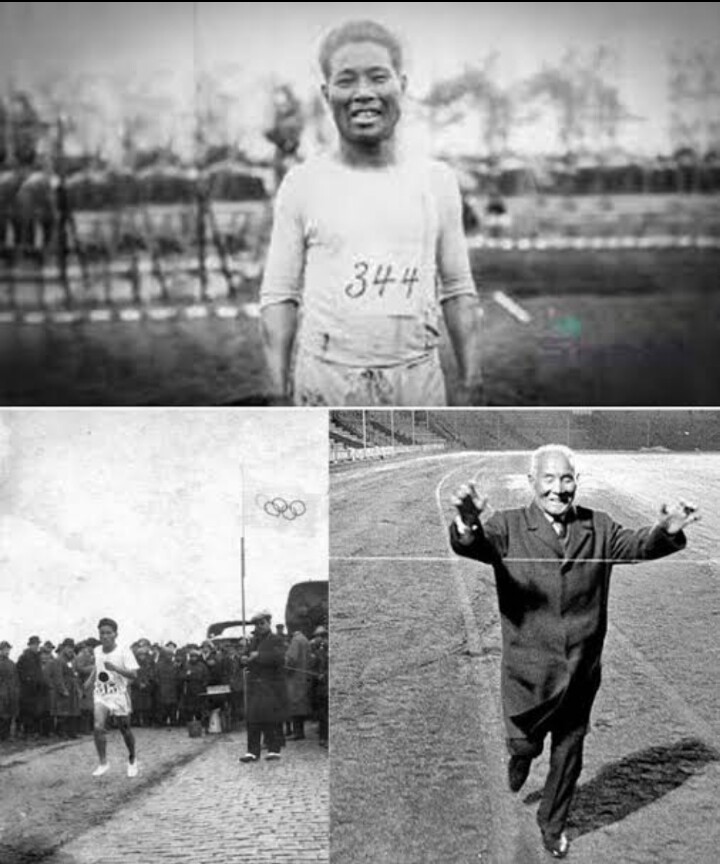
But Stockholm delivered brutal conditions. Temperatures soared to 32°C (90°F), devastating for marathoners. Sixty-eight runners from 19 nations started the race, the largest Olympic marathon field to date. Many would not finish.
Running near the front early on, Kanakuri made a decision shaped by the training beliefs of the era: he chose not to drink water, convinced it would slow him down. In extreme heat, the decision proved disastrous.
By 27 kilometers, he was in serious trouble—blurred vision, heavy legs, heat overwhelming his body. Near the course, he spotted a family garden party. Staggering off the route, he was taken in by the Pettersson family, who gave him water and juice. Exhausted, Kanakuri sat down—and fell asleep.
When he woke, the marathon was long over.
Ashamed and overwhelmed, Kanakuri quietly left Stockholm without informing race officials. To the Swedish Olympic Committee, he simply vanished. For decades, Olympic records listed him as missing.
But Kanakuri wasn’t lost. He returned to Japan, continued running, and later competed in the 1920 and 1924 Olympics. He never won a medal, but he became a teacher, mentor, and pioneer of Japanese distance running. He built a full life—married, raised six children, and inspired generations.
In 1962, Swedish journalist Claes Fellbom uncovered the mystery while researching Olympic history. He tracked Kanakuri down in Japan and learned the full story. When Swedish officials heard it, they made an extraordinary decision.
They invited him back.
In 1967—55 years after the race—Kanakuri returned to Stockholm at age 76. He visited the same neighborhood where he had stopped in 1912, met the family connected to that day, and was escorted to the Olympic Stadium.
A finish-line banner was raised. Cameras rolled.
Dressed in a suit, not racing gear, Shizo Kanakuri walked across the finish line he never reached as a young man. The clock was stopped ceremonially.
Official time:
54 years, 8 months, 6 days, 5 hours, 32 minutes, 20.3 seconds
The longest marathon in Olympic history.
Asked about his race, Kanakuri smiled and joked:
“It was a long run. Along the way, I got married, had six children, and ten grandchildren.”
Kanakuri died in 1983 at age 92. He is remembered not for medals or records, but for a story that captured something deeper about sport.
Sometimes running isn’t about winning.
Sometimes it’s about finishing—no matter how long it takes.
And sometimes, a finish line waits.
(12/25/25) Views: 77Erick Cheruiyot
