

Running News Daily
Top Ten Stories of the Week
5/6/2023
These are the top ten stories based on views over the last week.



What is the best diet for runners?
As a runner, your diet plays an important role in your performance and overall health.
Eating the right foods can help you reach peak performance while avoiding injury or fatigue.

But with so many different diets out there, it can be difficult to figure out which one is best for runners.
In this comprehensive guide, we’ll discuss what makes up a healthy diet for runners and how you can tailor it to fit your individual needs.

We’ll also explore some of the most popular diets among runners—including plant-based diets, low-carbohydrate diets, and intermittent fasting—and explain why they may or may not be beneficial for athletes.
Finally, we’ll provide tips on how to get started with any new eating plan so that you can maximize its benefits and start seeing results quickly!
What Makes Up A Healthy Diet For Runners?
A healthy diet for runners should consist of a variety of nutrient-dense whole foods, including vegetables, fruits, lean proteins, and complex carbohydrates.
Eating these foods in the right amounts can provide the energy needed for running and help keep you feeling full longer.
Hydrating frequently with water or sports drinks is important to ensure that your body is properly fueled and hydrated during exercise.
Aim to consume 20-50 grams of protein per day and at least 5 servings of fruits and vegetables.
Runners should eat complex carbohydrates such as whole grains, legumes, nuts, and seeds for sustained energy levels throughout the day.
Lastly, incorporating healthy sources of fat like avocado, olive oil, nuts and seeds can help promote joint health and provide essential nutrients.
Eating a balanced diet that provides adequate amounts of these food groups will ensure optimal performance and good overall health for runners.
Popular Diets Among Runners
Runners can benefit from various types of diets depending on their individual goals and needs. Some popular diets among runners include plant-based, low-carbohydrate, and intermittent fasting.
Plant-Based Diets focus on eating primarily fruits, vegetables, legumes and whole grains while avoiding animal products.
Low Carbohydrate Diets restrict carbohydrates in favor of eating more protein and fat.
Intermittent Fasting involves periods of fasting and eating within specific windows of time each day, allowing for improved energy levels during runs.
All three types of diets can provide runners with improved performance, endurance, and recovery if done properly.
However, it is important to consult with a nutritionist or dietician before starting any type of diet in order to ensure that you are getting the necessary macronutrients and micronutrients for optimal health.
Plant-Based Diets
Plant-based diets are becoming increasingly popular among runners due to their potential health and performance benefits.
If you’re considering going vegetarian you can take a look at this quiz, and check the results. Maybe a plant-based diet is just for you.
These diets focus on eating primarily plant-based foods such as fruits, vegetables, legumes, nuts, seeds and whole grains while avoiding animal products.
Plant-based diets can provide runners with increased energy levels during runs and promote faster recovery post-run due to their high nutrient content.
These diets can help reduce the risk of developing chronic diseases like diabetes and heart disease by reducing inflammation, improving blood sugar levels, and lowering cholesterol.
When following a plant-based diet, it is important to focus on consuming varied sources of whole grains, legumes, fruits and vegetables in order to ensure that you are getting all the necessary vitamins and minerals.
Plant-based protein sources such as tofu, beans, quinoa, nuts, and seeds should be consumed regularly for adequate amounts of protein.
Lastly, incorporating healthy fats from avocados, olives, nuts and seeds can help promote joint health and provide essential fatty acids.
Eating a balanced plant-based diet can provide runners with improved performance and good overall health.
Low Carbohydrate Diets
Low Carbohydrate Diets are becoming increasingly popular among runners looking to lose weight or improve performance.
These diets focus on reducing carbohydrates while emphasizing the consumption of proteins and healthy fats.
They can help improve running performance by providing sustained energy levels without spikes in blood glucose and insulin.
Low-carb diets also promote fat burning, which can be beneficial for runners looking to lose weight.
When following a low-carbohydrate diet, it is important to focus on eating proteins from sources such as lean meats, fish, eggs, and legumes and healthy fats from sources like nuts, seeds, olive oil and avocado.
It is important to incorporate adequate amounts of non-starchy vegetables like broccoli, kale, spinach and cauliflower to provide essential vitamins and minerals.
While following a low-carb diet can help improve performance and aid in weight loss, it is important to ensure that you are getting enough carbohydrates for optimal performance and recovery after runs.
Intermittent Fasting
Intermittent Fasting is becoming an increasingly popular diet among runners looking to improve performance and health.
This type of diet involves fasting for certain periods throughout the day, while consuming all meals within specific windows of time.
During the fasting period, it is advised to avoid food and only consume water or other calorie-free beverages such as tea or coffee. This type of diet can help improve running performance by providing sustained energy levels and promoting fat burning for weight loss.
Intermittent fasting has been shown to reduce inflammation, improve insulin sensitivity and reduce cholesterol levels.
When following an intermittent fasting diet, it is important to ensure that you are consuming adequate amounts of macronutrients and micronutrients during the non-fasting window.
Consuming high-fiber foods can help keep you feeling nourished and energized throughout the day.
Intermittent fasting is a beneficial diet for runners who are looking to improve performance and health, but it should be done in moderation to ensure that you are getting adequate nutrients for optimal performance and recovery.
Final Word
Overall, there are many different diets that can be beneficial for runners.
Whether you choose to follow a plant-based diet, low carbohydrate diet or intermittent fasting plan, it is important to ensure that you are getting adequate amounts of nutrients and calories in order to promote optimal performance and good overall health.
By understanding how the human body reacts to specific foods, runners can optimize their nutrition plans for improved running performance and better recovery post-run.
Making small changes such as incorporating more plant proteins into your meals or reducing carbohydrates may make all the difference when it comes to improving your running results.
With these tips in mind, you should have no problem finding an effective dietary strategy that works best for you!
(04/28/23) Views: 172Colorado Runner

The best ways to improve distance running performance
Maximizing speed and performance in distance running can be achieved by improving lactate threshold and running economy. While VO2max—the maximum volume of oxygen your muscles can consume per minute—has received most of the attention among runners and coaches, a high VO2max alone is not enough to attain competitive performances.
A high VO2max simply gains one access into the club, since a runner cannot attain a high level of performance without a high VO2max. But, while you can improve your VO2max, it is largely genetically determined.
The other two major physiological players of distance running performance—lactate threshold (LT) and running economy (RE)—influence your performance more, and are more responsive to training.
From the time of the classic study published in Medicine and Science in Sports and Exercise in 1979 by some of the most prominent names in exercise physiology—Farrell, Wilmore, Coyle, Billing and Costill—research has shown that the LT is the best physiological predictor of distance running performance.
LT is an important physiological variable that demarcates the transition between running that is almost purely aerobic and running that includes significant oxygen-independent (anaerobic) metabolism. It represents the fastest speed you can sustain aerobically. Since the LT represents your fastest sustainable pace, the longer the race, the more important your LT.

What is LT Pace?
LT pace is about 10 to 15 seconds per mile slower than 5K race pace, or about 10K race pace for runners who take 40 minutes or more to complete 10K. If using a heart-rate monitor, the pace should be about 75 to 80 percent of your maximum heart rate.
For highly trained and elite runners, LT pace is about 25 to 30 seconds per mile slower than 5K race pace, or about 15 to 20 seconds per mile slower than 10K race pace, and corresponds to about 85 to 90 percent max heart rate. The pace should feel "comfortably hard."
How to Improve LT?
Sample workouts to improve lactate threshold include:
Continuous runs at LT pace, starting at 3 miles and increasing up to 7 to 8 miles, or about 45 minutes for marathoners
Intervals at LT pace with short rest periods, such as 4 to 6 x 1 mile at LT pace with 1 minute rest
Shorter intervals at slightly faster than LT pace with very short rest periods, such as 2 sets of 4 x 1,000 meters at 5 to 10 seconds per mile faster than LT pace with 45 seconds rest and 2 minutes rest between sets
Long, slow distance runs with segments run at LT pace (for marathoners), such as 12 to 16 miles with the last 2 to 4 miles at LT pace, or 2 miles + 3 miles at LT pace + 6 miles + 3 miles at LT pace.
How Running Economy Makes Running Easier
Running Economy is the volume of oxygen consumed at submaximal speeds. In 1930, David Dill and his colleagues were among the first physiologists to suggest that there are marked differences in the amount of oxygen different athletes use when running at the same speeds, and that these differences in "economy" of oxygen use are a major factor in explaining differences in running performance in athletes with similar VO2max values.
For example, research has shown that, while Kenyan runners have similar VO2max and LT values as their American or European counterparts, the Kenyans are more economical—possibly due to their light, non-muscular legs that resemble those of thoroughbred race horses. The heavier your legs, the more oxygen it costs to move them.
RE is probably even more important than the LT in determining distance running performance because it indicates how hard you're working in relation to your maximum ability to use oxygen.
For example, if two runners, Jack and Martin, have a VO2max of 70 milliliters of oxygen per kilogram of body weight per minute and a LT pace of 7 minutes per mile, but Jack uses 50 and Martin uses 60 milliliters of oxygen while running at 7:30 pace, the pace feels easier for Jack because he is more economical. Therefore, Jack can run faster before using the same amount of oxygen and feeling the same amount of fatigue as Martin.
I have yet to see a runner who has superior RE who does not also have a high VO2max and LT.
4 Strategies to Improve Running Economy
Despite its importance, RE seems to be the most difficult of the three physiological players to train. While many runners and coaches think that RE is a reflection of running form, it is more influenced by those microscopic structures that influence oxygen delivery to and use by the muscles—capillaries and mitochondria, the densities of which are both enhanced with high mileage.
Research has shown that runners who run high mileage—more than 70 miles per week—tend to be more economical.
In addition to increasing mitochondrial and capillary density, the greater repetition of running movements may result in better biomechanics and muscle fiber recruitment patterns and a synchronization of breathing and stride rate, which may reduce the oxygen cost of breathing.
RE may also be improved by the weight loss that often accompanies high mileage; the change in body weight lowers oxygen cost.
Since VO2max plateaus with about 70 to 75 miles per week, improved RE may be the most significant attribute gained from running high mileage. However, it's not entirely clear whether high mileage runners become more economical by running more miles or they're innately more economical and can therefore handle higher mileage.
Intervals and tempo runs can also improve RE since, as VO2max and LT improve, the oxygen cost of any submaximal speed is also likely to improve.
However, it is possible to become more economical without improving VO2max or LT, as research on power training with very heavy weights and plyometrics has shown.
Power training focuses on the neural, rather than metabolic, component of muscle force development to improve RE.
(04/30/23) Views: 93Jason Karp
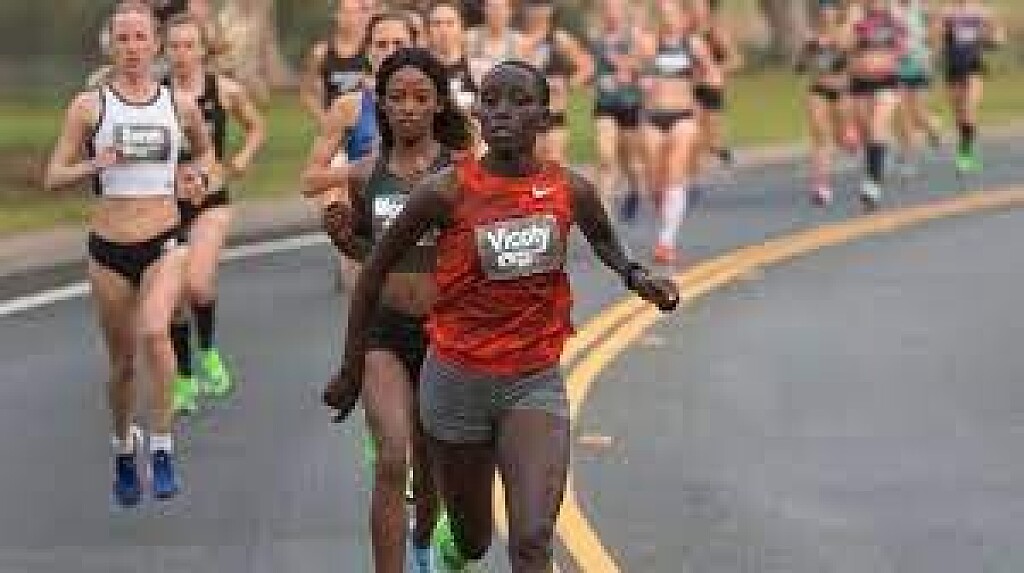
Vicoty Chepngeno eyes World Championships after 10,000m win
Vicoty Chepngeno has set her eyes on the World Championships in Budapest after claiming the women's 10,000m title at the sixth leg of the Athletics Kenya (AK) track and field weekend meet at Kasarani Stadium on Thursday.
This was her first AK meeting in two years having featured last in 2021.
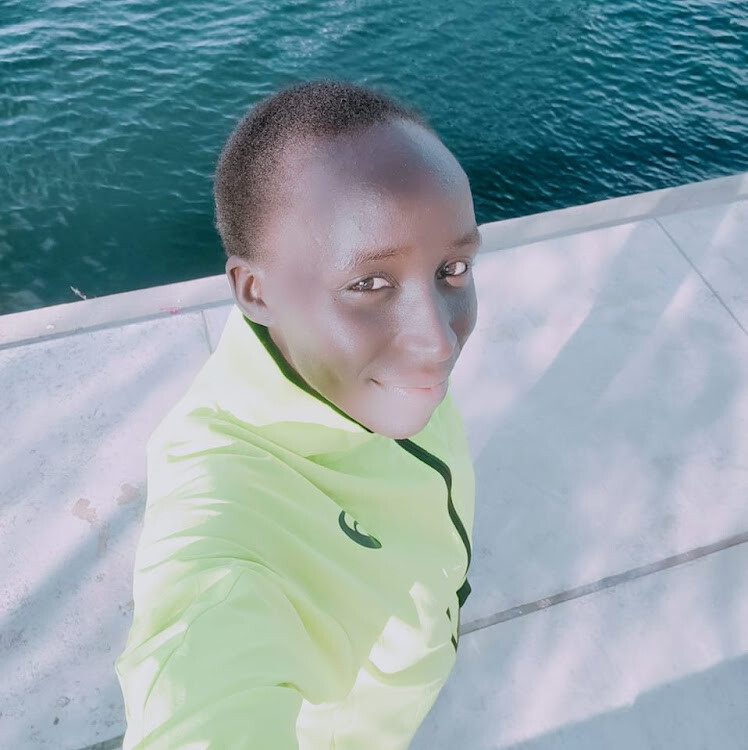
In an interview, Chepngeno said: "After this win, my next target is the World Championships in August in Budapest Hungary. I intend to double my effort because I know it won't be easy achieving my dream," she added.
The 29-year-old attributed her victory to discipline and focus.
" I will take this step by step until I achieve my goal because I feel this is the time to represent my country and I am ready to travel to Budapest and bring the medal back home," she added.
"Discipline makes me different from the rest of the athletes and that is why I am able to win today. In everything I do, It's all about discipline and that is why I believe I will make the cut for Team Kenya to Budapest," he noted.
She said she followed the program given to her by the coach strictly and she is happy it bore fruits.
Chepngeno added: "I was not expecting this win but I thank God. I worked very hard during the training and patience was one of my key guiding factors," she noted.
(04/28/23) Views: 88
Maryan Siyad Abdirahman
U.K. Athletics bans official for cyberbullying female athlete
British Athletics official Paul Baxter faces a three-and-a-half-year ban from the sport after he was found to be cyberbullying and harassing a female athlete on Facebook.
Baxter was suspended by U.K. Athletics for making several inappropriate posts toward a woman in a popular Facebook running group I Was, Or Am A Runner!

Baxter, a prominent figure in the northern U.K. Athletics community, was sanctioned for harassing Katey Ross, who waived her right to anonymity, according to The Times.
In December 2021, Baxter made a number of inappropriate posts on Facebook about Ross which made her feel intimidated, alarmed, and distressed for her personal safety.
Several weeks later, he created a specific post entitled ‘Who is Katey Ross?” and tagged some 52 members of the Facebook group. Baxter had already been previously removed from the group prior to the post and had re-joined under a different name.
Baxter argued to the U.K. Athletics panel that his posts in the group were in reference to the lyrics of a song, unrelated to Ross. The disciplinary panel did not accept his explanation.
According to the report, Baxter violated four U.K. Athletics Code of Conduct rules for officials and was sentenced to a three-and-a-half-year ban from athletics. If Baxter plans to return to the sport after serving his ban, he must attend a training course on equality, diversity, inclusion and anti-bullying.
These are the four Code of Conduct rules Baxter violated:
Code 2.6: Avoid swearing and critical, abusive language or irresponsible behaviour, including behaviour that is dangerous to others, acts of violence, bullying, harassment and physical and sexual abuse.Code 3.1: Respect the rights, dignity and worth of every athlete and others involved in athletics and treat everyone equally.Code 3.3: Act with dignity and display courtesy and good manners towards others.Code 3.4: In no way undermine, put down or belittle other officials, athletes, coaches or practitioners.
Ross told The Times: “The behaviour of Baxter and the other men who contributed to his abusive posts sadly illustrates the wider problem of misogyny in sport; a problem women in all areas of athletics face.”
“Reporting abuse of any kind isn’t easy,” said Ross. “Women who raise awareness of abuse in sport being attacked online by men for daring to do so happens far too often.”
(04/29/23) Views: 87Running Magazine
Kenyan Ruth Chepngetich wants to make it six out of six in Istanbul
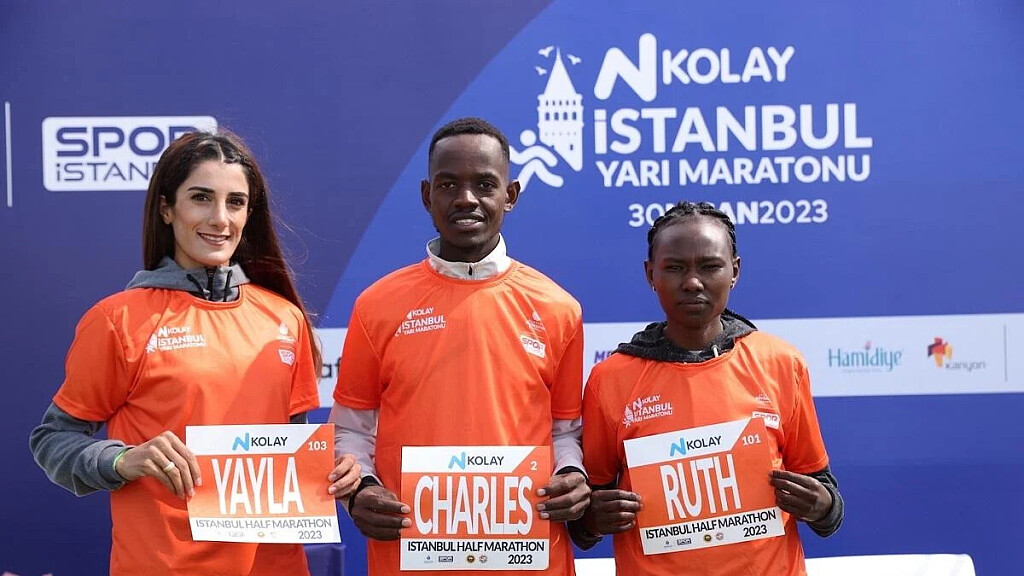
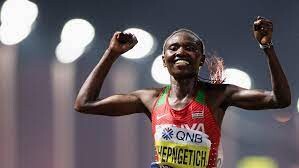
Ruth Chepngetich, one of the world’s leading long distance runners, will be the star attraction of the N Kolay Istanbul Half Marathon on Sunday. The Kenyan, who broke the world record on this course with 64:02 two years ago, has a unique win streak in Istanbul.
The 28 year-old competed five times in Turkey’s two major international road races, the half marathon and the marathon. She always won and broke the course record on each occasion. There is no other city in the world where Ruth Chepngetich participated more often in a road race. On Sunday the Kenyan World Marathon Champion from 2019 wants to make it six wins from six races in Istanbul. With her PB of 64:02 she is currently the third fastest half marathon runner of all times and leads a very strong women’s start list, which features 14 runners with personal bests of sub 68:00. Fellow-Kenyan Charles Langat head the men’s list with a PB of 58:53. There are seven men in the field who have already run below the hour mark.
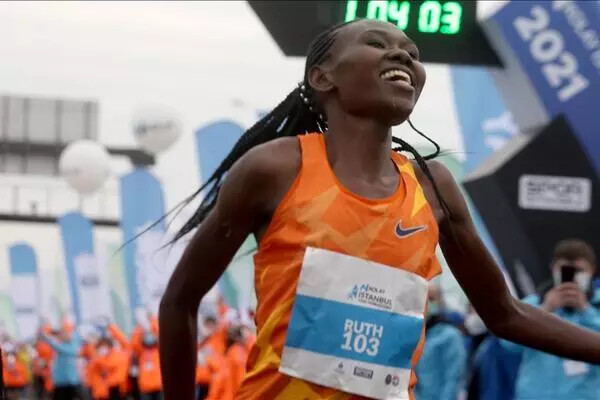
A record number of 12,300 runners will be competing in the half marathon and the 10k race staged parallel on Sunday. This is an increase of participants of close to 25 percent compared to the previous entry record from 2022. The 18th edition of the N Kolay Istanbul Half Marathon, which is an Elite Label Road Race of World Athletics, will start at 9.30 am and will be streamed worldwide at: https://youtube.com/@IBBSporIstanbul
“Turkey has gone through a difficult period due to disasters. During these times sport is the best way to stand up. We are looking forward to the N Kolay Istanbul Half Marathon, it will be a very competitive race. Ruth, who broke the world record on this course in 2021, is with us again. May be this year we will see another record,“ said Race Director Renay Onur.
A large number of runners who have entered the N Kolay Istanbul Half Marathon will be running for charity on Sunday, collecting money for the devastating earth quake that hit the southern area of the country in winter. One group of charity runners, that is close to race organizer Spor Istanbul as it was founded by Renay Onur, will have over 1,250 runners alone on Sunday.
Turkey’s Yayla Gönen, who is on the women’s elite start list with a PB of 70:26, was in a training camp in Diyarbakir when the earth quake struck. The 26 year-old was lucky since the house in the camp did not collapse. But it was a struggle for her to get food for a week and she was then brought back to Istanbul by her club IBBSK. Despite this she still managed to run a marathon PB of 2:29:10 in Sevilla in February. Yayla Gönen is the favourite to win the Turkish Half Marathon Championships which are included in Sunday’s event.
“Istanbul is a beautiful city, the people and their support are amazing. It is my favourite city and I have to thank the race organisers for inviting me back once again“ said Ruth Chepngetich, who last raced on 12th March when she won the Nagoya Marathon in a world-class time of 2:18:08. “My recovery after the marathon was good and after a two-week-break I started preparing for the N Kolay Istanbul Half Marathon. Compared to my race here in 2021 I can say that my form is better now.“ However the Kenyan record holder does not have a certain time goal.
"My goal is to win and as always in this race I will do my best,“ said Ruth Chepngetich, who will have some additional motivation since her daughter Shalyne has accompanied her to Istanbul. “My daughter always motivates me a lot. Since she is here with us I will have to make sure not to disappoint her!“
Ruth Chepngetich knows that it will not be an easy task to make it six wins from six in Istanbul on Sunday. Ethiopia’s Bosena Mulatie has a strong PB of 65:46 while fellow-Kenyan Evaline Chirchir has run 66:01.
Charles Langat is the fastest runner on the men’s elite start list. He improved to an impressive 58:53 when he won the Barcelona half marathon in February. With this time the 27 year-old is currently the third fastest half marathoner in the world this year. “If the weather conditions are good and the course is fast then I will try to run sub 59:30,“ said Charles Langat, who also won the Lisbon Half Marathon last autumn.
Fellow-Kenyan Daniel Ebenyo is the number two on the start list with a PB of 59:04 while defending champions and course record holder Rodgers Kwemoi of Kenyan had to withdraw due to an injury. Great Britain’s Marc Scott is the fastest European runner on the list with a personal record of 60:39.
(04/29/23) Views: 86Runners Web
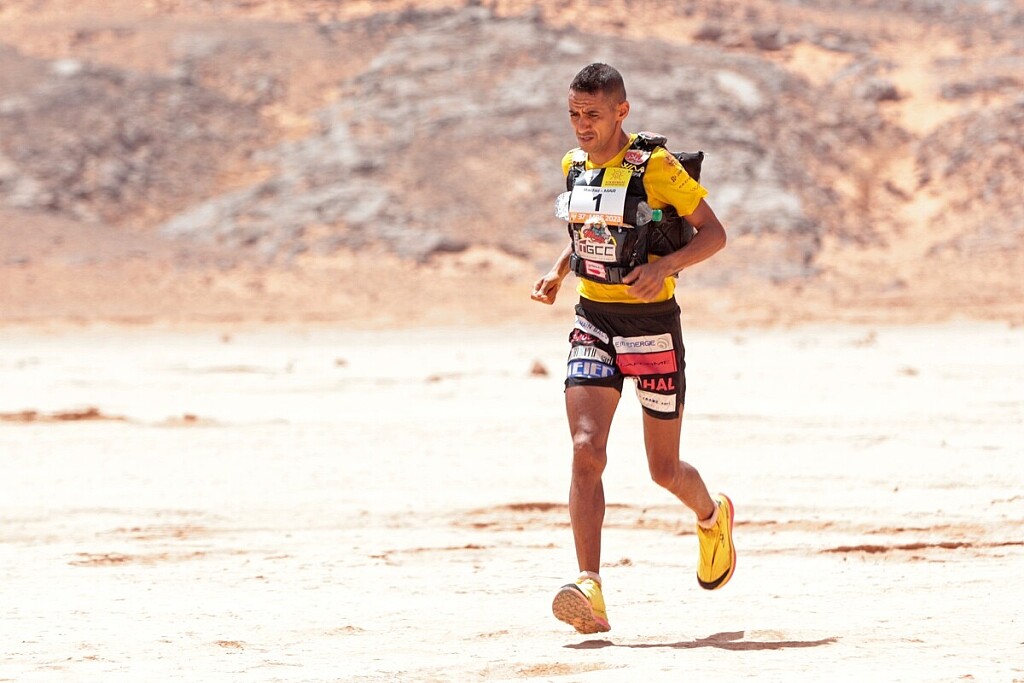
Nine-time winner of Morocco's "Marathon des sables" race abandons
Shocking news struck the runners of the Marathon des Sables late Thursday (Apr. 27). 9-time winner of the race, Rachid El Morabity threw in the towel a few minutes after being caught red-handed with food in the bag.
The goal of the race is to cover 250 km in 7 days across the Sahara, in food self-sufficiency. Any food provided by a third party is therefore prohibited. But an unannounced control operated in the tent of the Moroccan proved to be positive.
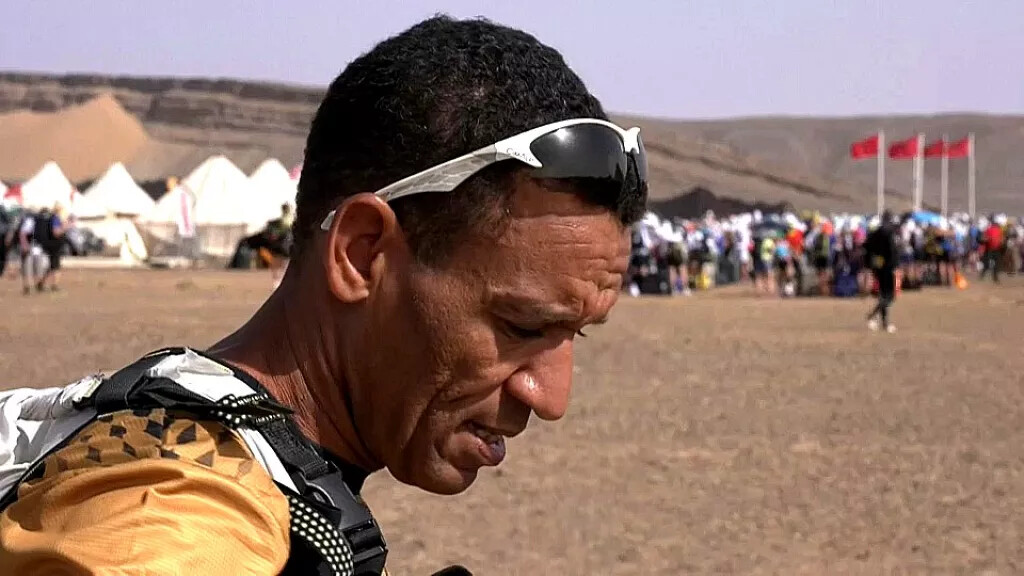
The sanction of the organization was immediate: a penalty of 3 hours sealing the end of the dreams of tenth title for Rachid El Morabity.
He who was aiming to join his compatriot Lahcen Ahansal in the legend of the event. El Morabity's teammate and compatriote, Aziz El Akkad, has decided to abandon.
Rachid El Morabity's younger brother, Mohamed, remains alone at the top of the ranking, 3 minutes 17 seconds ahead of his direct contender Aziz Yachou.
In the women's ranking, French marathoner Maryline Nakache is first, get ahead of Moroccan Aziza El Amrany and Japanese Tomomi Bitoh by 30 minutes.
(04/28/23) Views: 85Africanews and Pierre Michaud
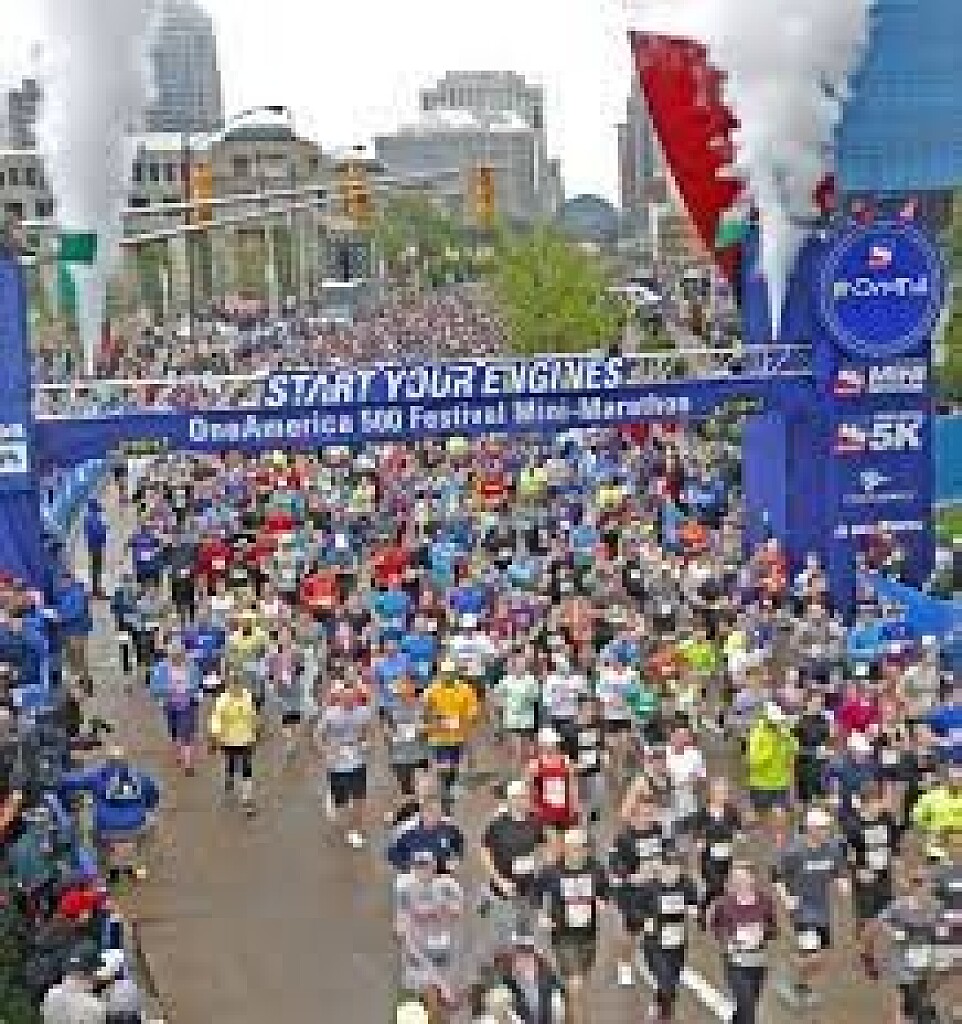
Indy Mini-Marathon named nation's best half-marathon
The Greatest Spectacle in Running is getting national attention.
The OneAmerica 500 Festival Mini-Marathon has been named the nation's best half-marathon as part of USA TODAY's 2023 10Best Readers' Choice travel awards.

According to USA TODAY, the half-marathon is the fastest-growing race distance in the United States with some 2 million runners participating annually.
The public had the opportunity to vote on their favorite race and in the end it was the OneAmerica 500 Festival Mini-Marathon that came out on top.
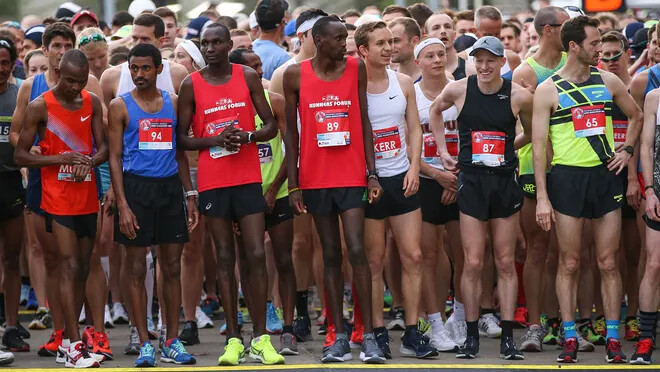
The marathon, often referred to as the Indy Mini, takes runners through downtown Indianapolis, past historic landmarks and famous sites like the Indianapolis Motor Speedway.
It's one of the nation's largest half-marathons, bringing some 35,000 runners to the Circle City each year. It's also part of the 500 Festival, which leads up to the iconic Indianapolis 500.
The Indy Mini beat the RunTheBluegrass Half Marathon in Lexington, which is known for being "America's prettiest half-marathon," and the Hippie Half, which brings people to Gregory, Michigan every summer to camp, run, listen to live music and enjoy a festive atmosphere.
(04/29/23) Views: 84
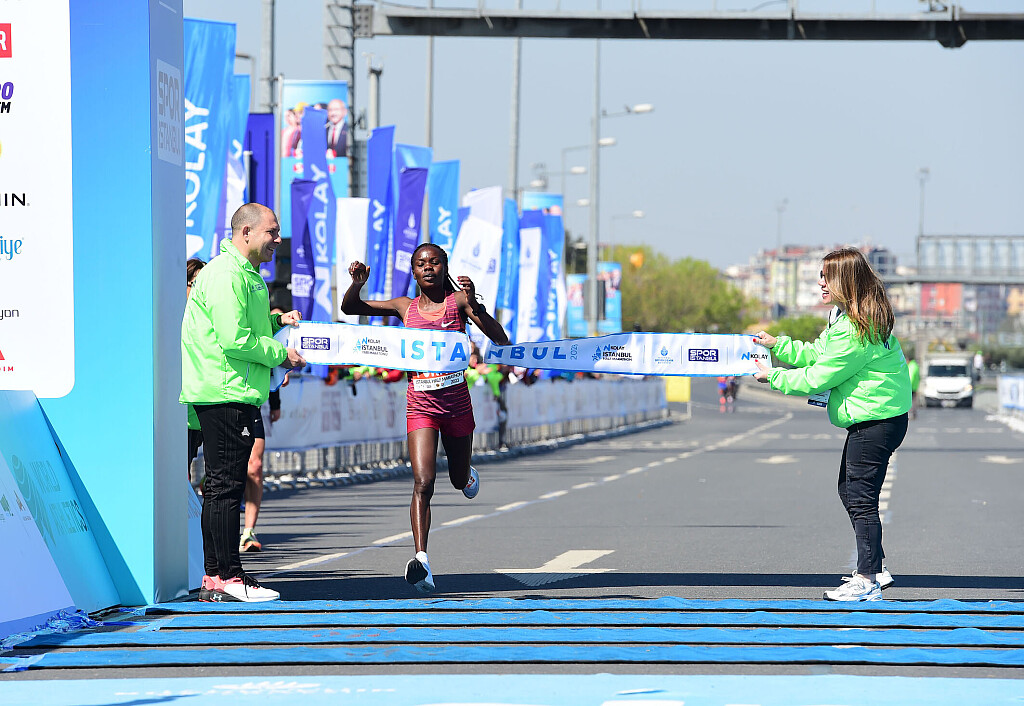
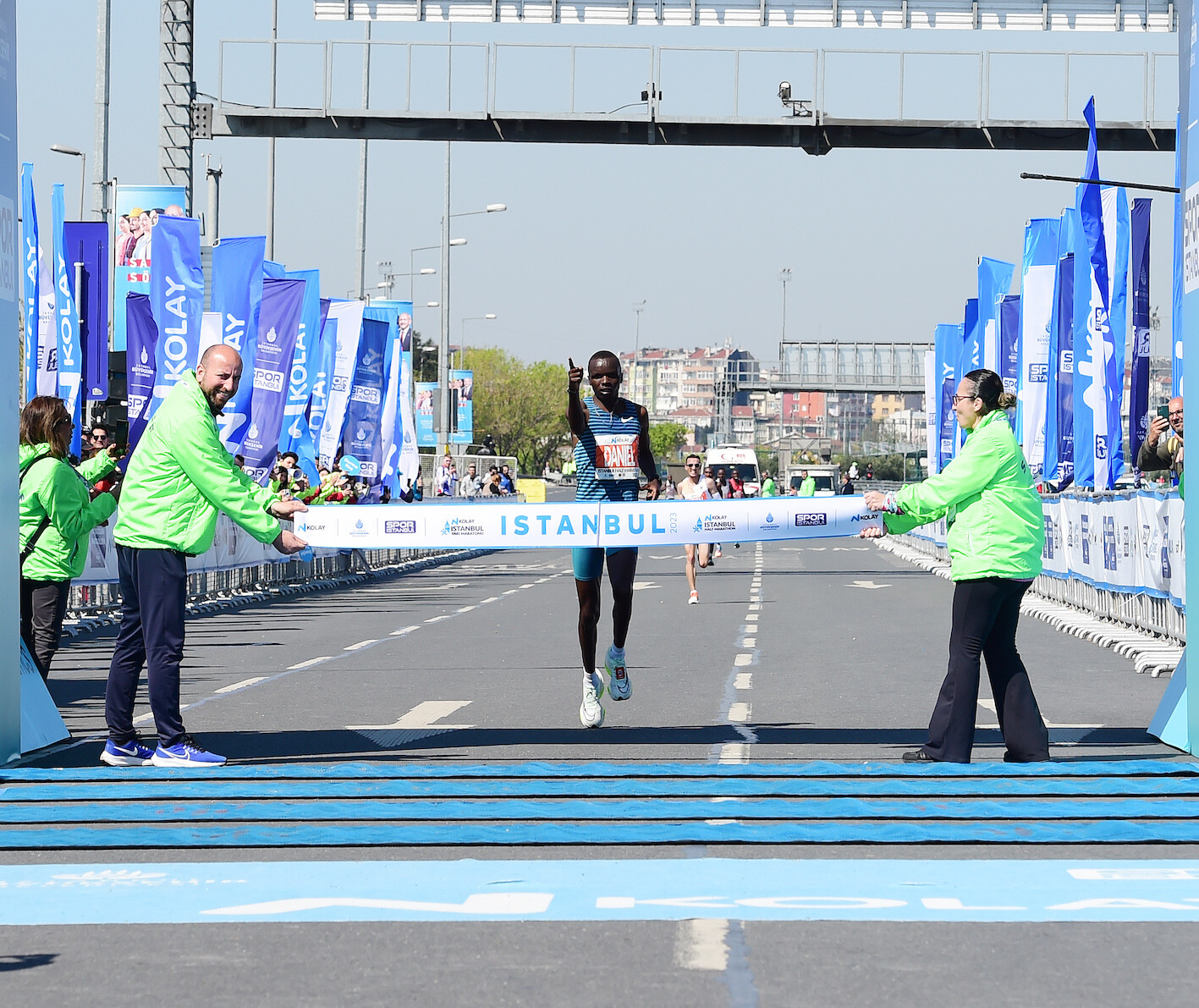
Purity Komen upsets Ruth Chepngetich and Daniel Ebenyo wins in Istanbul
Purity Komen was the surprise winner of the N Kolay Istanbul Half Marathon. Overtaking fellow-Kenyan and race favourite Ruth Chepngetich the 24 year-old stormed to her biggest career win with a personal best of 66:30. Course record holder Chepngetich followed in second with 67:18 while Evaline Chirchir made it an all-Kenyan podium with 67:31. Stella Rutto of Romania was the fastest European, finishing 10th with 70:05.
In partly windy conditions hopes for a course record faded in the men’s race as well after a fast first section. 27 year-old Daniel Ebenyo of Kenya was the winner of Turkey’s best quality road race with 59:52. Marokko’s Hicham Amghar took second place in 59:58 and Haftu Teklu clocked 60:03 for third. Britain’s Marc Scott was the best European runner in 63:17 for 12th place.
A record number of 12,300 runners competed in the 18th edition of the half marathon and the 10k race staged parallel. Many athletes ran for charity, collecting money for the victims of the devastating earthquake that shook southern Turkey earlier this year. The N Kolay Istanbul Half Marathon is a Gold Label Road Race of World Athletics.
"It was a nice race and especially the men’s elite was very competitive. We are happy that we continue to register record fields. It is always exciting to experience the historic atmosphere here in Istanbul and we are now inviting everyone to be back for our marathon on 5th November,“ said Race Director Reynar Onur.
The women’s race began as expected. Ruth Chepngetich sped away from the field right after the start and was so quick that even the TV cameras missed her on a few occasions early on. Passing the 5k mark in 15:16 the Kenyan was almost on course for breaking her Kenyan record and her Istanbul course record of 64:02, which in 2021 was a world record as well.
However once the 2019 Marathon World Champion came off Galata Bridge and had to run against the wind for almost four kilometers she slowed considerably. At the 10k point her 31:09 split time then indicated a 65:45 finish and her lead had shrunk to only four seconds. Purity Komen, Evaline Chirchir and Ethiopia’s Bosena Mulatie caught her a few minutes later. Then it was Komen, who had only been number nine with a PB of 67:08 on the final start list, who moved ahead before the 15k mark. Chepngetich tried to follow her in a bid to make it six wins from six races in Istanbul, but today she was unable to do so. Purity Komen won the race with 66:30 and became the first woman to beat Ruth Chepngetich on the historic roads of Istanbul.
“My body did not respond after the early part of the race. I don’t know why, but I assume that may be the race came a bit too soon after the Nagoya Marathon in March,“ said Ruth Chepngetich. “I have not yet decided if I will run the World Championships’ marathon or an autumn race. The big goal is the Olympic Games next year and I hope to be selected for the team.“
While Ruth Chepngetich is an experienced marathoner the victory in Istanbul may well have brought Purity Komen closer to her debut at the classic distance. “This victory was unexpected. I was surprised when I suddenly saw Ruth in front of me and was then able to pass her,“ said Purity Komen. “I had hoped to achieve a 65 minutes’ time, but it was too windy today. I now plan to run my marathon debut next year.“
The men’s race began very fast as well with the first couple of split times indicating a finishing time of around 58:00. But as in the women’s competition the pace then dropped considerable once the leading group hit the wind. A group of around ten athletes passed the 10k mark in 28:22, which is sub 60 minutes’ pace.
Two athletes were pushing the pace at the front: Kenya’s Daniel Ebenyo and Hicham Amghar of Morocco, who have PBs of 59:04 and 59:53 respectively. Soon after the 15k point (42:33) Ebenyo took the lead, covering the 16th kilometre in 2:46. Only Amghar was able to follow him, but when Ebenyo indicated to him to help pushing the pace the Moroccan stayed right behind him. Ebenyo then kept pressing ahead and opened up a decisive gap with around 4k to go.
“I hoped to catch Daniel but I am happy with my result. I was going for a PB, but it was not possible in the wind,“ said Hicham Amghar, while Daniel Ebenyo was happy about his first major half marathon victory. “I am excited to have won this race. My aim was to run 59:00 minutes but it was too windy for that,“ said the Kenyan. “I will probably run my marathon debut next year. May be I come back to Istanbul for that.“
Results, Men:
1. Daniel Ebenyo KEN 59:52
2. Hicham Amghar MOR 59:58
3. Haftu Teklu ETH 60:03
4. Charles Langat KEN 60:07
5. Vincent Kipkemoi KEN 60:09
6. Boniface Kibiwott KEN 60:23
7. Benard Biwott KEN 60:47
8. Ashenafi Kiros ETH 61:21
9. Alfred Ngeno KEN 62:24
10. Alene Mekonen ETH 62:32
Women:
1. Purity Komen KEN 66:30
2. Ruth Chepngetich KEN 67:18
3. Evaline Chirchir KEN 67:31
4. Bosena Mulatie ETH 67:43
5. Tigist Gezahagn ETH 68:49
6. Betelihem Afenigus ETH 69:04
7. Beatrice Cheserek KEN 69:14
8. Bekelech Gudeta ETH 69:35
9. Shamilah Kipsiror KEN 69:38
10. Stella Rutto ROM 70:05
(04/30/23) Views: 82
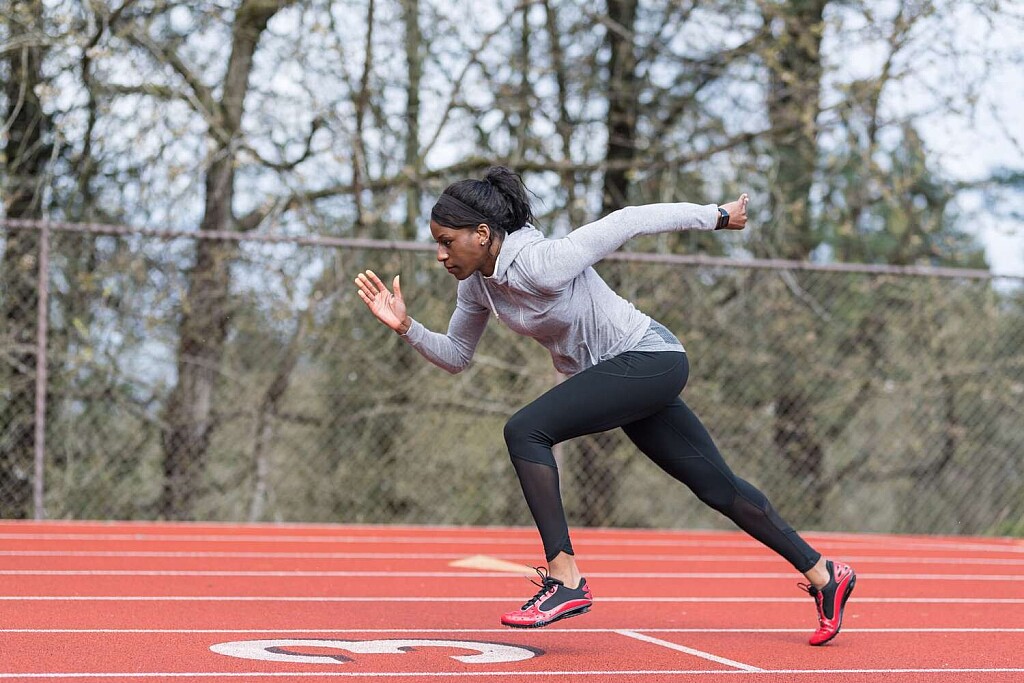
Best Workouts to Improve Your Speed
Whether you want to get faster or improve your overall fitness level, track workouts are one of the most effective ways to accomplish your goals. These 4 best track workouts will improve your running speed and efficiency and make you a stronger athlete. Whether you want to PR in your next race or just become a faster runner in general, these track workouts will help you. An added bonus is speed workouts burn more calories per minute of exertion than regular slow runs, and you will notice an improvement in your overall fitness level.
Track Intervals
Intervals are a classic speed workout that can be adapted for any level of runner. Whether you’re training for a marathon and running 800-meter intervals or are just beginning running and doing 100-meter sprints, speed workouts can be adapted to any runner’s needs. You can even do interval workouts on the road or trail if you don’t have access to a track. Interval workouts involve measured bursts of speed mixed in with slow jogging or even walking or resting for recovery time.
When I coach runners, I usually have them start with 400-meter intervals workouts to begin speed training. Here is a sample 400-meter interval running workout that can help any runner get faster and stronger:
400-METER INTERVALS
This workout is easiest to do on a track — 400 meters is one lap on a standard outdoor track. You can, however, use your smartphone running app or running watch to measure out .25 of a mile for each 400-meter interval if you are running on the road or trails. Be sure to record your times for your interval workout and you will see your speed improve as you repeat the workout each week.
Warm-up - Run 800-meters or 1/2 of a mile at a relaxed pace, jogging.
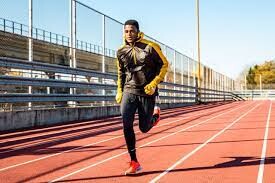
Speed Interval: Run 400-meters (one lap on the track or .25 of a mile on the road) at 80-85% effort level. This pace should make you feel winded by the end and like you are going considerably faster than your regular running pace. You will not be able to talk at this speed as you run.
Recovery: Jog or run slowly for 400-meters for active recovery. This will allow you to catch your breath and reset before the next speed interval.
Repeat the speed interval-recovery cycle, alternating one recovery lap between each fast lap. If you are a beginning runner, do 4 fast 400-meter intervals and 4 recovery laps for your first speed workout. For intermediate runners, start with 6 speed intervals. You can run this interval workout once a week, adding one more speed interval every 2 weeks to build up your endurance. You can also increase the interval distance to 800-meters or even 1-mile intervals if you are training for a long-distance race like a marathon.
Cooldown - Run 800-meters or 1/2 of a mile at a relaxed pace, jogging. Stretch.
Tempo Runs
Tempo runs are a staple speed training workout for long-distance runners. Tempo runs help improve your body’s ability to run faster for long stretches of time and adapt to lower oxygen supplies as you run. These runs are great preparation for racing.
What is a tempo run, you may be wondering? A tempo run — or lactate threshold run — is a running workout at a pace at which your body produces and clears lactate (a metabolic by-product of exercise) at a close-to-equal rate. In layman’s terms, a tempo run is a pace your body can run and keep breathing and working without cramping up or getting too winded to keep going. A tempo run is not an anaerobic workout like sprinting but instead trains your body to be able to keep pushing and performing at higher levels for longer distances. Whether you are a 1-mile track runner or a marathoner, tempo runs are excellent training tools to make you a better, more efficient runner.
HOW TO DO A TEMPO RUN
Tempo runs are the middle ground of running, falling between easy, slow runs and intense speed intervals. To determine your tempo pace, add 24 to 30 seconds per mile to your 5K PR or goal pace. If your best 5K time is at an 8-minute-mile pace, for instance, your tempo run pace will be 8:30 per mile.
For your first tempo run, warm up for 5 minutes running at a relaxed, easy pace. Then do 20 minutes of running at your tempo run pace. Cool down for 5 minutes of easy running and then stretch. For the best results, do one tempo run a week, and you can gradually build up your temp running time to meet your race training distance goals, building up to a maximum of an hour of tempo running if you are training for a long-distance race such as a half marathon or marathon.
Fartleks
Fartleks - Swedish for speed play - offer a flexible, fun speed workout that can be adapted to any running level. Fartleks are a great running workout for beginners as they can be very short and informal and are not intimidating.
If you are wondering what the heck fartleks are, let me help — fartleks are short bursts of speed during a regular, easy-paced run. The speed bursts can vary, often using something such as a pole or street light ahead to run fast toward, and then slow down once you pass the landmark.
HOW TO DO FARLEKS
To do a fartleks workout, go for a 3-4 mile, relaxed pace run. After your first 5 minutes of running, pick a spot in the distance and run fast toward it. If you are on the track, you may run the long straight away fast for your fartlek. You will be running at about 90-percent effort level, faster than your 5K race pace. Usually, this fartlek interval should be for about 1-2 minutes in duration. Then return to your regular, relaxed base run pace. After a few minutes, pick a landmark — or stretch of the track — to run fast toward again. Do 5 to 10 fartleks during your workout. Your fast running time should total 10 to 12 minutes by the end of your run.
Fartleks are a great workout to prepare for more measured interval workouts. If you are a beginner, do one fartlek workout a week to start.
Strides
Strides are a great, short, speed workout you can tack on to the end of an easy run day. Strides help train your body to run at higher speeds even when your body is already fatigued from running. They also help improve your running form and efficiency.
Strides are a running drill that you run for short bursts of speed with an exaggerated running form. You can run strides after an easy run to work on your form and speed. Strides are short, 20-30 second accelerations that you can plug into your weekly training program.
Here is how to run strides:
Find a flat place to run 100 meters. This can be the straightaway part of a track, or on a flat road.
Begin running your stride by taking short steps (or strides), and pumping your arms up and down, in an exaggerated motion. As you speed up, your leg turnover will get quicker.
Begin running at an easy, relaxed pace, and build up your speed as you run.
You should be running at about 95 percent effort level by the end of your stride. Your stride should only take 20-30 seconds so you may get winded at the end but will recover quickly.
Do 4 strides for your first stride workout and build up to doing 6 or 8 strides.
Do your stride workout after an easy run or regular base run.
Speed Workout Tips
When you do speed workouts, it’s important to give your body time to rest and recover so your muscles can rebuild and repair. You will want to follow the easy-hard principle of training and schedule track workouts between easy run or recovery days. Track workouts, long runs and races are all considered hard trianing days, so you will need time to recover from them. If you do a speed workout, take a rest day or do an easy run the following day for recovery. Do not do speed workouts two days in a row.
Make sure you stay hydrated before, during, and after your track workouts. This will help prevent muscle cramps and speed up your recovery time.
When you are doing interval workouts, aim for consistency in your pace so all your fast runs of a particular distance are the same pace. It is tempting to begin with a sprint or go too fast when you begin track workouts, but it’s important to hold back some in the first intervals so you can maintain your speed through the very last interval.
If you love track workouts and want to do some track races, check out the USA Track and Field calendar of events for sanctioned track races around the U.S.
(05/01/23) Views: 79Marnie Kunz
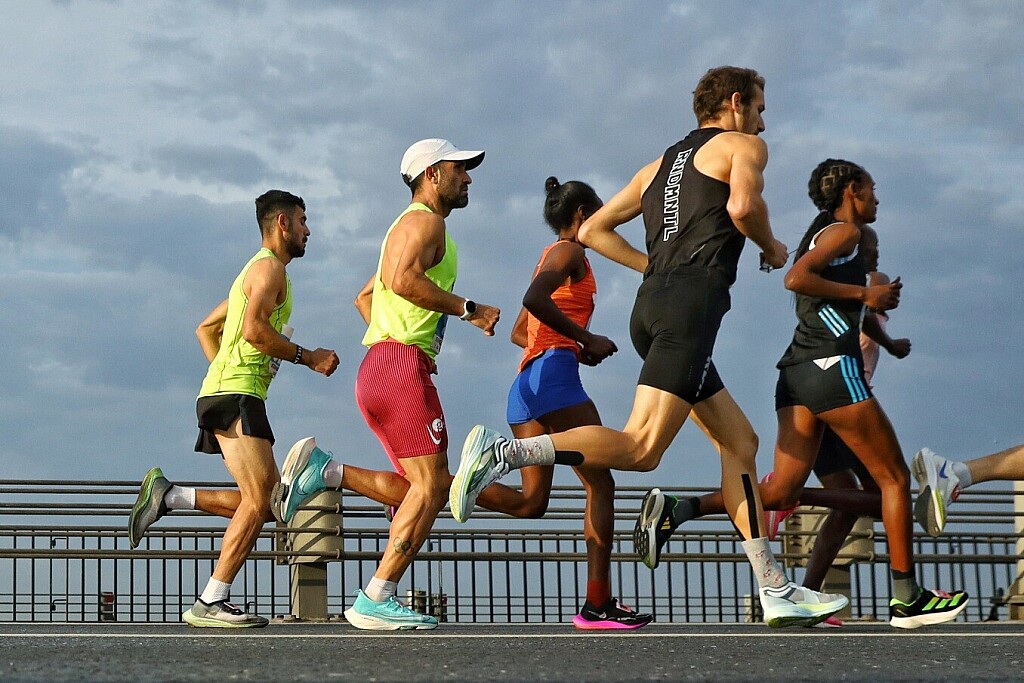
Prep for your upcoming 10K with tempo 400’s
To race a 10K, you need a combination of speed and endurance. The 10K is one of the most popular distances to race and is considered a gateway into longer distances (i.e., the half-marathon and marathon). Running a fast 10K isn’t easy, but if you can put in a few solid weeks of aerobic training, you’ll be destined for a strong finish.
For 10K training, most online coaches will generally recommend one-kilometre or two-kilometre repeats to get you more familiar with your goal race pace, and to raise your aerobic threshold. These repeats can feel tedious, especially if they are in your training plan every week. But you can spice up your speed training and head to your closest track to try this tempo 400’s workout.
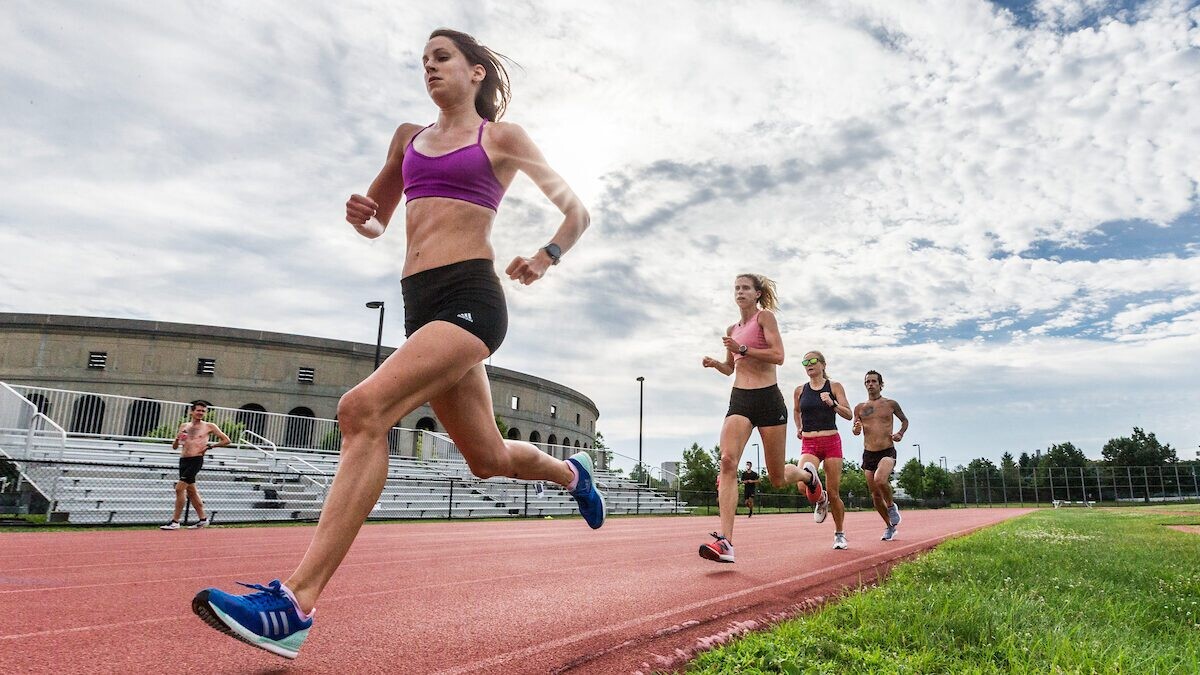
Workout
10 to 15 reps of 400m @ goal race pace with 100m jog between reps.
Start the workout with a 10- to 15-minute warm-up jog, followed by 10 to 15 minutes of dynamic stretching.
If your local track is not 200 or 400 metres in length or if the track is non-existent, you can modify the workout to 10 to 15 reps of 100 seconds at 10K race pace with 40 seconds of jog rest.
Start the first rep at your goal pace or a tad slower, to ensure you aren’t overdoing it. If you go out too fast, it’ll likely come back to haunt you later in the workout. The 100m jog between reps should be done at an easy run pace.
The purpose is to improve your aerobic endurance by keeping your heart rate steady and managing your effort accordingly, helping you finish strong. If you finish all 15 reps at goal pace, you will have a strong indication of where your fitness is, heading into your 10K.
(04/28/23) Views: 76Marley Dickinson
