

Running News Daily
Top Ten Stories of the Week
2/11/2023
These are the top ten stories based on views over the last week.
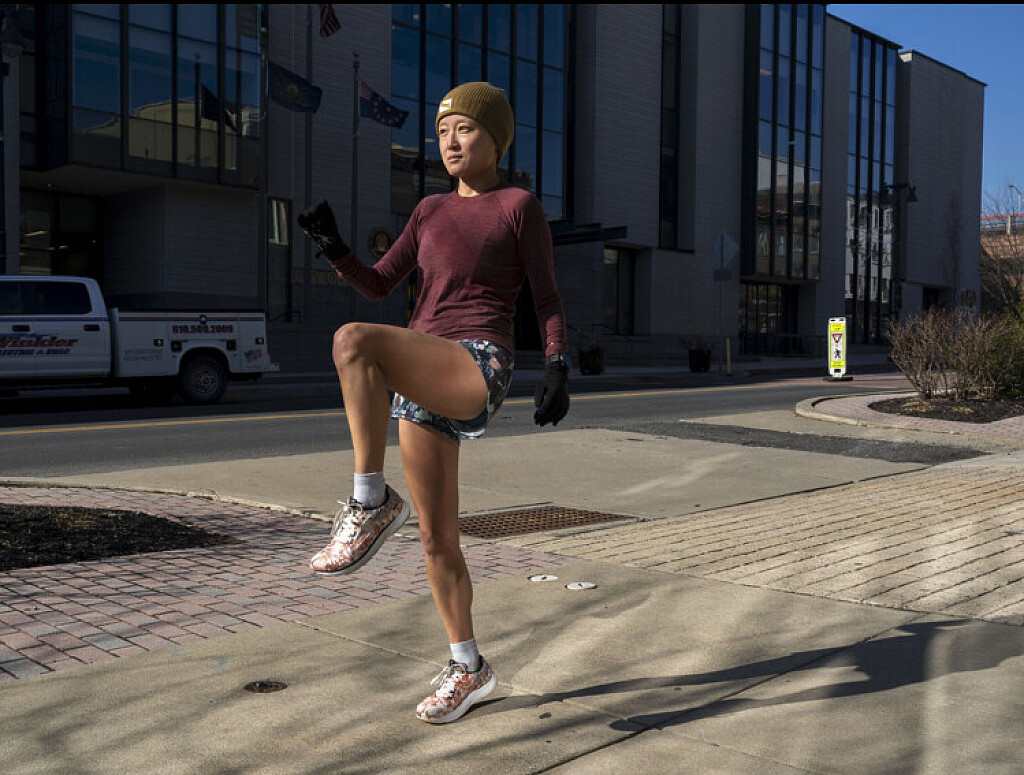


Is Running in Shorts in the Winter Bad for Your Knees?
Gear editor Amanda Furrer learns that running like it’s summer year-round can actually be harmful.Always one to resist the call of running tights, I’ve been donning shorts for every run. Lucky for me, we’ve managed to have a relatively mild winter. However, it’s a sure thing I’ve become that crazy lady about town, exposing her knees running in below-freezing temps like it’s 55 degrees. I am the symbol of forever spring, the promise of summer, the speed demon reassuring worried friends and strangers, “If I get cold, I’ll just run faster!”
While charging down the snow-dusted path in denial of the changing seasons, I can’t ignore the dull ache I feel in my knees every run. It started as a small bother and morphed into a full-blown, “But am I actually doing irreparable damage by running in shorts in this bone-chilling cold?”Cold Tolerance Is a Factor
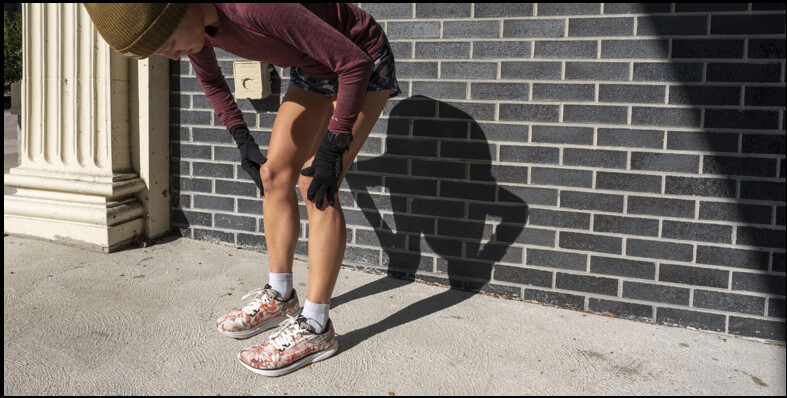
According to Davis, who is a physiatrist of non-operative medicine at Tufts University School of Medicine in Boston, the definition of “cold” and if it’s safe to run outside without your legs covered is relative. Besides low air temperature, other conditions to consider before suiting up and heading out are wind chill and precipitation. Individual characteristics also come into play, including a runner’s body composition and how hard they’re exercising—“the more energy you expend, the more you’ll heat your muscle tissues,” said Davis to RW on a phone call, proving my quip that running faster is keeping me warmer. But that doesn’t mean you should start sprinting right out the gate.
Davis compared cold’s effects on tissues to the elasticity of a rubber band. Just as stretching a rubber band in the cold will cause it to snap, this lack of flexibility can lead to performance decrements or even potentially a slightly increased risk of injury if you’re not adequately warmed up and protected. Skin coverage factors in, as well. “Shorts versus pants or tights will certainly affect the warmth of the tissues themselves,” said Davis. “Tissues, when they’re exposed to cold, particularly at greater levels, lose some of their ability to do certain things. You’ll have decreased muscle force, decreased ability to contract, decreased velocity so the nerves will fire slower, and decreased pliability of tissue.”
Arthritis and Aging Could Be Culprits
Runners with arthritis may notice joint pain as the weather changes due to decreased blood flow. The change in barometric pressure, said Davis, can also cause tissues to swell and increase pressure in certain areas. Other pre-existing conditions, such as tissue damage, can lead to increased wear on the joints, higher risk of pulling a muscle, “or even falling or twisting something just because you’re not able to react as quickly,” said Davis. Appending that to my list of hypnic jerk nightmares.
Continuing to dash my dreams of wearing shorts year-round, Davis named the offender that will eventually come for us all: time.
“As we age, we lose cushioning on our cartilage over time,” he said. “This ‘wear and tear’ doesn’t necessarily mean that you have some advanced arthritis—it may be something you can’t even detect on an X-ray or MRI. But as with everyone, things are kind of stiffening up as we age.”
There is a chance your body will acclimatize to the cold, but warming up with dynamic stretching, starting slow, and wearing the right outfit will decrease your risk of injury. When considering apparel, runners should look for sweat-wicking material. Davis warns against fabrics like cotton that become damp with sweat, eventually causing increased heat loss.
Warm Up, Stretch, Repeat
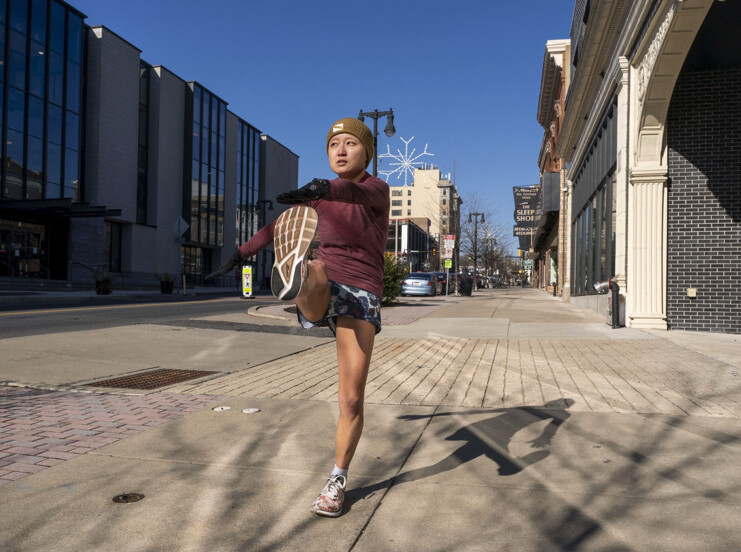
Updegrove, a physical therapist at St. Luke’s North Medical Center in Bethlehem, PA, recommends these three dynamic stretches. Do any or all of these exercises for two to three minutes, or longer. “The goal is to raise your heart rate and get your muscles warmed up,” said Updegrove.
High knees: Stand with feet hip-width apart, arms bent at 90 degrees at sides. Drive right knee up toward chest, driving left arm forward and right arm back, elbows still bent. Step foot back down and repeat on opposite side. Build speed so you're running in place, knees driving up as high as you can without leaning back. Go for 30 to 60 seconds.Toe and heel walking: Stand with feet hip-width apart. Lift heels off floor so you're on toes. Walk forward on toes at regular walking speed for 30 to 60 seconds. Then, drop heels and lift toes off the floor. Walk forward on heels for 30 to 60 seconds.
Frankensteins: Stand with feet hip-width apart. Kick left leg straight up, foot flexed and knee straight, reaching to touch toes with right hand, or as close as you can reach. Keep chest tall and core tight. (Don't bend forward or round shoulders to touch toes.) Step left foot back down. Repeat on other side. Continue alternating for 30 to 60 seconds.What to Do if Your Knee Pain Is Caused By a Fall
For actual knee injuries (those not caused by running in shorts in freezing temps), wait until your skin temperature goes back to normal before applying ice at home.
Said Updegrove, “If you feel that there’s a need to ice something, wait until your skin temperature goes back to normal. Make sure there’s no more redness, no more odd sensation [from being outside in the cold].”
Taking an ibuprofen or any other type of anti-inflammatory before a run may seem like a safeguard, but Updegrove warns against it.
“Generally we try not to have people running if they need to take ibuprofen or an anti-inflammatory during it,” he said. “If there’s some kind of injury and you just keep running on it, it’s going to get worse.”
Will I Change My Ways?
As I write this, the temperature is 22 degrees, with a 7-degree real feel. Despite Davis and Updegrove’s advice, I’m chafing at the mere thought of putting on running tights.
Which has me turn to plan B: Dreadmill, here I come!
(02/04/23) Views: 104Runner’s World
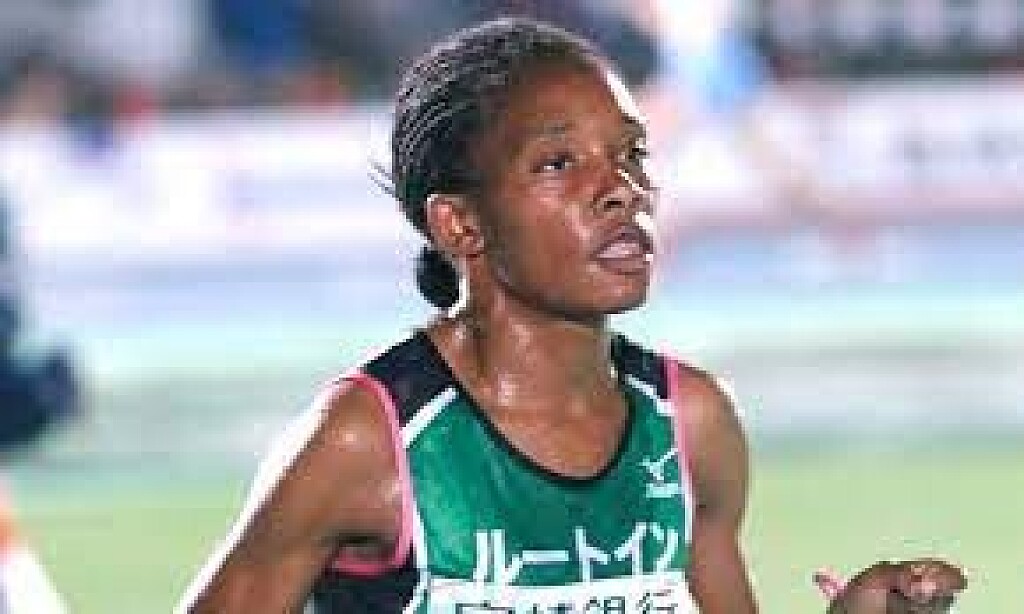
Pauline Kamulu and Alexander Mutiso Break Marugame Half CR
In its 75th anniversary race the Marugame Half saw new course records in both the women's and men's races and a near-miss on a new Japanese men's NR. Japan-based Kenyan Pauline Kamulusoloed a 1:07:22 CR to win the women's race by 49 seconds, 4 seconds under the old CR and her fastest time since her 1:06:56 for bronze at the 2018 World Half Marathon Championships. Rika Kaseda continued to climb the ranks among Japanese women with a 1:08:11 for 2nd, landing her in the all-time Japanese top 10. Australian duo Isobel Batt-Doyle and Sinead Diver were 3-4 just 2 seconds apart in 1:09:27 and 1:09:29.
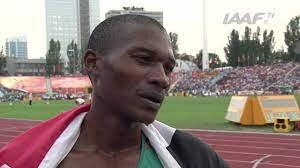

In the men's race a lead sextet of Japan-based Kenyans Alexander Mutiso, Cleophas Kandie and Andrew Lorot, corporate leaguer Tomoki Ota, and collegiate runners Kotaro Shinohara and Reishi Yoshida went through 10 km together in 10 km before splitting into two groups. Lorot fell off the front group before 15 km and Yoshida off the back group by 15 km, leaving Mutiso and Kandie head-to-head up front and Ota and Shinohara on NR pace. In the last kick Mutiso got the win 30 seconds under the old CR in 59:17, the fastest time ever run in Japan, with Kandie 1 second behind him. Lorot was a distant 3rd but only 7 seconds over the old CR in 59:54.
Ota and Shinohara couldn't hold it together over the final 5 km and faded just off the 1:00:00 Japanese NR, Ota taking 4th in 1:00:08. Shinohara, who runs for 2023 Hakone Ekiden champ Komazawa University, was 5th in 1:00:11, the fastest time ever by a Japanese-born collegian. Yoshida hung on to take 6th in 1:00:31, also under the old JPN collegiate best of 1:00:40 set by Shinohara's teammate Chikara Yamano last February. Along with Ota, the Toyota corporate team put two others, Minato Oishi and Kazuya Nishiyama, inside the top 10, both under 1:01:20, and one more, Yusuke Nishiyama, under 1:02 in 1:01:56 for 19th. All told 56 men were under 63 minutes, one of the better years in Marugame's 75-year history.
75th Kagawa Marugame International Half Marathon
(02/05/23) Views: 101
Brett Larner Japan Running News
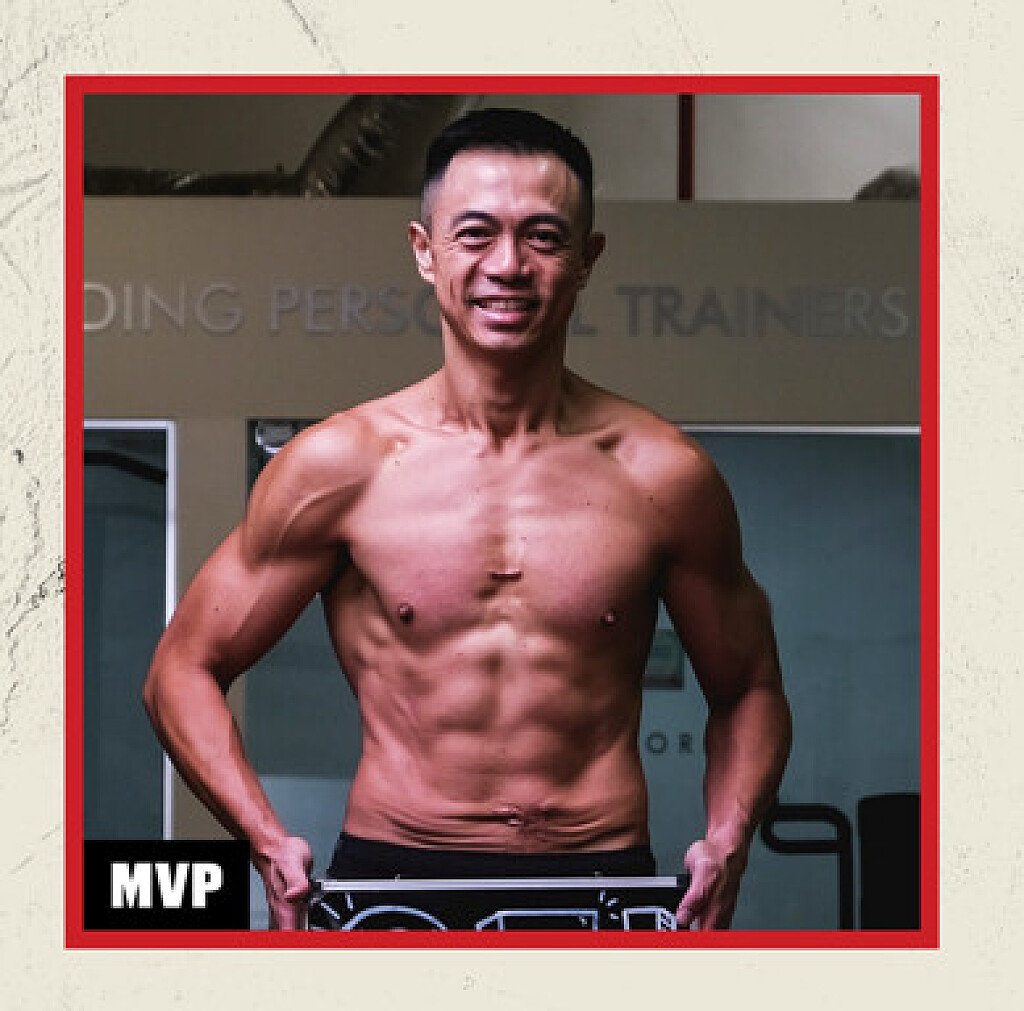
How Listening to Podcasts Helped This Guy Drop 55 Pounds
Tuning in turned walking time into productive time and helped boost Daniel Tan's weight loss and muscle gain.
I put on a lot of weight during Covid. Lockdowns were especially harsh in Singapore; the days were long and boring at home and we found that having good food and wine helped make things bearable. And working from home meant wearing a lot of t-shirts and shorts.
When we started to go back to the office early in 2022, I realized that I couldn’t fit into my work clothes. Probably more important, I was probably in the poorest physical state I had been in my life. I was on medication for hypertension. I wasn’t happy with what I saw in the mirror and knew that I could do better.
It was either buy a new wardrobe or make some serious changes. Ready to get myself back on track, I signed up with Ultimate Performance Singapore.
Before I got started, I didn’t have much of a diet routine. I’d skip breakfast, then eat whatever I wanted for lunch or dinner. As I mentioned, during lockdown I’d often share a bottle of wine for dinner. So I had room for improvement.
Protein, protein, protein
My new diet kept me at a caloric deficit while still giving me enough protein to support muscle growth. Since so many of my daily calories came from protein in my new way of eating, I ate fairly large volumes of food, which kept me full all day. I never actually felt deprived or starved even when I was in the low-calorie phase. (Find out more about protein here.)
My meals were a lot more disciplined than they used to be. I hit specific portions of protein, carbohydrates, and fat. For the first month or so, I had a set of three pre-planned meals per day, which I supplemented with a protein shake. Later on, I started experimenting with some recipes from the UP Cookbook. My trainer was great about mixing up my meals so I didn’t get bored of any one thing. I generally stuck with three meals a day, no snacks. I very conscientiously drank at least four liters (1 gallon) of fluid a day. And I had vitamins and other supplements.
Weights and walking
I had in the past dabbled with weight training, but nothing very serious. My form was probably all wrong. I met with my trainer for an hour on Monday, Wednesday, and Friday mornings. Each session, we’d hit all of the major muscle groups; we’d usually start with dumbbell or barbell presses, then go on to legs, back, shoulders, and arms. I also took brisk walks every day; we started with a goal of 10,000 steps a day, which I gradually pushed up to 16,000 or more.
I’ve realized that walking as a weight-loss tool is severely underrated. I firmly believe that all the steps I put in were key to my transformation. The best part about walking is that it’s already a part of our normal lives—all you need to do is just walk farther and longer. I listened to podcasts while I walked, which made it feel like productive time. I wore out a brand new pair of sneakers in about 4 months!
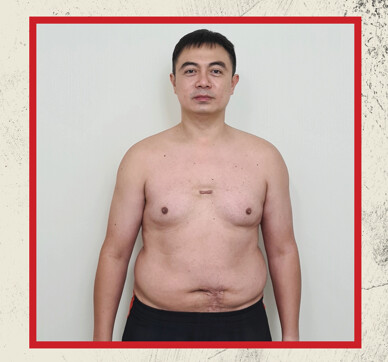
In eight months I lost 55 pounds (25 kg), and my body fat percentage dropped from 35 percent to 11 percent. I’m not sure how much muscle I gained, but I am definitely much stronger than when I started!
It’s given me a real boost of confidence. I didn’t think I really had any mental blocks, but after this transformation, I have so much more belief in my physical abilities. I’ve internalized a lot of my trainer’s knowledge about form and paying attention to my body, which also makes me feel more in control. It really helped to have an expert in my corner.
My blood pressure has also improved significantly, and my doctor has agreed to start weaning me off of my blood pressure medication. Fingers crossed that soon I’ll be able to come off it completely. I also noticed that skiing doesn’t leave me with the same muscle aches that I used to get—my core and quads are a lot stronger.
This is still a work in progress. I have set a new goal of bulking up and packing on muscle. That means a completely different diet regimen, and it’s been interesting seeing how my body responds to this new phase.
Diet was such an important key for me, as it really is for anyone. I had to have a sustainable, healthy diet that didn’t leave me feeling starved. And I wanted food that tastes good! Having someone who knew how to make all of that work with my workout plan and fitness goals was invaluable. Left on my own, I’d just have been shooting in the dark. Instead, I’m transformed—and I’m just getting started.
(02/05/23) Views: 100Men’s Health
Zeyituna Husan and Ibrahim Hassan Break Beppu-Oita Mainchi Marathon CR
In its 71st edition the Beppu-Oita Mainichi Marathon saw new course records in both the women's and men's races. On a cold and slightly windy day Japan-based Ethiopian Zeyituna Husan took advantage of the big crowds of amateur men at her pace, going through halfway in 1:14:44 en route in her debut to win in 2:31:41. Her time took 1:19 off the previous record set in 2018 by Hiroko Yoshitomi.
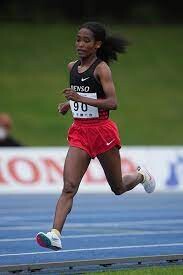
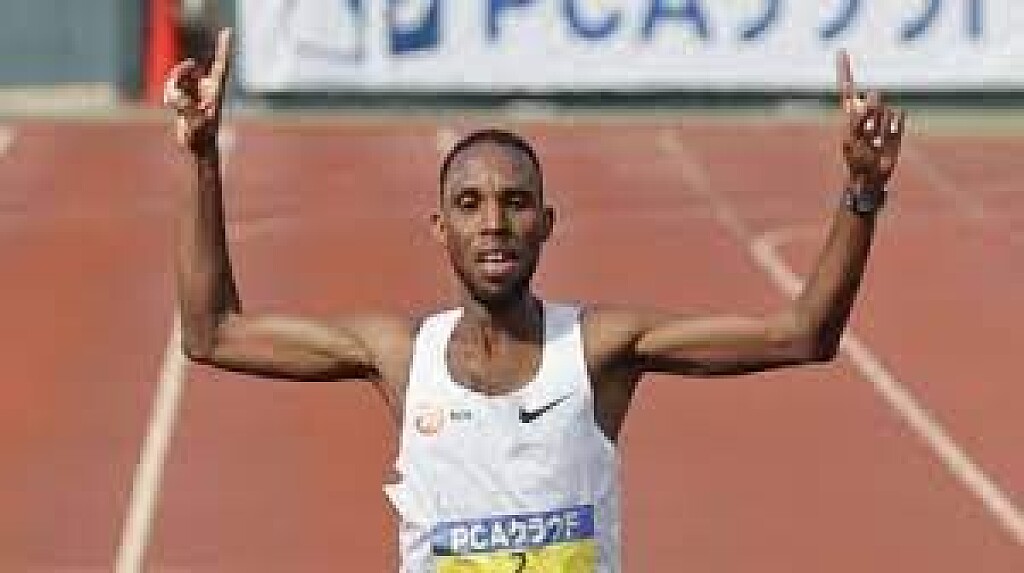
Excellent pacing that saw every 5 km split through 30 km in the men's race land in the 15:01 to 15:03 range and a big pack that rolled with it set up a tough last 12 km. Djibouti's Ibrahim Hassaninched it up a notch as soon as the pacers were done, covering the next two 5 km in 14:59 each. That gave him a short lead over Kenyan Daniel Kipchumba, but Hassan almost lost it. Deeply in the zone, he didn't notice the turn into the stadium for the track finish and ran into the back of the camera truck. Kipchumba surged to take advantage of Hassan's loss, but Hassan managed to pull it back together and hold on for the win by 5 seconds in 2:06:43, a negative split even with the lost time. Hassan's time broke the Djibouti NR, set 9 years before he was born, by 24 seconds, and was the first 2:06 in Beppu-Oita history, beating last year's CR by 1:04.
The main Japanese pack couldn't match that closing speed over the last 12 km, but both 3rd-placer Tsubasa Ichiyama, 2:07:44, and 4th-placer Shungo Yokota, 2:07:47, bettered or tied the old CR. The 22-year-old Yokota also had the distinction of breaking the 2:08:12 collegiate marathon record set in 2003 by current Chuo University head coach Masakazu Fujiwara. 5th and 6th-place Kento Kikutani and Shin Kimura made it under 2:08 as well, with the next three under 2:09 and another four sub-2:10.
Ichiyama, Yokota, Kimura and 7th-placer Tsukasa Koyama all joined the ranks of qualifiers for October's MGC Race Olympic marathon trials, with 10th-place Naoya Sakuda and 13th-place Kazuki Muramoto also making it in through the two-race sub-2:10 average option. 9th-place Yuichi Yasui, 11th-place Takashi Ichida and 12th-place Riki Nakanishi all broke 2:10 in Beppu but will have to try one more time before the end-of-May qualifying deadline to hit the two-race standard. The Ottawa Marathon should be packed with Japanese men shooting for that desperate last chance.
71st Beppu-Oita Mainichi Marathon
(02/05/23) Views: 99Brett Larner Japan Running News
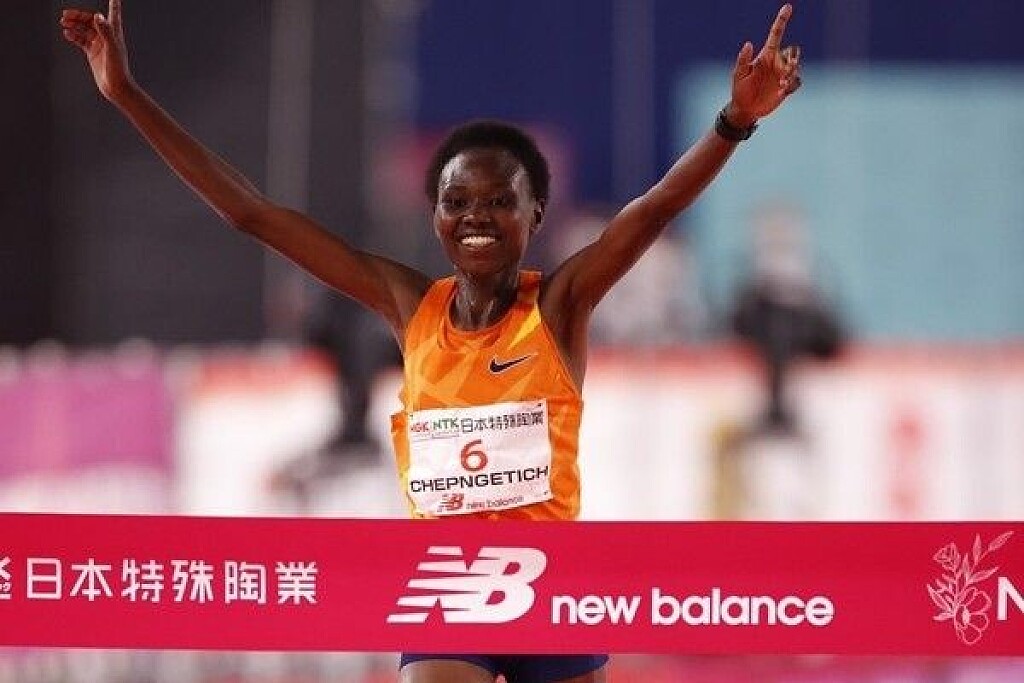
Ruth Chepngetich says her next focus is on defending her Nagoya Women’s Marathon title
World Half Marathon record holder Ruth Chepngetich says her next focus is on defending her Nagoya Women’s Marathon title in march after clinching the National Cross Country title at the Kenya Prisons Training College.
Chepngetich clocked 0:32:56 in first place, ahead of the 2016 Africa 5000m champion Sheila Chepkirui (0:32:58) and Zena Jemutai (0:33:06).
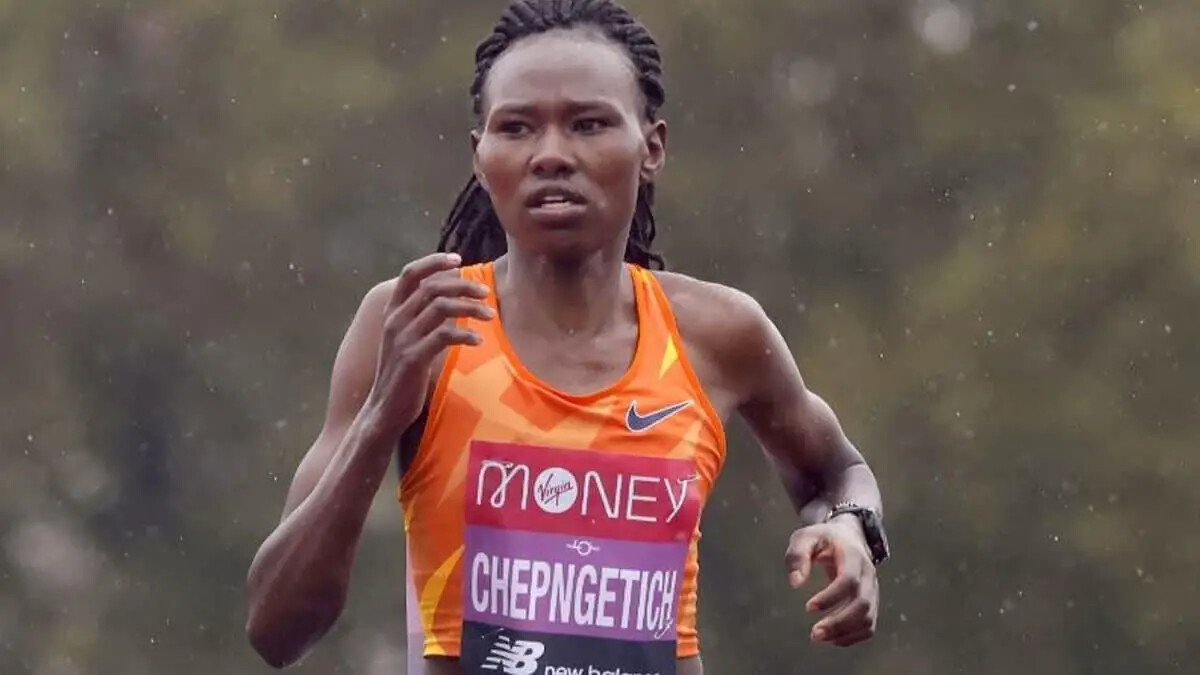
“The race was not easy but I am happy I managed to hold on and win. I am preparing to go and defend my title at the Nagoya Marathon in March and running in this competition today was a good way to prepare myself,” the 2019 World marathon champion said.
The two-time Chicago Marathon champion, who was competing on behalf of Kenya Prisons athletics team, spoke of how she has become a better athlete by running in cross country races.
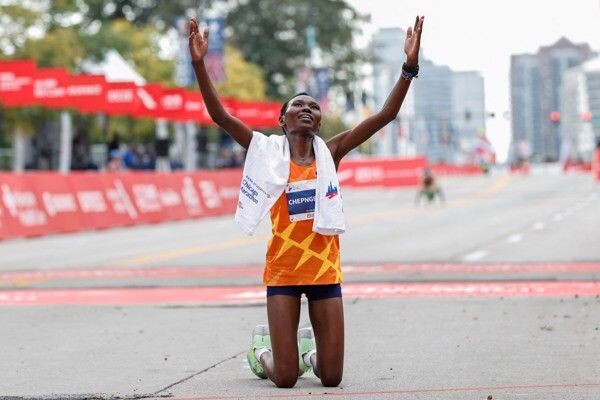
“It is my favorite race because it sharpens me physically and psychologically prepares me for more battles ahead. It is never easy, I admit…and you will always feel a lot of pain,” she said.
On the other hand, Chepkirui, who made her debut in the 42km races in December last year, is preparing for a shot at the Boston Marathon title in May – to improve on her third-place finish at Valencia Marathon.
“My eyes are on Boston…it will be my second ever marathon race and I want to do well. So, it means going back to the drawing board to intensify training because it will not be easy battling against other elite athletes,” the Kenya Defense Forces athlete said.
(02/04/23) Views: 96Athletics Kenya
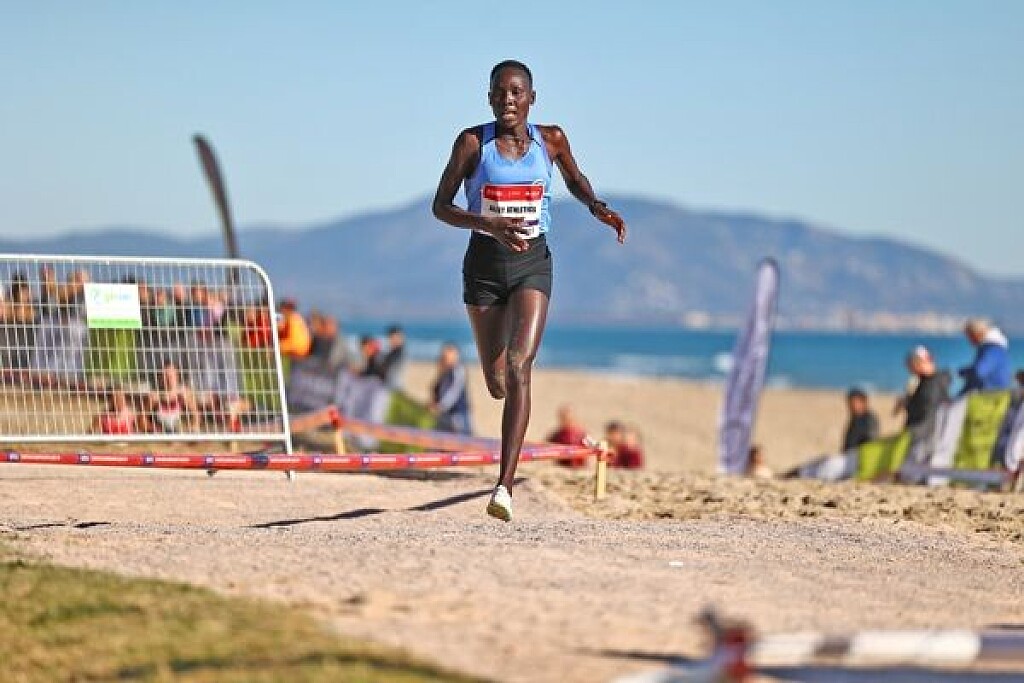
Lohalith takes surprise win in Castellon, marking first international victory for Athlete Refugee Team
Athlete Refugee Team member Angelina Nadai Lohalith claimed a shock win at the European Champion Clubs Cup Cross Country in Castellon, Spain, on Sunday (05), marking the first time that an athlete in the World Athletics refugee team programme notched a victory in an international competition.
Lohalith, a native of South Sudan who is based in Kenya, surged from the field after four laps of the five-lap contest, clocking 27:55 over the 8.7km course to secure a five-second victory. Running confidently at the head of the pack from the gun, Lohalith pulled ahead after three laps and extended her lead to six seconds after the fourth lap before crossing the line unchallenged.
Lohalith, who was a member of the 2016 and 2021 Olympic Refugee Teams, was competing in Castellon as a guest for Tel Aviv’s Alley Runners Club, where several other Athlete Refugee Team members are based.
The 28-year-old is the Athlete Refugee Team’s most experienced runner.
Lohalith made her Athlete Refugee Team (ART) debut at the 2017 World Championships in London and in 2022 represented the Athlete Refugee Team at the World Indoor Championships Belgrade 22, the African Championships and the World Athletics Championships Oregon 22, competing over 1500m.
Lohalith's next international appearance will come at the World Athletics Cross Country Championships Bathurst 23, where she will compete with an ART quartet in the mixed relay.
Her appearance in Castellon was her first over a distance longer than 1500m, boding well for her planned transition to the 5000m and 10,000m events.
"After the World Championships in Oregon I came back to Kenya and I started to work harder towards my goal to succeed as a long distance runner,” Lohalith said.
“I am training hard all week – only training and sleeping. Even during Christmas, when all the athletes in the camp travelled back home, I stayed in the camp for training alone. I don't see my son and parents too often because I have a goal to improve further at the Olympics in Paris next year.”
Lohalith fled from her village in South Sudan at nine, settled in the Kakuma Refugee Camp in Kenya in 2002 and later began taking part in running competitions at her high school in the camp. Coaches for the Tegla Loroupe Foundation spotted her talent and invited her to join a training camp in Ngong, just outside Nairobi. In 2016, she was one of 10 refugee athletes selected to compete at the Rio Olympic Games under the Refugee Team flag, a selection that set the course for her steady rise since.
(02/06/23) Views: 94World Athletics
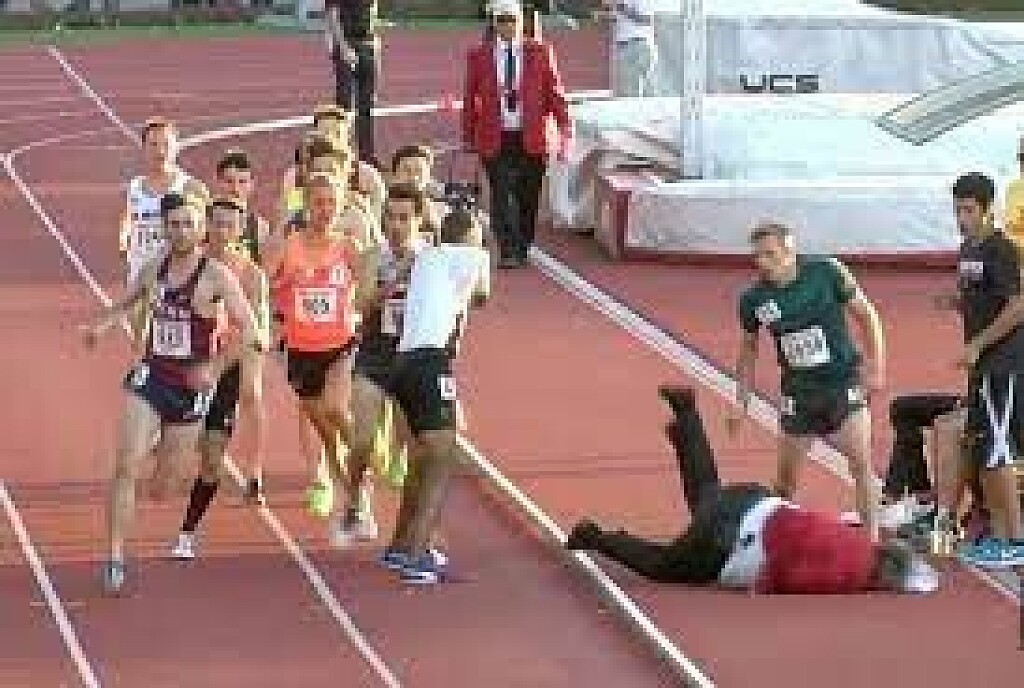
Relay team breaks record after collision with race official
Collegiate runners from the University of Montevallo in Alabama set a school record in the 4 x 200m relay at a race in Birmingham in January, but they took an interesting path into the history books. Moments after sophomore runner Amari Lewis took the baton to start his leg of the race, he collided with an official who was making his way across the track. Fortunately, the accident didn’t slow Lewis down too much, and he was soon back on his feet and charging around the track as if nothing had happened.
Lewis was third in line on his team, and when he got the hand-off to start his leg of the race, his team already had a healthy lead over the rest of the field. The official was ambling across the track at the first turn, and although Lewis couldn’t avoid him completely, he did manage to dodge what could have been a much worse collision for both men.
As seen in video footage of the race, Lewis clips the official, who falls down. Lewis was able to stay on his feet, and after a couple of strides to regain his composure, he was back in action. Despite the hiccup, Lewis carried his team’s lead to the line as he handed the baton off for the anchor leg. He and his teammates ultimately clocked a 1:32.89 to take the win and set the new University of Montevallo school record.
There’s no word on whether the official involved in the incident is OK. Fortunately, the athletes trailing Lewis didn’t run into or trip over the man, and by the time the bell lap came around, the track was clear, so odds are the only thing that was bruised was the official’s ego.
(02/05/23) Views: 93Running Magazine
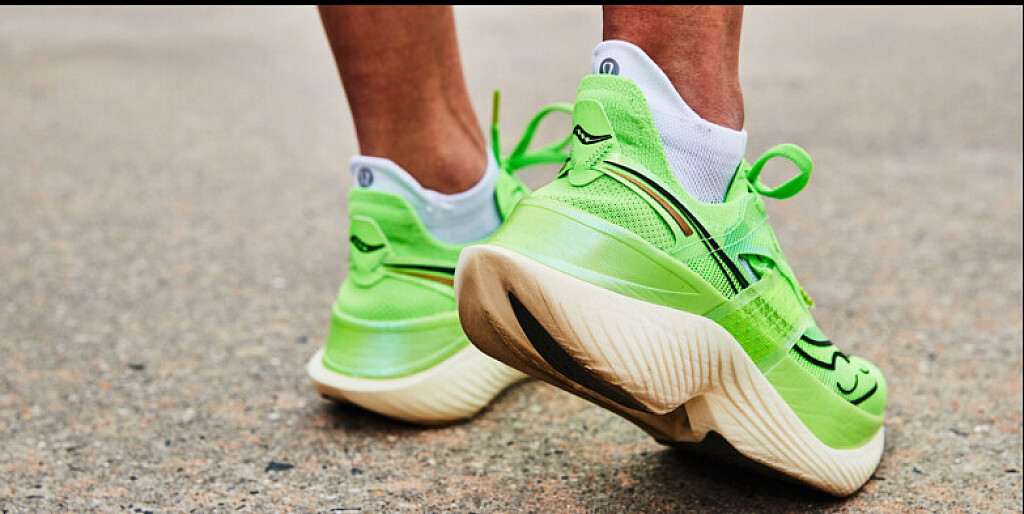
Do Super Shoes Give Regular Marathoners a Performance Boost?
Research shows economy gains at slower paces, but they’re smaller and not guaranteed.
It’s no coincidence that running records have been falling in droves in the era of super shoes. While researchers still may not be able to fully explain how the technology works, they have shown that the ultra-compressible foam, curved carbon-fiber plate, and rockered geometry that first appeared in the Nike Vaporfly 4% in 2017 provide competitive runners a 2.7–4.2 percent boost in running economy. In other words, thanks to these shoes, runners need 2.7-4.2 percent less energy to run the same pace—meaning that they can conserve that energy to run farther or expend it to run faster.
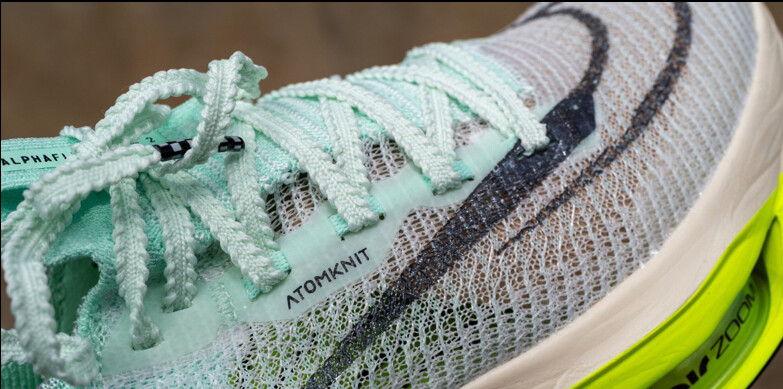
One caveat is that, until now, super shoes have been tested only at running speeds of 7:26/mile or faster. Translated into marathon times, that means the science is applicable to someone who runs a marathon in 3:15 or faster—a feat accomplished by only 21 percent of the 2021 Boston Marathon field.
However, new research has finally emerged that looks at whether the majority of runners get an edge from super shoes. The answer: probably yes, but less.
Research for Non-Elites
Dustin Joubert, Ph.D., a kinesiology professor at St. Edward’s University in Austin, Texas, likes to do research, in his words, “for the people.” This is how he came to conduct a study looking into whether super shoes, specifically the Nike ZoomX Vaporfly Next% 2, confer the same running economy advantage to athletes who run at slower paces.
“There’s a lot of people who don’t fit under the umbrella of the speeds that have been tested in all this laboratory research, and a lot of people are asking: Should I spend my money on this? Do they work for slower people?” said Joubert. “That was the next logical question to me.”
To answer the question, Joubert and his colleagues recruited 16 runners—eight men and eight women with prior-year 5K PRs averaging 19:06 and 20:18, respectively—and had them complete two sets of four 5-minute running reps on a treadmill. Each runner ran one set at a 12 kilometers/hour pace (8:00/mile, which would be marathon pace for a runner with a 5K PR of 22:15), and the other set at 10K/hour (9:40/mile, which would be on the slower end of easy pace for that same 22:15 5K runner). Within a given set, the runners tested two different shoes: they ran one 5-minute rep in an experimental carbon-plated shoe, the Nike ZoomX Vaporfly Next% 2, and the other rep in a control shoe, the Asics Hyper Speed. Then, the runners repeated the reps but reversed the order in which they wore shoes (e.g., Asics first, then Nike).
The researchers chose the Asics Hyper Speed as the control shoe because it lacks the technology of the Vaporfly (carbon plate and advanced foam) but matches its mass. This was an important variable to match because mass affects running economy; a heavier shoe will require more energy to move and could therefore confound results. One earlier study compared the Vaporfly to runners’ everyday training shoes, but most regular training shoes are more than 100 grams (3.5 ounces) heavier—the equivalent of about 40 pennies. Imagine lifting those pennies 55,000 times (the average number of steps in a marathon, for men; women take about 63,000 steps). That would require quite a bit more energy!
Economy Advantages for 3:30–4:15 Marathoners
The new study found that, on average, running economy was better in the Vaporfly than in the Hyper Speed. However, at these slower speeds, the improvements were smaller than at faster speeds: runners gained just 1.4 percent in running economy at 8:00/mile pace and 0.9 percent at 9:40/mile pace, compared to the 2.7–4.2 percent advantage runners gained at speeds of 7:26/mile or faster. (And, as we’ll see below, even those improvements came with a caveat.)
Joubert speculates that the reason for this difference comes down to how the foam in the shoes is working. Much of the running economy advantage comes from compressing the compliant/resilient foam in the shoes and then having that energy returned as the foam springs back. A faster runner who is generating larger ground reaction forces will compress the foam more than a slower runner who, because of their speed, isn’t generating as much ground reaction force.
“The shoe is not creating energy for you; it’s only giving back what you put into it,” explained Joubert.
Not Everyone Benefits
Before you decide “an advantage is an advantage,” there is one other finding from this study that should give runners pause. While the results from the 16 test subjects showed a 0.9–1.4 percent average improvement in running economy, one third of the participants actually showed worse running economy when they ran at the 9:40/mile speed in the Vaporflys, compared to the control shoe. This finding diverges from the results of testing done on the Vaporflys at faster speeds, where runners experienced varying degrees of running economy improvement, but no one saw a detriment.
One possible reason has to do with the Vaporfly’s carbon plate. Research has shown that increased longitudinal bending stiffness, or the rigidity of a shoe underfoot, helps to improve running economy at faster speeds by reducing the amount of energy your foot requires as you land and push off from the metatarsophalangeal joint (where your foot connects with your toes). Joubert hypothesizes that, at slower speeds, the stiff carbon plate might stop saving runners energy and instead create a need for more energy in order to get “up over” the plate.
“If the plate’s really stiff, maybe at these slower speeds that’s an impairment to economy,” Joubert said.
Nathan Brown, a doctor of physical therapy at Pineries Running Lab in Stevens Point, Wisconsin, and senior contributor at Doctors of Running, said that this finding in particular helps to reinforce the shoe selection guidance he already offers his patients and the runners he coaches.
“If your goal of picking a shoe for race day is to get faster, but there’s a 30 percent chance that you get worse, I care more about finding the shoe that you like to run in than the shoe that may or may not give you a benefit,” said Brown.
So, Should You Wear Super Shoes?
If you’re an 8:40-9:00/mile marathoner, what should you do? Do you gamble on being in the 66 percent of responders and plunk down your cash for a pair of super shoes? Or do you stick with what you have?
Footwear is ultimately a personal decision, so here are a few more points to consider.
Choose a shoe that’s comfortable.
If a super shoe feels uncomfortable, that might be an indicator that the shoe won’t help you make the economy gains you’re seeking. Joubert guesses that the comfort of your shoes could affect biomechanical aspects of your race-day performance, including economy. “I think if a shoe is uncomfortable, it’s probably not going to be economical,” he said.
Brown emphasizes focusing on comfort and confidence in a race-day shoe rather than “carbon [plate] or no carbon.” To determine whether it’s comfortable, Brown recommends trying your racing shoe in a few workouts and, if your goal race is a marathon, a few long runs in advance of race day.
“You want to feel comfortable [in the] shoe and confident psychologically,” he said. “To know what to expect on a long run from your race-day shoe can be a big deal for performance.”
Don’t wear a super shoe (or any one shoe) for every single run.
Heather Knight Pech, a decorated masters runner and coach for McKirdy Trained and Knight Training, tells every one of her athletes, from high schoolers to masters runners, to invest in a minimum of three pairs of running shoes: a trainer (e.g., Brooks Ghost), a lightweight trainer (e.g., New Balance Rebel), and a race-day shoe (e.g., Nike Vaporfly Next%). She then has them rotate among these shoes for several reasons. First, it decreases injury. Research has shown that runners who rotate their shoes decrease their injury risk by 39 percent compared to runners who wear the same pair for every run.
“Running is a repetitive motion, so you avoid overloading any one muscle, bone, or tendon,” said Pech. “And on the flip side, you’re simultaneously strengthening other structures by rotating your shoes.”
In his physical therapy practice, Brown has found that super shoes tend to reduce the loading on lower leg structures like the Achilles tendon and calf. As a result, he’s noticed a trend in repetitive stress injuries further up the chain, to the hamstrings and hip flexors, in runners who wear that shoe for most or even all of their runs.
The second reason Pech advises runners to rotate shoes is that it forces them to decide between shoes for a given run, which helps them gain a better sense of self-awareness. “We should be very dialed in to how we feel—that’s part of running training and racing,” said Pech. The saying she repeats is: different shoes for different runs for different days.
Look at a variety of styles and brands.
The Nike Vaporfly was the first high-stack carbon-plated shoe on the market, and as a result, it is arguably the most well known. Most brands now have a similar shoe, and while research shows they’re not yet up to par when it comes to running economy, that doesn’t mean different shoes won’t work better for certain runners based on foot anatomy, running stride, and even pure preference.
Pech points out that the Nike Vaporfly is a very high, very narrow, very bouncy shoe. The Saucony Endorphin Pro, on the other hand, she describes as “more stable underfoot, with firmer foam. It’s great for runners who want to feel the ground.” Meanwhile, the Asics Metaspeed, which is also slightly wider underfoot than the Nike Vaporfly, offers two versions between which runners can choose based on their running style: cadence (increasing their turnover) or stride (increasing their stride length).
“I think they’ve all caught up, in that, now, there are different shoes for different people,” said Pech.
Remember: economy isn’t everything.
While running economy does influence running performance, it’s only one small part; how well you eat and sleep, your level of anxiety, how consistently you trained, how well you tapered, and numerous other factors have an equal, if not greater effect on the time you ultimately run in any given race.
Therefore, if you’re a 3:30–4:15 marathoner and don’t want to shell out the money or risk finding yourself in the 33% “anti-responder” group, double down on some basics like pre- or post-run nutrition or even just sleep. Plus, when you beat your Vaporfly-wearing counterparts, you’ll never have to ask, “Was it the shoes?”
(02/04/23) Views: 92Runner’s World
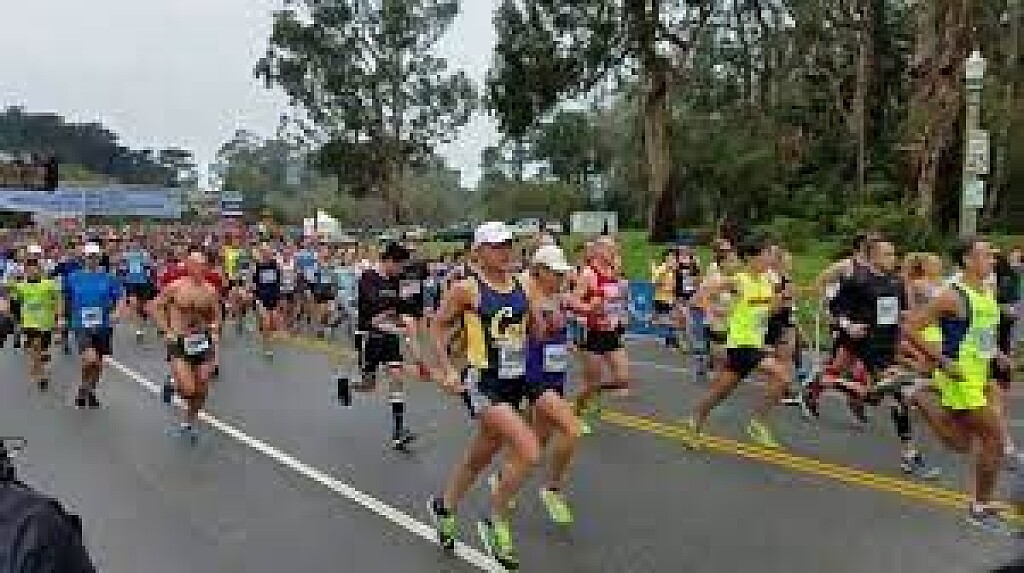
San Francisco Half Marathon returns for its 39th year this weekend
The San Francisco Half Marathon, 10K, and 5K presented by Pamakid Runners returns on February 5, 2023, after a renewal from title sponsor, Kaiser Permanente. This year marks the race’s 39th year running through the streets of San Francisco, and Kaiser Permanente’s 19th year as title sponsor.
The San Francisco Half Marathon started in 1983 and has become one of the city’s largest road races, with over 100,000 runners having crossed the finish line. Over the years the race has raised over $1 million which goes right back into the community. Registration numbers have rebounded to pre-pandemic levels as the race remains a long-time fixture on the Bay Area running calendar.
According to club President Jerry Flanagan, “Pamakid Runners take great pride in promoting a healthy lifestyle and supporting our local community and charitable causes through our participation, volunteering, and financial support. Through the continuing success of the Kaiser Permanente San Francisco Half Marathon, Pamakid Runners was able to donate over $120,000 in 2022 to many local and regional nonprofits. More to come in 2023!”

This year, the race’s charity partners include Girls on the Run, Salvation Army Harbor Light, Running for a Better Oakland, and Support for Families of Children with Disabilities.
Kaiser Permanente’s ongoing support has been instrumental to the success of the event. Over 100 Kaiser Permanente employees are involved in executing the race’s medical plan, ensuring a safe race day experience for all. “We approach the runners as if they were patients in our office. On race days, we see everything from minor injuries, such as scraped knees and sprained ankles, to hypothermia and shortness of breath. Our Kaiser Permanente health professionals work to assess and treat any issues,” says Race Medical Director, John Touhy who is a Kaiser Permanente San Francisco sports medicine physician.
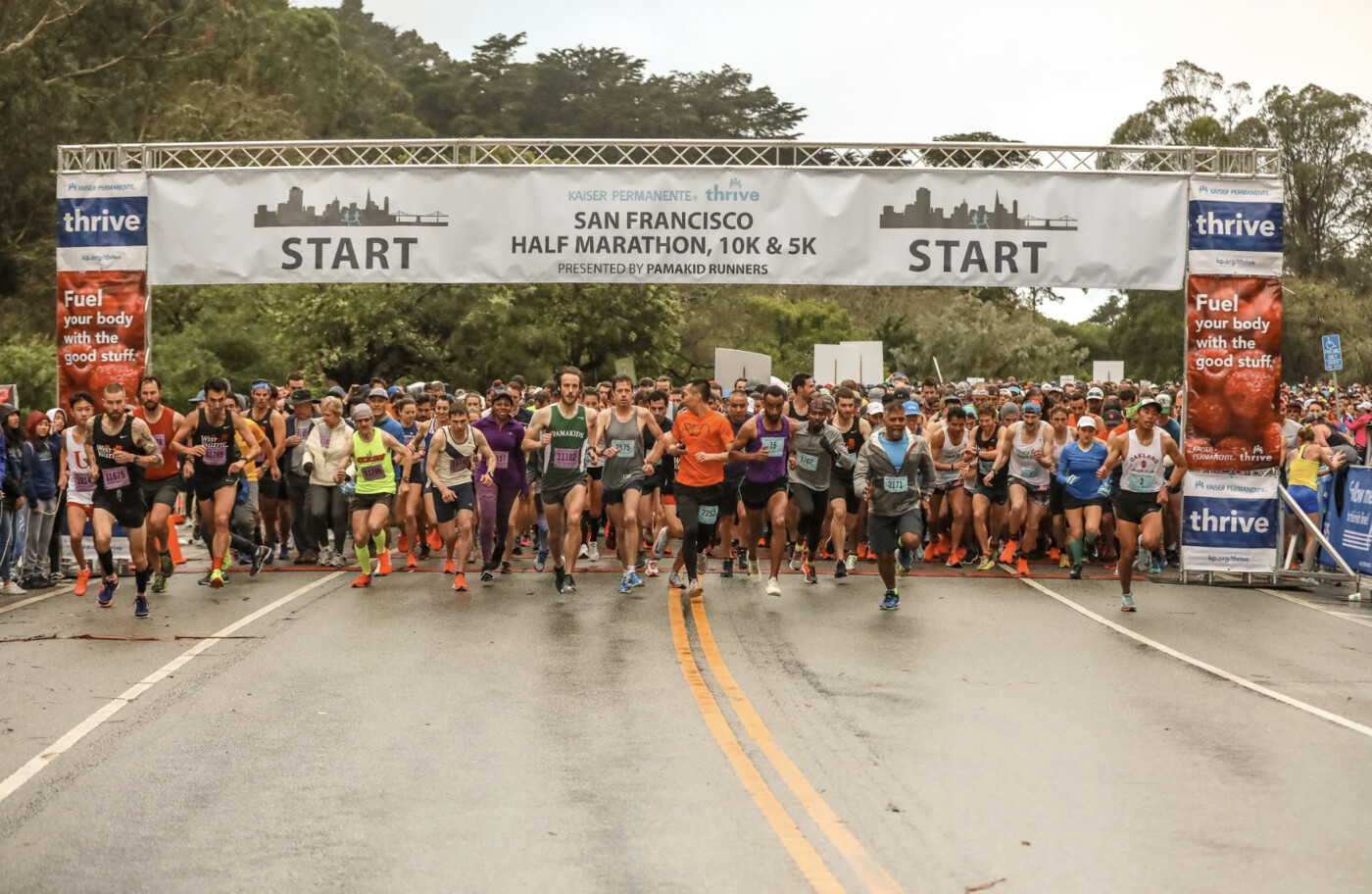
The 39th annual race, produced by Blistering Pace Race Management, is Sunday, February 5th in Golden Gate Park with three distances to choose from including a 5K, 10K, and Half Marathon. Registration is available at www.sanfranciscohalfmarathon.org
About Pamakid Runners: Established in 1971, the Pamakid Runners strive to promote a healthy lifestyle, support the running community and charitable causes by organizing, volunteering, and participating in running-related and social events in the San Francisco Bay Area. Visit www.pamakidrunners.org for more information.
About Blistering Pace Race Management: Founded in 2016, BPRM works in a variety of race management capacities, ranging from staffing to full operational oversight. Clients include the Kaiser Permanente San Francisco Half Marathon (10K & 5K), the Kaiser Permanente Napa Valley Marathon and Half Marathon, the Big Sur Marathon Foundation, Chicago Event Management, and the New York Road Runners. For more information, visit www.blisteringpace.com
(02/04/23) Views: 92Running USA
Five ways to stay motivated in the middle of your training build up
When it comes to training, the end goal of your A-race is sometimes so far in the future that it can be easy to lose focus and motivation. At first, reminding yourself of why you started working so hard may be enough to kick you into gear, but soon enough, you may find yourself feeling less and less motivated as the weeks drag by. If you don’t do something to nip that in the bud and climb out of that rut, then you may make it to race day grossly underprepared. To avoid crashing out before your big race, here are five ways to stay motivated in your training build.
1.- Add another race or a TT to your schedule
Your A-race may be your main goal for the season, but that doesn’t mean you can’t add more to your schedule. If you find your motivation waning, signing up for another run could be just what you need to revamp your competitive drive and desire to train. You don’t even have to sign up for a real race. Instead, you can run a time trial. The key here is to act like your individual time trial is an actual race. Pick a date and work toward it.
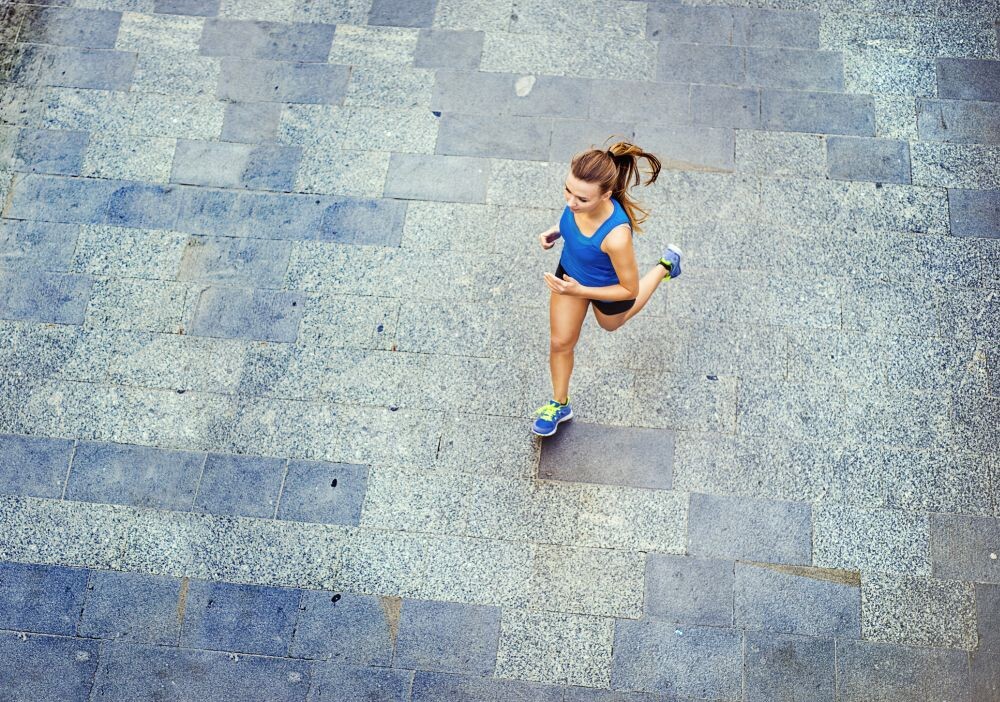
The morning of, go through your normal race-day routine. Tackle the time trial like you would any other race. By the end of your race or time trial, you’ll likely be hungry for more, once again motivated to work toward your ultimate goal.
2.- Try different types of cross-training
You should be doing some cross-training anyway, but if you’re not, adding some non-running workouts to your schedule is a great idea. Cross-training will not only help you stay fit while relieving your body of some of the physical stress caused by running, but it is also a great way to break out of the monotony of your everyday training schedule. Hop on the bike, go to the pool, try out a rowing machine at the gym—whatever you choose, it will be a welcome break from running your same old routes around town while still helping you improve your fitness.
3.- Get a training partner
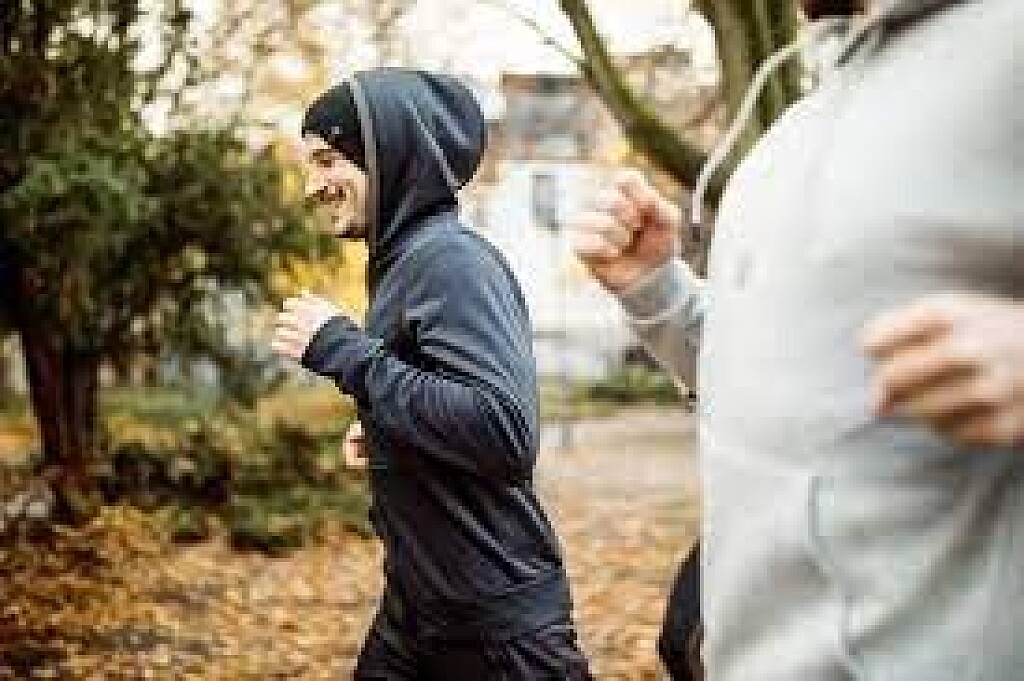
Lots of runners work out solo, but if you find yourself lacking motivation, getting a training partner or joining a running group may be a good way to fall back in love with running. When you have a set running date with a training partner or a group, you’ll feel obligated to get out of bed and get to work. This feeling of obligation will soon turn to anticipation and excitement, as you’ll look forward to joining your friend(s) for your weekly run meetup.
4,- Set incremental goals
Setting a long-term goal is great, but they’re not the only goals you should consider for yourself. With a long-term goal, the payoff is months away, but if you set incremental goals that will help you reach that ultimate objective, you’ll give yourself regular validation throughout training. Aim to hit PBs in training, to get faster at specific workouts and to lengthen your long runs. Whatever the goals may be, they will give you something to chase in the moment every day.
5.- Update your listening library
Sometimes your lack of motivation will be due to boredom, and that might be cured by adding to your music or podcast library. You’ve already been training for months, and if you’ve been listening to the same music or shows day in and day out, you’re probably getting sick of them (even if you might not consciously realize it). Look for a new playlist, a new album or a new podcast to keep you entertained next run. It may just be the key to you getting re-energized in training.
(02/03/23) Views: 91Running Magazine
