

Running News Daily
Top Ten Stories of the Week
1/22/2022
These are the top ten stories based on views over the last week.



Peter Mwaniki sets new record at the KATA 10k Time Trial monthly series in Thika Kenya
The 5th Kenya Athletics Training Academy (KATA) 10k Time-Trial took place on Wednesday morning (Jan 19) with Peter Mwaniki (first photo) and Solomon Gachoka (third photo) ruling the event.
The monthly event, held on the same course as December, witnessed Peter set a new course record clocking 29:40 bettering Solomon’s 29:44 time set at the 4th event December 19.
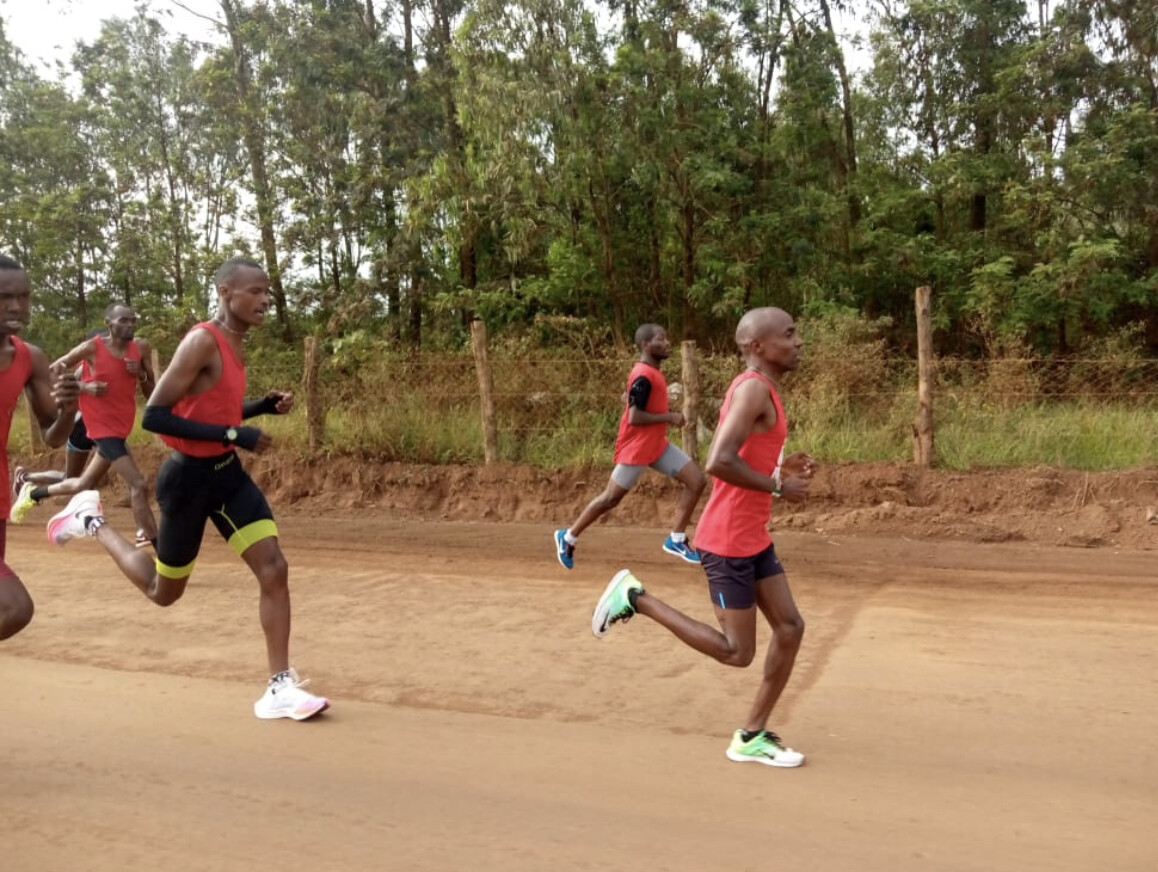
This was also an improvement for Peter from his December’s 32:00 that he did after competing in Europe for three months.
It was also a good day for Zakariah Kirika and Eston Mugo who finished 4th and 8th after the duo attained their Personal Best times over the distance.
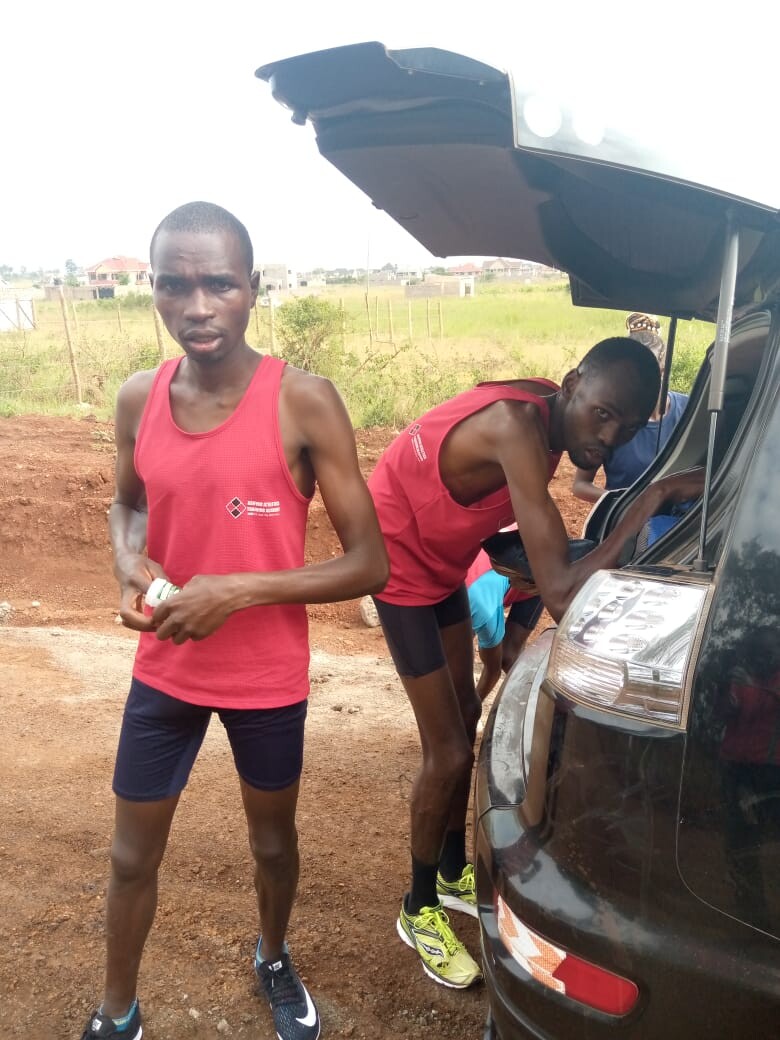
Zakariah clocked 30:41.94 compared with his December’s 31:27.60 while Eston managed 31:28.14 from his previous 32:32.26. Also Alfred Kamande improved on his PB of 35:44.47 to record 35:16.47. Elvis Kuria also ran well clocking his best time of 36:19.19 where he had 41:06.06 previously.
"I am glad to see our KATA athletes (both those living at our Academy and those living nearby) improving," says director Bob Anderson. "Our training program is working with two runners under 30 already and sub 29 not far off. Congrats to Peter for setting our KATA Time Trial record and to all the others who set PB today."
In the less competitive ladies category, in the absence of December winner Lucy Mawia, Catherine Njihia retained the title in 36:54.04 after her opponents Susan Wambua, Risper Kawira and Margaret Wanjiru arrived late for trial.
The 6th edition of the KATA 10k Time Trial, will take place on Wednesday 16th February 2022. Athletes not currently training at KATA are welcome. There is no entry fee, no prize money but this program gives athletes an official time, run on an accurate course and the results published by My Best Runs, the sponsor.
5th KATA Time-Trial January 19th 2022
Full Rests
Position Names Age Time
1. Peter Mwangi-------23------29:40.7
2. Solomon Gachoka—31-----29:52.3
3. Elisha Tarbey ----------27---- 30:34.3
4. Zakariah Kirika--------20-----30:42.0
5. Joel Maina-------------36-----31:07.3
6. Peter Mburu----------26-----31:23.7
7. Eston Mugo-----------29-----31:28.2
8. Erick Mutuku---------19-----31:49.1
9. Isaac Nderitu---------30-----32:11.9
10. Erick Cheruiyot------ 26 ----32:27.8
11. Fredrick Kiprotich---23----32:37.9
12. Robinson Mwaura---29----34:20.0
13. Geoffrey Mwangi----40----34:20.7
14. Paul Ng’ang’a---------42----34:32.0
15. Alfred Kamande----- 24----35:16.5
16. Collins Kemboi-------23-----35:19.4
17. Elvis Kuria-------------20-----36:19.2
18. Simpson Njoroge--- 38 36:53.5
19. Catherine Njihia-----22-----36:54.1
20. Raphael Gacheru ---22 --37:56.7
(01/19/22) Views: 261Coach Joseph Ngure
What it takes to become a Kenyan distance champion
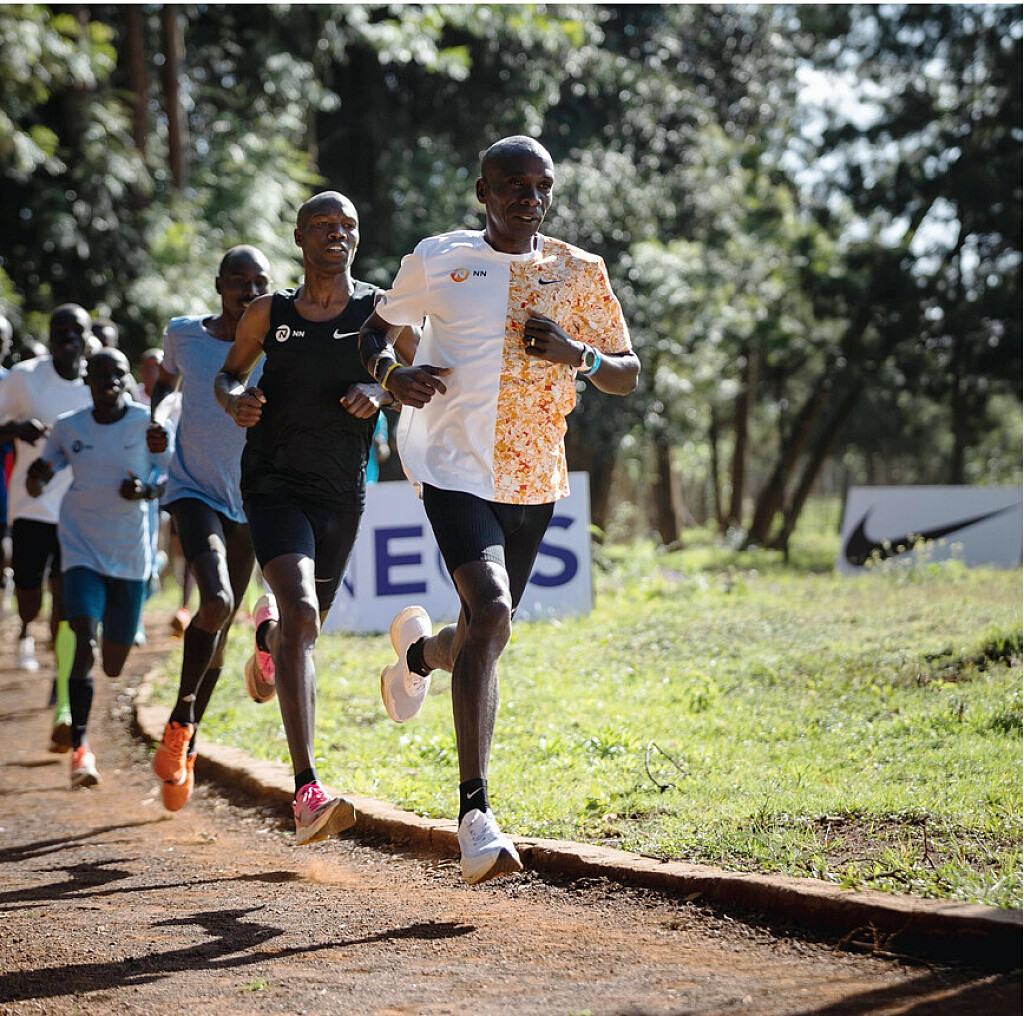
For several generations now, Kenya has produced many of the world’s greatest distance runners.
Many athletes from elsewhere in the world, meanwhile, have tried to tap into the secrets of Kenya’s success as they try to play catch-up – quite literally – with the east African nation that continues to churn out global medallists and world record-breakers.
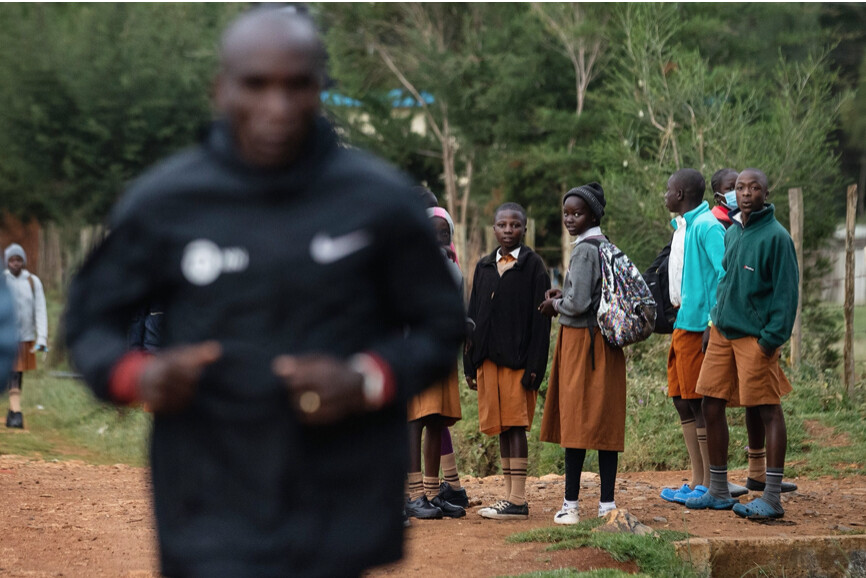

The truth is, there is no one single reason why Kenya is so dominant in distance events. It’s more down to a combination of factors, many of which were explained during a recent trip to the NN Running training camp in Kaptagat, about 24km east of Eldoret, where the likes of Eliud Kipchoge trains for 11 months of the year.
A way of life
There are few countries where people live and breathe athletics, and where the No.1 Olympic sport can claim to be more popular than football, filling entire stadiums even for age-group championships.
And while Kenya isn’t the only country in the world where kids run long distances to get to school, running has a whole different meaning to many people in the country.
Running is something that comes naturally to us as it’s something that has been part of our lifestyle since we were born,” says three-time world half marathon champion and two-time New York City Marathon champion Geoffrey Kamworor. “As a kid, I used to run from home to my school three kilometres away back and forth each day, so you end up running sometimes 12 kilometres a day as a teen without even realising it.”
Beyond being a means to an end, there is also a genuine love for running among the Kenyan population.
“As a kid, I would always go and watch athletics competitions when not at school and I enjoyed watching people competing,” added Kamworor. “It awoke my passion for running, especially seeing people cross the finish line and winning a trophy. In high school, it was always a fun and proud moment to represent your class and win a cup. I found it very encouraging.”
Having running embedded into day-to-day life sets Kenya apart from many other nations. But it’s just one of the many reasons why it is known as being the ‘home of the champions’.
Genetics
Simply running to school each day doesn’t automatically turn everyone into a world-class athlete. Genetics, as it does for every elite athlete, likely play a significant part.
Many people in the Rift Valley, where most of Kenya’s top distance runners originate, belong to the Kalenjin tribe. When compared to other Kenyan tribes, Kalenjin people are often described as having good natural running attributes: namely lean bodies and long legs.
Kipchoge, for example, isn’t particularly tall (1.67m / 5ft 6in), but the muscles on his legs are incredibly lean, his body fat percentage is low, and the strength in his feet make it appear as though he bounces along the grass.
But attributing all of Kenya’s success to just their genetics would be a gross over-simplification.
Conditions
Another element that helps Kenyan athletes in their training and preparation is the unique climate and surroundings in this part of the country. It also probably explains why there are so many training camps between Kaptagat and Iten, and why some people refer to it as the ‘Hollywood of elite runners’.
This region is located at 2500 metres above sea level, which, given the lack of oxygen, helps athletes produce a higher concentration of red blood cells and haemoglobin when training. This, in turn, gives runners an advantage when they return to lower altitudes to race.
The Eldoret region is also full of endless forests and dirt roads for athletes to use when running, while the area also enjoys a temperate climate with daytime temperatures ranging between 22-26C (68-78F) throughout the year, dropping to 10-12C (50-53F) at night time. That, combined with the good air quality, makes the area something of a distance-running paradise.
But as Kenya’s economy continues to develop, so do the local villages and the wider region, meaning many of the local dirt paths are now being made into proper roads – which is great for facilitating transport and access from other points of the country, but less so for athletes seeking a run-friendly surface.
Athletes are adapting well to this evolving environment, though, while remaining in close contact with nature. The Kalenjin community, Kipchogeand Kamworor included, are running many tree-planting initiatives. “We evolve in a very natural environment which is a great advantage when it comes to training,” says Kamworor.
Patrick Sang, the 1992 Olympic silver steeplechase medallist and head coach at the Kaptagat training camp, explains how the new generation of running shoes can help counter the effects of running on harder roads.
“New running shoes help a lot because athletes can now do a lot more training on a hard surface and still recover on time to do their next hard session,” says Sang. “Overall, you can get more work done to help improve performance.”
Sleep, eat, train, repeat
Most world-class athletes are fully committed to their sport, but the elite runners at the Kaptagat training camp in particular take dedication to a whole new level.
Many of these athletes – including young mothers such as two-time Olympic 1500m champion Faith Kipyegon – have children who are at home during the week so that they can entirely focus on their training at the camp.
“Of course, it’s very hard but that’s the only way to be fully dedicated to being the best athlete you can and avoid any distraction,” said Kipyegon.
When not running, athletes at the Kaptagat training camp are focused entirely on other elements of their training, namely recovery and nutrition.
“When you are at the camp, your sole focus is on running and you are not distracted by anything else,” says Kamworor, father to five children, including young triplets. “You are away from your family, your wife and your kids during the whole week, and that makes you take your training very seriously as you are making sacrifices to achieve your goals. That’s the only way to be focused 100% on running and to give your very best.”
As in any walk of life, hard work and having the right mind-set are key to success. Kipchoge might be the most successful athlete at the camp, but Sang says that’s not just down to his talent. “Eliud isn’t the most gifted athlete within his training group but certainly the most dedicated,” Sang says of Kipchoge, who is always the first one ready for training and the last one to leave.
In an average week, athletes at the Kaptagat camp do one long run of 30km (once a month it will be 40km), which usually takes place early on a Thursday morning. Typical track sessions, meanwhile, would be something like 8x1600m (each rep completed in 4:40) and 8x400m (at an average of 65 seconds) on their local 380m cinder track.
“Have you seen him?” Sang says when watching Kipchoge train. “This guy is a machine.”
Athletes are religious in their approach to punctuality and producing their best effort in training. And other local athletes from outside the NN Running team are welcome to join in the sessions, provided they arrive on time. After all, no one wants to be playing catch-up with the likes of Kipchoge and Kamworor.
Community
The Kaptagat training camp is run entirely by the 25 athletes who live there for 11 months a year from Monday to Saturday morning before going back to spend quality time with their family, often in the big city of Eldoret. In and around the 12 training runs they do in a typical week, the resident athletes to everything at the camp.
“If you look at life at the camp, the one making bread is an athlete, the cleaning is done by the athletes, the one doing shopping for the camp is an athlete,” says Sang. “You don’t want athletes to live on another island.
“The whole idea is to make sure these athletes become well-rounded people. You wouldn’t want to help someone become a great athlete who lacks social skills or is out of touch with society.”
Kipchoge, whose wife and three children live just 45 minutes away from the training camp, could easily go and spend time with his family during his time off, but instead he chooses to stay at the camp with the rest of the group, monastically isolated from the rest of the world.
Kipchoge is rarely bored, too. When he’s not training or resting, he will be reading or working at the camp or reading.
The sense of community extends to caring about the environment. Every athlete at the camp gets a tree planted at the entrance as a welcome gesture and to symbolise their connection to nature. Some special guests to the camp – including Ethiopian legend Haile Gebrselassie – have also had a tree planted for them in Kaptagat.
Occasionally, athletes at the camp will give each other lessons, or they will engage in real debates around serious issues, helping them develop holistically as people.
Simplicity
Far away from the latest technological innovations you often hear about in other parts of the world, daily life at the camp is basic.
Upon entering the gates at the Kaptagat training camp, the 380m cinder track is located on the left. It has a slight incline on the first bend and a couple of cows as spectators, but it meets all their needs.
“A synthetic track isn’t needed for what we do and the way we train,” says Marc Roig, a former international runner from Spain, who now works as a jack of all trades for NN Running, acting as a fitness coach, physio, runner, mentor and pacemaker. “If our athletes need a synthetic track, they can go to the one in Eldoret an hour away.” In fact, there are just four synthetic tracks in the whole of Kenya, but it’s clearly not a barrier to producing top athletes.
The runners at the camp rarely lift weights or spend time stretching, but twice a week they will do core strength sessions. Instead of water, they drink mursik – a nutritious fermented milk – in the morning and Kenyan tea in the afternoon. And not a single drop of water during their 30km long run. “That’s okay,” says Sang. “They don’t need it.”
Within the camp itself, there is a TV room with a small library corner with a few books there for the athletes, a living room for their meals, the dormitory (one for women and another for men), a basic gym comprising a bike, a treadmill, some elastic bands and a light weightlifting bar (with maximum 40kg available) and a big blue plastic drum outside used for ice baths.
It’s all quite rudimentary, but they don’t need more, and it seems to work.
The only visible ‘luxury’ – aside from the eco-friendly solar panels to get hot water – is that Kipchoge has his own bedroom. But even the king of the marathon does his fair share of the chores. He prepares tea for other athletes, and there’s a strict cleaning schedule that all athletes must stick to.
“I think that when you stop leading a simple life, your mind-set loses contact with the outside world and you lose your focus on your actual goals,” says Kipchoge. “At this point, you run the risk of forgetting about the really important things in life.”
Life at the camp is minimalistic, but nobody complains. Indeed, this simplicity is what defines them and enables the athletes to keep their focus and remain humble about who they are, where they come from and what they are here for.
Hollywood of running
To be the best, you need to surround yourself with the best – which is another reason why the Rift Valley continues to produce champion athletes.
The likes of Kipchoge, Kamworor and Kipyegon are true A-listers, but Kaptagat is filled with talented athletes who have achieved podium finishes at major championships and big city marathons.
Roig, who has a 2:18:05 marathon PB, moved to Kenya several years ago. “When I take my kids to school, I feel ashamed saying I am a runner as many of the dads there have 2:05 marathon PBs,” jokes Roig, who is now the race director for the Valencia Marathon. “There is even a mother at the school who has a PB similar to mine!”
But the Kaptagat camp isn’t the only leading training venue in the area. Iten, a small town at 2400 metres above sea level about an hour north of Kaptagat, is often referred to as the ‘home of champions’ or the ‘Hollywood of distance running’.
One of the drivers used for NN Running Team’s trip to Kenya, for example, was a former 1:06 half marathon runner. His wife, meanwhile, was a 2:21 marathon runner who finished second at the Rotterdam Marathon a couple of years ago. His neighbour is Emmanuel Korir, the Olympic 800m champion, and he is good friends with Joyciline Jepkosgei, the multiple world record-breaker and 2021 London Marathon champion.
Abdi Nageeye, the Olympic marathon silver medallist, also happened to be in Iten at the time of the trip. While ferrying around members of the media, the driver passed by a gas station named ‘Oslo’, which is one of many local businesses owned by Vivian Cheruiyot. The 2016 Olympic 5000m champion opened the station after winning at the Oslo Diamond League meeting.
One of the biggest training venues in Iten is the High Altitude Training Centre founded by multiple world half marathon champion Lornah Kiplagat, who herself is part of a highly successful family of runners, including Sylvia Kibet, Hilda Kibet and Susan Sirma. Many international athletes, including the likes of Mo Farah and Paula Radcliffe, have previously stayed there, while former steeplechaser Bob Tahri of France opened his own training centre in Iten a few years ago.
The Rift Valley – Iten and Kaptagat in particular – is like nowhere else on earth. Everybody knows a champion who is friends with another champion, who is the neighbour of another champion.
It’s yet another way – and one of the many – of becoming a great runner.
(01/16/22) Views: 175World Athletics
Should you train at current pace or goal pace?
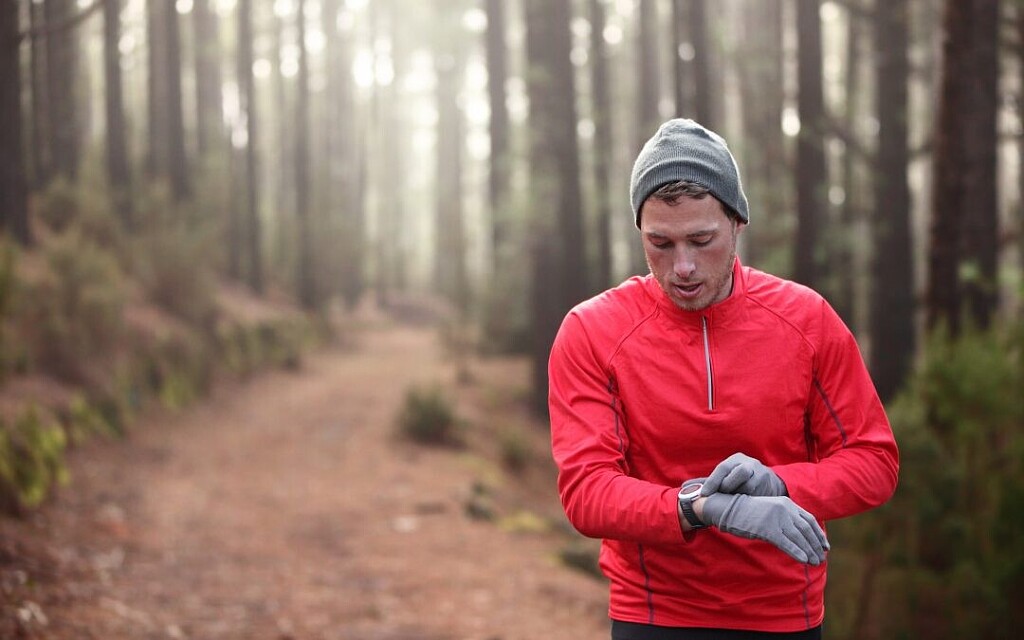
If you want to run a sub-20 minute 5K, but your current PB is 22:00, should you train at sub-20 pace, or at the pace you know you’re currently capable of running? A lot of runners might think it makes more sense to run at your goal pace in training in a pseudo-fake-it-til-you-make-it strategy, but this is often not the right choice. Yes, you should try to hit your goal pace sometimes, but more often than not, training at your current pace and progressing from there is a better way to get you to your goals.
Why should you train at your current pace?
If you’re trying to run at speeds that are much faster than what you’re currently capable of, you’re likely going to miss the physiological purpose behind each workout. For example, a tempo run, which should be run at around your anaerobic threshold to elicit the desired effect, loses its purpose if you’re running at your would-be tempo pace for your future goal pace. You are better off training the specific physiological factors that will help you get faster (like your VO2 max or lactate threshold) than targeting a hypothetical goal pace.

By doing all your workouts at your future goal pace, you also run the risk of over-training. Trying to run paces that are far beyond your current capabilities during workouts will only serve to run you into the ground and cause your performance to stagnate or even decrease, rather than improve.
Finally, attempting to run every workout at your future goal pace might destroy your confidence if you’re not able to hit that pace for your entire workout. This could make you feel like you’re failing, which will also take a lot of the enjoyment out of running and training.
Is there ever a good time to train at goal pace?
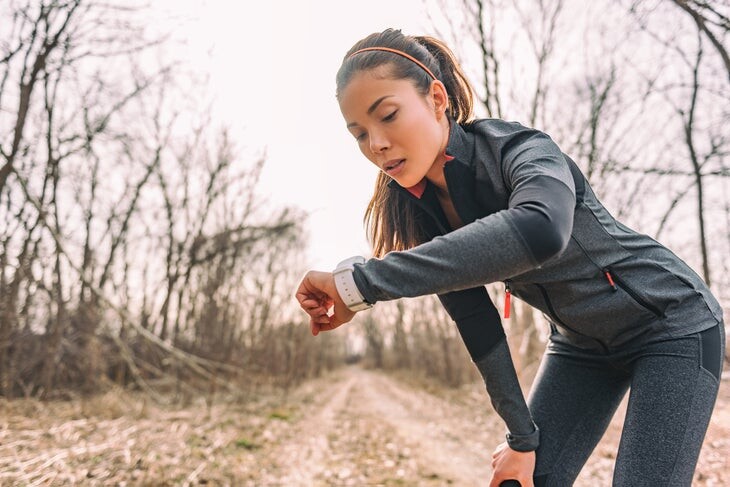
This doesn’t mean you should never train at your goal pace, but as coach and exercise physiologist Dr. Jason Karp says, you should do so sparingly, and only when your goal is realistic. In training, that may look like only one or two workouts at that pace throughout your training cycle, or adding a few goal pace strides at the end of a run or workout.
It’s important for all runners to remember you can’t force your way to faster times, nor can you rush yourself into fitness. By focusing on proper training, putting in consistent work and staying patient, you will see your times start to come down.
(01/18/22) Views: 165Brittany Hambleton
New women American Marathon and Half Marathon records set in Houston
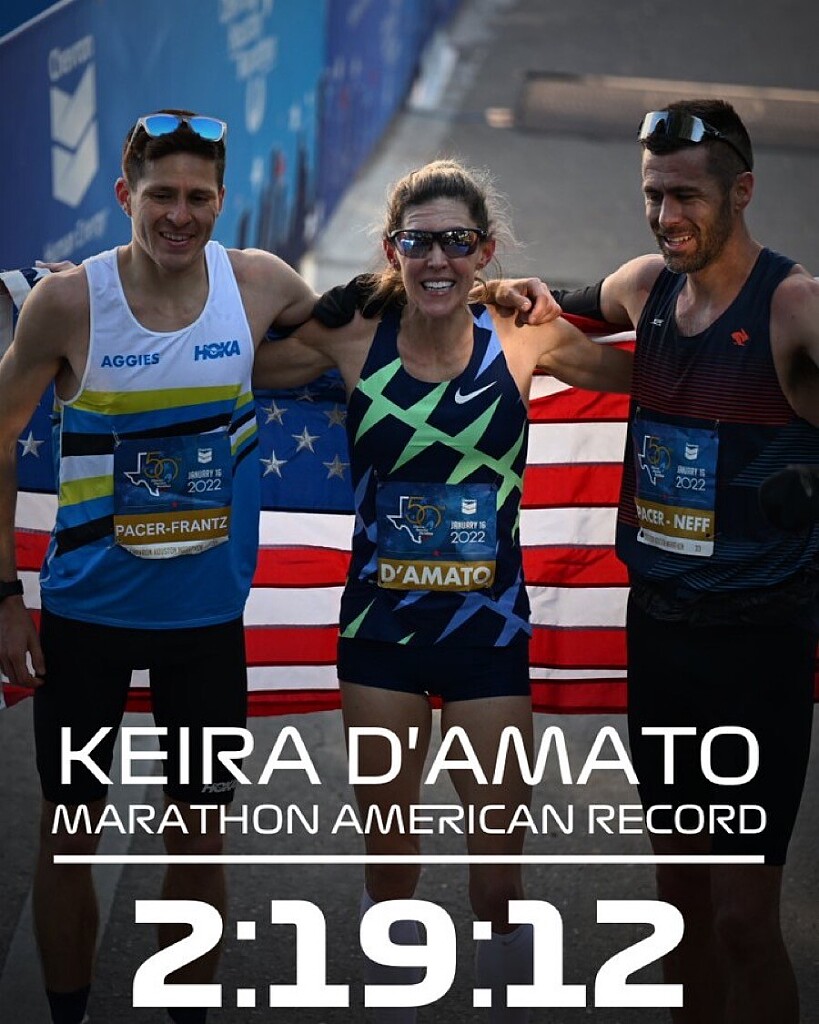
Keira D'Amato just broke the American marathon record after running 2:19:12 at the Houston Marathon today.
Keira D’Amato, a 37-year-old who quit running competitively soon after college, then returned eight years later as a mother of two, broke the American record in the women’s marathon on Sunday.
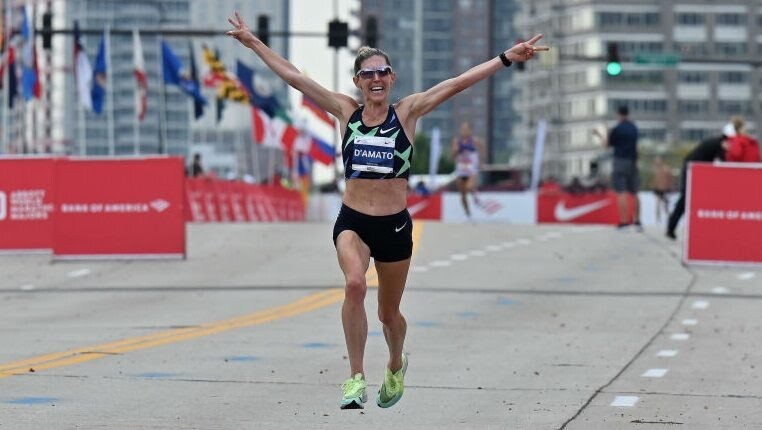
D’Amato won the Houston Marathon in 2:19:12, taking 24 seconds off Deena Kastor‘s record from the 2006 London Marathon.
D’Amato competed collegiately for American University, then gave up middle-distance running in 2009.
She worked in real estate, got married and had two kids. She started running again to lose baby weight, setting a goal to sign up for a marathon.
D’Amato made it to the 2017 Shamrock Marathon in Virginia Beach, hoping to break three hours, and clocked 3:14:54 in sleet, wind and hail. She kept running and lowered her best time over the next three years.
She was 15th at the 2020 U.S. Olympic Trials, then on Dec. 20, 2020, ran 2:22:56 at the Marathon Project in Arizona to become the eighth-fastest American woman in history.
Now she’s tied as the 22nd-fastest woman in history counting all courses, according to World Athletics.
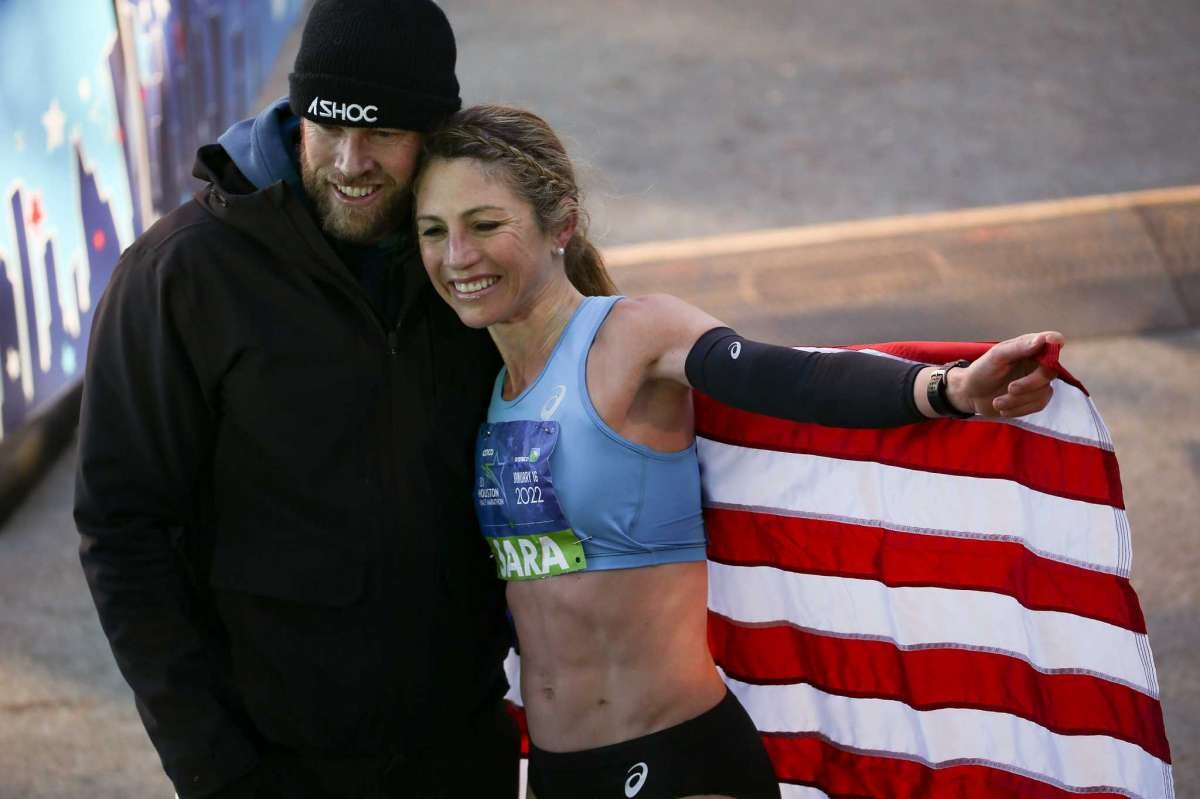
Also in Houston on Sunday, Sara Hall, a 38-year-old mom, broke the American record in the half marathon, clocking 1:07:15, taking 10 seconds off Molly Huddle‘s record from four years ago.
Additionally, Outstanding marathon debut by @LukeACaldwell today with his 2:11:33 run for 7th place at #houstonmarathon - the fastest marathon debut by a Scot, bettering @callhawk 2:12:17 at Frankfurt in 2015.
(01/16/22) Views: 138
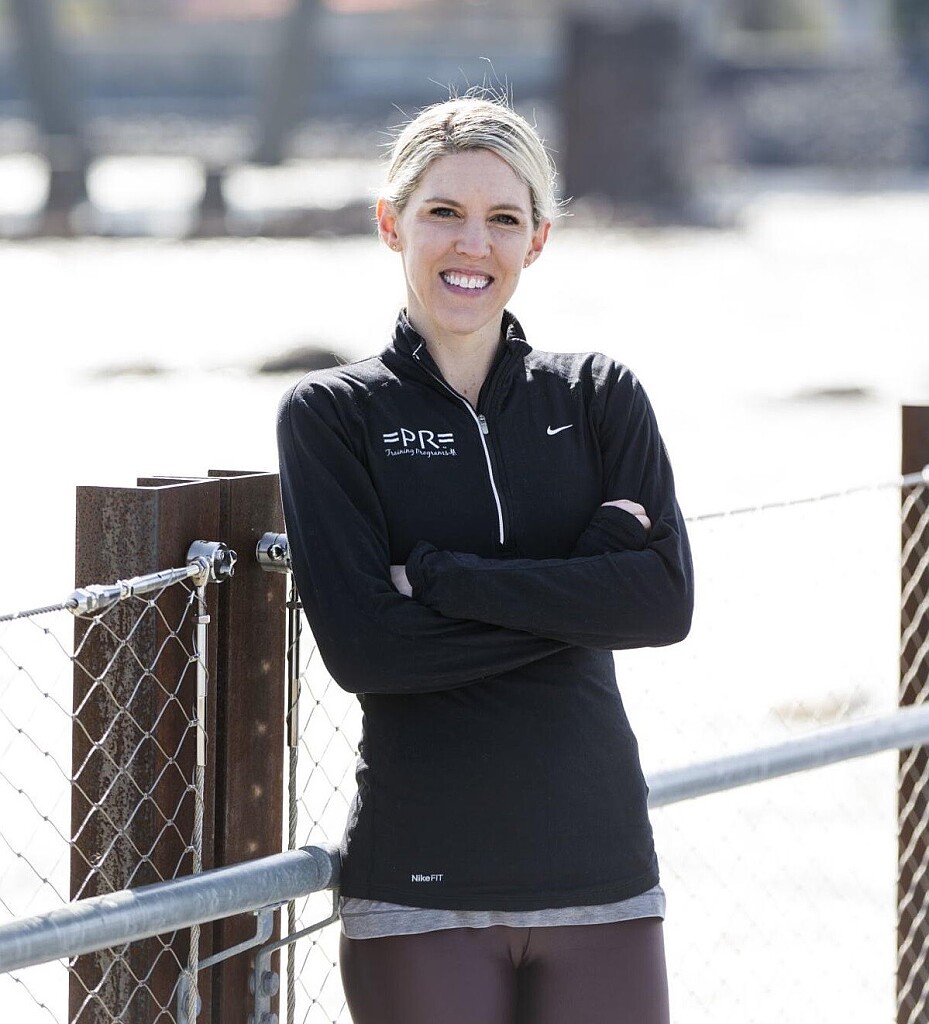
Keira D’Amato is set to run fast at the Houston Marathon
On Sunday, Keira D’Amato will head to the start line of the Houston Marathon with the expectation that she will run under two hours and twenty-two minutes. Her current personal best sits at 2:22:56, achieved at the Marathon Project in Arizona, but D’Amato knows, based on her workouts and performances like her 67:55 to win the US Half Marathon Championships in December, that she is fitter than when she ran that 2:22:56 in December 2020. In fact, things are going so well that on December 28, she told Women’s Running that, if she had a strong final month of training, she might even go for Deena Kastor‘s 2:19:36 American record.
That the 37-year-old D’Amato is in a position to even discuss the American record is one of the unlikelier stories in US distance running history. This was a woman who started out as an 800/1500 runner, took seven years away from the sport as she got married, became a mom of two and a full-time realtor, and as recently as 2019 had never run faster than 2:40 in the marathon.
“It seriously blows my mind,” D’Amato told LetsRun on Wednesday. “On my warmup before my workout today, I was thinking that in my second marathon back on my comeback tour [in Richmond in 2017], I went into the marathon thinking that I didn’t think I could break 3:00 that day.”
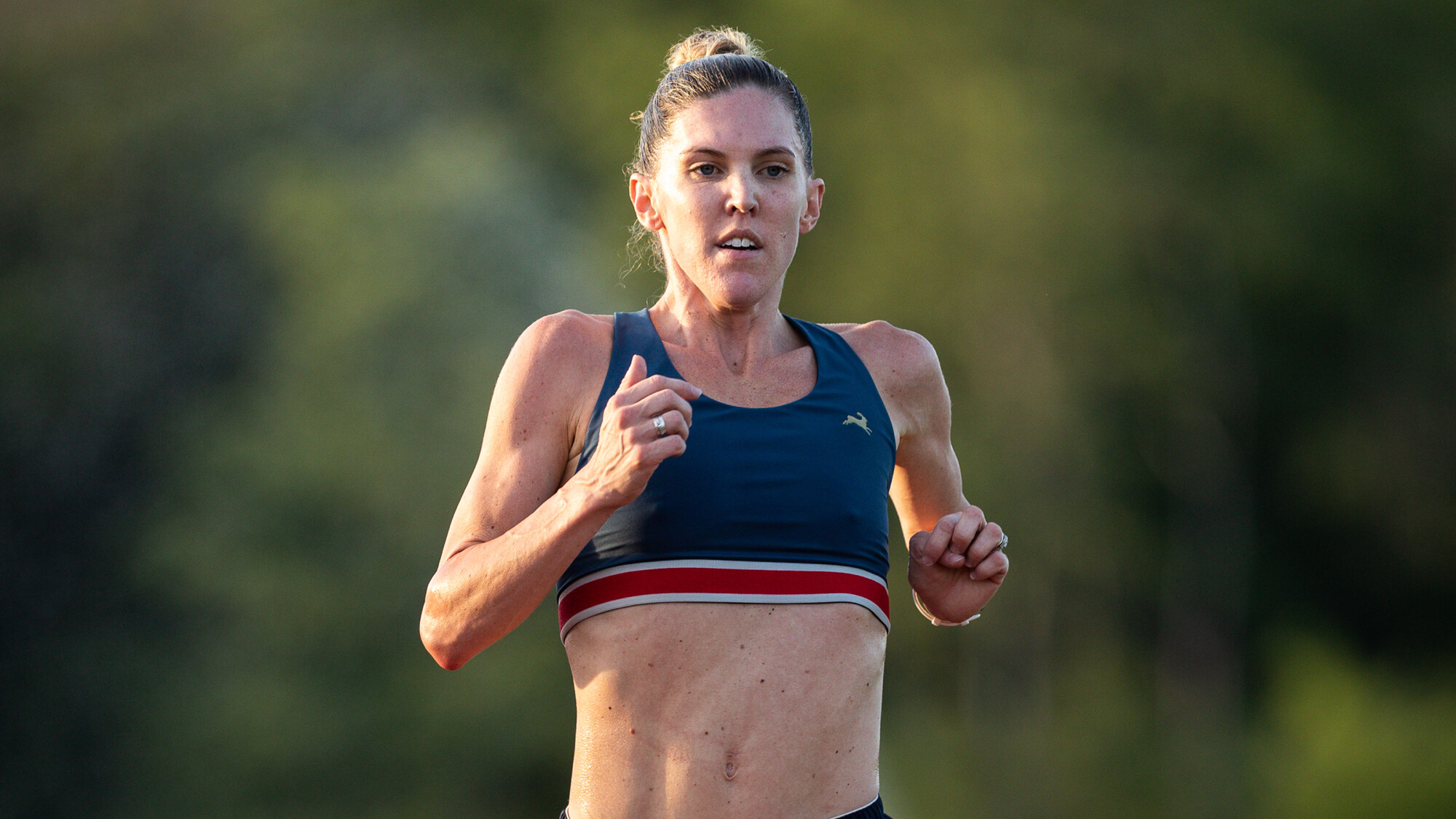
D’Amato wound up running 2:47 and hasn’t stopped improving.
“It’s so hard to wrap my head around it because there’s 50% of my brain that is like, ‘What in the world is going on, how did I get there?’ And there’s 50% that is like really confident, that’s like, ‘Keira, you’ve worked your tail off, you’ve been putting in the miles for years and years and years, and you have, in my opinion, the best coach in the nation, Scott Raczko.'”
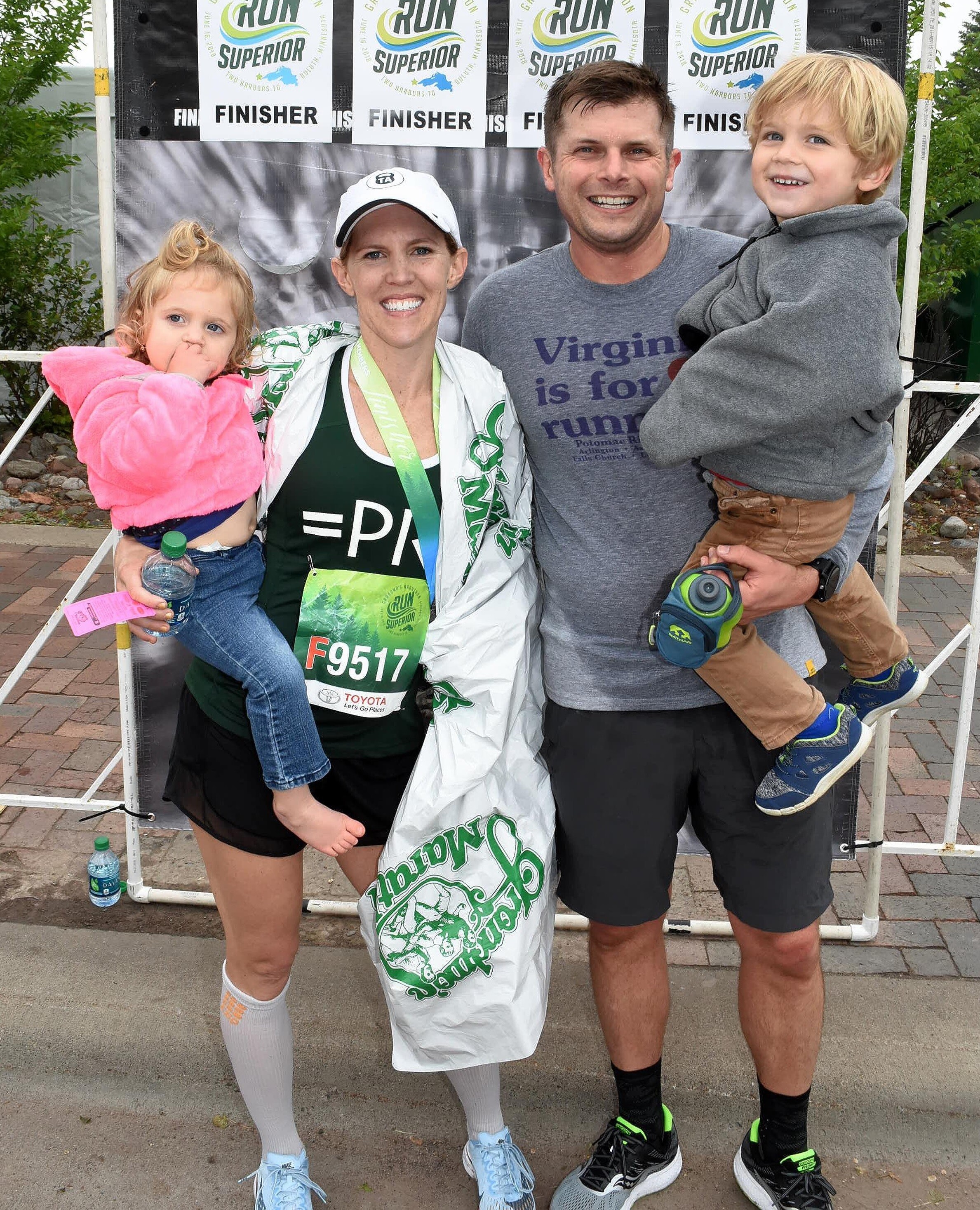
A number of fast Americans will descend on Houston this weekend for the half and full marathons on Sunday. Sara Hall, Nell Rojas, and Annie Frisbie are all set to feature in the half, while 61:00 half marathoner Frank Lara will make his marathon debut. But the most fascinating storyline is D’Amato, who will look to start 2022 with a bang after an up-and-down 2021 season.
Following a 2020 campaign featuring personal best after personal best, D’Amato spent the first half of 2021 battling a hamstring injury. She tried to fight through it but ultimately had to take time off to treat the underlying muscle imbalance, realigning her hips and strengthening her glutes. That recovery knocked her out of the biggest meet of the year, the US Olympic Trials, where D’Amato had planned on running the 5,000 and 10,000 meters.
“It sucked, man,” D’Amato said.
D’Amato started working out again in August and ran the Chicago Marathon in October, finishing 4th in 2:28:22. But she knew she wasn’t at 100%. Under Raczko, D’Amato trains in four-week cycles, building up for those four weeks before taking a down week to reset. Usually, she likes to have four of those cycles under her belt for a marathon; her late start meant she only had two of them before Chicago.
D’Amato will face three-time Houston champion Biruktayit Eshetu Degefa (2:22:40 pb) and 2016 Boston Marathon champion Atsede Baysa (2:22:03) in the women’s race, and while she’d like to earn her first career marathon victory, her focus is squarely on running fast.
Leading into the race, D’Amato has done everything she can to maximize her chance of success. She has still been working her job as a realtor in Virginia, but in recent weeks she has scaled back her hours and not taken on any new clients. She even took her kids out of school this week to limit her exposure to COVID — cases have been on the rise in her area and the last thing she wanted was to withdraw at the eleventh hour because of a positive test (they will return to school after the race). It’s not a decision D’Amato feels completely comfortable with — “I’m definitely not up for any mom of the year awards,” she said — but she hopes she can make it worth it with a special performance on Sunday.
(01/14/22) Views: 117Jonathan Gault

Running through extreme grief
Nearly 13 years ago, Oakville, Ont. runner Lynn Keane’s life changed forever. On a late April day, she, her husband, her two daughters and many others who knew and loved their son, Daniel, became survivors of suicide loss. Since that day, Keane has had to follow a journey of radical transformation, which no one who hasn’t been through it could ever imagine taking. Recently, we spoke with Keane about her journey and how running and movement helped her find healing and peace. This is her story.
Keane’s life as a runner began in high school, when she competed as a sprinter. “As a teenager, I found joy in running high school track,” she says. “Sprinting around the track I was able to shed the labels and preconceived ideas that had been ascribed to me as a mixed-race kid growing up in Toronto.”
After several years away from the sport, she began running again as an adult, starting with 5K and eventually working her way up to a marathon. She says this process helped her build resilience and mental toughness that she would rely on to get her through the dark days ahead.
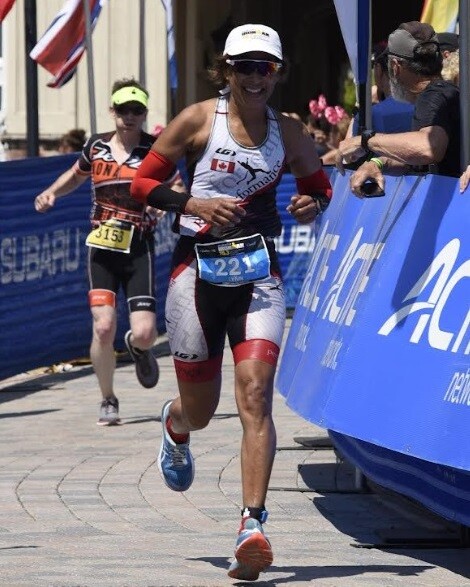
A few days after losing Daniel, when she and her family were struggling just to make it through the day, she put on her shoes and went for a run. “I needed to do something normal, and putting one foot in front of the other was so familiar,” she says. “It was also so healing because I could be alone, I could be outdoors and just scream at the sun, the moon — whatever. I could just be me and cry.”
After that first run, she knew it was something she needed to do. If she couldn’t do anything else, she would run. She also began researching and speaking with medical professionals so she could begin to understand her son’s experience. “Over the years I’ve worked to accept the loss and figure out ways to make the world a better place for young people now that I have this knowledge,” she says, “but running was the catalyst. Once I could get back out and physically move my body, the brain started to follow.”
Keane describes movement as a healing act, and it has remained that way all these years later. “I think because you make a commitment to yourself, which requires discipline, and that’s when grit happens,” she says. “Whether you’re depending on yourself, or your run crew is depending on you to show up, there are all these little habits that come from being a regular runner that builds dependence on oneself.”
Keane has now finished 14 marathons and more than 20 half-marathons. She’s a five-time Boston Marathon finisher, has done six half-Ironmans and one full Ironman and was the co-founder and co-race director of the Muskoka Rocks Races for 16 years. “In 2015 I finished my first half (Ironman), and coming across the finish line was life-changing, because that was another moment when I said ‘you can do big things’,” she says.
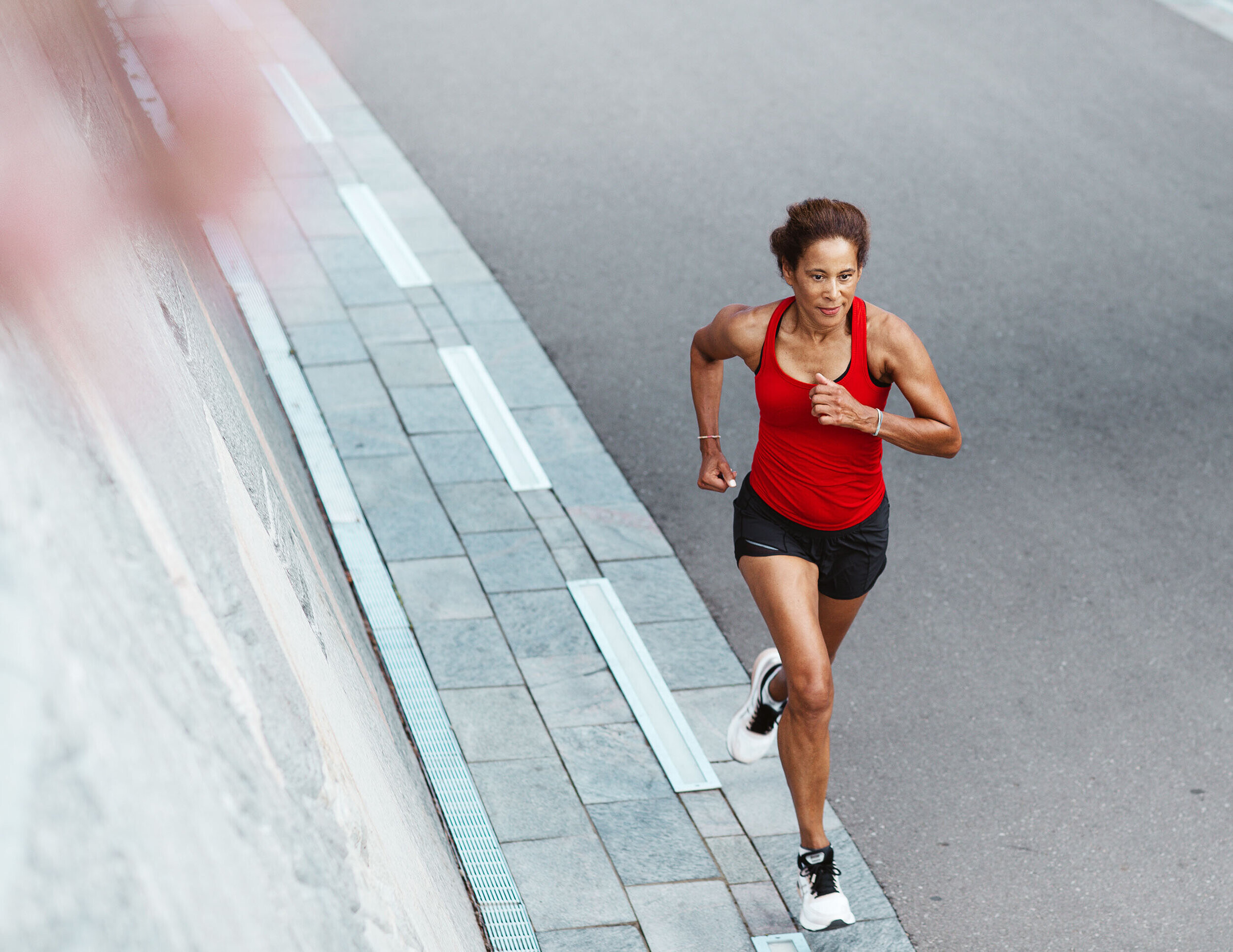
For anyone going through a difficult time or grappling with extreme loss, Keane says that in time, grief will not disappear, but will become part of you. “When you have these moments that are overwhelming, acknowledge them,” she says, “because in time, everything that you’ve gone through will serve to strengthen who you are.” She adds that it is an incredibly difficult process, but getting support from a professional, friend or someone you trust can go a long way toward helping you to heal. “Honour the pain, live in the pain, because if you don’t, you’re only putting it away for another day,” she says.
Advocacy and awareness
Aside from running and triathlons, Keane dealt with her loss by sharing Daniel’s story so others could see themselves and seek out the support they needed. “I wanted to offer real-time understanding around youth depression and anxiety, so that we, as family, friends and community could provide compassionate support from a place of knowledge and understanding,” she says.
Keane has done a TedX Youth Talk about suicide prevention and written a book, Give Sorrow Words. She’s dedicated herself to educating others about youth suicide prevention and has worked with a wide range of suicide prevention and mental health advocacy groups and organizations. including The JED Foundation, The American Foundation for Suicide Prevention, The International Summit on Suicide Research, the Canadian Mental Health Association (Halton) and Bell Let’s Talk Day, among others.
“In sharing our son’s story, we are honouring his life and his time on Earth,” says Keane. “I know that Daniel’s story has helped to normalize conversations around youth mental illness and suicide prevention.”
Radical transformation
“You have these horrific life experiences and you can choose to stay in that place… and of course, I did for a long time. And then one day, maybe you can see that little sliver,” says Keane. “That very little bit of light at the end of a very long tunnel and know that you can get to it, and on the other side is life again.”
Keane considers herself to be living proof of the resiliency of the human spirit. Running gave her strength she didn’t know she had until she needed it, and helped her get through the darkest moments of her life.
“When we push our body, we challenge our mind—gathering strength and fortifying ourselves for life,” she says. “Running and triathlon have served to strengthen my spirit, allowed me to survive trauma and find a greater purpose in life. That is my why.”
(01/20/22) Views: 96Brittany Hambleton
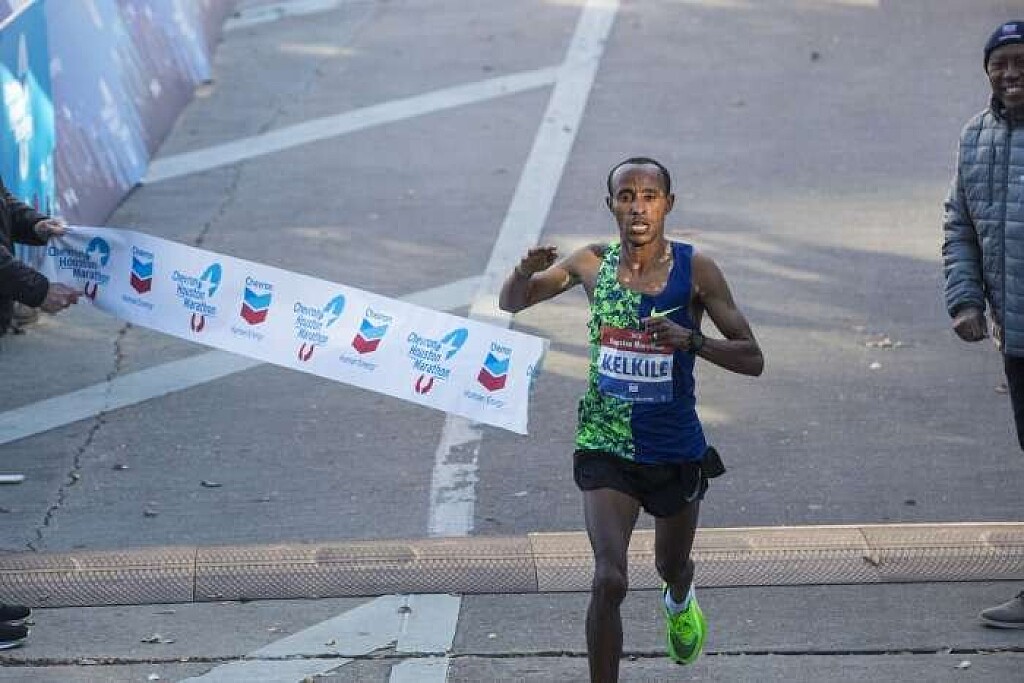
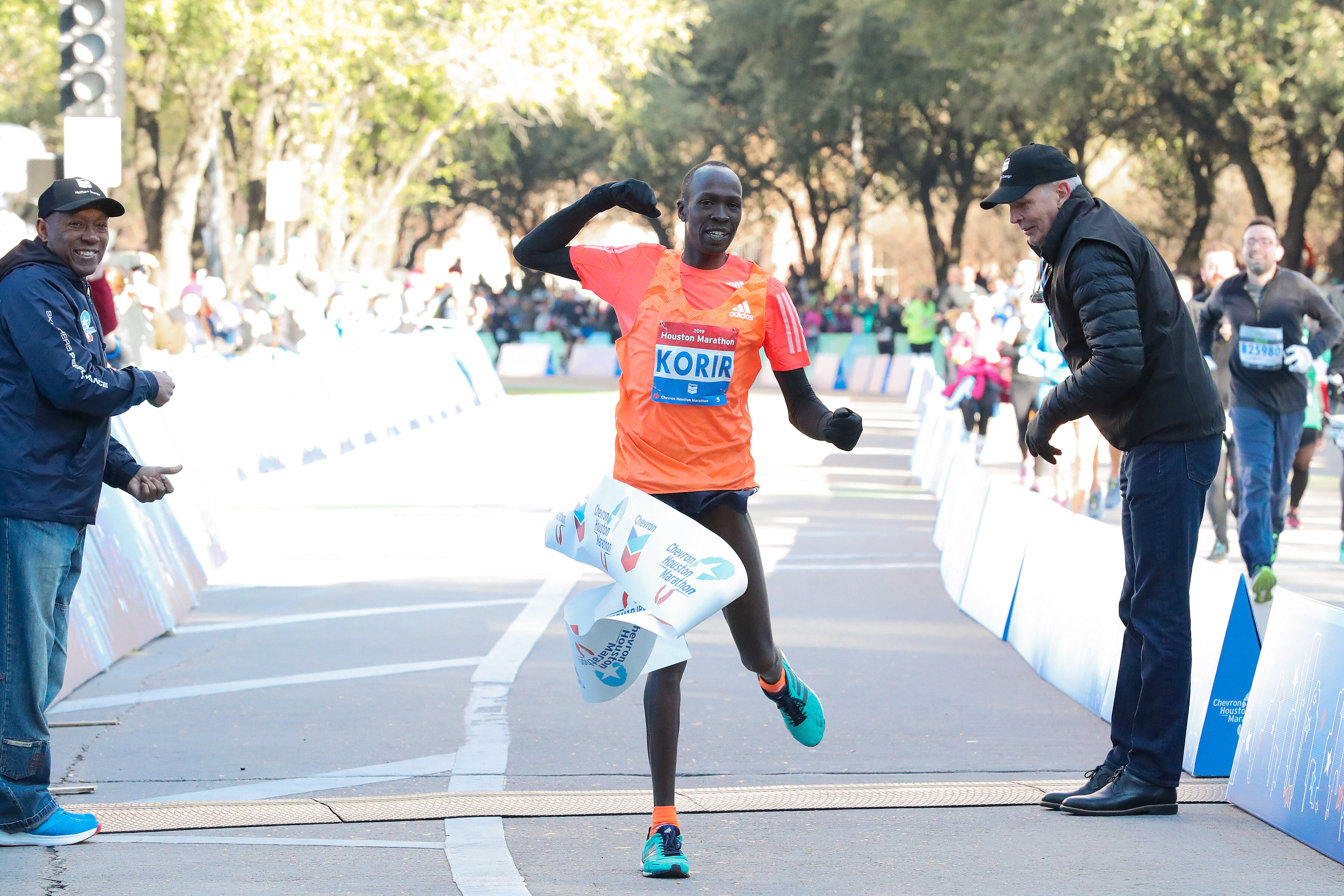
Ethiopia’s Askale Merachi and Kelkile Gezahegn will defend their titles at the 50th Chevron Houston Marathon, while Kenya’s Vicoty Chepngeno and Shadrack Korir lead the entries for the Aramco Half
Merachi won in Houston in 2020 in 2:23:29, finishing more than a minute ahead of the rest of the field. She went on to win the Taipei Marathon later that year in 2:28:31, but hasn’t raced since then, so her form going into this weekend’s race is relatively untested.
She will face stiff competition from compatriot Biruktayit Eshetu Degefa, a three-time winner in Houston who is aiming to become the race’s first four-time winner. She finished runner-up to Merachi in 2020, clocking 2:24:47. Her PB stands at 2:22:40, set in Toronto in 2019, while her fastest time in Houston is the 2:23:28 she ran to win three years ago.
Two-time Chicago Marathon winner Atsede Baysa has the fastest PB of the field with 2:22:03. A sub-2:25 time may be required to make the podium on Sunday, but the last time the 34-year-old Ethiopian bettered that barrier was back in 2012.
Ethiopian women have won the past 14 editions of the Houston Marathon, but that streak could be under threat on Sunday as Keira D’Amato aims to become the first US woman to win the Houston Marathon since 2005.
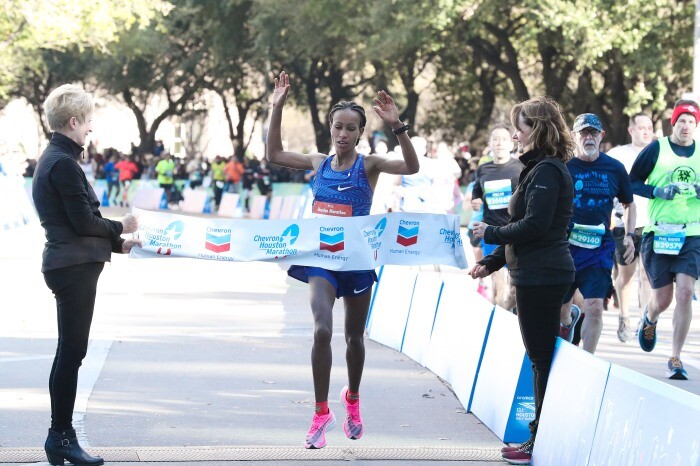
The 37-year-old, who took a complete break from running between 2009 and 2016, has been racking up impressive performances on the roads in recent years. She set a marathon best of 2:22:56 and a North American 10-mile record of 51:23 in 2020, finished fourth at last year’s Chicago Marathon, and clocked a half marathon PB of 1:07:55 last month. If conditions are good, the course record of 2:23:14 – set by Alemitu Abera in 2012 – could be under threat.
Ethiopian marathon debutante Tsige Haileslase and USA’s Robert Groner, who finished sixth at the 2019 World Championships, are among the other contenders.
Gezahegn, the defending men’s champion, won with 2:08:36 two years ago and finished two minutes clear of his nearest rivals. His only race since then was the 2021 Boston Marathon, where he finished 15th in 2:12:37. A 2:05:56 runner at his best, the 25-year-old will be keen to use this weekend’s race as an opportunity for redemption.
If John Langat can reproduce his form from 2019, when he won in Eindhoven in a PB of 2:07:11, he could contend for the victory on Sunday. Japan’s Kenta Uchida will also be a formidable opponent. He has a lifetime best of 2:08:12 and will be keen to earn his first marathon victory.
Bahrain’s Abdi Abdo, Ethiopia’s 2008 world indoor 3000m champion Tariku Bekele and US marathon debutant Frank Lara are others to watch out for.
Vicoty Chepngeno will start as the favourite for the Houston Half Marathon, held concurrently with the marathon. The 28-year-old Kenyan has an impressive record in US road races; she has won nine of her past 10 half marathons on US roads, and her lifetime best of 1:07:22 was set in her most recent outing over the distance, in Philadelphia two months ago. Despite her extensive racing experience, though, this will be Chepngeno’s first Houston Half Marathon.
Compatriot Monicah Ngige, meanwhile, will be making her third Houston Half Marathon appearance. The 28-year-old set her PB of 1:07:29 there in 2019. More recently, she finished fourth at the Boston Marathon in October on her debut over the distance, clocking 2:25:32.
Sara Hall leads the US entrants. The 38-year-old has focused more on the marathon in recent years, achieving podium places at the 2020 London Marathon and the 2021 Chicago Marathon, also clocking a PB of 2:20:32 in between those outings. But she has also won her two most recent half marathons, setting a PB of 1:08:18 in 2020.
Shadrack Kimining Korir returns to Houston after finishing third in 2020 in a personal best of 59:27, just two seconds shy of the winner. His most recent outing was at the Lisbon Half Marathon in October, where he finished fifth in 1:02:42.
Wilfred Kimitei also competed in Lisbon towards the end of last year, albeit in a different event to the one where Korir raced, and finished 11th in 1:00:03 – just 23 seconds shy of the PB he set in Ras Al Khaimah in 2018.
Ethiopia’s Milkesa Mengesha also heads to Houston in good form. The 2019 world U20 cross-country champion, still only 21, finished ahead of Kimitei in Lisbon in November, clocking a PB of 59:48 in what was just his second half marathon to date. Earlier in 2021 he set a 5000m PB of 12:58.28 and finished 10th in the Olympic final at that distance.
Kenya’s Raymond Magut, who clocked a PB of 1:00:00 in Herzogenaurach in September, should also be a strong contender, along with Ethiopia’s Bayelign Teshager and Eritrea’s Tsegay Tuemay.
Elite fields
WOMEN Half marathon
Vicoty Chepngeno (KEN) 1:07:22
Monicah Ngige (KEN) 1:07:29
Sara Hall (USA) 1:08:58
Caren Maiyo (KEN) 1:09:20
Sarah Pagano (USA) 1:09:41
Emily Durgin (USA) 1:09:47
Maegan Krifchin (USA) 1:09:51
Andrea Ramirez Limon (MEX) 1:10:20
Dominique Scott (ZAF) 1:10:42
Elaina Tabb (USA) 1:10:44
Nell Rojas (USA) 1:10:45
Julia Griffey (USA) 1:11:04
Emily Setlack (CAN) 1:11:41
Dakotah Lindwurm (USA) 1:11:43
Maor Tiyouri (ISR) 1:11:50
Paige Stoner (USA) 1:11:53
Jessica Judd (GBR) debut
Fiona O’Keeffe (USA) debut
Maddie Alm (USA) debut
Marathon
Atsede Baysa (ETH) 2:22:03
Biruktayit Eshetu Degefa (ETH) 2:22:40
Keira D’Amato (USA) 2:22:56
Askale Merachi (ETH) 2:23:29
Roberta Groner (USA) 2:29:09
Kathya Mirell Garcia Barrios (MEX) 2:34:46
Militsa Mircheva (BGR) 2:35:03
Tsige Haileslase (ETH) debut
Maggie Montoya (USA) debut
Emily Kearney (GBR) debut
Alice Wright (GBR) debut
MEN Half marathon
Shadrack Kimining Korir (KEN) 59:27
Wilfred Kimitei (KEN) 59:40
Milkesa Mengesha (ETH) 59:48
Raymond Magut (KEN) 1:00:00
Bayelign Teshager (ETH) 1:00:31
Tsegay Tuemay (ERI) 1:00:50
Patrick Tiernan (AUS) 1:01:22
Reed Fischer (USA) 1:01:37
Rory Linkletter (CAN) 1:01:44
Reid Buchanan (USA) 1:01:45
Colin Mickow (USA) 1:01:47
Matt Llano (USA) 1:01:47
Harvey Nelson (USA) 1:01:48
John Raneri (USA) 1:01:51
Brogan Austin (USA) 1:01:52
Zouhair Talbi (MAR) 1:02:00
Kirubel Erassa (USA) debut
Marathon
Kelkile Gezahegn (ETH) 2:05:56
John Langat (KEN) 2:07:11
Kenta Uchida (JPN) 2:08:12
Abdi Abdo (BRN) 2:08:32
Elisha Barno (KEN) 2:09:32
Tariku Bekele (KEN) 2:09:33
Augustus Maiyo (USA) 2:10:47
Jesus Arturo Esparza (MEX) 2:11:04
Birhanu Kemal Dare (ETH) 2:12:21
Tyler Jermann (USA) 2:12:40
Frank Lara (USA) debut
James Ngandu (KEN) debut
Luke Caldwell (GBR) debut
(01/14/22) Views: 93World Athletics
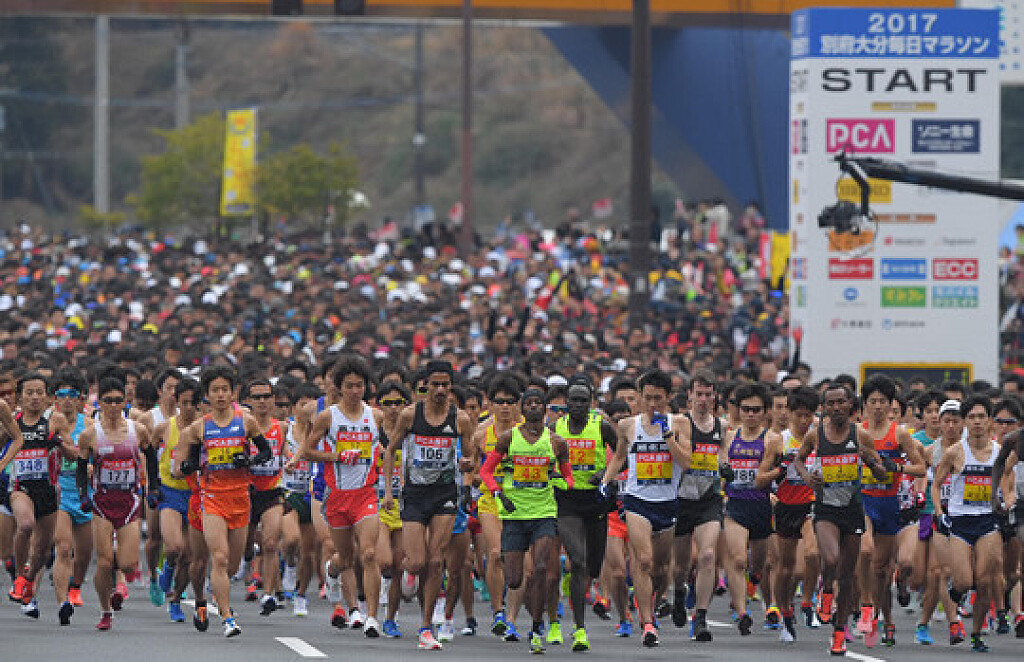
Beppu-Oita Mainichi Marathon is set to return this year on Feb 6
Other races have started canceling as Japan's COVID-19 numbers climb again, but the Beppu-Oita Mainichi Marathon is set to return this year on Feb 6, announcing its elite field on Jan 14. The front end is heavily dominated by people who part of the Miracle in Lake Biwa last year, Shuho Dairokuno (Asahi Kasei) and Tsubasa Ichiyama (Komori Corp.) leading the way at 2:07:12 and 2:07:41 from that race.
Four others on the list have run 2:08 recently, three at Lake Biwa, with two 2:09 veterans rounding out a sub-2:10 club that's as good as in any past year at Beppu-Oita, even without an international field. Well, there is one Ethiopian in the race, 2019 Fukuoka 3rd-placer Derese Workneh (Hiramatsu Byoin), but he's locally-based in Kyushu.
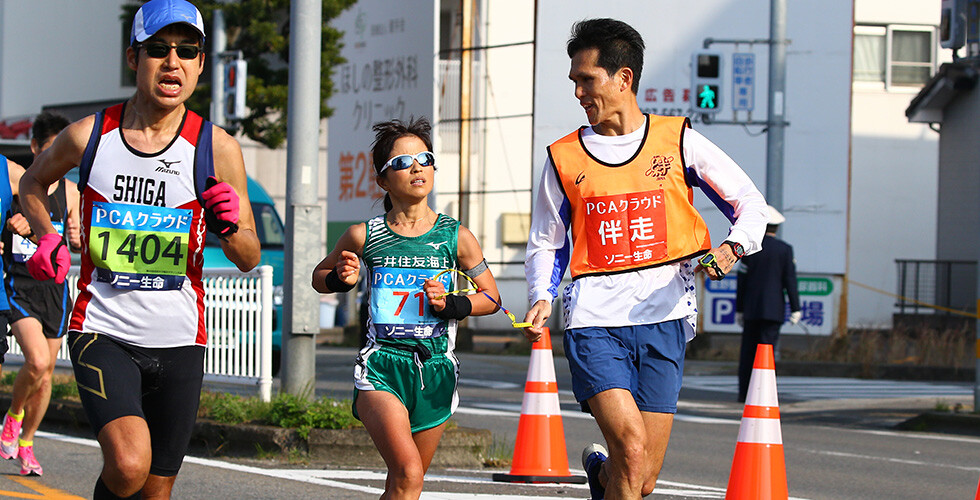
But where this year's field really stands out is in its list of first-timers. Sub-61 half marathoners Kiyoshi Koga (Yasukawa Denki) and Yusuke Nishiyama (Toyota) are there fresh off good runs on the New Year Ekiden's longest stage. Track specialist Tetsuya Yoroizaka (Asahi Kasei) is running for real after a couple of less-serious marathon stabs, and likewise doing it off a good New Year run.
Last time around Aoyama Gakuin University's Yuya Yoshida made a big impact at Beppu-Oita in his debut, and this time the 2022 Hakone Ekiden champ team has five members on the list including Hakone members Kotaro Kondo and Takayuki Iida, who ran the equivalent of 1:01:20 and 1:02:21 half marathons on their stages, and sub-63 half marathoners Taiki Miyasaka, Ryo Nishikubo and Shungo Yokota.
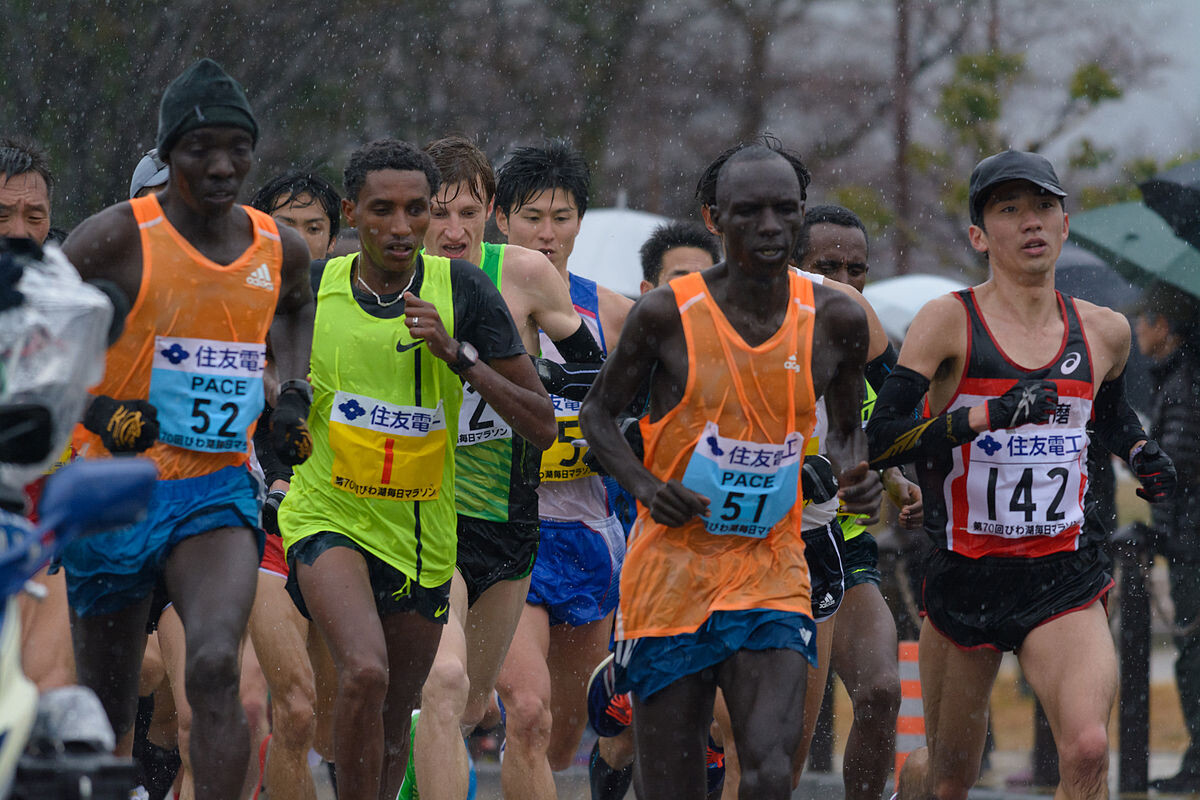
It should be a great race that cranks out even more quality Japanese marathoners. TBS will be broadcasting it live, and JRN will cover it on @JRNLive. Check back closer to race date for more info.
70th Beppu-Oita Mainichi Marathon
Elite Field
Shuho Dairokuno (Asahi Kasei) - 2:07:12 (Lake Biwa 2021)
Tsubasa Ichiyama (Komori Corp.) - 2:07:41 (Lake Biwa 2021)
Daisuke Hosomori (YKK) - 2:08:28 (Lake Biwa 2021)
Hiroto Fujimagari (Toyota Kyushu) - 2:08:30 (Lake Biwa 2021)
Takuya Fujikawa (Chugoku Denryoku) - 2:08:45 (Tokyo 2020)
Yuta Koyama (Toenec) - 2:08:46 (Lake Biwa 2021)
Ryo Hashimoto (GMO) - 2:09:29 (Beppu-Oita 2019)
Hisanori Kitajima (Yasukawa Denki) - 2:09:54 (Lake Biwa 2021)
Shogo Kanezane (Chugoku Denryoku) - 2:10:17 (Lake Biwa 2021)
Tadashi Suzuki (Suzuki) - 2:10:46 (Hofu 2020)
Derese Workneh (Ethiopia/Hiramatsu Byoin) - 2:10:52 (Fukuoka Int'l 2019)
Taiki Yoshimura (Asahi Kasei) - 2:11:13 (Hofu 2019)
Yuichi Okutani (Otsuka Seiyaku) - 2:11:16 (Beppu-Oita 2020)
Tomohiro Tanigawa (Konica Minolta) - 2:11:54 (Hofu 2020)
Debut/Do-Over
Kiyoshi Koga (Yasukawa Denki) - 1:00:49 (Nat'l Corp. Half 2020)
Yusuke Nishiyama (Toyota) - 1:00:55 (Nat'l Corp. Half 2020)
Akira Akasaki (Kyudenko) - 1:01:46 (Ageo City Half 2019)
Tetsuya Yoroizaka (Asahi Kasei) - 1:01:57 (Marugame 2020)
Riki Nakanishi (Toenec) - 1:02:02 (Osaka 2020)
Taiki Miyasaka (Aoyama Gakuin Univ.) - 1:02:26 (Takanezawa 2020)
Ryo Nishikubo (Aoyama Gakuin Univ.) - 1:02:30 (Takanezawa 2020)
Shungo Yokota (Aoyama Gakuin Univ.) - 1:02:36 (Hi-Tech 2022)
Yuya Kawata (Subaru) - 1:02:38 (Nat'l Corp. Half 2021)
Noriaki Oyama (Konica Minolta) - 1:02:41 (Marugame 2020)
Shogo Ise (Konica Minolta) - 1:02:53 (Marugame 2019)
Takayuki Iida (Aoyama Gakuin Univ.) - 1:03:10 (Takanezawa 2019)
Kotaro Kondo (Aoyama Gakuin Univ.) - 1:03:42 (Nat'l Univ. Half 2021)
(01/15/22) Views: 78Brett Larner
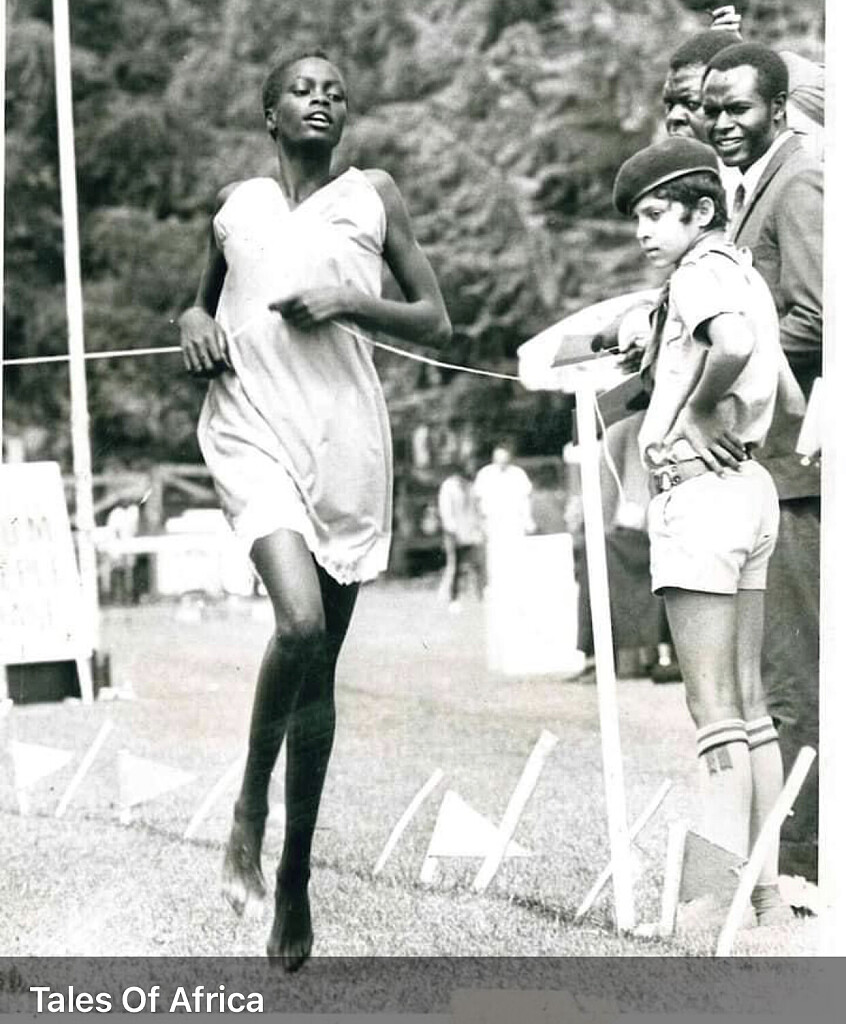
Meet Sabina Chebichi the barefoot petticoat runner
Sabina Chebichi was born on 13/5/1959, she won her first marathon in 1973 while barefoot and wearing nothing but a petticoat. Sabina went on to become the first Kenyan female athlete to win a medal at the Commonwealth Games in 1974.
Chebichi started running in 1972, her first race was at Kechiko which she won.
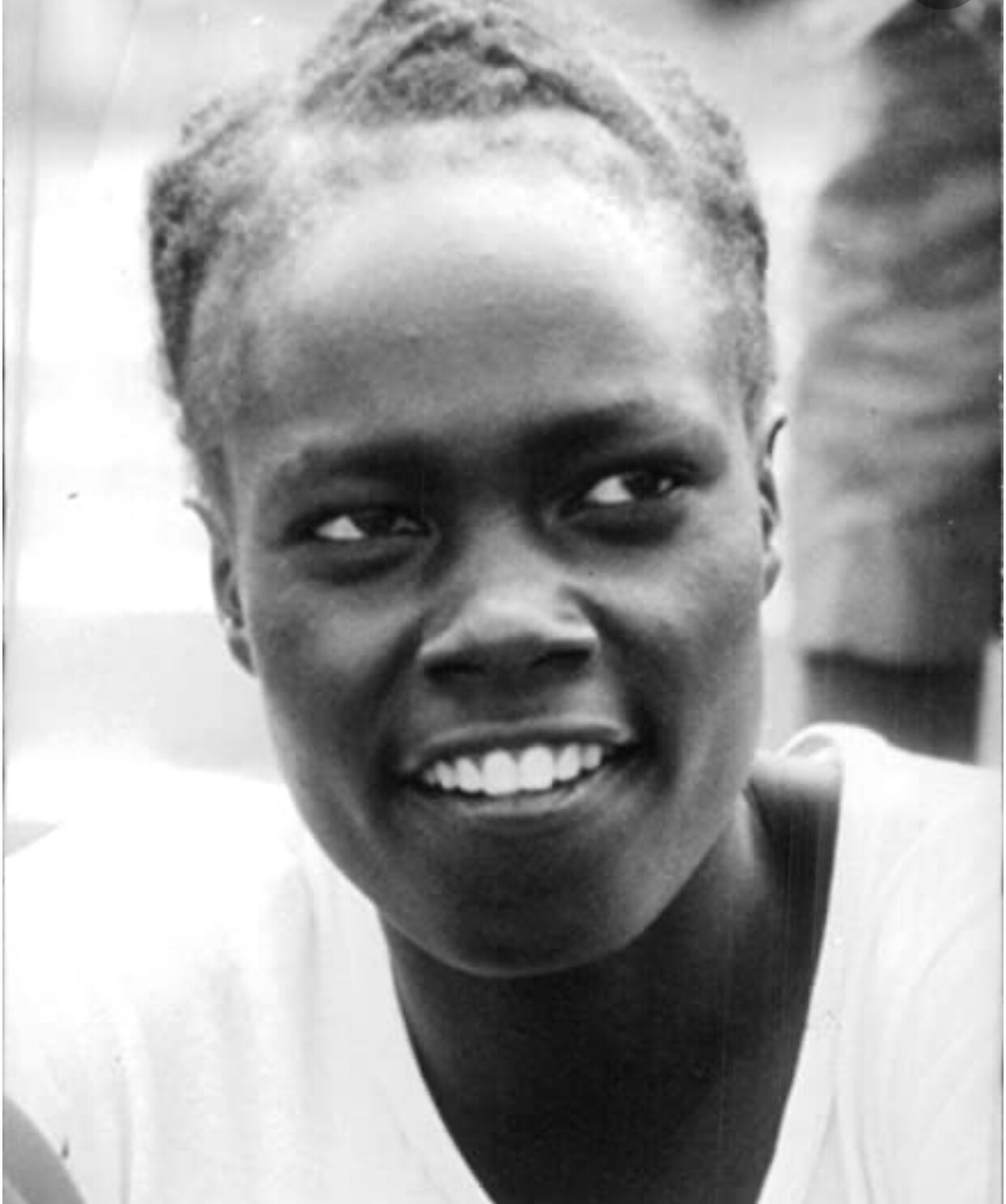
When news about a schoolgirl competing without any kit broke out in the media, Feisal Sherman who was Secretary of Kenya's Amateur Athletic Association (now Athletics Kenya) sent her running kit and proper shoes.
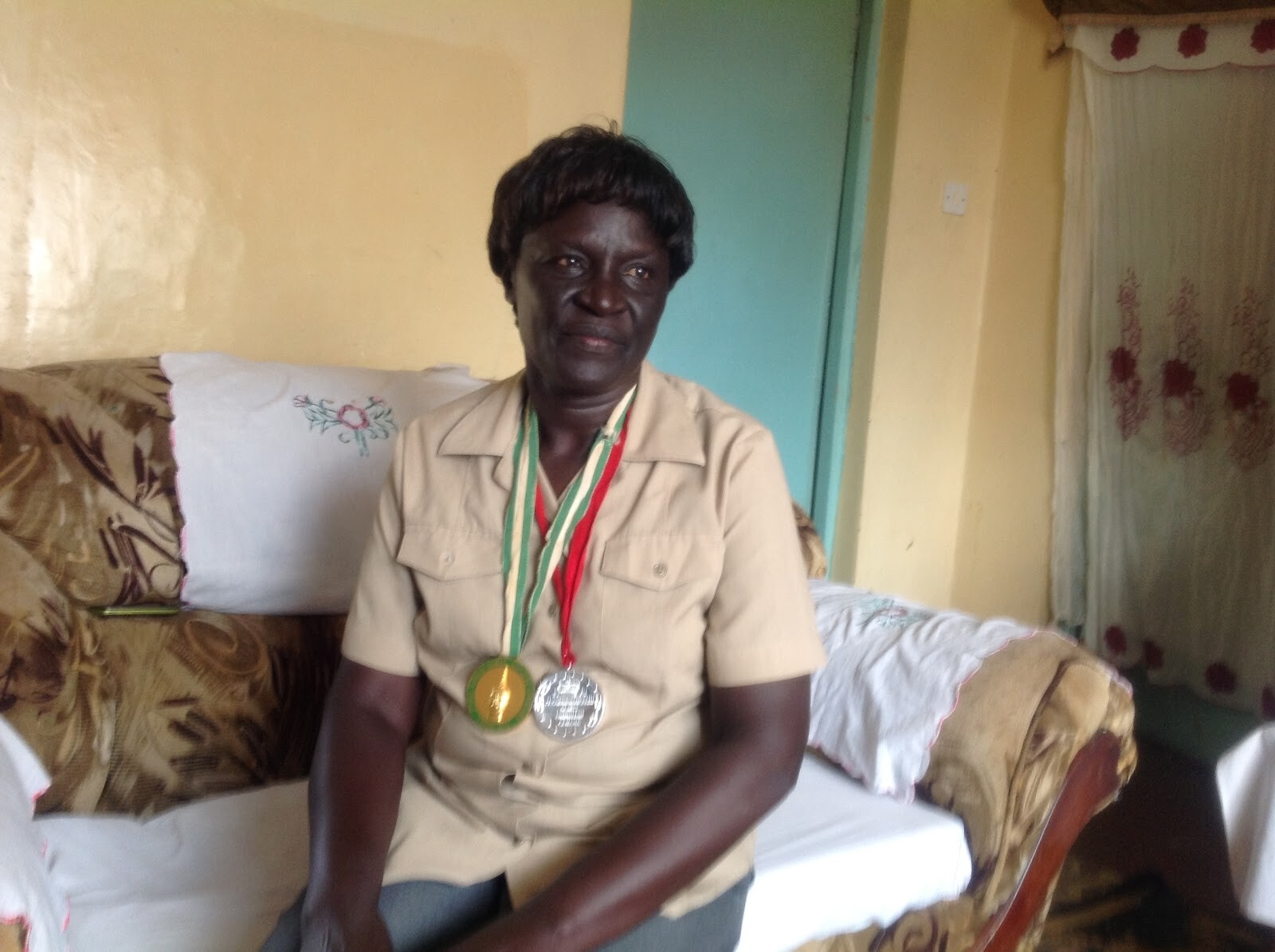
At 14 years of age, Chebichi became the first Kenyan female athlete to win a medal at the Commonwealth Games in 1974, she won bronze in the 800m Women's race at 2:02.61 mins, she went on to compete in the 4 × 400 m Relay and 1500m race.
(01/15/22) Views: 76

The celebrities who love to run
As well as championing a vegan diet and showing off the latest fashion trends at red carpet events, celebrities regularly maintain their health and fitness with a solid dose of daily exercise. In fact, for many famous faces, running is the most effective and enjoyable way to keep them in shape and ready for a range of public appearances which come with such status.
On the whole, a lot of the world’s well-known celebrities adore sport which is why seeing a range of Hollywood stars and established music-makers donning their running gear as they attempt to shed some pounds in the New Year is hardly surprising. The likes of Mark Wahlberg, Will Smith and Snoop Dogg adore the big sporting events, perhaps dabbling in the odd sports bet from time to time and even offering their views on various developments as they unfold during a football or basketball season.
It should come as no surprise, then, when the same stars supplement their love of watching sport with a fitness session or two, essentially just like the rest of us do. For many, running is the ideal way to keep in shape as it’s not only a great way of staying fit and healthy, but it alleviates the stresses and strains which can occur when you’re constantly in the spotlight. With that in mind, below is a look at some famous celebrities who fit a daily or weekly run into their busy schedules.
Mark Zuckerberg
The man behind Facebook has regularly shared updates on social media regarding his love of running. So much so, in fact, that Zuckerberg even did a ‘year of running challenge’ which gathered real momentum on the social media site he founded, with the aim being to run 365 miles in a year. Zuckerberg managed to finish the challenge five months early and captivated audiences as a result, educating people on the benefits of running in terms of both physical and mental health.
Victoria Beckham
Being a part of one of most famous couples in the world certainly comes with its drawbacks, with one them being the constant scrutiny surrounding the way a pair looks. With fitness evidently being of high importance to Victoria Beckham and her retired soccer star husband David Beckham, it should come as no surprise to learn that she manages to fit a daily 5K run into her routine. Speaking to Vogue Australia, the former Spice Girl said: “I go for a three-mile run every morning and I work out for an hour with a PT.”
Jennifer Lawrence
A keen runner, Jennifer Lawrence used running to her benefit as she aimed to get ready for Hunger Games in 2012. A movie which required a great deal of fitness and a number of running scenes for Lawrence to get stuck into, the popular actress admitted that she’s a tad self-conscious when it comes to her running style.
Speaking after the release of the movie in 2012, Lawrence said: “I’m most nervous about everybody making fun of the way I run. I do, like, karate hands. Instead of running with my hands closed together like a normal person. It’s like I’m trying to be aerodynamic or something, so my hands are straight like razors.”
Gordon Ramsay

Alongside berating deluded restaurant owners and showcasing his French cooking skills, Gordon Ramsey is a keen runner. Regularly taking part in the London Marathon over the years, the world-famous chef has an impressive marathon PB of 3:30:37 and is commonly spotted running both in the UK and in his neighbourhood in America.
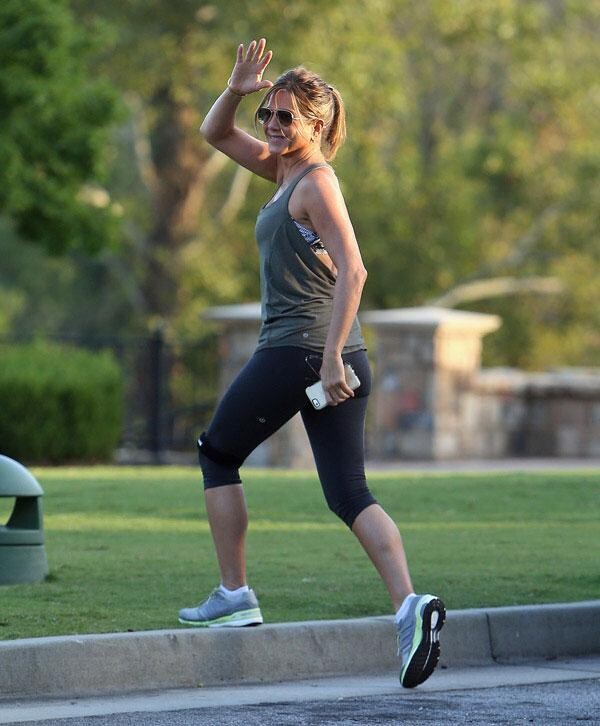
Jennifer Aniston
Former Friends star, Jennifer Aniston, is known to focus a great deal on her health and fitness, favouring a range of methods of exercise such as boxing for cardio and spin classes. Aniston has also been seen running on numerous occasions as she aims to stay in shape ahead of her next movie role.
Eva Longoria
Following an interview with Health magazine, Eva Longoriabe came even more of a hit with women aiming to master their health and fitness around the world. The Desperate Housewives star also enjoys yoga and pilates, but it’s running which is her main bag, recently saying: “I’m a runner, first of all. I run a lot.”
Other celebrity runners include Reese Witherspoon, Eminem, Richard Branson, Louis Theroux, Karlie Kloss, Kate Middleton, Reggie Miller, and Meghan Markle.
(01/20/22) Views: 74
