

Running News Daily
Top Ten Stories of the Week
12/4/2021
These are the top ten stories based on views over the last week.



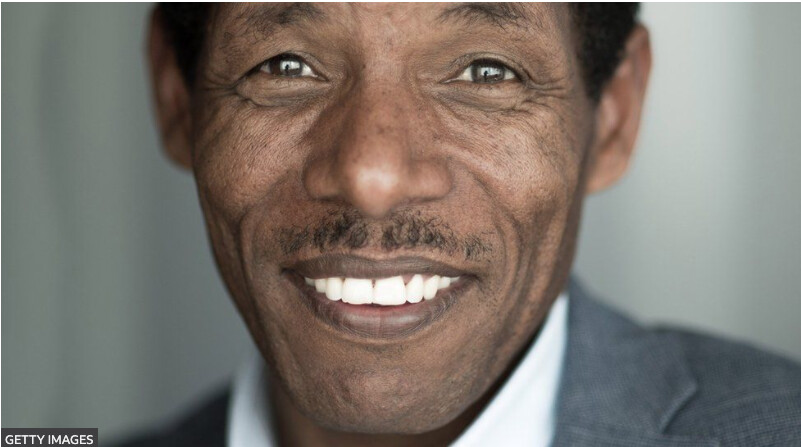
Ethiopia's Haile Gebrselassie and Feyisa Lilesa ready to join Tigray war
Ethiopian Olympic heroes Haile Gebrselassie and Feyisa Lilesa say they are ready to go to the front line in the war against rebel forces.
Their announcement comes after Prime Minister Abiy Ahmed said he would go to the front to lead the war.
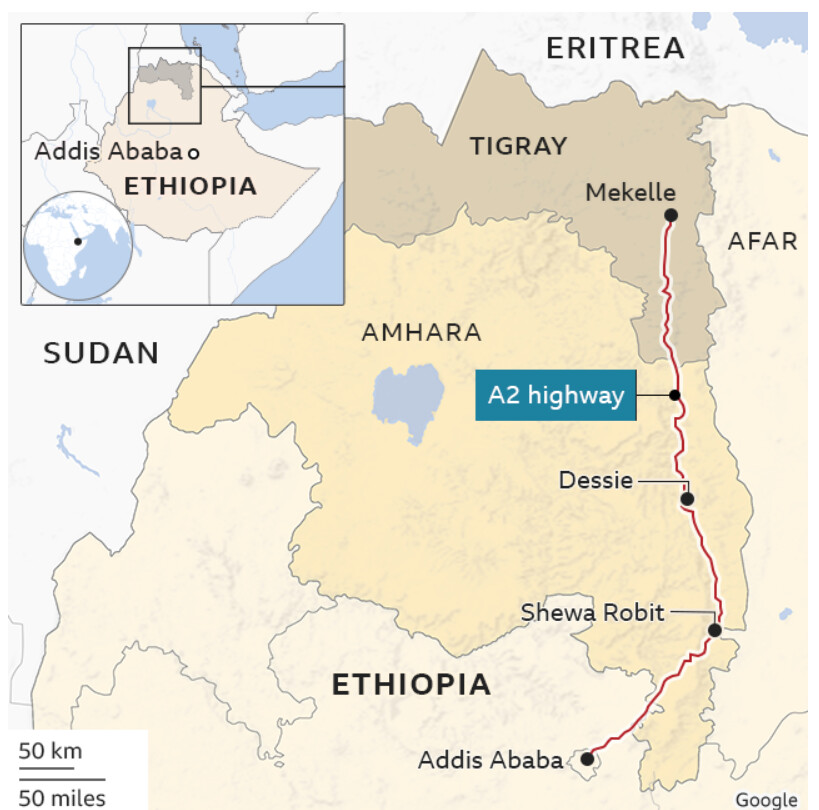
Tigrayan rebels say they are advancing towards the capital Addis Ababa.
The UK has urged its nationals to leave Ethiopia immediately, saying the fighting may move closer to Addis Ababa in the coming days.
The rebels earlier this week said that they had taken control of Shewa Robit, a town about 225km (140 miles) north-east of Addis Ababa. There is no independent confirmation of the claim.
Communication Minister Legese Tulu said the military has had "many successes" since Mr Abiy's decision to lead the battle, and victory was "so close".
Earlier, Gebrselassie, 48, was quoted by state television as saying: "I am ready to do whatever is required of me, including going to the front line."
Gebrselassie is regarded as a legend in Ethiopia, and his comments were seen as an attempt to rally public support behind the war effort.
During his 25-year career as an athlete, he claimed two Olympic gold medals, eight World Championship victories and set 27 world records. He announced his retirement from competitive running in 2015.
Expressing his support for the war, Feyisa, 31, was quoted by the state-affiliated Fana Broadcasting Corporation website as saying that he was ready to draw inspiration from the "gallantry of my forefathers" and go to the front line to "save my country".
The athlete won the marathon silver at the 2016 Rio Olympics.
He became famous for holding up his crossed wrists as if they were shackled to draw global attention to the crackdown on demonstrators demanding political reforms in Ethiopia.
The Tigray People's Liberation Front (TPLF) was the dominant party in government at the time. Following the protests, Mr Abiy became prime minister and the TPLF lost the grip on the country it had held for 27 years.
It later retreated to its stronghold of Tigray, from where it launched a rebellion last November after a huge fall-out with Mr Abiy over his reforms.
The war has created a massive humanitarian crisis, leaving thousands dead, forcing millions from their homes, and several hundred thousand in famine-like conditions as aid agencies battle to get food in war-affected areas.
The African Union is leading efforts to find a negotiated end to the fighting, but neither side has committed to talks.
The TPLF are advancing towards Addis Ababa on the A2 highway.
On Tuesday, Germany and France advised their citizens to leave Ethiopia.
The prospect of some of Ethiopia's most venerated sporting figures heading to the front lines to fight captures something profound and powerful about the mood in Addis Ababa and beyond.
At a time of intense crisis, many Ethiopians are clearly rallying behind their flag and prime minister, and are keen to play their part in galvanising public support for a military campaign that has suffered undeniable setbacks in recent months, though much remains in dispute in terms of casualty figures and battlefield momentum.
It is clear many people see the military threat posed by the TPLF and their assorted allies as an existential one for Ethiopia.
Added to that is a profound dislike of the TPLF itself, which stems from its decades heading an authoritarian national government. But there is more to it than that.
The prime minister has sought to portray his country as a victim, not just of Tigrayan aggression, but of a vast international conspiracy designed to weaken Ethiopia and punish it for, allegedly, challenging Western colonial interests on the continent.
Western media are portrayed as enthusiastic backers of that conspiracy theory - one which appears to have gained widespread credibility in a country struggling to explain how the rebel group could have made such startling headway.
(11/27/21) Views: 544
BBC
Holiday Gift Guide for All Runners
The holidays are quickly approaching! What are you getting for the runner in your life?
Runners love new gear. From new shoes to new shorts to new carbohydrate gels, they love trying out the latest and the greatest. Not only does it provide something new to their routine, but it gives them a new experience that may enhance their daily runs altogether.
But what does the daily runner want? What makes the perfect gift for any runner? From wool socks to foam rollers to medical alert bracelets, here’s the essential holiday gift guide for all runners.
High-quality running socks
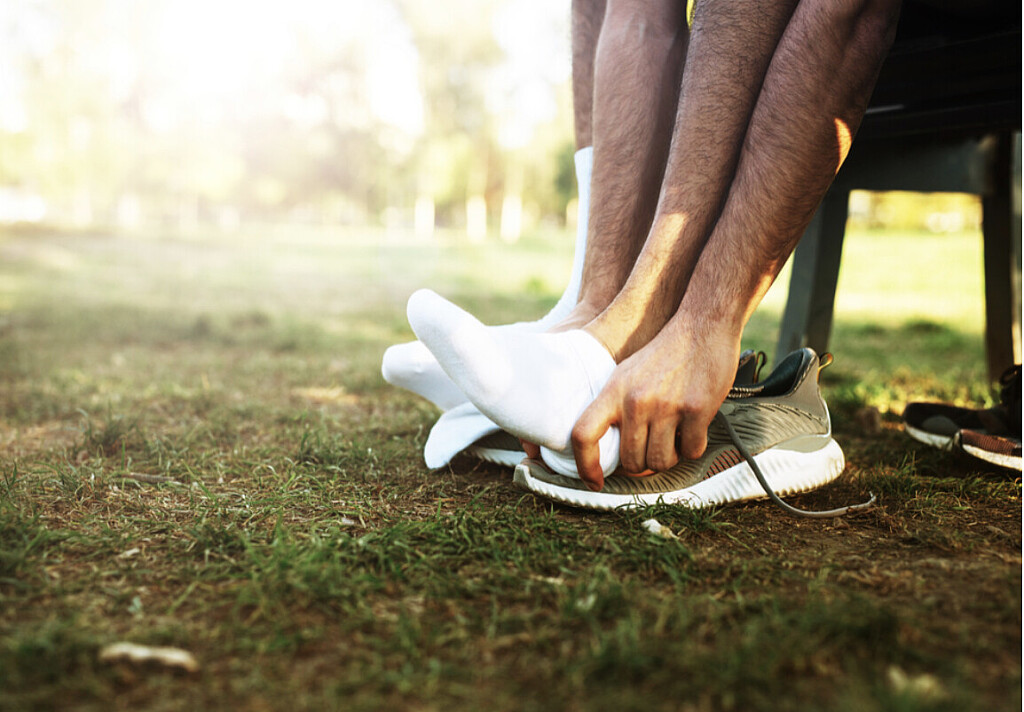
Let’s get real for a moment: cotton is unpleasant for runners. Why? It holds onto sweat and it’s rough to the touch. Ever see a runner with bloody nipples? It’s most likely caused by a cotton shirt. The same goes for cotton socks. Find you’re finishing every run with painful blisters? Your socks may be to blame.
That’s why runners love high-performance running socks — socks made with blister-resistant materials like mohair and merino wool. Some of the most popular brands include Balega socks and Feetures merino wool socks.
Wind vest, jacket and pants
No one likes a stiff breeze. It’s unpleasant and sends a shiver up your spine. It’s best for runners to avoid them at all times, which makes wind vests, jackets and pants ideal for the daily runner.
Spikes
Winter runners are always in need of added traction. Whether on trails or roads, they need to do all they can do to avoid a slip and fall, which could cause serious injury. The best way to avoid them altogether is with a pair of spikes, like Kahtoola NANOspikes Traction System. Worn around the shoe, it increases friction between shoes and the ground, helping to keep slips and falls at bay.
Illumination vest
Running in the early morning or late at night? You need to remain seen by oncoming motorists. Illumination vests make that easy. The simple construction worker vest can easily solve this, making it easy to stay seen while out on the roads in the dark.

Headlamps
Similarly, a runner should be able to see where they’re going, too. Headlamps make it easy to see the ground in front of them, from the ends of sidewalks to frost heaves to potholes. Furthermore, they enhance a runner’s visibility to oncoming motorists, as a shining light will capture more attention than a reflective vest or LED-illuminated vest.
Hydration bottles
Long runs require hydration and no runner wants to hold onto a Poland Spring water bottle in their hand. Instead, let them simply carry it with them. Handheld hydration bottles make it easy to bring water while on the go. Most bottles feature a small strap which wraps around the hand, which saves a runner from having to grip the bottle their entire run.
Foam roller
Running pains happen. Sometimes it’s a strained muscle, other times it’s a pained knee caused by a tight hip and glute. Foam rollers make it easy to break up muscle knots, as the runner can glide over the roller at their own pace, slowly working out knots so as to loosen muscles.
Gel packets
Running burns calories, particularly sugars and carbohydrates. After enough time, the body becomes depleted, running out of energy. When that happens, a runner hits the wall. GU Gels are trusted by many runners, as they provide the carbs and sugar they need to continue performing. With gels, every long run gets a little easier.
Nuun Sport Electrolyte Tablets
Hydration matters, but sometimes you need some extra energy to keep your pep in your step. Nuun Sport tablets are a great option for runners, as they provide essential sugars, salt and carbohydrates to fuel a high-intensity workout. Simply tossed into a bottle of water, they dissolve over time, infusing with the water to provide the nutrients a runner needs to keep on running.
Bluetooth earbuds

Many people rely on music to fuel their runs. Traditional earbuds don’t cut it. The wires get in the way and sweat can cause them to short out. Don’t take your chances. Cut the cord and upgrade. Bose Sports Earbuds are a reliable option that many runners love. As bluetooth headphones, they simply connect to a runner’s phone without requiring any cables. Further, they’re designed to be protective against sweat, meaning a runner is able to sweat as much as they like, all with no problem.
Medical alert bracelet
You never want to take a risk with your personal safety. Rather than taking your chances, you can carry your personal information with you wherever you go. In the event of an accident, a medical alert bracelet will inform strangers and EMS personnel of your name, information and medical history — which could be a lifesaver in a dire emergency.
Runners can either wear a traditional bracelet or can get an Apple Watch medical alert bracelet which can take the place of their basic Apple Watch bracelet.
Polarized sunglasses
Don’t let the sunshine get you done. Runners can benefit from sunglasses to avoid added fatigue. It can also help a runner see more clearly, whether out on the open road or on a bright, snowy day. Oakley sports sunglasses are a great option for high-end sunglasses, while Goodr running sunglasses are an affordable option everyone can rely on.
There’s more out there for runners, though. This list is just the tip of the iceberg. From running shoes to GPS watches to recovery sandals to moisture-wicking beanies, you can continue your search for the best gift for the runner in your life. Looking for something quick? One of the above gifts is sure to put a smile on any runner’s face.
(11/28/21) Views: 183

How to Properly Prepare for a Cold Run
Winter is almost here. It feels wild to think about. You were just finishing your summer long runs, drenched in sweat and tired as a dog, and now you’re shivering the second you step out the door and see snowflakes falling from the sky. How do you stave off those shivers? How do you properly prepare for a cold run?
While your first inclination may be to say, “Screw this!” and head back inside and bundle up under a blanket, you should get back outside. Running in the cold is actually beneficial for overall health, giving you headspace among those cold, clustered winter months. But it’s only good for you as long as you properly prepare for your run.
From warming up inside to wearing medical alert jewelry while out of the house, here are the simple ways you can prepare for a cold run — and stay safe while doing so.
1. Warm up inside
The best thing you can do prior to a cold-weather run is to warm up indoors. A pre-run warm-up should always be an essential, as it will help loosen up your muscles to prevent injury. This should involve stretching, but maybe not the type you’re thinking of.
Static stretching can actually hurt your muscles, as you’re essentially stretching them while still stiff. Instead, you should do dynamic stretching, stretching that involves full-body movement. This will help get your blood pumping, which, in turn, will help your muscles loosen up prior to your run to come.
After doing some dynamic stretching, you can even hop around for a bit. It may sound strange, but it will put some light stress on your muscles. By hopping around for a few minutes, you can properly prepare your muscles for the miles you intend to take down.
2. Lace up with waterproof shoes
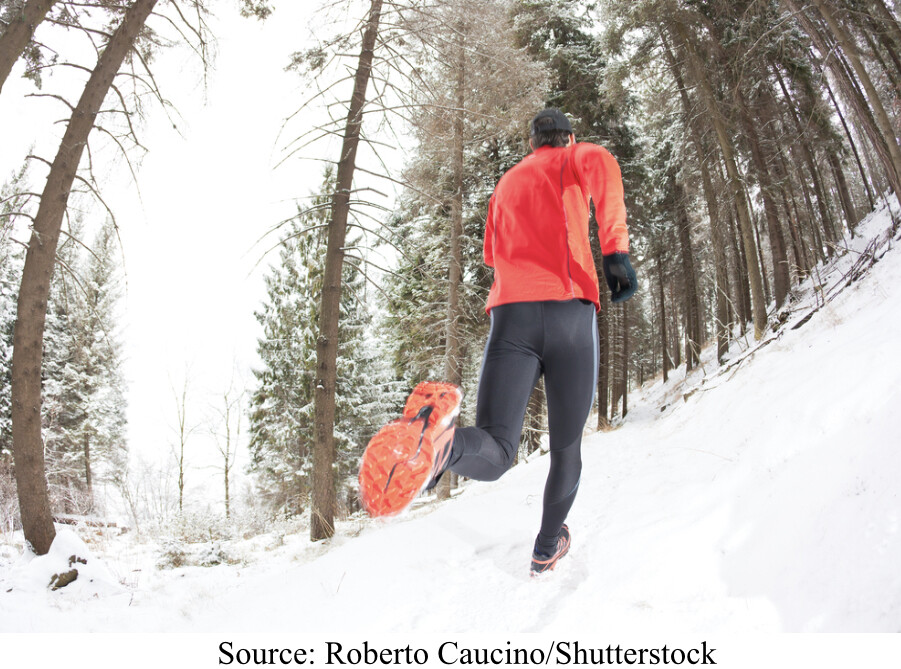
Runners know that proper footwear matters. But shoes designed for your gait and pronation only go so far in the winter. You also need shoes that are built for winter weather.
Winter running shoes tend to have two features:
● Rugged outsoles designed for added traction
● Waterproof yet breathable material to keep your feet cool and dry
Traction is a must, especially with black ice out on the road. While you may love wearing your Hoka Cliftons year round, you’re going to want a shoe that provides more friction while running on roads and trails in winter.
3. Remember to bundle up
You also need to dress the part to tackle a cold-weather run. Windproof running clothes are your best option, as they’ll protect your skin against that stiff, sharp wind without causing you to overheat, as waterproof clothing tends to do. This can include a windproof jacket and windproof pants.
However, you should have a waterproof jacket and pants for snowy weather. Moreover, merino wool socks will go a long way to keeping your feet warm and dry during the winter. And even if your feet happen to get wet, the wool socks will help pull moisture away from the skin, keeping major calluses at bay.
4. Don’t overdress
While you may feel compelled to throw on seven layers for that 15 degrees Fahrenheit day, you should reconsider. A good rule of thumb to remember is to dress as if it’s 10 degrees Fahrenheit warmer out than it is.
Why? Your body is going to warm up once you start running. That means what felt comfortable once you first left the house will suddenly feel like too many layers after running just two miles. For instance, for a 30-degree day, you’ll still want to wear a hat, gloves, thicker socks, windpants, a t-shirt and a wind jacket. However, you won’t need that extra long-sleeve shirt above your t-shirt and below your jacket.
5. Remember your hat and mittens
Now that we mentioned it, here’s your reminder: don’t leave home without a hat or mittens. The problem with running in cold weather is that your extremities are open to the surroundings. A hat and a pair of gloves can really protect you.
Better yet, it’s not a problem if you have to ditch them at some point — like if you feel your head or hands sweating. You can just take them off and either carry them or stuff them in your pants or jacket. Simple as that.
6. Hydrate before
Just because it’s cold doesn’t mean you’re not going to sweat. You still need to hydrate before your run. While you may not be sweating as much as you do in the summer, your body is still going to be burning calories. Honestly, it might be burning more than in the summertime, especially if you’re still running at the same mile-pace, as your body will be using energy to keep you warm.
So drink a glass of water at least 30 minutes before your run. While you’re at it, have a carb-loaded snack to get that kick of energy you need.
7. Wear medical alert jewelry
Running in the winter does pose some dangers. There’s frostbite, black ice, cars losing traction and more. You shouldn’t leave home without a personal safety device. For runners, that’s as simple as wearing an Apple Watch medical alert ID. If an accident were to happen, you’ll be able to inform strangers of your name and medical information, keeping you safe in the face of a medical emergency.

8. Know your route ahead of time
Planning your running route ahead of time is a must, especially for the winter. Knowing where you’re going ahead of time will allow you to safely finish your run — avoiding streets you shouldn’t be going down, roadways that may be dangerous and more. Moreover, you can tell family and friends what route you’ll be taking, in the event that you get injured and you can’t get in touch with them.
This winter, take your time before heading out the door for your cold-weather run. Make sure you’re dressed properly and have everything you need. After that, happy running!
(11/29/21) Views: 151

What not to eat after a run, avoid these foods when choosing your post-workout meal
Refueling after a run is important, but that doesn’t mean you just shovel anything and everything into your mouth as soon as you walk in the door. Some foods will make you feel satisfied and re-energized, while others may leave you sluggish, with an upset stomach or worse.
Figuring out what works for you might take some trial and error, but if you’re still trying to figure it out, you may want to steer clear of the following foods.
Nothing tastes better than a big slice of pizza after a long run, but unfortunately, it’s not your best post-run food option. While it can have a good mixture of carbohydrates and protein (depending on what toppings you choose), the problem with pizza is that it can be pretty greasy. When you run, there’s less blood flow to your gut, which can make digestion more of a challenge. High-fat foods can be harder to digest already, so immediately after a run, you may want to give your gut a break and avoid the cheese.
Spicy food

Like high-fat foods, spicy foods can also be harder to digest, so you might want to leave the hot sauce off of your post-workout meal.
Carbonated beverages
This includes pop, beer and soda water. Again, the bubbles can be hard on your stomach, and they’ll fill you up too quickly so you won’t be able to drink as much water. It also might ruin your appetite for your post-workout meal. You’re better off having flat water (or a sports recovery drink first) and then moving on to the bubbles once you’ve re-hydrated and re-fueled if you desire.
Fried foods

Again — heavy, high-fat foods can be hard to digest, so save these for a few hours later when your stomach has had time to settle.
Fruit smoothies
Yes, this one may come as a shock to you. A lot of runners swear by their post-run smoothie, but it might not be a good idea for everyone because of the high fructose content. Fructose is the sugar found in fruit, and when you make a smoothie, you tend to consume more fruit, and thus more fructose, than you would if you were eating it whole. Fructose can be hard on your stomach, so if you’re feeling gassy or uncomfortable after your post-run smoothie, you may want to consider switching to whole fruit instead.
Just water
Yes, you should replenish your fluids after a workout, but if that’s all you’re consuming after a run you’re missing a major opportunity to kick-start the recovery process. Your metabolic rate remains elevated for about 30 minutes after your run, so if you eat something within that 30-minute window, you can dramatically improve your recovery and reduce muscle soreness.
(11/29/21) Views: 110Brittany Hambleton
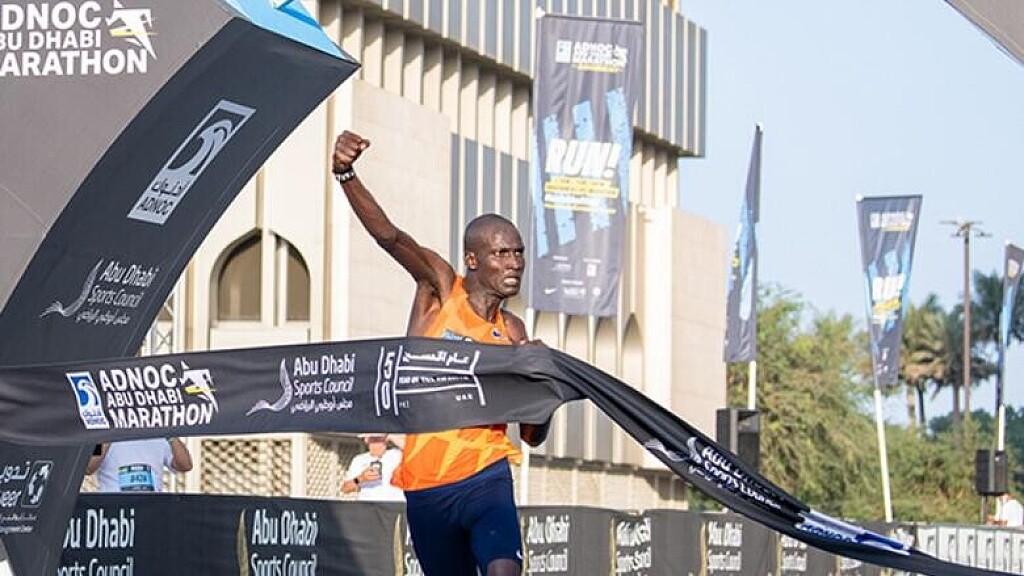
Kenyans Titus Ekiru and Judith Jeptum Korir dominate in Abu Dhabi
Judith Jeptum Korir and Titus Ekiru landed a Kenyan double at the ADNOC Abu Dhabi Marathon, winning by significant margins at the World Athletics Elite Label road race on Friday (26).
The heat and humidity put paid to any truly fast times, so the course records remained intact. But Korir and Ekiru maintained their highly consistent career record over the marathon, winning in 2:22:30 and 2:06:13 respectively.

Korir, a former winner in Belgrade, Venice and Izmir, was part of a five-woman pack during the early stages, passing through 10km in 33:24. By the time the half-way point was reached in 1:10:27, just three women – Korir, 2009 world 10,000m bronze medalist Wude Yimer and Olympics seventh-place finisher Eunice Chumba – remained at the front.
Shortly after, Korir started to pull away from Yimer and Chumba. She reached 30km in 1:40:04, almost two minutes ahead of her closest pursuers and still on schedule to break the course record of 2:21:11, and by 40km her lead had grown to almost four minutes.
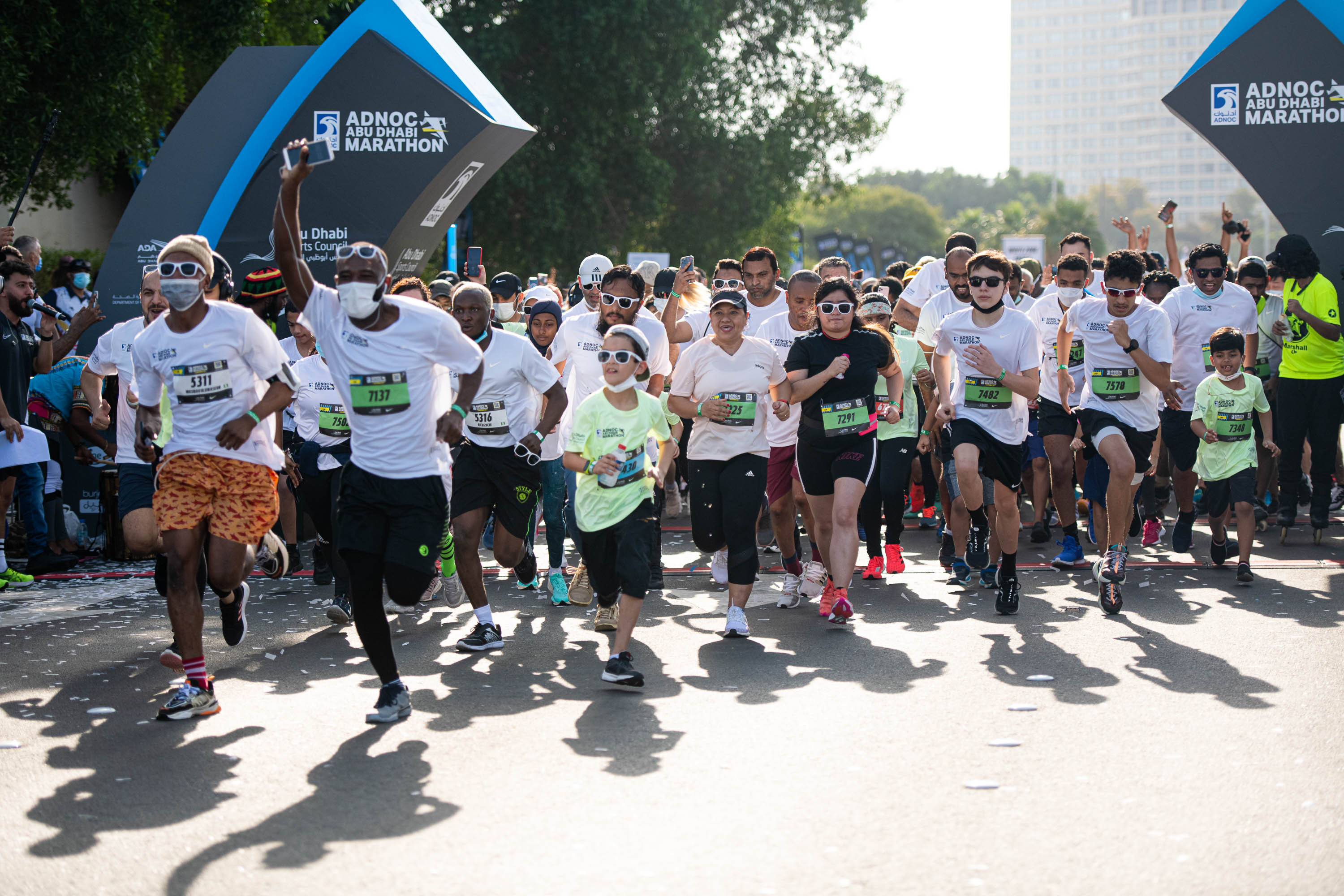
The conditions finally started to take their toll on Korir in the closing stages as her pace dropped, but by that point she had a comfortable margin and everyone else in the field were similarly feeling the effects of the heat. Korir crossed the line in 2:22:30, smashing her PB by more than four minutes. The 24-year-old, who earlier this year set a half marathon PB of 1:06:24, has now notched up four marathon victories from six races.
Chumba held on for second place in 2:26:01 while Uganda’s Immaculate Chemutai came through to take third in 2:28:30.
Ekiru, who was competing for the first time since setting a world-leading 2:02:57 in Milan in May, set out confidently in the hope that he could challenge the course record of 2:04:40. Once the last of the pacemakers had dropped out at 15km, reached in 44:21, Ekiru upped the tempo and reached the half-way point in 1:01:46 with just defending champion Reuben Kipyego by his side.
The Kenyan duo ran together for a few more kilometers before Ekiru started to run away, and by 30km Ekiru’s lead had grown to about 100 meters. Although Ekiru’s pace dropped in the closing stages, like women’s winner Korir, his lead was insurmountable and he won by more than a minute-and-a-half, crossing the line in 2:06:13. The 29-year-old has now won seven of the eight marathons he has completed.
Tanzania’s 2017 world bronze medalist Alphonce Felix Simbu overtook Kipyego with about four kilometers to go and took second place in 2:07:50. Kipyego held on for third in 2:08:25, finishing 21 seconds ahead of two-time world champion Abel Kirui.
(11/26/21) Views: 99World Athletics

Epic Jacob Kiplimo joins world record class
Jacob Kiplimo is trending in Uganda and the global athletics circles. And his name, like counterpart Joshua Cheptegei, could remain on the lips of many for long.
A week after clocking 21, Kiplimo broke the 21km world record (WR) at the Lisbon Half-Marathon in Portugal on Sunday to put the icing on the celebration.

Clad in his customary orange and blue bib, Kiplimo stunned the elite field when he exuded calm authority before crossing the white tape in a time of 57 minutes and 31 seconds.
“I’m so happy,” said Kiplimo, who ran solo up-front for the second half of the race, beat Kenyan Kandie Kibiwott’s previous WR mark set in Valencia, Spain, on December 2, 2020, by a second.
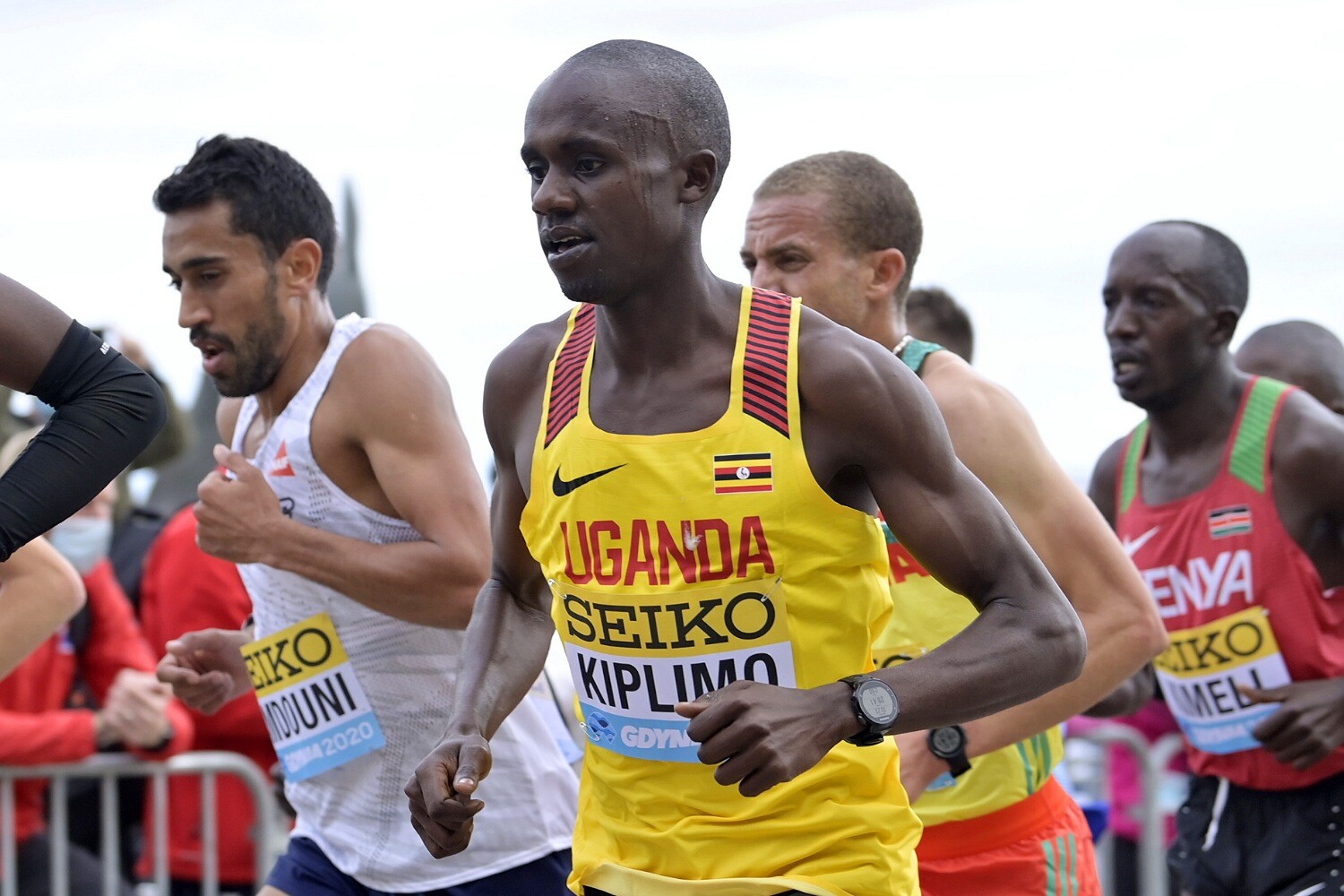
Then in Valencia, Kibiwott won in 57:32 and Kiplimo was second with 57:37e. But on Sunday, Kiplimo, running only his third career 21km race, obliterated Kibiwott’s mark in style.
“I want to say thanks to everyone who has supported me and cheered me,” the youngster from Kween District said.“This is the thing that I have been looking for.
Remember last year when we were in Valencia, I missed the WR by a few seconds. I knew I was going to break it. My training for the last two weeks was perfect,” he added.
(11/29/21) Views: 94Allan Darren Kyeyune
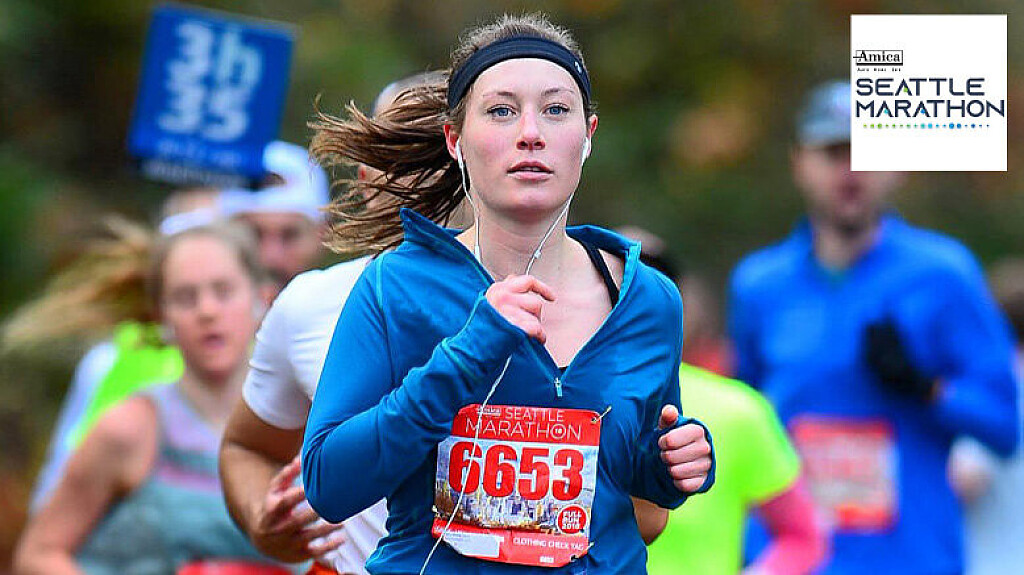
Seattle Marathon returns in person with new course and COVID measures
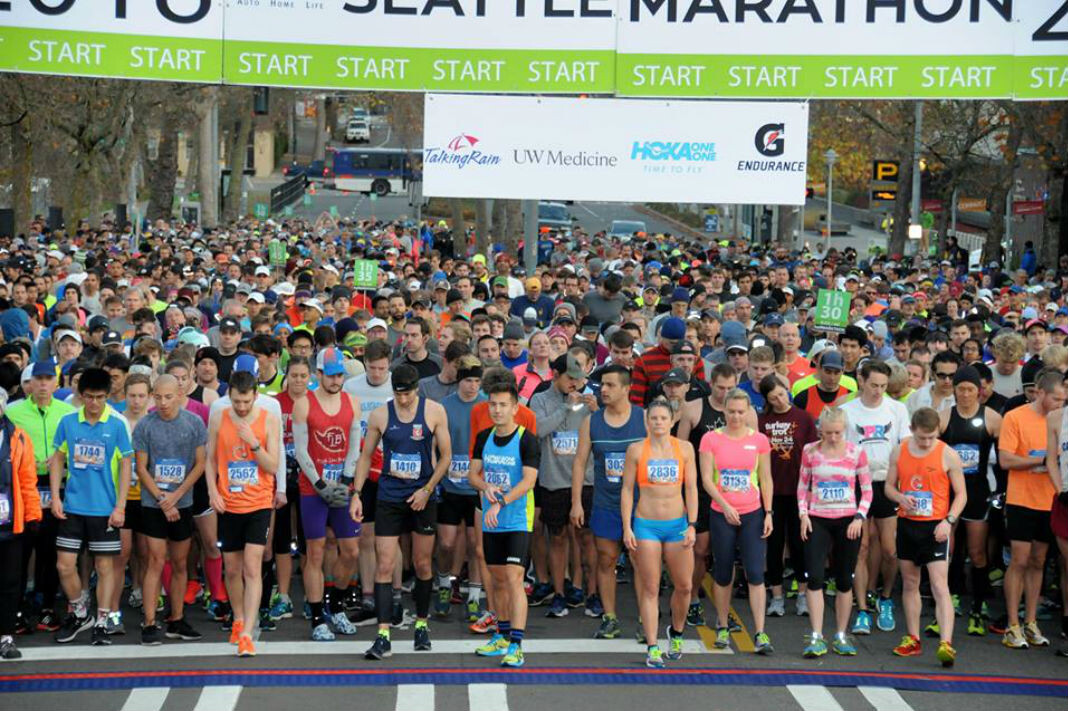
The Seattle Marathon will be held in person for the first time since the pandemic began, this Sunday with COVID-19 protocols in place. This year’s marathon and half-marathon races feature a new course that is less likely to affect Seattle traffic but will offer less room for runners to spread out.
The course doesn’t start and finish at Seattle Center or take as many of the scenic roads as it has traditionally. Runners will instead toe the starting line at Gas Works Park and run mainly along the I-5 express lanes and on a segment of the Burke-Gilman Trail in Northeast Seattle.
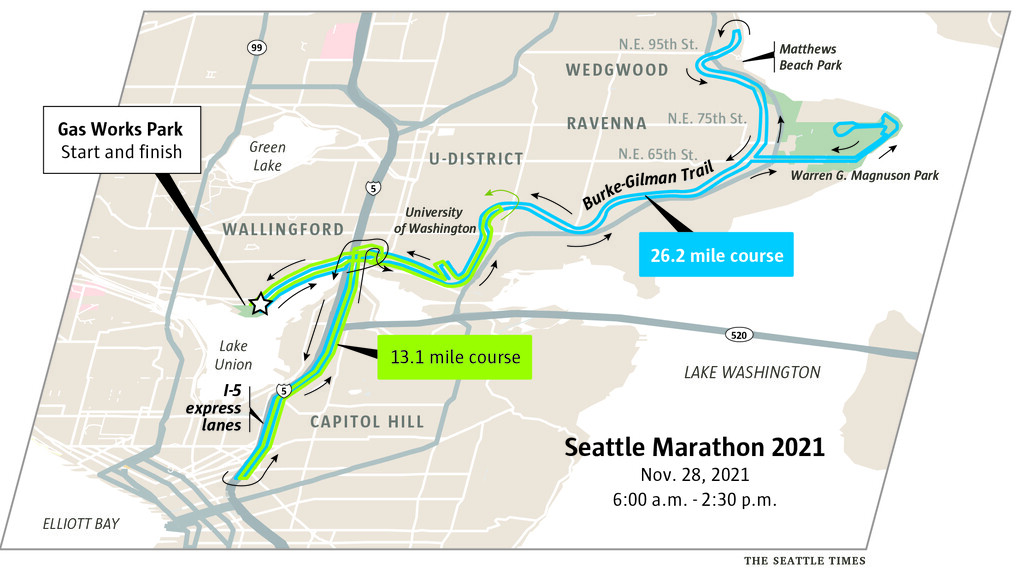
Participants of the half-marathon will make a U-turn on the trail after mile 10. Those running the full 26.2 miles will go on to do a loop around Magnuson Park, between miles 12 and 16, before reaching their own U-turn just past Matthews Beach Park.
The I-5 express lanes will close between 4:30 a.m. and 9:30 a.m. Parts of North Northlake Way, Sixth Avenue Northeast, Northeast 40th Street and Seventh Avenue will close starting at 5:55 a.m., with all roads expected to be fully open by 2:30 p.m., according to the event website.
Gas Works Park, Magnuson Park and the Burke-Gilman Trail will remain open to the public while runners are on the course. The Gas Works Park parking lot will be closed.
Proof of vaccination or a negative COVID test taken within 72 hours of the event are required to participate. Runners must also wear masks while gathering at the starting line in Gas Works Park and after finishing the race. The event is scheduled to start at 6 a.m.
The annual Seattle Marathon, the oldest marathon in the Pacific Northwest, was first held in 1970. Last year the race was virtual due to the pandemic, making this year’s in-person event a welcome return.
(11/27/21) Views: 83

Shelby Houlihan starts GoFundMe page to fund her legal fight
Five months after receiving a four-year ban from competition, American 1,500m and 5,00m record-holder Shelby Houlihan has started a GoFundMe page and website asking for support to help pay for the legal fees she’s incurred while fighting her case. She has set a goal for $300,000, and is asking her supporters to spread the word about what she calls “the injustice of the situation.”
A brief recap

In December 2020 Houlihan tested positive for the steroid nandrolone and in June 2021, the Athletics Integrity Unit (AIU) handed her a four-year ban from the sport. After the ban was announced, she made a public statement on her Instagram page stating her innocence and claimed the positive result was due to contaminated meat she ate in a burrito from a food truck on the day of the test.
Houlihan appealed the ban and attempted to prove her innocence, but the Court of Arbitration for Sport (CAS) upheld the ruling against her. The entire 44-page CAS decision was made was released in early September, which included the following statement:
“The Athlete’s explanation that the 19-NA in her sample resulted from her consumption of the meat of an uncastrated boar simply cannot be accepted. The explanation presupposes a cascade of factual and scientific improbabilities, which means that its composite probability is (very) close to zero.”

As a final effort to fight her ban, Houlihan has since announced that she plans to appeal her case to the Swiss Federal Tribunal.
Her bid for help has drawn mixed reviews from running fans. Those who believe in her innocence have been eager to support her cause, but detractors are arguing she should accept her ban and move on.
Many more have wondered why someone who is supposedly still backed by Nike requires financial assistance, and have speculated that the brand may be backing away from the situation, but the chatter is largely hearsay, since neither Houlihan nor Nike have made any public statement regarding their relationship. Houlihan’s case will not be brought before the Swiss Tribunal until 2022.
(11/26/21) Views: 82Brittany Hambleton
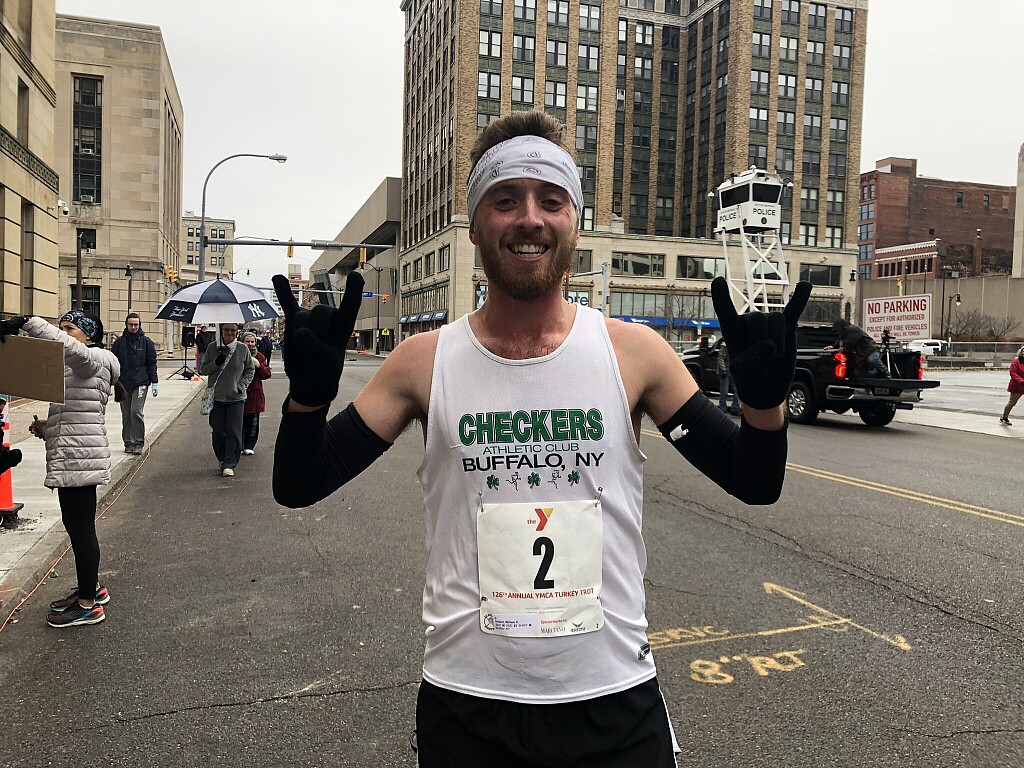
Kenmore’s Liam Hilbert who first ran Turkey Trot at age 9 wins annual race
When Kenmore’s Liam Hilbert says it’s a lifelong dream to win a YMCA Turkey Trot, he isn’t kidding.
Hilbert has run the trot for 15 consecutive years in what has become a family tradition, but he’s only 23. His first one was at 9 years old.
He now has that victory after winning Thursday’s 8K race in 24 minutes, 43 seconds.
After a year in which the in-person field was restricted by Covid-19 protocols, more than 12,000 runners and walkers took to Delaware Avenue for the 126th edition of what is billed as the longest consecutively run footrace in North America.
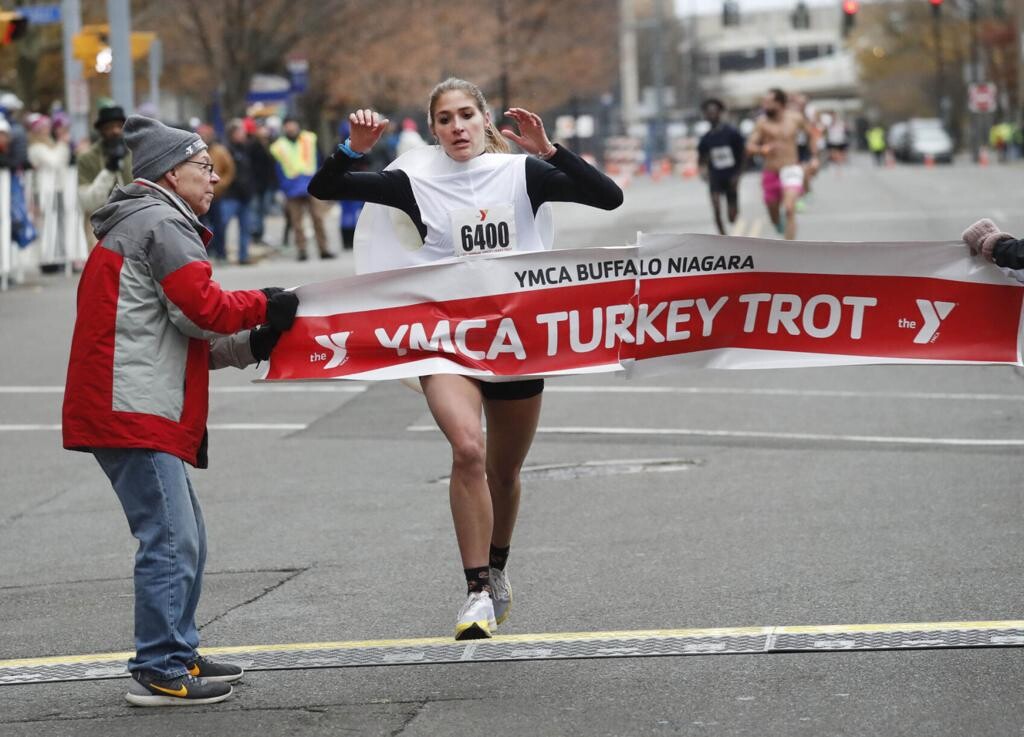
University of Wisconsin runner and Nardin graduate Danielle Orie topped the women’s field in 27:57. Orie was home for Thanksgiving break after running in the NCAA Division I Championships last weekend.
Hilbert is a former Monsignor Martin champion in the 1,600 meters and 3,000 meters at St. Joe’s and went to run at the University at Buffalo. He was the Mid-American Conference outdoor champion in the 10,000 meters last spring.
Hilbert ran the race with his uncle, James Waldron, with whom he had run the his first few Turkey Trots.
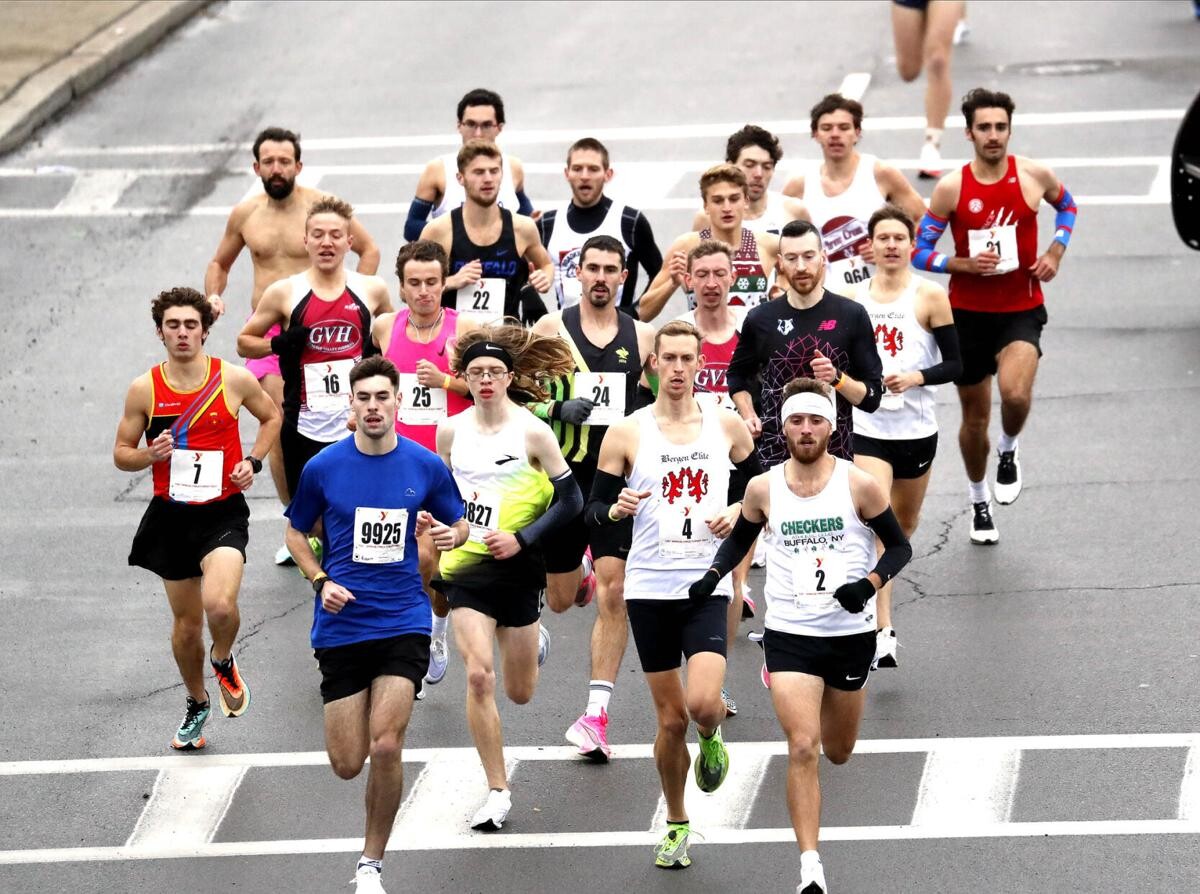
“My family was there to cheer me on,” Hilbert said.
Buffalo’s Thomas Appenheimer was second in 24:27, followed by Steven Haagsma of Gowanda (25:00), Rush’s Brennan Root (25:09) and Rochester’s Paul Suflita (25:28). Appenheimer runs at Canisius College and finished 11th in the Metro Atlantic Athletic Conference championships last month. Haagsma is a former Division III runner at Calvin College in Michigan.
For Orie, it’s been a busy fall in her first year at Wisconsin.
Orie ran for Penn as an undergraduate and transferred in the spring as she pursues her law degree. She finished 25th in the Big Ten Championships and then 22nd in the Great Lakes Region championship to qualify for the NCAAs. She finished 112th, covering the 6K in 20:34.2. Wisconsin finished 12th in the nation.
Sarah Danner of Gowanda was second in 28:21, followed by Pittsburgh’s Margo Malone in 28:38, Alexandra Cadicamo in 28:58 and Glenwood’s Aileen Hoak-Lange in 29:16.
Hoak-Lange, in her 29th consecutive trot, was the top woman in last year’s event as she was selected among 125 in-person runners.
(11/26/21) Views: 76Robert Kirkham / Buffalo News

Five reasons why runners make good leaders, running a race and running a business have more in common than you might think
Running a race and running a business have a lot in common. They both require planning, commitment, troubleshooting and persistence in order to achieve success. For this reason, runners already have a lot of the skills required to be effective leaders. Not convinced? Check out these five reasons why your experience as a runner can help you in leadership roles.
1.- You know how to set goals… and believe in them
Runners understand how to set appropriate goals based on where they’re at now, the circumstances they’re currently dealing with and the timeline they have to achieve their goal. This is a great skill to have as a leader because, similarly to running goals, setting targets that are either too easy or too unrealistic can set your organization up for failure.

You also understand the importance of believing in the goals you set for yourself. Most people are willing to work hard, but if they don’t believe they’ll ultimately achieve success, they’re more likely to give up rather than try and fail. As a runner, you’ve learned how to visualize your success and believe in your training, and you can use these skills to inspire and encourage others in your organization.
2.- You know how to create sustainable change

When you first started running, you didn’t start by tackling a marathon, did you? You likely began by going for a short, easy run and gradually worked your way up from there. Running requires you to adopt new habits and apply them consistently if you want to be successful, and to make changes gradually in order for them to be sustainable. Success in business is the same, and practicing these skills in your running training will help you become a better leader.
3.- You understand the importance of celebrating the small wins
Achieving success in business doesn’t happen in only a few days, weeks or even months. In most cases, large-scale success requires years of work and patience, which is not that dissimilar to running. You may set a goal for yourself like completing your first marathon or running a sub-60 minute 10K, but you know how to celebrate the smaller wins along the way, like running your first half-marathon or setting a new personal best in the 10K, even if it’s not quite your goal time.
Early victories and small wins build confidence and motivate you (and others in your organization) to keep working toward the over-arching goal. In the same way that you would celebrate that new PB en route to your sub-60 10K, you’ll make sure you celebrate every step in the right direction with your organization, too.
4.- You understand the fears and concerns of your team
You know what it’s like to stare a big, daunting goal in the face. Just like you weren’t sure if you could run your first 5K, 10K or marathon, others in your organization may be feeling similarly uncertain about the ambitious goals you’ve set as a team. Having addressed those same types of fears in your running life, you’ll be better equipped to help others in your organization work through them to achieve success.
5.- You know what it takes to succeed
Success in a race, regardless of the distance, is the result of several small improvements over time. Week after week, month after month, you lace up your shoes to get a little bit faster and run a little bit farther, one run and one race at a time. Success in business is the same: you build off of each small win, gradually working your way to the ultimate goal. Once you’ve achieved that goal, you create a new one and continue inching your way toward it.
By practicing this persistence and patience in your running life, you’ll be better at applying these skills in your role as a leader, and you’ll be able to pace your team in a measured and effective way to achieve overall success.
(12/01/21) Views: 75Brittany Hambleton
