

Running News Daily
Top Ten Stories of the Week
6/5/2021
These are the top ten stories based on views over the last week.
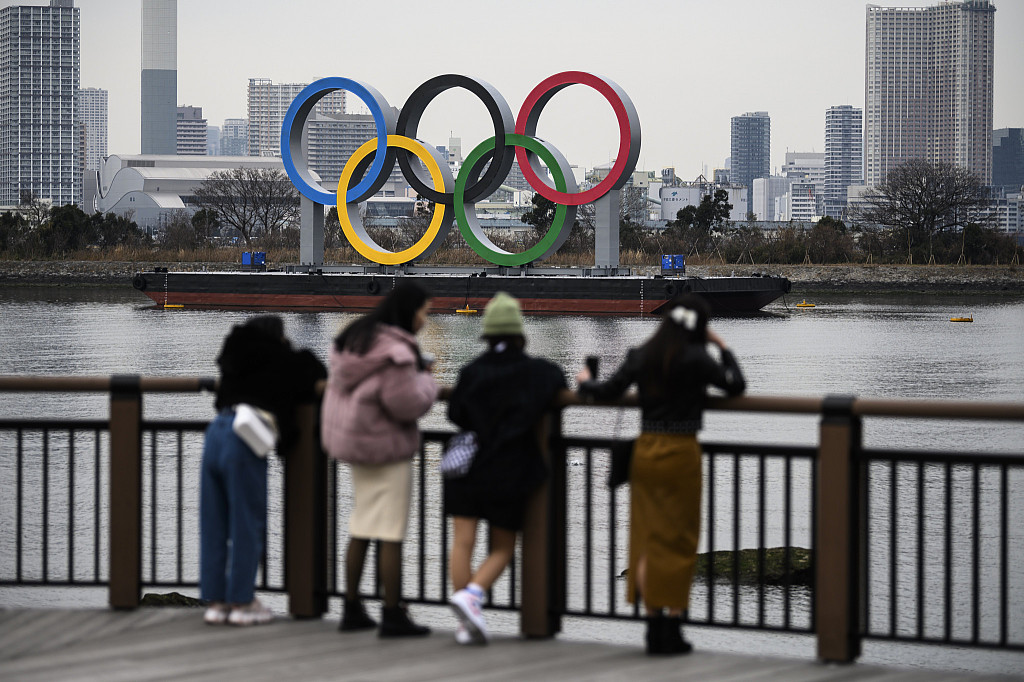


Japan will consider limited spectators for Tokyo Olympics
The Tokyo Organizing Committee will decide the specific number of spectators for various venues by late June. A ticket lottery is under consideration.
The Japanese government and the Tokyo Organizing Committee have begun to consider the feasibility of allowing spectators into the venues for the Tokyo Olympic and Paralympic Games, The Sankei Shimbun learned on May 28.
This shift in thinking is based on the fact that currently a maximum of 5,000 spectators are allowed at large events, even though Tokyo and some other regions are under an extended state of emergency until June 20.
The Tokyo Organizing Committee is forging ahead with the task of redesigning the system for selecting spectators by holding a drawing from among the tickets that have earlier been sold. It plans to decide the specific number of spectators for various venues by late June.

Debate Over Spectators
A decision has already been made to exclude overseas visitors from the audience for the 2020 Games. As for residents of Japan, however, a final decision will come later in June, along with the planned expiration of the current state of emergency, according to Seiko Hashimoto, president of the Tokyo Organizing Committee, who spoke at a news conference on May 28.
“We have to think about the issue in line with limits [on spectators] that the national government has come out with,” she said. “What is important is to take into account the medical and scientific basis.”
Some sectors advocate the cancelation of the Games, anxious about people from around the country traveling to Tokyo for the Olympics. Dr. Haruo Ozaki, chair of the Tokyo Medical Association, recently said, “The Games, if held, should at the very least be without spectators.”

The government relaxed restrictions on spectators at large events on May 12, when it extended to other areas some state of emergency provisions covering Tokyo. While acknowledging the need for caps on spectators, the government set the limits for large events at “less than half of capacity” up to “a maximum 5,000,” instead of the previous regulation calling for no spectators at all.
Since then, large events, such as professional baseball games, have been held with spectators in Tokyo, but there have been no clusters of COVID-19 infections.
Government officials say large events can be held safely “with scientifically valid permissible levels of the number of visitors by requiring them thoroughly to wear face masks and avoid overcrowding when entering and exiting the venues.”
In a press conference on May 28, Prime Minister Yoshihide Suga cited a number of pro baseball and J. League professional soccer matches in Japan, noting he believes the “numbers of spectators [at the Olympics] can be set in reference to these examples.”
Tokyo 2020 president Seiko Hashimoto told reporters, “There have been calls from many [Olympic] ticket holders who want to watch the Games at the venues to the extent possible.”
A Fair Ticket System — Unless COVID Surges
The number of tickets considered to be in play for the Games is estimated at approximately half the capacity of each venue, if tickets sold abroad and those canceled after the decision on last year’s delay are factored out. The organizing committee is designing a new ticketing system that keeps group ticket applications intact as they prepare for a new ticket lottery.
Nevertheless, the option remains available to hold the Games without spectators in the event of a recurrence of COVID-19 infections.
Dr. Shigeru Omi, chairman of the government advisory expert panel on the coronavirus crisis, told a session of the Health, Labor and Welfare Committee of the House of Representatives on May 28, “The COVID-19 infection risks can be controllable for athletes and the others at the stadiums [of the Tokyo Games].”
However, he warned, “There is also a risk of the infections increasing because of the number of people moving around during the Games.” His remarks suggested that the government could change its decision just before the event and hold the Games without spectators, depending on the severity of infections.
(05/31/21) Views: 168The Sankei Shimbun

Hobbs Kessler Breaks Alan Webb’s Legendary High School 1500m Record
Runs 3:34.36 to Get Under Olympic Qualifying Standard
In one of the most incredible runs ever by an American high schooler, 18-year-old Hobbs Kessler ran a 3:34.36 1,500m at the Portland Track Festival tonight to obliterate the US high school record. The previous record, 3:38.26, was set by Alan Webb as a 1500 split en route to his legendary 3:53.43 high school mile record at the 2001 Prefontaine Classic.


Webb’s 3:53.43 has gone unchallenged for two decades, but according to World Athletics’ scoring tables, Kessler’s 1500 tonight was the superior performance; converting to 3:51.34 for the mile (Webb’s 3:53.43 mile converts to 3:36.30 for 1500). Kessler’s time is also faster than Jim Ryun‘s US U20 1,500 record of 3:36.1 which had stood since 1966.
Kessler, who was last in the lead pack of ten with 200m to go, moved up well the final 100 meters, and threw up his hands just before the finish line as he saw the clock and finished 5th in a race won by reigning US champ Craig Engels in a personal best of 3:33.64. Engels, the 2019 US indoor/outdoor champion and a World Championship finalist, entered tonight with a pb of 3:34.04 — barely faster than what Kessler ran.
Kessler, a senior at Community High School in Ann Arbor, Mich., was already a high school record holder after running 3:57.66 in February to take down the indoor mile record. Now he is, quite simply, one of the best milers in the United States, regardless of age. His time was the third-best by an American in 2021 — only the winner Engels and fourth-placer Henry Wynne (3:34.08) have run faster this year.
How incredible was Kessler’s run? He didn’t just break the US high school record by almost four seconds; he also ran faster than the collegiate record of 3:34.68 set by Notre Dame’s Yared Nuguse two weeks ago. He also hit the Olympic standard of 3:35.00 — one of just seven Americans to have done so during the qualification period.
Kessler’s run was so much faster than any other high schooler has run for 1500 that it is hard to even make comparisons. Webb’s 3:53.43 at Prefontaine, which celebrated its 20th anniversary on Thursday, is the obvious one. Just like Webb, Kessler finished 5th in a field of pros, and just like Webb, Kessler was mowing them down over the final 100 meters.
As impressive as Kessler’s run was tonight, it was not the greatest ever performance by an American U20 athlete. That remains Jim Ryun’s 3:51.3 mile in July 1966 — a world record at the time that would stand for eight years. Ryun was just 19 years old at the time of that race, which came after his freshman year of college.
Kessler is a high school senior. His sometimes training partner, Nick Willis, an Olympic 1500m silver and bronze medallist, was in this race and tried to put it in perspective on the broadcast afterwards, “I became a spectator to the greatest performance ever by a high school miler,” said Willis, noting he himself went out at the pace prescribed for the rabbits for 800, yet was in last place. “It’s like Jim Ryun reincarnated again…He’s such a rookie in terms of running…. He’s so raw.”
(05/30/21) Views: 101Let’s Run
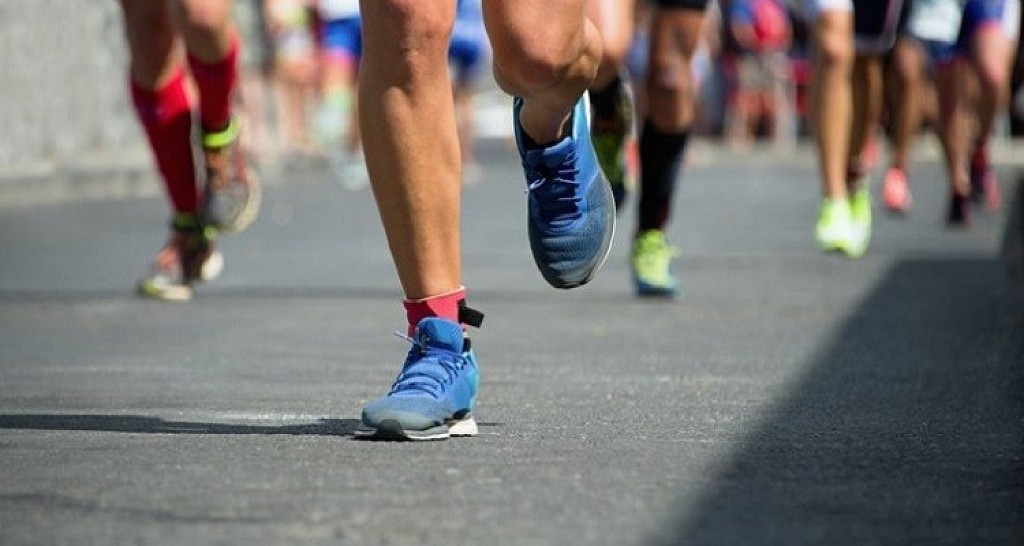
Research reveals running boom during Covid-19 pandemic
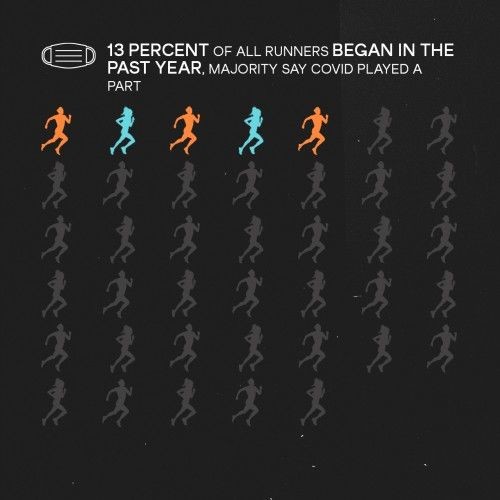
More people have taken up running during the Covid-19 pandemic, and all of those intend to maintain their newfound passion for the sport once the pandemic is over.
The power of running during this time has been revealed on Global Running Day, with new findings from Nielsen – the official research and intelligence supplier to World Athletics – highlighting how runners have increased their participation and the health benefits they gain from it.
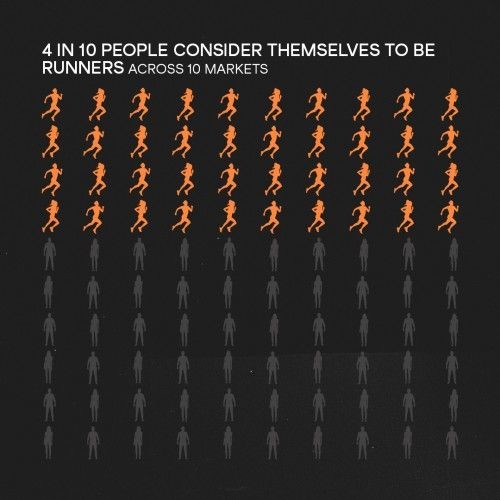
Across 10 surveyed countries, four in 10 people consider themselves to be runners and 30 per cent of those run at least once a week. Distinct from many other participation sports, recreational running has an equal participation split. Of all runners, 53% are men and 47% are women. More than a fifth of all runners reveal that they run more often than they did previously as a result of Covid-19 and most in that group say they will continue to run more often once the pandemic is over.
Among the many benefits of running is the chance to experience the ‘runner’s high’. “It begins with this peace of mind and then a greater ease of movement, a sense of power and confidence, optimism and hope, and you will often hear runners describe feeling loving and connected to everyone and everything,” explained Kelly McGonigal, a psychologist, educator and author of The Joy of Movement, during a recent World Athletics 'Run Anywhere' Webinar in collaboration with Mass Participation World.
The survey reflects this, with three quarters of all runners agreeing that ‘running is good for my mind as well as my body’.
Those aged 25-34 are most likely to be passionate about running, with 50 per cent agreeing that it is a part of who they are. Runners are more likely to consider themselves to be warm and friendly, family oriented, optimistic and passionate, showing greater confidence to associate themselves with positive personality characteristics.
For current runners, the biggest factors in the decision to run are health reasons, the ability to go at your own pace and not needing much equipment. Recent research by runrepeat.com also identified the growing popularity of running, supporting the findings of the Nielsen study.So, what are you waiting for? Why not mark Global Running Day by discovering the power of running for yourself?Further findings are available in the World Athletics and Nielsen Sports 'Recreational running consumer research study'.
(06/02/21) Views: 84World Athletics
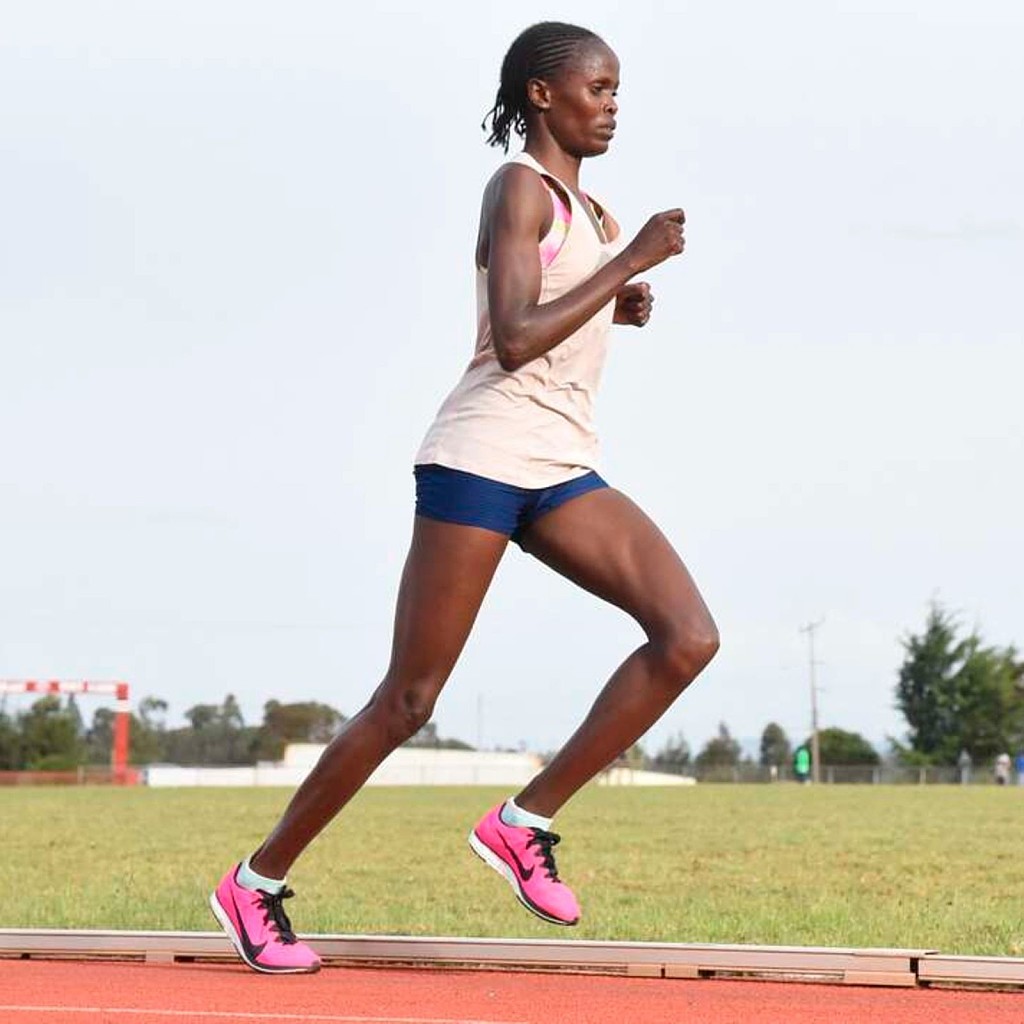
Women’s world marathon record holder Brigid Kosgei says she is fit and healthy again as she eyes Olympics
Brigid Kosgei says she is firmly focused on adding Olympic gold to her medal collection after fully recovering from a slight leg injury.
The 26-year old tested herself at last month’s Istanbul Half Marathon where she clocked 1:16:01 to finish a disappointing fifth, in a race won by compatriot and fellow Olympics-bound, world marathon champion Ruth Chepng’etich in a world record time of 1:04:02.
"I had some minor injury when I competed in Istanbul but now I’m back fully fit and I will concentrate all my training at Kapsait until departure to Olympics,” she said.
The marathoner said an Olympic gold would be a dream-come-true for her having spent most of her childhood and teenage years wishing for an opportunity to represent Kenya at the quadrennial event.
“While I was in Standard Eight, I watched the Olympic Games on television and I told myself ‘one day I’d also like to represent Kenya too. My home (Kapsowar) was quite a distance from school (10 kilometers) and I never wanted to be late that’s why I used to run quite a bit,’” she said in an earlier interview.
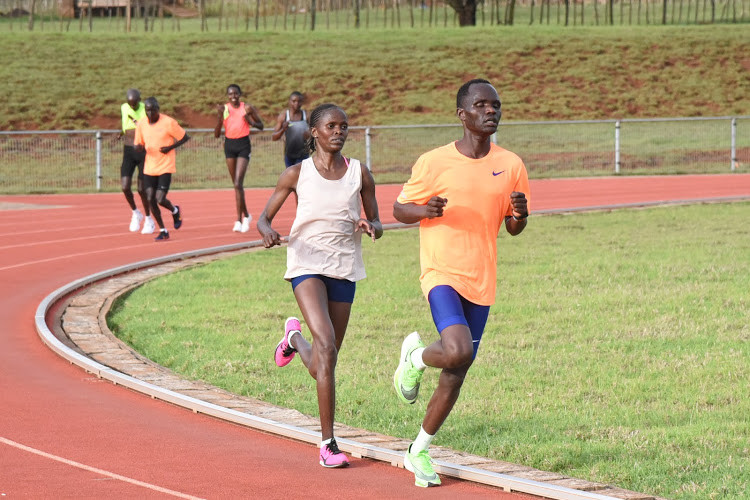
Kosgei has been hard at work in training, going through her paces at her Kapsait Training Camp in Elgeyo Marakwet under the watchful eye of her coach, former Honolulu Marathon champion Eric Kimaiyo.
Hers is a holistic training regime, which must take into account Kosgei's diet that hasn't changed much even in the build-up to Tokyo.
“My diet is the same and I haven’t changed anything. My body feels good and I want to push it to the limits and see how it responds on race day. We are mixing endurance and speed work with long runs," she said.
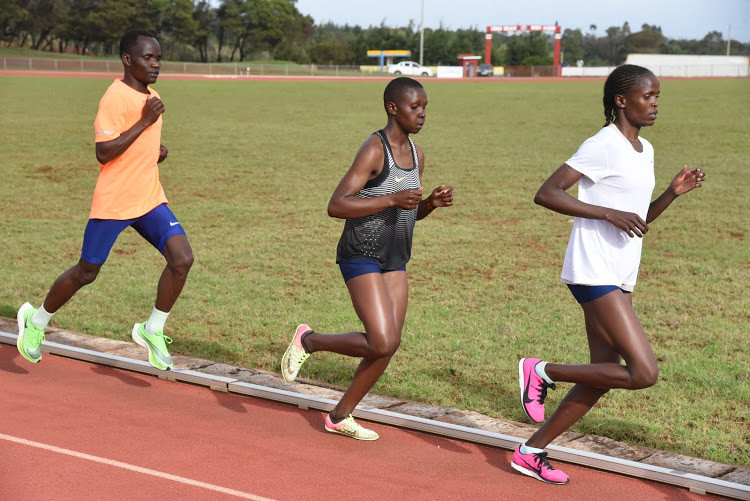
Kosgei, who is managed by the Italy-based Rosa Associati stable, has also been training in sunny conditions to ensure she acclimatises to the hot Japanese weather when she graces the Olympics.
She has responded perfectly to a recovery regimen that included sessions with Italian physiotherapist Sebastiano Erbi who spent some time monitoring her progress.
"The weather in Kapsait is good. Even when it rains, we still train, and even when it's cold, we also train; we are used to any weather condition here. We are also aware of the heat in Japan and that’s why we have some sessions at 4 pm when the sun is still out", Kosgei explains.
At times, the training group — which includes pacemakers — drive for close to two hours to Iten to access quality track sessions at the Lornah Kiplagat Academy and Stadium.
Kosgei has signed up with Stanbic Bank Kenya as ambassador in the bank’s new brand campaign dubbed "It Can Be."
The “It Can Be” campaign seeks to empower young men and women to achieve their big dreams with the world marathon record holder being used as an ambassador to motivate them.
(05/30/21) Views: 61Omondi Onyatta
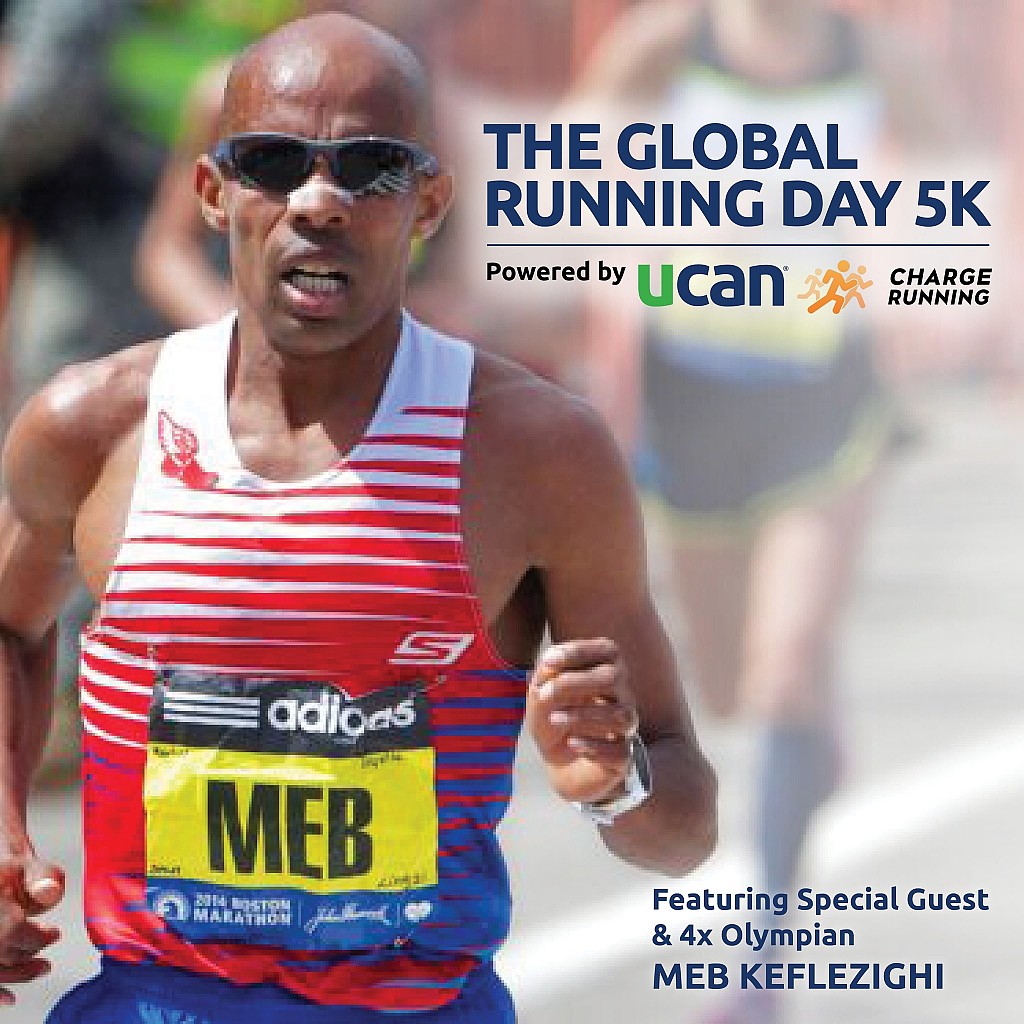
Run with 4x U.S. Olympian Meb Keflezighi on Global Running Day
Imagine arriving at the starting line of your race and getting some last minute advice from running legend Meb Keflezighi before the race begins.
Better yet, imagine Meb in your ear coaching you the entire way.

UCAN and Charge Running are partnering to create a one-of-a-kind virtual experience for runners with The Global Running Day 5K, poised to be the largest virtual 5k during this year’s annual celebration of running. The live event takes place Wednesday, June 2nd from 7-8 PM ET.
Meb will be featured on the mic alongside podcaster Ali Feller to motivate and entertain runners throughout their virtual 5K route.
“Running has given me so much opportunity in my life,” says Meb, a pastwinner of the Boston and NYC Marathons. “It’s an honor to be able to inspire others to get out there and chase their personal best or just enjoy being active on Global Running Day.”
The Global Running Day 5K will be hosted on the Charge Running app, which gives runners the feeling of an in-person road race with a live leaderboard, chat rooms and a live race announcer.
The entire experience is virtual which encourages participation from people all over the word.
“Partnering with UCAN on Global Running Day is an opportunity for Charge Running to do what it does best - Bring runners together from all over the world, in an engaging way and celebrate the love of running,” Said Julie Wallock, co-founder of the Charge Running App.
As part of the experience, a number of Olympic Trials qualifiers on Team UCAN will also be running the virtual race, so participants can test themselves against some of the fastest runners in the country.
“Our passion as a company is to enhance everyone’s pursuit of fitness,” says Shoba Murali, CEO of UCAN. “Combining the engaging technology of Charge Running with the innovative nutrition offered by UCAN is a great way for runners to take control of their fitness and health.”
For more information and to register for “The Global Running Day 5K, visit ucan.co/charge
About UCAN
Based in the US, UCAN is a company obsessed with the science of health and performance. UCAN enables athletes to gain confidence in their inherent abilities to surpass their performance by unlocking their body’s full potential through smart nutrition. UCAN products utilize SuperStarch®, a patented, slow-releasing complex carbohydrate that delivers steady, long-lasting energy without triggering an insulin response. Originally created for a child with a rare metabolic disorder, UCAN Energy Pouches, Powders, Energy Mix and Energy Bars are trusted by over 80 colleges, 40 pro teams, Olympic marathoners, elite triathletes, cyclists, group fitness coaches, thought leaders in health and performance, boxers, and recreational athletes for foundational nutrition to unlock performance. Learn more at ucan.co, and get the latest news in the UCAN world by following @GenUCAN on Facebook, Instagram and Twitter.
UCAN nutrition products are currently available in powder, pre-mixed, energy mix, and bar formats, in a variety of flavors, at 350+ specialty run, bike and tri stores around the country, Lifetime gyms, and can be purchased online at ucan.co or on Amazon.
About Charge Running
Charge Running is a mobile fitness app that provides LIVE coach-guided runs and races. With real-time coaches taking you through your workout, runners get updates on their current pace, average pace, distance, and more all while being ranked on a live leaderboard with other runners from all over the world.
(05/31/21) Views: 58
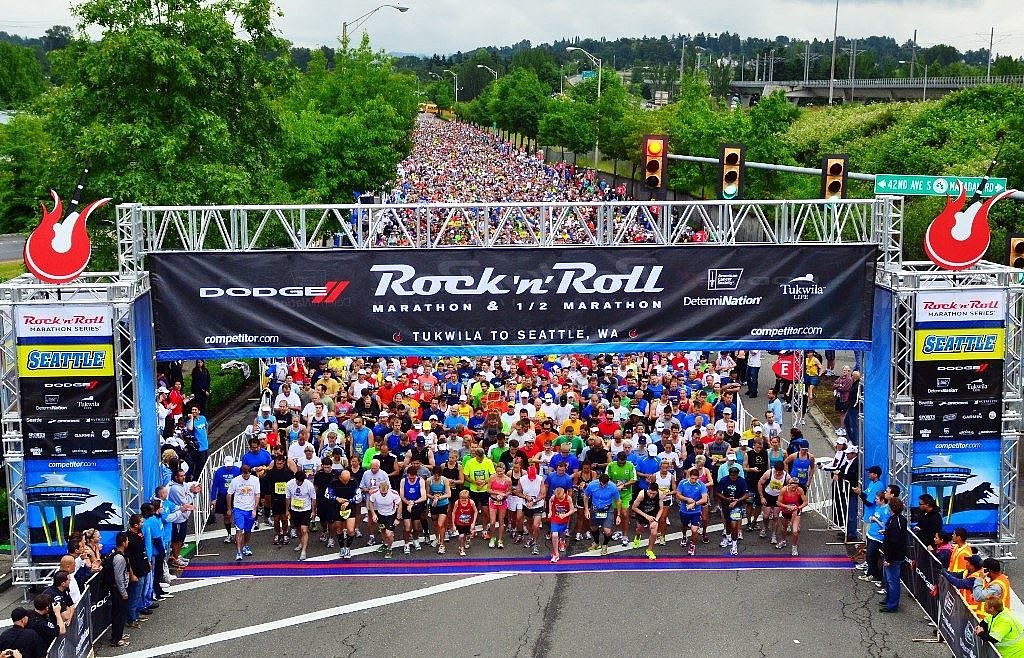
After cancelling its April event due to COVID-19, the St. Jude Rock n’ Roll Marathon has been rescheduled for November 20
St. Jude Rock n’ Roll Marathon has been rescheduled for November 20, 2021.
Sharing in a release, “After assessing all event scenarios, we are pleased to share the 2021 St. Jude Rock ‘n’ Roll Nashville Marathon & ½ Marathon, has been rescheduled for November 20, 2021.”
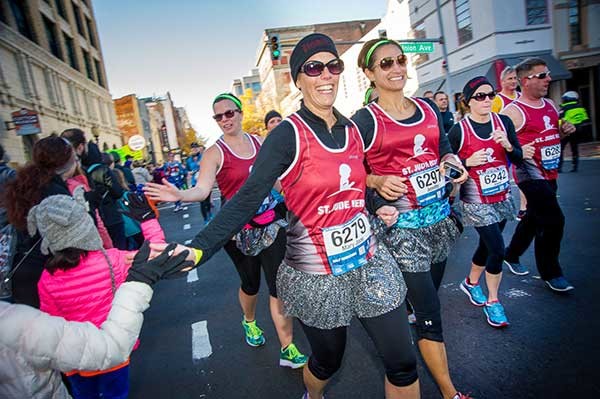
“We thank our participants for their commitment and look forward to providing them with an exceptional event experience later this year as they continue to pursue their goals,” continued the release.
No further updates have been shared in regards to entertainment. In addition, there’s no news on if the Health Expo Center will be available at Music City Center as was previously announced.
(06/01/21) Views: 47Donna Vissman

Great Britain´s Lee Thompson continues charge towards Tokyo Olympics with back-to-back wins
The 24-year-old, who trains at City of Sheffield and Dearne Athletic Club, finished first in two individual Men’s 400 Meters races in Manchester last week with times close to his personal best, according to trainer John Henson.
He is set to compete in the first fixture of the National Athletics League Premier division season on Sunday (June 6) before the Olympic trials on June 26 and 27. Both events will be held in Manchester.
"Things are going quite well at the moment,” John said.

"We’re entering quite a heavily competitive period leading up to the trials so we are looking forward to it.”
Worksop-based Lee, who specializes in 400 M but has begun competing in 200 M events to improve his race times, was scheduled to head to Switzerland for the Geneva International athletics meeting but quarantine restrictions mean that will no longer be possible.

“It’s a pity because he could have done with a couple of good European races to finalize his preparation but it is what it is,” said John.
"He’s very confident and the last couple of races have given him that extra bit of boost.”
Lee balances a full-time career as an accountant with athletics and earlier this month helped Great Britain and Northern Ireland’s mixed 4 x 400M relay team secured a historic Olympic qualification.
This summer will be the first time a mixed relay event will be held at an Olympics.
The delayed Games are scheduled to take place between July 23 and August 8.
(05/31/21) Views: 43Steve Jones

How to exercise safely in hot weather?
With global warming, runners are more likely to be training and competing in unusually hot weather. To effectively reduce the risk of exertional heat stroke (and death), runners should allow 10 to 14 days to acclimatize to exercising in hot weather. During acclimatization, your body adapts to dissipate more heat, thereby enabling you to run better in hot conditions. Most physiological adaptations occur between days 4 to 8 of heat exposure.
During the first week of being exposed to heat, you should have only one training session per day; no double workouts! Ideally, you will have access to cool fluids during exercise—more likely to be consumed—and you will frequently take small swigs of fluid throughout exercise, as opposed to gulping a large bolus of fluid all at once.

When exercising in the heat, you want to monitor your urine for color and quantity, and think WUT:
Weight: Is my morning weight lower than the day before?
Urine: Is my urine dark and concentrated?

Thirst: Am I thirsty upon awakening?
Yes answers signal you are starting the day underhydrated.
In terms of health risks, being adequately hydrated is more important than being heat-acclimatized (though being well hydrated and heat-acclimatized is ideal for maximizing thermoregulation). An adaptation to heat acclimatization is reduced sodium in sweat. Despite that adaptation, endurance runners who do extended exercise in the heat often fail to replace adequate sodium. Salty sweaters (who have gritty sodium crystals on their skin) should purposefully consume sodium-rich foods and fluids.
Some runners salt-load for a day or two before an event, but researchers advise against doing that. The kidneys do a good job of excreting excess sodium via urine. The additional urine loss can be counter-productive and hurt, not enhance, performance.
Runners should try to replace 70% to 80% of sodium and fluid lost during sweaty exercise. Knowing your sweat rate (by comparing pre- and post-exercise body weight) can reduce your risk of over- or under-hydrating. Drinking too much water is dangerous, because it dilutes the body’s sodium level and can lead to life-threatening hyponatremia (low sodium).
Of all electrolytes, sodium is the biggest concern. Endurance runners need to figure out how to replace sodium losses. Through trial and error, you can learn which salty foods taste good, settle well, and “work” for you. Pickle juice, bouillon (cubes), mustard on soft pretzels, soy sauce (on rice) and beef jerky are popular options that can be consumed both right before, during, and/or after long runs.
(05/31/21) Views: 42Colorado Runner

The Secret Psychology of Sneaker Colors
Aqua blue, acid lime and grape purple. Electric orange interspersed with neon pink. Gray suede and cheetah print mixed with white and gold. These are not descriptions of a minimalist’s worst nightmare, but rather new color combinations from Adidas, Reebok and New Balance. And they are jarring by design.
In the age of the infinite scroll and the era of sneaker culture, where the competition to make the hottest, rarest, most wanted kick is more intense than ever, the shoe that clashes shades with the most force stops traffic — at least of the online kind. As a result, athletic shoe companies are increasingly becoming fluent aficionados of that old art: color theory.

The links between color and emotion have been studied for centuries, from Carl Jung’s color coding of personality traits to focus groups evaluating the ways in which candy colors can affect perceptions of flavor. Drug companies color their pills “cool” or “hot” according to desired effect (hypnotics are often blue or green, antidepressants yellow), and we use SAD lamps in winter to replicate the energizing qualities of a sunny day.
Little wonder that sneaker brands have departments dedicated to manipulating minuscule shifts in shades, as well as engineering the visual equivalent of a crime scene so you rubberneck online. It’s their mission to create feelings and accelerate business.
“Between 70 percent to 90 percent of subconscious judgment on a product is made in a few seconds on color alone,” said Jenny Ross, the head of concept design and strategy for lifestyle footwear at New Balance. “It can excite or calm us, it can raise our blood pressure. It’s really powerful.”
So while the bread and butter of most brands remain the basics — the Nike Air Force 1 was the best-selling sneaker of 2020, and its default is all white — the pieces that power the continued churn and buzz are the limited-edition collectibles that tap into our subconscious to create desire.
Sometimes the triggers are obvious: The use of Varsity Red, for example, summons up Ferris Bueller collegiate nostalgia; gold and purple call to mind a Lakers game; and white is associated with racket sports. But in fashion, color is also your brand. Fendi is yellow, Hermès is orange and Tiffany is blue. Thus sneaker brands toggle between their core colors and wild experimentation.
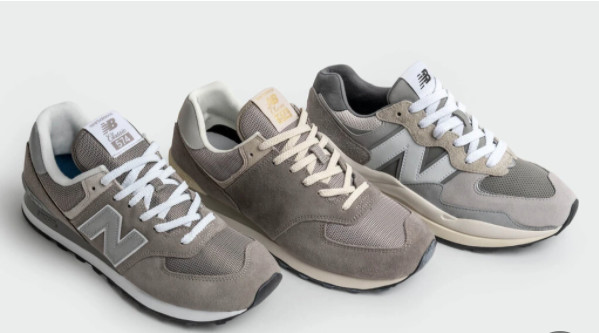
New Balance, for example, is rooted in gray, omnipresent every season, suggestive of the urban running shoe, riffing on concrete. “Doing gray right is something we take a lot of pride in,” Ms. Ross said. “Every gray on our color ring has a character and personality: Castle Rock is warm; Steel is a blue tone. With legacy models, we make sure our tanneries never stray. They replicate with precision.”
At the other end of the dial is Nike, with its neon lime Volt color, first seen at the 2012 Olympics. To some it is heinous, to others a masterstroke. “That was an intellectual and scientific choice for Nike,” said Bryan Cioffi, Reebok’s vice president for footwear design. “The first color you read in your optical receptors is that super-bright lime. It’s possibly an evolutionary take from poisonous animals and signals danger. A physical thing happens when you see it. Nike triangulated that and repeated it forever.”
Repetition is how you win the color game. You may see Volt and recoil, but you’ll always think “Nike.” As colors go, it is a paradigm for brand marketing. “We did a complete technology innovation study about how color showed up on HDTV and sports tracks,” said Martha Moore, a Nike vice president and creative director. “We were studying the idea of speed and what color complemented that in the vibration of the human eye. Volt is emotional.”
After a year of living our lives almost wholly online, pixel coloration has become even more key. “We are developing colors that appear lit from within,” Ms. Moore said. “Pixels sitting next to one another create previously unseen colors. They create new neutrals and complex combinations. We are using complex knits of yarns, with bright spots and glows that haven’t been seen before.”
Indeed. “We are seeing a particularly positive response to dialed up pastels and strong yellow,” said Heiko Desens, the global creative director of Puma. “Things that speak of energy and positivity.”
That new energy is everywhere. For example, the Yeezy Boost 700 Sun shoe, introduced in January, is a blaze of yellow and orange that is a world away from the beige associated with Yeezy of yore. Hardcore Rick Owens fans may own numerous black pairs of his Dunks, but the new season’s Geo Baskets in bubble gum pink throw a curve ball and flip the dark Owens aesthetic.
(05/29/21) Views: 39

Mastering the Long Run
The long run garners more attention than any other component of marathon training. It has become a status symbol among runners in training, a measure by which one compares oneself against his or her running counterparts. It is surprising, then, to discover that much of the existing advice on running long is misguided. After relatively low-mileage weeks, some training plans suggest backbreaking long runs that are more akin to running misadventures than productive training.
A 20-mile long run at the end of a three-day-a-week running program can be both demoralizing and physically injurious. The long run has become a big question mark, something you aren't sure you'll survive, but you subject yourself to the suffering nonetheless. Despite plenty of anecdotal and academic evidence against such training tactics, advice to reach (or go beyond) the 20-mile long run has persisted. It has become the magic number for marathoners, without consideration for individual differences in abilities and goals.
While countless marathoners have made it to the finish line using these programs, I believe in a different approach. Not only will it make training more enjoyable, it will also help you cover 26.2 more efficiently.
While my long-run approach may sound radical, it is deeply rooted in results from inside the lab and outside on the roads. As I read through the exercise science literature, coached the elite squad with Kevin and Keith Hanson, and tested theories in my own training, I realized that revisions to long-held beliefs about marathon training, and in particular long runs, were necessary. As a result, a 16-mile long run is the longest training day for my standard program.
But there's a hitch: One of Kevin and Keith's favorite sayings about the long run is, "It's not like running the first 16 miles of the marathon, but the last 16 miles!"
What they mean is that a training plan should simulate the cumulative fatigue that is experienced during a marathon, without completely zapping your legs. Rather than spending the entire week recovering from the previous long run, you should be building a base for the forthcoming long effort.
For example, if you have a 16-mile Sunday long run on your schedule, leading up to it, you should do a tempo run on Thursday and easier short runs on Friday and Saturday. Don't take a day completely off before a long run because recovery occurs on the easy running days. Since no single workout has totally diminished your energy stores and left your legs feeling wrecked, you'll feel the effects of fatigue accumulating over time. This allows for partial recovery, but it is designed to keep you from feeling completely fresh going into a long run. Following the Sunday long run, try an easy day of running on Monday and a strength workout Tuesday.
This may initially appear to be too much, but if your long run's pace and mileage are tailored to your ability and experience, less recovery is necessary.
The Physiology of Long Runs
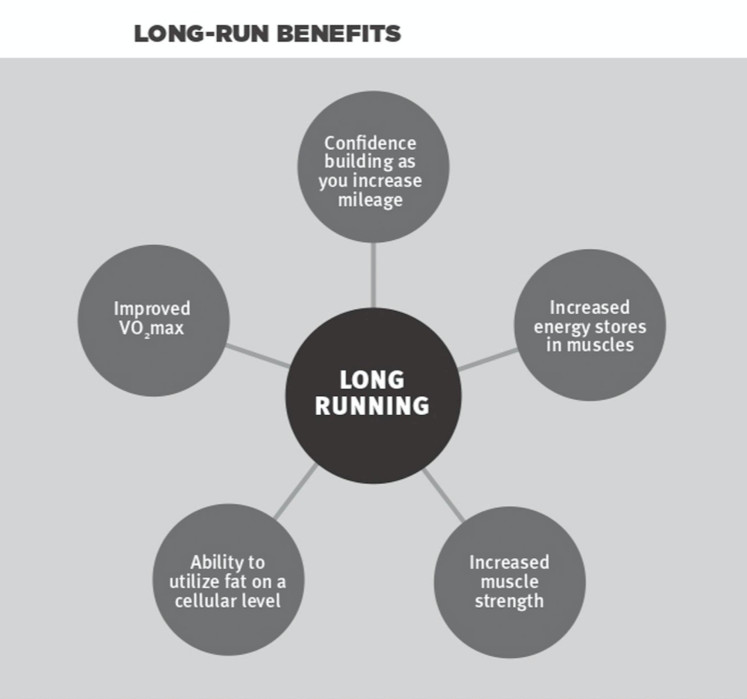
Long runs bring with them a laundry list of psychological and physiological benefits, many of which correlate with the profits of easy running. Mentally, long runs during marathon training help you gradually build confidence as you increase your mileage from one week to the next.
They help you develop the coping skills necessary to complete any endurance event. They also teach you how to persist even when you are not feeling 100 percent. Since you never know what is going to happen on marathon day, this can be a real asset. Most notable, however, are the physiological adaptations that occur as a result of long runs. Improved VO2max, increased capillary growth, and a stronger heart are among the benefits. Long runs also help to train your body to utilize fat as fuel on a cellular level. By training your body to run long, you let it adapt and learn to store more glycogen, thereby allowing it to go farther before becoming exhausted.
In addition to improving the energy stores in your muscles, long runs also increase muscle strength. Although your body first exploits the slow-twitch muscle fibers during a long run, it eventually begins to recruit the fast-twitch fibers as the slow-twitch fibers fatigue.
The only way to train those fast-twitch fibers is to run long enough to tire the slow-twitch fibers first. By strengthening all of the fibers, you'll avoid bonking on race day. By now the majority of these adaptations are probably starting to sound familiar. You can expect many of the same benefits reaped from easier work from long runs too.
Long-Run Guidelines
Advice from renowned running researcher and coach Dr. Jack Daniels provides a basis for our long-run marathon training philosophy. He instructs runners never to exceed 25-30 percent of their weekly mileage in a long run, whether they are training for a 5K or a marathon. He adds that a 2:30-3:00-hour time limit should be enforced, suggesting that exceeding those guidelines offers no physiological benefit and may lead to overtraining, injuries, and burnout.
Dr. Dave Martin, running researcher at Georgia State University and a consultant to Team USA, goes one step further, recommending that long runs be between 90 minutes and 2 hours long. While he proposes 18-25-mile long runs for high-level marathoners, one must take into consideration that a runner of this caliber can finish a 25-mile run in under 3 hours.
This highlights the importance of accounting for a runner's long-run pace. Dr. Joe Vigil, a Team USA coach and scientist, further supports this notion, advising that long runs be increased gradually until the athlete hits 2:00-3:00 hours. Certainly a 25-mile run completed in less than 3 hours by an elite runner will provide different physiological adaptations than a 25-mile run that takes a less experienced runner 3:30 hours or more.
According to legendary South African researcher and author Dr. Tim Noakes, a continual, easy-to-moderate run at 70-85 percent VO2max that is sustained for 2 hours or more will lead to the greatest glycogen depletion. Exercise physiologist Dr. David Costill has also noted that a 2-hour bout of running reduces muscle glycogen by as much as 50 percent. While this rate of glycogen depletion is acceptable on race day, it is counterproductive in the middle of a training cycle, as it takes as many as 72 hours to bounce back.
When you diminish those energy stores, you can end up benched by fatigue, missing out on important training, or training on tired legs and potentially hurting yourself. Instead of risking diminishing returns and doing an arbitrary 20-mile run, look at your percentage of mileage and total time spent running. (I often suggest a maximum of 16 miles, but we are more concerned with determining your long run based on your weekly total mileage and your pace for that long run.)
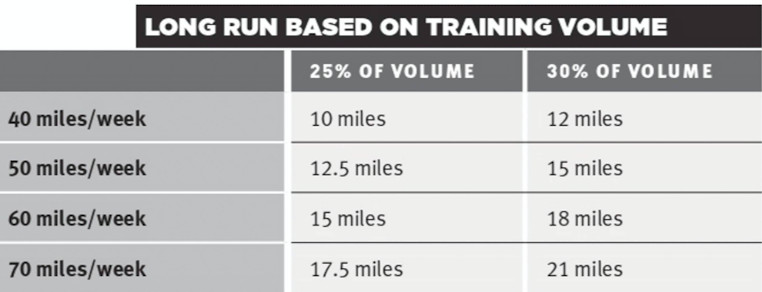
It may sound unconventional, but you'll find that it isn't random; these suggestions are all firmly based in science with proven results. As stipulated by Dr. Noakes, it is widely accepted among coaches that long runs shouldn't exceed 25-30 percent of weekly mileage. Even so, that guideline manages to get lost in many marathon-training programs in the effort to cram in mileage. For instance, a beginning program that peaks at 40-50 miles per week and recommends a 20-mile long run is violating the cardinal rule. Although the epic journey is usually sandwiched between an easy day and a rest day, there is no getting around the fact that it accounts for around 50 percent of the runner's weekly mileage. Looking at the table below, you can see how far your long run should be based on your total mileage for the week.
The numbers illustrate that marathon training is a significant undertaking and should not be approached with randomness or bravado. They also make apparent the fact that many training programs miss the mark on the long run. If you are a beginning or low-mileage runner, your long runs must be adjusted accordingly. What is right for an 80-mile-a-week runner is not right for one who puts in 40 miles a week.
In addition to running the optimal number of miles on each long run, you must also adhere to a certain pace to get the most benefit. Since we don't all cover the same distance in the same amount of time, it makes sense to adjust a long run depending on how fast you'll be traveling. The research tells us that 2:00-3:00 hours is the optimal window for development in terms of long runs. Beyond that, muscle breakdown begins to occur. Look at the table below to see how long it takes to complete the 16- and 20-mile distances based on pace. The table demonstrates that a runner covering 16 miles at a 7-minute pace will finish in just under 2 hours, while a runner traveling at an 11-minute pace will take nearly 3 hours to finish that same distance. It then becomes clear that anyone planning on running slower than a 9-minute pace should avoid the 20-mile trek.
At what pace should I do my long run?
We generally coach runners to hold an easy-to-moderate pace throughout a long run. Instead of viewing your long run as a high volume easy day, think of it as a long workout. If you are new to marathoning, err on the easy side of pacing as you become accustomed to the longer distances. More advanced runners should maintain a moderate pace as their muscles have adapted to the stress of such feats of endurance. In the long run (literally and figuratively), when you avoid overdoing these lengthy workouts, you reap more benefits and avoid the potential downfalls of overtraining.
(05/29/21) Views: 39Trail Runner Magazine
