

Running News Daily
Top Ten Stories of the Week
7/11/2020
These are the top ten stories based on views over the last week.
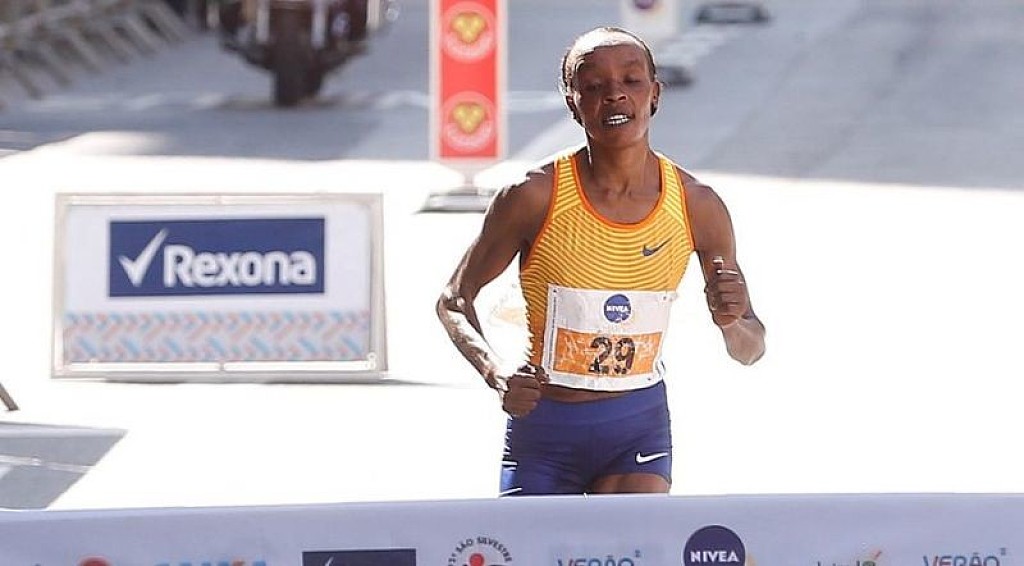


Kenyan Distance Runner Florence Jepkosgei Chepsoi Facing Criminal Charge After Allegedly Falsifying Medical Records
A Kenyan long-distance runner is facing a criminal charge, accused of presenting false documentation to the Anti-Doping Agency of Kenya (ADAK).
Florence Jepkosgei Chepsoi appeared in a court in Eldorat charged under Kenya's Anti-Doping Act on June 29, per an ADAK statement, and plead not guilty.
The case is due to be heard on August 13.

Chepsoi was charged with an anti-doping violation in 2017 after testing positive for banned steroid prednisolone at a race in China.
Appearing before a Sports Disputes Tribunal, Chepsoi presented documentation she claimed was from the Uasin Gishu District Hospital as part of her defence.
ADAK's Investigations and Intelligence Gathering Unit looked into the matter and determined, having consulted with the hospital, that the documents were forgeries and Chepsoi had never received treatment there.
Criminal charges therefore followed.
Chepsoi, 36, placed second at the Jakarta Marathon in 2019.
According to the World Athletics database, the Kenyan's personal best in the event is 2 hours 29min 25sec, recorded in 2011 in Italy.
Ethiopian long-distance runner Etaferahu Temesgen Wodaj was last month given a 12-year ban by the Athletics Integrity Unit (AIU), majority of which stemmed from tampering with evidence.
Wodaj received a four-year suspension for failing a drugs test and an additional eight-year ban for presenting false medical documents and non-compliance.
Kenya is one of seven countries classed in Category A by the AIU in relation to their doping risk to the sport.
Category A nations are both successful at international level but present a "high absolute doping risk".
Fifty-five Kenyan athletes are currently serving suspensions, according to the AIU database.
(07/05/20) Views: 258
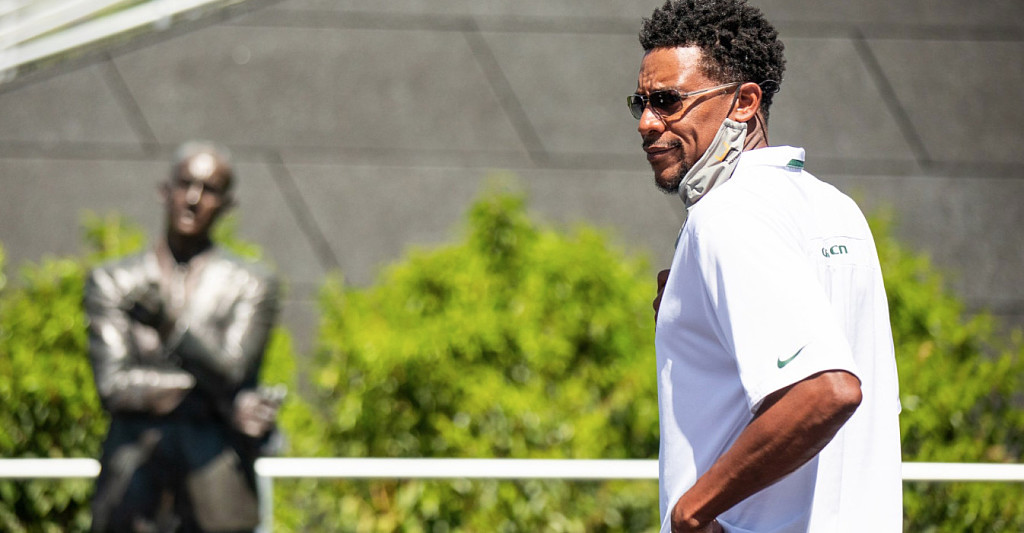
ALMOST READY TO WELCOME YOU BACK!
Track and Field fans in Eugene and around the world,
I write to you today during one of the most unprecedented times in our history. I have found myself in deep reflection on how we can come together as a nation to love and support each other. Through all of this unrest, we have hope in the future and the opportunities that will inevitably come.

I've been so impressed with our student-athletes and how they have responded to adversity over the last few months. From adjusting to a new virtual academic environment and social distancing to using their voices to speak out on social injustices, I have been very proud.
The past few months have been challenging to say the least, and our attention and thoughts have been pulled in so many directions lately, but I did want to provide a bit of an update on Hayward Field.
It is almost ready to welcome you back!
The flags of 156 nations found their place next to the stadium representing every country that had a senior-level athlete compete at Historic Hayward Field between 1921 and 2018. Also, responsibility for the stadium has been handed over from the construction team to the University of Oregon and the UO Track and Field team.
But before we can open the gates to you, we've got a couple of hurdles to clear.
First things first. Our athletes deserve to have their 'Christmas morning' moment before everyone else gets to see how magnificent their training areas and team facilities are. After all, the team has been without a home for two years, and at this point, a majority of the athletes have never experienced the Hayward Magic competing as a Duck. My staff and I are truly looking forward to the team opening this incredible gift when they arrive on campus in September.
As you've probably seen through social media, we've been able to reveal and share the public spaces inside the bowl of the stadium. Still, there are areas we want to reserve for our athletes when we finally get to welcome them back to Hayward Field.
Last week, we were able to have a special Hayward moment with Ashton and Brianne along with their son Ander and Ashton's mom, Roz. It was a chance to have a smaller group together and celebrate what they have meant to this program. We hope to create similar moments with other Oregon Track and Field icons.
We also eagerly await the time when Governor Brown and state health officials are able to relax restrictions on large gatherings, which are currently in place through September. If circumstances allow for opening the stadium to you in the fall, rest assured, we will do so but we have to make sure it is a safe and healthy experience for everyone.
In the meantime, there will still be lots of construction activity going on and the construction fencing will remain in place. Punch lists will be completed and equipment will be moved in.
I encourage you to follow our social media channels and regularly check in on the Hayward Field page on the University's website. We will do our best to keep you updated of any new developments over the course of the summer and, ultimately, our plans for welcoming you all to Hayward Field.
Thank you, Hayward faithful. Can't wait to see you!
(07/06/20) Views: 145
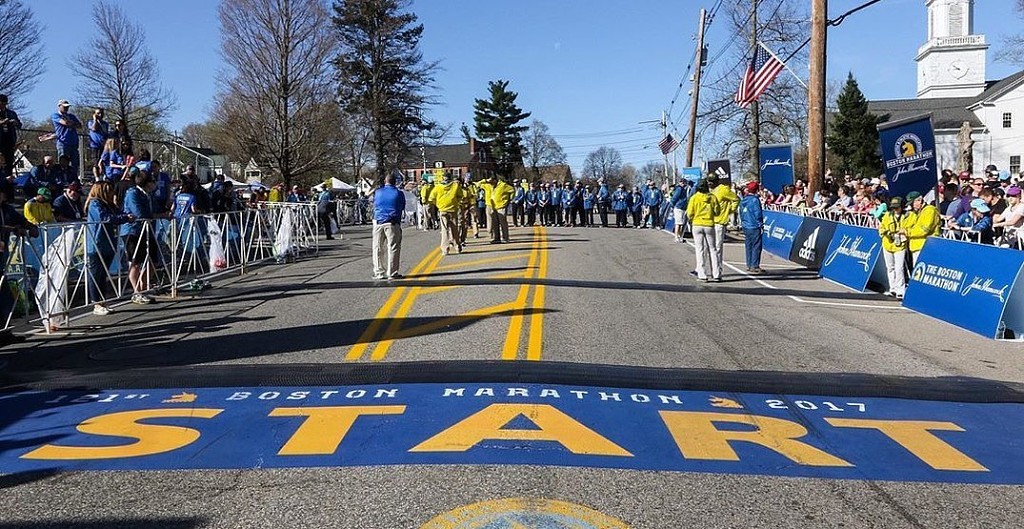
The registration for 2020 virtual Boston Marathon begins today
Registration for a virtual edition of the Boston Marathon begins Tuesday after the in-person race was delayed and then canceled because of the coronavirus pandemic.
The 124th edition of the annual race was originally scheduled for April 20 and in March was rescheduled for Sept. 14. Then, in May, Boston Mayor Marty Walsh and Boston Athletic Association officials announced the traditional race would not be held.
“The traditional one-day running of the 124th Boston Marathon is not feasible this year for public health reasons. There is no way to hold this unusual race format without bringing large numbers of people into close proximity. While our goal and hope was to make progress and contain the virus and recover our economy, this kind of event would not be responsible or realistic on Sept. 14 or anytime this year,” Walsh said at the time.
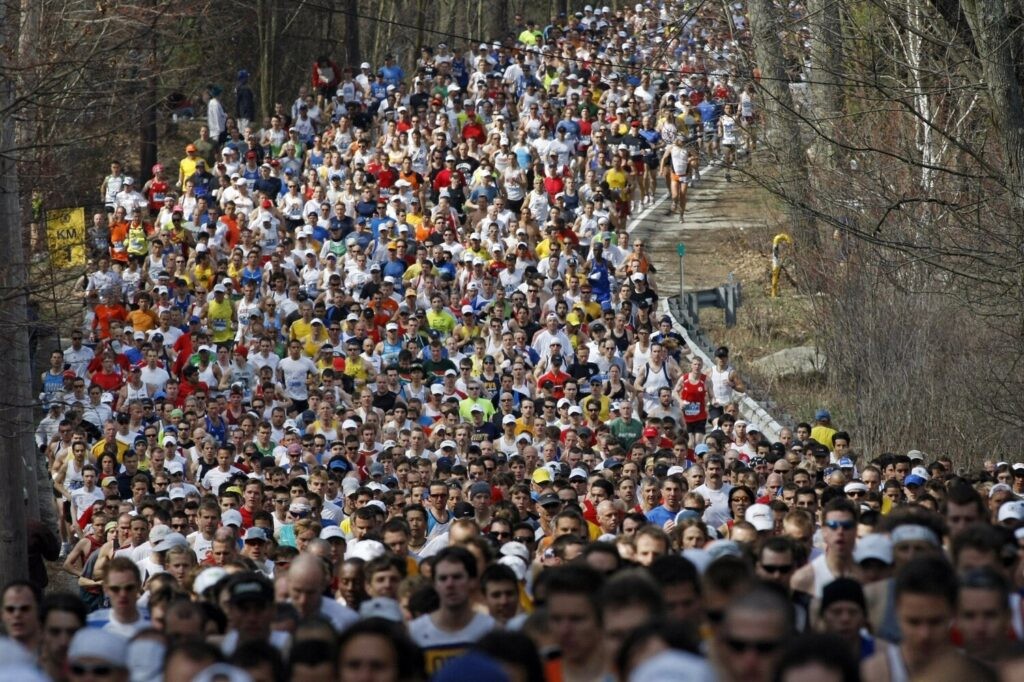
“Our top priority continues to be safeguarding the health of the community, as well as our staff, participants, volunteers, spectators, and supporters,” said Tom Grilk, CEO of the BAA.
In lieu of the usual race, BAA officials said refunds will be offered to registered participants and a "virtual" edition of the race will be organized. The virtual race can be run by participants any time between Sept. 7 and 14 and participants who provide proof that they completed 26.2 miles within six hours during that period will receive a medal, runner's bib and shirt.
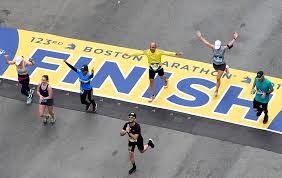
Registration emails for the virtual event are being sent starting Tuesday morning to runners who were previously registered for the 2020 race.
The race generally draws more than 30,000 runners from all over the world, ranging from decorated professionals and Olympians to amateur runners who take to the storied 26.2-mile course through eight communities to raise money and awareness for charities.
Walsh estimated the marathon would normally bring an influx of $200 million to the economy.
(07/07/20) Views: 79

2020 Ladakh Marathon cancelled due to the coronavirus pandemic
Due to COVID-19 Pandemic, the world famous sporting event in India, the Ladakh Marathon has been cancelled for this year. Ladakh Marathon Founder and Race Director Chewang Motup said that the 9th edition of the event scheduled for September 13, this year stands cancelled.
AIR correspondent reports, the 9th Edition of Ladakh Marathon is even more special as it had become a qualifying event of Abbott World Marathon Majors Wanda Age Group from this year.

At an altitude of 11000 ft and above, Ladakh Marathon has emerged as one of the most prestigious high altitude races on the Marathon Calendar of the world. Mr Chewang Motup said, a great uncertainty prevailing in the region due to Covid-19 and border issues.

After the risk assessment exercise as per the World Health Organization (WHO) guidelines for holding events involving mass participation, the organizers took a collective decision to cancel the four races of the Ladakh Marathon.
Mr Chewang Motup said, all registrations for full Marathon, Half Marathon, 10 km and 5 km in 9th edition have been automatically transferred to 2021-2022.
However, the status of the two elite races that's the 72 km Khardungla Challenge (17,618ft) and the 122 km Silk Route Ultra are under review with a restricted number of participation of 200. Mr Chewang Motup appealed all the registered runners of these two races NOT to reserve any flights till the final decision by July 30.
(07/04/20) Views: 67

Runners are using tech to stay connected and compete since most races have been cancelled
Virtual races weren’t supposed to be the most exciting competition for runners in the summer of 2020. But with the coronavirus pandemic making large-scale gatherings difficult, runners are turning to technology as they search for ways to train, stay connected with teammates and compete.
Some have kept it simple, logging workouts and training plans in shareable Google documents or spreadsheets to stay in touch with their coaches. Other runners are using popular social fitness apps like MapMyRun and Strava, which saw a record 3.4 million downloads in May.
And some coaches and race organizers have innovated after being forced to scrap plans for prestigious track meets, massive marathons and the Tokyo Olympics, which were delayed from this summer to 2021. They’re making the best of a time without in-person competition by hosting virtual races and pitting runners in different states — or even continents — against each other.

“Everything’s pretty much been wiped off the table and we’ve had to regroup and reassess and find things to look forward to that aren’t traditional,” said Ben Rosario, the head coach of the Hoka Northern Arizona Elite professional distance running team.
While Arizona was under a stay-at-home order in April and May, Rosario’s small team of pro runners in Flagstaff went more than a month without training together, and he used an online training log called FinalSurge to send workout plans and stay connected with his athletes.

“We can’t replace our competitive needs by just a virtual run,” Coburn said, adding that she does think virtual racing has “opened the world up” as runners from different countries race each other.
Bruce, the Hoka elite runner, is also itching to toe a real starting line again.
“If I’m being honest, the virtual stuff — it’s not the same thing,” Bruce said. “You’re missing the connection. And I think human connection is what keeps a lot of people motivated and inspired in life.”
(07/08/20) Views: 65Kellen Browning
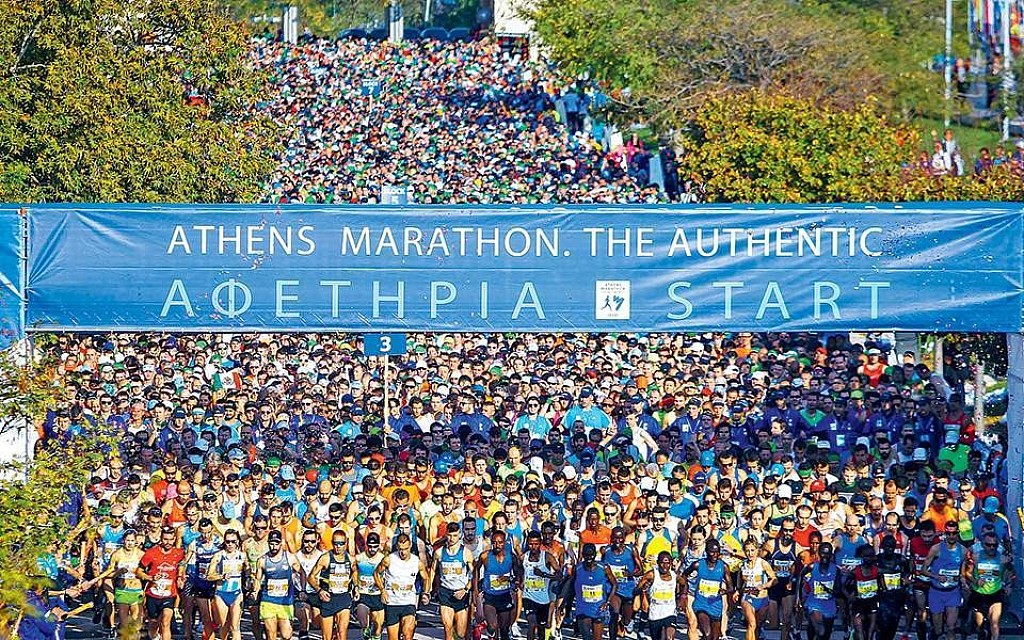
The 2020 Athens Marathon will be held as normal on November 8
The Greek Athletics Federation SEGAS announced on July 1 that, based on current data, “Athens Marathon. The Authentic” 2020 will be held as normal on November 7-8 2020 with its co-organisers the Attica Region, the Municipality of Athens, the Municipality of Marathon and the EOE and a major sponsor, OPAP SA.
Athens Marathon 2020 will include the following competitions:
Marathon: Participants in the Marathon will be divided into two different (A & B) races with 5000 participants each and an hour difference between their start times. The distribution of the runners in the two races and in the corresponding starting block will be decided by the Organising Committee. It is noted that the Marathon Road will be held on Sunday, November 8, while the exact start times will be announced in the near future.
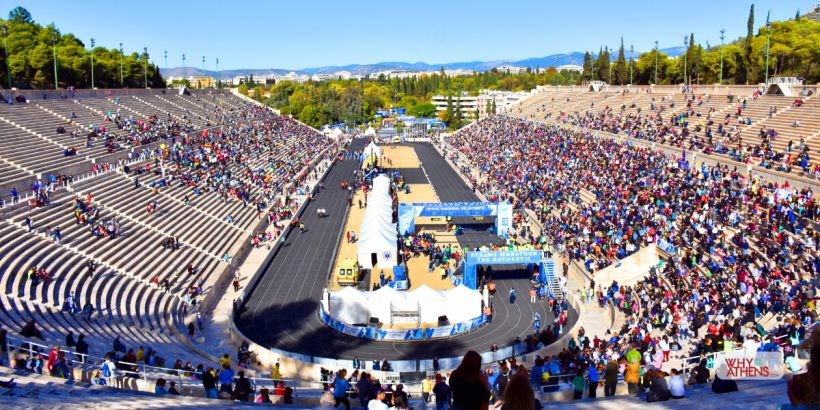
10km road race: On Saturday November 7, 10km participants will also be divided into two different (A & B) races with 5000 participants each and an hour difference between their starts.
5km road race, ZERO WASTE FUTURE: The same logic applies as for the 5km on Sunday November 8: two 5km (A & B) Races with 5000 participants each and a difference of at least one hour between their starts.
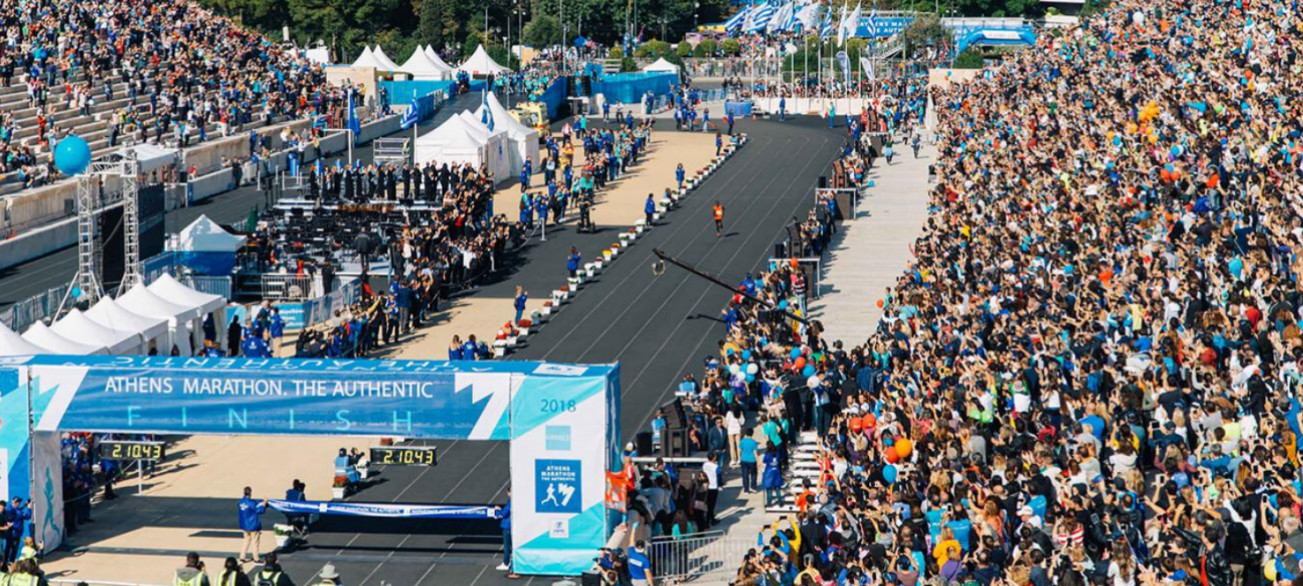
Note that Athens 2020 Marathon will not include the Children’s races (neither on the route nor at the Panathinaiko Stadium) or the Special Olympics Hellas Race. This is for better implementation of the protocol.
Registration limits for all the races have been revised and because they are now split into two separate groups the official t-shirt of the race will be an integral part of the registration for each participant.
Registrations for the Athens 2020 Marathon will start on Friday, July 3, 2020 at 12.00, exclusively through the event website. SEGAS has drawn up a special Cancellation Policy for this year’s event which encourages runners to consult before proceeding with their registration.
President of SEGAS, Kostas Panagopoulos commented: “The successful response to the COVID-19 pandemic in Greece, as a result of the timely adoption of correct measures and their consistent observance by the majority of Greeks, but also the approval by the State Health Protocol for Out-of-Stage Games of SEGAS, allows us to open registration for the Athens Marathon 2020.
“The Race will be very different this year since the observance of the Health Protocol, imposes fewer runners, more starts, distance keeping, meticulous protection measures in each process and for each step. The special planning of the Games has been completed and with the help of all – and especially the runners – the observance of the measures will ensure the desired result.
“In Greece, where it was born, the Marathon will be re-launched in 2020 after the pandemic.”
(07/03/20) Views: 63
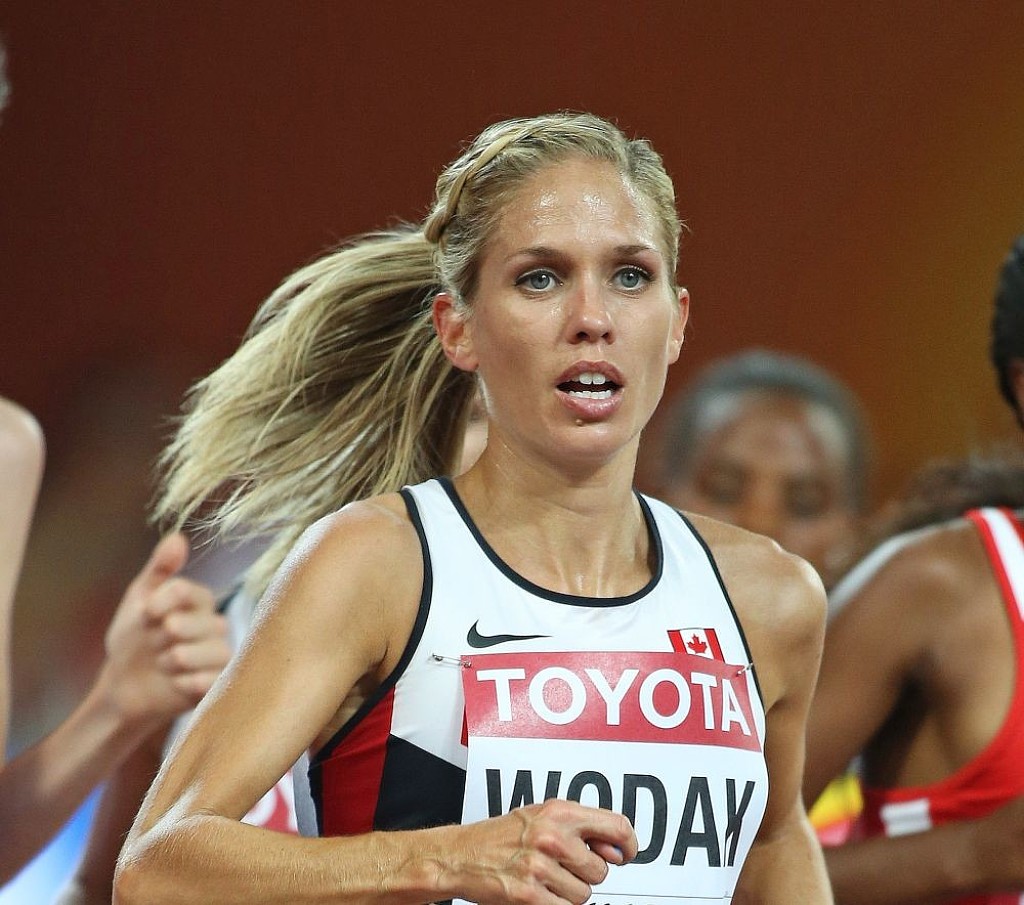
Natasha Wodak and Justin Kent win Canadian 10K virtual championships
Natasha Wodak proved that you can run a pretty killer solo effort on Wednesday when she earned her second-consecutive national 10K championship win, only 10 seconds behind her winning time from 2019. She finished her 10K run in 32:41 and took the top women’s spot by nearly a minute with Rachel Cliff finishing second in 33:35.
The Canadian 10K Championships, which historically took place as part of Ottawa Race Weekend, were moved to a virtual event for 2020. Registered runners had a 12-hour window (from 6 a.m. to 6 p.m. local time) on Wednesday to complete a 10K course of their choosing. Their route had to be an out and back.
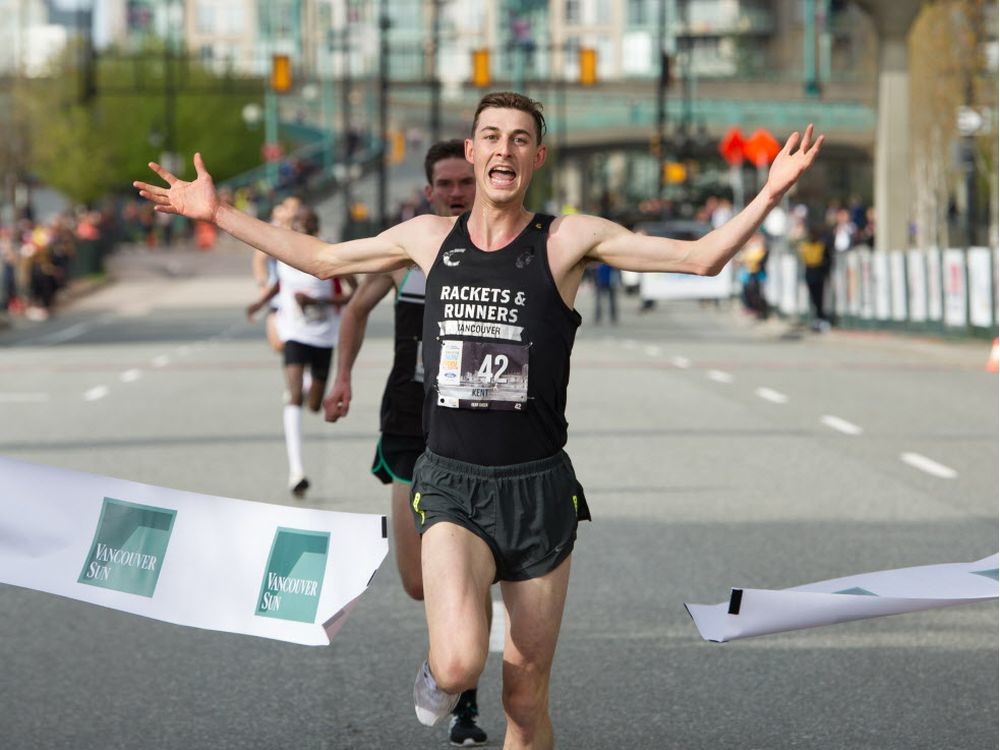
In the men’s race, Justin Kent came out on top with a 28:52, followed by Luc Bruchet who ran a 29:17 just days after a 10, 000m personal best on the track. Dylan Wykes, Elite Athlete Organizer for the Tamarack Ottawa Race Weekend is really happy with how the virtual race went.
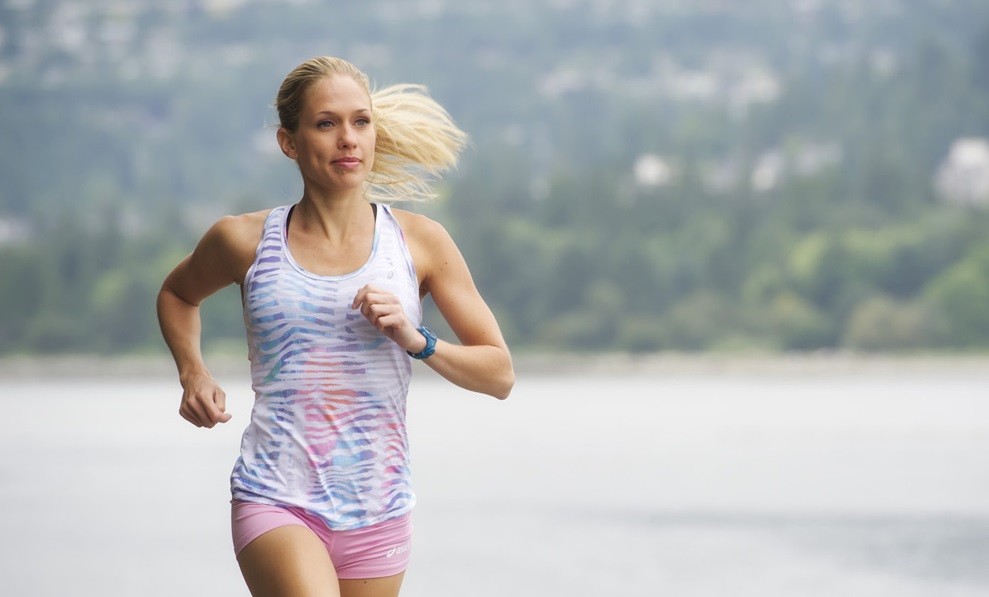
“This year has been extraordinary in so many ways that we really wanted an opportunity to engage with Canadian elite runners and give them a chance to compete against one another in some way. Congratulations to all the runners who took part and we cannot wait to see them at the Start Line in Ottawa in 2021.”
If runners didn’t have a chance to run on Wednesday, no worries, there’s still plenty of time to participate in the The Beat the Champ race. This event will run through the month of July and invites runners to try to beat the national 10K champion at their own game.
This open competition asks runners to beat the 2020 winning times (28:52 and 32:41) by running 10 x 1K intervals, and combining individual segments to beat the winning 2020 10K result.
(07/03/20) Views: 58Madeleine Kelly
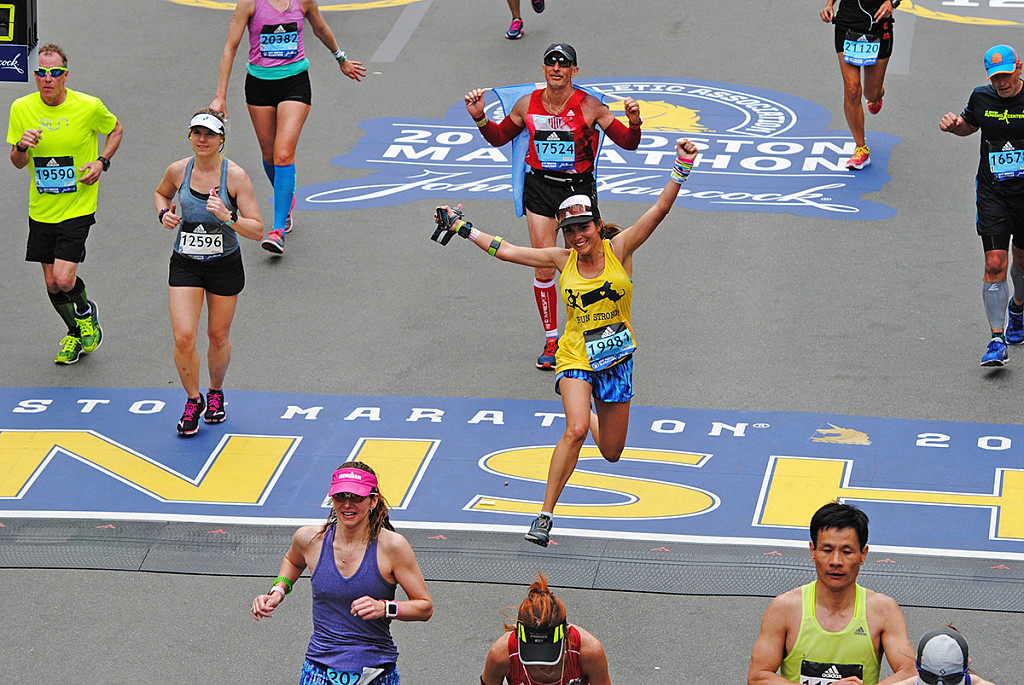
Virtual registration for Boston Marathon begins July 7
Boston Marathon runners who lost out on the iconic run from Hopkinton to Boylston Street this year amid the coronavirus pandemic can register for the 26.2 mile virtual race starting on July 7, the Boston Athletic Association announced on Thursday.
The virtual race is open only to participants who were originally entered in the Boston Marathon scheduled for April 20. The April race date was postponed until September due to coronavirus concerns, and then officials later nixed the September date because of the ongoing COVID-19 crisis.
“The world cannot come to Boston this year, so we will bring the Boston Marathon to the world through a virtual experience that captures the spirit, community, and celebration of the race,” Tom Grilk, CEO of the BAA, said in a statement. “The 124th Boston Marathon Virtual Experience will allow participants to be part of Boston Marathon history.”
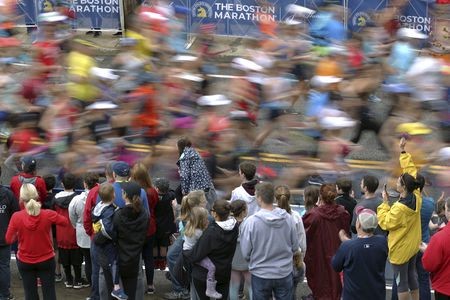
Beginning at 10 a.m. on July 7, participants will be emailed a registration code. The cost to register for the virtual race will be $50.

All finishers of the virtual race will receive a post-race package containing their Boston Marathon official participant shirt, finisher’s medal, official 2020 Boston Marathon program, Sam Adams 124th Boston Marathon bottle opener and other items.
The first 15,000 registrants will receive a pre-race package with a 2020 Boston Marathon bib and other items.
To be considered a finisher of the virtual race, entrants must complete 26.2 miles in one continuous run on any day between Sept. 7 and 14, and submit proof of completion to the B.A.A.
Participants don’t have to complete the race in a certain amount of hours, but they’re required to complete the full marathon distance continuously on the same day.
Leading up to September’s race week, participants will receive more information on the virtual experience. Participant newsletters will provide information on training tips, summer running, hydration, and tips on creating a personal 26.2-mile course.
(07/04/20) Views: 52Rick Sobey
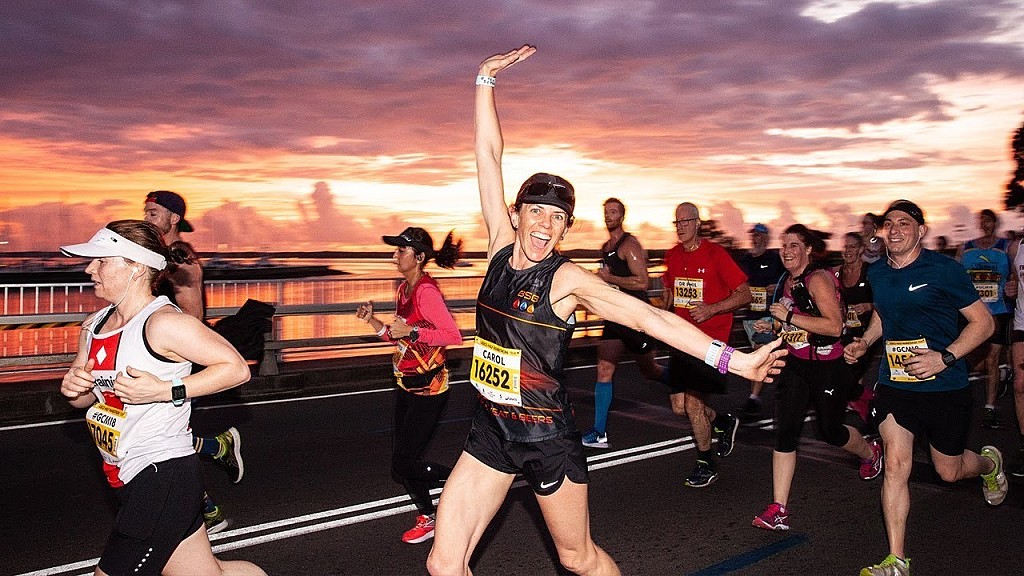
First time of virtual Gold Coast Marathon, will give participants around the globe the opportunity to hit the pavement in their home towns
Ever wanted to run the Gold Coast Marathon but just didn’t have the time of the budget to get there?
Well, for the very first time a virtual Gold Coast Marathon and Southern Cross University 10km Run will give participants around the globe the opportunity to hit the pavement in their home towns.
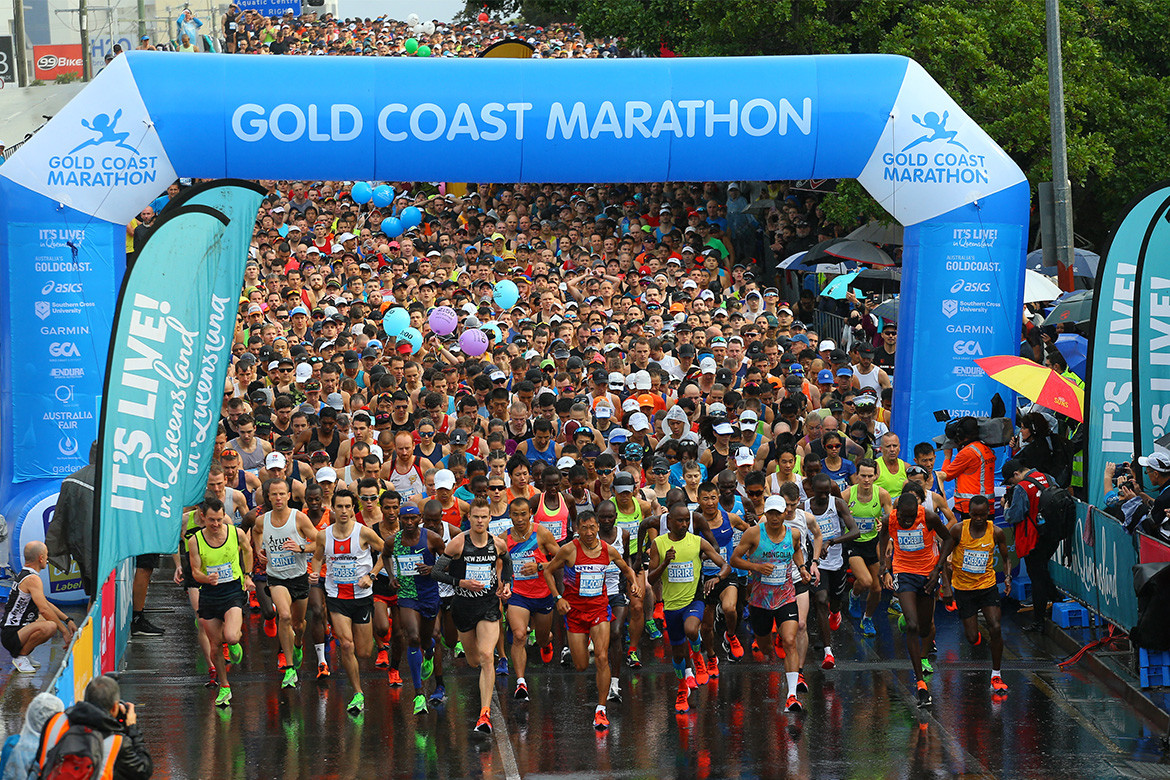
While the 2020 event was originally scheduled for last weekend (4-5 July), COVID restrictions have led to an innovative new online format where runners can participate in the Marathon and 10km Run throughout the month of July using the official app ASICS Runkeeper.

Course Coordinator of Southern Cross University’s Bachelor of Exercise Science and Psychological Science, Dr Chris Stevens, said taking exercise online was an important way for athletes to stay connected.
Exercisers taking their training online.-‘The move reflects a trend for exercisers to take their training online to stay in regular contact and remain competitive with their training partners even while restrictions prevent group running and riding,’ he said.
Runners and cyclists training at home have been using software such as Zwift, which allows them to train and compete with others online. Not only can they exercise with their friends, users can even join and interact with professional athletes as they train. Tracking apps such as Strava uses GPS technology and can be shared with friends online. Strava also allows users to set their own courses and race against others exercising on the same course in their local community.
‘These technologies keep exercise social and fun, which is important for motivation in a time without group training sessions and events, and the closure of gyms and pools. We know that social support is very important to staying engaged with exercise long term,’ said Dr Stevens.
Got a question about running, how to stay motivated, what to eat to maximise performance or the right shoes to wear?Ask a Southern Cross University health and exercise expert.
Poor access to physical activity and mental health.- The United Nations recently released a statement describing how poor access to physical activity and exercise can have negative effects on mental health, which can magnify stress and anxiety that many will experience with isolation from normal social life.
Dr Stevens said it was important for exercise scientists and psychologists to work together to maximise the benefits for their clients, especially in the current climate.
‘This is why Southern Cross University will be offering a combined Bachelor degree in Exercise Science and Psychological Science at all three of our campuses at Gold Coast, Lismore and Coffs Harbour from 2021,’ he said.
Due to COVID disruptions Southern Cross University is also offering reduced-cost government-backed short courses for Australian citizens for Session 2 study beginning in July, including the Undergraduate Certificate in Sport and Exercise Science.
The 11 new undergraduate certificate and two new graduate certificate short courses are all 12-weeks long, made up of four units of full-time online study, and can be fully credited towards starting a degree.
(07/06/20) Views: 52
How to Balance Your Training Metrics With Your Mental State
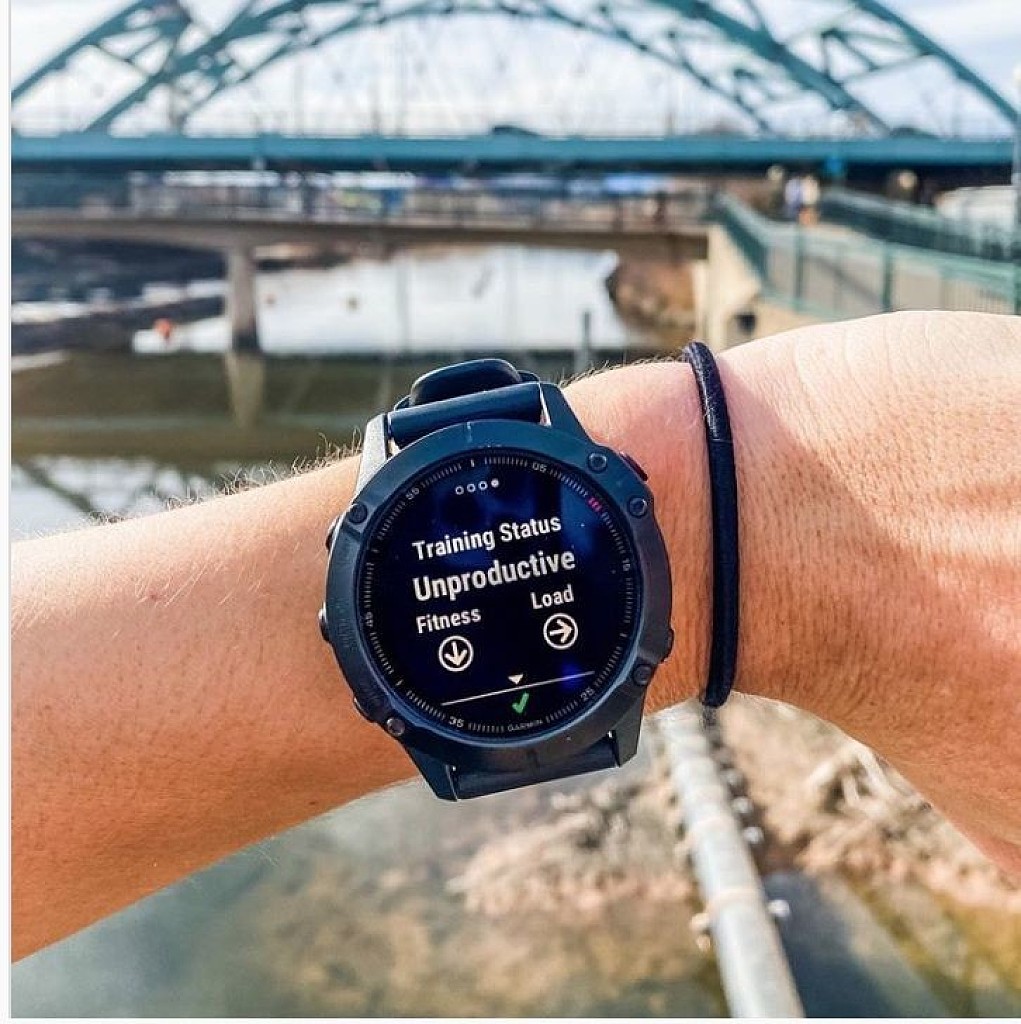
In March, I ran my second fastest marathon. I had trained harder than I had ever trained before, but according to my Garmin Fenix 6x—which I was using for the first time during this training cycle—only one day of training in the two months leading up to the race was deemed “productive.” One. day.
My 22-mile run? The hill sprint repeats I did at altitude? The extra slow recovery runs? All “unproductive,” according to the training status that would flash across the screen on my wrist after nearly every workout.

That feedback only made me determined to run every run in my training program exactly as prescribed—not taking into account the fact that my body was still adjusting to altitude, that I was significantly increasing my weekly mileage, or that, you know, sometimes life happens and you might need to skip a run. I was so fixated on switching that status to productive, I stopped listening to my own body.
Despite the fact that I could tell I was getting faster in my speedwork and that I knew my stamina was increasing in my longer runs, I felt like I was failing at training every time I saw that “unproductive” status. I wasn’t seeing it as a statement on my training, I was letting it define how I viewed myself as a runner. By the time I crossed the finish line of that marathon, I knew it was time to figure out a healthier way to use my metrics for motivation while protecting my mental state.
What even is “Training Status”?
I realized, after several months of letting this metric dictate my feelings toward running, that I didn’t even fully understand what it tracked or what it meant. So I talked to Joe Heikes, the lead product manager for Garmin’s fitness watches. He explained that on Garmin watches, the Training Status feature pulls information from your VO2 max estimations and your training load data to provide feedback on the effectiveness of your training.
Your VO2max—or the maximum rate at which you can deliver oxygen to your exercising muscles—is a measure of aerobic fitness. “The VO2max calculation looks at the relationship between your heart rate and pace to determine whether you’re getting fitter or not,” explains Heikes. This feature also accounts for variables such as altitude and heat, which could affect your heart rate but not your actual fitness level. On a very surface level, if that number’s trending up, you’re getting more fit; if it’s going down, you may be losing fitness.
Training load, on the other hand, is based on excess post-exercise oxygen consumption (a.k.a EPOC or the “afterburn effect”), or your increased rate of oxygen intake following activity. The more intense your run, the higher your EPOC will be. “Basically, the watch scores every run that you do, based on your heart rate data, to determine how big of an exercise ‘dose’ that was,” says Heikes.
Looking at a seven-day window, the watch can determine whether you’re getting more or less fit as your training load increases or decreases. If your fitness appears to be getting better at the same time your training load is increasing, we would call that productive,” he says. “If your training load is increasing but your fitness is going down, then that's an unproductive state.” And there it is.
Why do “negative” stats bum us out so much?
Running is a very predictable sport. You put one foot in front of the other, then repeat— sometimes for hours. “There aren’t a lot of variables in it, so it’s easy to get all these measurements and feel like there’s a ‘formula’ for success,” says Nicole Detling, Ph.D., a sports psychologist and author of Don't Leave Your Mind Behind: The Mental Side of Performance. “But you can get addicted to those stats really easily, and that addiction can cause a lot of anxiety because you’re focusing more on what you aren’t doing than on what you are doing.”
Fitness watches are great motivators when you want to plan specific workouts, run within a specific heart rate zone, track pacing improvements, or tally up miles. “But there’s so much these devices can’t quantify,” says Detling. Your body is your biggest variable—a watch can’t tell if you ate something bad for lunch or you just broke up with your partner. You have to take those things into account when assessing your performance. That’s why the best coaching plans are designed with flexibility in mind, so they can be adjusted depending on your circumstances.
As for the gut punch of the word “unproductive,” Detling says, “We get emotionally attached to the connotation of certain words.” No matter what your physiological data says, “the reality is, you still expended and exerted a certain level of effort that you want to feel acknowledgement for,” she explains. That doesn’t mean you necessarily need praise, “but you want to feel good that you did something—especially if it freaking hurt, right?”
The problem with that, though, is that you’re focusing on the outcome of a run, not the run itself. “A lot of the time, we focus our thoughts and feelings on getting a certain time, covering a certain distance,” says Detling. “But, if at the beginning of the run, we’re only thinking about the end, we’re probably not going to get there very well.” Insert one of the many platitudes that emphasizes: It’s about the journey, not the destination.
In fact, all that internal pressure to perform for a certain outcome actually wastes precious mental energy you could be putting toward a more efficient performance, says Detling. And dwelling on the outcome of a run that didn’t meet your expectations wastes the mental and emotional energy you could put toward being more productive in your next run.
So how can you balance the metrics and your mental state?
When Lindsey Clayton, a certified run coach and trainer at Barry’s Bootcamp in New York City, was training for the 2018 New York City marathon, she became such a prisoner to her data that it would ruin her run, she says. “And then I wouldn’t stop thinking about the bad run, and it would ruin my whole day.”
She eventually decided to ditch her watch entirely for her mid-week 6-mile runs and use a landmark as her turnaround point. “The whole reason I run is to feel free—to just be in my body and be in the moment,” says Clayton. Now, she runs watchless once or twice a week based on how she feels. “If I think that seeing I’m running slower than yesterday is going to mess with me mentally, then I know I shouldn’t wear a watch,” she says. “On those days, I’m committing to being in the moment.”
Finding, or remembering, your why can help balance the data and your perspective. That doesn’t mean you can’t have a goal, like running a marathon. But “set your goal and forget it and focus on the process,” says Detling. “If your ‘why’ is to run a marathon, that’s not going to get you through the difficulties that you’re going to experience along the way. Your why has to be strong enough to get you out to do what you’re supposed to be doing on the days when you don’t feel like it.”
You also need to give yourself a little grace. “Runners are very type A, but that has to come with some flexibility,” says Detling. If you didn’t hit your paces, or you cut your run short early, or your watch tells you that your run was unproductive, find something productive about it: Did it increase your mental toughness? Did you get outside when the alternative was sitting on the couch? Did you learn something new about your body?
No matter how advanced tracking technology gets, it should never outweigh listening to your body. “I think that you can hold those two sets of facts in a healthy tension,” says Heikes. “I’ve been running for a long time, and I feel like I know my body pretty darn well. But there have been times when I’ve ignored the watch because I didn’t want to hear the truth it was telling me, and that didn’t work out for me. You have to almost blur your eyeballs and look for the long-term trend versus getting caught up in the minutiae.”
(07/03/20) Views: 43Runner’s World
